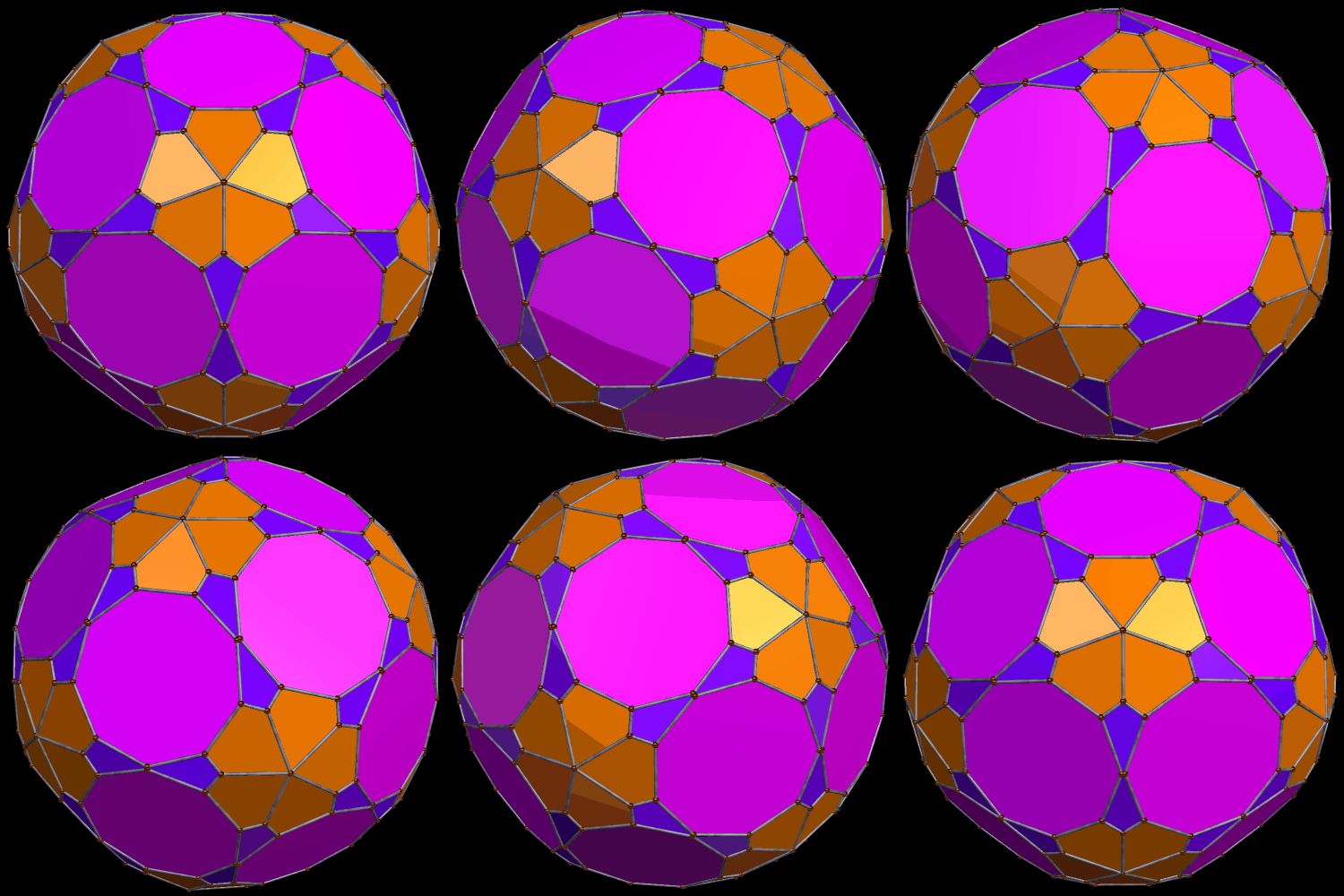
The first polyhedron shown here has 212 faces.

The next one has 120 faces, and all the non-enneagonal faces in it are convex pentagons — sixty each, of two types.
I made these polyhedra using Stella 4d, which you can try for free right here.
The first polyhedron shown here has 212 faces.
The next one has 120 faces, and all the non-enneagonal faces in it are convex pentagons — sixty each, of two types.
I made these polyhedra using Stella 4d, which you can try for free right here.
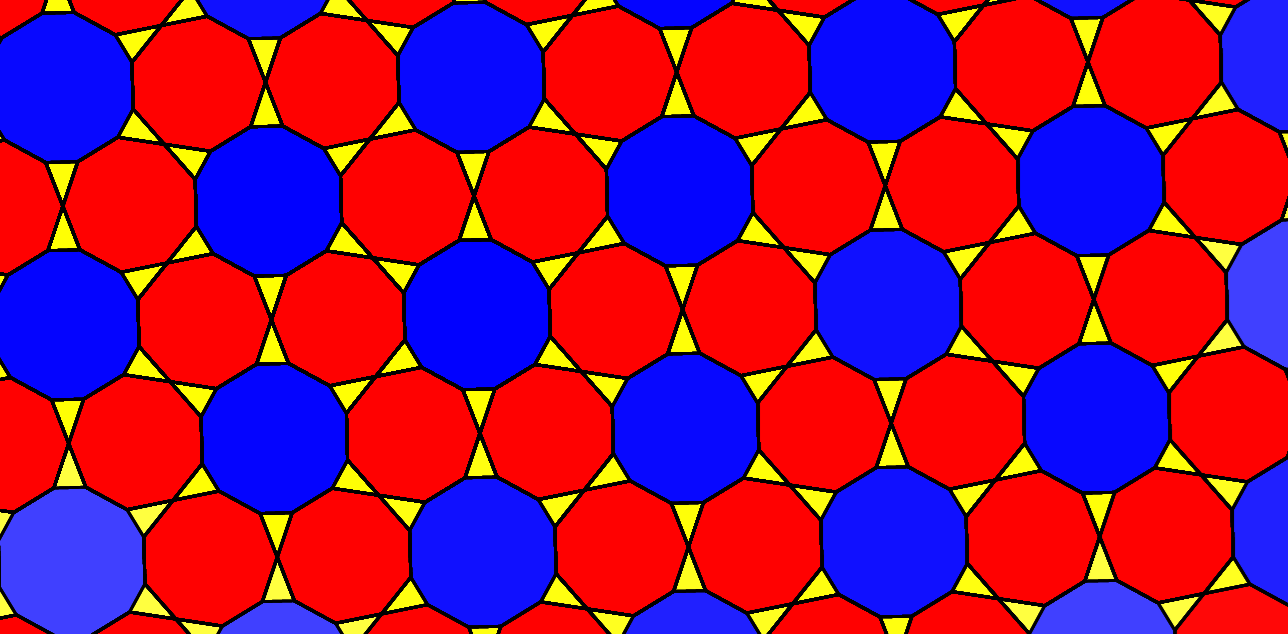

Hendecagons are also known by many people as “11-gons.” It took quite a while to figure out how to make a tessellation using them.

I made this from a rhombic triacontahedron, using zonohedrification and faceting, with a program called Stella 4d. If you’d like to try this program for yourself, for free, you can do that at this website. This symmetrohedron’s faces include twenty equilateral triangles, thirty regular hexagons, and sixty kites.

This is the second stellation of the truncated octahedron. I made it using Stella 4d, which you can try for yourself right here.

I made this by faceting a great rhombicosidodecahedron, using Stella 4d: Polyhedron Navigator. You can try this program for free at http://www.software3d.com/Stella.php.
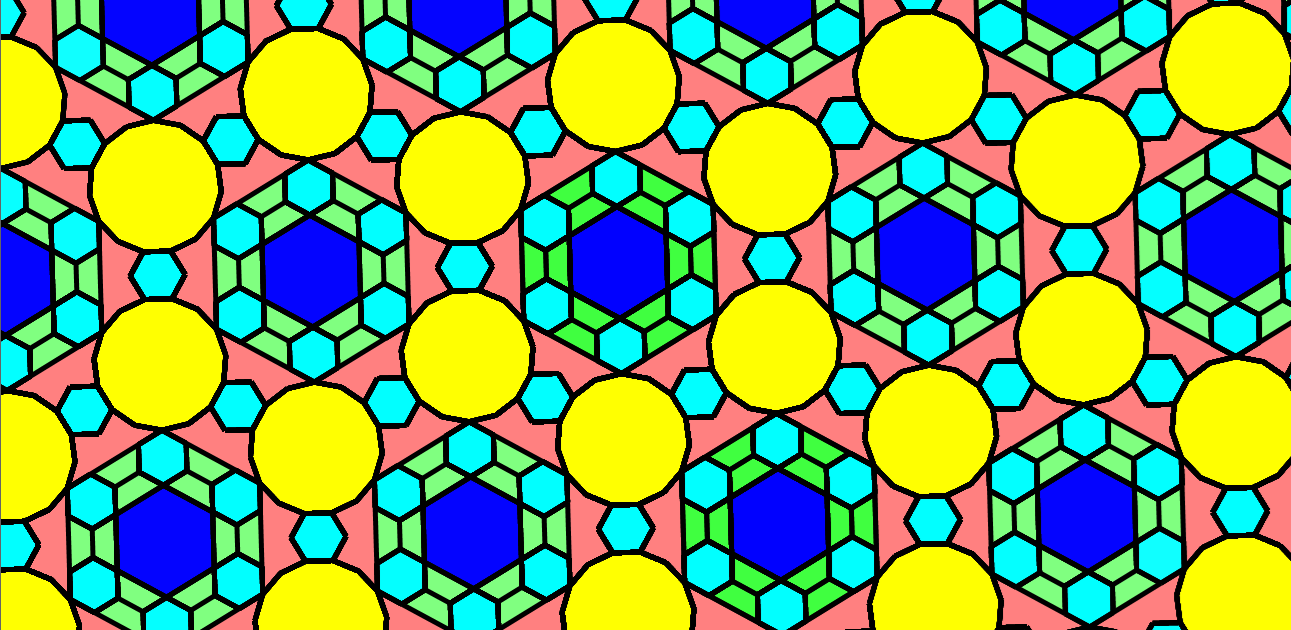

The first of these, shown above, also includes six squares, 24 isosceles trapezoids, and twelve rectangles among its faces.
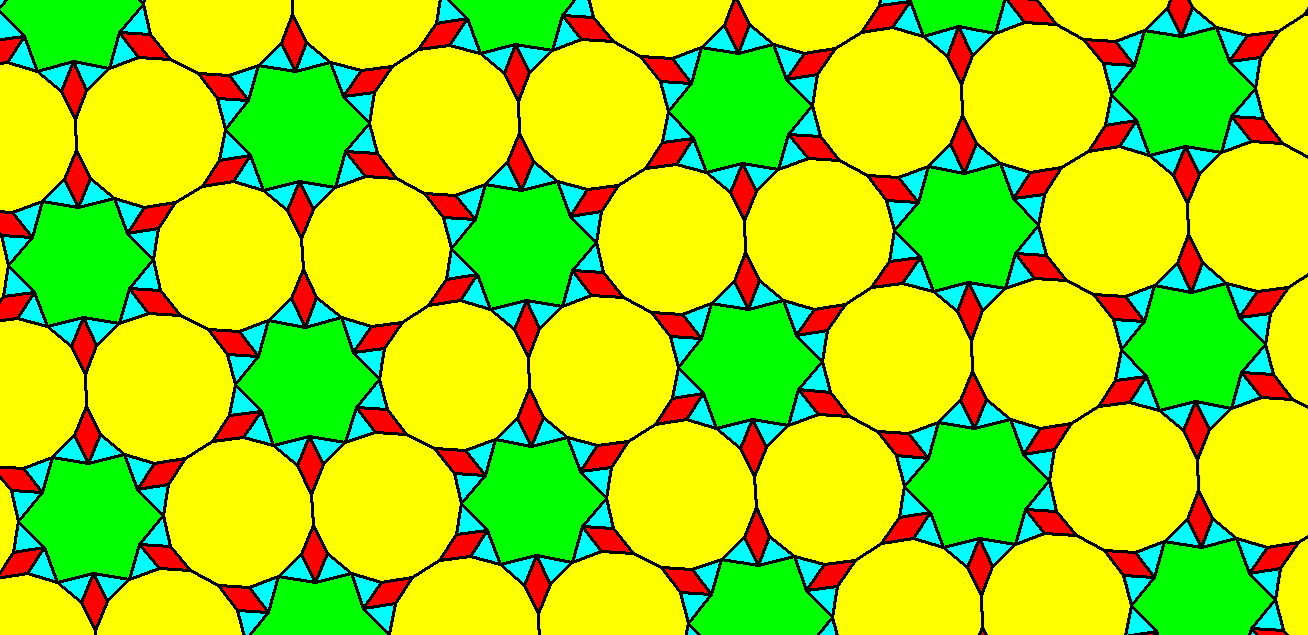
The second one, shown below, also includes among its faces six regular octagons, and twelve pairs of “bowtie” trapezoids.

I made both of these models using Stella 4d, which you can try for free here. The starting point for making them was the enneagonal-faced polyhedron found in this program’s built-in set of near-misses to the Johnson solids.
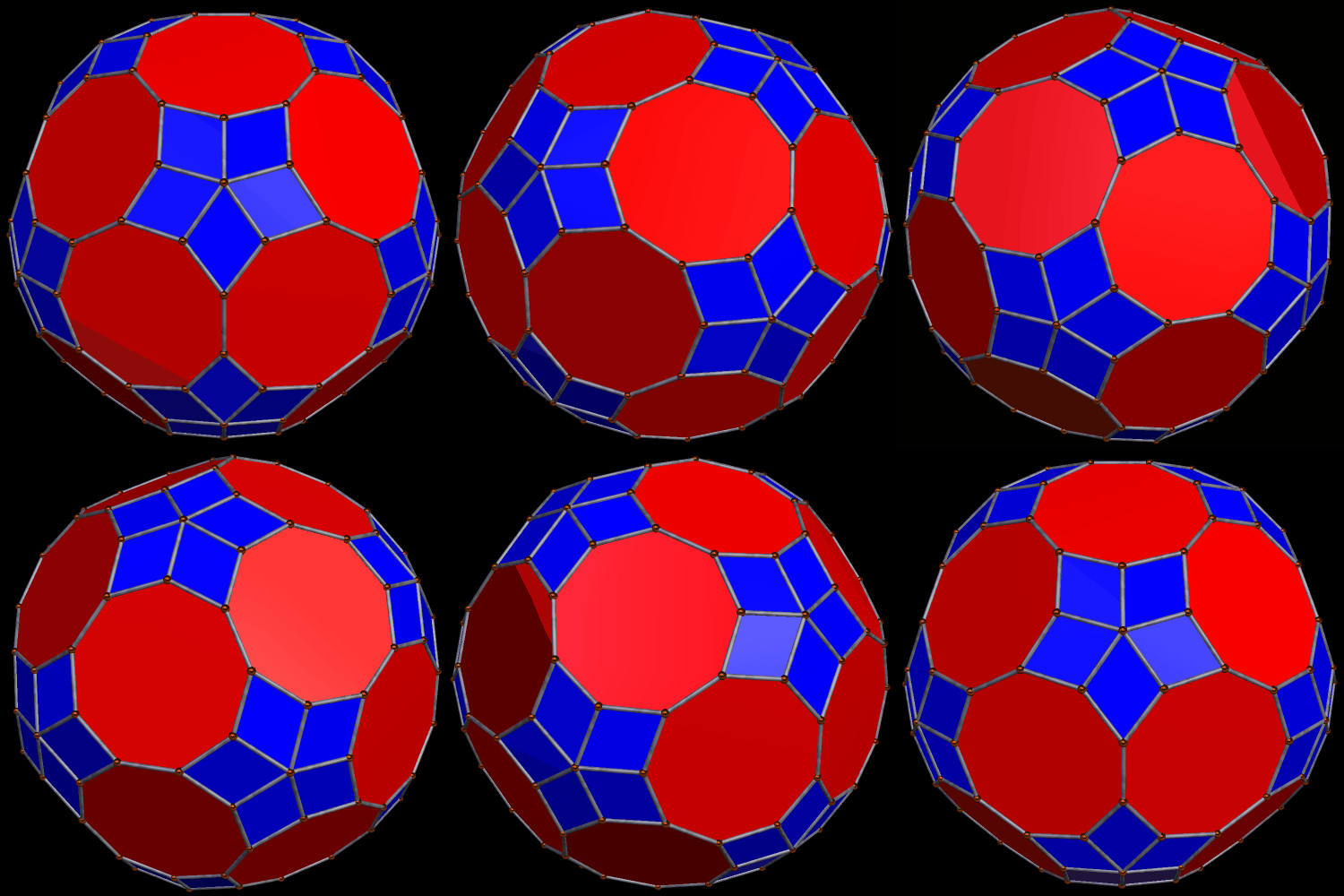
I made this using Stella 4d, which you can try for free at this website.
 RobertLovesPi.net