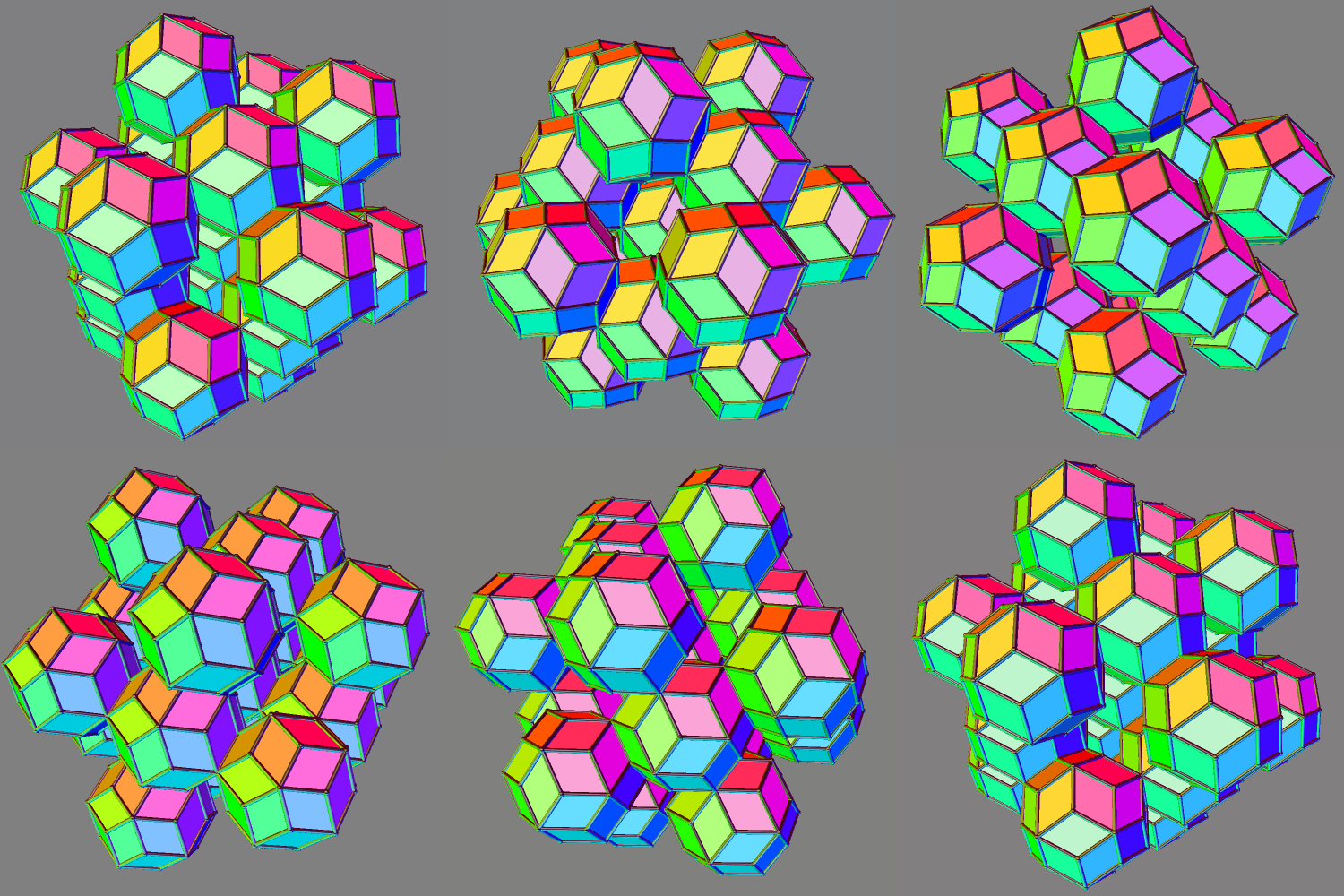
Due to their high number of planes of symmetry, rhombic triacontahedra make excellent building blocks to build other polyhedra. To make this, I used a program called Stella 4d, which you can try right here.
Due to their high number of planes of symmetry, rhombic triacontahedra make excellent building blocks to build other polyhedra. To make this, I used a program called Stella 4d, which you can try right here.

Created using Stella 4d: Polyhedron Navigator, available here.

Because (6)(4) = 24 = (8)(3), that’s why.

I used Stella 4d to make each of these. A free trial download of this software is available here.

I use a rather old laptop PC, but I think this would work for desktop PCs, as well. On a lark, I tried putting a geometrical .gif file — the one you see above — on my PC, as the “wallpaper” for a desktop background. I didn’t think that would work, but, to my surprise, it did — rotational movement and all.
If you want to try the same thing with images from this blog, choose one that’s in a horizontal rectangle, to match the shape of a computer screen — they work better. I make these images with Stella 4d: Polyhedron Navigator, which you can try here.
In a previous post (right here), I explained the 18-72-90 triangle, derived from the regular pentagon. It looks like this:

I’m now going to attempt derivation of another “extra-special right triangle” by applying half-angle trigonometric identities to the 18º angle. After looking over the options, I’m choosing cot(θ/2) = csc(θ) + cot(θ). By this identity, cot(9°) = csc(18°) + cot(18°) = 1 + sqrt(5) + sqrt[2sqrt(5) + 5].
Since cotangent equals adjacent over opposite, this means that, in a 9-81-90 triangle, the side adjacent to the 9° angle has a length of 1 + sqrt(5) + sqrt[2sqrt(5) + 5], while the side opposite the 9° angle has a length of 1. All that remains, now, is to use the Pythagorean Theorem to find the length of the hypotenuse.
By the Pythagorean Theorem, and calling the hypotenuse h, we know that h² = (1)² + {[1 + sqrt(5)] + sqrt[2sqrt(5) + 5]}² = 1 + {2[(1 + √5)/2] + sqrt[(2√5) + 5]}² = 1 + {2φ + sqrt[(2√5) + 5]}², where φ = the Golden Ratio, or (1 + √5)/2, since I want to use the property of this number, later, that φ² = φ + 1.
Solving for h, h = sqrt(1 + {2φ + sqrt[(2√5) + 5]}²) = sqrt{1 + 4φ² + (2)2φsqrt[(2√5) + 5] + (2√5) + 5} = sqrt{6 + 4(φ + 1) + 4φsqrt[(2√5) + 5] + (2√5)} = sqrt{6 + 4φ + 4 + 4φsqrt[(2√5) + 5] + (2√5)} = sqrt{10 + 4[(1 + √5)/2] + 4φsqrt[(2√5) + 5] + (2√5)} = sqrt{10 + 2 + (2√5) + 4φsqrt[(2√5) + 5] + (2√5)} = sqrt{12 + (4√5) + 4[1 + √5)/2]sqrt[(2√5) + 5]} = sqrt{12 + (4√5) + (2 + 2√5)sqrt[(2√5) + 5]}, the length of the hypotenuse. Here, then, is the 9-81-90 triangle:

Suppose you take a central dodecahedron, and then augment each of its faces with a dodecahedron. That would be an augmented dodecahedron. If you augment this figure with another layer of dodecahedra, then you have the reaugmented dodecahedron:
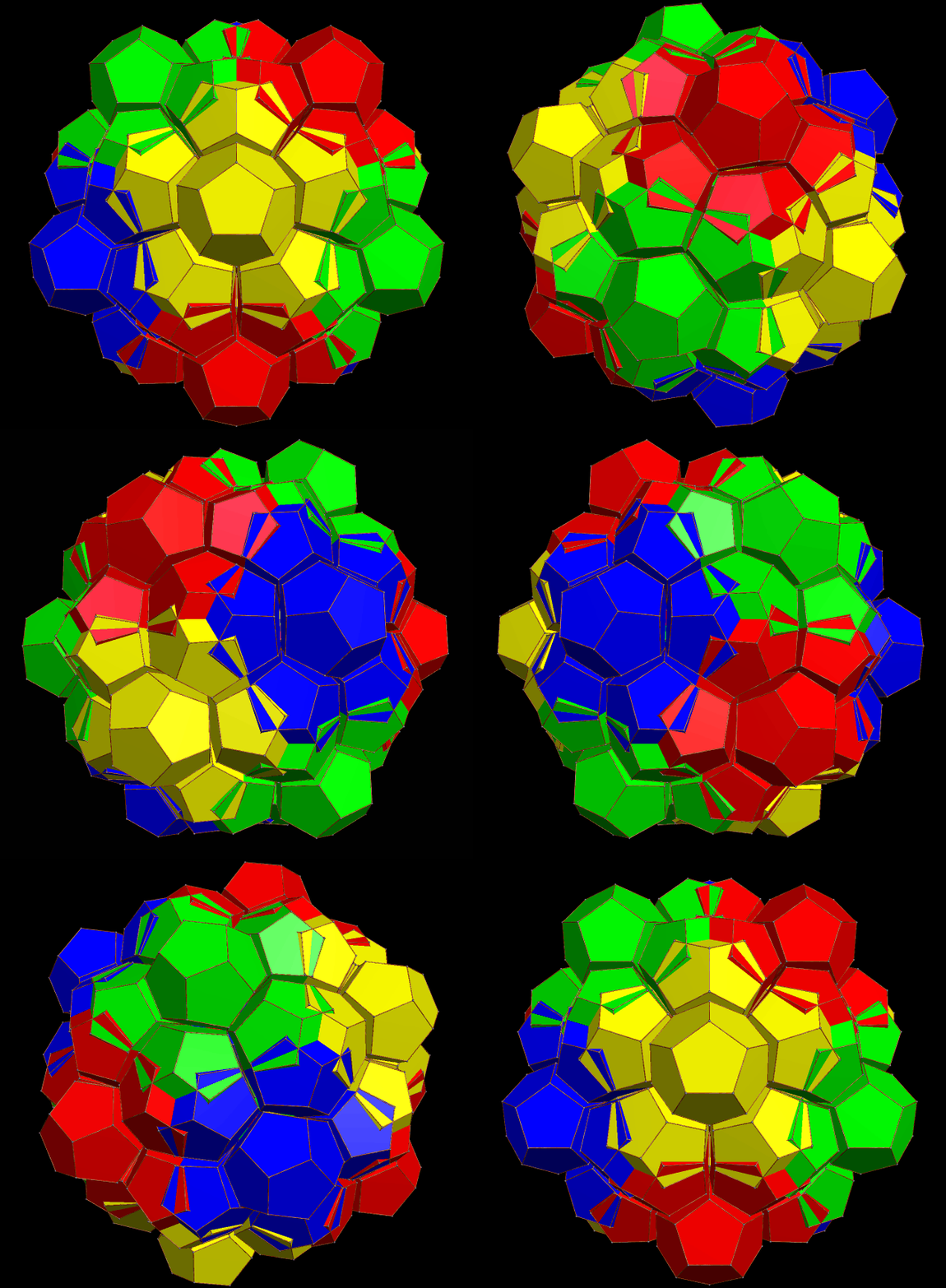
After another level of such augmentation, you get this — the metareaugmented dodecahedron:
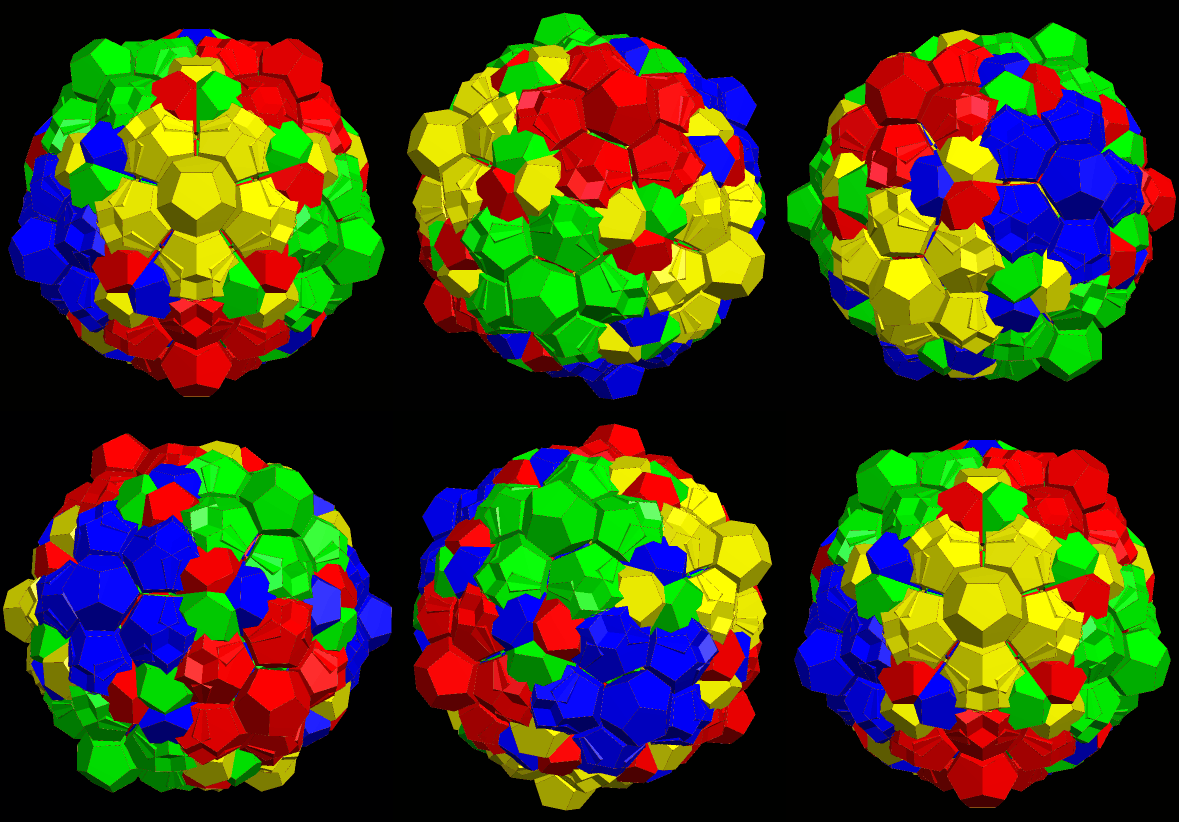
Both these images were created using Stella 4d, which you can try here.
This is apparently a problem, posed by Gregory Galperin, which went unsolved at the Bay Area Math Olympiad in 2005. I haven’t solved it yet, but I’m going to try, as I work on this blog-post. My 2010 source is a paper about Zome which may be read, as a .pdf, at bact.mathcircles.org/files/Summer2010/zomes-6-2010.pdf. The problem involves a dodecahedron and an icosahedron, each inscribed inside the same sphere of radius r, and asks which has the greater volume. At the time the authors wrote this paper, they knew of no solution, and I know of none now, but I do like a challenge.
My idea for solving this begins with Zome (info on Zome: see http://www.zometool.com, as well as other sites you can find by googling “Zome”). In the Zome geometry system, using B1 struts for the edges of both a dodecahedron and an icosahedron, R1 struts are the radii of the circumscribed sphere for the icosahedron, and Y2 struts are the radii for the circumscribed sphere of the dodecahedron. Since volume formula for polyhedra are generally given in term of edge-length, I need to find B1 in terms of R1 for the icosahedron, and find B1 in terms of Y2 for the dodecahedron.
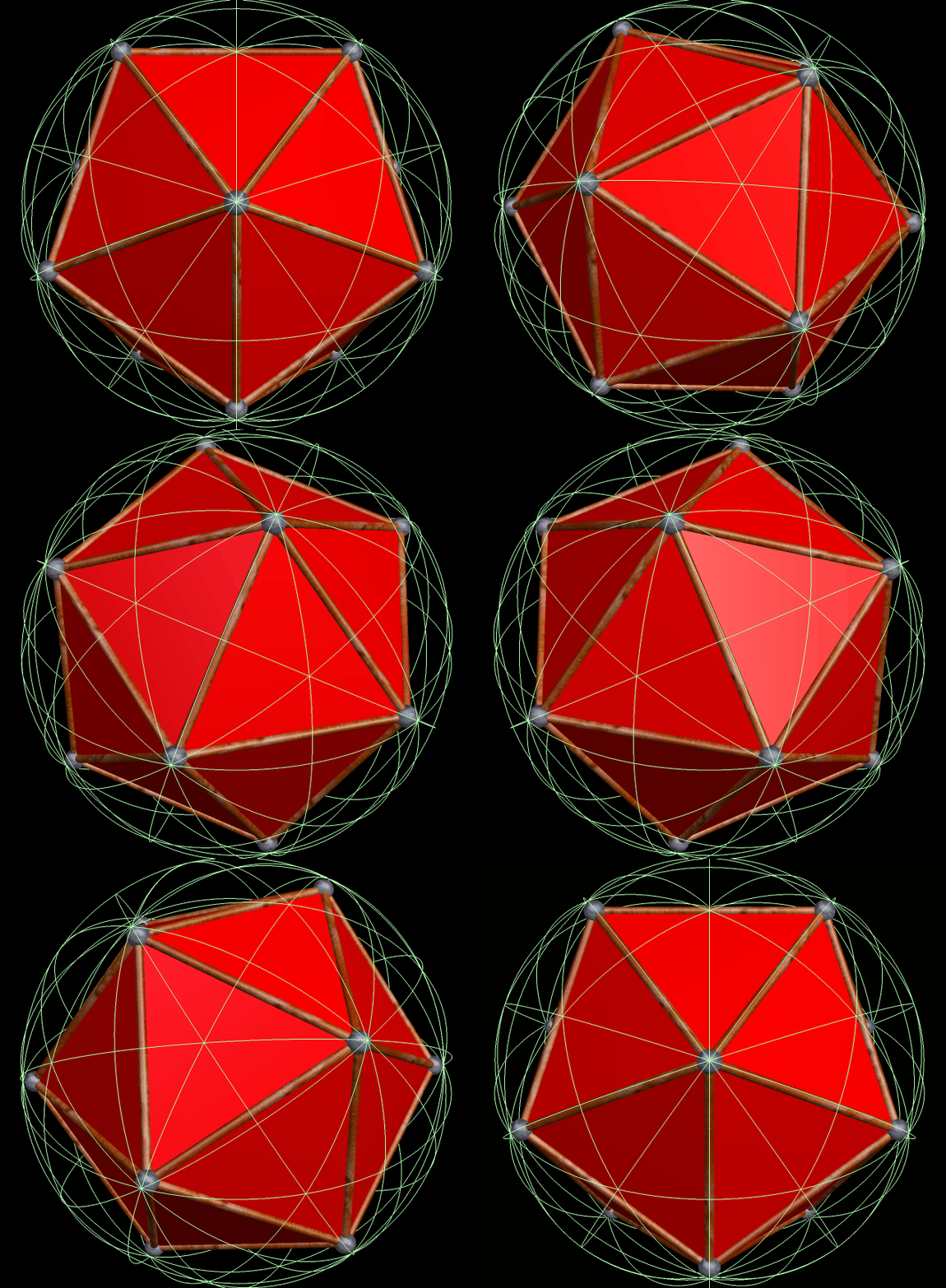
Icosahedron: find B1, in terms of R1.
There exists a right triangle which can be built in Zome which has a hypotenuse equal to 2R1, and legs epqual to B1 and B2. B2 = φB1, so, by the Pythagorean Theorem, (2R1)^2 = (B1)^ + φ²(B1)², which simplifies to 4(R1)^2 = (1 + φ²)(B1)^2, which can then be solved for B1 as B1 = sqrt[4(R1)^2/(1 + φ²)]. B1 here is the icosahedron’s edge-length, while R1 is the radius of its circumscribed sphere.

Dodecahedron: find B1, in terms of Y2.
In the Zome system, Y2 = φY1, and Y1 = [sqrt(3)/2]B1. Rearrangement of the first of these equations yields Y1 = Y2/φ, and substitution then yields [sqrt(3)/2]B1 = Y2/φ, which then can be rearranged to yield B1 = 2Y2/[φsqrt(3)]. B1 here is the dodecahedron’s edge-length, while Y2 is the radius of its circumscribed sphere.
Next, find the volume of the icosahedron inscribed inside a sphere, in terms of that sphere’s radius.
According to http://mathworld.wolfram.com/Icosahedron.html, the volume of an icosahedron is given by V = (5/12)[3 + sqrt(5)]a³, where a is the edge length, or B1 in the first indented section, between the two images, above. Then, by substitution, V = (5/12)[3 + sqrt(5)]{sqrt[4(R1)^2/(1 + φ²)]}³, which then becomes (with “r” being the radius of the circumscribed sphere) V = (5/12)[3 + sqrt(5)][2r/sqrt(1 + φ²)]³ = (40/12)[3 + sqrt(5)][1/sqrt(1 + φ²)]³r³ = (10/3)[3 + sqrt(5)][1/sqrt(1 + φ²)]³r³. Then, using the identity φ² = φ + 1, this can be further simplified to V = (10/3)[3 + sqrt(5)][1/sqrt(2 + φ)]³r³.
Next, find the volume of the dodecahedron inscribed inside the same sphere, in terms of that sphere’s radius, r.
According to https://en.wikipedia.org/wiki/Dodecahedron, the volume of an icosahedron is given by V = (1/4)[15 + 7sqrt(5)]a³, where a is the edge length, or B1 in the second indented section, below the second image, above. Then, by substitution, V = (1/4)[15 + 7sqrt(5)]{2Y2/[φsqrt(3)]}³, which then becomes (with “r” being the radius of the circumscribed sphere) V = (8/4)[15 + 7sqrt(5)]{1/[φsqrt(3)]}³r³ = 2[15 + 7sqrt(5)]{1/[3sqrt(3)]}(1/φ³)r³ = (2/3)[15 + 7sqrt(5)][sqrt(3)/3](1/φ³)r³ = [2sqrt(3)/9][15 + 7sqrt(5)](1/φ³)r³.
So, with the “r” in each case being the same, the icosahedron is larger than the dodecahedron iff (10/3)[3 + sqrt(5)][1/sqrt(2 + φ)]³ > [2sqrt(3)/9][15 + 7sqrt(5)](1/φ³), which simplifies to (5)[3 + sqrt(5)][1/sqrt(2 + φ)]³ > [2sqrt(3)/3][15 + 7sqrt(5)](1/φ³), which simplifies further to {5/[sqrt(2 + φ)]³}[3 + sqrt(5)] > [2sqrt(3)/3φ³][15 + 7sqrt(5)], which is, as a decimal approximation, is (0.726542528)(5.2360679774998) > (3.464101615/12.708203932)(30.6524758), or 3.804226 > 8.355492, which is false, meaning that the dodecahedron is larger, not the icosahedron.
Now for the bad part: I think I’m wrong, but I don’t know where the error lies. I’m also tired. If any of you see the mistake, please point it out in a comment, and I’ll try to fix this after I’ve rested.
Update: if the websites http://rechneronline.de/pi/icosahedron.php and http://rechneronline.de/pi/dodecahedron.php work correctly, then the dodecahedron is larger. Evidence:

This does not, however, mean that I did the problem correctly. I merely stumbled upon the correct answer. How do I know this? Simple: the ratio I obtained was too far off. Therefore, I would still welcome help clearing up the mystery of where my error(s) is/are, in the calculations shown above.
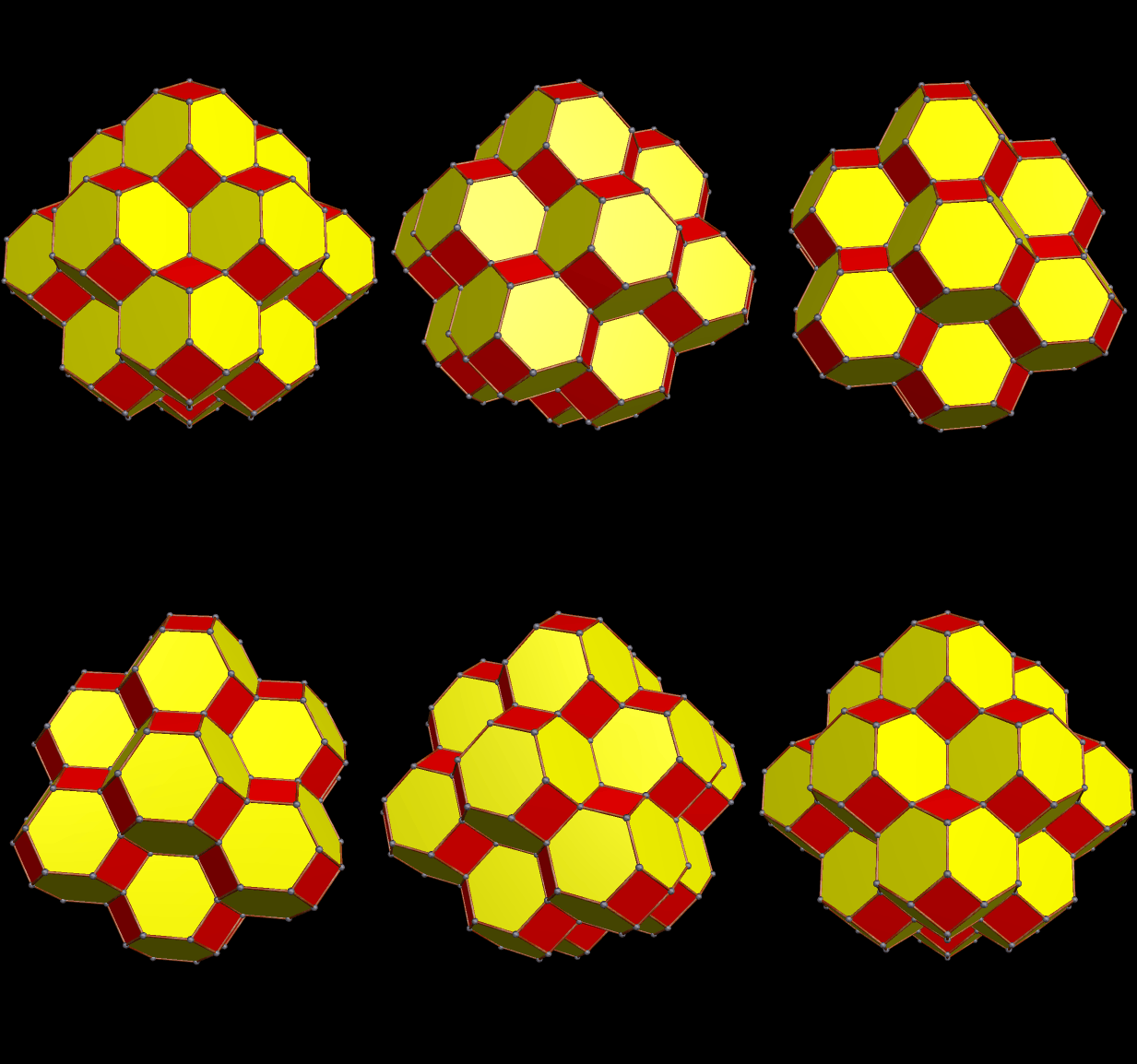
To form the cluster-polyhedron above, I started with one truncated octahedron in the center, and then augmented each of its fourteen faces with another truncated octahedron. Since the truncated octahedron is a space-filling polyhedron, this cluster-polyhedron has no gaps, nor overlaps. The same cluster-polyhedron is below, but colored differently: each set of parallel faces gets a color of its own.
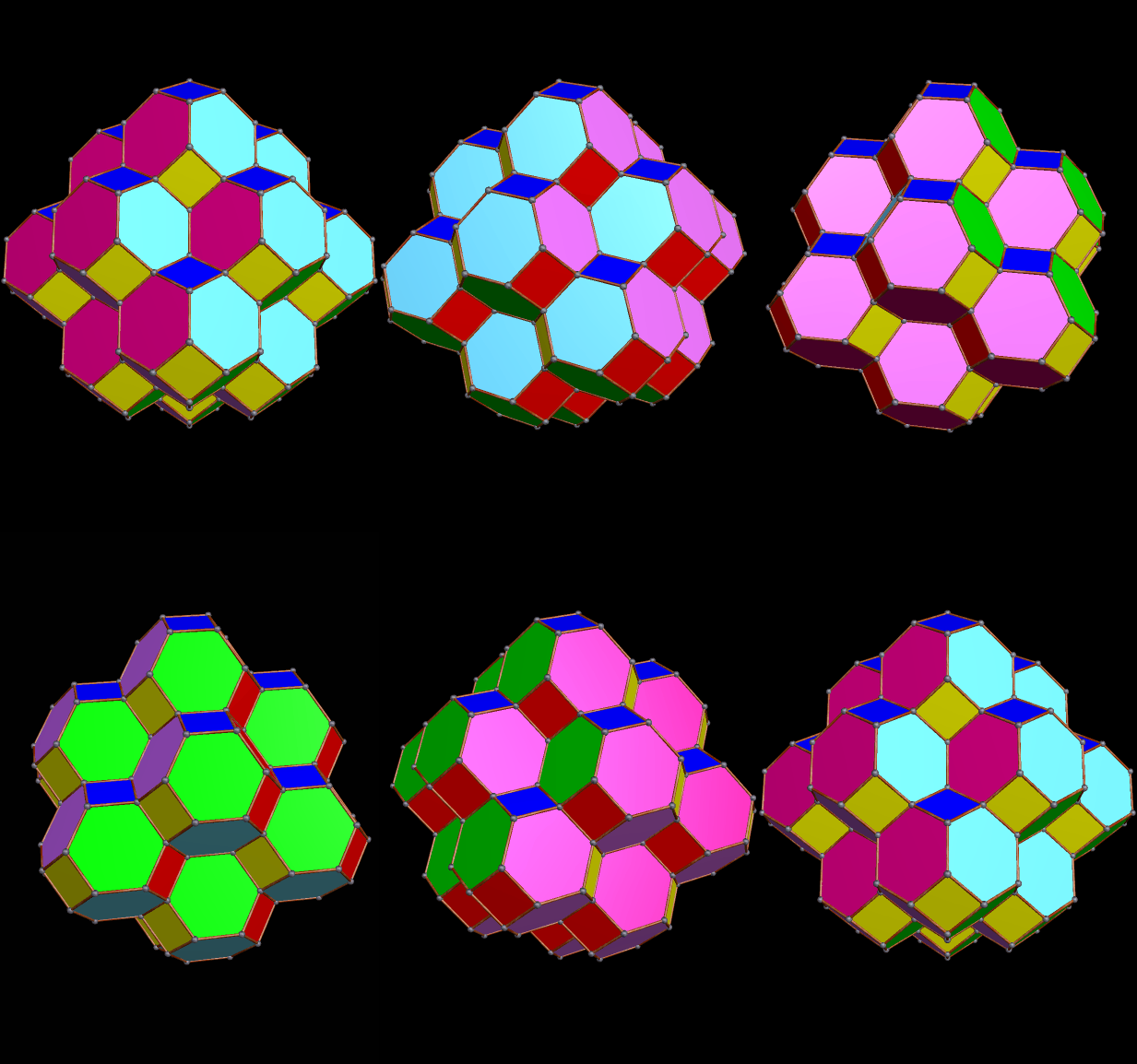
This is the cluster-polyhedron’s sixth stellation, using the same coloring-scheme as in the last image:

Here’s the sixth stellation again, but with the coloring scheme that Stella 4d: Polyhedron Navigator (the program I use to make these images) calls “color by face type.” If you’d like to try Stella for yourself, you can do so here.
Also colored by face-type, here are the 12th, 19th, and 86th stellations.


Leaving stellations now, and returning to the original cluster-polyhedron, here is its dual.
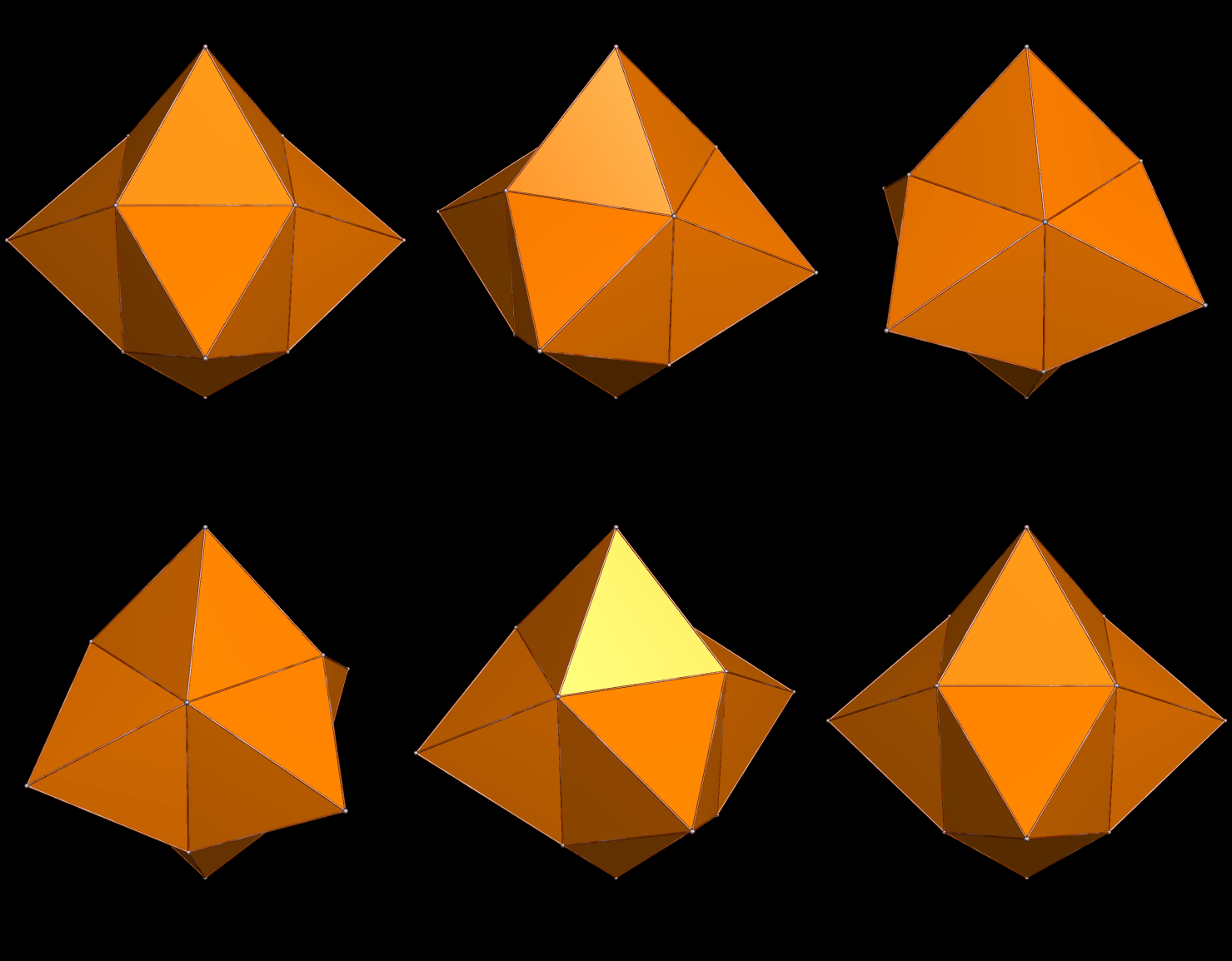
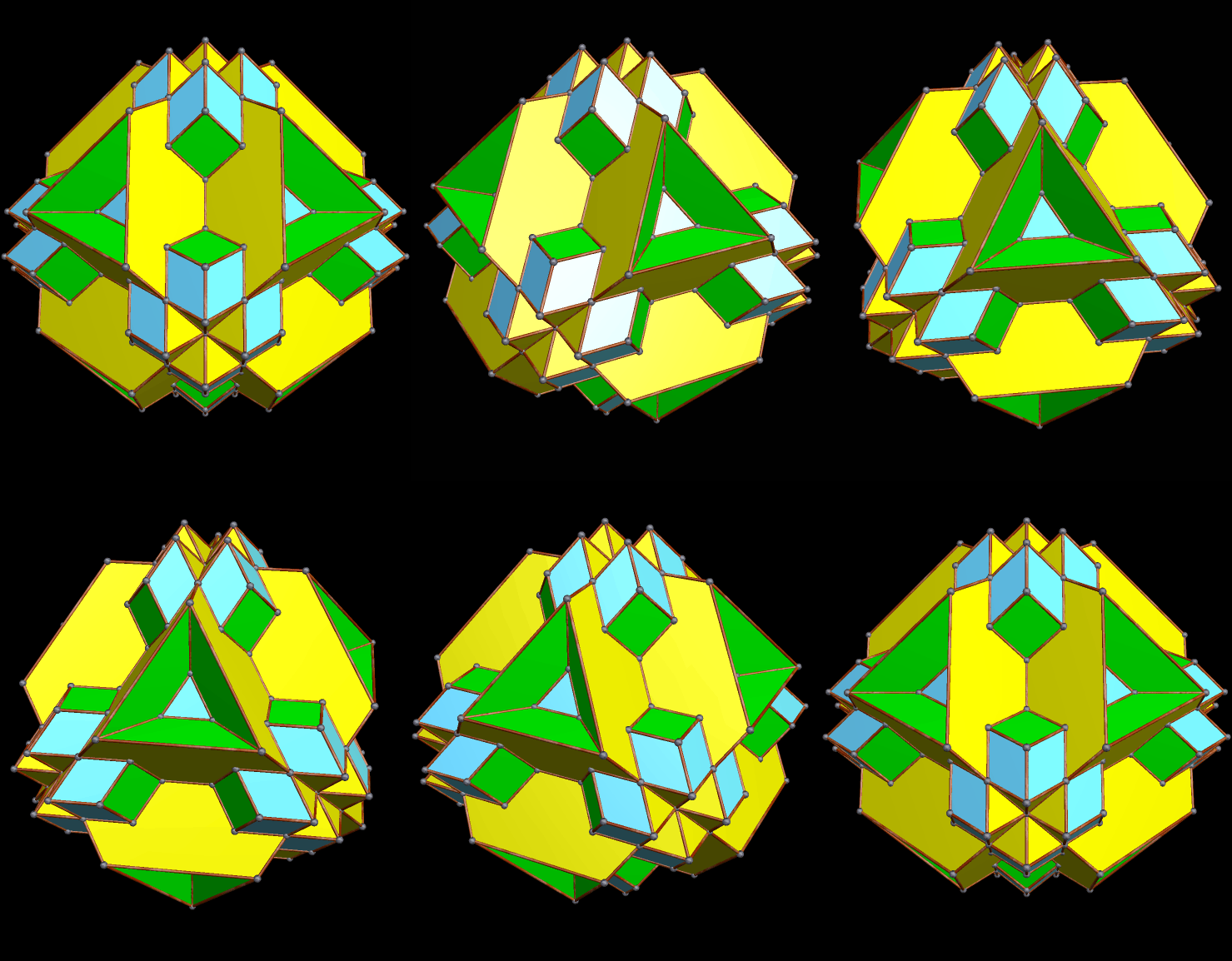
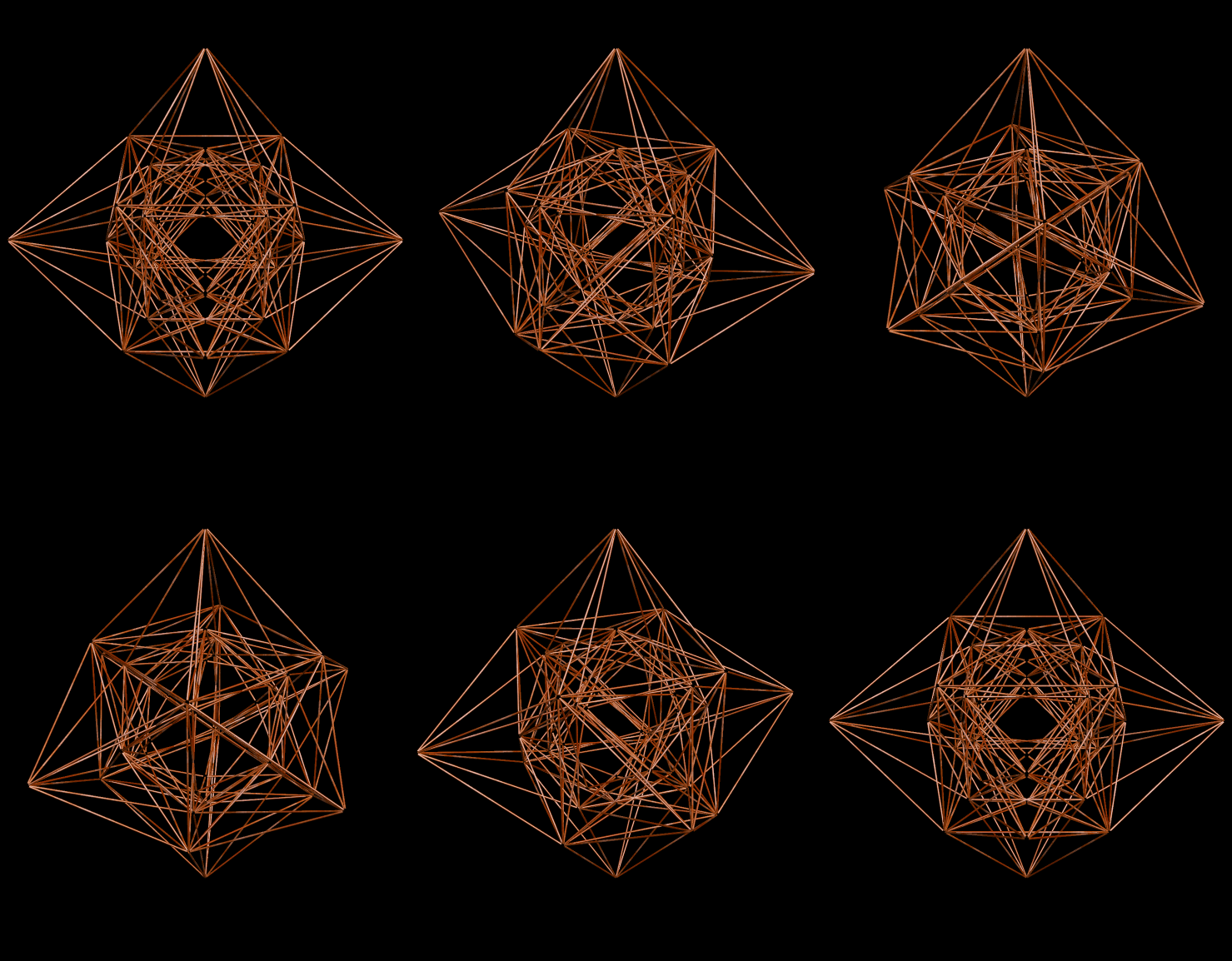
This image reveals little about this dual, however, for much of its structure is internal. So that this internal structure may be seen, here is the same polyhedron, but with only its edges visible.
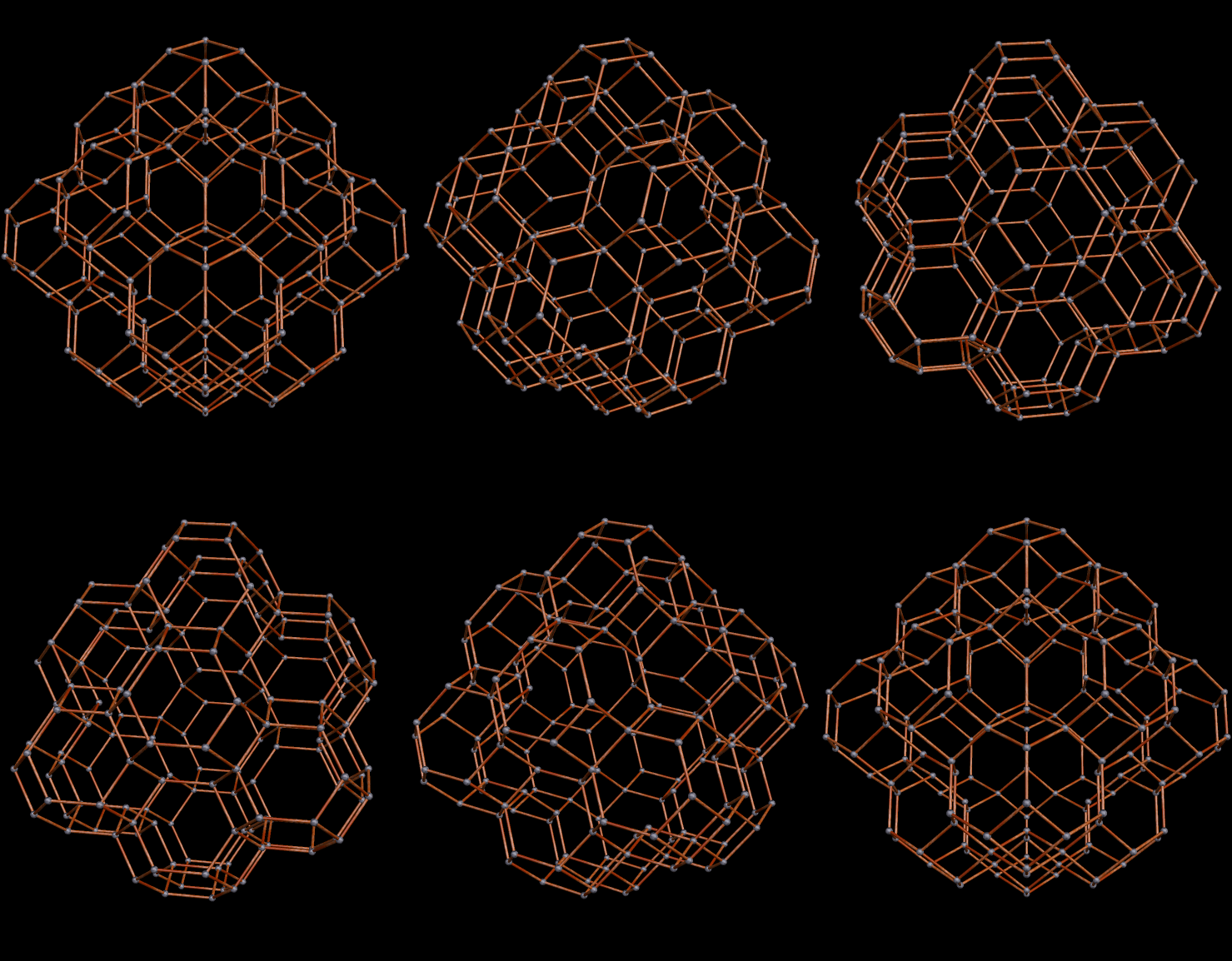
Finally, here is an edge-rendering of the original cluster-polyhedron, but with vertices shown as well — just not the faces.
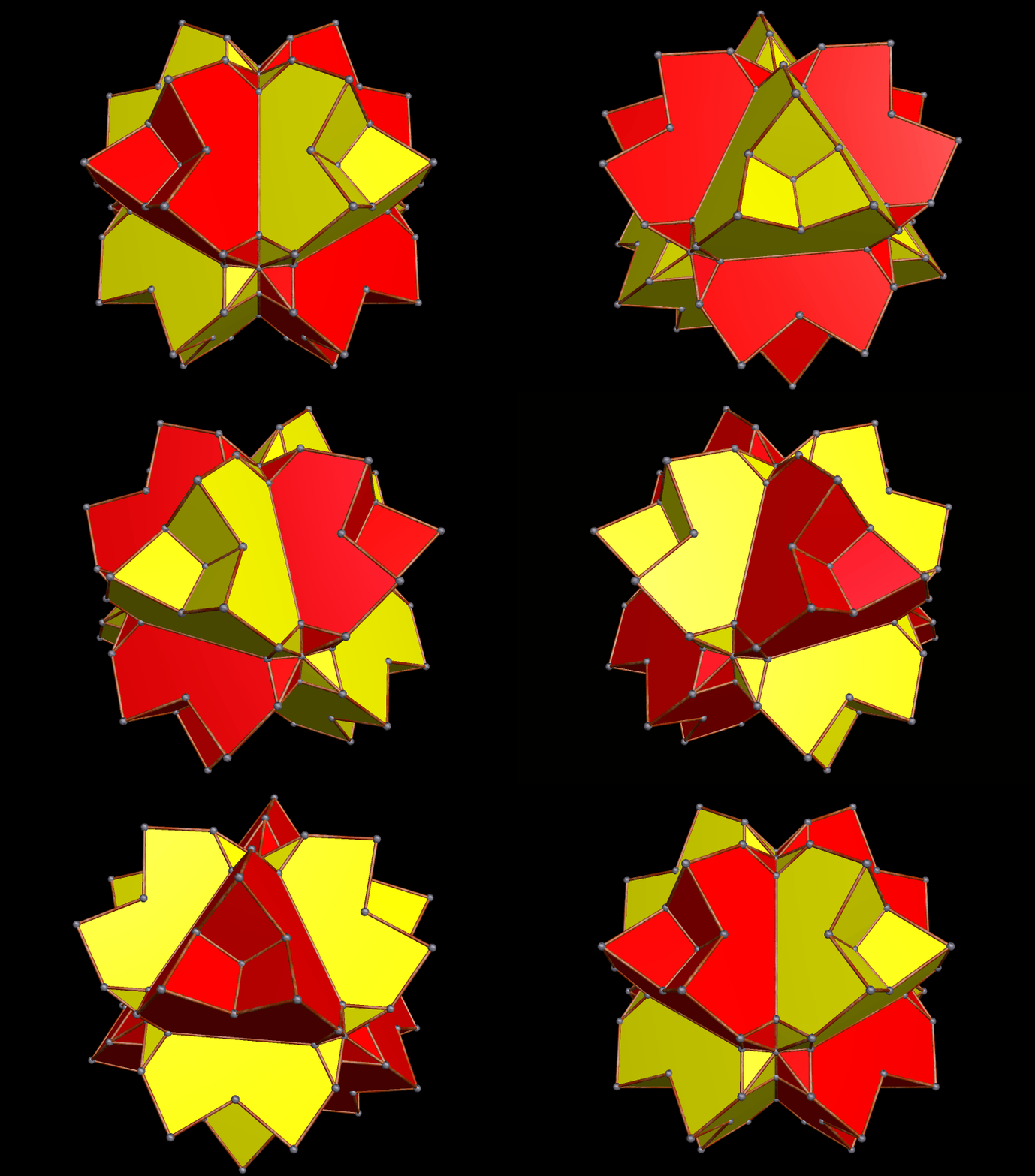
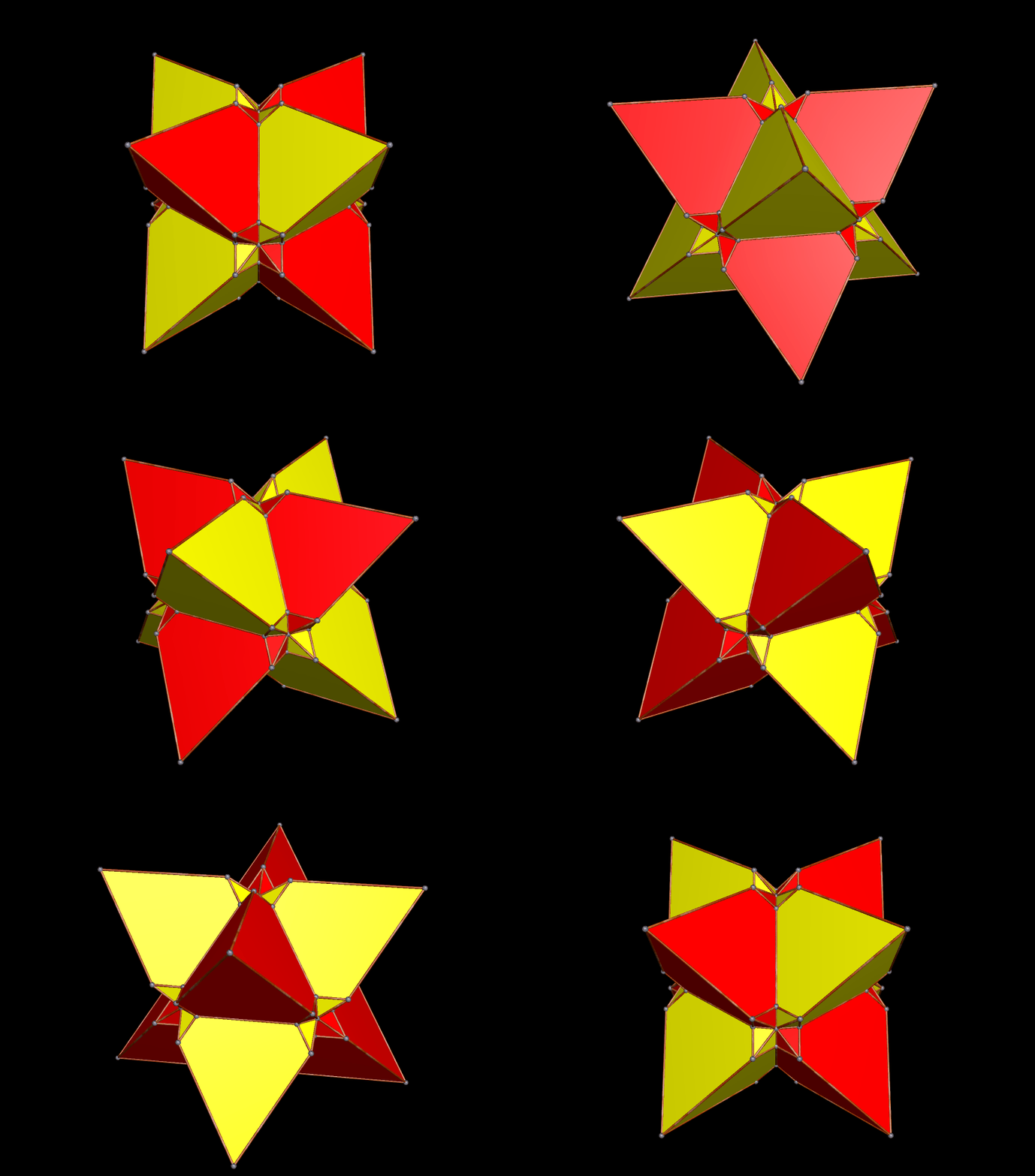
The Stella Octangula is also known as the compound of two tetrahedra, which works well because the tetrahedron is self-dual. All of these are also two-part compounds, with varying amounts of similarity to the Stella Octangula. The first one is also the 26th stellation of the triakis octahedron, one of the Catalan solids.

All of these were made using Stella 4d, which may be tried or purchased at http://www.software3d.com/Stella.php.
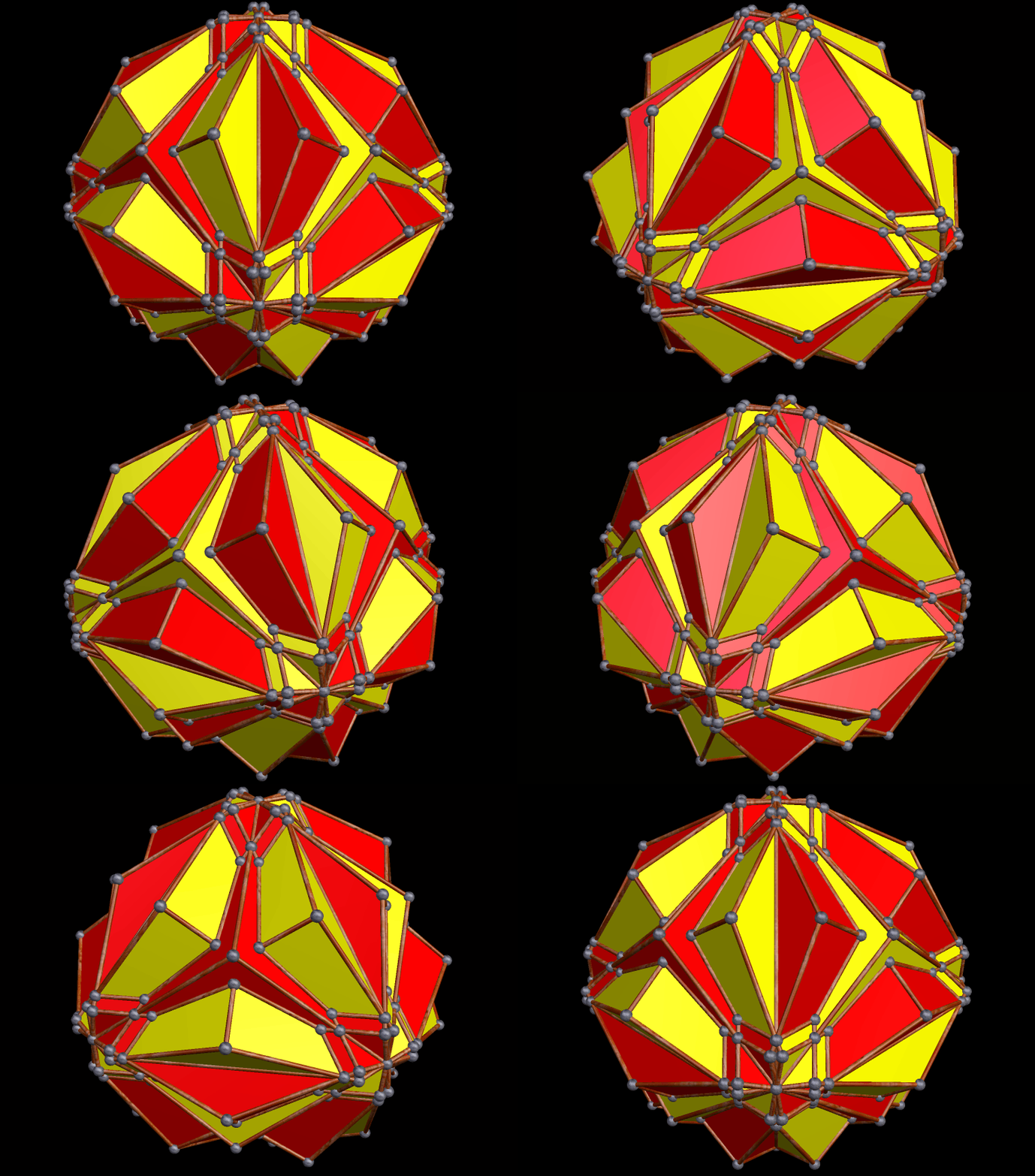


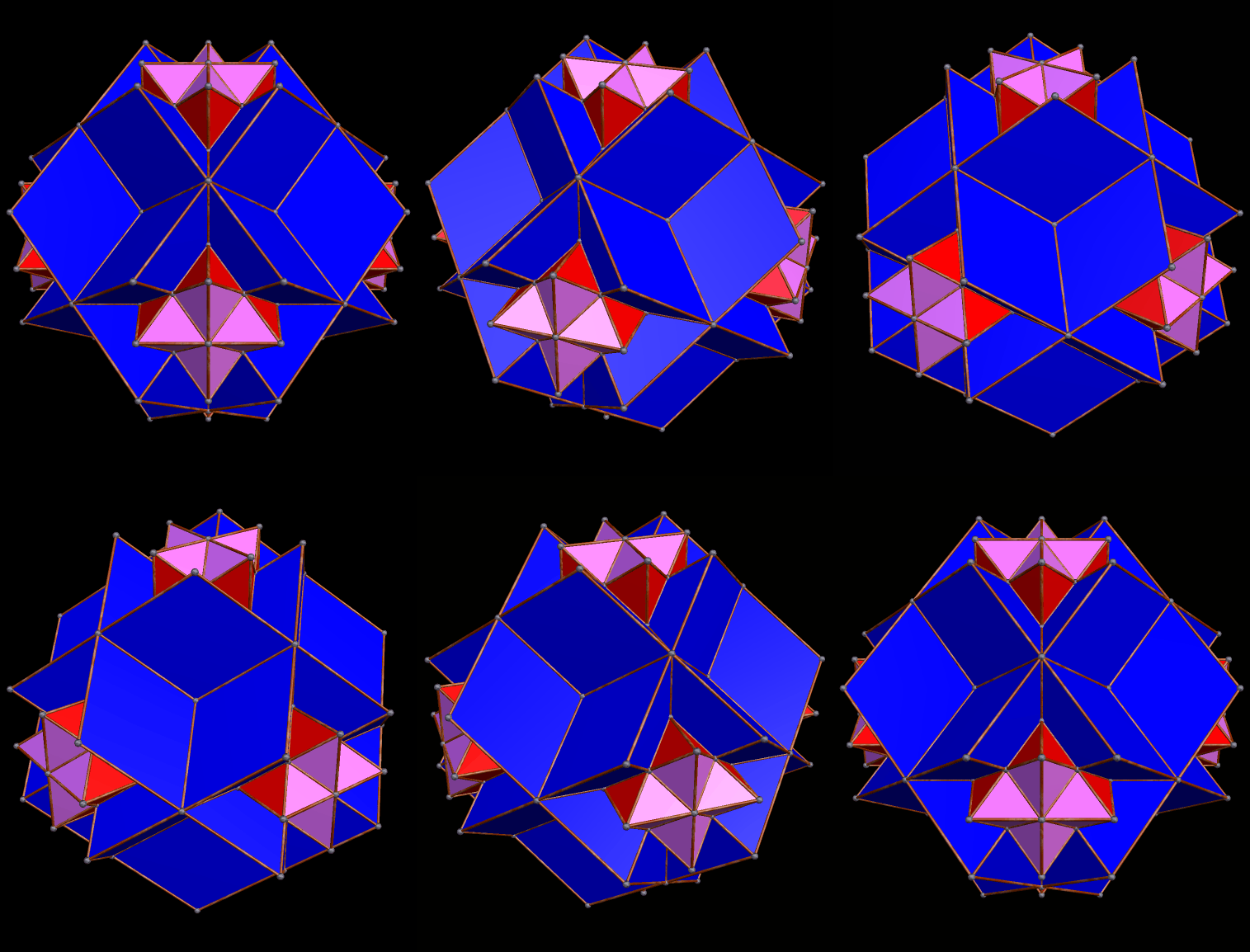
The original polyhedral cluster I built using Stella 4d (available here) is above. Below is its 29th stellation.

And the 30th stellation, as well:
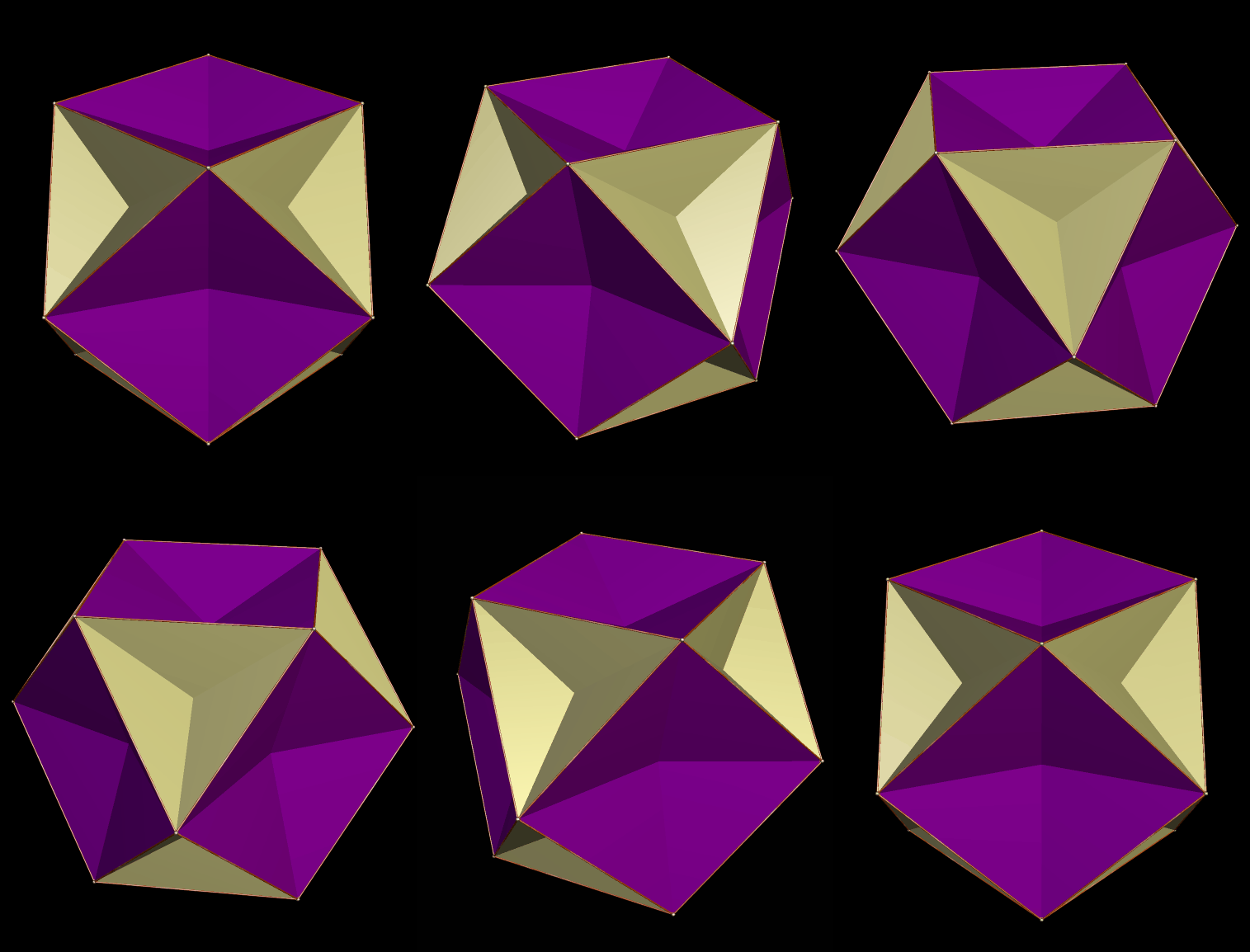
This is the original polyhedral cluster’s dual:
The next image is a variant of the original polyhedral cluster, rendered with only its edges, but not faces or vertices, visible. I wish I could remember exactly how I made this variant, but I simply cannot recall the exact methods I used.
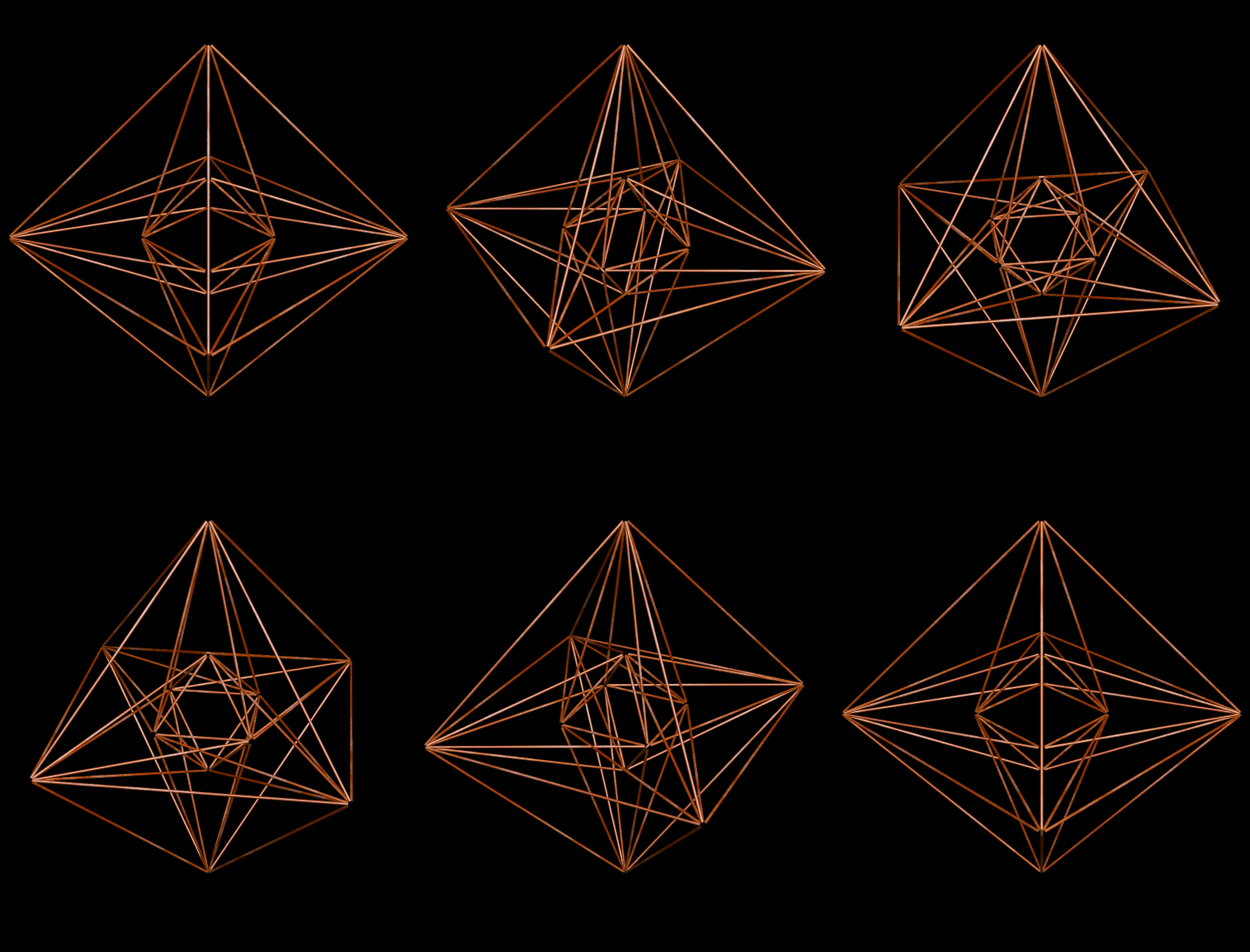
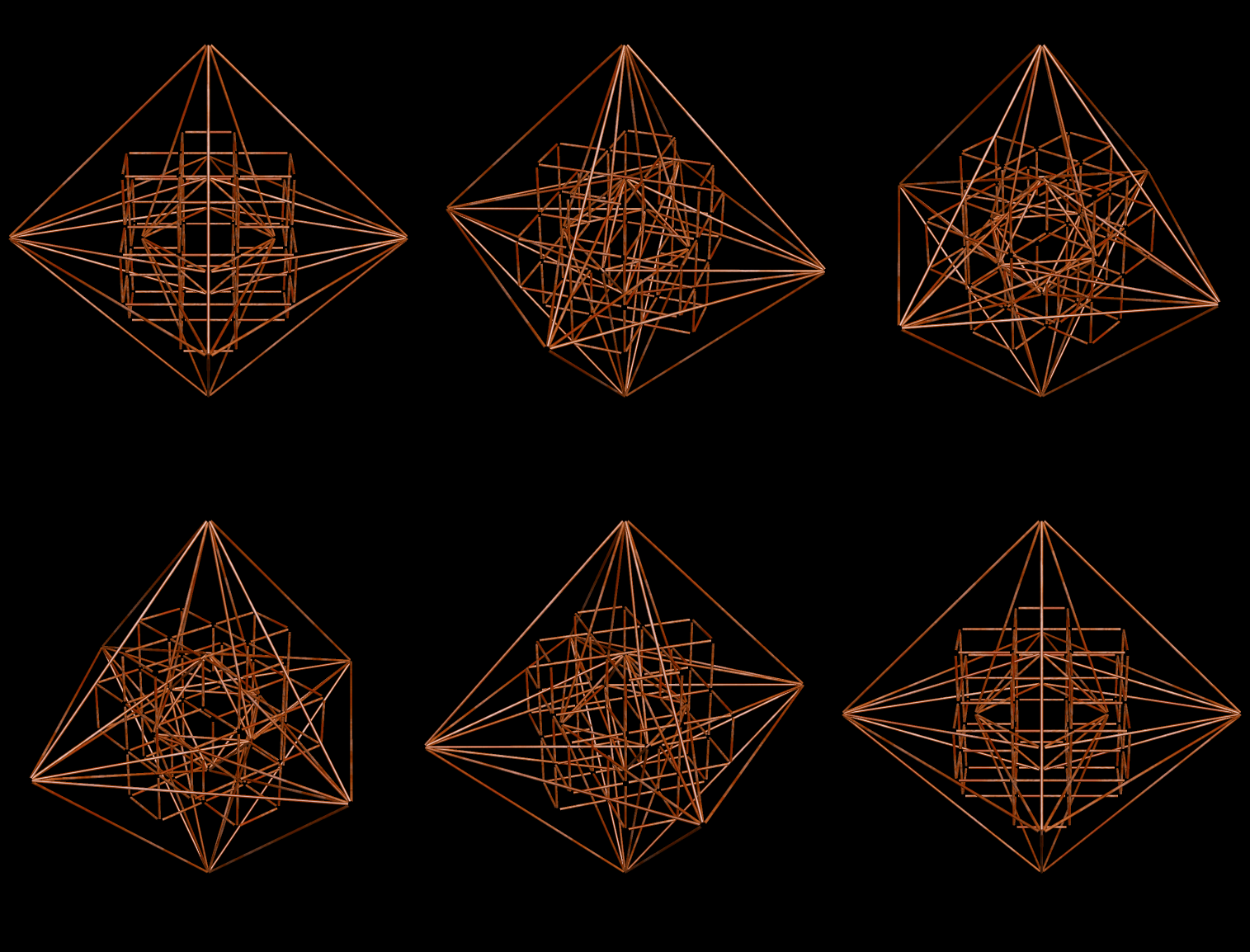
This is the dual of the polyhedron shown immediately above, rendered in the same manner:
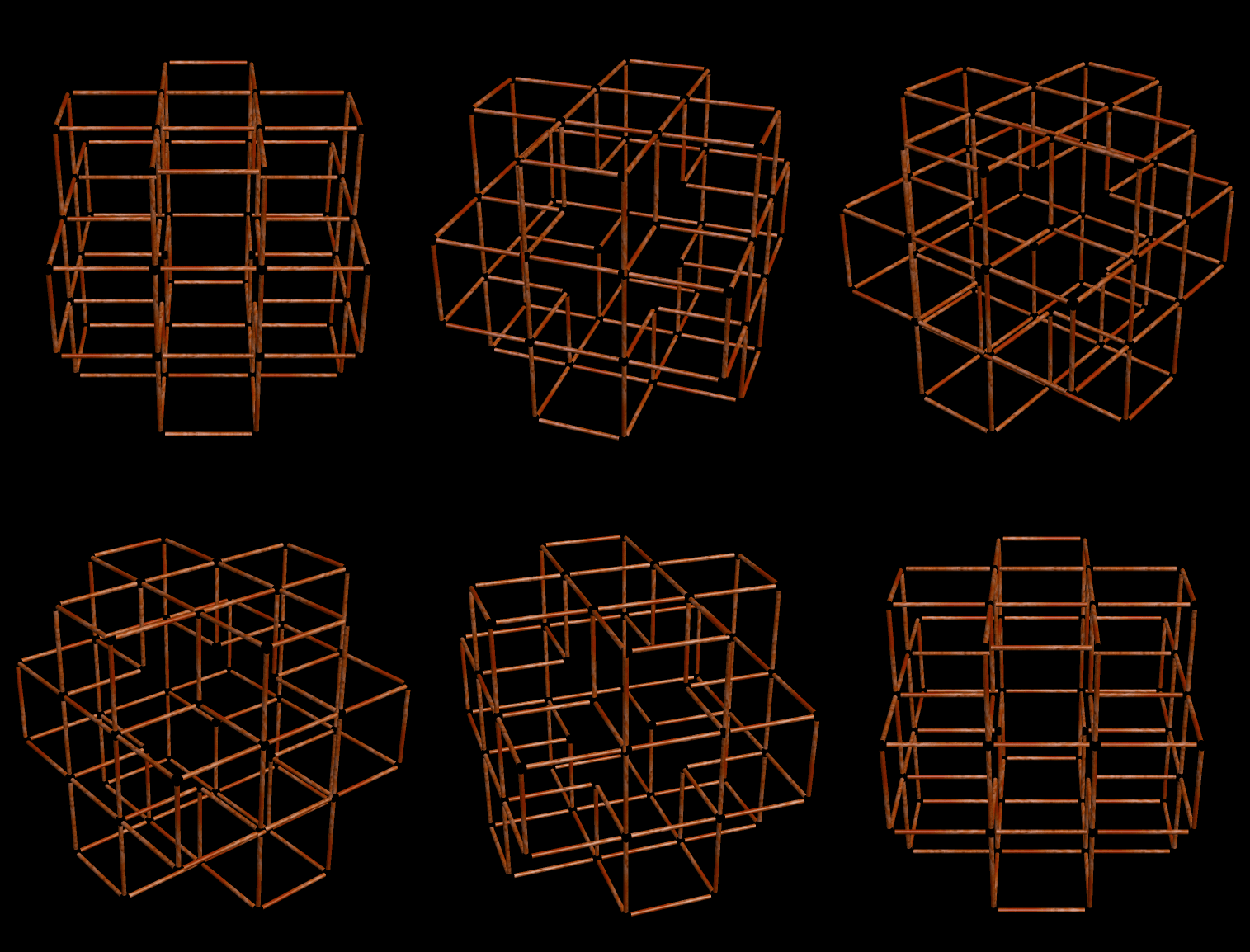 This is a compound of the two dual polyhedra right before this sentence.
 RobertLovesPi.net