Spinning Dipyramids

I made these videos using my cell phone and a magnetic ball-and-stick polyhedron building system which my wife bought for me. It’s the sticks that have magnets in them, not the steel balls. First, a triangular dipyramid (n = 3). This is the simplest of the dipyramids.

Next, a square dipyramid, also known as an octahedron (n = 4).

Next, for n = 5, the pentagonal dipyramid.

If you limit yourself to dipyramids that have equilateral triangles for faces, that’s the complete set. Here’s what happens when you try n = 6 — the dipyramid has zero height, and collapses into a pair of isosceles trapezoids when lifted.

To get this to work, you’d need to use isosceles triangles, not equilateral ones. The same is true for n = 7 and greater numbers.
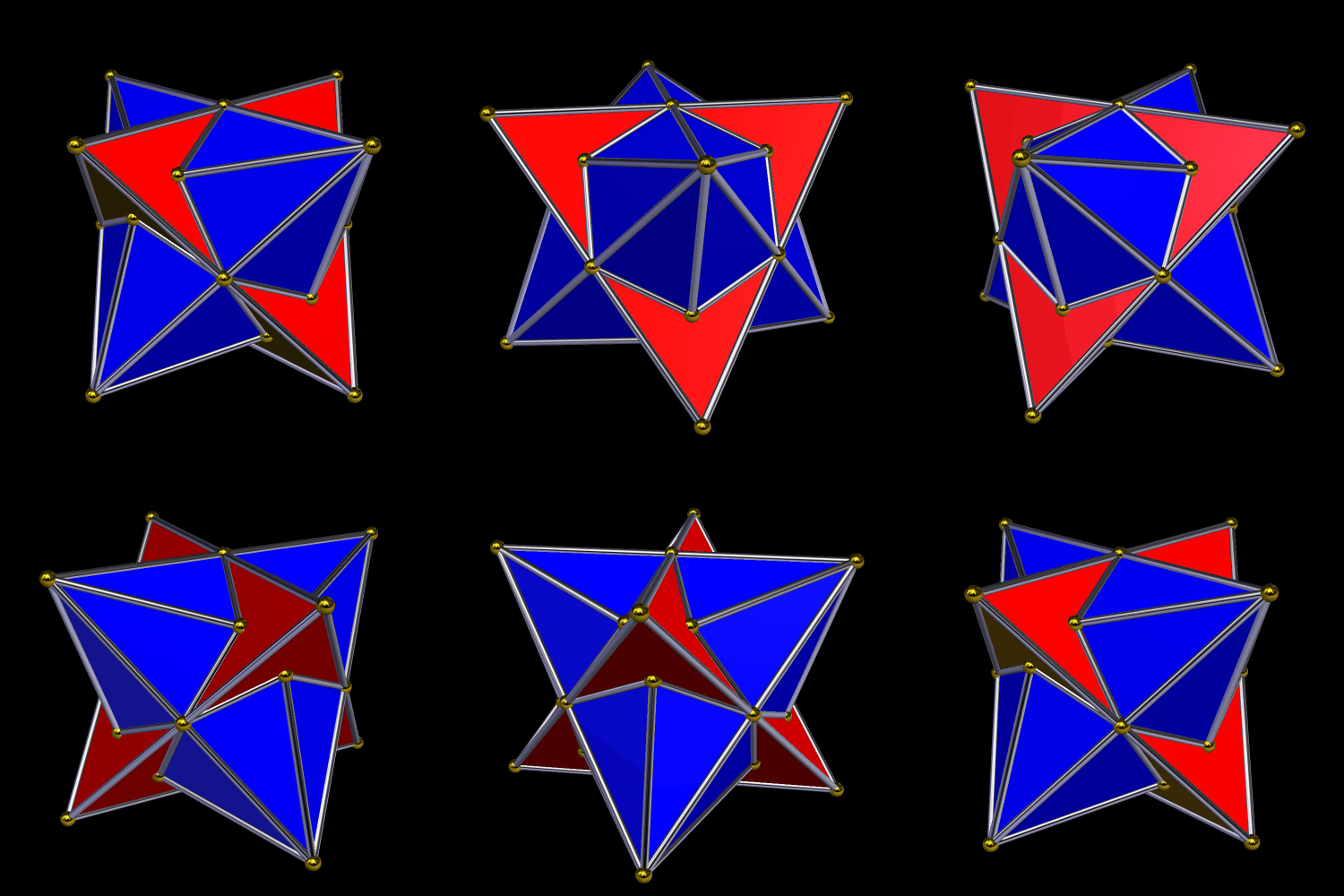
The Compound of the Platonic Tetrahedron and the Triakis Tetrahedron

I made this compound using Stella 4d, which you can try for free at this website.

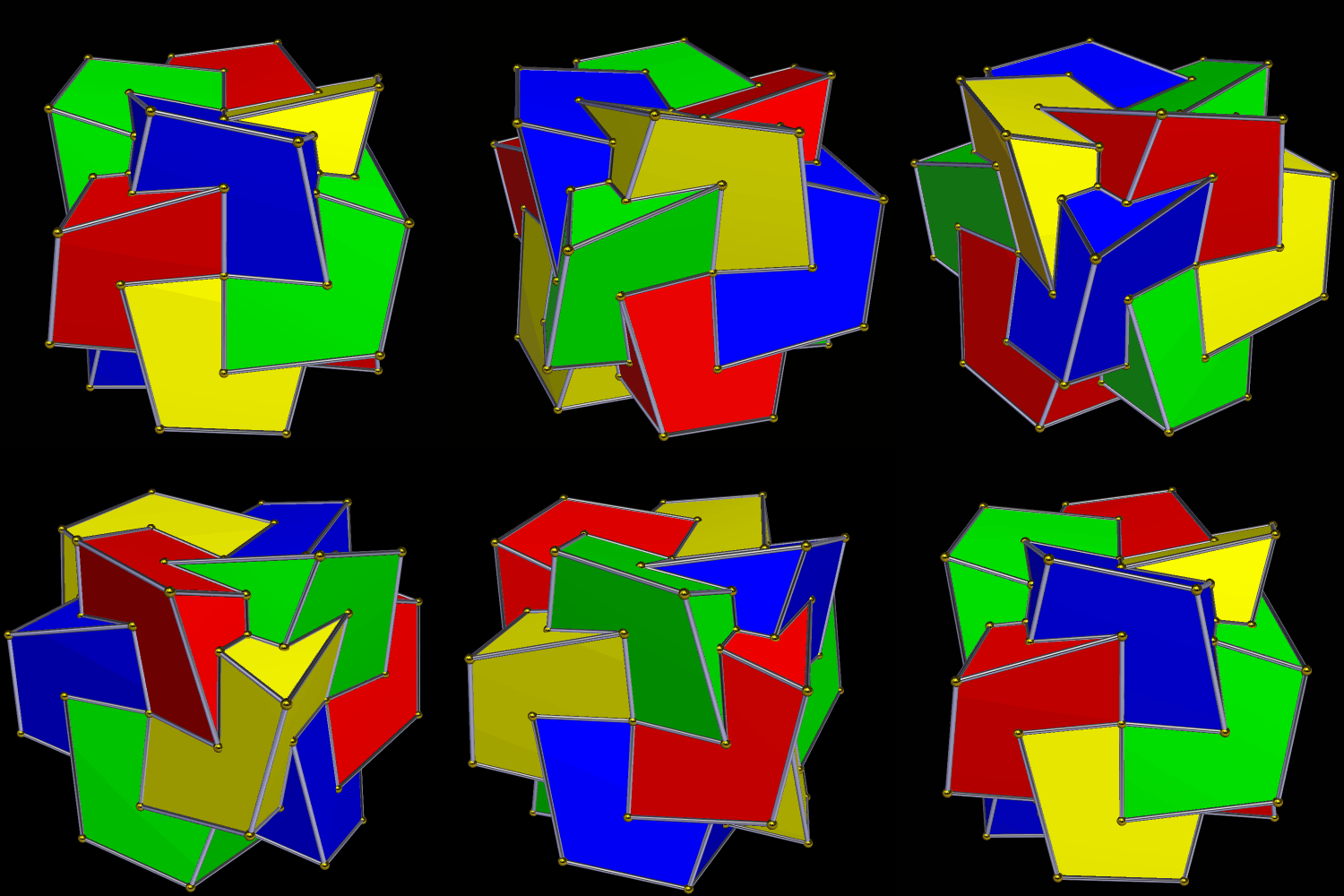
A Faceting of the Great Rhombicosidodecahedron

I made this from the Archimedean Great Rhombicosidodecahedron, using a program called Stella 4d. If you’d like to try Stella for yourself, you can do so, for free, at this website: http://www.software3.com/Stella.php.

A Polyhedron Featuring Twelve Triacontagonal Faces

This polyhedron has 272 faces in all. I made it using Stella 4d, a program you can try for free at this website.

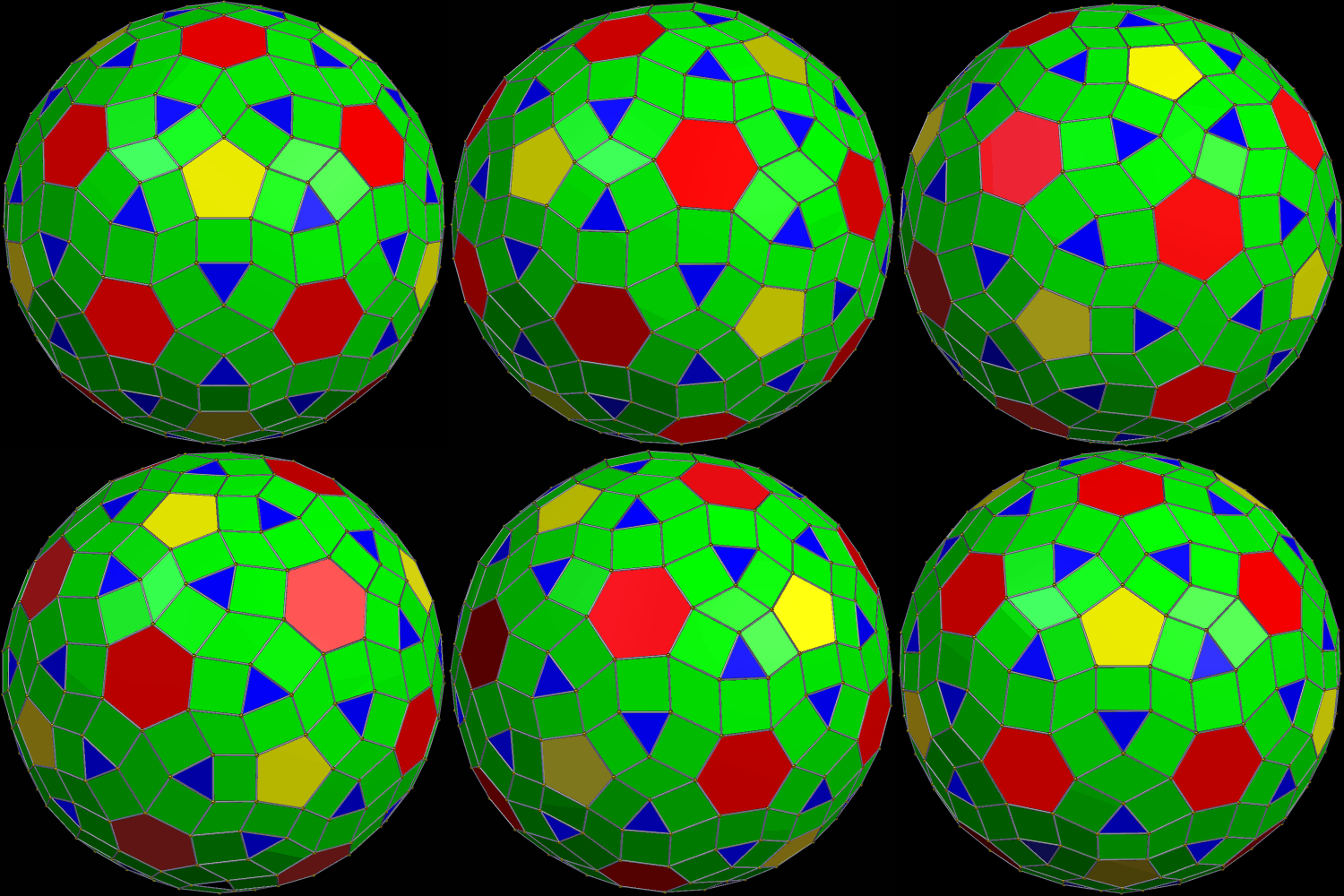
A 362-Faced Polyhedron

This solid has, as faces, 12 regular pentagons, 20 regular hexagons, and 60 isosceles triangles, along with a bunch of quadrilaterals of various types. I made it using Stella 4d, which you can try for free at this website.

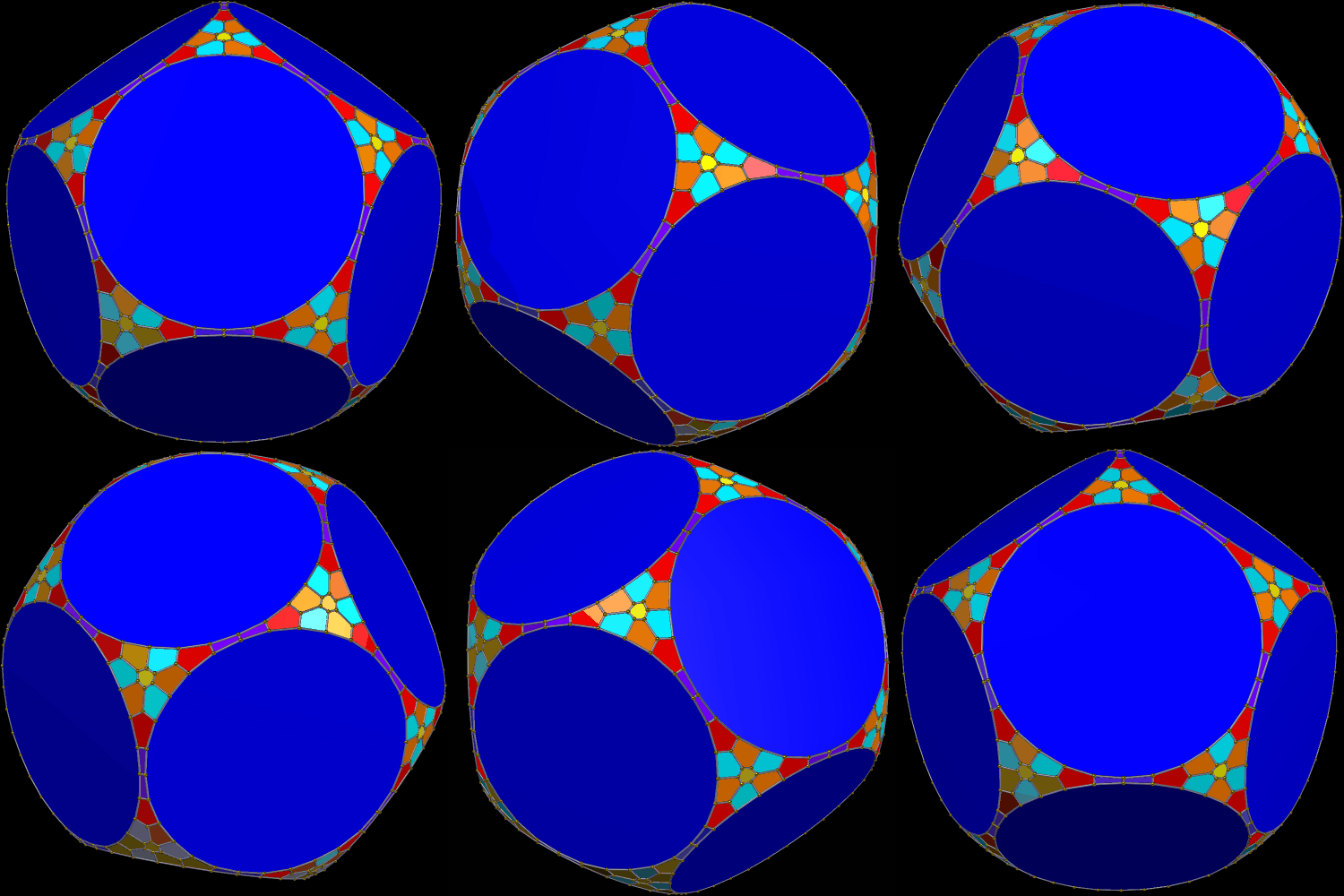
Truncated Icosahedron Variant

I made this using Stella 4d, which you can try for free here.

Two Mandalas (from 2013)

I found these on Facebook, and could find no evidence that I’d ever blogged them here — so here they are. The first one is based on the number nine, while the second is based on fifteen.

Playing with One of Stella’s “Morph Duals” Functions

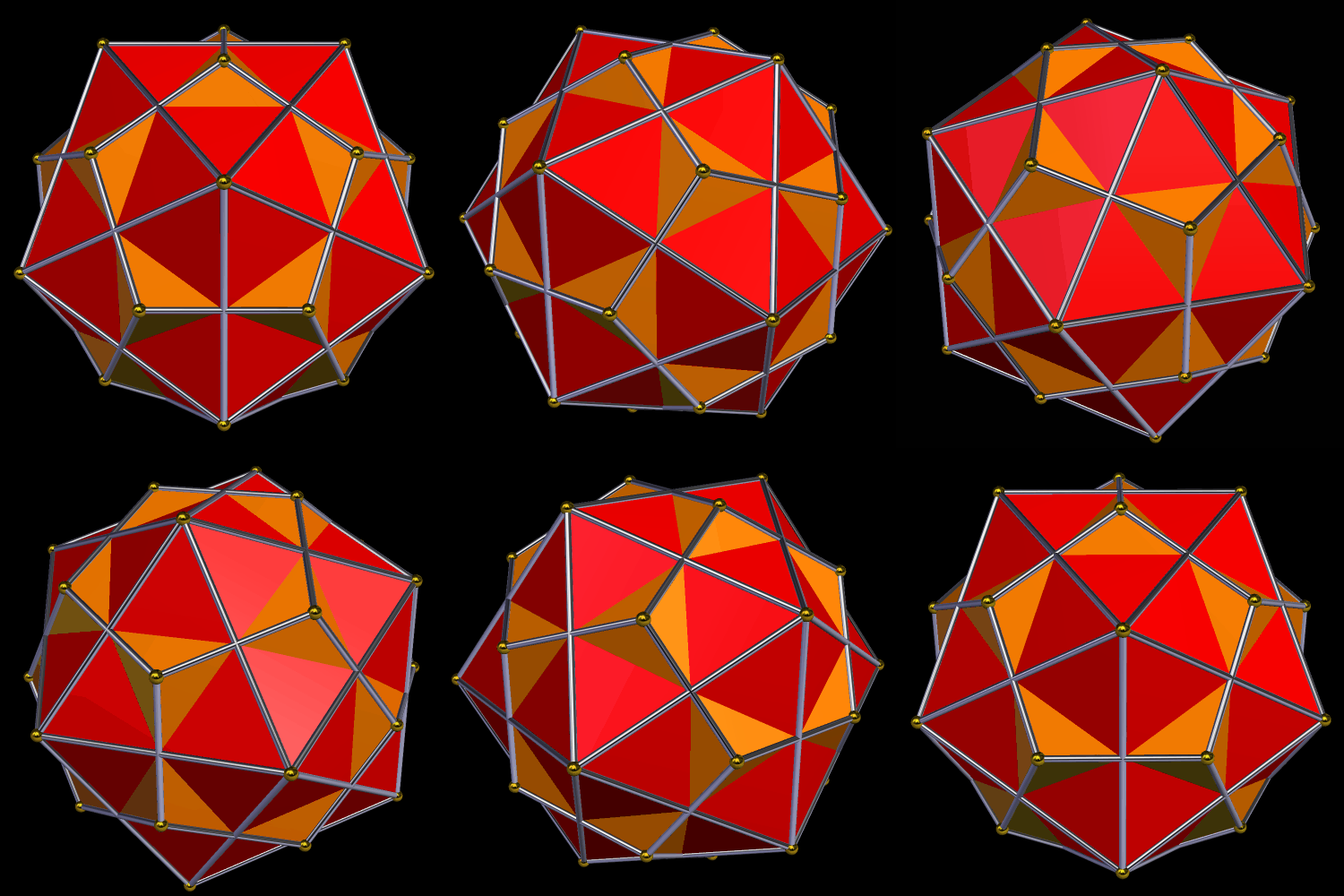
“Morph Duals By Tilting To Duals” is a Stella 4d feature that I haven’t used much. Here’s what happens if you apply it to an icosahedron, at the 50% morphing level: you get the compound of the icosahedron and its dual, the dodecahedron,

If you apply this same operation a second time, here’s what you get.

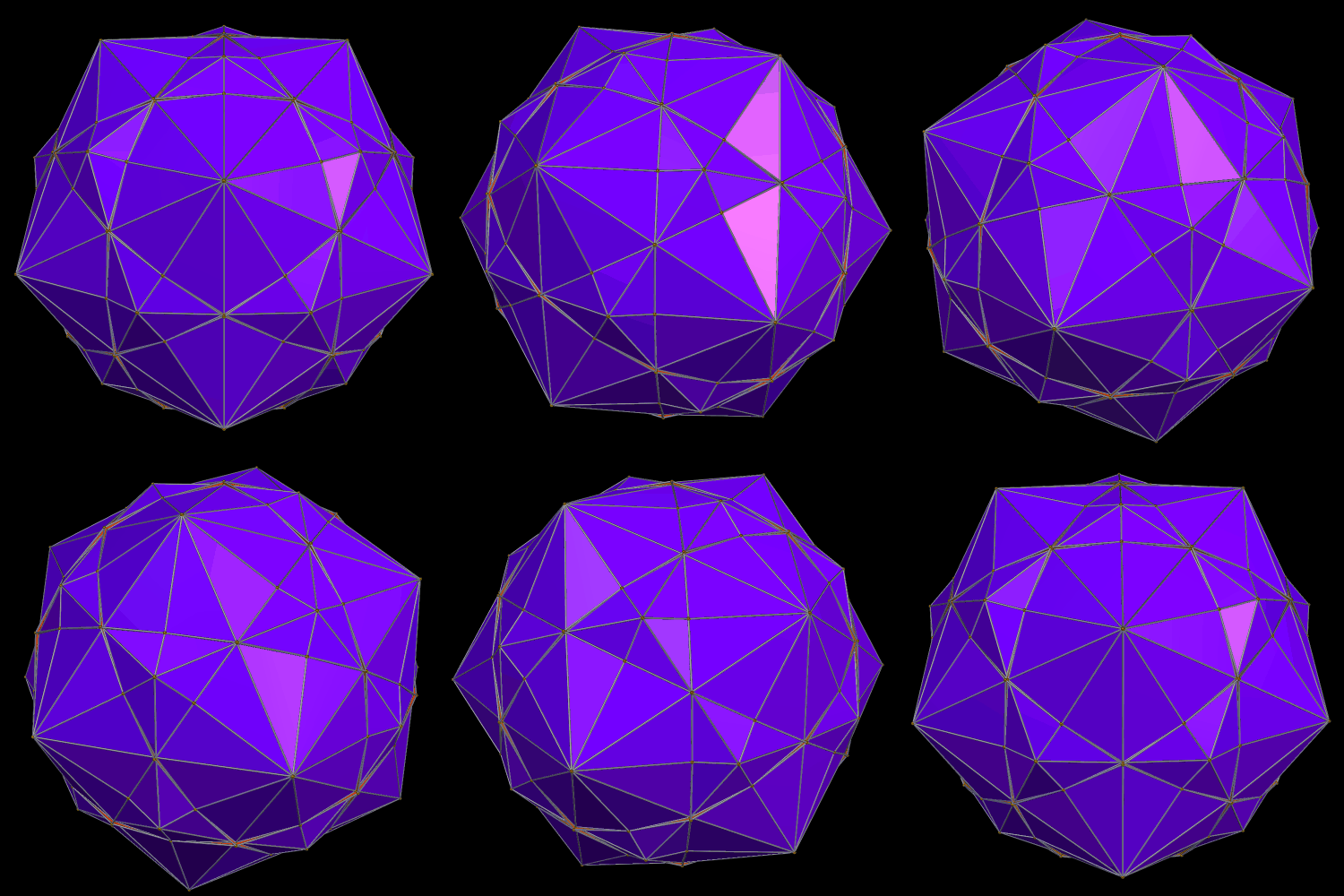
This appears to be a three-part compound, with two familiar components: the icosahedron (red) and the dodecahedron (orange). Remove those two components, and you get this:

Since this reminds me of an icosidodecahedron, I colored its faces to better suit that identity.

Little peeks at the edges of the solid above made me suspicious, so I hid these purple and green faces, to see the inner structure. Here’s the result.

I made all of these using Stella 4d, which you can try free at http://www.software3d.com/Stella.php.

A Four-Part Polyhedral Compound

I stumbled upon this compound while playing with Stella 4d, a program you can try for free right here.

The Pyramid-Augmented Cuboctahedron

I made this using Stella 4d, which you can try for free right here.