
I made this faceting of the rhombicosidodecahedron using Stella 4d: Polyhedron Navigator. You can try this program out, for free, at http://www.software3d.com/Stella.php.
I made this faceting of the rhombicosidodecahedron using Stella 4d: Polyhedron Navigator. You can try this program out, for free, at http://www.software3d.com/Stella.php.
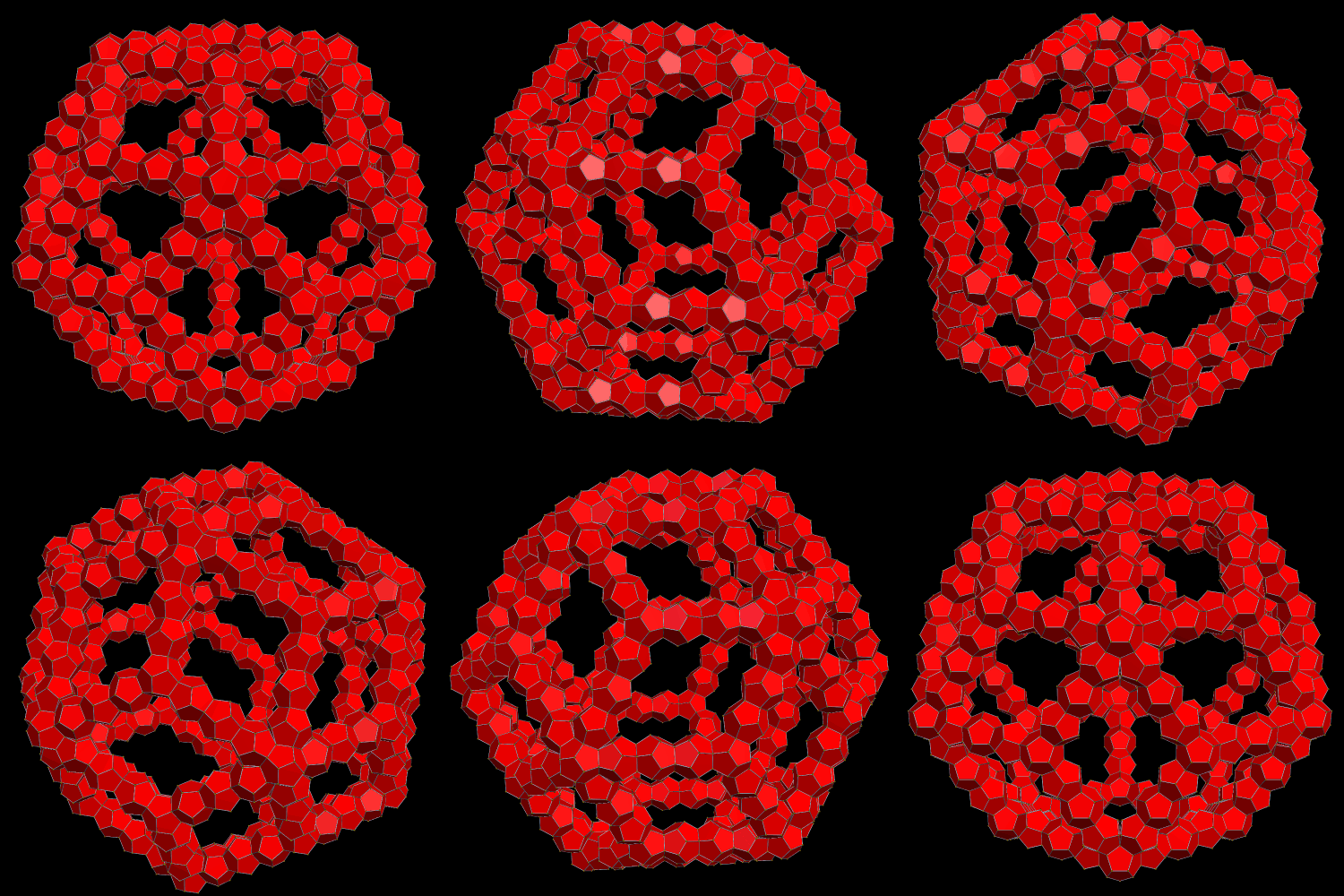

I made these using Stella 4d, a program you can try as a free trial download at http://www.software3d.com/Stella.php.
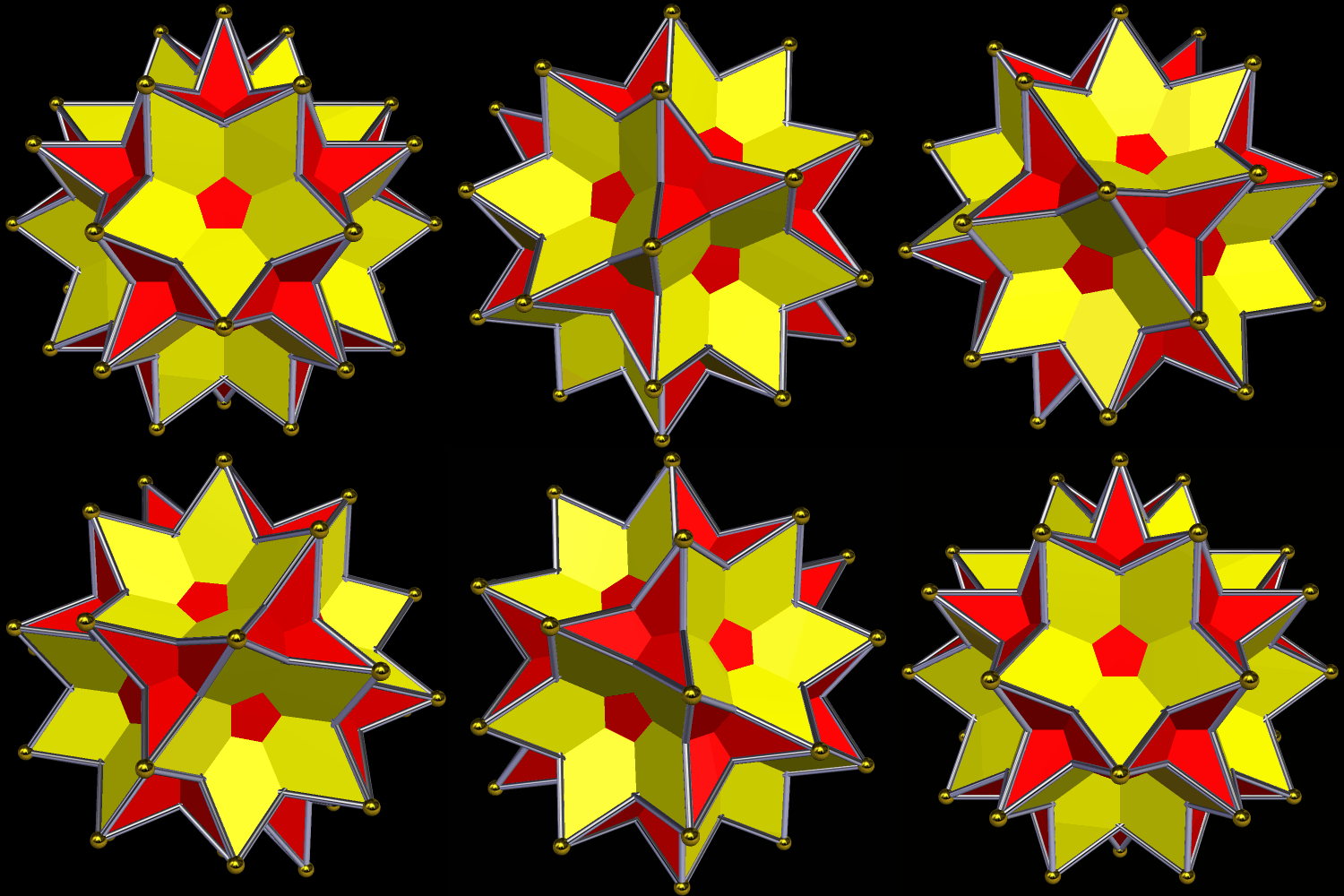
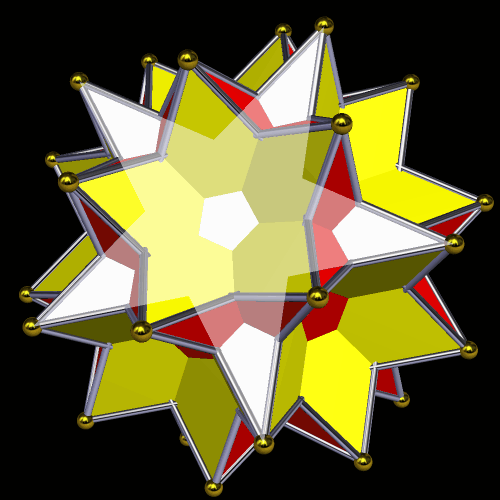
The great icosidodecahedron is one of the uniform polyhedra, which I do not know well. I stumbled across it while creating facetings of the (lesser) icosidodecahedron. This solid has two face-types, there are red pentagrams and yellow equilateral triangles, as seen in the next two pictures.
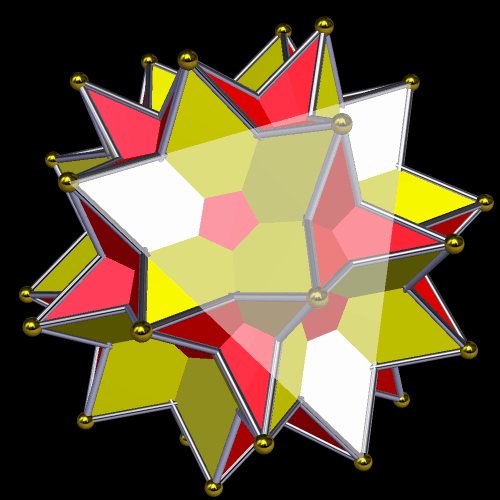
The dual of this solid is the great rhombic triacontahedron. Its faces are thirty interpenetrating rhombi.
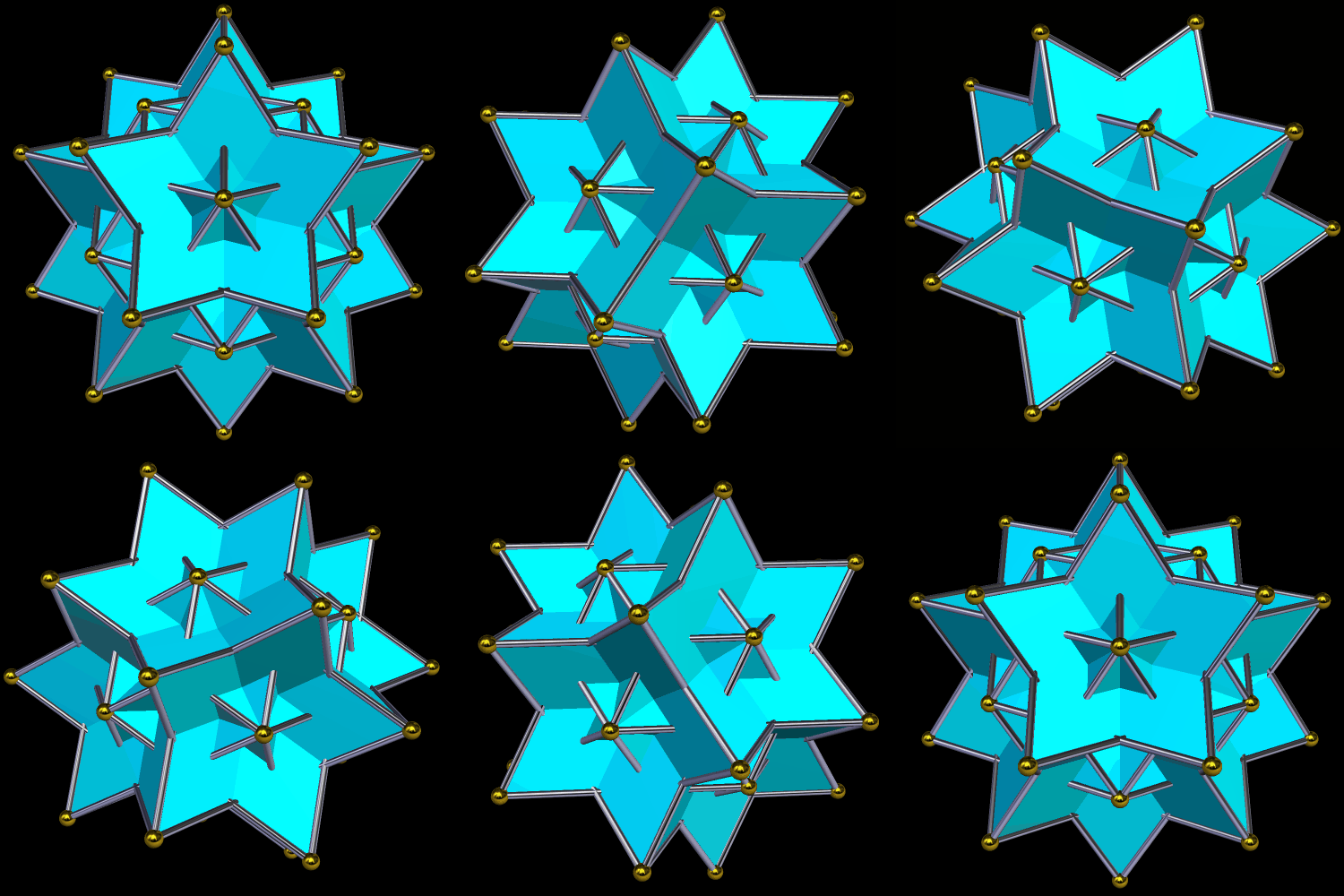
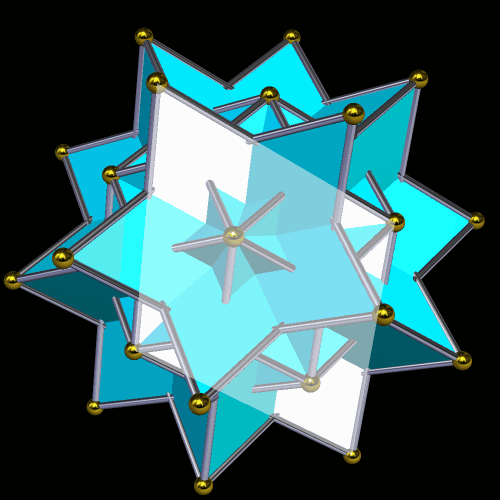
I used Stella 4d to create these images. You may try this program for free at http://www.software3d.com/Stella.php.

I made this using Stella 4d, which you can try for free at http://www.software3d.com/Stella.php.
There are six regular, convex four-dimensional polytopes. Five of them correspond on a 1:1 basis with the Platonic solids (as the tesseract corresponds to the cube), leaving one four-dimensional polytope without a three-dimensional analogue among the Platonics. That polychoron is the icositetrachoron, also named the 24-cell and made of 24 octahedral cells. It also happens to be self-dual.

If, in hyperspace, the corners are cut off just right, new cells are created with 24 cubic cells created at the corners, with 24 truncated octahedral cells remaining from the original polychoron. This is the truncated icositetrachoron:

4-dimensional polytopes have 3-dimensional nets. These nets are shown below — first for the icositetrachoron, and then for the truncated icositetrachoron.
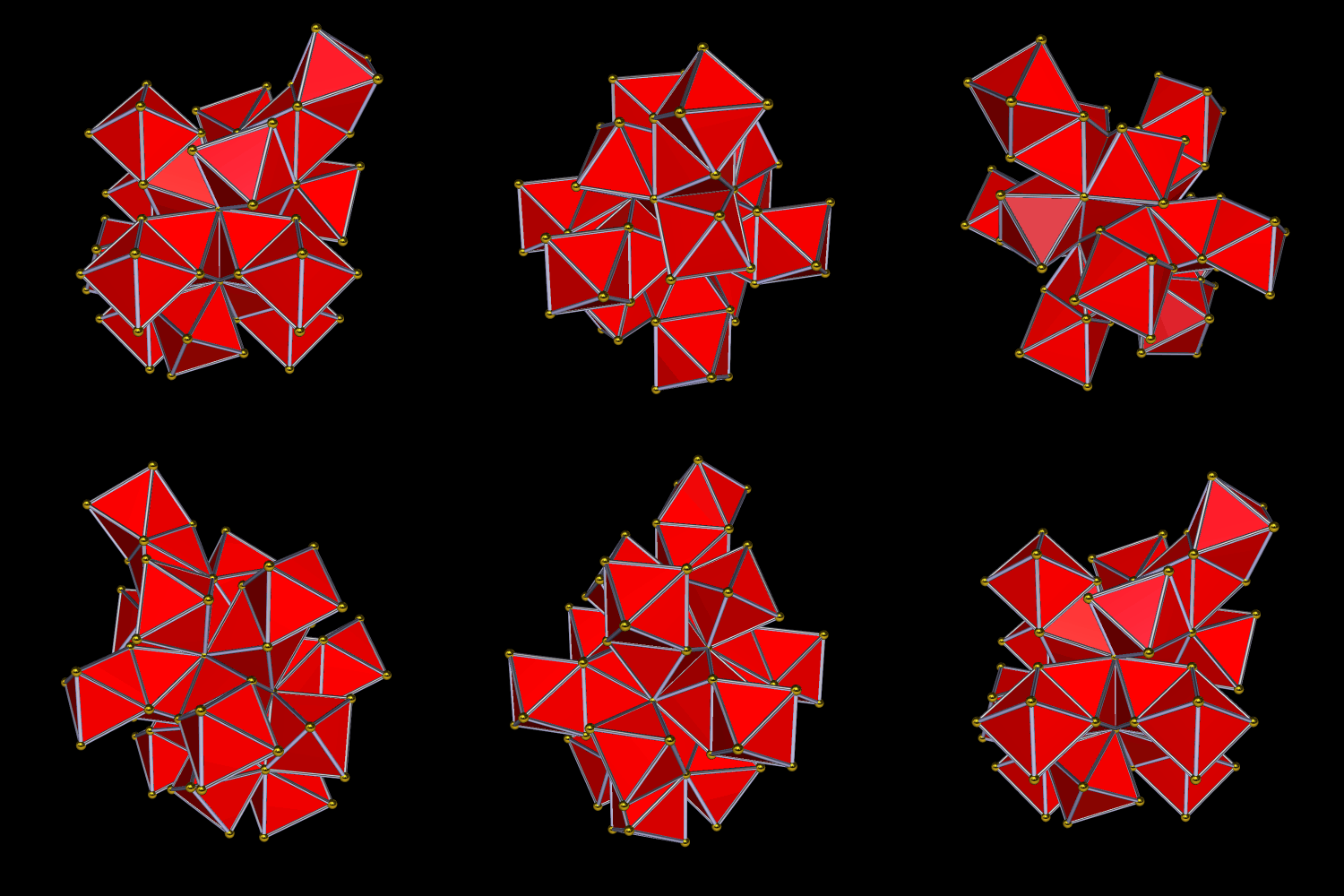
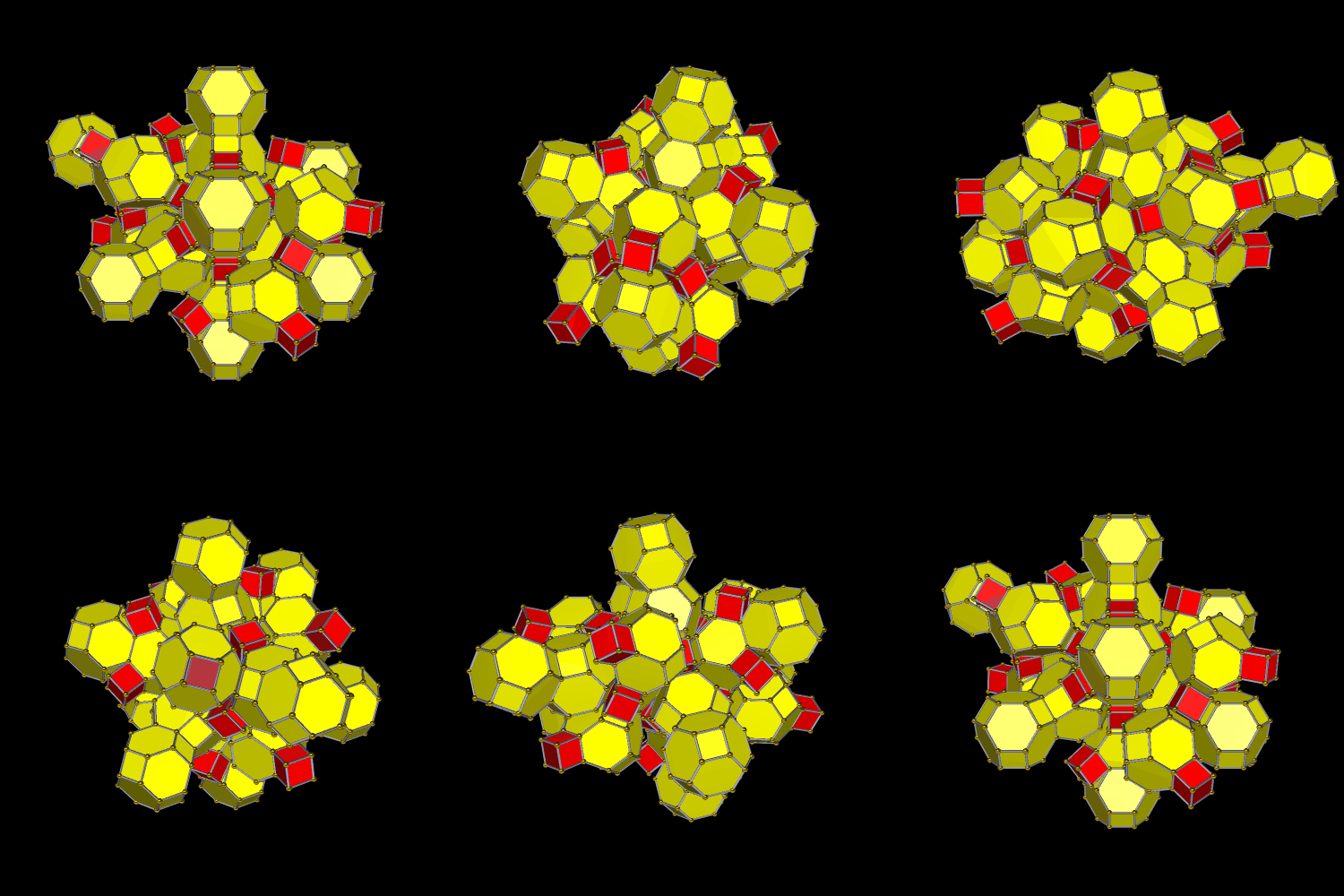
I used Stella 4d to create these images. You can try Stella for free at http://www.software3d.com/Stella.php.
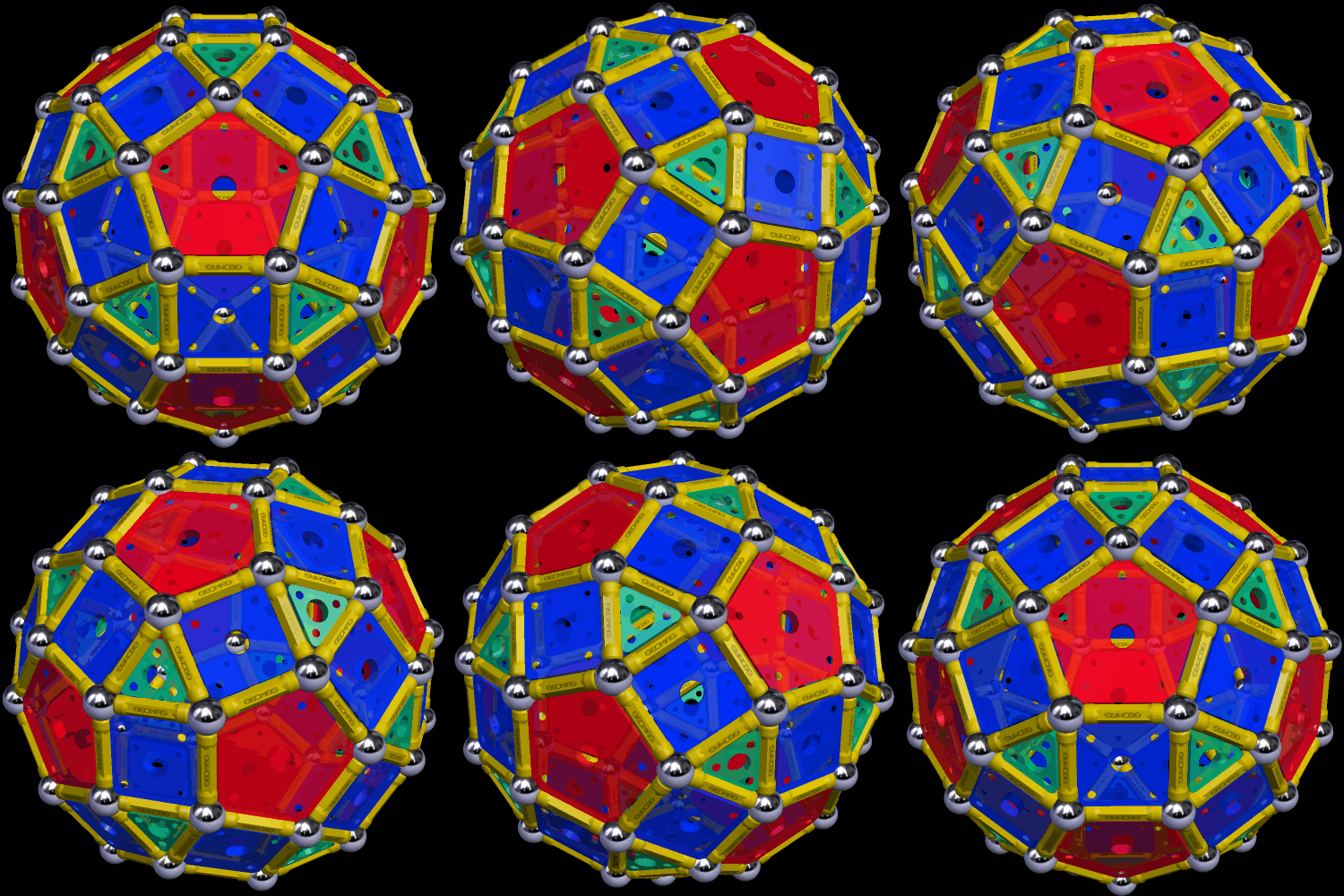
This rhombicosidodecahedron appears to be made from Geomag pieces, but, in reality, it was made virtually using a program called Stella 4d. You may try Stella, for free, at http://www.software3d.com/Stella.php.
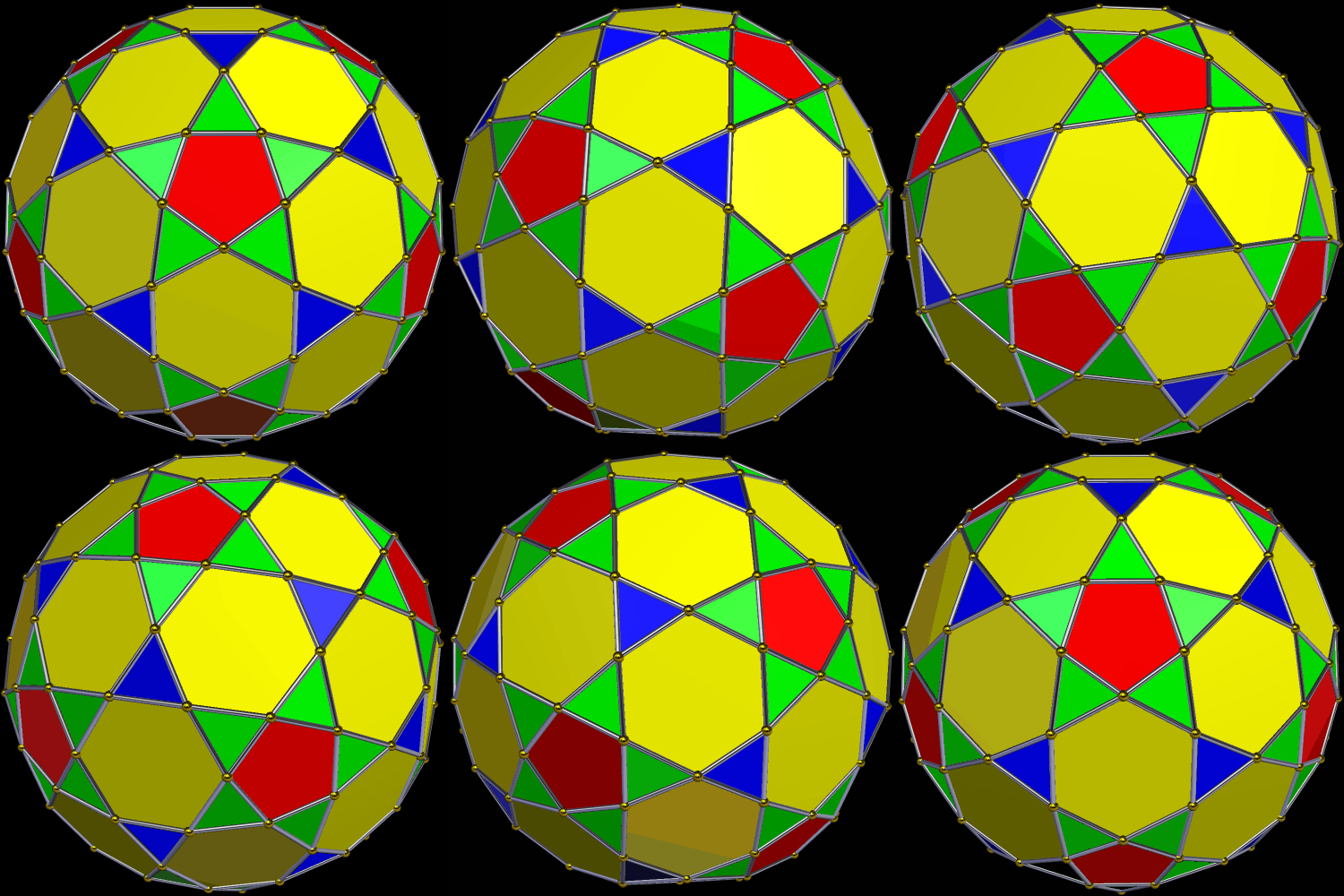
In this symmetrohedron, all faces are regular, except for the green isosceles triangles. If these triangles were a little closer to being regular, this would be a near-miss to the Johnson solids, but that is not the case. I made this (starting with the last polyhedron in the post right before this one) using Stella 4d: Polyhedron Navigator, a program you can try for free at http://www.software3d.com/Stella.php.
This is the icosahedron, one of the Platonic solids. It has twenty faces.

The polyhedron below is the rhombic enneacontahedron, a well-known zonohedron with ninety faces.
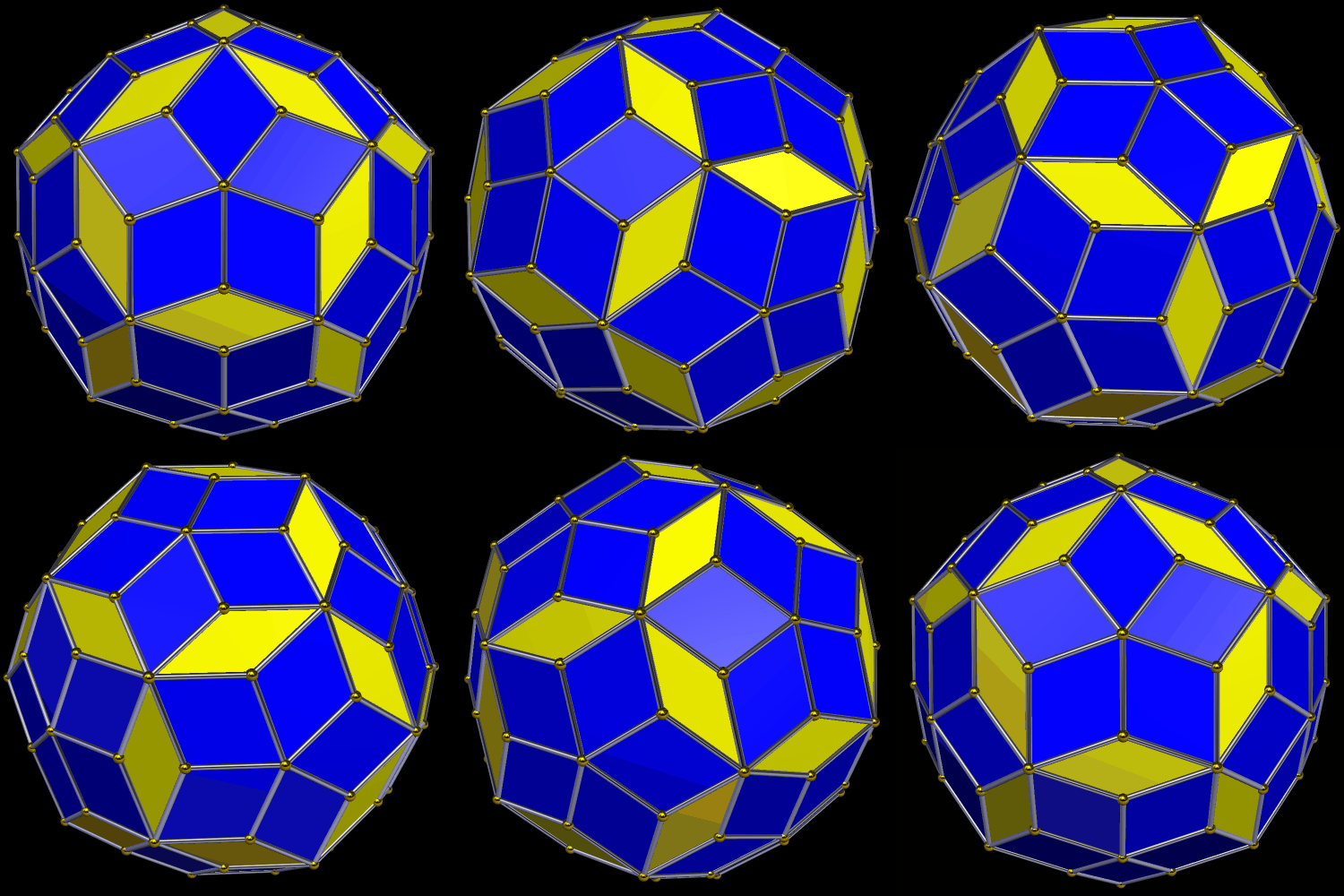
Finally, here is a polyhedron which blends these two. It has 20 + 90 = 110 faces.

I used Stella 4d: Polyhedron Navigator to make these images. You can try this program for free at http://www.software3d.com/Stella.php.
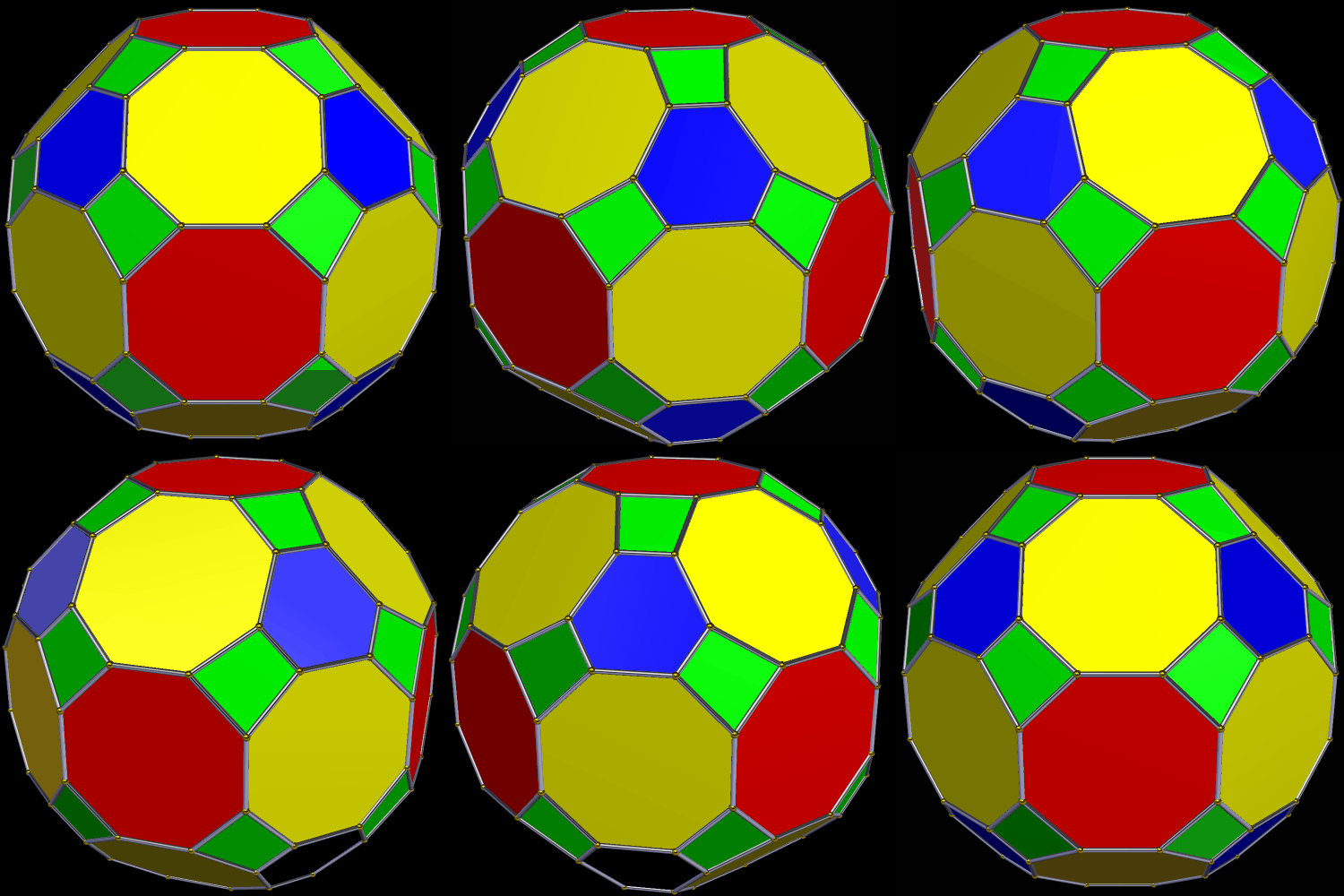

I made both of these using Stella 4d: Polyhedron Navigator, which you can try for yourself, free, at http://www.software3d.com/Stella.php.

If one starts with a dodecahedron, and then creates a zonohedron based on that solid’s vertices, the result is a rhombic enneacontahedron.

If, in turn, one then creates a new zonohedron based on the vertices of this rhombic enneacontahedron, the result is this 1230-faced polyhedron — a twice-zonohedrified dodecahedron. Included in its faces are thirty dodecagons, sixty hexagons, and sixty octagons, all of them equilateral.

Stella 4d: Polyhedron Navigator was used to perform these transformations, and to create the rotating images above. You can try this program for yourself, free, at http://www.software3d.com/Stella.php.
 RobertLovesPi.net