I’m sure I’ll get back to virtual polyhedra soon enough, but, in the meantime, enjoy this icosidodecahedron made using the traditional Euclidean tools, plus scissors, card stock, and tape. No computers were used to make this polyhedron.
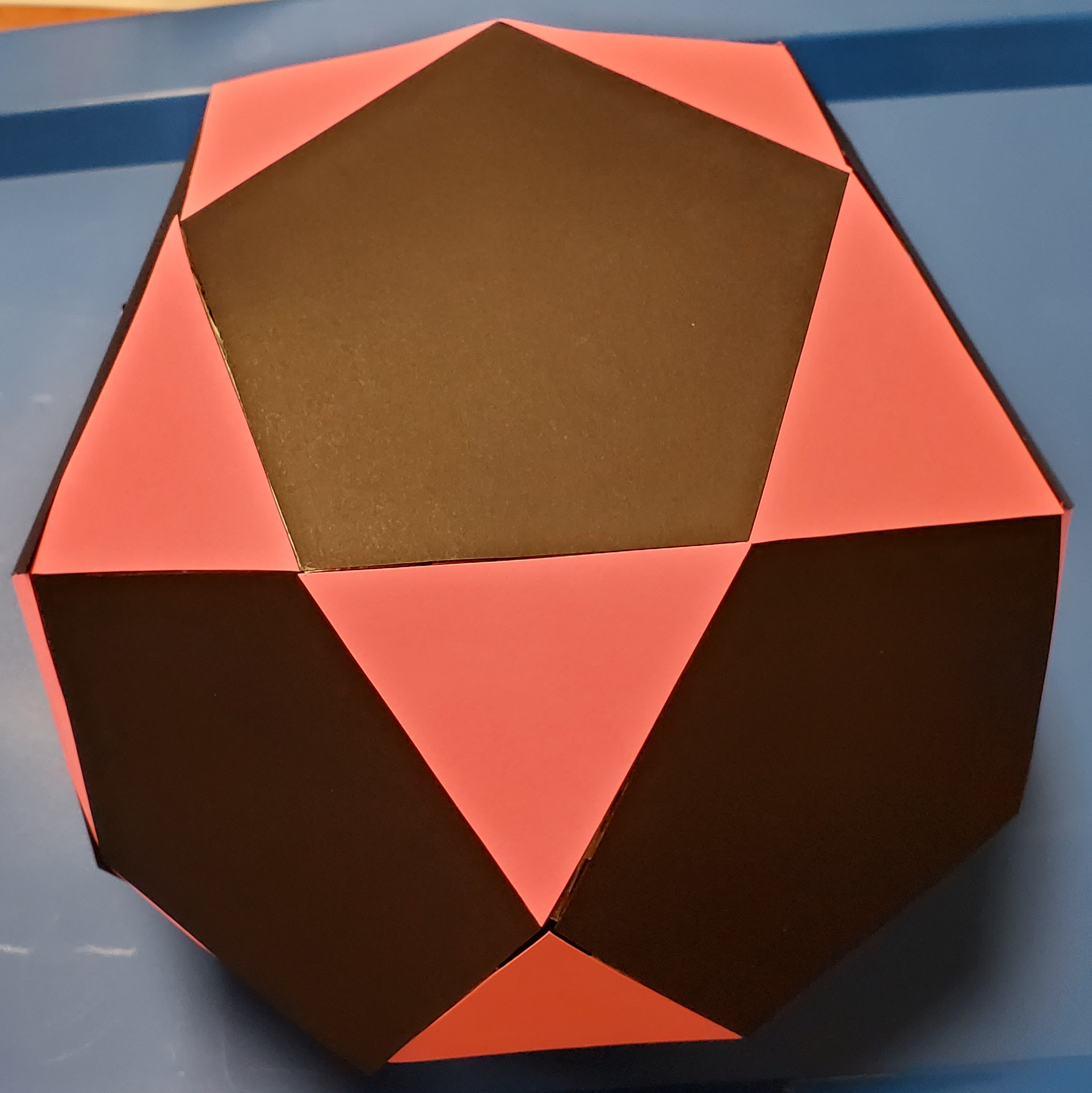
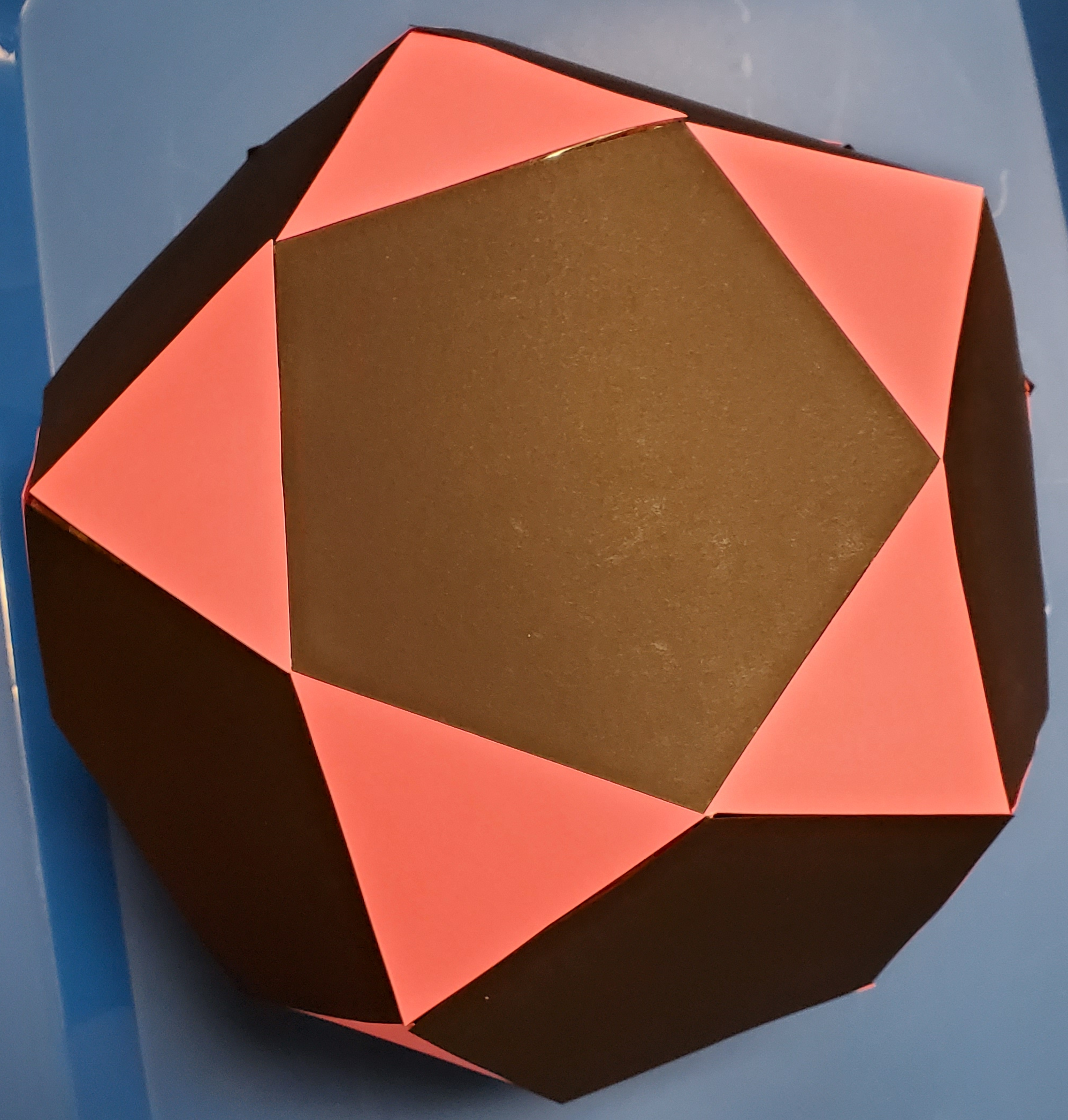
I’m sure I’ll get back to virtual polyhedra soon enough, but, in the meantime, enjoy this icosidodecahedron made using the traditional Euclidean tools, plus scissors, card stock, and tape. No computers were used to make this polyhedron.

This polyhedron has three face types. The blue triangles and the red star pentagons are easy to see, but it’s more challenging to see the yellow golden rectangles, since they are only partially visible. One of these golden rectangles is highlighted in the still image below, to make it easier to spot them.
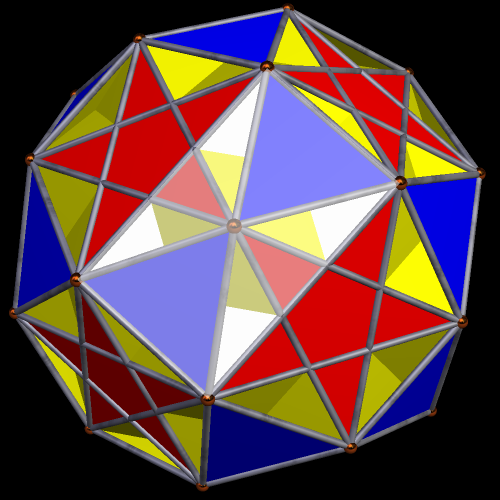
I created these virtual models using Stella 4d: Polyhedron Navigator. This program may be tried out for free at http://www.software3d.com/Stella.php.
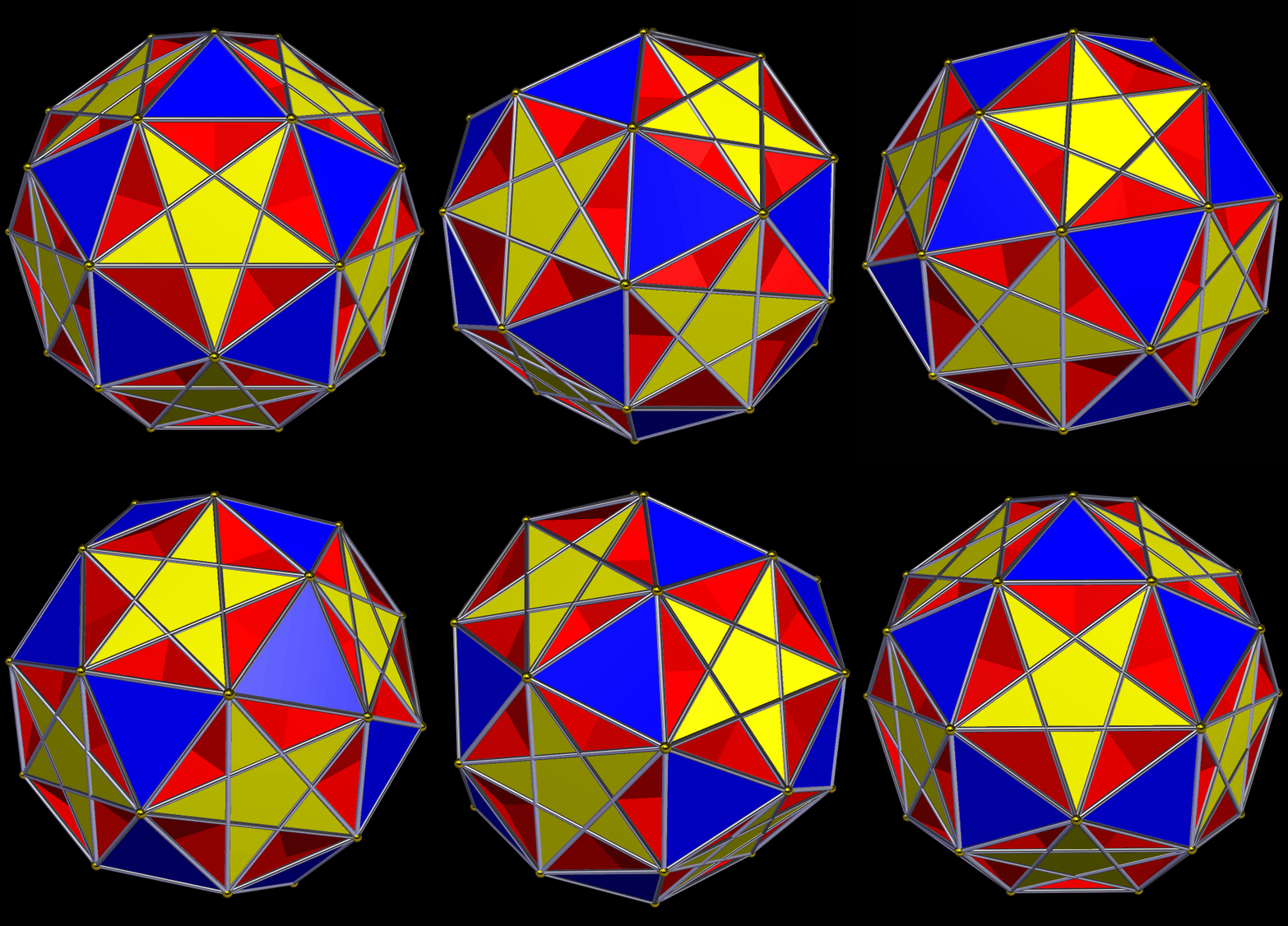
The faces of this polyhedron are twelve yellow regular star pentagons, twenty blue equilateral triangles, and thirty golden rectangles, shown in red. I used Stella 4d to make this, and you can try this program for free, at http://www.software3d.com/Stella.php.
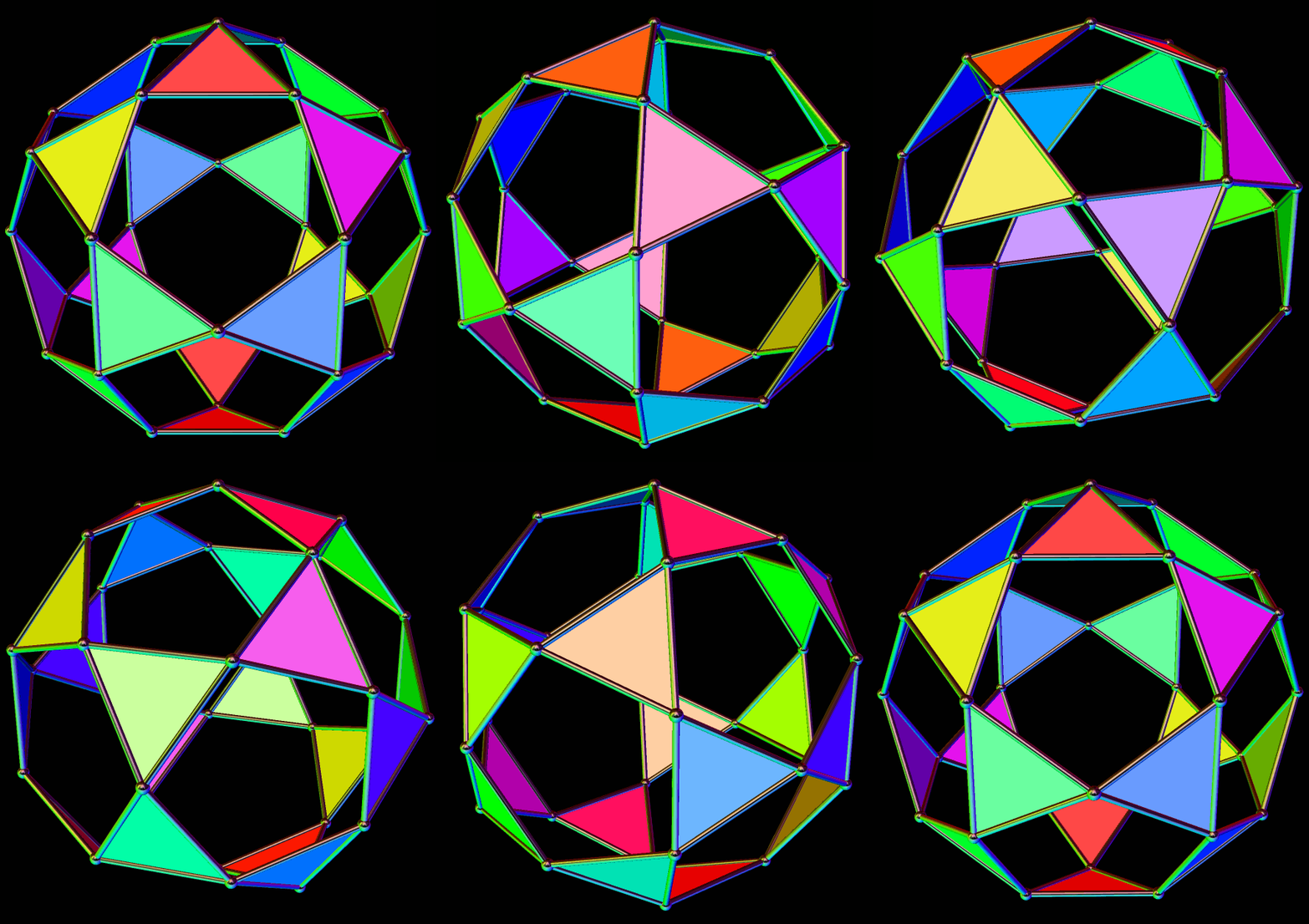
I made this with Stella 4d, which you can try for free here.

In the image above, the icosidodecahedron’s final stellation is colored by face type. In the one below, I used “rainbow color mode.” Both were made using Stella 4d, which you can try for free at http://www.software3d.com/Stella.php.

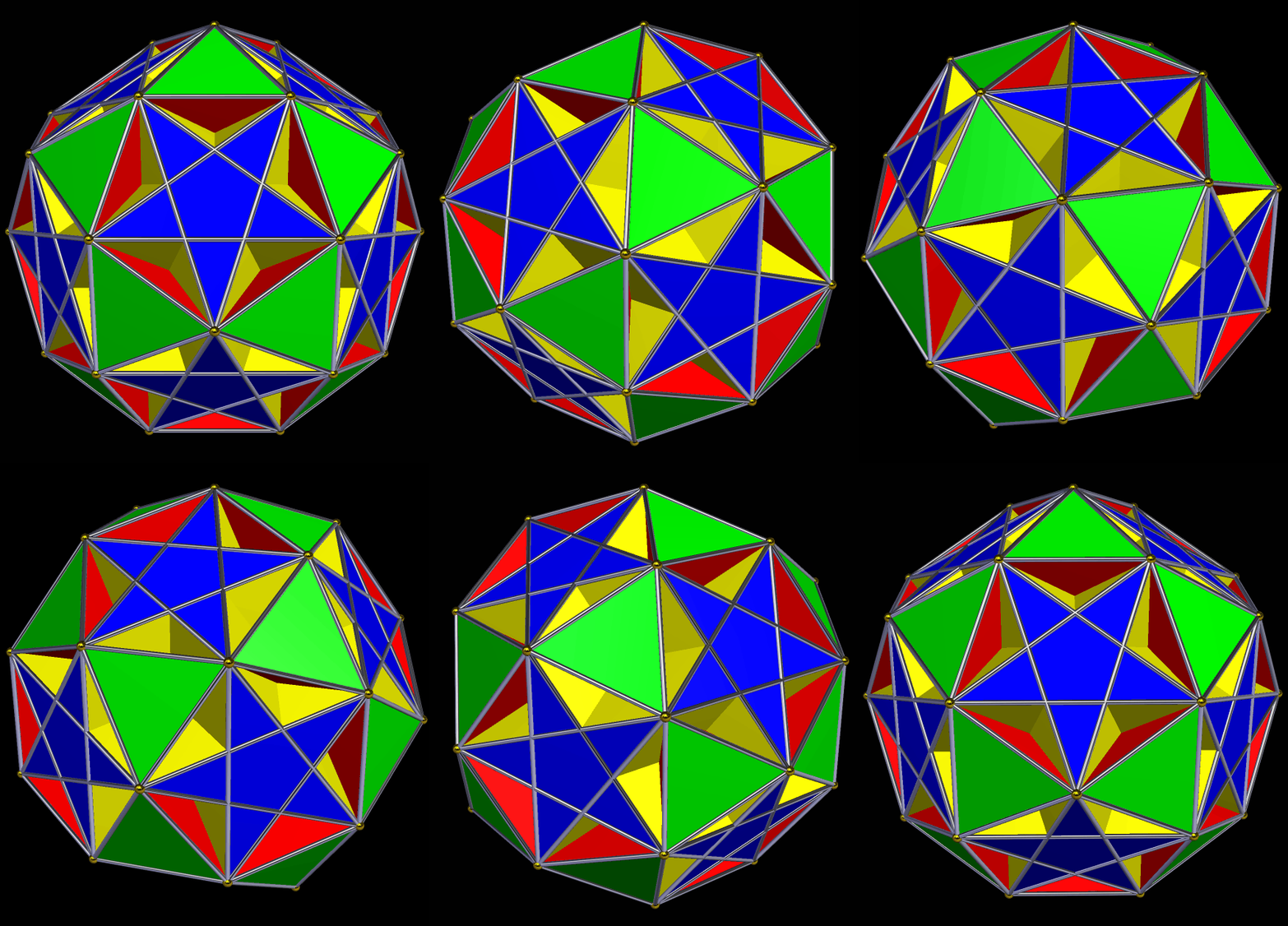
I created this using Stella 4d, software you can try right here.

The polyhedral compound above contains an icosidodecahedron (blue) and a rhombic triacontahedron (red). In this compound, the icosidodecahedron’s edges are bisected, while the rhombic triacontahedron’s edges are split into segments with lengths in the square of the golden ratio (~2.618 to 1).
If you want Zome of your own, the place to buy it is http://www.zometool.com.
Here’s an icosidodecahedron, one of the thirteen Archimedean solids.

Using a computer program called Stella 4d (available here), I augmented each face of this solid with a pyramid. Here’s the result.
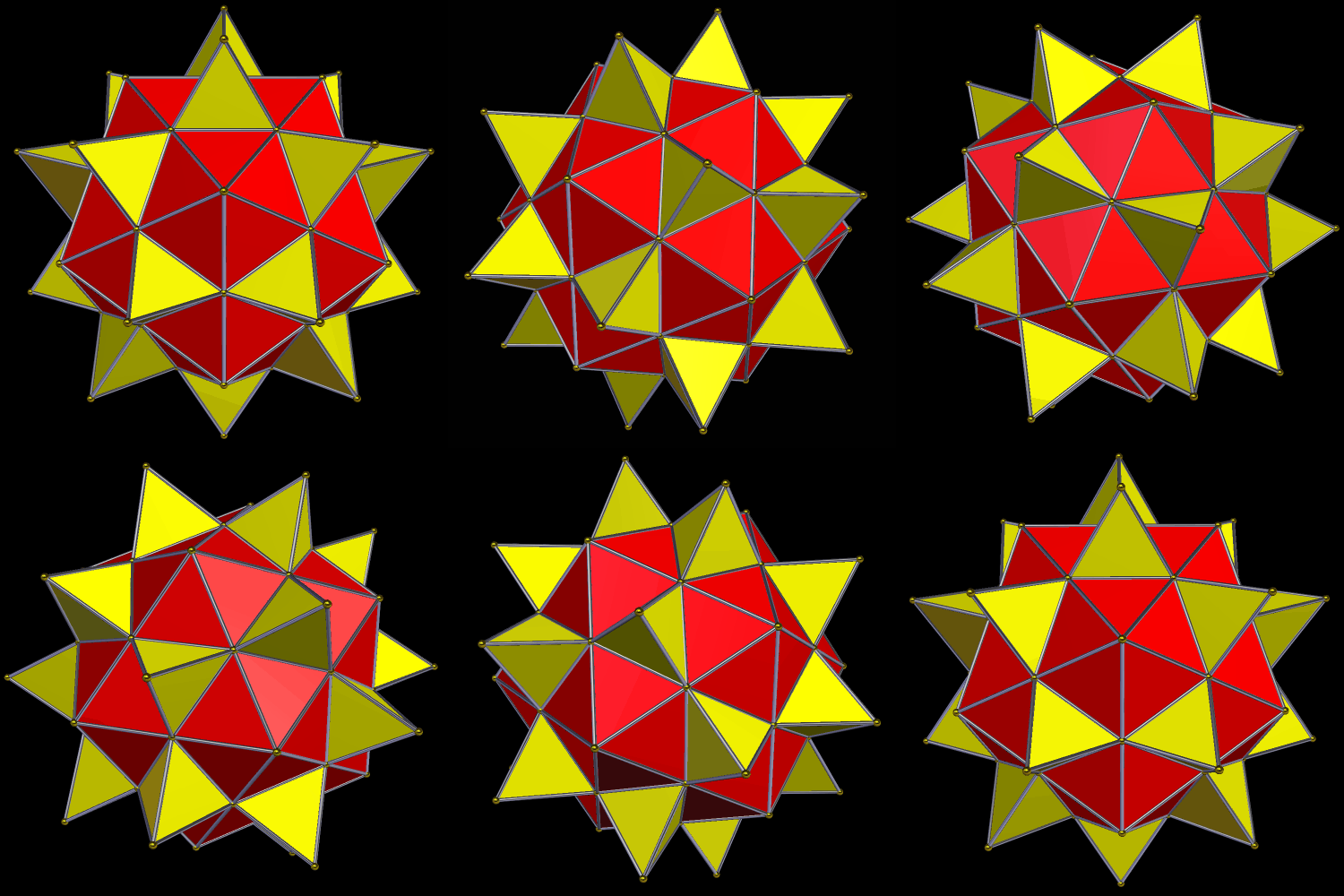
Also interesting is the dual of this pyramid-augmented icosidodecahedron:
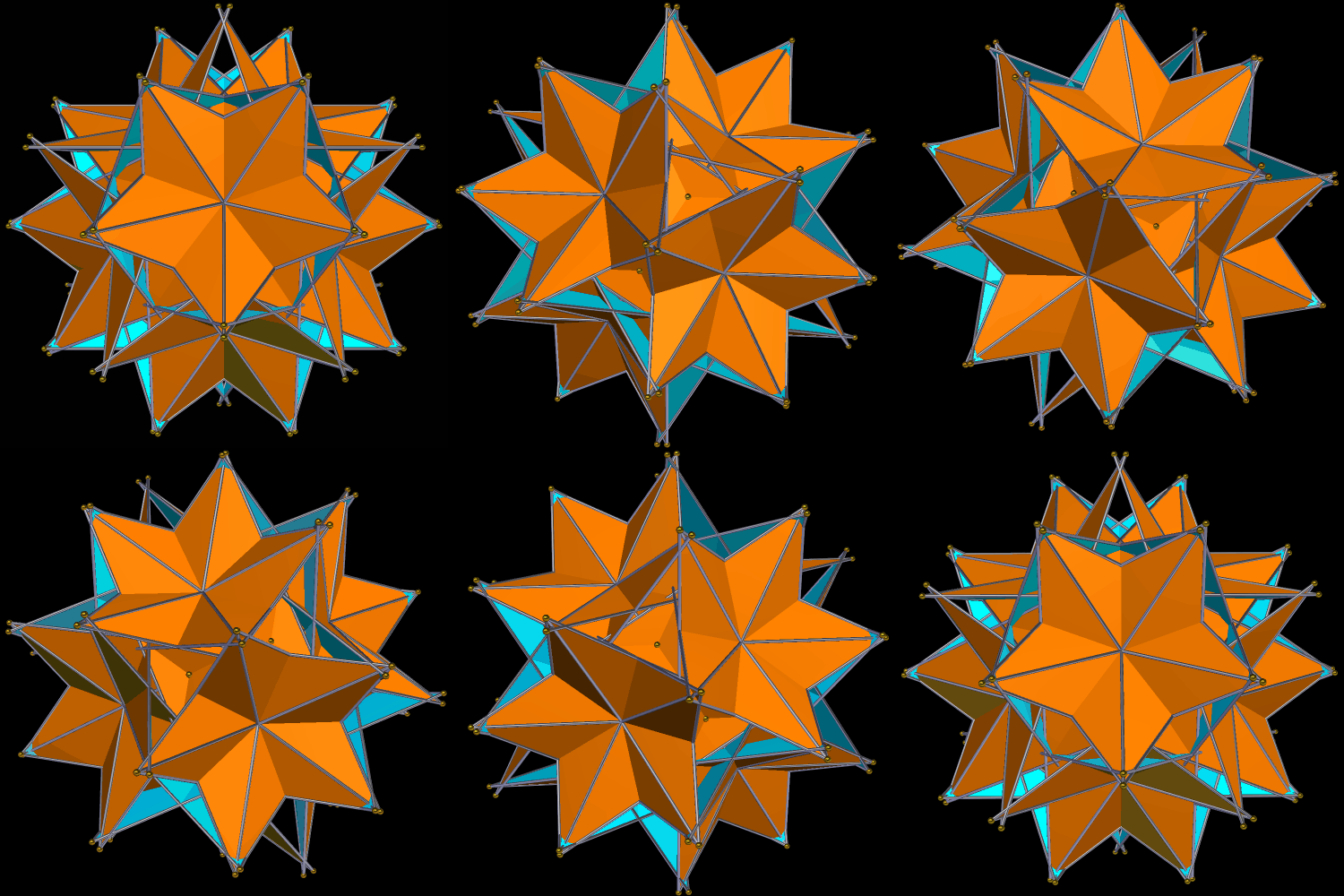
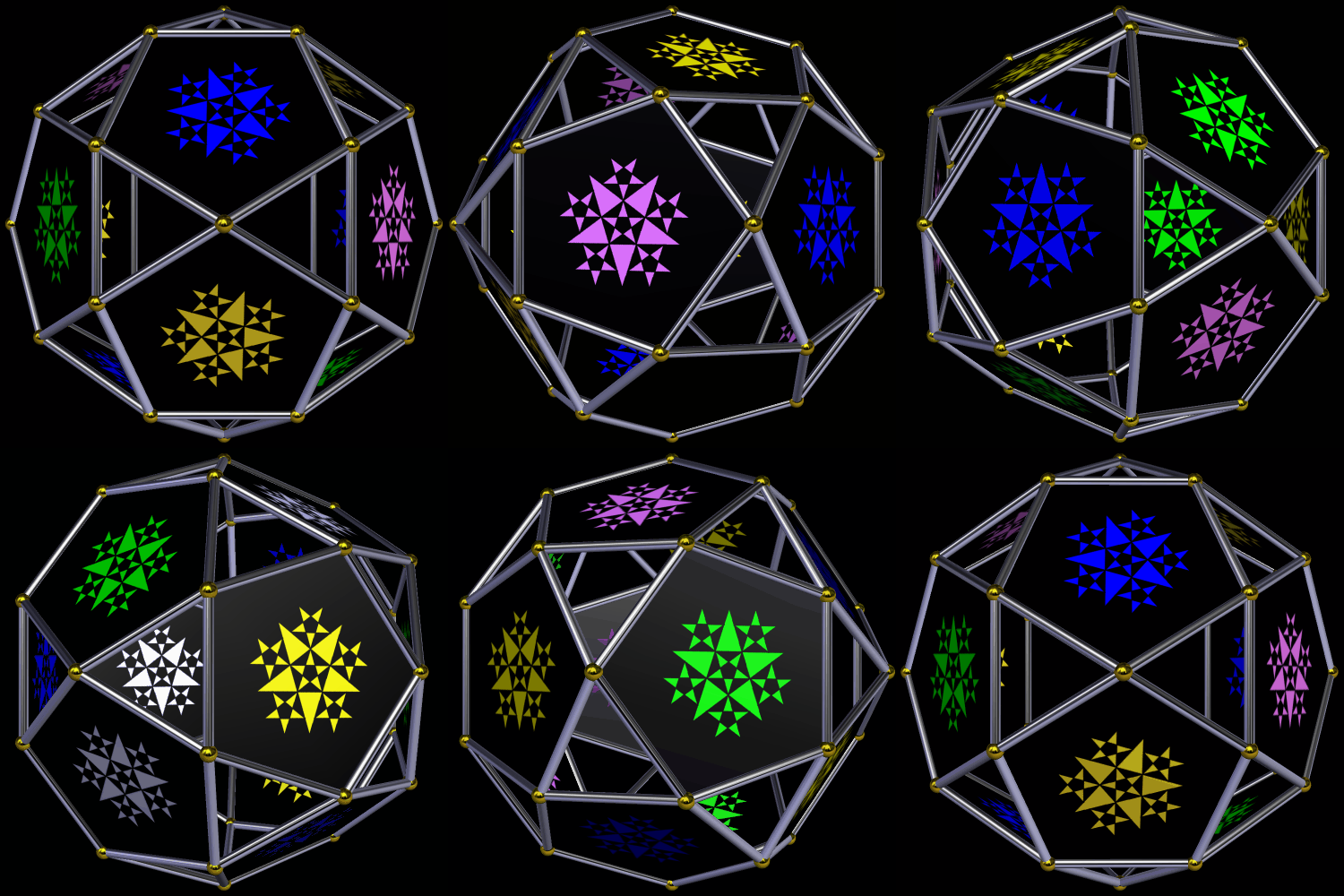
The stars on the pentagonal faces were drawn using Geometer’s Sketchpad and MS-Paint. The icosidodecahedron itself was created using Stella 4d: Polyhedron Navigator, which you can try for free at http://www.software3d.com/Stella.php.
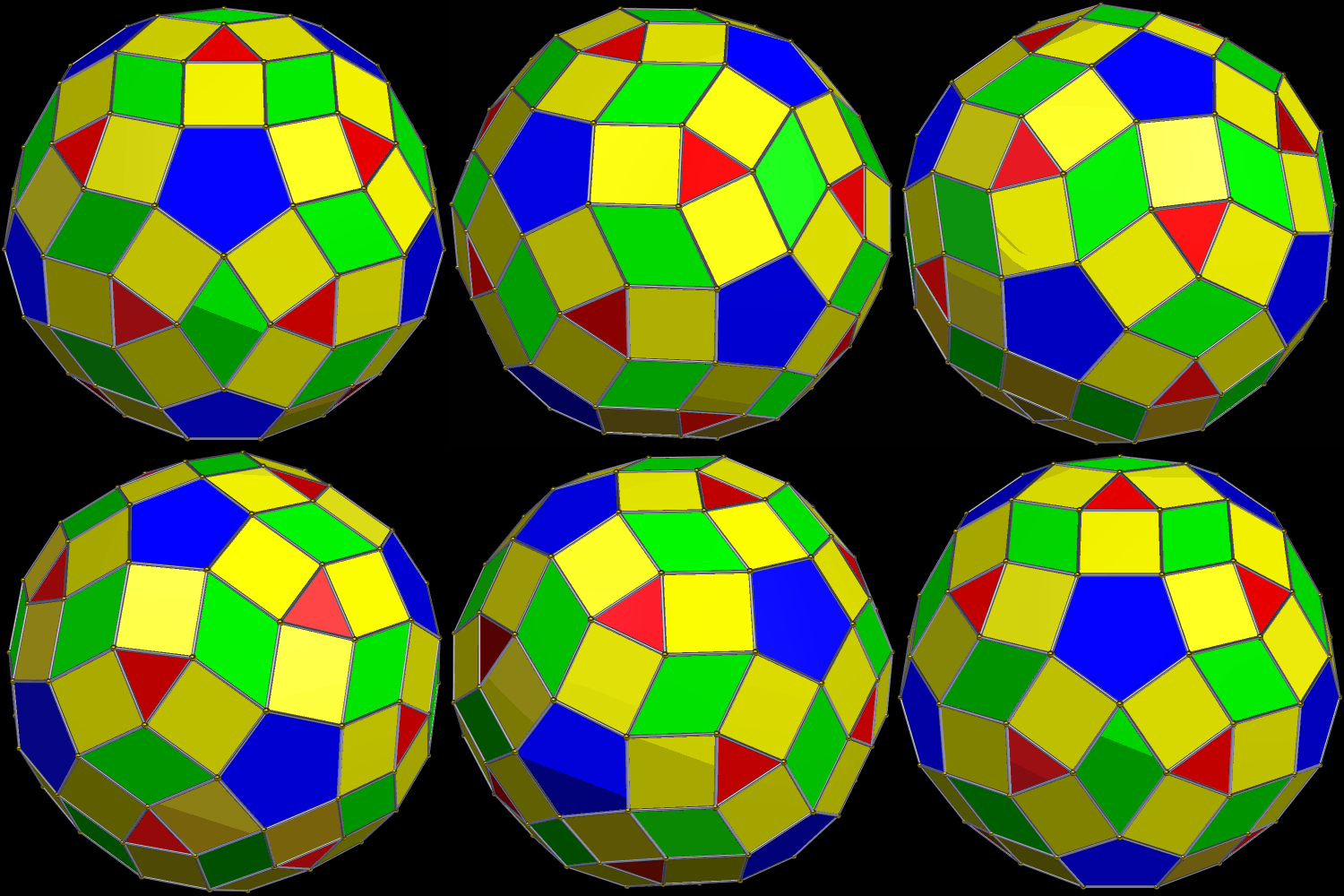
This polyhedron combines the faces of an icosidodecahedron (red and blue) with the those of a rhombic triacontahedron (green). The gaps between those two sets of polygons are the yellow rectangles. I made this using the “morph duals by expansion” function of Stella 4d: Polyhedron Navigator. You can try this program for yourself, free of charge, at http://www.software3d.com/Stella.php.
 RobertLovesPi.net