
As an eight-sided die, this would work better than the Platonic octahedron, for it would roll more smoothly.
Software credit: see http://www.software3d.com/Stella.php.
As an eight-sided die, this would work better than the Platonic octahedron, for it would roll more smoothly.
Software credit: see http://www.software3d.com/Stella.php.
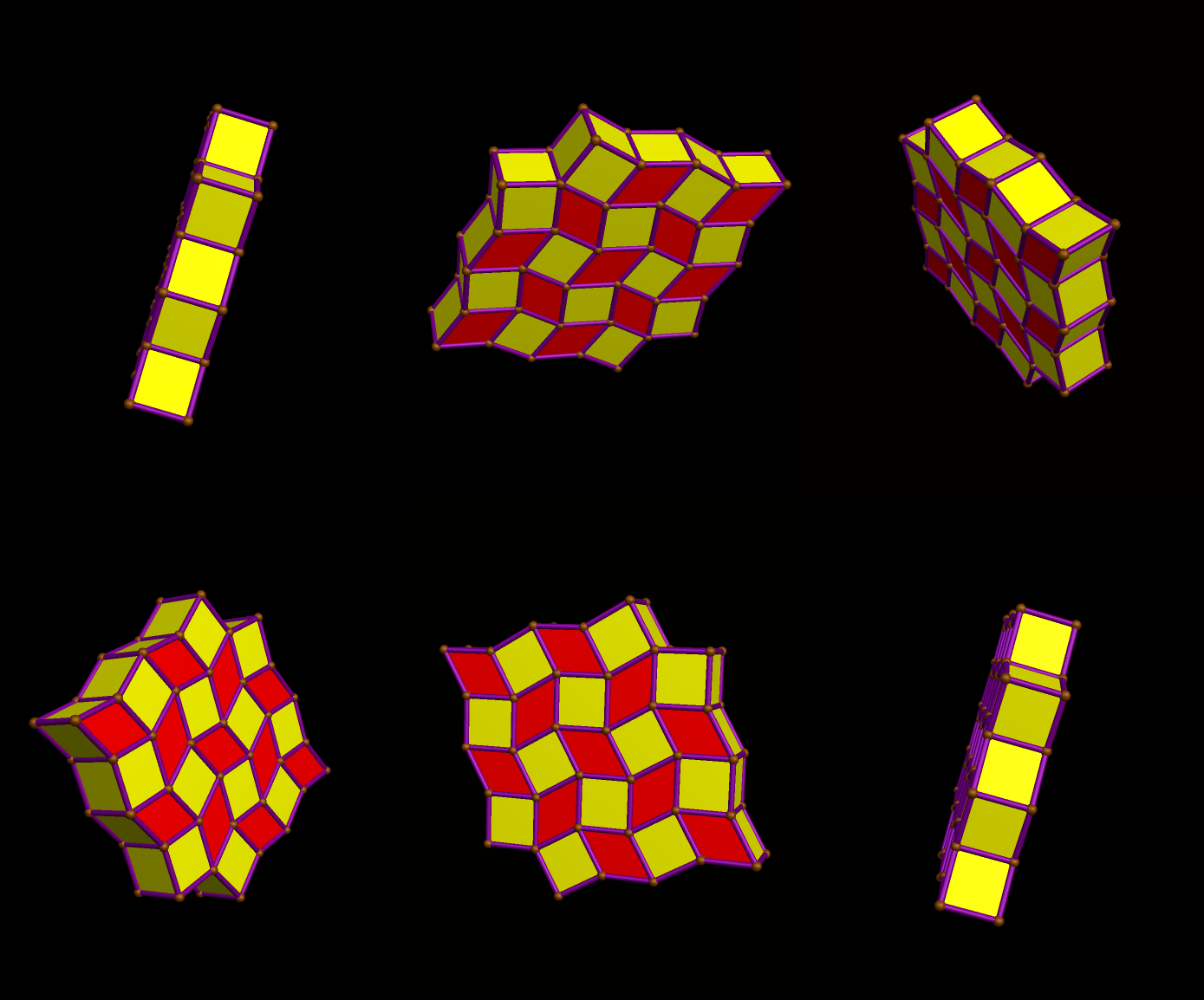
Above, the apparent size of the tessellation-prism does not change. In the next image, though, I set the controls of Stella 4d (the program I use to make these images, which you can try at http://www.software3d.com/Stella.php) to fit the image tightly, separately, in each still frame, causing a “breathing” effect. (Click on it if you wish to see it enlarged.)
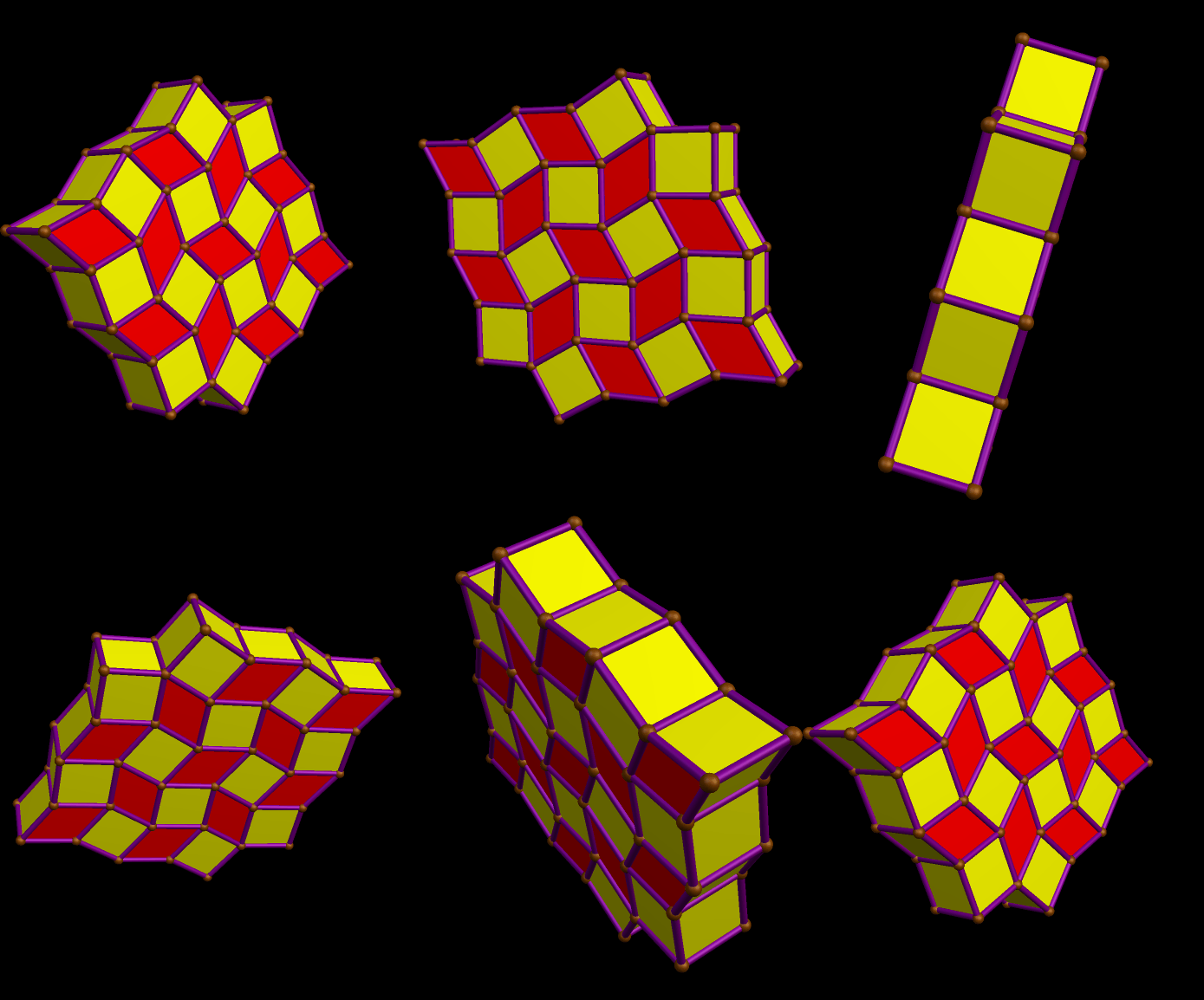
Next, I added two red rhombi, one at the top and one at the bottom, stellated the result many times, and made one final .gif image, leaving the “breathing” effect on.


There are two six-member sets of hourglasses in the near-cube above, each of which is made of four not-quite-coplanar faces. One set is green and blue, while the other is magenta and blue.
If the polyhedron above is stellated nine times, the hourglasses expand until they compose the entire polyhedron. (To enlarge it, simply click on it.)

Software credit: all images here were created using Stella 4d. You may try it for yourself as a free trial version, or purchase the fully-functioning version, at http://www.software3d.com/Stella.php.
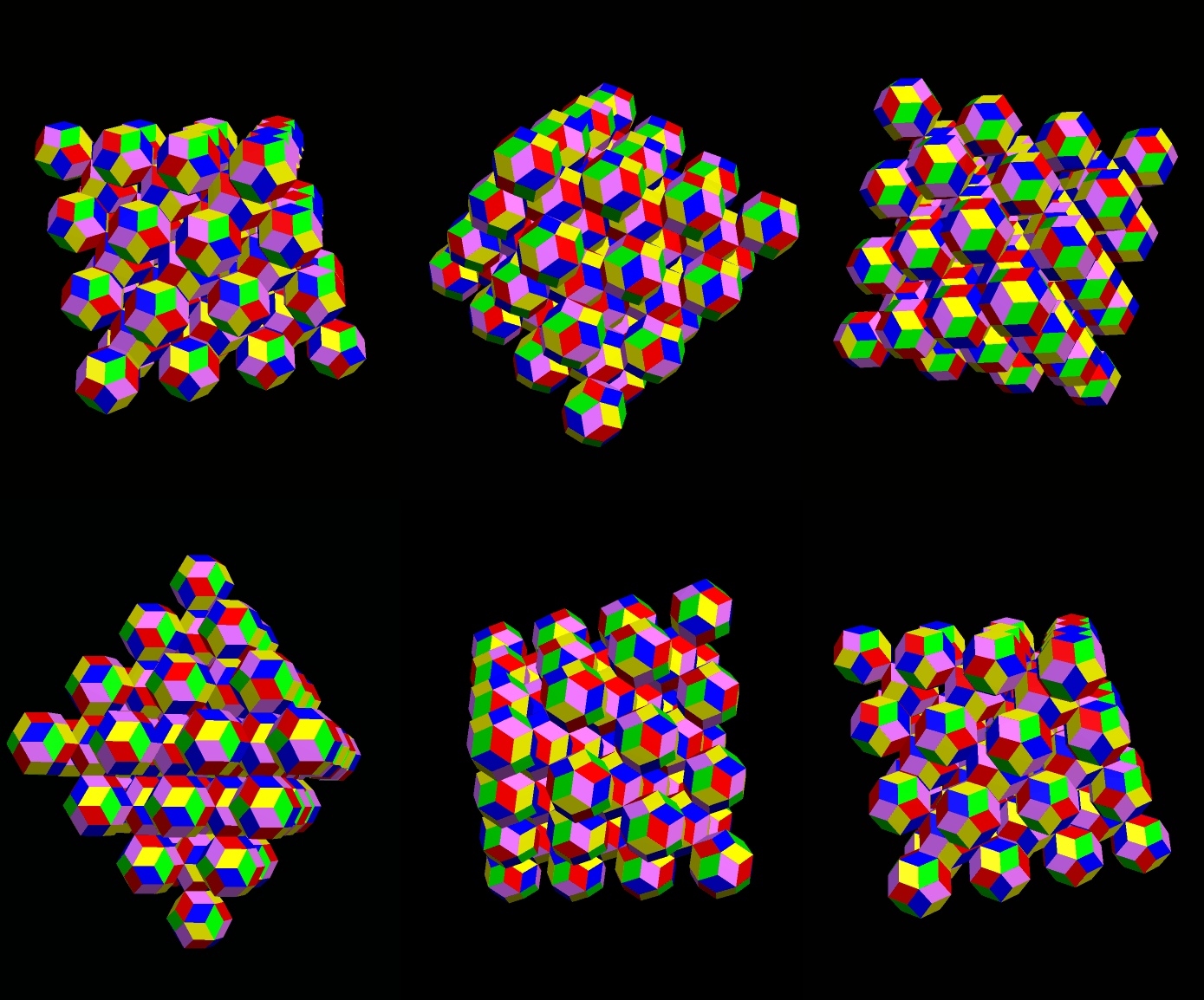
These rhombic triacontahedra (RTCs) are each colored with the symmetrical five-color scheme for that polyhedron. It causes each color to appear six times on each RTC, in positions such that, for a single RTC, a centered x, y, and z axis can penetrate the centers of all six same-color faces.
Since there are five colors, this virtual model may be removed in fifths. The first to go are the green rhombi. (Each of these may be enlarged with a click.)

The next to be removed are the yellow rhombi.
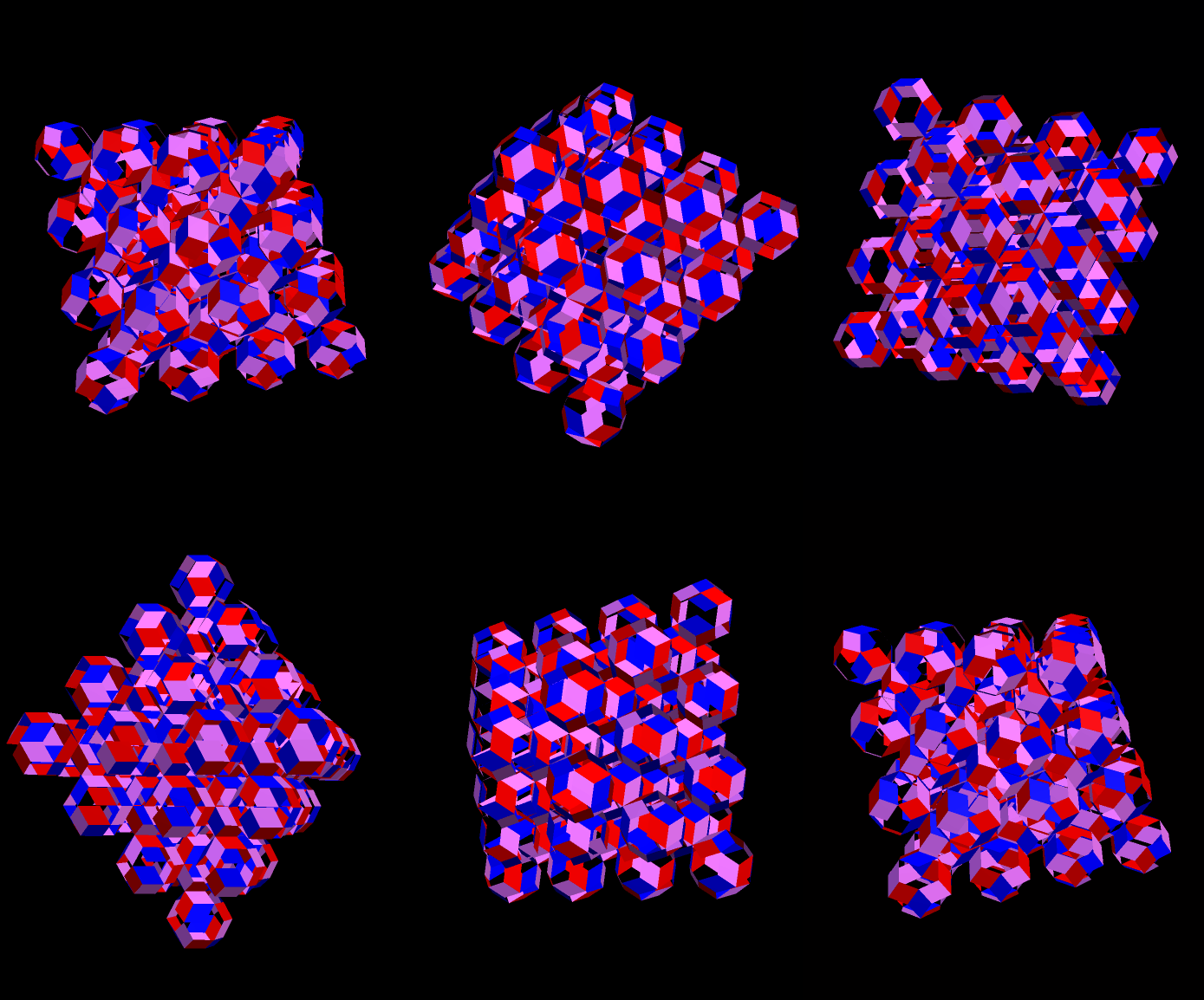
The red ones are next to go.
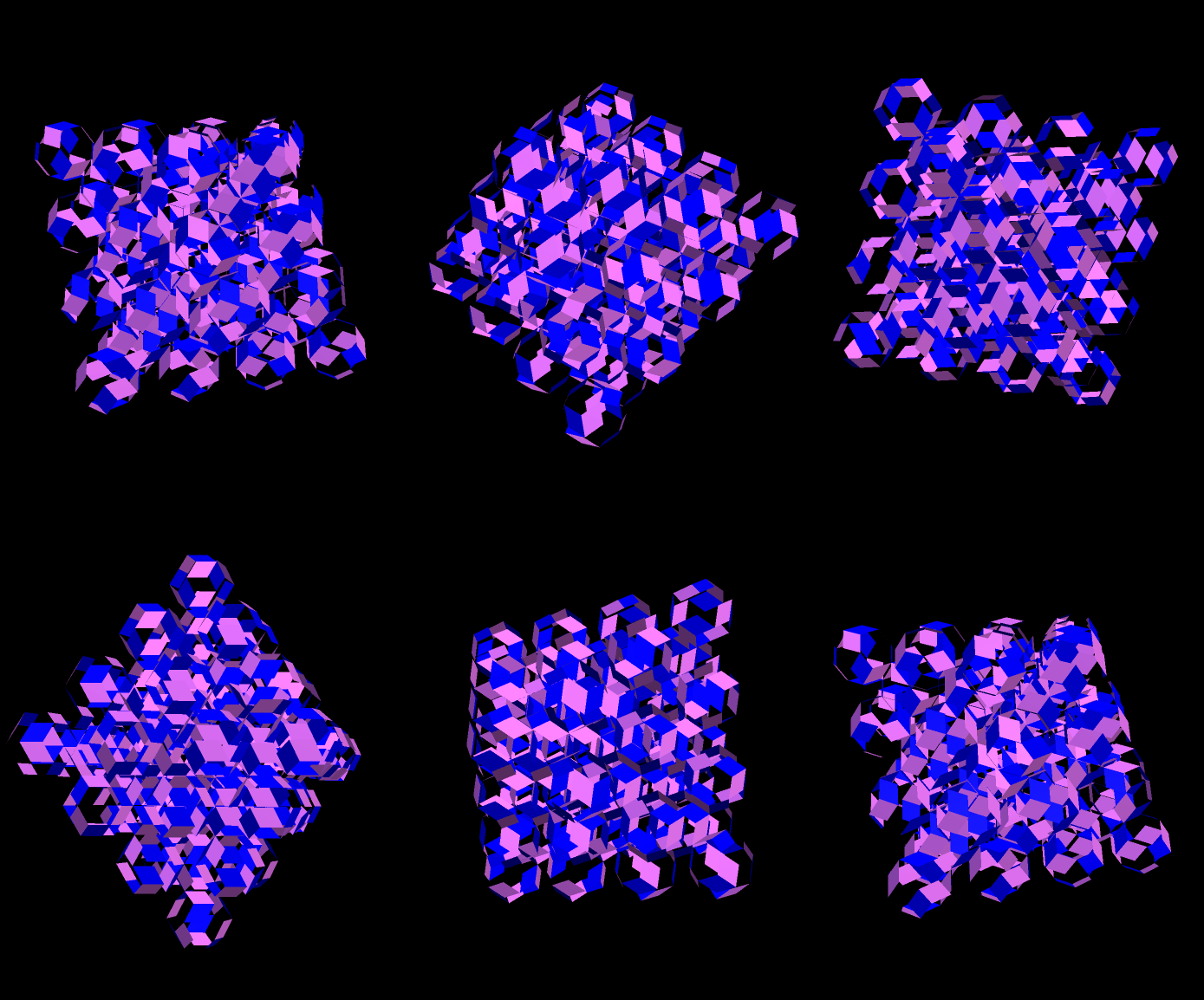
One more fifth vanishes, and only the blue faces are left.

Finally, they are removed as well, but with edges and vertices now shown for the first time, for, otherwise, you’d see nothing here.

Software credit: all images here were created using Stella 4d: Polyhedron Navigator, my favorite polyhedron-manipulation tool. You may try it for yourself as a free trial version, or purchase the fully-functioning version, at http://www.software3d.com/Stella.php.

I made this using Stella 4d, which you can find at http://www.software3d.com/Stella.php.
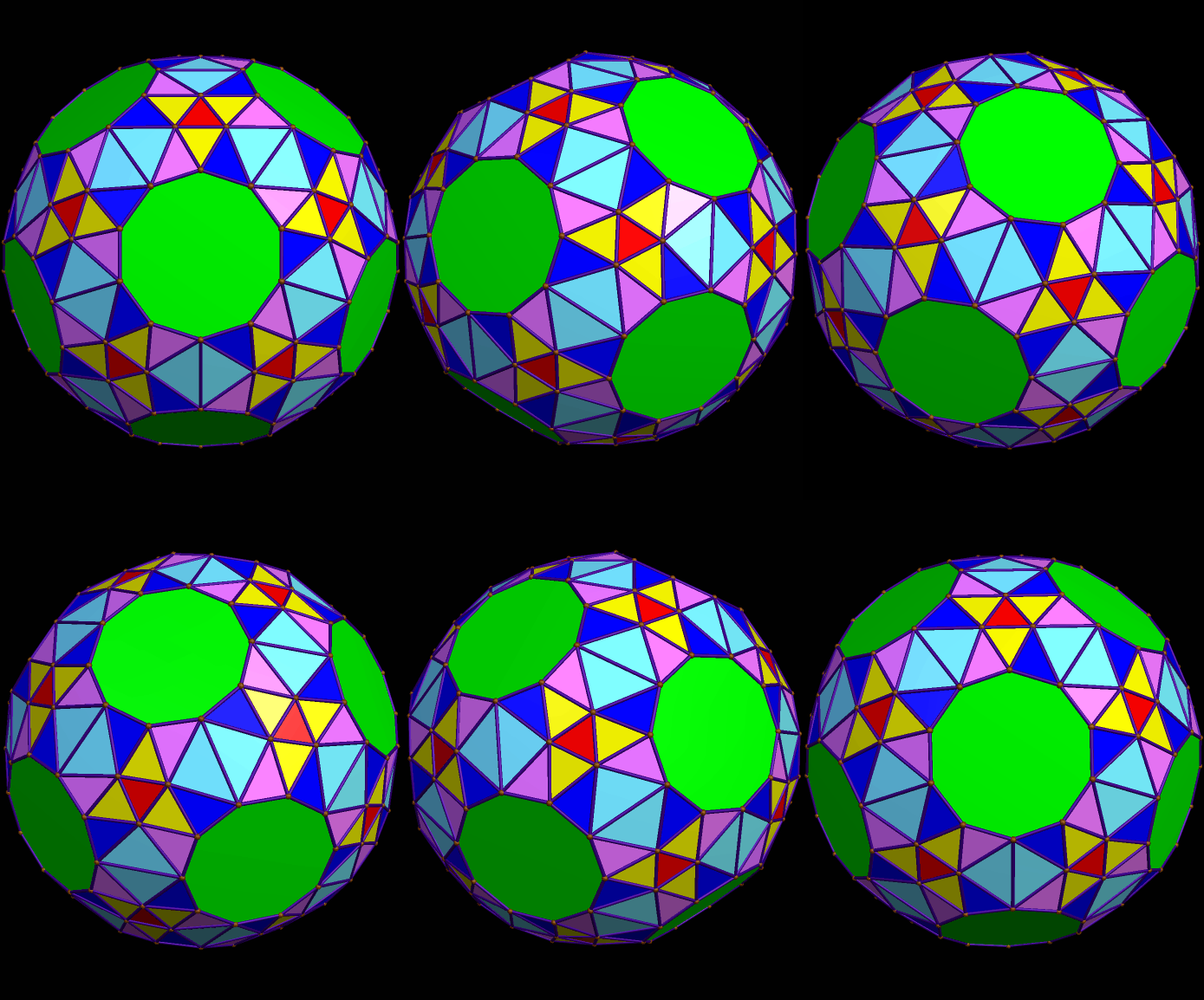
I made this using Stella 4d, which you can find at http://www.software3d.com/Stella.php.
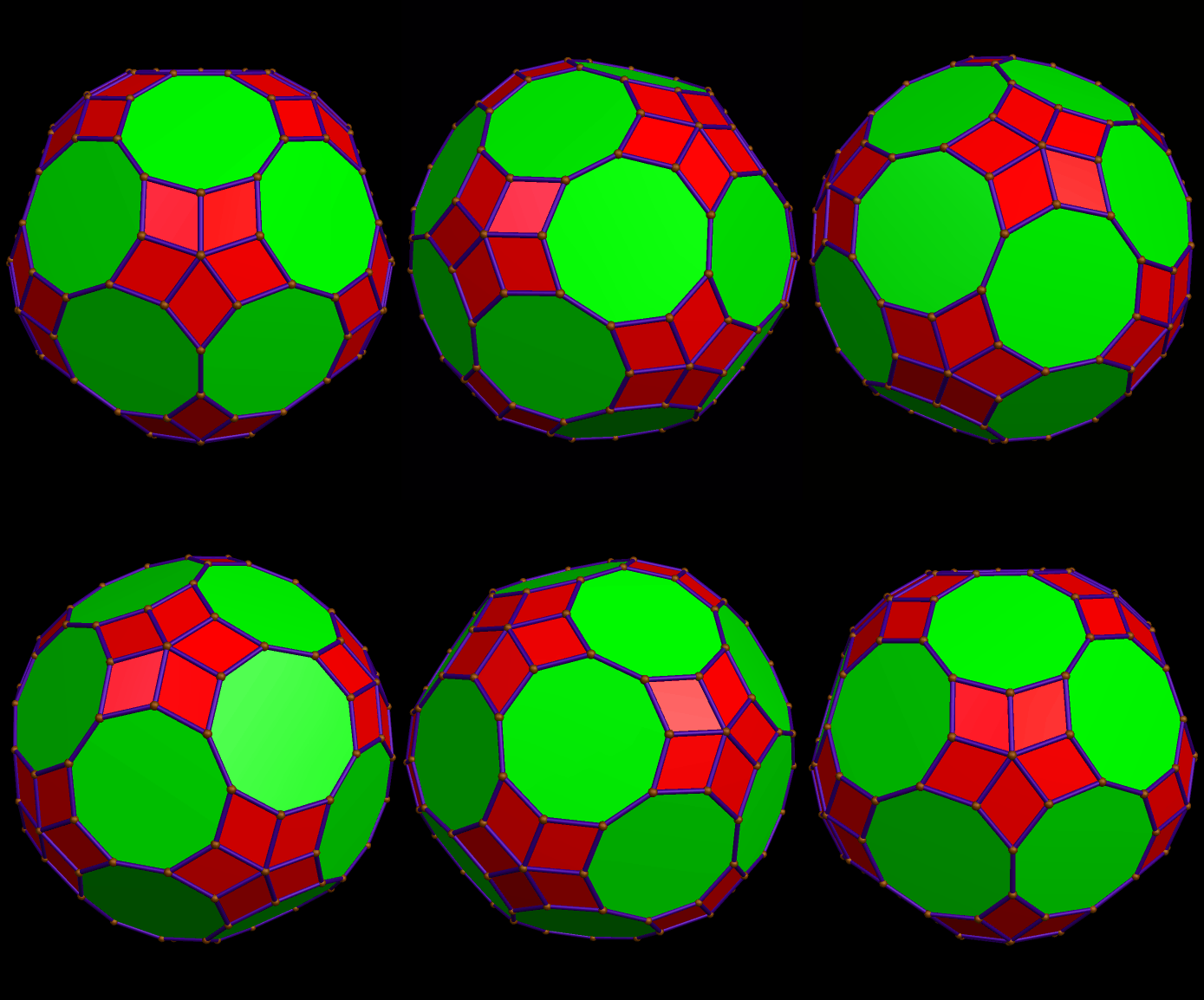
Here is the dual of the solid above, also.
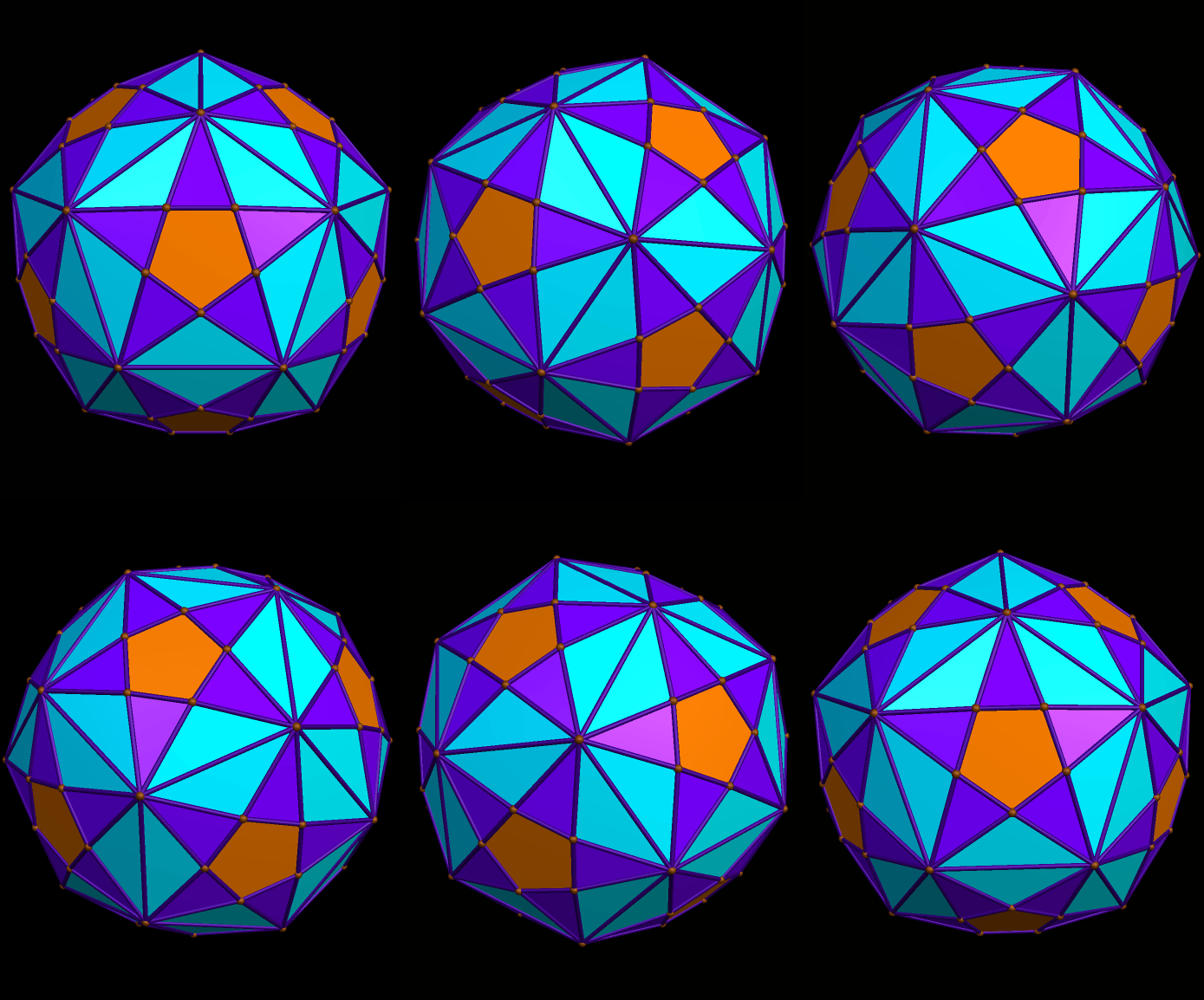
These images were created with Stella 4d, which you can find at http://www.software3d.com/Stella.php.

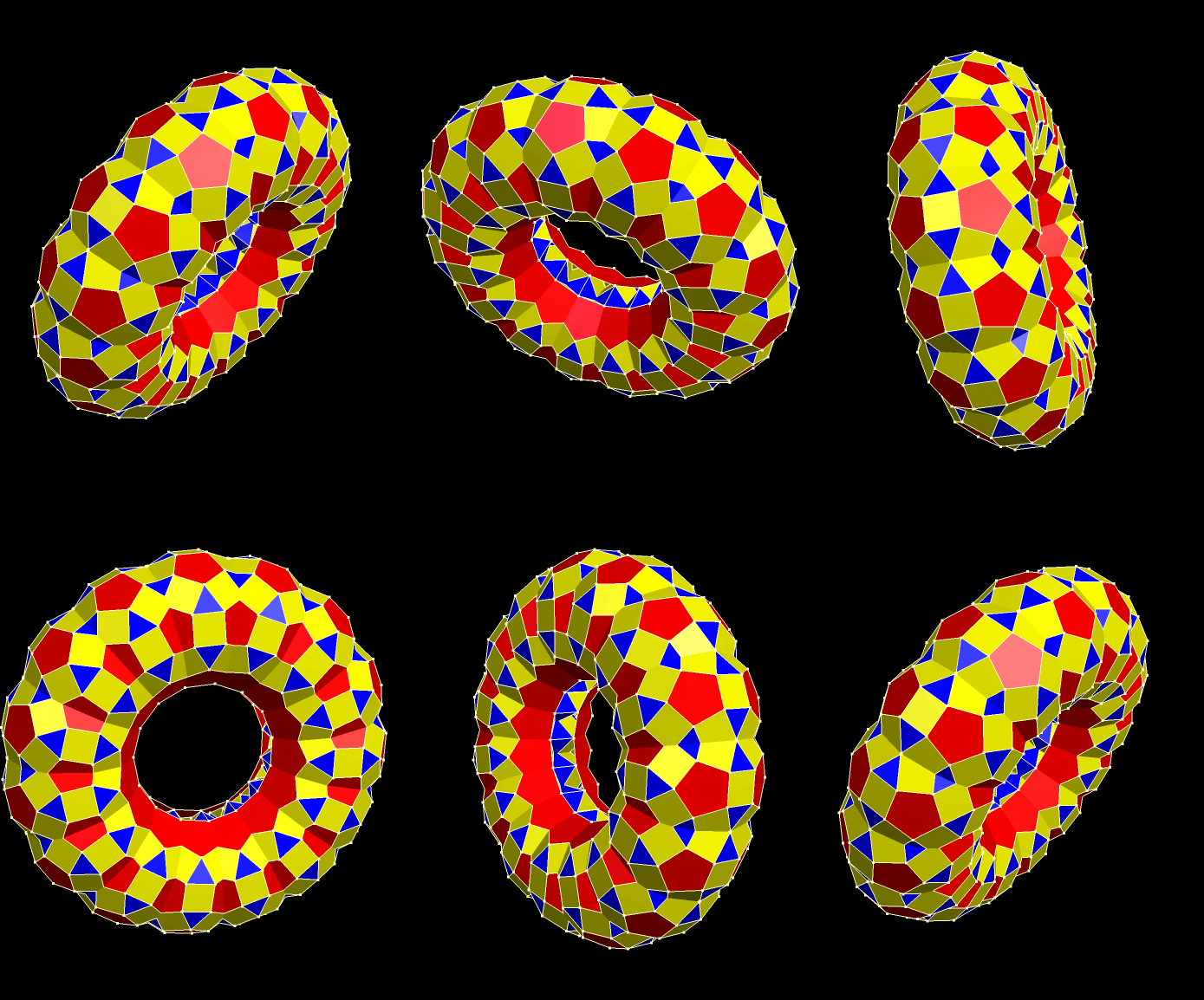
Software credit: I used Stella 4d to make this, which is available at http://www.software3d.com/Stella.php.
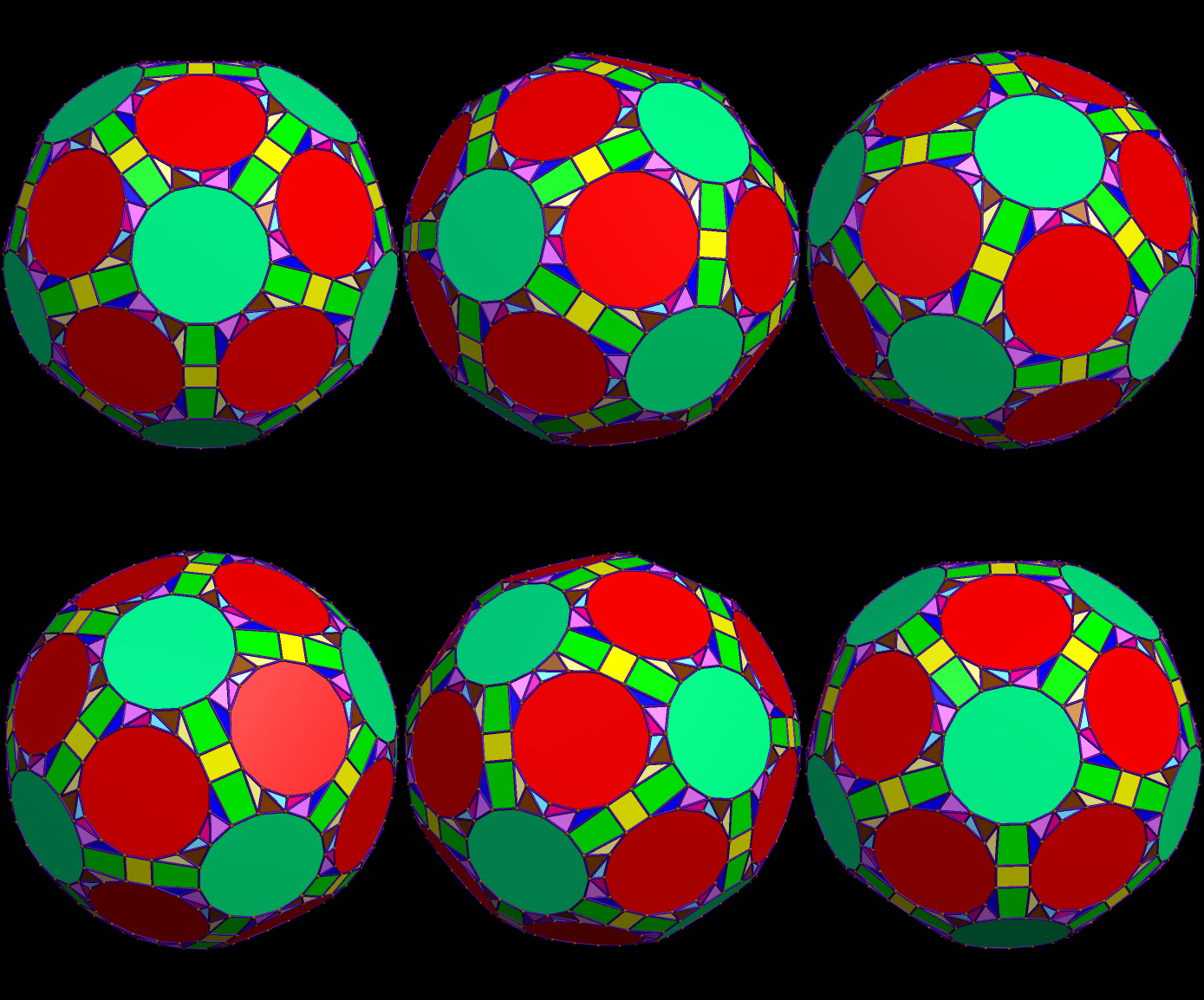
I’ve been obsessing about symmetrical polyhedra which include regular pentadecagons all day, and this is the latest result. I feel like I’m getting closer to what I’m looking for . . . but whatever it is I’m looking for seems to be receding from me, at the same time. At least for me, this is a familiar feeling when researching polyhedra, trying to find interesting shapes never seen before by anyone. It’s a high bar to try to reach, but I enjoy a challenge, if it involves something I find of interest. Clearly, this qualifies.
Software credit: I used Stella 4d to make this, which is available at http://www.software3d.com/Stella.php.
 RobertLovesPi.net