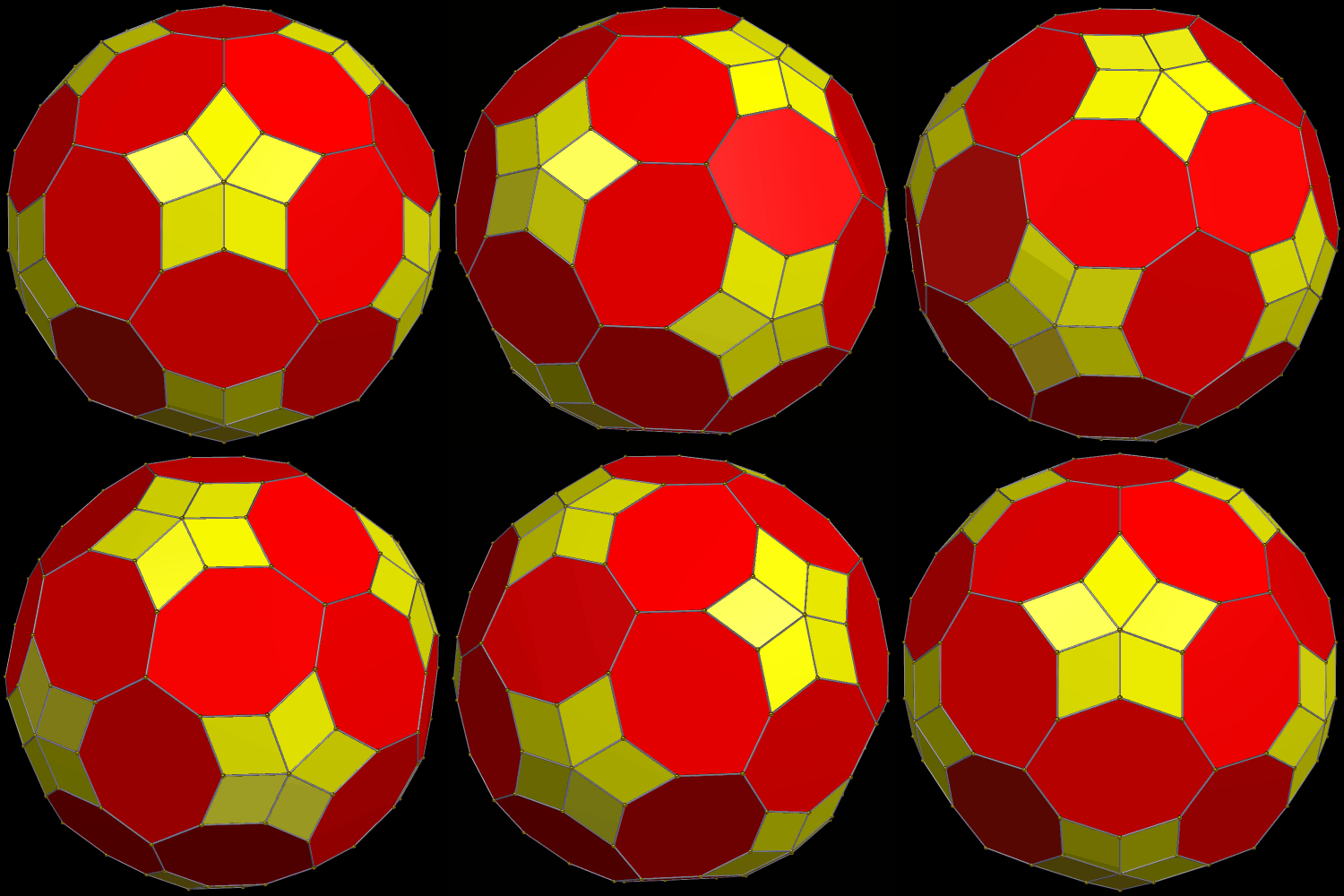
An Icosahedron, Augmented with Twenty Triangular Cupolae

To make the polyhedron shown above, I started with an icosahedron . . .

. . . and then I augmented each face with a triangular cupola, with this polyhedron’s hexagonal faces pointed outward.

I made these images using Stella 4d, which you can try for free at this website.

A Rhombic Triacontahedron, Vertices Surrounded By Smaller Rhombic Triacontahedra, and Its Interesting Dual

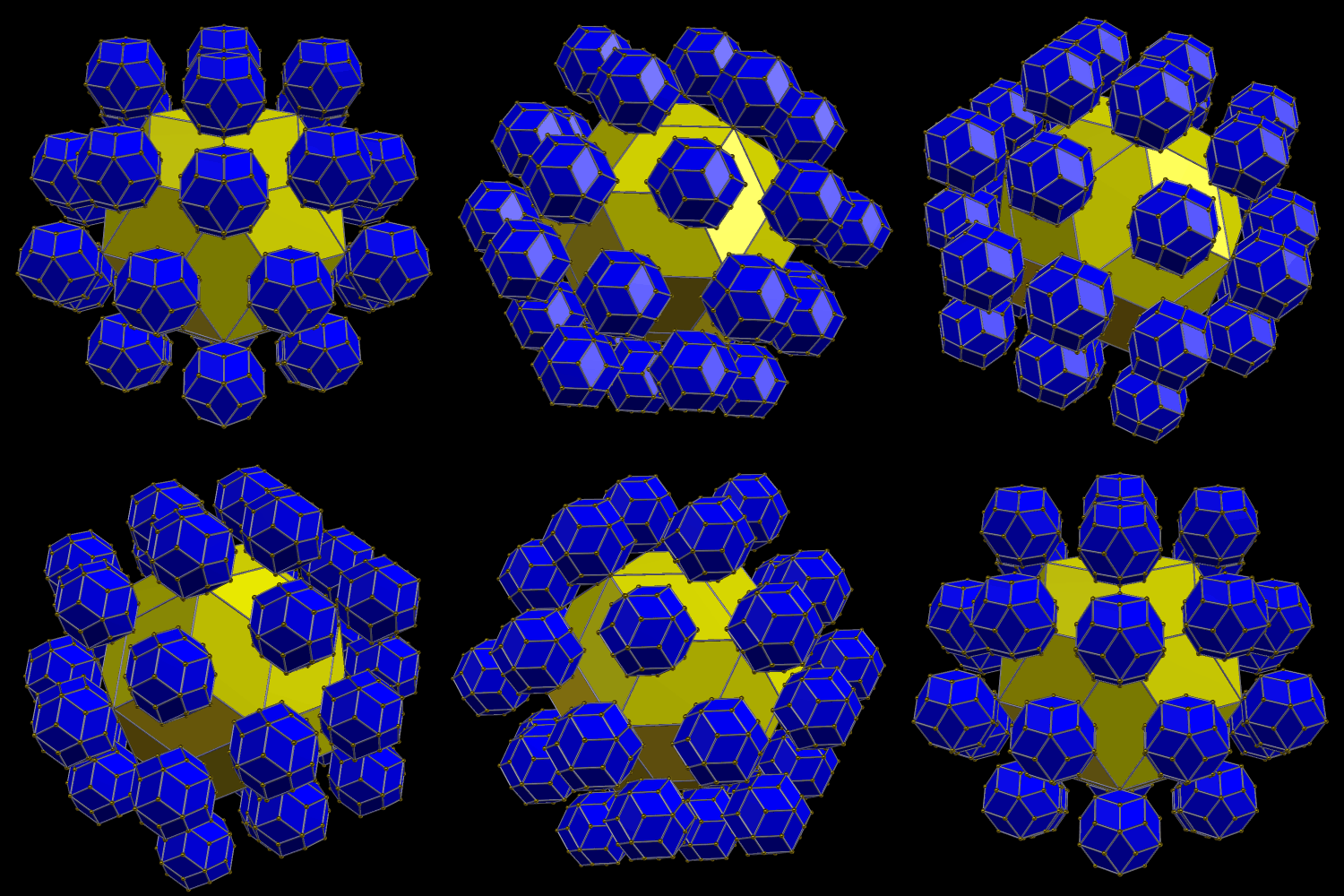
The first image shows a central yellow rhombic triacontahedron, with smaller, blue rhombic triacontahedra attached to each of its thirty-two vertices. The second polyhedron shown is the dual of the first one, with colors chosen by the number of sides per face in the second image — pentagons red, and triangles yellow. The convex hull of this second polyhedral complex shown would be an icosidodecahedron, itself the dual of the rhombic triacontahedron.

I use software called Stella 4d: Polyhedron Navigator to make the rotating polyhedral images on this blog. You can try Stella for yourself, for free, at http://www.software3d.com/Stella.php.

Tessellation Featuring Rhombi and Concave, Equilateral Dodecagons

Image

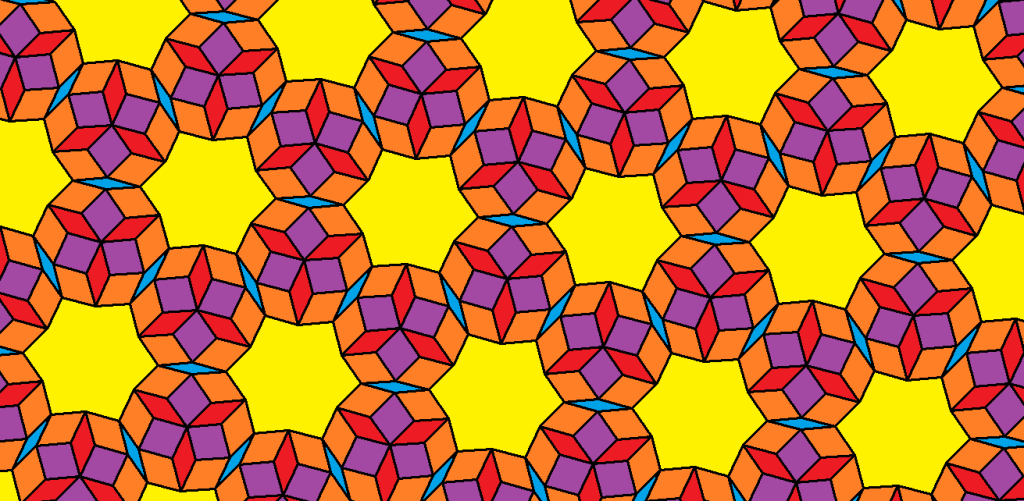
This particular tessellation is full of angles measuring 20 degrees, 40 degrees, and other angles which are not constructable using the traditional rules of Euclidean constructions. This is because this tessellation is based on a matrix which includes regular enneagons.

Twelve Pentagrammic Prisms

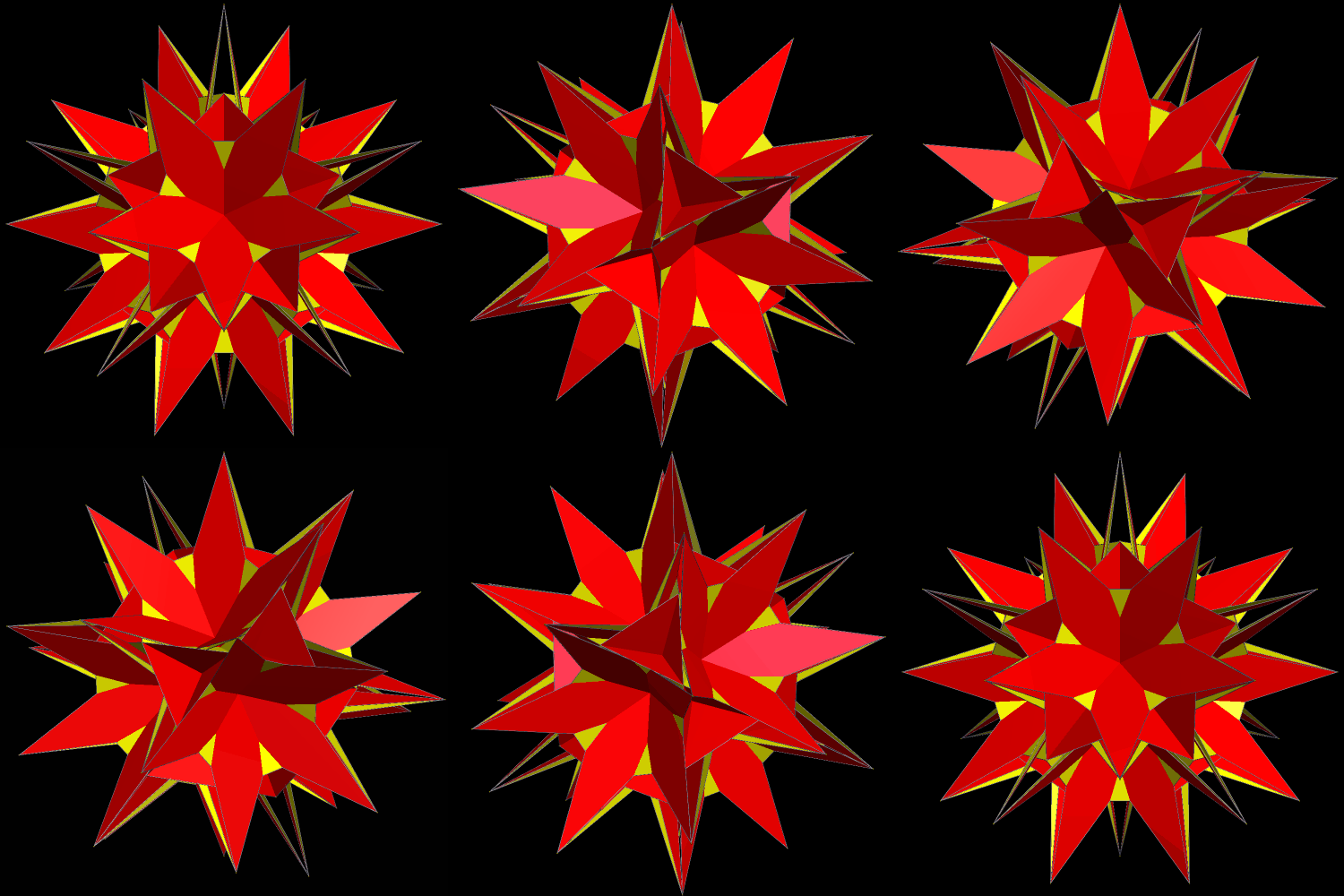
I made this by augmentation (with prisms) of the faces of a small stellated dodecahedron, using Stella 4d, which you can try for free at this website.

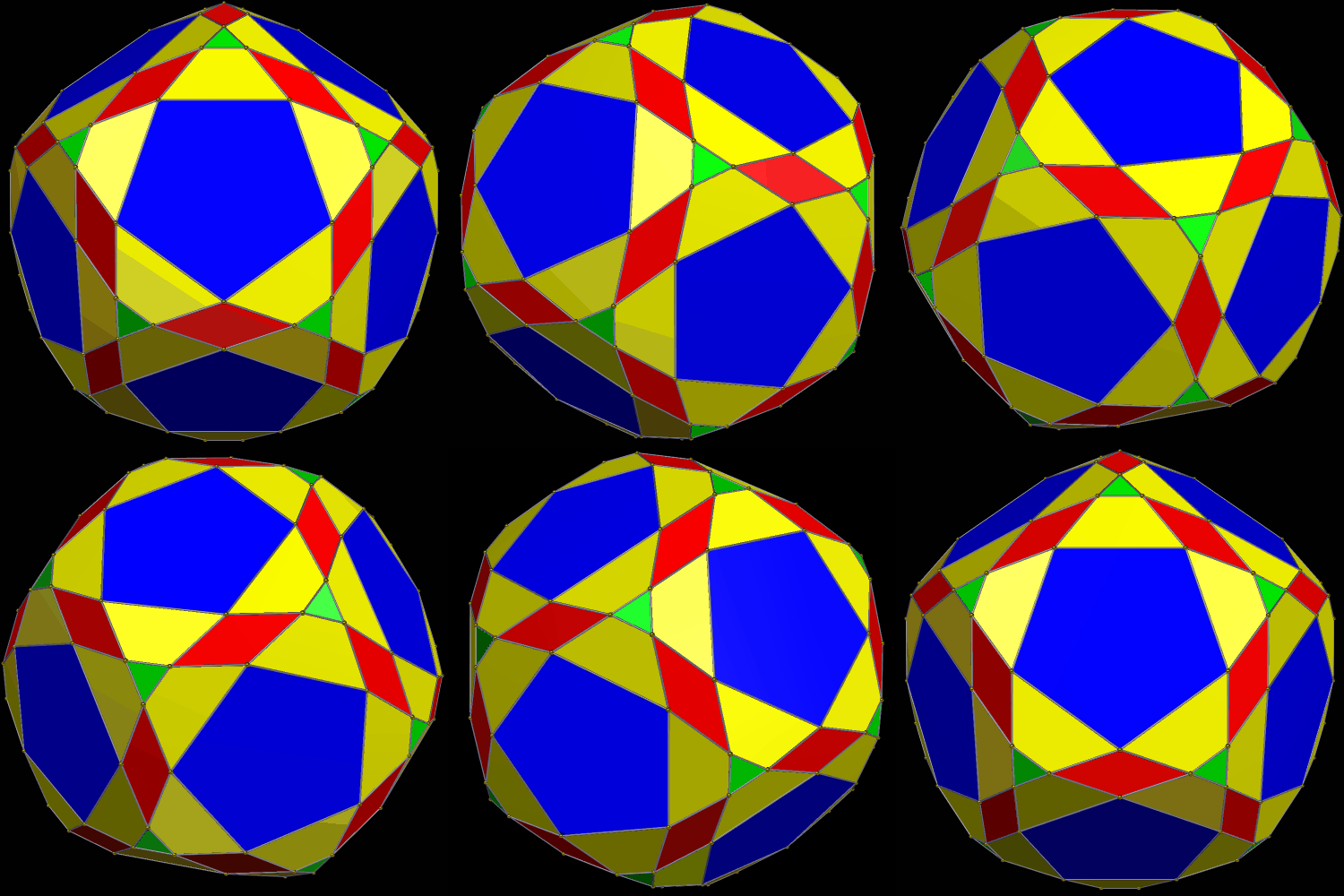
A Symmetrohedron Featuring Twelve Regular Pentagons, Thirty Regular Octagons, and Twenty Equilateral Triangles

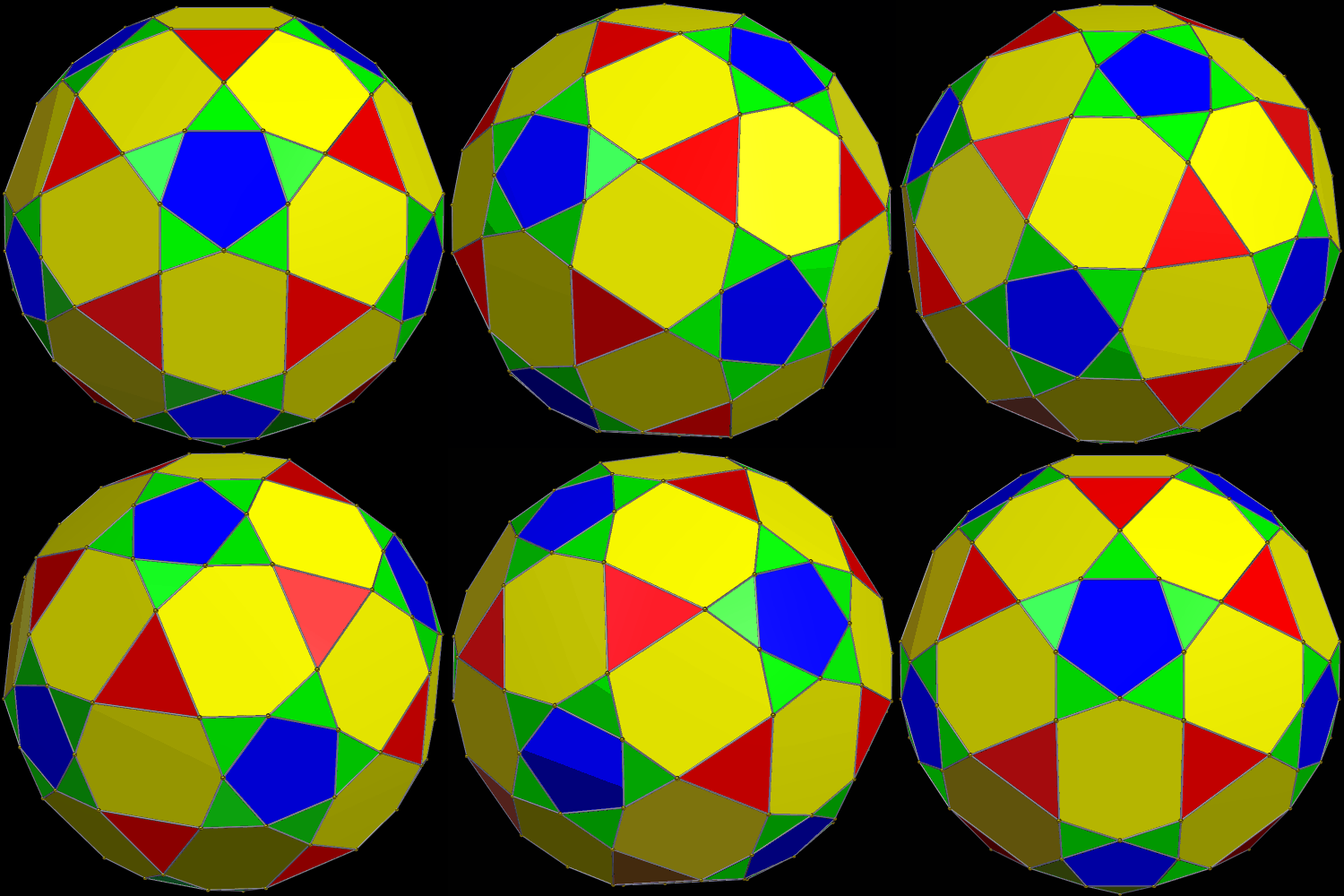
In addition to the sixty-two regular faces, this polyhedron also has two sets of sixty isosceles trapezoids each, shown in different shades of blue. That’s 182 faces in all. I made it using Stella 4d, which you can try for free at www.software3d.com/Stella.php.

A Partial Faceting of the Rhombic Octagonoid

The rhombic octagonoid appears here. These polyhedra were made using Stella 4d, which you can try for free at this website.

The Rhombic Octagonoid, a Zonohedron With Ninety Faces

To make this zonohedron with Stella 4d (available as a free trial download here), start with a dodecahedron, and then perform a zonohedrification based on both faces and vertices. It is similar to the rhombic enneacontahedron, with thirty equilateral octagons replacing the thirty narrow rhombic faces of that polyhedron.

I’ve run into this polyhedron from time to time, and have also had students make it. It is the largest zonohedron which can be built using only red and yellow Zome (available here) of a single strut-length (short, medium, or long). I thought it needed a name, so I made one up.

A 122-Faced Symmetrohedron Featuring Twelve Regular Decagons and Thirty Regular Octagons

I previously blogged a different version of this symmetrohedron, one which sacrifices octagon regularity for regularity of all the other faces. Both polyhedra were created using Stella 4d: Polyhedron Navigator, which you can try for free right here. In this version, the twenty red hexagons are equiangular, and the sixty green faces are isosceles trapezoids.

From the Rhombic Enneacontahedron to an All-Kite Polyhedron

This is the rhombic enneacontahedron, one of the few well-known zonohedra. Its ninety faces have two types: sixty wide rhombi, and thirty narrow rhombi.

In the image above, the thirty narrow rhombi of the rhombic enneacontahedron have been augmented with prisms.

The next step in today’s polyhedral play was to create the convex hull of this augmented rhombic enneacontahedron. This produced the solid shown immediately above. To make the one shown below, I next used a function called “try to make faces regular.” The result is a symmetrohedron with 122 faces: 12 regular pentagons, 30 rhombi, 60 almost-square isosceles trapezoids, and thirty equilateral triangles.

Finally, I examined the dual of this symmetrohedron, which turned out to have 120 faces: two sets of sixty kites each.

The program I used to create these polyhedral images is called Stella 4d, and you can try it yourself (as a free trial download) at http://www.software3d.com/Stella.php.

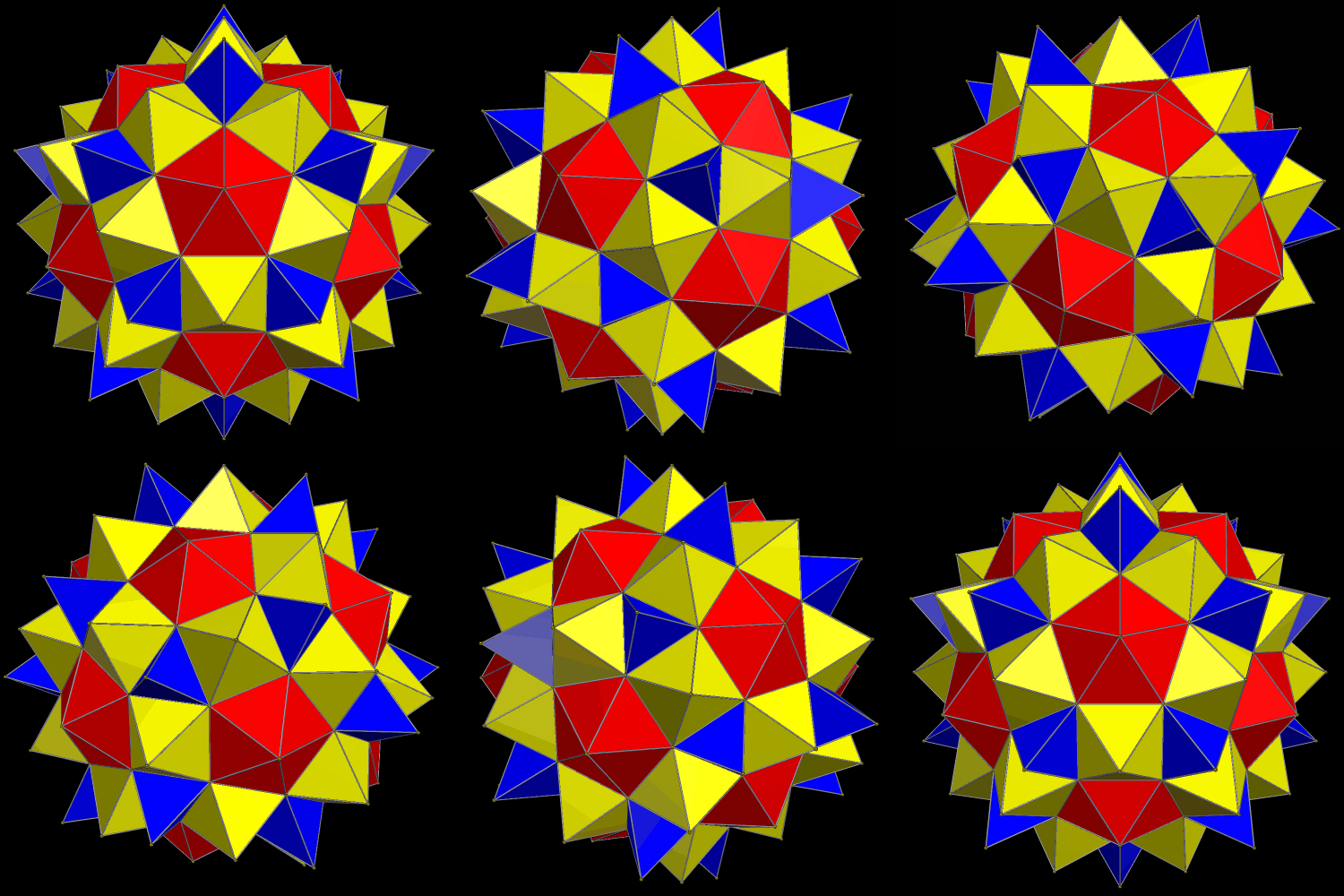
A Pyramid-Augmented Rhombicosidodecahedron

All of the edges of this polyhedron have the same length. I made it using Stella 4d: Polyhedron Navigator, which you can try for free at this website.