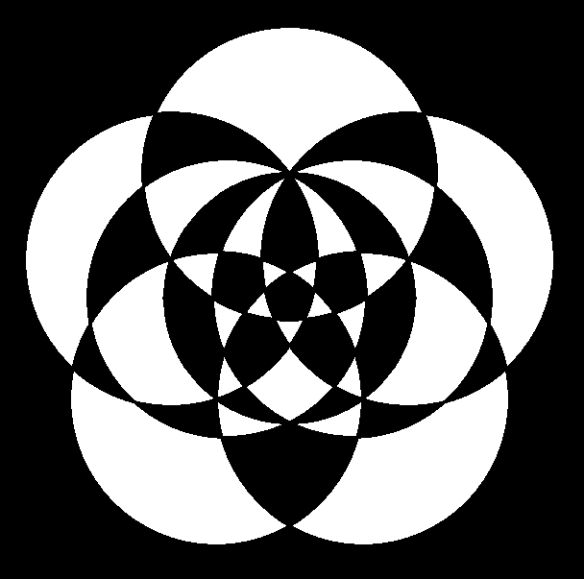
An Arrangement of Circles Based on the Euclidean Construction of the Pentagon

Image

arrangement of circles

A Zonohedron Featuring Hexadecagons

Zonohedrified Trunc Octa v e f.gif

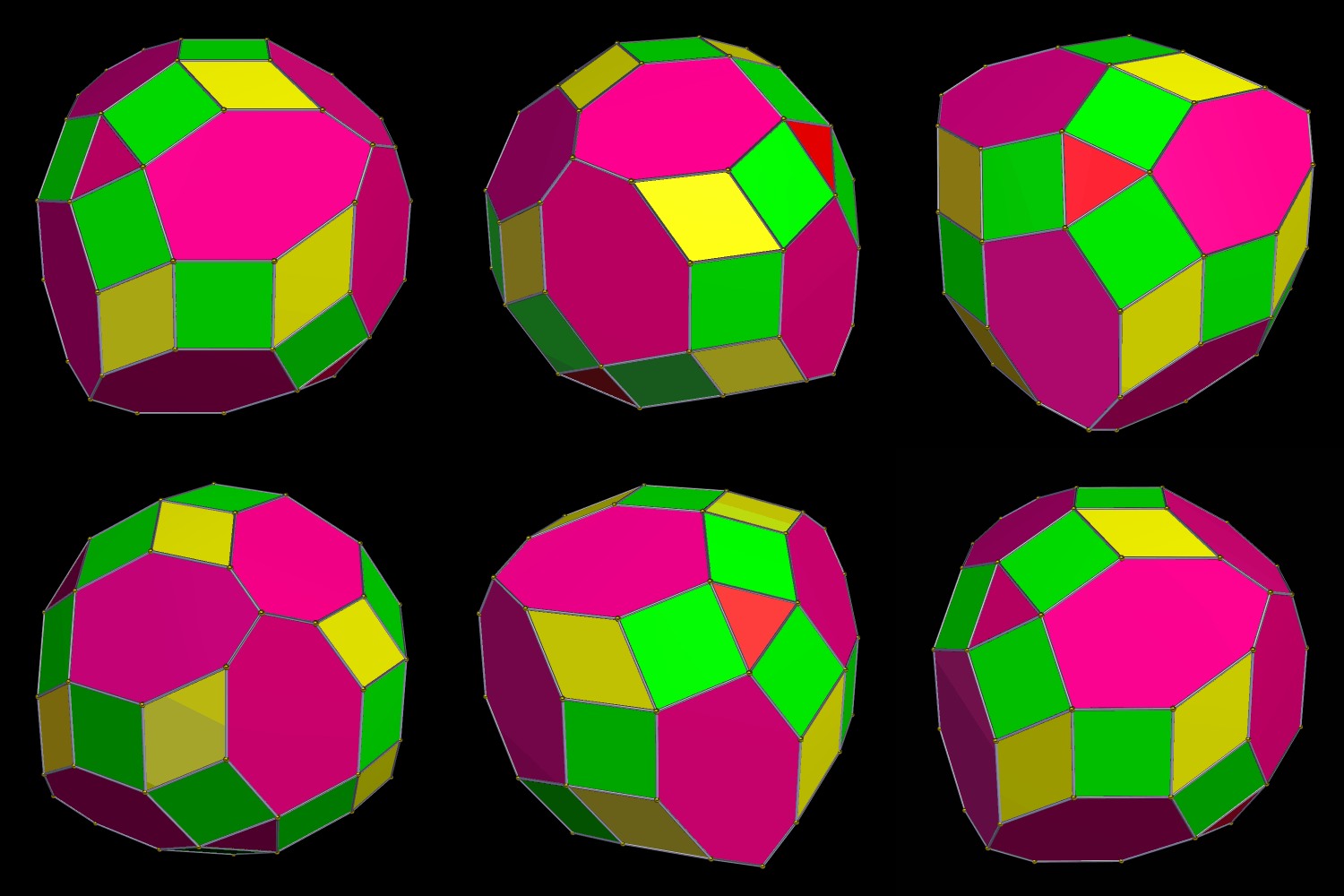
I stumbled upon this zonohedron by adding zones to a truncated octahedron, based on its faces, edges, and vertices. It was created using Stella 4d, which you may try for free at http://www.software3d.com/Stella.php. To the best of my recollection, this is the only zonohedron I have seen which includes rhombi, hexagons, octagons, and, of course, the red hexadecagons.

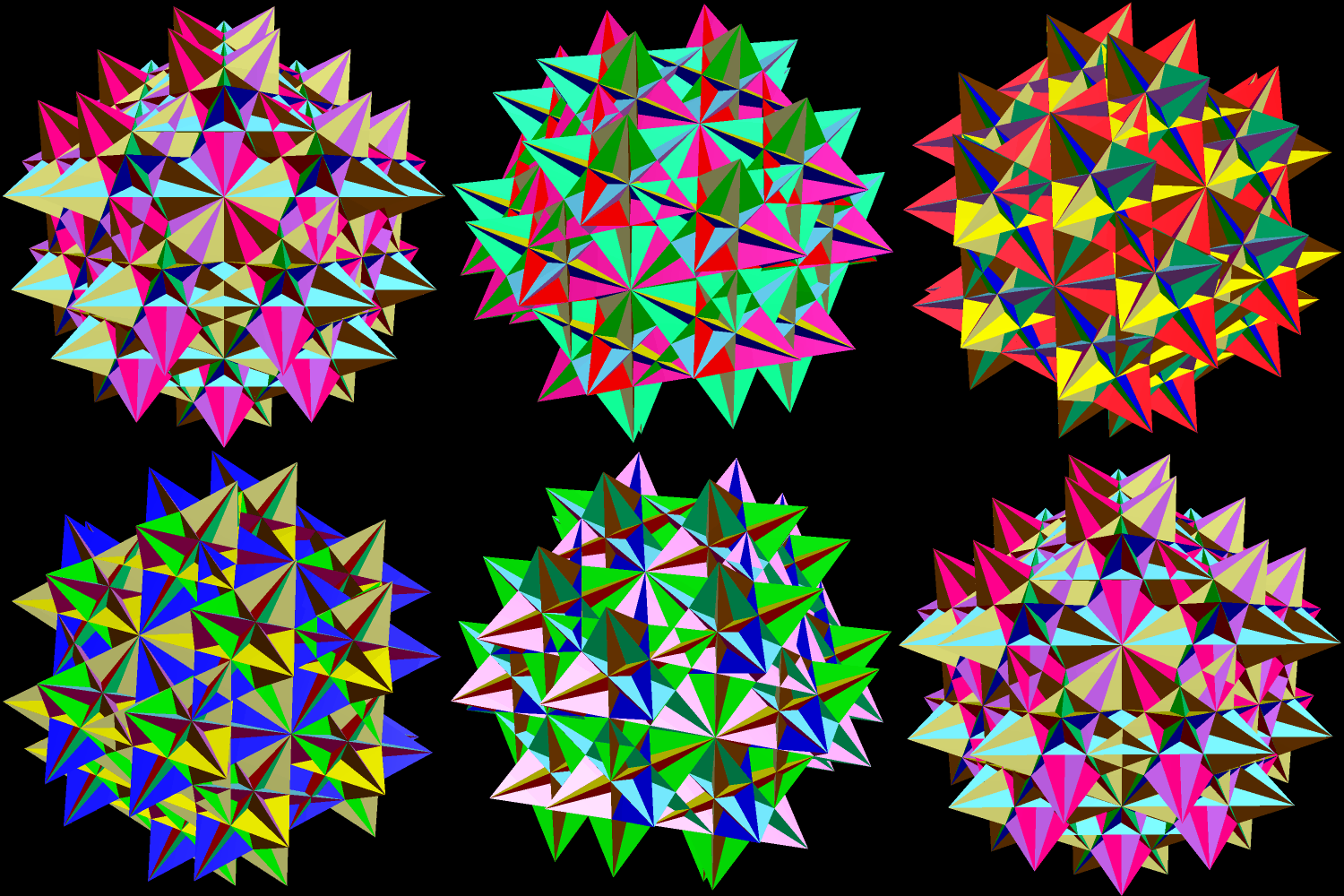
An Icosahedron Augmented With Twenty Great Icosahedra, Together With the Dual of This Cluster-Polyhedron

icosa Augmented by great Icosas.gif

The cluster-polyhedron above was formed by augmenting a central isocahedron with twenty great icosahedra. The dual of this cluster is shown below.

icosa Augmented by great Icosas dual.gif

Both these images were created using Stella 4d, which you may try for free at http://www.software3d.com/Stella.php.

The Compound of the Truncated Isocahedron and the Pentakis Dodecahedron, with Related Polyhedra

The yellow-and-red polyhedron in the compound below is the truncated icosahedron, one of the Archimedean solids. The blue figure is its dual, the pentakis dodecahedron, which is one of the Catalan solids.
Pentakis dodecahedron and truncated icosahedron

The next image shows the convex hull of this base/dual compound. Its faces are kites and rhombi.

Convex hull of trunctaed icosahedron slash pentakis dodecahedron compound

Shown next is the dual of this convex hull, which features regular hexagons, regular pentagons, and isosceles triangles.
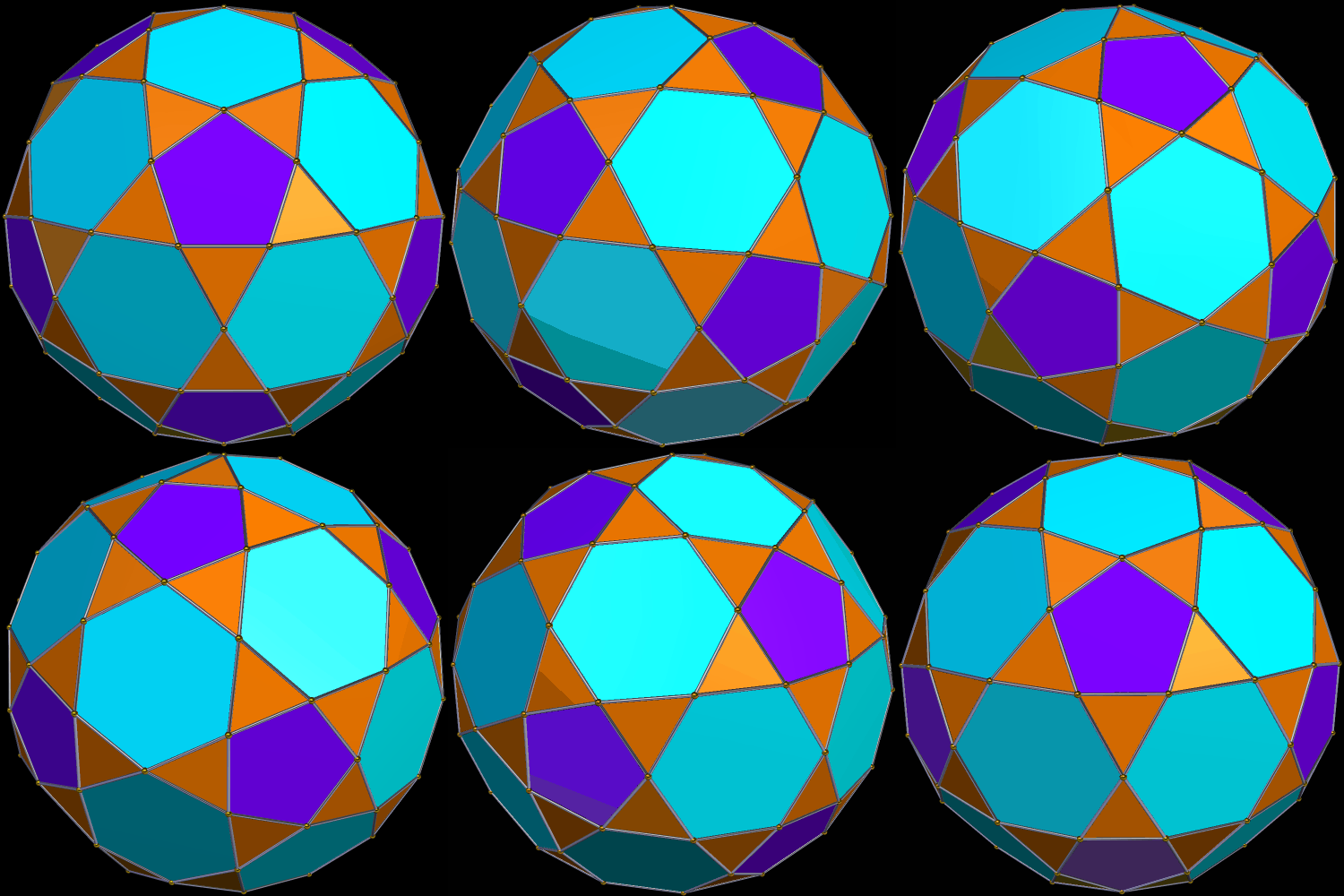
dual of Convex hull of trunctaed icosahedron slash pentakis dodecahedron compound

Next, here is the compound of the last two polyhedra shown.

dual and base compound of Convex hull of trunctaed icosahedron slash pentakis dodecahedron compound

Continuing this process, here is the convex hull of the compound shown immediately above.

Convex hull

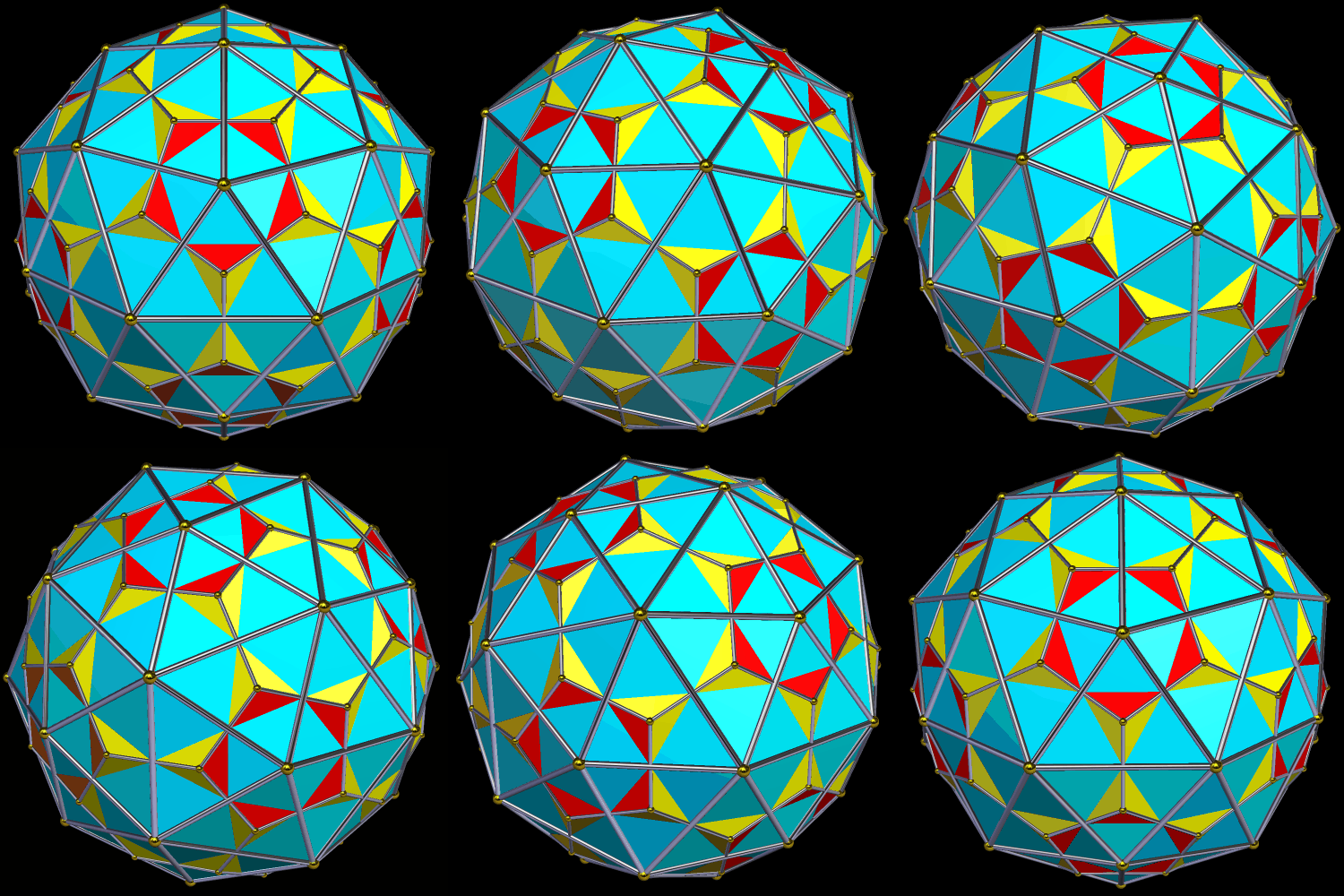
This latest convex hull has an interesting dual, which is shown below. It blends characteristics of several Archimedean solids, including the rhombicosidodecahedron, the truncated icosahedron, and the great rhombicosidodecahedron.

Dual of Convex hull

This process could be continued indefinitely — making a compound of the last two polyhedra shown, then forming its convex hull, then creating that convex hull’s dual, and so on.

All these polyhedra were made using Stella 4d: Polyhedron Navigator, which you can purchase (or try for free) at http://www.software3d.com/Stella.php

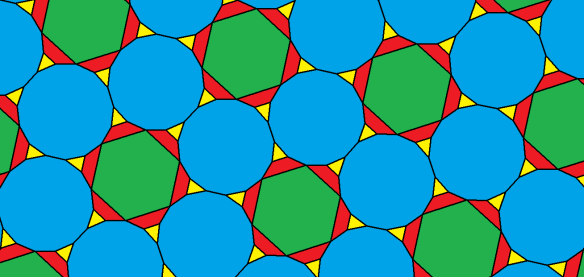
A Tessellation Featuring Regular Pentadecagons and Hexagons, As Well As Isosceles Trapezoids and Triangles

Image

Tessellation featuring regular pentadecagons and hexagons, as well as isosceles trapezoids and triangles

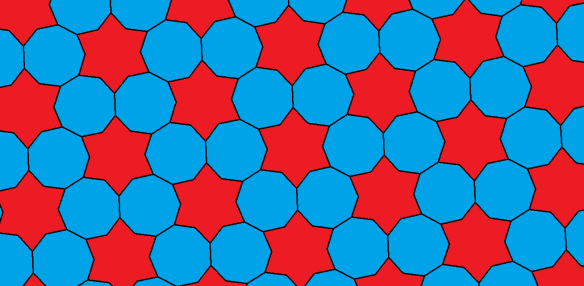
Tessellation Featuring Regular Enneagons and Hexaconcave Dodecagons

Tessellation featuring regular enneagons and hexaconcave dodecagons

Some people call nine-sided polygons “nonagons,” rather than “enneagons,” but I prefer Greek prefixes to those based on Latin.

An Enneagonal Mandala

enneagonal mandala

I made this years ago — in 2010 — and just found it today, on Facebook. That was two years before this blog started. I like finding such “lost works,” but it doesn’t happen often these days. 

Pentagonal Mandala V

Image

pentagonal mandala v

The Black Widow Tessellation

balck widow tessellation

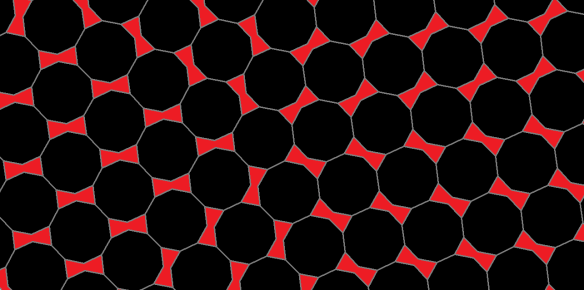
The black polygons in this radial tessellation are regular decagons. The red figures are hourglass-shaped equilateral hexagons, which remind me of the distinctive red markings found on many black widow spiders.

Four Polyhedra Featuring Heptagons

Heptagons only appear infrequently in interesting polyhedra. I recently found a few that I like.

Icosidodeca 2nd tetstell with heptagons and triangles is pyritohedral.gif

To form the first of these solids, shown above, I started with the icosidodecahedron, dropped the symmetry of the model from icosahedral to tetrahedral, and then stellated it twice using Stella 4d (available here). To obtain the model shown below, which also features heptagons and triangles, I stellated it once more. Both of these polyhedra have pyritohedral symmetry.

Icosidodeca 3rd tetstell with heptagons and triangles is pyritohedral.gif

To form the next model shown, I began with an rhombicosidodecahedron, set it to tetrahedral symmetry, and stellated it eight times. This produces a chiral solid with tetrahedral symmetry.

Stellated Rhombicosidodeca 8th tetstell features 8 heptagons tet symmetry.gif

For the last of these four polyhedra featuring heptagons, I began with the snub dodecahedron, dropped the symmetry of the model down from icosahedral to tetrahedral, and then stellated it sixty-one times. The resulting solid is chiral, with tetrahedral symmetry.

Snub Dodeca 61st tetstell.gif