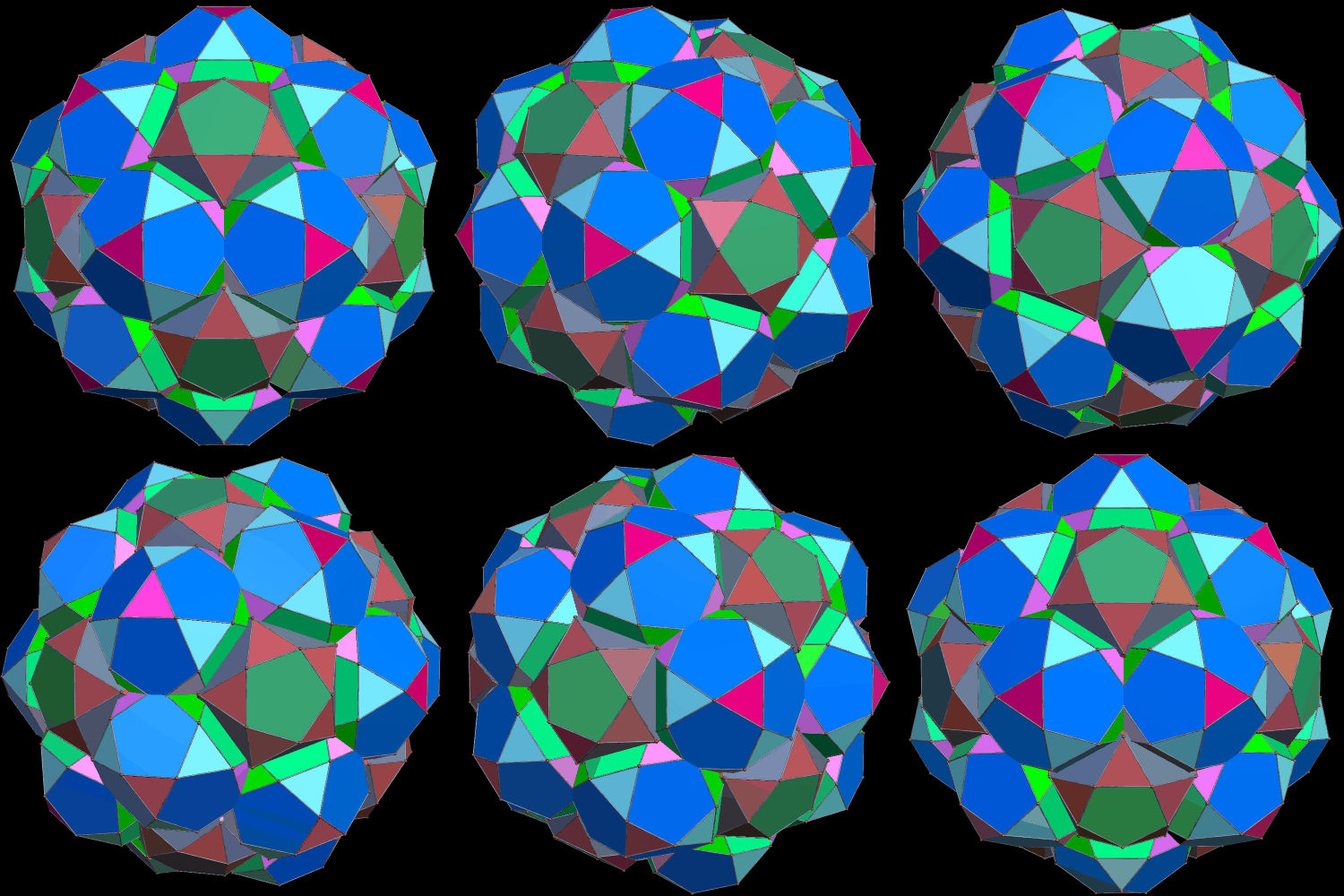
A Tetrahedrally-Symmetric Polyhedron Featuring Heptagons

46-faces-12-of-them-heptagons

Created using Stella 4d: Polyhedron  Navigator; see this website to try it for yourself!

On Math Jokes (with a new re-telling of my favorite one, about a balloon race)

Math jokes are almost universally awful — or, at least, it seems that way to me, since I spend a lot of time around ninth graders. Hearing “Gee, I’m a tree” or “Pi are square? No, pies are round, and cake are square!” will generally elicit a groan from me, and each new cadre of students seems to think they invented these fossilized puns. An even worse “joke” is the giggling one should expect from, say, 7th graders, if one squares the number thirteen in their presence.

I do know exactly one good math joke, though. I didn’t hear it from a student. If you’re curious, read on. Only the embellishments are original; I didn’t make up the joke, itself, though, nor do I know who did.

My source for the image below is this fellow WordPress blogger’s photography blog.

img_6269

So a physicist, chemist, and a lawyer enter a balloon race together. Theirs is the last balloon to leave, because the lawyer had been in court, arrived late, and caused a short delay in departure. The consequences of this were serious, though, for a sudden cross-wind blew them off course, right after takeoff. Soon, they couldn’t even see any of the other balloons in the race, and none of them recognized any landmarks in the landscape below.

Soon, they had no idea where they were, and started getting worried about making it to their next classes  on time — or back to court, in the case of the lawyer. The chemist was particularly worried. “What are we going to do?” asked the chemist.

The physicist replies, “I have an idea!” He cups his hands, leans out, and yells, as loud as he can, “Hello! Where are we?”

The balloon flies on for at least two long, anxious minutes as the trio waits, silently, for an answer. Eventually, they hear, from a great distance, a voice. “Hello! You’re lost!”

The physicist looks at the other two, and says, “That, my friend, was a mathematician.”

“How,” asked the lawyer, “could you possibly know that?”

“Three things,” replied the physicist. He held up one finger. “First, it took him a long time to answer.”

“Second,” he continued, holding up two fingers, “the answer, when it finally came, was absolutely correct.”

A third finger joined the first two. “Third, the answer, when it finally came, was completely useless!”

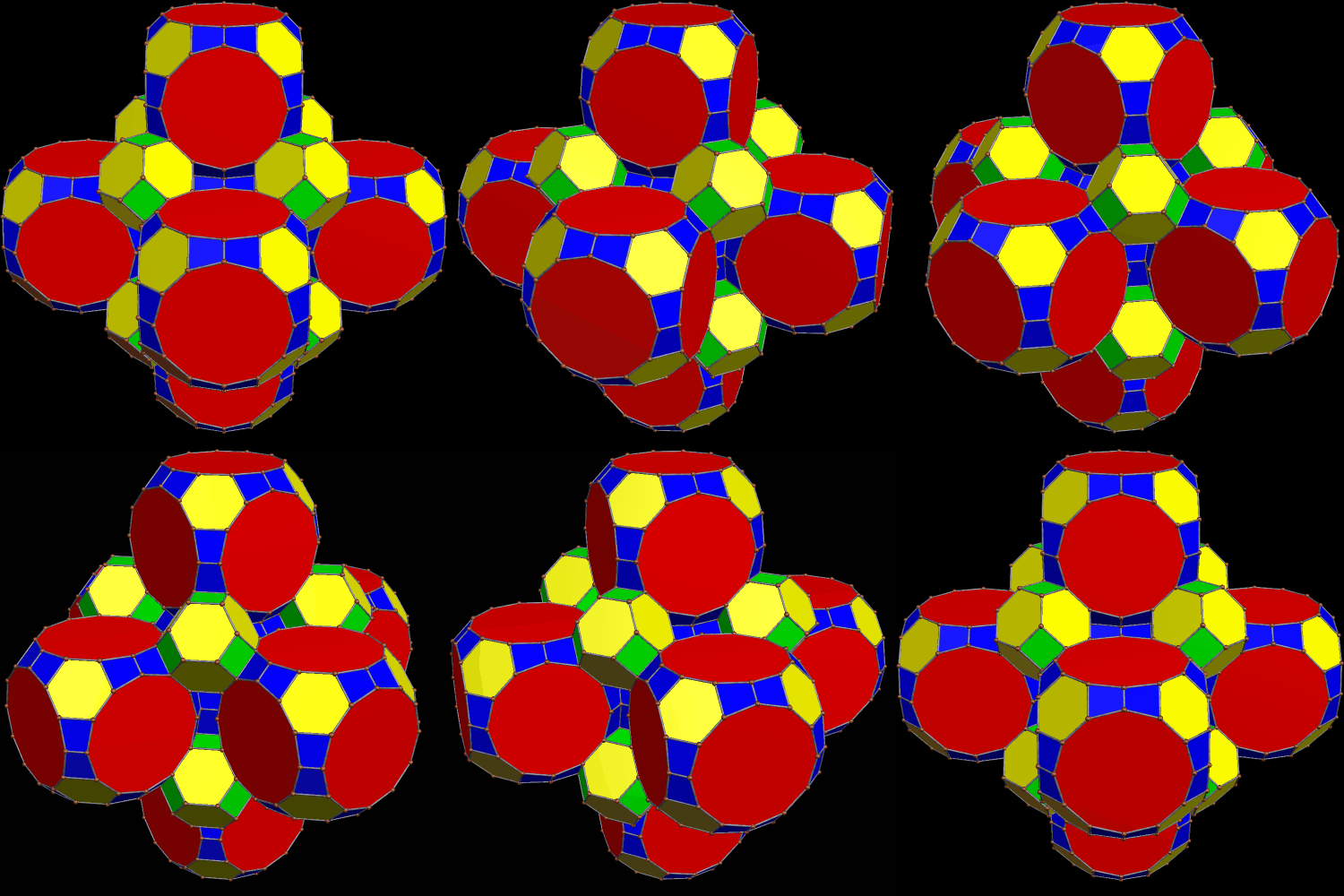
Bowtie Cubes in a Polyhedral Honeycomb

unnamed

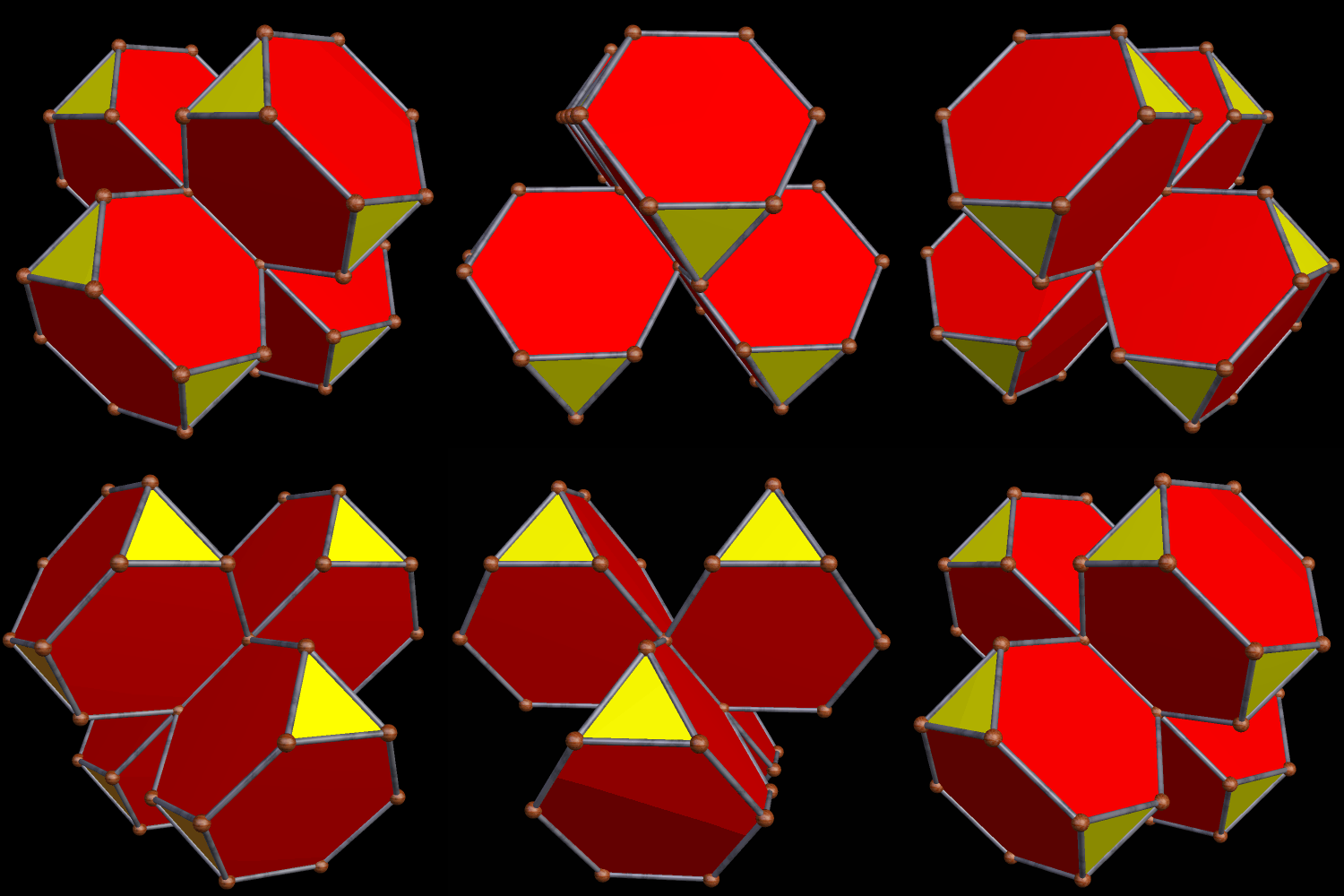
This polyhedron has been described here as a “bowtie cube.” It is possible to augment its six dodecagonal faces with additional bowtie cubes. Also, the bowtie cube’s hexagonal faces may be augmented by truncated octahedra.

bizarre

These two polyhedra “tessellate” space, together which square pyramidal bifrustrums, meeting in pairs, which fill the blue-and-green “holes” seen above. This last image shows more of the “honeycomb” produced after yet more of these same polyhedra have been added.

bizarrer

This pattern may be expanded into space without limit. I discovered it while playing with Stella 4d, software you may try for free at this website.  


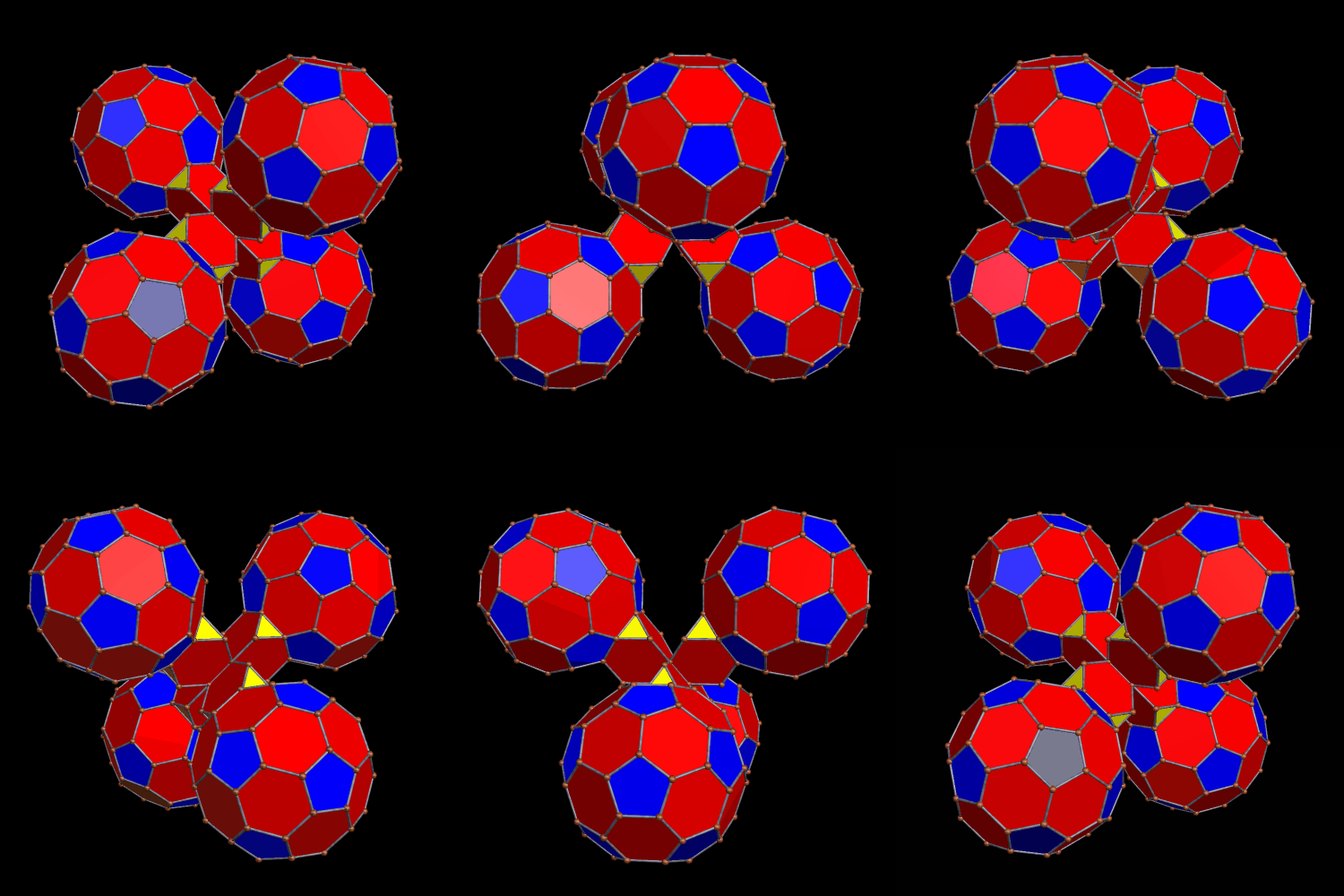
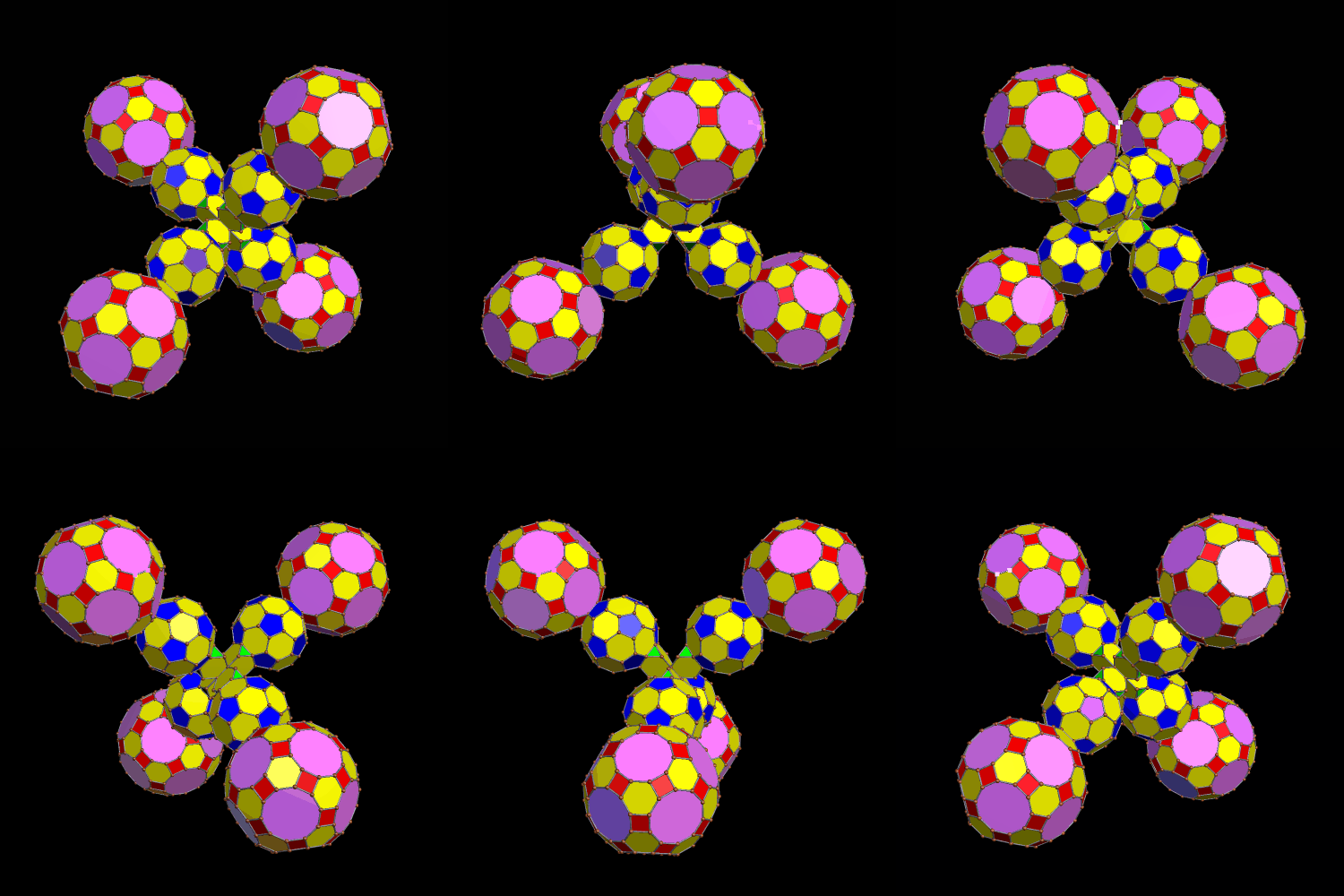
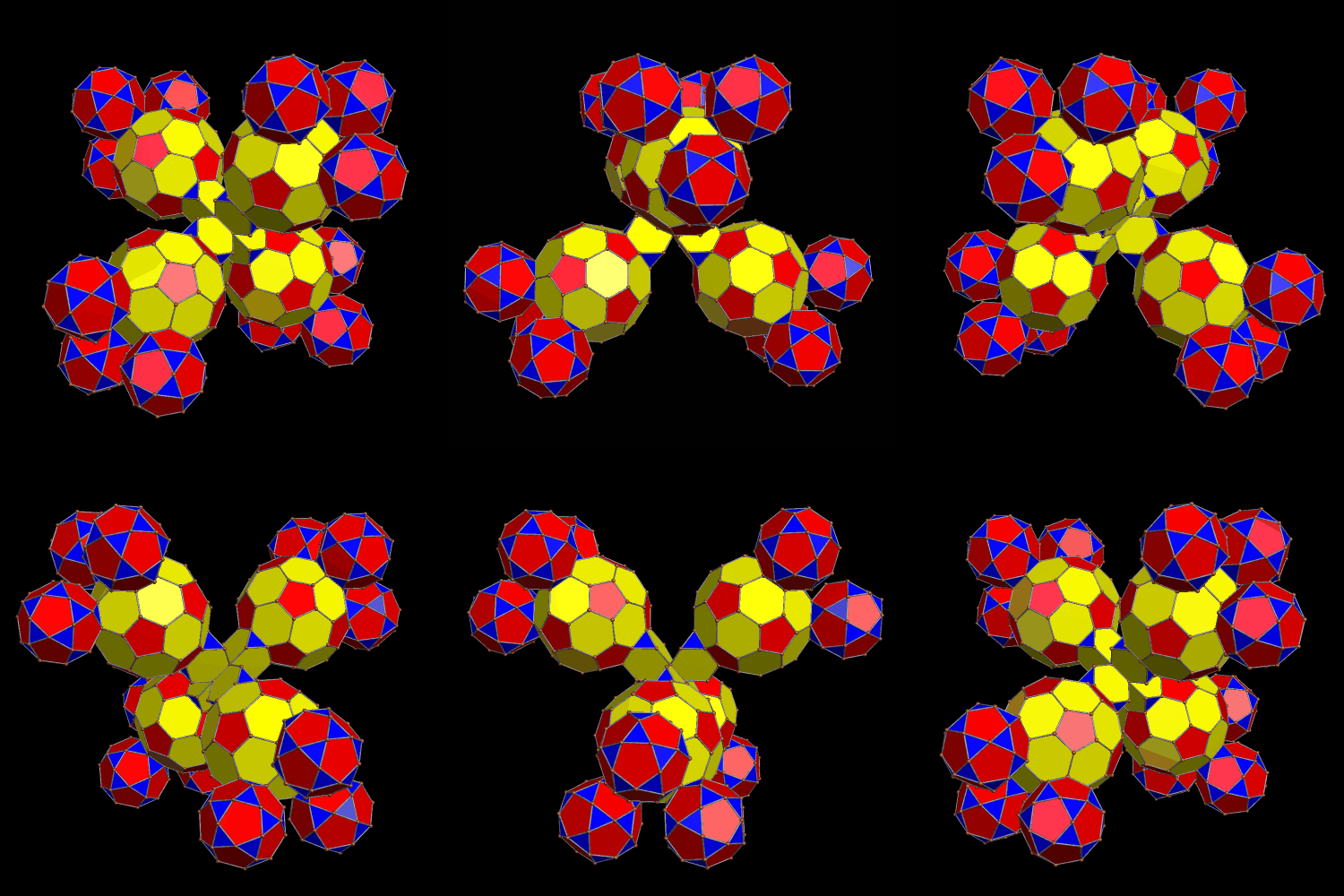
Tetrahedrally-Symmetric Creatures with Polyhedral Legs

Each of these has a tetrahedron hidden from view in the center.

augmented-tetra

augmented-tetra-2

augmented-tetra-3

augmented-tetra-4

These were made using Stella 4d, which you may try for yourself here.

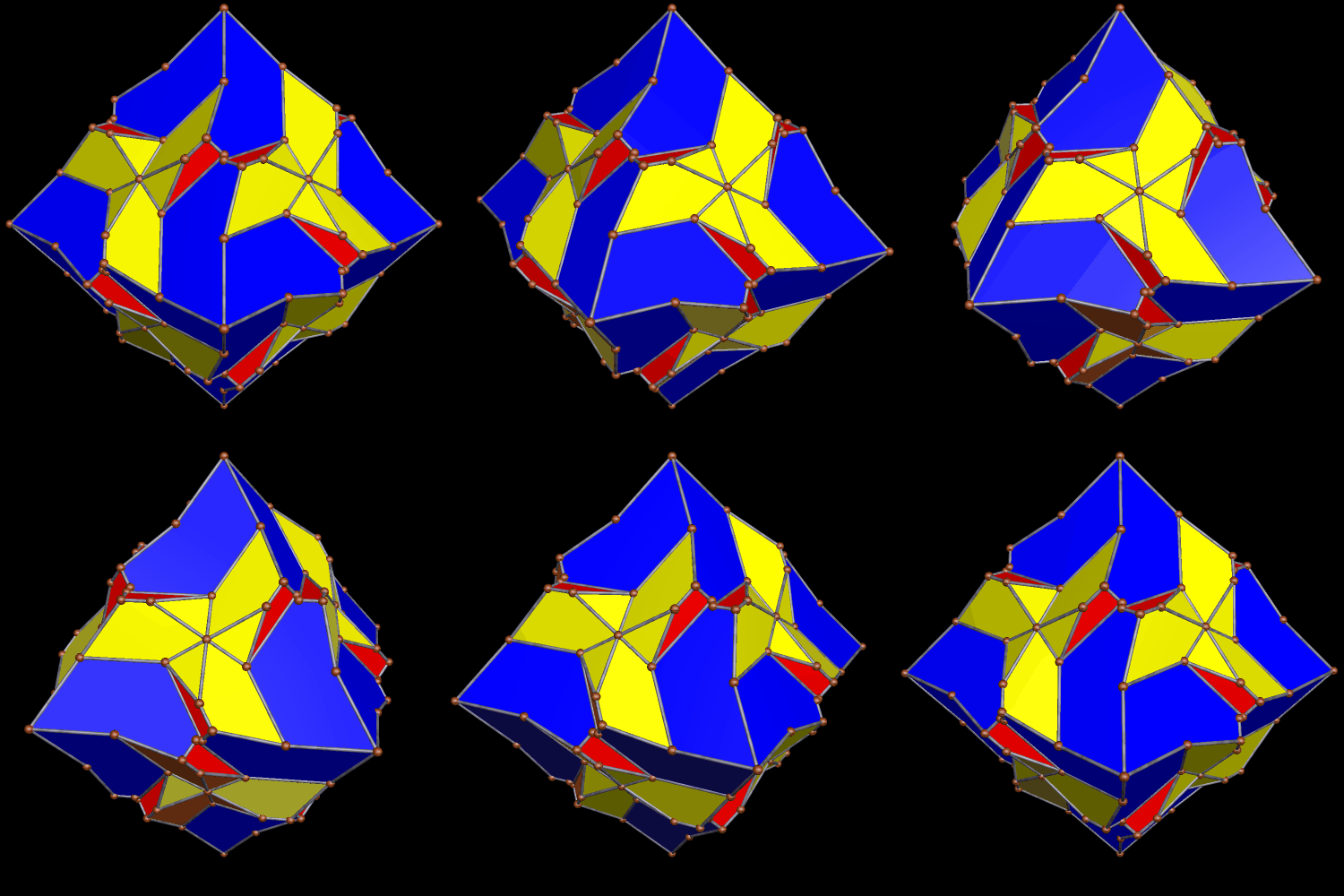
A Crinkled Octahedron

unnamedmnmn-octahedral

“Crinkled” is merely descriptive; I offer no mathematical definition of the term. This was a polyhedron I stumbled along while doing random-walk polyhedral manipulations with Stella 4d, available at this website.

The Compound of the Rhombic Dodecahedron and Its Own Third Stellation

Image

compound-of-rd-plus-stellation-of-rd

I used Stella 4d to make this polyhedral compound, and this program may be tried for free at this website.

Shield Mandala

Image

shield-mandala

The Dodecahedron, Made from Smaller Polyhedra

augmented-rhombic-triaconta-dodeca

The polyhedra at the vertices are rhombic triacontahedra, and the yellow edges are elongated rhombic prisms. This was made using Stella 4d, software you may try for free at this website.

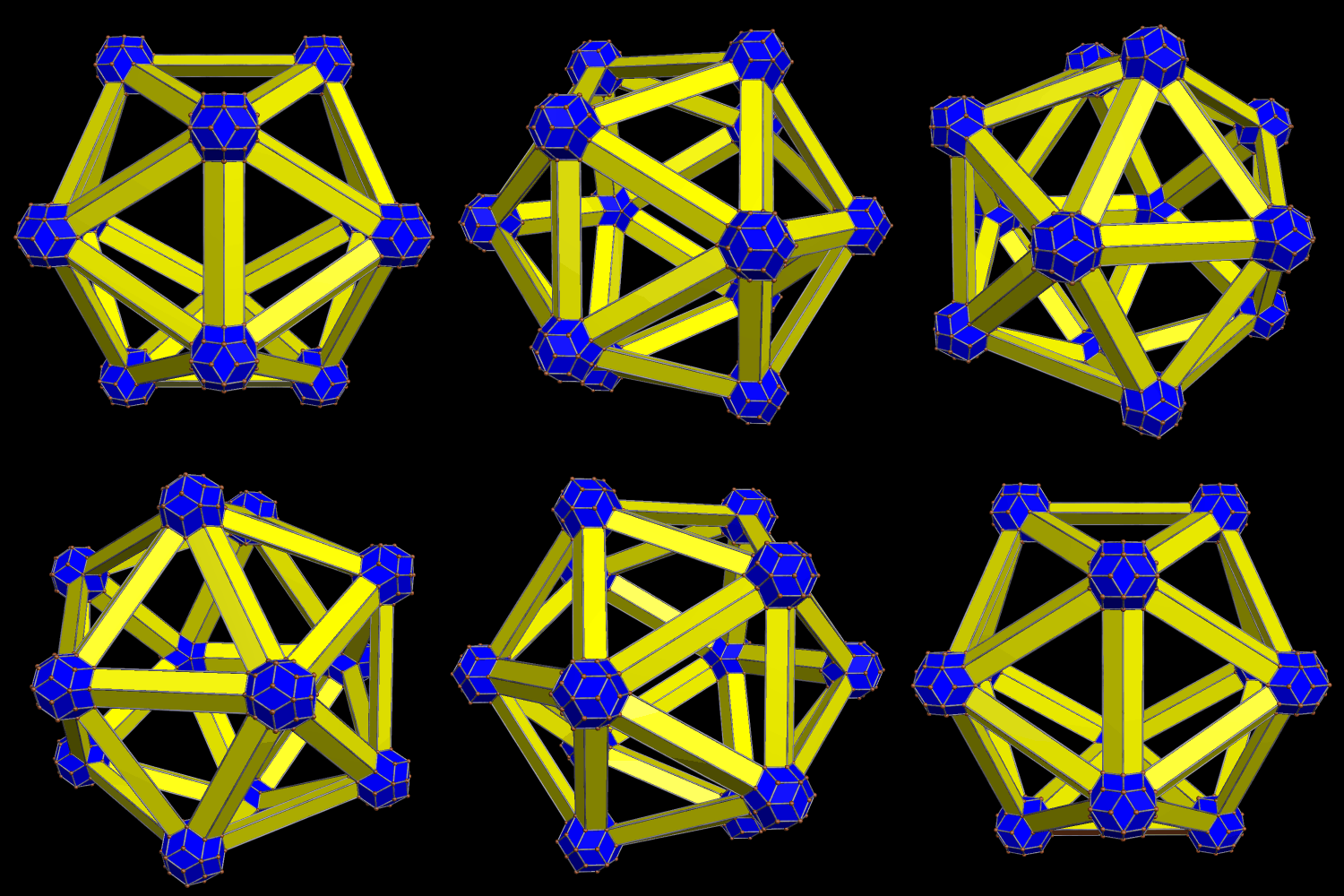
An Icosahedron, Constructed from Smaller Polyhedra

Augmented Rhombic Triaconta.gif

The polyhedra at the vertices are rhombic triacontahedra, and the yellow edges are elongated rhombic prisms. This was made using Stella 4d, software you may try for free at this website.

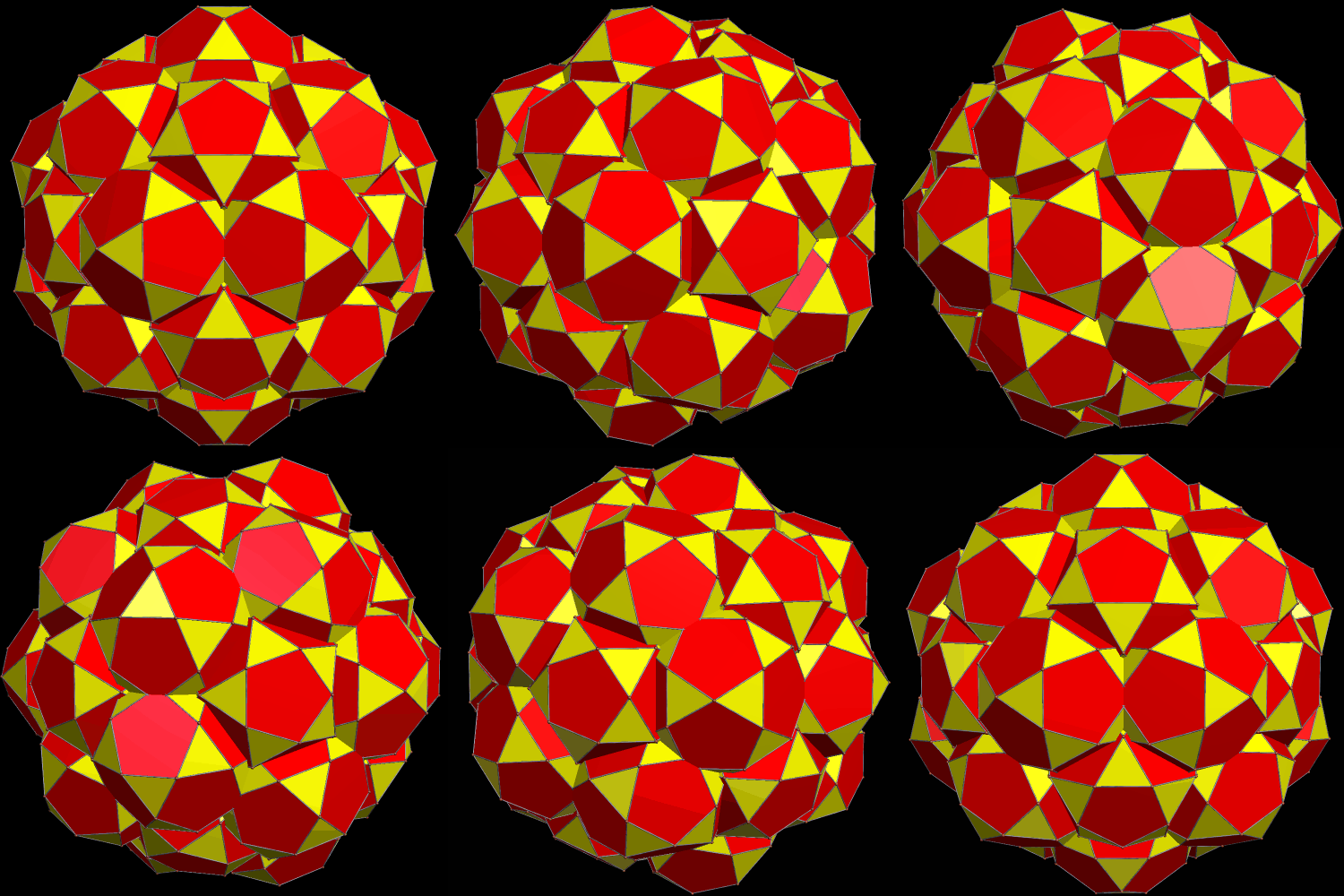
Three Views of a Rotating Cluster of 33 Icosidodecahedra

33-icosidodeca

To make these three rotating cluster-polyhedra, I started with one icosidodecahedron in the center, then augmented each of its 32 faces with overlapping, additional icosidodecahedra, for a total of 33 icosidodecahedra per cluster. In the first image, only two colors are used: one for the triangular faces, and another for the pentagons. The second version, however, has the colors assigned by face-type, which is determined by each face’s placement in the overall cluster.

33-icosidodeca-ft

For the third version, I simply put Stella 4d (the program I use to make these images) into “rainbow color mode.” If you’d like to give Stella 4d a try, you can do so for free at this website.

33-icosidodeca-rc