A Zonohedrified Rhombic Triacontahedron, and Its Dual

Image

A Zonohedrified Rhombic Triacontahedron and Its Dual

To create this, I started with a rhombic triacontahedron, and then used software called Stella 4d to zonohedrify it, adding zones to the existing faces along x, y, and z axes meeting at the polyhedron’s center.

I find its dual even more interesting:

zonohedron RTC with xyz zones added has an interesting dual

The software used to create these rotating images may be tried for free at http://www.software3d.com/Stella.php.

An Elongated Stella Octangula

Image

An Elongated Stella Octangula

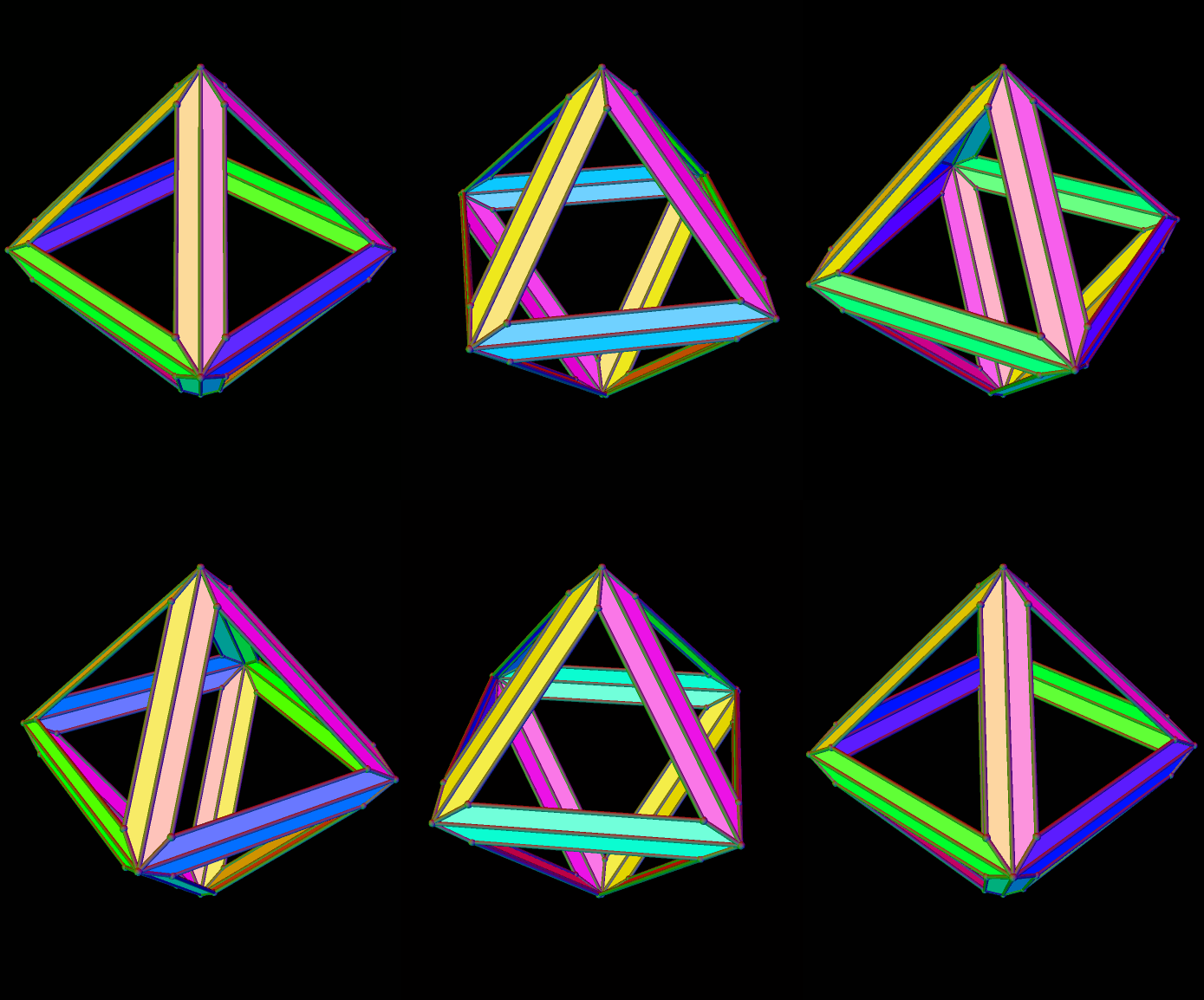
The Stella Octangula is another name for the compound of two tetrahedra. I made this elongated version, which uses narrow isosceles triangles in place of the usual equilateral triangles, using Stella 4d — polyhedron-manipulation software you can find at http://www.software3d.com/Stella.php.

Two Hollow Variants of the Octahedron

Image

Two Hollow Variants of the Octahedron

These are both in the same stellation-sequence. I made them using Stella 4d, software you can find here: http://www.software3d.com/Stella.php. For the second one, just click on it if you want to make it larger.

ANTIbEVELED RAINBOW OCTAHEDRONConvex hull


Nervous Icosahedron

Image

Nervous Icosahedron

Perhaps it had too much caffeine?

Software credit: see http://www.software3d.com/Stella.php.

Polyhedron Featuring Eighty Regular Hexacontagons in the Pattern of the Triangles of a Snub Dodecahedron

Image

Polyhedron Featuring Eighty Regular Hexacontagons in the Pattern of the Triangles of a Snub Dodecahedron

To make this, I attached tall pyramids (by their vertices) to the centers of the triangular faces of a snub dodecahedron. These pyramids have bases which are regular polygons with sixty sides each. After that modification of a snub dodecahedron, I took the convex hull of the result.

Just like the snub dodecahedron upon which this is based, this polyhedron is chiral. For any chiral polyhedron, Stella 4d (the software I use to make most of the images on this blog) will allow you to quickly make a compound of the polyhedron and its mirror image. When I did that, I obtained this result.

Compound of enantiomorphic pair

Stella 4d may be tried and/or bought at www.software3d.com/Stella.php.

Octahedron with Beveled Vertices

Image

Octahedron with Beveled Vertices

As an eight-sided die, this would work better than the Platonic octahedron, for it would roll more smoothly.

Software credit: see http://www.software3d.com/Stella.php.

Prismatic Versions of Part of a Tessellation Using Squares and 60-120-60-120 Rhombi

Image

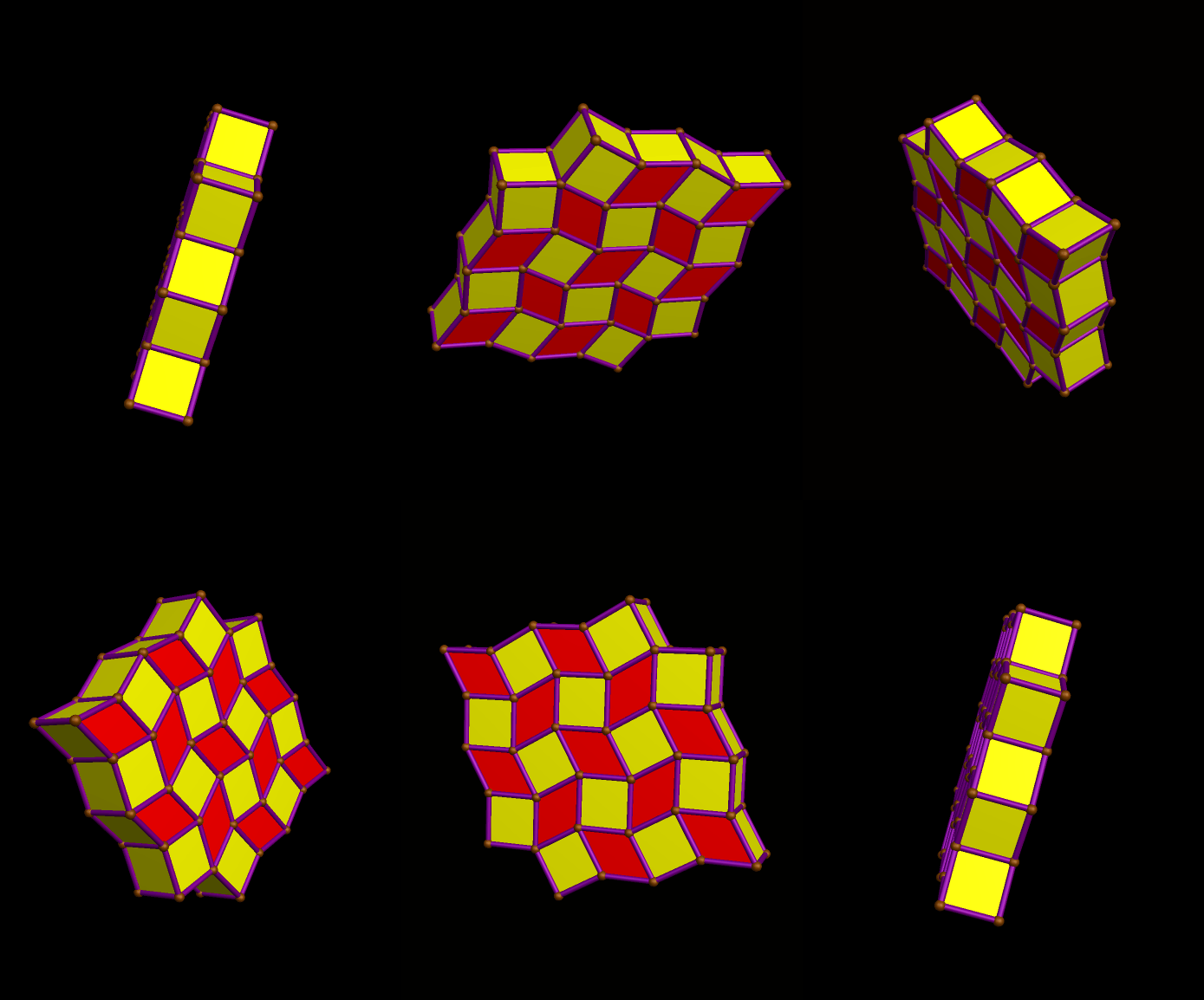
Prismatic Versions of Part of a Tessellation Using Squares and 60-120-60-120 Rhombi

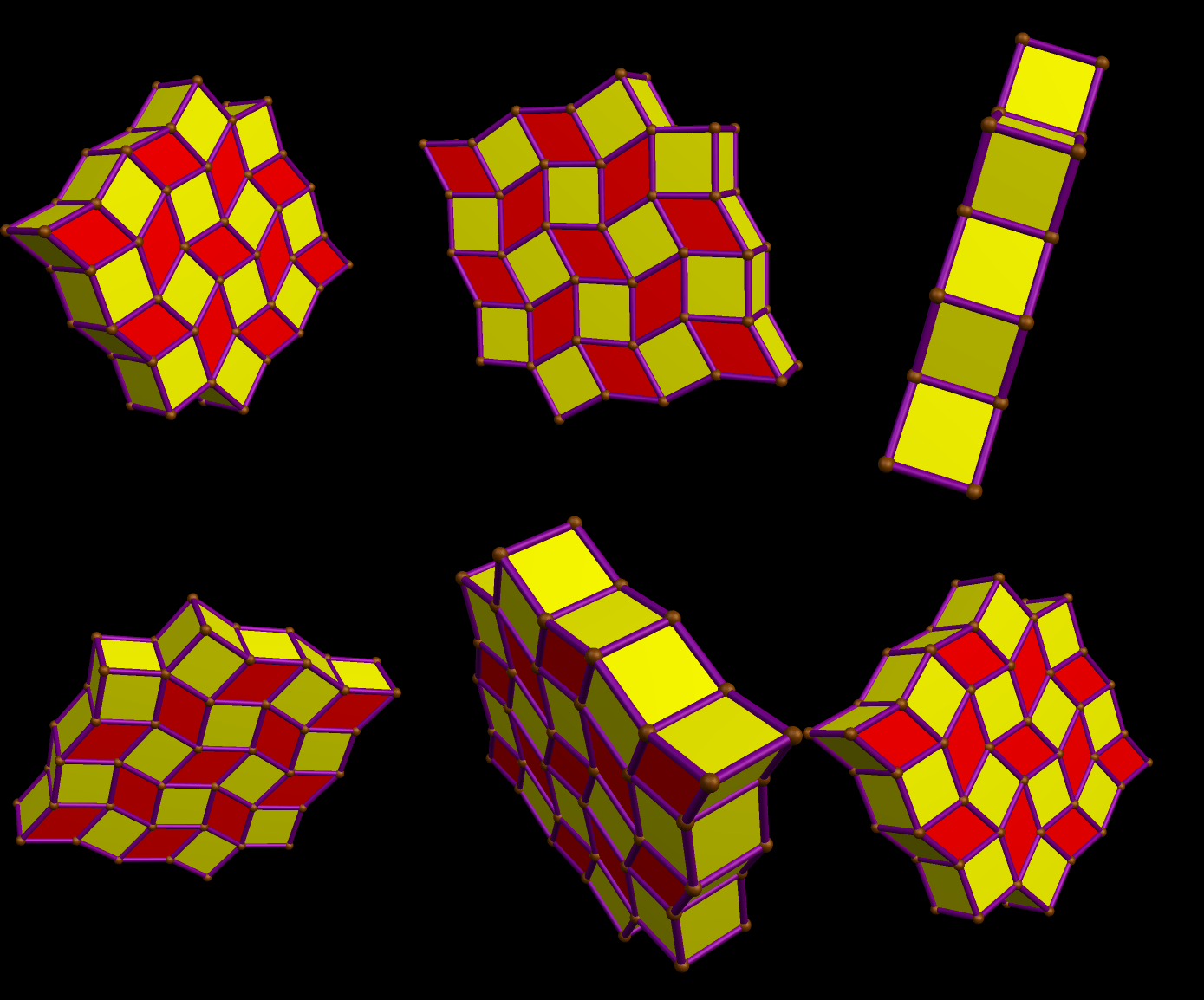
Above, the apparent size of the tessellation-prism does not change. In the next image, though, I set the controls of Stella 4d (the program I use to make these images, which you can try at http://www.software3d.com/Stella.php) to fit the image tightly, separately, in each still frame, causing a “breathing” effect. (Click on it if you wish to see it enlarged.)

Augmented Triangular Prism 2

Next, I added two red rhombi, one at the top and one at the bottom, stellated the result many times, and made one final .gif image, leaving the “breathing” effect on.

Augmented Triangular Prism 3 many stellations later


Two Hourglass Cubes

Image

Hourglass Cube

There are two six-member sets of hourglasses in the near-cube above, each of which is made of four not-quite-coplanar faces. One set is green and blue, while the other is magenta and blue.

If the polyhedron above is stellated nine times, the hourglasses expand until they compose the entire polyhedron. (To enlarge it, simply click on it.)

Hourglass cube

Software credit:  all images here were created using Stella 4d. You may try it for yourself as a free trial version, or purchase the fully-functioning version, at http://www.software3d.com/Stella.php.

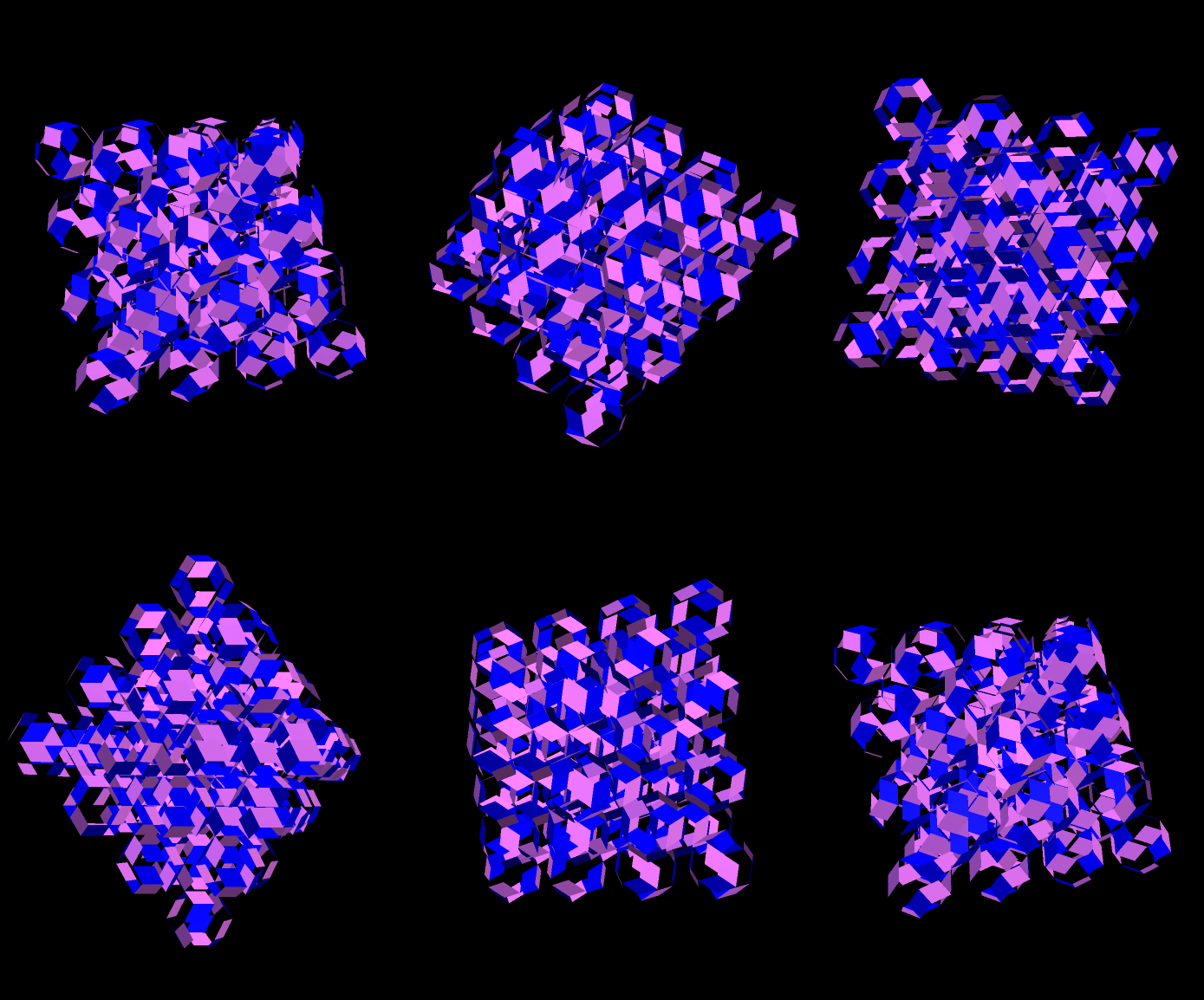
An Octahedral Lattice of Rhombic Triacontahedra, Vanishing By Fifths

Image

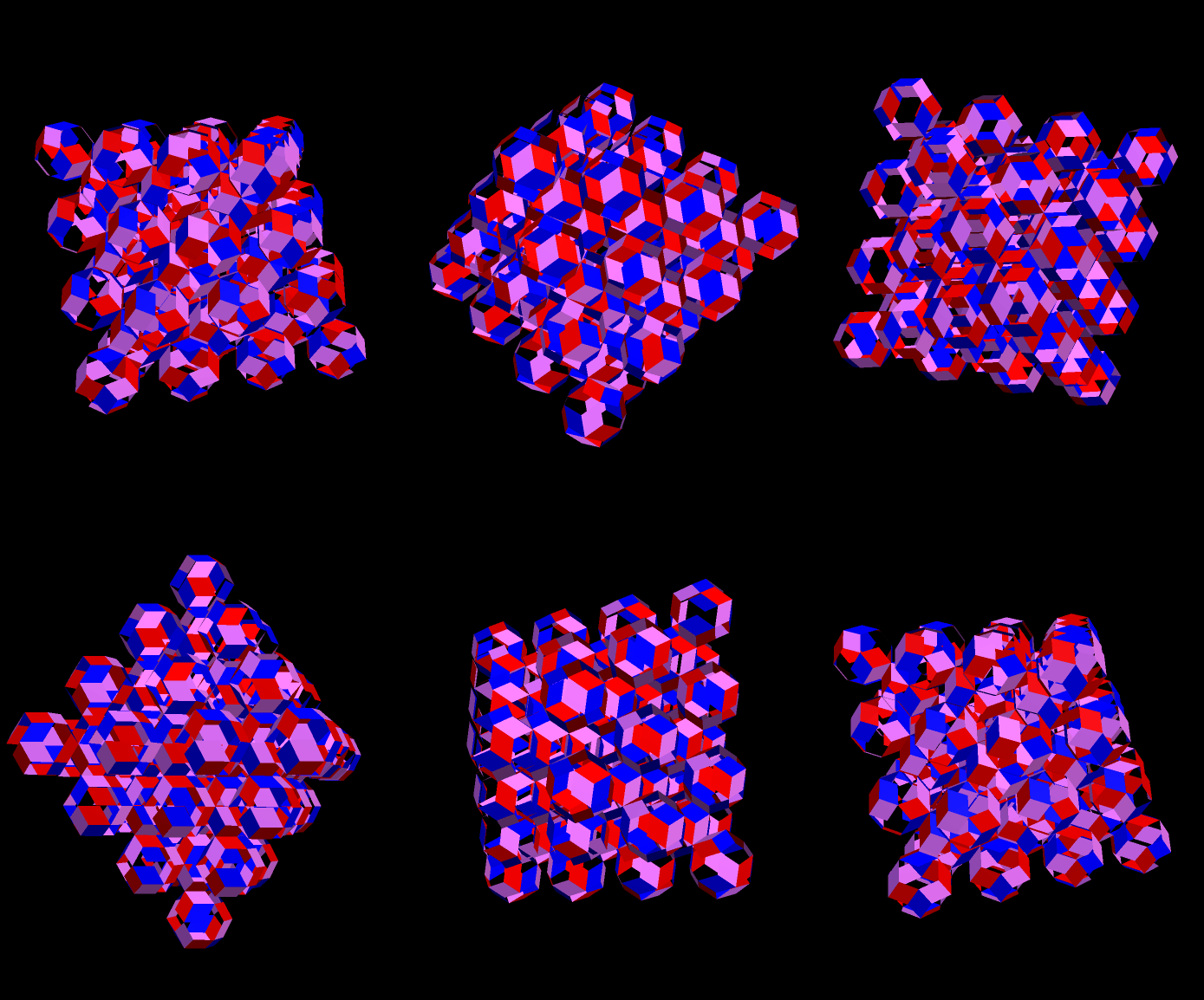
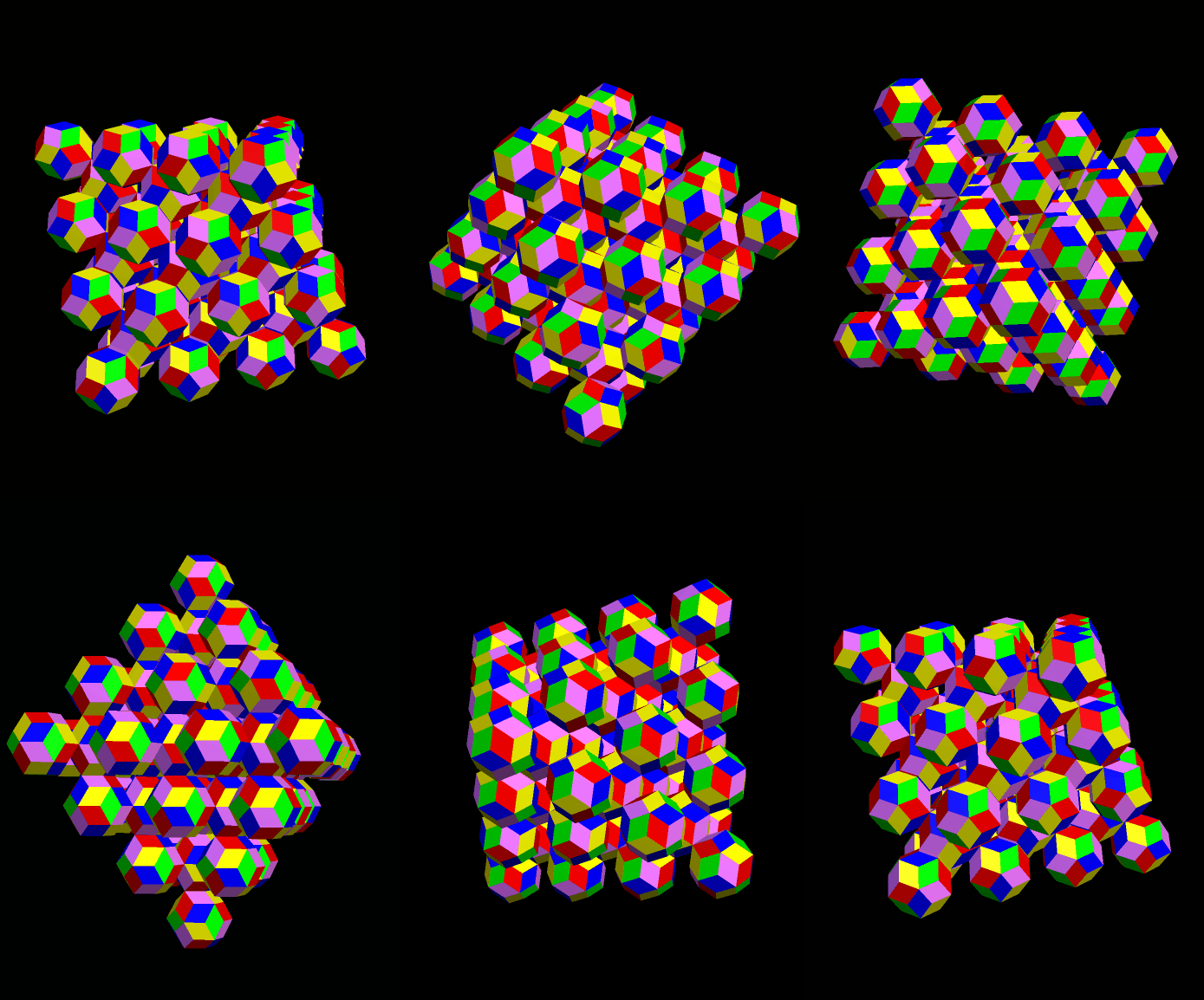
An Octahedral Lattice of Rhombic Triacontahedra, Vanishing By Fifths

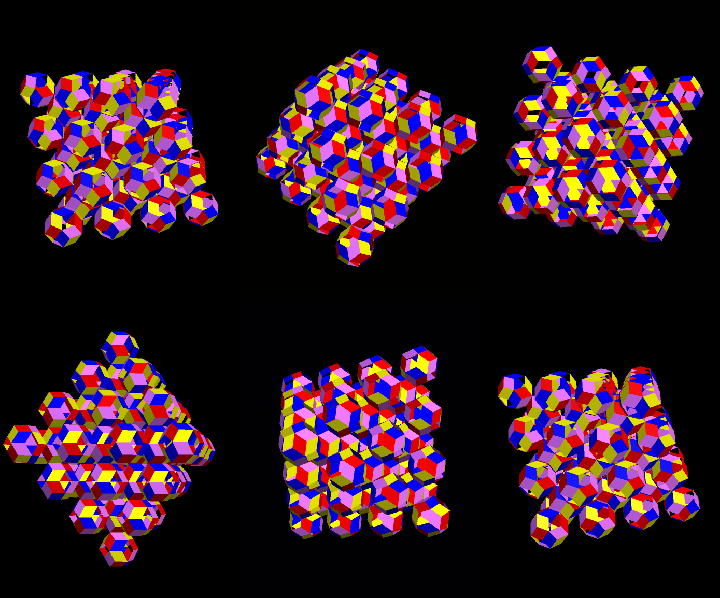
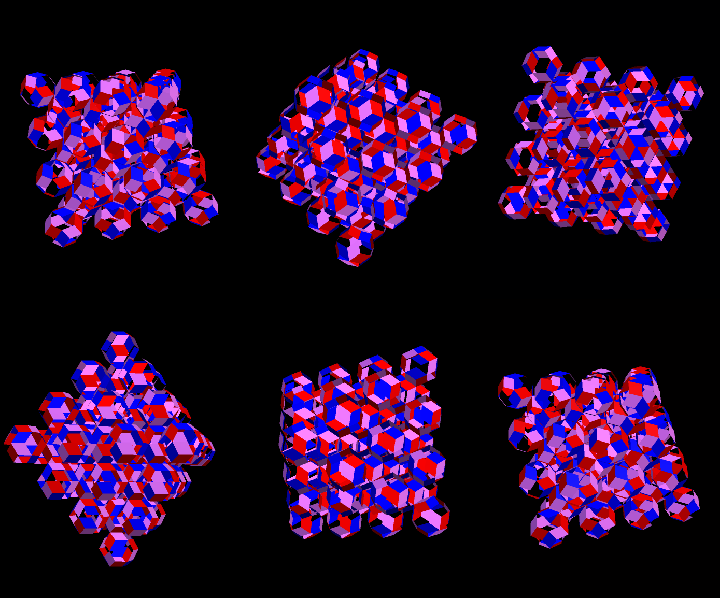
These rhombic triacontahedra (RTCs) are each colored with the symmetrical five-color scheme for that polyhedron. It causes each color to appear six times on each RTC, in positions such that, for a single RTC, a centered x, y, and z axis can penetrate the centers of all six same-color faces.

Since there are five colors, this virtual model may be removed in fifths. The first to go are the green rhombi. (Each of these may be enlarged with a click.)
Augmented Rhombic Triaconta

The next to be removed are the yellow rhombi.
Augmented Rhombic Triaconta

The red ones are next to go.

Augmented Rhombic Triaconta

One more fifth vanishes, and only the blue faces are left.
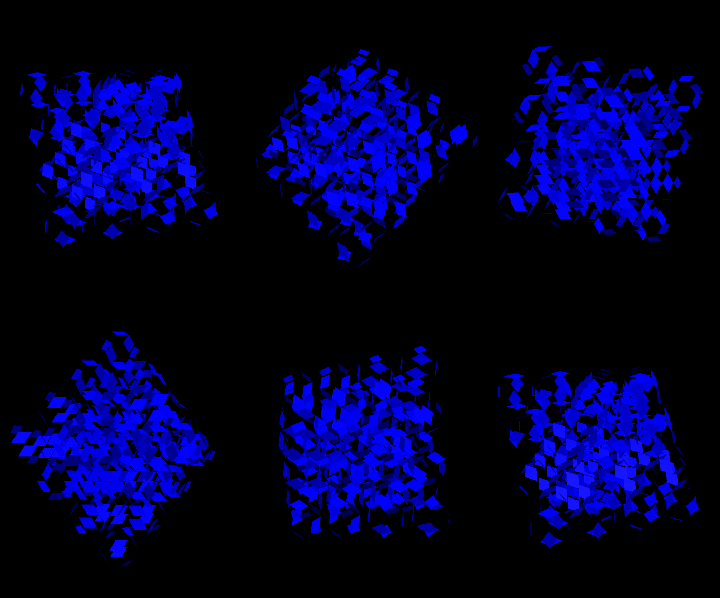
Augmented Rhombic Triaconta

Finally, they are removed as well, but with edges and vertices now shown for the first time, for, otherwise, you’d see nothing here.

Augmented Rhombic Triaconta

Software credit:  all images here were created using Stella 4d: Polyhedron Navigator, my favorite polyhedron-manipulation tool. You may try it for yourself as a free trial version, or purchase the fully-functioning version, at http://www.software3d.com/Stella.php.


A Polyhedron with Thirty Elongated Octagons and Sixty Kites As Faces

Image

A Polyhedron with Thirty Elongated Octagons and Sixty Kites As Faces

I made this using Stella 4d, which you can find at http://www.software3d.com/Stella.php.