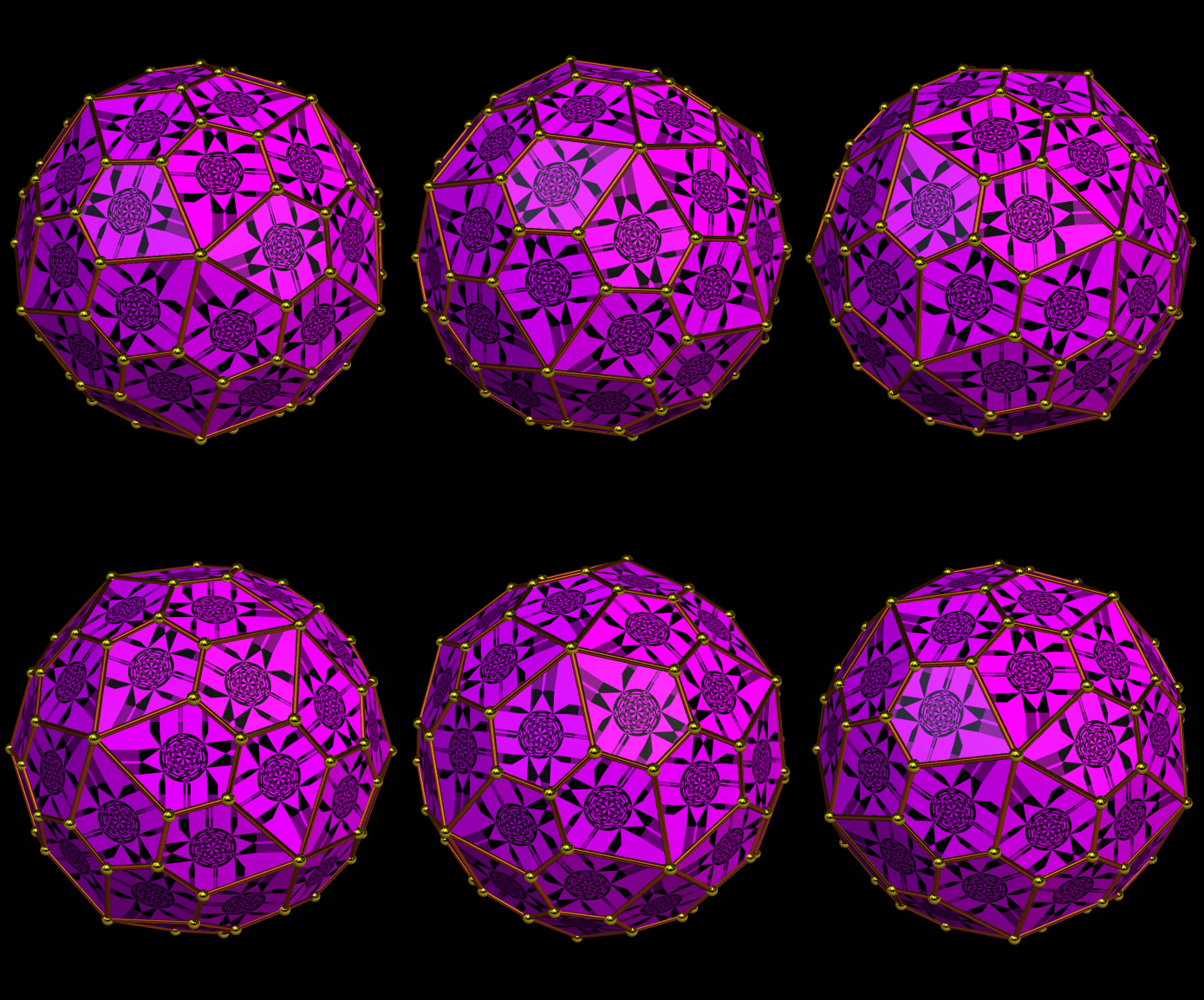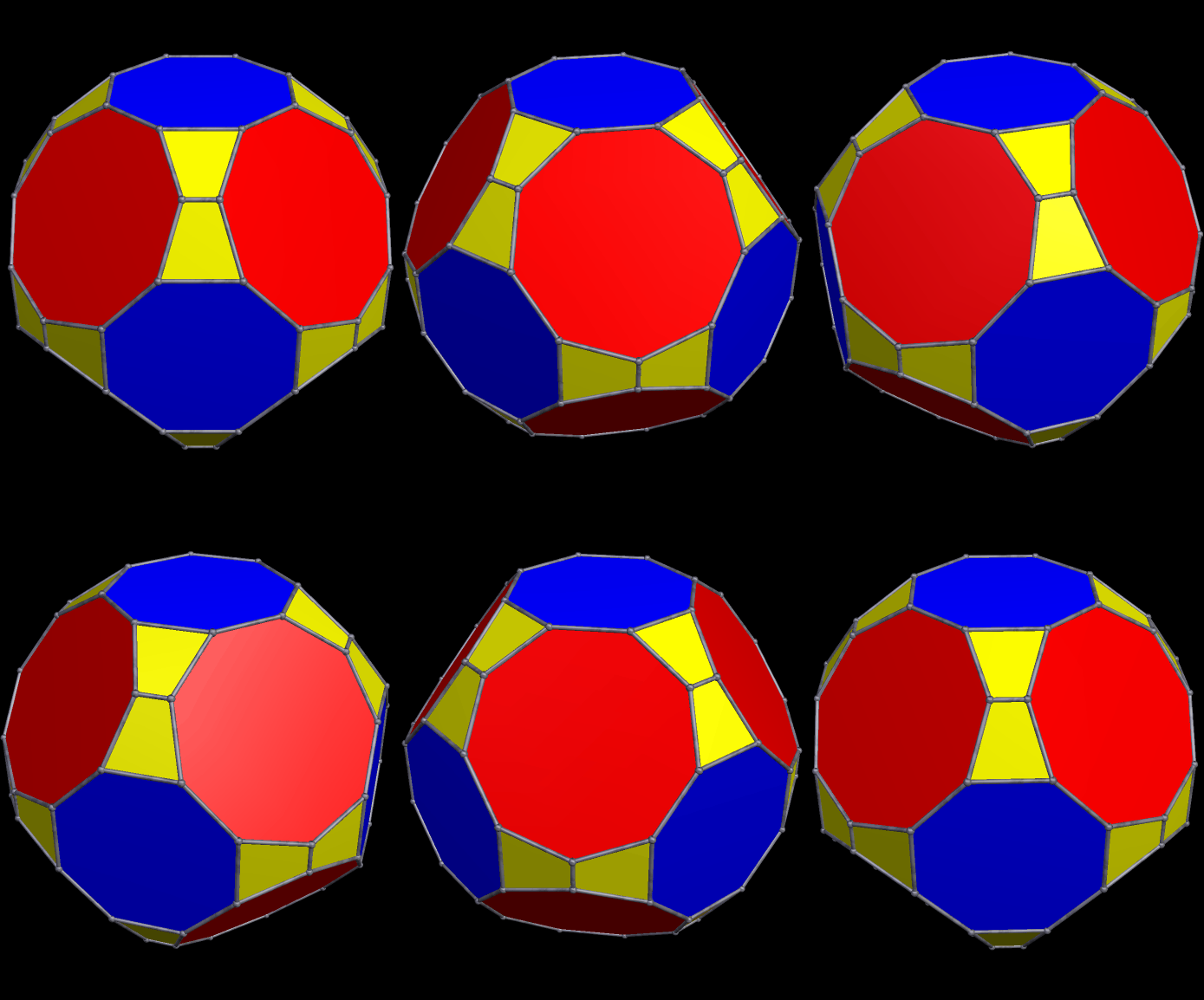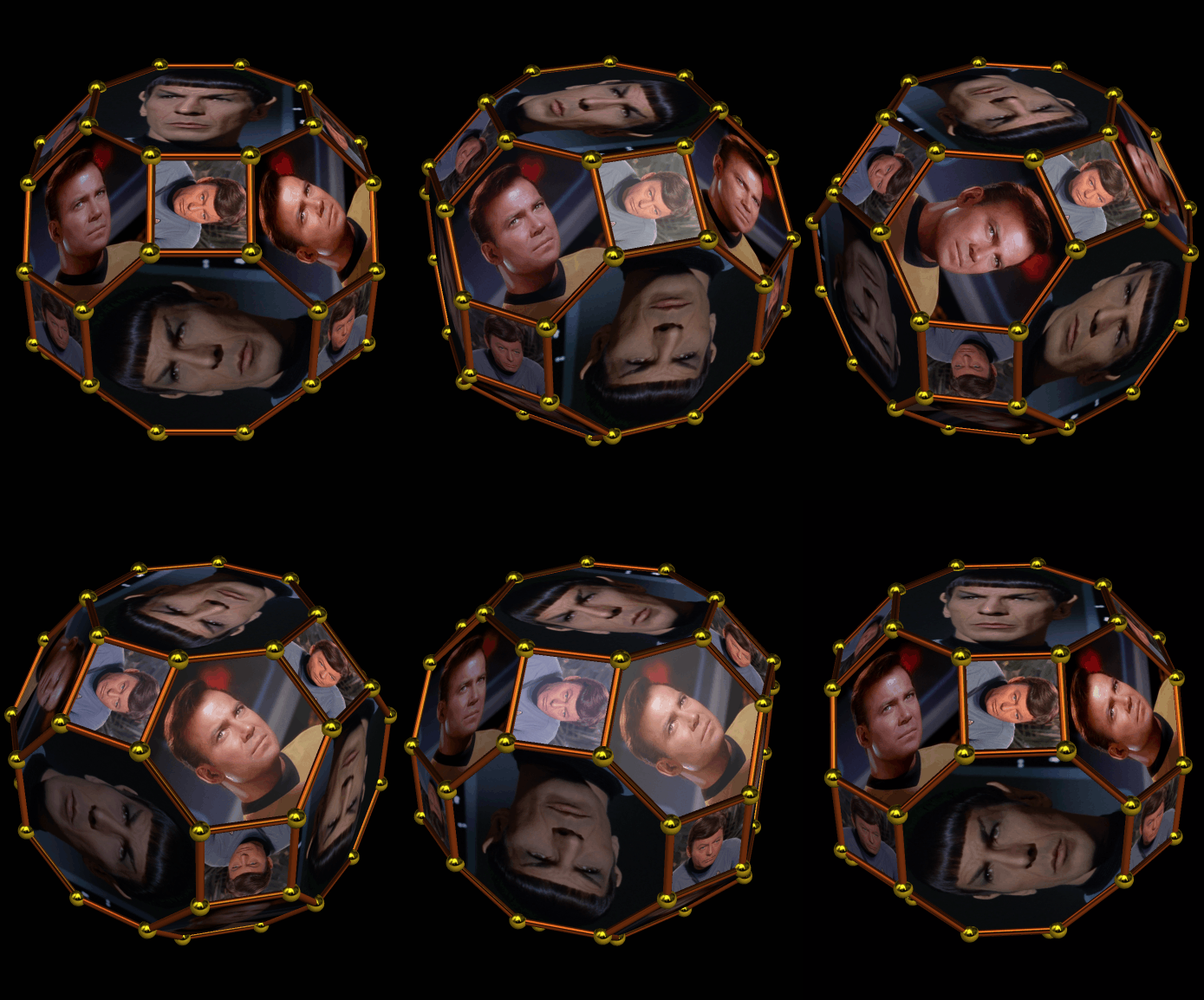
Captain Kirk, Mr. Spock, and Dr. McCoy on a Great Rhombicuboctahedron

Image

Captain Kirk, Mr. Spock, and Dr. McCoy On a Great Rhombcuboctahedron

If any doubt remained about my nerdiness, it’s gone now.

Software credit: see http://www.software3d.com/stella.php.

The Pentagonal Hexacontahedron, and Related Polyhedra

Image

The Pentagonal Hexacontahedron

As the dual of the snub dodecahedron, which is chiral, this member of the Catalan Solids is also chiral — in other words, it exists in left- and right-handed versions, known an entantiomers. They are mirror-images of each other, like left and right gloves or shoes. Here’s the other one, by comparison:

Penta Hexeconta enantiomer

It is always possible to make a compound, for a chiral polyhedron, from its two enantiomers. Here’s the one made from the two mirror-image pentagonal hexacontahedra shown above:

Compound of enantiomorphic pair

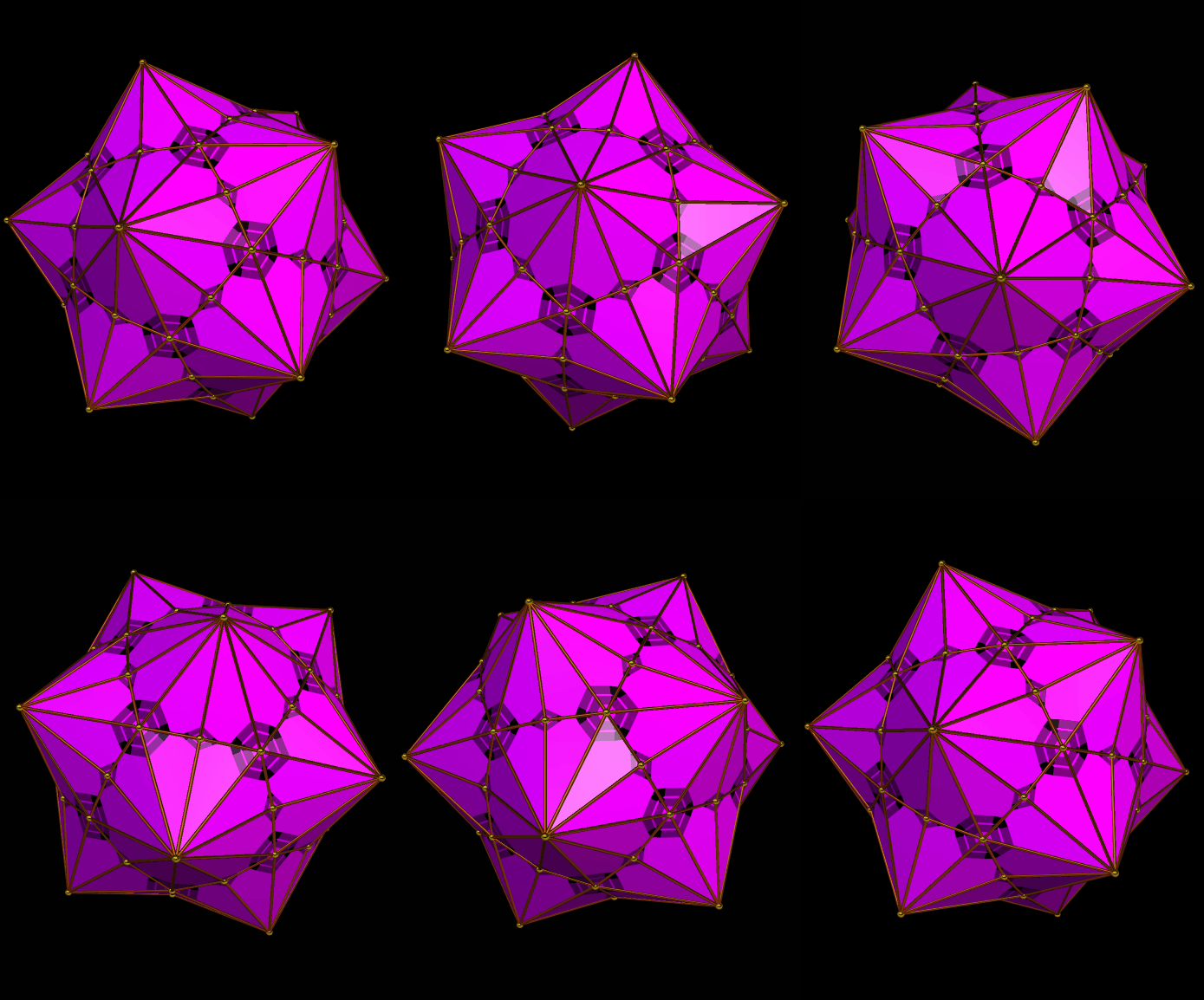
Stellating this enantiomorphic-pair-compound twenty-one times produces this interesting result:

stellating

And, returning to the unstellated enantiamorphic-pair-compound, here is its convex hull:

Convex hull

This convex hull strikes me as an interesting polyhedron in its own right, so I tried stellating it several times, just to see what would happen. Here’s one result, after seventeen stellations:

Stellation17

Software credit:  I made these rotating images using Stella 4d:  Polyhedron Navigator. That program may be bought at http://www.software3d.com/Stella.php, and has a free “try it before you buy it” trial download available at that site, as well. I also used Geometer’s Sketchpad and MS-Paint to produce the flat purple-and-black image found on faces near the top of this post (and, by itself, in the previous post on this blog), but I know of nowhere to get free trial downloads of these latter two programs.

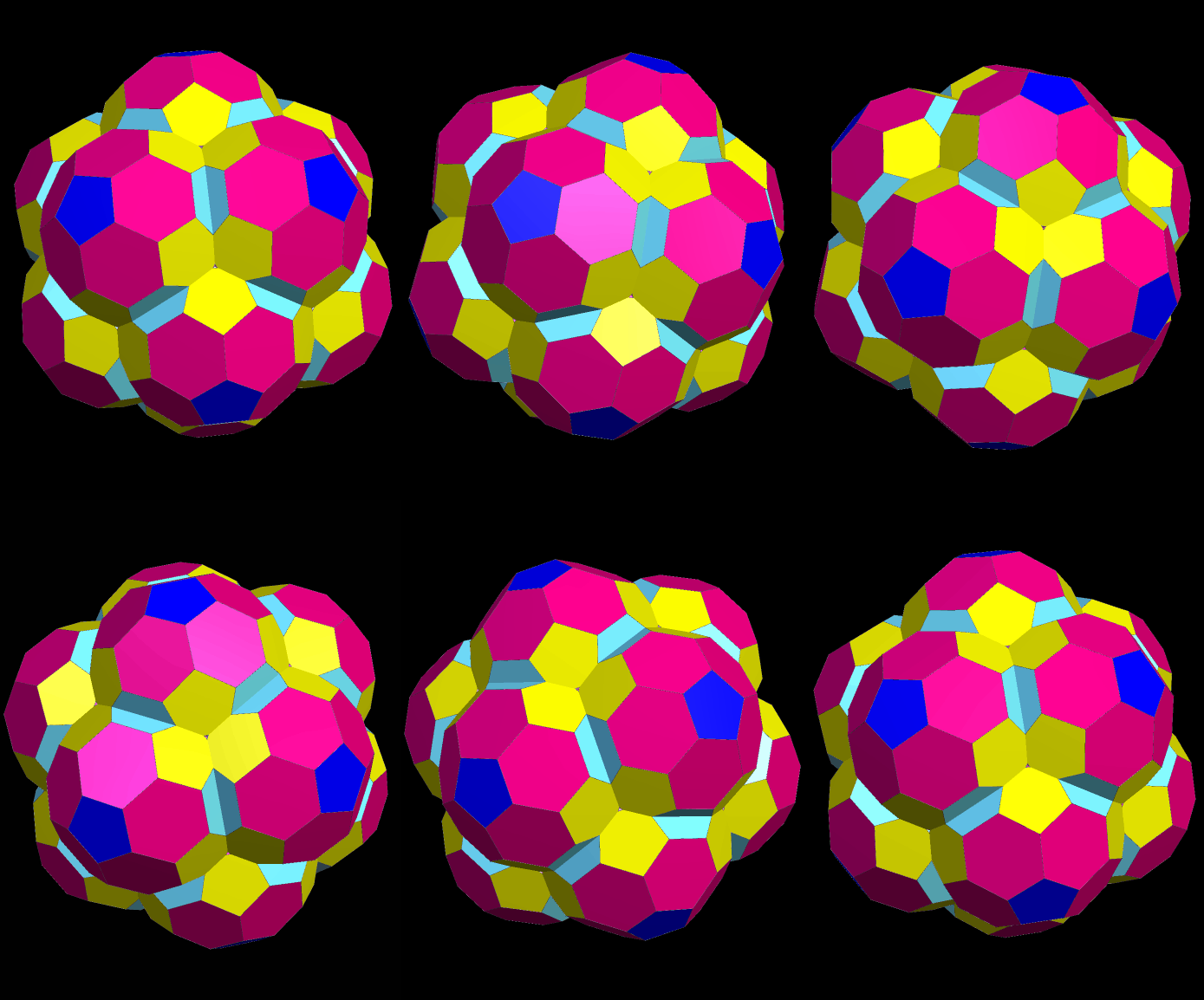
Icosahedral Cluster of Truncated Icosahedra

Image

Icosahedral Cluster of Truncated Icosahedra

Software credit: see http://www.software3d.com/stella.php.

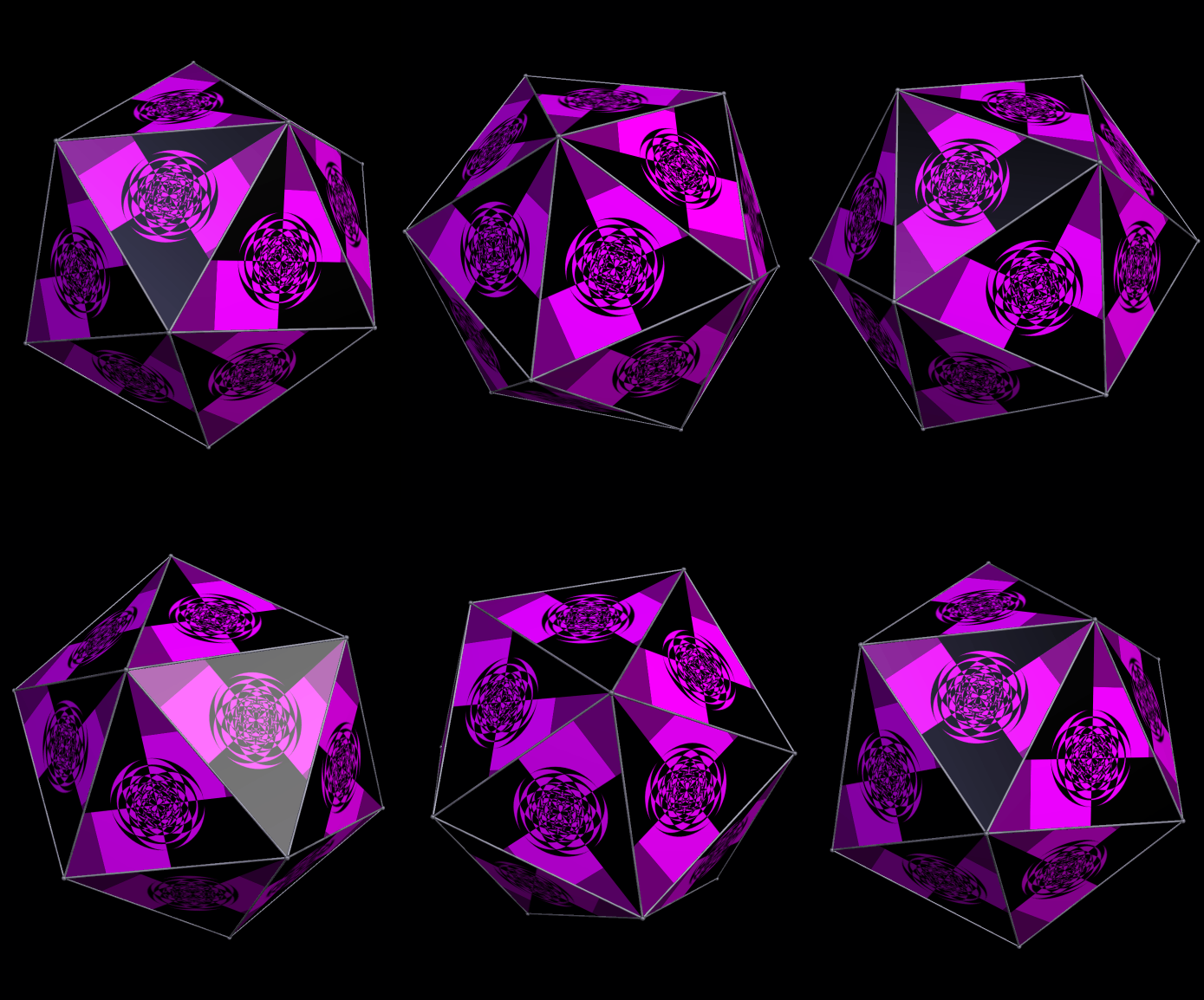
Decorated Icosahedron

Image

Decorated Icosahedron

The image on the faces appears in the last post here, and was made using Geometer’s Sketchpad and MS-Paint. Putting this image on the faces of an icosahedron, and then creating this rotating .gif file, was accomplished using another program, Stella 4d, which you may try for free at http://www.software3d.com/stella.php.

The Galilean Moons of Jupiter on a Rotating Dodecahedron

Image

The Galilean Moons of Jupiter On a Rotating Dodecahedron

Software credit: see http://www.software3d.com/stella.php

Turquoise and Onyx

Image

Turquoise and Onyx

Three separate programs were used to make this: Geometer’s Sketchpad, MS-Paint, and Stella 4d. The latter program was written by a friend of mine, and may be bought (or tried for free) here: www.software3d.com/stella.php.

Each of the turquoise images contains 32 circles, and each is on a face of a single rotating rhombic dodecahedron. That polyhedron, though, is obscured by having black faces against a black background, with edges and vertices not shown. You can see no more than one of an entire rhombic face at a time, and that happens only when the “lighting” provided by Stella 4d makes it appear slightly illuminated.

The Thirty All-Seeing Eyes of the RhombicTriacontahedron

Image

The Thirty All-Seeing Eyes of the RhombicTriacontahedron

Software used:

A “Bowtie” Polyhedron Featuring Regular Enneagons and Octagons

Image

So far as I know, no one knows how many otherwise-regular convex “bowtie” polyhedra exist — that is, convex polyhedra whose only faces are regular polygons, and pairs of isosceles trapezoids in “bowtie” formation. With the aid of software called Stella 4d, which you can find at http://www.software3d.com/Stella.php, I do believe I’ve found another one which hasn’t been seen before.

To make it, I started with what is probably the most well-known near-miss to the Johnson Solids, this polyhedron featuring enneagons (nine-sided polygons; also called “nonagons”):

Ennea-faced Poly

I then augmented each enneagonal face with regular antiprisms, took the convex hull of the result, and then used Stella’s “try to make faces regular” function — and it worked, making the octagons regular, as well as the enneagons.

Update:  It turns out that this polyhedron has been seen before.  It’s at http://www.cgl.uwaterloo.ca/~csk/projects/symmetrohedra/ — and there are even more at http://www.cgl.uwaterloo.ca/~csk/papers/kaplan_hart_bridges2001.pdf. These include several more “bowtie” polyhedra found among what those researchers, Craig S. Kaplan and George W. Hart, call “symmetrohedra.” They call this particular polyhedron a “bowtie octahedron.”

A “Bowtie” Expansion of the Truncated Dodecahedron

Image

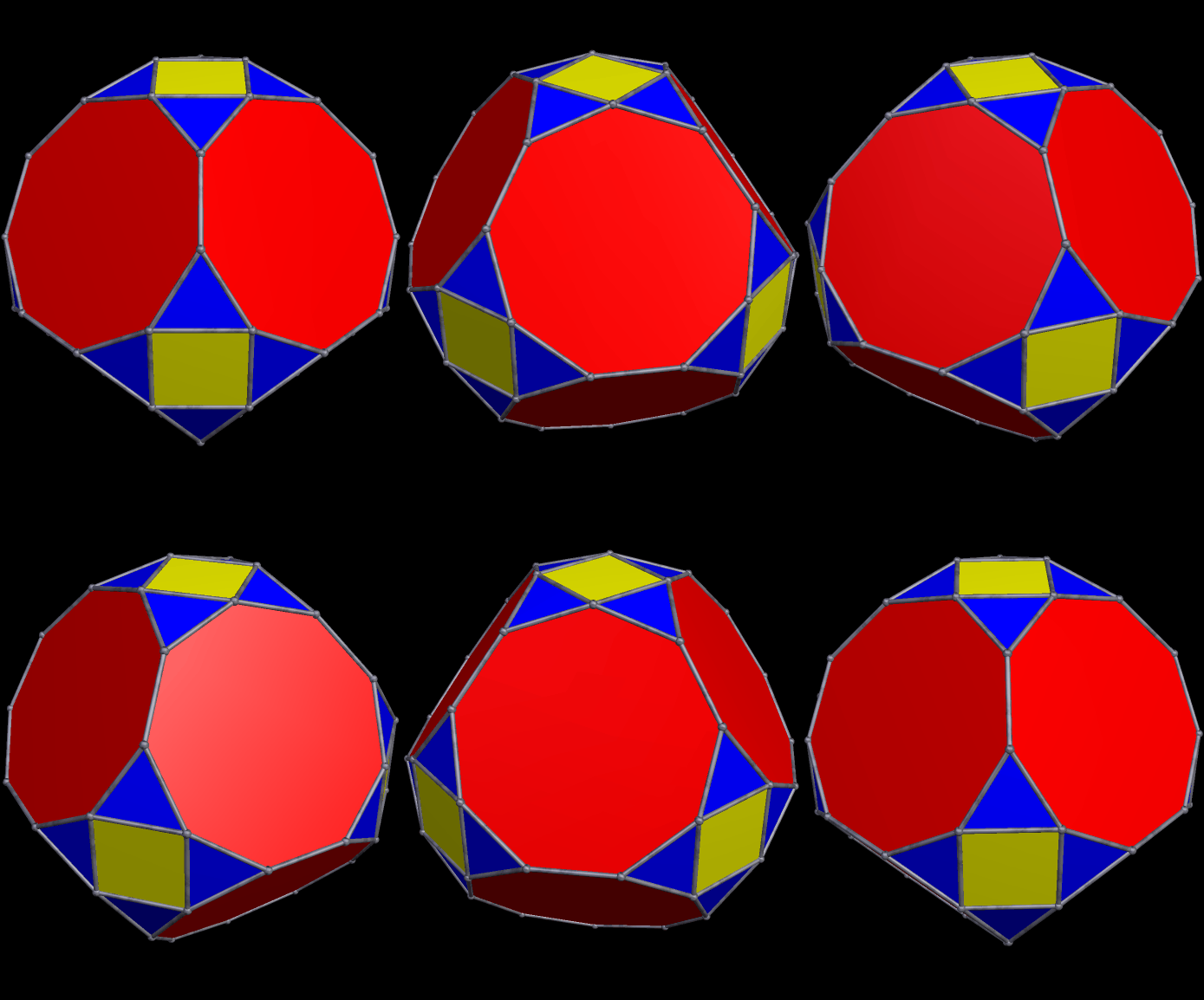
This polyhedron has the twelve regular decagons and twenty regular triangles of the truncated dodecahedron, but they are moved outwards from the center, and rotated slightly, creating gaps. These gaps are then filled with thirty pairs of isosceles trapezoids in “bowtie” formation. That gives this polyhedron 92 faces in all.

Software credit: see http://www.software3d.com/stella.php

An Expansion of the Truncated Icosahedron — and, Perhaps, a New Near-Miss

Image

An Expansion of the Truncated Icosahedron -- and, Perhaps, a New Near-Miss

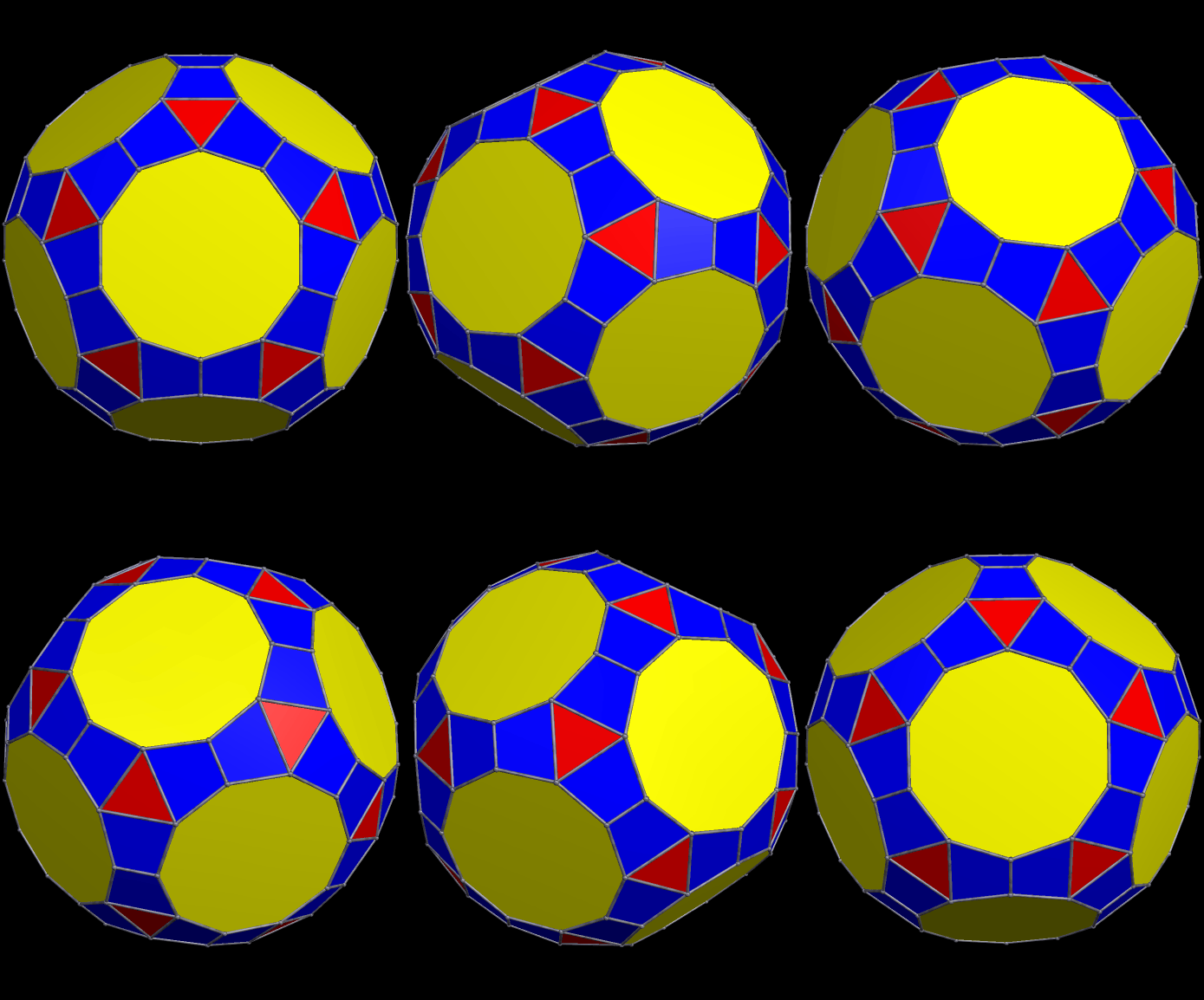
To create this using Stella 4d (see http://www.software3d.com/stella.php), I started with a truncated icosahedron, augmented each of its faces with a prism that was 1.5 times as tall as the base edge length, and took the convex hull of the result. It may qualify as a near-miss to the Johnson Solids — for that to be the case, all faces would have to be close to regular, but “close to” has no precise definition. I’ll have to consult with the experts on this one!