Building a “Polyhedral Porcupine”

This is the icosahedron, followed by its first stellation.

The first stellation of the icosahedron can be stellated again, and again, and so on. The “final stellation” of the icosahedron is the one right before the stellation-series “wraps around,” back to where it started:

icosa-stellation-final-60-spikes

This final stellation of the icosahedron would serve pretty well as a “polyhedral porcupine,” but I was seeking something even better, so I turned my attention to polyhedral compounds. This is the compound of five icosahedra:

icosahedra-5

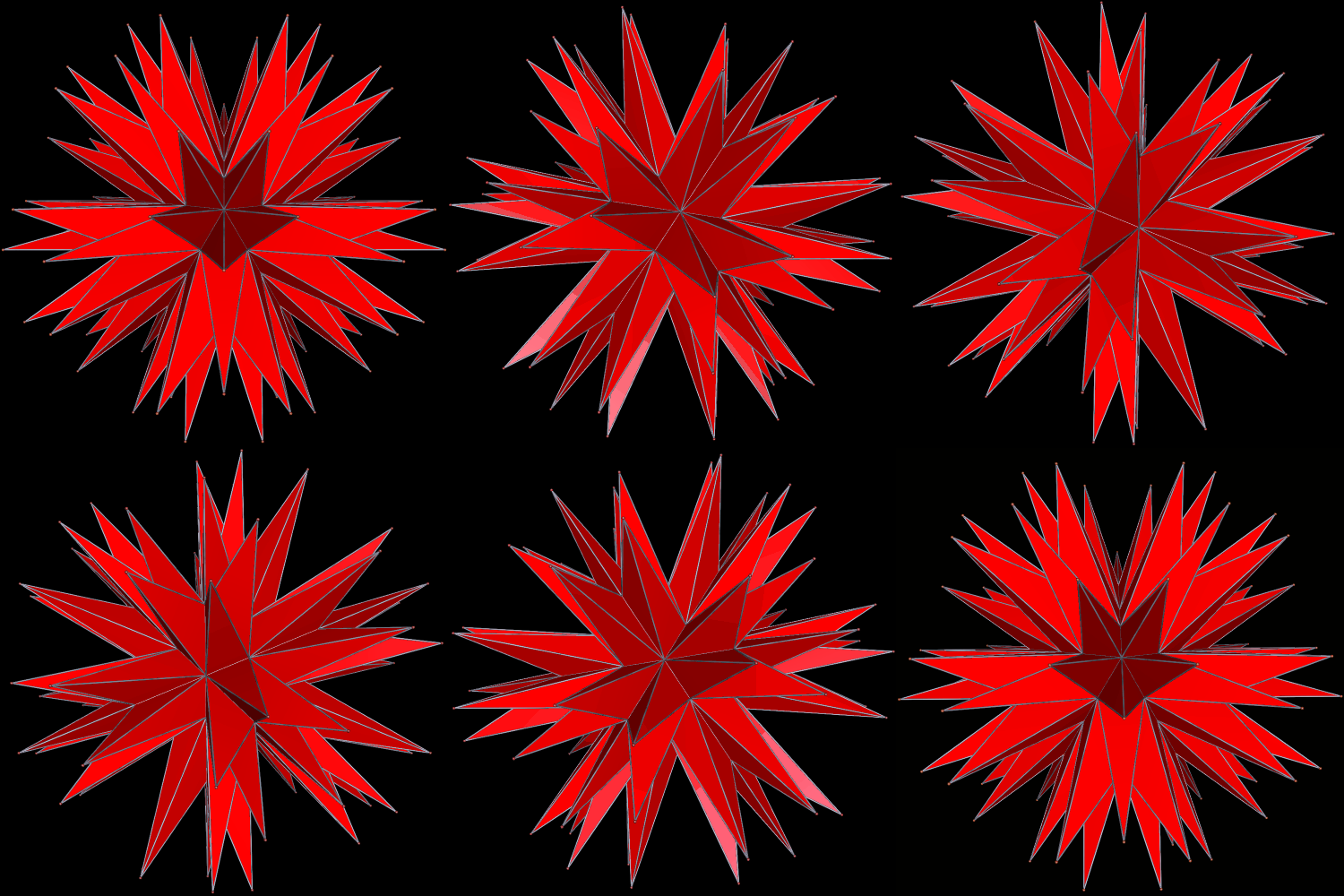
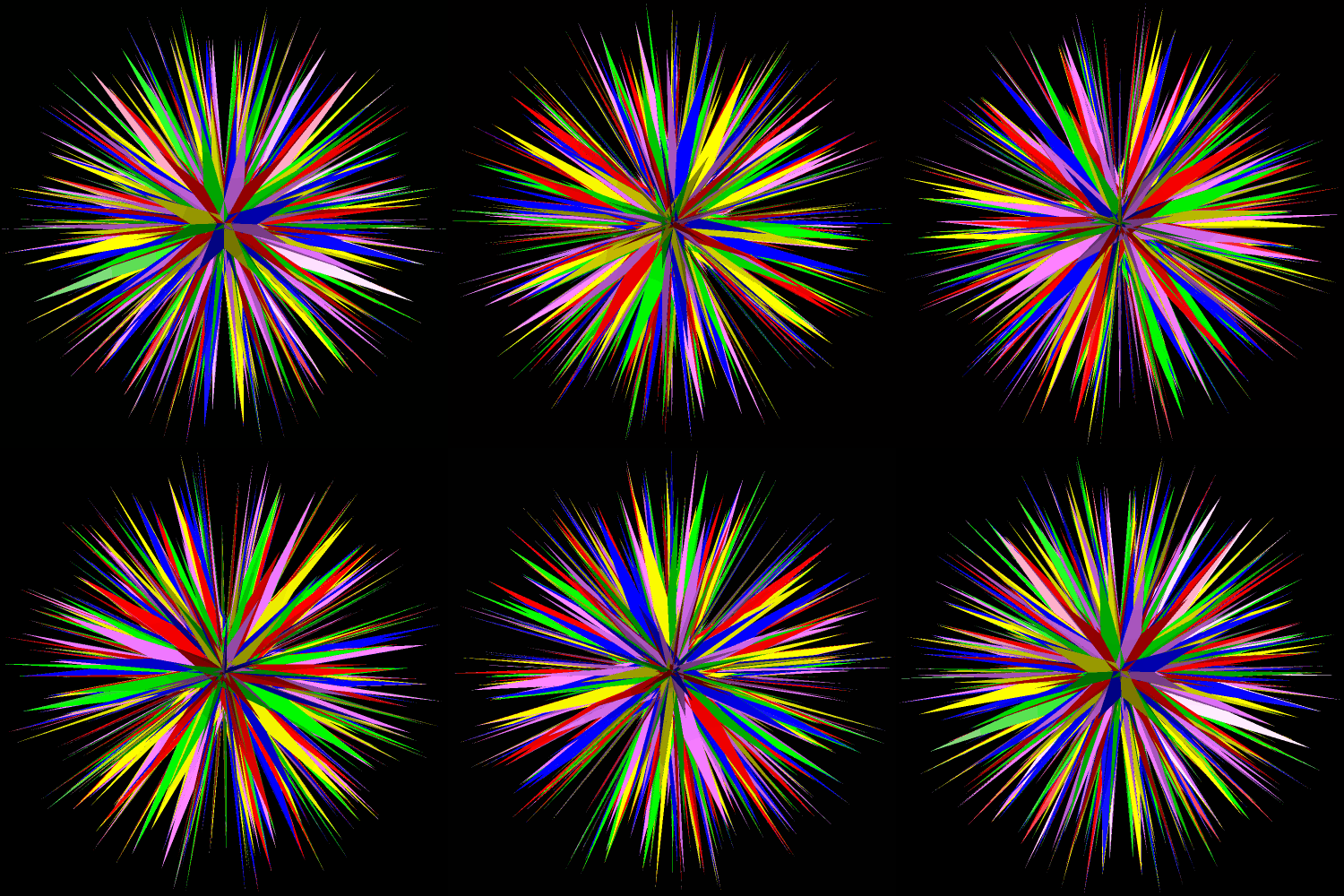
The program I use to manipulate these solids is called Stella 4d: Polyhedron Navigator (free trial download available here). My next move, using Stella, was to create the final stellation of this five-icosahedron compound . . . and, when I saw it, I knew I had found my “polyhedral porcupine.”

icosahedra-5-final-stellation

A Faceted Great Rhombcuboctahedron

faceted-trunc-cubocta

Some prefer to call the great rhombcuboctahedron the “truncated cuboctahedron,” instead. Whichever term you prefer, this is a faceted version of that Archimedean solid. I made it using Stella 4d: Polyhedron Navigator, software you may find here.

Compound of Two Tetrahedral Wedges

compound-of-two-wedges

I made this with Stella 4d, a program you can try for yourself right here.

The 12th, and Final, Stellation of the Cuboctahedron

12th and final Cubocta stellation

Created using Stella 4d: Polyhedron Navigator, available at http://www.software3d.com/Stella.php.

A Transparent Rhombic Triacontahedron

Rhombic Triaconta

I made this using Stella 4d: Polyhedron Navigator. You may try this software, for free, at http://www.software3d.com/Stella.php.

The Compound of the Dodecahedron and the First Stellation of the Icosahedron

compound of dodeca and ike's first stellation.gif

I made this using Stella 4d, available here.

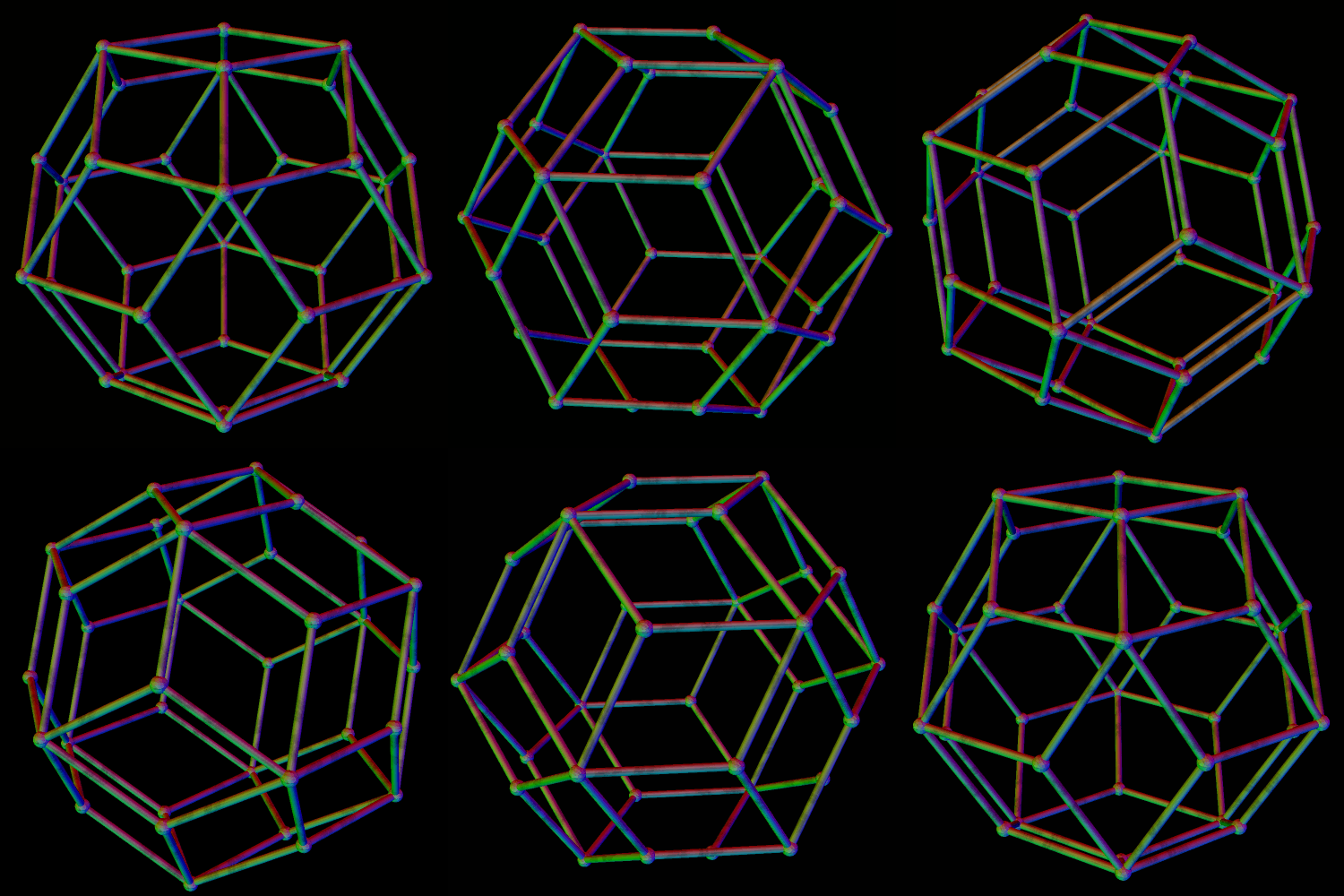
A Transparent Rhombic Dodecahedron

hollow rd

Created using Stella 4d, a program available at this website: http://www.software3d.com/Stella.php.

A Peek Backwards, as Far Back as Possible

peek

Never before have I deliberately tried to recall my earliest memories. This morning, however, simply to see what might happen, I tried it. In my imagination, I returned to further back than I ever had gone before, to a period before I learned to communicate. In this early period, I could visualize things, with the imagery which appeared being geometric in nature. Later, I had to learn English, as a second language, to express the mathematical ideas in my head. My first word, according to my parents, described one of the two shining round things in the sky: “Moon.” I have always preferred moonlight to sunlight, for the intensity of direct sunlight is painful to me.

At least, that’s how I remember these things; I could be wrong about the earliest parts. All I know is that the image above popped into my head, when I tried to recall my oldest accessible memory. I then made the image above, in a short period of time, using Stella 4d, Polyhedron Navigator, available to try for free at this website. (I’ve used the program for over a decade, and find it an indispensable tool for geometrical investigations, such as this recreation of what I found in this morning’s early-memory-search.)

A Deck of Polyhedra

There are 52 rotating polyhedra below. Starting right now, 52 of anything can be called a “deck” of that thing. The derivation of this term is the the number of cards in a standard playing-card deck. The deck is the smaller “cousin” of the mole, or 6.02 x 10²³ of anything, from chemistry, as well as the “big brother” of the dozen, or twelve of anything. All three units are measures of specific quantities, and can be applied to any objects, at least in principle. One never encounters a mole of people because there aren’t that many of us, but a mole of people can still be imagined. The same thing applies to a deck of Earths.

This deck of virtual, rotating polyhedra was created using Stella 4d, a program you may purchase here. If you would like to see a larger image of any one of these polyhedra, simply click on it. 

494 Circles, Each, Adorning Two Great Rhombcuboctahedra, with Different (Apparent) Levels of Anxiety


Trunc Cubocta

The design on each face of these great rhombcuboctahedra is made from 19 circles, and was created using both Geometer’s Sketchpad and MS-Paint. I then used a third program, Stella 4d (available here), to project this image on each of a great rhombcuboctahedron’s 26 faces, creating the image above.

If you watch carefully, you should notice an odd “jumping” effect on the red, octagonal faces in the polyhedron above, almost as if this polyhedron is suffering from an anxiety disorder, but trying to conceal it. Since I like that effect, I’m leaving it in the picture above, and then creating a new image, below, with no “jumpiness.” Bragging rights go to the first person who, in a comment to this post, figures out how I eliminated this anxiety-mimicking effect, and what caused it in the first place. 
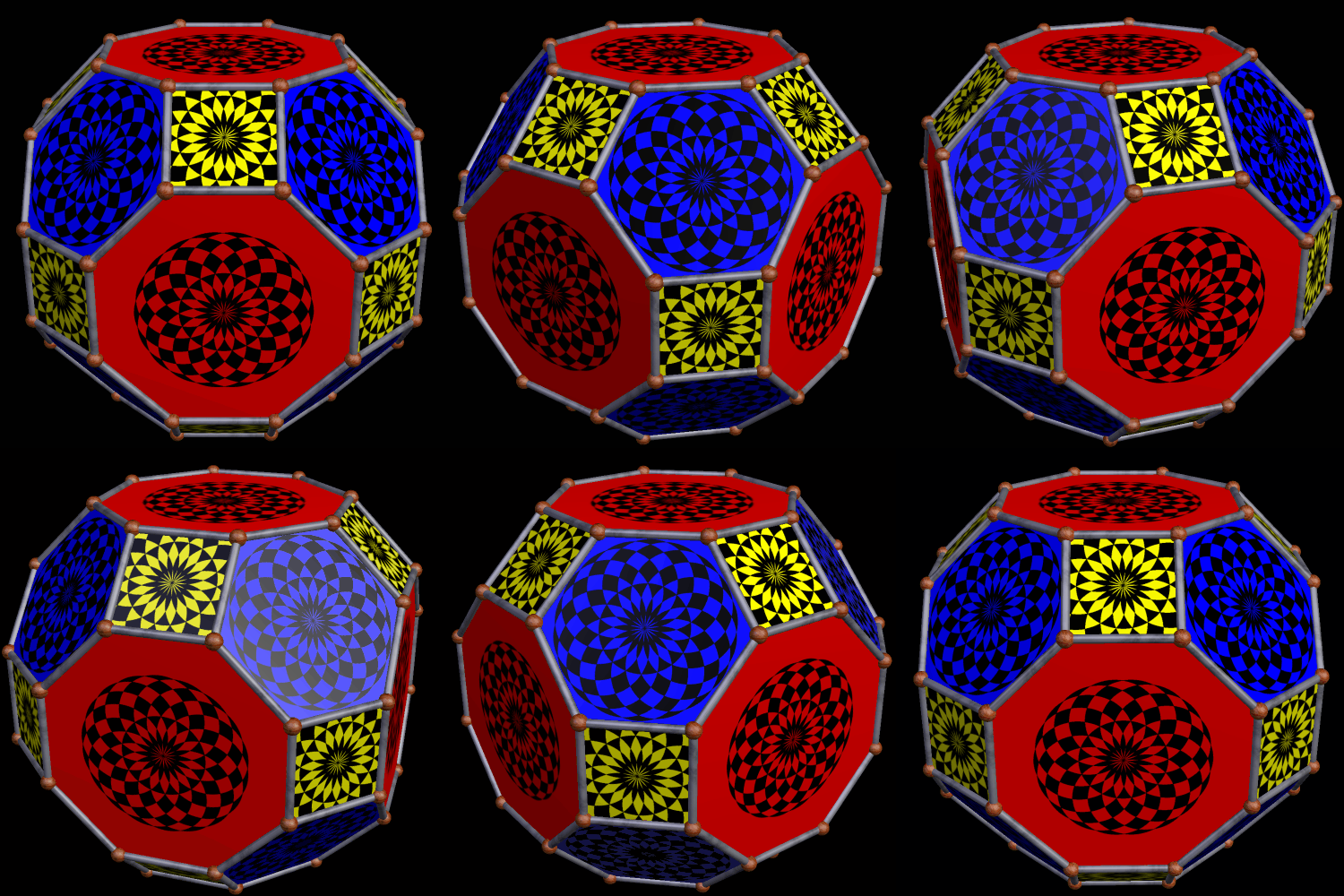
Trunc Cubocta

Your first hint is that no anti-anxiety medications were used. After all, these polyhedra do not have prescriptions for anything. How does one “calm down” an “anxious” great rhombcuboctahedron, then?

On a related note, it is amazing, to me, that simply writing about anxiety serves the purpose of reducing my own anxiety-levels. It is an effect I’ve noticed before, so I call it “therapeutic writing.” That helped me, as it has helped me before. (It is, of course, no substitute for getting therapy from a licensed therapist, and following that therapist.) However, therapeutic writing can’t explain how this “anxious polyhedron” was helped, for polyhedra can’t write.

For a second hint, see below.

.

.

[Scroll down….]

.

.

Second hint: the second image uses approximately twice as much memory-storage space as the first image used.