A Space-Filling Pair of Polyhedra: The Cuboctahedron and the Octahedron

Image

A Space-Filling Pair of Polyhedra:  The Cuboctahedron and the Octahedron

There are only a few polyhedra which can fill space without leaving gaps, without “help” from a second polyhedron. This filling of space is the three-dimensional version of tessellating a plane. Among those that can do this are the cube, the truncated octahedron, and the rhombic dodecahedron.

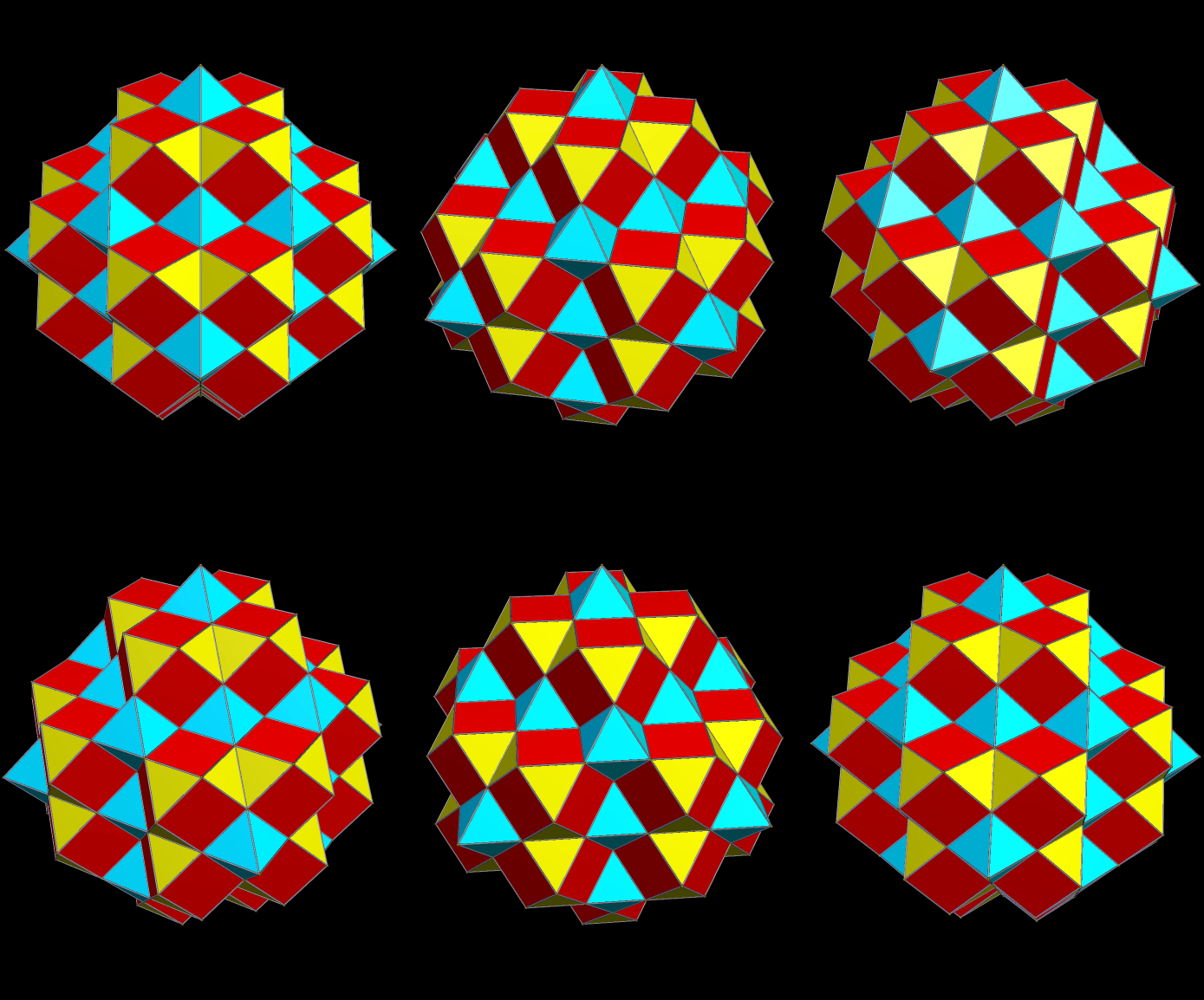
If multiple polyhedra are allowed in a space-filling pattern, this opens new possibilities. Here is one: the filling of space by cuboctahedra and octahedra. There are others, and they are likely to appear as future blog-posts here.

Software credit: I made this virtual model using Stella 4d, polyhedral-manipulation software you can buy, or try as a free trial download, at http://www.software3d.com/Stella.php.

The Augmented Great Dodecahedra III

Image

Augmented Great Dodecahedra III

In this construction, I took the polyhedral cluster found in the last two posts, and augmented every pentagonal face with yet another great dodecahedron. I used software you can find at http://www.software3d.com/stella.php.

The Augmented Great Dodecahedron II

Image

The Augmented Great Dodecahedron II

To make this, I used the polyhedron found in the last post, using software I bought at http://www.software3d.com/stella.php, to alter the coloring scheme to make each face a different color unless it is parallel to another, in which case it has the same color as all parallel faces.

Which coloring-scheme do you like best?

The Augmented Great Dodecahedron

Image

The Augmented Great Dodecahedron

Begin with one great dodecahedron, and then augment each face with another, and you get this. I used software you may find at http://www.software3d.com/stella.php to make it.

Cluster of Cuboctahedra

Image

Cluster of Cuboctahedra

A cuboctahedron sits at the center of this rotating cluster, but you can’t see it, because each of its fourteen faces (six squares and eight equilateral triangles) has another cuboctahedron, of equal size, attached to it.

Software credit: visit http://www.software3d.com/stella.php to try (or buy) the polyhedral-manipulation software I used to make this virtual model.

A Cluster of Truncated Dodecahedra

Image

A Cluster of Truncated Dodecahedra

I made this, using Stella 4d, by augmenting each decagonal face of the cluster in the previous post with a truncated dodecahedron. You can give this program a try yourself, for free, at http://www.software3d.com/stella.php.

An Icosidodecahedral Cluster of Great Rhombicosidodecahedra

Image

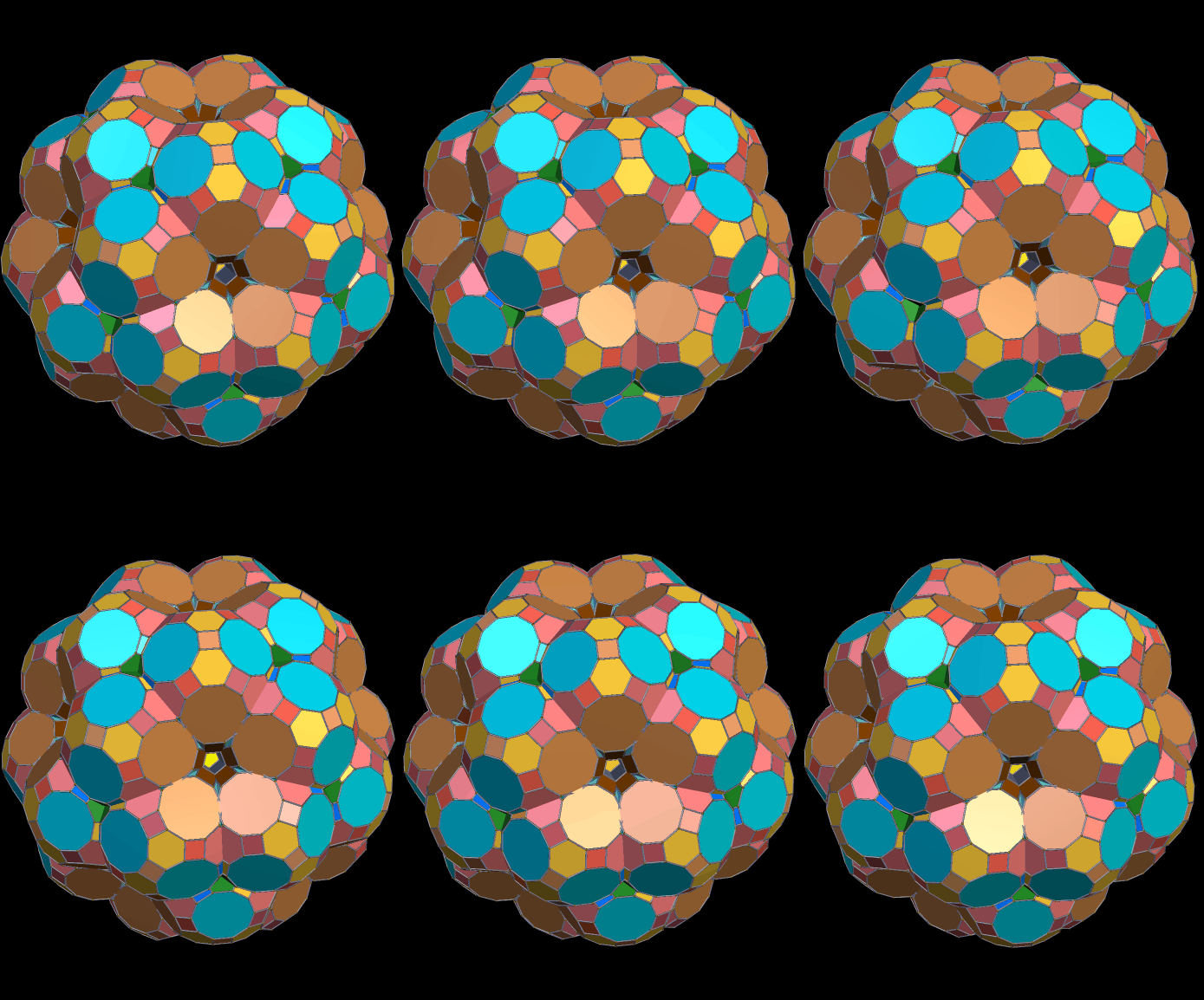
An Icosidodecahedral Cluster of Great Rhombicosidodecahedra

I made this, using Stella 4d, by augmenting the thirty square faces of a great rhombicosidodecahedron with additional great rhombicosidodecahedra. The result has one of these polyhedra located in each position which corresponds to a vertex of an icosidodecahedron.

You can give this program a try yourself, for free, at http://www.software3d.com/stella.php.

A Cubic Cluster of Rhombicosidodecahedra

Image

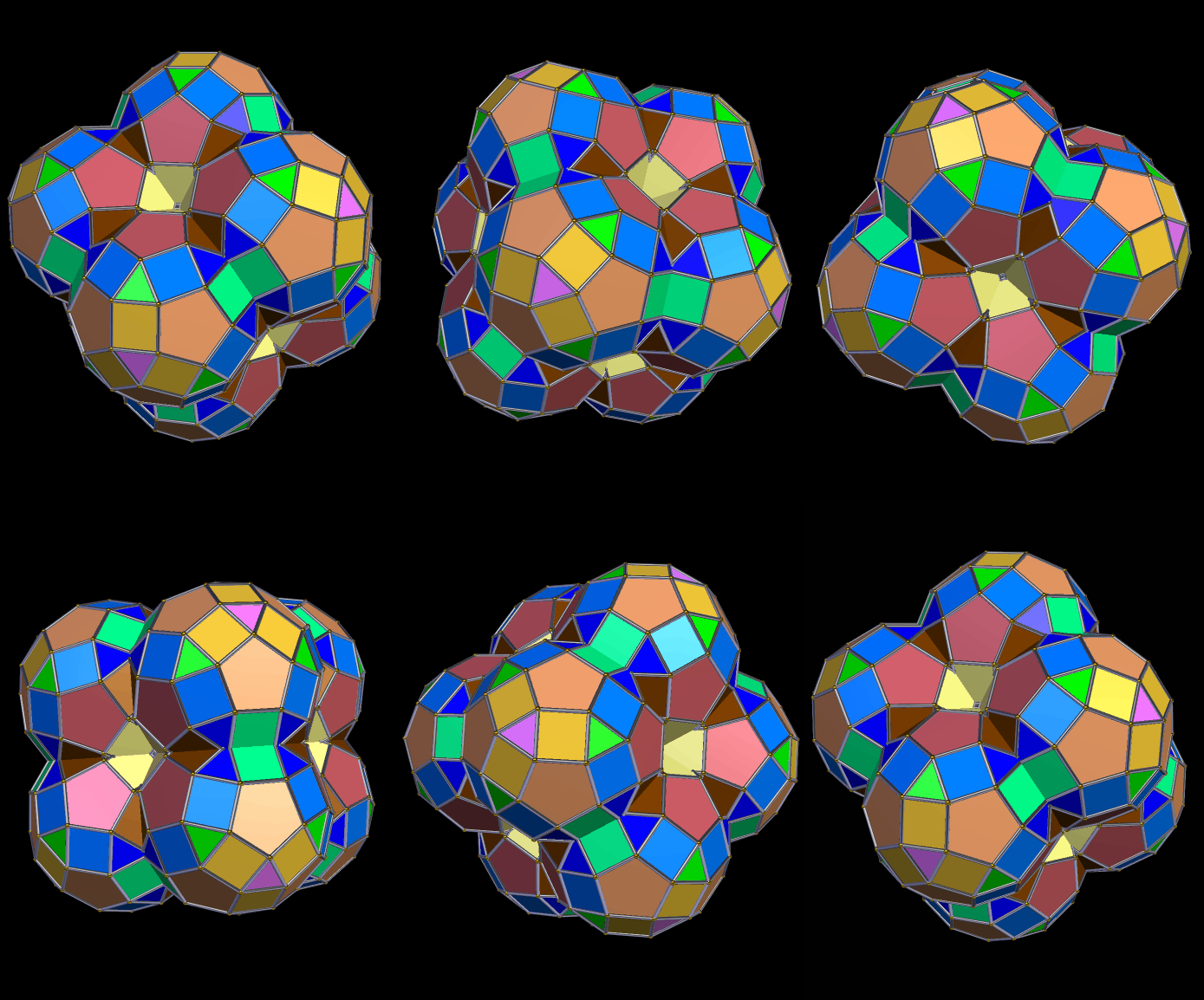
A Cubic Cluster of Rhombicosidodecahedra

I made this, using Stella 4d, by augmenting each face of an octahedron with a rhombicosidodecahedron. You can give this program a try yourself, for free, at http://www.software3d.com/stella.php.

A Rhombicosidodecahedron-Variant Which Features Octagons

Image

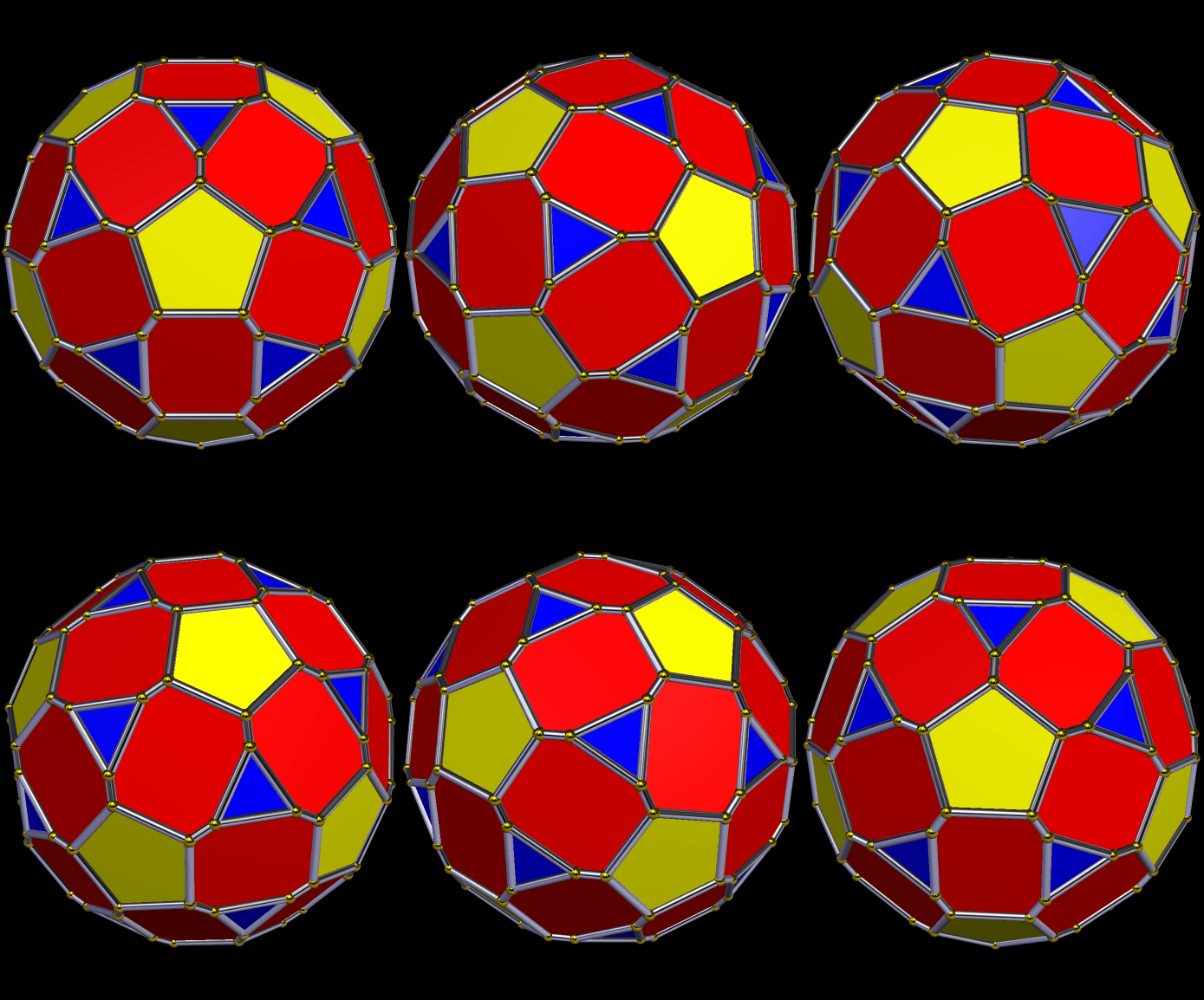
A Rhombicidodecahedron-Variant Which Features Octagons

This polyhedron contains the twenty triangles and twelve pentagons of a rhombicosidodecahedron — but they are all smaller than those found in that solid. As a result, the thirty squares of the rhombicosidodecahedron have each become, instead, irregular octagons.

To try the software I use to generate these images, simply visit http://www.software3d.com/stella.php — where a free trial download is available.

The Dual of a Rhombicosidodecahedral Cluster of Rhombic Triacontahedra

Image

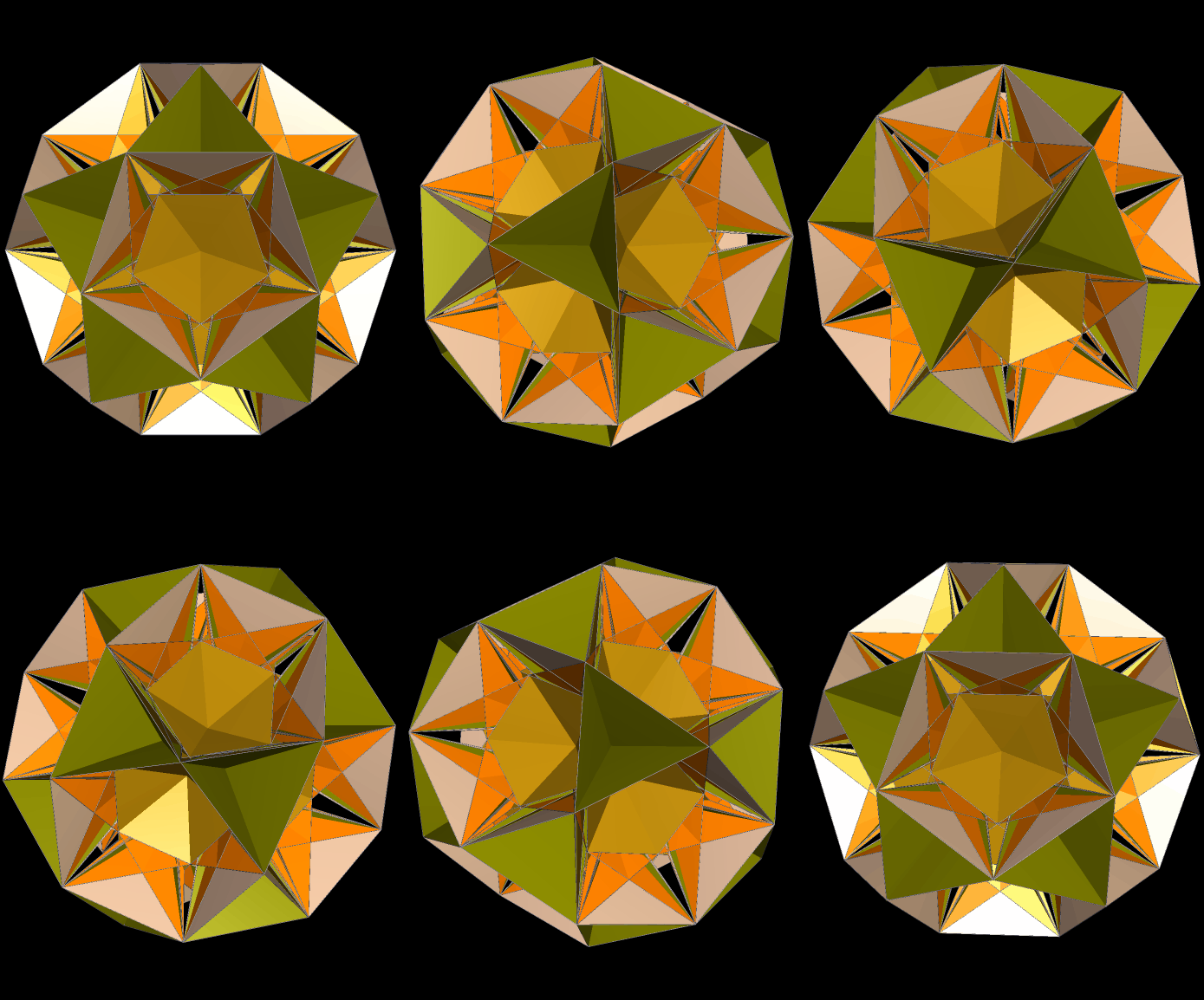
The Dual of a Rhombicosidodecahedral Cluster of Rhombic Triacontahedra

Once I completed the polyhedral cluster seen in the last post, I became curious about its dual, which is what you see here. The overall shape here resembles an icosidodecahedron — the Archimedean solid which is, itself, the dual of the rhombic triacontahedron.

To try the software I use to generate these images, simply visit http://www.software3d.com/stella.php — where a free trial download is available.