If you are interested in the history of this polyhedral cluster, please see the previous two posts. Also, here’s another color scheme for it:

These images were produced using Stella 4d, software you can find at www.software3d.com/Stella.php.
If you are interested in the history of this polyhedral cluster, please see the previous two posts. Also, here’s another color scheme for it:
These images were produced using Stella 4d, software you can find at www.software3d.com/Stella.php.

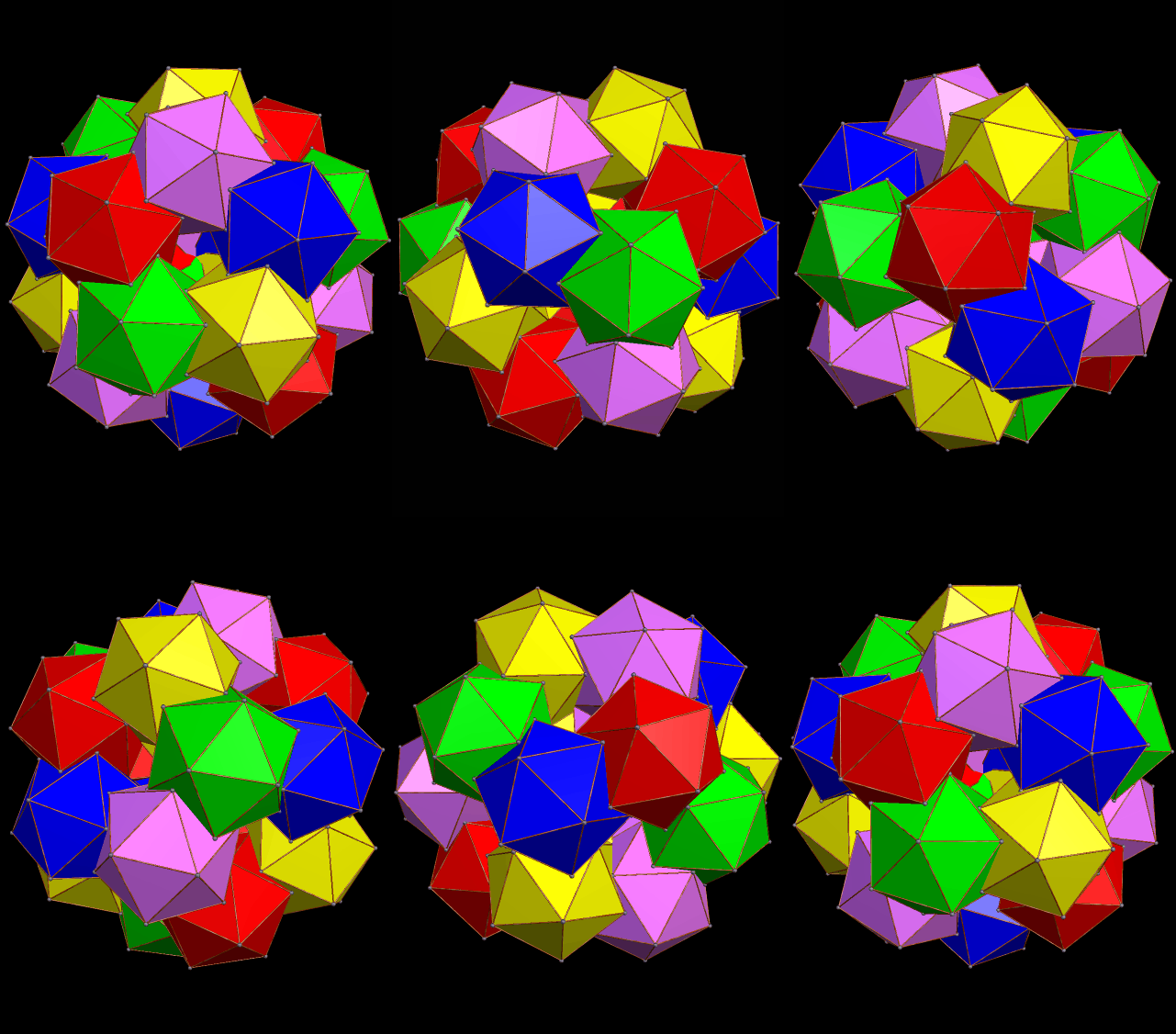
This cluster was formed by putting an octahedron of the same color on each face of the compound of five tetrahedra, seen in the previous post.
In the next post, each outermost face will be augmented with an icosahedron of the same color.
This image was produced using Stella 4d, software you can find at www.software3d.com/Stella.php.
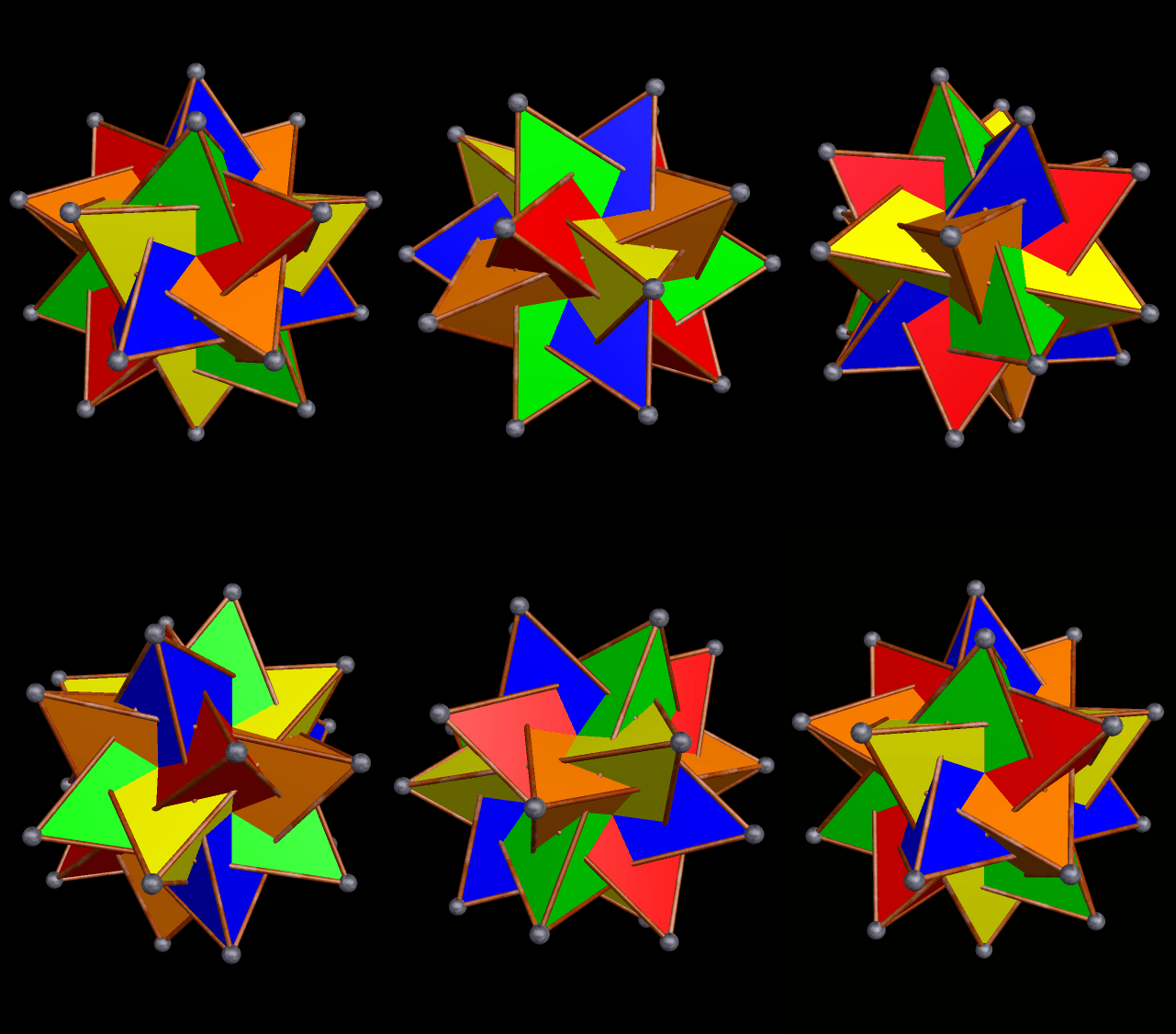 What would happen if each face in this compound were to be augmented by an octahedron of the same color? To find out, just see the next post!
I produced this image using Stella 4d, software you can find at www.software3d.com/Stella.php.
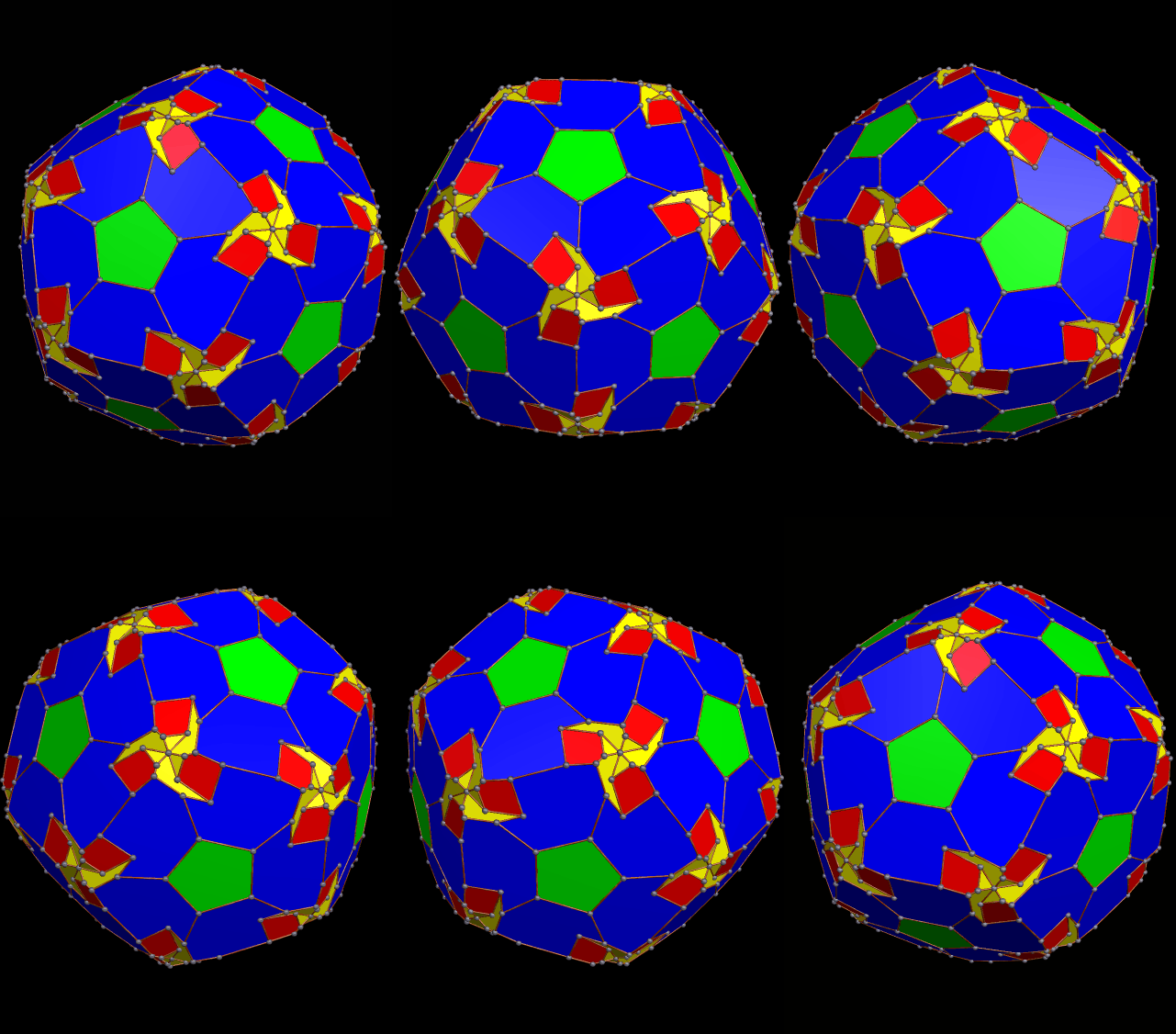
I was surfing the universe of polyhedra with the program Stella 4d (you can find it at http://www.software3d.com/Stella.php), and stumbled across this. The triskelions themselves don’t spin — although they do seem to if you watch this long enough.
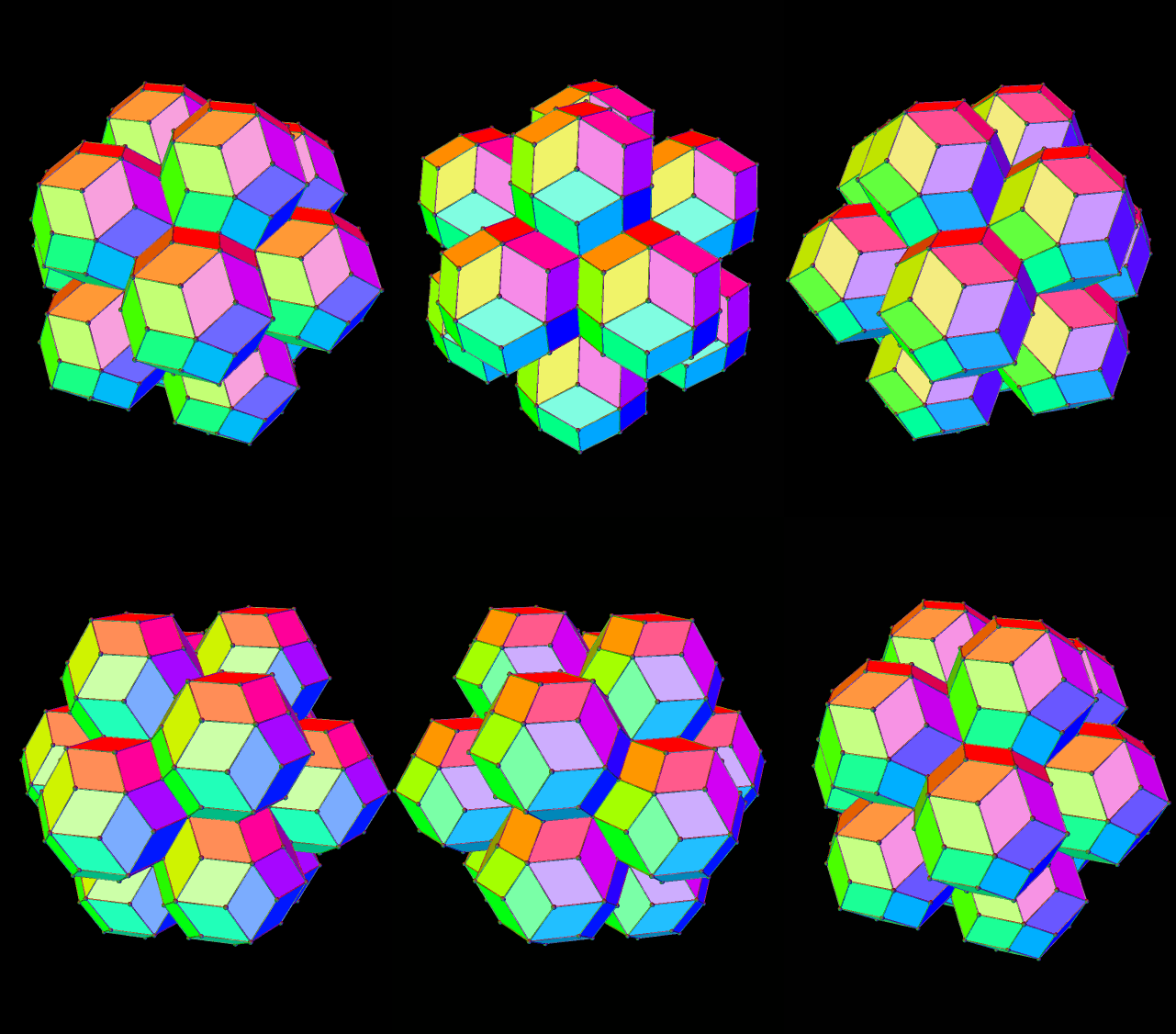
Rhombic triacontahedra, due to their multiple symmetries, make excellent building blocks to make shapes resembling other polyhedra. This icosahedral cluster is far from being the only such possible “cluster” polyhedron made entirely of rhombic triacontahedra.
This .gif was created with Stella 4d, software you may find here: http://www.software3d.com/Stella.php.

This was created by augmenting a great dodecahedron with more great dodecahedra, and then augmenting the result with even more of them.
The software I used was Stella 4d, which you can find right here.

The Platonic Icosahedron has twenty faces which are equilateral triangles. In the Golden Icosahedron, twelve of those triangles (the yellow ones) have been replaced by acute, isosceles triangles with a leg:base ratio which is the Golden Ratio.
To try the software I used to make this, just visit http://www.software3d.com/stella.php.
The simplest polyhedron is the tetrahedron, and it is self-dual. The compound of two tetrahedra puts these duals together, and is most often called the Stella Octangula, a name Johannes Kepler gave it in the early 17th Century.

In hyperspace, or 4-space, the simplest polychoron is the pentachoron, or 5-cell. Like the tetrahedron in 3-space, it is also self-dual. Here is the compound of two of them: hyperspace’s version of the Stella Octangula.

Website to find the software used to make these images: www.software3d.com/stella.php
The essential facts about this Archimedean solid: it has 62 faces total (12 pentagons, 20 triangles, and 30 squares, with the squares hidden here), 120 edges, and 60 vertices.

To see the software used to produce this .gif image, just visit www.software3d.com/Stella.php.

Software credit: visit http://www.software3d.com/stella.php to try or buy Stella 4d, without which I could not have made this.
 RobertLovesPi.net