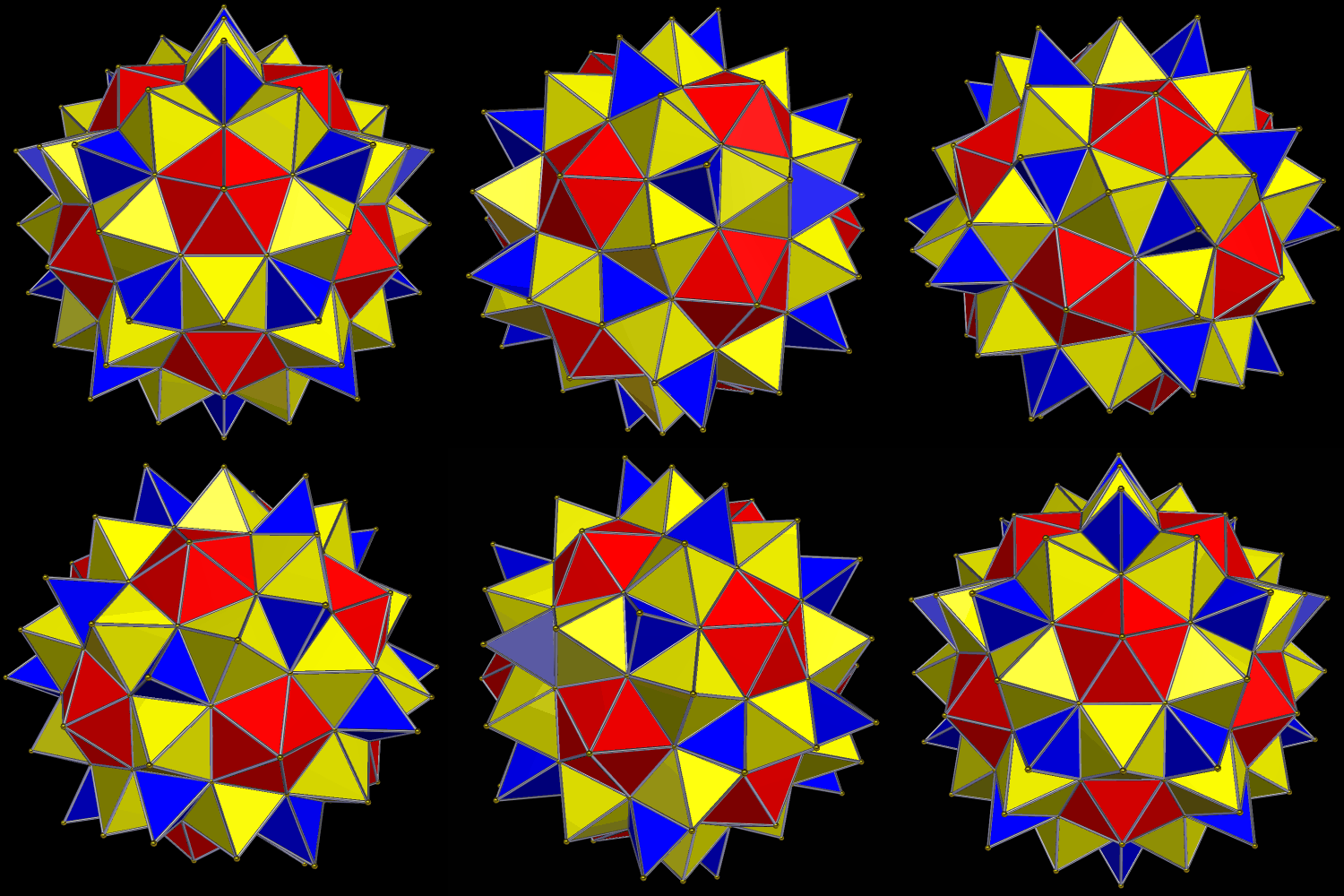
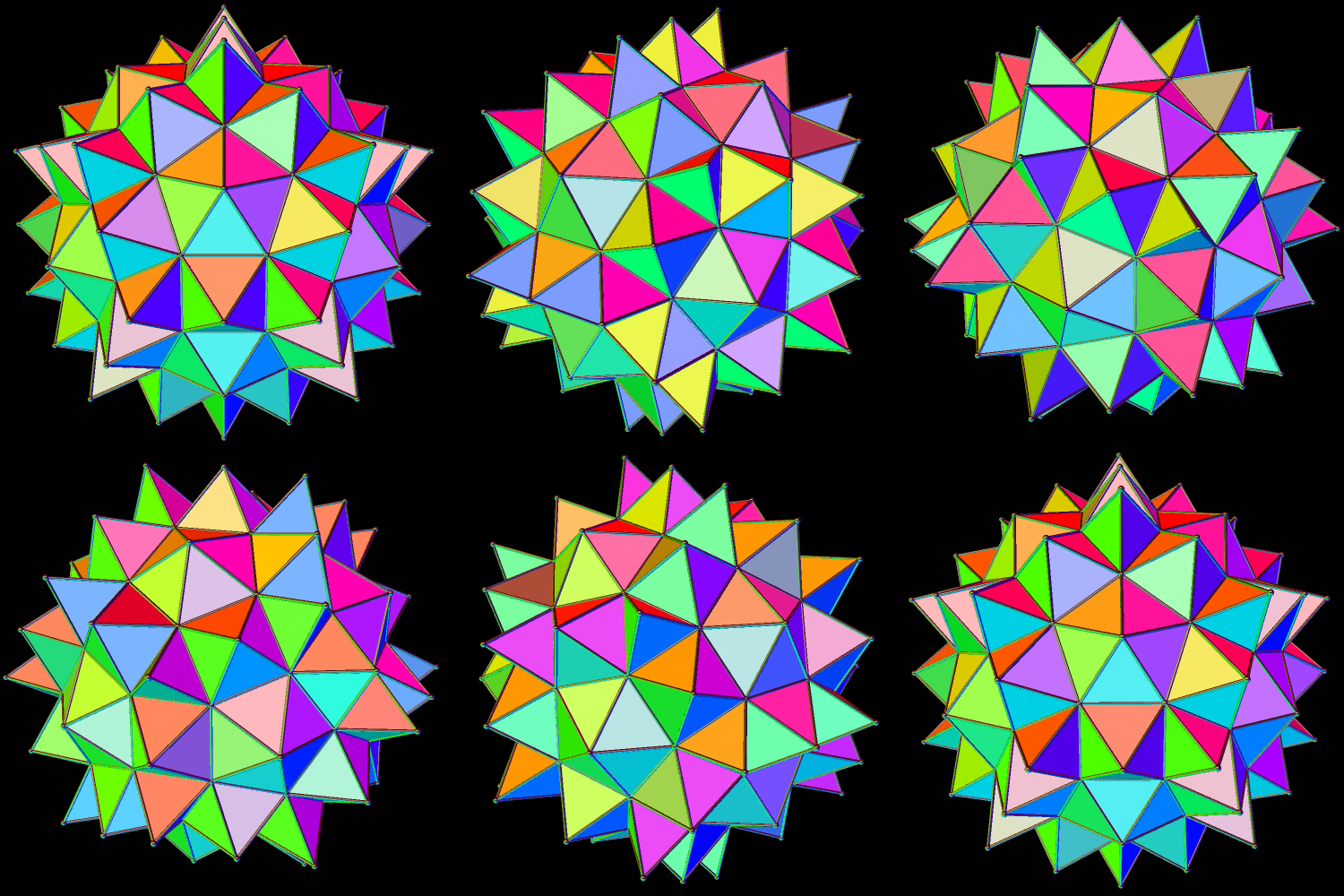
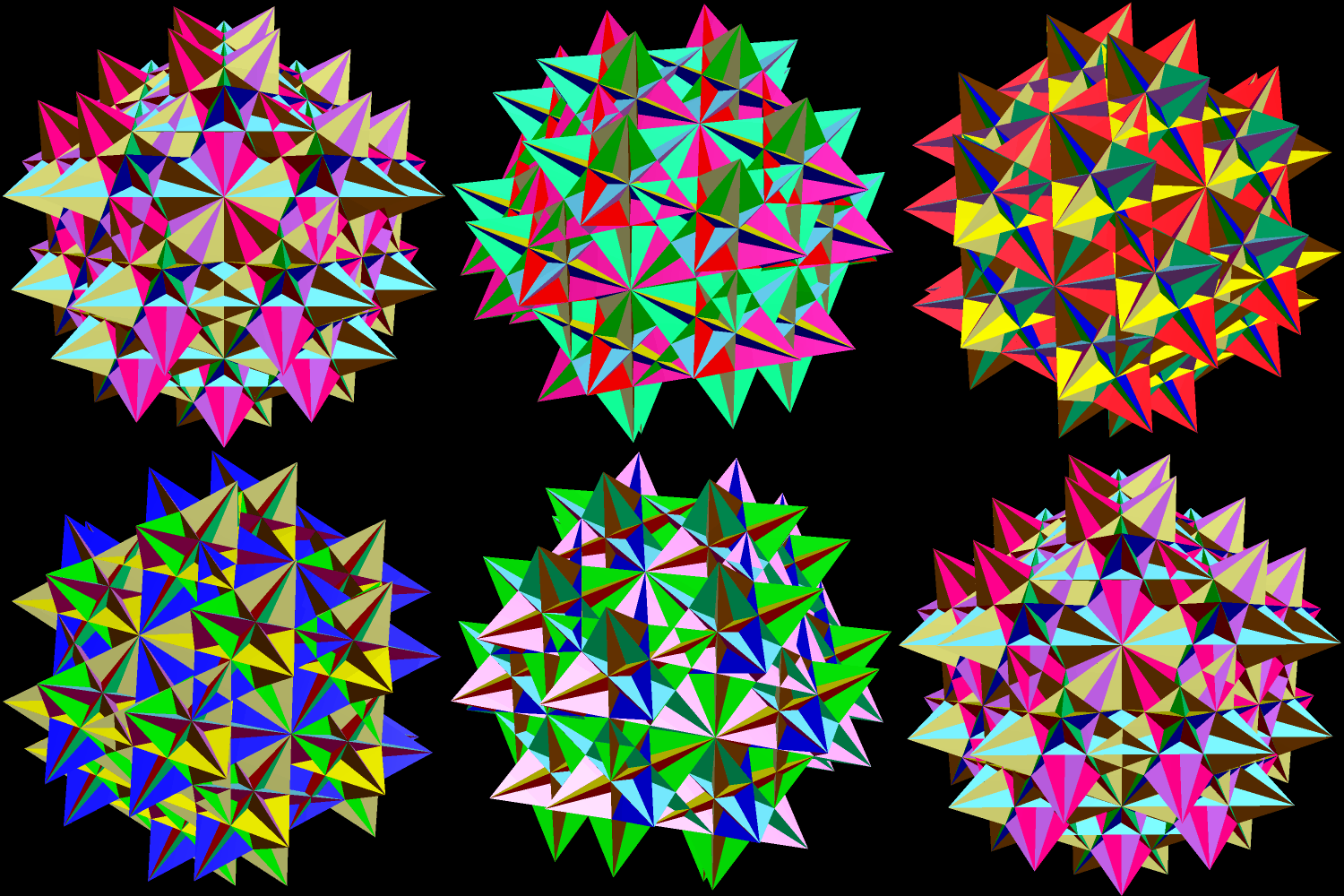
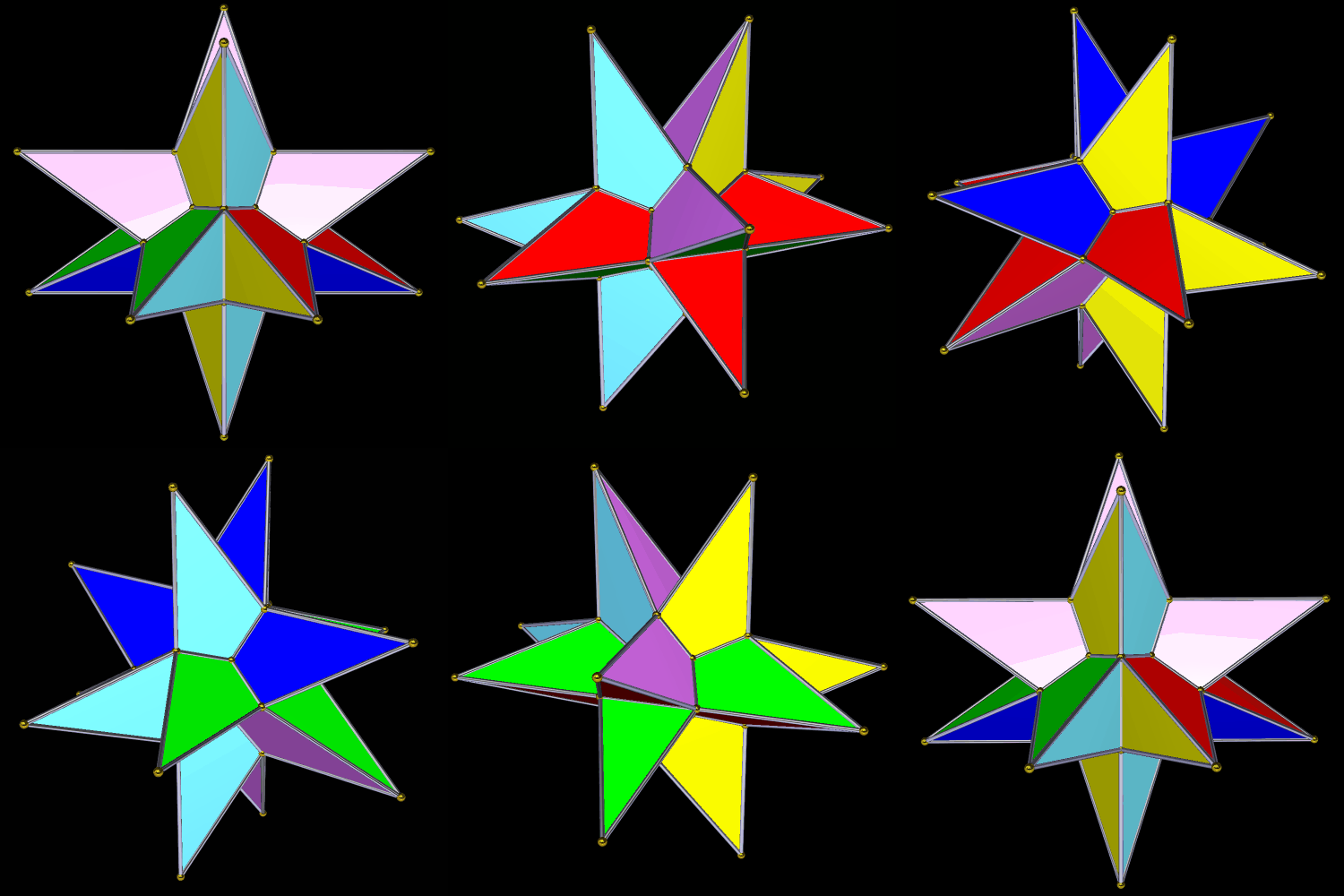
Three Versions of a Compound of the Great and Small Stellated Dodecahedra

In the first version of this compound shown here, the great stellated dodecahedron is shown in yellow, while the small stellated dodecahedron is shown in red.

Small Stellated Dodeca and Great Stellated Dodeca.gif

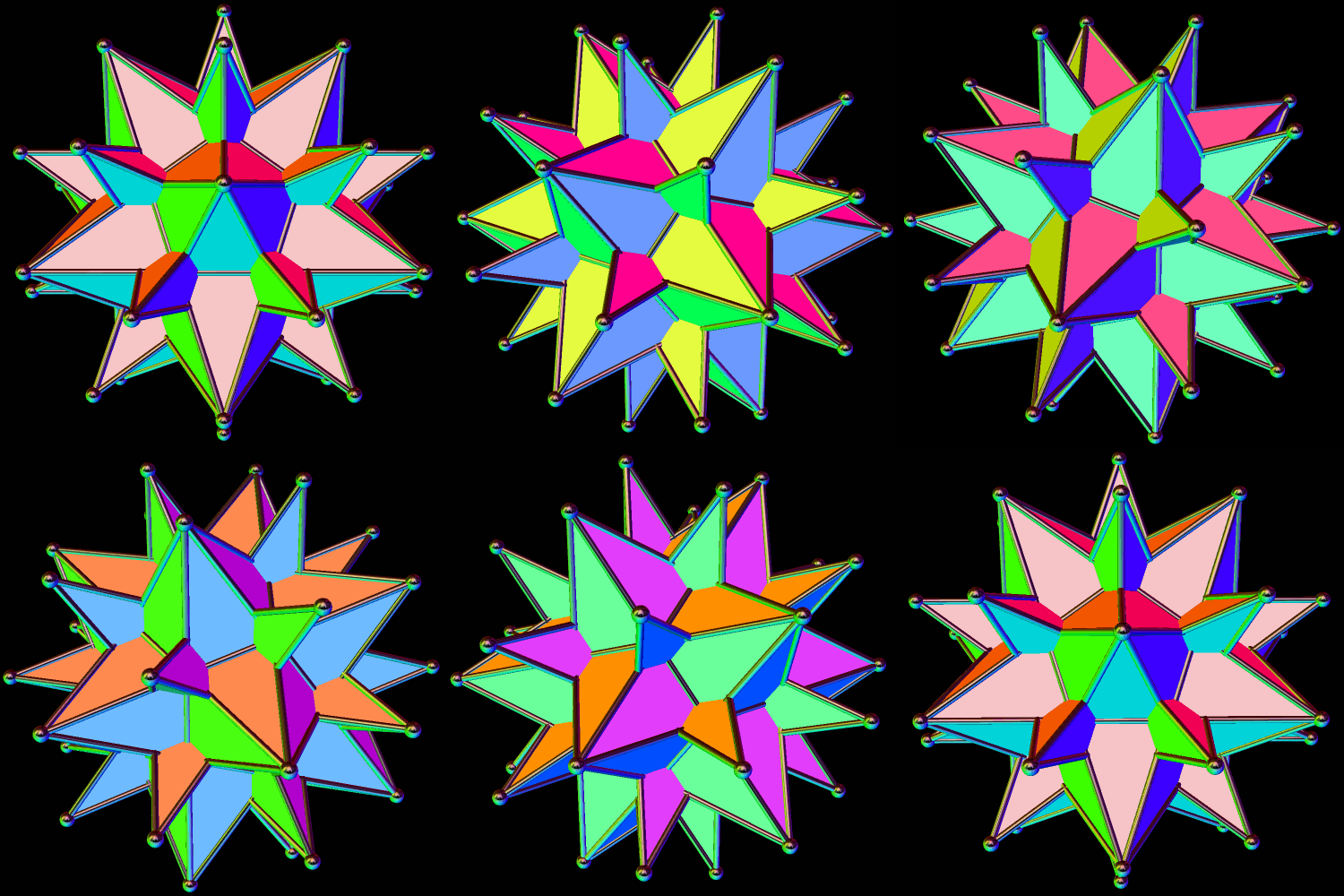
In the next version, each face has its own color, except for those in parallel planes, which have the same color.

Small Stellated Dodeca and Great Stellated Dodeca 2

Finally, the third version is shown in “rainbow color mode.”

Small Stellated Dodeca and Great Stellated Dodeca 3

All three of these images were created using Stella 4d: Polyhedron Navigator, software you can try for free right here.

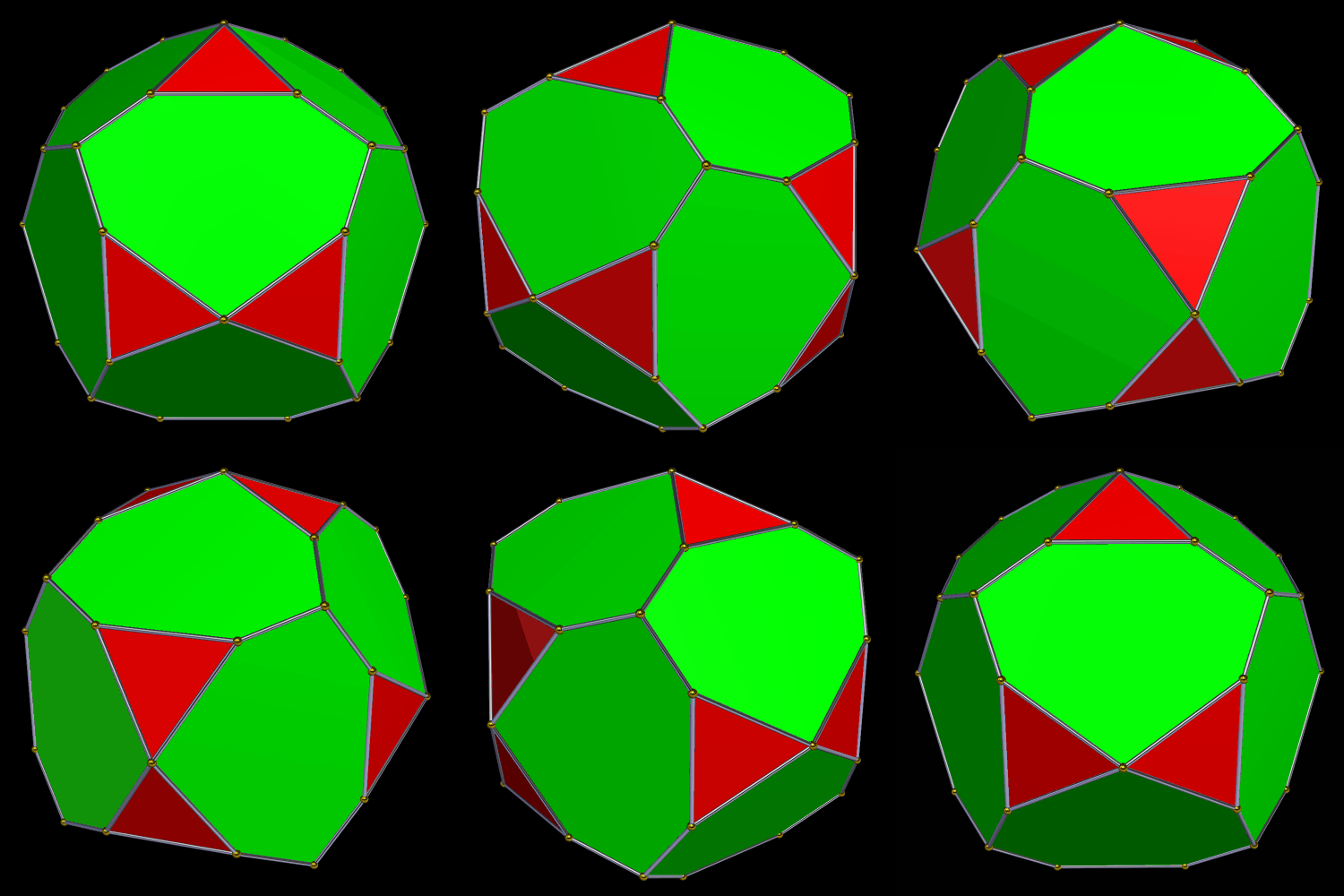
A Faceted Version of the Truncated Cube

This is the truncated cube, which is one of the Archimedean solids.

Convex hull.gif

To make a faceted version of this solid, one must connect at least some of the vertices in different ways. Doing that creates new faces.

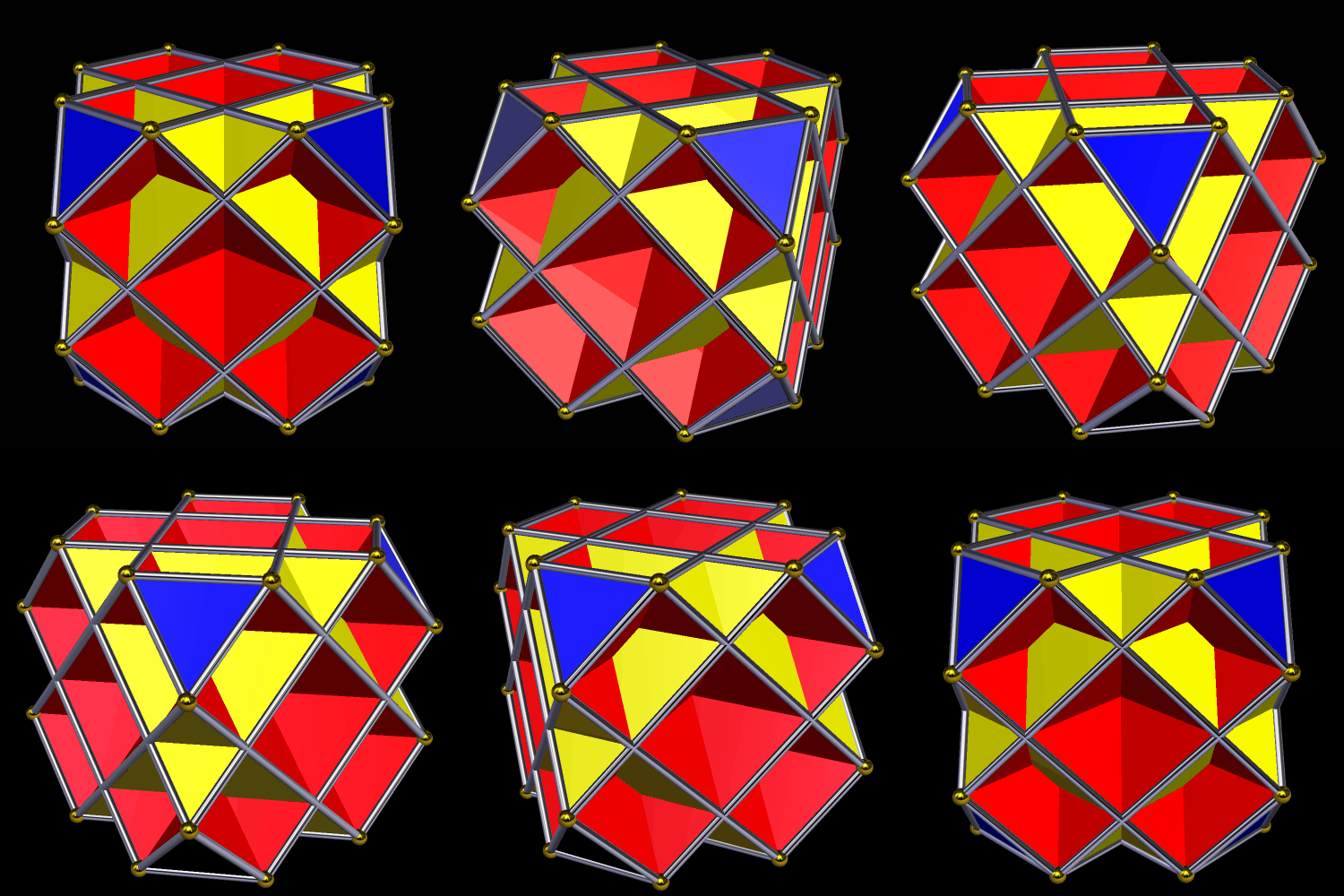
Faceted Trunc Cube 8 hexagons blue and yellow triangles.gif

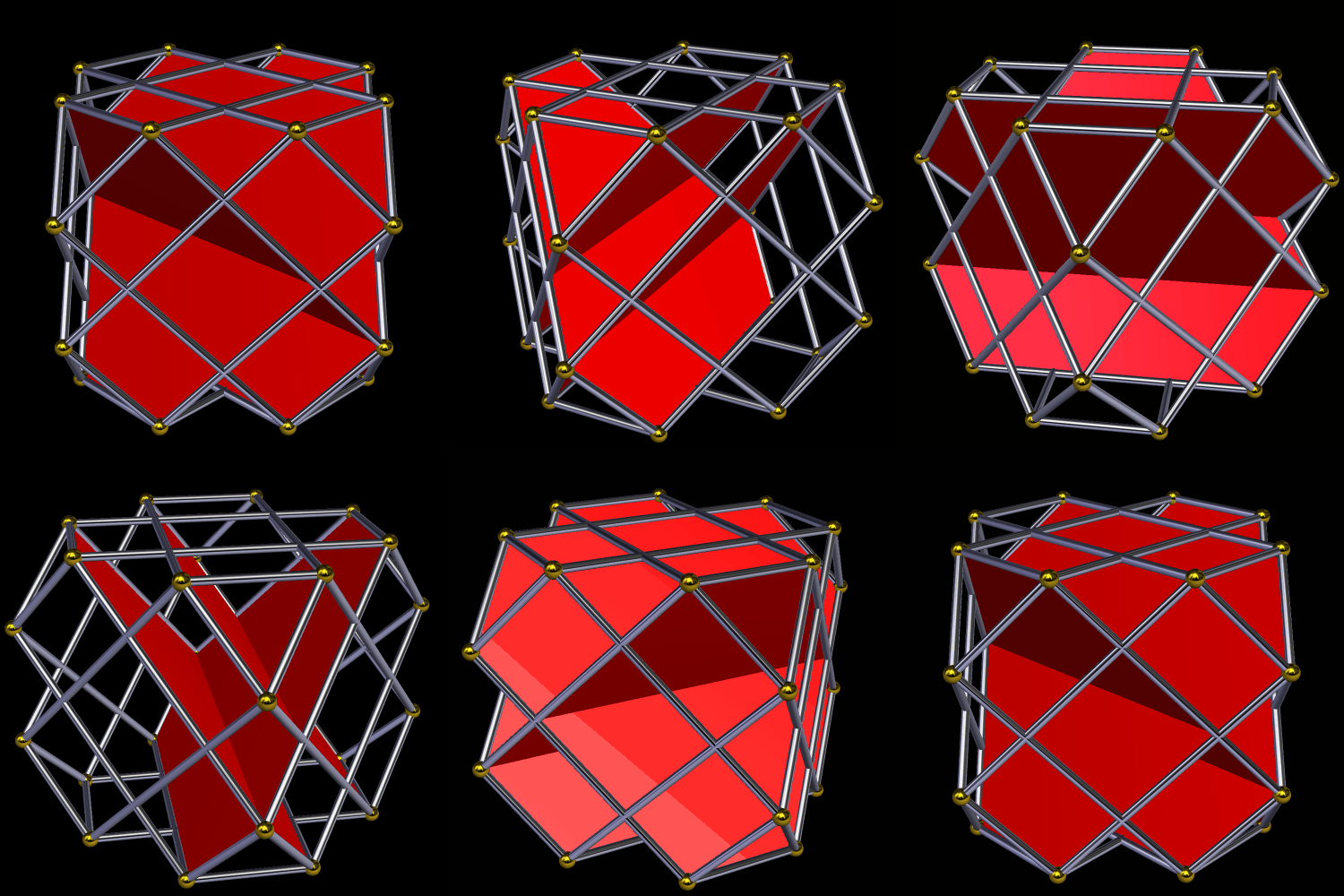
This faceted version of the truncated cube includes eight blue equilateral triangles, eight larger, yellow equilateral triangles, and eight irregular, red hexagons. It’s easy to spot the yellow and blue triangles, but seeing the red hexagons is harder. In the final picture here, I have hidden all faces except for three of the hexagons, so that their positions can be more easily seen.

Faceted Trunc Cube 8 hexagons blue and yellow triangles some parts hidden.gif

I made all three of these images using Robert Webb’s program called Stella 4d: Polyhedron Navigator. It is available for purchase, or as a free trial download, at http://www.software3d.com/Stella.php.

The Eighteenth Stellation of the Rhombicosidodecahedron Is an Interesting Polyhedral Compound

Rhombicosidodeca 18th stellation and an interesting compound

The 18th stellation of the rhombicosidodecahedron, shown above, is also an interesting compound. The yellow component of this compound is the rhombic triacontahedron, and the blue-and-red component is a “stretched” form of the truncated icosahedron. 

This was made using Stella 4d, which you can try for free right here.

The Equal-Edge-Length, Pyramid-Augmented Rhombicosidodecahedron

Augmented Rhombicosidodeca.gif

The only difference between these two images is that the lower one is in “rainbow color mode.” Both were created using Stella 4d, which you can try for free at this website.

Augmented Rhombicosidodeca rb.gif

I once made a physical model of this thing, when I was still new to the study of polyhedra. I wish I still had it, but it was lost many years ago.

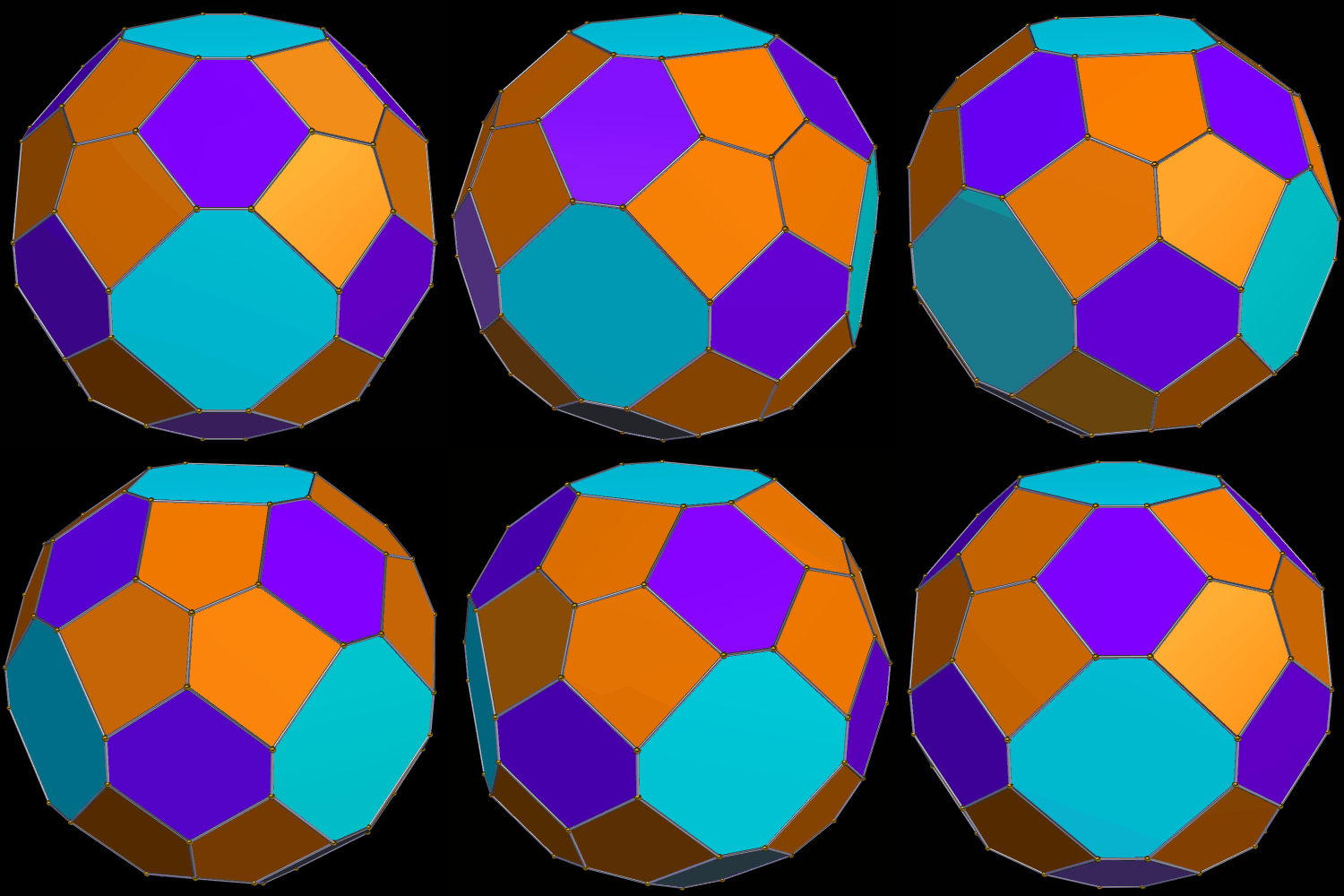
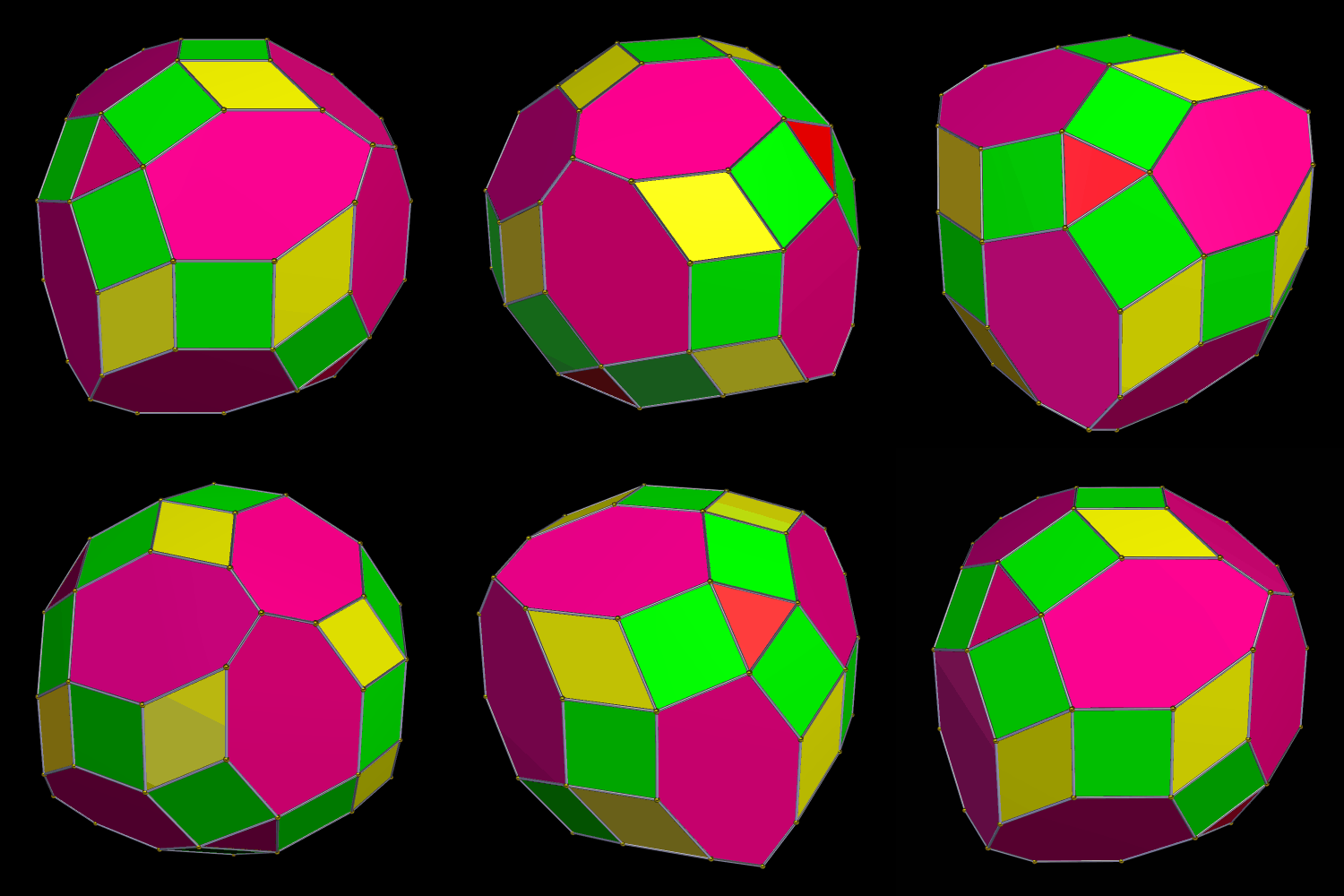
A Polyhedron Made of Pentagons, Hexagons, and Octagons

octagons, hexagons, and pentagons

I used software called Stella 4d: Polyhedron Navigator to make this shape, and you can try Stella for free, right here. Sometimes, I use a lot of polyhedral modifications with this program, simply looking for a solid which looks interesting. With some polyhedra found through this random-walk process, I can’t even remember exactly how I created them in the first place — and this is one of those times.

I do know that this polyhedron has cuboctahedral symmetry, also known as octahedral symmetry. If  anyone can figure out more about it, especially how to construct it, you are invited to share your insights in a comment.

A Zonohedron Featuring Hexadecagons

Zonohedrified Trunc Octa v e f.gif

I stumbled upon this zonohedron by adding zones to a truncated octahedron, based on its faces, edges, and vertices. It was created using Stella 4d, which you may try for free at http://www.software3d.com/Stella.php. To the best of my recollection, this is the only zonohedron I have seen which includes rhombi, hexagons, octagons, and, of course, the red hexadecagons.

An Icosahedron Augmented With Twenty Great Icosahedra, Together With the Dual of This Cluster-Polyhedron

icosa Augmented by great Icosas.gif

The cluster-polyhedron above was formed by augmenting a central isocahedron with twenty great icosahedra. The dual of this cluster is shown below.

icosa Augmented by great Icosas dual.gif

Both these images were created using Stella 4d, which you may try for free at http://www.software3d.com/Stella.php.

The Compound of the Truncated Isocahedron and the Pentakis Dodecahedron, with Related Polyhedra

The yellow-and-red polyhedron in the compound below is the truncated icosahedron, one of the Archimedean solids. The blue figure is its dual, the pentakis dodecahedron, which is one of the Catalan solids.
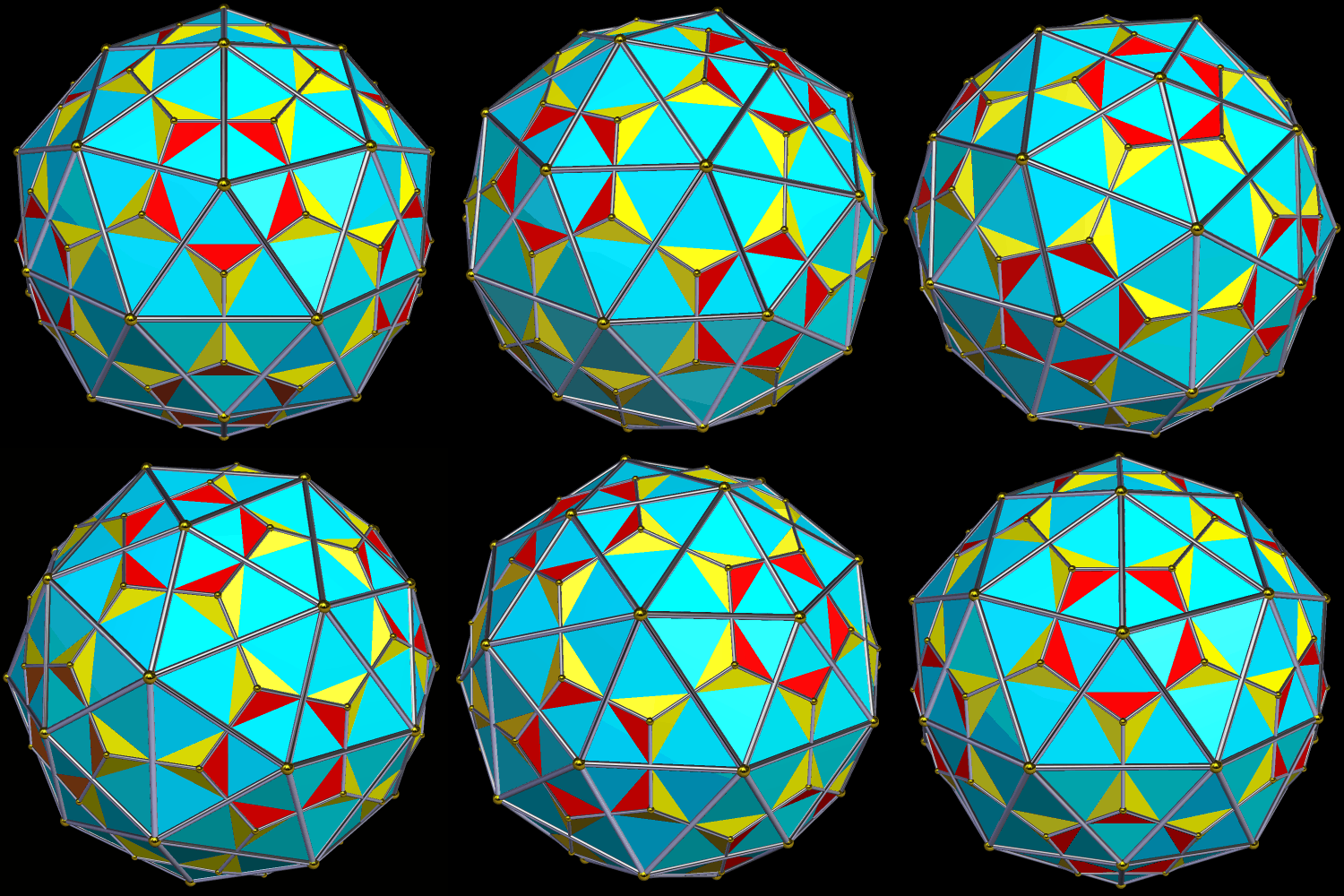
Pentakis dodecahedron and truncated icosahedron

The next image shows the convex hull of this base/dual compound. Its faces are kites and rhombi.

Convex hull of trunctaed icosahedron slash pentakis dodecahedron compound

Shown next is the dual of this convex hull, which features regular hexagons, regular pentagons, and isosceles triangles.
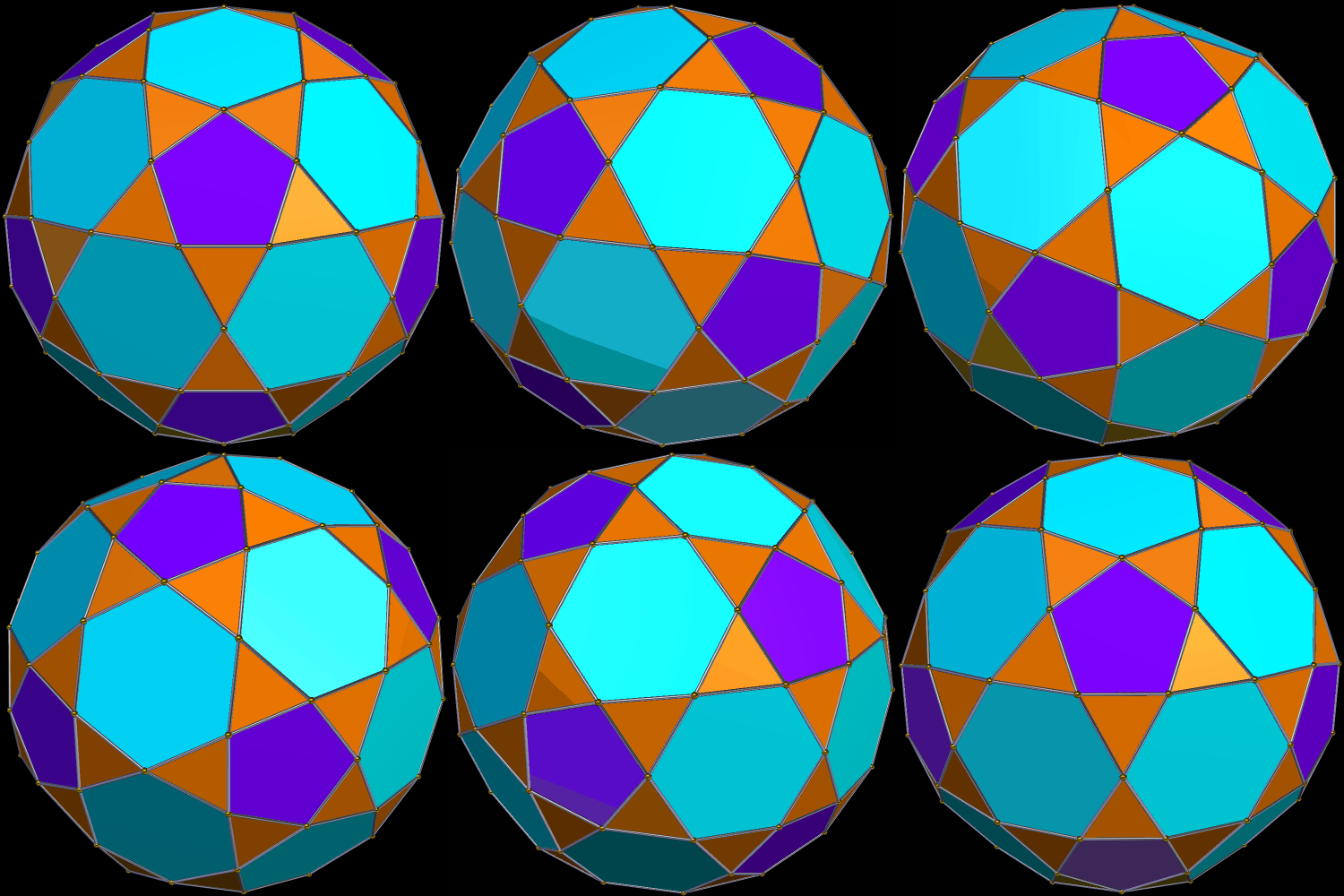
dual of Convex hull of trunctaed icosahedron slash pentakis dodecahedron compound

Next, here is the compound of the last two polyhedra shown.

dual and base compound of Convex hull of trunctaed icosahedron slash pentakis dodecahedron compound

Continuing this process, here is the convex hull of the compound shown immediately above.

Convex hull

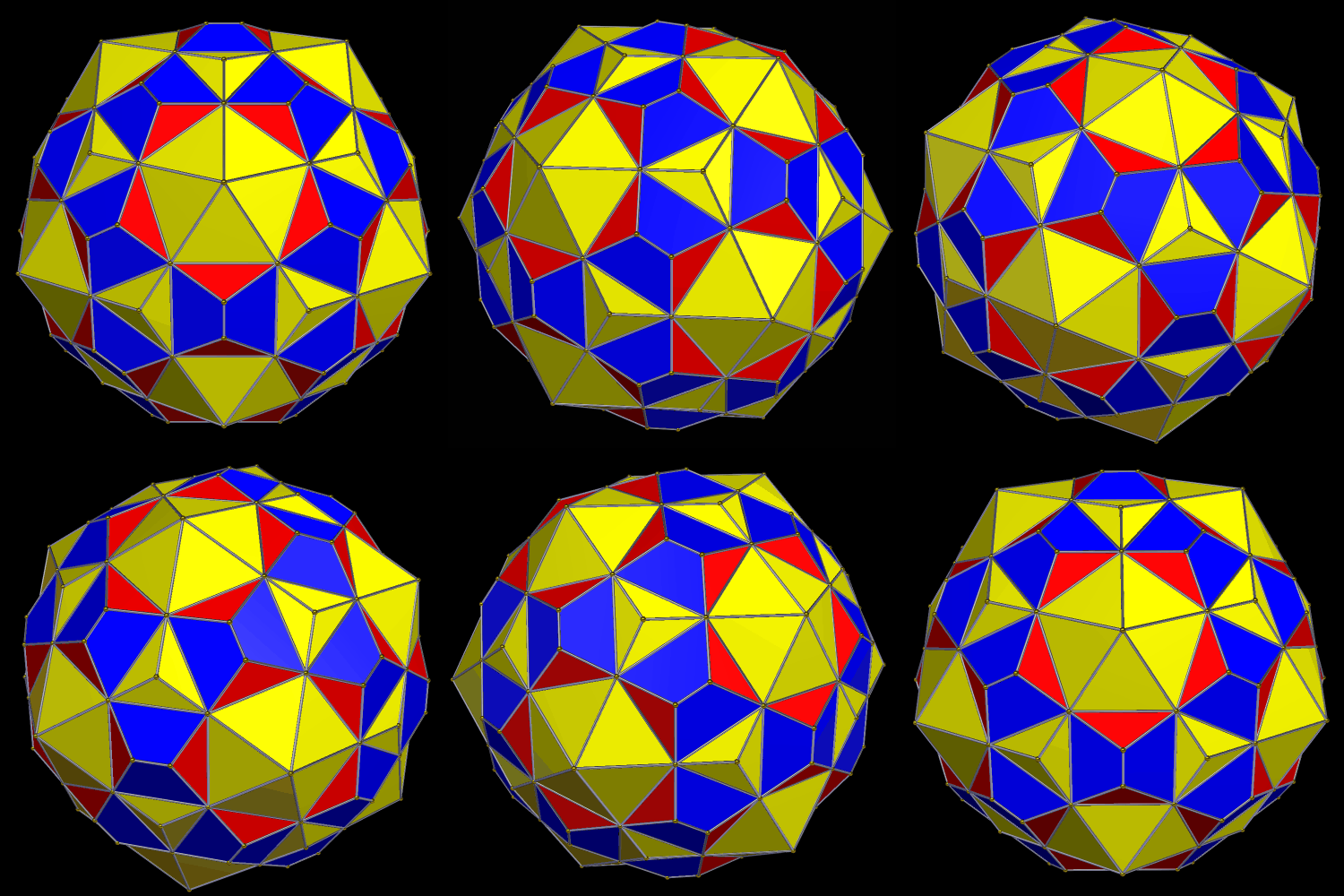
This latest convex hull has an interesting dual, which is shown below. It blends characteristics of several Archimedean solids, including the rhombicosidodecahedron, the truncated icosahedron, and the great rhombicosidodecahedron.

Dual of Convex hull

This process could be continued indefinitely — making a compound of the last two polyhedra shown, then forming its convex hull, then creating that convex hull’s dual, and so on.

All these polyhedra were made using Stella 4d: Polyhedron Navigator, which you can purchase (or try for free) at http://www.software3d.com/Stella.php

Four Polyhedra Featuring Heptagons

Heptagons only appear infrequently in interesting polyhedra. I recently found a few that I like.

Icosidodeca 2nd tetstell with heptagons and triangles is pyritohedral.gif

To form the first of these solids, shown above, I started with the icosidodecahedron, dropped the symmetry of the model from icosahedral to tetrahedral, and then stellated it twice using Stella 4d (available here). To obtain the model shown below, which also features heptagons and triangles, I stellated it once more. Both of these polyhedra have pyritohedral symmetry.

Icosidodeca 3rd tetstell with heptagons and triangles is pyritohedral.gif

To form the next model shown, I began with an rhombicosidodecahedron, set it to tetrahedral symmetry, and stellated it eight times. This produces a chiral solid with tetrahedral symmetry.

Stellated Rhombicosidodeca 8th tetstell features 8 heptagons tet symmetry.gif

For the last of these four polyhedra featuring heptagons, I began with the snub dodecahedron, dropped the symmetry of the model down from icosahedral to tetrahedral, and then stellated it sixty-one times. The resulting solid is chiral, with tetrahedral symmetry.

Snub Dodeca 61st tetstell.gif

A Pyritohedral, Stellated Polyhedron, and Its Convex Hull

To make this polyhedron using Stella 4d (available here), I began with the dodecahedron, dropped the symmetry of the model from icosahedral to tetrahedral, and then stellated it thirteen times. 

Dodeca 13th tetstell.gif

This stellated polyhedron has pyritohedral symmetry, but this is easier to see in its convex hull:

Convex hull of the dodecahedron's 13th tetstell.gif

The eight blue triangles in this convex hull are equilateral, while the twelve yellow ones are golden isosceles triangles.