The stellation-series of the rhombic enneacontahedron has many polyhedra which are, to be blunt, not much to look at — but there are some attractive “gems” hidden among this long series of polyhedral stellations. The one above, the 33rd stellation, is the first one attractive one I found — using, of course, my own, purely subjective, esthetic criteria.
The next attractive stellation I found in this series is the 80th stellation. Unlike the 33rd, it is chiral.
And, after that, the 129th stellation, which is also chiral:
Next, the 152nd (and non-chiral) stellation:
I also found the non-chiral 158th stellation worthy of inclusion here:
After that, the chiral 171st stellation was the next one to attract my attention:
The next one to attract my notice was the also-chiral 204th stellation:
Some polyhedral stellation-series are incredibly long, with thousands, or even millions, of stellations possible before one reaches the final stellation, after which stellating the polyehdron one more time causes it to “wrap around” to the original polyhedron. Knowing this, I lost patience, and simply jumped straight to the final stellation of the rhombic triacontahedron — the last image in this post:
All of these images were created using Stella 4d: Polyhedron Navigator, a program available at http://www.software3d.com/Stella.php. For anyone interested in seriously studying polyhedra, I consider this program an indispensable research tool (and, no, I receive no compensation for all this free advertising for Stella which appears on my blog). There’s a free trial version available — why not give it a try?
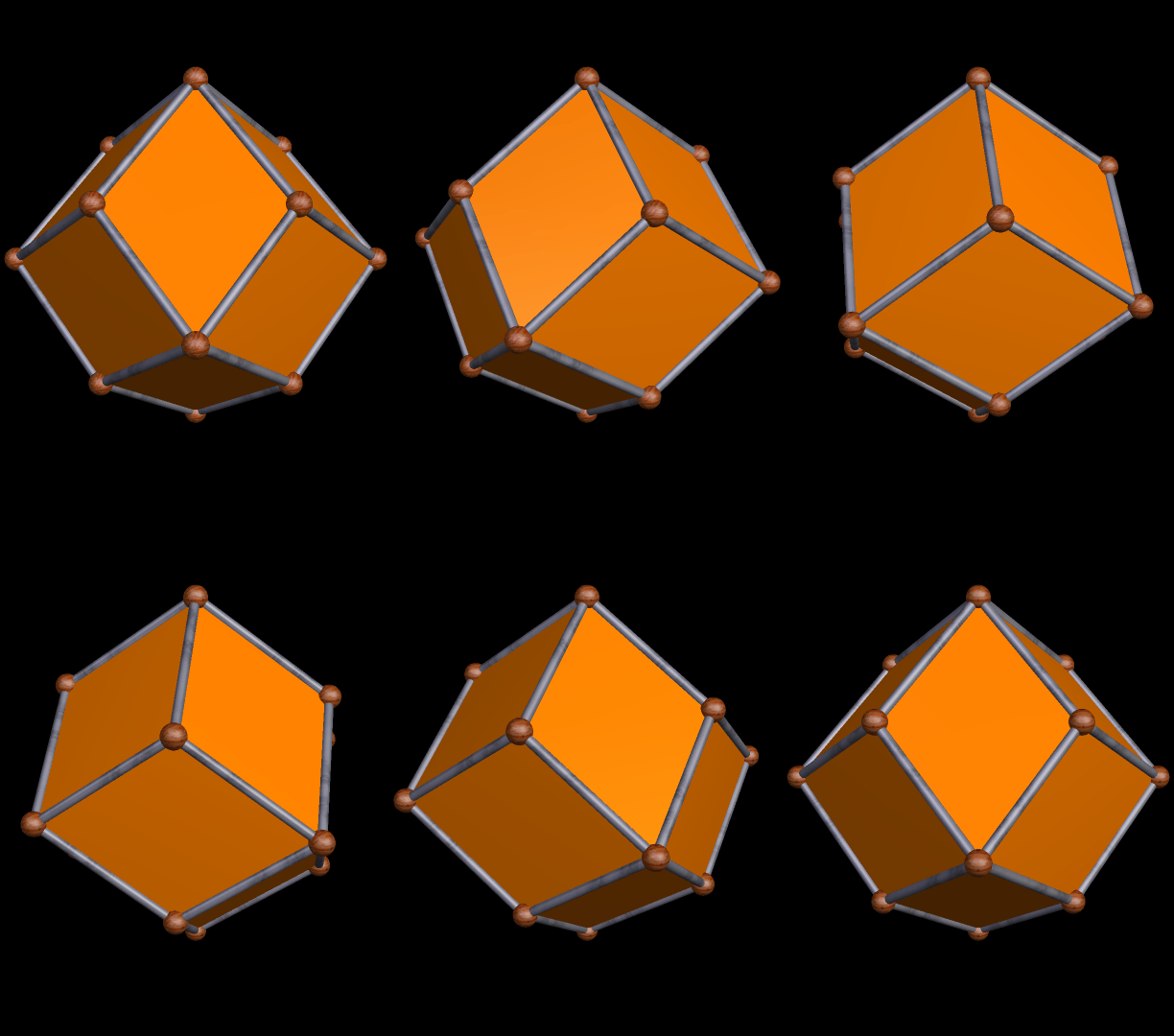
This is the rhombic dodecahedron, the dual of the Archimedean cuboctahedron.
While the rhombic dodecahedron has 12 faces, there are many other polyhedra made entirely out of rhombi, and most of them have more than twelve faces. An example is the rhombic enneacontahedron, which has two face-types: sixty wide rhombi, and thirty narrow ones. It is one of several possible zonohedrified dodecahedra.
As the next figure shows, the wide rhombi of the rhombic enneacontahedron have exactly the same shape as the rhombic dodecahedron’s faces, so the two polyhedra can be stuck together (augmented) at those faces. These wide rhombi have diagonals with lengths in a ratio of one to the square root of two.
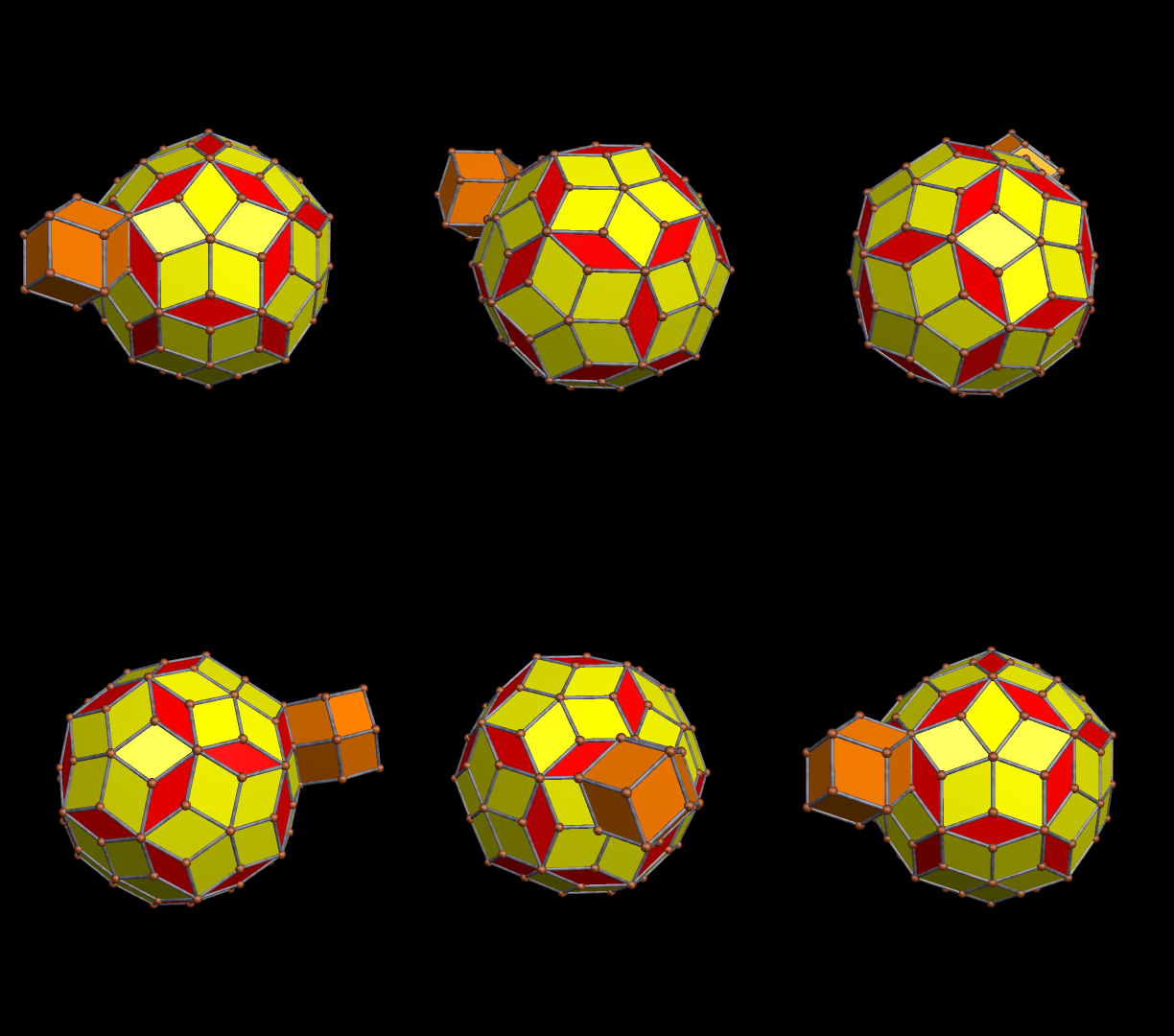
The next picture shows what happens if you take one central rhombic enneacontahedron, and augment all sixty of its wide faces with rhombic dodecahedra.
Since this polyhedral cluster in non-convex, it can be changed by creating its convex hull, which can the thought of as pulling a rubber sheet tightly around the entire polyhedron. Here’s the convex hull of the augmented polyhedron above.
The program I use to make these rotating images, Stella 4d (which you can try here), has a function called “try to make faces regular.” If applied to the convex hull above, this function leaves the triangles and pentagon regular, and makes the octagons regular as well. However, the rhombi become kites. The rectangles merely change, getting slightly longer, while rotating 90º, but they do remain rectangles.
After creating this last polyhedron, I started stellating it. After stellating it eight times, I obtained this polyhedron:
Once more, I applied the “try to make faces regular” function.
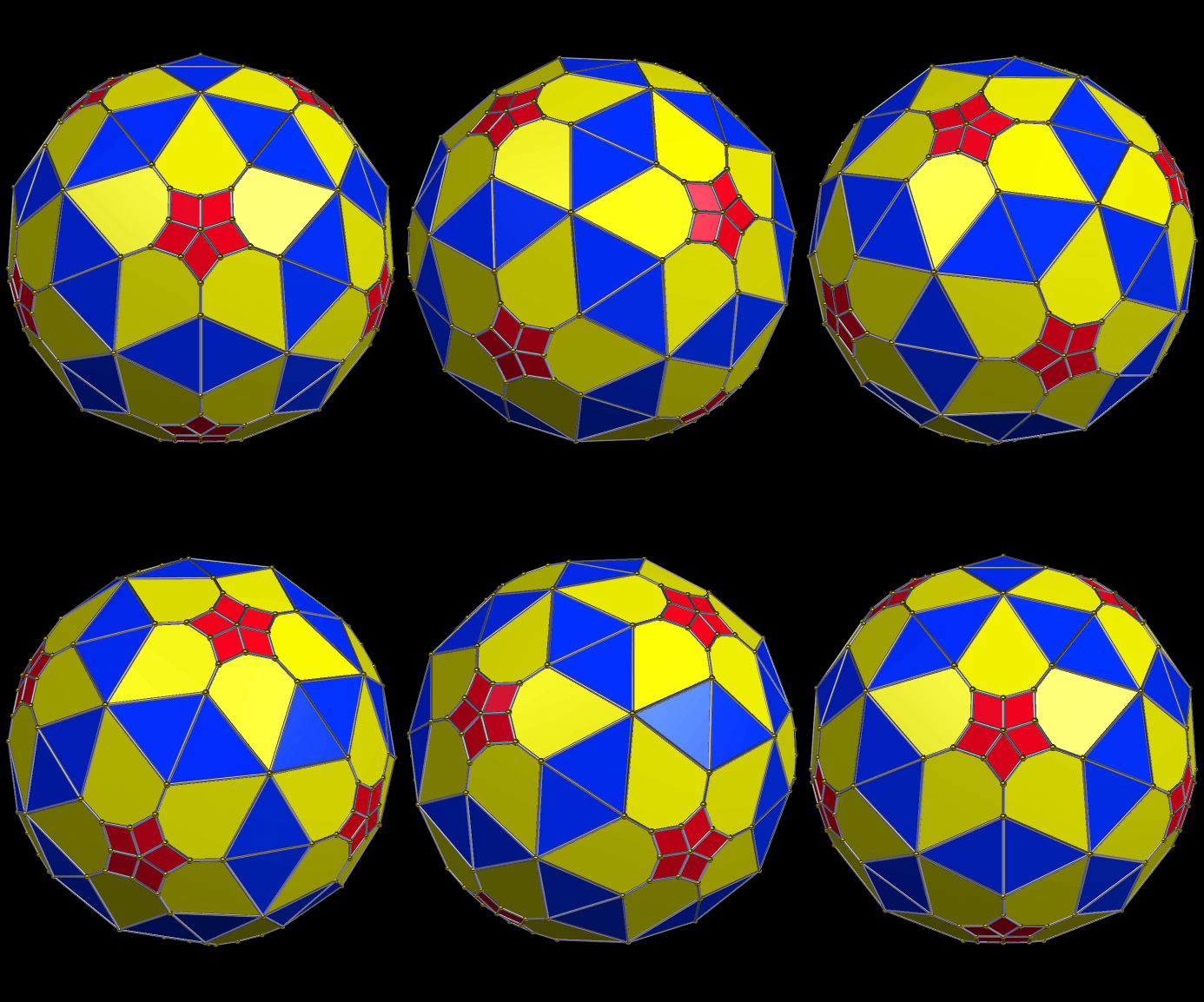
This polyhedron has five-valent vertices where the shorter edges of the kites meet. These are also the vertices of pentagonal pyramids which use kite-diagonals as base edges. By using faceting (the inverse operation of stellation), I next removed these pyramids, exposing their regular pentagonal faces.
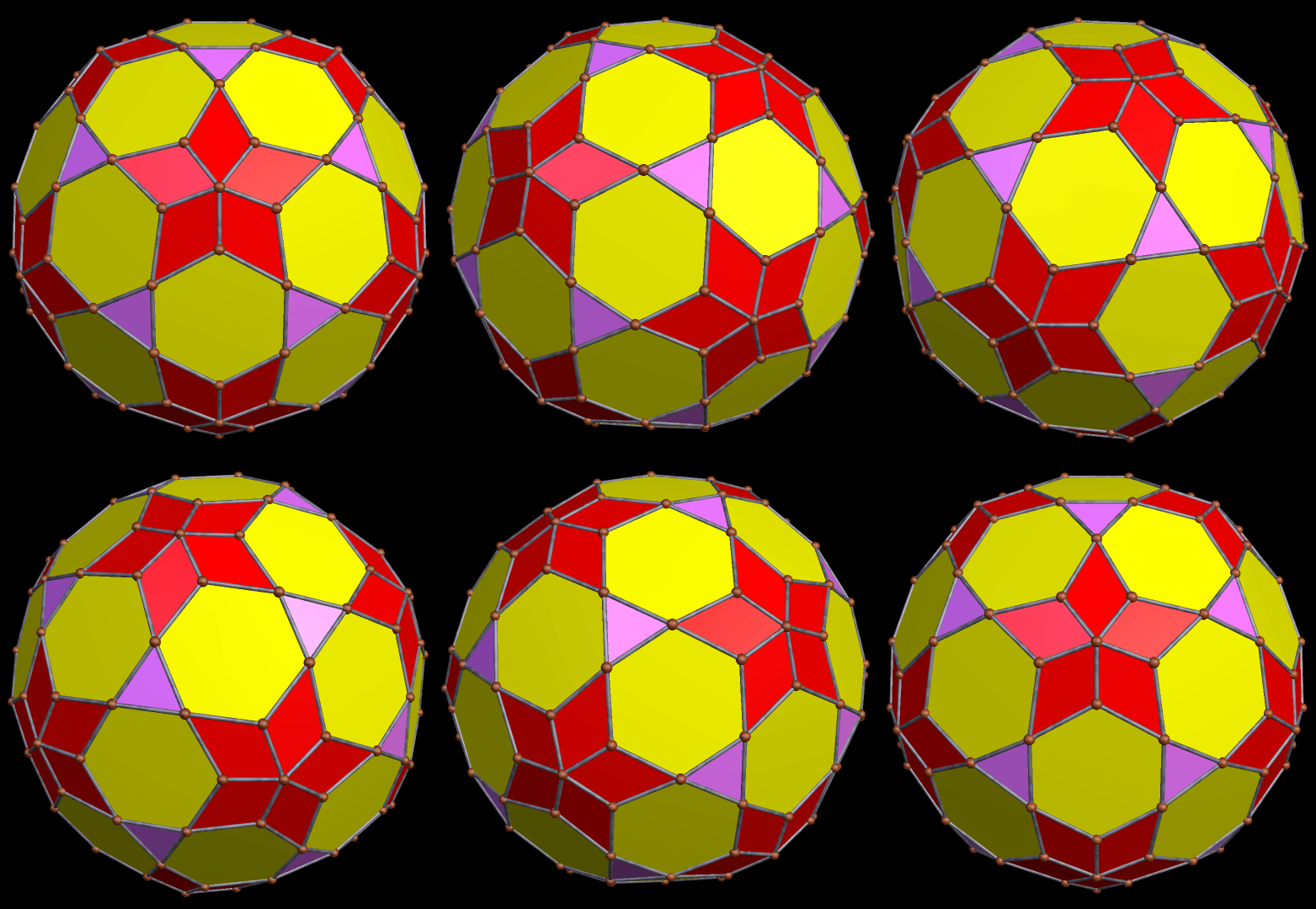
In this polyhedron, all faces are regular, except for the red triangles, which are isosceles. (There are also triangles — the pink ones — which are regular.) Each of these isosceles triangles has ~63.2º base angles, and a ~53.6º vertex angle, with legs just under 11% longer than the base. This is a judgement call, for “near-miss” to the Johnson solids has not been precisely defined, but I see an ~11% edge-length difference as too great for this to be classified as a “near-miss,” even though I would love to claim discovery of another near-miss to the Johnson solids (if it even turns out I am the first one to find this polyhedron, which may not be the case). It is close to being a near-miss, though, so it belongs in the even-less-precisely defined group of polyhedra which are called, quite informally, “near near-misses.”
For the sake of comparison, here is a similar polyhedron (included in Stella 4d‘s enormous, built-in library of polyhedra) which is recognized as a near-miss to the Johnson solids. (I do not know the name of the person who discovered it, or I would include it here — I only know it wasn’t me.) It’s called the “half-truncated truncated icosahedron,” and its longest ledges are just over 7% longer than its shorter edges, with the non-regularity of faces also limited to isosceles triangles. However, this irregularity appears in all of the triangles in the polyhedron below — and in the “near near-miss above,” the irregularity only appeared in some of the triangular faces.
The images on the faces of this polyhedron are based on information sent from NASA’s Lunar Reconnaisance Orbiter, as seen at http://lunar.gsfc.nasa.gov/lola/feature-20110705.html and tweeted by @LRO_NASA, which has been happily tweeting about its fifth anniversary in a polar lunar orbit recently. I have no idea whether this is actually an A.I. onboard the LRO, or simply someone at NASA getting paid to have fun on Twitter.
To get these images from near the Lunar South Pole onto the faces of a rhombic enneacontahedron, and then create this rotating image, I used Stella 4d: Polyhedron Navigator. There is no better tool available for polyhedral research. To check this program out for yourself, simply visit www.software3d.com/Stella.php.
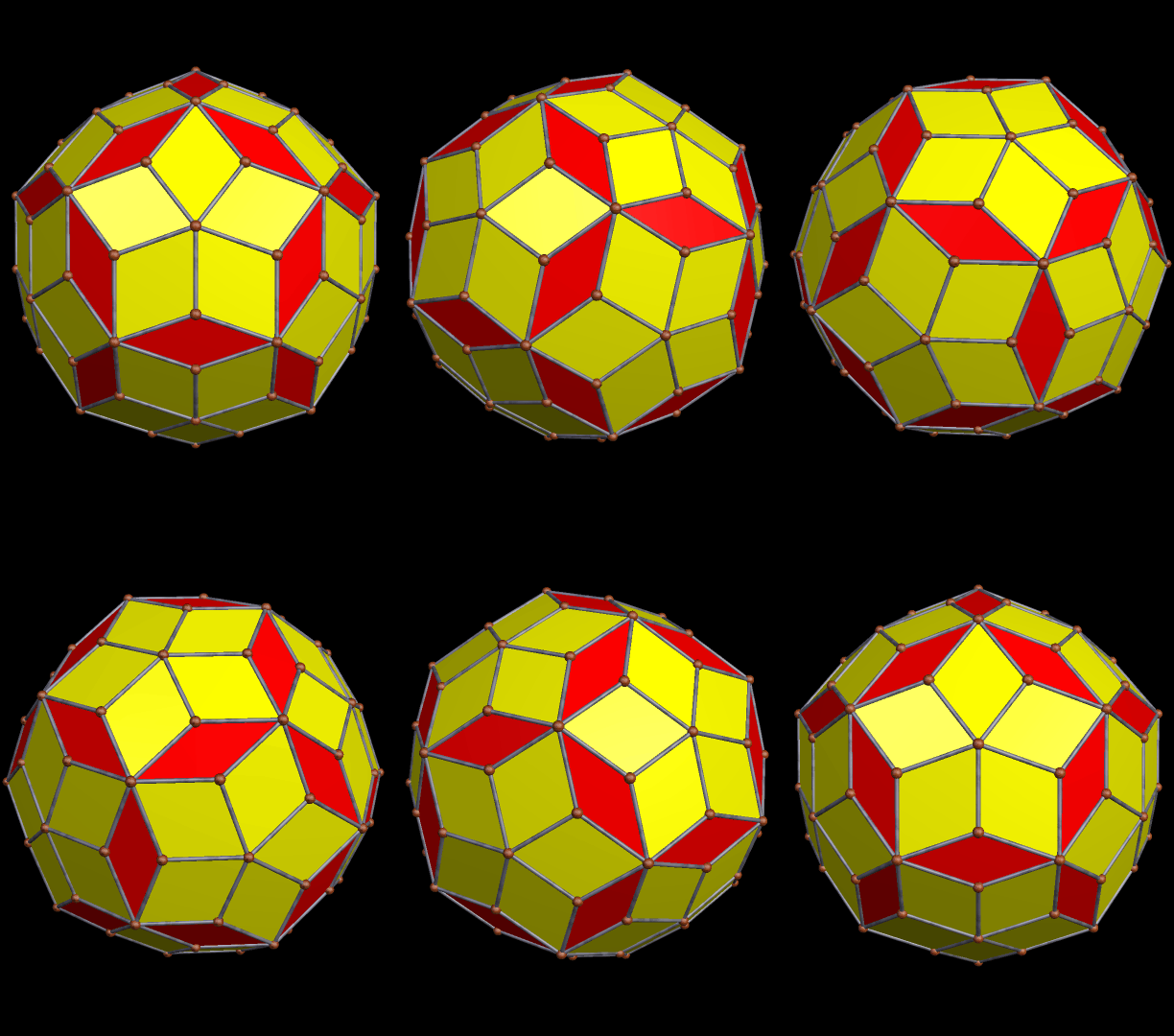
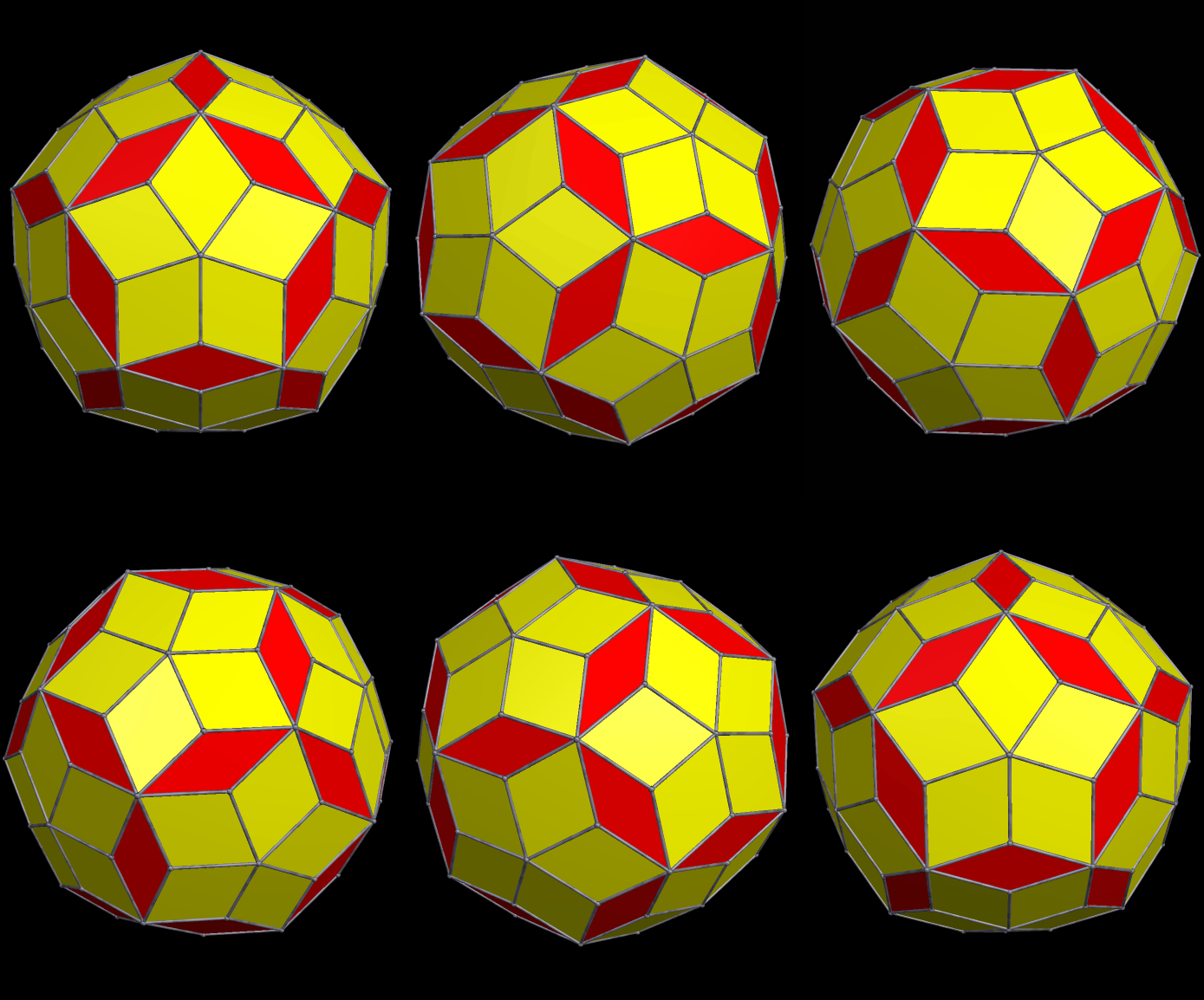
In the rhombic enneacontahedron, which is shown below, there are thirty narrow rhombi (shown in red) which separate twelve panels of five rhombi each (shown in yellow). This polyhedron is familiar to many people:
As you can see, the rhombic enneacontahedron has three of these yellow panels meeting at some of its vertices, along with three of the red, narrow rhombi.
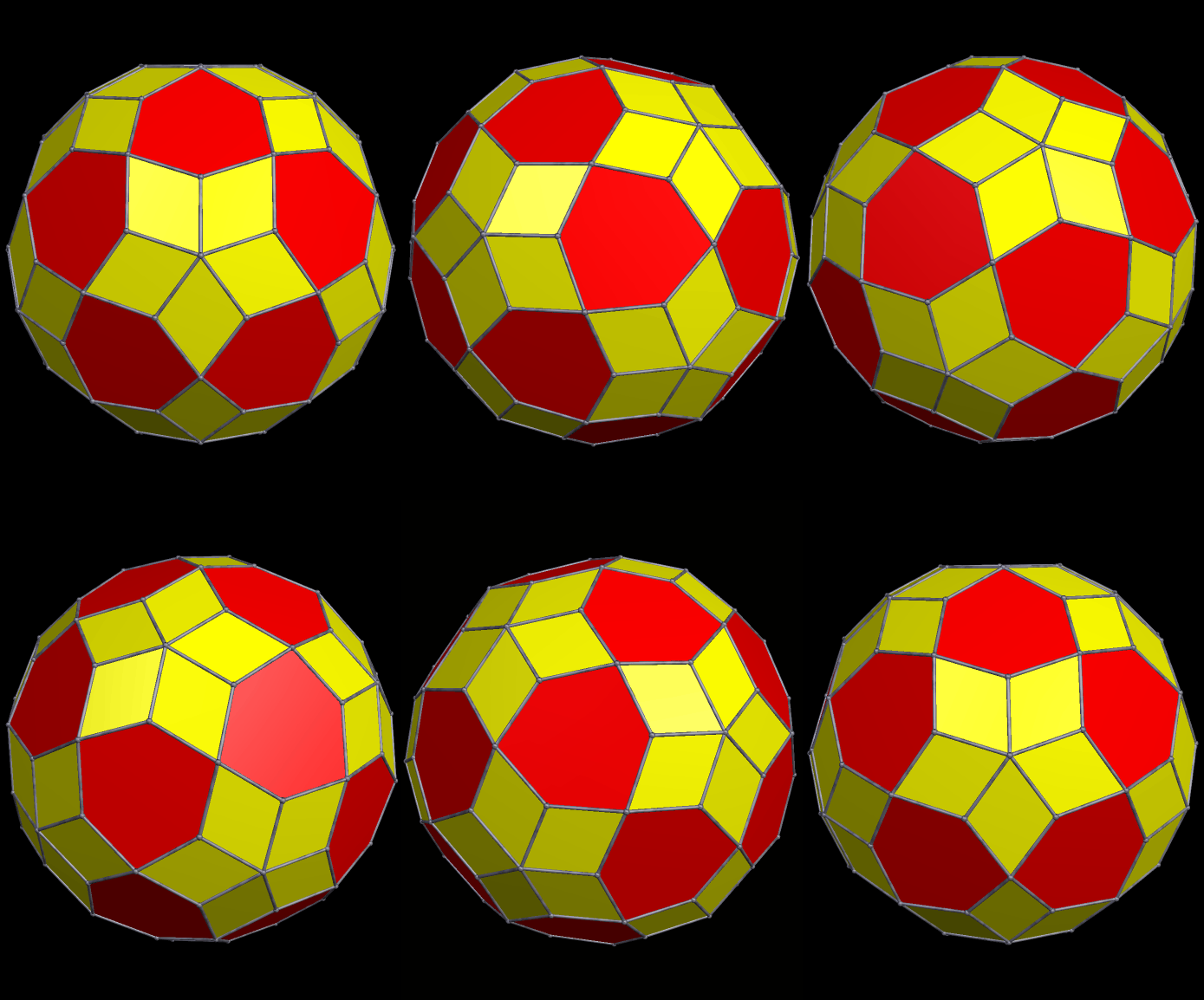
For this new variant, at the top of this post, the five-rhombi panels are rotated until only two of them (rather than three) meet at certain vertices, and the thirty red, narrow rhombi between the yellow five-rhombi panels are replaced by twenty equilateral (but non-equiangular) hexagons, also shown in red.
Both of these polyhedra are related to the Platonic dodecahedron, which is shown below. In the rhombic enneacontahedron, the red, narrow rhombi correspond in position to the thirty edges of a dodecahedron. In the new variant, the red hexagons correspond to the vertices of a dodecahedron, rather than its edges. In both of these red-and-yellow polyhedra, the yellow, five-rhombi panels correspond to the dodecahedron’s faces. To see this more clearly, just compare the polyhedra above with this dodecahedron:
(All polyhedral images here were created with Stella 4d: Polyhedron Navigator, which you can try and/or buy here.)
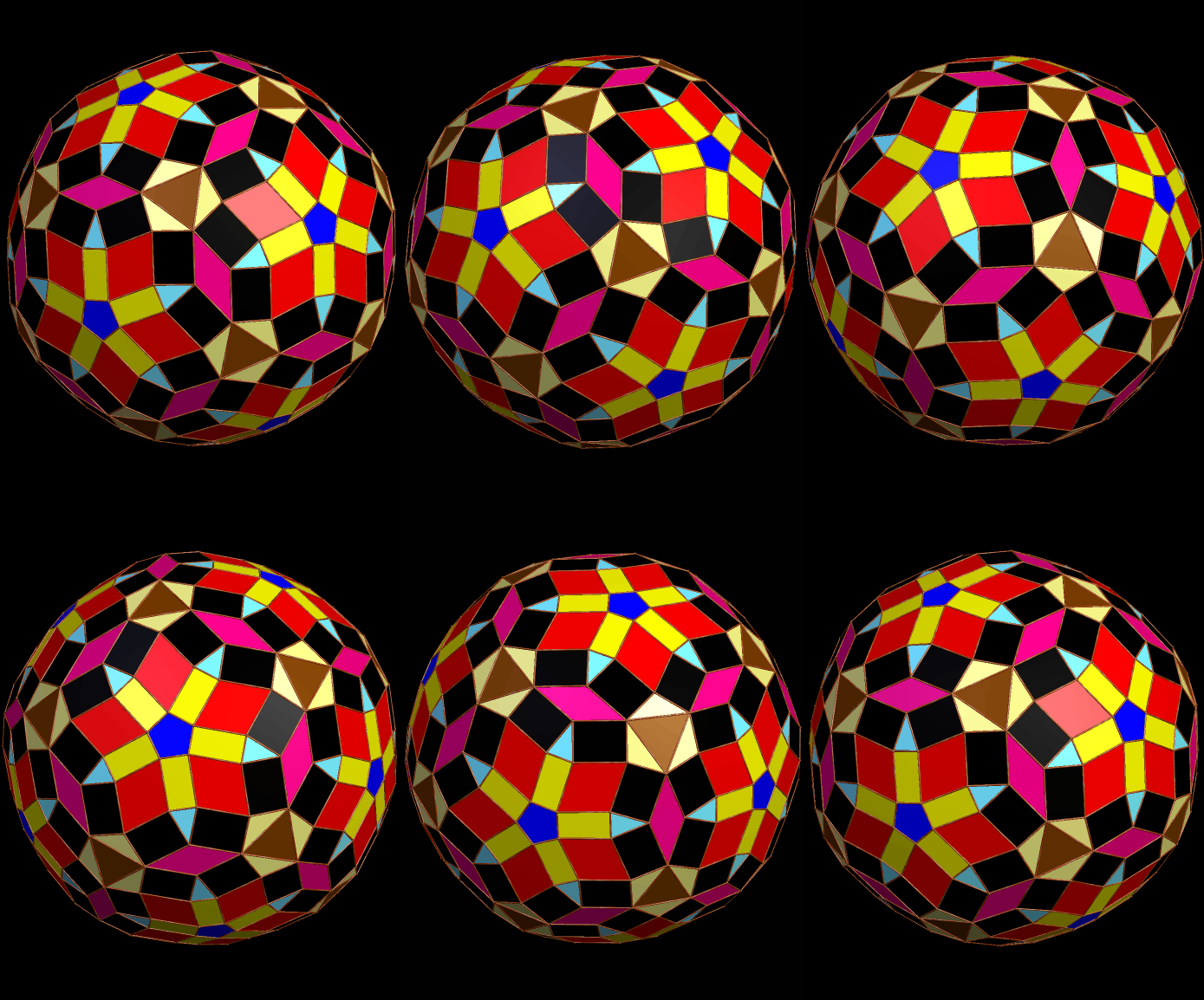
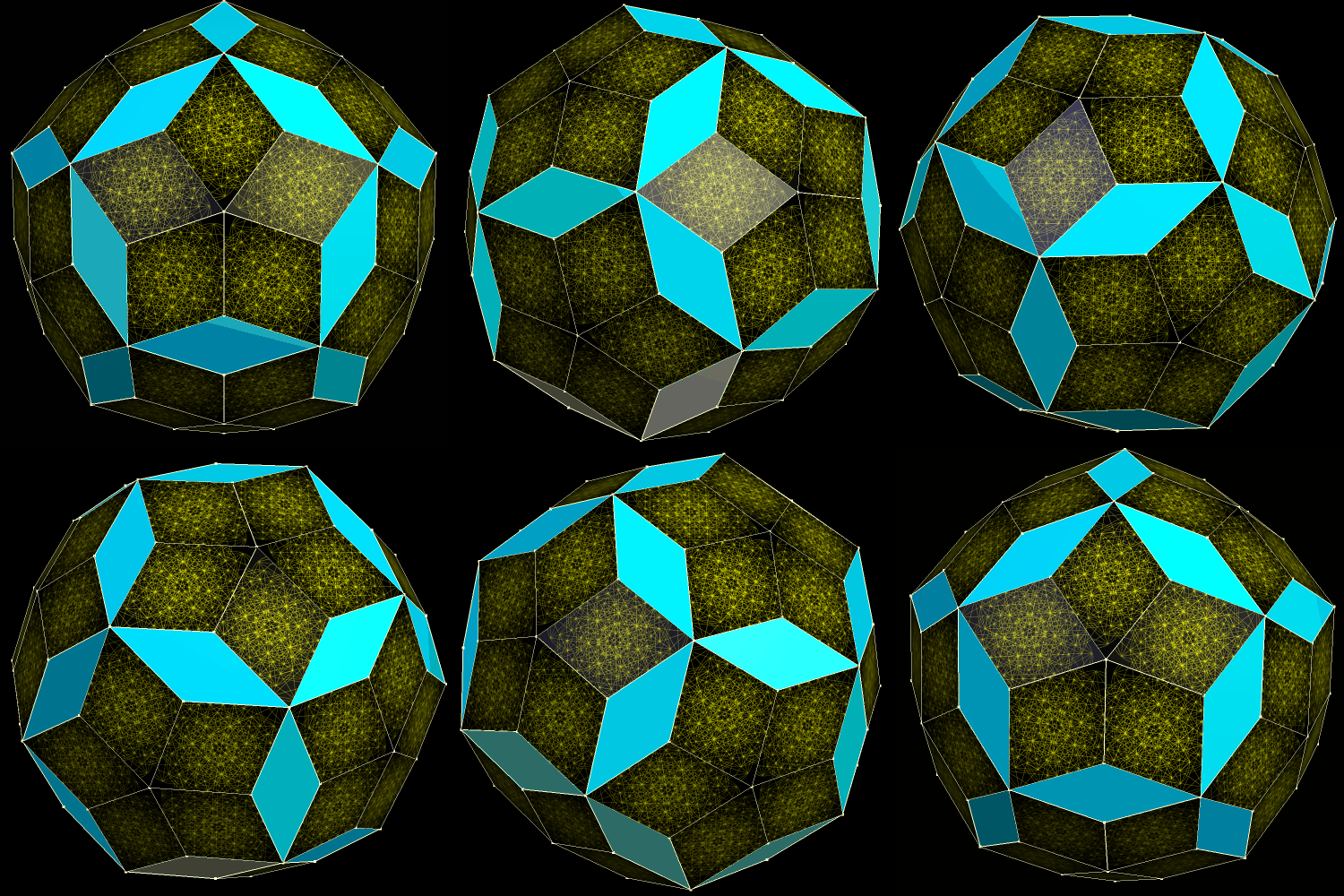
The rhombic enneacontahedron has ninety faces. In this image, the sixty of them which are wide rhombi are decorated with the mandala, 22, from my last post. The narrow rhombi, of which there are thirty, are colored light blue.
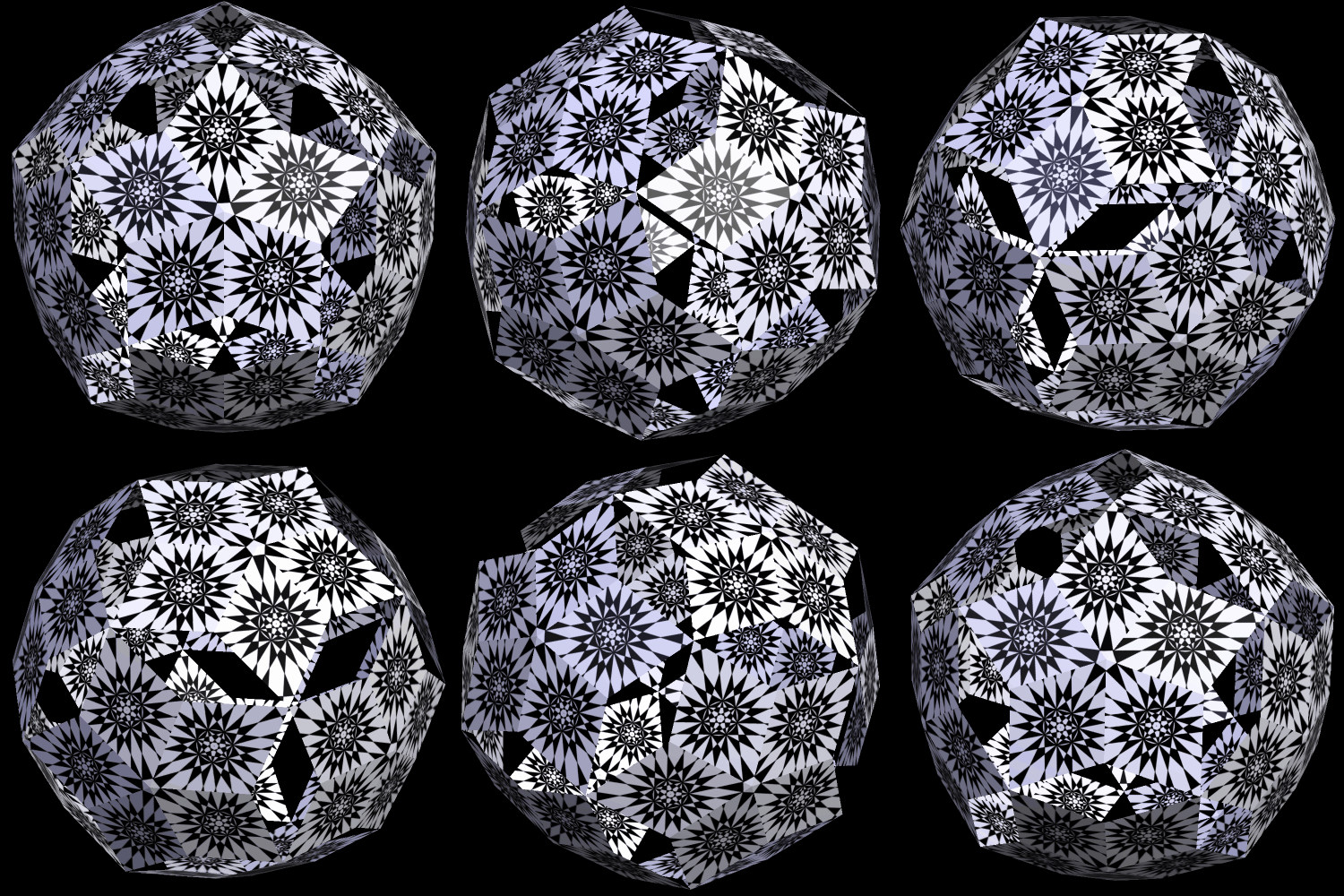
The rhombic enneacontahedron has 90 faces; 30 are narrow rhombi (hidden here), and 60 are wider rhombi (decorated with the op art piece from two posts ago).
One always hopes the ring closes, but sometimes it doesn’t. Perhaps if the rhombic enneacontahedra were oriented differently? I may have to examine this further.











 RobertLovesPi.net