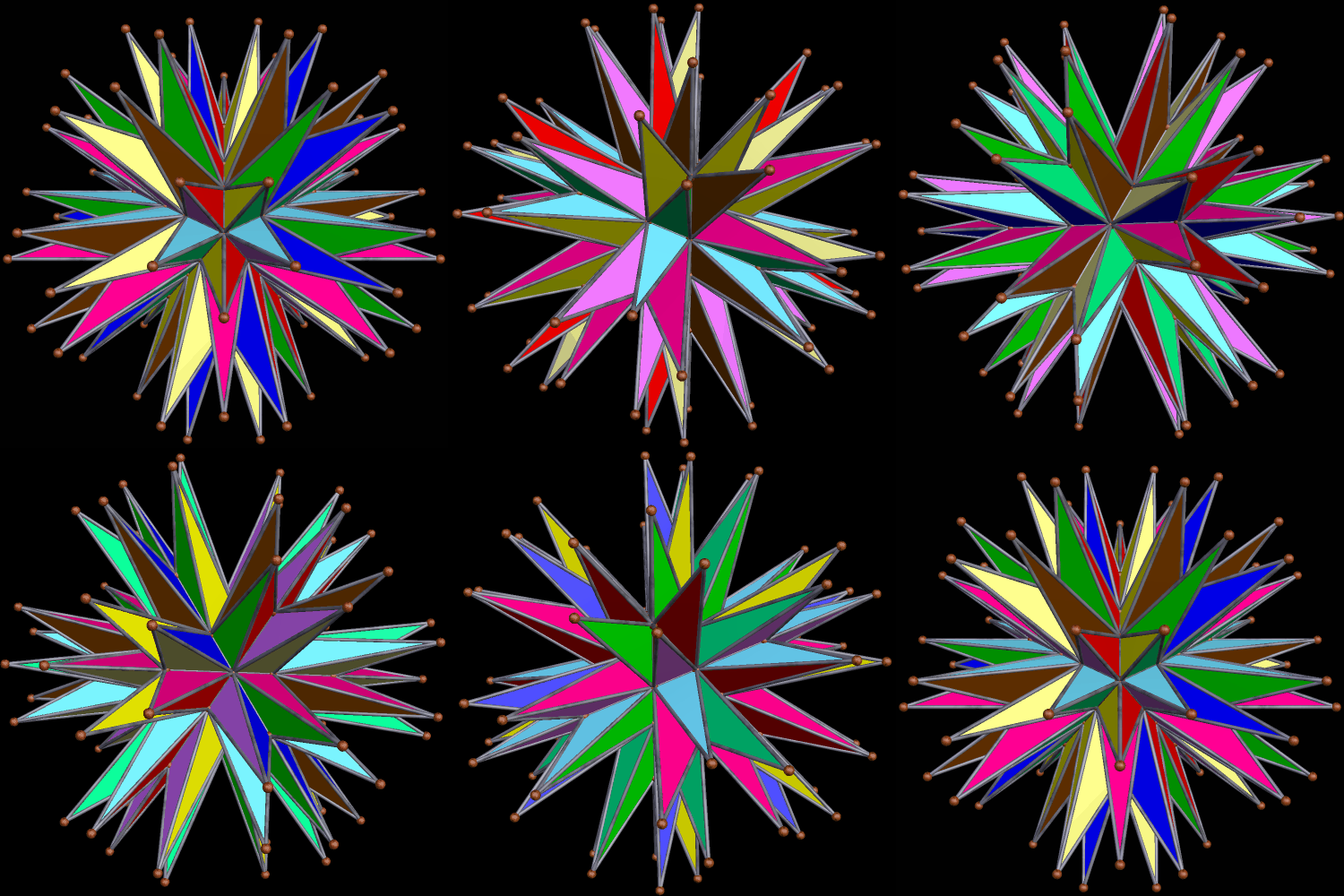
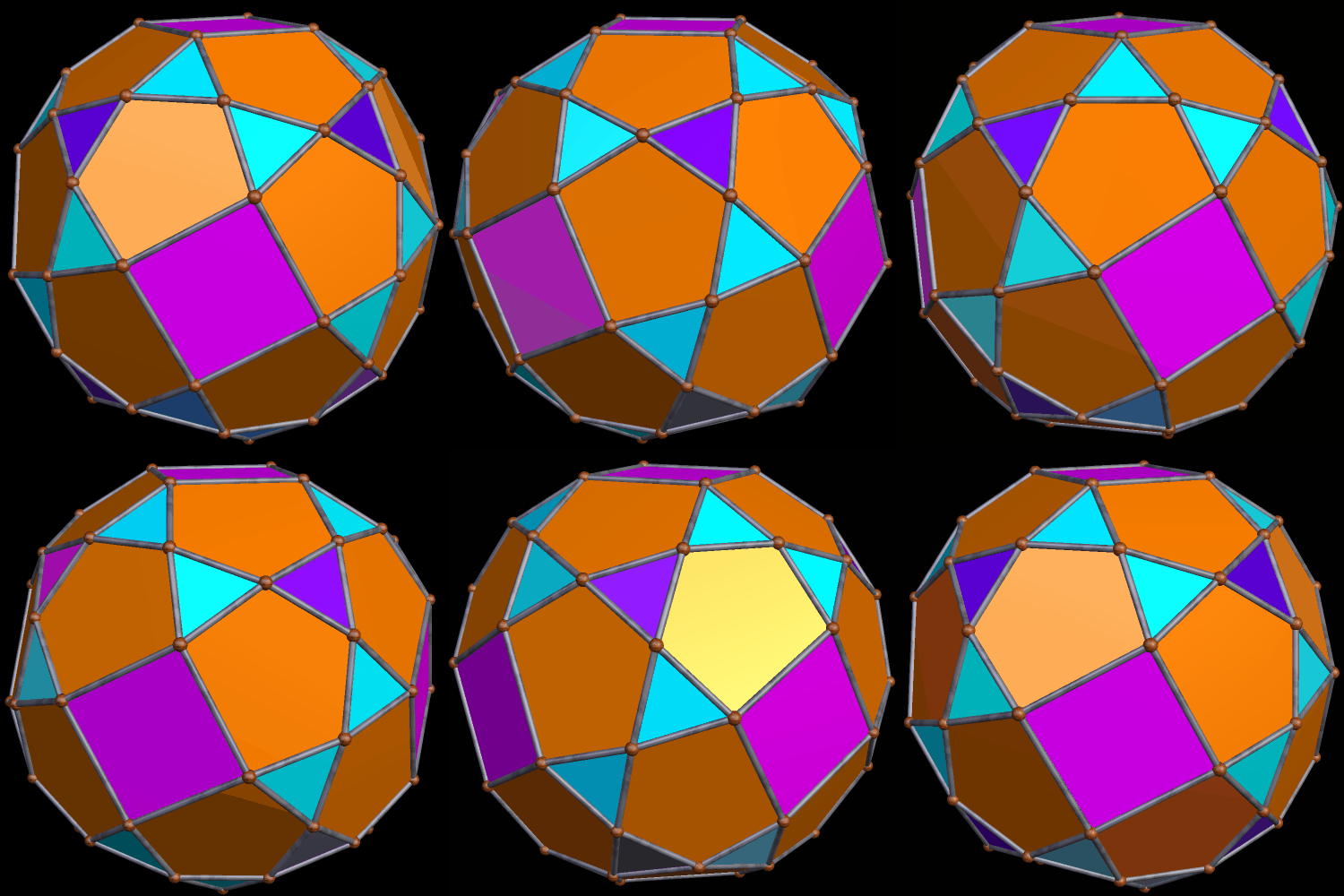
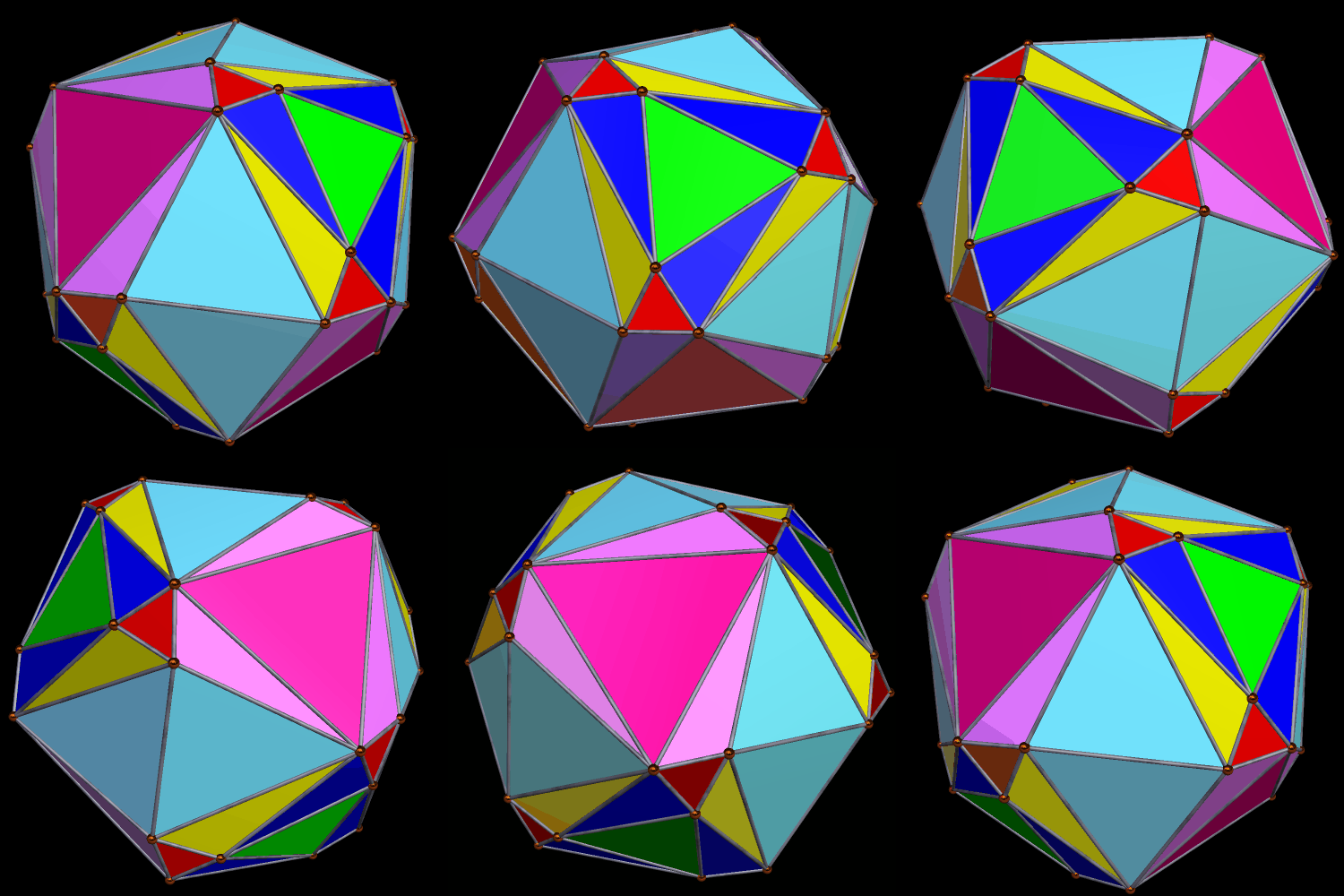
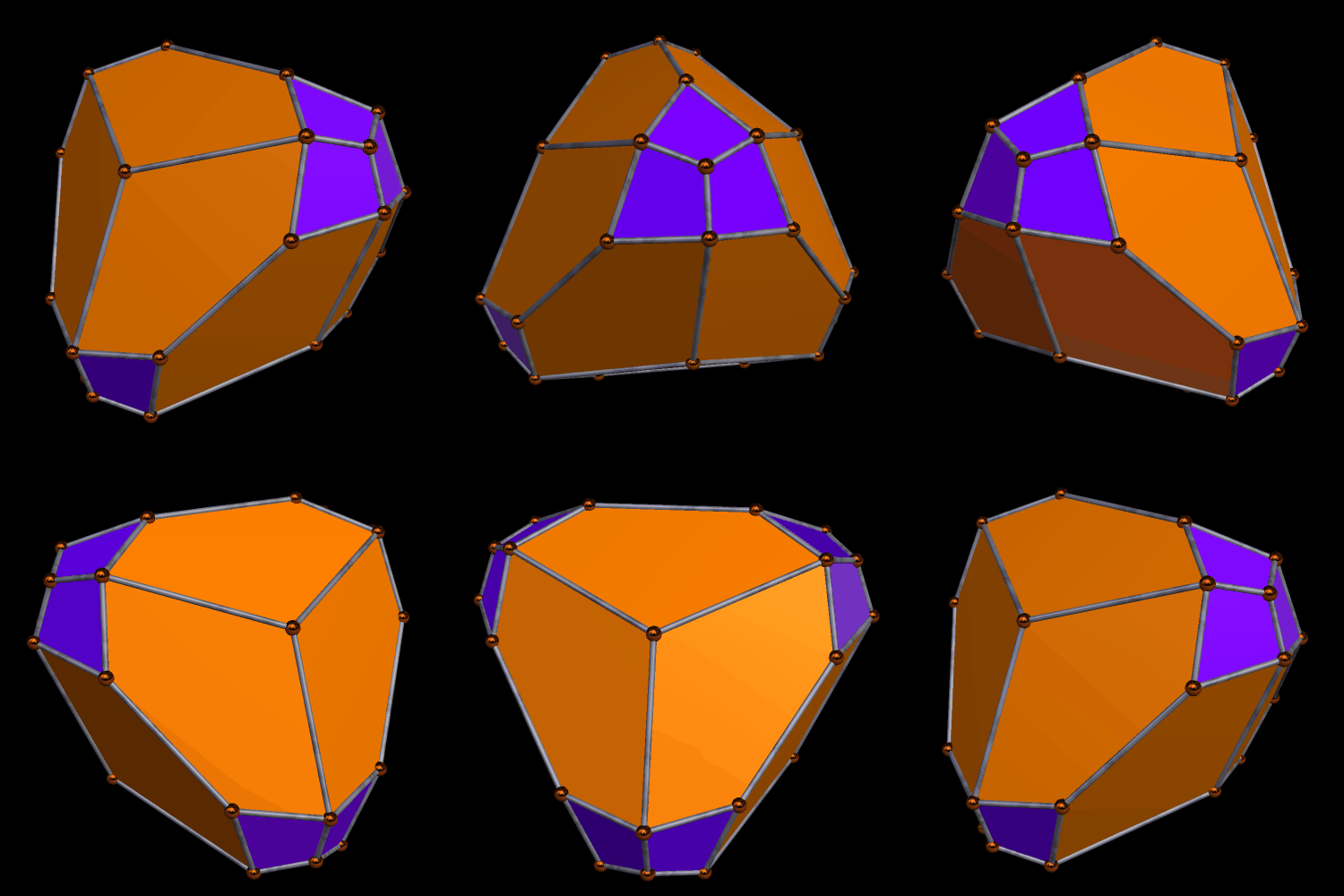
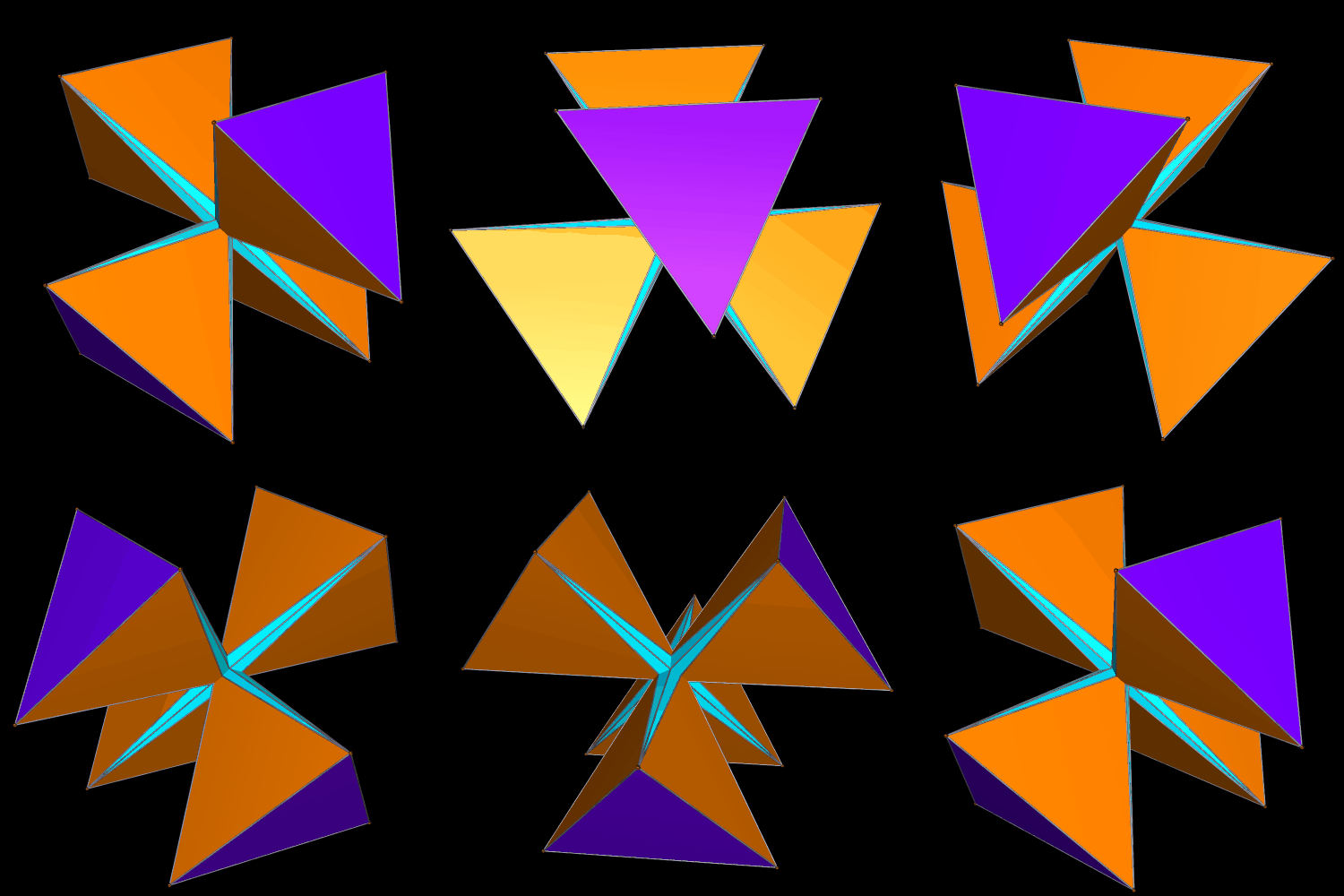
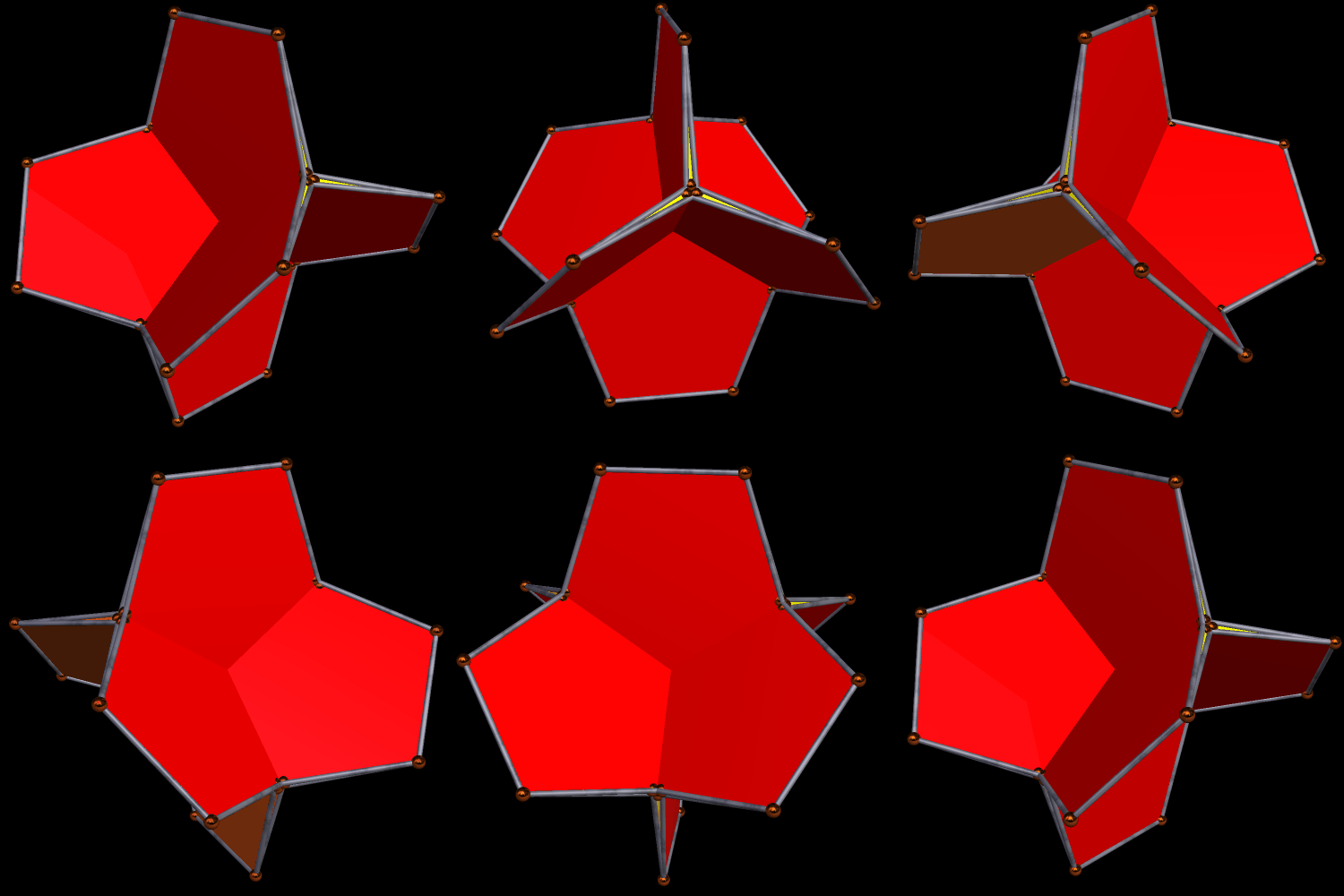
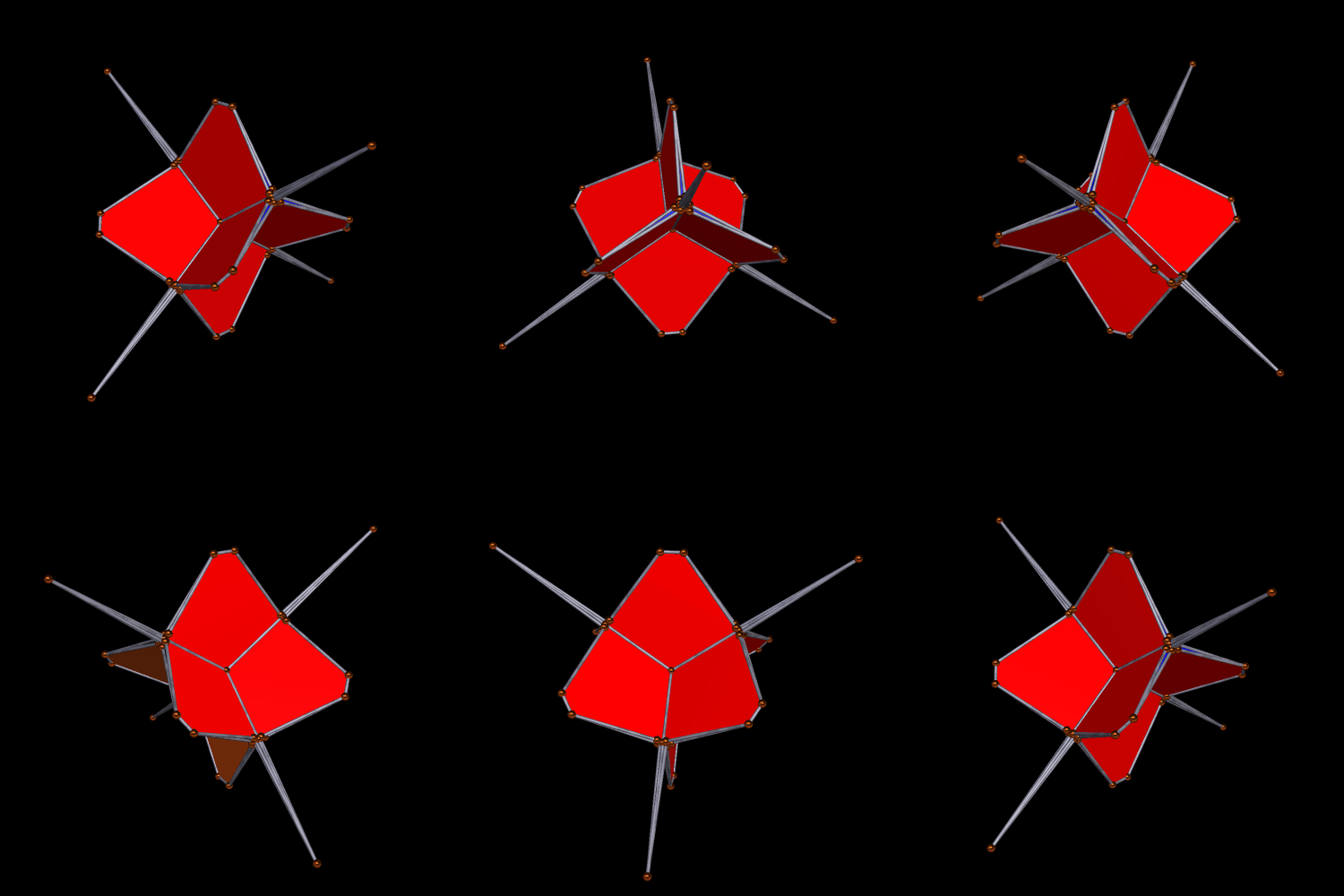
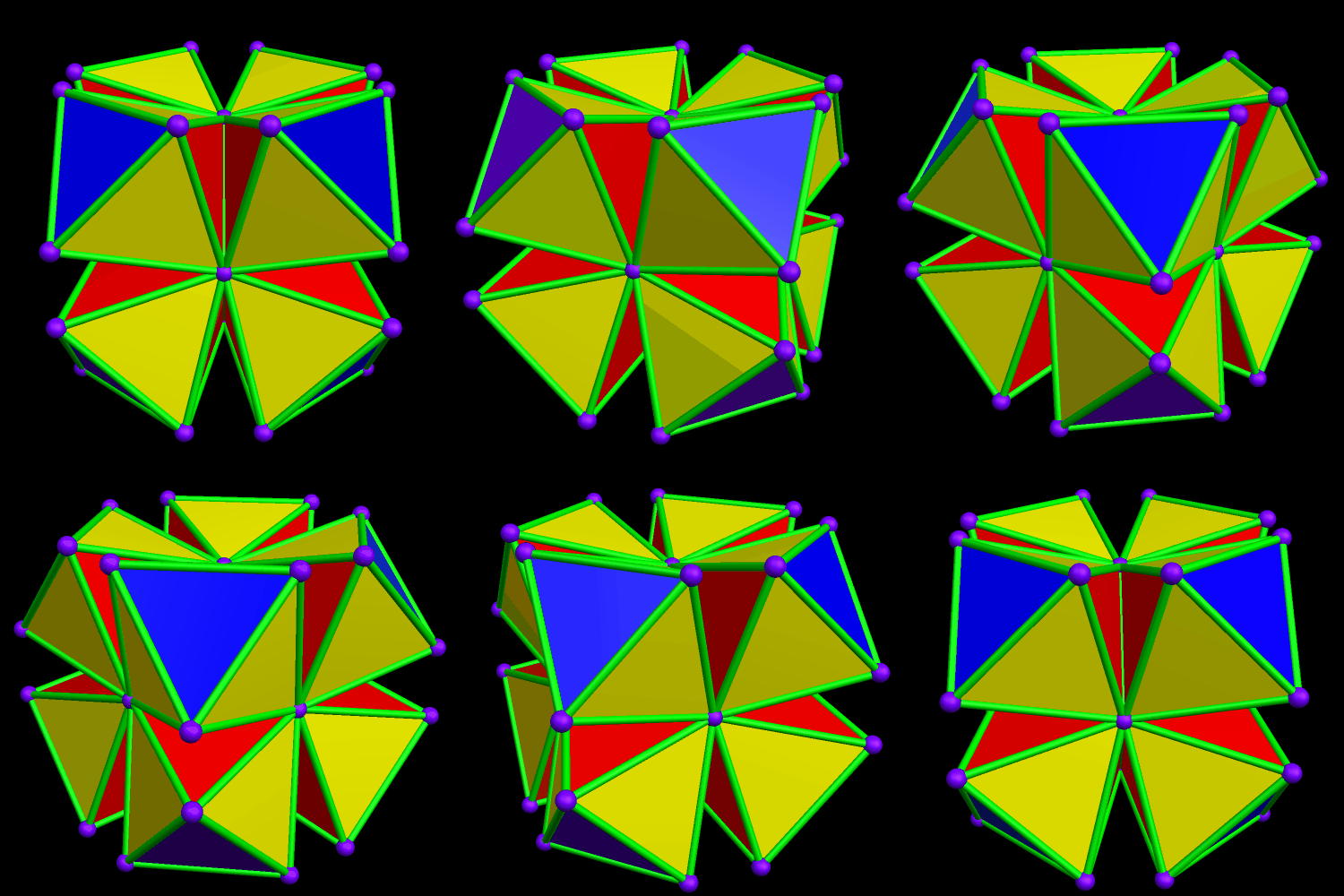
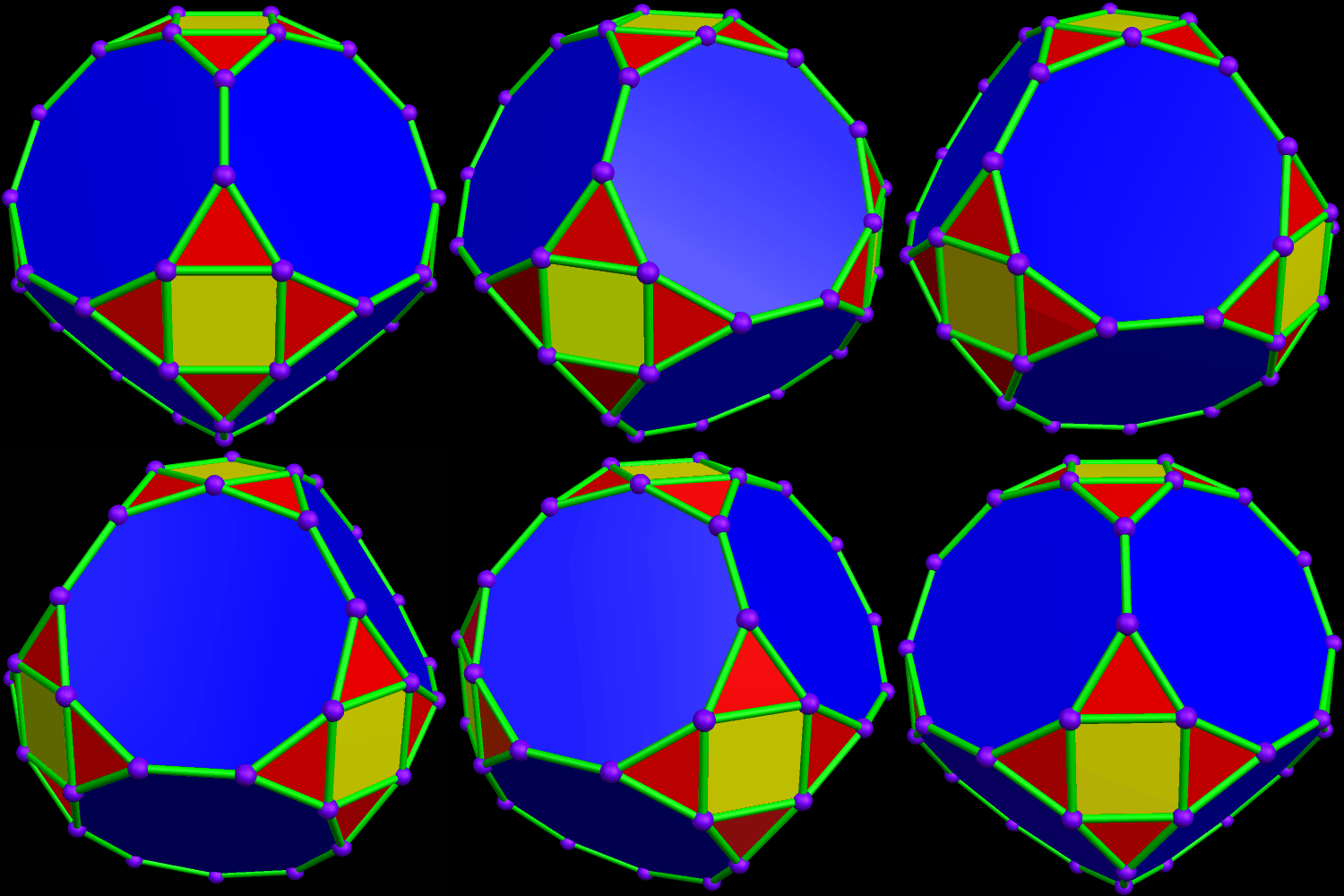
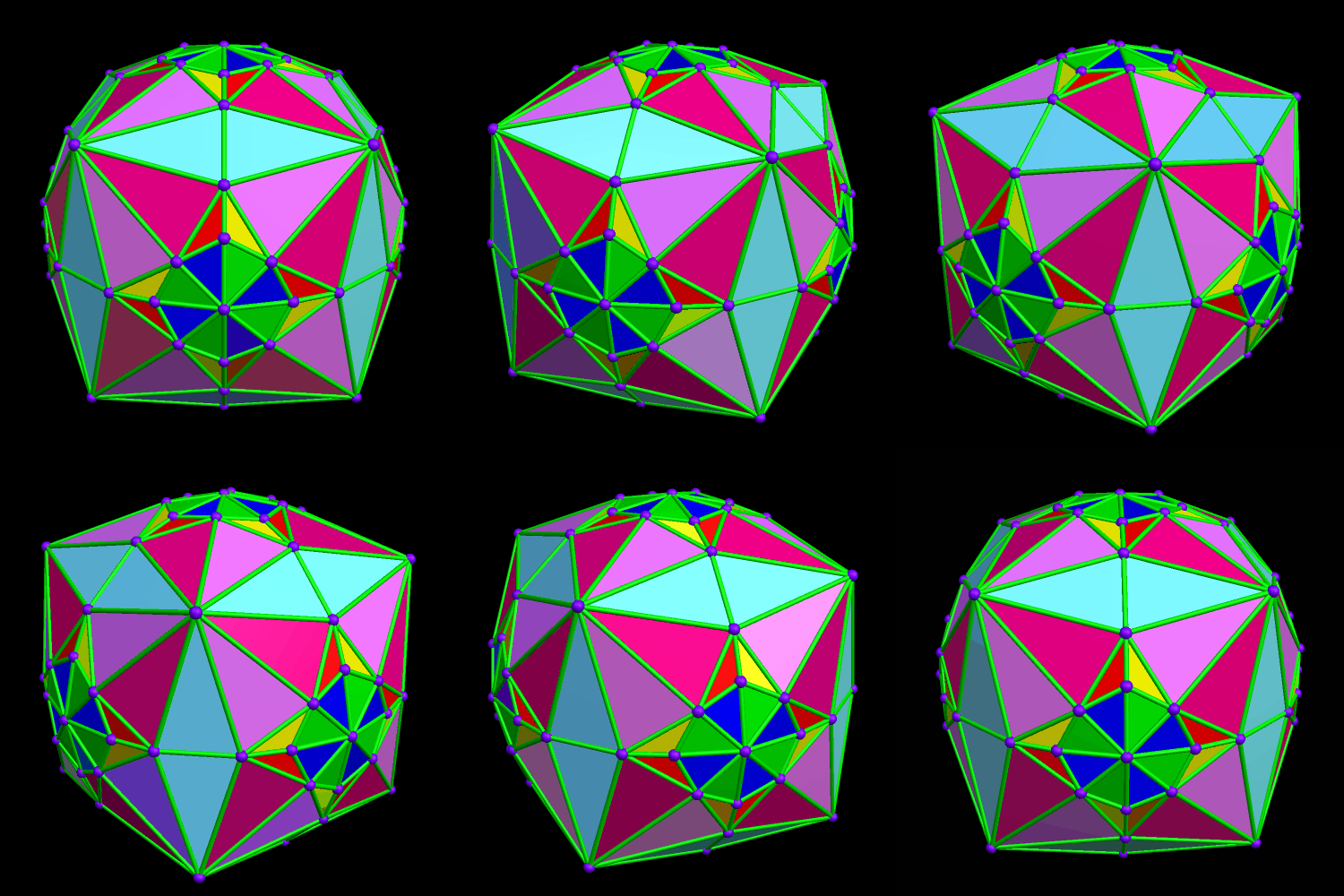
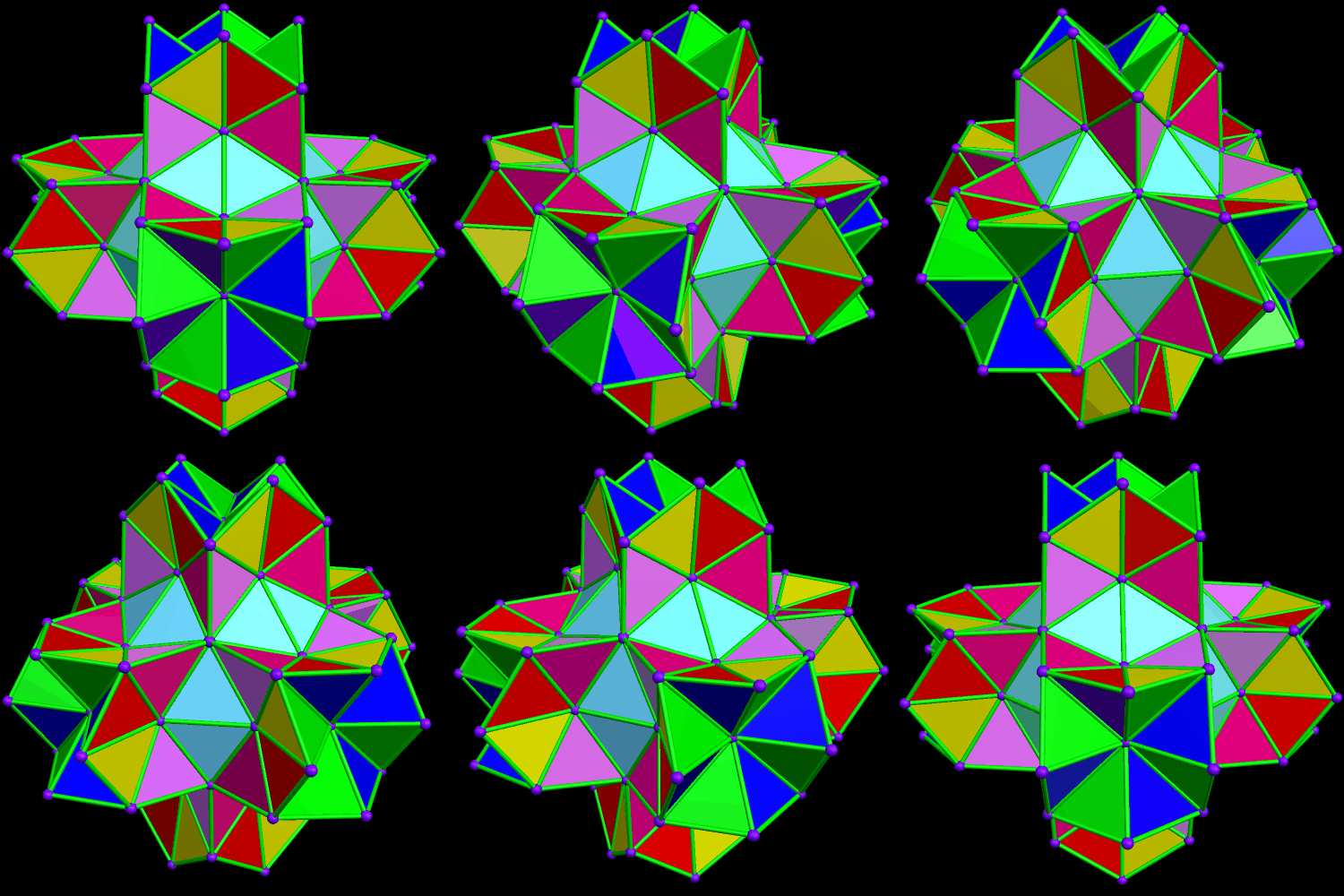
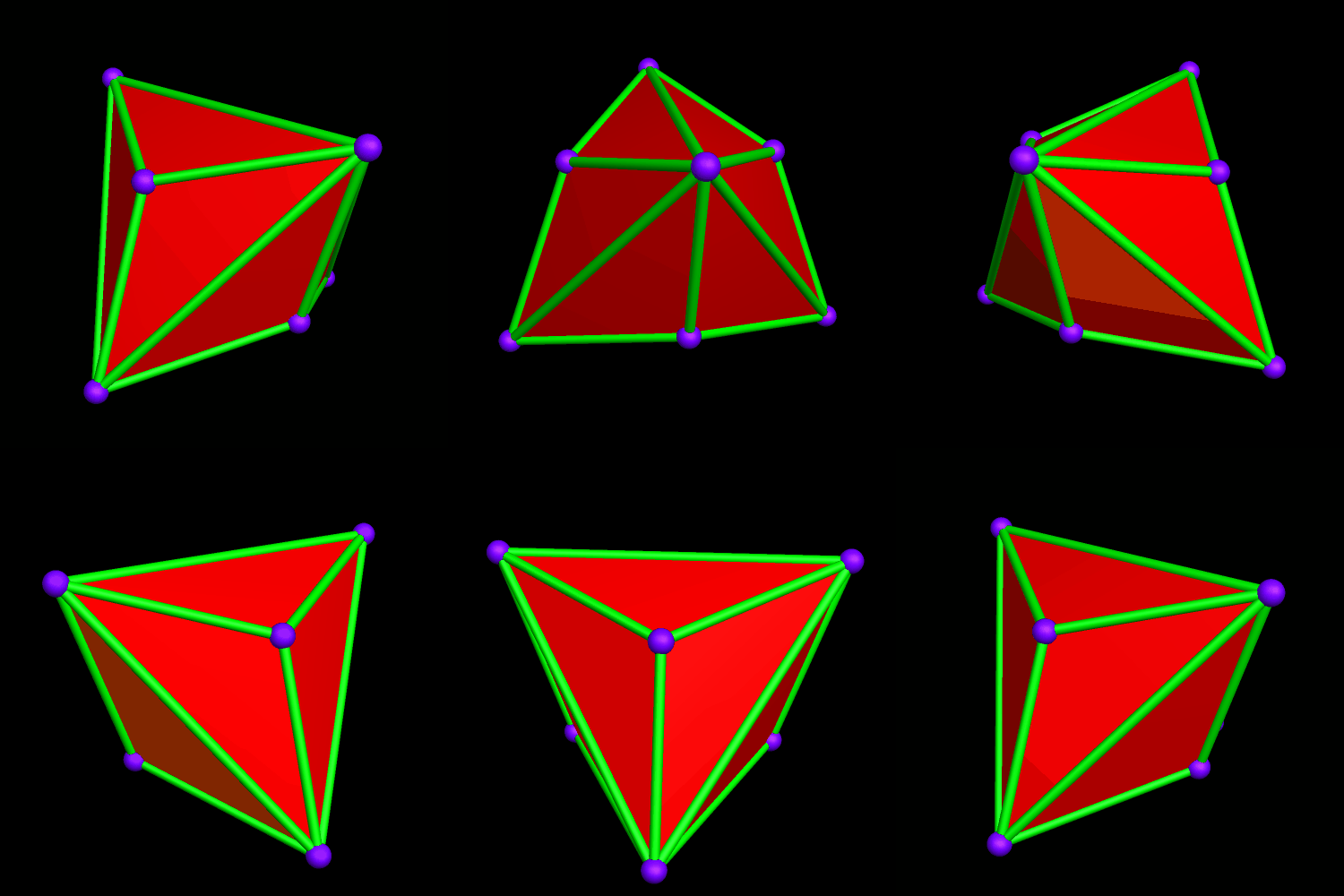
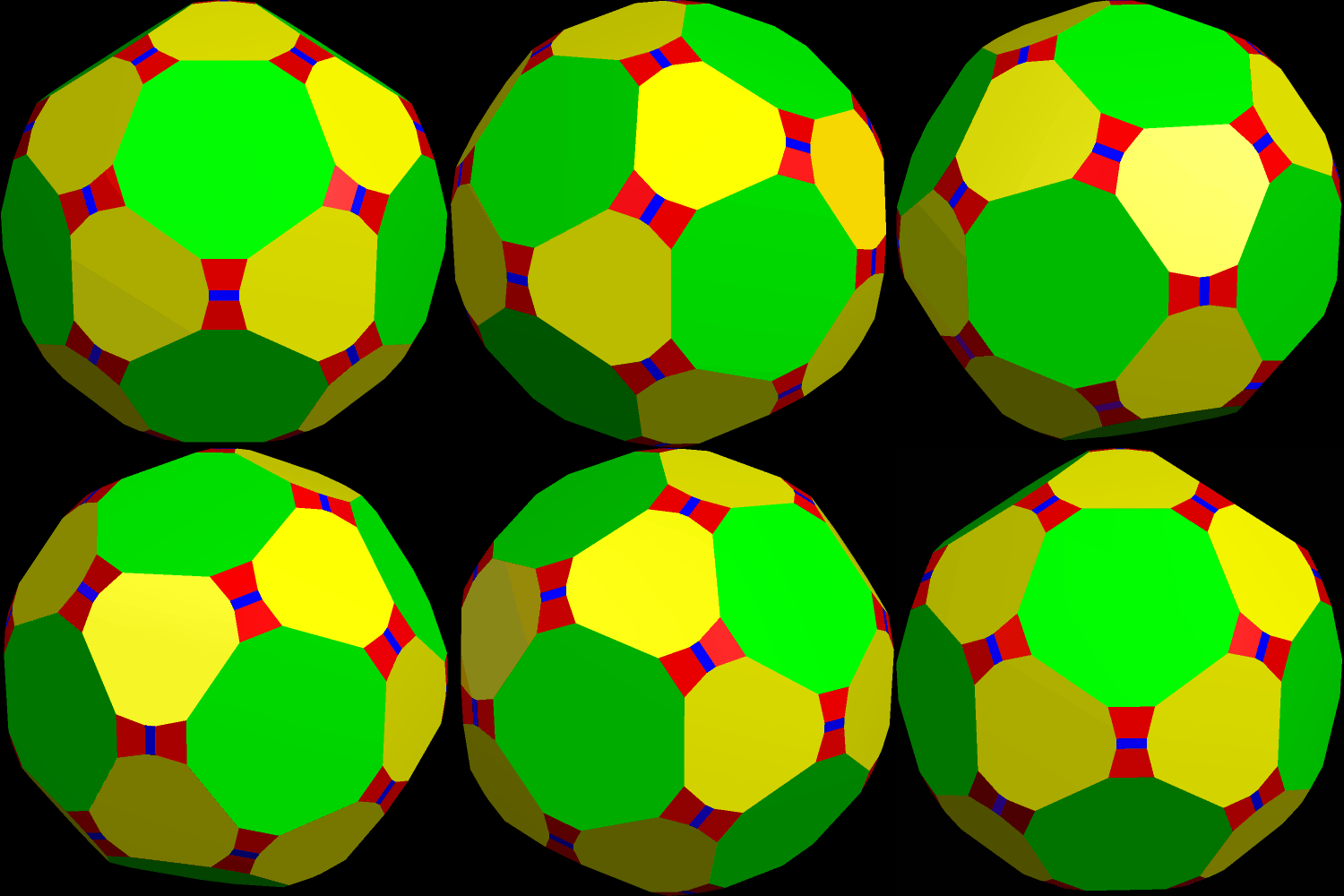
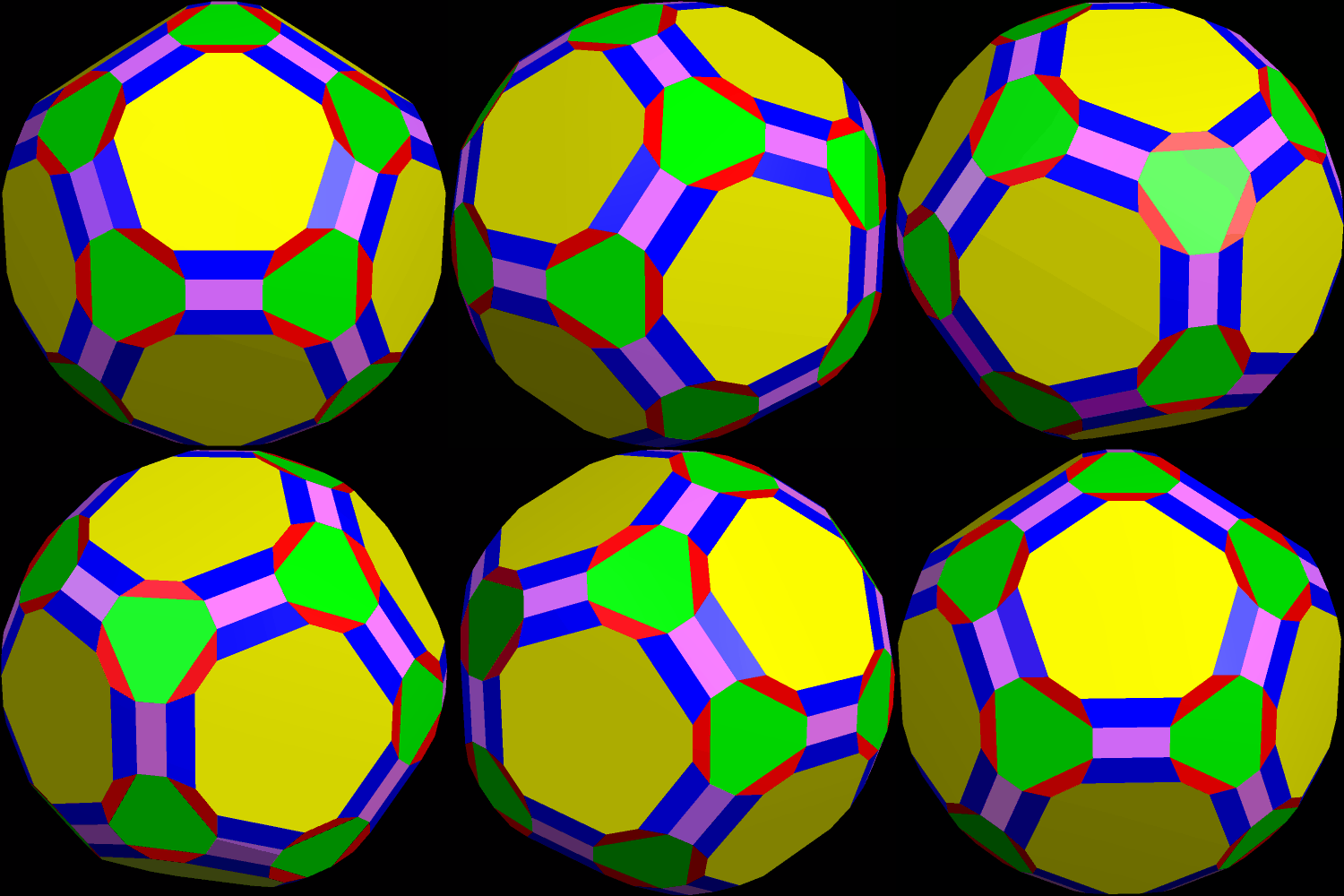
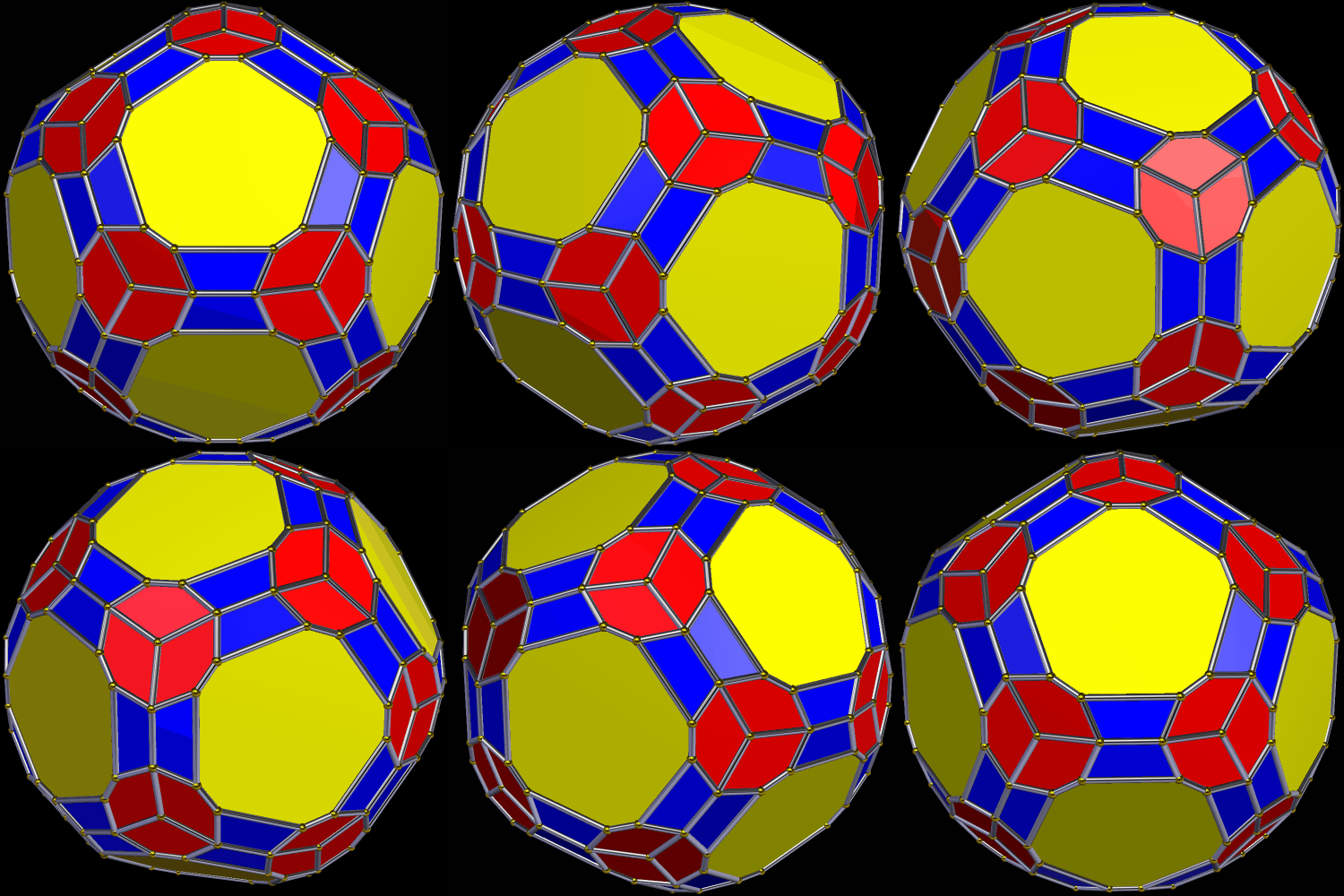
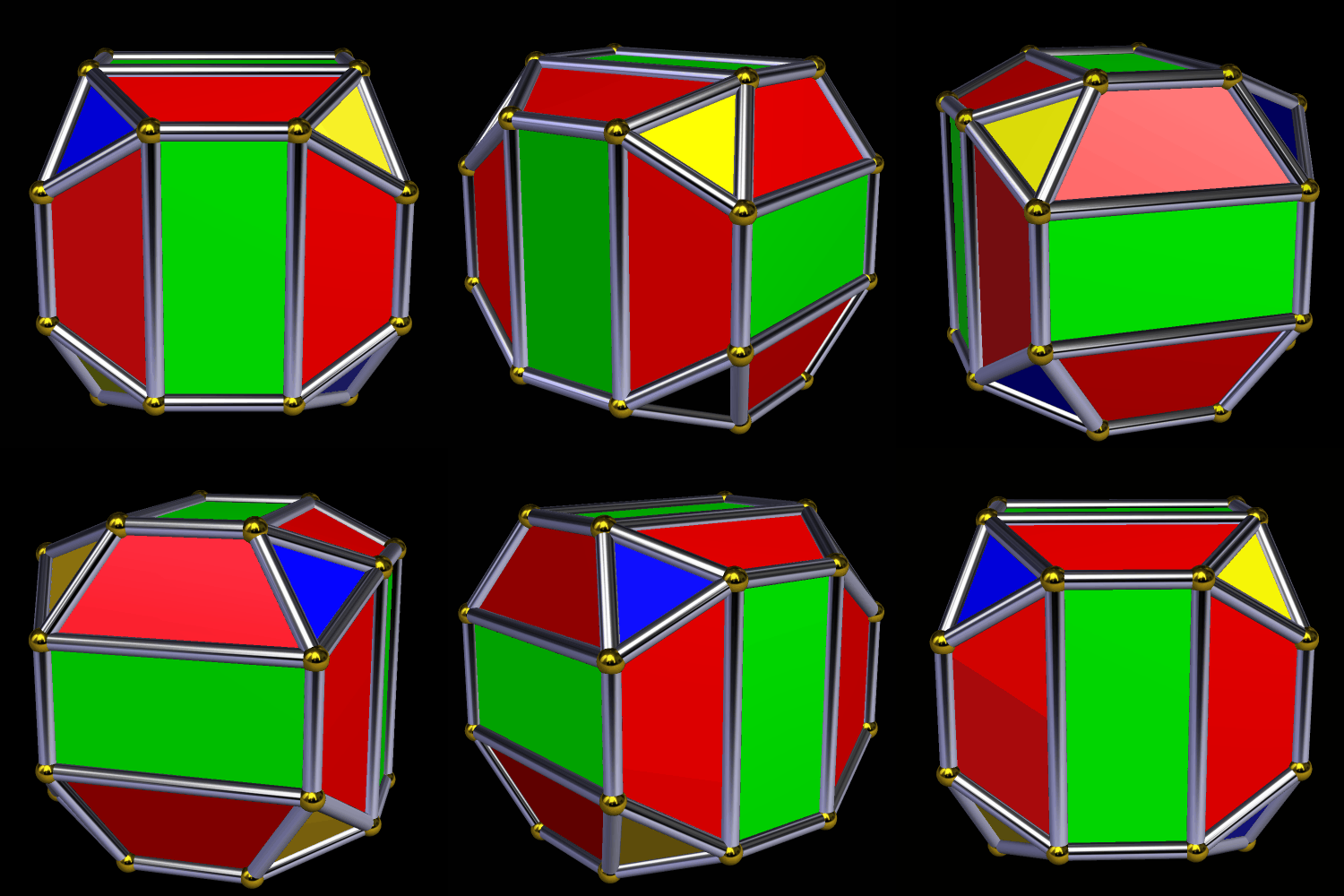
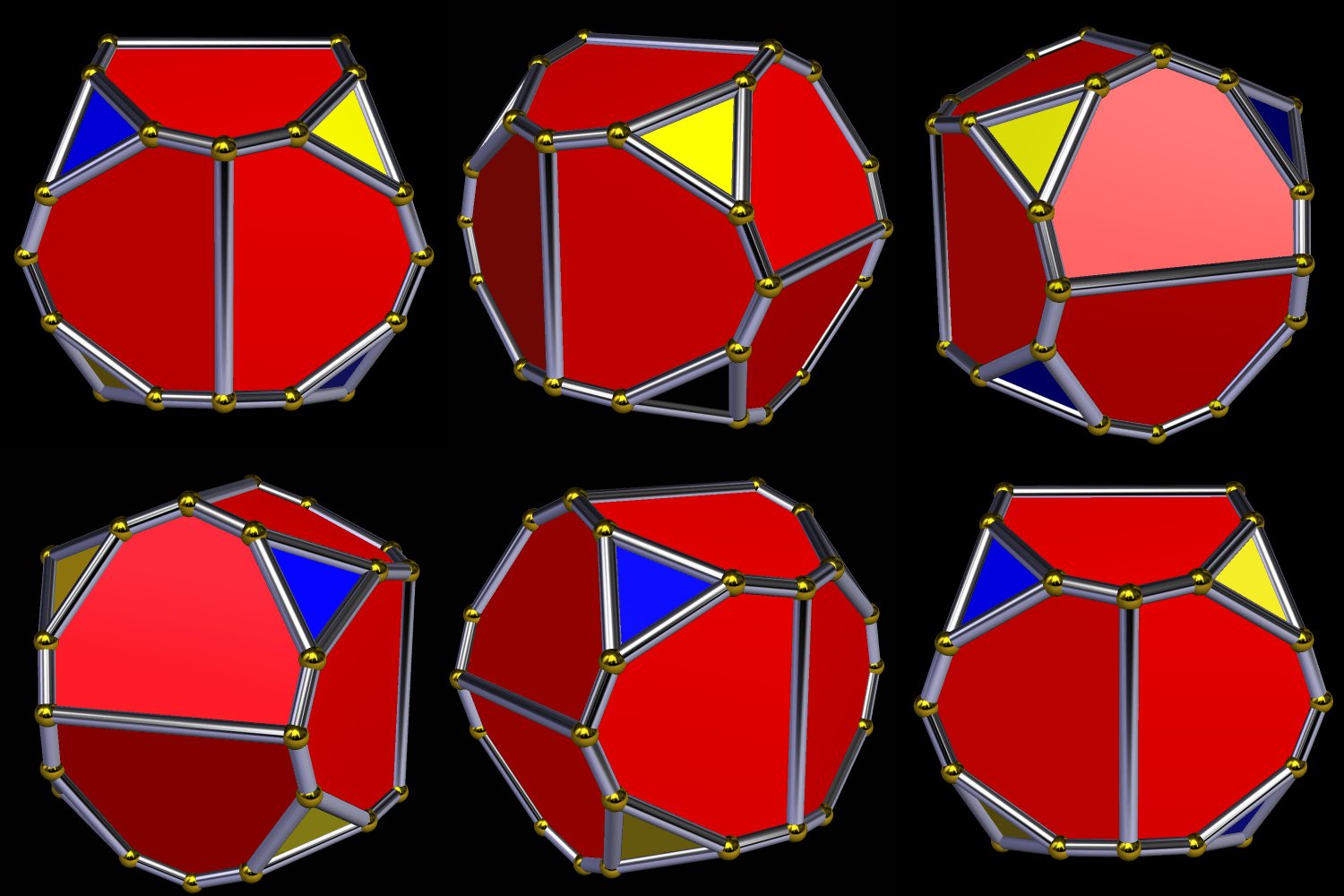
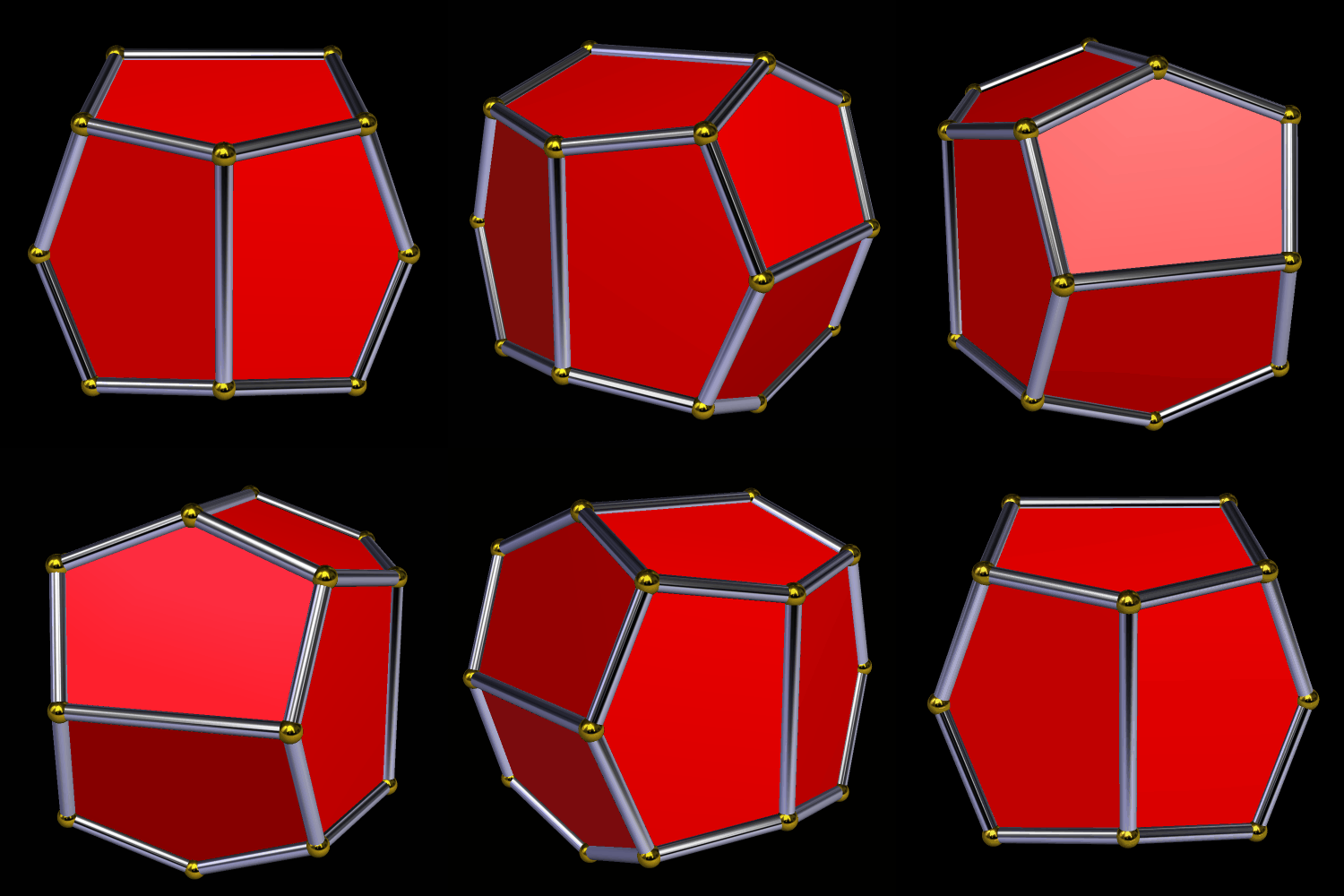
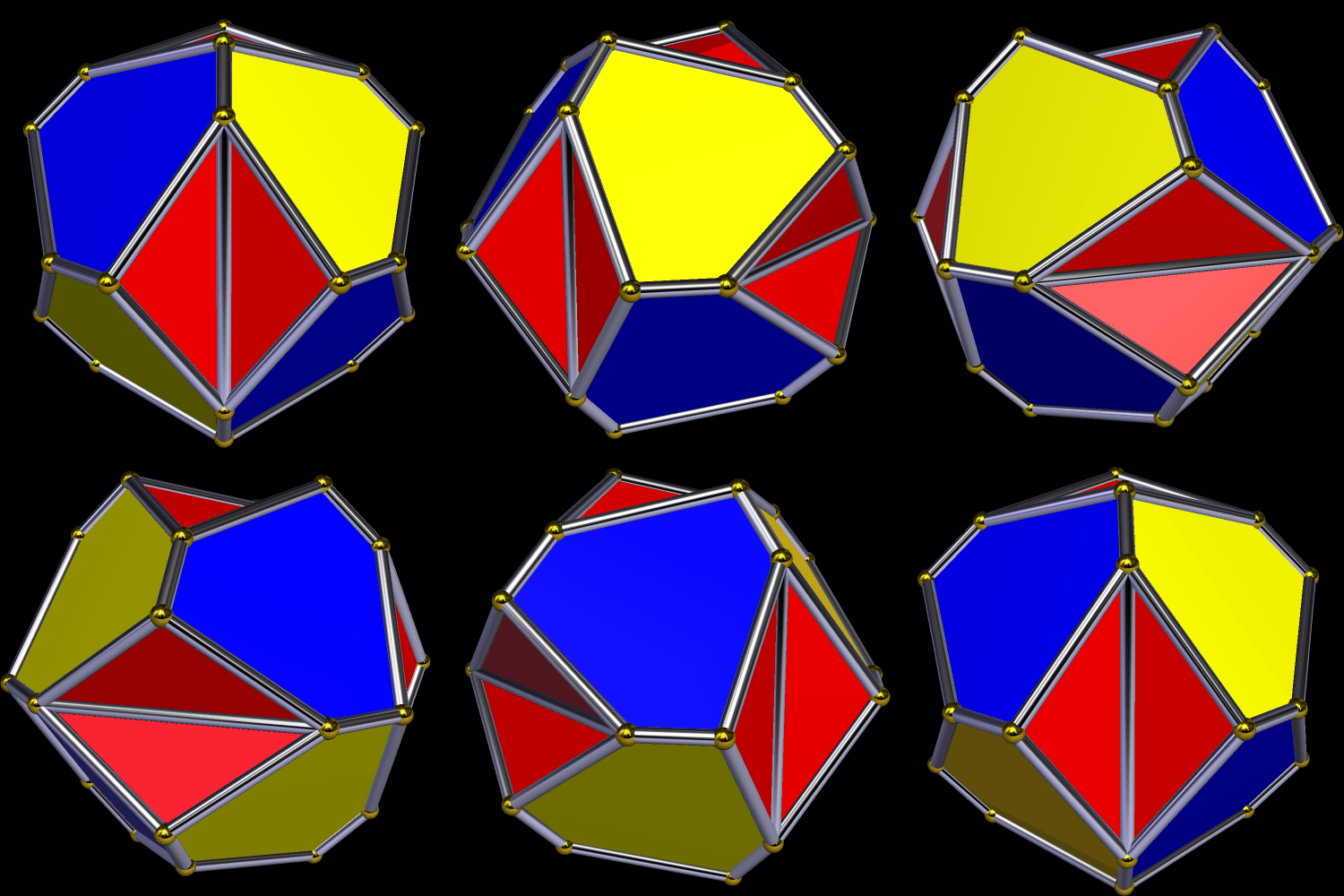
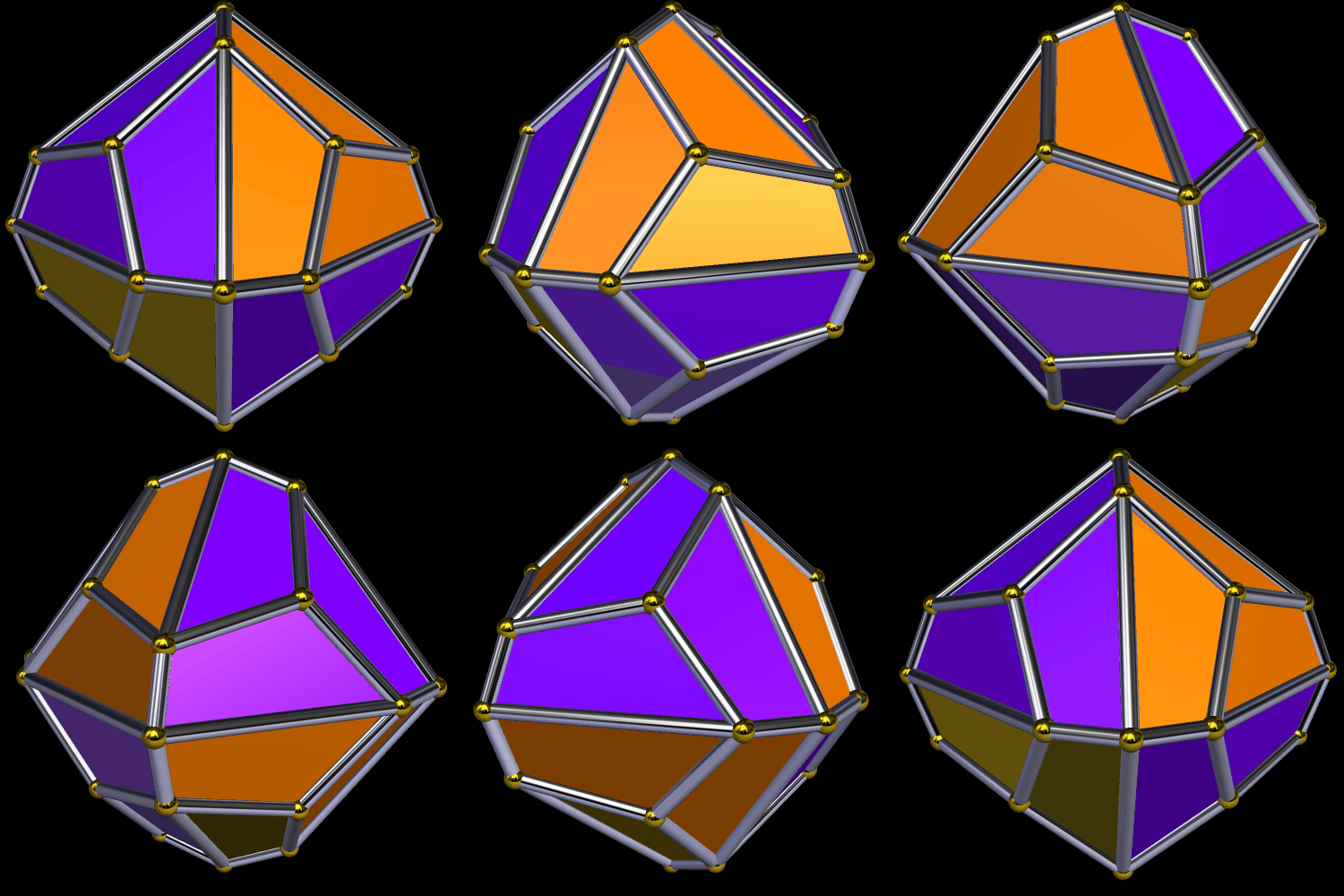
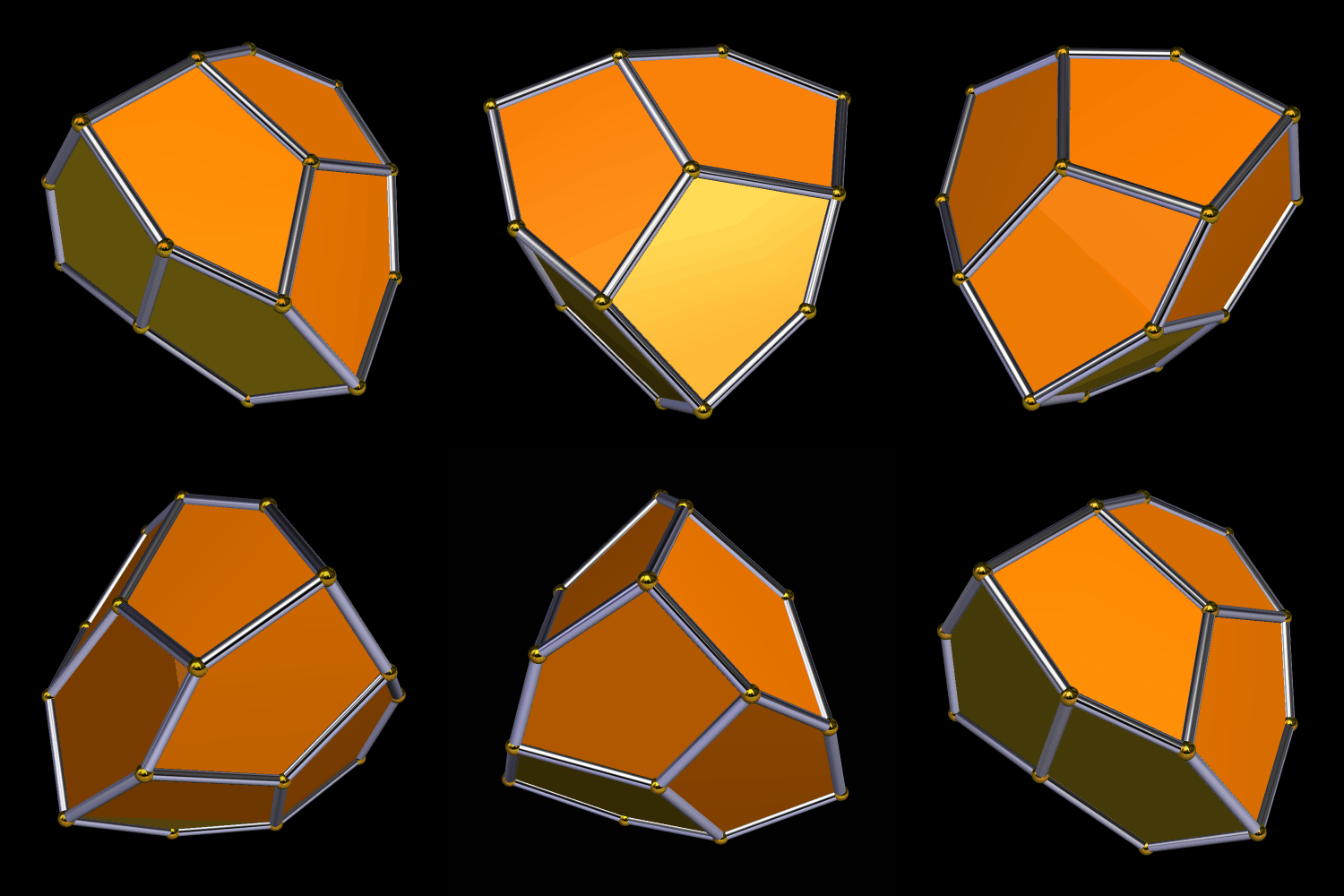
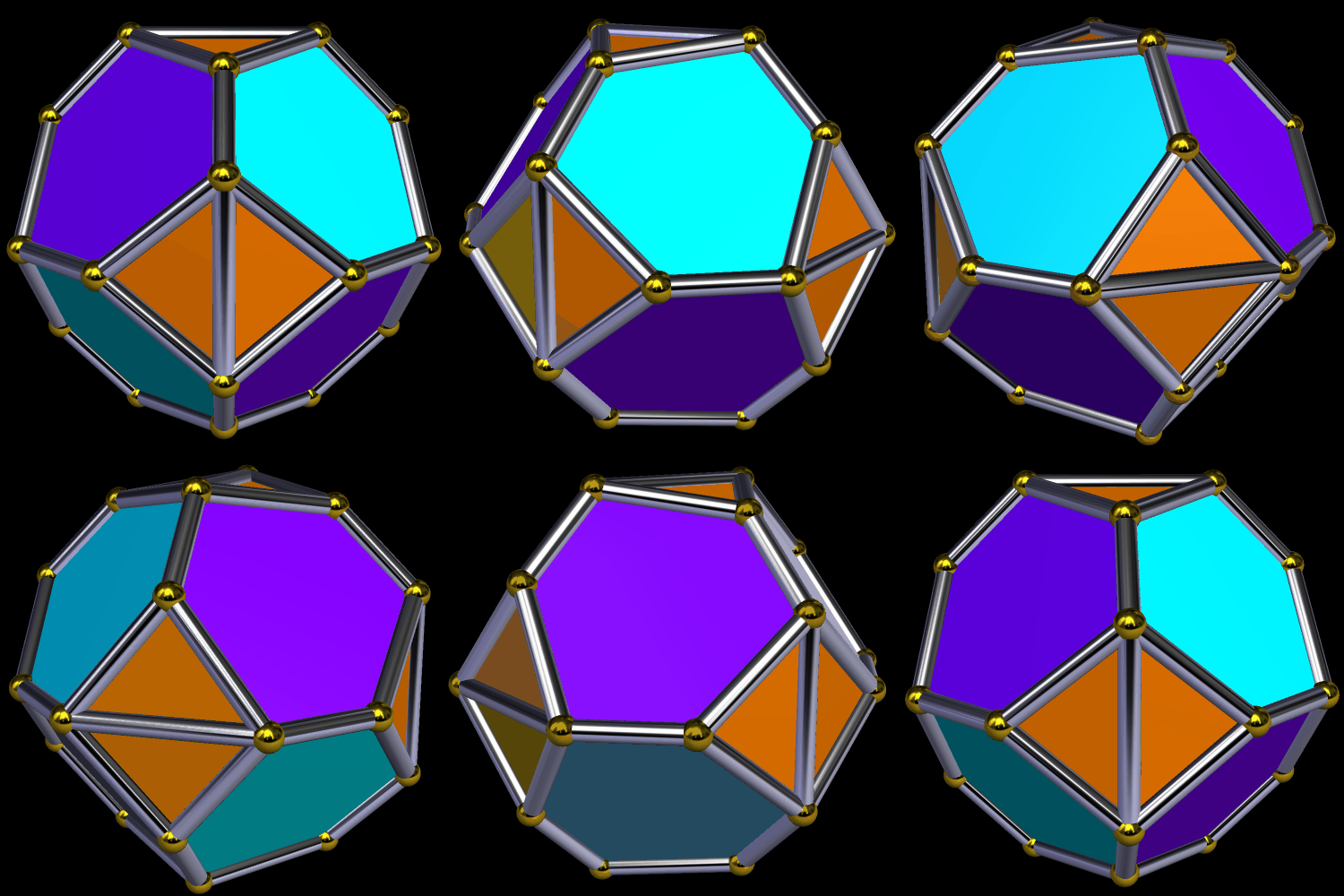
The Twelfth Stellation of the Triakis Tetrahedron

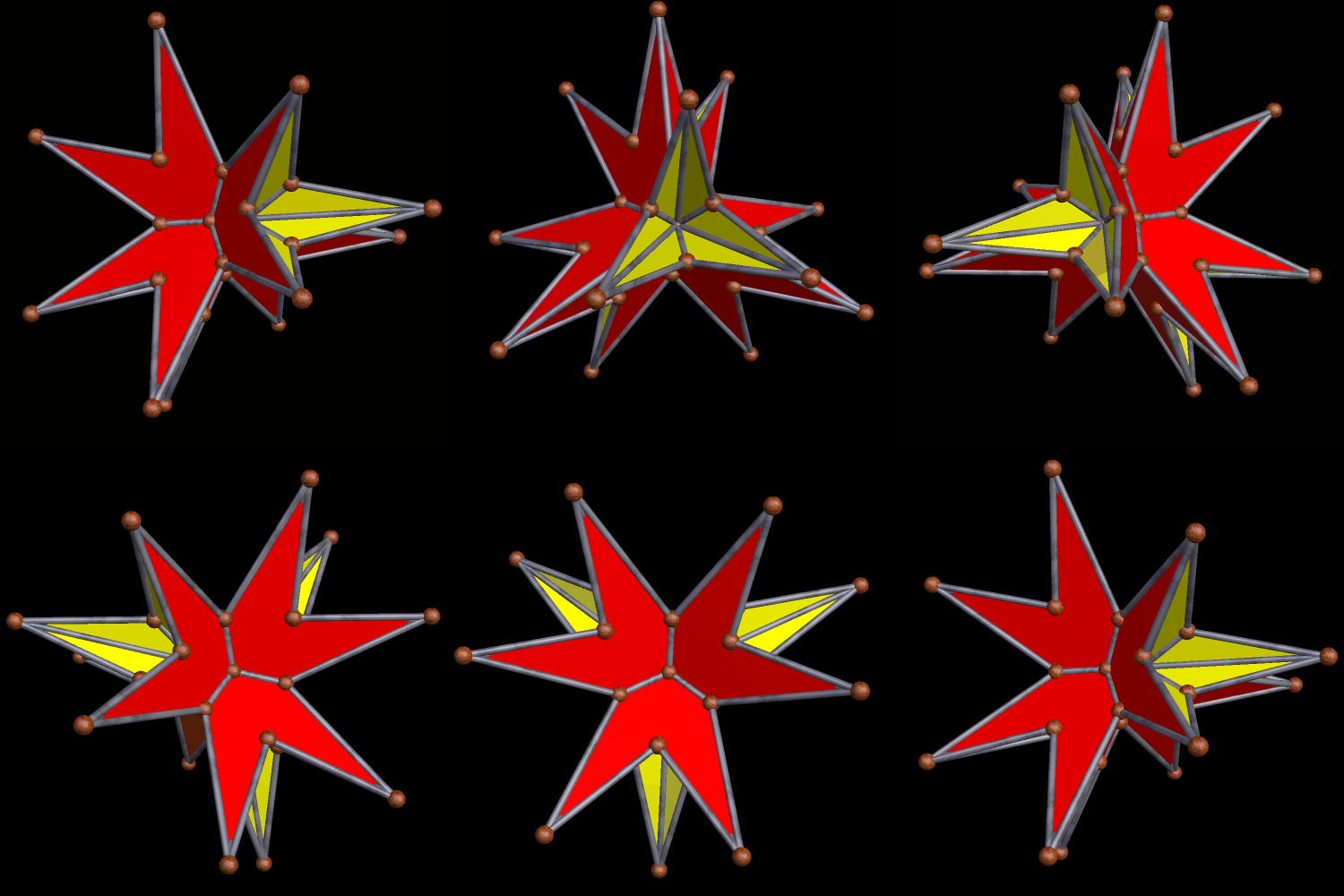
12th Stellated Triakistetra

Created with Stella 4d, available here.

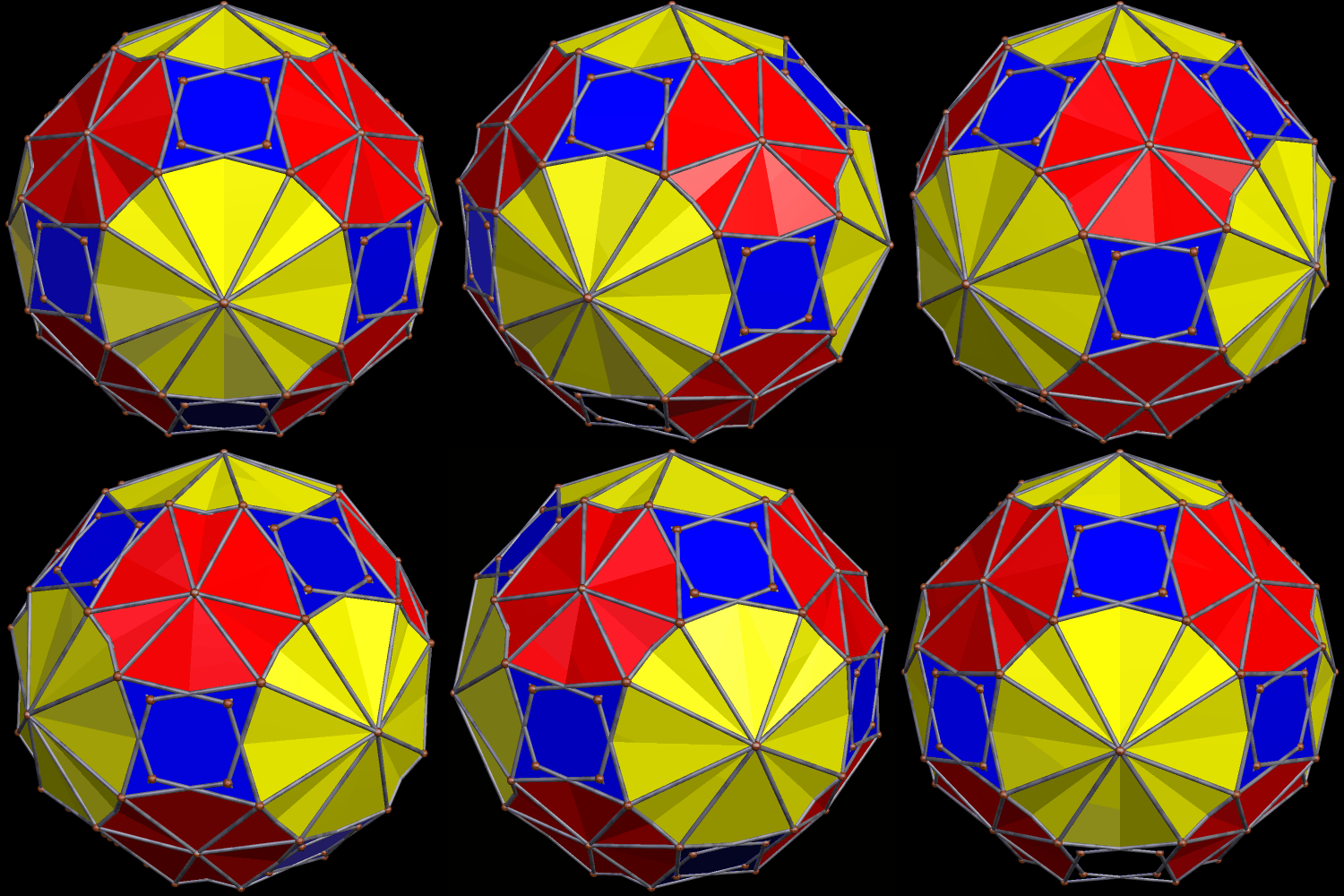
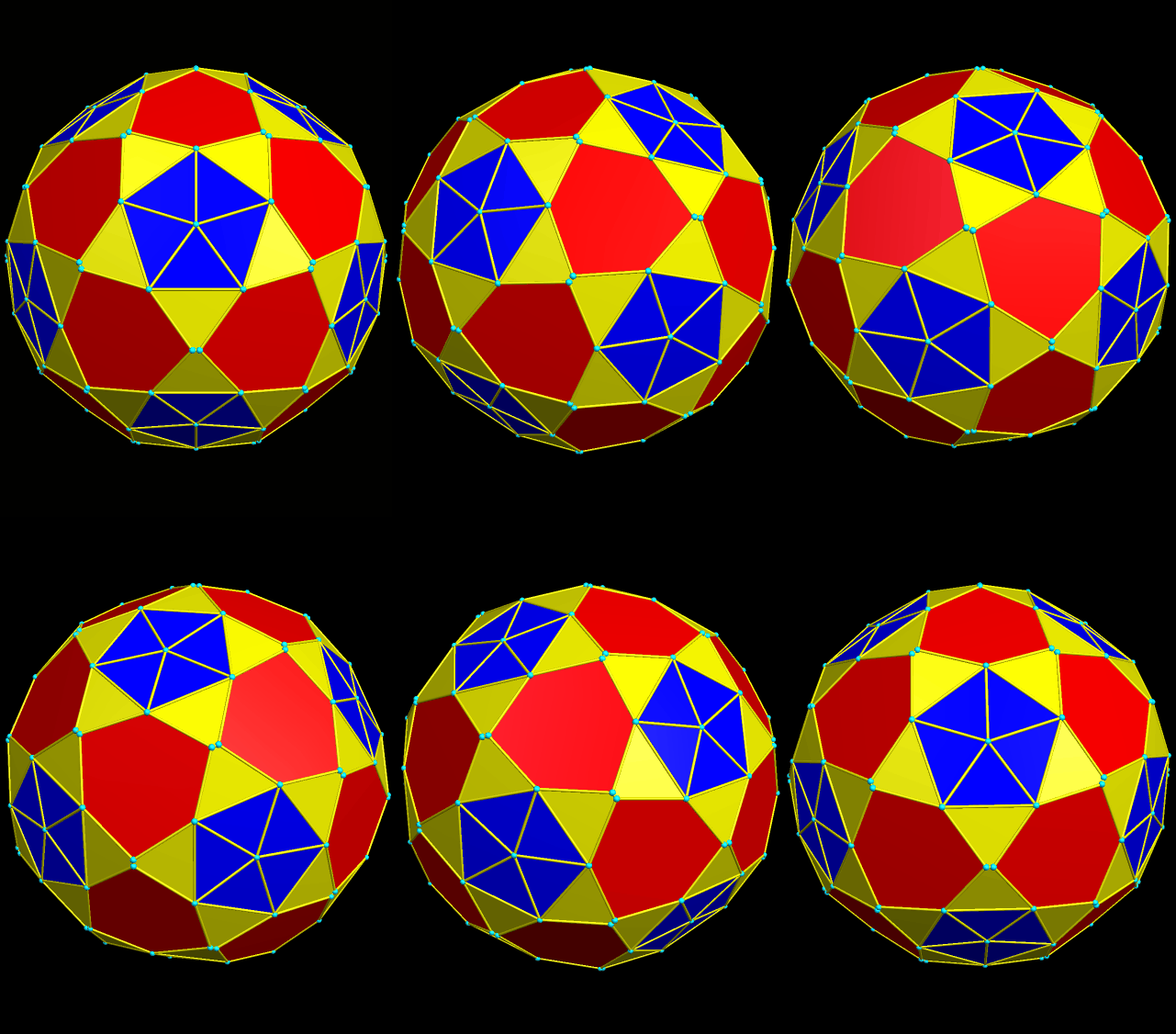
The Final Stellation of the Icosahedron

Stellated Icosa

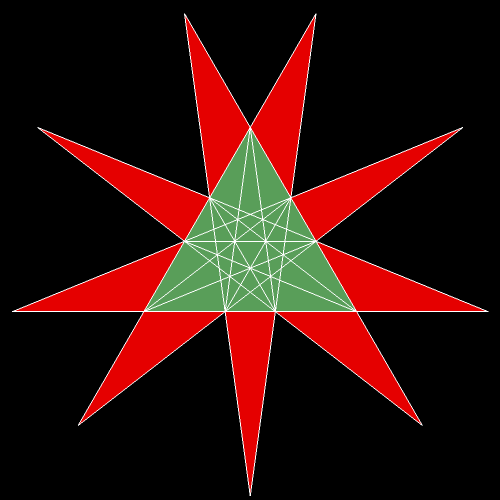
This is what you get if you stellate an icosahedron seventeen times. The eighteenth stellation “loops” back around to the original figure, the icosahedron. For this reason, the figure above is often called “the final stellation of the icosahedron,” as well as “the complete icosahedron.” Its faces are twenty irregular star enneagons, of the type shown below. The red areas are the “facelets” which can be seen, while the other parts of the star enneagon are hidden inside the figure.

Stellated Icosa-StelDiag

Both of these images were made using Stella 4d: Polyhedron Navigator, which you can try for yourself right here. A free trial download is available.

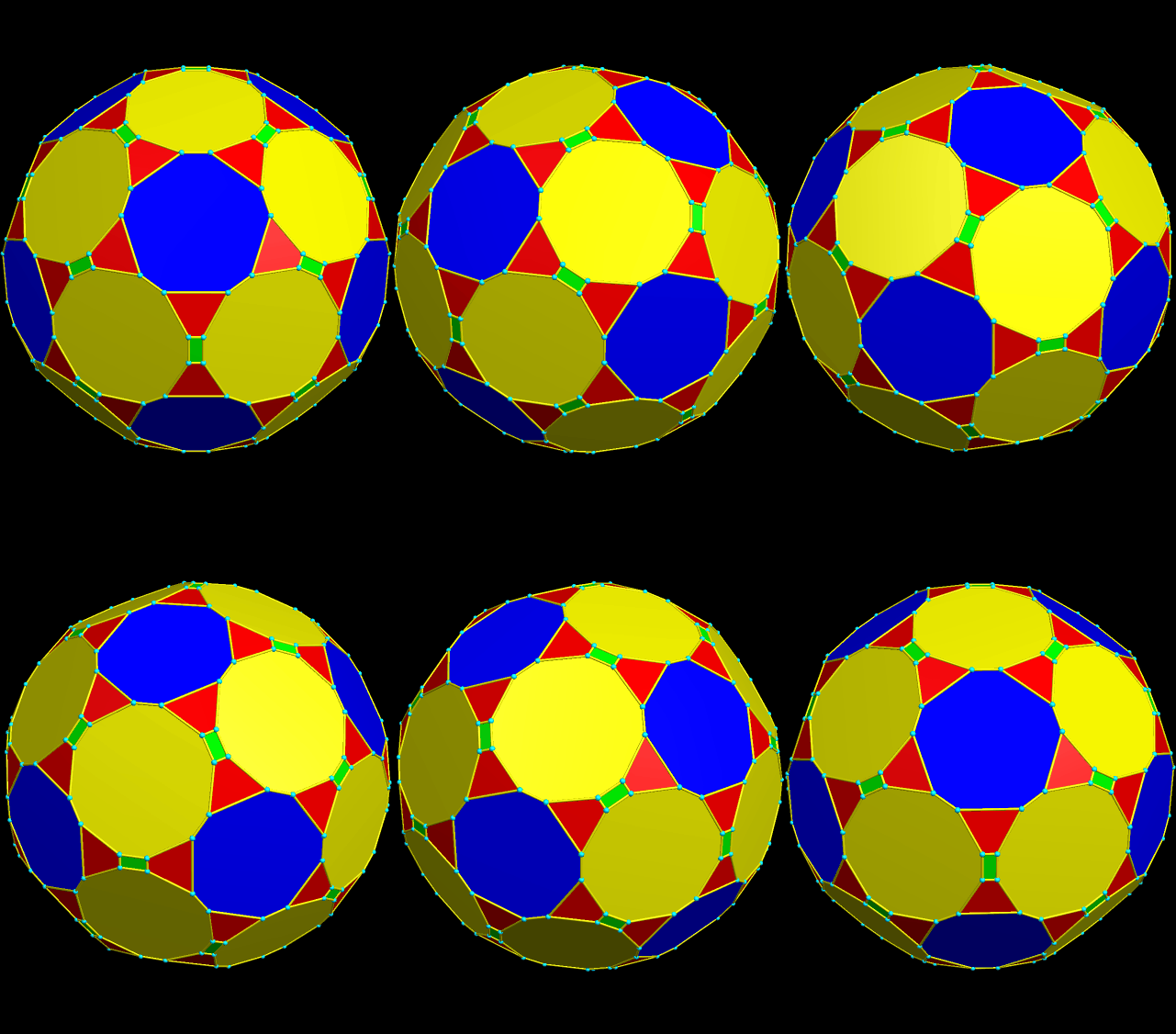
A Partially-Invisible Rhombicosidodecahedron, and One of Its Stellations

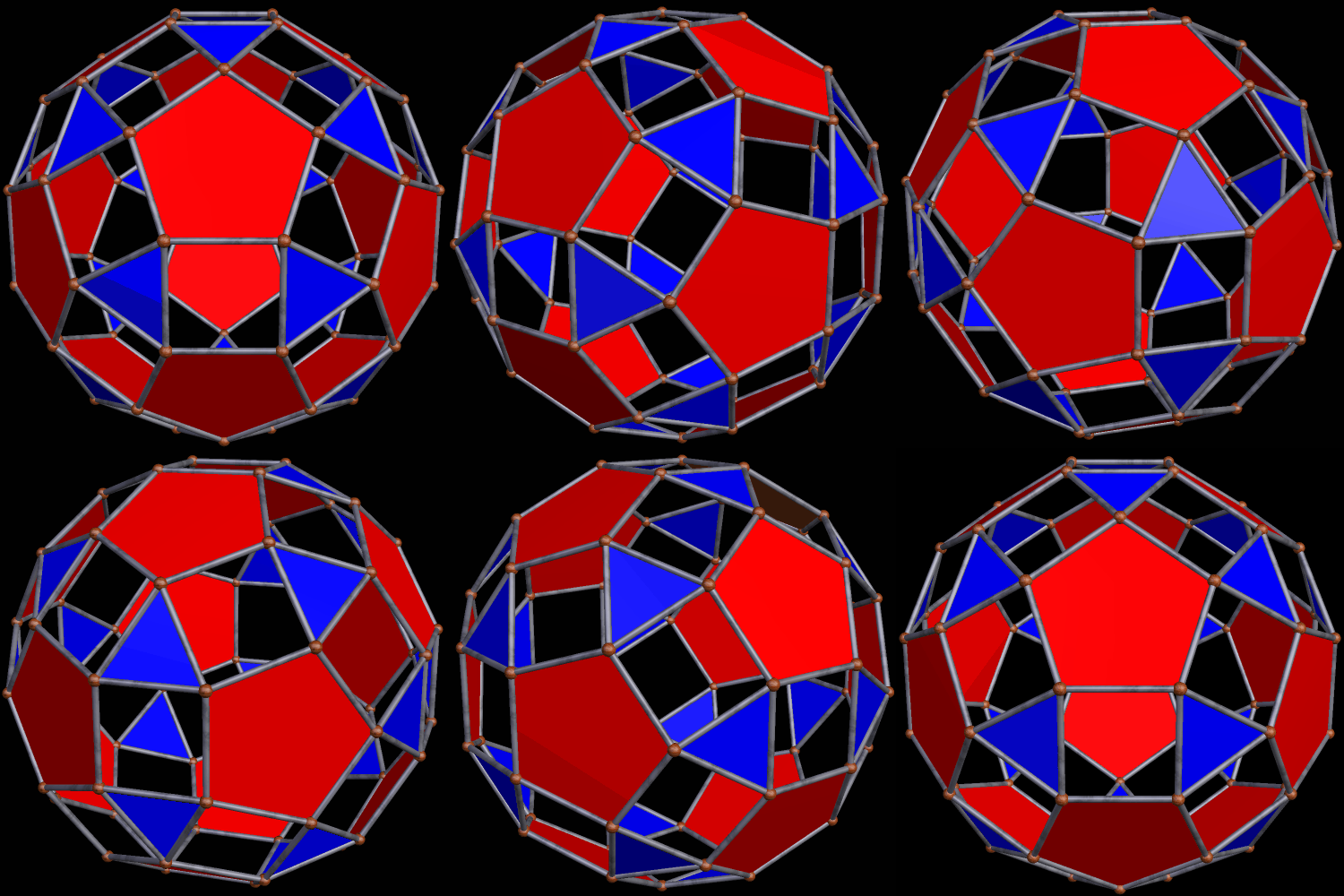
Rhombicosidodeca

The polyhedron above originally had thirty yellow square faces, but I rendered them invisible so that the interior structure of this polyhedron could be seen.

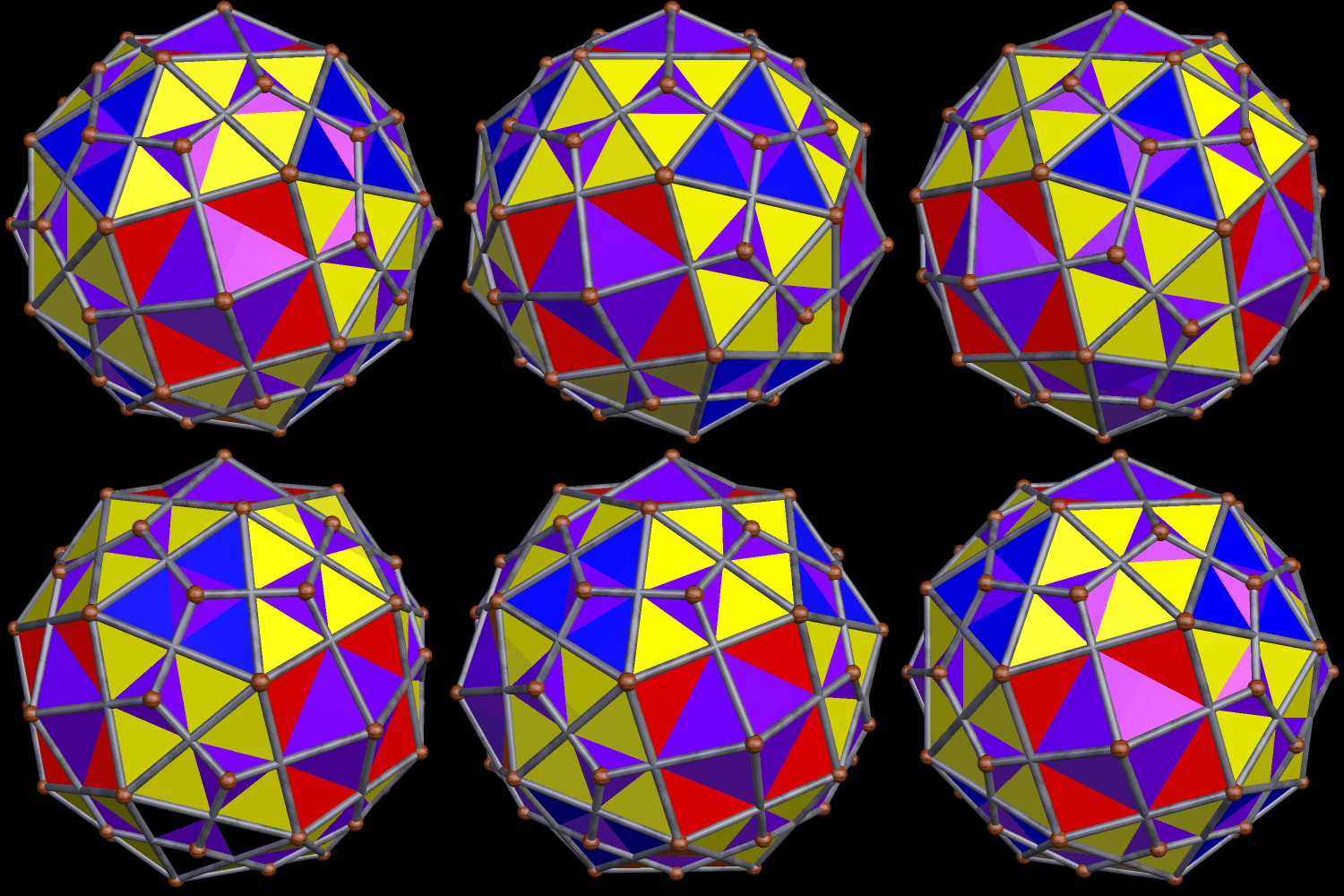
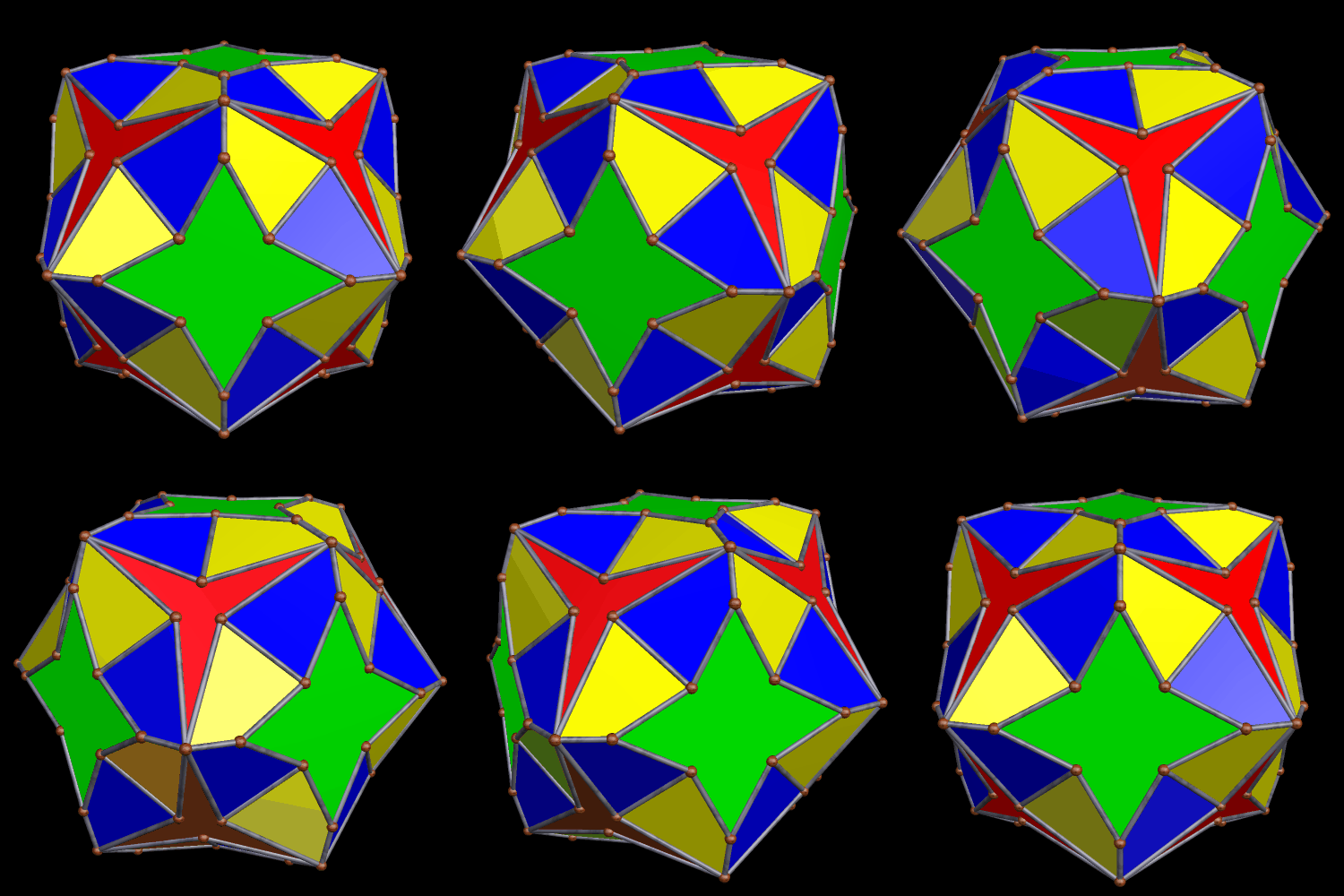
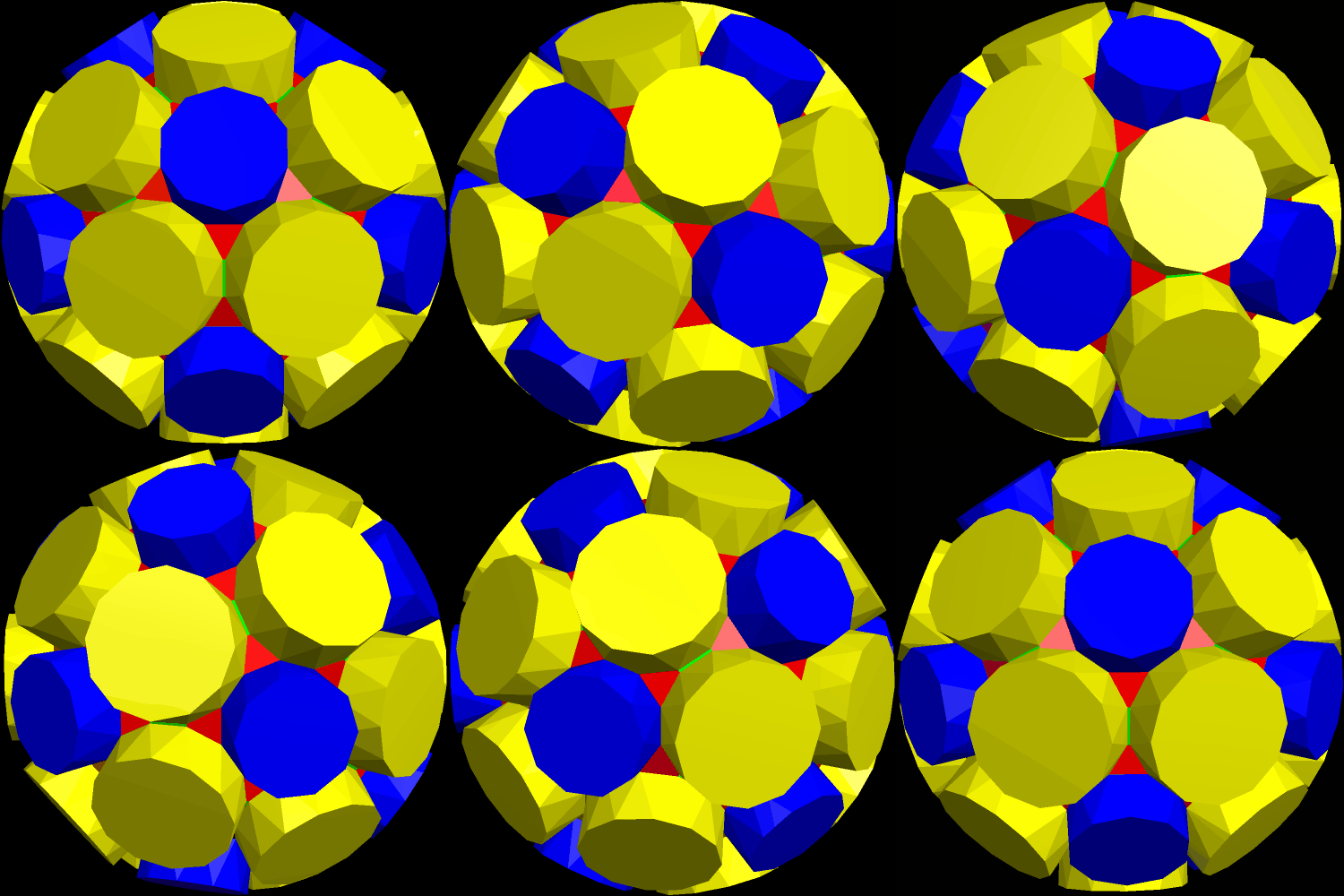
When stellating such a partially-invisible figure, the new faces “inherited” from the “parent polyhedron” are either visible or invisible, depending on which type of face they are derived from. This makes for a very unusual look for some stellations, such as this, the rhombicosidodecahedron’s 50th:

Rhombicosidodeca w inv squares 50th stellations

I created these images using a program called Stella 4d: Polyhedron Navigator. You may try it for yourself at http://www.software3d.com/Stella.php.

A Polyhedral Journey, Beginning with the Snub Cube / Pentagonal Isositetrahedron Base/Dual Compound

The snub cube and its dual make an attractive compound. Since the snub cube is chiral, its chirality is preserved in this compound.

Penta Icositetra & snub cube compound

If you examine the convex hull of this compound, you will find it to be chiral as well.

Convex hull of snub cube& dual compound

Here is the mirror image of that convex hull:

Convex hull mirror image

These two convex hulls, of course, have twin, chiral, duals:

dual of Convex hull of snub cube& dual compound

Dual of Convex hull mirror image

The two chiral convex hulls above (the red, blue, and yellow ones), made an interesting compound, as well.

Compound of enantiomorphic pair not dual

This is also true of their chiral duals:

Compound of enantiomorphic pair

I next stellated this last figure numerous times (I stopped counting at ~200), to obtain this polyhedron:

Stellated Compound of enantiomorphic pair dual

After seeing this, I wanted to know what its dual would look like — and it was a nice polyhedron on which to end this particular polyhedral journey.

dual of Stellated Compound of enantiomorphic pair dual

I  make these transformations of polyhedra, and create these virtual models, using a program called Stella 4d. It may be purchased, or tried for free, at http://www.software3d.com/Stella.php.

A Collection of Unusual Polyhedra

In the post directly before this one, the third image was an icosahedral cluster of icosahedra. Curious about what its convex hull would look like, I made it, and thereby saw the first polyhedron I have encountered which has 68 triangular faces.

68 triangles Convex hull

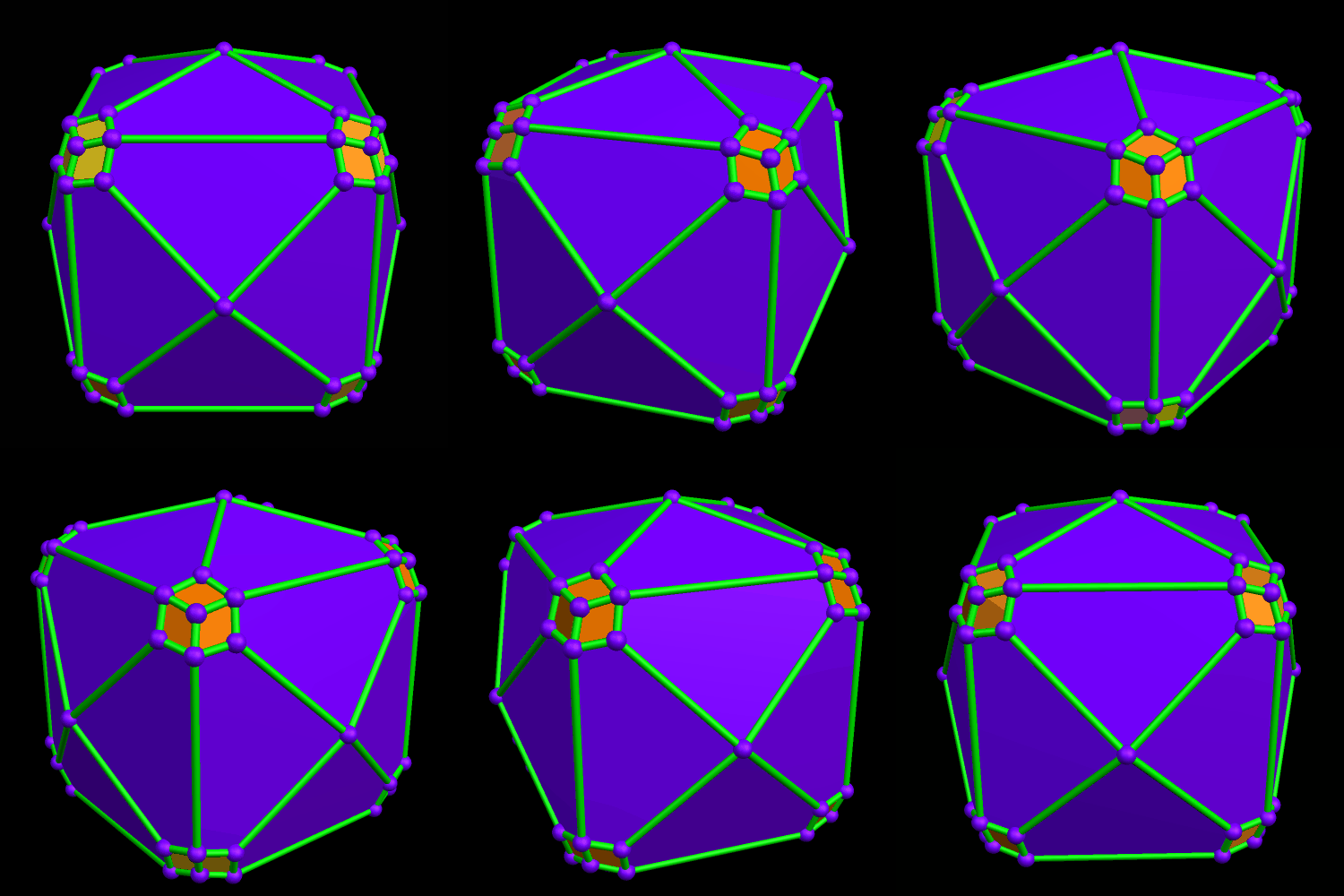
Still curious, I next examined this polyhedron’s dual. The result was an unusual 36-faced polyhedron, with a dozen irregular heptagons, and two different sets of a dozen irregular pentagons.

dual of 68 triangles Convex hull -- this dual has 36 faces including 12 heptagons and 12 each of two types of pentagon

Stella 4d (the program I used to make all these images), which is available at http://www.software3d.com/Stella.php, has a “try to make faces regular” function, and I tried to use it on this 36-faced polyhedron. When making the faces regular is not possible, as was the case this time, it sometimes produce surprising results — and this turned out to be one of these times.
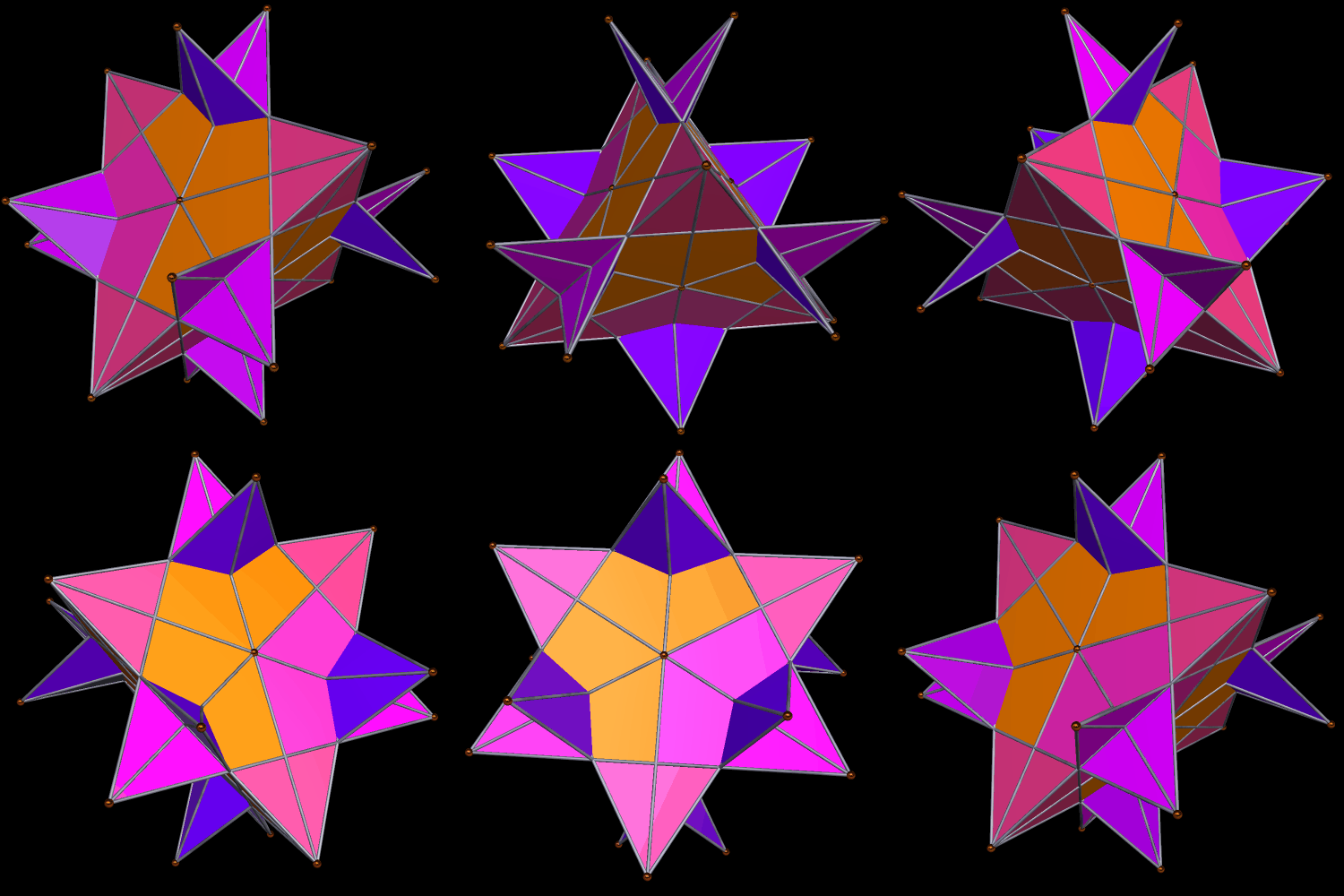
dual of the 68-triangle polyhedron after 'try to make faces regular' used

The next thing I did was to examine the dual of this latest polyhedron. The result, a cluster of tetrahedra and triangles, was completely unexpected.
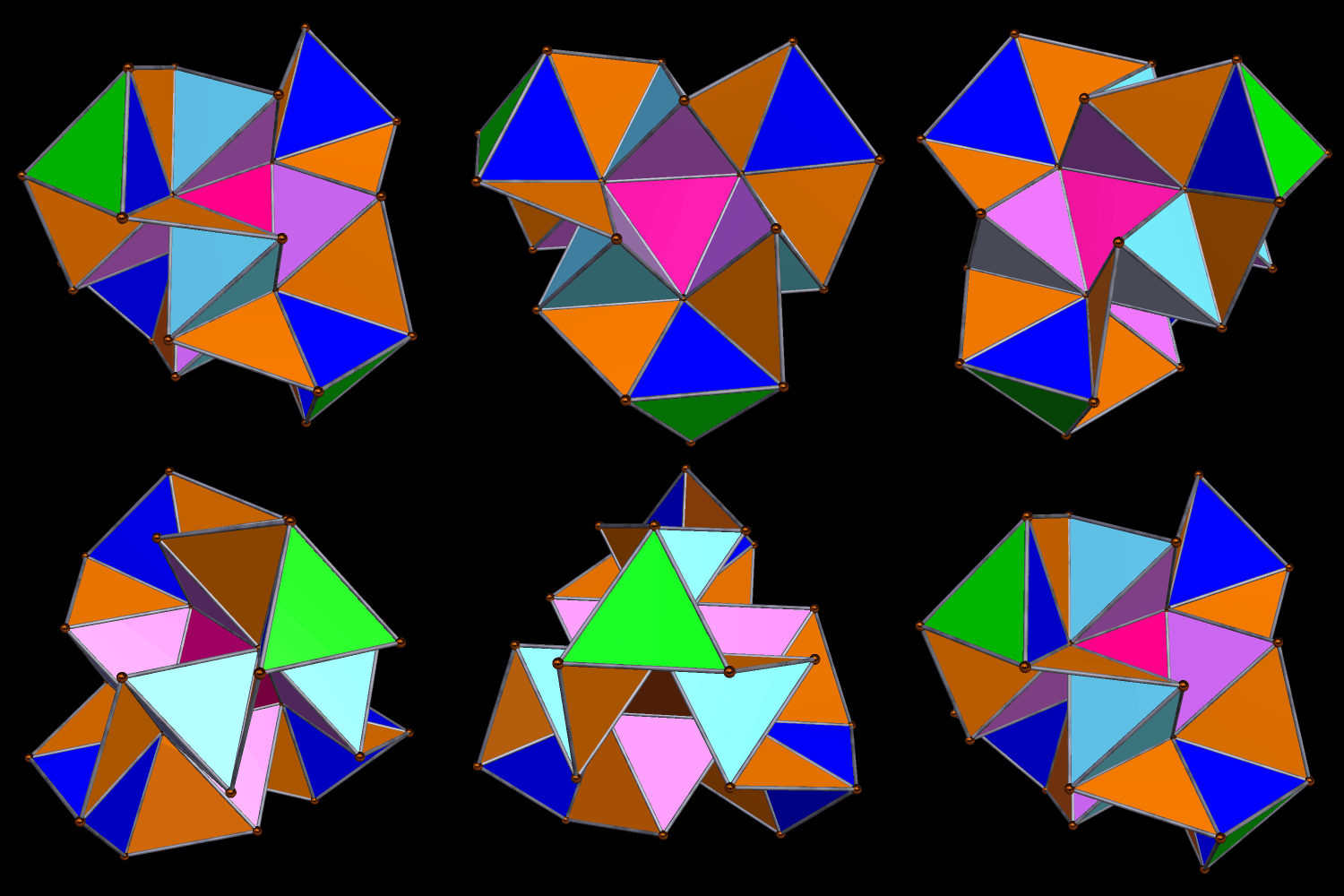
dual of the dual of the 68-triangle polyhedron after 'try to make faces regular' used

The next alteration I performed was to create the convex hull of this cluster of triangles and tetrahedra.
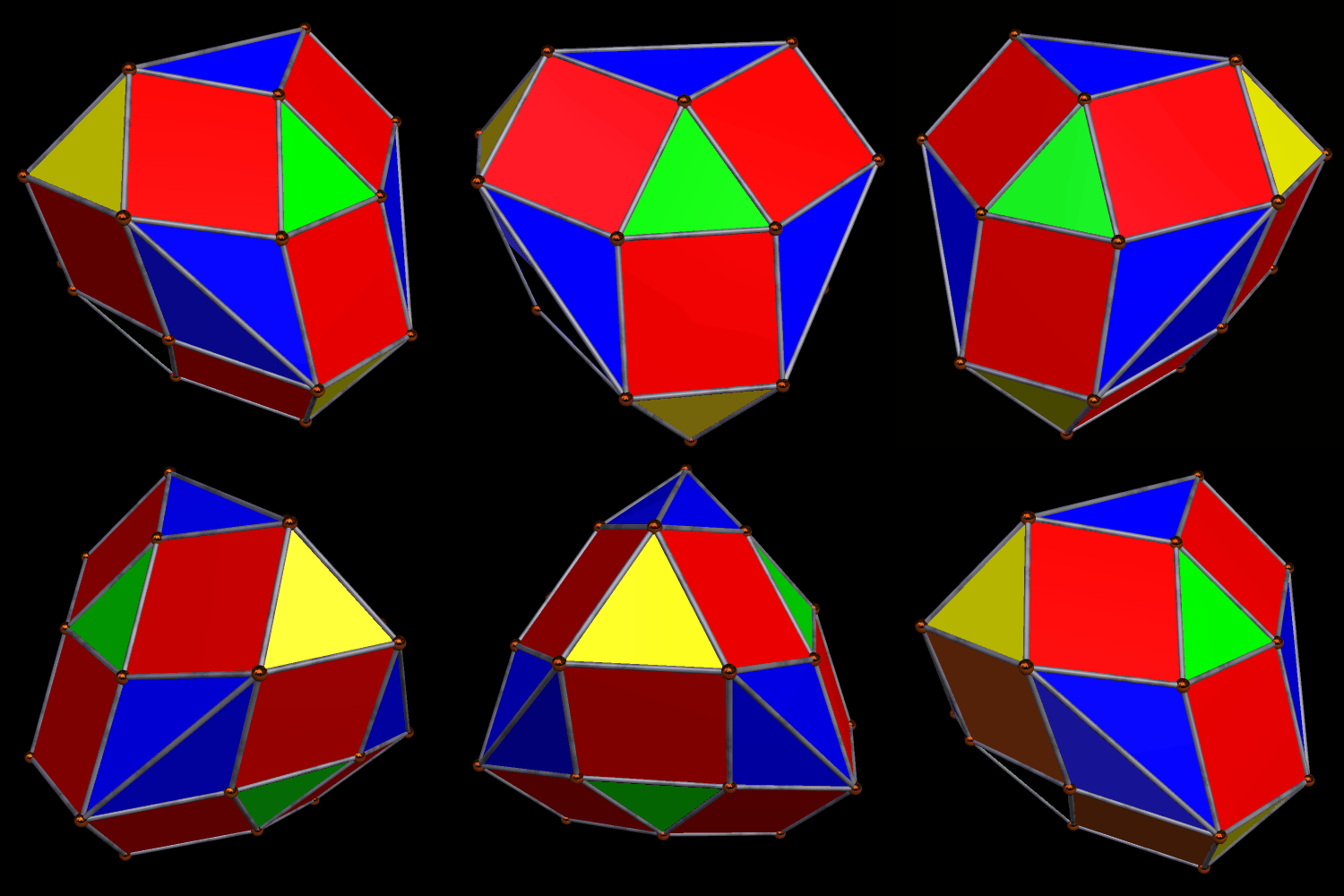
Convex hull of that triangular mess

Having seen that, I wanted to see its dual, so I made it. It turned out to have a dozen faces which are kites, plus another dozen which are irregular pentagons.

dual of the Convex hull of that triangular mess 12 kites and 12 irregular pentagons

Next, I tried the “try to make faces regular” function again — and, once more, was surprised by the result.
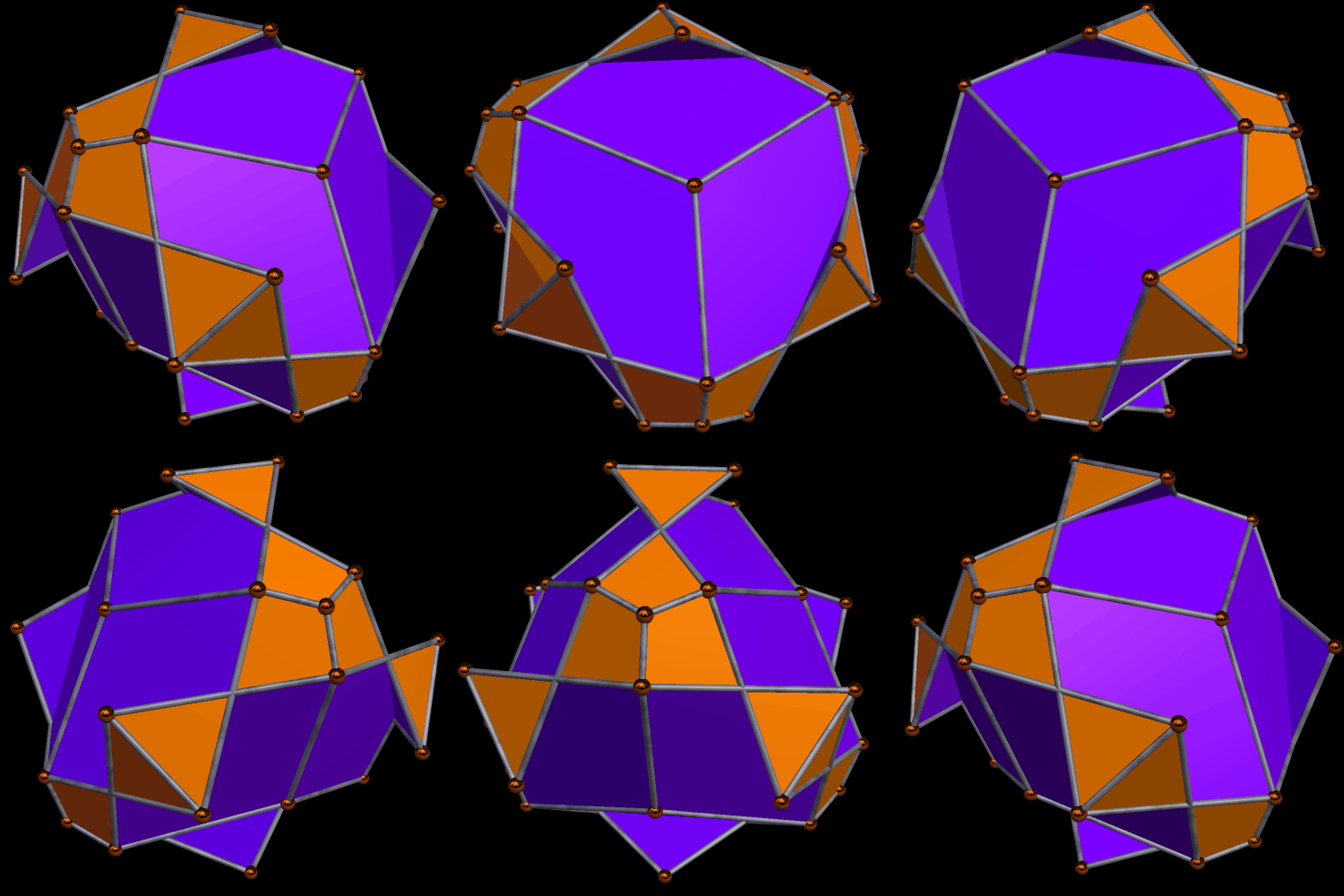
dozen kites and dozen pentagons after 'try to make faces regular' used

Out of curiosity, I then created this latest polyhedron’s convex hull. It turned out to have four faces which are equilateral triangles, a dozen other faces which are isosceles triangles, and a dozen faces which are irregular pentagons.

Convex hull Z

Next, I created the dual of this polyhedron, and it turns out to have faces which, while not identical, can be described the same way: four equilateral triangles, a dozen other isosceles triangles, and a dozen irregular pentagons — again. To find such similarity between a polyhedron and its dual is quite uncommon.
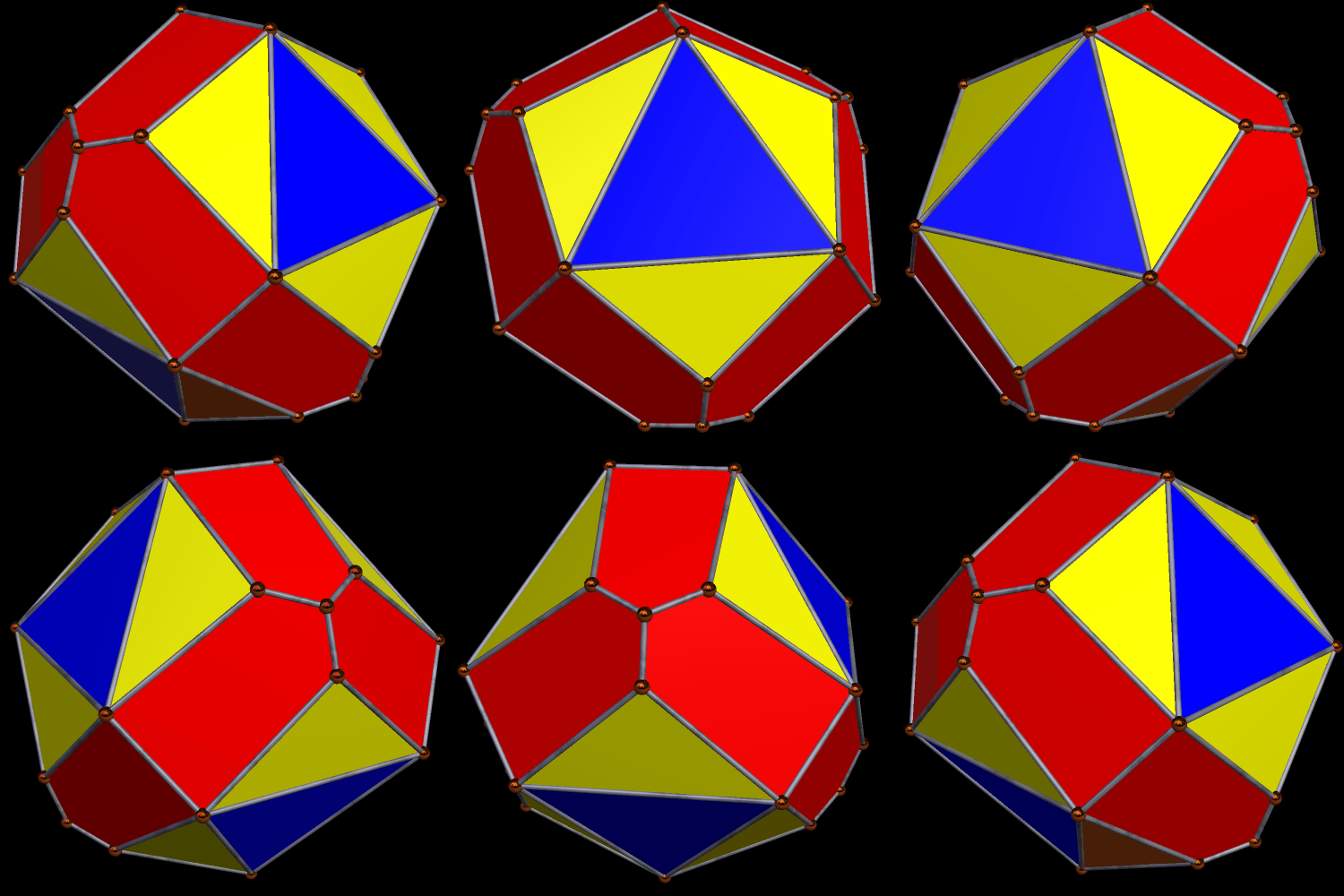
dual of Convex hull Z

I next attempted the “try to make faces regular” function, once more. Stella 4d, this time, was able to make the pentagons regular, and the triangles which were already regular stayed that way, as well. However, to accomplish this, the twelve other isosceles triangles not only changed shape a bit, but also shifted their orientation inward, making the overall result a non-convex polyhedron.
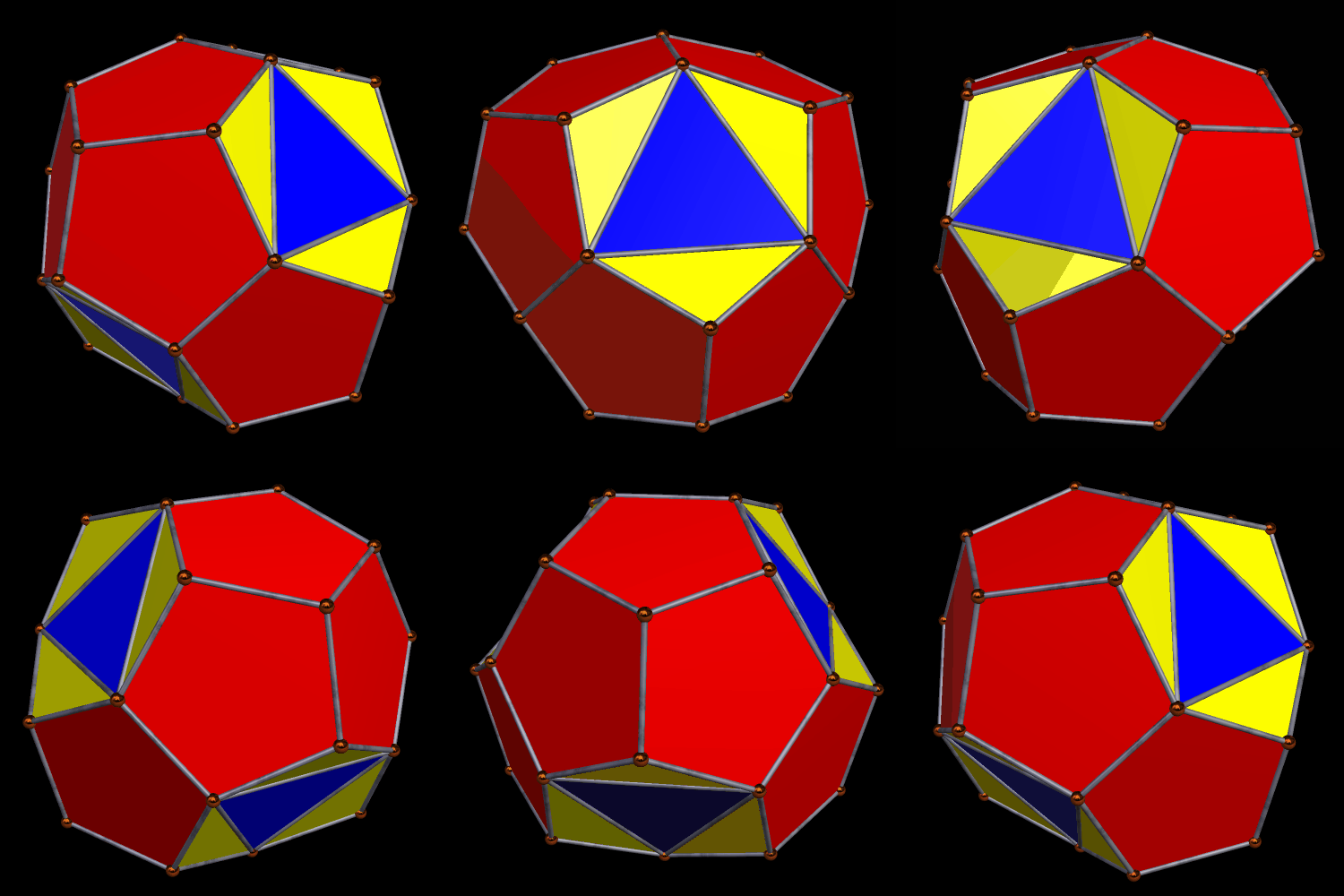
TTMFR

Having a non-convex polyhedron on my hands, the next step was obvious: create its convex hull. One more, I saw a polyhedron with faces which were four equilateral triangles, a dozen other isosceles triangles, and a dozen regular pentagons.

Convex hull

I then created the dual of this polyhedron, and, again, found myself looking at a polyhedron with, as faces, a dozen irregular pentagons, a dozen identical isosceles triangles, and four regular triangles. However, the arrangement of these faces was noticeably different than before.
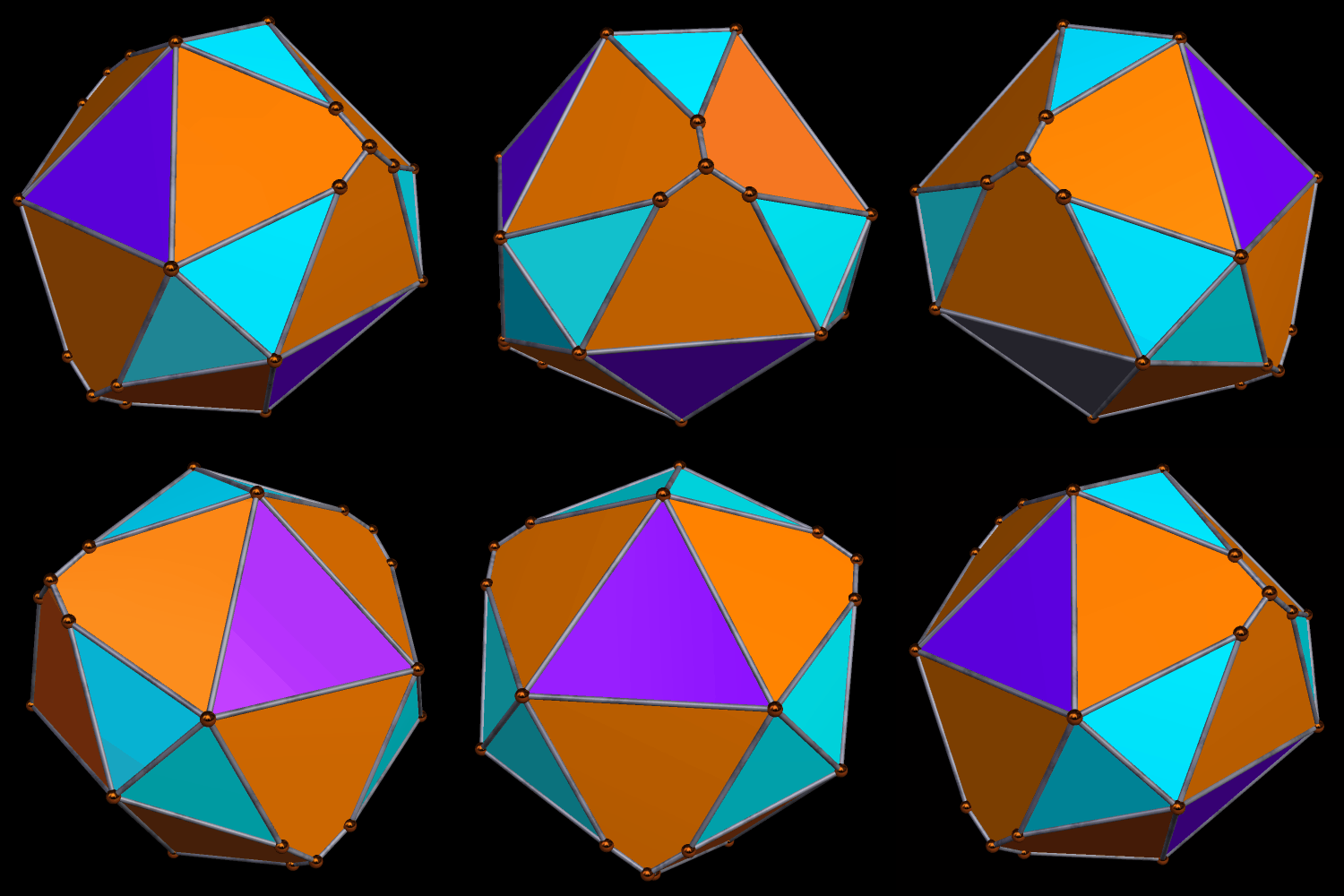
latest Convex hull

Given this difference in face-arrangement, I decided, once more, to use the “try to make faces regular” function of Stella 4d. The results were, as before, unexpected.

TTMFRA

Next, I created this latest polyhedron’s dual.

TTMFRA dual

At no point in this particular “polyhedral journey,” as I call them, had I used stellation — so I decided to make that my next step. After stellating this last polyhedron 109 times, I found this:

109 stellationsTTMFRA dual

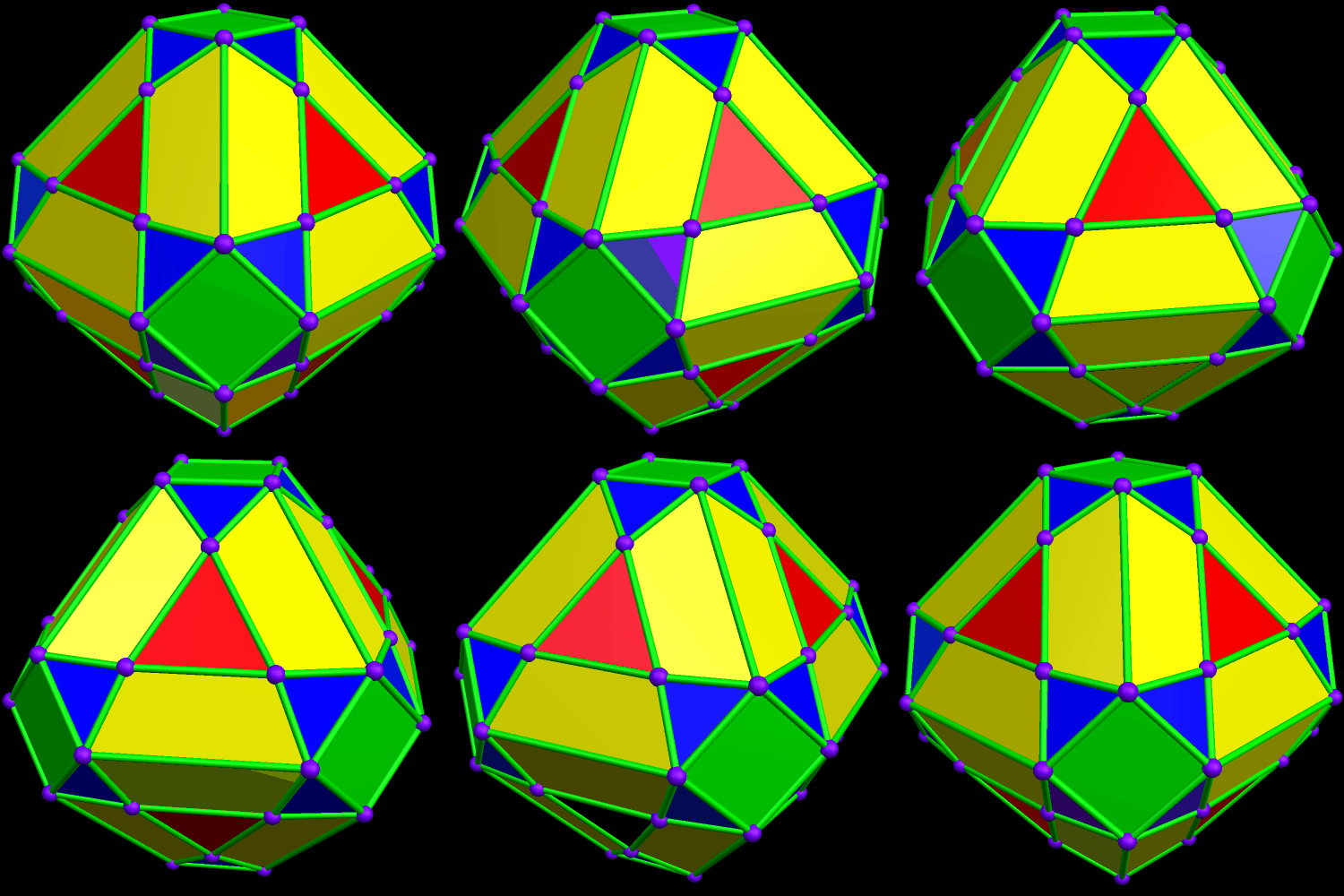
I then created the dual of this polyhedron. The result, unexpectedly, had a cuboctahedral appearance.
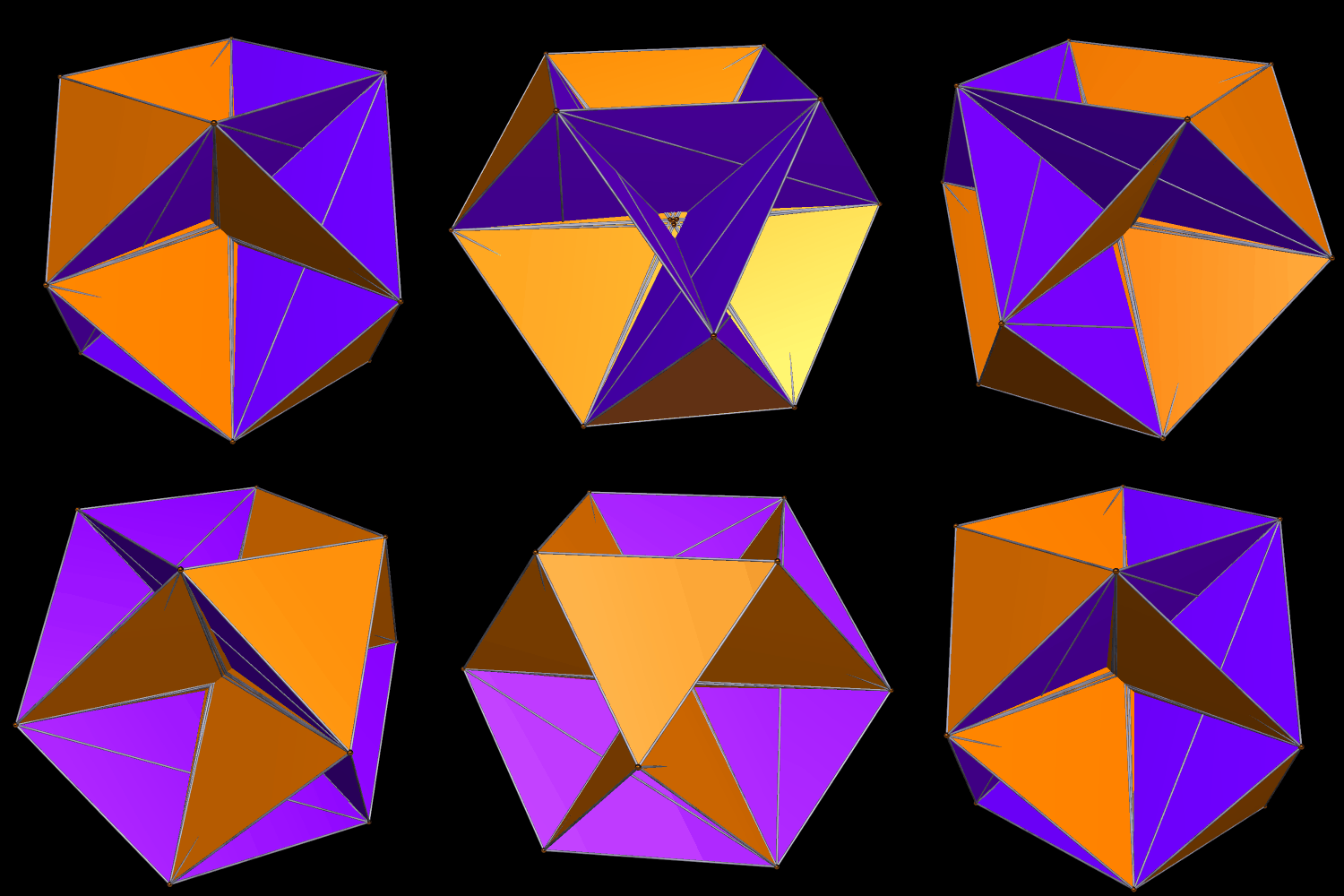
Faceted Dual

A single stellation of this latest polyhedron radically altered its appearance.
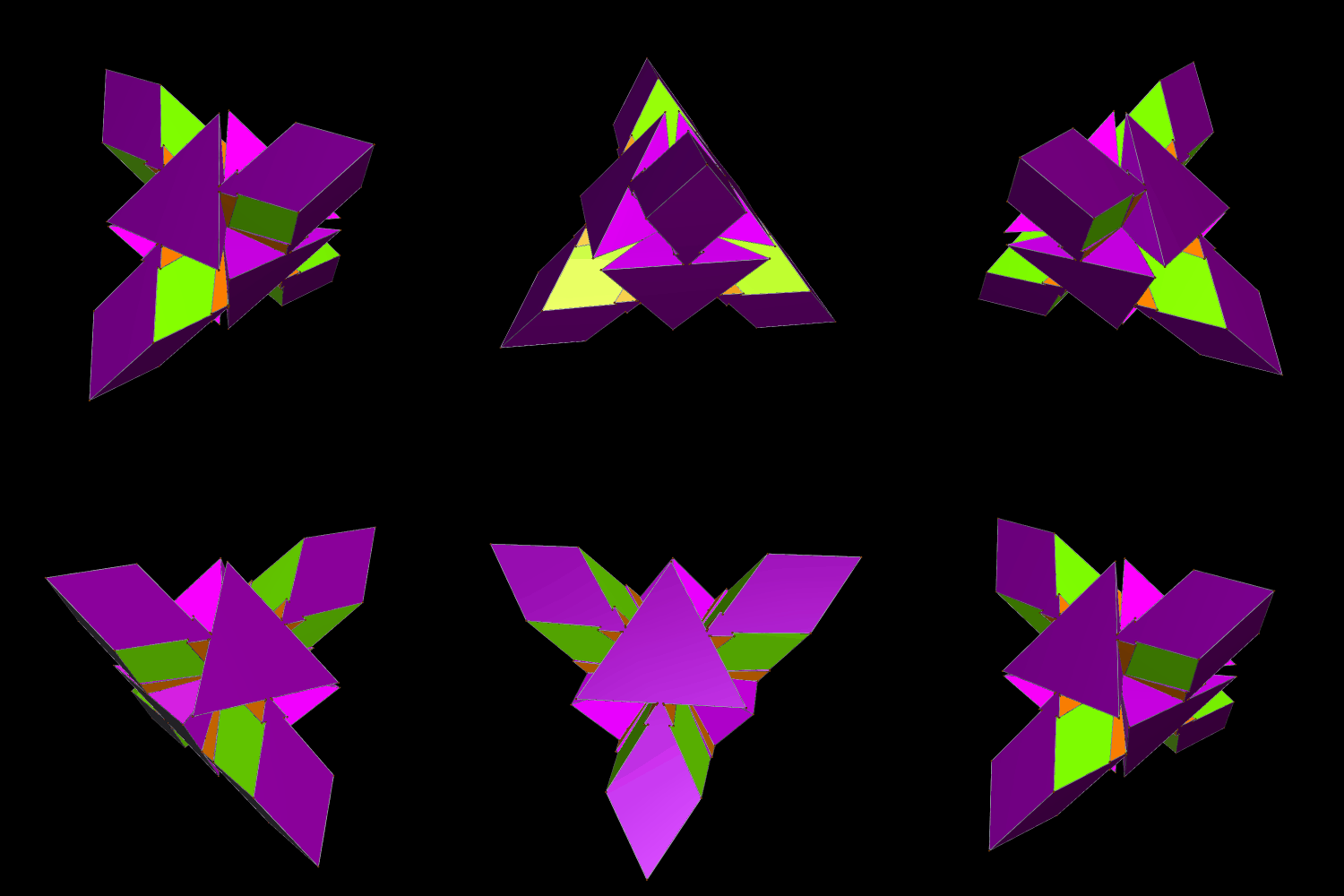
stellation Faceted Dual

My next step was to create the dual of this polyhedron.
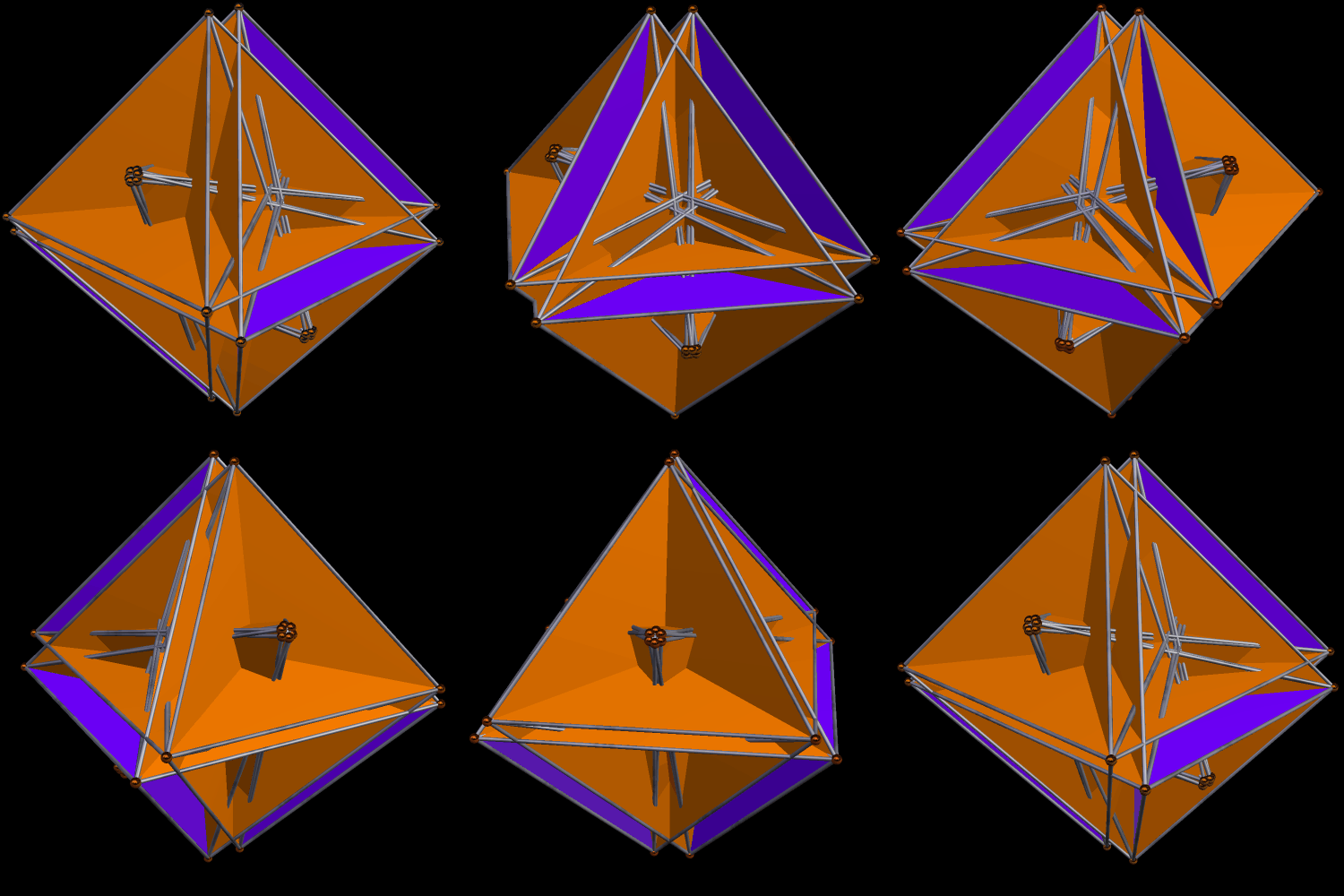
dual Faceted Stellated Poly

This seemed like a good place to stop, and so I did.
A Cluster of Nine Octahedra, and Related Polyhedra

If one starts with a central octahedron, then augments each of its eight triangular faces with identical octahedra, this is the result.

9 Octahedra

It is then possible to augment each visible triangle of this cluster with yet more octahedra, which produces this result, in which some octahedra overlap each other.

Meta-9 Octahedra

After making this, I wanted to see its convex hull:  the smallest, tightest-fitting convex polyhedron which can contain a given non-convex polyhedron. (I use Stella 4d: Polyhedron Navigator to perform these manipulations of polyhedra, and this program makes this a fast and easy process. If you’d like to try this software, even as a free trial download, the website to visit is http://www.software3d.com/Stella.php.) Here’s what this convex hull, which bears a resemblance to the rhombcuboctahedron, looks like.

Convex hull of meta-9-octahedron

Looking for previously-unseen, and interesting, polyhedra, I then starting stellating this convex hull. I did find something interesting — to me, anyway — after only two stellations.

2nd stellation of Convex hull of meta-9-octahedron

That concluded my latest polyhedral investigation, but I certainly don’t intend it to be my last.

A Polyhedral Journey, Beginning with a Near-Miss Johnson Solid Featuring Enneagons

When Norman Johnson first found, and named, all the Johnson solids in the latter 1960s, he came across a number of “near-misses” — polyhedra which are almost Johnson solids. If you aren’t familiar with the Johnson solids, you can find a definition of them here. The “near-miss” which is most well-known features regular enneagons (nine-sided polygons):

ennneagonal-faced near-miss

This is the dual of the above polyhedron:

ennneagonal-faced near-miss dual

As with all polyhedra and their duals, a compound can be made of these two polyhedra, and here it is:

ennneagonal-faced near-miss base=dual compound

Finding this polyhedron interesting, I proceeded to use Stella 4d (polyhedron-manipulation software, available at http://www.software3d.com/Stella.php) to make its convex hull.

Convex hull of near-miss base-dual compound

Here, then, is the dual of this convex hull:

dual of Convex hull of near-miss base-dual compound

Stella 4d has a “try to make faces regular” function, and I next used it on the polyhedron immediately above. If this function cannot work, though — because making the faces regular is mathematically impossible — one sometimes gets completely unexpected, and interesting, results. Such was the case here.

attempt no make latest polyhedron have regular faces

Next, I found the dual of this latest polyhedron.

attempt no make latest polyhedron have regular faces's dual

The above polyhedron’s “wrinkled” appearance completely surprised me. The next thing I did to change it, once more, was to create this wrinkled polyhedron’s convex hull. A convex hull of a non-convex polyhedron is simply the smallest convex polyhedron which can contain the non-convex polyhedron, and this process often has interesting results.

Convex hull of wrinkled dual

Next, I created this latest polyhedron’s dual:

dual of Convex hull of wrinkled dual

I then attempted “try to make faces regular” again, and, once more, had unexpected and interesting results:

dual of latest polyhedron

The next step was to take the convex hull of this latest polyhedron. In the result, below, all of the faces are kites — two sets of twenty-four each.

convex hull of last polyhedron with two sets of two dozen kites each

I next stellated this kite-faced polyhedron 33 times, looking for an interesting result, and found this:

33rd stellation of latest polyhedron

This looked like a compound to me, so I told Stella 4d to color it as a compound, if possible, and, sure enough, it worked.

33rd stellation of latest polyhedron colored as a compound

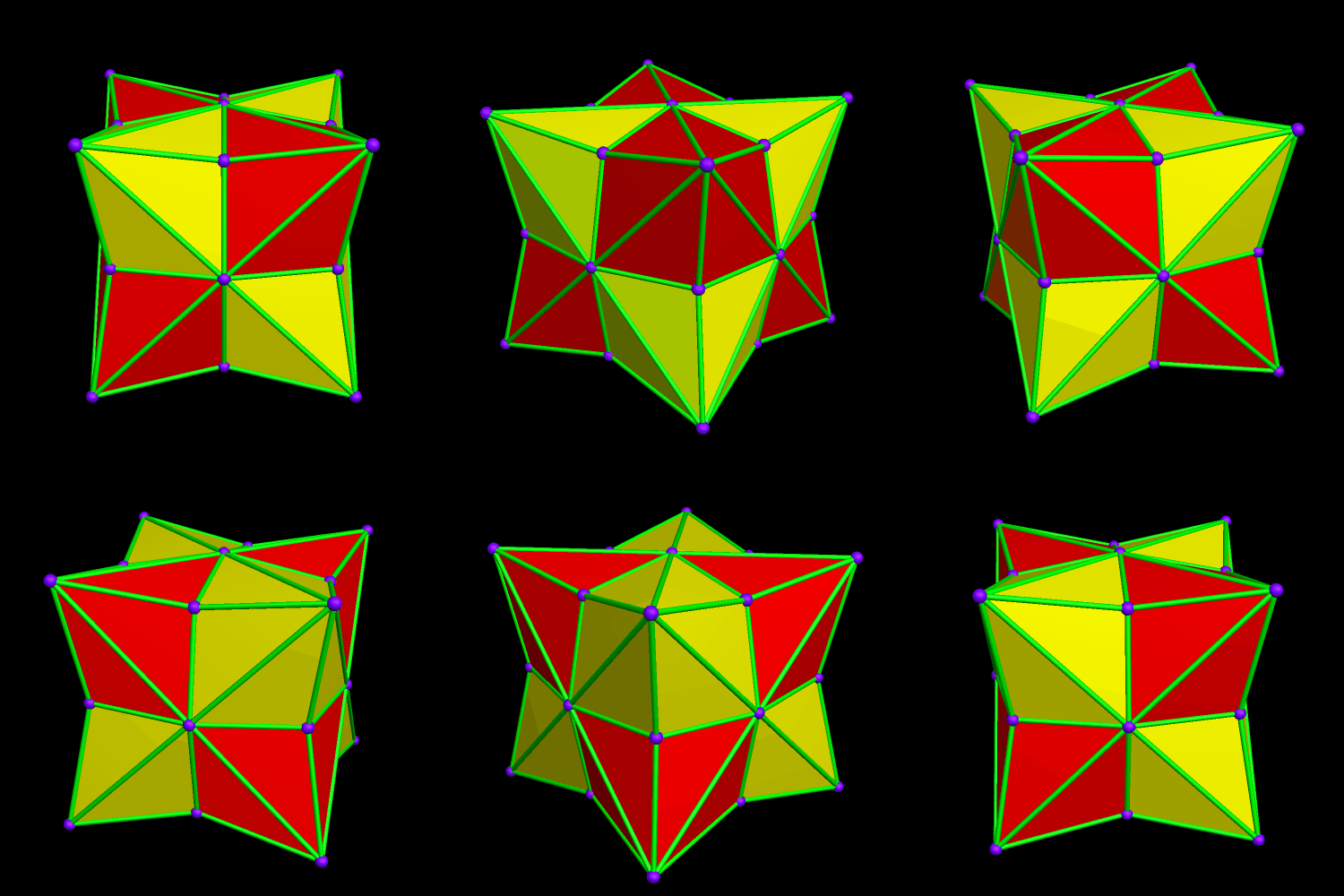
The components of this compound looked like triakis tetrahedra to me. The triakis tetrahedron, shown below, is the dual of the truncated tetrahedron. However, I checked the angle measurement of a face, and the components of the above compound-dual are only close, but not quite, to being the same as the true triakis tetrahedron, which is shown below.

Triakistetra -- ANGLES AREN'T QUITE A MATCH for last polyhedron

This seemed like a logical place to end my latest journey through the world of polyhedra, so I did.
A Polyhedral Journey, Beginning with Face-Based Zonohedrification of an Icosahedron

To begin this, I took an icosahedron, and made a zonish polyhedron with it, with the new faces based on the zones of the existing faces. Here’s the result.

1 face-based zonish icosahedron

Next, I started stellating the polyhedron above. At the sixth stellation, I found this. It’s a true zonohedron, and the first polyhedron shown here is merely “zonish,” because one has triangles, and the other does not. (One of the requirements for a polyhedron to be a zonohedron is that all its faces must have an even number of sides.)

2 6th stellation face-based zonish icosahedronAfter that, I kept stellating, finding this as the 18th stellation of the first polyhedron shown here.

3 18th stellation face-based zonish icosahedron

With this polyhedron, I then made its convex hull.

4 Convex hull of 18th stellation of face-based zonish icosahedronAt this point, the irregular hexagons were bothering me, so I used Stella 4d‘s “try to make faces regular” option. (Stella 4d is polyhedron-manipulation software you can try for free, or purchase, right here.)

5 spring model of convex hull of 18th stellation of face-based icosahedron

The next step I chose was to augment all the yellow trapezoids with prisms, each with a height 1.6 times the trapezoids average edge length.

6 Augmented sping model of convex hull of 18th stellation of FBZI

The next step was, again, to make the convex hull.

7 Convex hull of augmented convex hull

At this point, I tried “try to make faces regular” again, and was pleased with the result. The green rectangles became so thin, however, that I had to stop displaying the edges and vertices, in order for then to be seen.

8 spring model of last oneNext, I augmented both the blue faces (decagons) and the yellow faces (dodecagons) with antiprisms, again using a height 1.6 times that of the augmented faces’ average edge-lengths.

9 Augmented Poly 9th in series

Next, I made the convex hull again — a step I often take immediately after augmenting a polyhedron.

10 Convex hull

This one surprised me, as it is more complicated than I expected. To clean things up a bit, I augmented only the trapezoids (dark pink) with prisms, and dodecagons (green) with antiprisms, again using the factor 1.6 for the augmentation-height.
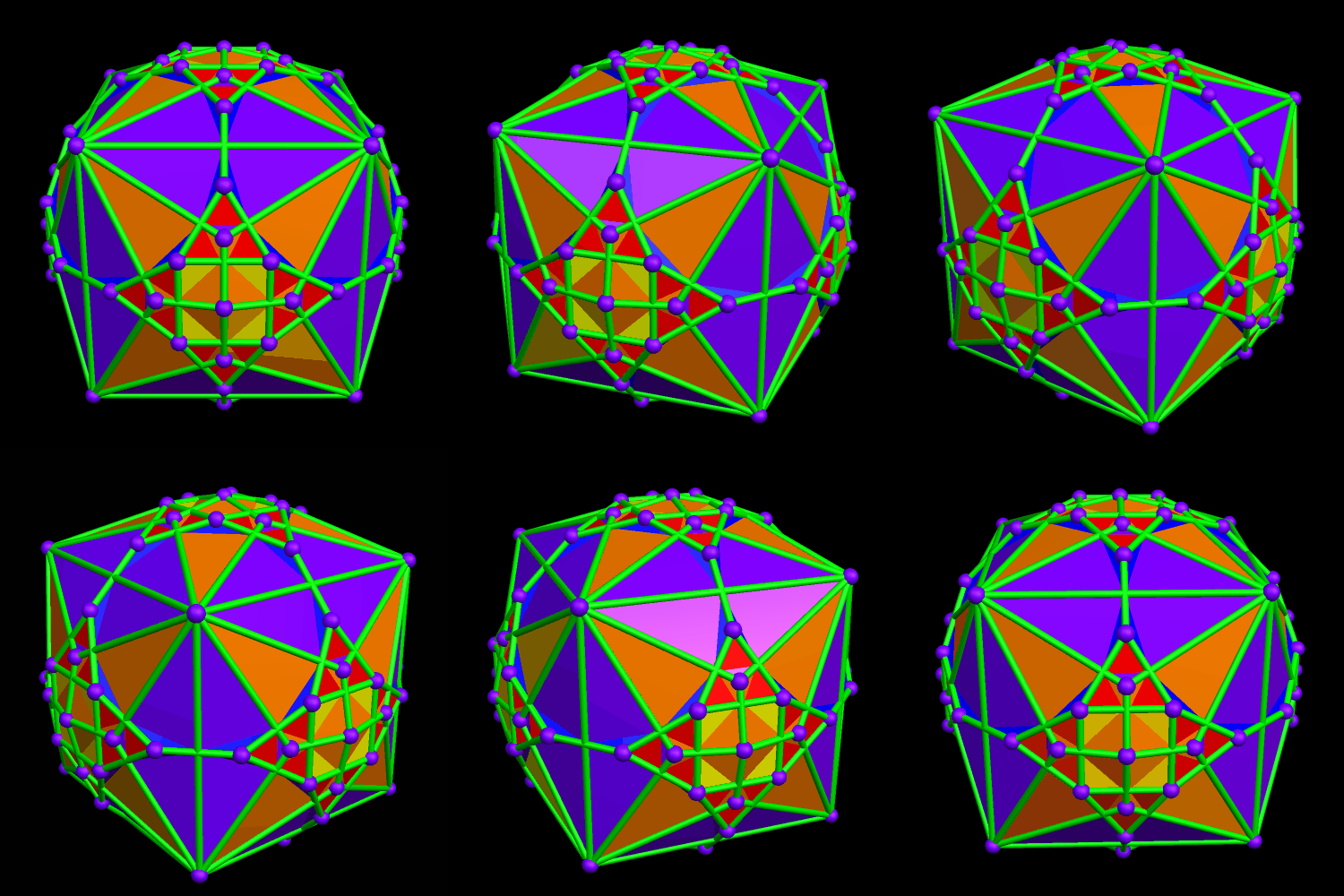
11 augmented Convex hull

The next step I chose was to take the convex hull, once more. I had not yet noticed that the greater height of the trapezoidal prisms would cause the dodecagonal antiprisms to be “lost” by this step, though.

12 convex hull

Next, “try to make faces regular” was used again.

13 spring model

This last result had me feeling my polyhedral journey was going in circles, so I tried augmentation again, but in a different way. I augmented this polyhedron, using prisms, on only the red trapezoids (height factor, 1.6 again) and the blue rectangles (new height factor, 2.3 times average edge length).

14 augmented spring model

After that, it was time to make another convex hull — and that showed me that I had, indeed, taken a new path.

15 Convex hullI found the most interesting faces of this polyhedron to be the long, isosceles trapezoids, so I augmented them with prisms, ignoring the other faces, using the new height-factor of 2.3 times average edge length this time.

16 augmented Convex hull

Of course, I wanted to see the convex hull of this. Who wouldn’t?

17 Convex hull

I then started to stellate this figure, choosing the 14th stellation as a good place to stop, and making the edges and vertices visible once more.

18 the 14th stellation of the previous Convex hull

A Zonish Icosahedron, and Some of Its “Relatives”

To begin this, I used Stella 4d (available here) to create a zonish polyhedron from the icosahedron, by adding zones along the x-, y-, and z-axes. The result has less symmetry than the original, but it is symmetry of a type I find particularly interesting.

zonohedrified icosahedron xyz

After making that figure, I began stellating it, and found a number of interesting polyhedra in this polyhedron’s stellation-series. This is the second such stellation:

zonohedrified icosahedron xyz 2nd stellation

This is the 18th stellation:

zonohedrified icosahedron xyz 18th stellation

The next one, the 20th stellation, is simply a distorted version of the Platonic dodecahedron.

zonohedrified icosahedron xyz 20th stellation

This one is the 22nd stellation:

zonohedrified icosahedron xyz 22nd stellation

This is the 30th stellation:

zonohedrified icosahedron xyz 30th stellation

The next really interesting stellation I found was the 69th:

zonohedrified icosahedron xyz 69th stellation

At this point, I returned to the original polyhedron at the top of this post, and examined its dual. It has 24 faces, all of which are quadrilaterals.

zonohedrified icosahedron xyz dual

This is the third stellation of this dual — and another distorted Platonic dodecahedron.

zonohedrified icosahedron xyz dual 3rd stellation

This is the dual’s 7th stellation:

zonohedrified icosahedron xyz dual 7th stellation

And this one is the dual’s 18th stellation:

zonohedrified icosahedron xyz dual 18th stellation

At this point, I took the convex hull of this 18th stellation of the original polyhedron’s dual, and here’s what appeared:

Convex hull of 18th stellation of dual of zonish icosahedron xyz

Here is this convex hull’s dual:

dual of Convex hull of 18th stellation of dual of zonish icosahedron xyz

Stella 4d, the program I use to make these (available here), has a built-in “try to make faces regular” function. When possible, it works quite well, but making the faces of a polyhedron regular, or even close to regular, is not always possible. I tried it on the polyhedron immediately above, and obtained this interesting result:

spring model of Dual of convex hull of stellation of zonish xyz icosahedron

While interesting, this also struck me as a dead end, so I returned to the red-and-yellow convex hull which is the third image above, from right here, and started stellating it. At the 19th stellation of this convex hull, I found this:

19th stellation of Convex hull of 18th stellation of dual of zonish icosahedron xyz

I also found an interesting polyhedron as the 19th stellation of the dual which is three images above:

19th stellation of dual of Convex hull of 18th stellation of dual of zonish icosahedron xyz

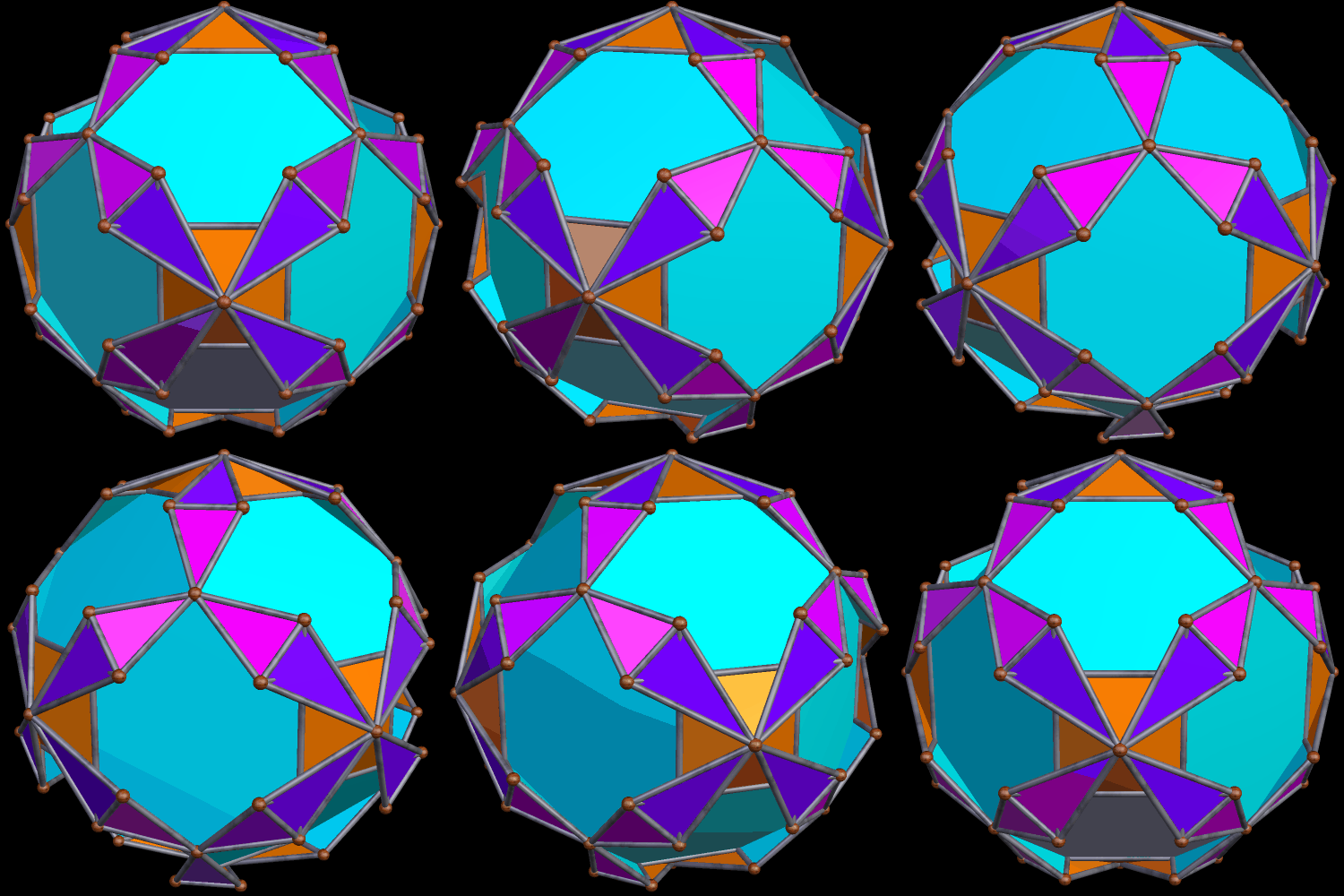
The 109th Stellation of the Triakis Icosahedron

109th stellation of Triakis icosa

Created using Stella 4d:  Polyhedron Navigator, available here.