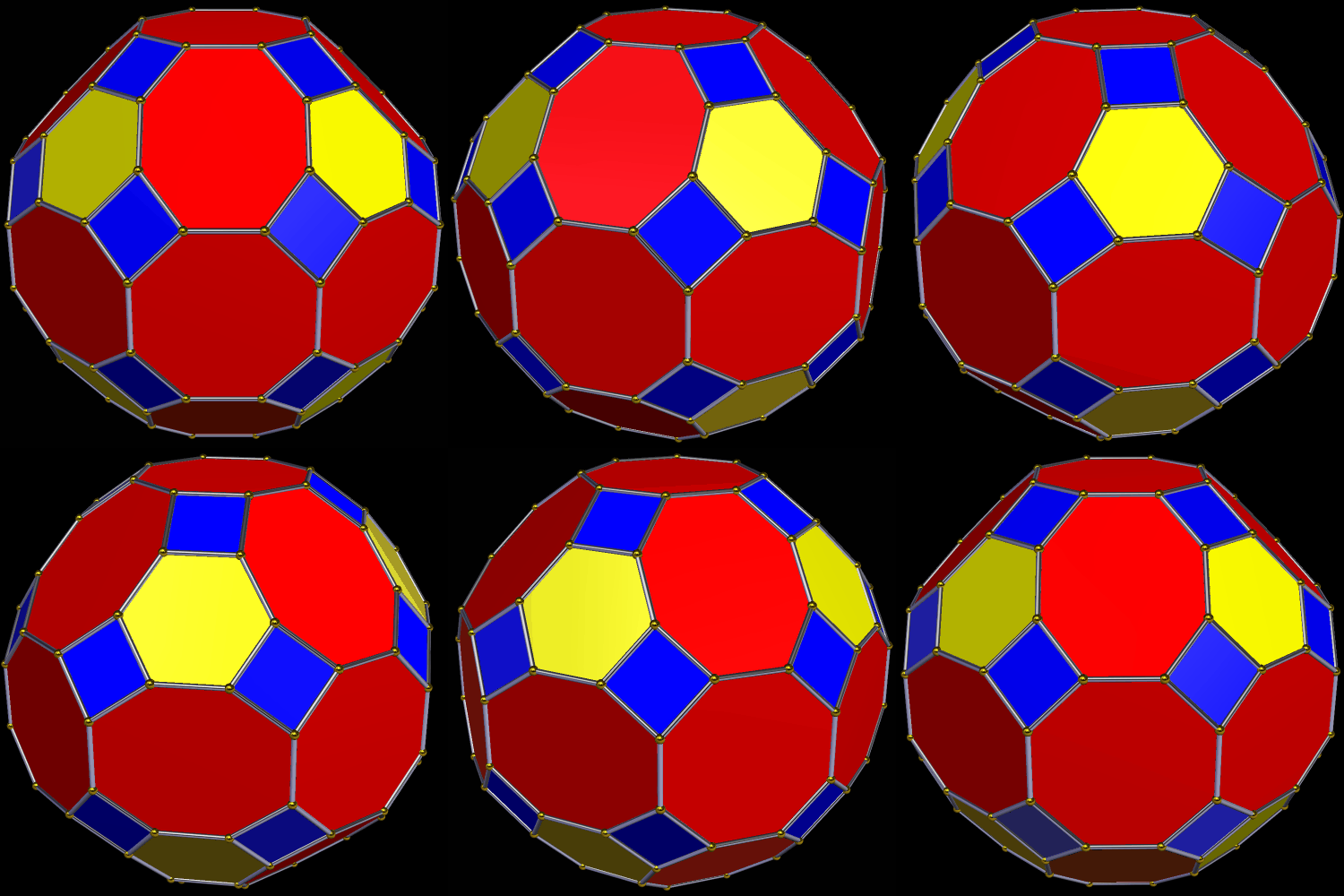
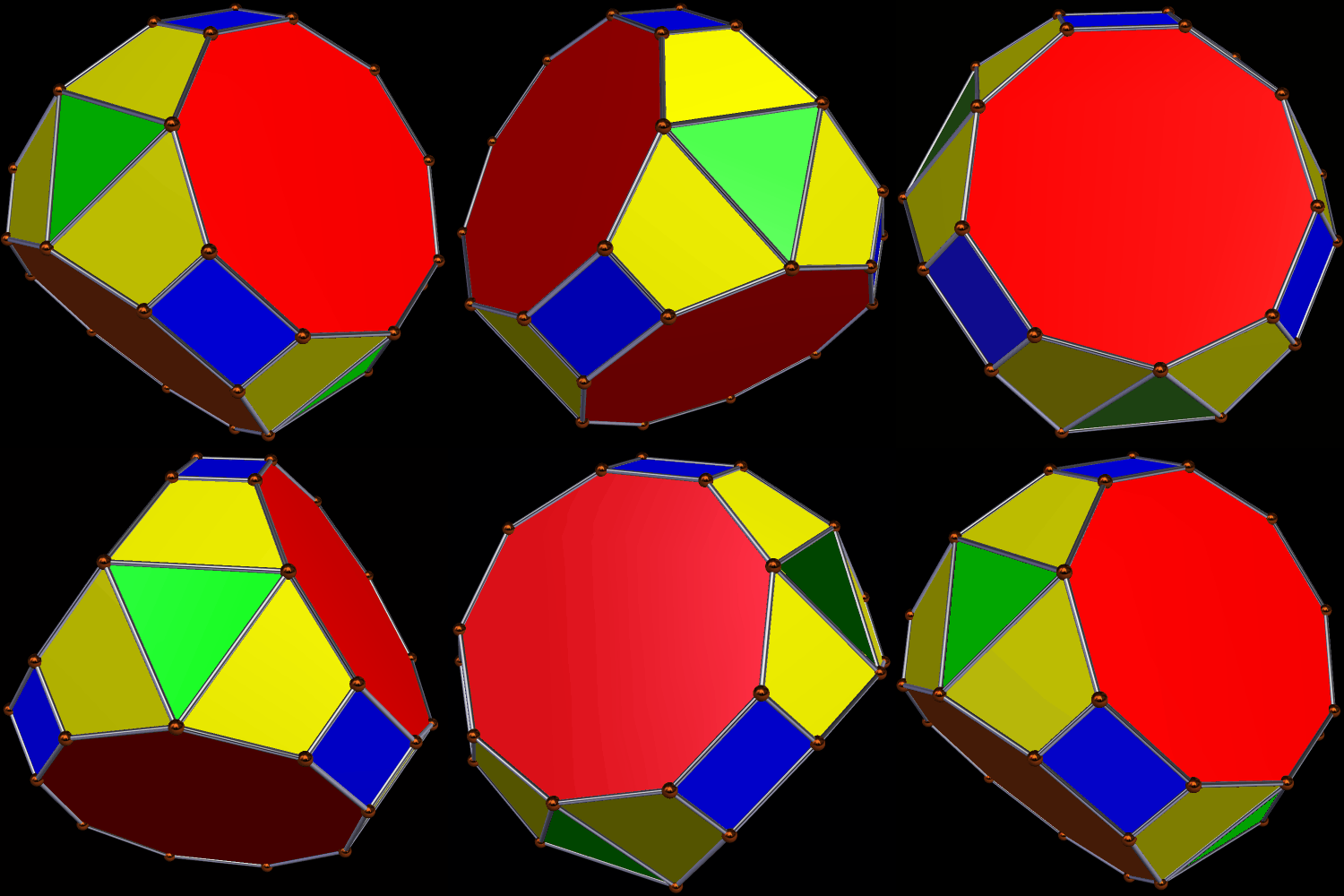
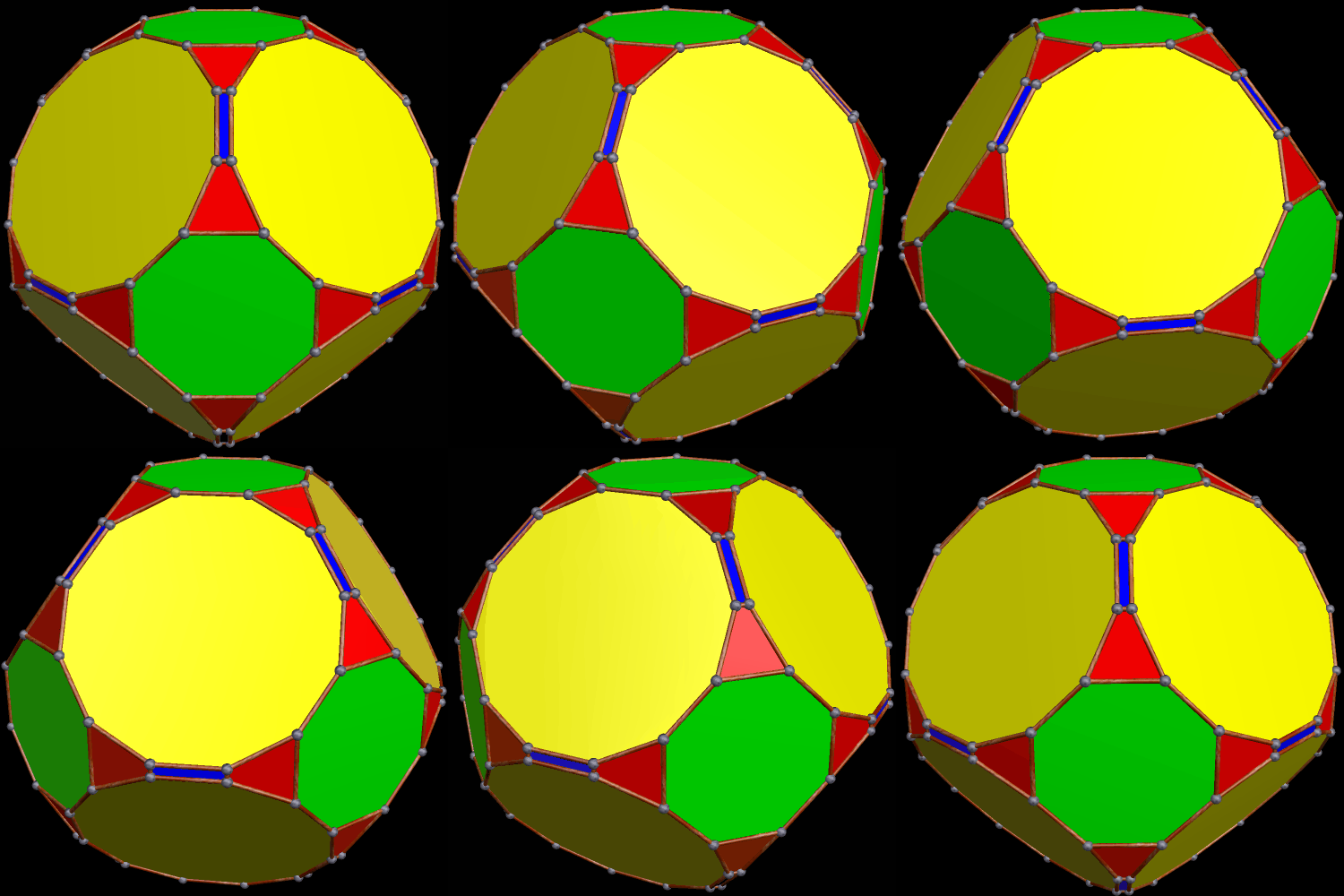
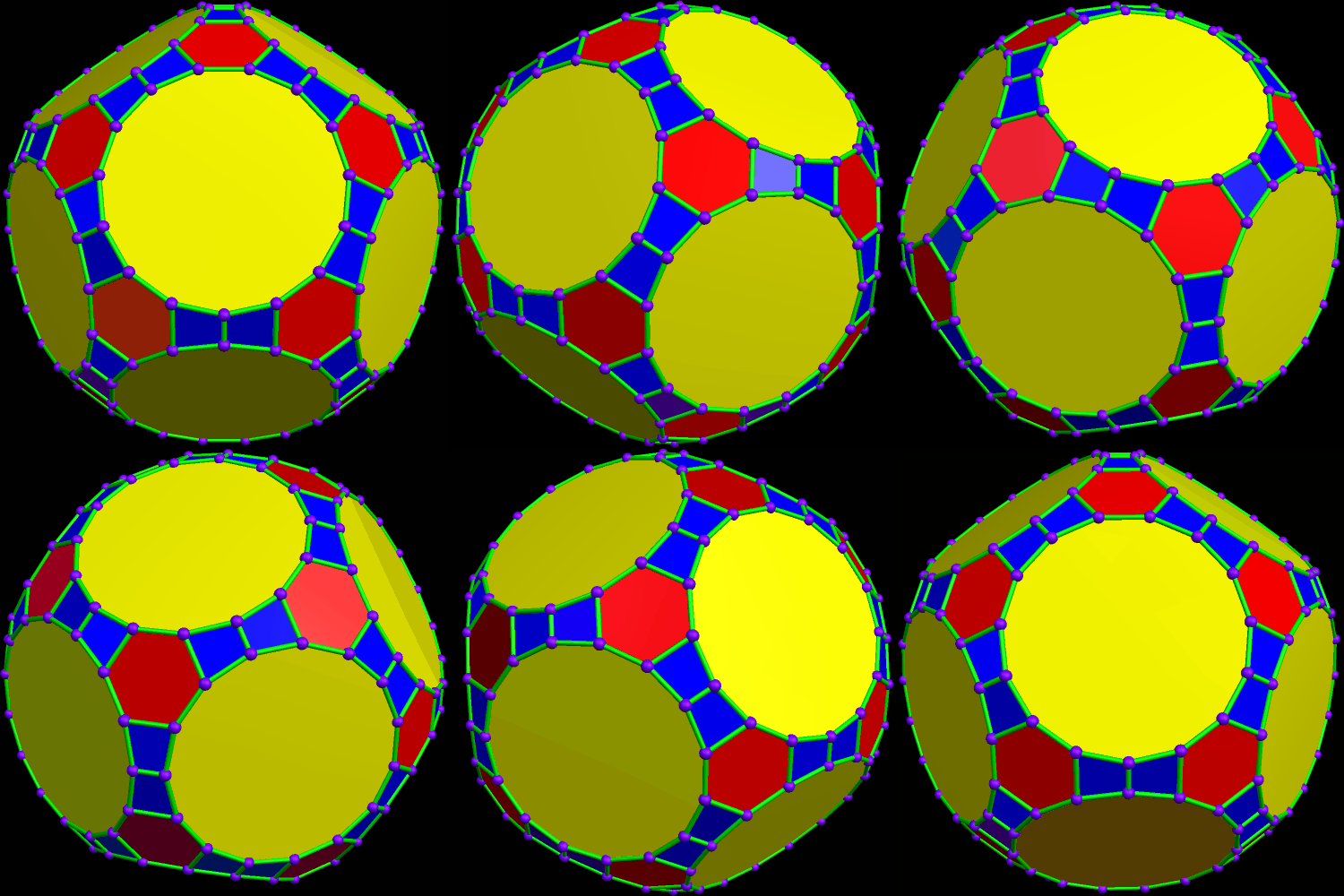
A Symmetrohedron Featuring Regular Hexadecagons and Regular Hexagons

Image

symmetrohedron featuring reguarhexadecagons and hexagons.gif

I made this using Stella4d, which you can try for free right here.

Four Symmetrohedra

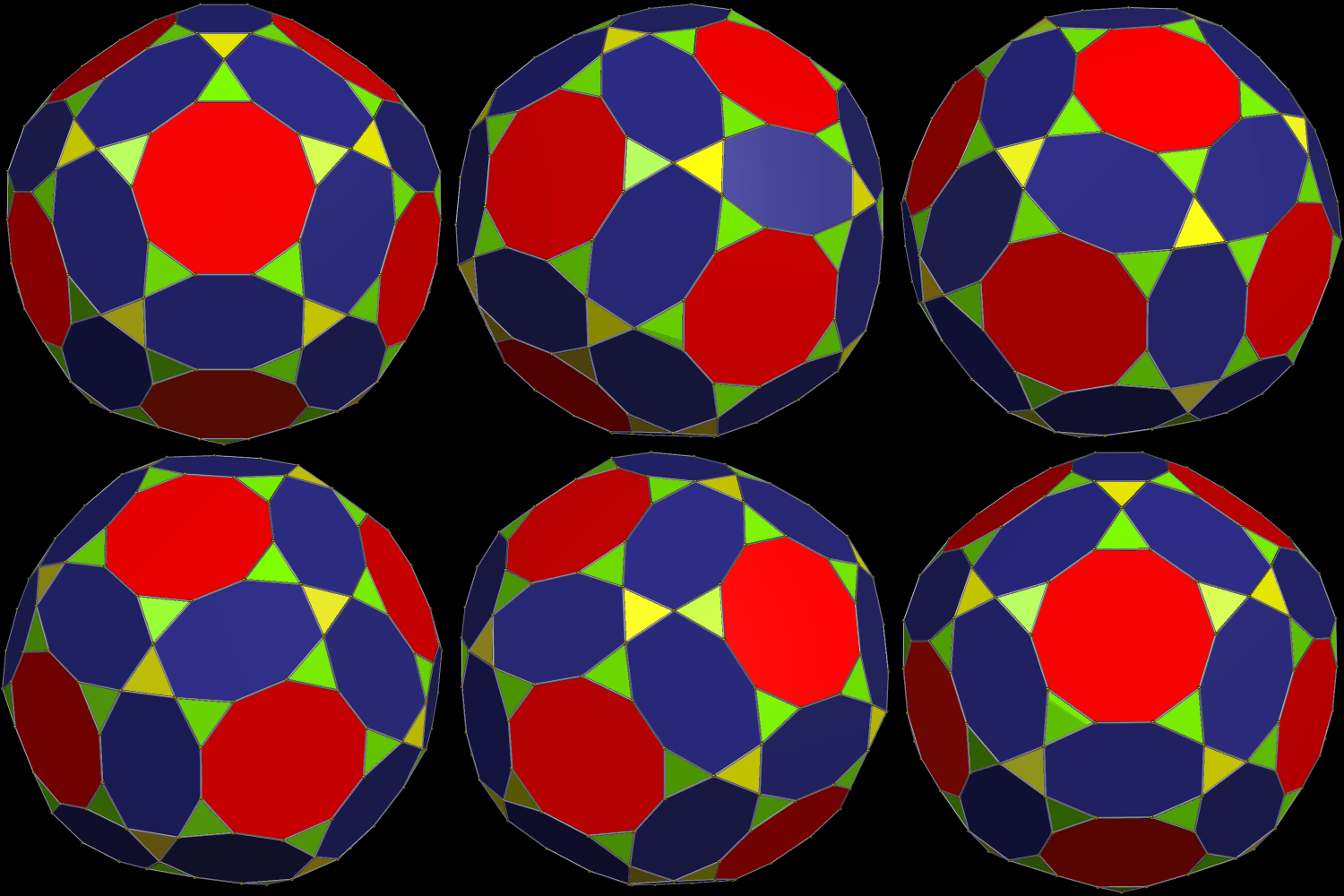
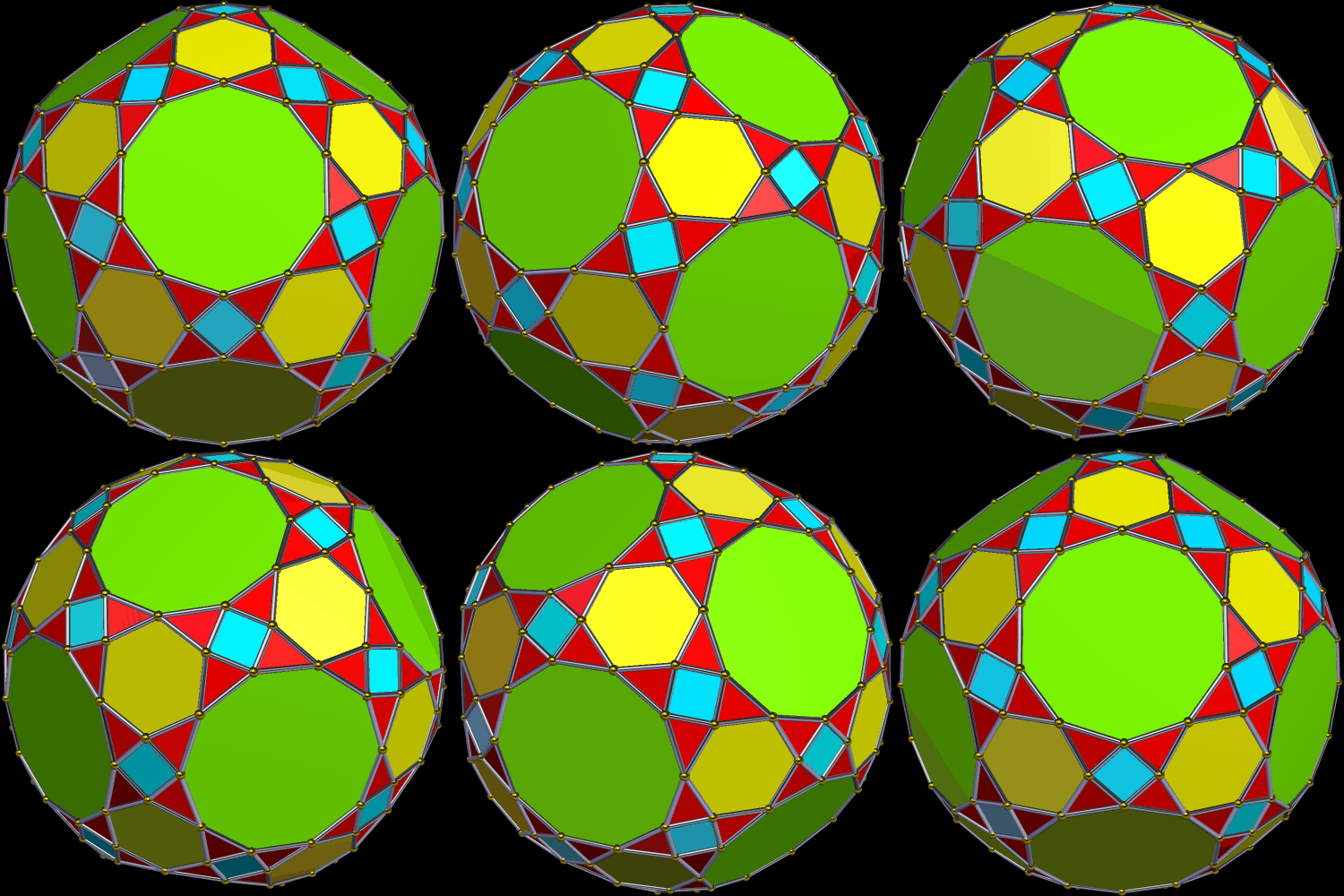
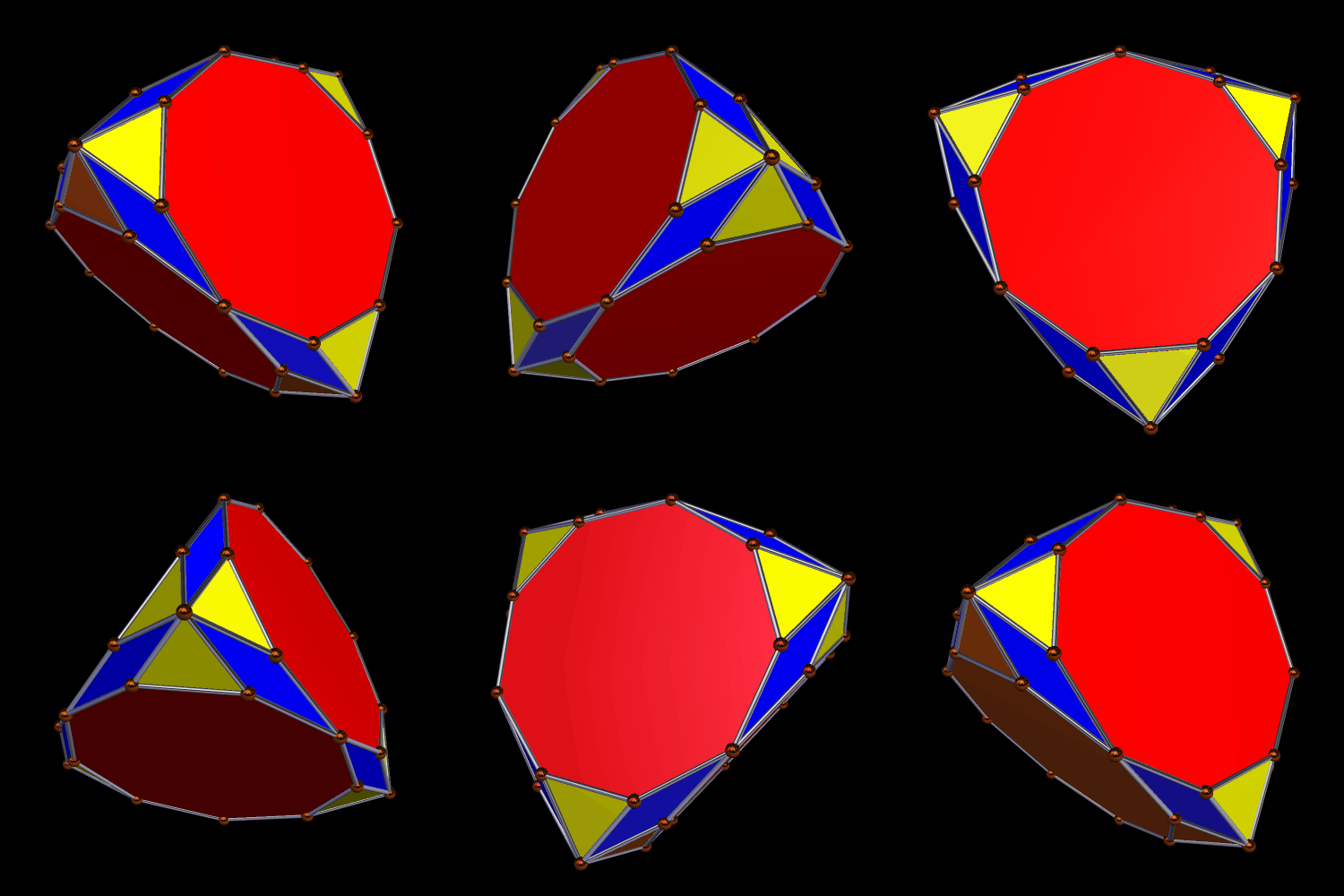
Symmetrohedra are polyhedra with some form of polyhedral symmetry, all faces convex, and many (but not all) faces regular. Here are four I have found using Stella 4d, a polyhedron-manipulation program you can try for yourself at http://www.software3d.com/Stella.php.

octagons and elongates dodecagons.gif

Octagon-dominated zonohedron

regular decagons and triangles, plus elongated octagons.gif
dual of GRID and dual's compound's convex hull 182 faces incl 12 deca 20 hexa 30 squares and 120 triangles

The second of these symmetrohedra is also a zonohedron, and is colored the way I usually color zonohedra, coloring faces simply by number of sides per face. That is why some of the red octagons in that solid are regular, while others are elongated. The other three symmetrohedra are colored by face type, with the modification that the fourth one’s scalene triangles are all given the same color.

These symmetrohedra were all generated using Stella 4d, a program you may try for yourself at http://www.software3d.com/Stella.php.

A Symmetrohedron with 74 Faces

74-faces-symmetroheron

Symmetrohedra have many regular faces, but irregular faces are allowed in them as well. The octagons, hexagons, and squares in this polyhedron are regular, but the 48 triangles are scalene. Here’s what it looks like with these triangles rendered invisible:

74-faces-symmetroheron-with-the-48-scalene-triagles-hidden

Stella 4d was used to make these images; it may be tried for free at this website: http://www.software3d.com/Stella.php.

Three Convex Polyhedra with Tetrahedral Symmetry, Each Featuring Four Regular Enneagons

FOUR ENNEAGONS

In addition to the four regular enneagons, the polyhedron above also has rhombi and isosceles triangles as faces. The next one, however, adds equilateral triangles, instead, to the four regular enneagons, along with trapezoids and rectangles.

fouR ENNEAGONS AND EQUITS AND RECTS AND TRAPS

Only the last of these three truly deserves to be called a symmetrohedron, in my opinion, for both its hexagons and enneagons are regular. Only the “bowtie trapezoid” pairs are irregular.

four reg enneagons and four reg hexagons and six pairs of bowtie hexagons

All three of these polyhedra were created using software called Stella 4d: Polyhedron Navigator, which I use frequently for the blog-posts here. You can try it for free at this website.

The Second of Dave Smith’s “Bowtie” Polyhedral Discoveries, and Related Polyhedra

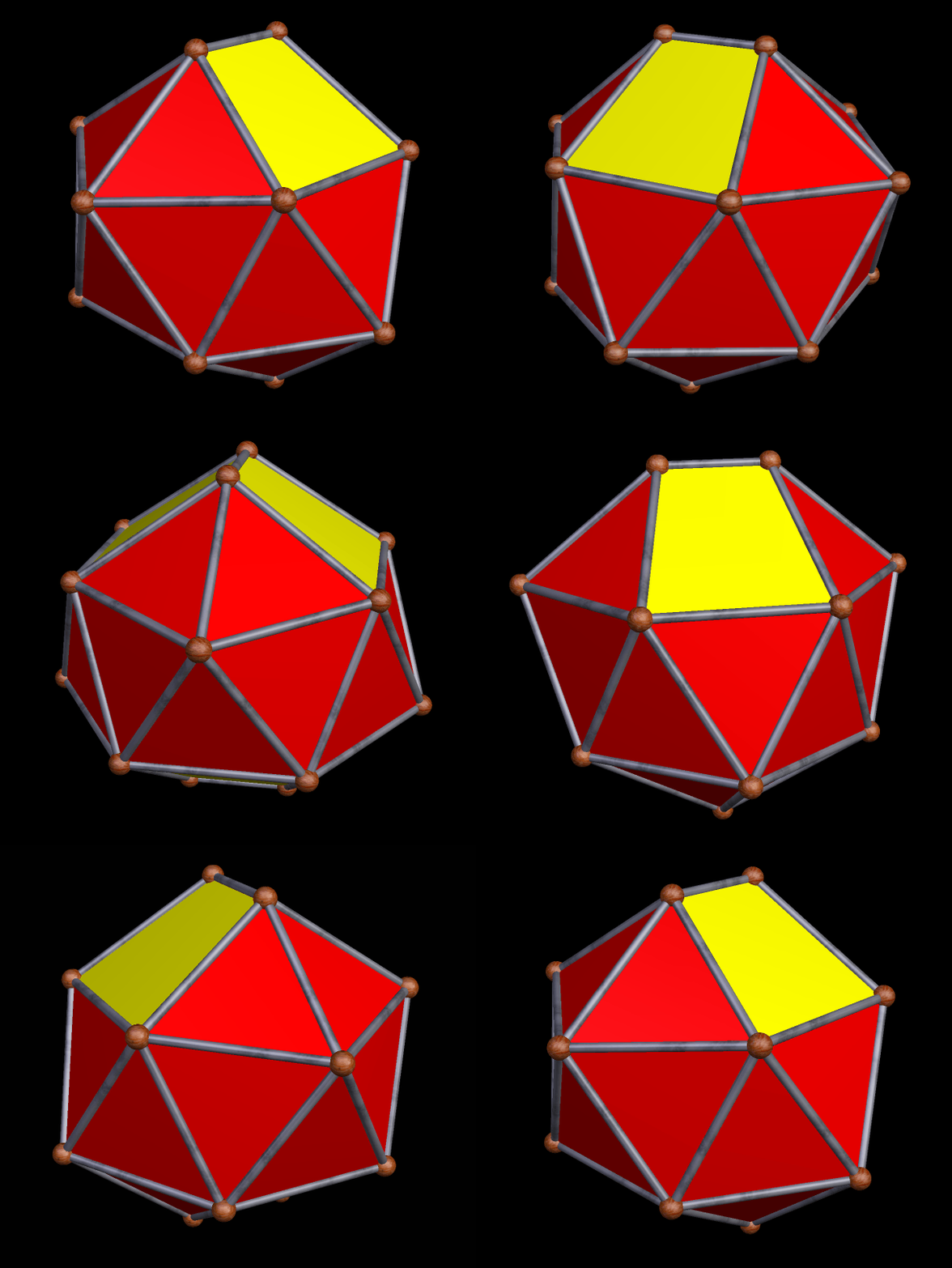
Dave Smith discovered the polyhedron in the last post here, shown below, with the faces hidden, to reveal how the edges appear on the back side of the figure, as it rotates. (Other views of it may be found here.)

Smith's puzzle

So far, all of Smith’s “bowtie” polyhedral discoveries have been convex, and have had only two types of face: regular polygons, plus isosceles trapezoids with three equal edge lengths — a length which is in the golden ratio with that of the fourth side, which is the shorter base.

Smiths golden trapezoid

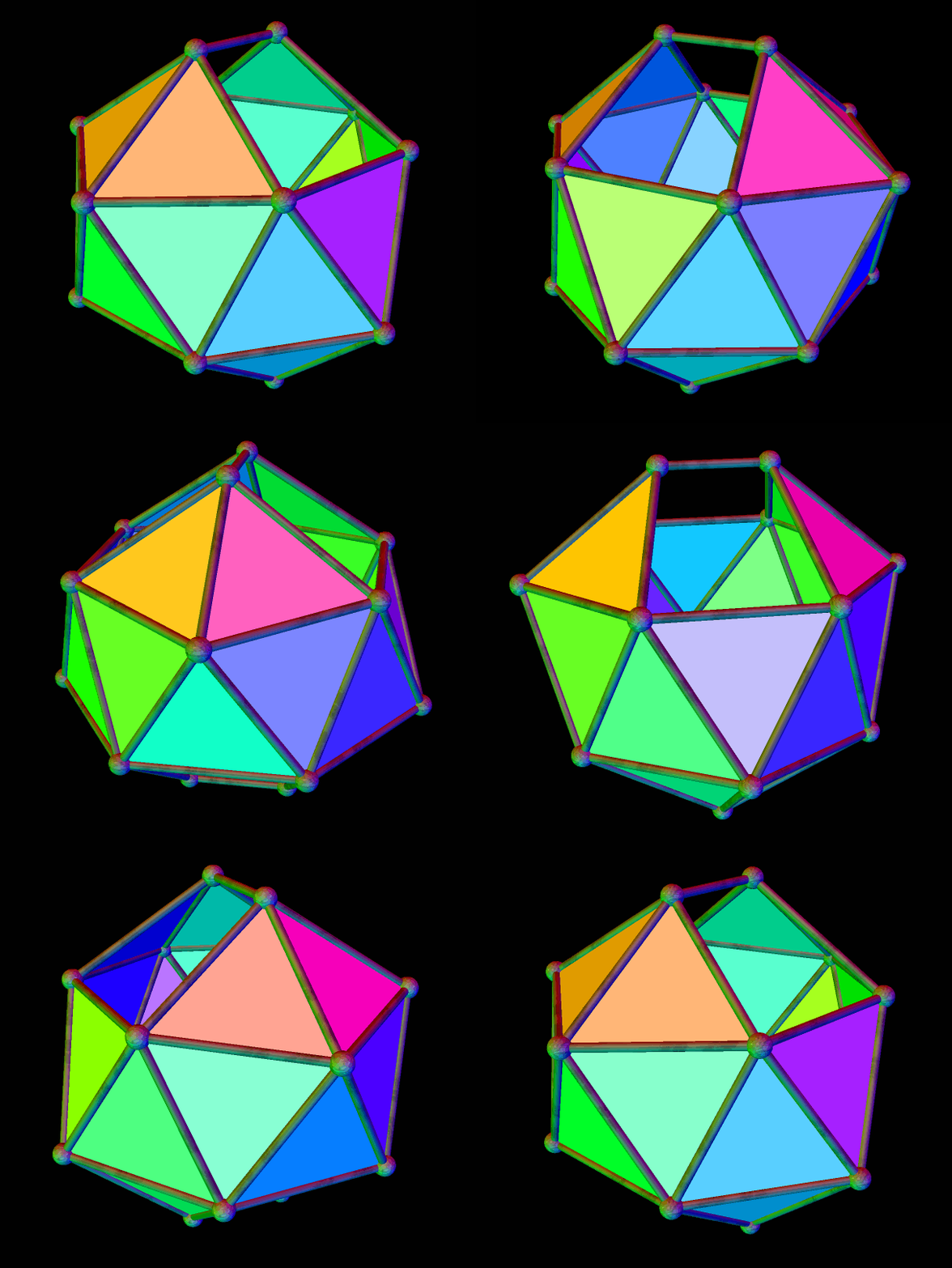
He also found another solid: the second of Smith’s polyhedral discoveries in the class of bowtie symmetrohedra. In it, each of the four pentagonal faces of the original discovery is augmented by a pentagonal pyramid which uses equilateral triangles as its lateral faces. Here is Smith’s original model of this figure, in which the trapezoids are invisible. (My guess is that these first models, pictures of which Dave e-mailed to me, were built with Polydrons, or perhaps Jovotoys.)

24-a-gon_HDR

With Stella 4d (available here), the program I use to make all the rotating geometrical pictures on this blog, I was able to create a version (by modifying the one created by via collaboration between five people, as described in the last post) of this interesting icositetrahedron which shows all four trapezoidal faces, as well as the twenty triangles.

Smith's Icositetrahedron

Here is another view: trapezoids rendered invisible again, and triangles in “rainbow color” mode.

Smith's Icositetrahedron H

It is difficult to find linkages between the tetrapentagonal octahedron Smith found, and other named polyhedra (meaning  I haven’t yet figured out how), but this is not the case with this interesting icositetrahedron Smith found. With some direct, Stella-aided polyhedron-manipulation, and a bit of research, I was able to find one of the Johnson solids which is isomorphic to Smith’s icositetrahedral discovery. In this figure (J90, the disphenocingulum), the trapezoids of this icositetrahedron are replaced by squares. In the pyramids, the triangles do retain regularity, but, to do so, the pentagonal base of each pyramid is forced to become noncoplanar. This can be difficult to see, however, for the now-skewed bases of these four pyramids are hidden inside the figure.
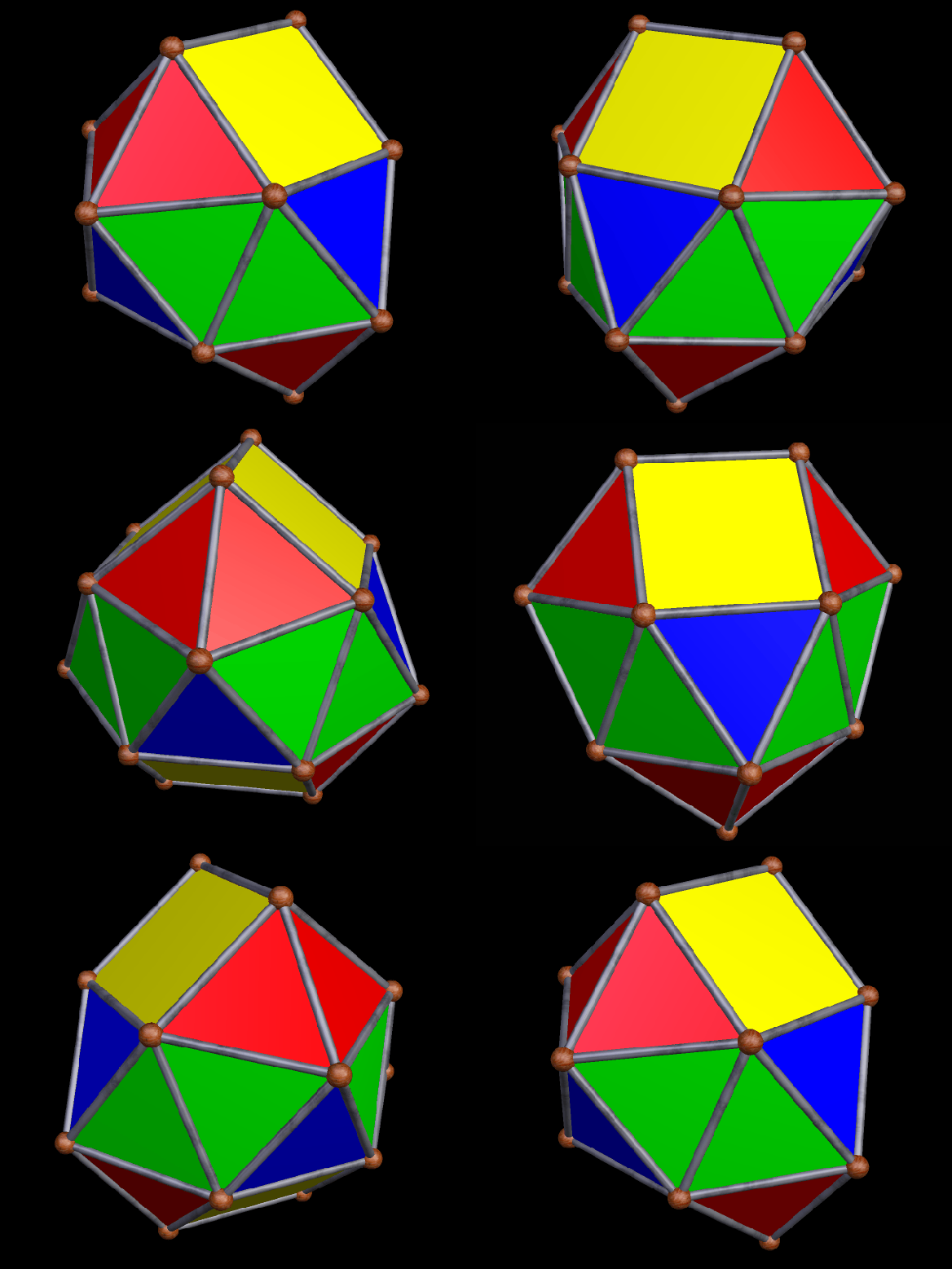
J90 disphenocingulum

Both of these solids Smith found, so far (I am confident that more await discovery, by him or by others) are also golden polyhedra, in the sense that they have two edge lengths, and these edge lengths are in the golden ratio. The first such polyhedron I found was the golden icosahedron, but there are many more — for example, there is more than one way to distort the edge lengths of a tetrahedron to make golden tetrahedra.

To my knowledge, no ones knows how many golden polyhedra exist, for they have not been enumerated, nor has it even been proven, nor disproven, that their number is finite. At this point, we simply do not know . . . and that is a good way to define areas in mathematics in which new work remains to be done. A related definition is one for a mathematician: a creature who cannot resist a good puzzle.

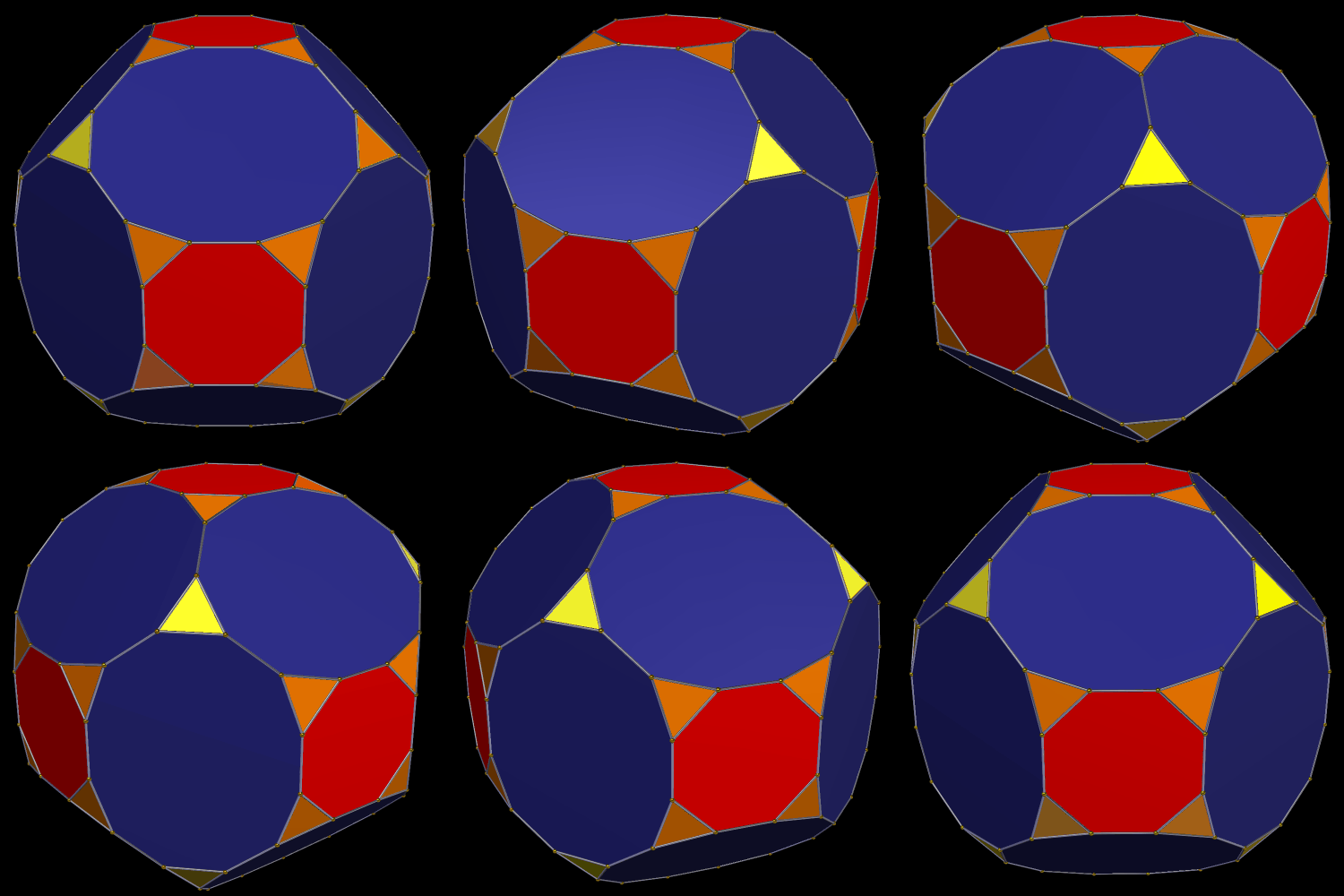
Two Polyhedra Featuring Twenty Regular Octadecagons Each

The first of these two polyhedra also includes isosceles triangles, two types of isosceles trapezoids, and twelve regular pentagons.

reg octadecagons

It is also possible to make a similar polyhedron where the twelve pentagons are replaced by regular decagons, but only by allowing the twenty octadecagons to overlap.

Unnamessd

These polyhedra were constructed using Stella 4d, which can be found at http://www.software3d.com/Stella.php.

A Symmetrohedron Featuring Regular Dodecagons, Regular Octagons, Isosceles Trapezoids, and Narrow Rectangles

Image

replacement

I made this using Stella 4d, software available at http://www.software3d.com/Stella.php.

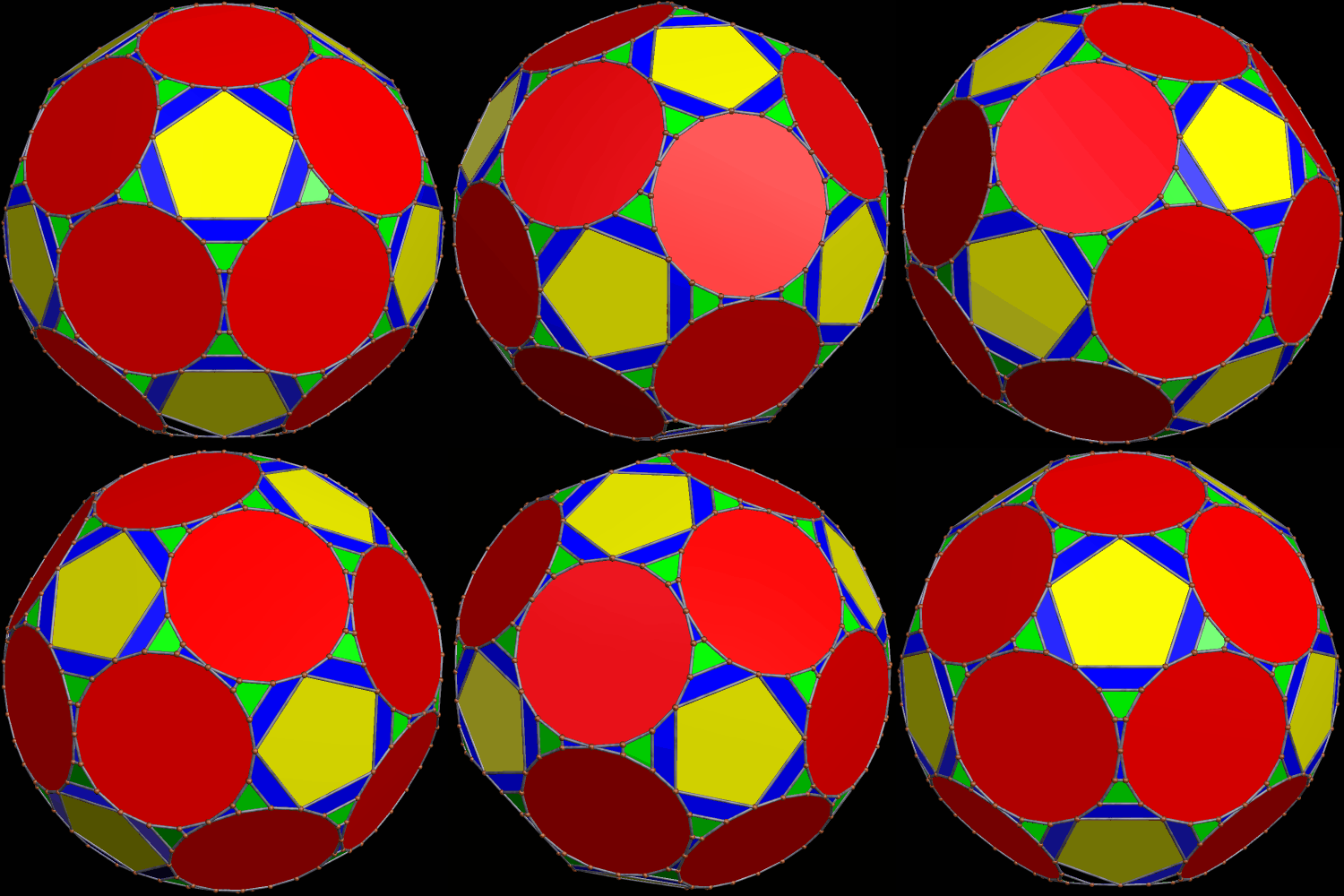
Two Symmetrohedra Featuring Regular Pentadecagons

Image

92 faces including 20 reg hexagons and 12 regular pentadecagons

I’ve posted “bowtie” symmetrohedra on this blog, before, which I thought I had discovered before anyone else — only to find, later, that other researchers had found the exact same polyhedra first. Those posts have now been edited to include credit to the original discoverers. With polyhedra, finding something interesting, for the first time ever, is extremely difficult. This time, though, I think I have succeeded — by starting with the idea of using regular pentadecagons as faces.

Software credit: Stella 4d was the tool I used to create this virtual model. You can try a free trial download of this program here: http://www.software3d.com/Stella.php.

*** *** ***

Update:  once again, I have been beaten to the punch! A bit of googling revealed that Craig Kaplan and George Hart found this particular symmetrohedron before I did, and you can see it among the many diagrams in this paper: http://archive.bridgesmathart.org/2001/bridges2001-21.pdf.

You’ll also find, in that same paper, a version of this second pentadecagon-based symmetrohedron:

15_2

There is a minor difference, though, between the Kaplan-Hart version of this second symmetrohedron, and mine, and it involves the thirty blue faces. I adjusted the distance between the pentadecagons and the polyhedron’s center, repeatedly, until I got these blue faces very close to being perfect squares. They’re actually rectangles, but just barely; the difference in length between the longer and shorter edges of these near-squares is less than 1%. I have verified that, with more work, it would be possible to make these blue faces into true squares, while also keeping the pentadecagons and triangles regular. I may actually do this, someday, but not today. Simply constructing the two symmetrohedra shown in this post took at least two hours, and, right now, I’m simply too tired to continue!

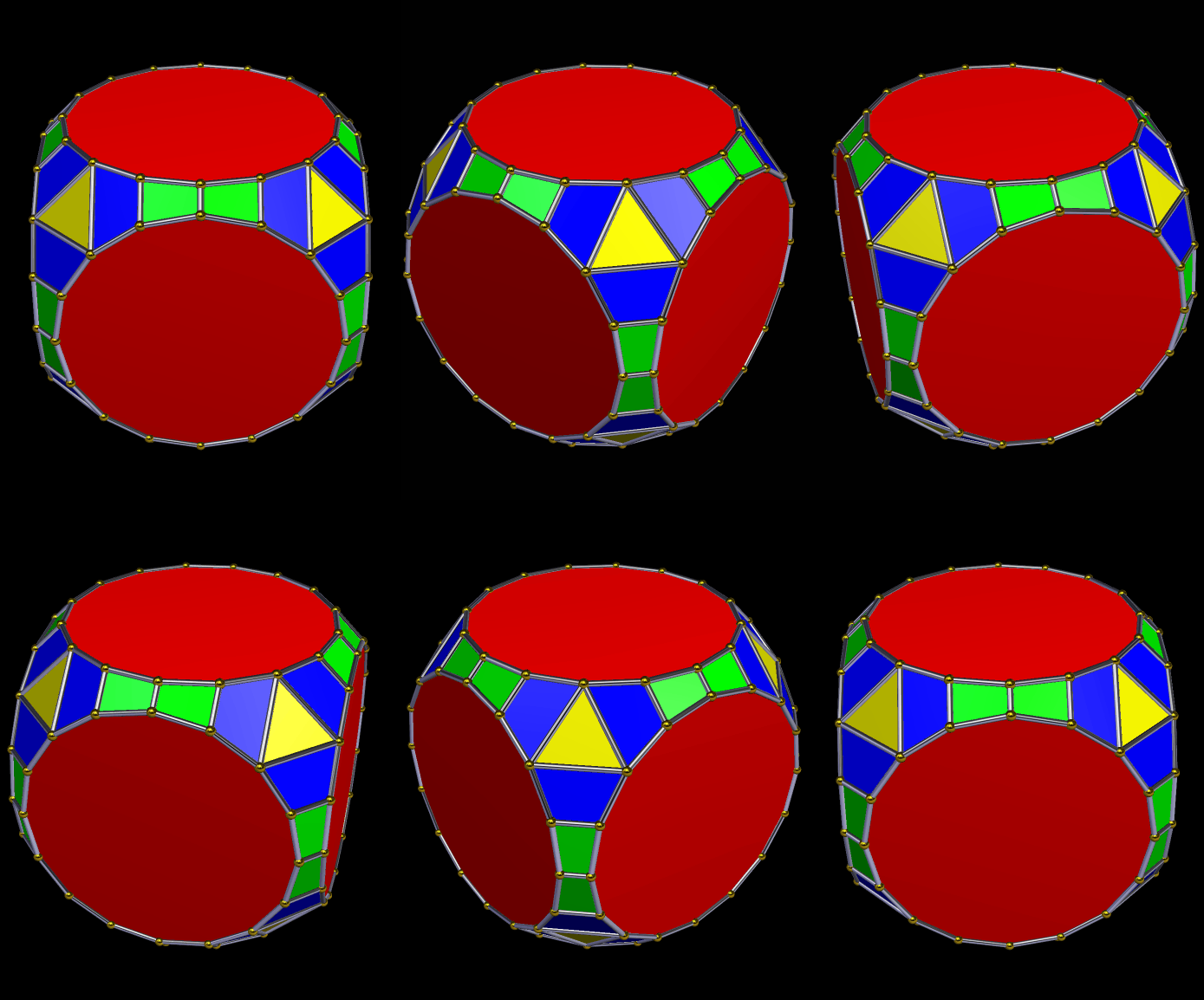
A Cube-Based “Bowtie” Symmetrohedron Featuring Six Regular Hexadecagons, Eight Equilateral Triangles, and Two Dozen Each of Two Types of Icosceles Trapezoid

Image

A Cube-Based Symmetrohedron Featuring Six Regular Hexadecagons, Eight Equilateral Triangles, and Two Types of Icosceles Trapezoids

The two types of trapezoid are shown in blue and green. There are twenty-four blue ones (in eights set of three, surrounding each triangle) and twenty-four green ones (in twelve sets of two, with each set in “bowtie” formation).

This symmetrohedron follows logically from one that was already known, and pictured at http://www.cgl.uwaterloo.ca/~csk/projects/symmetrohedra/, with the name “bowtie cube.” Here’s a rotating version of it.

dodecagons and hexagons

(Images created with Stella 4d — software you can try yourself at http://www.software3d.com/Stella.php.)

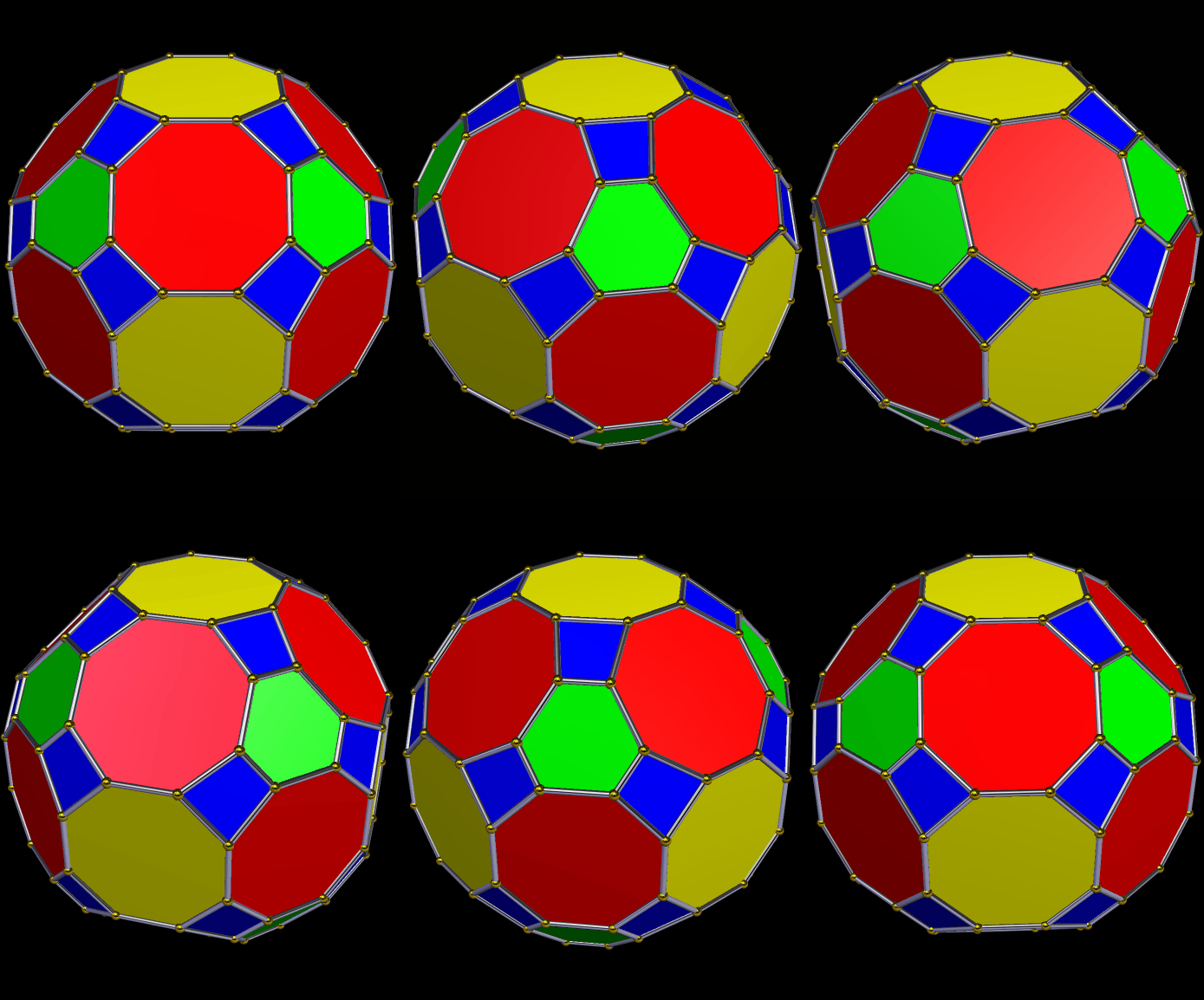
Symmetrohedron Featuring Eighteen Regular Octagons, Eight Equiangular Hexagons, and Twenty-four Isosceles Trapezoids

Image

Symmetrohedron Featuring Eighteen Regular Octagons, Eight Equiangular Hexagons, and Twenty-four Isosceles Trapezoids

The regular octagons are of the same size, but of two different types, when one considers the pattern of other faces surrounding them. This is why six of them are yellow, and twelve are red.

If the hexagons and isosceles trapezoids were closer to regularity, this would qualify as a near-miss to the Johnson solids, but it falls short on this test. Is is, instead, a “near-near-miss” — and not the first such polyhedron to appear on this blog, either.

(Image created with Stella 4d — software you can try yourself at http://www.software3d.com/Stella.php.)