A Polyhedral Journey, Starting With the Truncated Tetrahedron

Here’s the truncated tetrahedron. It is the simplest of the Archimedean solids.

I decided to “take a walk” with this polyhedron. First, I used Stella 4d (available here) to make the compound of this solid and its dual, the Catalan solid named the triakis tetrahedron.
Next, also using Stella (as I’m doing throughout this polyhedral journey), I formed the convex hull of this polyhedron — a solid made of kites and rhombi.

For the next polyehdron on this journey, I formed the dual of this convex hull. This solid is a symmetrohedron, featuring four regular hexagons, four equillateral triangles, and twelve isosceles triangles.

Next, I used a function of this program called “try to make faces regular.” Some this function works, and sometimes it doesn’t, if it isn’t mathematically possible — as it the case here, where the only thing that remained regular was the equilateral triangles. The hexagons in the resulting solid are equilateral, but not equiangular.
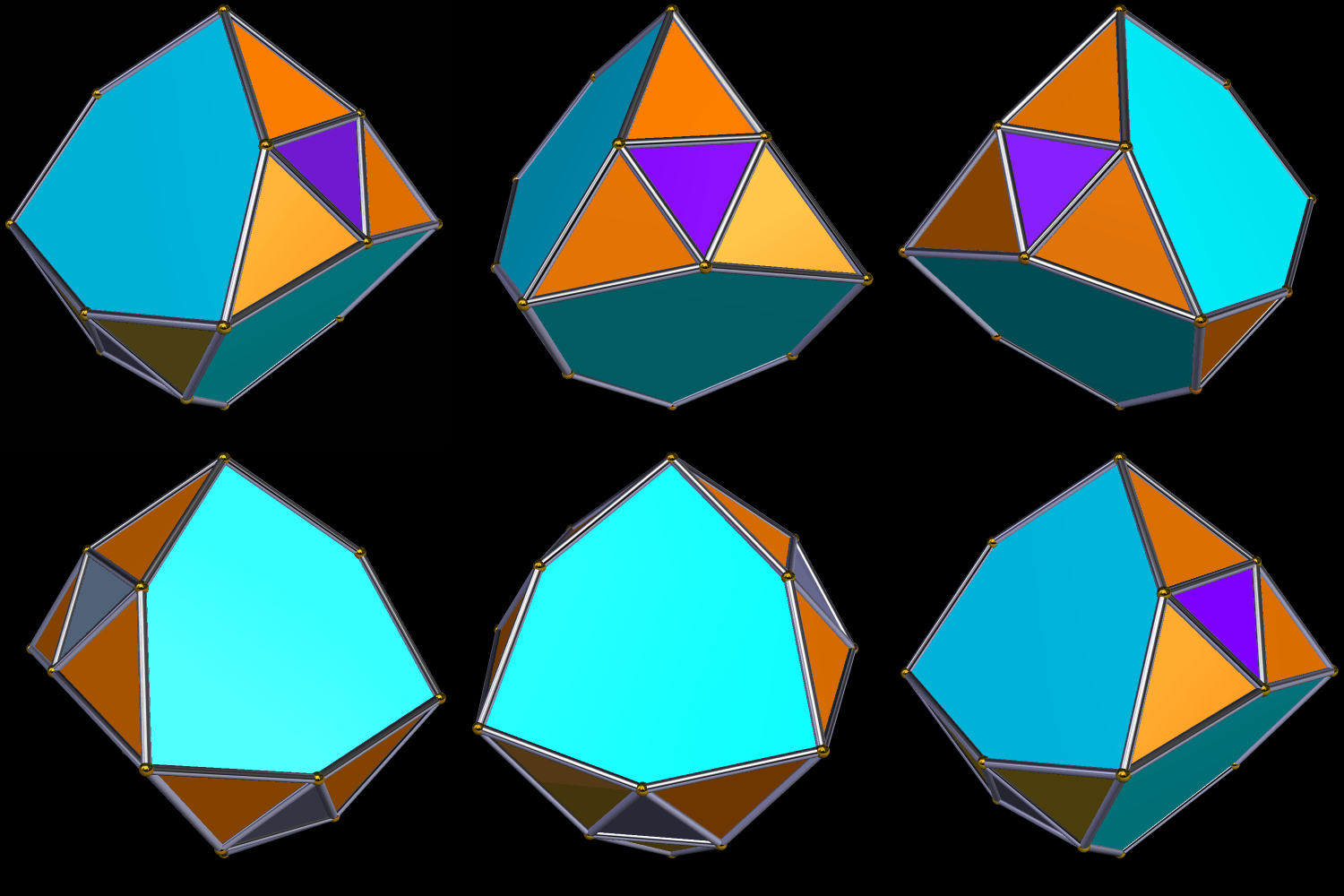
The next thing I did was to examine the dual of this latest polyhedron — another solid made of kites and rhombi, but with broader rhombi and narrower kites.
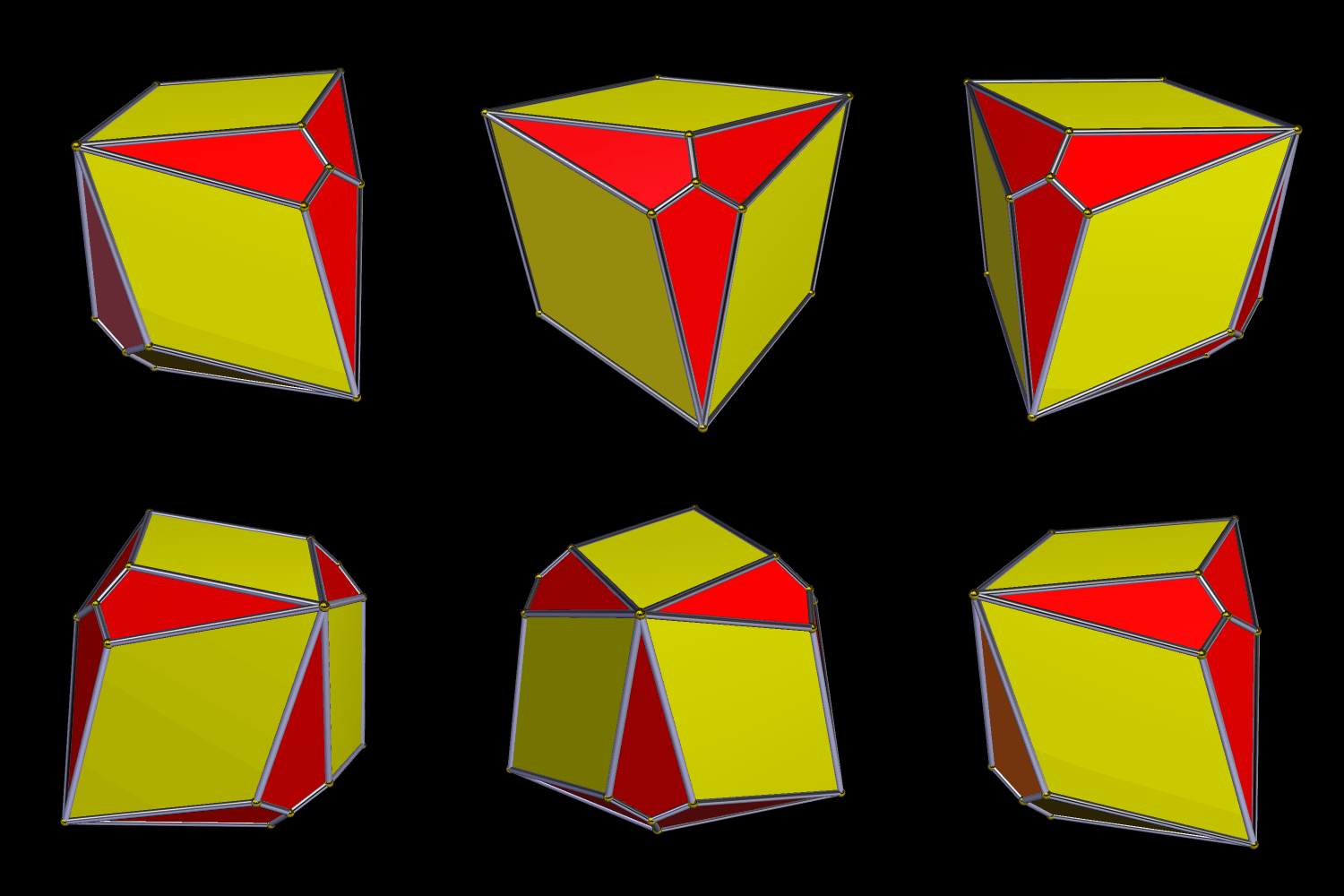
I then started stellating this solid. The 16th stellation was interesting, so I made a virtual model of it.

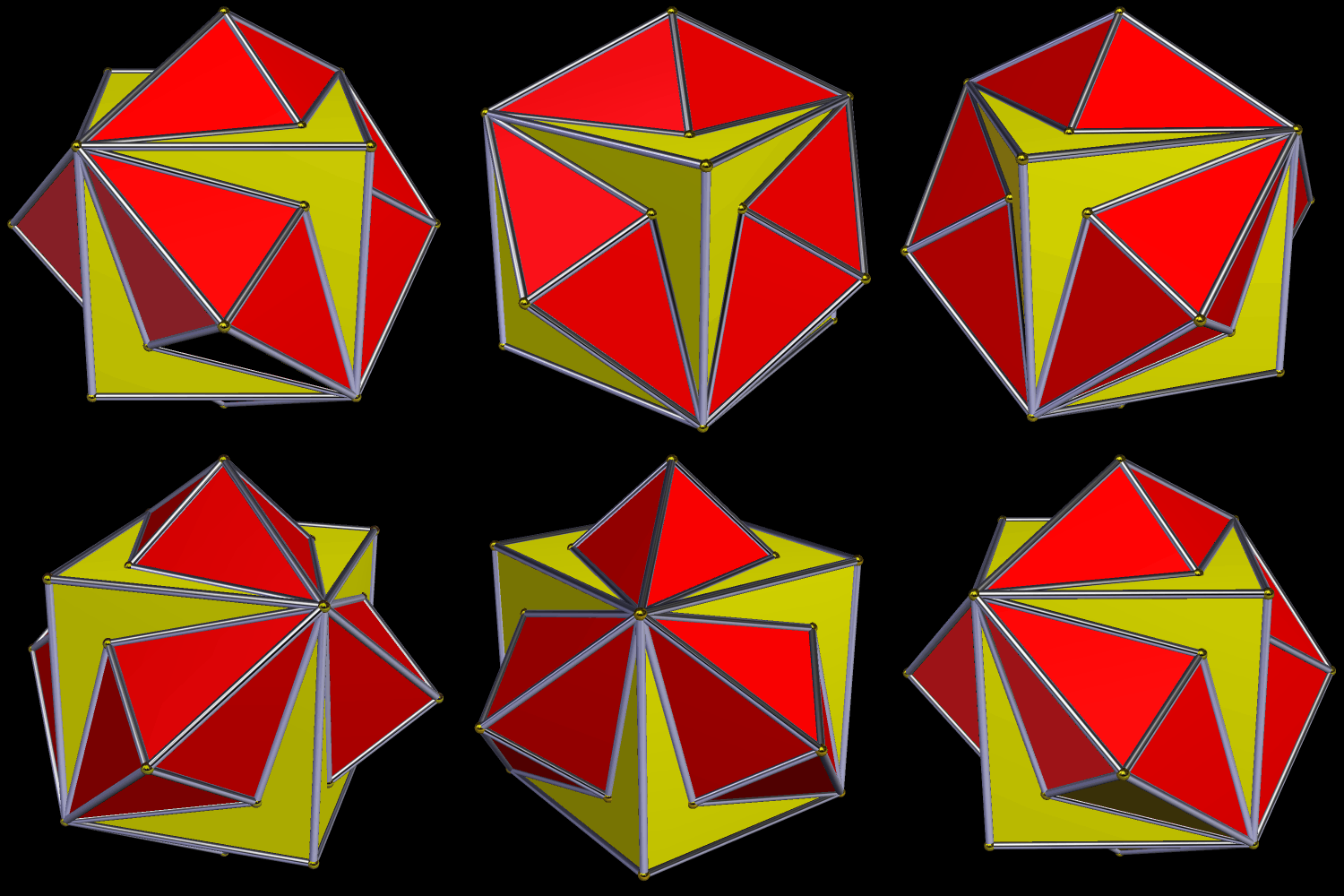
Stellating this twice more formed the 18th stellation, which turned out to be a compound of the cube and a “squished” version of the rhombic dodecahedron. This is when I decided that this particular polyhedral journey had come to an end.
Two Six-Part Polyhedral Compounds

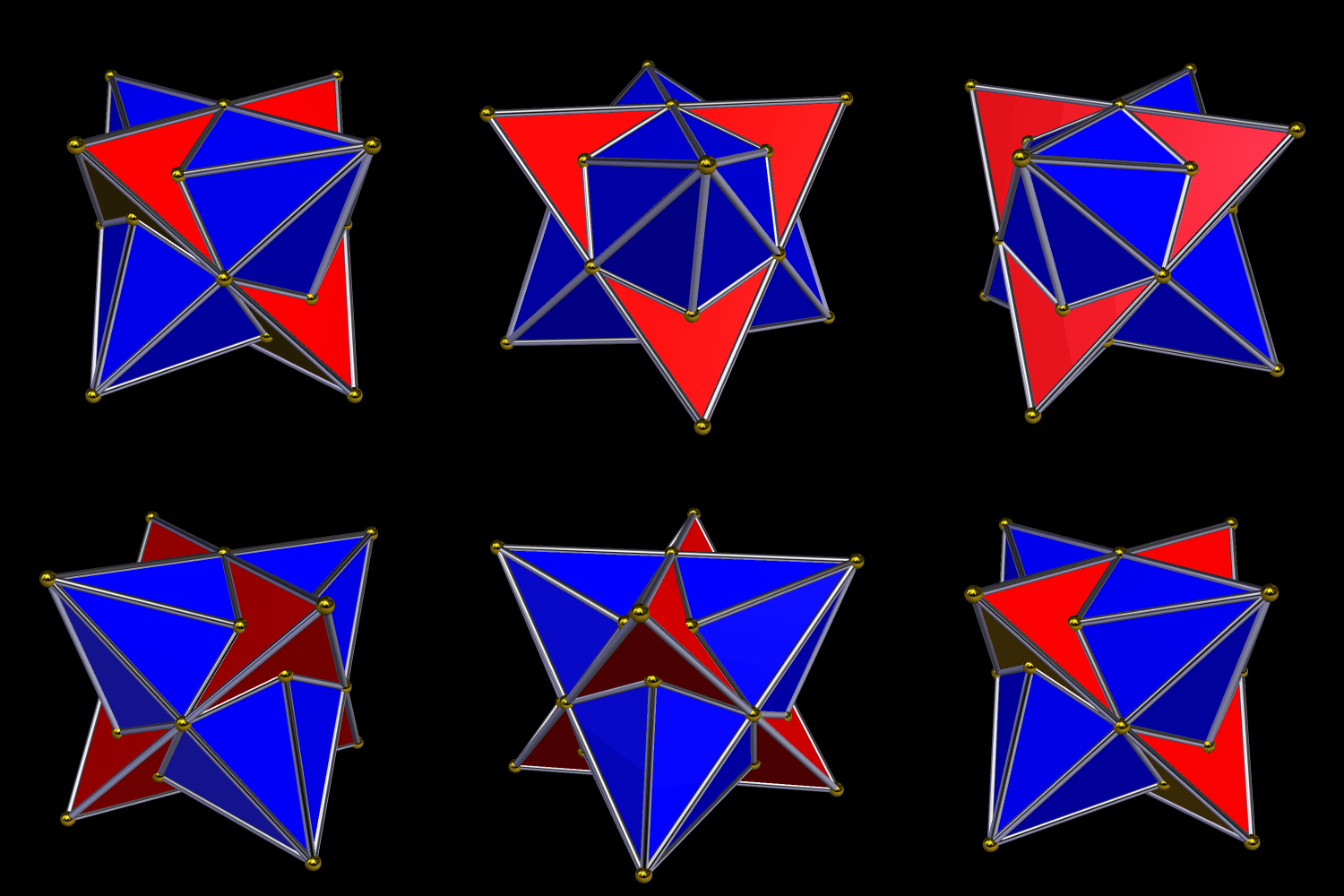
I stumbled across this compound the other day, while playing around with Stella 4d: Polyhedron Navigator (available here).

At first, I thought this was a compound of six tetrahedra, but careful examination reveals that the tetrahedra are missing parts along the middle of some of their edges. I looked up the canonical compound of six tetrahedra in Stella‘s library, and here it is. As you can see, it’s quite similar — but it does have those “missing” pieces added.

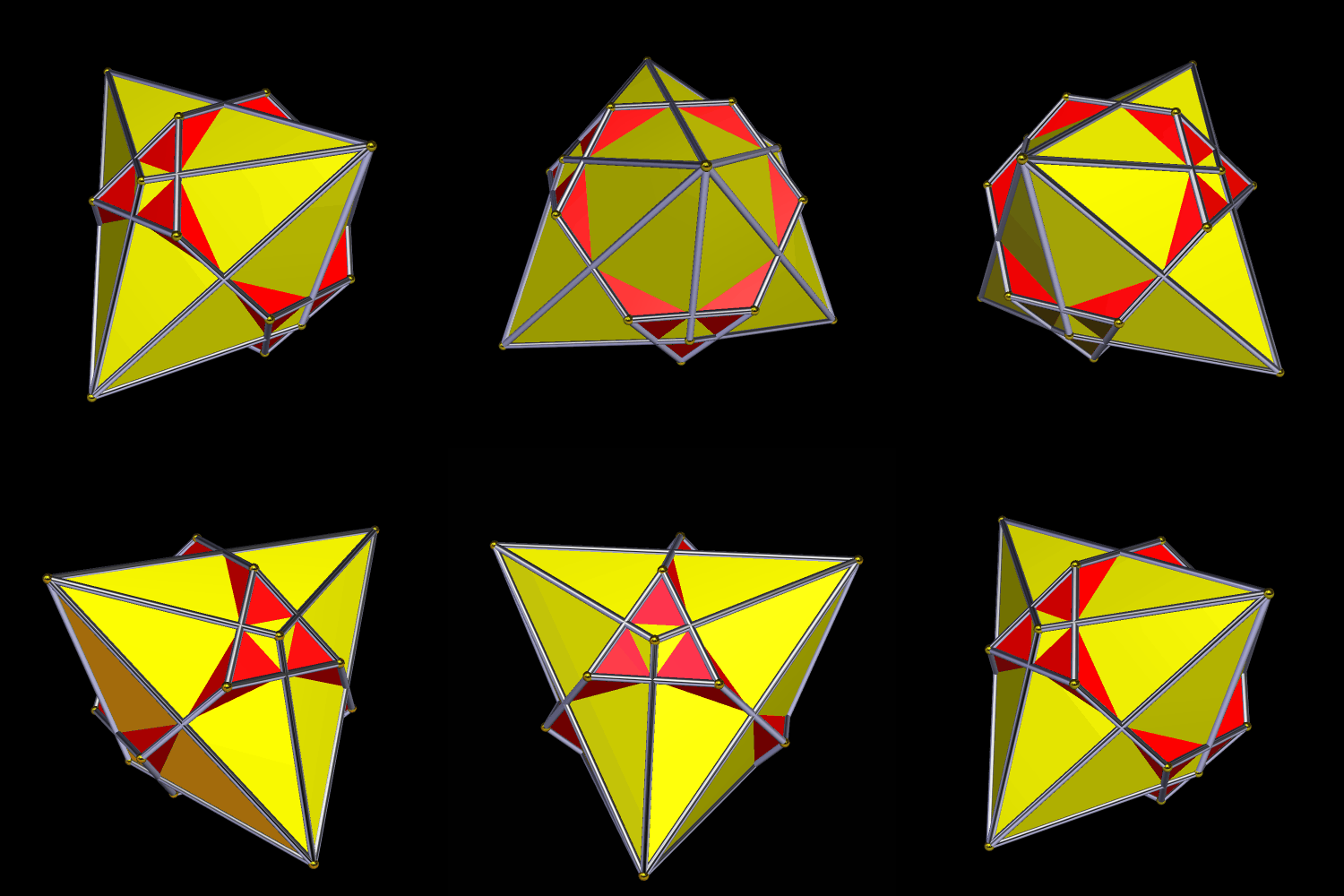
The Compound of the Platonic Tetrahedron and the Triakis Tetrahedron

I made this compound using Stella 4d, which you can try for free at this website.

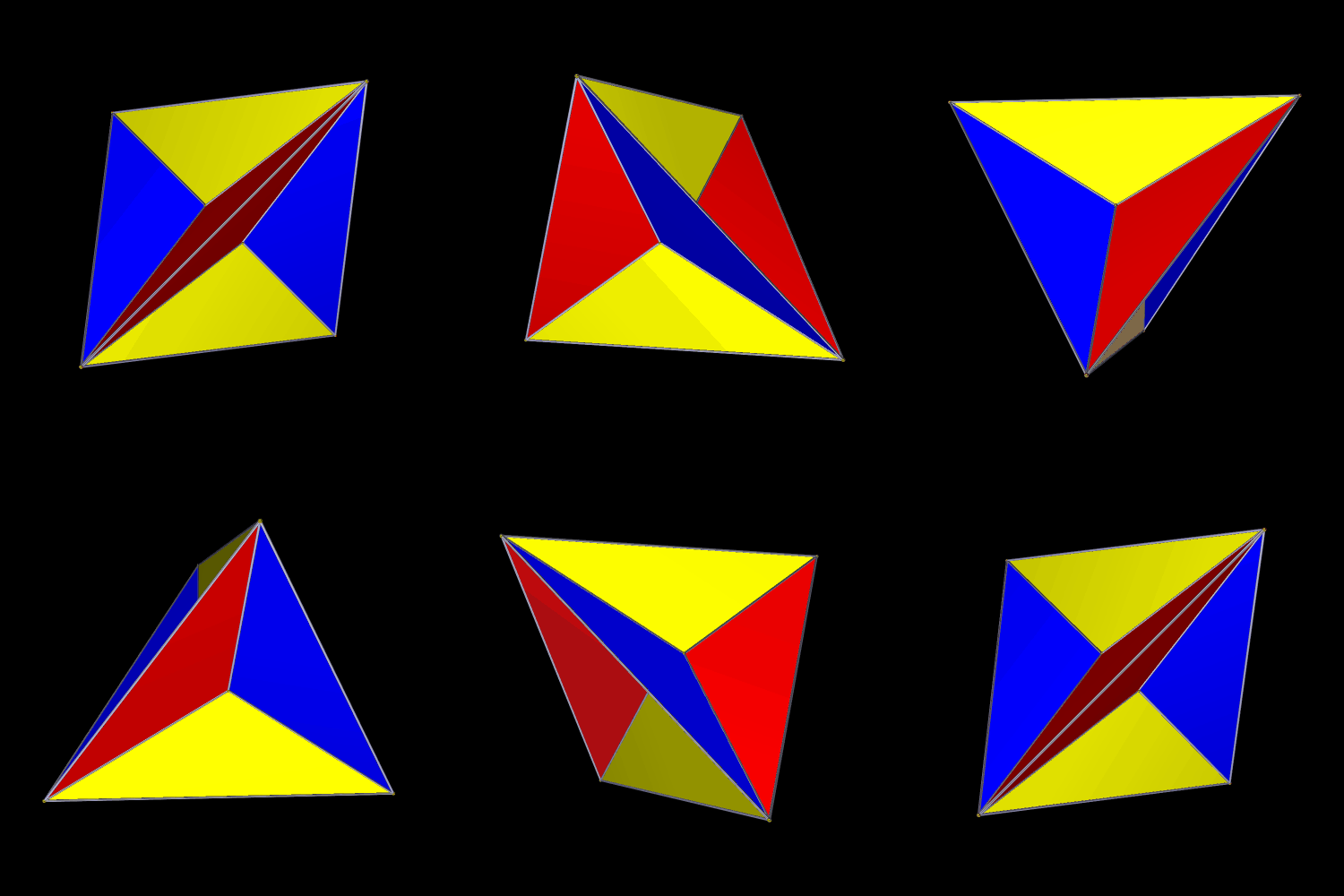
An Excavated Tetrahedron

Polyhedral excavation is the opposite of augmentation. In this excavated tetrahedron, short pyramids have been removed from each face. I made this using Stella 4d, which can be tried for free at this website.

A Compound of Three Elongated Tetrahedra

I made this using Stella 4d, a program you can try for free at http://www.software3d.com/Stella.php.

Five Tetrahedra

I made this variation of Kepler’s Stella Octangula, using Stella 4d, software you can try for free at this website.

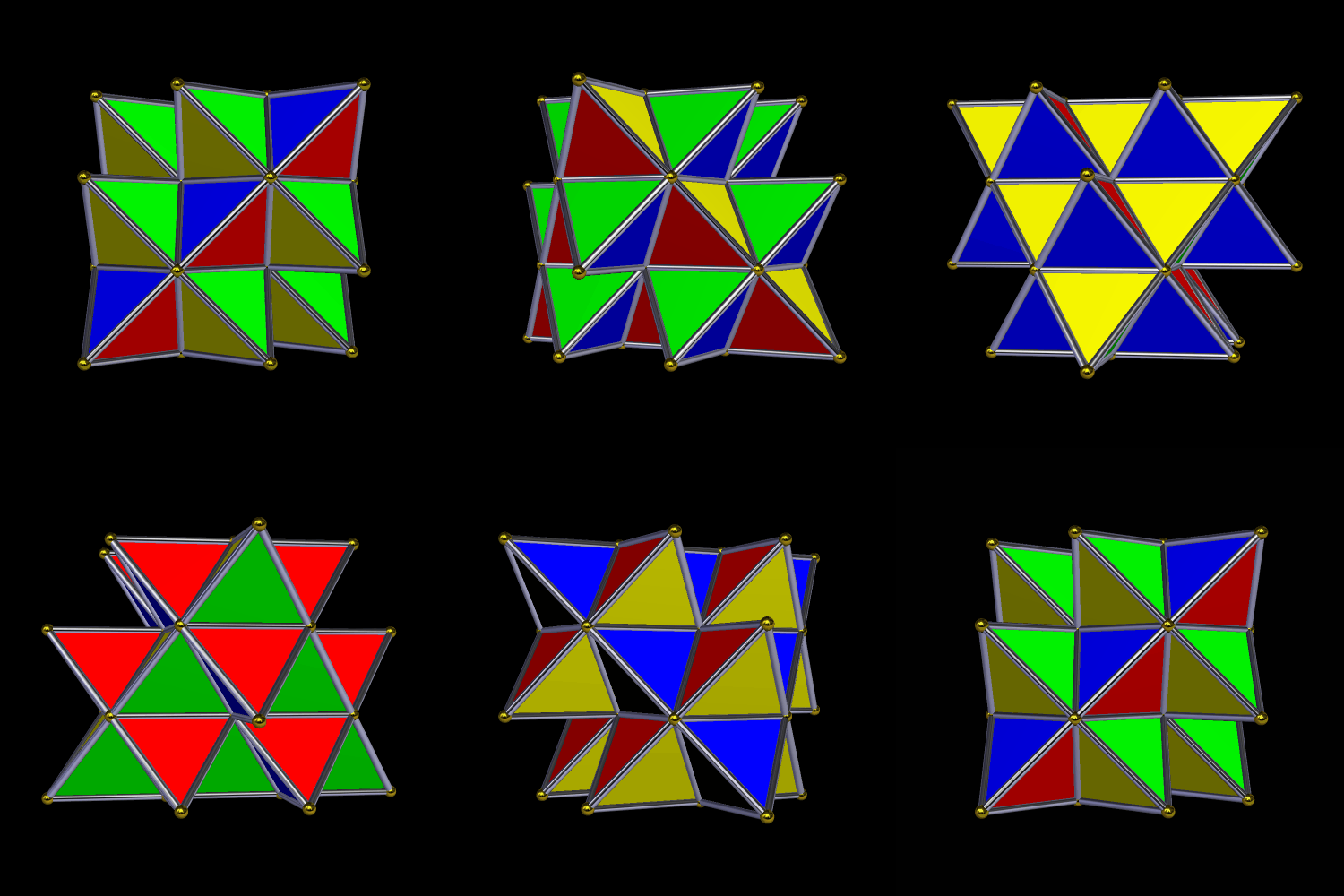
Spectral Tetrahedra

Stella 4d: Polyhedron Navigator has a “put models on vertices” function which I used to build this complex of tetrahedra. If you’d like to try this software for yourself, there is a free trial version available at http://www.software3d.com/Stella.php.

The 12th Stellation of the Triakis Tetrahedron

Created using Stella 4d, which you can try for free at http://www.software3d.com/Stella.php.

A Tetrahedral Array of Pulsating Tetrahedra

Unnamed.gif

I created this using Stella 4d: Polyhedron Navigator. You may try this software, for free, at http://www.software3d.com/Stella.php.

The Eleventh Stellation of the Truncated Octahedron Is an Interesting Polyhedral Compound

This compound has three parts: two tetrahedra, plus one smaller cube. I made it using Stella 4d: Polyhedron Navigator, which you can try for free at http://www.software3d.com/Stella.php.