Fifteen Interesting Convex Hulls

Image

Some Interesting Convex Hulls, and Duals of Convex Hulls

Each of the smaller pictures below may be enlarged by clicking on them.

dual of 182face which herself has 240 faces

All of these images were produced using Stella 4d, which you may try or buy at http://www.software3d.com/Stella.php.

Dual of Convex hull

This one is a variant of the icosidodecahedron.

cool Convex hull

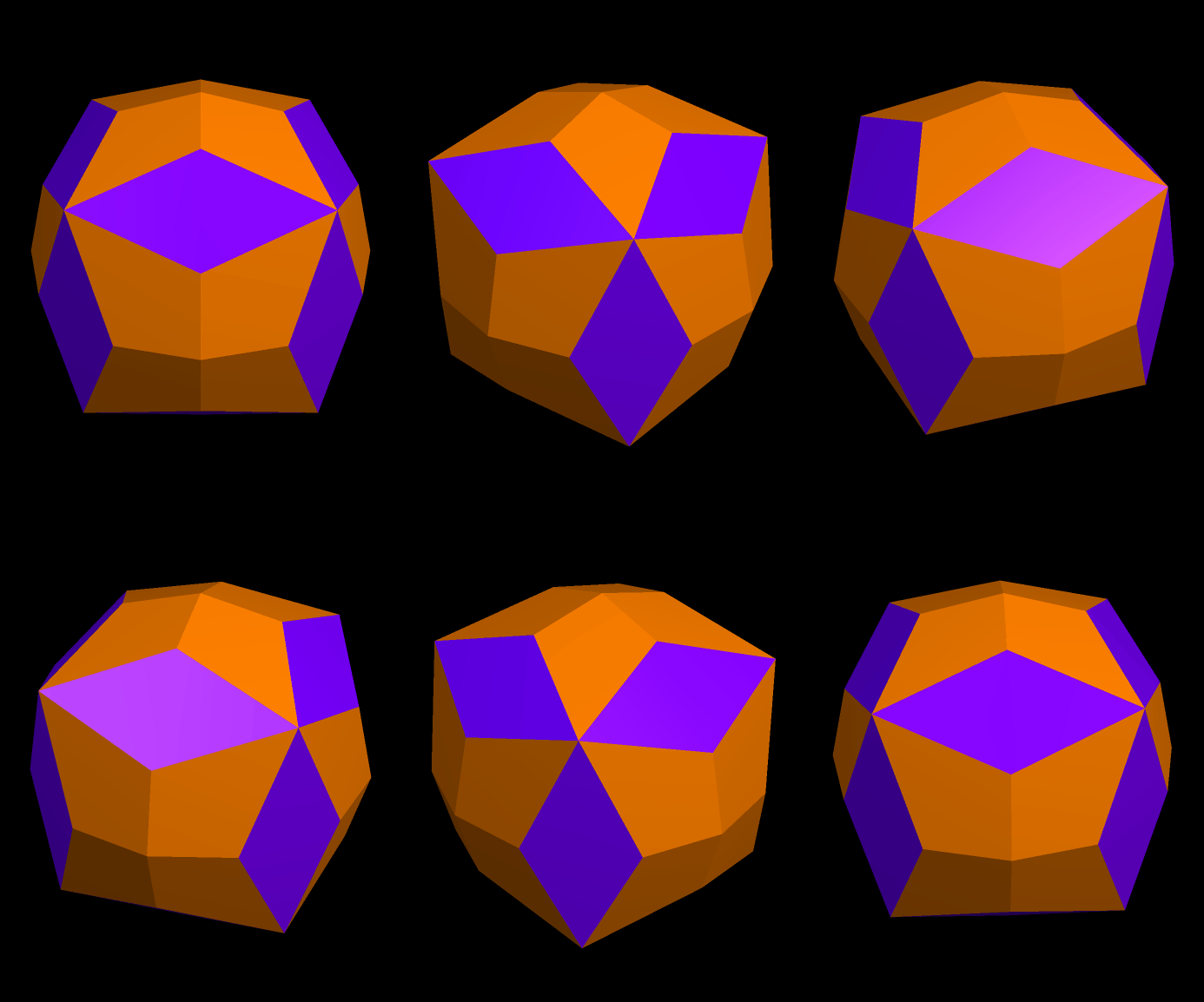
This one is based on the rhombcuboctahedron.

Convex hu3

This one is made of squares, rhombi, and irregular pentagons.

Dual of Convex hull2

This one is composed entirely of pentagons and hexagons, none of which are regular.

Dual of Convex hull X

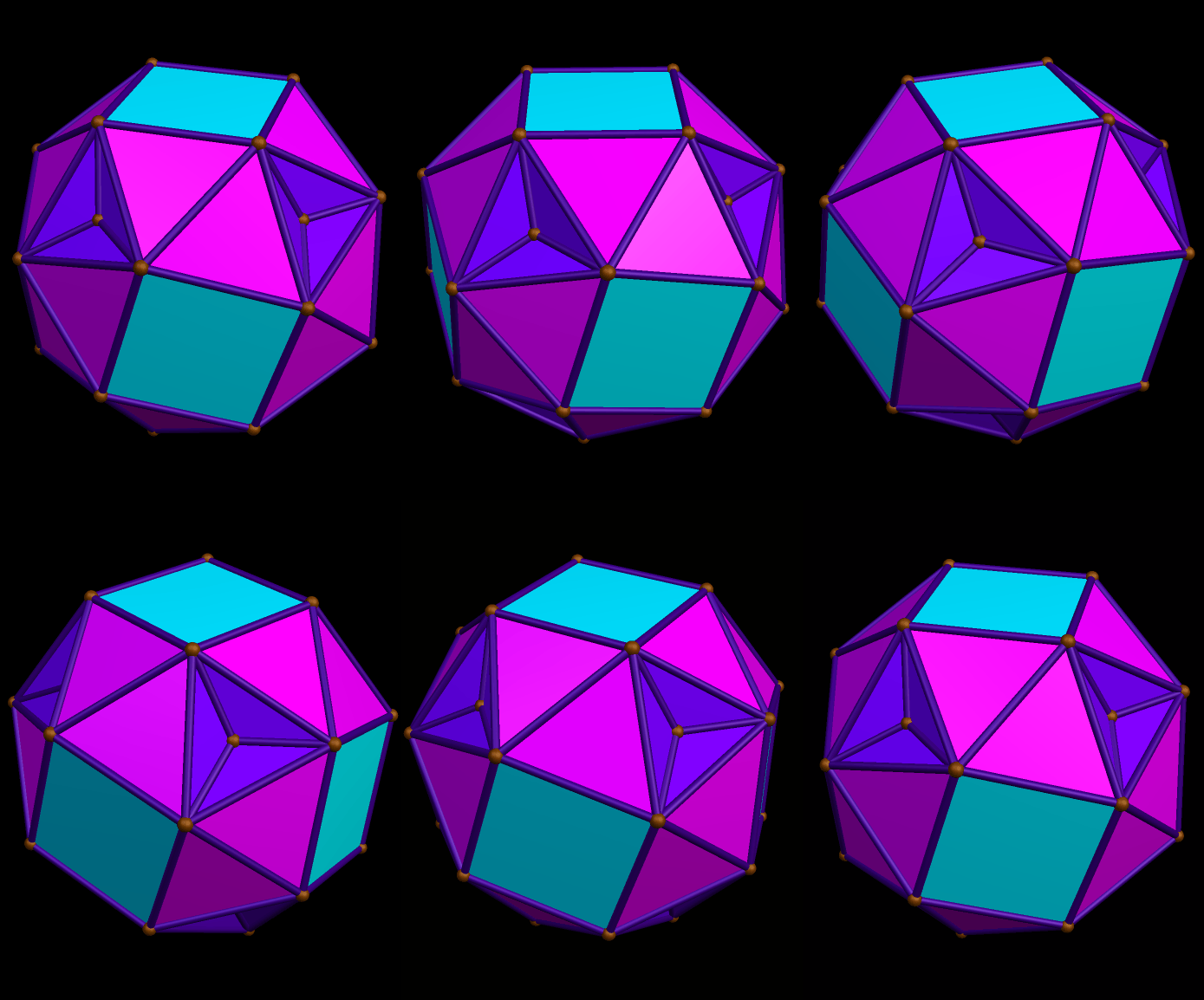
This one has faces which include squares, rhombi, and isosceles triangles.

Faceted Dual

In this one, the hexagons and squares are regular. Only the isosceles triangles are irregular.

h&o&it

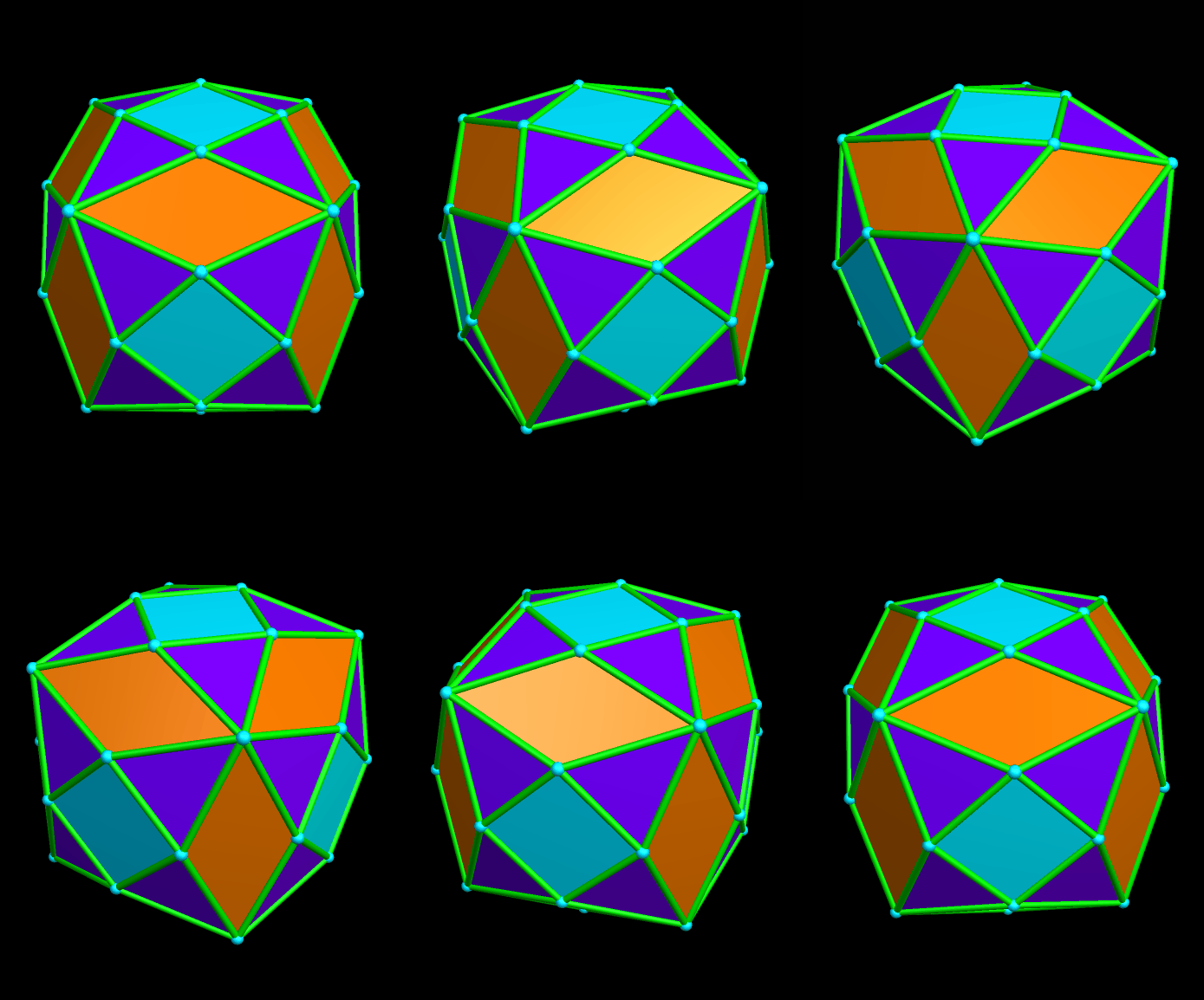
This is the dual of the last one shown here. Its faces are all either kites or rhombi.

h&o&it's dual made of kites and rhombi

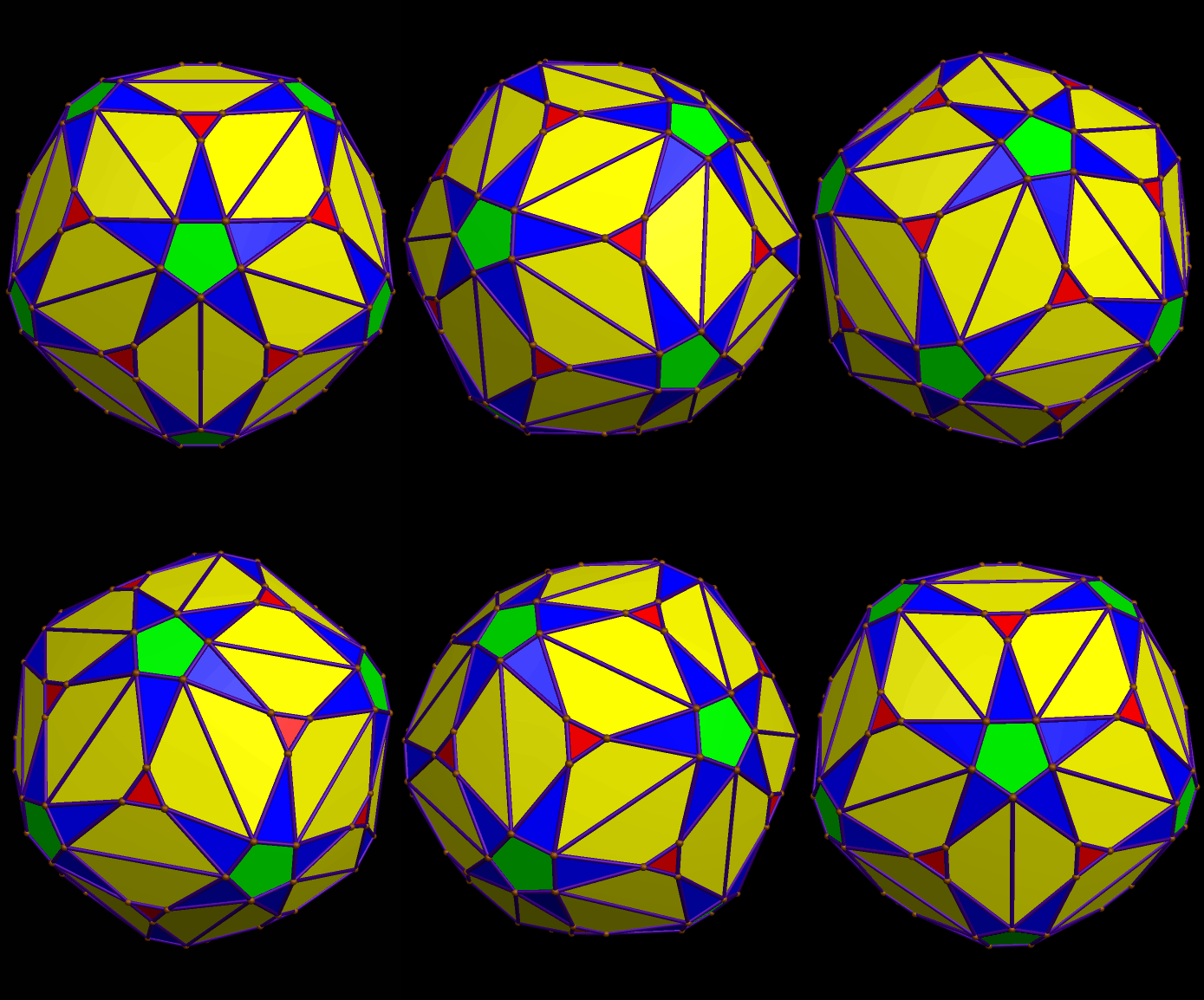
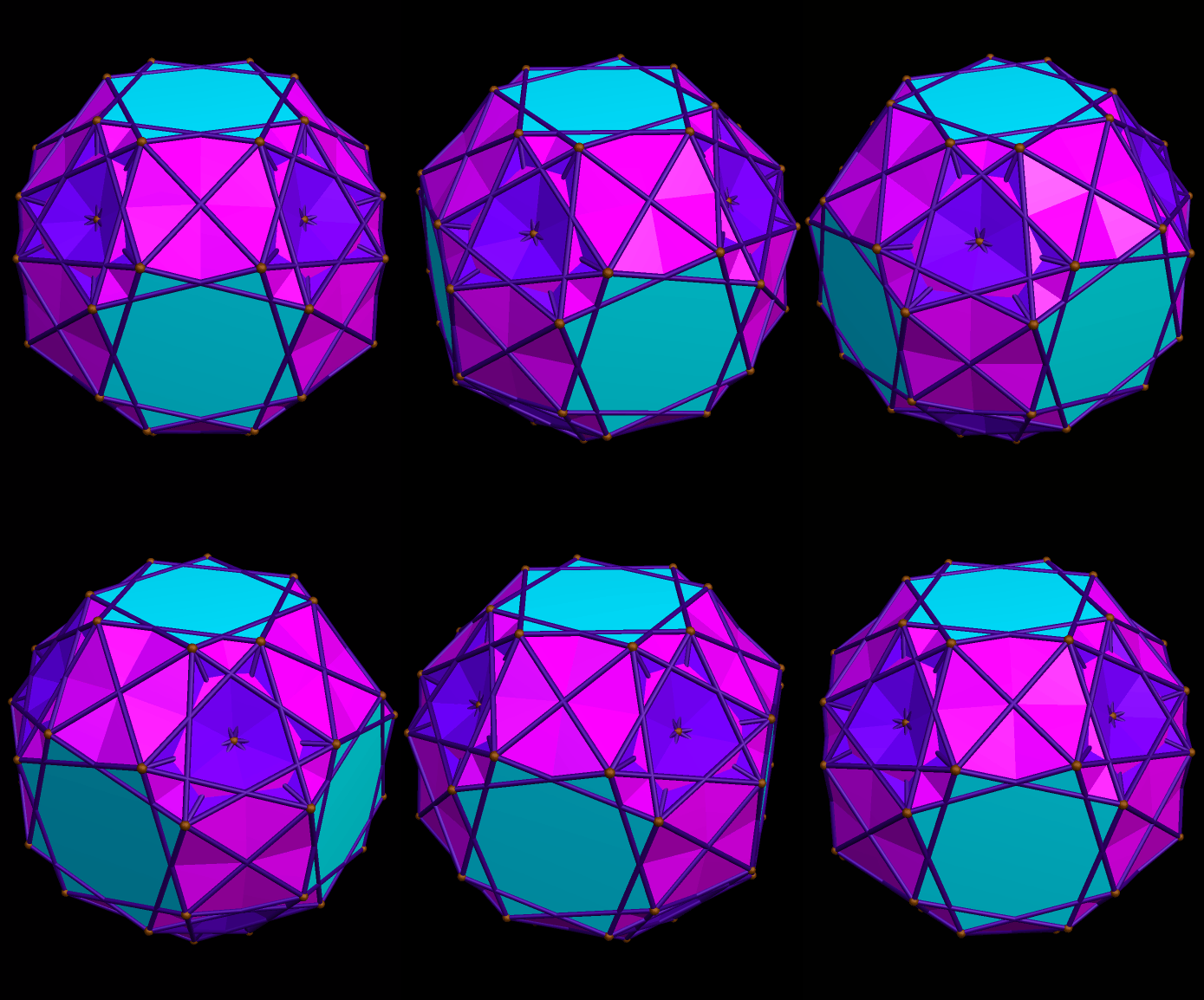
I hoped to make this one into a near miss to the Johnson solids, but the octagons of both types, especially, are too far from regularity to get that to work. The only faces which are regular are the green triangles.

hmmm

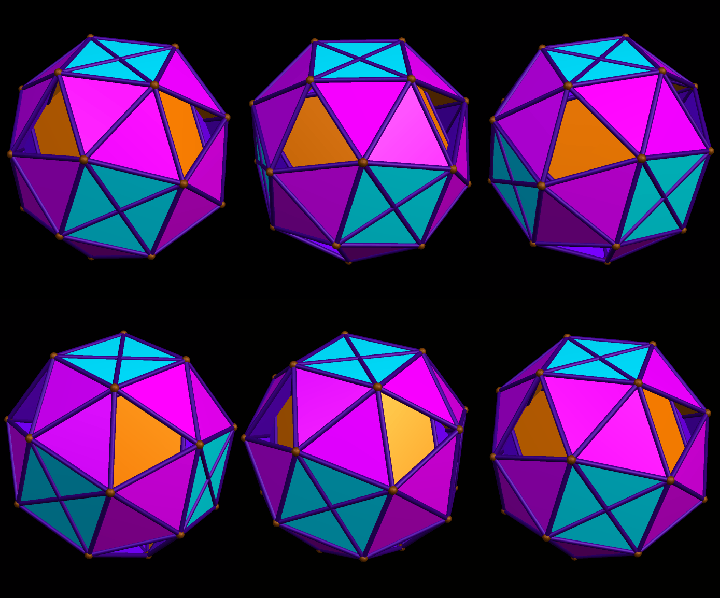
This one is a variant of the icosahedron.

icosahedron with pasties

I found this one interesting.

interesting

And this one is its dual:

interesting dual

Finally, here’s one made of kites and regular hexagons.

kites and hexagons

An Excavated Snub Cube, with Two of Its “Cousins”

Image

An Excavated Snub Cube

In this variation of the snub cube, twenty of the triangular faces have been excavated with short triangular pyramids. Since the snub cube is chiral, it’s possible to make a compound out of it and its mirror-image:

Compound of enantiomorphic pair of excavated snub cubes

A polyhedron which is somewhat similar to the first one shown here can be produced by faceting a snub cube:

Faceted Snub Cube

Stella 4d was used to create these images. You can find this program at http://www.software3d.com/Stella.php.

A Bizarre Variant of the Stella Octangula

Image

A Bizarre Variant of the Stella Octangula

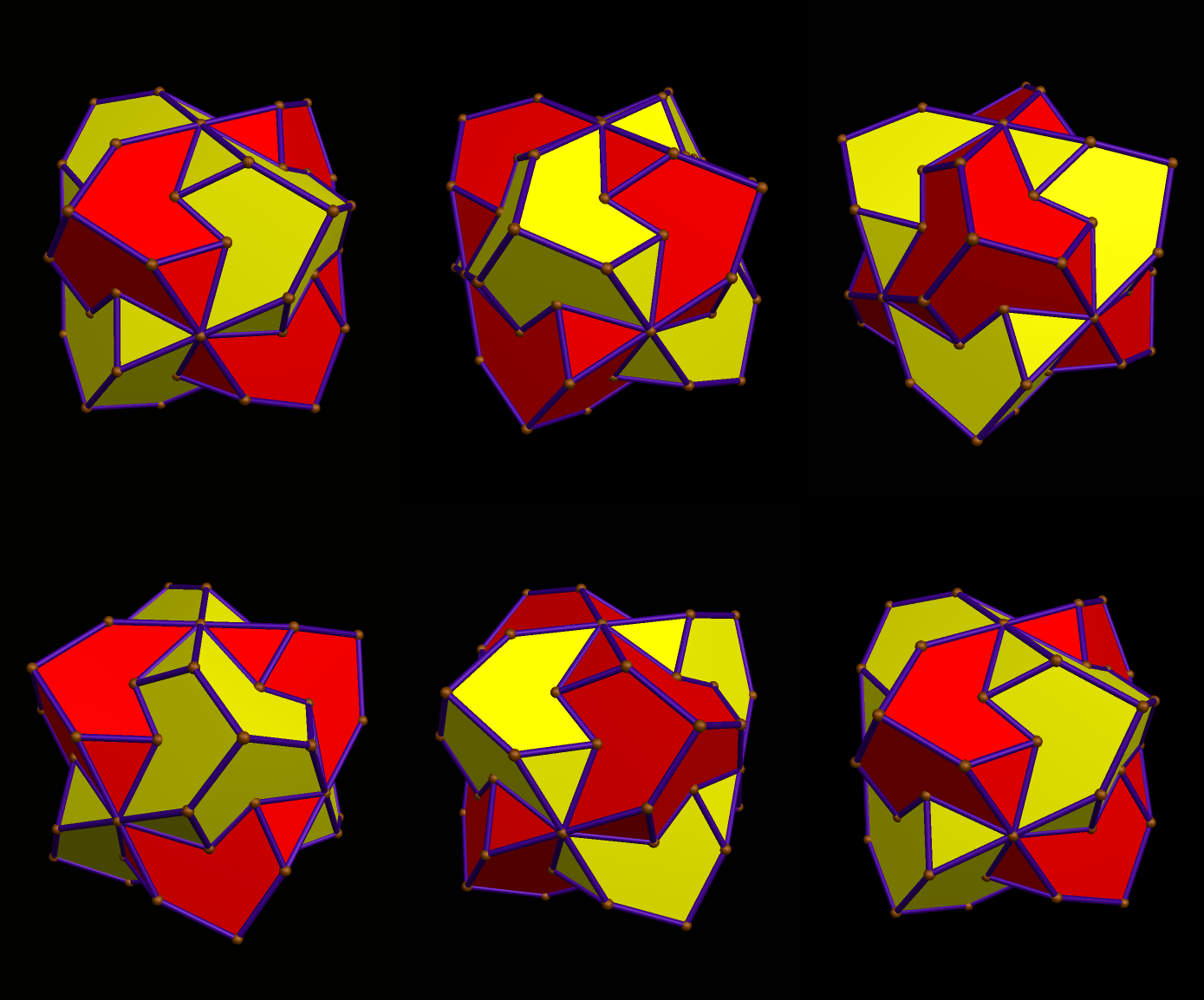
The Stella Octangula is another name for the compound of two tetrahedra. In this variant, each triangular face is replaced by a panel of three irregular pentagons. I used Stella 4d to make it, and you can find that program at http://www.software3d.com/Stella.php.

A Modified, Excavated Icosidodecahedron

Image

A Modified, Excavated Icosidodecahedron

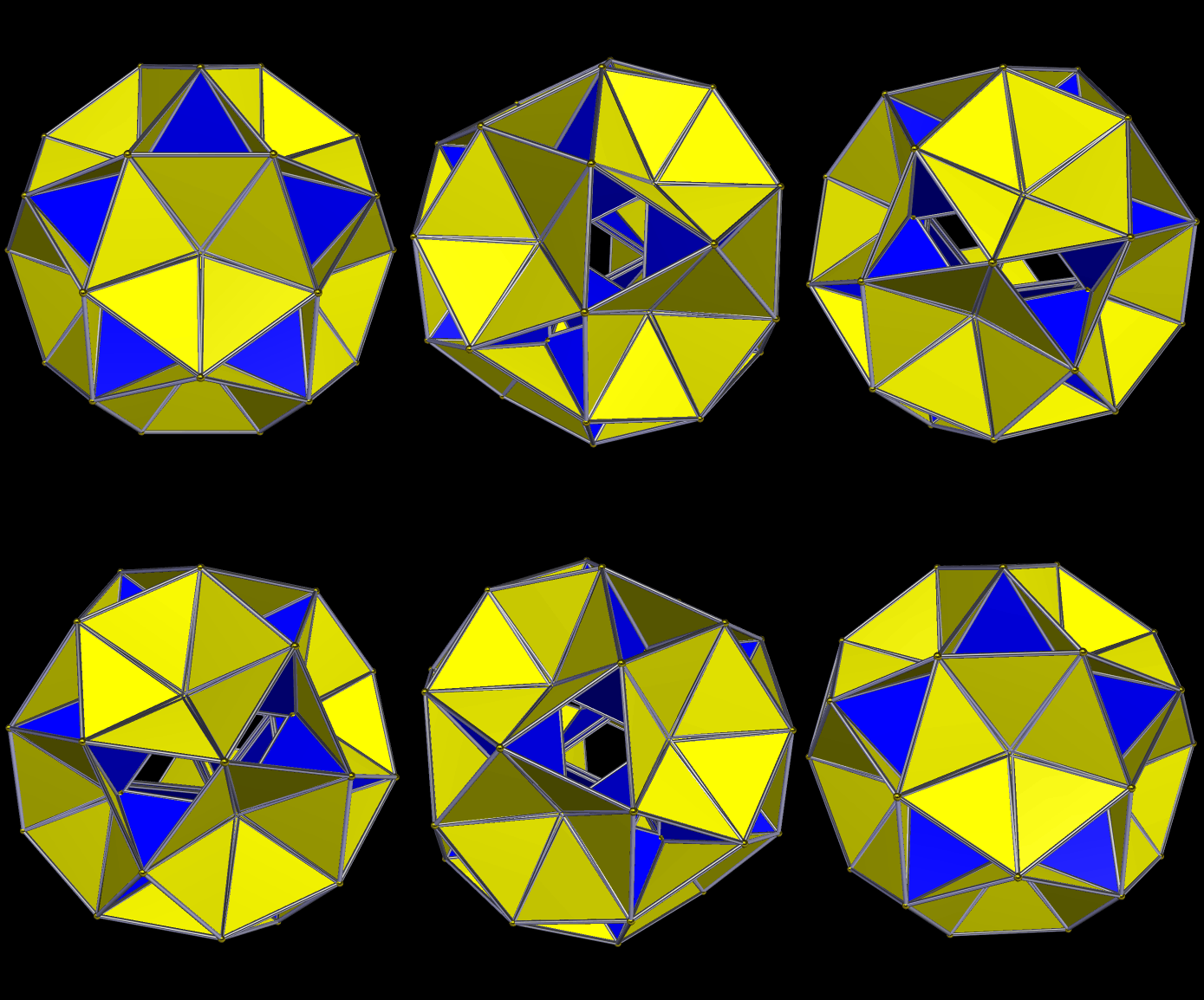
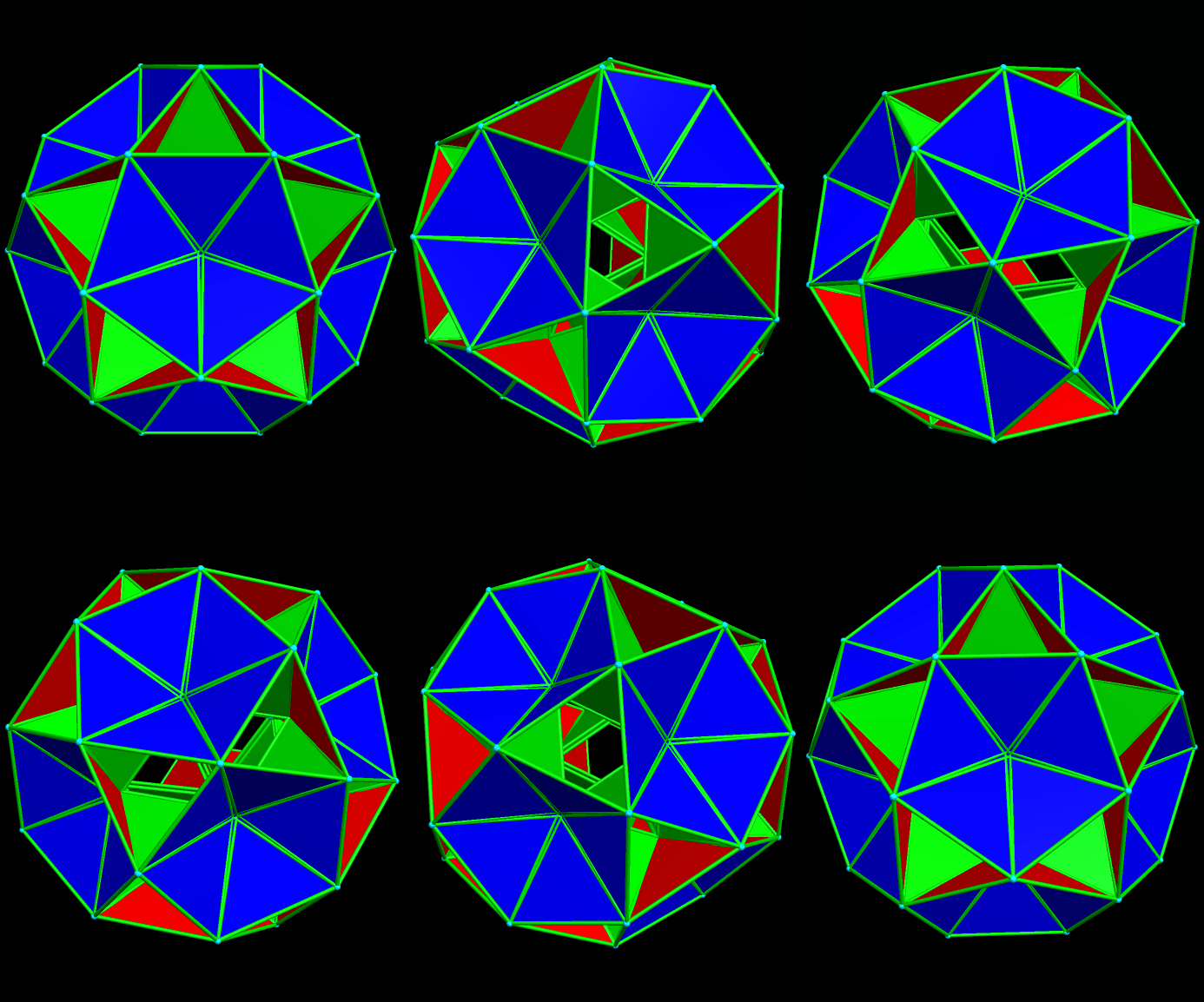
I’ve done quite a bit on this blog involving modifiying polyhedra via augmentation, in which polyhedra are attached to faces of another polyhedra. This was made using the opposite process, excavation, where parts of a given polyhedron are removed. First, a pentagonal pyramid was excavated from each pentagonal face of the icosidodecahedron. Next, octahedra were excavated from each triangular face. Finally, the bottom face of each of these octahedra was hidden, making it possible to see all the way through this solid. I constructed this with Stella 4d, software you can try or buy at www.software3d.com/Stella.php.

Here’s the same polyhedron again, but with a different color-scheme.

Augmented Icosidodeca

The Zonish Cuboctahedron: A New Near-Miss Discovery?

Image

The Zonish Cuboctahedron:  A New Near-Miss Discovery?

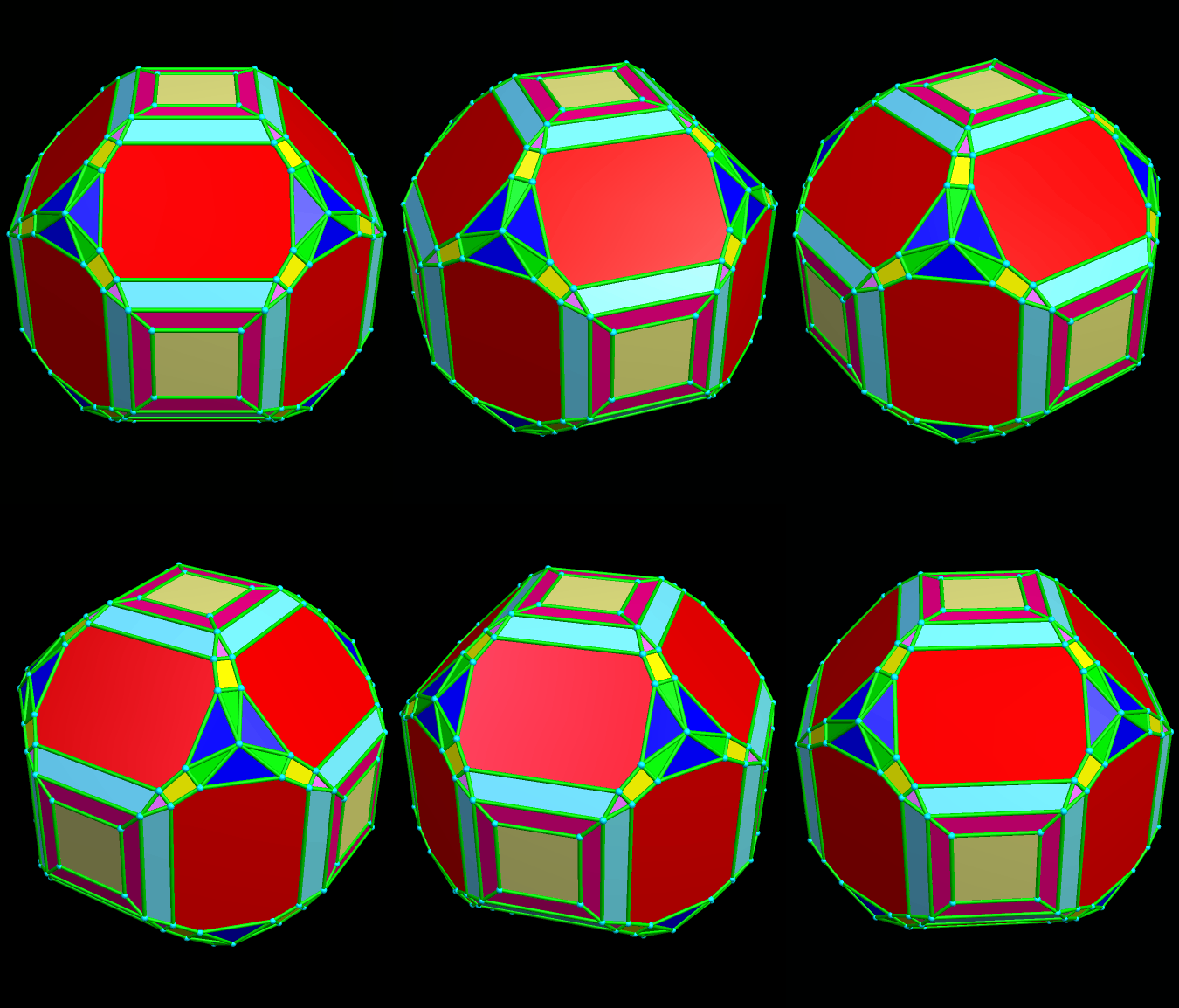
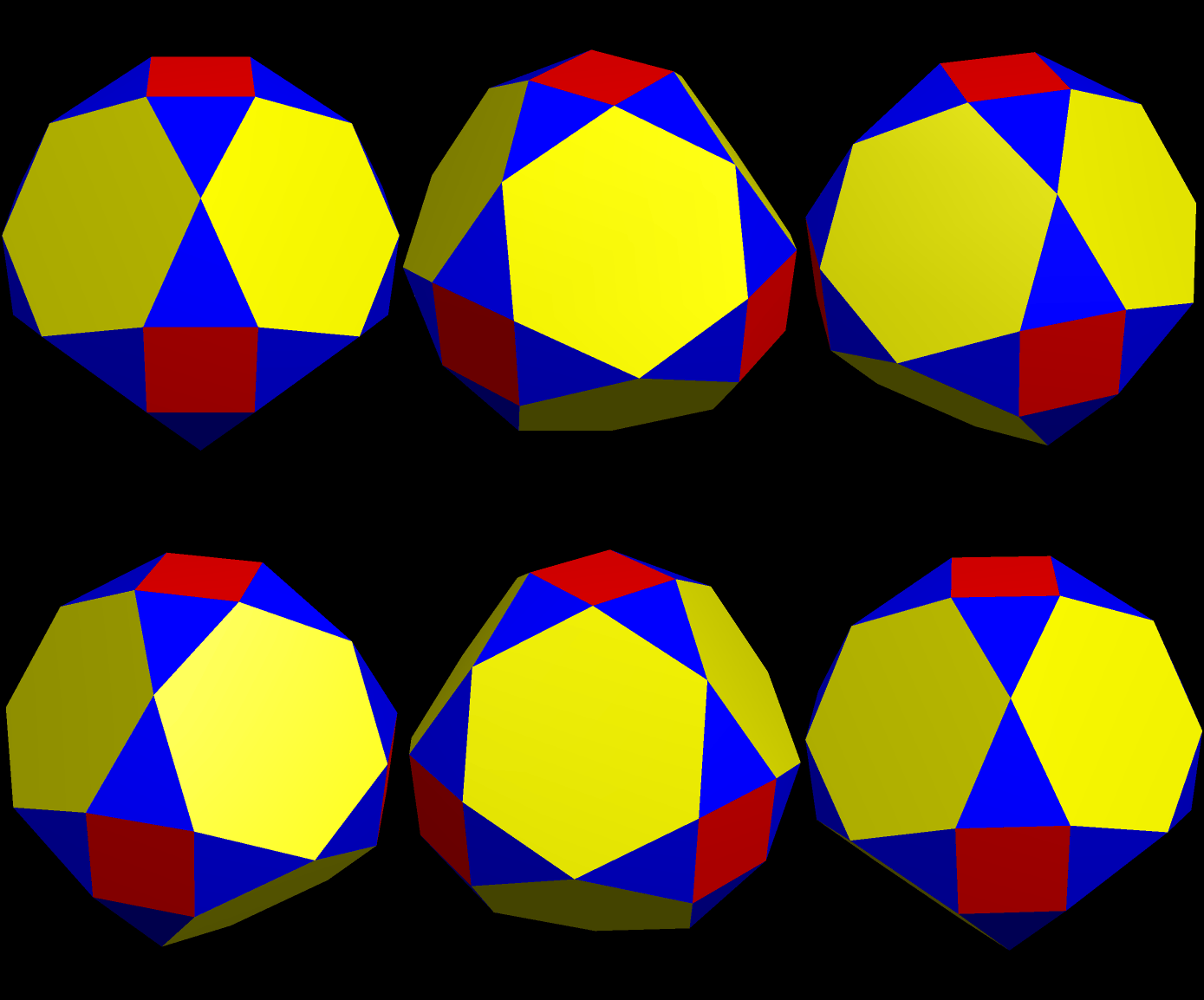
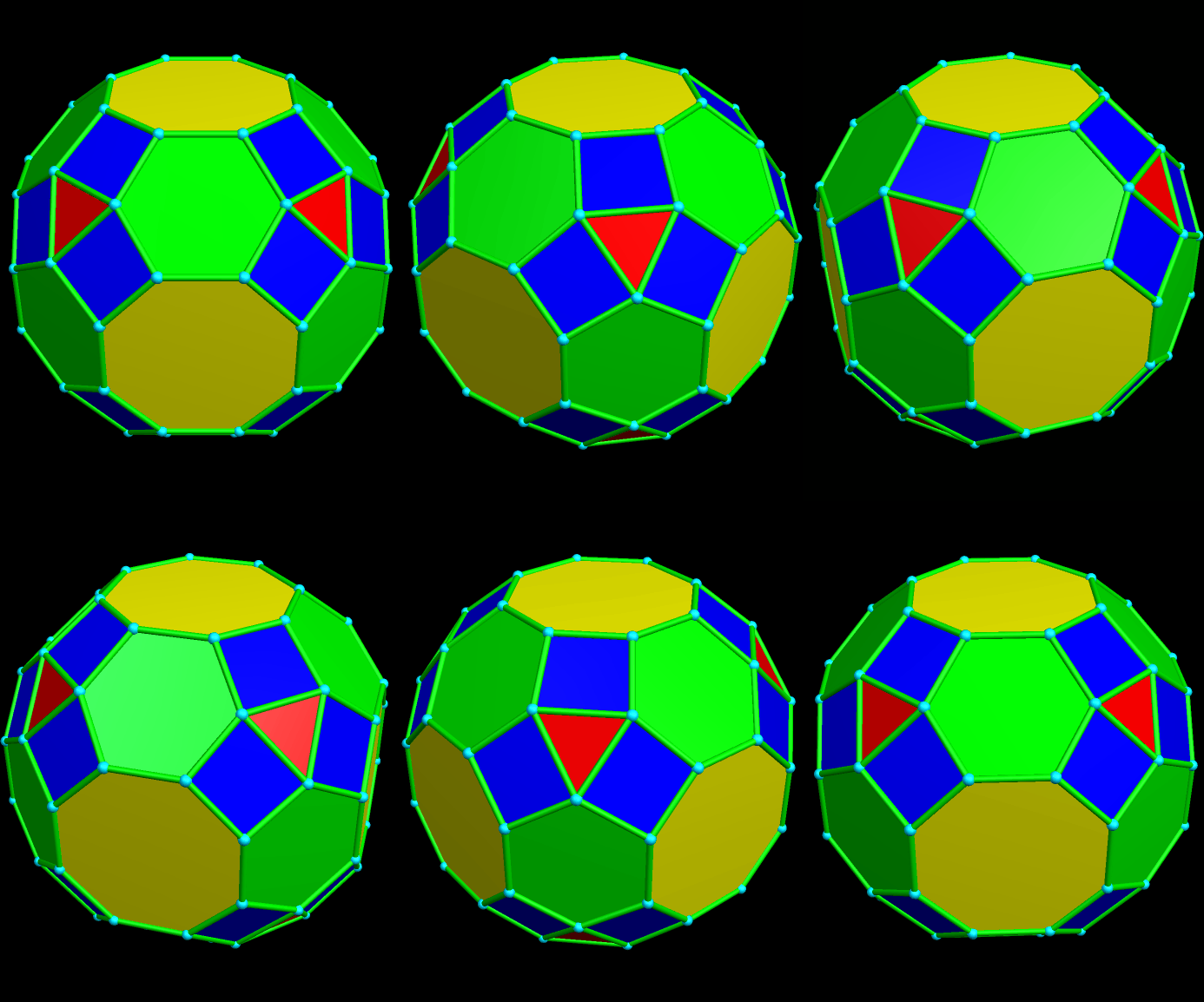
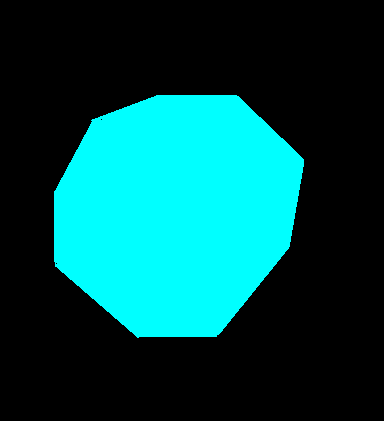
If one starts with a cuboctahedron, and then creates a zonish polyhedron from it, adding zones (based on the faces) to the faces which already exist, here is the result, below, produced by Stella 4d: Polyhedron Navigator (software you may buy or try at http://www.software3d.com/Stella.php):

new nearmiss before making faces regular its a face based zonish cuboctahedron

The hexagons here, in this second image, are visibly irregular. The four interior hexagon-angles next to the octagons each measure more than 125 degrees, and the other two interior angles of the hexagons each measure less than 110 degrees — too irregular for this to qualify as a near-miss to the Johnson solids. However, Stella includes a “try to make faces regular” function, and applying it to the second polyhedron shown here produces the polyhedron shown in a larger image, at the top of this post.

It is this larger image, at the top, which I am proposing as a new near-miss to the 92 Johnson solids. In it, the twelve hexagons are regular, as are the eight triangles and six octagons. The only irregular faces to be found in it are the near-squares, which are actually isosceles trapezoids with two angles (the ones next to the octagons) measuring ~94.5575 degrees, and two others (next to the triangles) measuring 85.4425 degrees. Three of the edges of these trapezoids have the same length, and this length matches the lengths of the edges of both the hexagons and octagons. The one side of each trapezoid which has a different length is the one it shares with a triangle. These triangle-edges are ~15.9% longer than all the other edges in this proposed near-miss.

My next step is to share this find with others, and ask for their help with these two questions:

    1. Has this polyhedron been found before?
    2. Is it close enough to being a Johnson solid to qualify as a near-miss?

Once I learn the answers to these questions, I will update this post to reflect whatever new information is found. If this does qualify as a near-miss, it will be my third such find. The other two are the tetrated dodecahedron (co-discovered, independently, by myself and Alex Doskey) and the zonish truncated icosahedron (a discovery with which I was assisted by Robert Webb, the creator of Stella 4d).

More information about these near-misses, one of my geometrical obsessions, may be found here:  https://en.wikipedia.org/wiki/Near-miss_Johnson_solid

Some Polygons with Irritating Names

Image

Some Polygons with Irritating Names

These polygons are known to virtually all speakers of English as the triangle and the quadrilateral, but that doesn’t mean I have to like that fact, and, the truth is, I don’t. Why? There are a couple of reasons, all involving lack of consistency with the established names of other polygons.

Consider the names of the next few polygons, as the number of sides increases: the pentagon, hexagon, heptagon, and octagon. The “-gon” suffix refers to the corners, or angles, of these figures, and is derived from Greek, The end of the word “triangle” also refers to the same thing — but not in Greek. For the sake of consistency, triangles should, instead, be called “trigons.”

In the case of the quadrilateral, the problem is twofold. The suffix “-lateral” refers to sides, not angles. For the sake of consistency, “-gon” should be used instead. The prefix “quadri-” does mean four, of course, but is derived from Latin, not Greek. We use the Greek prefix “tetra-” to refer to four when naming polyhedra (“tetrahedron”), so why not use it for polygons with four sides, also? The best name available for four-sided polygons requires a change in both the prefix and suffix of the word, resulting in the name “tetragon” for the figure on the right.

When I listed the names of higher polygons above, I deliberately stopped with the octagon. Here’s the next polygon, with nine sides and angles:

polygons

I’m guilty of inconsistency with the name of nine-sided polygons, myself. All over this blog, you can find references to “nonagons,” and the prefix “nona-” is derived from Latin. Those who already know better have, for years, been calling nine-sided polygons “enneagons,” using the Greek prefix for nine, rather than the Latin prefix, for reasons of consistency. I’m not going to go to the trouble to go back and edit every previous post on this blog to change “nonagon” to “enneagon,” at least right now, but, in future posts, I will join those who use “enneagon.”

Here’s one more, with eleven sides:

polygons

I don’t remember ever blogging about polygons with eleven sides, but I have told geometry students, in the past, that they are called “undecagons.” I won’t make that mistake again, for the derivation of that word, as is the case with “nonagon,” uses both Latin and Greek. A better name for the same figure, already in use, is “hendecagon,” and I’m joining the ranks of those who use that term, derived purely from Greek, effective immediately.

With “hendecagon” and “enneagon,” I don’t think use of these better names will cause confusion, given that they are already used with considerable frequency. Unfortunately, that’s not the case with the little-used, relatively-unknown words “trigon” and “tetragon,” so I’ll still be using those more-familiar names I don’t like, just to avoid being asked “What’s a trigon?” or “What’s a tetragon?” repeatedly, for three- and four-sided polygons. Sometimes, I must concede, it is necessary to choose the lesser of two irritations. With “triangle” and “quadrilateral,” this is one of those times.

The Dual of a Rhombcuboctahedral Cluster of Great Rhombcuboctahedra

Image

Two Duals of Clusters of Great Rhombcuboctahedra

This is the dual of the one polyhedral cluster found here which has more than one color-scheme shown: https://robertlovespi.wordpress.com/2014/05/29/the-great-rhombcuboctahedron-as-a-building-block/

It’s the dual of a rhombcuboctahedron made of great rhombcuboctahedra, and was created using software called Stella 4d:  Polyhedron Navigator. This software may be purchased at http://www.software3d.com/Stella.php — and there is a free trial version available to download there, as well.

My name made the “Stella 4d” library discovery credits!

Image

My name made the Stella library discovery credits!

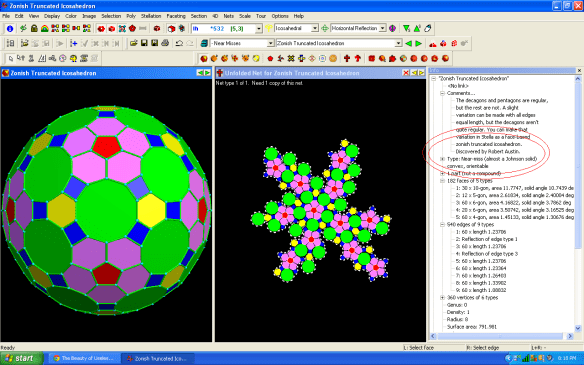
Stella’s creator just came out with a new version of Stella 4d, and a discovery of mine made the built-in library that comes with that software. This is my blog, so I get to brag about that, right? My legal name appears in the small print on the right side, at the end of the first long paragraph. I added the red ellipses to make it easier to find.

You can see the earlier posts related to my discovery of this zonish truncated icosahedron here:

https://robertlovespi.wordpress.com/2013/05/10/a-new-near-miss-to-the-92-johnson-solids/

https://robertlovespi.wordpress.com/2013/05/13/a-second-version-of-my-new-near-miss/

If you’d like to try (as a free trial) or buy this software (I recommend Stella 4d over the other available options), here’s the link for that: http://www.software3d.com/Stella.php.

The Beauty of Uselessness

Image

The Beauty of Uselessness

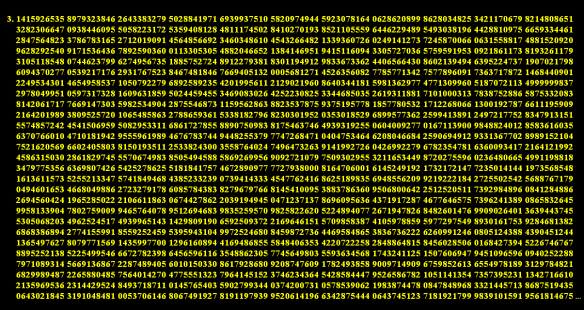
Given the name of this blog, and the familiarity of the number pictured above, I’m sure you recognize it as the beginning of my favorite number, pi. On various websites, you can find far more digits than are shown above. However, just the digits shown in the top row here are greater in number than that needed for any real-world, practical application. Is pi useful? Is mathematics itself useful? Of course they are . . . but those questions miss the point entirely.

Every teacher who has been in the field for long has heard the complaint, disguised as a question, “What are we ever going to use this for?” Unfortunately, most school systems, as well as teacher-training programs, have chosen to respond to this well-known complaint by repeatedly telling teachers, and teachers-in-training, that it is of extreme importance to show students how the curriculum is “relevant,” and adjust curricula to make them more so. This usually boils down, of course, to trying to convince students that learning is important because, supposedly, education = a better job in the future = more money. Sometime this “equation” works, and sometimes it does not, but it always misses a key point, one that should not be left out, but too often is.

It is a fallacy that learning has to have a practical application to be a worthwhile endeavor. There’s more to life than the fattening of bank accounts. Sadly, many of those making decisions in education do not realize this. Their attempts to reduce education to a strictly utilitarian approach are causing great harm.

This scenario has happened many times: a mathematician discovers an elegant proof to a surprising theorem, a physicist figures out something previously unknown about the nature of reality, or a researcher in another field does something comparable, and someone then asks them, “But what can this be used for?” On occasion, tired of hearing this utilitarian refrain, such researchers give unusually honest responses which surprise and confuse many people — such as, “Someone else might, at some point, find a practical application for this . . . but I sincerely hope that never happens.” Such a response is rarely understood, but it makes the person who says it feel better to vent some of their frustration with those who are obsessed with tawdry, real-world applications for everything.

Many humans — and this is a terrible shame — live almost their entire lives like rats in mazes, running down passages and around corners, chasing tangible rewards — cheese for the rats, or the ability to buy, say, a fancy new car, in the case of the people. People shouldn’t live like lab rats . . . and, unlike lab rats, we don’t have to. People are smart enough to find higher purposes in life. People can, in other words, find, understand, and appreciate beauty — in things which are useless, in the sense that they have no useful applications. We can appreciate things that transcend mere utility, if we choose to do so.

Much of life is utterly banal, for a great many people. They wake up each day, work themselves into exhaustion at horribly boring jobs, go home, numb themselves with television, massive alcohol consumption, or other hollow pursuits, fall asleep, and then get up and repeat the process the next day . . . and then they finally get old and die. Life can be so much more than that, though, and it should be.

The researchers I described earlier aren’t doing what they do for money, or even the potential for fame. Are such things as mathematics and physics useful? Yes, they are, but that isn’t why pure researchers do them. The same can be said for having sex: it’s useful because it produces replacement humans, but that isn’t why most people do it. People have sex, obviously, because they enjoy it. In simpler terms: it’s fun. Most people understand this concept as it relates to sex, but far fewer understand it when it relates to other aspects of life, particularly those of an academic nature.

Academic pursuits are of much greater value when the motivation involved is joy, and the fun involved, rather than avarice. As scrolling through this blog will show you, I enjoy searching for polyhedra which have not been seen before. I certainly don’t expect to get rich from any such discoveries I make in this esoteric branch of geometry, which is itself one subfield, among many, in mathematics. I do it because it is fun. It makes me happy.

Much of life is pure drudgery, but our lives can be enriched by finding joyous escapes from our routines. An excellent way to do that is to learn to appreciate the beauty of uselessness — uselessness of the type that elevates the human spirit, in a way that the pursuit of material goods never can.

This is the approach we should encourage students to have toward education. Learning is far too valuable an activity to be limited, in its purpose, to the pursuit of future wealth. It’s time to change our approach.

By Request: The Compound of Five Rhombic Dodecahedra, with Nets

Image

By Request:  The Compound of Five Rhombic Dodecahedra, with Nets

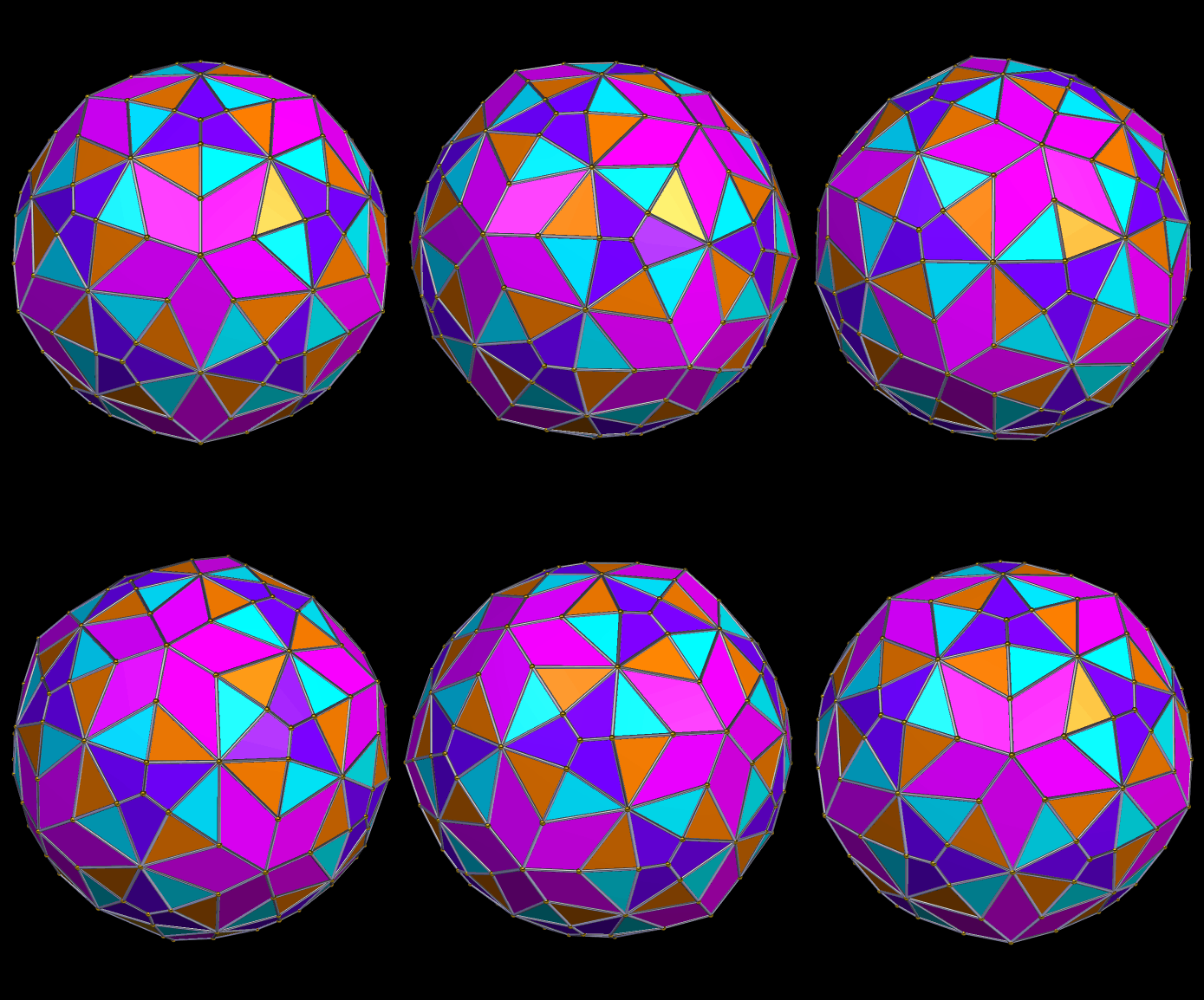
I’ve been asked by a reader of this blog to post nets for this polyhedral compound. Printing nets with Stella 4d is easy, and I’m happy to post them here, in response to that request. Warning, though: there are many nets needed for this compound.

Each of these smaller images may be enlarged with a single click.

Cuboctahedra 5 net one

Here’s the first net type needed (above). You’ll need thirty copies of this net. The gray parts show, and the white parts are tabs to help put it together. Below is the second type needed, of which you need sixty copies.

Cuboctahedra 5 net two

There’s also a third type of net, and these last two types may need to be rescaled before you print them, to fit the net of the first type, also. You’ll need sixty copies of this third net (below) as well, It’s the mirror-image of the net of the second type.

Cuboctahedra 5

Finally, here’s a non-rotating image of the completed polyhedron, to help with the construction:

Cuboctahedra 5

I recommend using card stock or posterboard, and trying to get as much tape as possible on the inside of the model, making an uncolored version — and then painting it with five different colors of your choice, after the model is assembled. Happy building!

[Software credit:  I used Stella 4d:  Polyhedron Navigator to create all these images. It’s available at http://www.software3d.com/Stella.php. Downloading and trying a trial version is free, but you have to buy the fully-functioning version to print nets, or to make these rotating .gif files I post all over this blog.]