“Give us reliable evidence and we will change our minds.”

Image

This is a good way to explain the viewpoint known as agnostic atheism. A lot of people don’t realize this, but most atheists are also agnostic, simply because we don’t claim to have absolute certainty that no deities exist. We are atheists because we possess no beliefs in any gods, and we are also agnostics because we are willing to admit that we could, possibly, be wrong.

What’s more, many agnostic atheists find the other type of atheist (gnostic atheists, who are few in number, and who do claim certainty that no deities exist) quite irritating. It simply is not rational to claim that one knows, without doubt, that there are no gods, for one simple reason: lack of supporting evidence. There is no evidence that no gods exist. There is also no evidence for the non-existence of, say, leprechauns.

Something else many people don’t know: theists (that is, religious believers) also come in the same two types. Agnostic theists believe in at least one deity, but don’t claim absolute certainty in that belief. Gnostic theists, by contrast, are believers who do not doubt, nor question, their religious beliefs. They claim to know they are right — and, in that one way, they are just like gnostic atheists. Gnostics, of whatever type, aren’t willing to admit there is the slightest chance that they might be wrong. It’s much easier to have reasonable, productive conversations with agnostics than with gnostics — regardless of whether they are they are theists or atheists. Also, when it comes to debate, there’s simply no point in debating anything with a gnostic. One might as well argue with a rock, for a rock is exactly as likely as a gnostic to have a change of opinion.

(Note: unlike most images on this blog, this picture is not one I created myself. Only the words below the image, in this post, are mine.)

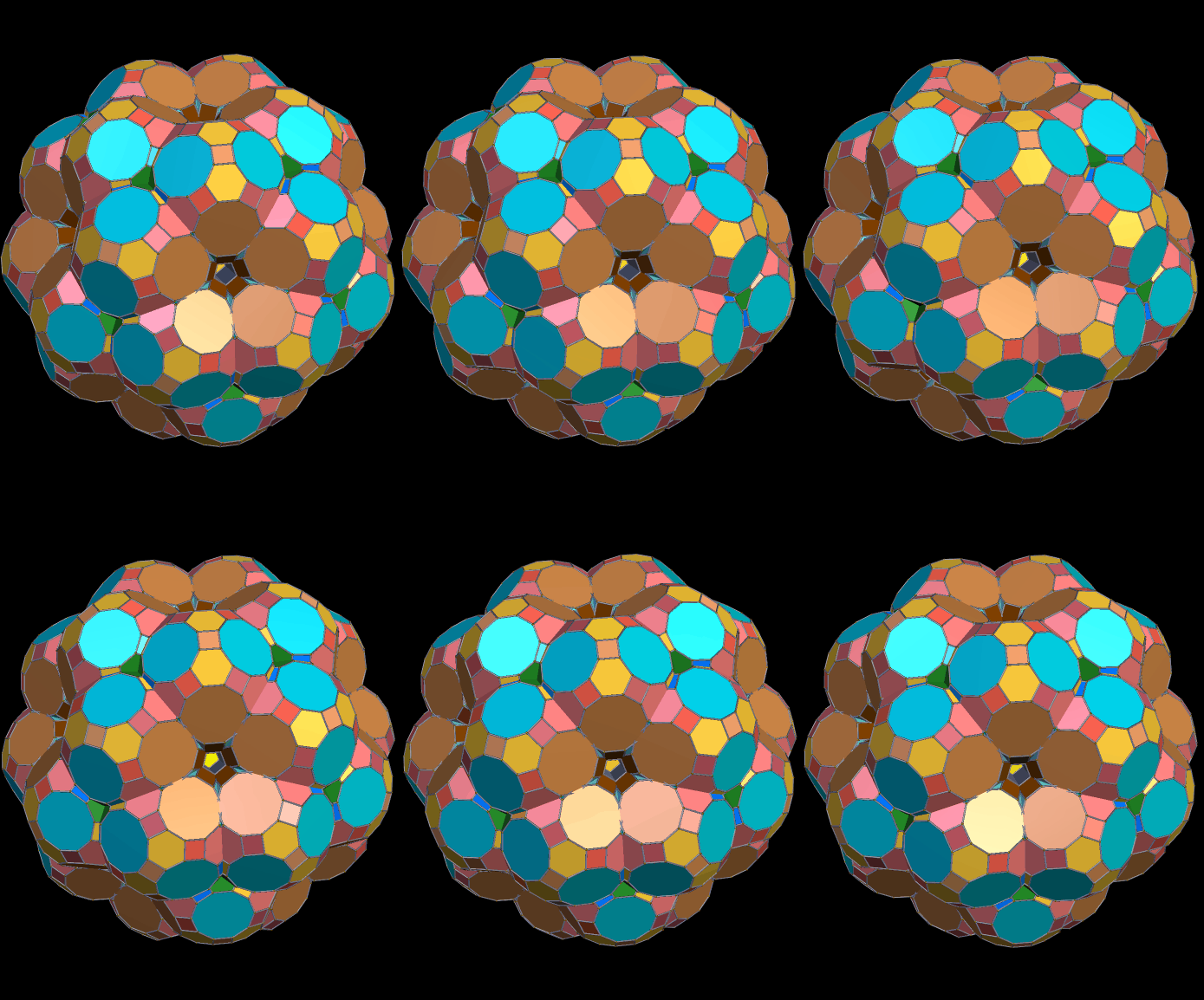
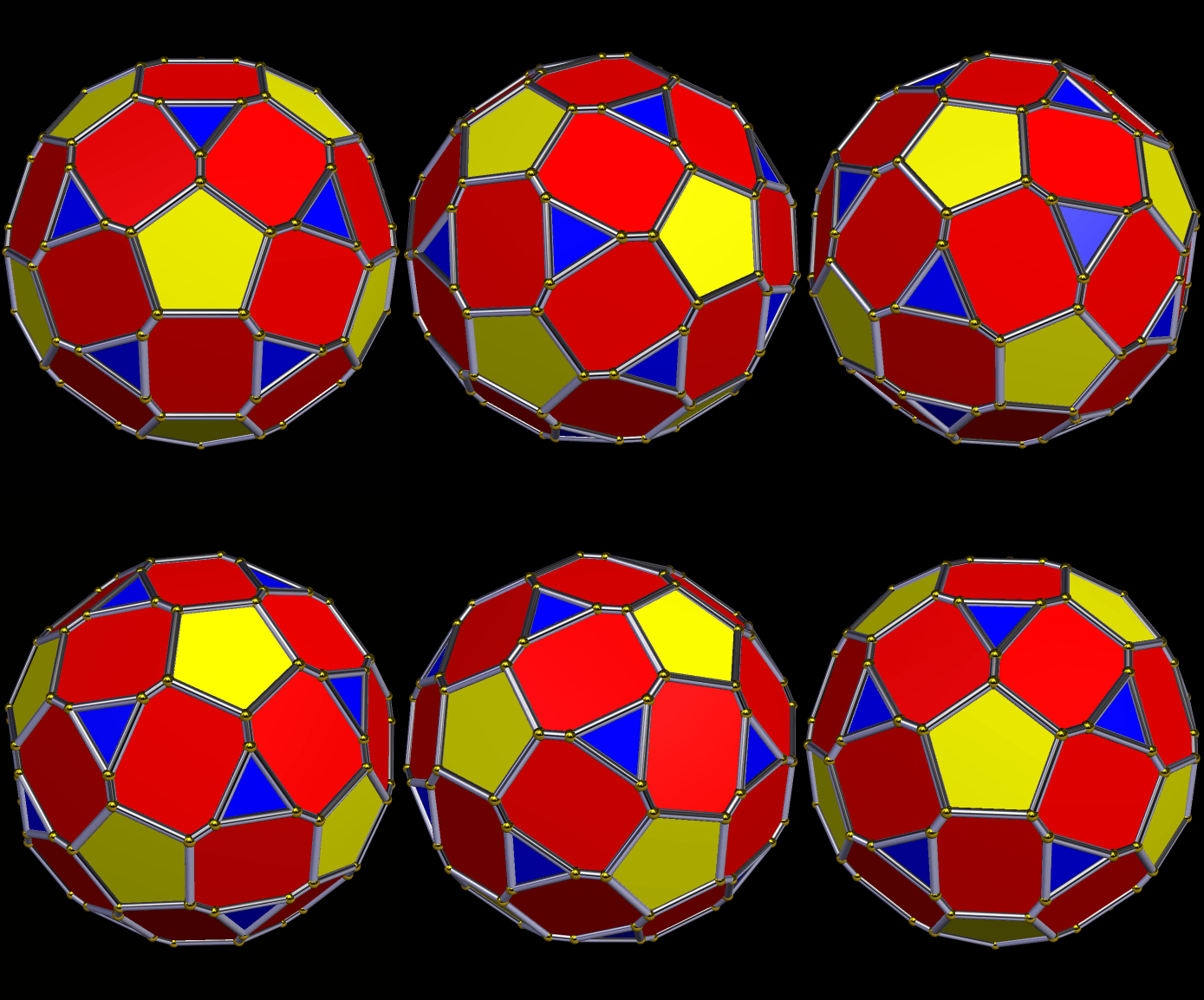
A Cluster of Truncated Dodecahedra

Image

A Cluster of Truncated Dodecahedra

I made this, using Stella 4d, by augmenting each decagonal face of the cluster in the previous post with a truncated dodecahedron. You can give this program a try yourself, for free, at http://www.software3d.com/stella.php.

An Icosidodecahedral Cluster of Great Rhombicosidodecahedra

Image

An Icosidodecahedral Cluster of Great Rhombicosidodecahedra

I made this, using Stella 4d, by augmenting the thirty square faces of a great rhombicosidodecahedron with additional great rhombicosidodecahedra. The result has one of these polyhedra located in each position which corresponds to a vertex of an icosidodecahedron.

You can give this program a try yourself, for free, at http://www.software3d.com/stella.php.

A Cubic Cluster of Rhombicosidodecahedra

Image

A Cubic Cluster of Rhombicosidodecahedra

I made this, using Stella 4d, by augmenting each face of an octahedron with a rhombicosidodecahedron. You can give this program a try yourself, for free, at http://www.software3d.com/stella.php.

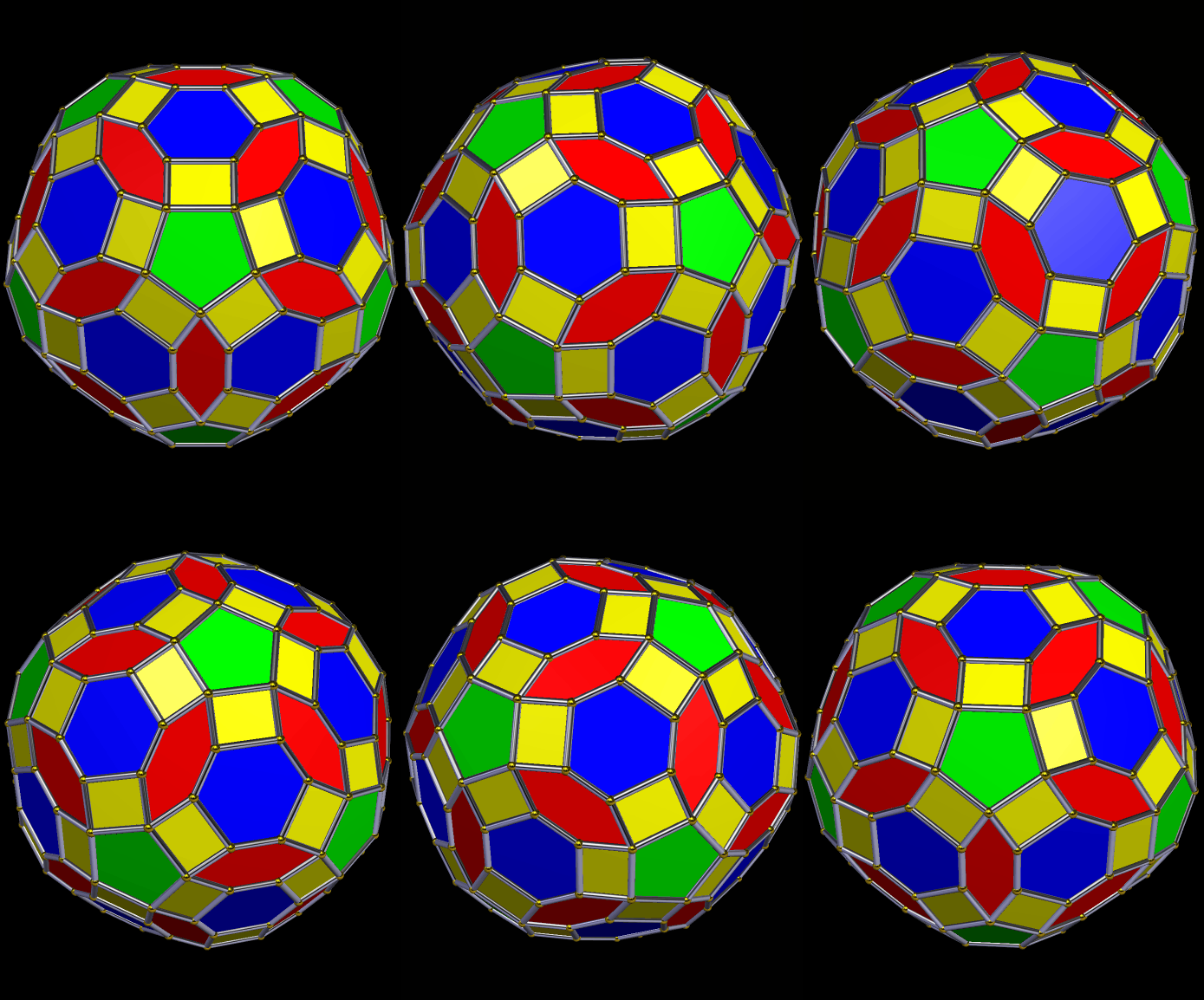
A Rhombicosidodecahedron-Variant Which Features Octagons

Image

A Rhombicidodecahedron-Variant Which Features Octagons

This polyhedron contains the twenty triangles and twelve pentagons of a rhombicosidodecahedron — but they are all smaller than those found in that solid. As a result, the thirty squares of the rhombicosidodecahedron have each become, instead, irregular octagons.

To try the software I use to generate these images, simply visit http://www.software3d.com/stella.php — where a free trial download is available.

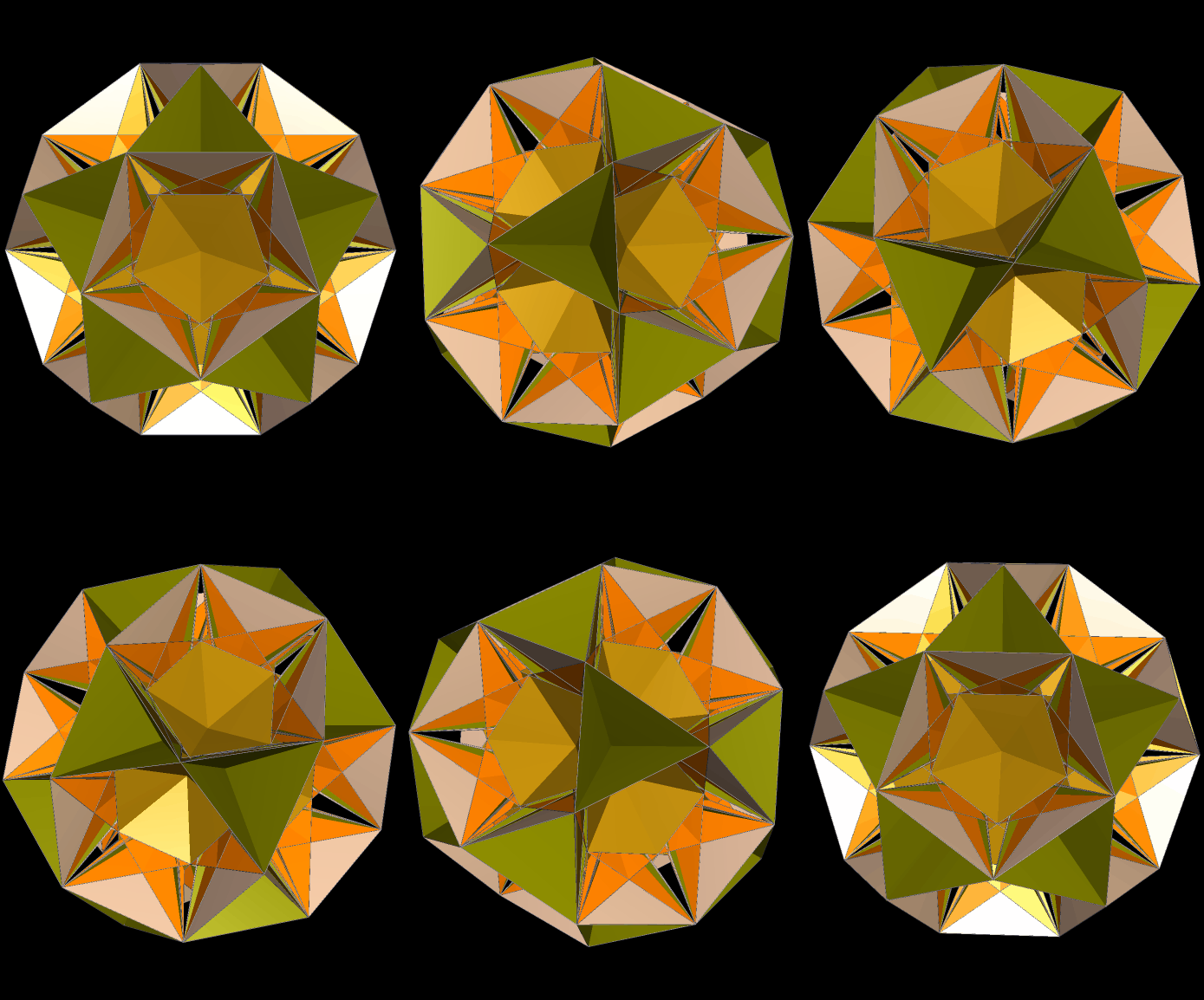
The Dual of a Rhombicosidodecahedral Cluster of Rhombic Triacontahedra

Image

The Dual of a Rhombicosidodecahedral Cluster of Rhombic Triacontahedra

Once I completed the polyhedral cluster seen in the last post, I became curious about its dual, which is what you see here. The overall shape here resembles an icosidodecahedron — the Archimedean solid which is, itself, the dual of the rhombic triacontahedron.

To try the software I use to generate these images, simply visit http://www.software3d.com/stella.php — where a free trial download is available.

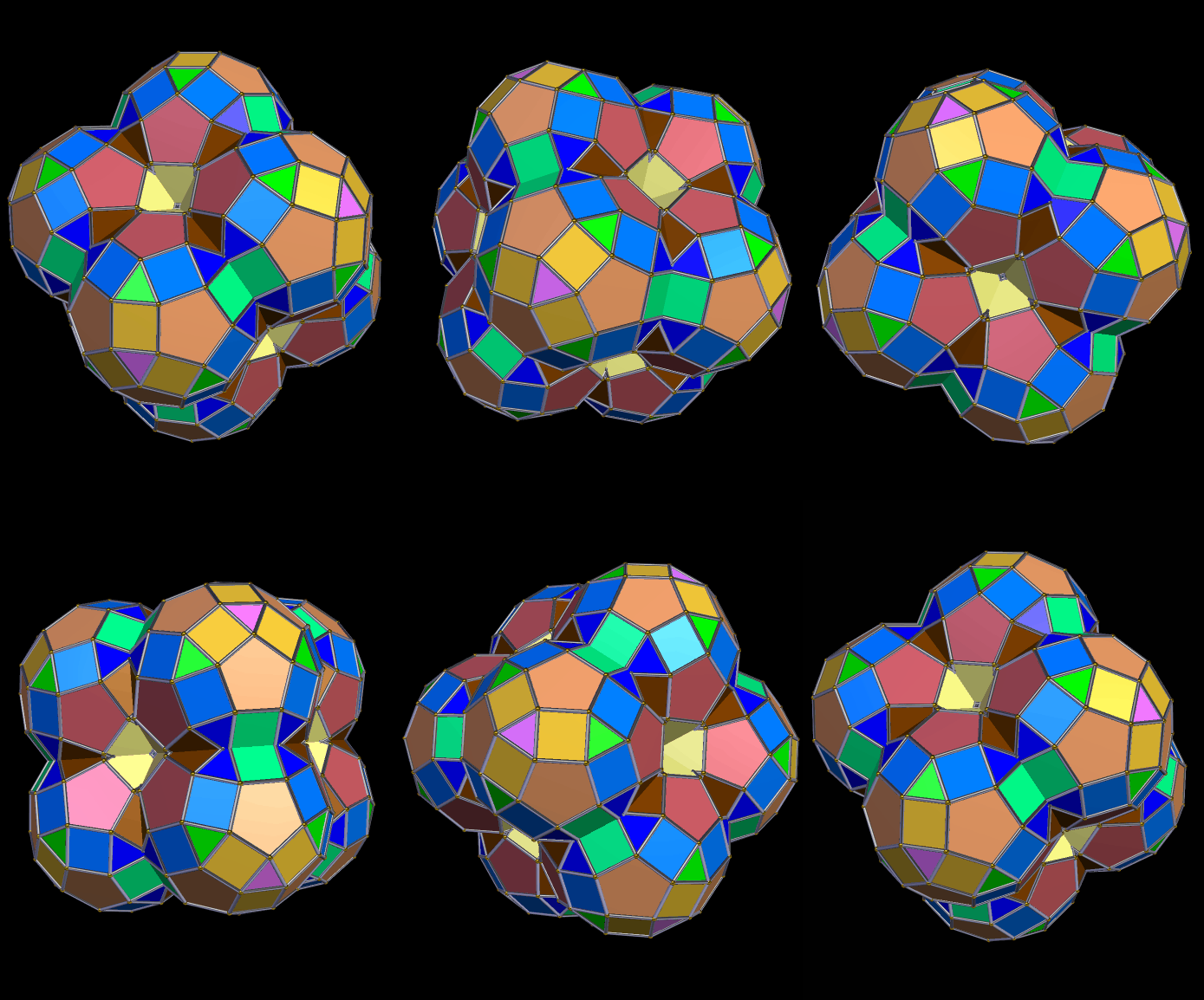
Rhombicosidodecahedral Cluster of Rhombic Triacontahedra

Image

Rhombicosidodecahedral Cluster of Rhombic Triacontahedra

Since rhombic triacontahedra can form pentagonal rings, triangular rings, and square rings, I wanted to find out if a rhombicosidodecahedron could be built out of these building blocks. As you can see here, the attempt was a success. Each rhombic triacontahedron which appears here is located at the vertex of a rhombicosidodecahedron.

Software credit: see http://www.software3d.com/stella.php.

A Conjecture About Dark Matter and Dark Energy

Image

A Conjecture About Dark Matter and Dark Energy

If inflation moves point A so far from point B right after the Big Bang that you can’t get to A from B now, then could the matter and energy in all the parts of the universe that we can’t access (because they’re too far away) provide the missing 90+% of the universe that we can’t account for?

Triangles and Circles

Image

Triangles and Circles

A Polyhedron with 122 Faces

Image

A Polyhedron with 122 Faces

The 122 faces are twenty blue, irregular hexagons; thirty red, irregular hexagons; 60 rectangles, and twelve regular pentagons.

Software credit: just visit http://www.software3d.com.Stella.php, and look for the free trial download of Stella 4d, the program I used to make this rotating image.