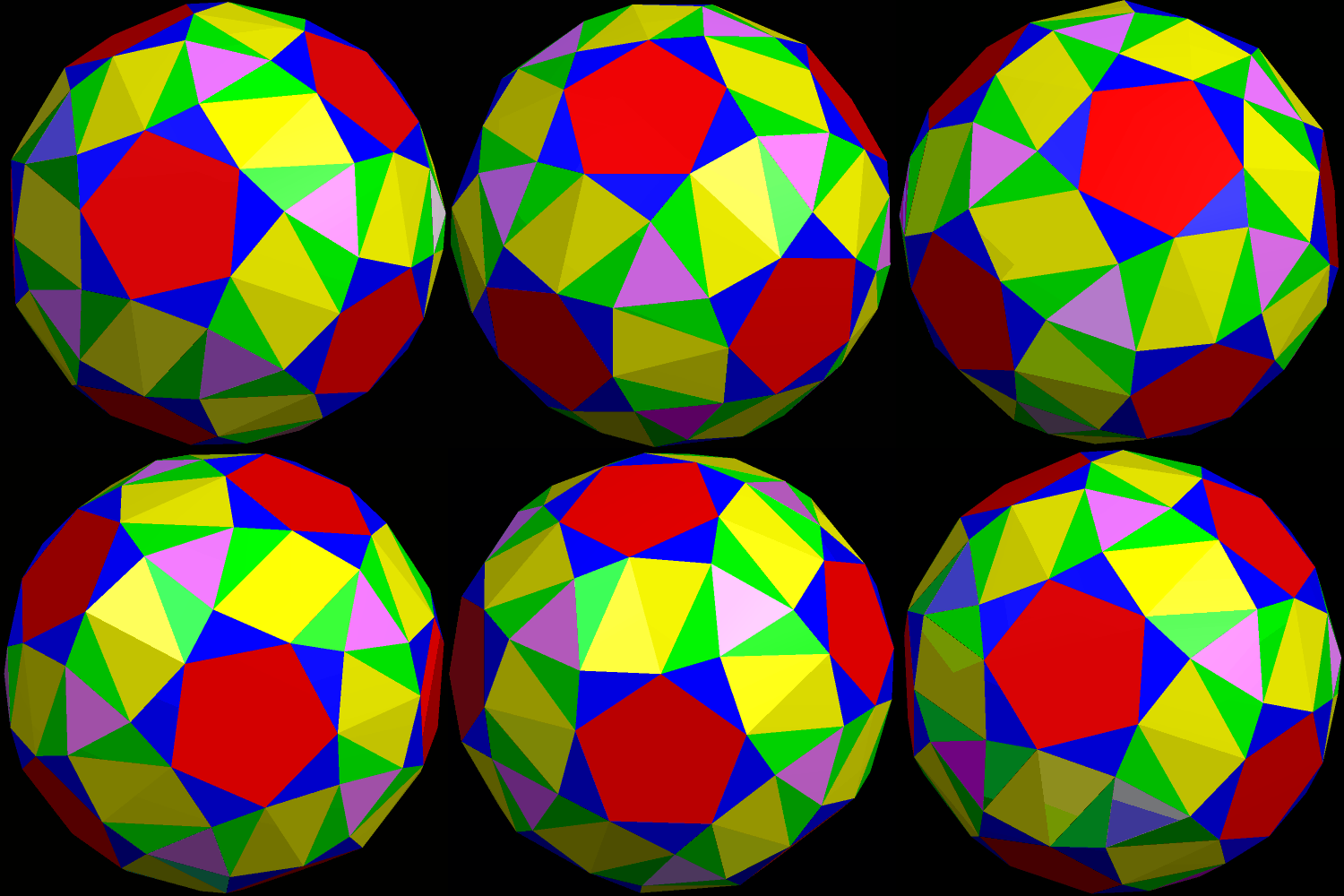
Some might say the snub dodecahedron was twisted enough already, but I wanted to crank it up a notch, so I made this . . . using Stella 4d: Polyhedron Navigator, a program found at http://www.software3d.com/Stella.php.
Some might say the snub dodecahedron was twisted enough already, but I wanted to crank it up a notch, so I made this . . . using Stella 4d: Polyhedron Navigator, a program found at http://www.software3d.com/Stella.php.
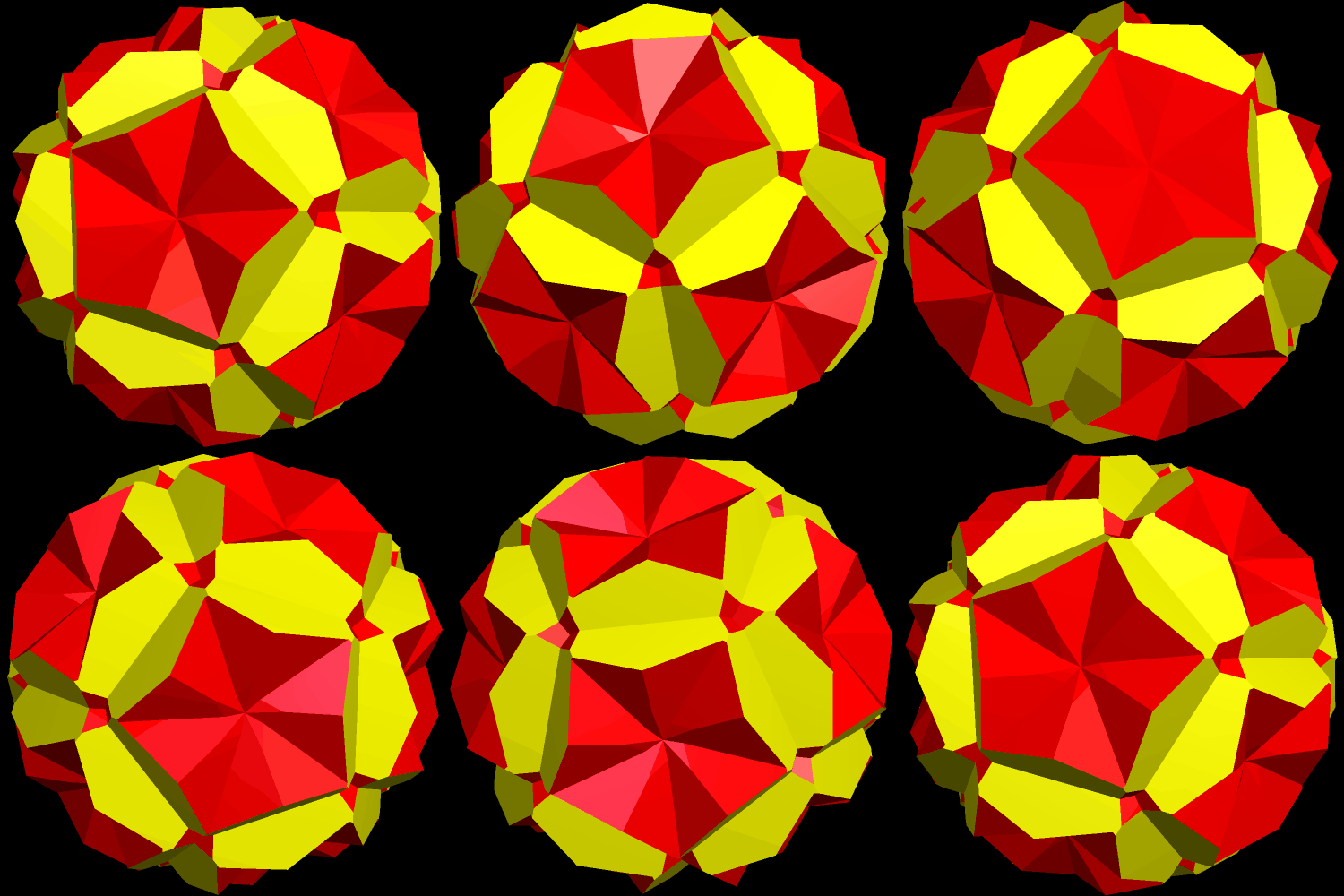
Created using software found at http://www.software3d.com/stella.php.


In this virtual model, opposite planes have the same color. The beveling of the edges, this coloring method, plus the invisibility of certain parts, make the faces appear to be extensions of triangles, or triads of “v” shapes. Without this beveling effect on this coloring-method, however, it is easy to see that the true faces of this polyhedron are star pentagons. To see this second model enlarged — with this polyhedron’s traditional coloring — simply click on it.
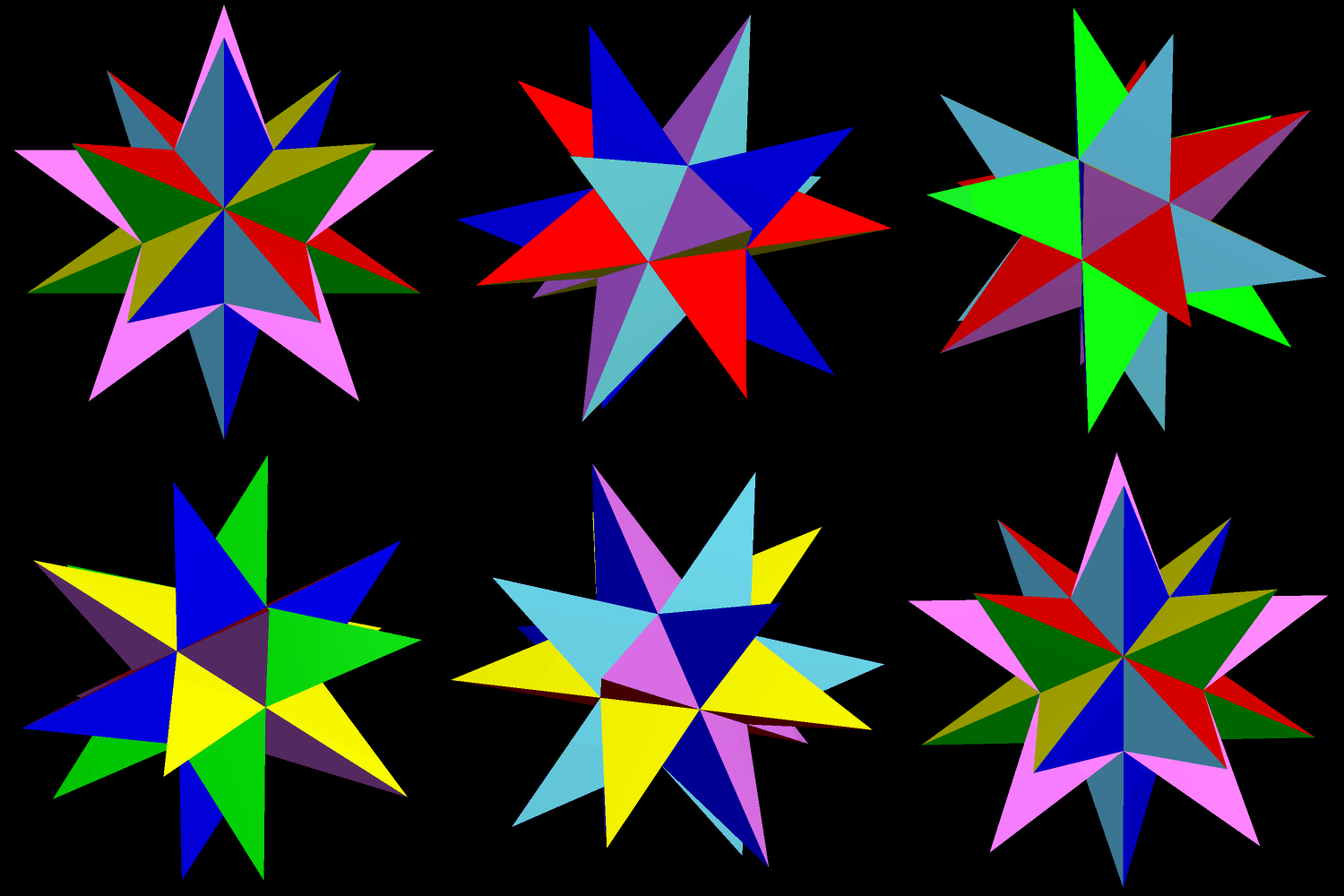
The site to visit if you want to know how to make .gifs like these is http://www.software3d.com/stella.php.

For more on the software used to make this, please see http://www.software3d.com/stella.php.
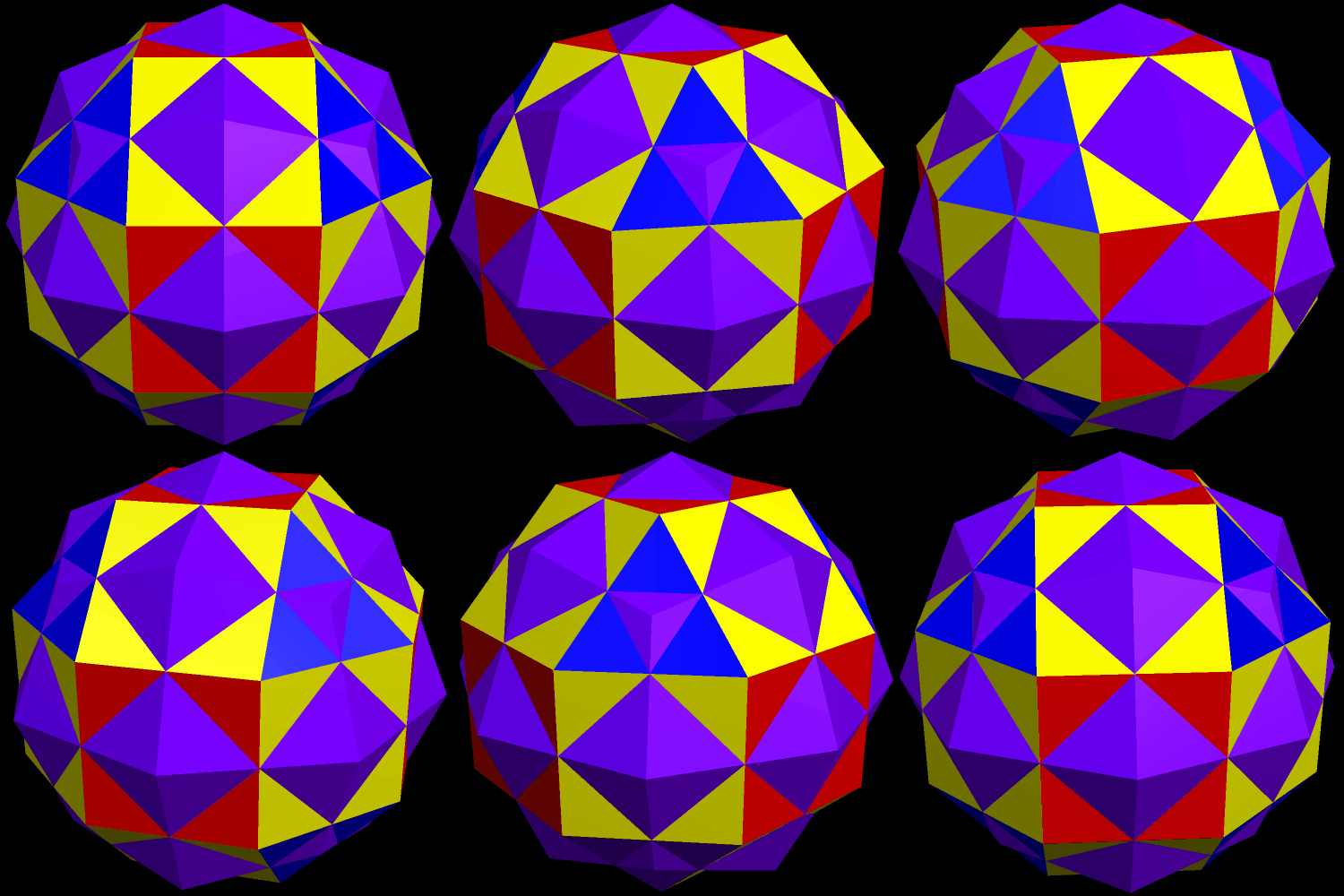
Alternate names for components of this compound are the rhombicuboctahedron and the kited icositetrahedron.
For more information on the software used to produce this image, please visit http://www.software3d.com/stella.php.
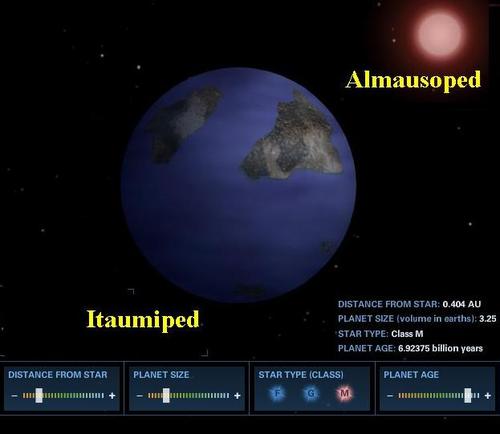
You can make your own planet here, but you can’t have my name for it: http://planetquest.jpl.nasa.gov/system/interactable/1/index.html
This is simply one incarnation of Itaumiped, my own imaginary planet. Any time I need an imaginary planet, I use this anagram for “I made it up” as its name. Itaumiped’s star’s name, “Almausoped,” comes from “Also made up.”
I try to be prepared. After all, one never knows when one might need an imaginary planet — or star.

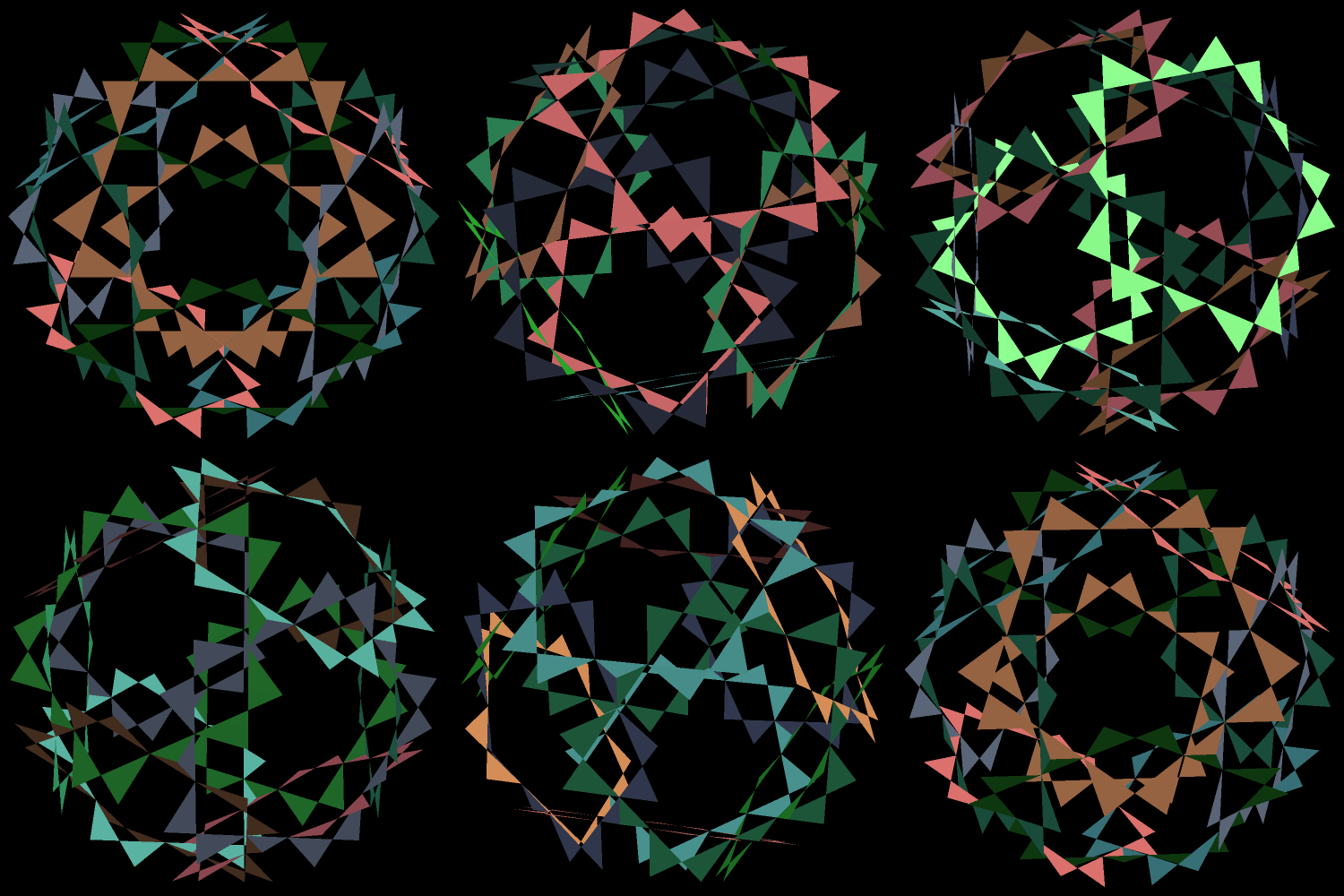
Created with software you may find at http://www.software3d.com/stella.php.

Software credit: see http://www.software3d.com/Stella.php.
 RobertLovesPi.net