Twelve Pink Floating Pentagons

Image

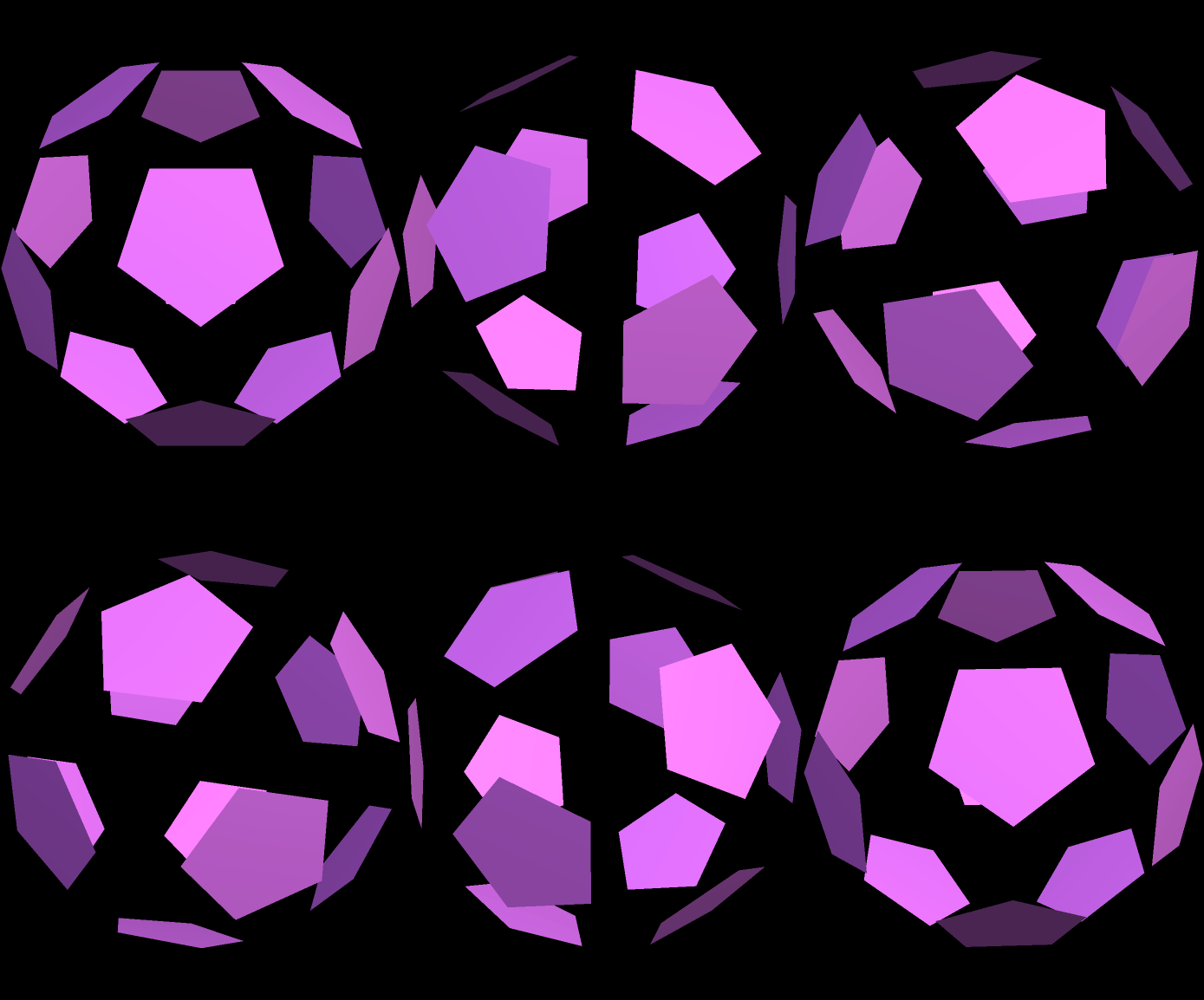
Twelve Pink Floating Pentagons

Because I can, that’s why.

Software credit: http://www.software3d.com/stella.php

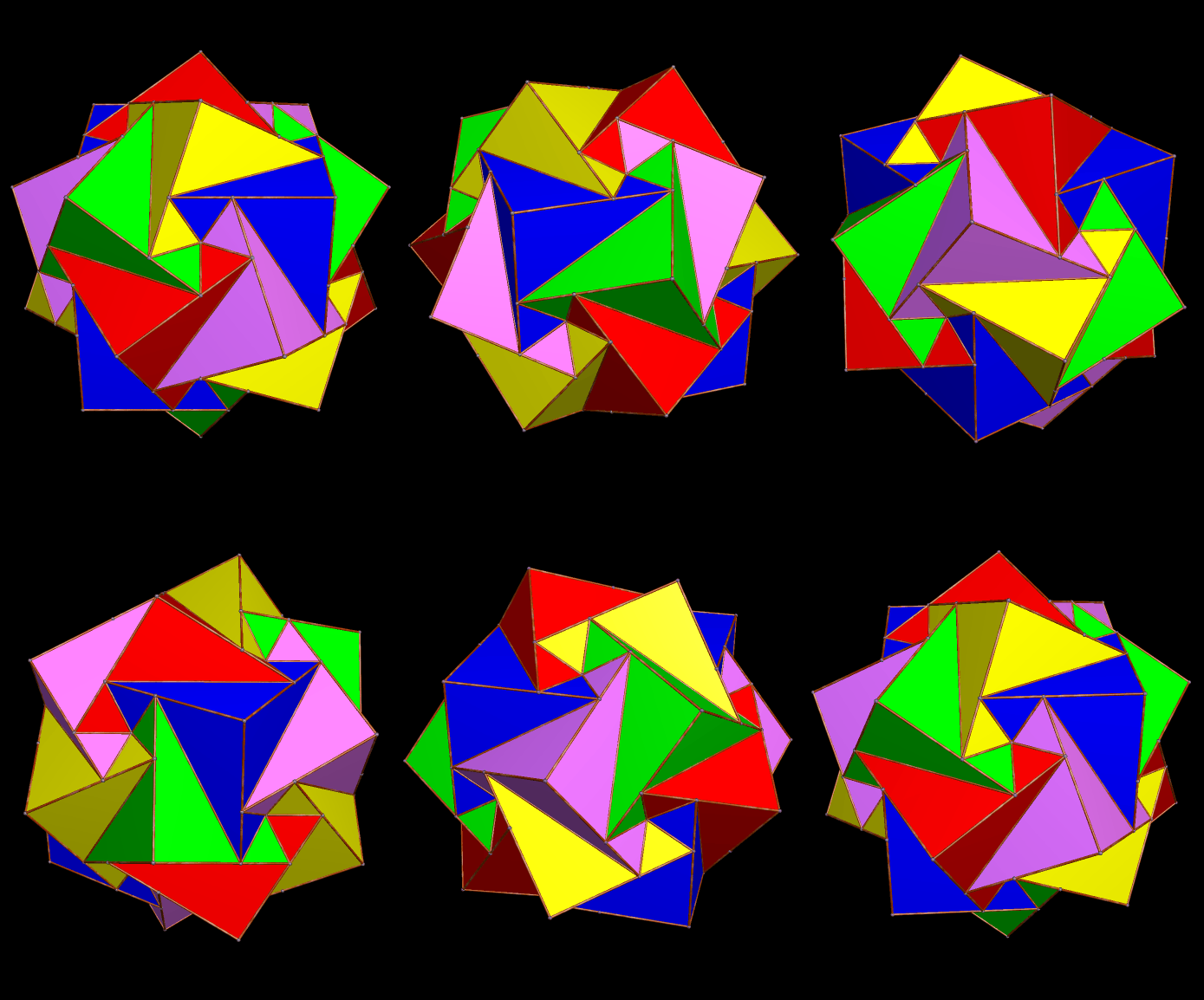
Polyhedral Cage Based On an Icosahedron / Dodecahedron Compound

Image

Polyhedral Cage Based On an Icosahedron / Dodecahedron Compound

Software credit: see http://www.software3d.com/stella.php.

Variant of the Compound of Five Cubes

Image

Variant of the Compound of Five Cubes

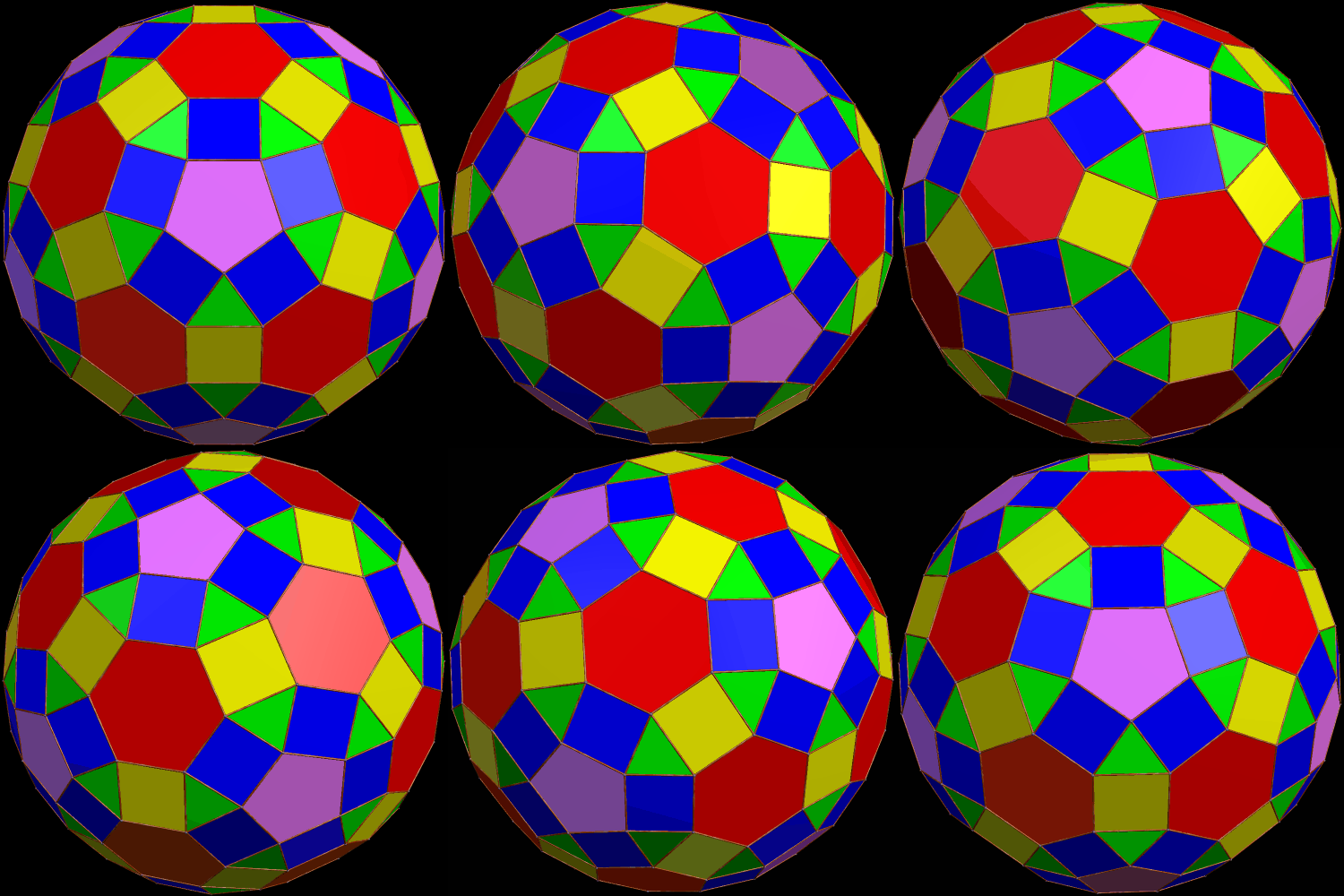
In this compound (unlike the classical compound of five cubes), the cubes are not complete. I found it while repeatedly-stellating the rhombic triacontahedron, which you can see in the previous post.

(Software credit: see http://www.software3d.com/stella.php

Reflection-Planes of the Rhombic Triacontahedron

Image

Reflection-Planes of the Rhombic Triacontahedron

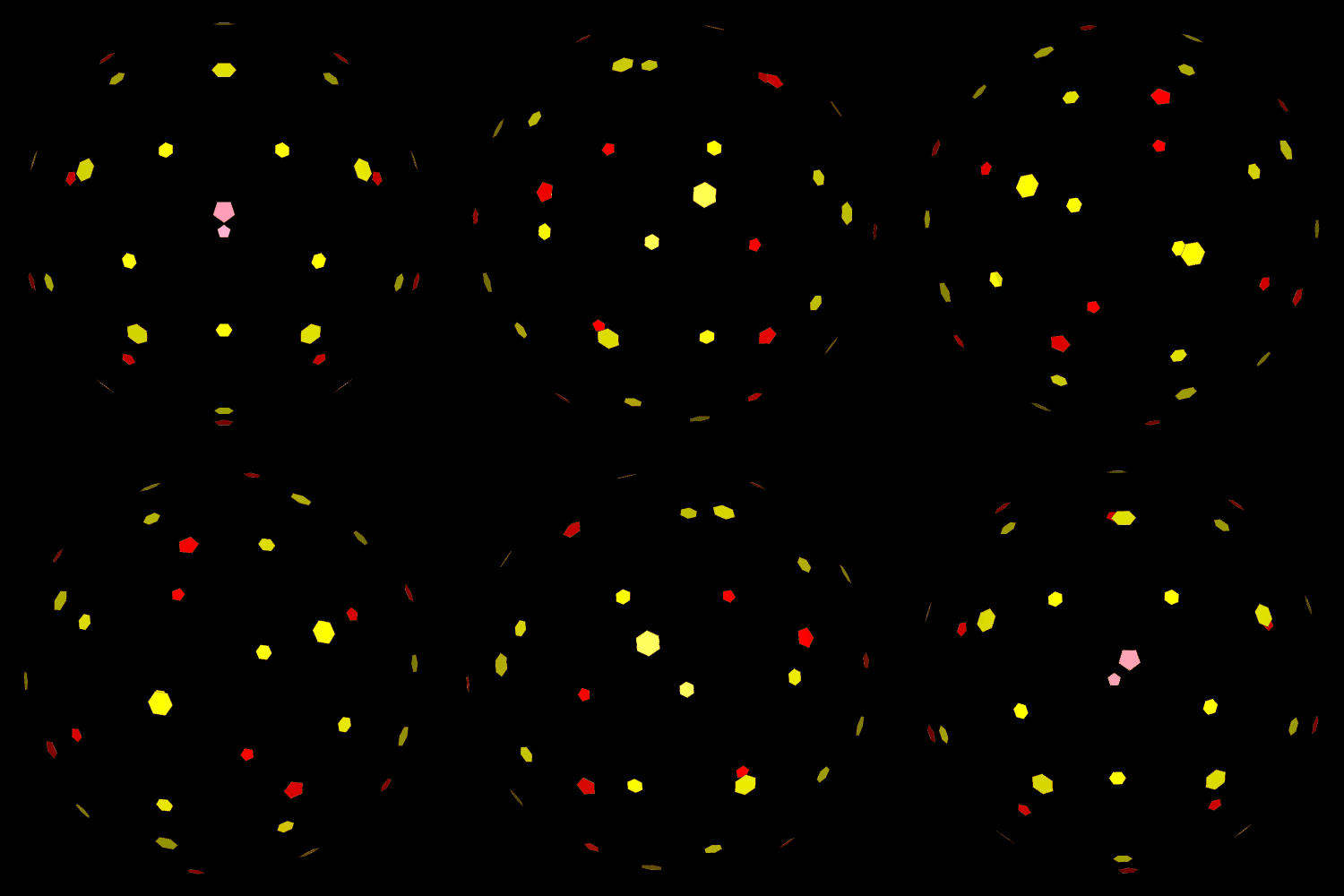
Each circle shown is in one of the reflection-planes of this polyhedron, which is the dual of the icosidodecahedron, an Archimedean solid.

(Software credit: see http://www.software3d.com/stella.php)

Expanded Truncated Icosahedron III

Image

Expanded Truncated Icosahedron III

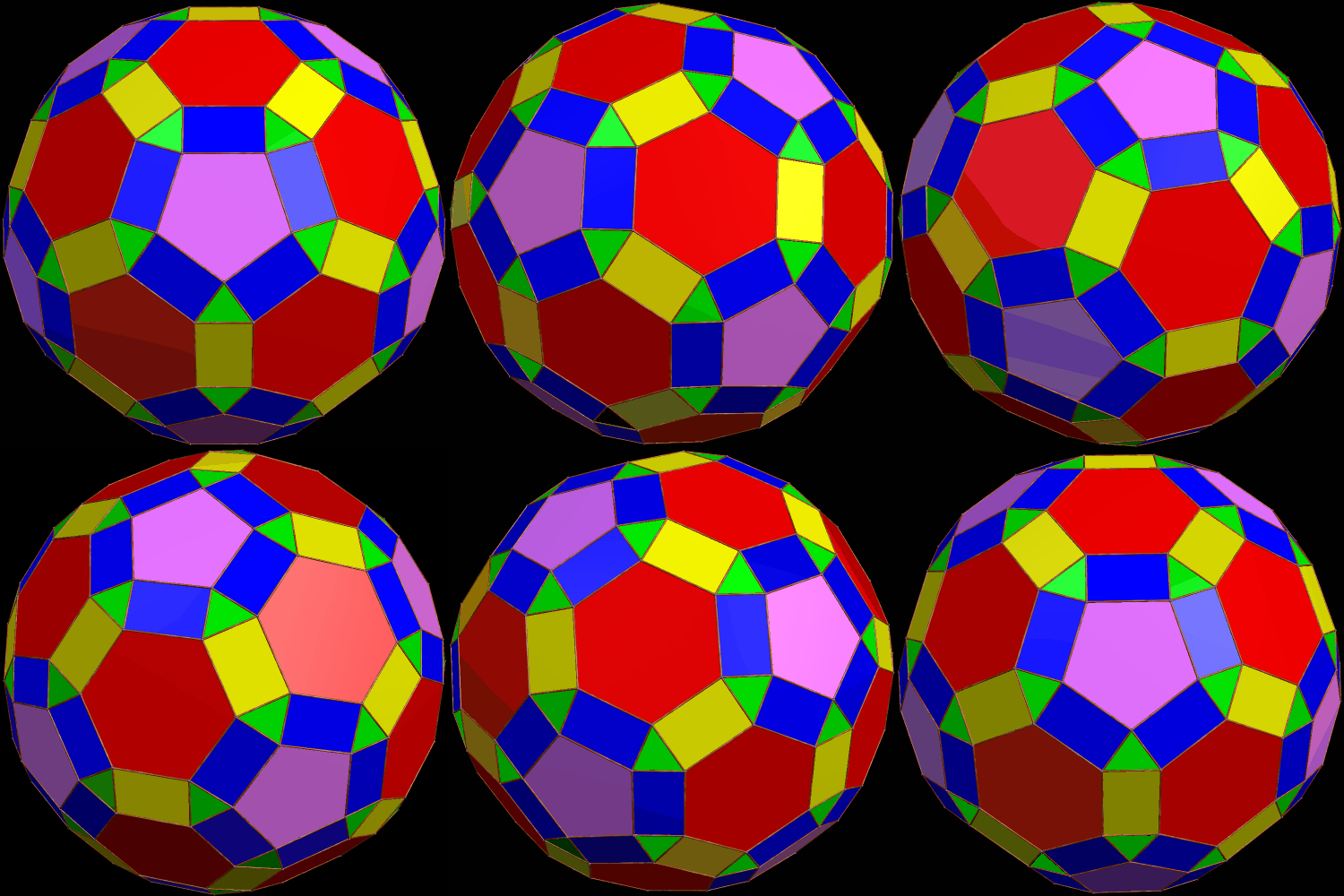
This version of an expanded truncated icosahedron was made in a similar fashion to the one two posts ago — but with the augmentation-by-prisms step altered by using prisms of somewhat greater height, with the goal being to make the rectangular faces closer to “squareness.”

As a result, this polyhedron is closer than the others to being a near-miss to the Johnson Solids — a category of polyhedra which has been discussed on this blog before. “Near-misses” are almost Johnson solids, and must therefore have faces which are regular (as the hexagon and pentagons here are) are nearly-regular (as the rectangles and triangles come close to being).

Is this a near-miss, or is it not? That’s difficult to answer, for that set of polyhedra has no precise definition, and cannot have one — it only has a “fuzzy” definition.

In my opinion, it isn’t quite a near-miss, for the triangles are too non-equilateral to qualify, to my eye — but others might disagree. In the unlikely event that mathematicians wish to start talking about “near-near-misses,” I offer this as a member of that set.

(Software credit:  see http://www.software3d.com/stella.php for a free trial download of the software used to make these polyhedral images.)


Expanded Truncated Icosahedron II

Image

Expanded Truncated Icosahedron II

In this version of an expansion of the truncated icosahedron, the faces are simply moved far apart — but with nothing filling the space between them.

Like the last post, this was made using Stella 4d, which you may download and try for free (as a trial version) at http://www.software3d.com/stella.php.

Expanded Truncated Icosahedron

Image

Expanded Truncated Icosahedron

To create this polyhedron, I started with a truncated icosahedron (soccer ball shape), then augmented each face with prisms, then took the convex hull of the resulting non-convex figure.

All of this was done in about two minutes with Stella 4d, a program which makes manipulating polyhedra both quick and easy. You can try it here: http://www.software3d.com/stella.php.

For Tumblr-Refugees

Image

For Tumblr-Refugees

If you’ve never had a Tumblr-blog, you probably won’t get the joke here. If you have, though, you will.

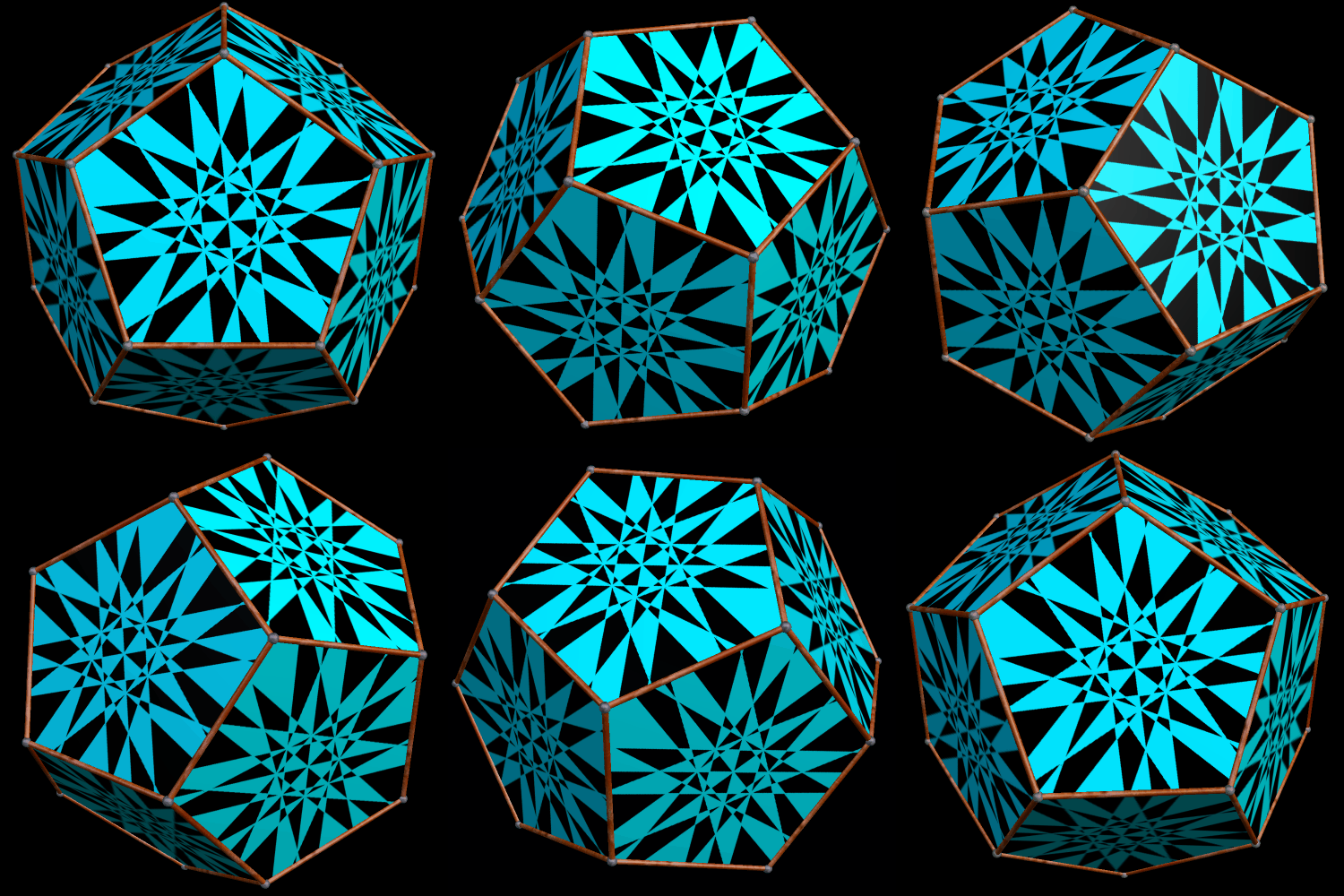
Dodecahedron with Turquoise Stars

Image

Dodecahedron with Turquoise Stars

Programs used: Geometer’s Sketchpad and MS-Paint, to make the turquoise stars; and Stella 4d, to place that image of each face of this polyhedron, and then make this rotating .gif file.

Stella 4d may be tried for free at http://www.software3d.com/stella.php.

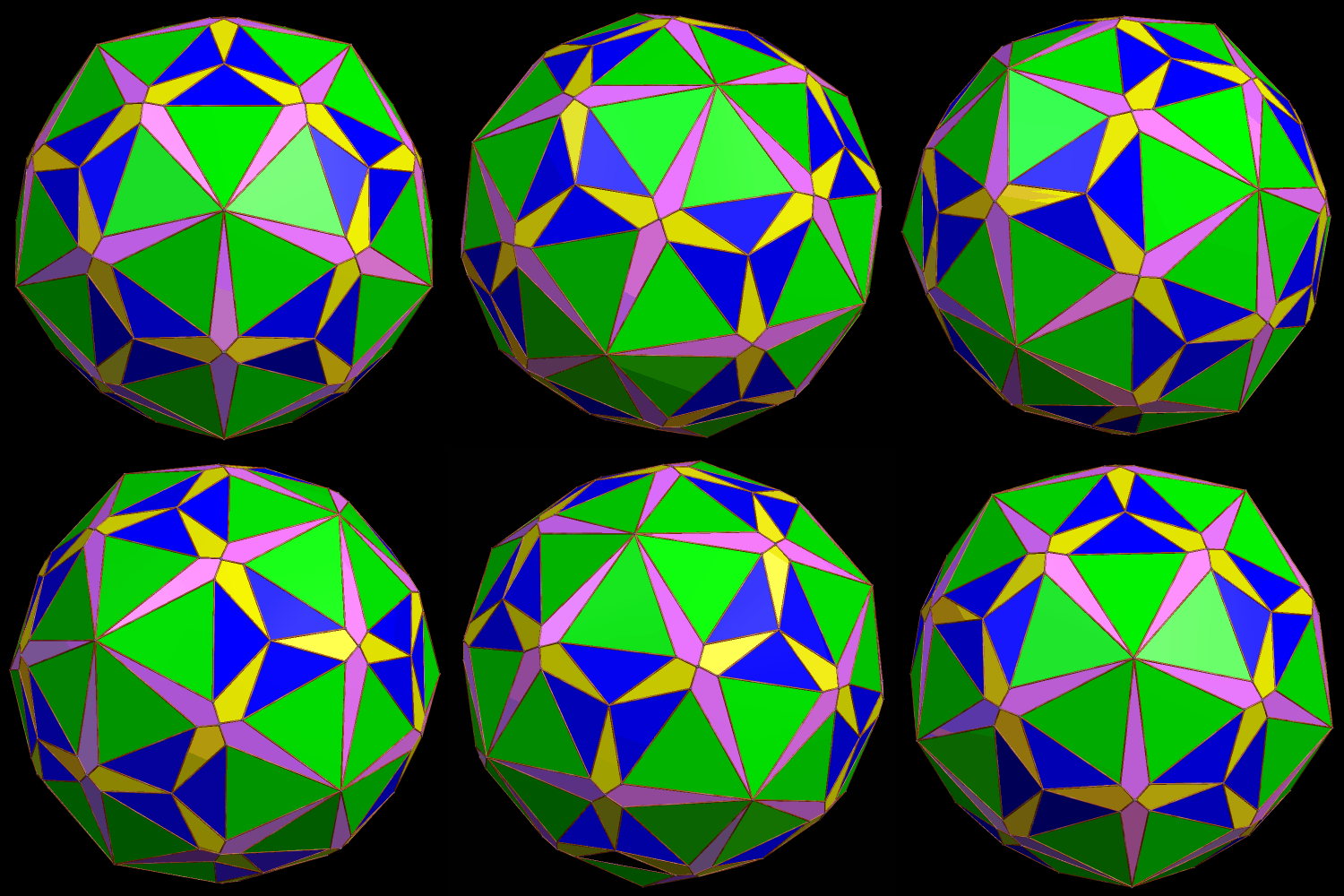
Polyhedron with 240 Faces, in Four Sets of Sixty

Image

Polyhedron with 240 Faces, in Four Sets of Sixty

The 240 faces are:

  • 60 small isosceles triangles
  • 60 large isosceles triangles
  • 60 small kites
  • 60 larger irregular pentagons, with one side each that is so short that they strongly resemble kites

Created with Stella 4d, available at http://www.software3d.com/stella.php.