
The second image here resulted from stellating the first one many times. It can be enlarged with a click.

The software used to create these rotating images, Stella 4d, may be tried for free at http://www.software3d.com/Stella.php.
The second image here resulted from stellating the first one many times. It can be enlarged with a click.
The software used to create these rotating images, Stella 4d, may be tried for free at http://www.software3d.com/Stella.php.
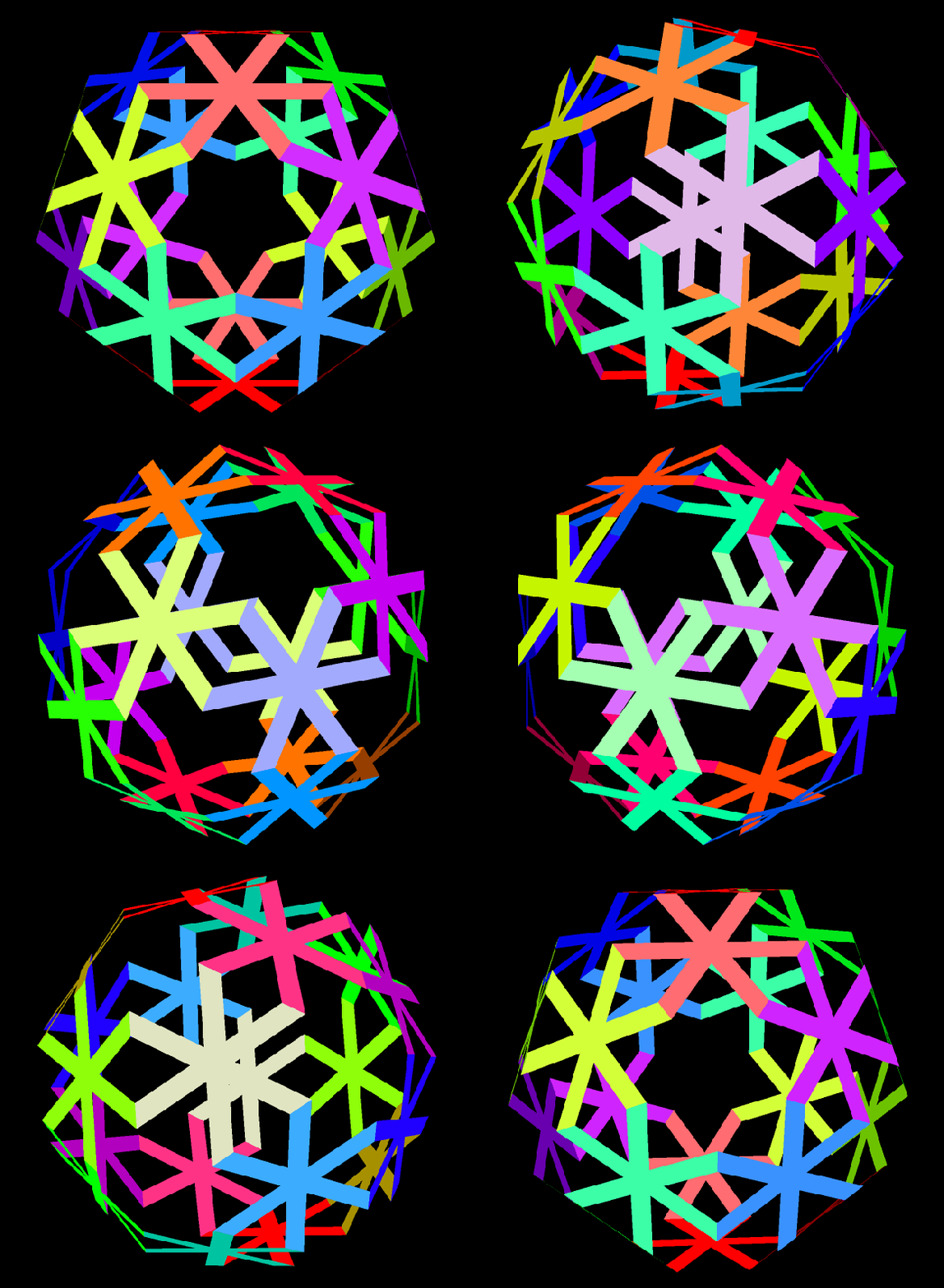
Software credit: see http://www.software3d.com/Stella.php.

To create this, I started with a rhombic triacontahedron, and then used software called Stella 4d to zonohedrify it, adding zones to the existing faces along x, y, and z axes meeting at the polyhedron’s center.
I find its dual even more interesting:

The software used to create these rotating images may be tried for free at http://www.software3d.com/Stella.php.

The Stella Octangula is another name for the compound of two tetrahedra. I made this elongated version, which uses narrow isosceles triangles in place of the usual equilateral triangles, using Stella 4d — polyhedron-manipulation software you can find at http://www.software3d.com/Stella.php.

To make any of these smaller images as large as the first one, simply click on the smaller image of your choice.

These are all members of the same stellation-sequence, just like the two octahedron-variants in the last post.

I made these in just a few minutes with software, written by a friend of mine, called Stella 4d: Polyhedron Navigator. You can check it out for yourself at http://www.software3d.com/Stella.php. A free trial download is available.

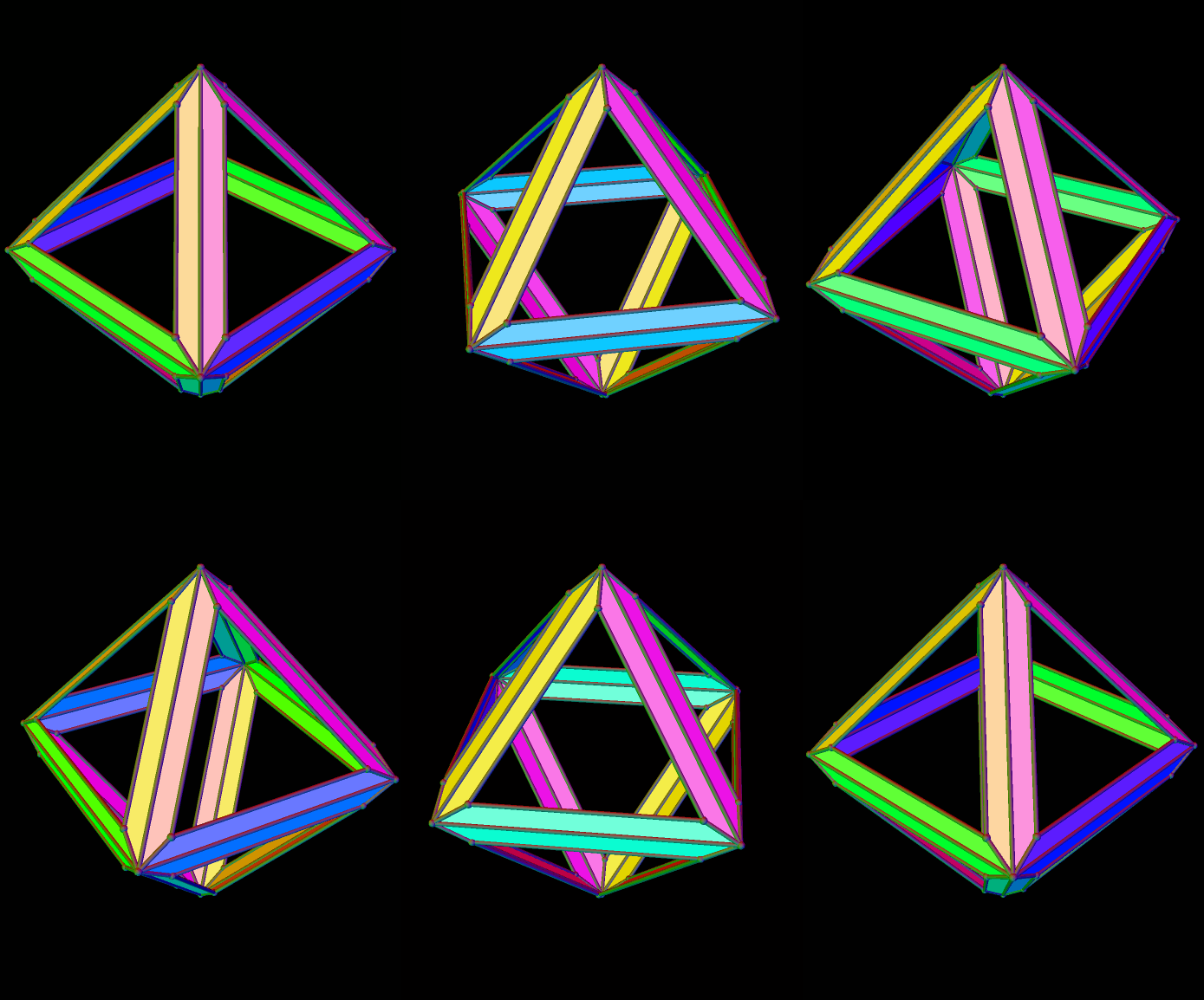
These are both in the same stellation-sequence. I made them using Stella 4d, software you can find here: http://www.software3d.com/Stella.php. For the second one, just click on it if you want to make it larger.

 RobertLovesPi.net