This is apparently a problem, posed by Gregory Galperin, which went unsolved at the Bay Area Math Olympiad in 2005. I haven’t solved it yet, but I’m going to try, as I work on this blog-post. My 2010 source is a paper about Zome which may be read, as a .pdf, at bact.mathcircles.org/files/Summer2010/zomes-6-2010.pdf. The problem involves a dodecahedron and an icosahedron, each inscribed inside the same sphere of radius r, and asks which has the greater volume. At the time the authors wrote this paper, they knew of no solution, and I know of none now, but I do like a challenge.
My idea for solving this begins with Zome (info on Zome: see http://www.zometool.com, as well as other sites you can find by googling “Zome”). In the Zome geometry system, using B1 struts for the edges of both a dodecahedron and an icosahedron, R1 struts are the radii of the circumscribed sphere for the icosahedron, and Y2 struts are the radii for the circumscribed sphere of the dodecahedron. Since volume formula for polyhedra are generally given in term of edge-length, I need to find B1 in terms of R1 for the icosahedron, and find B1 in terms of Y2 for the dodecahedron.

Icosahedron: find B1, in terms of R1.
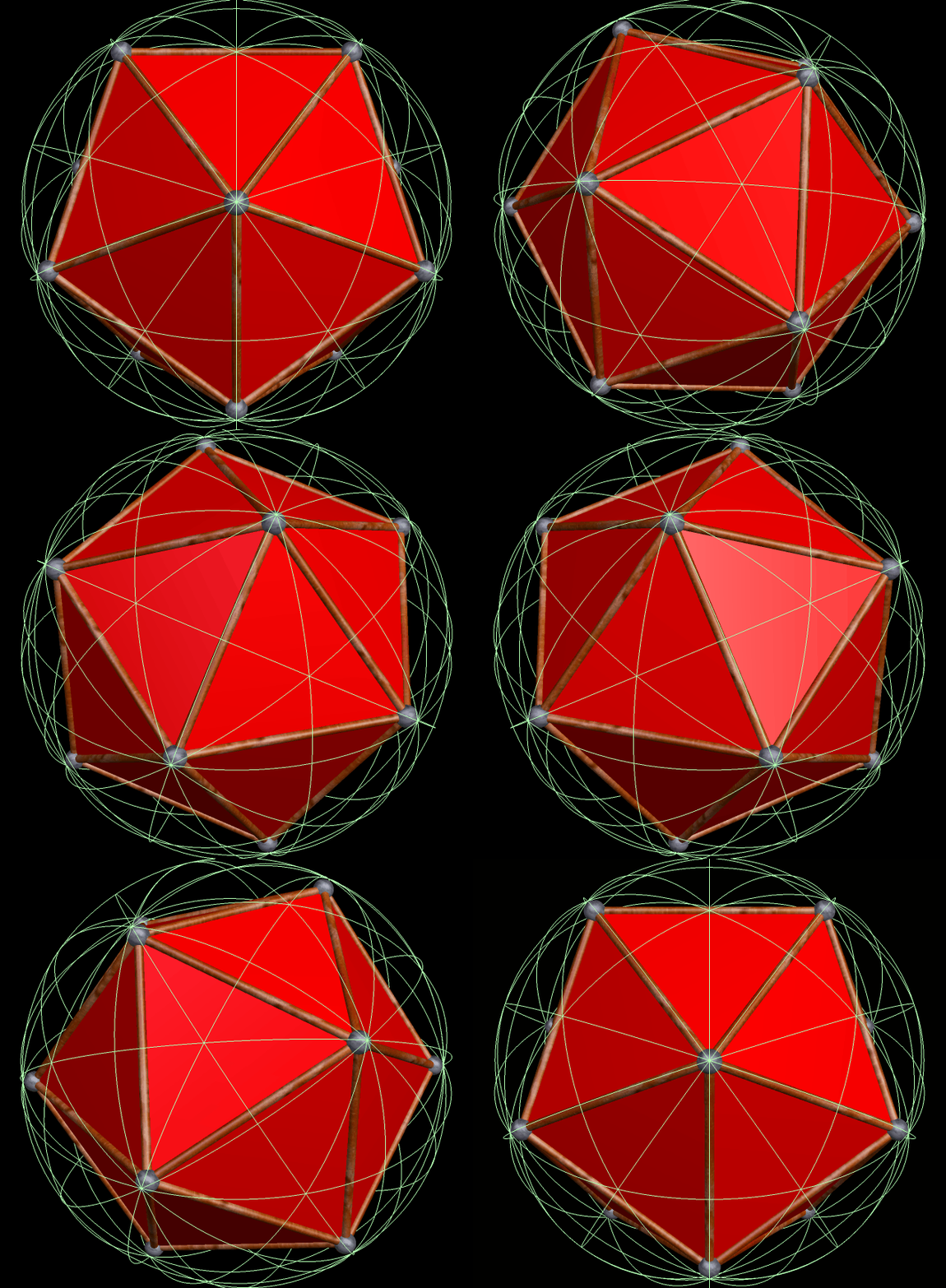
There exists a right triangle which can be built in Zome which has a hypotenuse equal to 2R1, and legs epqual to B1 and B2. B2 = φB1, so, by the Pythagorean Theorem, (2R1)^2 = (B1)^ + φ²(B1)², which simplifies to 4(R1)^2 = (1 + φ²)(B1)^2, which can then be solved for B1 as B1 = sqrt[4(R1)^2/(1 + φ²)]. B1 here is the icosahedron’s edge-length, while R1 is the radius of its circumscribed sphere.

Dodecahedron: find B1, in terms of Y2.
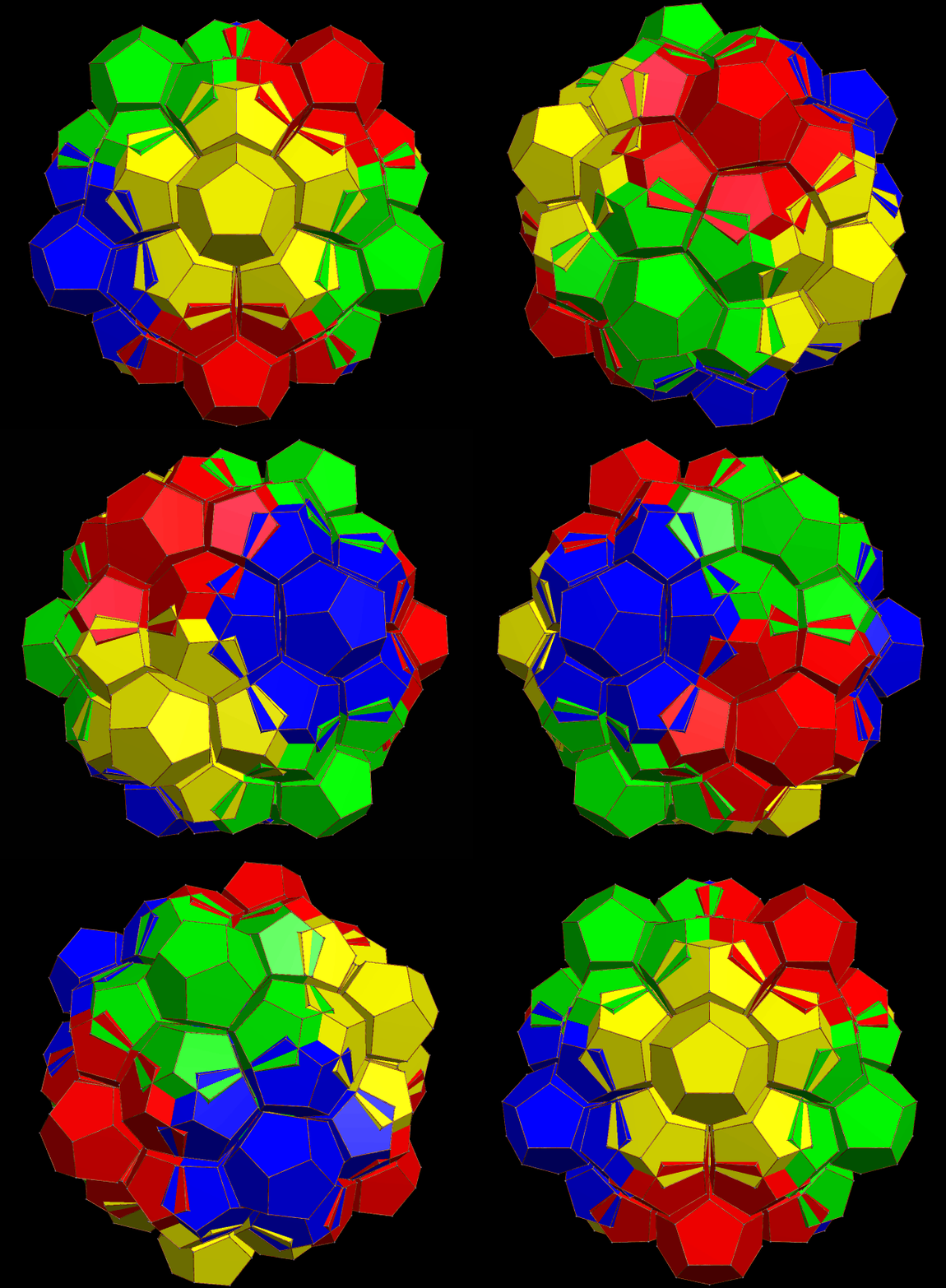
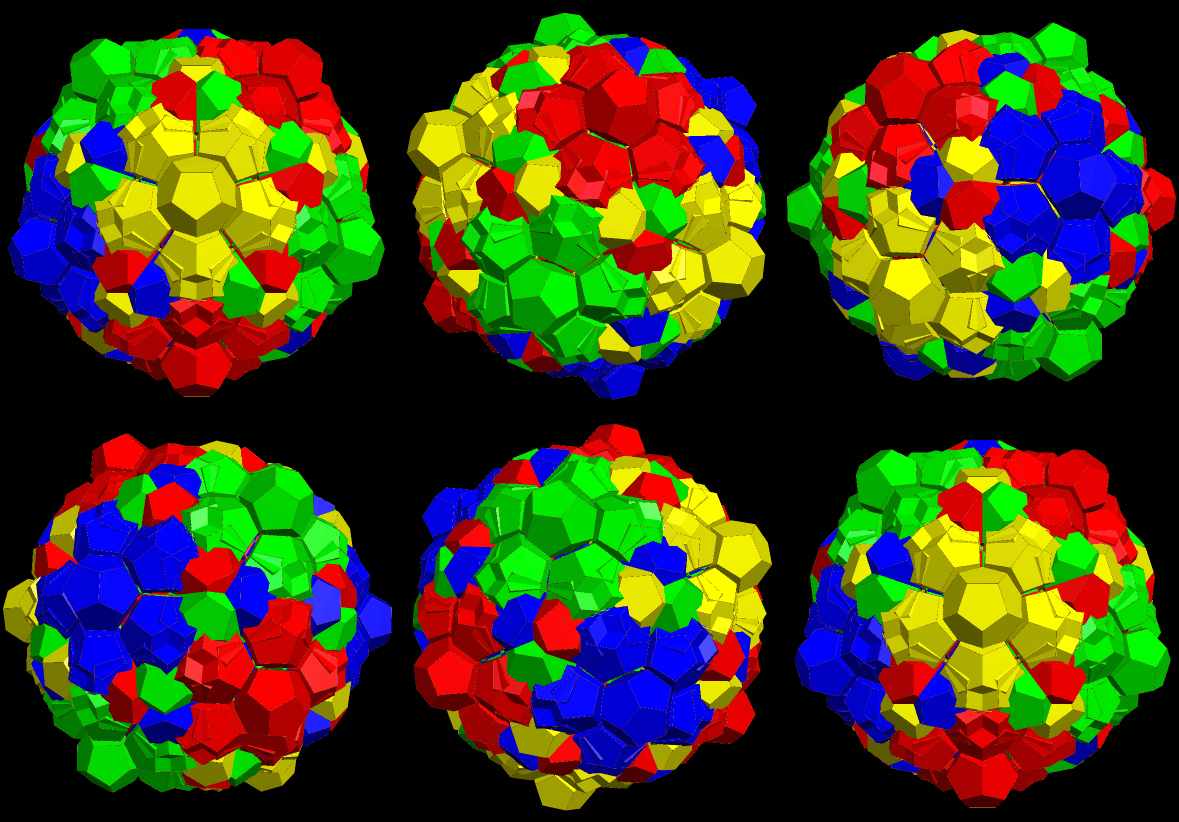
In the Zome system, Y2 = φY1, and Y1 = [sqrt(3)/2]B1. Rearrangement of the first of these equations yields Y1 = Y2/φ, and substitution then yields [sqrt(3)/2]B1 = Y2/φ, which then can be rearranged to yield B1 = 2Y2/[φsqrt(3)]. B1 here is the dodecahedron’s edge-length, while Y2 is the radius of its circumscribed sphere.
Next, find the volume of the icosahedron inscribed inside a sphere, in terms of that sphere’s radius.
According to http://mathworld.wolfram.com/Icosahedron.html, the volume of an icosahedron is given by V = (5/12)[3 + sqrt(5)]a³, where a is the edge length, or B1 in the first indented section, between the two images, above. Then, by substitution, V = (5/12)[3 + sqrt(5)]{sqrt[4(R1)^2/(1 + φ²)]}³, which then becomes (with “r” being the radius of the circumscribed sphere) V = (5/12)[3 + sqrt(5)][2r/sqrt(1 + φ²)]³ = (40/12)[3 + sqrt(5)][1/sqrt(1 + φ²)]³r³ = (10/3)[3 + sqrt(5)][1/sqrt(1 + φ²)]³r³. Then, using the identity φ² = φ + 1, this can be further simplified to V = (10/3)[3 + sqrt(5)][1/sqrt(2 + φ)]³r³.
Next, find the volume of the dodecahedron inscribed inside the same sphere, in terms of that sphere’s radius, r.
According to https://en.wikipedia.org/wiki/Dodecahedron, the volume of an icosahedron is given by V = (1/4)[15 + 7sqrt(5)]a³, where a is the edge length, or B1 in the second indented section, below the second image, above. Then, by substitution, V = (1/4)[15 + 7sqrt(5)]{2Y2/[φsqrt(3)]}³, which then becomes (with “r” being the radius of the circumscribed sphere) V = (8/4)[15 + 7sqrt(5)]{1/[φsqrt(3)]}³r³ = 2[15 + 7sqrt(5)]{1/[3sqrt(3)]}(1/φ³)r³ = (2/3)[15 + 7sqrt(5)][sqrt(3)/3](1/φ³)r³ = [2sqrt(3)/9][15 + 7sqrt(5)](1/φ³)r³.
So, with the “r” in each case being the same, the icosahedron is larger than the dodecahedron iff (10/3)[3 + sqrt(5)][1/sqrt(2 + φ)]³ > [2sqrt(3)/9][15 + 7sqrt(5)](1/φ³), which simplifies to (5)[3 + sqrt(5)][1/sqrt(2 + φ)]³ > [2sqrt(3)/3][15 + 7sqrt(5)](1/φ³), which simplifies further to {5/[sqrt(2 + φ)]³}[3 + sqrt(5)] > [2sqrt(3)/3φ³][15 + 7sqrt(5)], which is, as a decimal approximation, is (0.726542528)(5.2360679774998) > (3.464101615/12.708203932)(30.6524758), or 3.804226 > 8.355492, which is false, meaning that the dodecahedron is larger, not the icosahedron.
Now for the bad part: I think I’m wrong, but I don’t know where the error lies. I’m also tired. If any of you see the mistake, please point it out in a comment, and I’ll try to fix this after I’ve rested.
Update: if the websites http://rechneronline.de/pi/icosahedron.php and http://rechneronline.de/pi/dodecahedron.php work correctly, then the dodecahedron is larger. Evidence:

This does not, however, mean that I did the problem correctly. I merely stumbled upon the correct answer. How do I know this? Simple: the ratio I obtained was too far off. Therefore, I would still welcome help clearing up the mystery of where my error(s) is/are, in the calculations shown above.


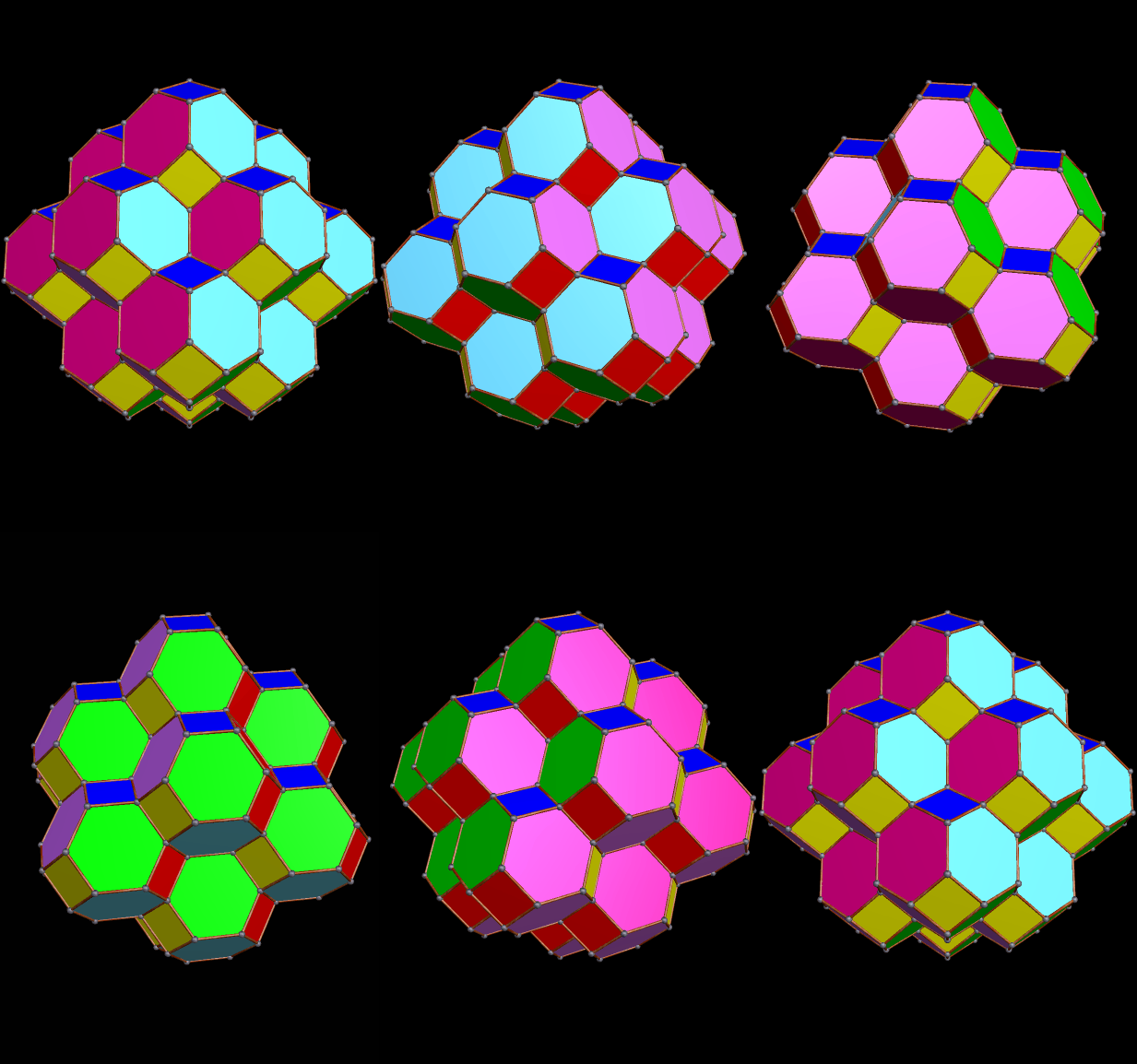




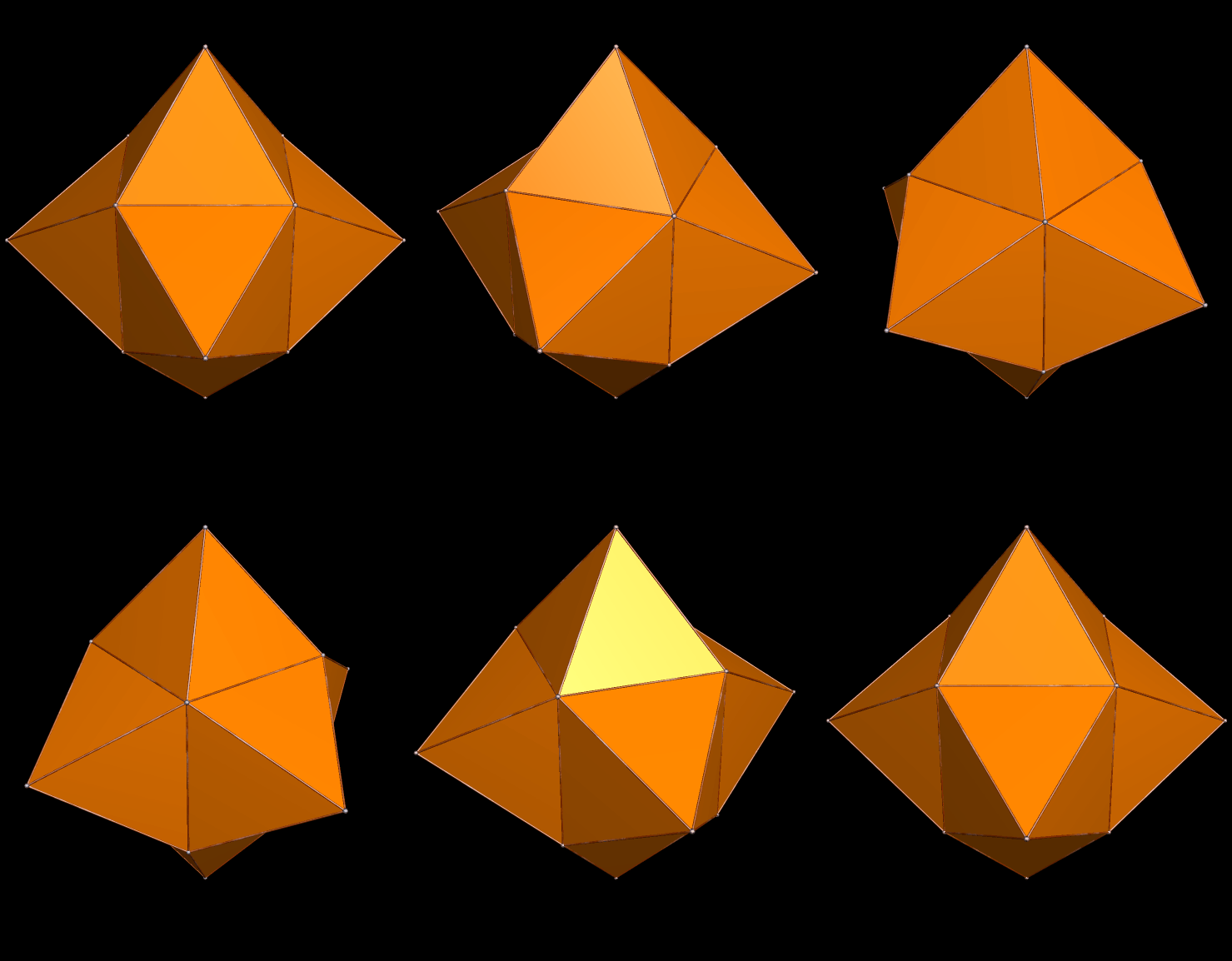
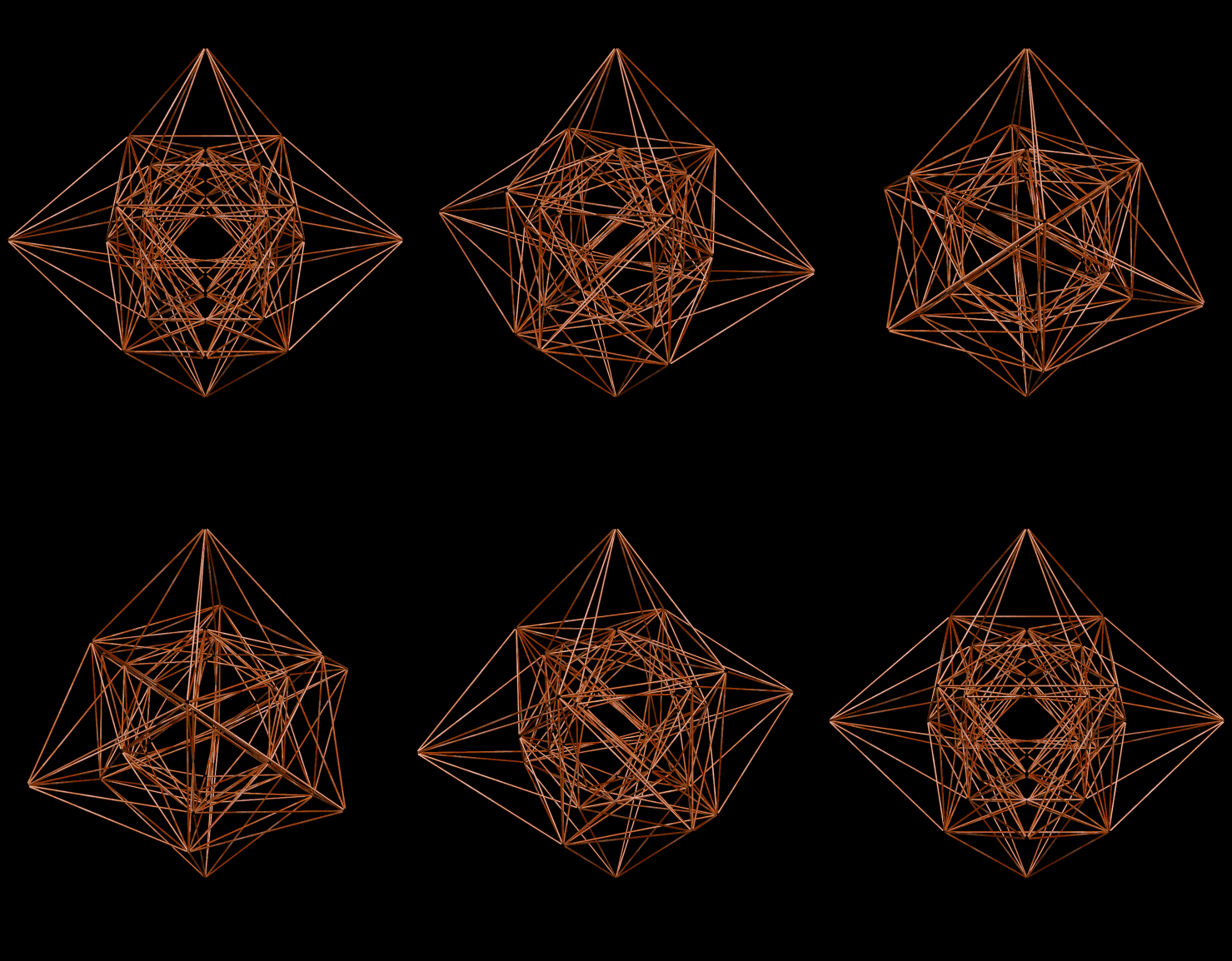
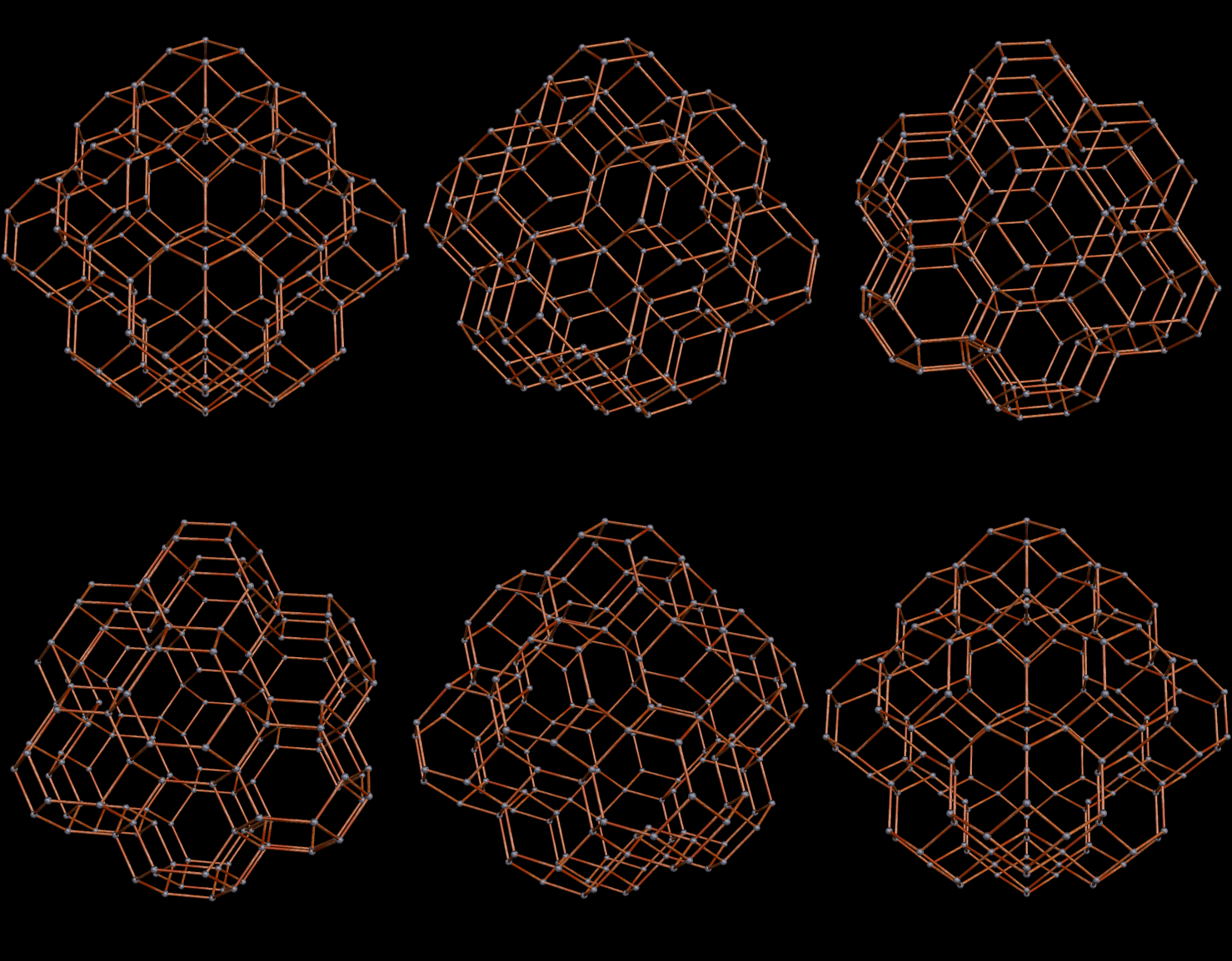

 RobertLovesPi.net