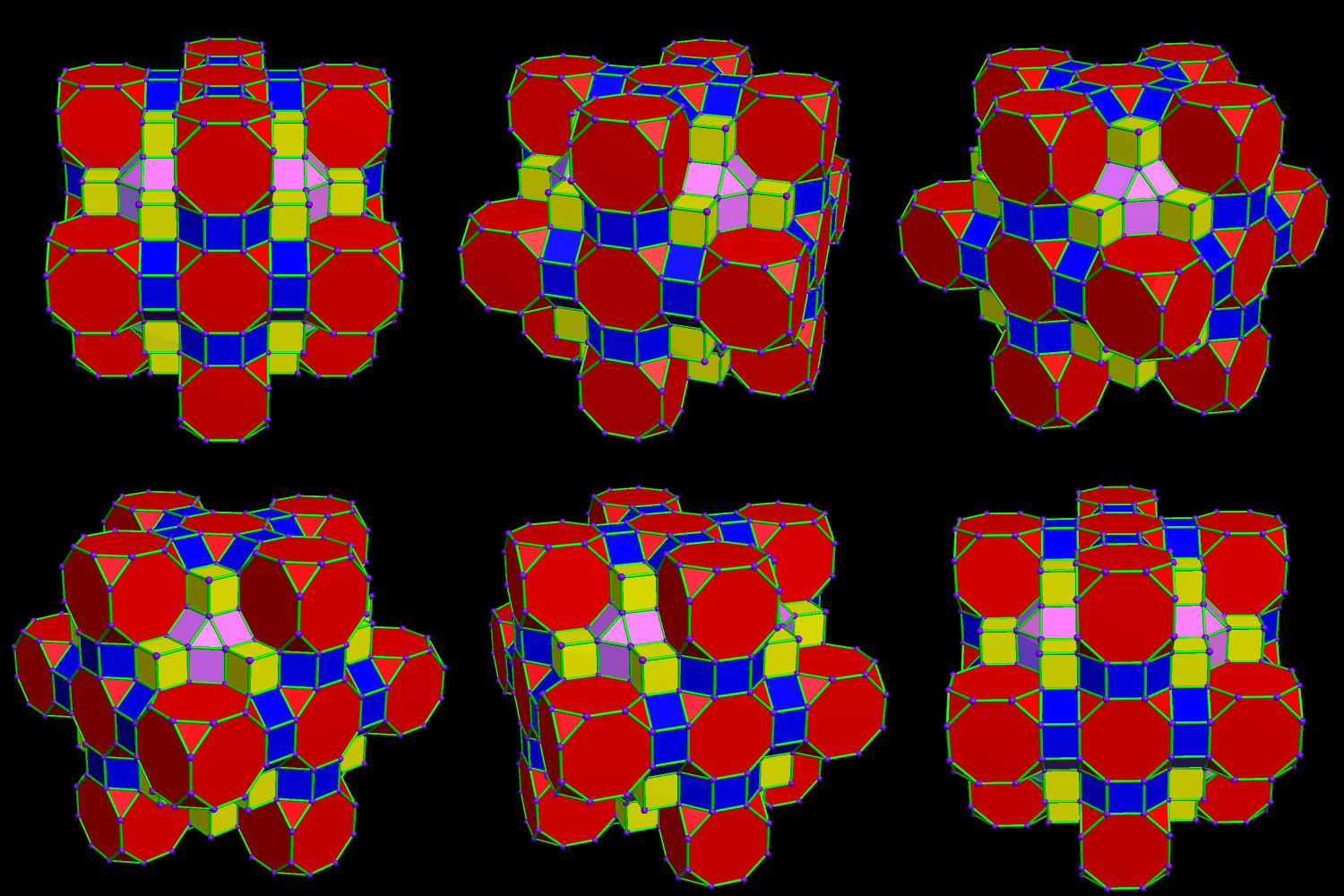
A Space-Filling Arrangement of Polyhedra Using Truncated Cubes, Rhombcuboctahedra, Cubes, and Octagonal Prisms

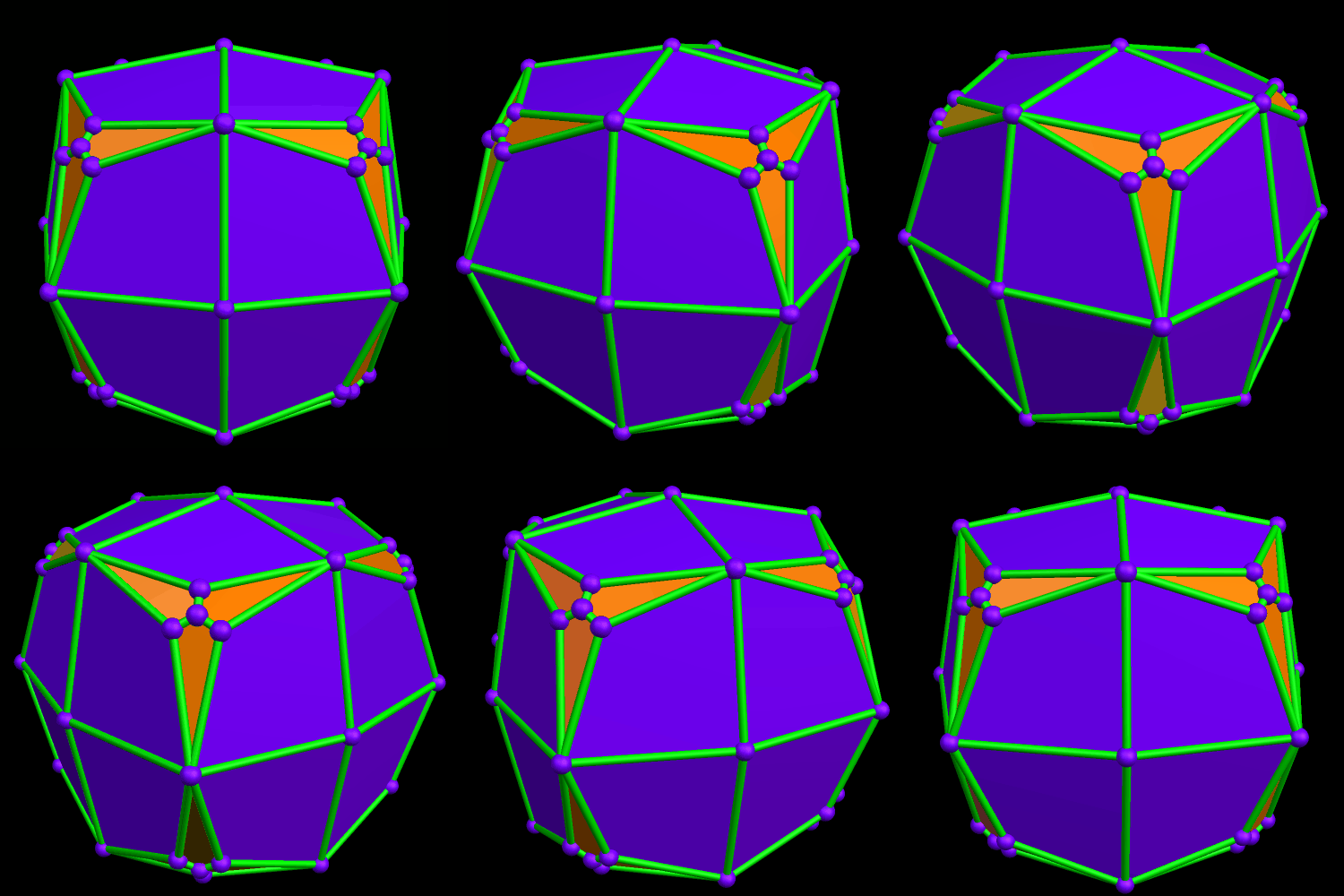
space filling attempt with RCO and cubes and truncated cubes and octagonal prisms

This image above has only one polyhedron-type hidden from view, in the center:  a red truncated cube. Next, more of this pattern I just found will be added.

space filling attempt with RCO and cubes and truncated cubes and octagonal prisms 2

The next step will be to add another layer of blue octagonal prisms.

space filling attempt with RCO and cubes and truncated cubes and octagonal prisms 3And now, more yellow cubes.

space filling attempt with RCO and cubes and truncated cubes and octagonal prisms 4This was an accidental discovery I made, just messing around with Stella 4d, a program you may try for yourself at http://www.software3d.com/Stella.php. The next cells added will be red truncated cubes.

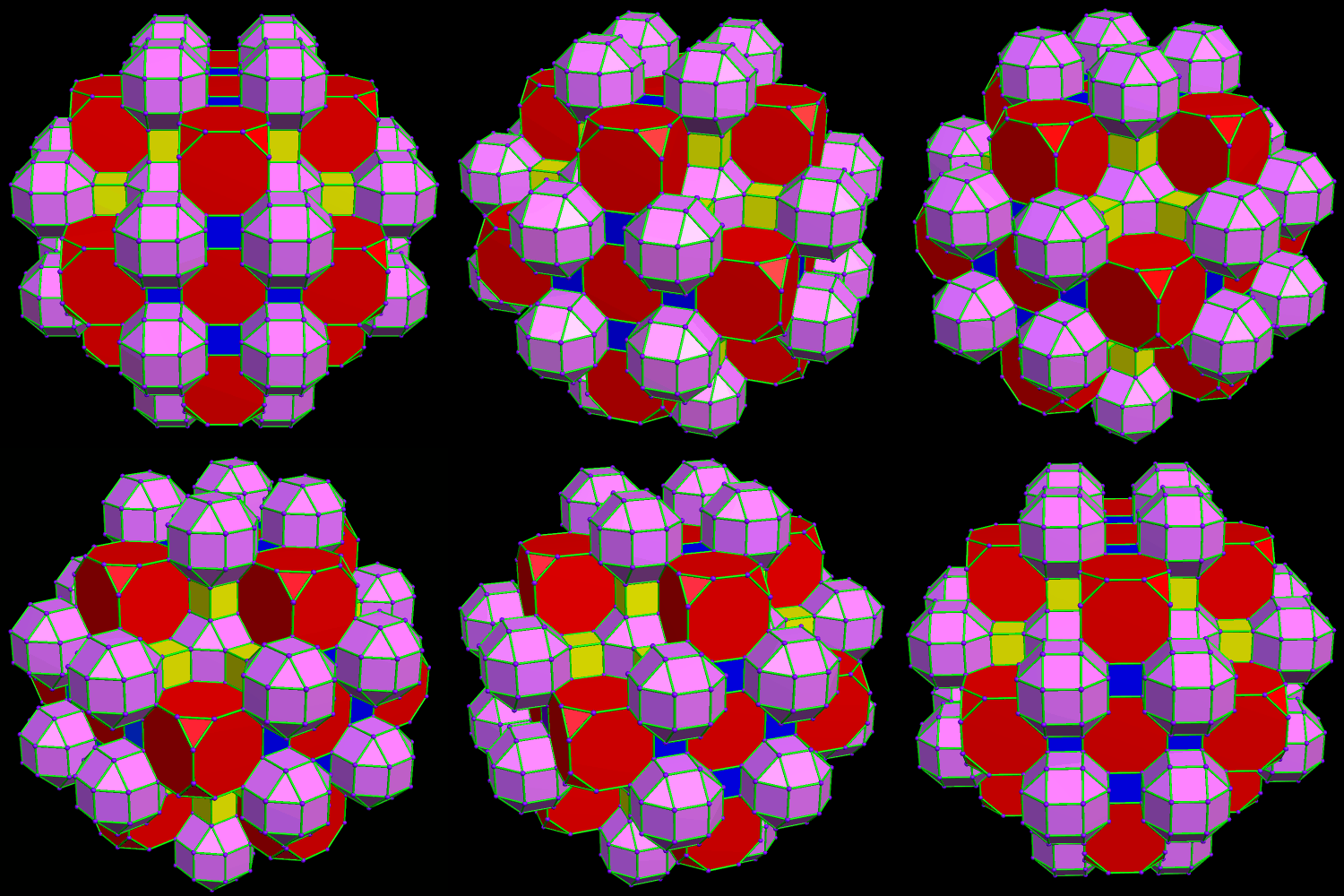
space filling attempt with RCO and cubes and truncated cubes and octagonal prisms 5

Next up, I’ll add a set of pink rhombcuboctahedra.

space filling attempt with RCO and cubes and truncated cubes and octagonal prisms 6The next set of polyhedra added: some yellow cubes, and blue octagonal prisms.

space filling attempt with RCO and cubes and truncated cubes and octagonal prisms 7Now I’ll add more of the red truncated cubes.

space filling attempt with RCO and cubes and truncated cubes and octagonal prisms 8At this point, more yellow cubes are needed.

space filling attempt with RCO and cubes and truncated cubes and octagonal prisms 9The next polyhedra added will be pink rhombcuboctahedra.

space filling attempt with RCO and cubes and truncated cubes and octagonal prisms 10

And now, more of the blue octagonal prisms.

space filling attempt with RCO and cubes and truncated cubes and octagonal prisms 11

As long as this pattern is followed, this may be continued without limit, filling space, without leaving any gaps.

“How are you today?”

how are you

At least in this part of the world, “How are you today?” — or variations thereof — is commonly used as a way to start conversations, as a bit of “small talk.” The odd part of this social convention is that, when people ask this, they usually don’t really want to hear an honest answer — or, indeed, any answer at all that isn’t part of the standard “small talk” script.

The usual answer (“Fine, thanks,” or something like it) is yet another empty phrase — more small talk. Unusual answers, though, have great potential for fun. I first encountered this idea in a class I took, many years before, where the teacher told us that his habit was to answer, instead, with an upbeat, “Getting better!” I’ve tried this, and the facial expressions often seen, in response, are indeed quite entertaining. Small talk is annoying — to me, anyway — but disrupting it, by simply deviating from the usual script, can be a lot of fun.

Here are some other possible answers, but this game is probably most fun if you make up your own.

  • “I’m glad you asked. Actually, my feet hurt. Do you know why?”
  • “Well, I’d feel a lot better if I hadn’t just blown my whole budget for the week on chocolate. It tasted good when I ate it all for breakfast this morning, though!”
  • “Hopefully, I’ll be able to answer your question in a few minutes. Say, where’s the nearest restroom?”
  • “Terrible. My beloved pet cricket just died.”
  • “I’m hoping it gets better soon. Could you recommend a good mechanic nearby, as well as a chiropractor?”
  • “I’m feeling great! There is nothing like a couple of extra-strength placebos to start the day!”
  • “I’m okay now, but I’m not looking forward to this afternoon at all. You have heard about the giant asteroid heading straight for us, right? It’s supposed to hit somewhere near downtown, at about four o’clock.”
  • “Well, I’m broke. May I borrow fifty bucks until next month?”

While I do greatly value honesty, I obviously exclude jokes from the category of lies. Also, suggestions for other funny responses, in comments, would be much appreciated.

A Polyhedral Investigation, Starting with an Augmentation of the Truncated Octahedron

If one starts with a central truncated octahedron, leaves its six square faces untouched, and augments its eight hexagonal faces with trianglular cupolae, this is the result.

AUGMENTED TRUNCTAED OCTAHEDRON

Seeing this, I did a quick check of its dual, and found it quite interesting:

DUAL OF AUGMENTED TRUNCATED OCTAHEDRON

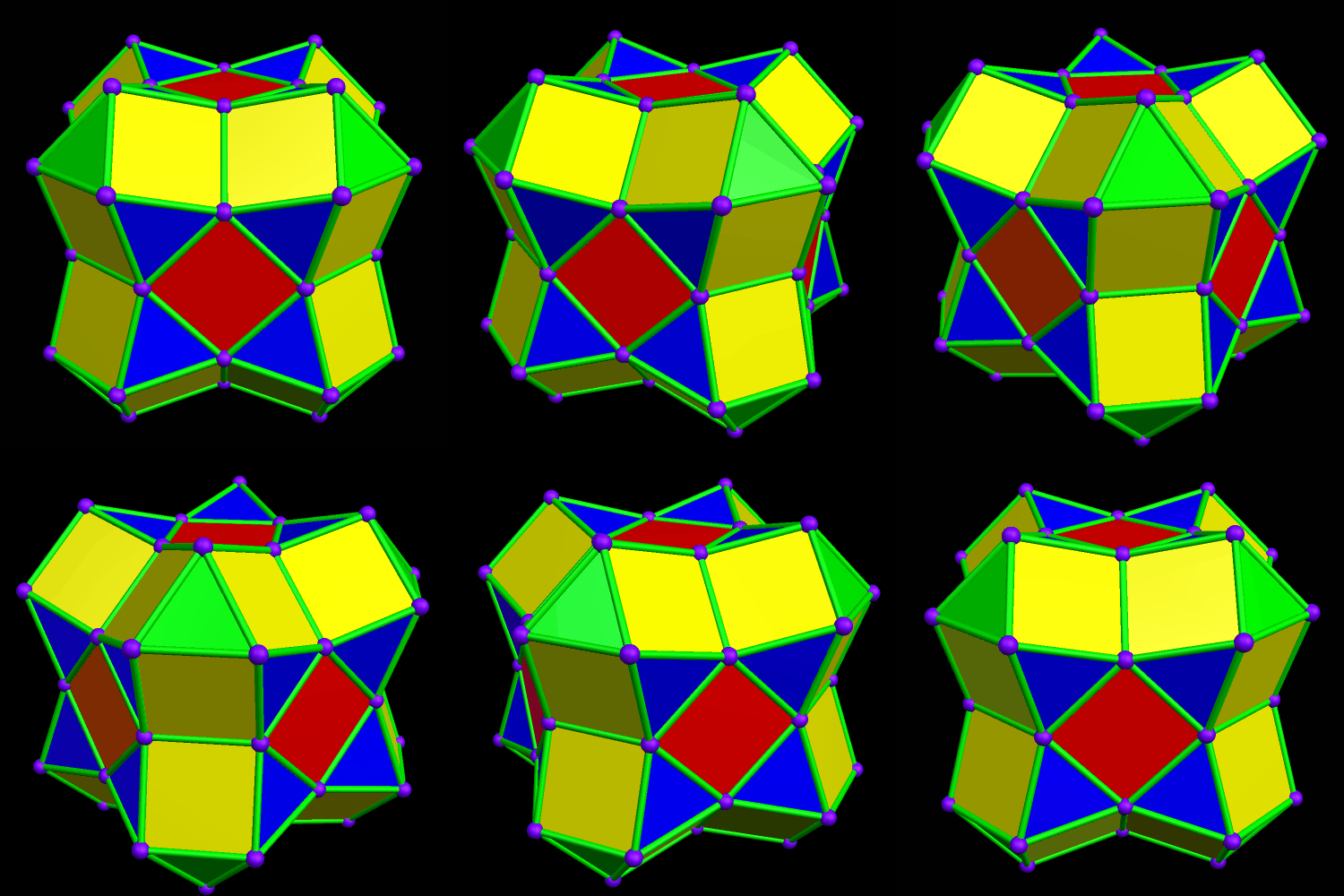
After seeing this dual, I next created its convex hull.

Convex hull x

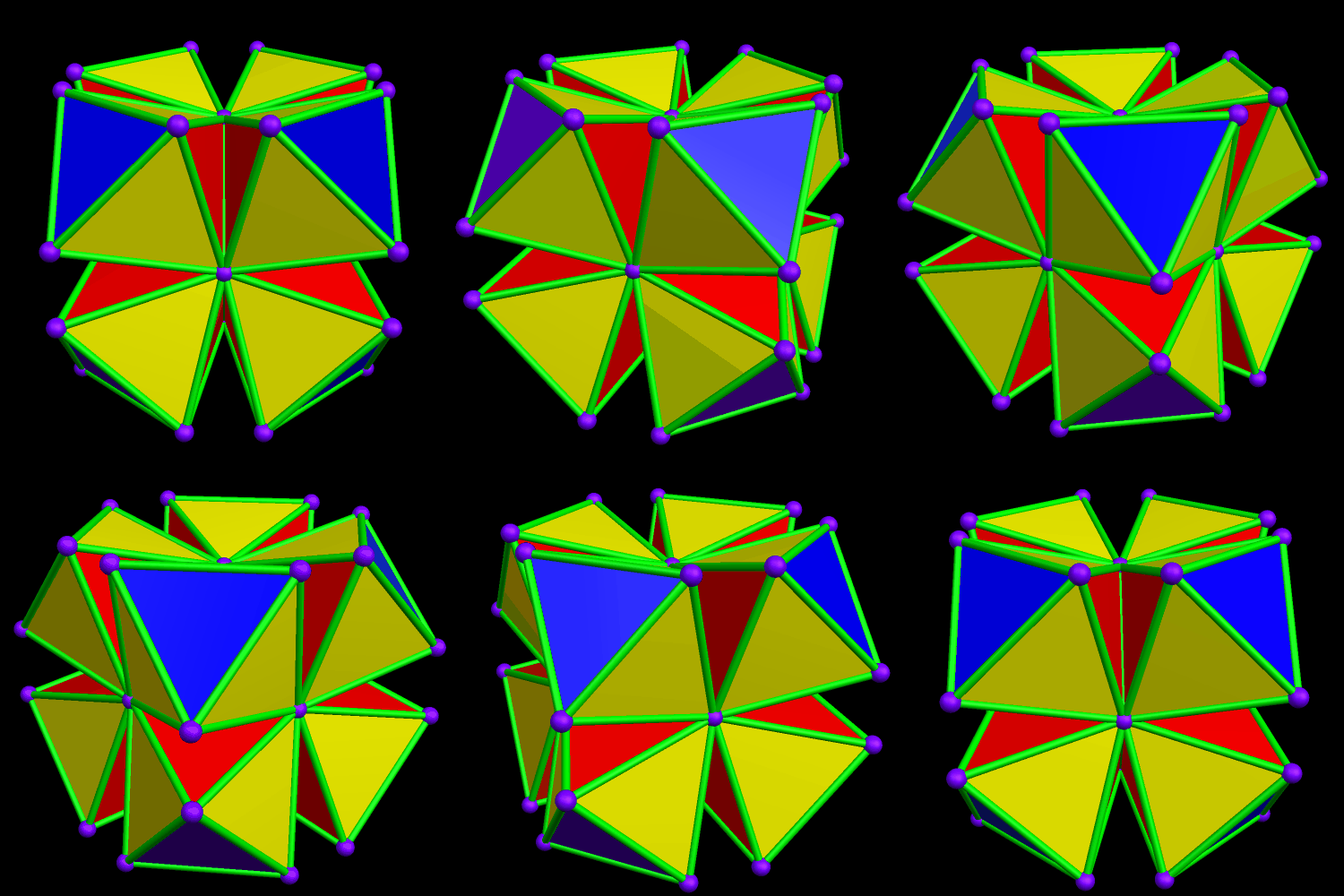
After seeing this convex hull, I next creating its dual:  one of several 48-faced polyhedra I have found with two different sets of twenty-four kites as faces, one set in six panels of four kites each, and the other set consisting of eight sets of three kites each. I think of these recurring 48-kite-faced polyhedra as polyhedral expressions of a simple fact of arithmetic: (6)(4) = (8)(3) = 24.

48 KITES AGAiN

I use Stella 4d (available at http://www.software3d.com/Stella.php) to perform these polyhedral transformations. The last one I created in this particular “polyhedral journey” is shown below — but, unfortunately, I cannot recall exactly what I did, to which of the above polyhedra, to create it.

Convex hull OF AUGMENTED CUBOCTAHEDRON

A Cluster of Nine Octahedra, and Related Polyhedra

If one starts with a central octahedron, then augments each of its eight triangular faces with identical octahedra, this is the result.

9 Octahedra

It is then possible to augment each visible triangle of this cluster with yet more octahedra, which produces this result, in which some octahedra overlap each other.

Meta-9 Octahedra

After making this, I wanted to see its convex hull:  the smallest, tightest-fitting convex polyhedron which can contain a given non-convex polyhedron. (I use Stella 4d: Polyhedron Navigator to perform these manipulations of polyhedra, and this program makes this a fast and easy process. If you’d like to try this software, even as a free trial download, the website to visit is http://www.software3d.com/Stella.php.) Here’s what this convex hull, which bears a resemblance to the rhombcuboctahedron, looks like.

Convex hull of meta-9-octahedron

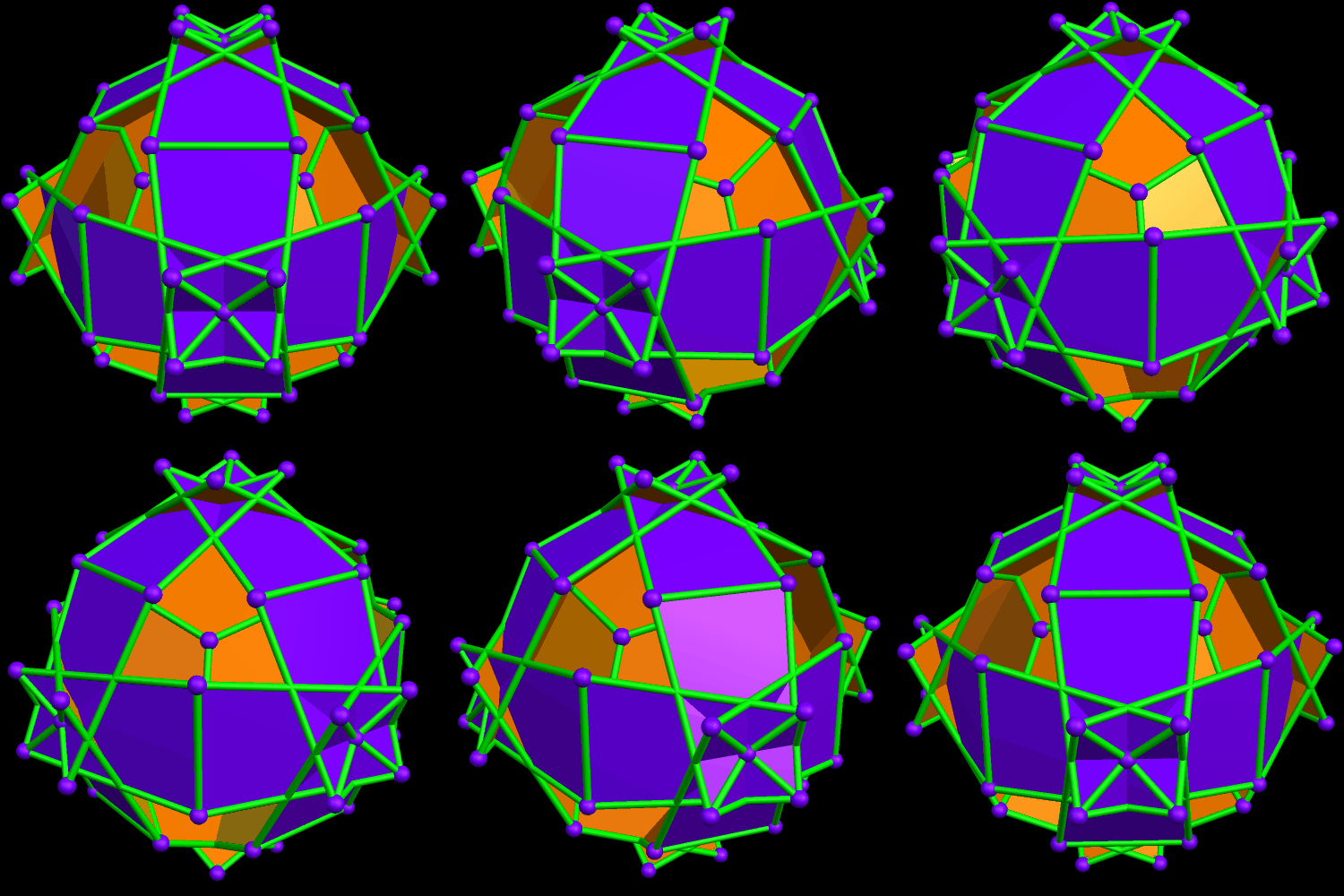
Looking for previously-unseen, and interesting, polyhedra, I then starting stellating this convex hull. I did find something interesting — to me, anyway — after only two stellations.

2nd stellation of Convex hull of meta-9-octahedron

That concluded my latest polyhedral investigation, but I certainly don’t intend it to be my last.