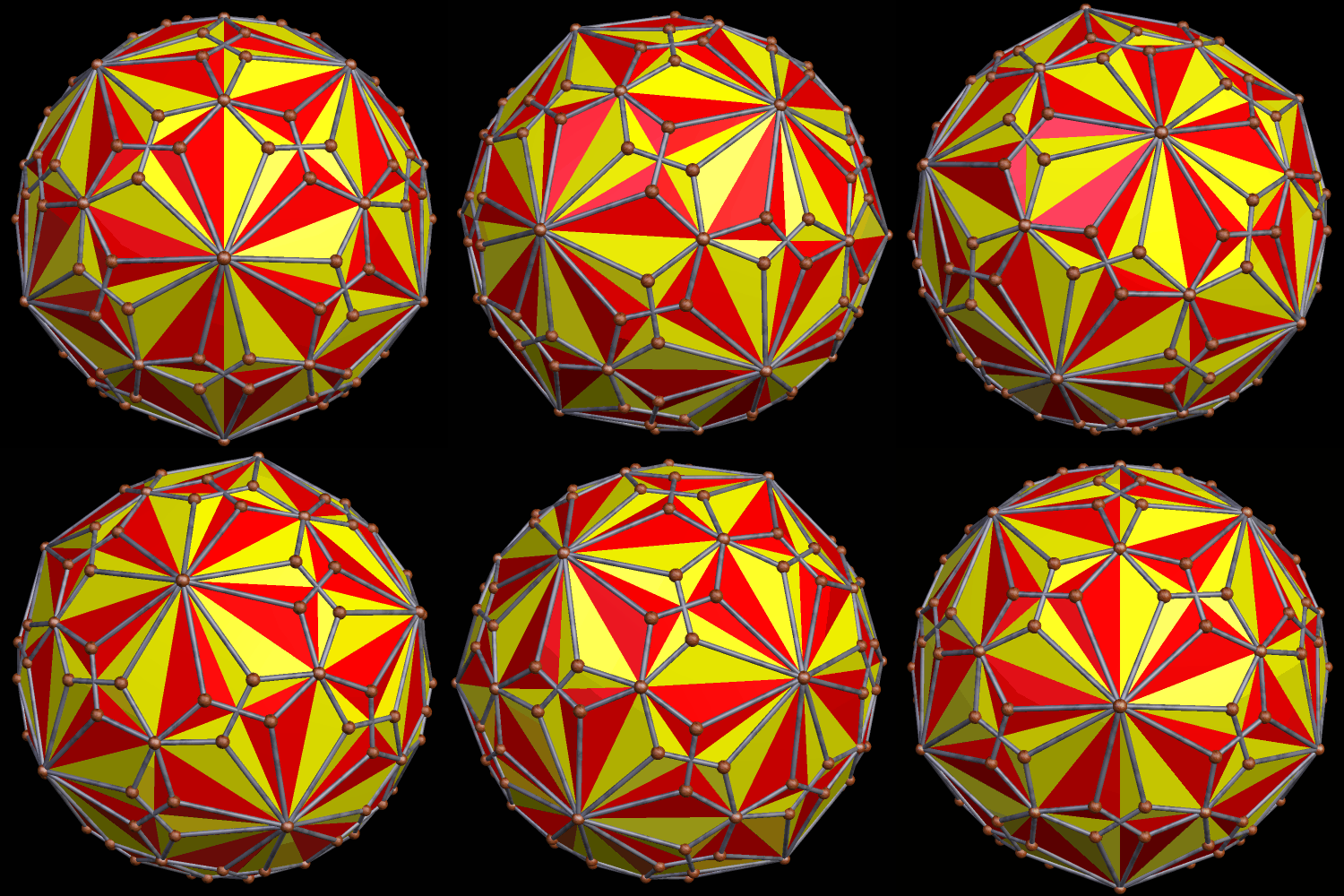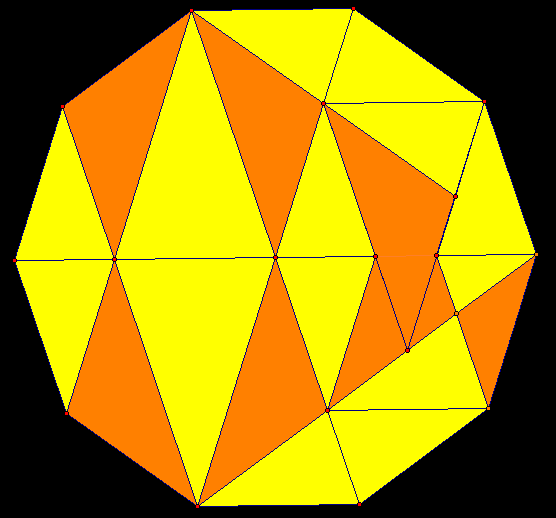
A Regular Decagon, Decomposed into Golden Triangles and Golden Gnomons

decagon

The golden triangles, in yellow, are acute isosceles triangles with a leg:base ratio which is the golden ratio. Golden gnomons, shown in orange, are related, for they are obtuse isosceles triangles where the golden ratio shows up as the base:leg ratio, which is the reciprocal of the manifestation of the golden ratio which appears in the yellow triangles.
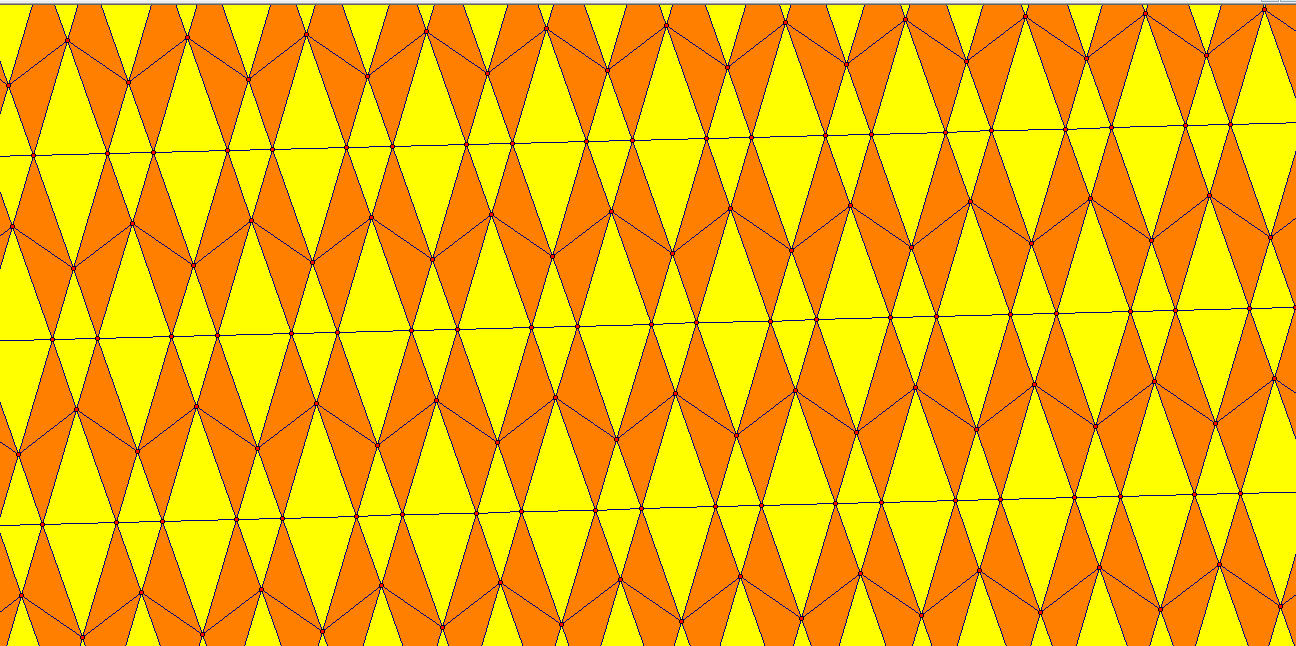
A Golden Tessellation

golden tiling

This tessellation can be viewed in at least two ways: it can be seen as being composed of overlapping octagons which are equilateral, but not equiangular — or it can be viewed as a periodically-repeating pattern of golden gnomons, as well as golden triangles of two different sizes. Both golden triangles and golden gnomons are isosceles triangles with sides in the golden ratio, but golden triangles are acute, while golden gnomons are obtuse.

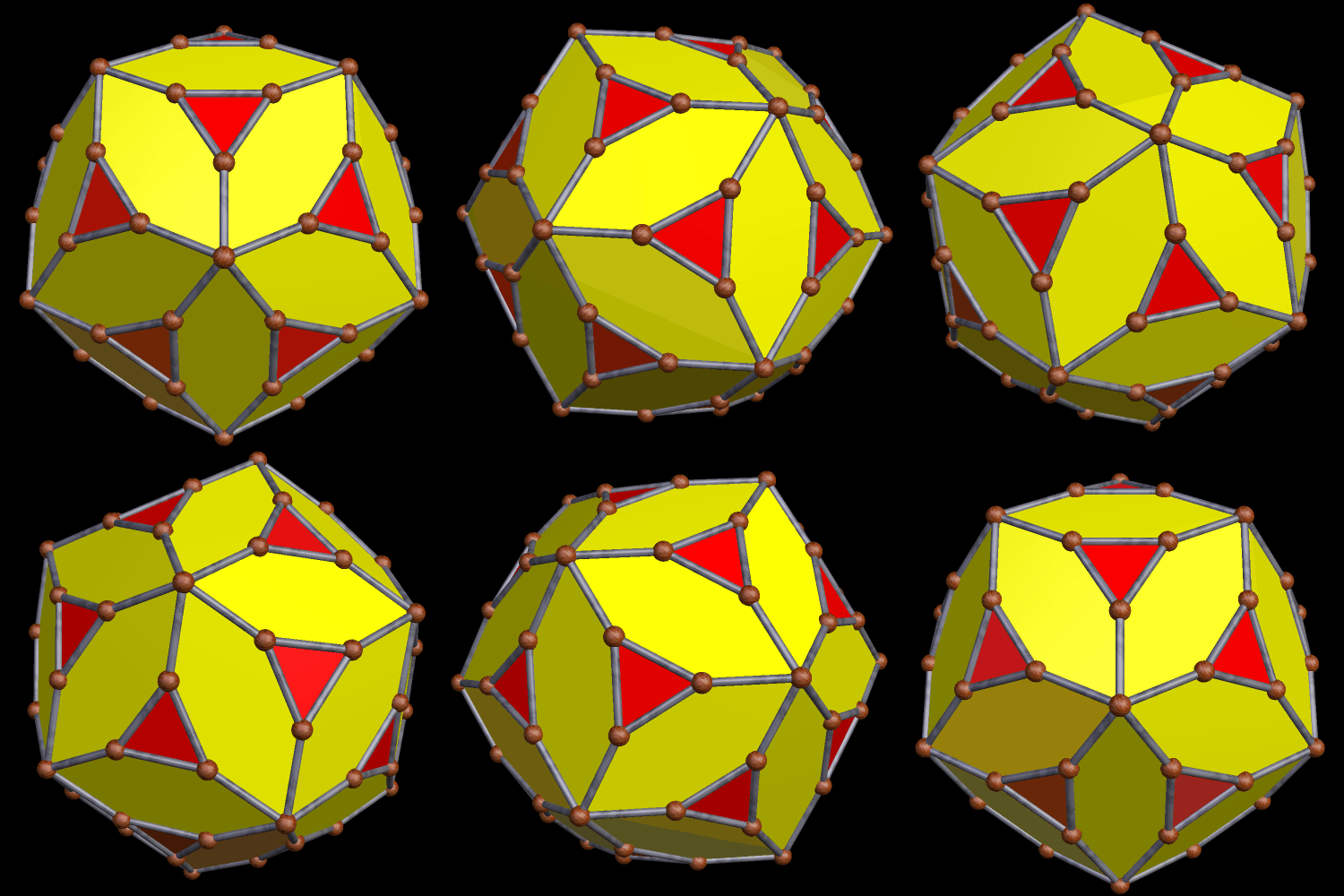
The Seven Zonish Icosahedra with Zones Added Based on Faces, Edges, and/or Vertices

If a zonish icosahedron is created with zones based on the icosahedron’s vertices, here is the result.

zonish icosa v

If the same thing is done with edges, this is the result.

zonish icosa e

Another option is faces-only.

zonish icosa f

The next zonish icosahedron has had zones added based on the icosahedron’s faces and edges, both.

zonish icosahedra e f

Here’s the one for vertices and edges.

zonish icosa v e

Here’s the one for faces and vertices.

zonish icosahedron v f

Finally, the last of this set of seven has had zones added based on all three: faces, vertices, and edges.

zonish icosa v e f

All seven of these were made with Stella 4d, which is available at http://www.software3d.com/Stella.php.

Compounds of Enantiamorphic Archimedean Solid Duals

An enantiomorphic-pair compound requires a chiral polyhedron, for it is a compound of a polyhedron and its mirror image. Among the Archimedeans, only the snub cube and snub dodecahedron are chiral. For this reason, only threir duals are chiral, among the Archimedean duals, also known as the Catalan solids.

Compound of enantiomorphic pair snub cube duals

That’s a compound of two mirror-image snub cube duals (pentagonal icositetrahedra) above; the similar compound for the snub dodecahedron duals (pentagonal hexacontahedra) is below.

Compound of enantiomorphic pair

Both these compounds were made with Stella 4d, which is available at http://www.software3d.com/Stella.php.