Five More Clusters of Rhombicosidodecahedra

Making the four different clusters of rhombicosidodecahedra seen in the post right before this one was fun, so I decided to make more of them.

Tetrahedra 20 A augmented with 80 RIDs

There are two different forms of the compound of twenty tetrahedra. To make the polyhedral cluster above, I chose one of them, and then augmented each of its 20(4) = 80 triangular faces with a rhombicosidodecahedron.

For the next of these clusters, I decided to move away from using compounds for the central, hidden figure. Instead, I chose a snub cube, and augmented each of its 32 triangular faces with a rhombicosidodecahedron. Since the snub cube is chiral, this cluster is chiral as well.
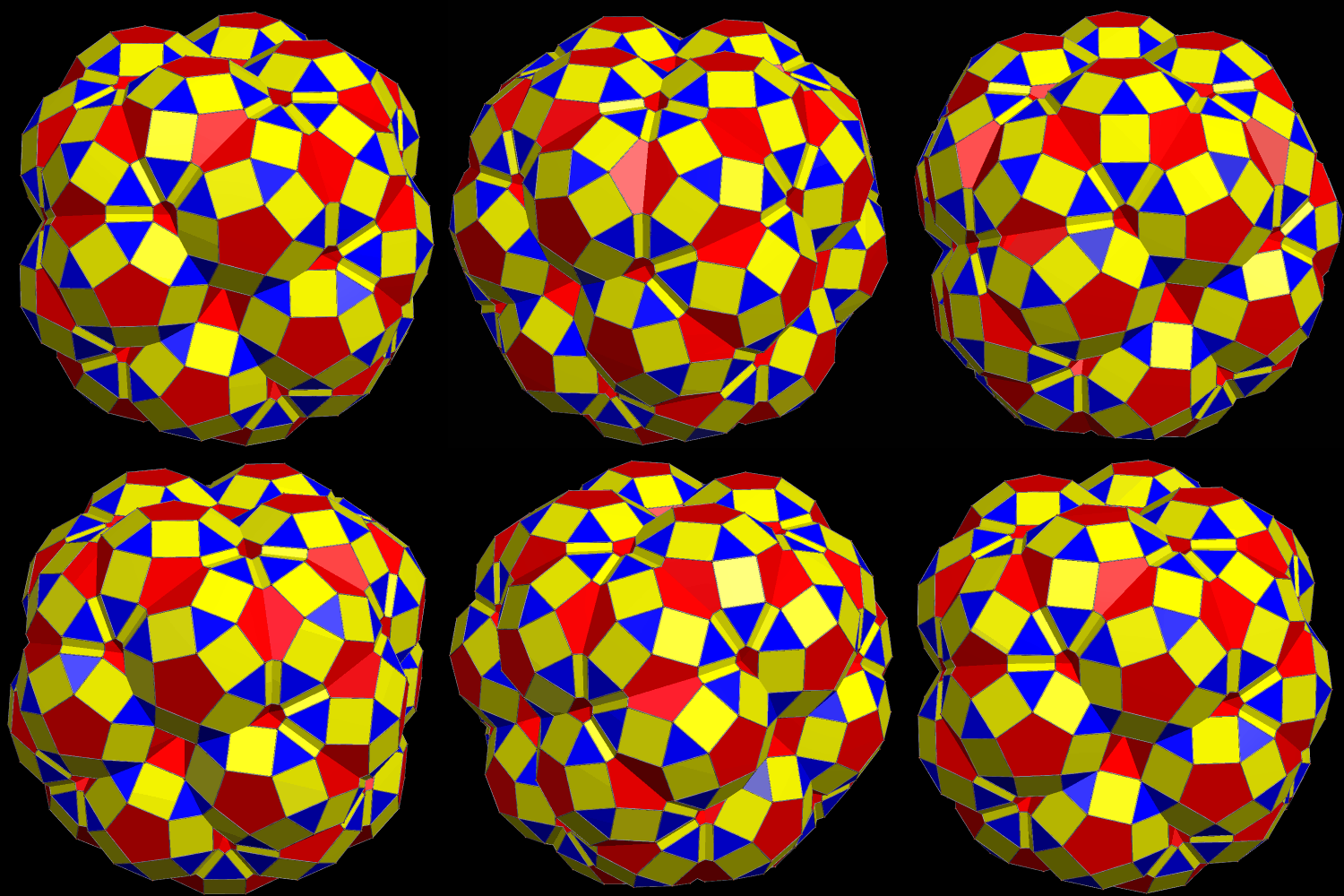
Augmented Snub Cube the 32 triangles are augmented by RIDs

Any chiral polyhedron can be combined with its mirror-image to produce a new compound, and that’s what I did to make this next cluster, which is composed of 64 rhombicosidodecahedra: I simply added the cluster above to its own reflection.
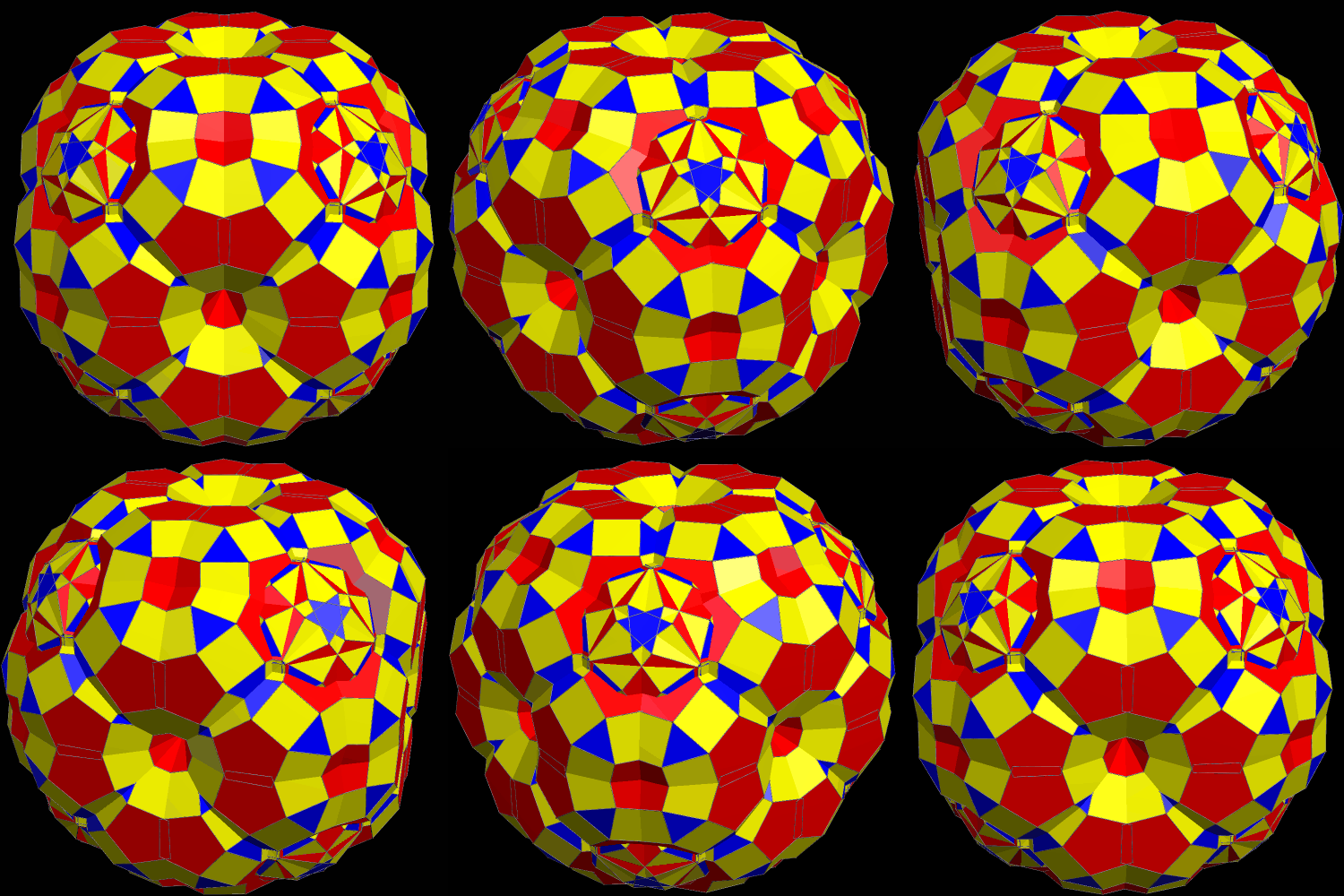
Compound of enantiomorphic pair of snub cubes with RIDs augmenting the 64 triangles

Next, I turned to the snub dodecahedron, also chiral, and with 80 triangular faces. Augmentation of all 80 produced this chiral cluster of 80 rhombicosidodecahedra:

Augmented Snub Dodeca with 80 RIDs on triangular faces it is chiral

Finally, I added this last cluster to its own mirror-image, producing this symmetrical cluster of 160 rhombicosidodecahedra.
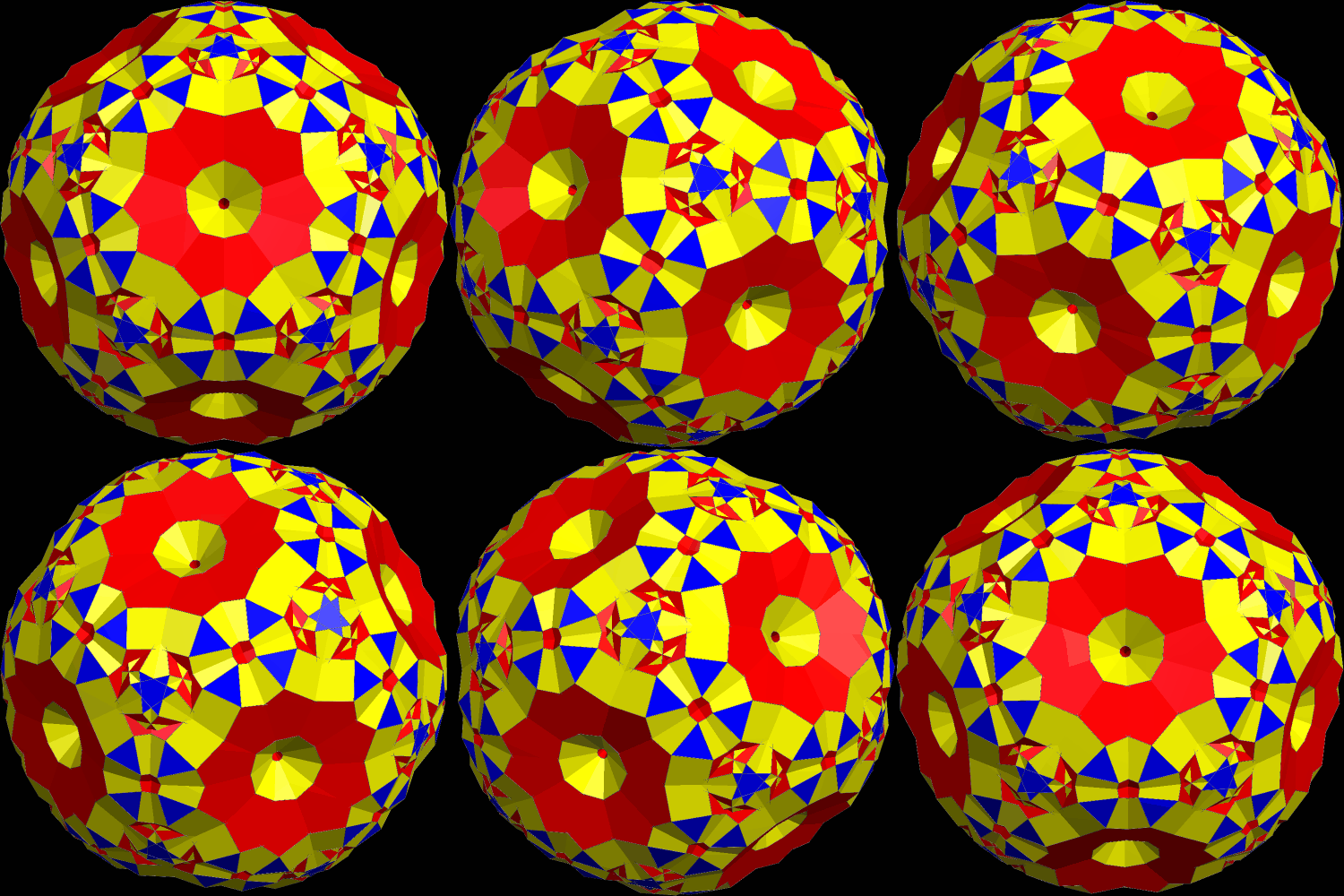
160 RIDs augmenting the triangular faces of snub dod enan pair compound

Each of these was created using a program called Stella 4d: Polyhedron Navigator, software you can try for free right here.
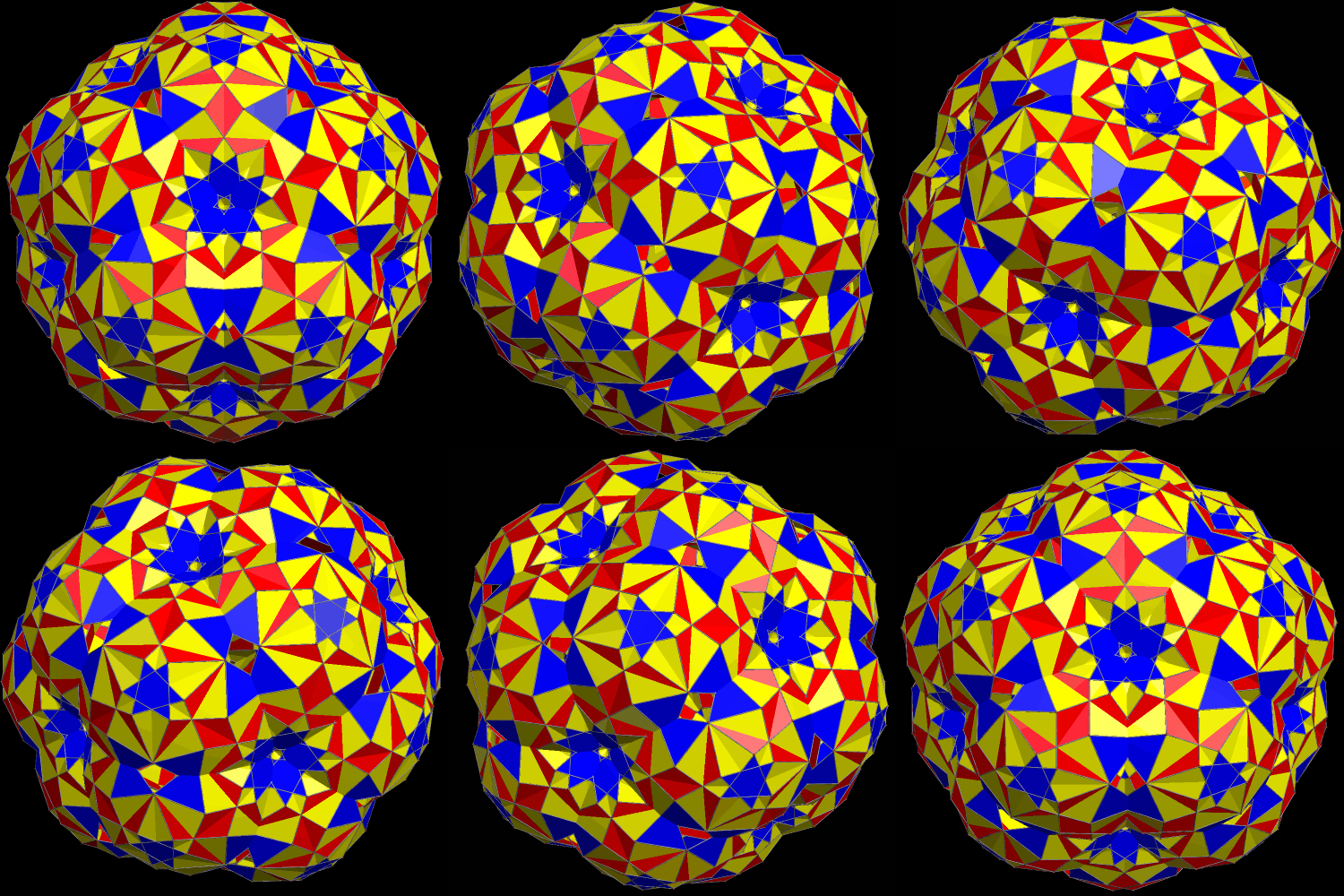
Four Different Clusters of Multiple Rhombicosidodecahedra

Octa 5 augmented with 40 RIDs

To make the cluster above, I began with the compound of five octahedra, which has 5(8) = 40 faces, all of them equilateral triangles. Next, I augmented each of those triangular faces with a single rhombicosidodecahedron — forty in all.

Next, I started anew with the compound of five dodecahedra, which has 5(12) = 60 pentagonal faces, all of them regular. Each of these sixty pentagons was then augmented by a single rhombicosidodecahedron.

Dodecahedra 5 augmented by 60 RIDs

For the next cluster, I started with the most well-known compound of ten tetrahedra. There are actually two such compounds; I used the one which is the compound of the chiral five-tetrahedron compound, combined with its mirror image. Since 10(4) = 40, this cluster, like the first one in this post, contains forty rhombicosidodecahedra. Unlike the other models shown here, this one has “holes,” which you can see as it rotates, but the reason for this is a mystery to me. The same is true for the first cluster shown in this post.

Tetrahedra 10 augemnted with 40 RIDs

There also exist two compounds of eight tetrahedra each, and I used one of them for this next cluster, using the same procedure, so this cluster is composed of 8(4) = 32 rhombicosidodecahedra.

Tetrahedra 8 augmented with 32 RIDs

All four of these clusters were created with Stella 4d, a program you may try for free here.

The Compound of the Truncated Octahedron and the Rhombic Dodecahedron

RD trunct oct compound

I created this compound using Stella 4d, software you may try at this website.