Unsquashing the Squashed Meta-Great-Rhombcuboctahedron

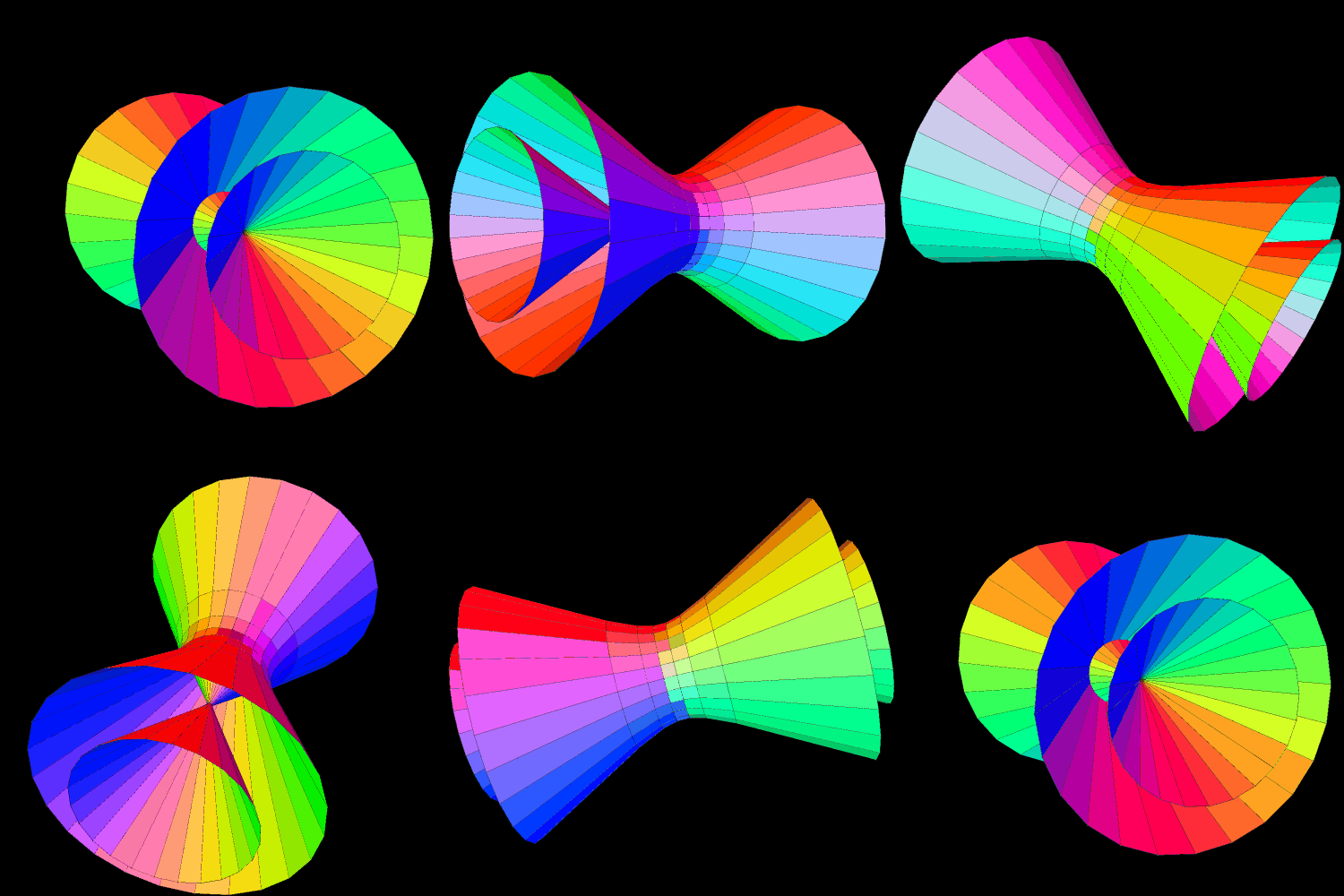
I noticed that I could arrange eight great rhombcuboctahedra into a ring, but that ring, rather than being regular, resembled an ellipse.

Augmented Trunc Cubocta

I then made a ring of four of these elliptical rings.

Augmented Trunc Cubocta B

After that, I added a few more great rhombcuboctahedra to make a meta-rhombcuboctahedron — that is, a great rhombcuboctahedron made of rhombcuboctahedra. However, it’s squashed. (I believe the official term for this is “oblate,” but “squashed” also works, at least for me.)

Augmented Trunc Cubocta 3

So now I’m wondering if I can make this more regular. In other words, can I “unsquash” it? I notice that even this squashed metapolyhedron has regular rings on two opposite sides, so I make such a ring, and start anew.

Augmented Trunc Cubocta a

I then make a ring of those . . . 

Augmented Trunc Cubocta AA

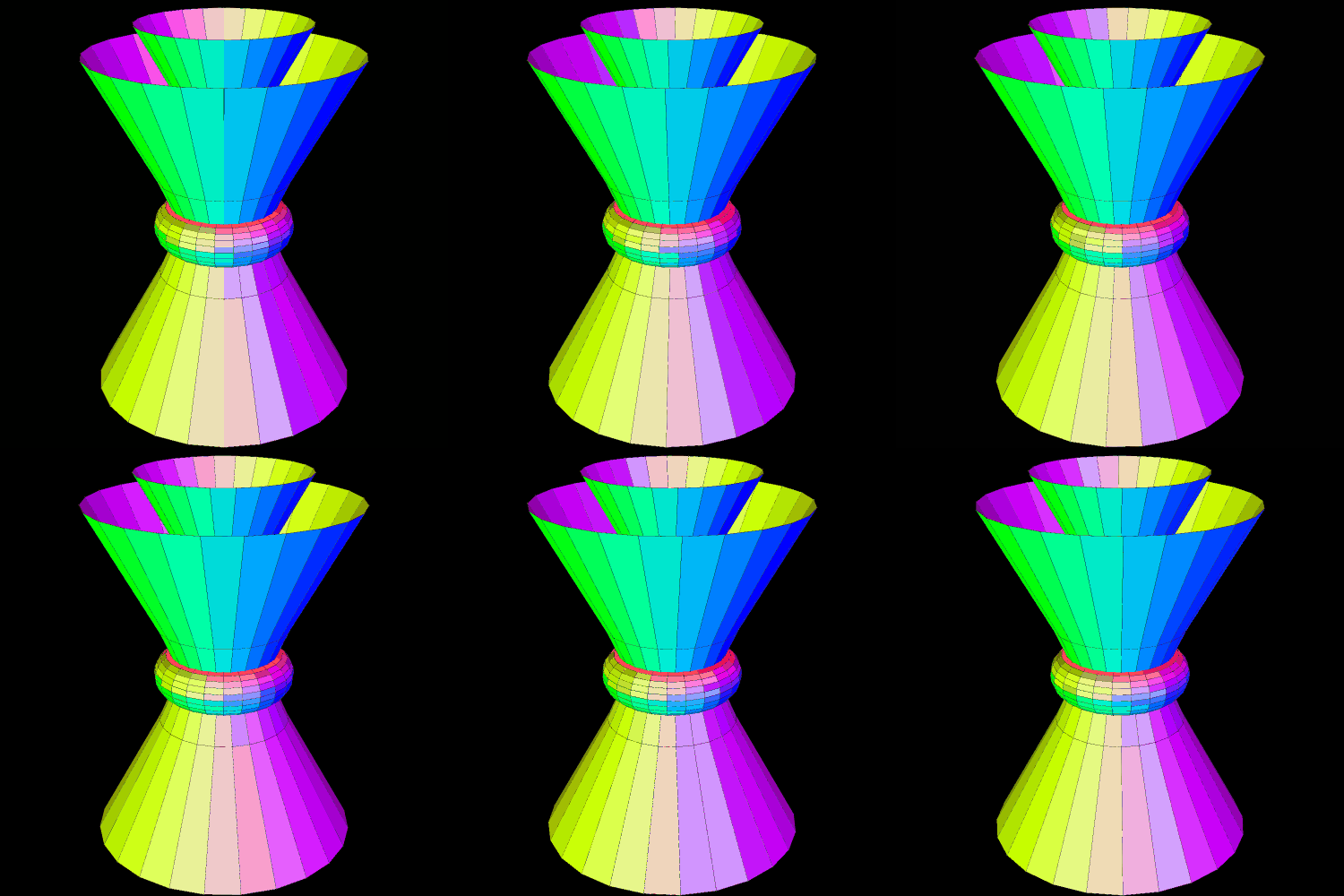
. . . And, with two more ring-additions, I complete the now-unsquashed meta-great-rhombcuboctahedron. Success!

Augmented Trunc Cubocta AAA

To celebrate my victory, I make one more picture, in “rainbow color mode.”

Augmented Trunc Cubocta AAAR

[All images made using Stella 4d, available here: http://www.software3d.com/Stella.php.]
A Torus and Its Dual, Part II

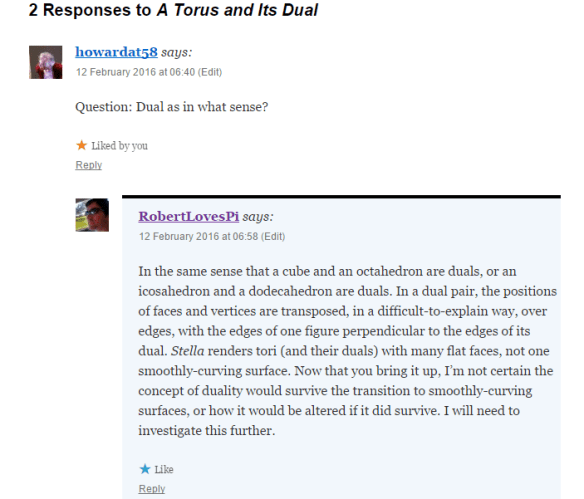
After I published the last post, which I did not originally intend to have two parts, this comment was left by one of my blog’s followers. My answer is also shown.

torus talk

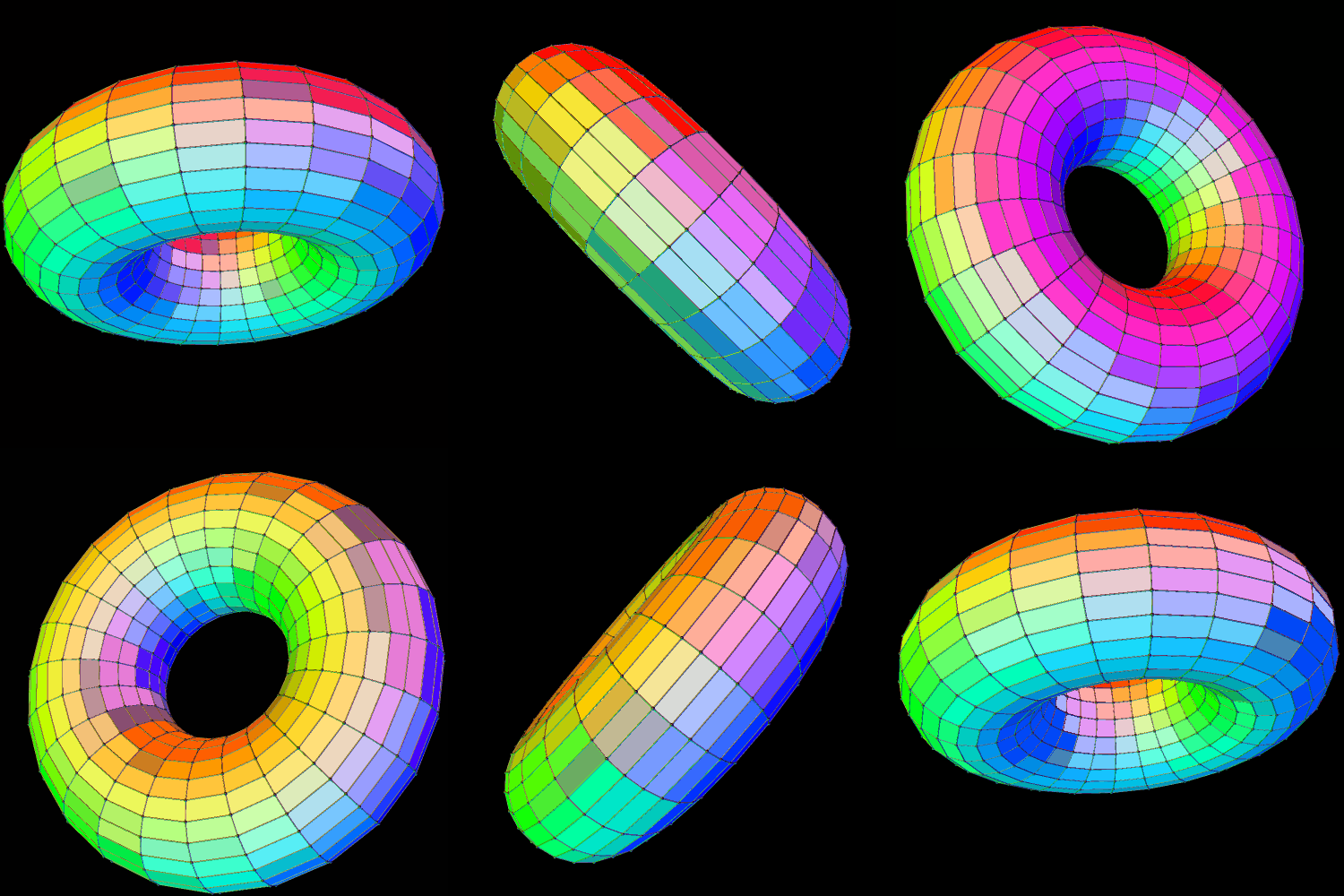
A torus can be viewed as a flexible rectangle rolled into a donut shape, and I had used 24 small rectangles by 24 small rectangles as the settings for Stella 4 for the torus, and its dual, in the last post — which, due to the nature of that program, are actually rendered as toroidal polyhedra. To investigate my new question, I increased 24×24 to 90×90, and these three images show the results. The first shows a 90×90 torus, the second shows its dual, and the third shows the compound of the two.

Torus90.gif


Torus90dual

Torus90dualcompound

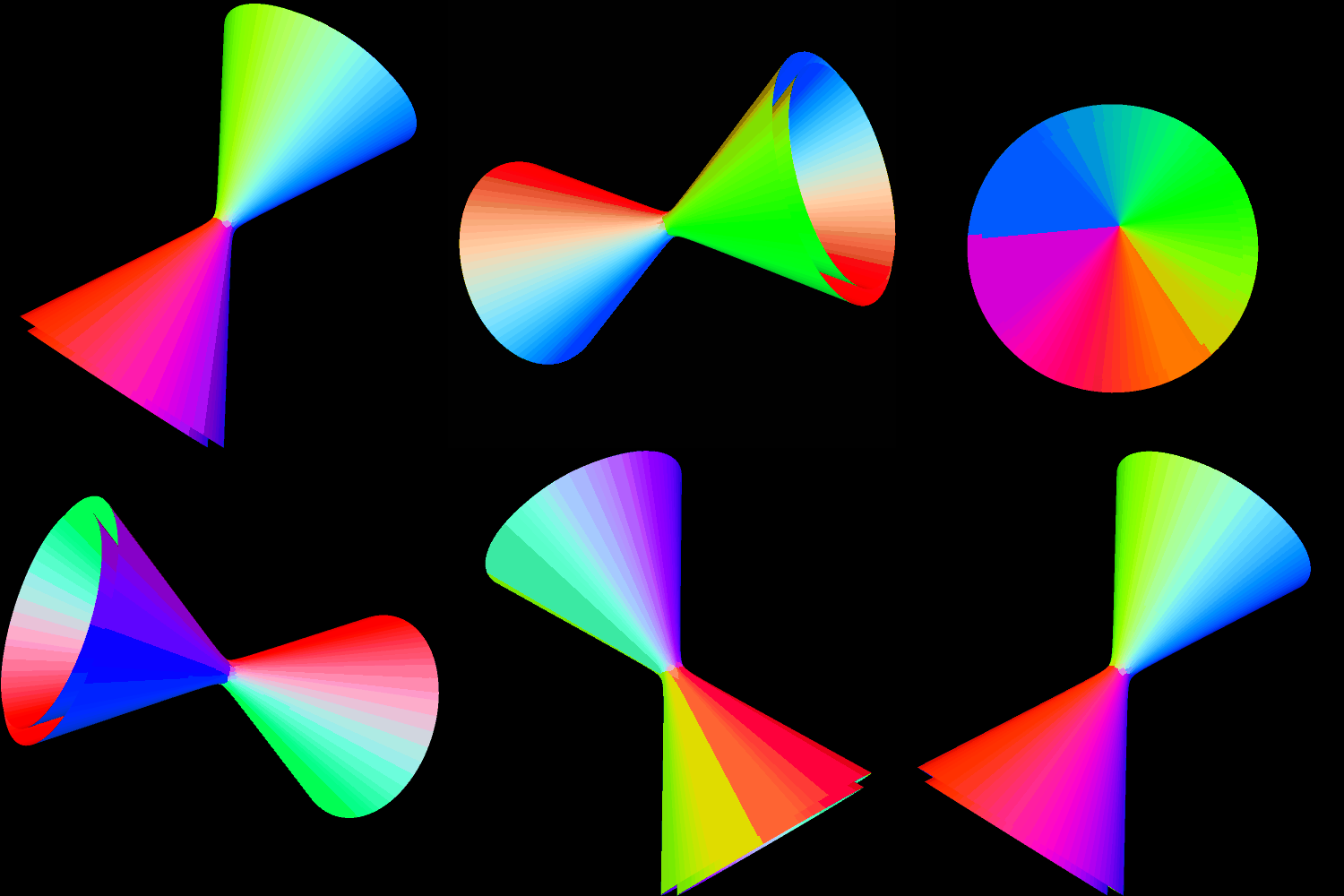
When I compare these images to those in the previous post, it is clear that these figures are approaching a limit as n, in the expression “nxn rectangle,” increases. What’s more, I recognize the dual now, of the true torus, at the limit, as n approaches infinity — it’s a cone. It’s not a finite-volume cone, but the infinite-volume cone one obtains by rotating a line around an axis which intersects that line. This figure, not a finite-volume cone, is the cone used to define the conic sections: the circle, ellipse, parabola, and hyperbola.

What’s more, I smell calculus afoot here. I do not yet know enough calculus.

“Learn a lot more about calculus” is definitely on my agenda for the coming Summer, for several reasons, not the least of which is that I plainly need it to make more headway in my understanding of geometry. 

[Note: Stella 4d, the program used to make these images, may be found at http://www.software3d.com/Stella.php.]
A Torus and Its Dual, Part I

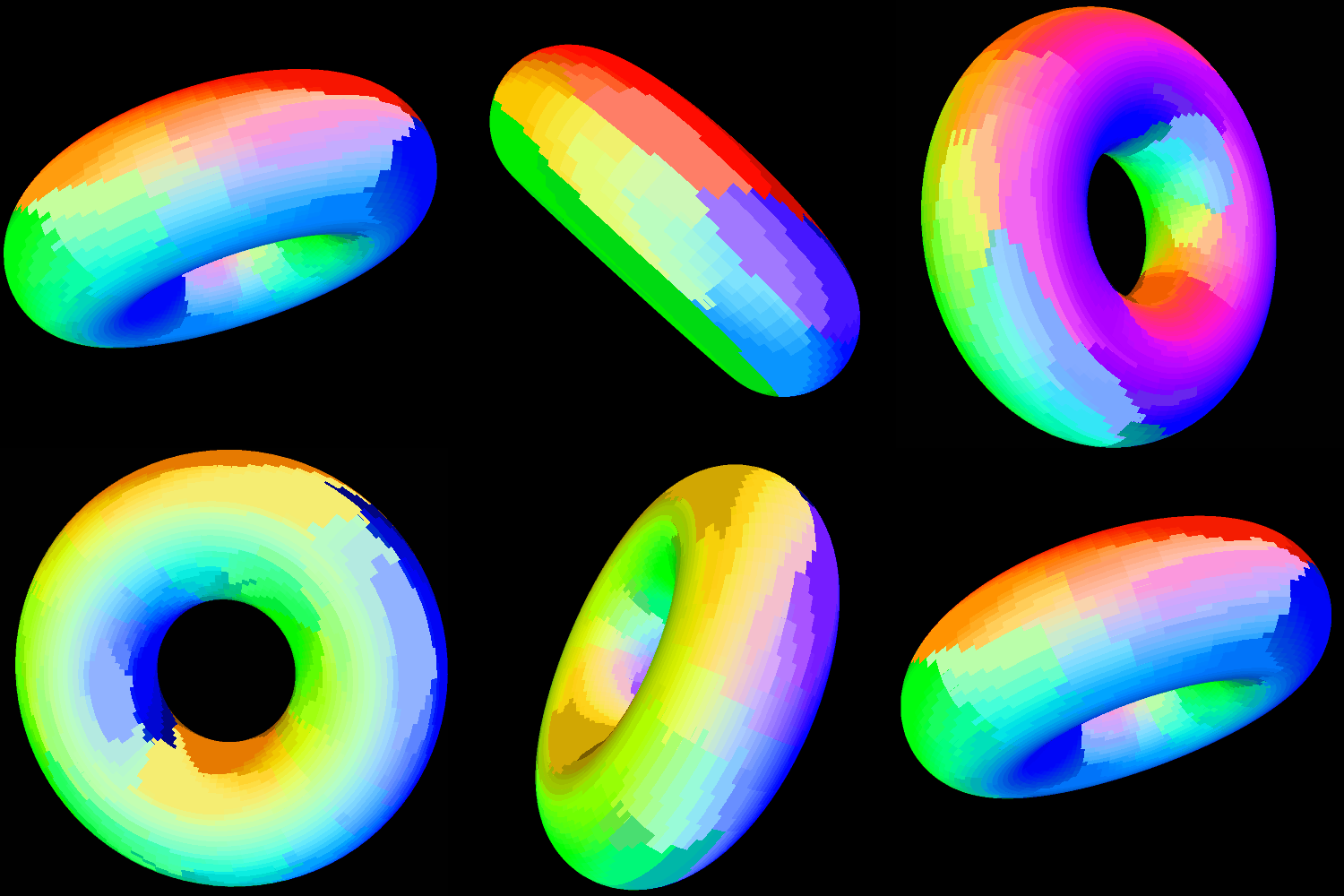
Torus

The torus is a familiar figure to many, so I chose a quick rotational period (5 seconds) for it. The dual of a torus — and I don’t know what else to call it — is not as familiar, so, for it, I extended the rotational period to 12 seconds.

Torus dual

By viewing the compound of the torus and its dual, one can see the the dual is the larger of the two, by far:

Torus dual with torus

I used Stella 4d to make these images. It’s a program you can buy, or try for free, at this website: http://www.software3d.com/Stella.php.