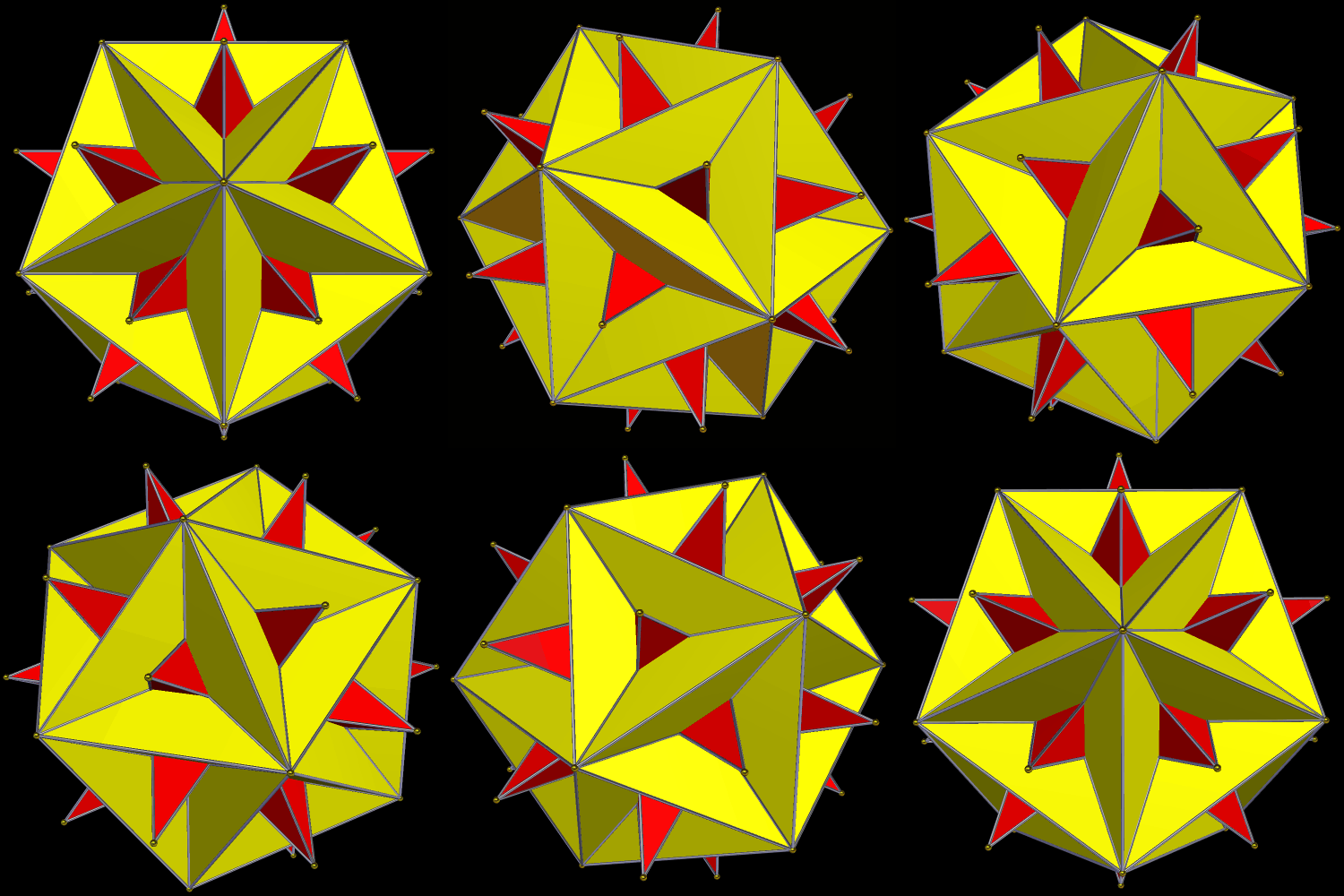
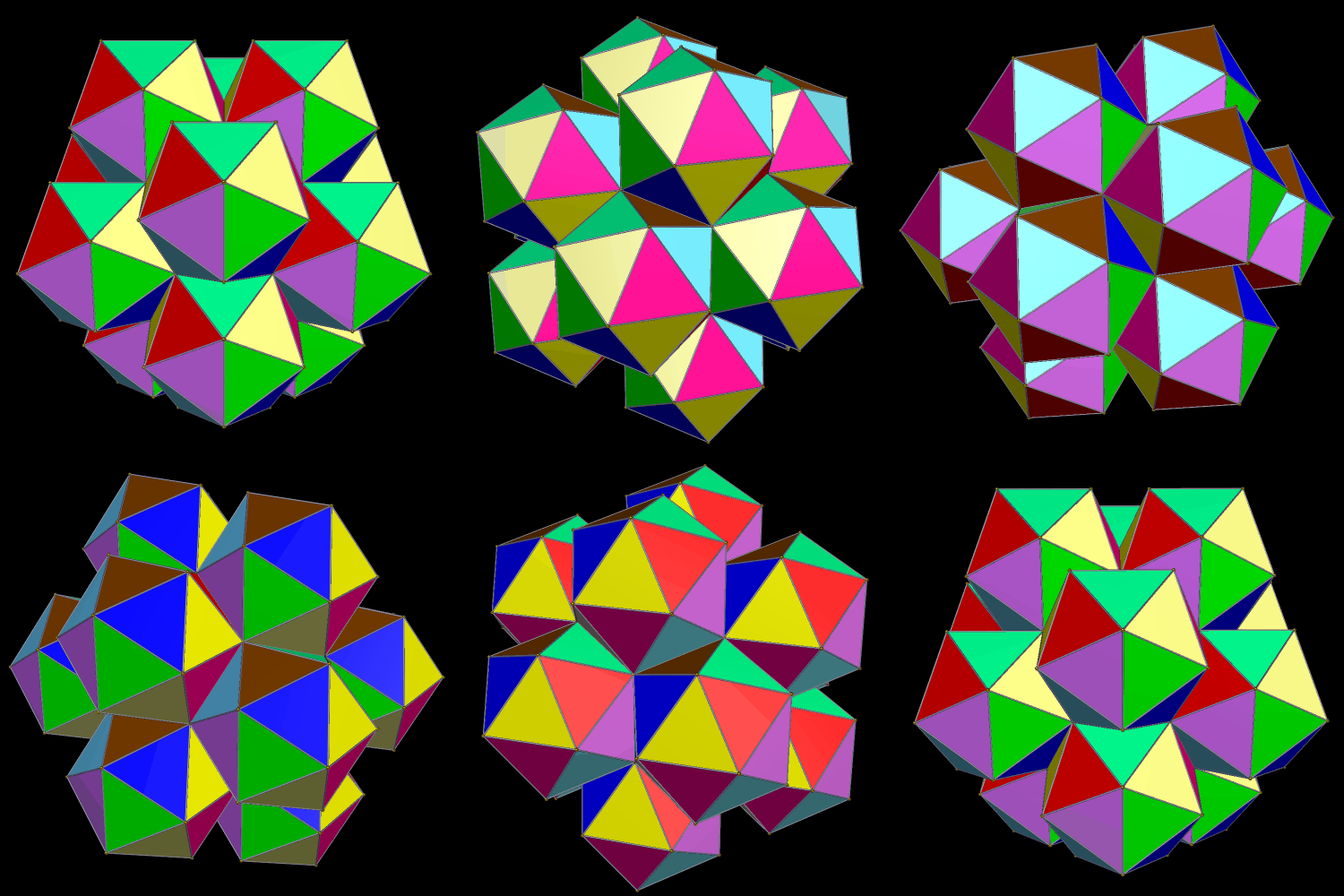
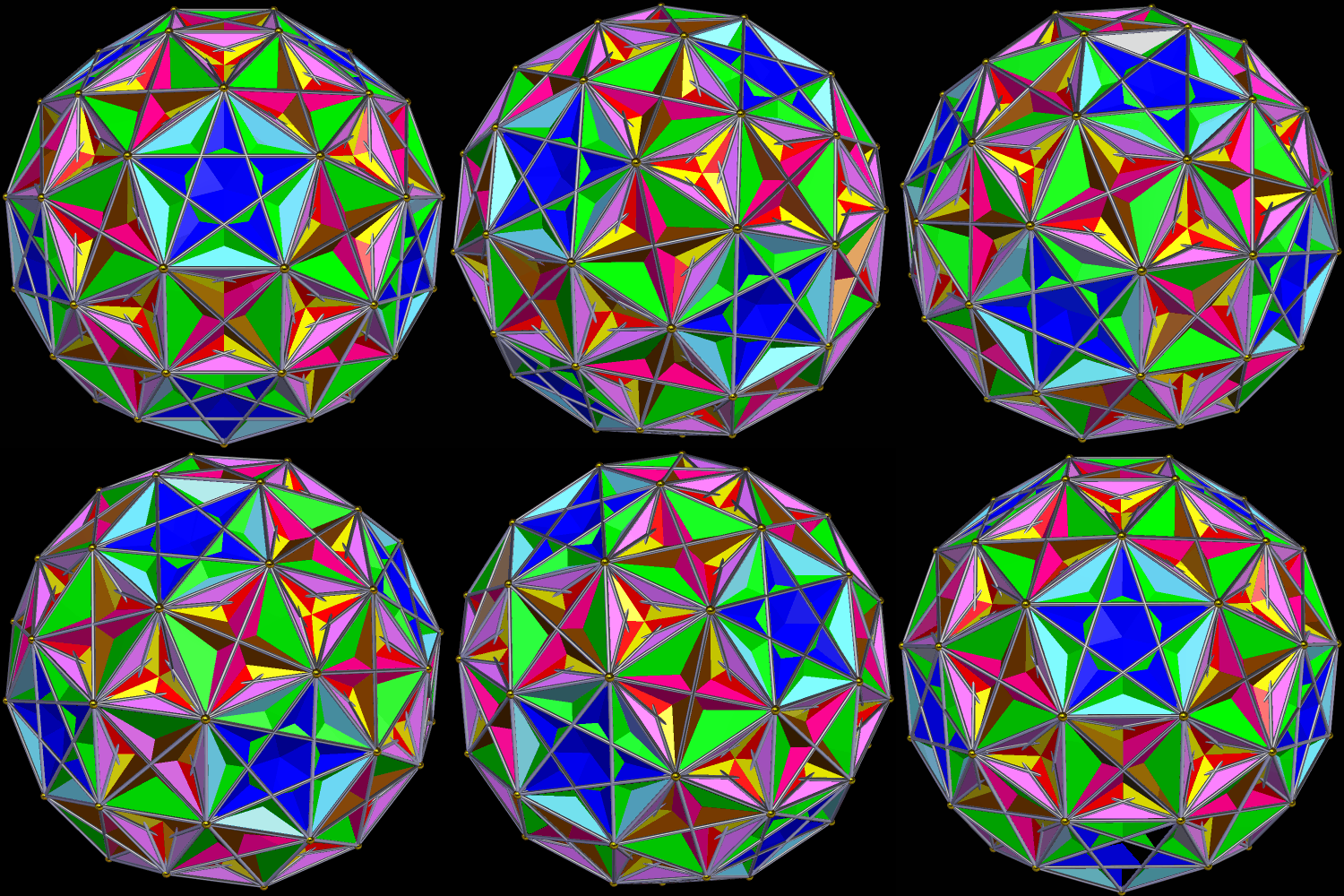
In the picture above, each component of this compound has its own color. In the one below, each set of parallel faces is given a color of its own.

These images were made using Stella 4d, software you may try for yourself at this website.

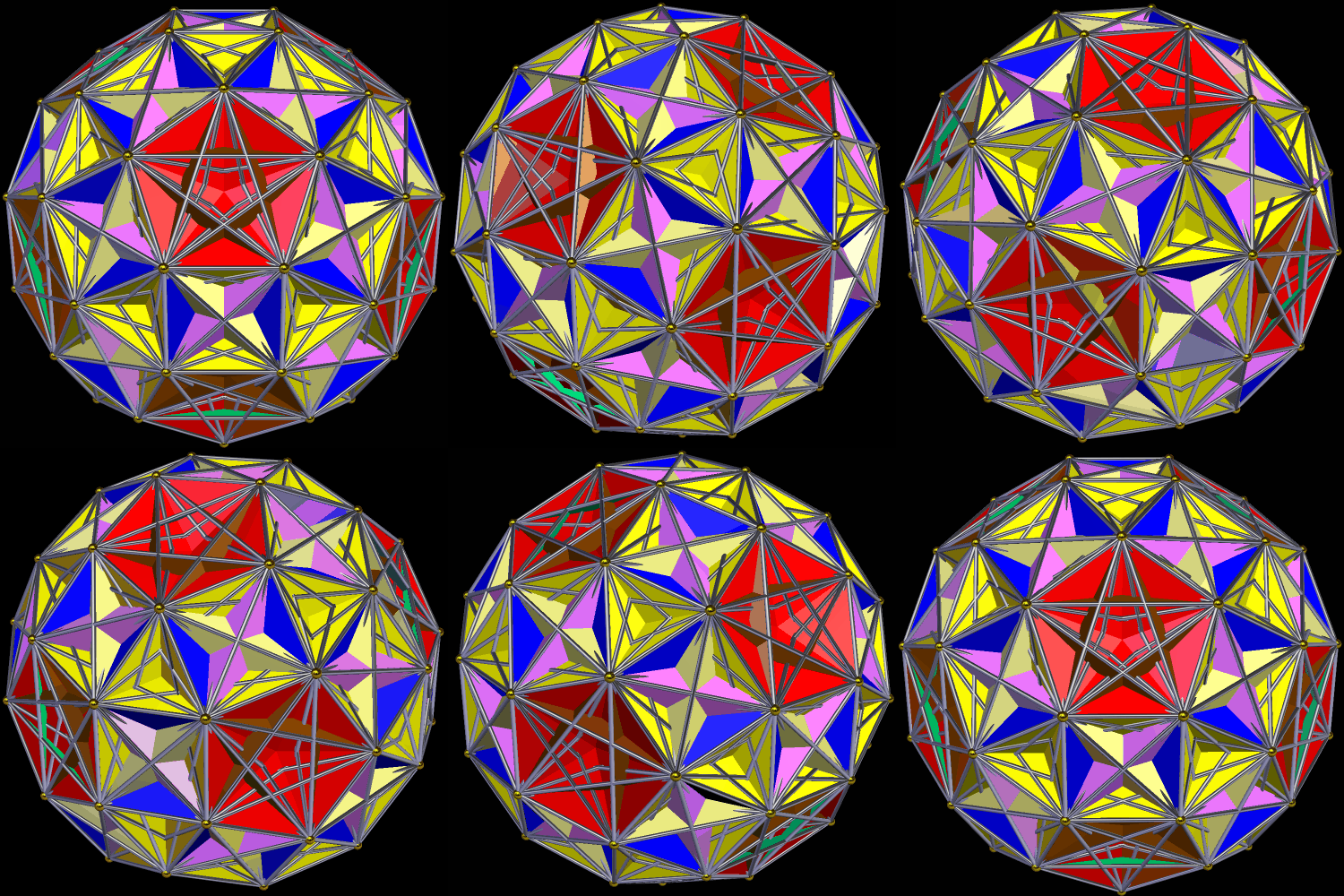
In the picture above, each component of this compound has its own color. In the one below, each set of parallel faces is given a color of its own.
These images were made using Stella 4d, software you may try for yourself at this website.
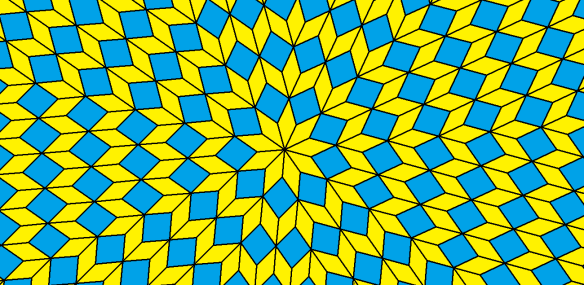
I made this using Stella 4d, software you can try for yourself right here.


The yellow rhombi have angles of 40 and 140 degrees, while the blue rhombi have angles of 80 and 100 degrees, just like in the last post here. However, that post did not include the red rhombi, which have angles of 60 and 120 degrees.
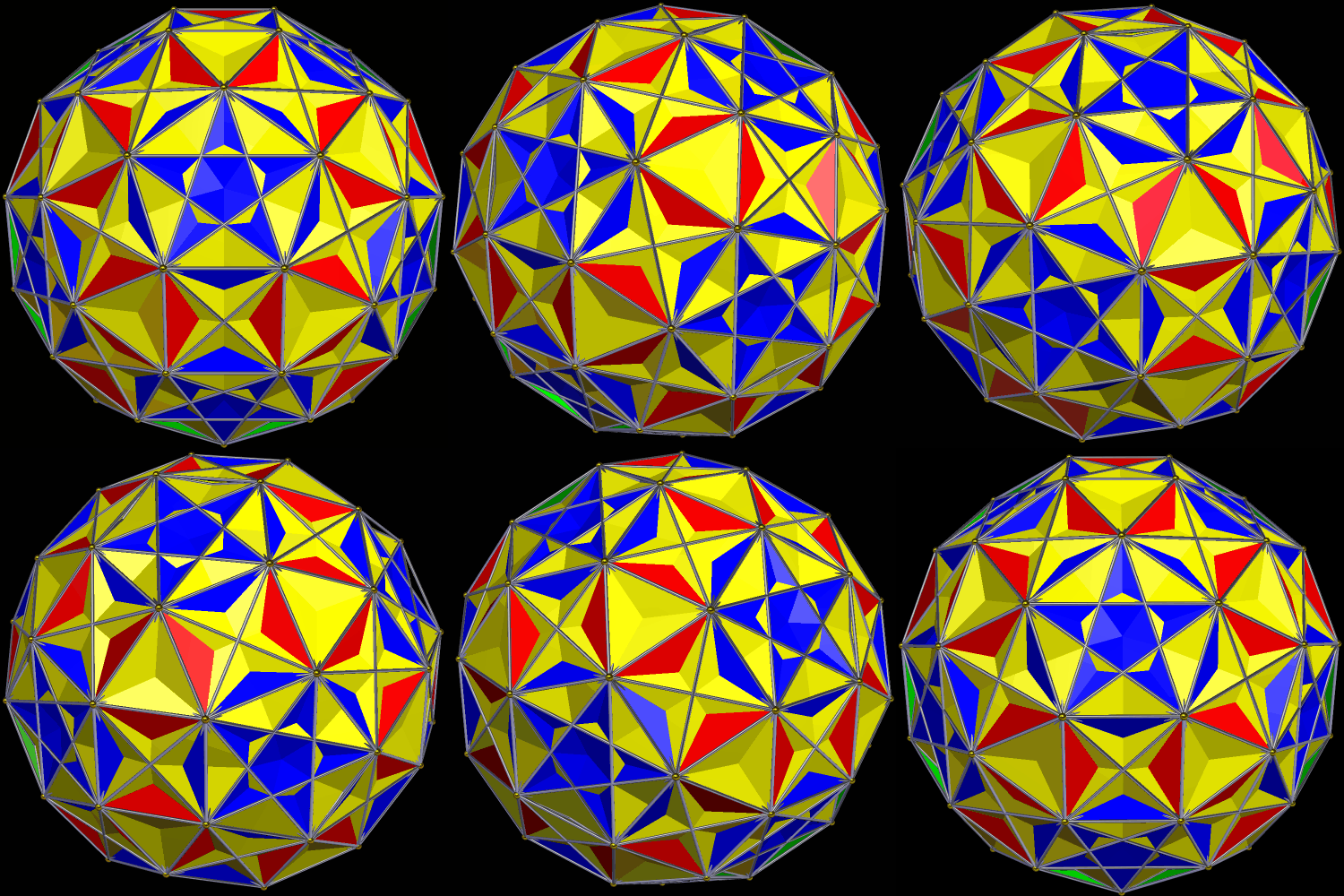
The yellow rhombi have angles which measure 40 and 140 degrees, while the blue rhombi’s angles measure 80 and 100 degrees.
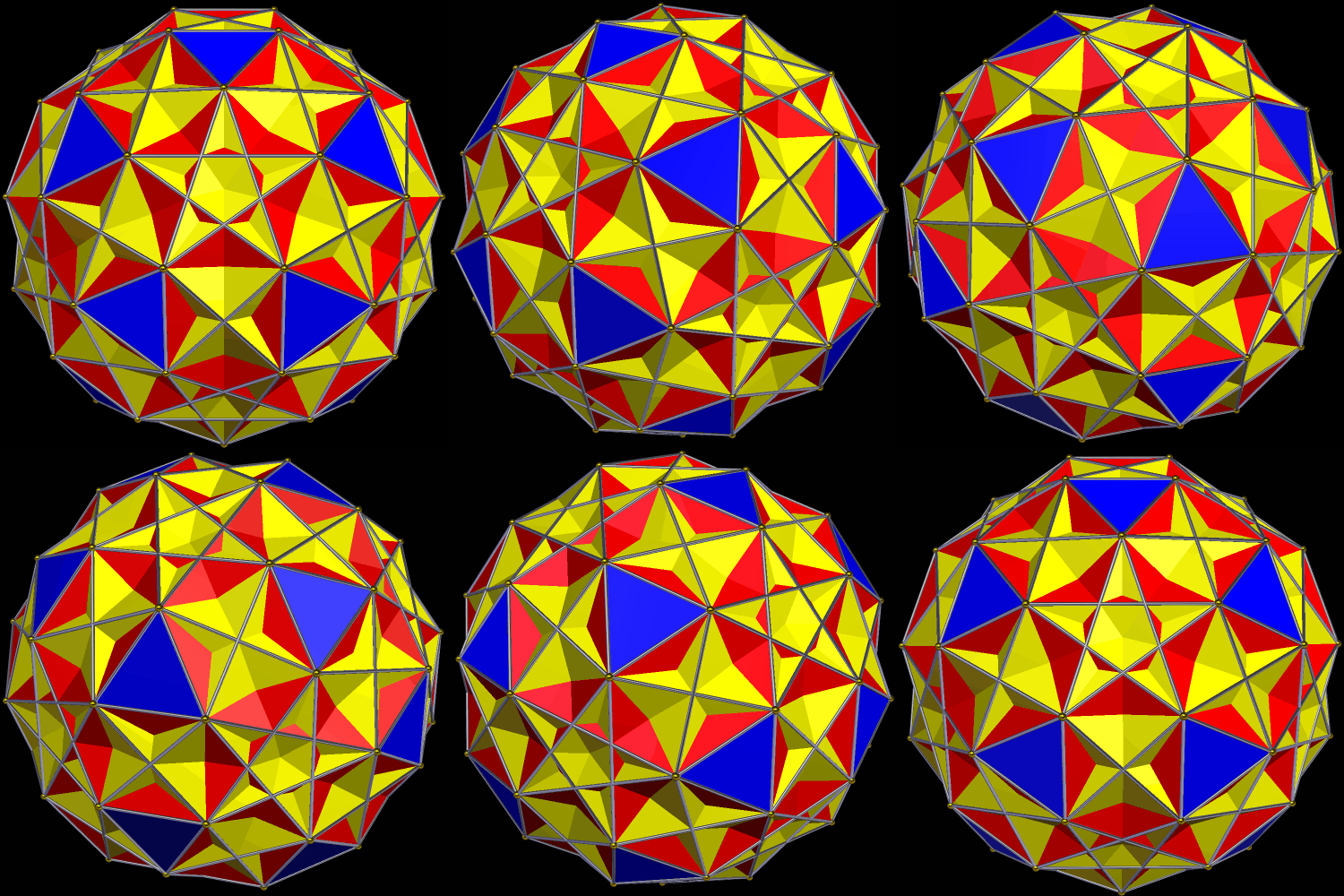
This zonohedron was formed from zones based on the faces, edges, and vertices of a rhombicosidodecahedron. The first image shows it colored by face type.

The second image has the faces colored by number of sides.

Finally, here’s one in “rainbow color mode.”

These images were all formed using Stella 4d: Polyhedron Navigator, which you can try for free right here.

I made these using Stella 4d: Polyhedron Navigator, software you can try for yourself, free, right here.
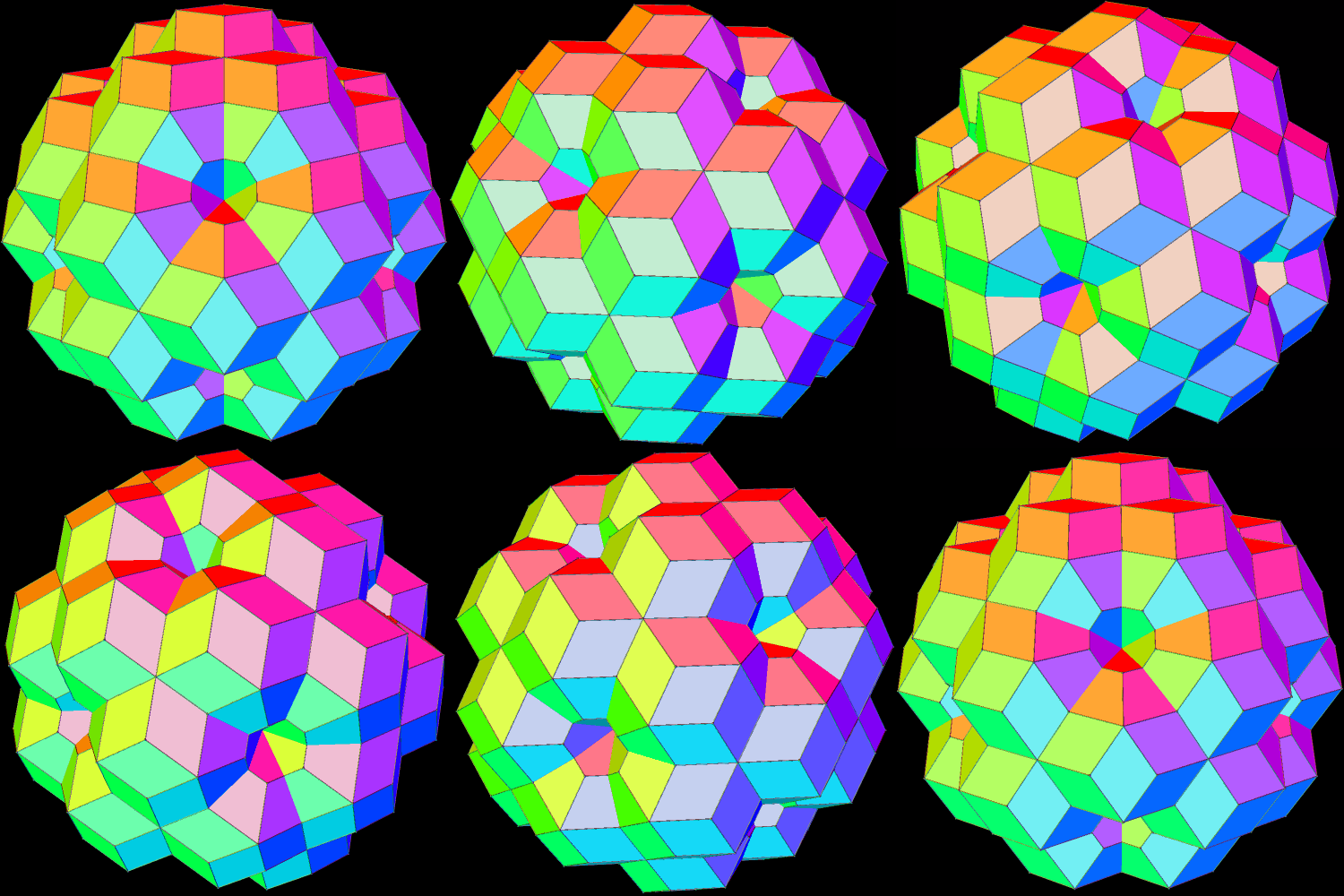
There’s one rhombic triacontahedron in the center of this cluster, with more attached to each of its thirty faces, one per face. In this one, the colors are chosen by the placement of the faces in the overall cluster.

The one below is shown in “rainbow color mode.”
Both of these images were created using Stella 4d: Polyhedron Navigator, software you may try for free right here.
 RobertLovesPi.net