I’ve been a fan of John Lennon for as long as I can remember, and October 9, his birthday, has always been a special day for me. In 1983, when I was a high school junior, celebrating his birthday changed from something I simply did, by choice, into what, at the time, I considered a moral imperative.
In October of ’83, I was a student — a junior — at McClellan High School in Little Rock, Arkansas, and October 9th happened to be the day that all juniors were, according to that school’s administration, required to take the ASVAB: the Armed Services Vocational Aptitude Battery. While this is a standardized test, it isn’t like other standardized tests — it is actually a recruitment tool for the United States military.
At the time, Ronald Reagan was president, and we were in one of the many scary parts of the Cold War, with the threat of global thermonuclear war looming over us at all times. If you are too young to remember the Reagan era well, it may be hard to understand just how real, and how scary, it was to grow up with a president who did such things as making “jokes,” like this, in front of a microphone:
Reagan made this extremely unfunny “joke” the next year, in 1984, but the climate of fear in which he thought such a thing would be funny was already firmly in place in 1983, and I was already openly questioning the sanity of our president. My own anti-war attitudes, very much influenced by Lennon and his music, were already firmly in place. For the few unfamiliar with it, here is a sample of Lennon’s music.
So here I was, a high school junior, being told I had to take a test, for the military, on John Lennon’s birthday. I reacted to this in pretty much the same way a devout Jew or Muslim would react to being told to eat pork chops: I absolutely refused to cooperate. “Blasphemy” is not a word I use often now, and it wasn’t then, either, but to cooperate with this would have been the closest thing to blasphemy which I was capable of understanding at that age (I was 15 years old when this happened).
The other juniors got up and shuffled off, like good, obedient soldiers, when the intercom told them to go take the ASVAB. I simply remained seated.
The teacher told me it was time to go take the ASVAB. I replied, calmly, that no force on earth could compel me to take a test for the military on John Lennon’s birthday. At that point, I was sent to the office. Going to the office posed no ethical nor moral dilemmas for me, for I wanted the people there to know, also, that it was wrong for them to give a test for the military on October 9, of all days.
The principal, a man already quite used to dealing with me and my eccentricities, knew it would be pointless to argue with me about the ASVAB. He simply showed me a chair in the main office, and told me I could sit there that day, all day, and I did. To the school, this might have been seen as a single day of in-school suspension, but I saw it for what it really was: a one-person, sit-down protest for peace, in honor of the greatest activist for peace the world has ever known. It was an act of civil disobedience, and I regret nothing about it.
I will be sharing this story with Lennon’s widow, Yoko Ono, a woman I very much admire, and the greatest living activist for peace in the world today. Yoko, I do hope you enjoy this story. You and John have done great things, and they will not be forgotten, as long as people remain alive to tell about them.
Peace to all.
[Credits: photo from rollingstone.com; videos from YouTube.]
This is one of the most vicious, cutting songs ever written. Here is a video for it, so you can hear it for yourself, and see the things to which the song refers.
It was, of course, written targeting one specific person, but it isn’t difficult to listen to it, and think of other people to whom this question could — and perhaps should — be asked. In other words, there is no reason, in today’s world, to limit this song to merely being an “attack song” against Paul McCartney, although that was certainly John Lennon’s intent when he wrote it.
When anyone does horrible things — far worse than anything McCartney ever did — this song’s title makes a good question one could ask them: how do you sleep?
After thinking about it, I have come up with five possible answers.
Some people lack a conscience, and so are untroubled by guilt — ever — no matter what they do.
Delusional people can do horribly evil things, but be convinced that they are moral, righteous, and doing what they should be doing. If you have never encountered such behavior, consider yourself fortunate.
Sometimes, people are simply ignorant of how harmful their actions have been. One cannot feel guilty over harm one does not know one caused.
Even those who are tormented by their own consciences, and past actions, can still sleep with the aid of sedatives, whether over-the-counter, or prescribed. This is risky, of course, and should only be done under the care, and following the instructions, of a physician. (Yes, I am aware that illegal drugs — or legal ones that aren’t considered medicines, such as alcohol — can also be used for this purpose, but that’s even more risky, and I wish to make it perfectly clear that I strongly advise against doing that.)
Narcolepsy.
If you can think of any others, please leave them in a comment.
In this video, the great dodecahedron is stellated, by twentieths, into the great stellated dodecahedron, while a selection from Ludwig van Beethoven’s Ninth Symphony plays. The images for this video were created using Stella 4d, a program you can try for yourself (free trial download available), right here: http://www.software3d.com/Stella.php.
For details on the efforts of the majority of the Arkansas State Legislature to ruin public schools in Arkansas, please watch this music video:
The AEA (Arkansas Education Association) is doing everything they can to resist this flood of anti-education legislation. If you are eligible for membership in the AEA, and join, that will help with these efforts — for the strength of the AEA grows as our number of members increases. If you work in an Arkansas public school, you can join. Students can join also, and so can those who have retired from work in the field. For information on how to join, please click here.
In my last post (click here to see it), I made a case for Arkansans who work in public schools to join the Arkansas Education Association, a state affiliate of the NEA, or National Education Association. I’d now like to introduce you to NEA President Lily Eskelsen Garcia. This video was recorded while she was still the NEA Vice-President, but it remains a great introduction to the kind of person she is.
I don’t often simply yield my blog-space to others . . . but I’m one of Lily’s fans, and have been since I first saw her perform this song, so she gets “airtime” here — without even having to ask for it.
Teachers’ unions are under attack by corporate-backed politicians — all across the country. It’s important that we fight back. The more members we have, the more effectively we can resist the current efforts to reduce the legal rights of those who work in schools (both teachers and support staff). If you are eligible for membership in the NEA (see this page to check on that, and join, please, if you can), I hope you will not only join, but recruit others to join, as well. The more members we have, the stronger we are. The stronger we are, the more likely we are to prevail — over those who trying to destroy public education in this country.
The NEA, and its affiliates, protect the working environment of America’s teachers — and that is also the learning environment of America’s children. Helping the NEA save American public education is, therefore. in the best interests of everyone.
If you teach, or work in some other capacity in an American public school, this is your fight. Please join us.
Ranking musicians in order of preference is too hard, so I’m going with alphabetical order with this. Apart from studio work by Bob Dylan, this should all be pretty easy to find on YouTube.
Lily Allen
The Animals
Fiona Apple
Syd Barrett
The Beatles (especially the late period)
Beethoven
David Bowie
Eric Burdon
Johnny Cash
Ray Charles
Leonard Cohen
Albert Collins
Creedence Clearwater Revival
Sheryl Crow
The Doors
The Dresden Dolls
Bob Dylan
The Eurythmics
The Flaming Lips
John Fogerty
The Fugs (so bad they’re good)
The Grateful Dead
George Harrison
Jimi Hendrix
John Lee Hooker
The Indigo Girls
Jefferson Airplane (but later incarnations, such as Starship, are anti-recommended)
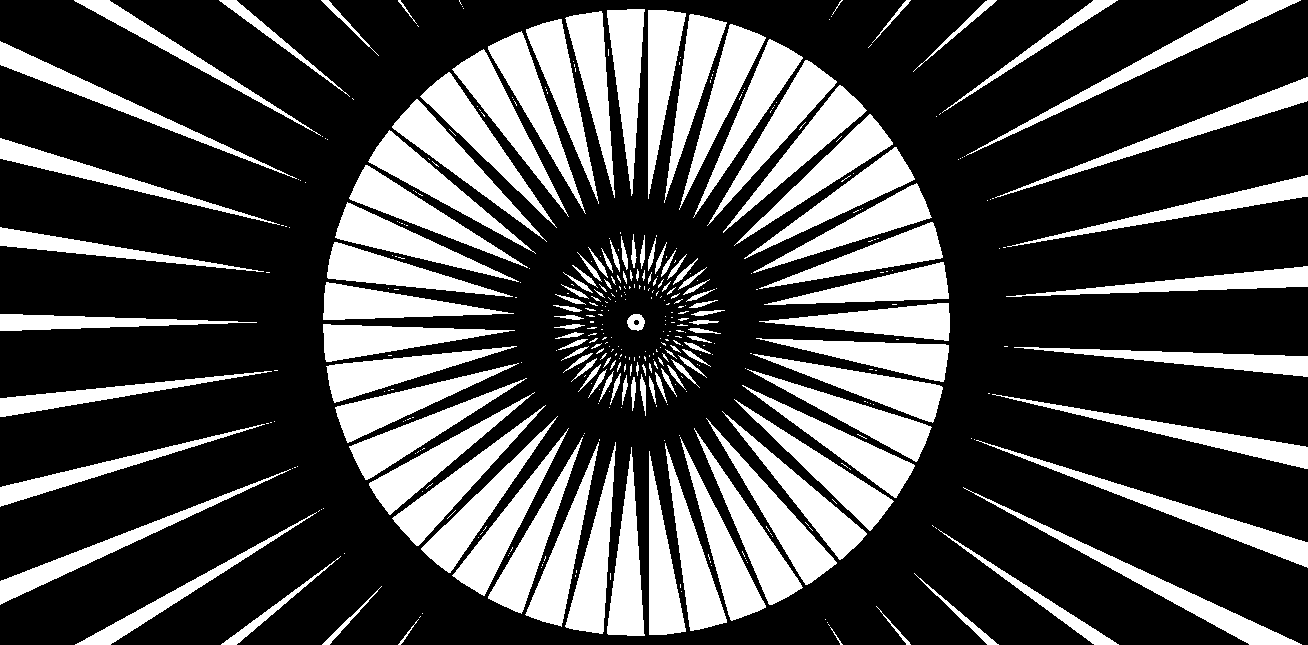
For some reason, I like having my age be a prime number of years. Today, I turn 47, so I get to have a prime-number-age for a whole year now. This hasn’t happened since I was 43, so I made this 47-pointed star to celebrate:
I also make birthday-stars for composite-number ages as well, just because it’s fun, and you can find at least two others on this blog, on January 12, in past years. Also, I wouldn’t want to have to wait until I’m 53 (my next prime age) to make another one of these.
At the moment, I certainly don’t feel 47. There are times when I feel twenty-two . . .
There are also times when I feel six.
At the moment, however, I feel about thirty. For that reason, I put the 47-pointed stars on the thirty faces of a rotating rhombic triacontahedron, because (a) it’s my birthday, (b) I want to, and (c) I can.
Image/music credits:
I created this using Geometer’s Sketchpad and MS-Paint.
“When Yer Twenty-Two,” by The Flaming Lips, via a YouTube posting.
Two panels from a Calvin and Hobbes cartoon, by Bill Watterson. (Calvin is perpetually six years old.)
Created using the image at the top of this post, and the program Stella 4d: Polyhedron Navigator, which is available here.





 RobertLovesPi.net