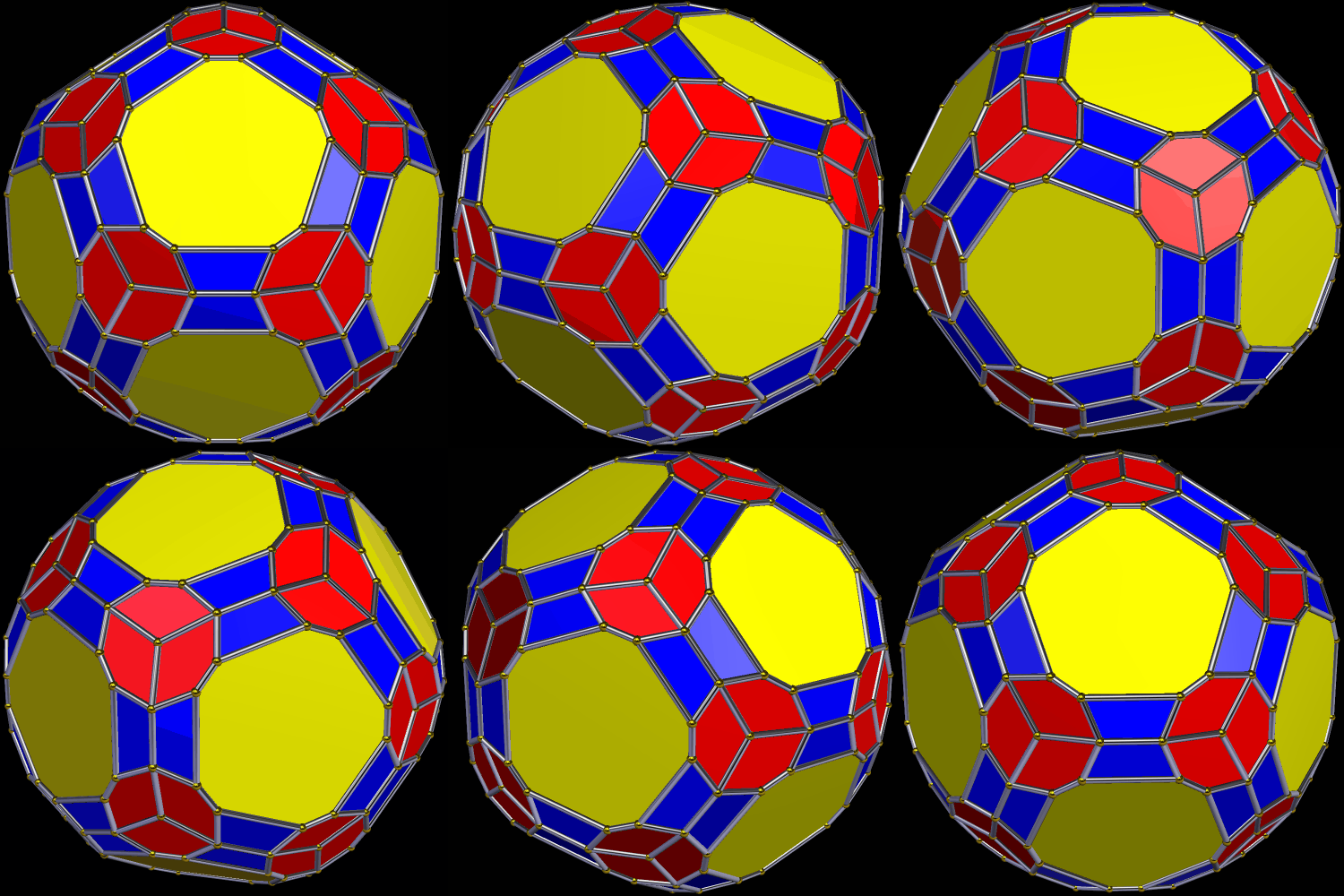
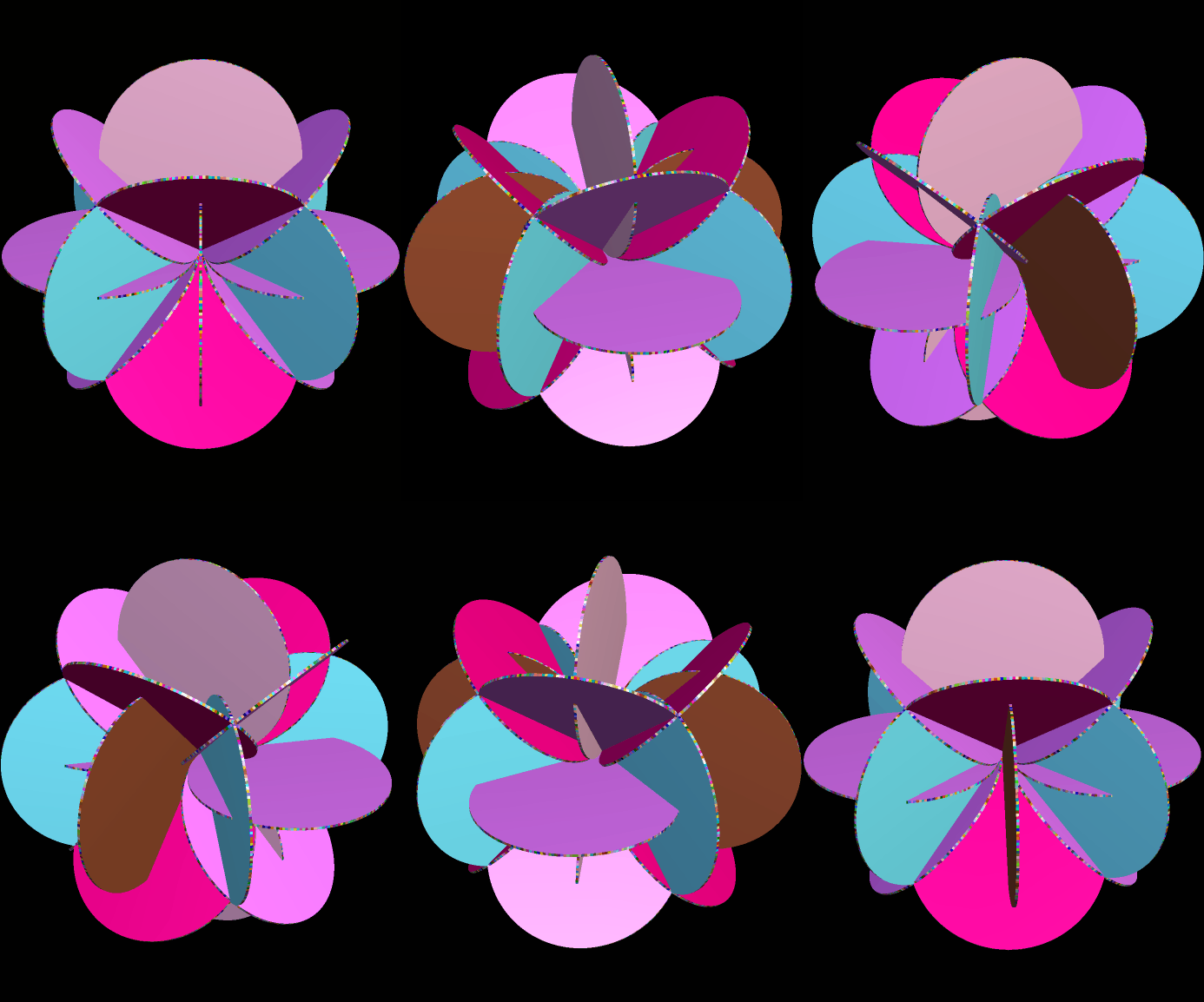
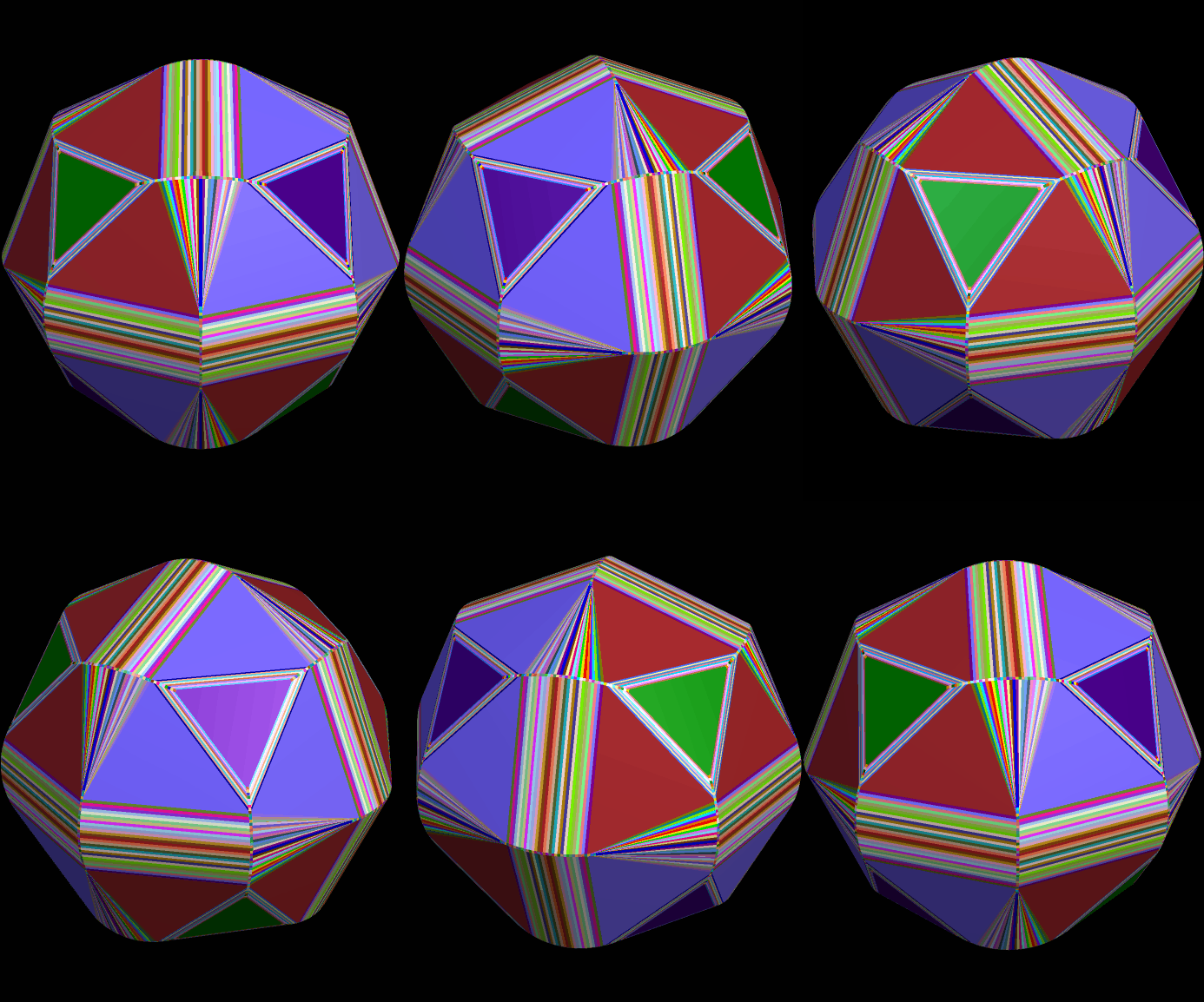
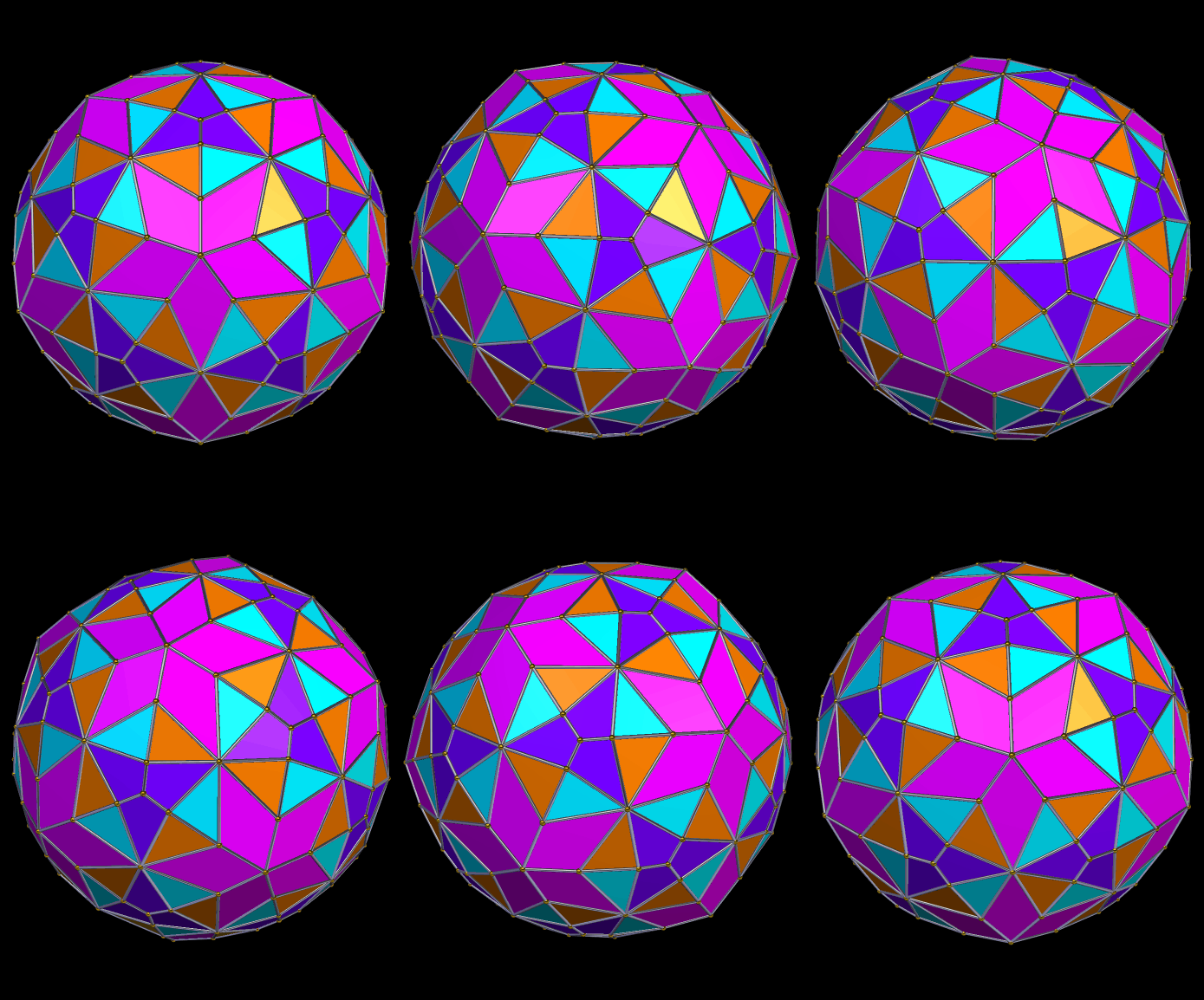
An Experiment Involving Augmentation of Octahedra with More Octahedra, Etc.

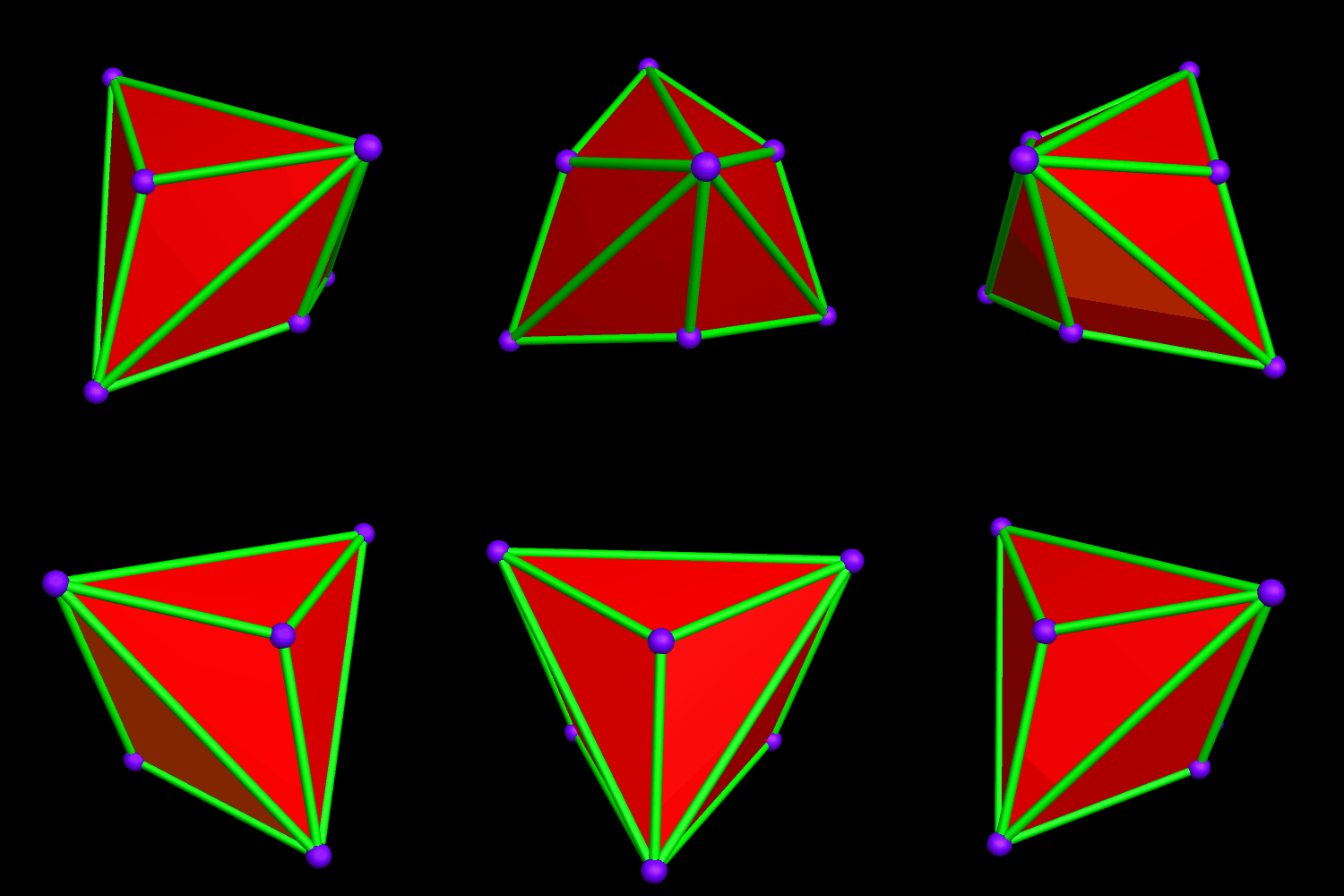
I’m going to start this experiment with a single octahedron, with faces in two colors, placed so that two faces which share an edge are always of different colors.

1

Next, I will augment the red faces — and only the red faces — with identical octahedra.
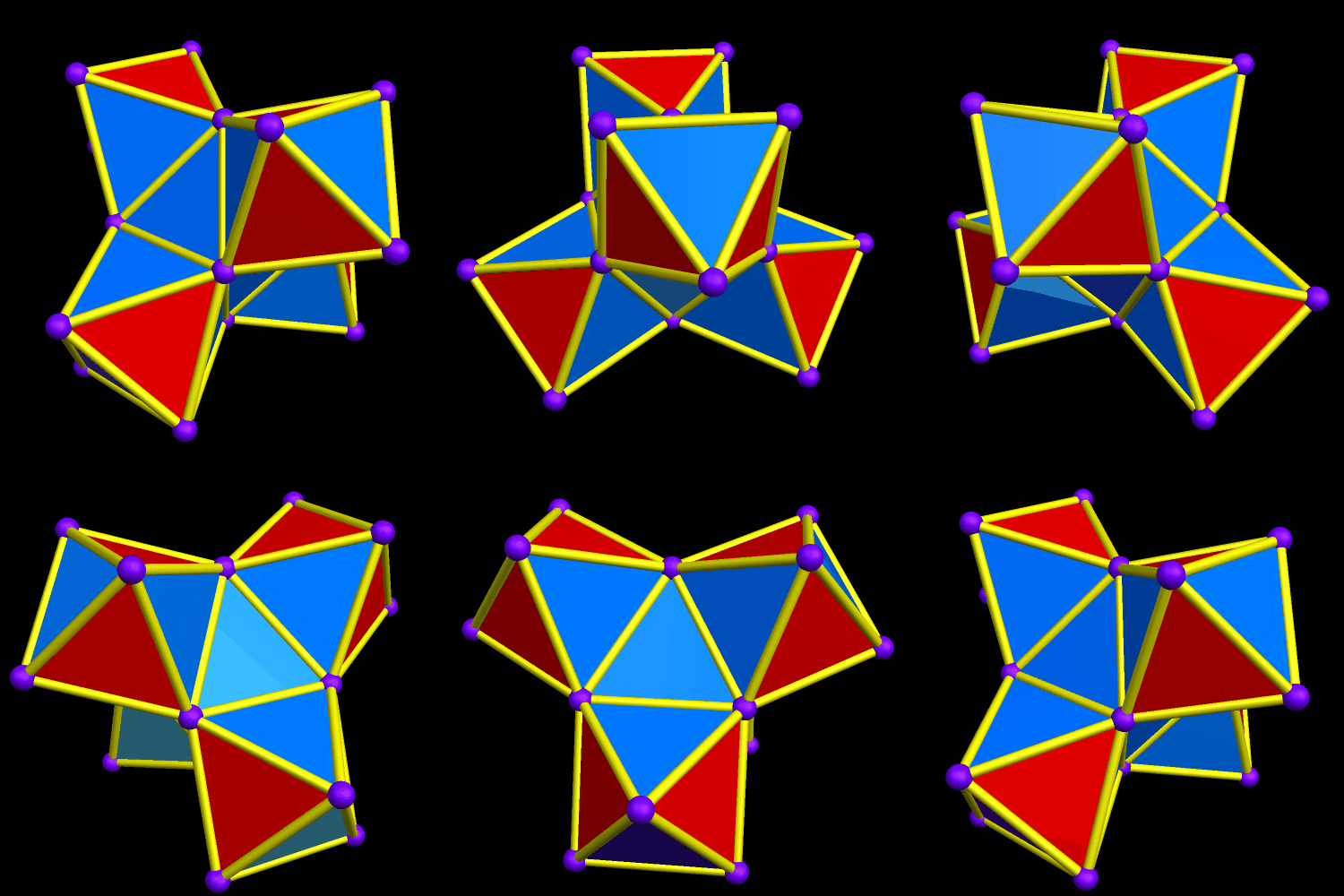
2

The regions with four blue, adjacent faces look as though they might hold icosahedra — but I checked, and they don’t quite fit. I will therefore continue the same process — augmenting only the red faces with more octahedra of the original type.

3

I’ve now decided that I definitely like this game, so I’ll keep playing it.
4

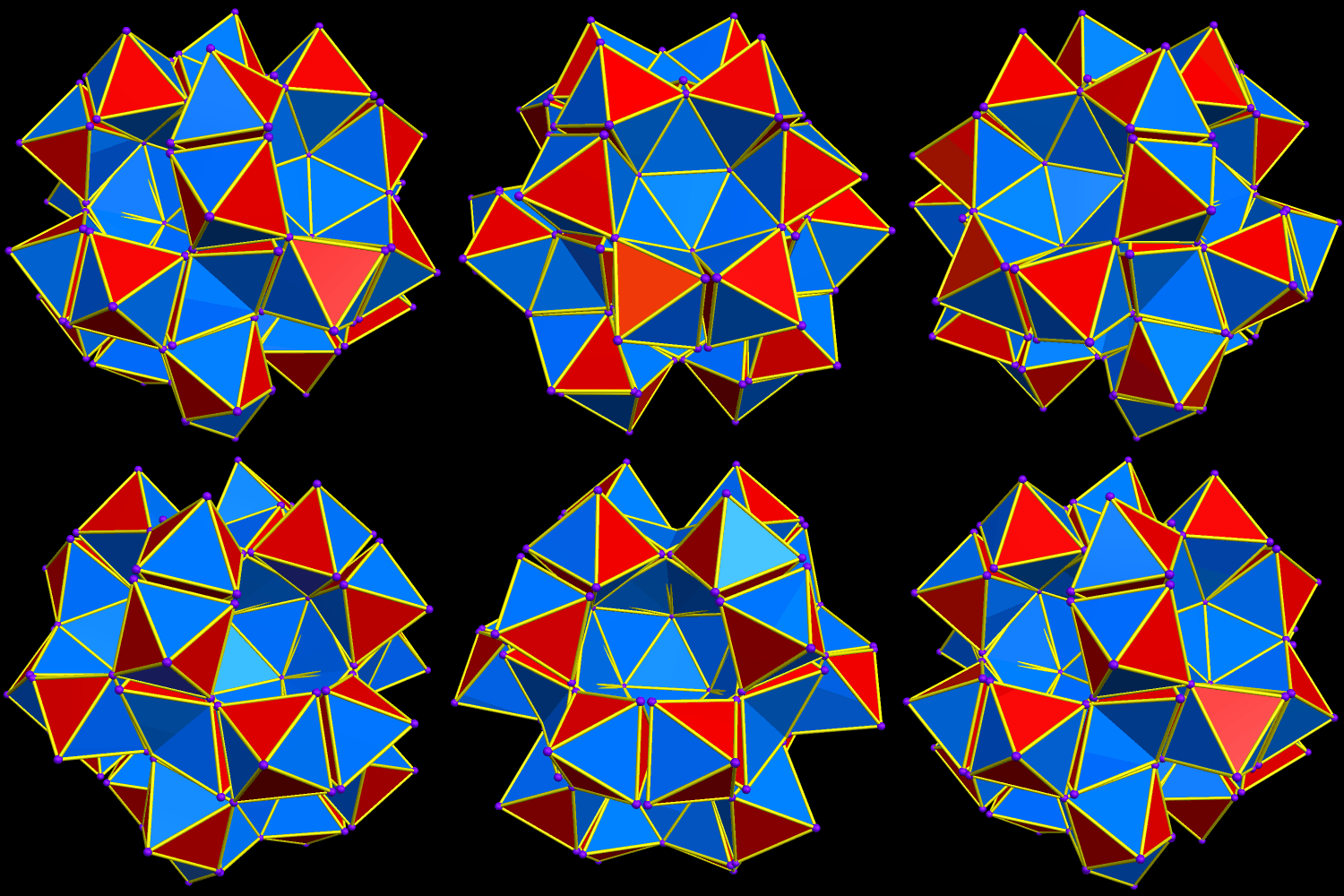
Immediately above, at the fourth of these images, some of the octahedra have started to overlap slightly, but I’m choosing to not be bothered by that — I’m continuing the now-established pattern, just in order to see where it takes me.

5

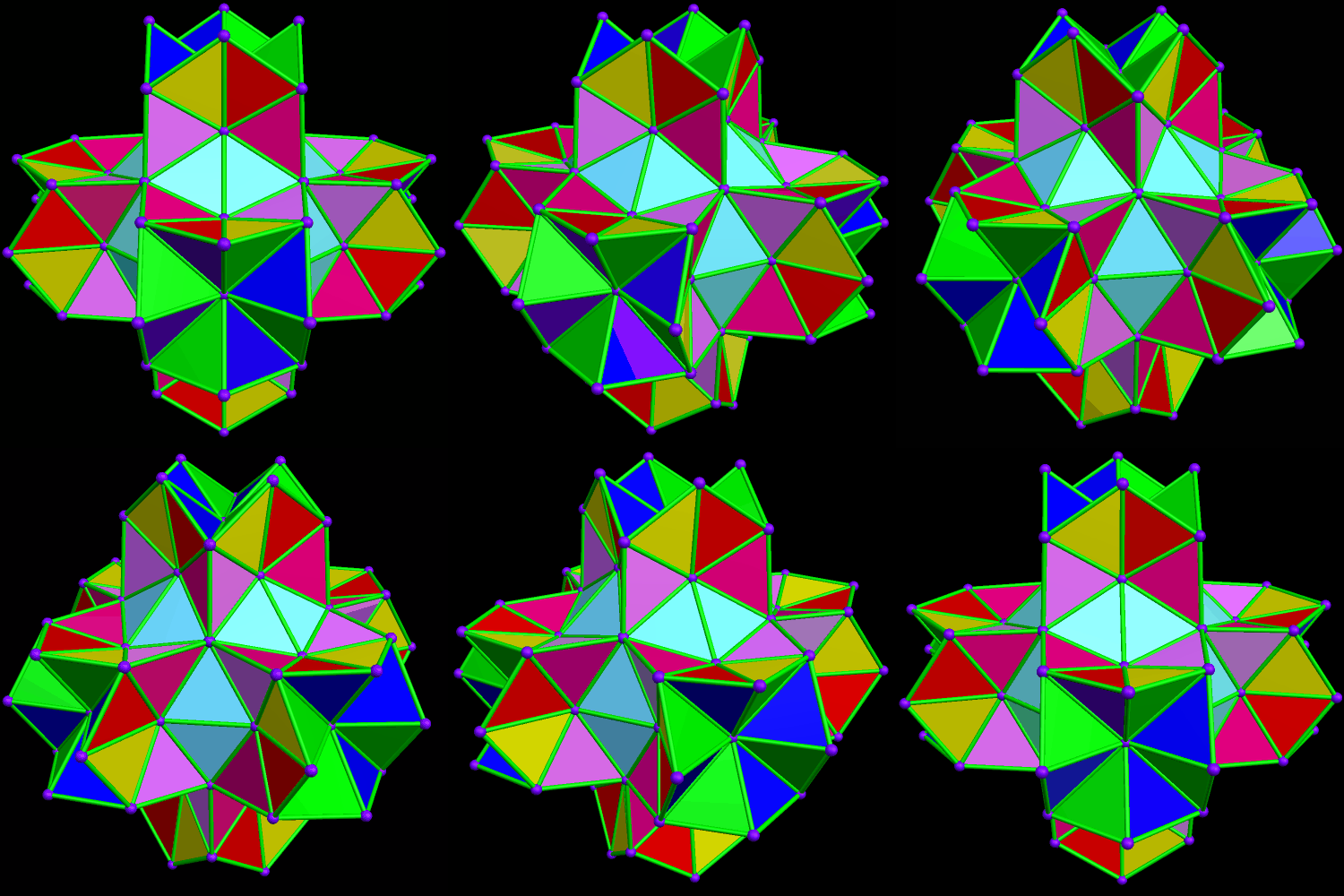
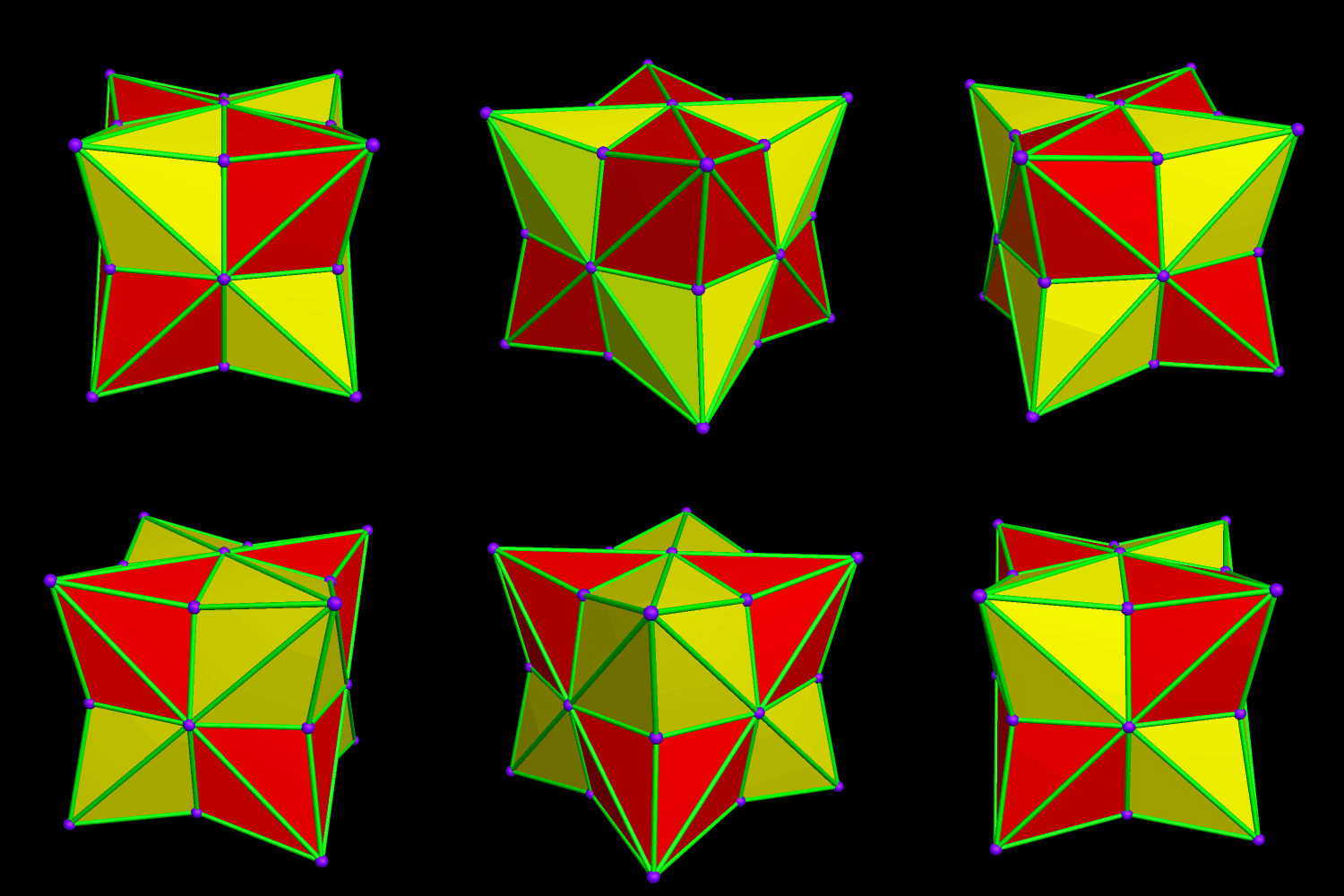
The regions of overlap are now far more obvious, but I’m continuing, anyway. Why? Because this is fun, that’s why! Right now, Stella 4d, the program I use to do these polyhedral manipulations, is chugging away on the next one. (This program is avilable at http://www.software3.com/Stella.php.) Ah, it’s ready — here it is!

6

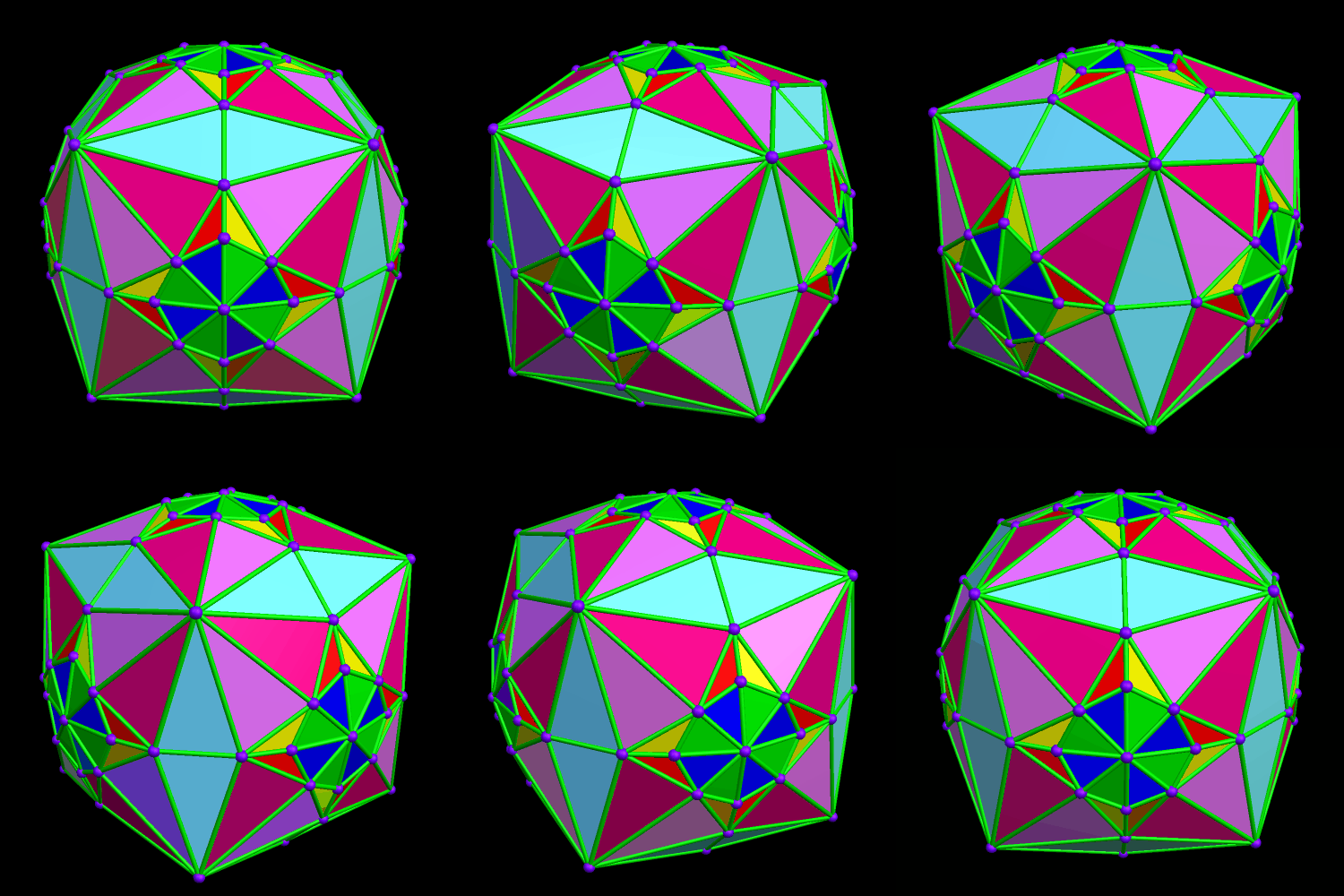
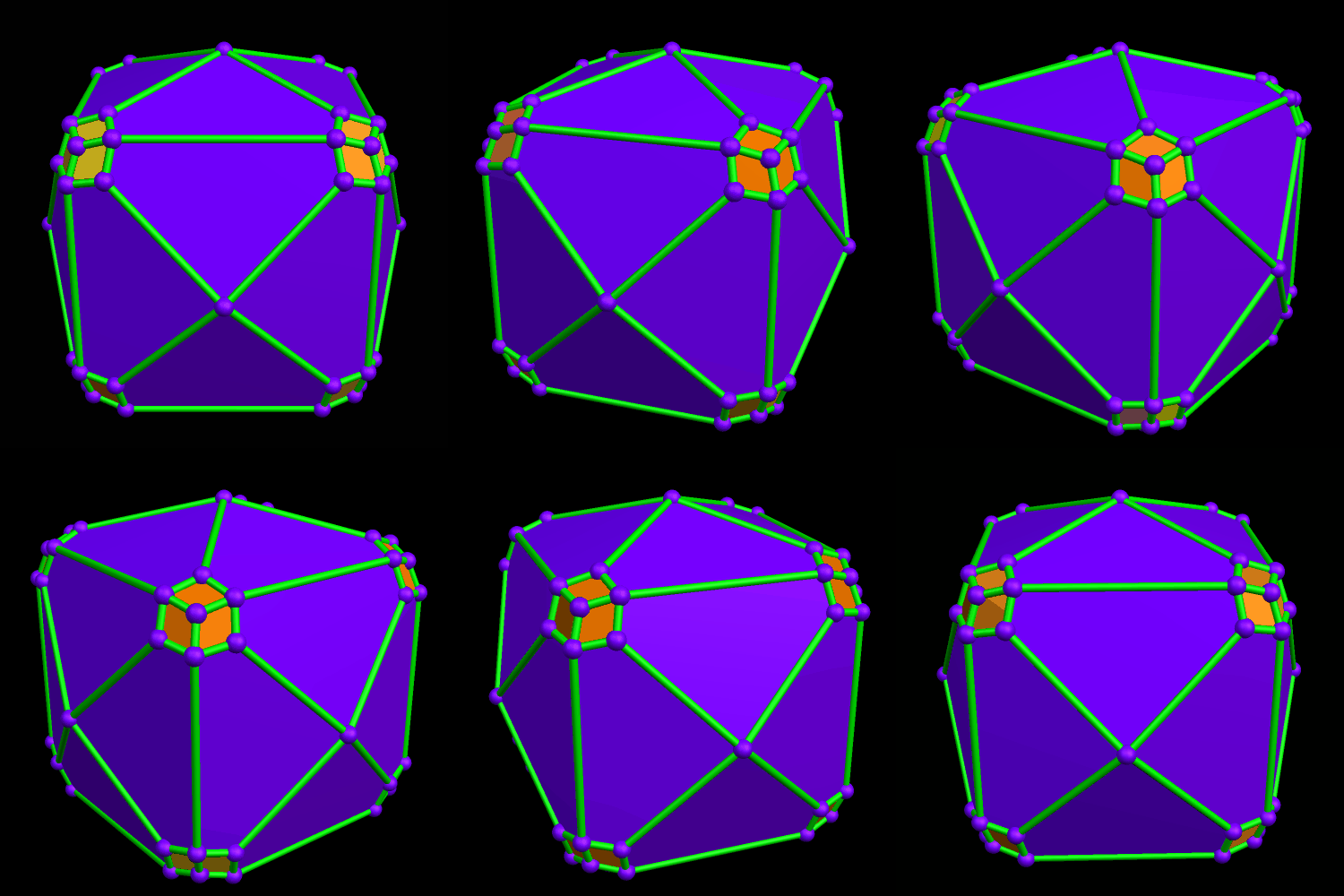
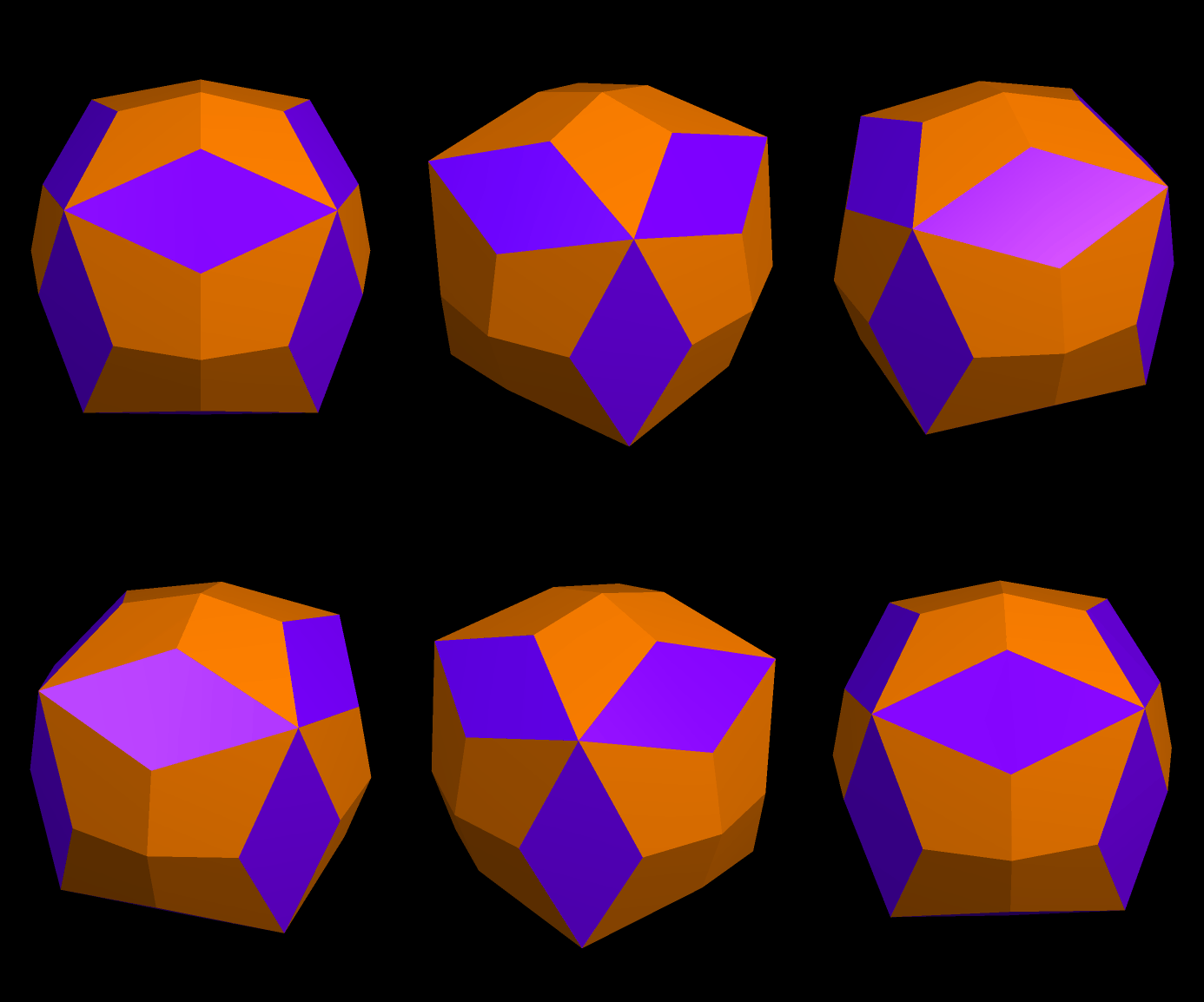
Rather than repeat this process again, I now have another question: what would the convex hull of this figure look like? (A convex hull of a non-convex polyhedron is the smallest convex polyhedron which can contain a given non-convex polyhedron.) With Stella 4d, that’s easily answered.

Convex hull

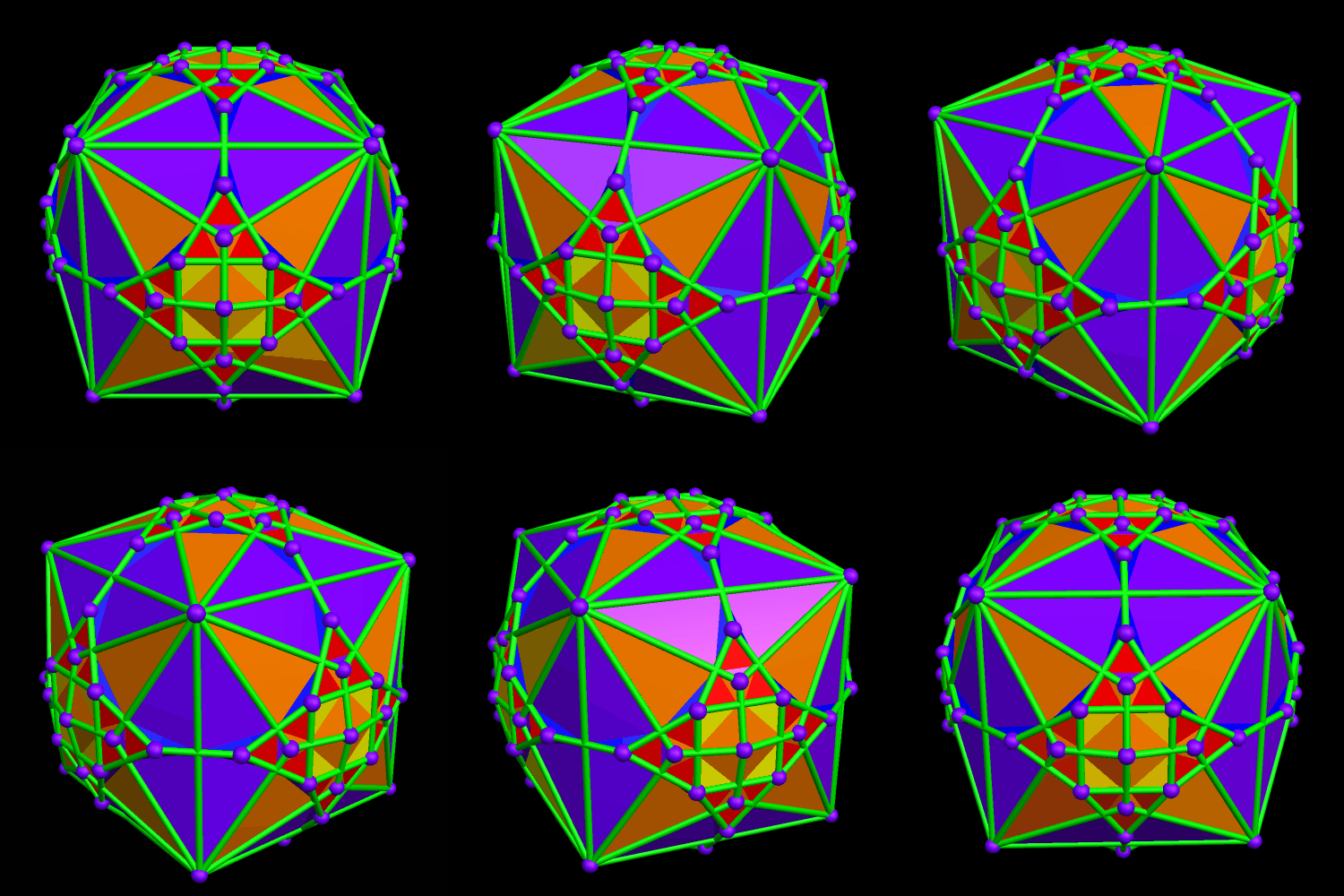
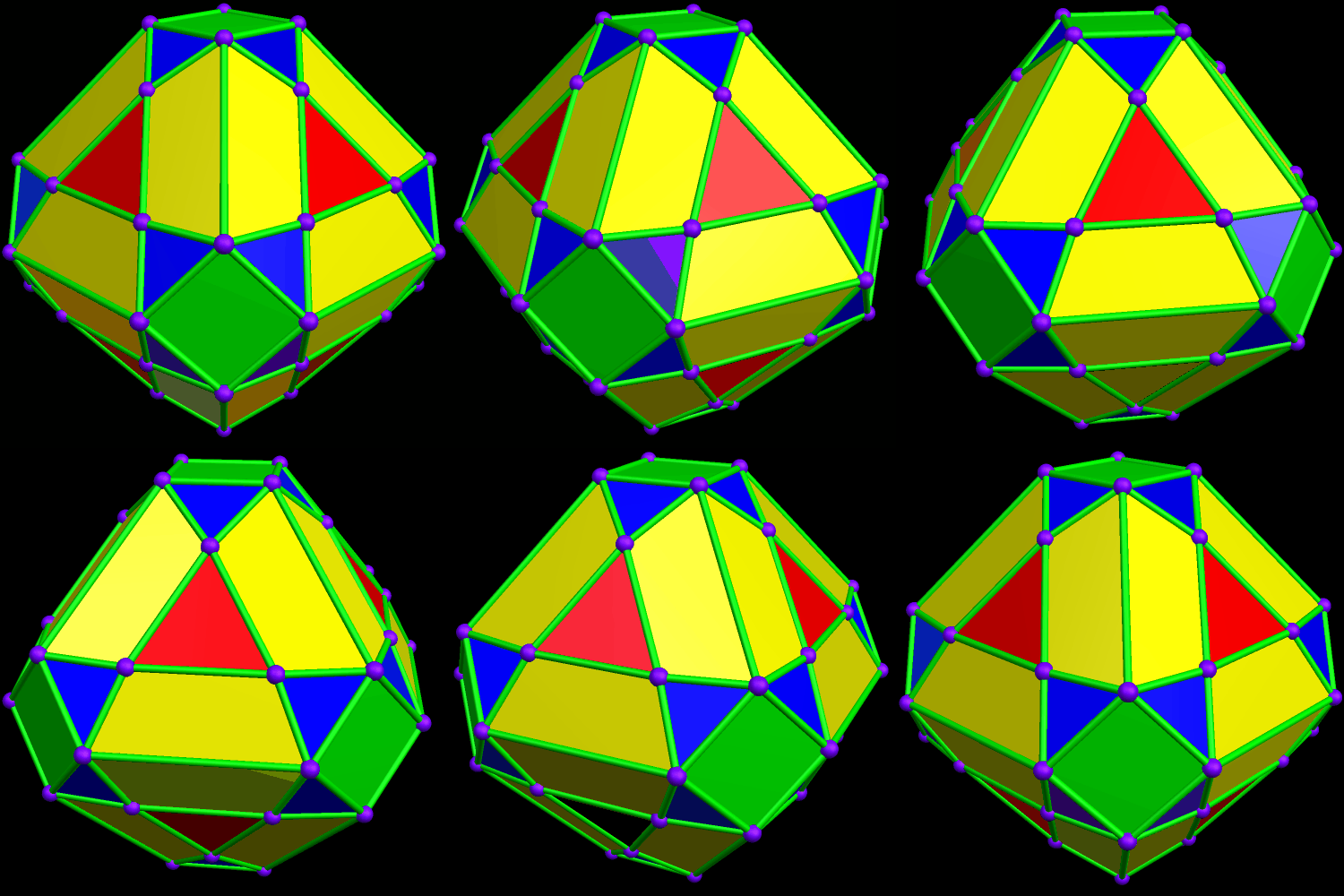
I must admit this: that was nothing like what I expected — but such unexpected discoveries are a large part of what makes these polyhedral investigations with Stella 4d so much fun. And now, to close this particular polyhedral journey, I will have Stella 4d produce, for me, the dual of the convex hull shown above. (In case you aren’t familiar with duality regarding polyhedra, it describes the relationship between the octahedron, with which this post began, and the familar cube. Basically, with duals, faces and verticies are “flipped” over edges, although that is an extremely informal and imprecise way to describe the at the process.)

dual of Convex hull

And with that, my friends, I bid you good night!
A Polyhedral Journey, Beginning with a Near-Miss Johnson Solid Featuring Enneagons

When Norman Johnson first found, and named, all the Johnson solids in the latter 1960s, he came across a number of “near-misses” — polyhedra which are almost Johnson solids. If you aren’t familiar with the Johnson solids, you can find a definition of them here. The “near-miss” which is most well-known features regular enneagons (nine-sided polygons):

ennneagonal-faced near-miss

This is the dual of the above polyhedron:

ennneagonal-faced near-miss dual

As with all polyhedra and their duals, a compound can be made of these two polyhedra, and here it is:

ennneagonal-faced near-miss base=dual compound

Finding this polyhedron interesting, I proceeded to use Stella 4d (polyhedron-manipulation software, available at http://www.software3d.com/Stella.php) to make its convex hull.

Convex hull of near-miss base-dual compound

Here, then, is the dual of this convex hull:

dual of Convex hull of near-miss base-dual compound

Stella 4d has a “try to make faces regular” function, and I next used it on the polyhedron immediately above. If this function cannot work, though — because making the faces regular is mathematically impossible — one sometimes gets completely unexpected, and interesting, results. Such was the case here.

attempt no make latest polyhedron have regular faces

Next, I found the dual of this latest polyhedron.

attempt no make latest polyhedron have regular faces's dual

The above polyhedron’s “wrinkled” appearance completely surprised me. The next thing I did to change it, once more, was to create this wrinkled polyhedron’s convex hull. A convex hull of a non-convex polyhedron is simply the smallest convex polyhedron which can contain the non-convex polyhedron, and this process often has interesting results.

Convex hull of wrinkled dual

Next, I created this latest polyhedron’s dual:

dual of Convex hull of wrinkled dual

I then attempted “try to make faces regular” again, and, once more, had unexpected and interesting results:

dual of latest polyhedron

The next step was to take the convex hull of this latest polyhedron. In the result, below, all of the faces are kites — two sets of twenty-four each.

convex hull of last polyhedron with two sets of two dozen kites each

I next stellated this kite-faced polyhedron 33 times, looking for an interesting result, and found this:

33rd stellation of latest polyhedron

This looked like a compound to me, so I told Stella 4d to color it as a compound, if possible, and, sure enough, it worked.

33rd stellation of latest polyhedron colored as a compound

The components of this compound looked like triakis tetrahedra to me. The triakis tetrahedron, shown below, is the dual of the truncated tetrahedron. However, I checked the angle measurement of a face, and the components of the above compound-dual are only close, but not quite, to being the same as the true triakis tetrahedron, which is shown below.

Triakistetra -- ANGLES AREN'T QUITE A MATCH for last polyhedron

This seemed like a logical place to end my latest journey through the world of polyhedra, so I did.

A Polyhedral Journey, Beginning with Face-Based Zonohedrification of an Icosahedron

To begin this, I took an icosahedron, and made a zonish polyhedron with it, with the new faces based on the zones of the existing faces. Here’s the result.

1 face-based zonish icosahedron

Next, I started stellating the polyhedron above. At the sixth stellation, I found this. It’s a true zonohedron, and the first polyhedron shown here is merely “zonish,” because one has triangles, and the other does not. (One of the requirements for a polyhedron to be a zonohedron is that all its faces must have an even number of sides.)

2 6th stellation face-based zonish icosahedronAfter that, I kept stellating, finding this as the 18th stellation of the first polyhedron shown here.

3 18th stellation face-based zonish icosahedron

With this polyhedron, I then made its convex hull.

4 Convex hull of 18th stellation of face-based zonish icosahedronAt this point, the irregular hexagons were bothering me, so I used Stella 4d‘s “try to make faces regular” option. (Stella 4d is polyhedron-manipulation software you can try for free, or purchase, right here.)

5 spring model of convex hull of 18th stellation of face-based icosahedron

The next step I chose was to augment all the yellow trapezoids with prisms, each with a height 1.6 times the trapezoids average edge length.

6 Augmented sping model of convex hull of 18th stellation of FBZI

The next step was, again, to make the convex hull.

7 Convex hull of augmented convex hull

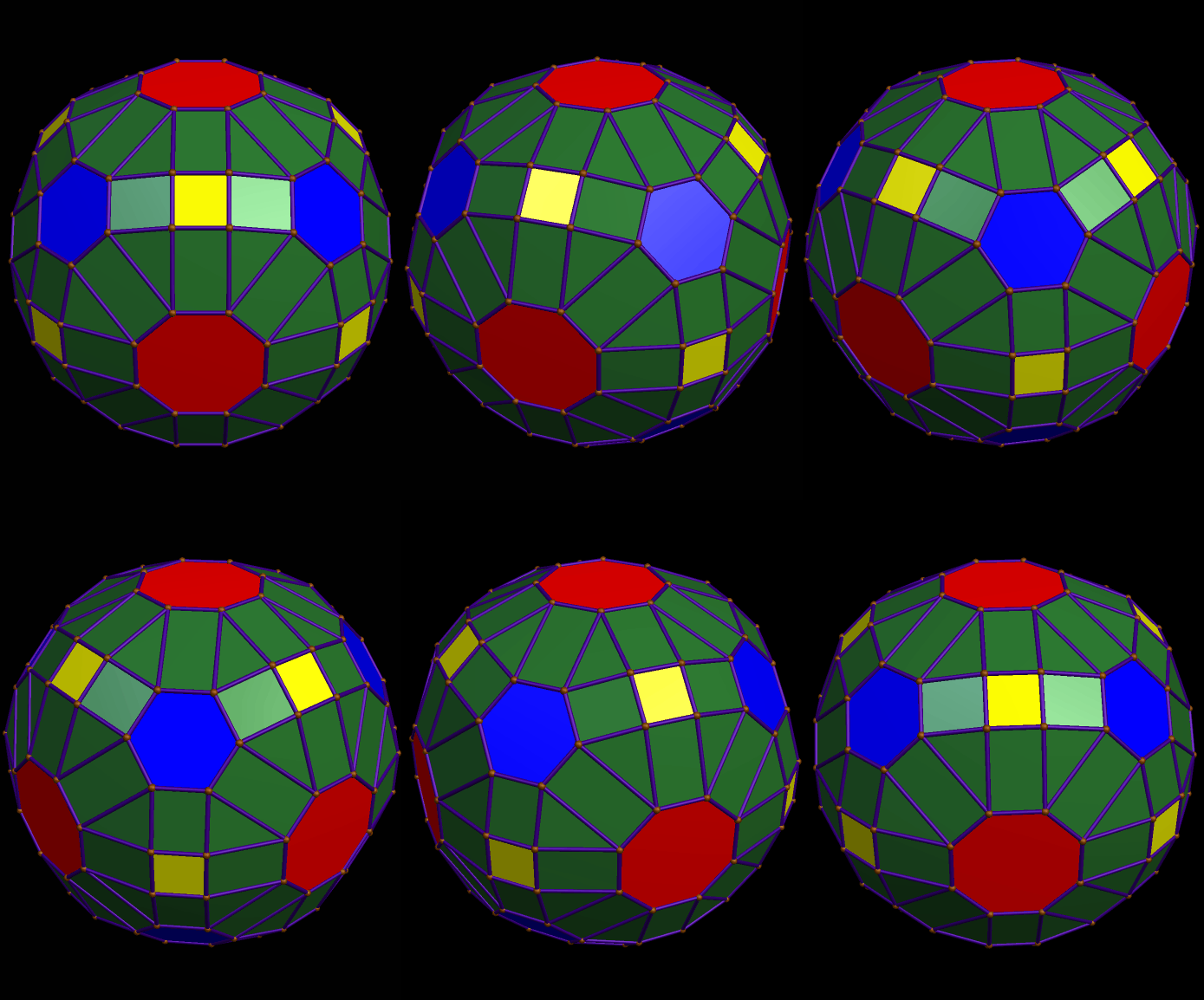
At this point, I tried “try to make faces regular” again, and was pleased with the result. The green rectangles became so thin, however, that I had to stop displaying the edges and vertices, in order for then to be seen.

8 spring model of last oneNext, I augmented both the blue faces (decagons) and the yellow faces (dodecagons) with antiprisms, again using a height 1.6 times that of the augmented faces’ average edge-lengths.

9 Augmented Poly 9th in series

Next, I made the convex hull again — a step I often take immediately after augmenting a polyhedron.

10 Convex hull

This one surprised me, as it is more complicated than I expected. To clean things up a bit, I augmented only the trapezoids (dark pink) with prisms, and dodecagons (green) with antiprisms, again using the factor 1.6 for the augmentation-height.

11 augmented Convex hull

The next step I chose was to take the convex hull, once more. I had not yet noticed that the greater height of the trapezoidal prisms would cause the dodecagonal antiprisms to be “lost” by this step, though.

12 convex hull

Next, “try to make faces regular” was used again.

13 spring model

This last result had me feeling my polyhedral journey was going in circles, so I tried augmentation again, but in a different way. I augmented this polyhedron, using prisms, on only the red trapezoids (height factor, 1.6 again) and the blue rectangles (new height factor, 2.3 times average edge length).

14 augmented spring model

After that, it was time to make another convex hull — and that showed me that I had, indeed, taken a new path.

15 Convex hullI found the most interesting faces of this polyhedron to be the long, isosceles trapezoids, so I augmented them with prisms, ignoring the other faces, using the new height-factor of 2.3 times average edge length this time.

16 augmented Convex hull

Of course, I wanted to see the convex hull of this. Who wouldn’t?

17 Convex hull

I then started to stellate this figure, choosing the 14th stellation as a good place to stop, and making the edges and vertices visible once more.

18 the 14th stellation of the previous Convex hull

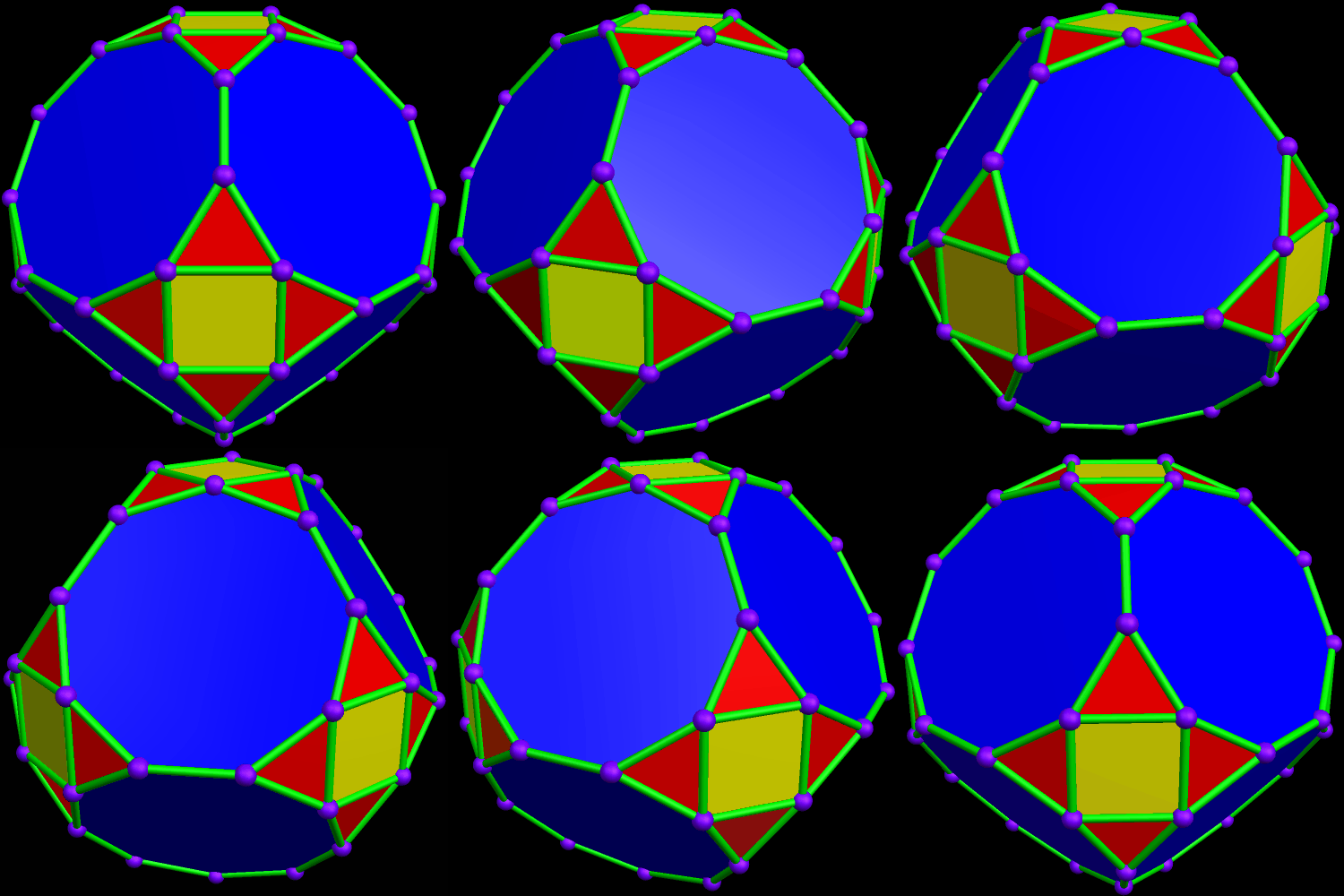
The Convex Hull of a Prism-Augmented Icosidodecahedron As a (Possibly) New Near-Miss Candidate

Image

The Convex Hull of a Prism-Augmented Icosidodecahedron As a New Near-Miss Candidate

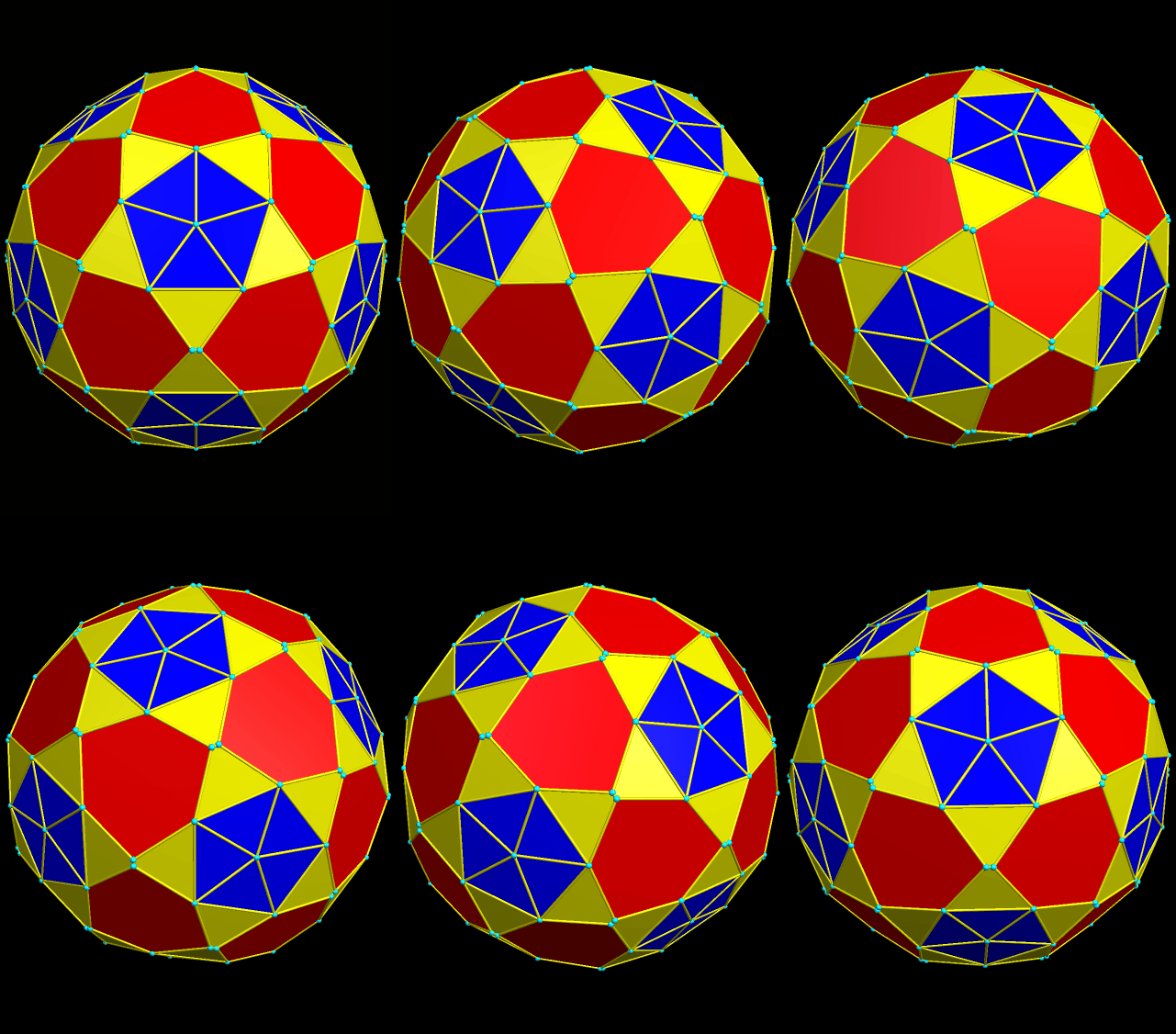
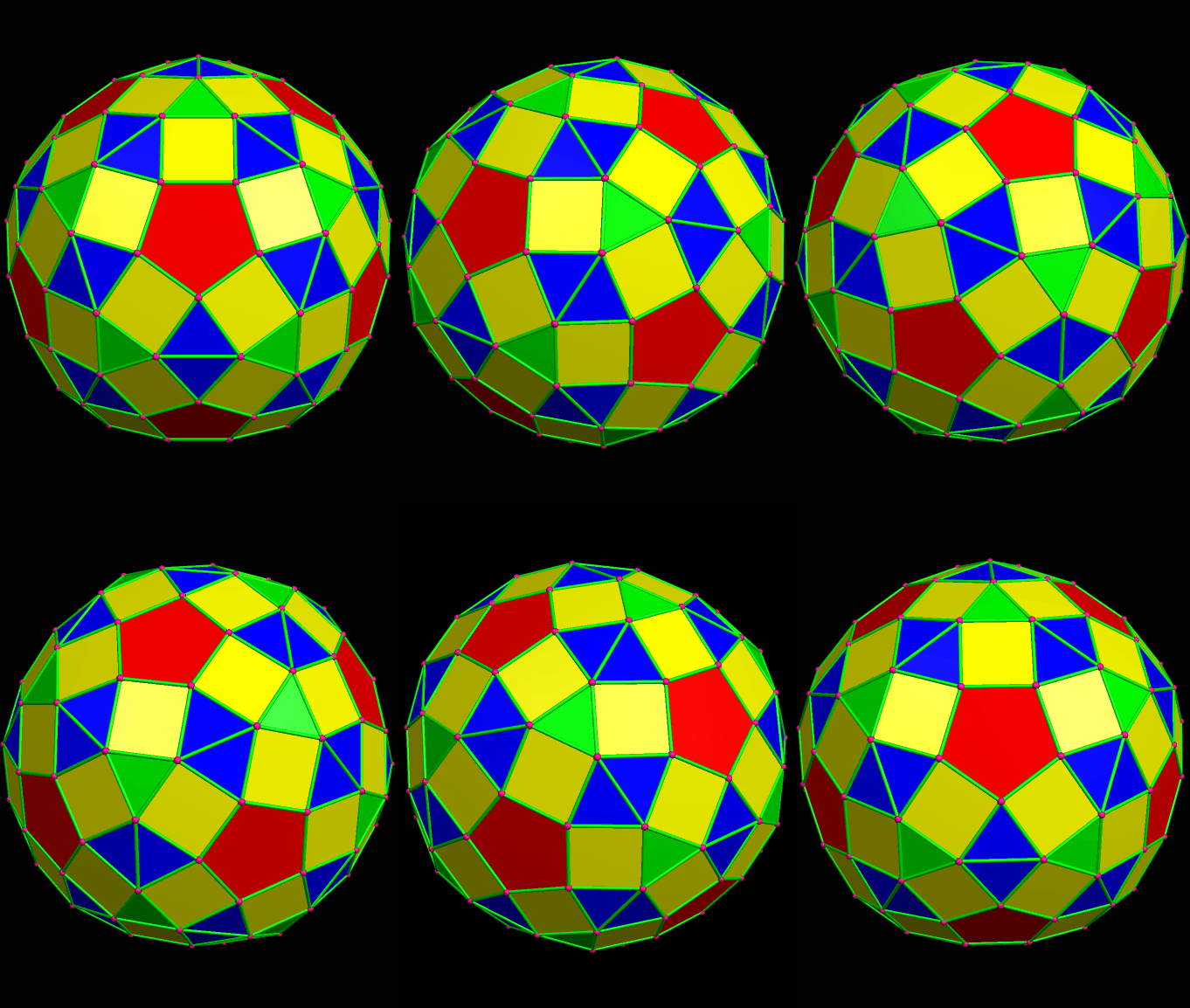
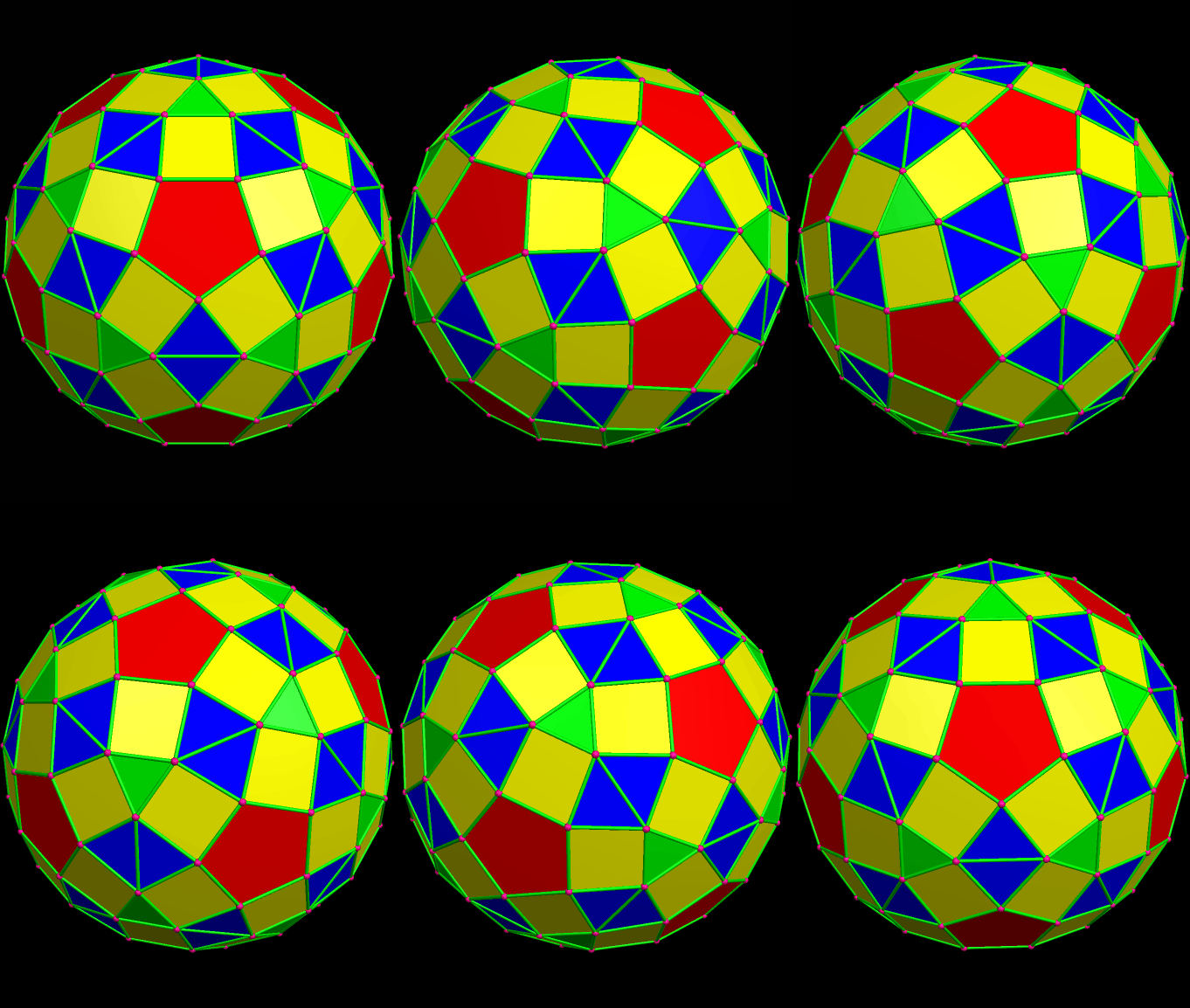
To make this polyhedron using Stella 4d: Polyhedron Navigator (a program which is available at this website), I started with an icosidodecahedron, augmented all faces with prisms of height 1.6 times greater than their bases’ edge length, and then took the convex hull of the result. I’m proposing it as a candidate for the loosely defined group of polyhedra called near-misses to the 92 Johnson solids: convex polyhedra which are almost, but not quite, Johnson solids, due to slight irregularity in some of their faces.

In this case, the pentagons and green triangles are regular, and have the same edge length. The blue triangles, however, are isosceles, with vertex angles of ~67.6687 degrees. The yellow almost-squares are actually rectangles, with edges next to blue triangles which are ~2.536% longer than the edges next to pentagons or green triangles.

I stumbled upon this design earlier today, while simply exploring polyhedra more-or-less randomly, using Stella. Below is the prototype I found at that time, which I merely made a .gif of, but did not perform measurements on.

NM1

In this prototype, the most significant difference I can detect is in the yellow faces, which are trapezoids, rather than rectangles, since the pentagon edge-length is slightly longer than that of the green triangles.

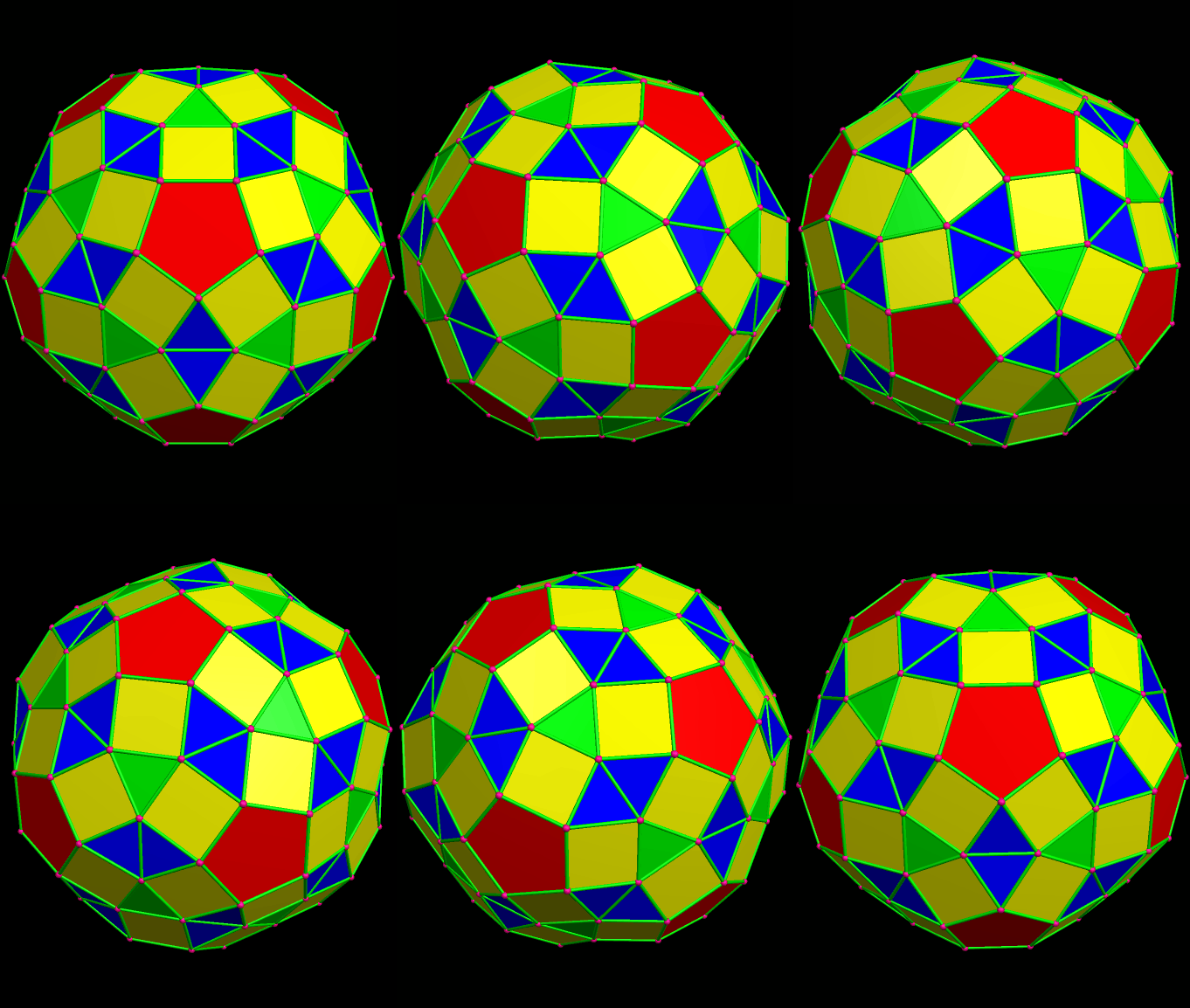
Stella has a “try to make faces regular” function built-in to try to help improve upon polyhedra such as these, but here’s what happens when that function is used on the first polyhedron shown above:

NMNC

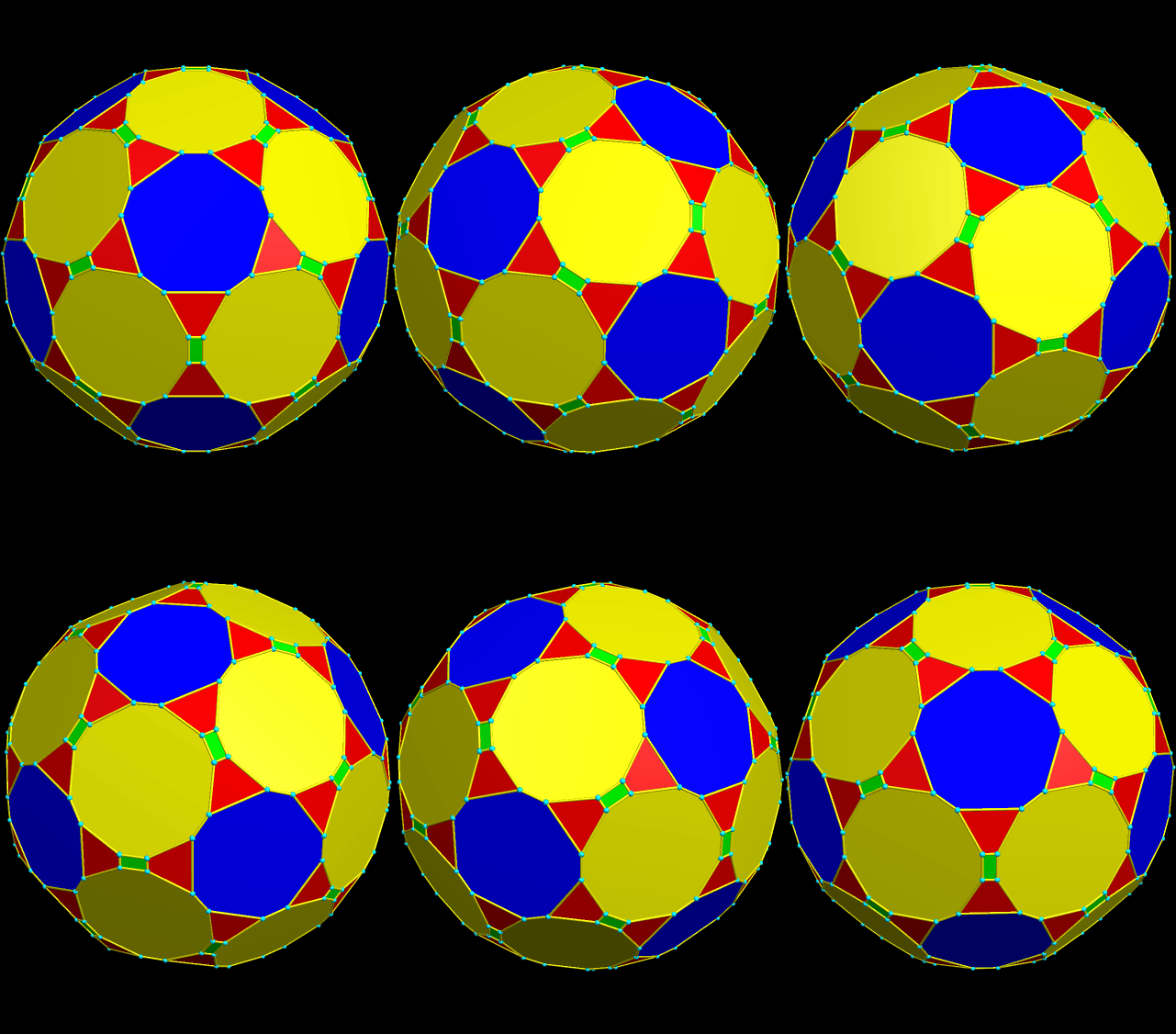
Behold! It worked — all of the faces are perfectly regular. However, that caused another problem to appear, and you can see it most easily by looking at the blue triangle-pairs:  this polyhedron is slightly non-convex. It’s also easily described as a truncated dodecahedron, with each of the twelve decagonal faces augmented by a pentagonal rotunda.

I’ll show this to some other people who are polyhedron-experts, and will update this post with what I find after I’ve talked to them. My questions for them, as usual in such situations, are two in number:

1. Has this polyhedron been found before?

2. Is it close enough to regularity to qualify for “near-miss” status?

If it hasn’t been found before, but is judged unworthy of “near-miss” status, it will at least join the newly-described group I call “near near-misses” — polyhedra which don’t quite qualify for near-miss status, by visual inspection. Obviously, this new group’s definition is even more “fuzzy” than that of the near-misses, but there is a need for such a category, nonetheless.

[Update:  Robert Webb, who wrote Stella 4d (and is not the blogger here, despite our sharing a first name), has seen this before, so it isn’t an original discovery of mine. He doesn’t accept it as a near-miss on the grounds that it naturally “wants” to be non-convex, as seen in the last of the three images in this post, and I agree with his reasoning. I’m therefore considering this to be a “near-near-miss.”]

A Rhombcuboctahedron, with Its Square Faces Augmented By Hexacontakaitriacosioigonal Prisms, Together with Two Views of the Convex Hull of That Augmented Polyhedron

Image

A Rhombcuboctahedron, with Its Square Faces Augmented By Hexacontakaitriacosioigonal Prisms

The eighteen regular prisms (whose bases each have 360 sides) augmenting the square faces of the rhombcuboctahedron hidden in the center, above, can be oriented in more than one way. I simply chose the orientation I liked best.

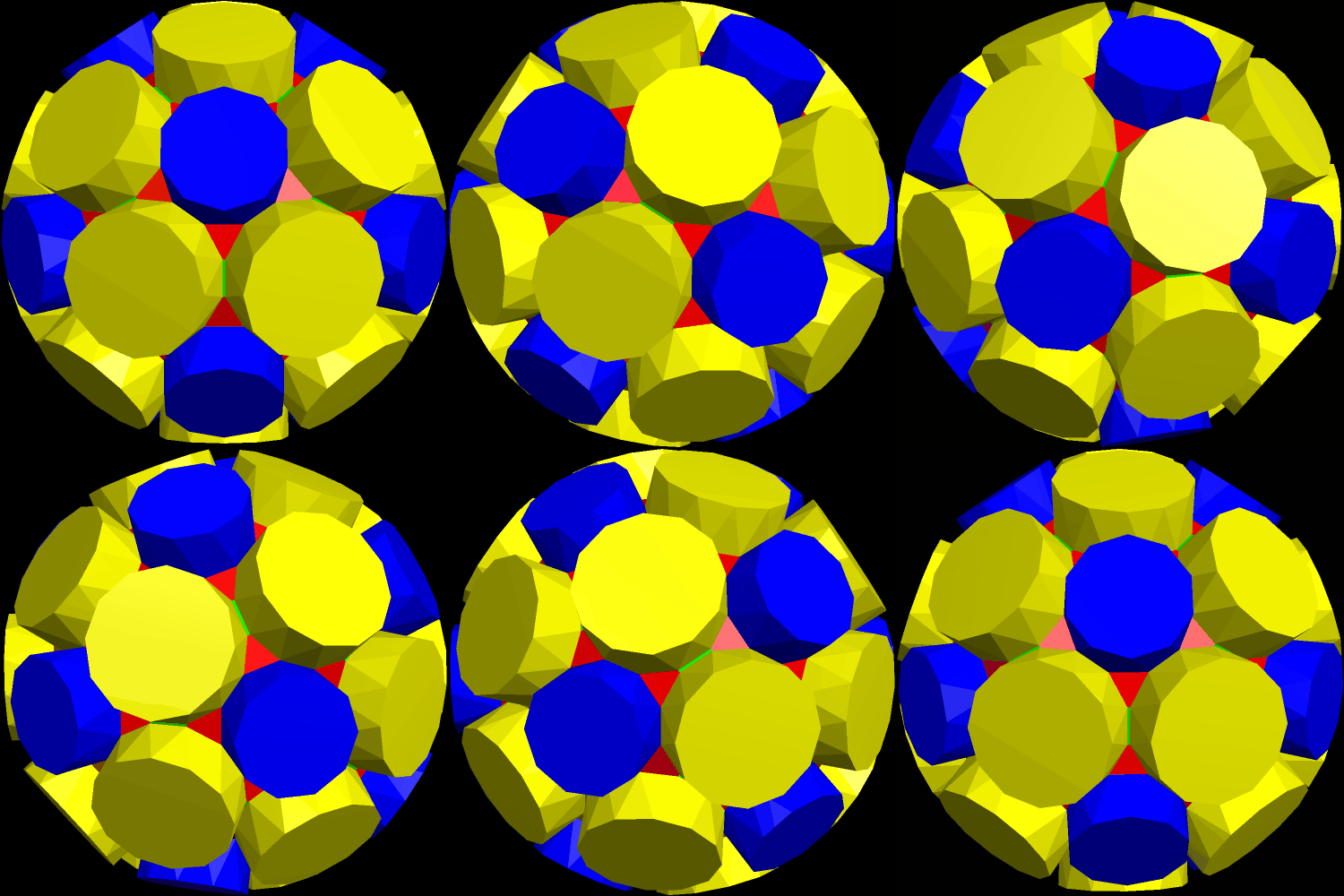
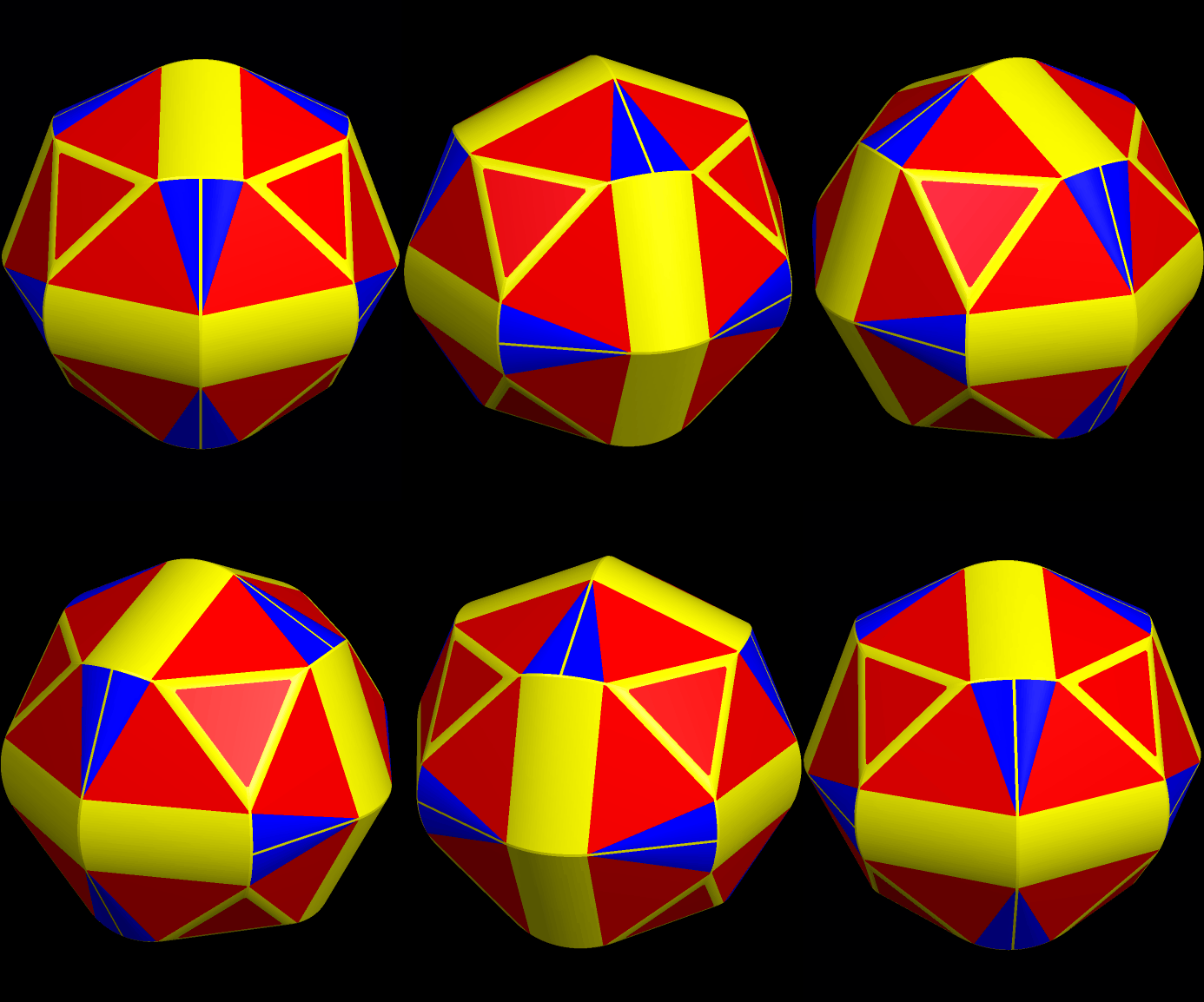
After that, I took the convex hull of the figure above, just to see what would happen. With each different face type having a different color, it looks like this (click to enlarge either or both images below, if you wish):

Convex hull

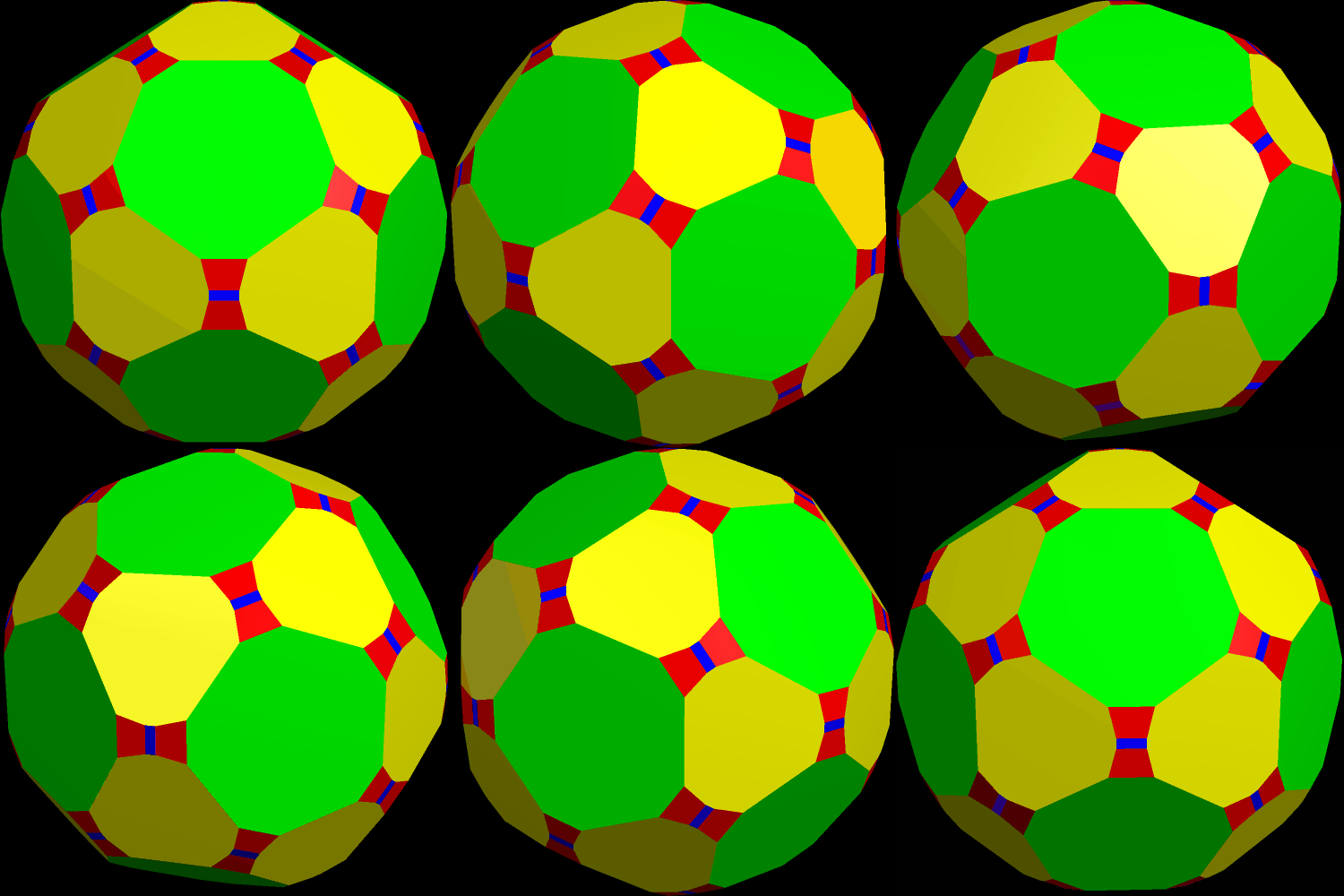
I then chose a different color-scheme. Instead of giving faces of each type a different color, I colored the faces by their number of sides. This led to a more pleasing result:

Convex hugll

The things that look like rounded yellow rectangles are an illusion; polyhedra don’t have curved faces. They are actually numerous thin, adjacent, near-coplanar rectangles with the same color.

All three images were created with Stella 4d, software available at http://www.software3d.com/Stella.php.


Fifteen Interesting Convex Hulls

Image

Some Interesting Convex Hulls, and Duals of Convex Hulls

Each of the smaller pictures below may be enlarged by clicking on them.

dual of 182face which herself has 240 faces

All of these images were produced using Stella 4d, which you may try or buy at http://www.software3d.com/Stella.php.

Dual of Convex hull

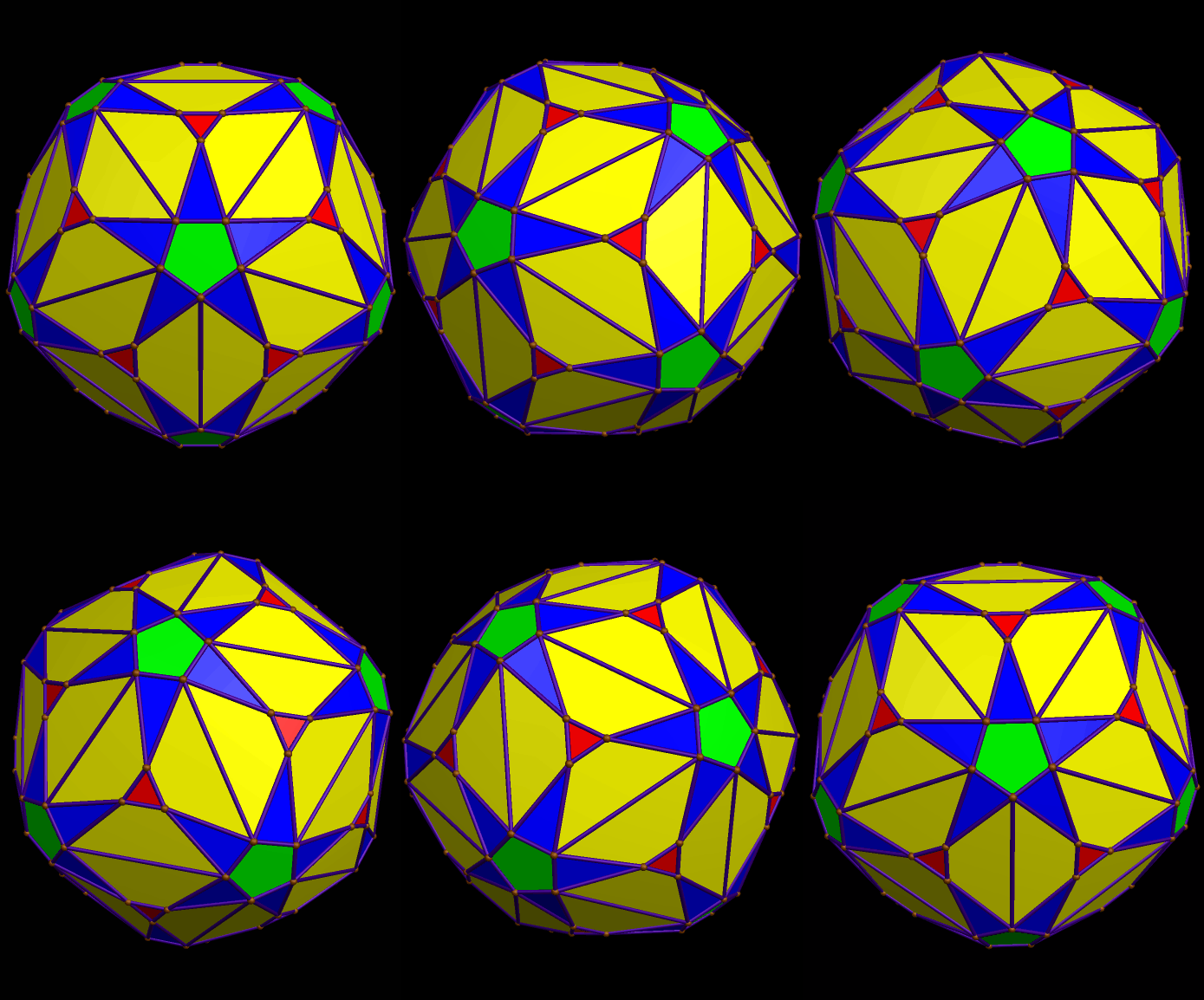
This one is a variant of the icosidodecahedron.

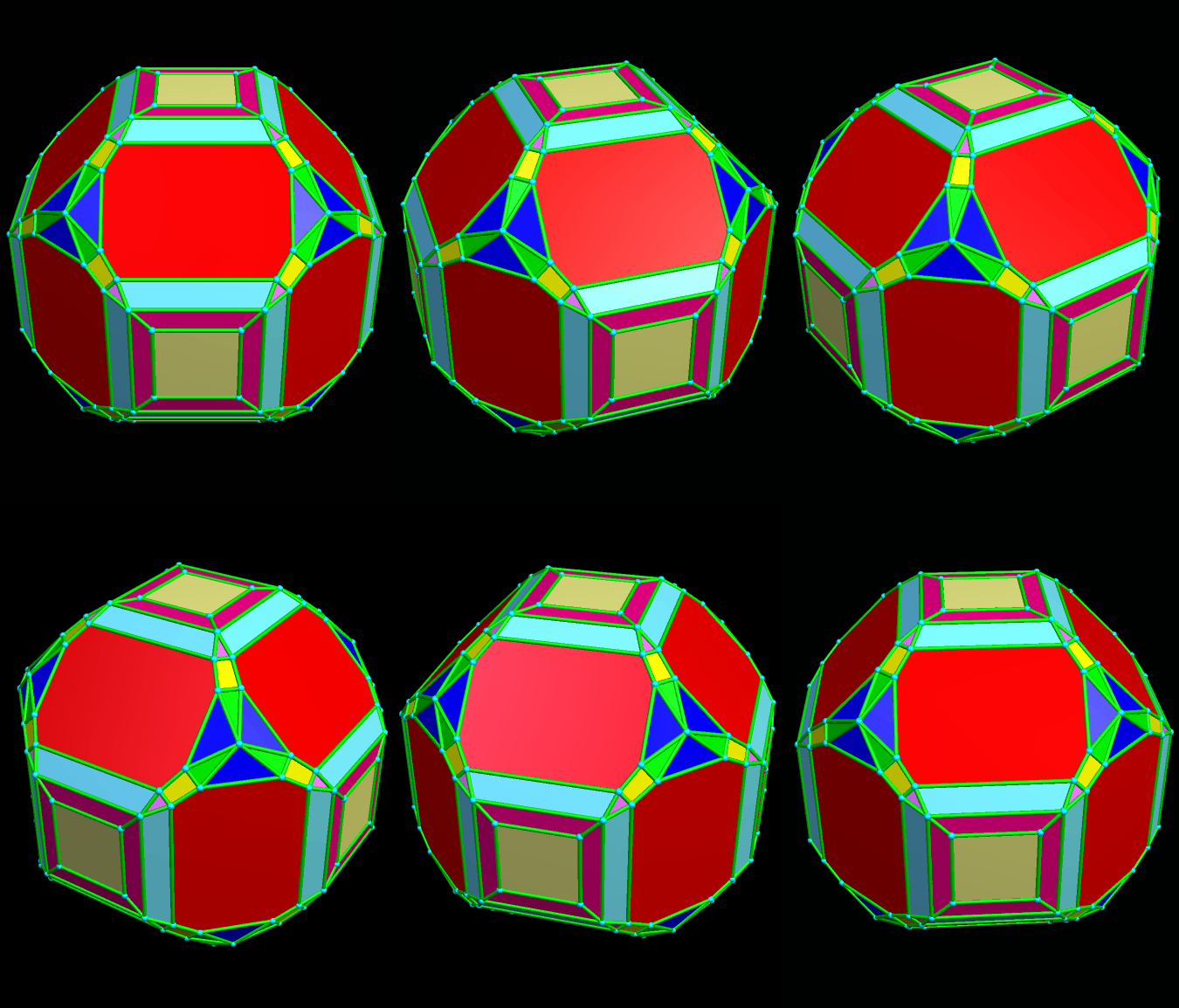
cool Convex hull

This one is based on the rhombcuboctahedron.

Convex hu3

This one is made of squares, rhombi, and irregular pentagons.

Dual of Convex hull2

This one is composed entirely of pentagons and hexagons, none of which are regular.

Dual of Convex hull X

This one has faces which include squares, rhombi, and isosceles triangles.

Faceted Dual

In this one, the hexagons and squares are regular. Only the isosceles triangles are irregular.

h&o&it

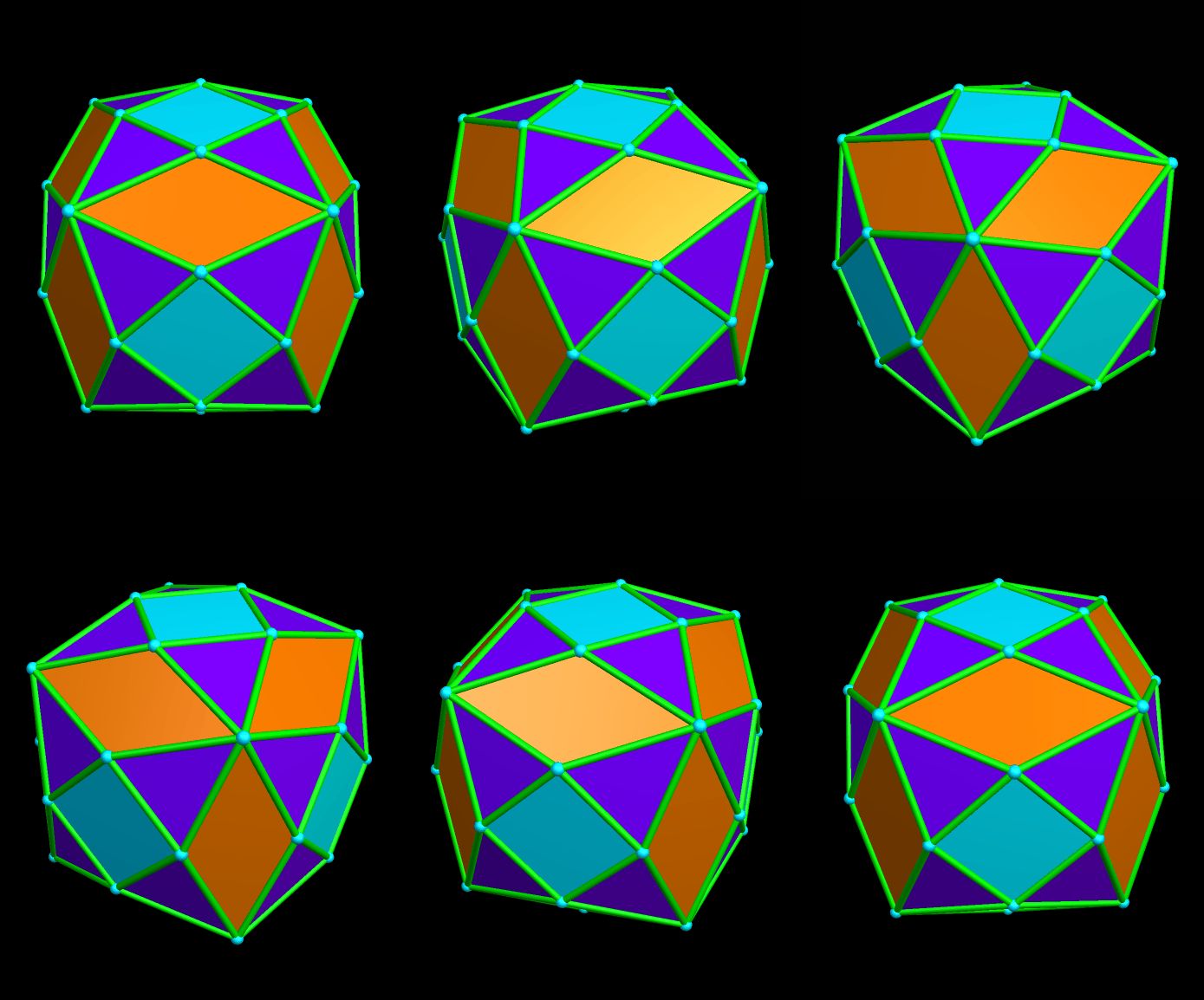
This is the dual of the last one shown here. Its faces are all either kites or rhombi.

h&o&it's dual made of kites and rhombi

I hoped to make this one into a near miss to the Johnson solids, but the octagons of both types, especially, are too far from regularity to get that to work. The only faces which are regular are the green triangles.

hmmm

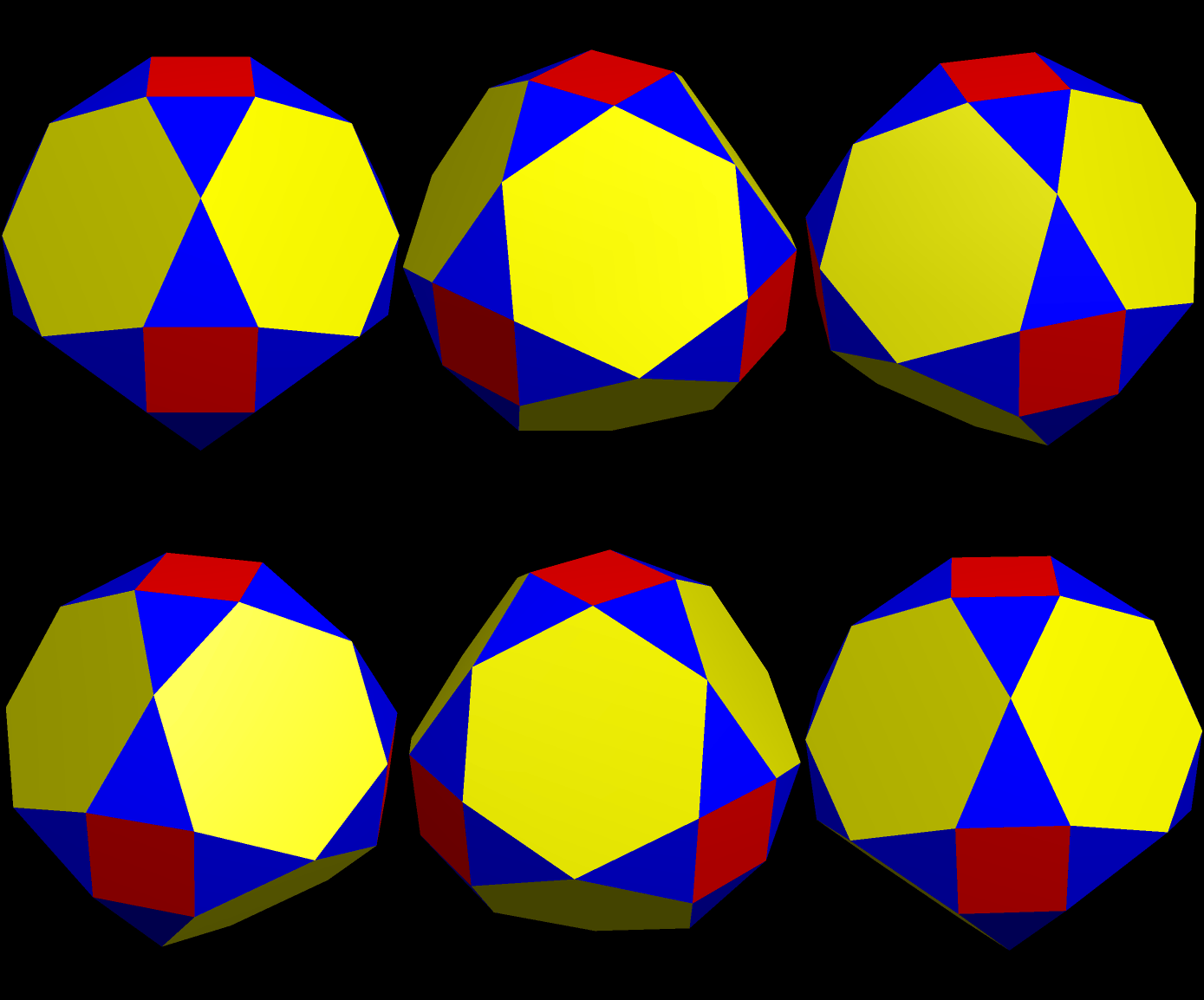
This one is a variant of the icosahedron.

icosahedron with pasties

I found this one interesting.

interesting

And this one is its dual:

interesting dual

Finally, here’s one made of kites and regular hexagons.

kites and hexagons

A 182-Faced Convex Hull, with an Explanation of that Term, As It Relates to Polyhedra

Image

A 182-Faced Convex Hull

I made this polyhedron, using Stella 4d: Polyhedron Navigator, by taking the convex hull of a different polyhedron, one not shown here. To those who don’t already know, though, that just raises a question:  what does it mean to “take the convex hull” of a polyhedron? Precisely-worded mathematical definitions of “convex hull” are easy to find, using Google and/or Wikipedia, but I have a more informal definition — one which matches the way I actually think about this operation one can perform on polyhedra.

Here’s how I picture the process: imagine a thin, spherical rubber sheet is surrounding, but not touching, the starting polyhedron. Next, start shrinking the rubber sheet. It can touch the polyhedron inside it (which might be non-convex), but it cannot penetrate any of its faces. Keep shrinking the sheet until it gets caught at points on the polyhedron inside, and then keep shrinking it further. When it starts to stretch, keep going. Stop just before the rubber sheet starts to burst from being over-stretched — and the shape of the rubber sheet, at that point, is the convex hull of the polyhedron inside it. Stretching the rubber sheet, to the limit, ensures that the convex hull will only have flat, polygonal faces — not any sort of curved surfaces.

Here’s an example — one that will end with a different convex hull than the one found at the top on this post. I’ll start with a great rhombcuboctahedron, which is also known as a great rhombicuboctahedron, as well as a truncated cuboctahedron.

Trunc Cubocta

If I take the convex hull of this great rhombcuboctahedron, the result is simply another great rhombcuboctahedron — the very thing I started with — which doesn’t explain much. Therefore, before taking the convex hull, I’m going to alter it. This can be done in many ways, of course. I’m choosing augmentation of each face with prisms, and setting the prism-height at twice the edge length of these faces. Here’s the result.

Trunc Cubocta

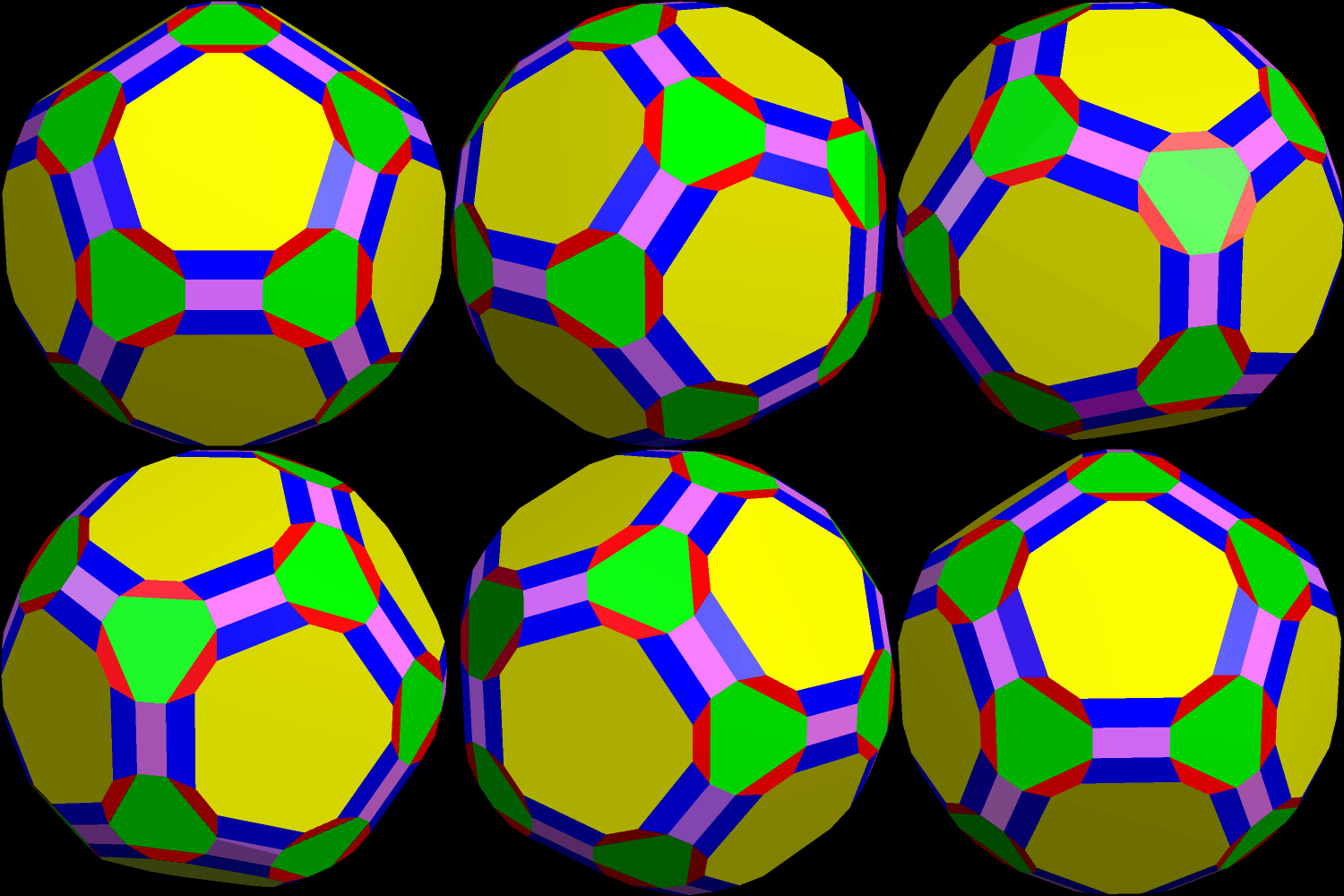
Taking the convex hull of this doesn’t return this same polyhedron, as it would have before the augmentation-with-prisms. Instead, after the “stretching of the imaginary rubber sheet,” this is the result:

Convex hull 1

In this image, the faces that are unmoved still have their original colors. There are also many new faces, of varying types, which were created in the “convex hulling” process. All of these new faces are shown in the same drab-green color.

The next step, changing the color scheme, has little (if any) mathematical significance, but it certainly does increase the attractiveness of the result — and admiration of beauty is, and always has been, a major motivating force in the millenia-old study of polyhedra. I’m choosing a color scheme which gives each face-type a separate color, and also lets the red, yellow, and dark blue keep their same colors.

Convex hull 2

If you’d like to try Stella 4d for yourself, please visit www.software3d.com/Stella.php. A free trial download is available.

The Convex Hull of the Compound of the Snub Cube and Its Dual, the Pentagonal Icositetrahedron

Image

The Convex Hull of the Compound of the Snub Cube and Its Dual, the Pentagonal Icositetrahedron

(Image created with Stella 4d — software you can try yourself at http://www.software3d.com/Stella.php.)

The Convex Hull of the Polyhedral Cluster Found in the Previous Post

Image

The Convex Hull of the Polyhedral Cluster Found in the Previous Post

Software credit: visit http://www.software3d.com/stella.php for more information on the program used to make this rotating image. A free trial download is available.