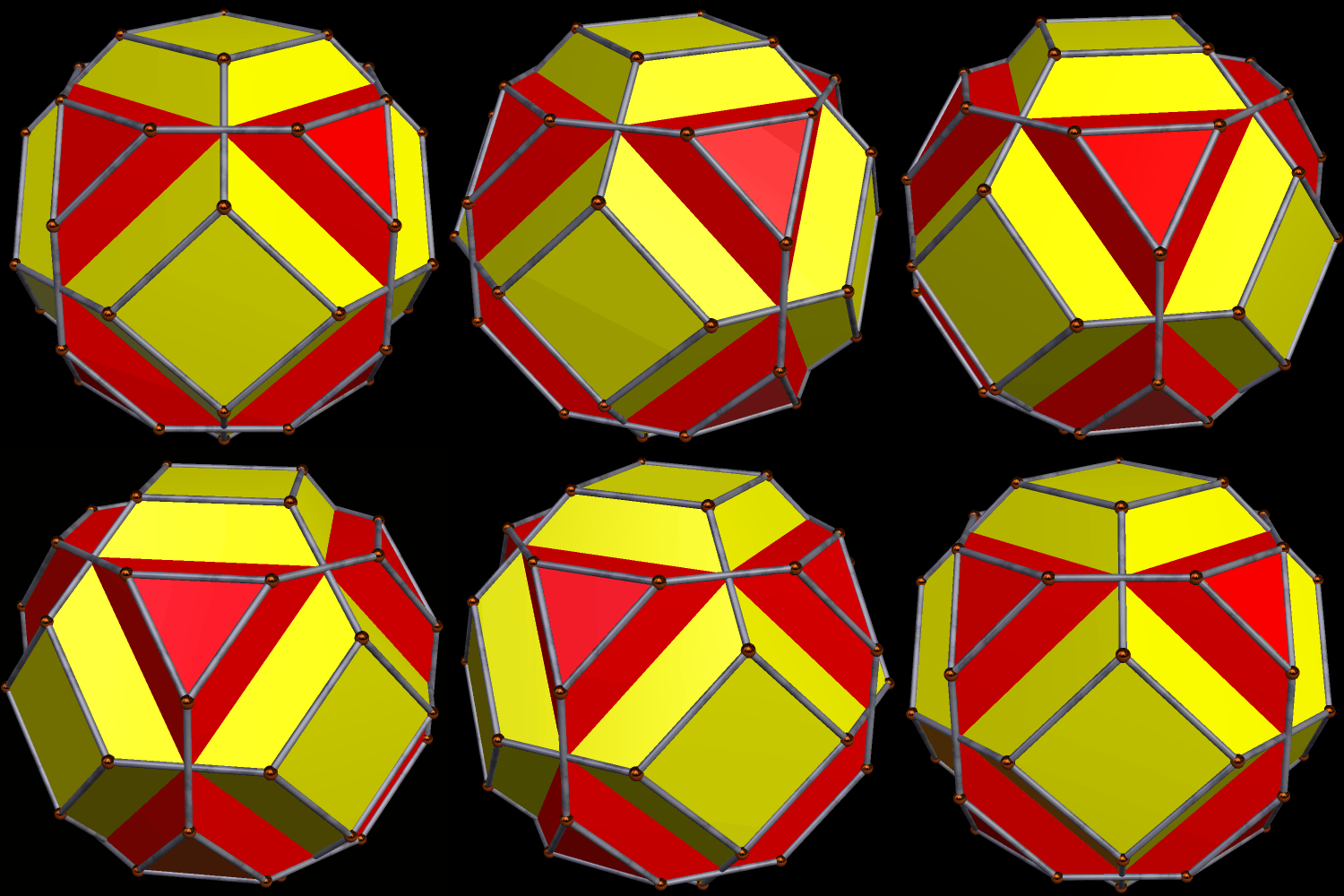
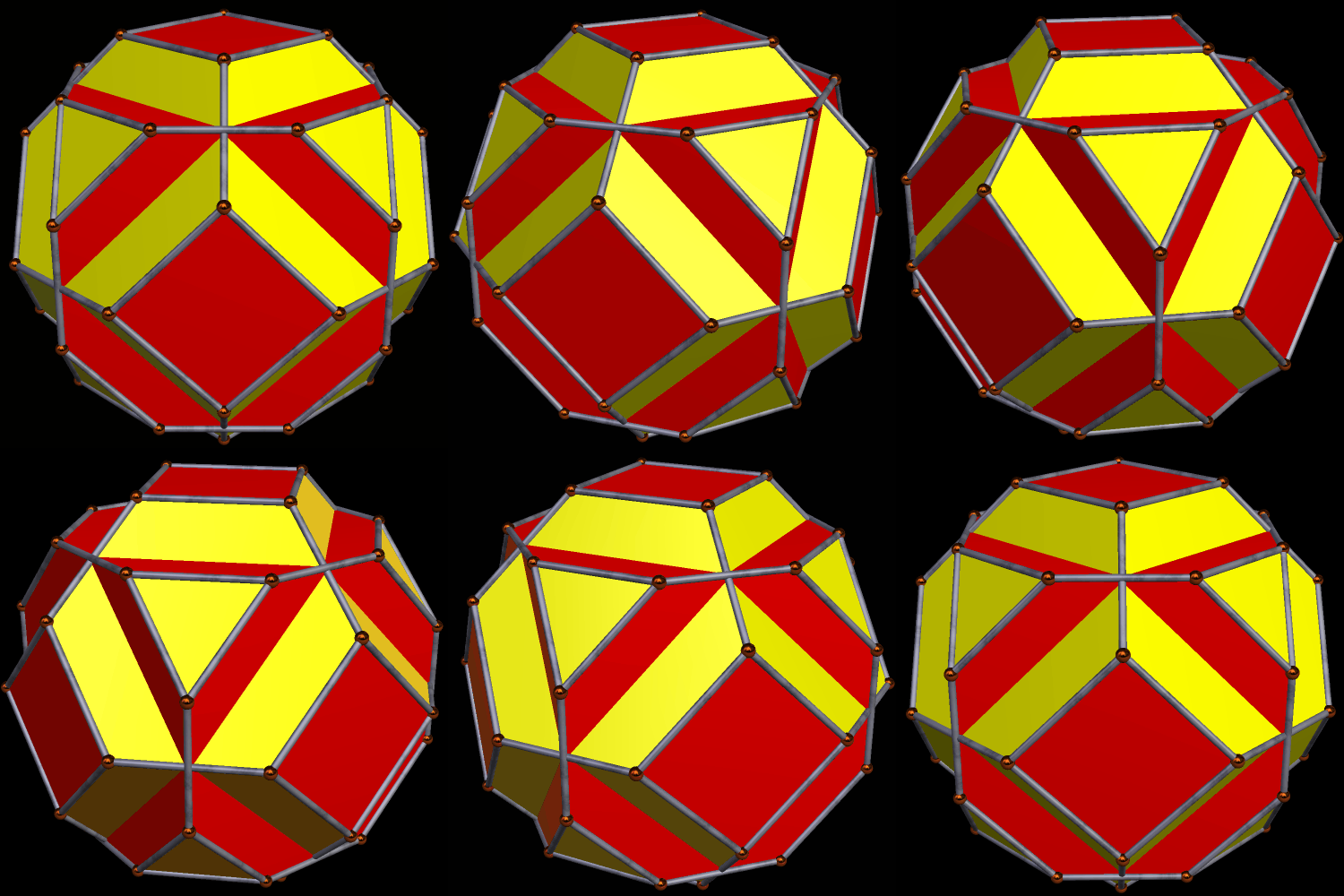
Five Views of the Compound of the Truncated Cube and the Truncated Octahedron

When I first made this compound using Stella 4d (available here), these are the colors the software automatically selected.

I wanted to find a better coloring-scheme, so I told Stella to color the model as a compound. Here’s what I got.

Next, I tried “color by face type.” This yields four colors, instead of just two.

I then tried “rainbow color mode,” with this result.

One more try (color by face, unless the faces are parallel) gave me my favorite color scheme for this compound.

Which one do you like best?

A Cube, Decorated with Icosagons and Their Diagonals

This icosagon, with its diagonals showing, first appeared here. I then used Stella 4d to make the cube. You can try Stella for yourself at this website.

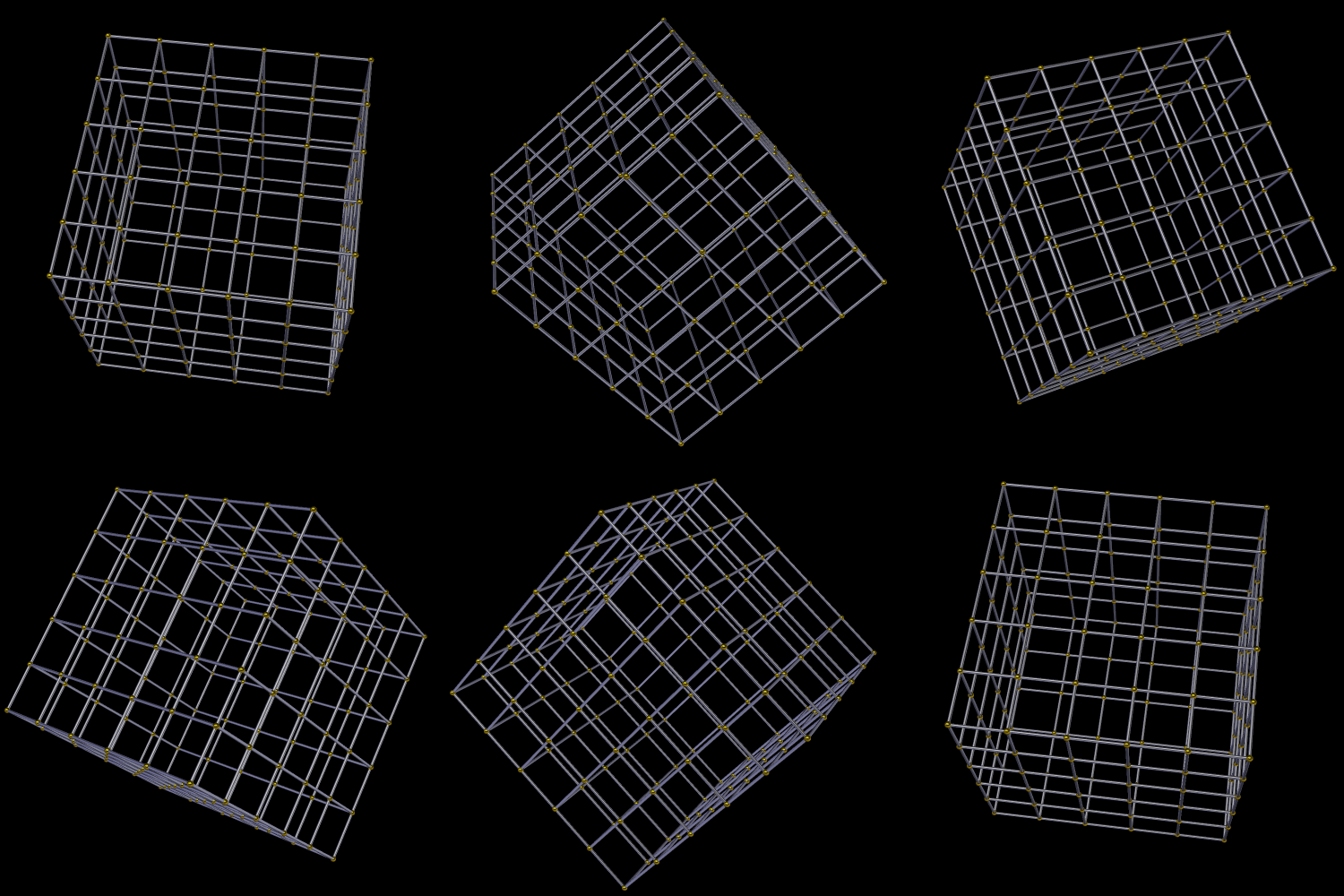
A Rotating 5x5x5 Cubic Array

If I watch this very long, optical illusions happen. I made it using a program called Stella 4d: Polyhedron Navigator, and you can download this program and try it yourself at this website.

The Compound of Ten Octahedra and Its Dual, the Compound of Ten Cubes

I stumbled upon the compound above while playing with facetings, starting with the rhombic triacontahedron. Here’s the compound’s dual.

I made these rotating models using Stella 4d, a program you can try for free at this website.

Cubes Made of Lux Blox

What is a cube? That’s a simple question, and I thought it had a simple answer . . . until I took on the project of building cubes with Lux Blox. Lux can be bought at this website, but one thing you won’t find there, or in shipments of Lux, are directions. This was a little frustrating at first, but I understand it now: the makers of Lux don’t want directions getting in the way of customers’ creativity.

A cube has six square faces. This is the six-piece Lux model based on that statement.

20200510_161402_resized

This first cube model is interesting, but it is also severely limited. Lux Blox connect at their edges, and all edges in this model are already used, joining one face to another. The model has no openings where more can be attached, and added to it.

Next, I made a cube out of Lux Blox which is open, in the sense that more Lux Blox can be attached to it. It also has an edge length of two.

20200510_161427_resized

Besides the openness of this model to new attachments, it also has another characteristic the smaller cube did not have: it can be stretched. If you take two opposite corners of this model and gently pull them away from each other, here’s what you get:

20200514_125856

Stretching a cube in this manner creates a six-faced rhombic polyhedron known as a parallelopiped.

The third cube model I’ve built of Lux Blox uses Lux Trigons in addition to the normal square-based Lux Blox.

20200510_161458_resized

In this model, the black pieces in the center are the Lux Trigons — twelve of them, occupying the positions of twelve of the twenty faces of an icosahedron. The other eight faces are where the orange triangles (or triangular prisms, if you prefer) are attached. The orange triangles mark the eight corners of a cube. This model has pyritohedral symmetry — the symmetry of a volleyball — as I hope this last picture, a close-up of this third type of cube, helps to illustrate.

20200510_161506_resized

Spectral Cubes

Stella 4d: Polyhedron Navigator has a “put models on vertices” function which I used to build this cluster of cubes. If you’d like to try this software for yourself, there is a free trial download available at http://www.software3d.com/Stella.php.

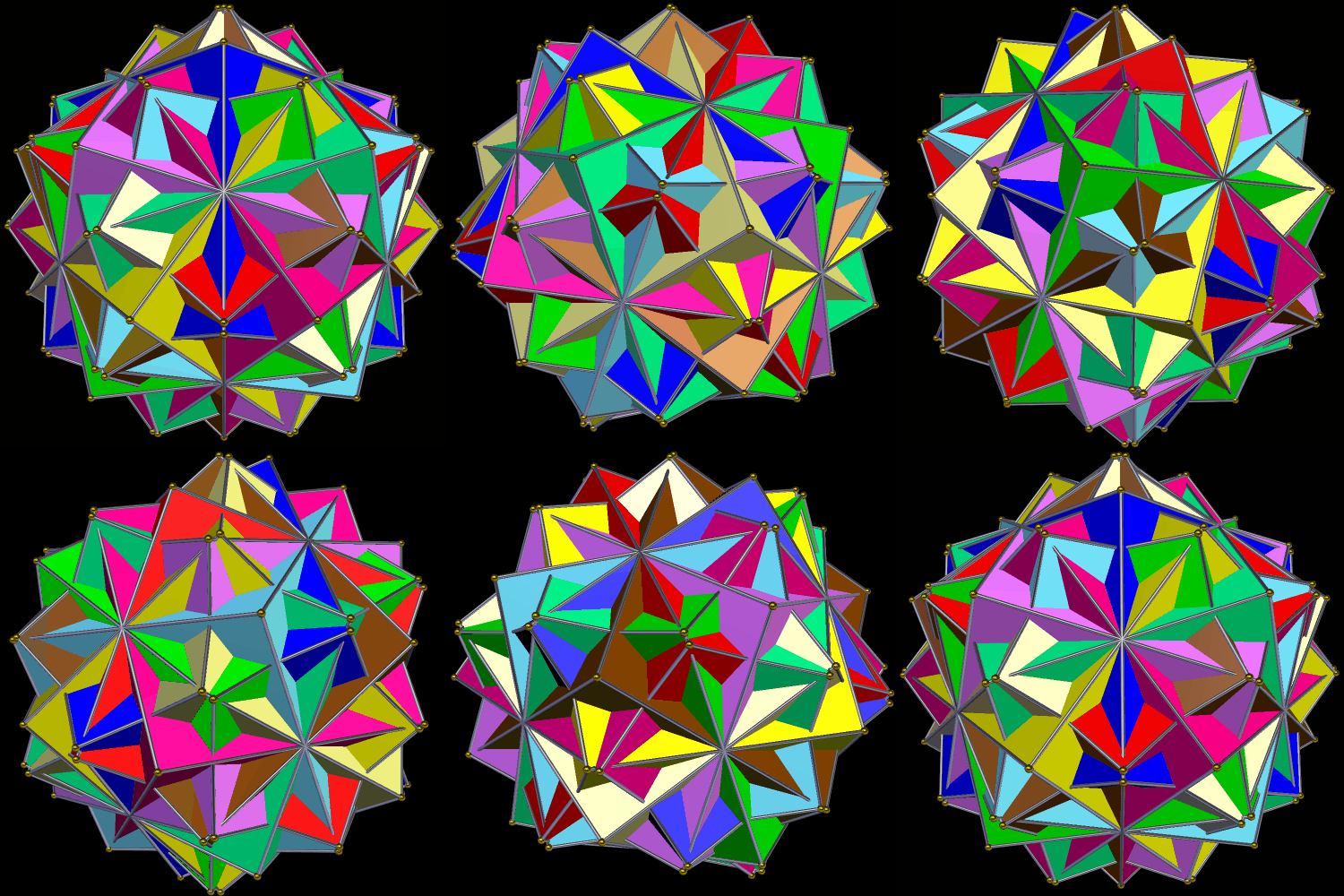
The Eleventh Stellation of the Truncated Octahedron Is an Interesting Polyhedral Compound

This compound has three parts: two tetrahedra, plus one smaller cube. I made it using Stella 4d: Polyhedron Navigator, which you can try for free at http://www.software3d.com/Stella.php.

Some Ten-Part Polyhedral Compounds

While examining different facetings of the dodecahedron, I stumbled across one which is also a compound of ten elongated octahedra.

Faceted Dodeca and compound of ten elongated octahedra.gif

Here’s what this compound looks like with the edges and vertices hidden:

Faceted Dodeca and compound of ten elongated octahedra without edges and vertices.gif

Next, I’ll put the edges and vertices back, but hide nine of the ten components of the compound. This makes it easier to see the single elongated octahedron which is still shown.

Faceted Dodeca one part of ten with edges and vertices.gif

Here’s what this elongated octahedron looks like with all those vertices and edges hidden from view.

Faceted Dodeca one part of ten.gif

I made all these polyhedral transformations using Stella 4d, a program you can try for yourself at this website. Stella includes a “measurement mode,” and, using that, I was able to determine that the short edge to long edge ratio in these elongated octahedra is 1:sqrt(2).

The next thing I wanted to try was to make the octahedra regular. Stella has a function for that, too, and here’s the result: a compound of ten regular octahedra.

compound of ten regular octahedra.gif

My last step in this polyhedral exploration was to form the dual of this solid. Since the octahedron’s dual is the cube, this dual is a compound of ten cubes.

compound of ten cubes.gif

The Cubic Rhombicosidodecahedroid

cUBIC RHOMBICOSIDODECAHEDROID

I call the polyhedron above the cubic rhombicosidodecahedroid because it combines a cube’s six squares (shown in green) with the overall appearance of a rhombicosidodecahedron. For comparison, the latter two polyhedra are shown below.

I made these rotating images using Stella 4d: Polyhedron Navigator. This program may be tried for free at http://www.software3d.com/Stella.php.

Some Tetrahedral Stellations of the Truncated Cube

I created these with Stella 4d, which you may try for free at this website. To make a given polyhedral stellation appear larger, simply click on it.