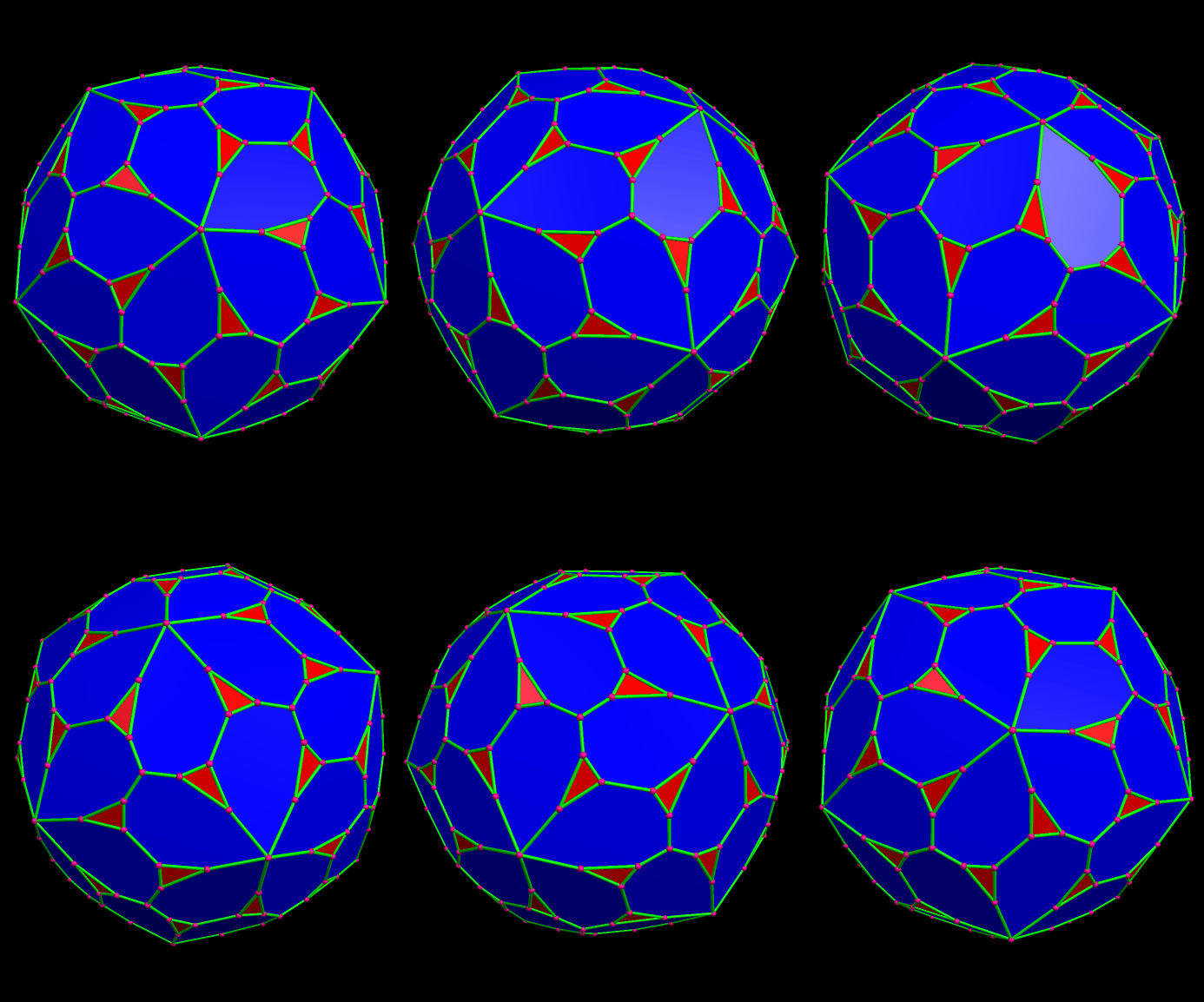
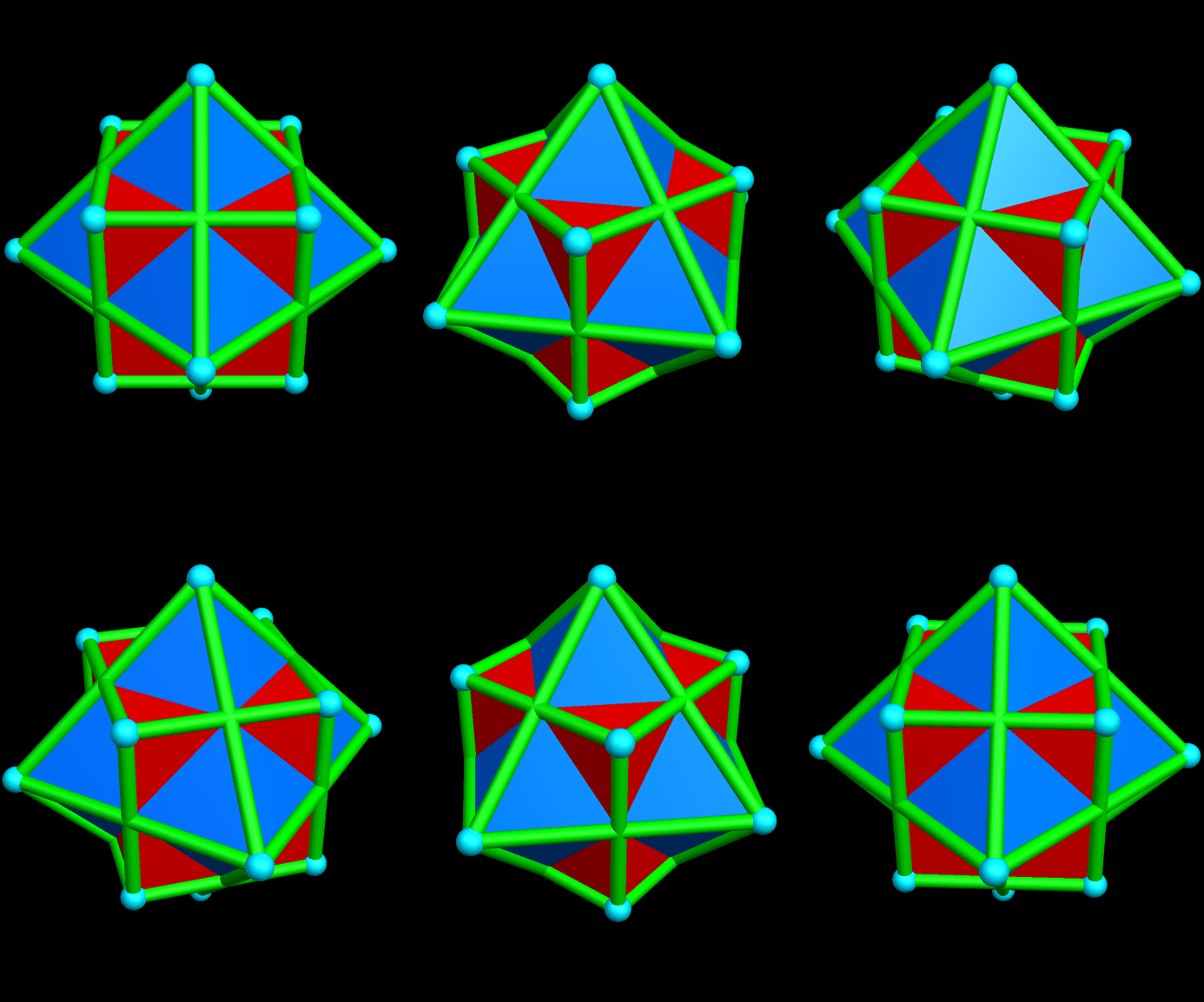
The Compound of the Truncated Dodecahedron and Its Dual, the Triakis Icosahedron

Image

The Compound of the Truncated Dodecahedron and Its Dual, the Triakis Icosahedron

I made this using Stella 4d, which you can find at http://www.software3d.com/Stella.php.

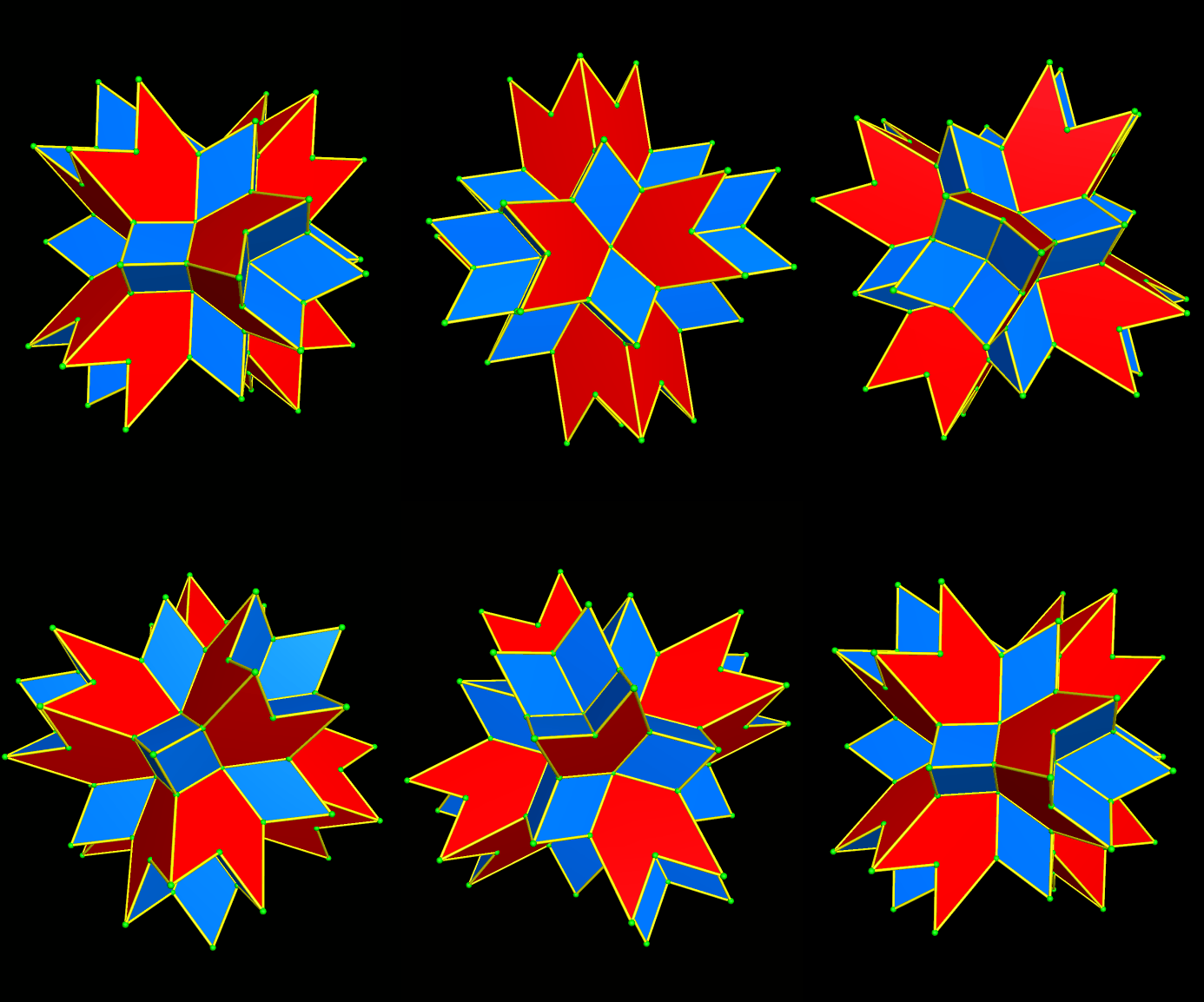
Starry Dual Polyhedron

Image

Starry Dual Polyhedron

This is the dual of the polyhedron seen as the second image in the last post on this blog. If colored differently, so that only parallel faces have the same color, it looks like this (click to enlarge):

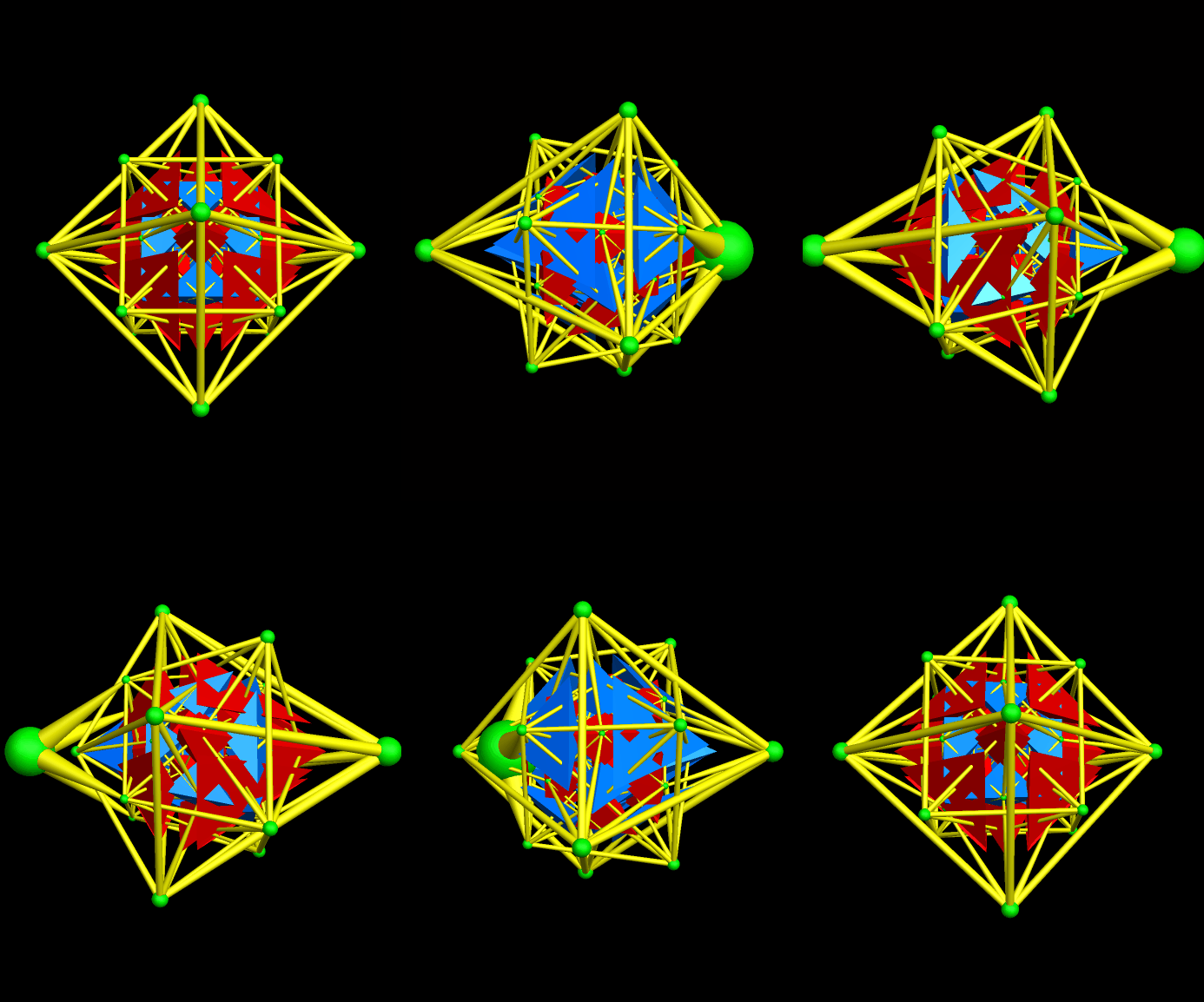
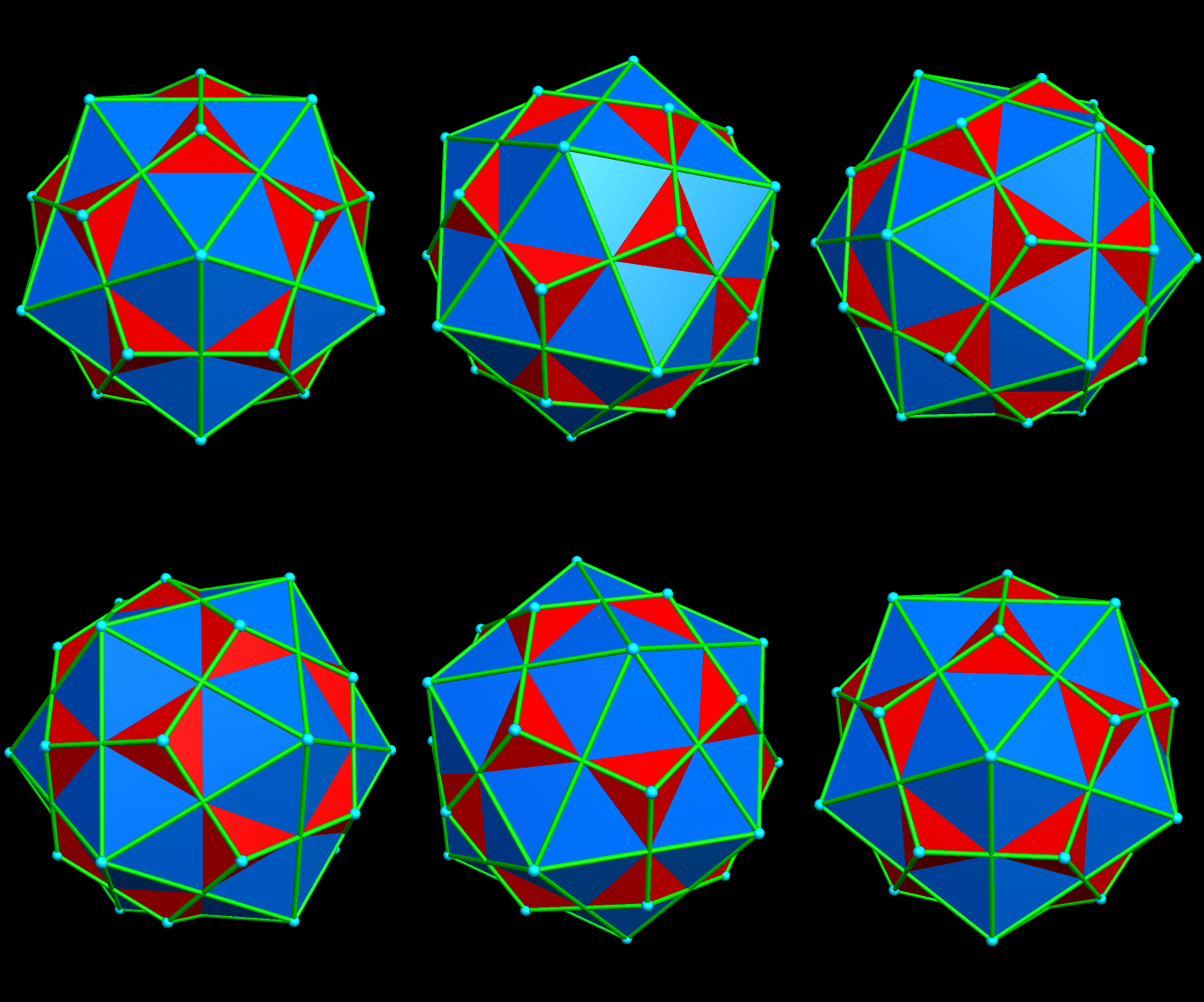
Augmented Convex hull

I used Stella 4d to make these images, and you can find that program at http://www.software3d.com/Stella.php.

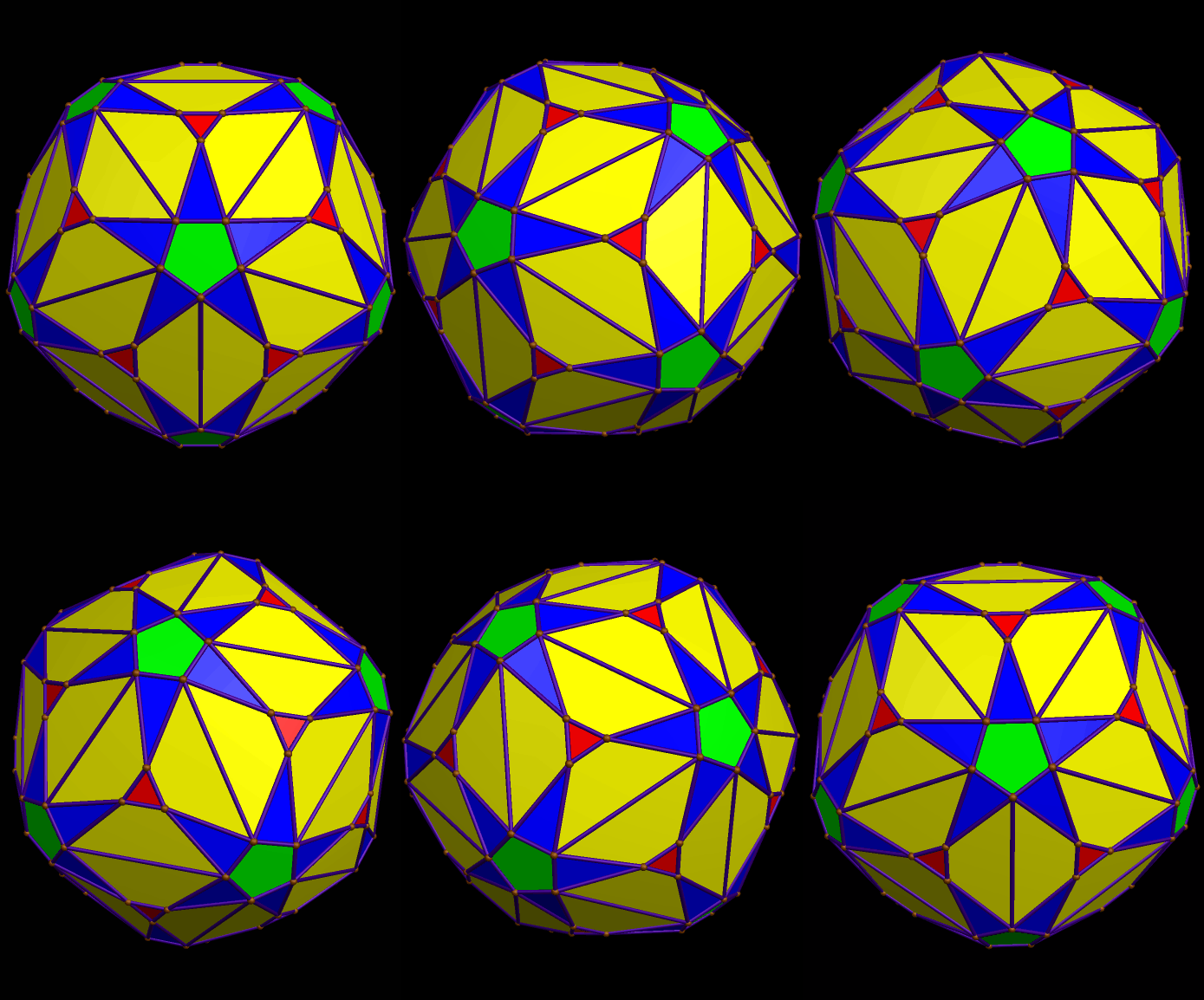
A Polyhedron Featuring Sixty Octagons and Sixty Triangles

Image

A Polyhedron Featuring Sixty Octagons and Sixty Triangles

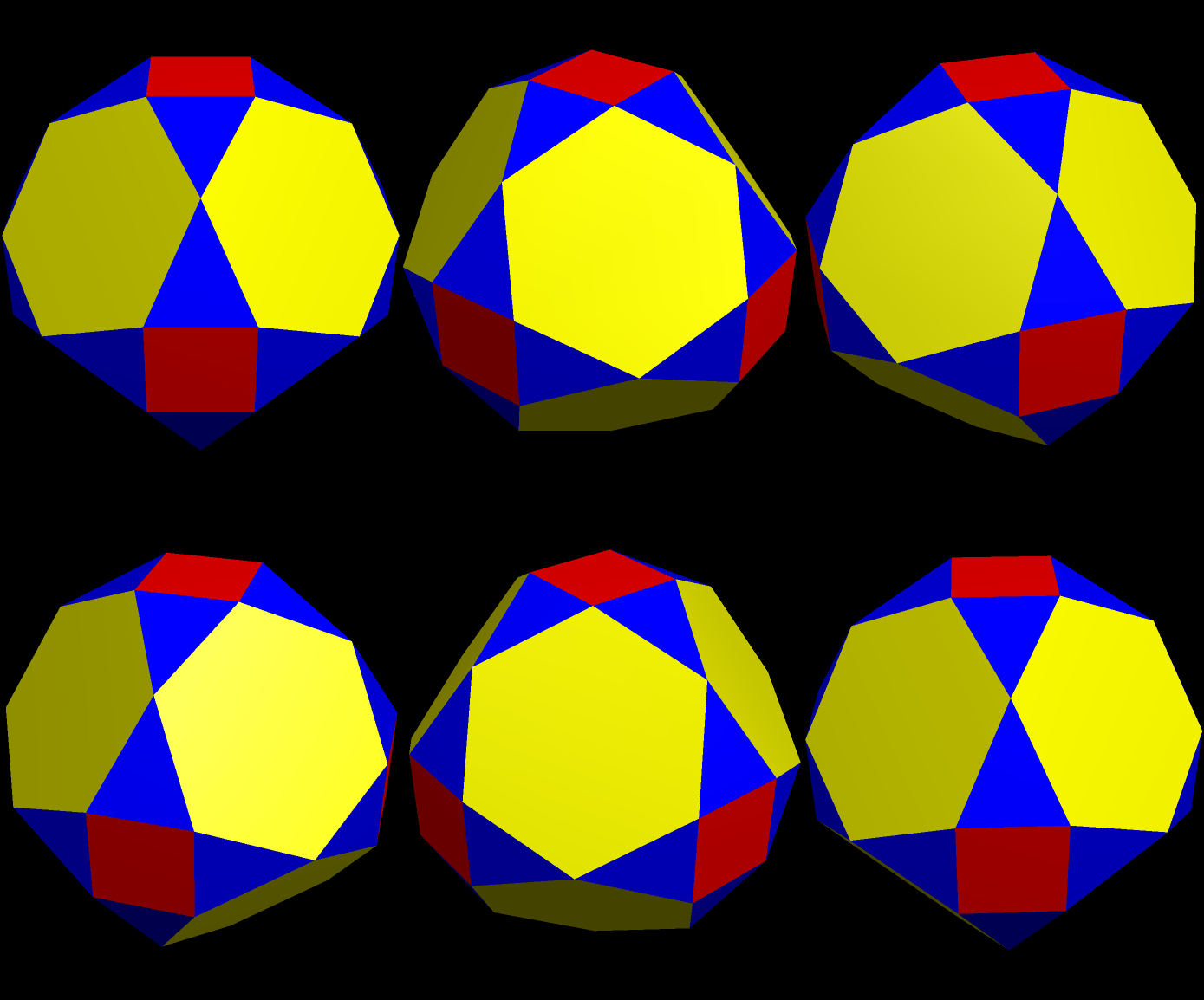
If someone had asked me if it were possible to form a symmetric polyhedra out of irregular triangles and octagons, using exactly sixty of one type each, I would have guessed that it were not possible. Why does it work here? Part of the reason is that each triangle borders three octagons, and each octagon borders three triangles — a necessary, but not sufficient, condition. This is a partial truncation of an isomorph of the pentagonal hexacontahedron, the dual of the snub dodecahedron. As such, no surprise — it’s chiral.

This was made while stumbling about in the wilderness of the infinite number of possible polyhedra using Stella 4d: Polyhedron Navigator. You can get it here: http://www.software3d.com/Stella.php.

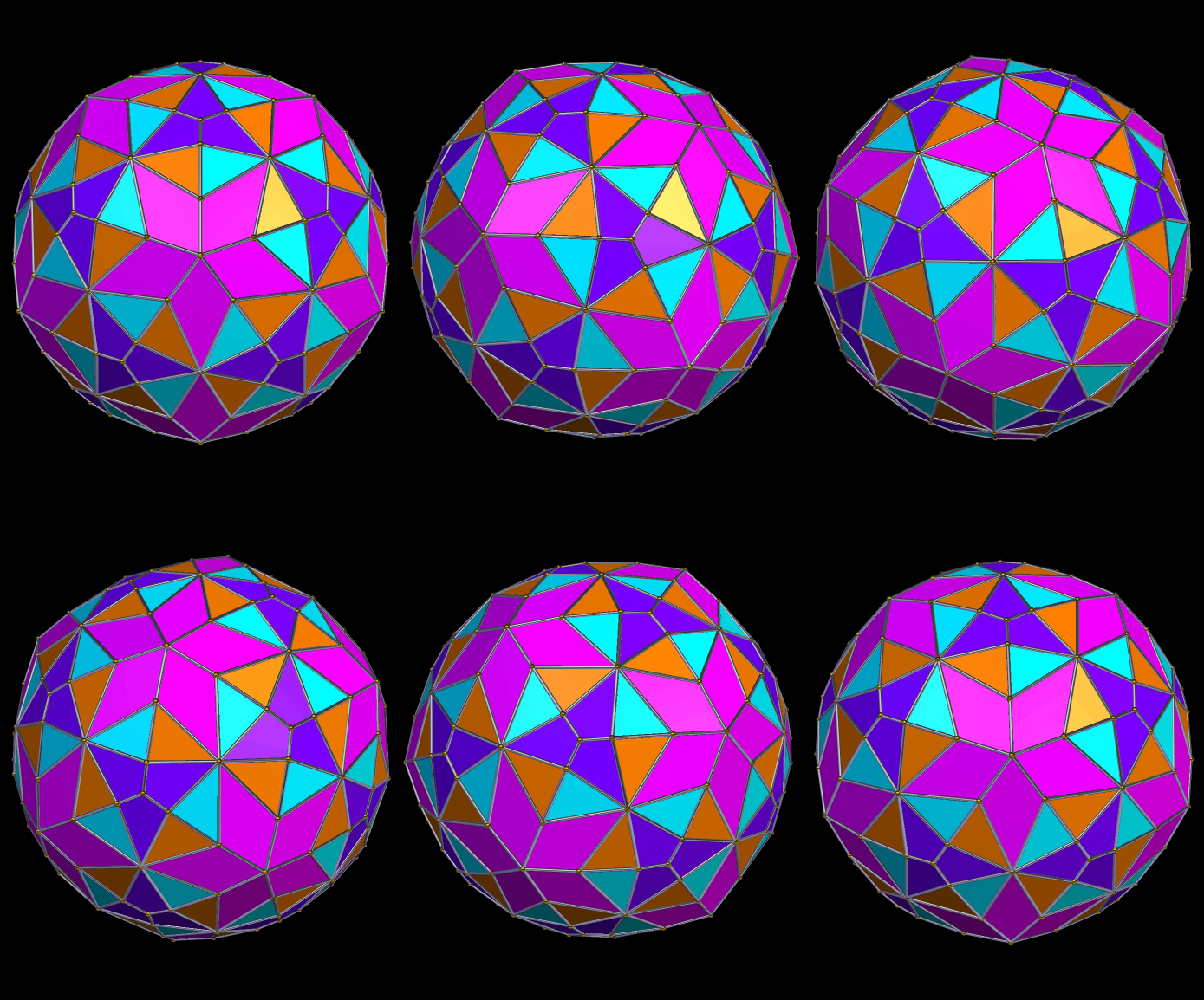
The Dual of the Enantiomorphic Pair of Polyhedra from the Last Post

Image

The Dual of the Enantiomorphic Pair of Polyhedra from the Last Post

The last post had two images, and this is the dual of the second one. I was therefore surprised when I ran into this while playing around with Stella 4d, a program which allows easy polyhedron manipulation. (See http://www.software3d.com/stella.php for free trial download.)

Why did it surprise me?

Well, isn’t a polyhedron. for one thing. It is a collection of irregular and concentric polygons which intersect, but they don’t meet at edges. This doesn’t normally happen, so it requires explanation. I figured it out pretty quickly.

I’ve been using the loosest possibly definition for “faceting,” not insisting that faces meet at each edge in pairs, and even making some faces invisible in order to see the interior structure of the “polyhedra.” Since this breaks the faceting-rules, it isn’t surprising that the dual would fail to be a true polyhedron.

That’s my guess, anyway.

The Ninth Stellation of the Cube/Octahedron Compound

Image

The Ninth Stellation of the Cube/Octahedron Compound

Software credit: I made this using Stella 4d, which you can find at http://www.software3d.com/Stella.php.

The Icositetrachoron, or 24-Cell: An Oddball In Hyperspace

Image

The Icositetrachoron, or 24-Cell:  An Oddball In Hyperspace

In three dimensions, there are five regular, convex polyhedra. However, in hyperspace — that is, four dimensions — there are, strangely, six.

The five Platonic solids have analogs among these six convex polychora, and then there’s one left over — the oddball among the regular, convex polychora. It’s the figure you see above, rotating in hyperspace: the 24-cell, also known as the icositetrachoron. Its twenty-four cells are octahedra.

Like the simplest regular convex polychoron, the 5-cell (analogous to the tetrahedron), the 24-cell is self-dual. No matter how many dimensions you are dealing with, it is always possible to make a compound of any polytope and its dual. Here, then, is the compound of two 24-cells (which may be enlarged by clicking on it):

4-Ico, 24-cell, Icositetrachoron with dual

Both of these moving pictures were generated using software called Stella 4d:  Polyhedron Navigator. You can buy it, or try a free trial version, right here:  http://www.software3d.com/Stella.php.

The Hyperspace Analog of the Dodecahedron/Icosahedron Compound

Image

The Hyperspace Analog of the Dodecahedron/Icosahedron Compound

The dodecahedron and the icosahedron are dual to each other, and can be combined to make this well-known compound.

Icosa

In hyperspace, the analog to the dodecahedron is the hyperdodecahedron, also known as the 120-cell, as well as the hecatonicosachoron. Its dual is the 600-cell, or hexacosichoron, made of 600 tetrahedral cells. The image at the top is the compound of these two polychora, rotating in hyperspace.

These images were made using Stella 4d, available at http://www.software3d.com/Stella.php.

The Hyperspace Analog of the Cube/Octahedron Compound

Image

The Hyperspace Analog of the Cube/Octahedron Compound

The cube and the octahedron are dual to each other, and can be combined to make this well-known compound (below; can be enlarged with a click).

Octa

In hyperspace, the analog to the cube is the tesseract, also known the 8-cell, the octachoron, and the hypercube. Its dual is the 16-cell, or hexadecachoron, made of 16 tetrahedral cells. The image at the top is the compound of these two polychora, rotating in hyperspace.

These images were made using Stella 4d, available at http://www.software3d.com/Stella.php.

Fifteen Interesting Convex Hulls

Image

Some Interesting Convex Hulls, and Duals of Convex Hulls

Each of the smaller pictures below may be enlarged by clicking on them.

dual of 182face which herself has 240 faces

All of these images were produced using Stella 4d, which you may try or buy at http://www.software3d.com/Stella.php.

Dual of Convex hull

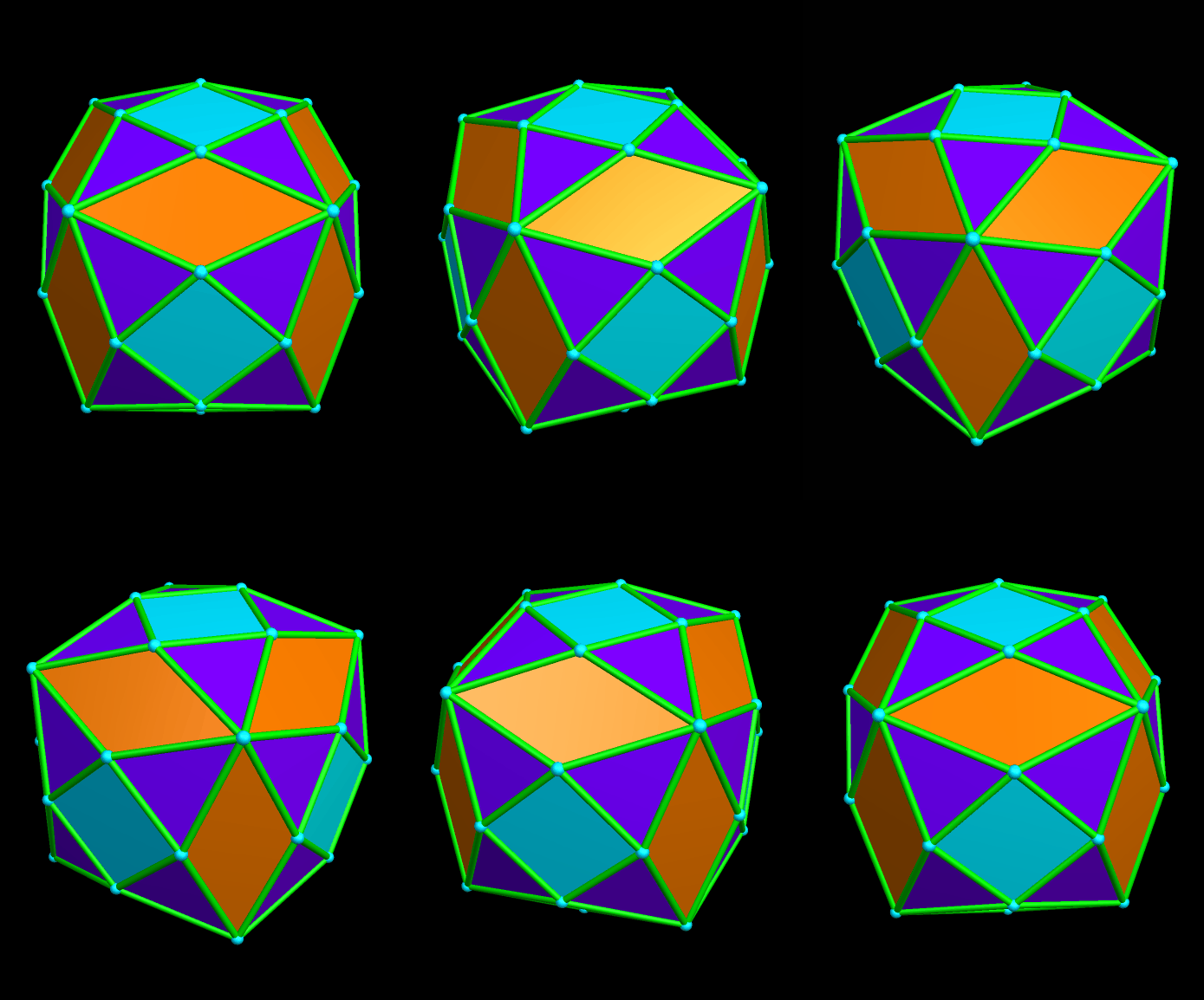
This one is a variant of the icosidodecahedron.

cool Convex hull

This one is based on the rhombcuboctahedron.

Convex hu3

This one is made of squares, rhombi, and irregular pentagons.

Dual of Convex hull2

This one is composed entirely of pentagons and hexagons, none of which are regular.

Dual of Convex hull X

This one has faces which include squares, rhombi, and isosceles triangles.

Faceted Dual

In this one, the hexagons and squares are regular. Only the isosceles triangles are irregular.

h&o&it

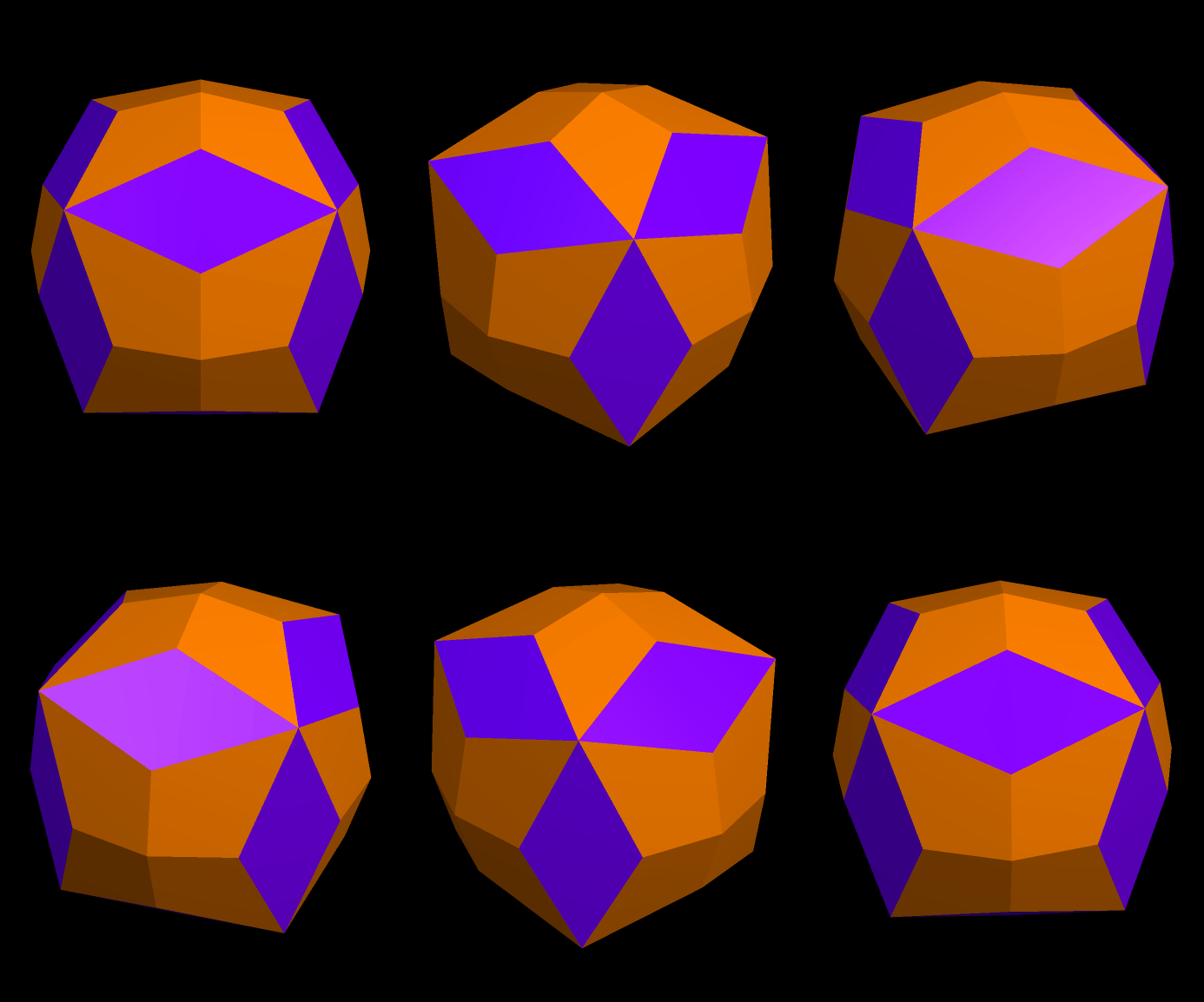
This is the dual of the last one shown here. Its faces are all either kites or rhombi.

h&o&it's dual made of kites and rhombi

I hoped to make this one into a near miss to the Johnson solids, but the octagons of both types, especially, are too far from regularity to get that to work. The only faces which are regular are the green triangles.

hmmm

This one is a variant of the icosahedron.

icosahedron with pasties

I found this one interesting.

interesting

And this one is its dual:

interesting dual

Finally, here’s one made of kites and regular hexagons.

kites and hexagons

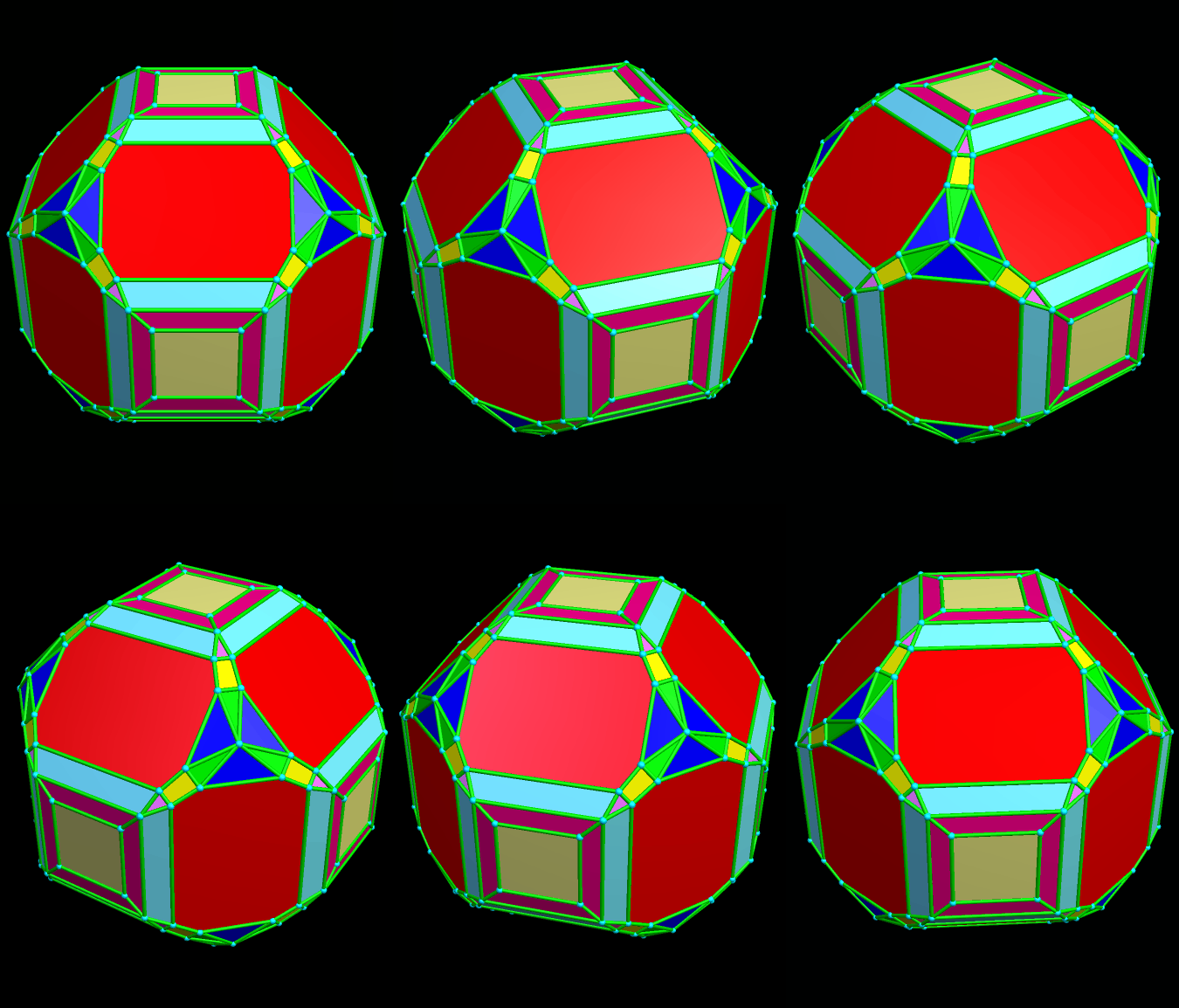
The Dual of a Rhombcuboctahedral Cluster of Great Rhombcuboctahedra

Image

Two Duals of Clusters of Great Rhombcuboctahedra

This is the dual of the one polyhedral cluster found here which has more than one color-scheme shown: https://robertlovespi.wordpress.com/2014/05/29/the-great-rhombcuboctahedron-as-a-building-block/

It’s the dual of a rhombcuboctahedron made of great rhombcuboctahedra, and was created using software called Stella 4d:  Polyhedron Navigator. This software may be purchased at http://www.software3d.com/Stella.php — and there is a free trial version available to download there, as well.