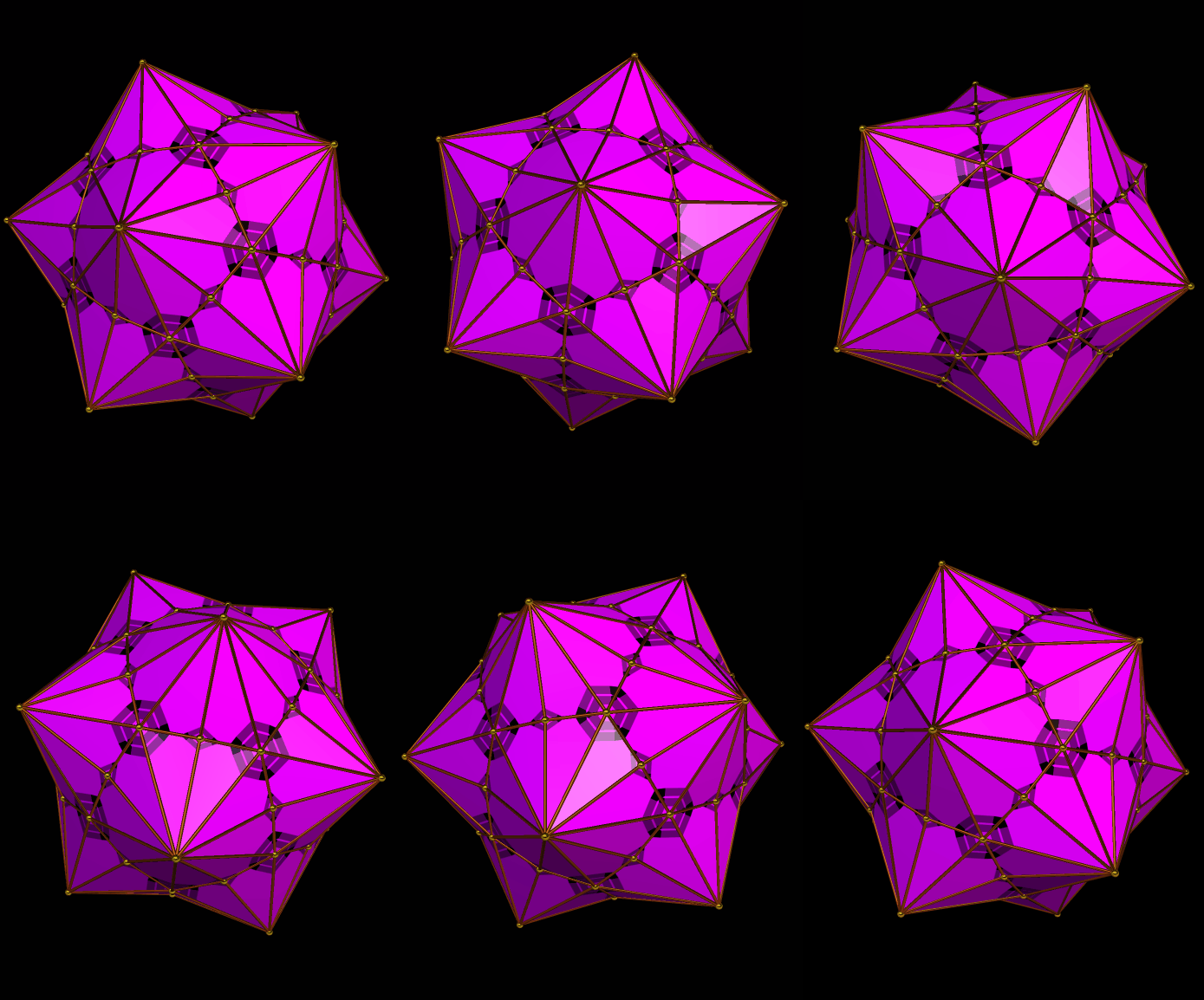
A Polyhedral Journey, Starting With the Truncated Tetrahedron

Here’s the truncated tetrahedron. It is the simplest of the Archimedean solids.

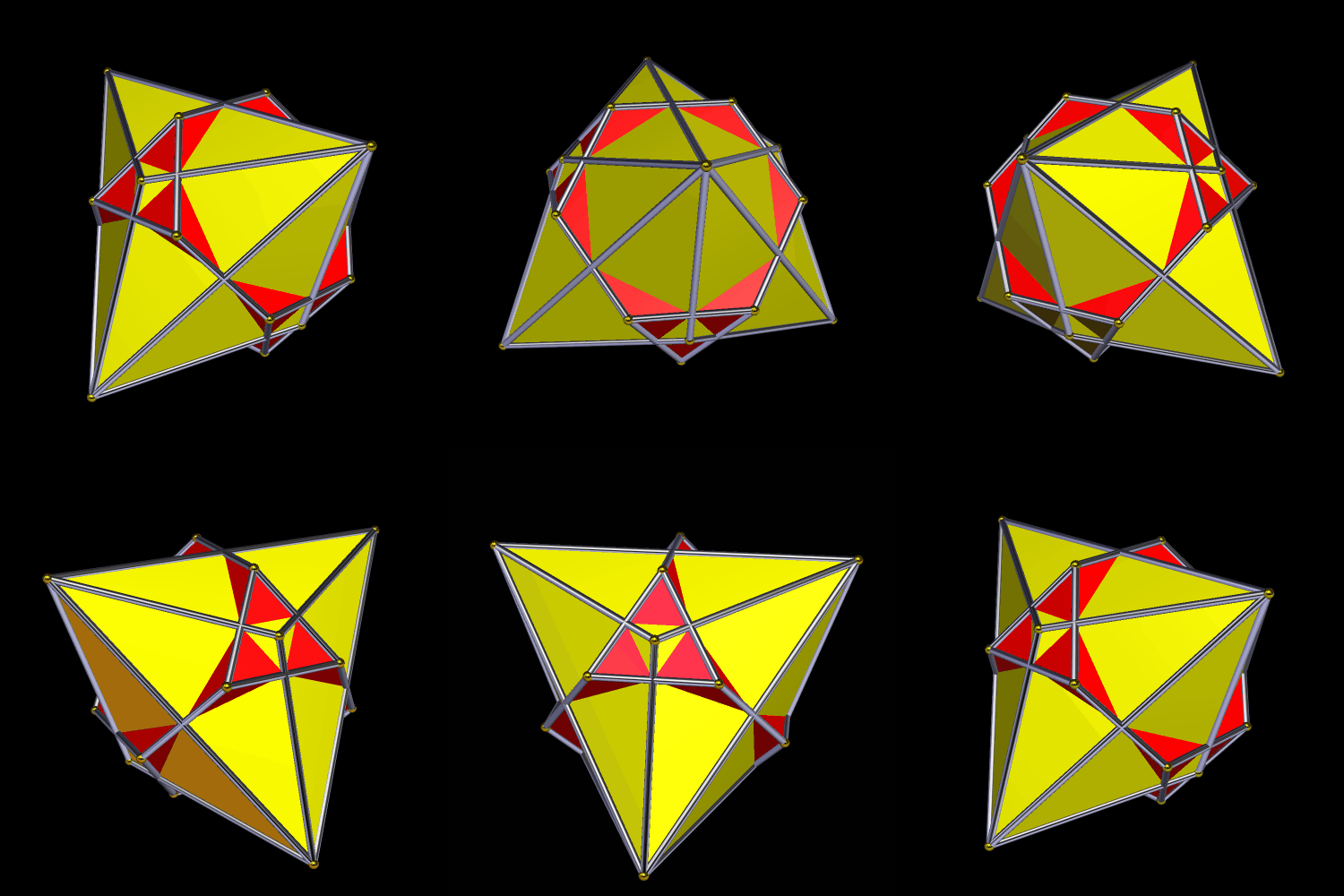
I decided to “take a walk” with this polyhedron. First, I used Stella 4d (available here) to make the compound of this solid and its dual, the Catalan solid named the triakis tetrahedron.
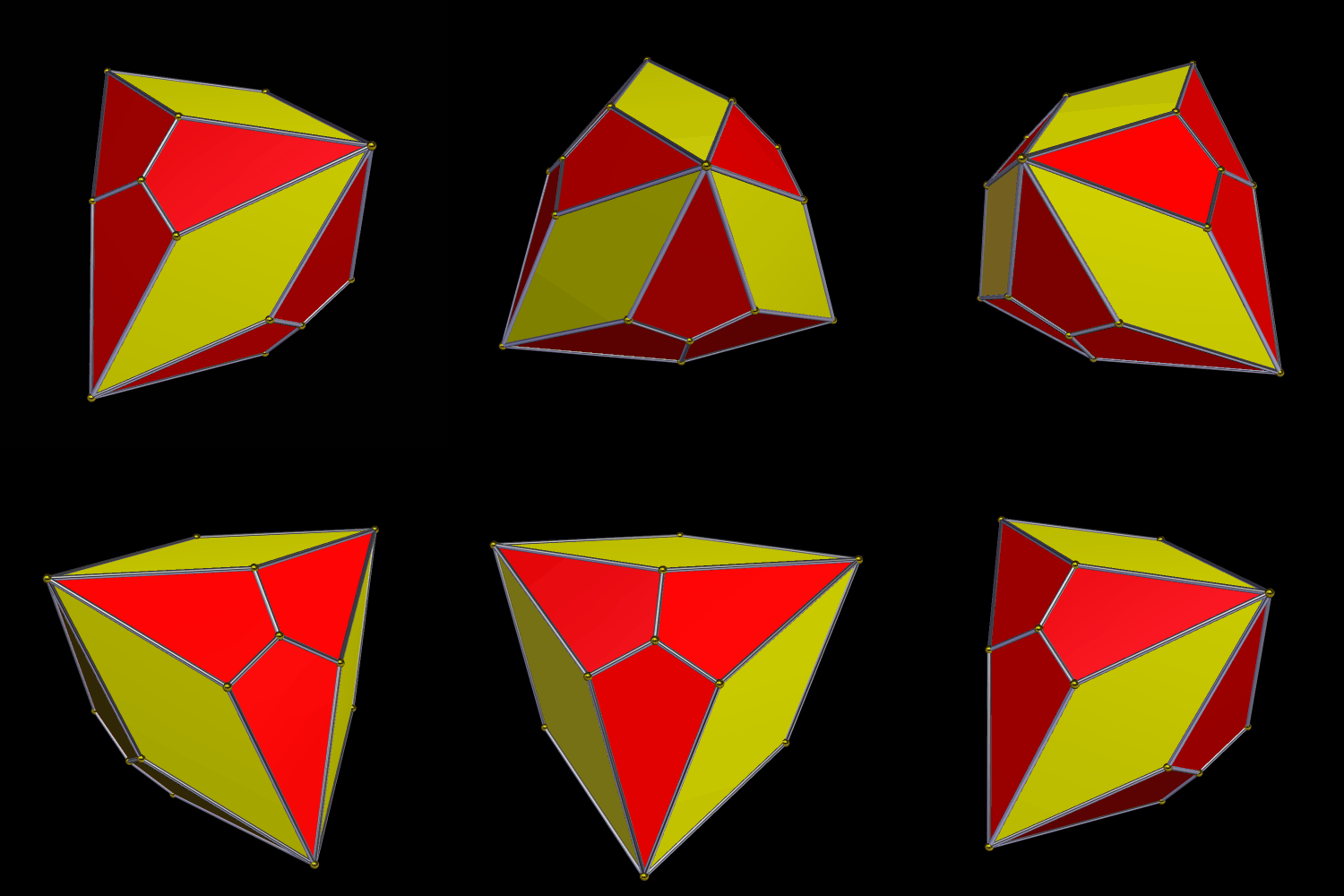
Next, also using Stella (as I’m doing throughout this polyhedral journey), I formed the convex hull of this polyhedron — a solid made of kites and rhombi.

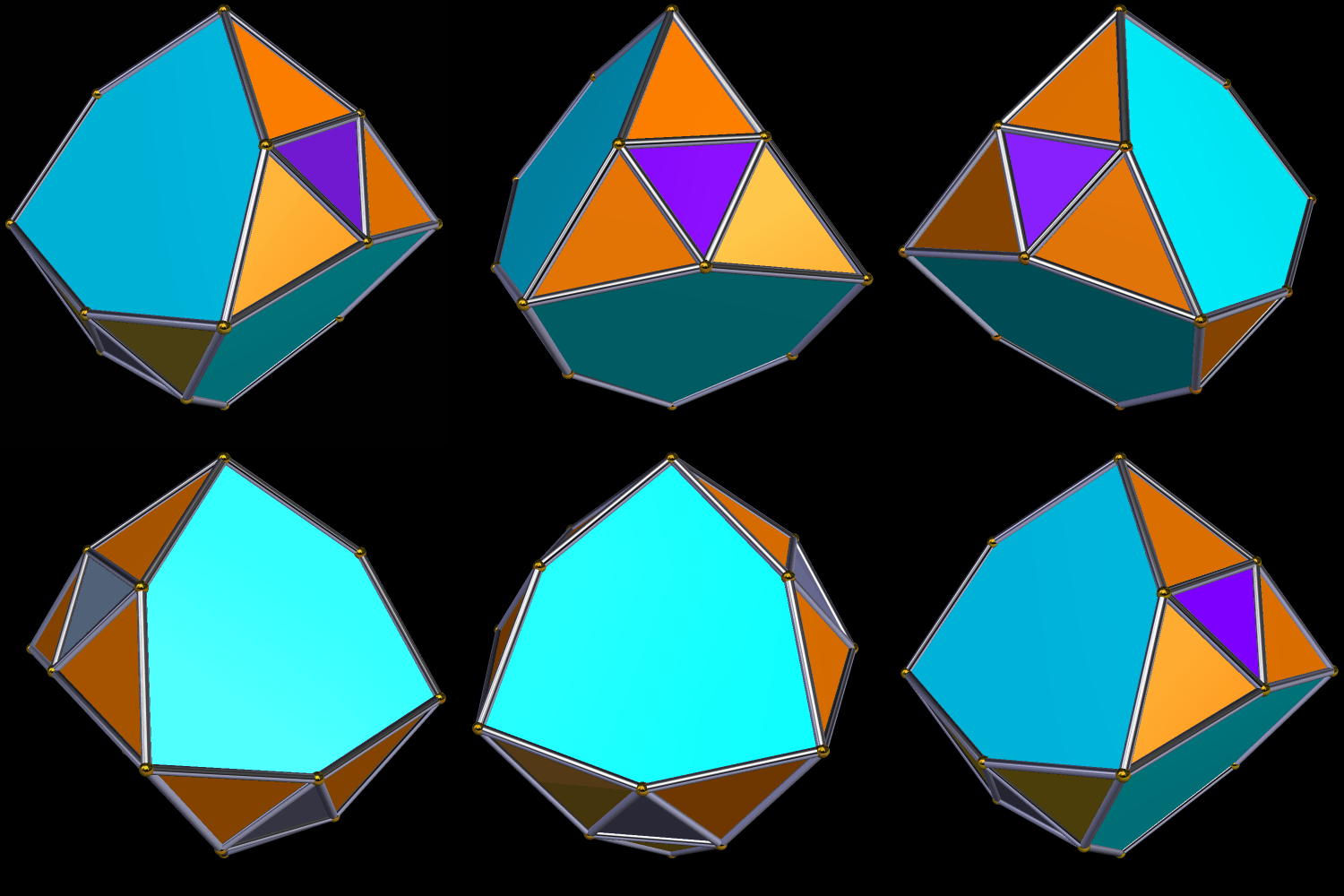
For the next polyehdron on this journey, I formed the dual of this convex hull. This solid is a symmetrohedron, featuring four regular hexagons, four equillateral triangles, and twelve isosceles triangles.

Next, I used a function of this program called “try to make faces regular.” Some this function works, and sometimes it doesn’t, if it isn’t mathematically possible — as it the case here, where the only thing that remained regular was the equilateral triangles. The hexagons in the resulting solid are equilateral, but not equiangular.
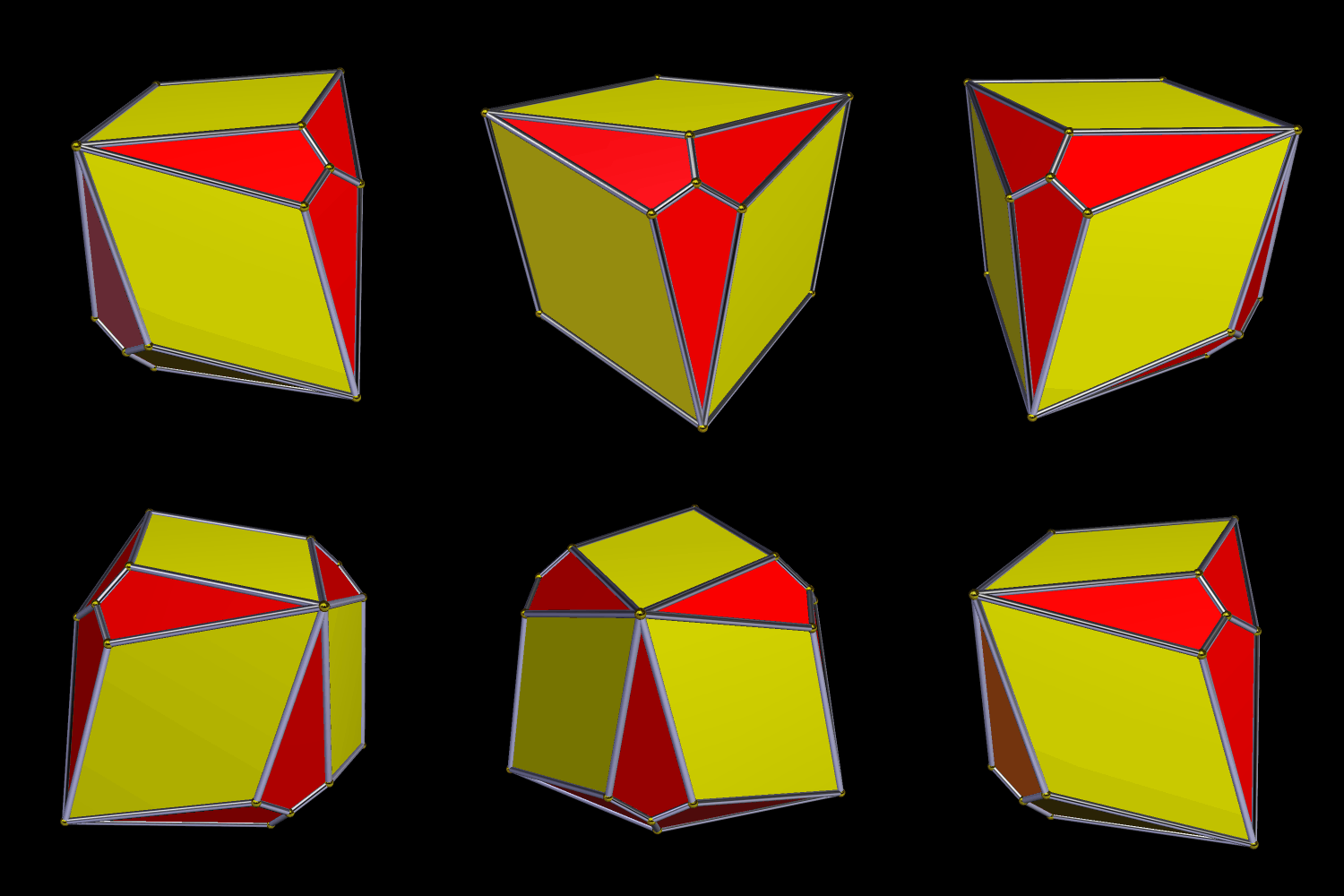
The next thing I did was to examine the dual of this latest polyhedron — another solid made of kites and rhombi, but with broader rhombi and narrower kites.
I then started stellating this solid. The 16th stellation was interesting, so I made a virtual model of it.
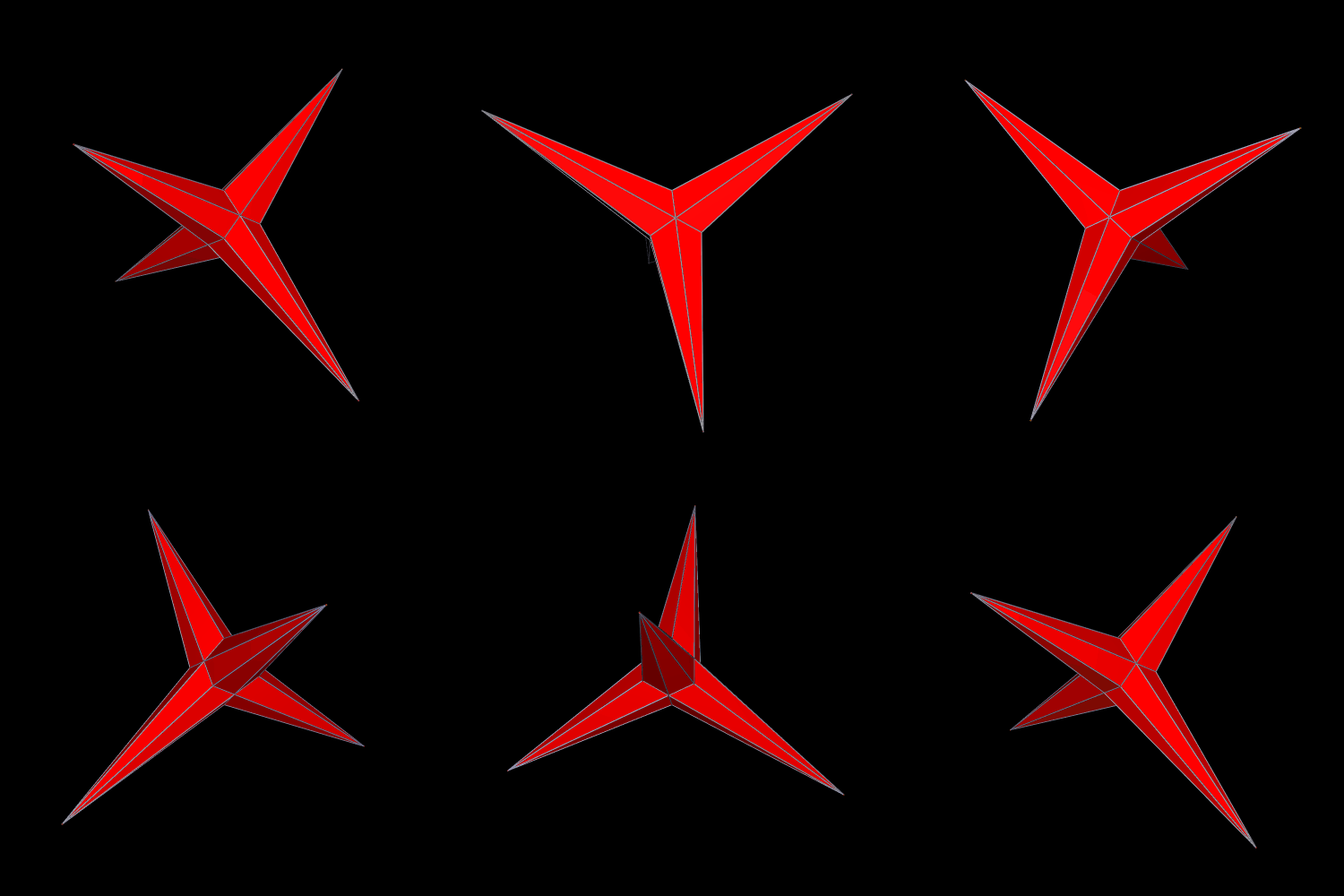
Stellating this twice more formed the 18th stellation, which turned out to be a compound of the cube and a “squished” version of the rhombic dodecahedron. This is when I decided that this particular polyhedral journey had come to an end.
Eight Kite-Rhombus Solids, Plus Five All-Kite Polyhedra — the Convex Hulls of the Thirteen Archimedean-Catalan Compounds

In a kite-rhombus solid, or KRS, all faces are either kites or rhombi, and there are at least some of both of these quadrilateral-types as faces. I have found eight such polyhedra, all of which are formed by creating the convex hull of different Archimedean-Catalan base-dual compounds. Not all Archimedean-Catalan compounds produce kite-rhombus solids, but one of the eight that does is derived from the truncated dodecahedron, as explained below.

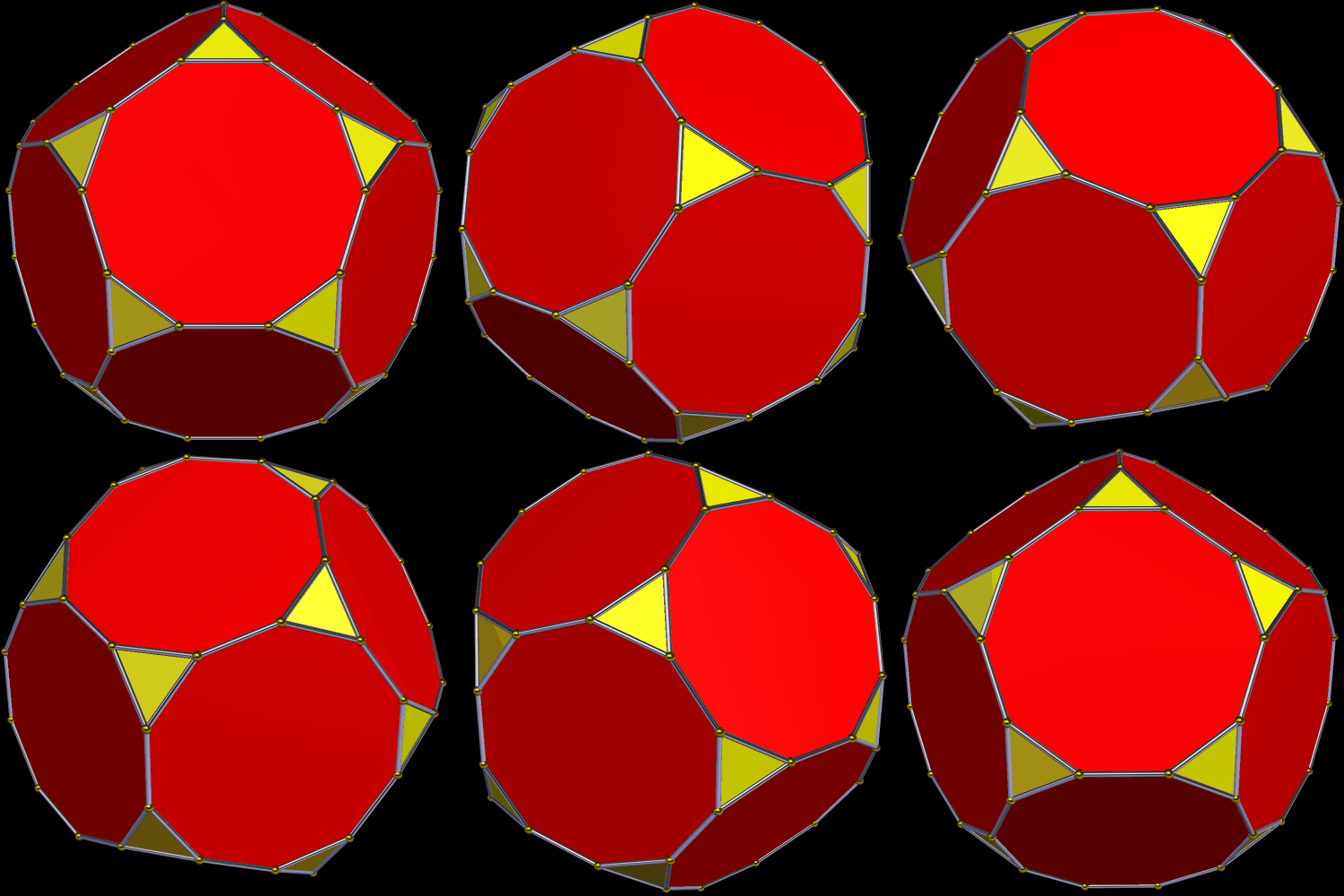
Trunc Dodeca

The next step is to create the compound of this solid and its dual, the triakis icosahedron. In the image below, this dual is the blue polyhedron.

Trunc Dodeca dual the triakis icosahedron

The convex hull of this compound, below, I’m simply calling “the KRS derived from the truncated dodecahedron,” until and unless someone invents a better name for it.

KR solid based on the truncated dodecahedron

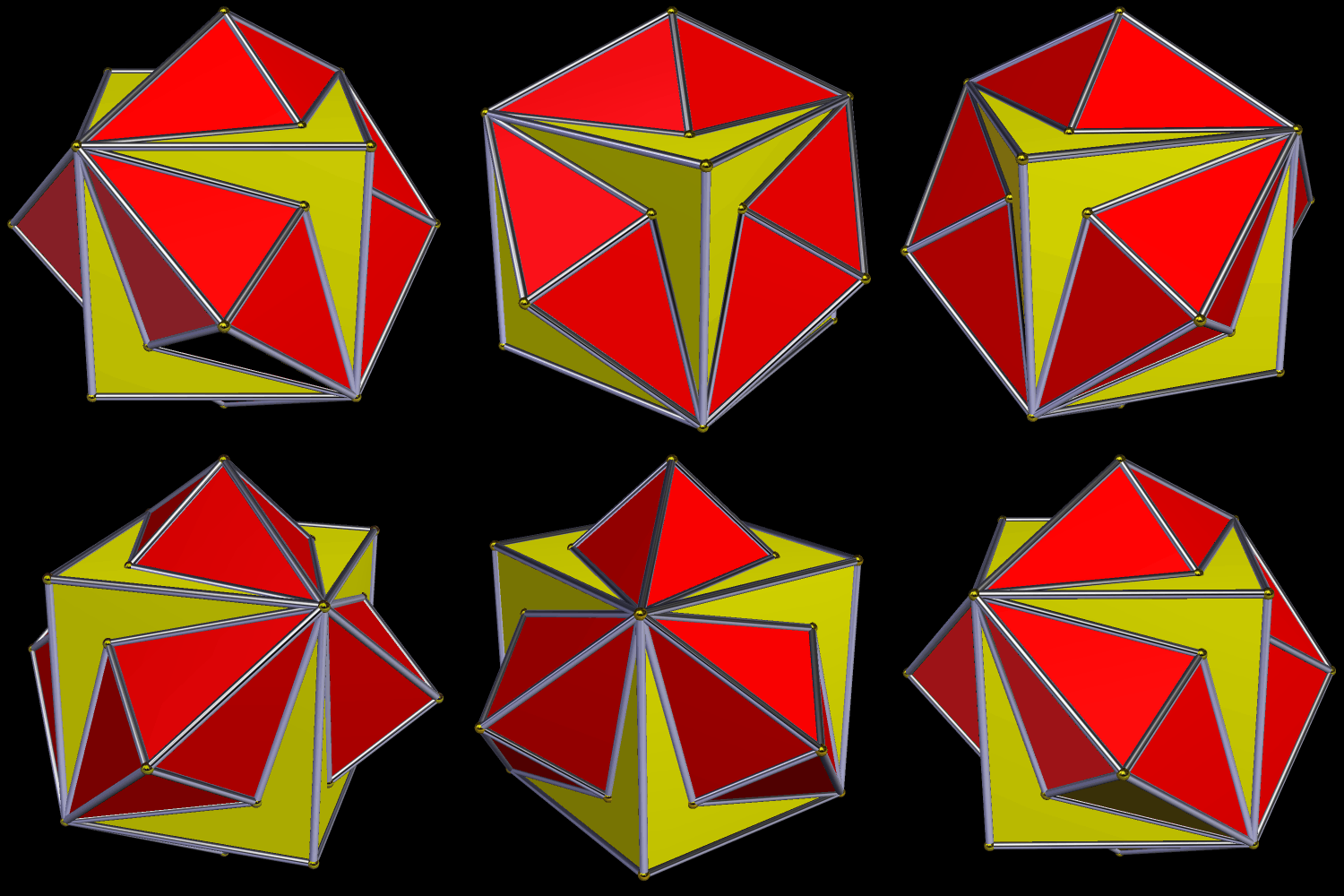
The next KRS shown is derived, in the same manner, from the truncated tetrahedron.

KR solid based on the truncated tetrahedron

Here is the KRS derived from the truncated cube.

KR solid based on the truncated cube

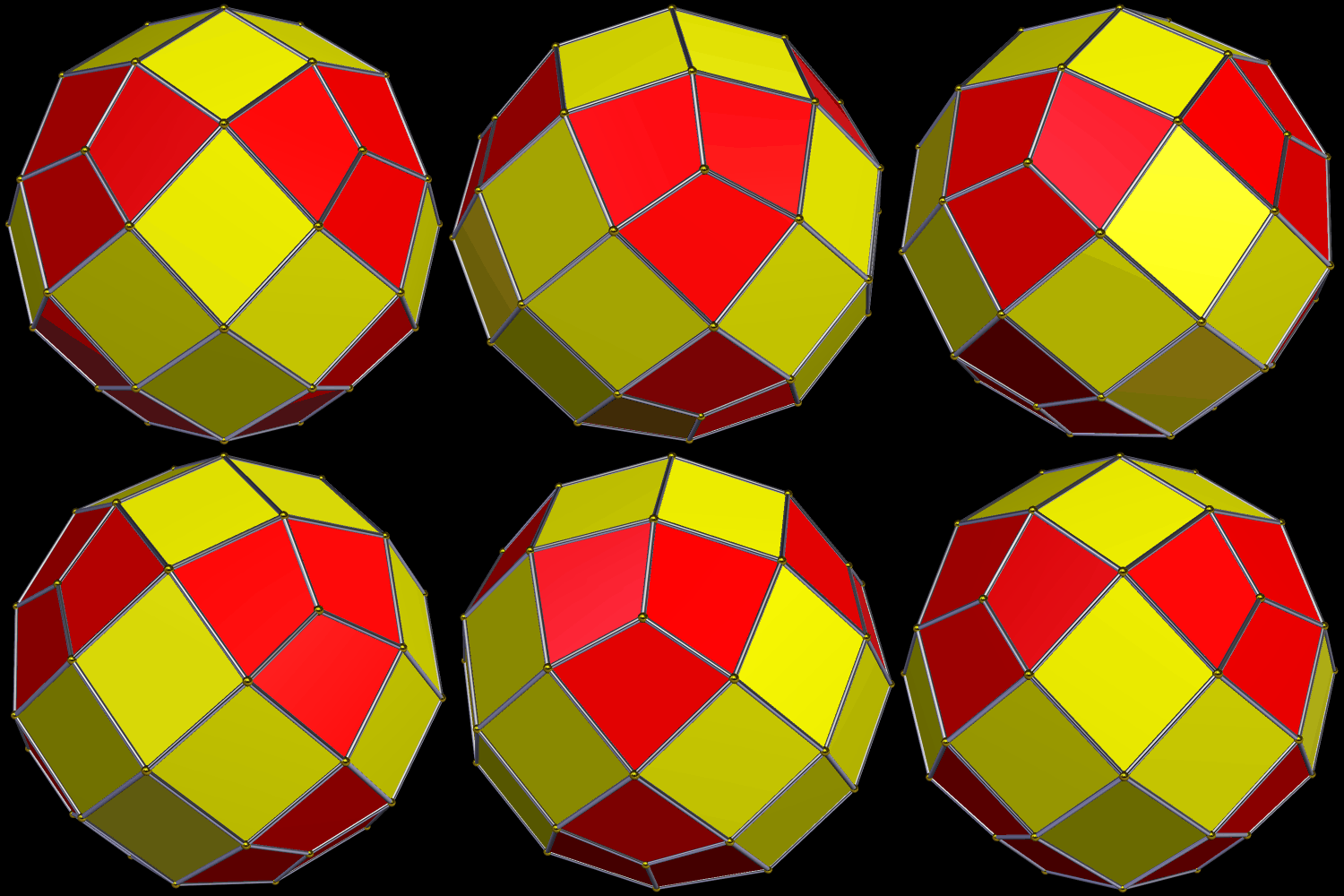
The truncated icosahedron is the “seed” from which the next KRS shown is derived. This KRS is a “stretched” form of a zonohedron called the rhombic enneacontahedron.

KR solid based on the truncated icosahedron

Another of these kite-rhombus solids, shown below, is based on the truncated octahedron.

KR solid based on the truncated octahedron

The next KRS shown is based on the rhombicuboctahedron.

KR solid derived from the rhombcuboctahedron

Two of the Archimedeans are chiral, and they both produce chiral kite-rhombus solids. This one is derived from the snub cube.

KR solid based on the snube cube

Finally, to complete this set of eight, here is the KRS based on the snub dodecahedron.

KR solid based on the snub dodecahedron

You may be wondering what happens when this same process is applied to the other five Archimedean solids. The answer is that all-kite polyhedra are produced; they have no rhombic faces. Two are “stretched” forms of Catalan solids, and are derived from the cuboctahedron and the icosidodecahedron:

If this procedure is applied to the rhombicosidodecahedron, the result is an all-kite polyhedron with two different face-types, as seen below.

all kited based on the RID

The two remaining Archimedean solids are the great rhombicuboctahedron and the great rhombicosidodecahedron, each of which produces a polyhedron with three different types of kites as faces.

The polyhedron-manipulation and image-production for this post was performed using Stella 4d: Polyhedron Navigator, which may be purchased or tried for free at http://www.software3d.com/Stella.php.

A Twice-Zonohedrified Dodecahedron, Together with Its Dual

Zonohedrified Dodeca

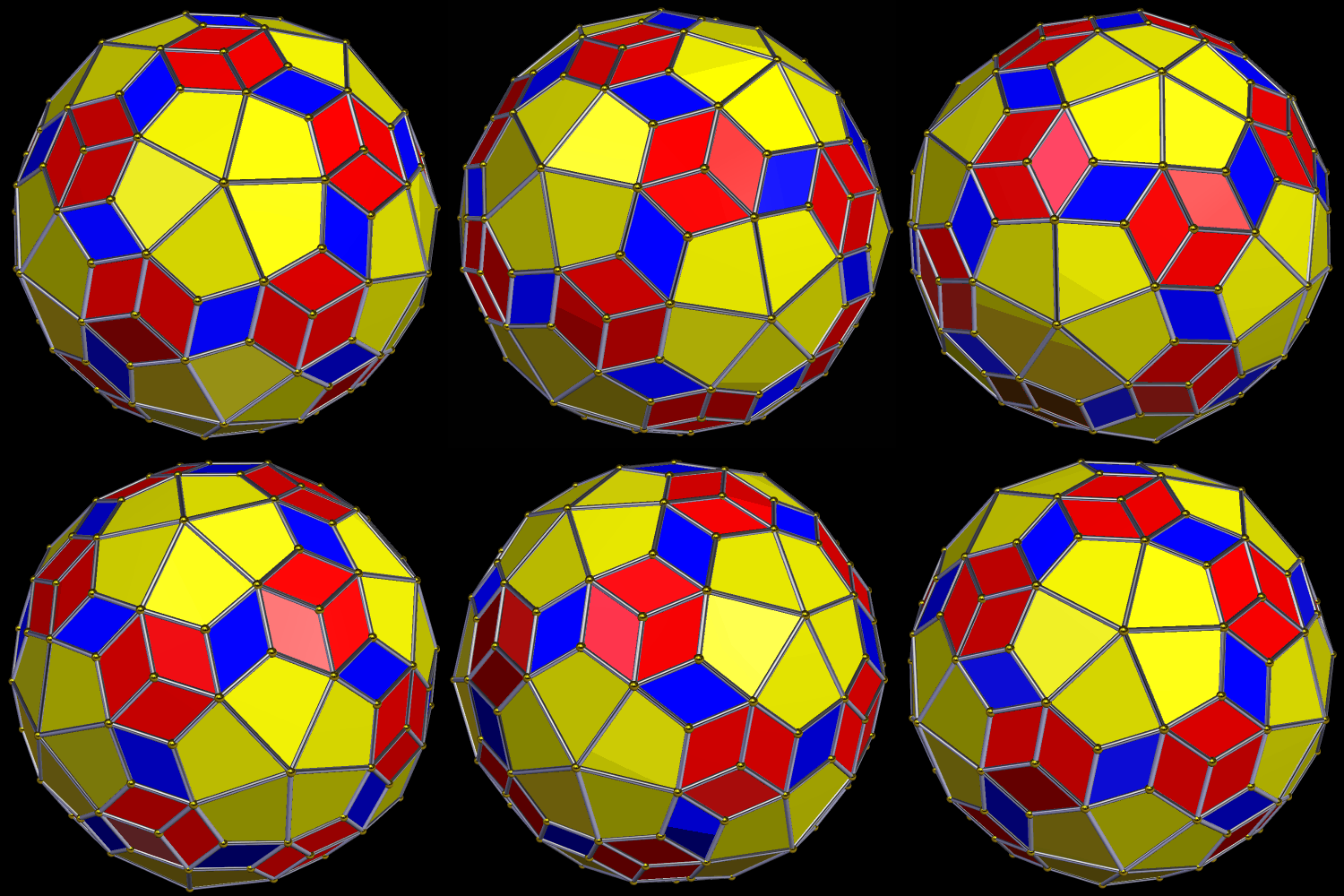
This polyhedron was created by performing vertex-based zonohedrifications of a dodecahedron — twice. The first zonohedrification produced a rhombic enneacontahedron, various version of which I have blogged many times before, but performing a second zonohedrification of the same type was a new experiment. It has 1230 faces, 1532 vertices, and 2760 edges. All of its edges have equal length. I created the models in this post using Stella 4d, a program you can buy, or try for free, right here.

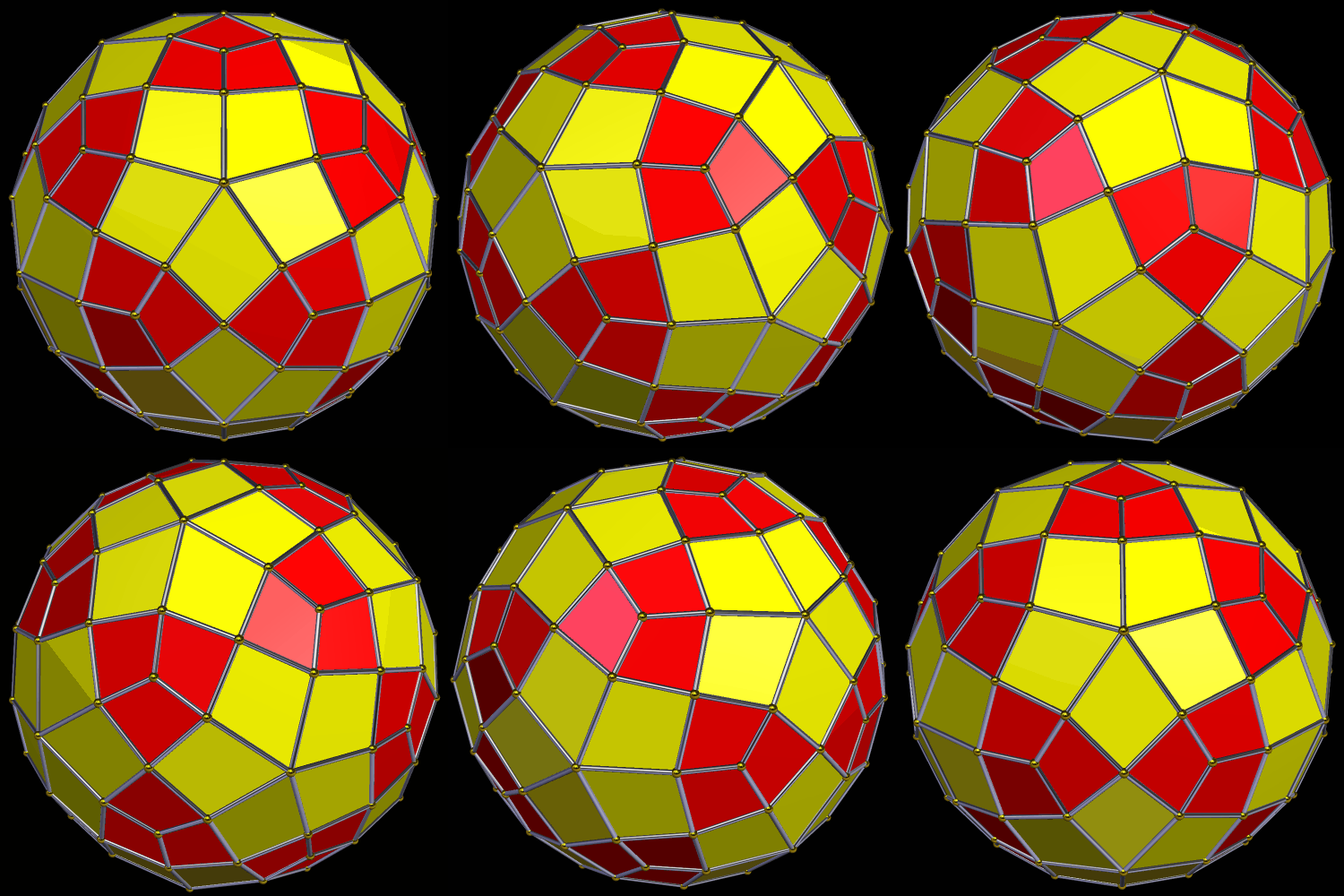
Here is the dual of this zonohedron, which has 1532 faces, 1230 vertices, and 2760 edges. This “flipping” of the numbers of faces and vertices, with the number of edges staying the same, always happens with dual polyhedra. I do not know of a name for the class of polyhedra made of zonohedron-duals, but, if any reader of this post knows of one, please leave this name in a comment.

Zonohedrified Dodeca dual

A Polyhedral Demonstration of the Fact That Nine Times Thirty Equals 270, Along with Its Interesting Dual

30 times 9 is 270

It would really be a pain to count the faces of this polyhedron, in order to verify that there are 270 of them. Fortunately, it isn’t necessary to do so. The polyhedron above is made of rhombus-shaped panels which correspond to the thirty faces of the rhombic triacontahedron. Each of these panels contains nine faces: one square, surrounded by eight triangles. Since (9)(30) = 270, it is therefore possible to see that this polyehdron has 270 faces, without actually going to the trouble to count them, one at a time.

The software I used to make this polyhedron may be found at http://www.software3d.com/Stella.php, and is called Stella 4d. With Stella 4d, a single mouse-click will let you see the dual of a polyhedron. Here’s the dual of the one above.

30 times 9 is 270 -- the dual

This polyhedron is unusual, in that it has faces with nine sides (enneagons, or nonagons), as well as fifteen sides (pentadecagons). However, these enneagons and pentadecagons aren’t regular — yet — but they will be in the next post.

The Pentagonal Hexacontahedron, and Related Polyhedra

Image

The Pentagonal Hexacontahedron

As the dual of the snub dodecahedron, which is chiral, this member of the Catalan Solids is also chiral — in other words, it exists in left- and right-handed versions, known an entantiomers. They are mirror-images of each other, like left and right gloves or shoes. Here’s the other one, by comparison:

Penta Hexeconta enantiomer

It is always possible to make a compound, for a chiral polyhedron, from its two enantiomers. Here’s the one made from the two mirror-image pentagonal hexacontahedra shown above:

Compound of enantiomorphic pair

Stellating this enantiomorphic-pair-compound twenty-one times produces this interesting result:

stellating

And, returning to the unstellated enantiamorphic-pair-compound, here is its convex hull:

Convex hull

This convex hull strikes me as an interesting polyhedron in its own right, so I tried stellating it several times, just to see what would happen. Here’s one result, after seventeen stellations:

Stellation17

Software credit:  I made these rotating images using Stella 4d:  Polyhedron Navigator. That program may be bought at http://www.software3d.com/Stella.php, and has a free “try it before you buy it” trial download available at that site, as well. I also used Geometer’s Sketchpad and MS-Paint to produce the flat purple-and-black image found on faces near the top of this post (and, by itself, in the previous post on this blog), but I know of nowhere to get free trial downloads of these latter two programs.

Duality

Image

Duality

Created with Stella 4d (site to try it: http://www.software3d.com/stella.php).

Cuboctahedral Star

Image

Cuboctahedral Star

This is the dual of the previous post.

Note: The software I used to create this is available as a free trial download at http://www.software3d.com/stella.php.

Compound of the Dodecahedron and Its Dual, the Icosahedron

Image

Compound of the Dodecahedron and Its Dual, the Icosahedron

Software credit: see http://www.software3d.com/stella.php (free trial download available)