A Faceted Truncated Tetrahedron, or Seven Tetrahedra Joined at Their Edges — Your Choice

Faceted Trunc Tetra

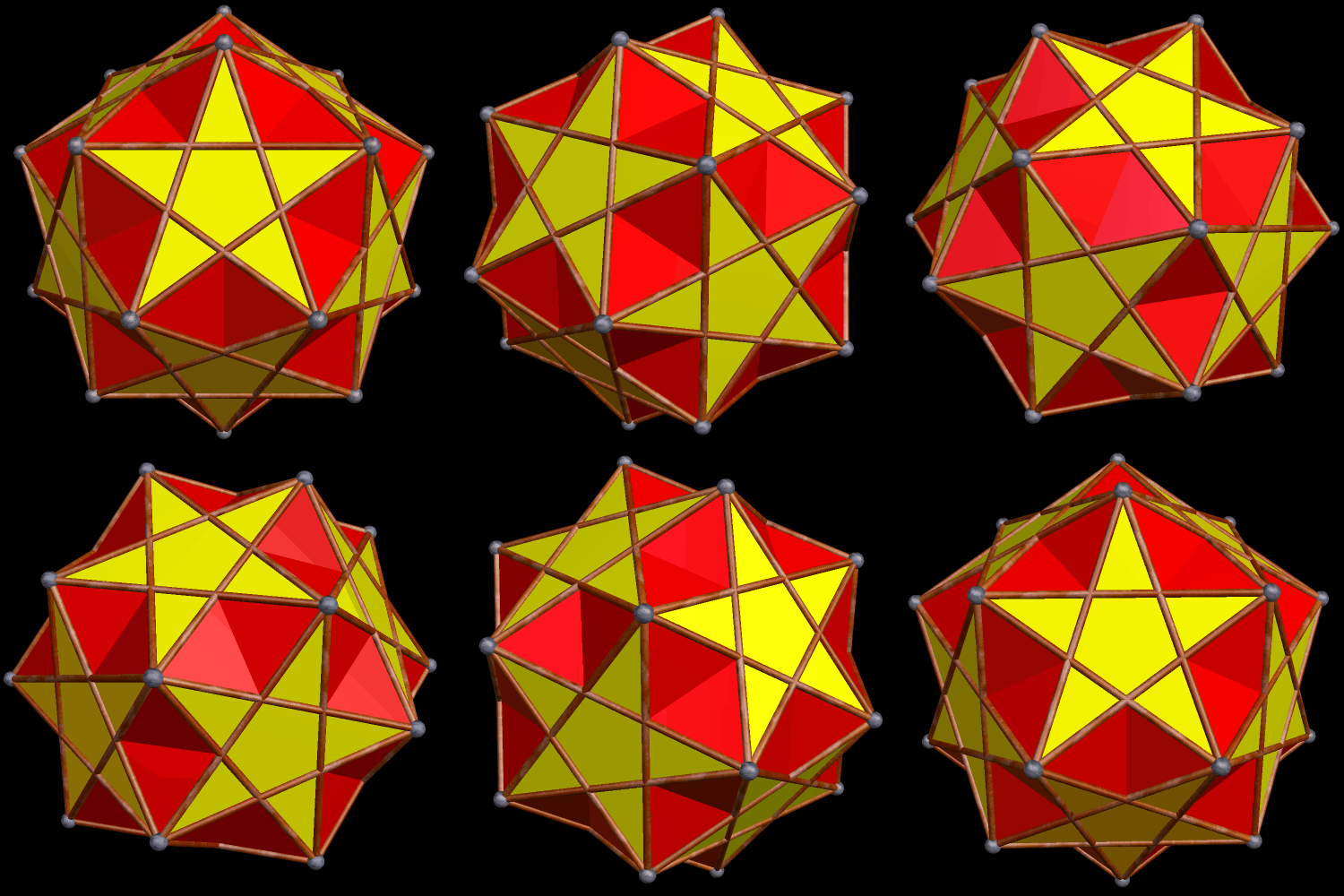
I made this by faceting a truncated tetrahedron, giving it faces which are interpenetrating, red, equilateral triangles, as well as yellow crossed-edged hexagons. It can also be viewed as a central tetrahedron, with six more tetrahedra attached to its edges. This was made with Stella 4d, available at this website.

The Small Ditrigonal Icosidodecahedron, Together with Its Fifth Stellation

Faceted Dodeca

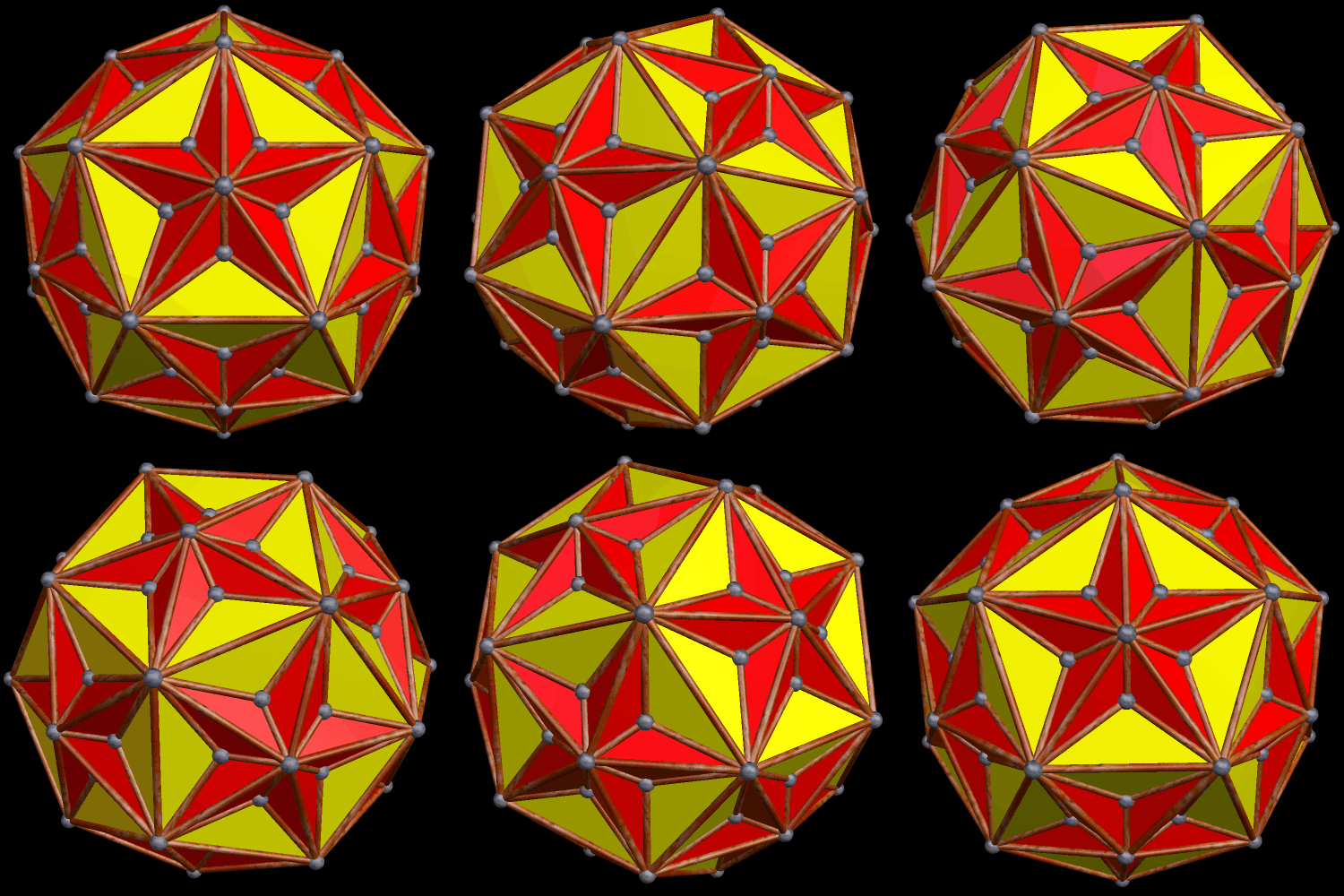
I made the polyhedron above by performing a faceting of the dodecahedron, and only realized, after the fact, that I had stumbled upon one of the uniform polyhedra, a set of polyhedra I have not yet studied extensively. It is called the small ditrigonal icosidodecahedron, and its faces are twelve star pentagons and twenty equilateral triangles, with the triangles intersecting each other. Below is its fifth stellation, which appears to be a compound of a yellow dodecahedron and a red polyhedron which I do not (yet) recognize, although it does look quite familiar.

5th stellation of the Small Ditrigonal Icosidodeca

Both images were created using Stella 4d, software you can try right here.

One of Many Possible Facetings of the Rhombic Triacontahedron

Faceted Rhombic Triaconta

The simplest way I can explain faceting is that it takes a familiar polyhedron’s vertices, and then connects them in unusual ways, so that you obtain different edges and faces. If you take the convex hull of a faceted polyhedron, it returns you to the original polyhedron.

This was created using Stella 4d, software available (including as a free trial download) right here: http://www.software3d.com/Stella.php.

The Final Stellation of the Rhombic Triacontahedron, Together with Its Dual, a Faceting of the Icosidodecahedron

final stellation of the Rhombic Triaconta

Sharp-eyed, regular readers of this blog will notice that this is the same polyhedron shown in the previous post, which was described as the “final stellation of the compound of five cubes,” due to the coloring scheme used in the first image there, which had five colors “inherited” from each of the differently-colored cubes in the five-cube compound. This image, by contrast, is shown in rainbow-color mode.

How can the rhombic triacontahedron and the compound of five cubes have the same final stellation? Simple: the compound of five cubes is, itself, a member of the stellation-series of the rhombic triacontahedron. Because of this, those two solids end up at the same place, after all possible stellations are completed, just as you will reach 1,000, counting by ones, whether you start at one, or start at, say, 170.

I am grateful to Robert Webb for pointing this out to me. He’s the person who wrote Stella 4d, the software I use to make these images of rotating polyhedra. His program may be found at http://www.software3d.com/Stella.php — and there is a free trial version available for download, so you can try Stella before deciding whether or not to purchase the fully-functioning version.

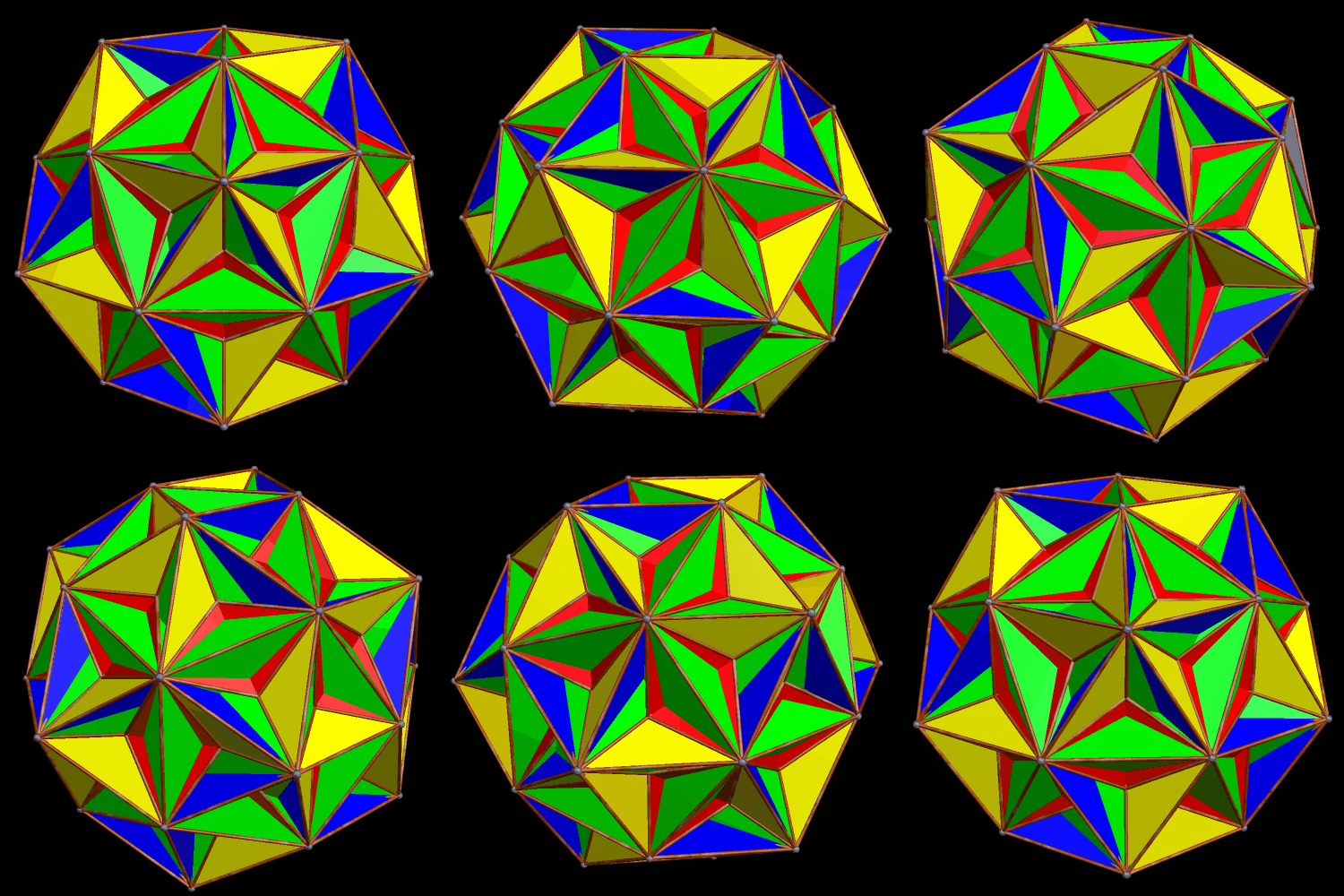
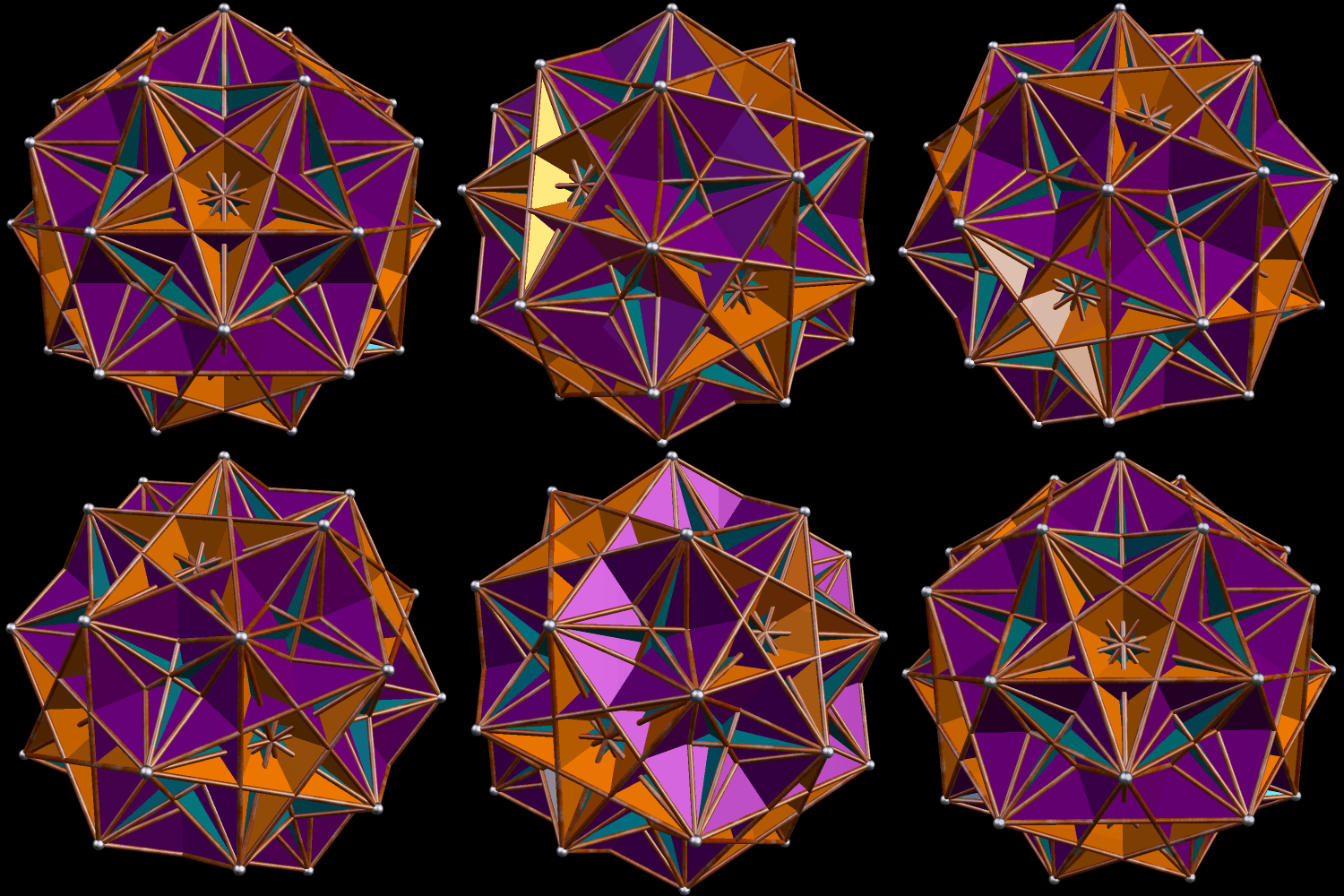
Since faceting is the reciprocal process of stellation, the dual of the polyhedron above is a faceted icosidodecahedron, for the icosidodecahedron is the dual of the rhombic triacontahedron. Here is an image of that particular faceting of the icosidodecahedron, colored, this time, by face-type:
Faceted Icosidodeca dual of final stellation of RTC

One of Many Possible Facetings of the Rhombicosidodecahedron

Faceted Rhombicosidodeca

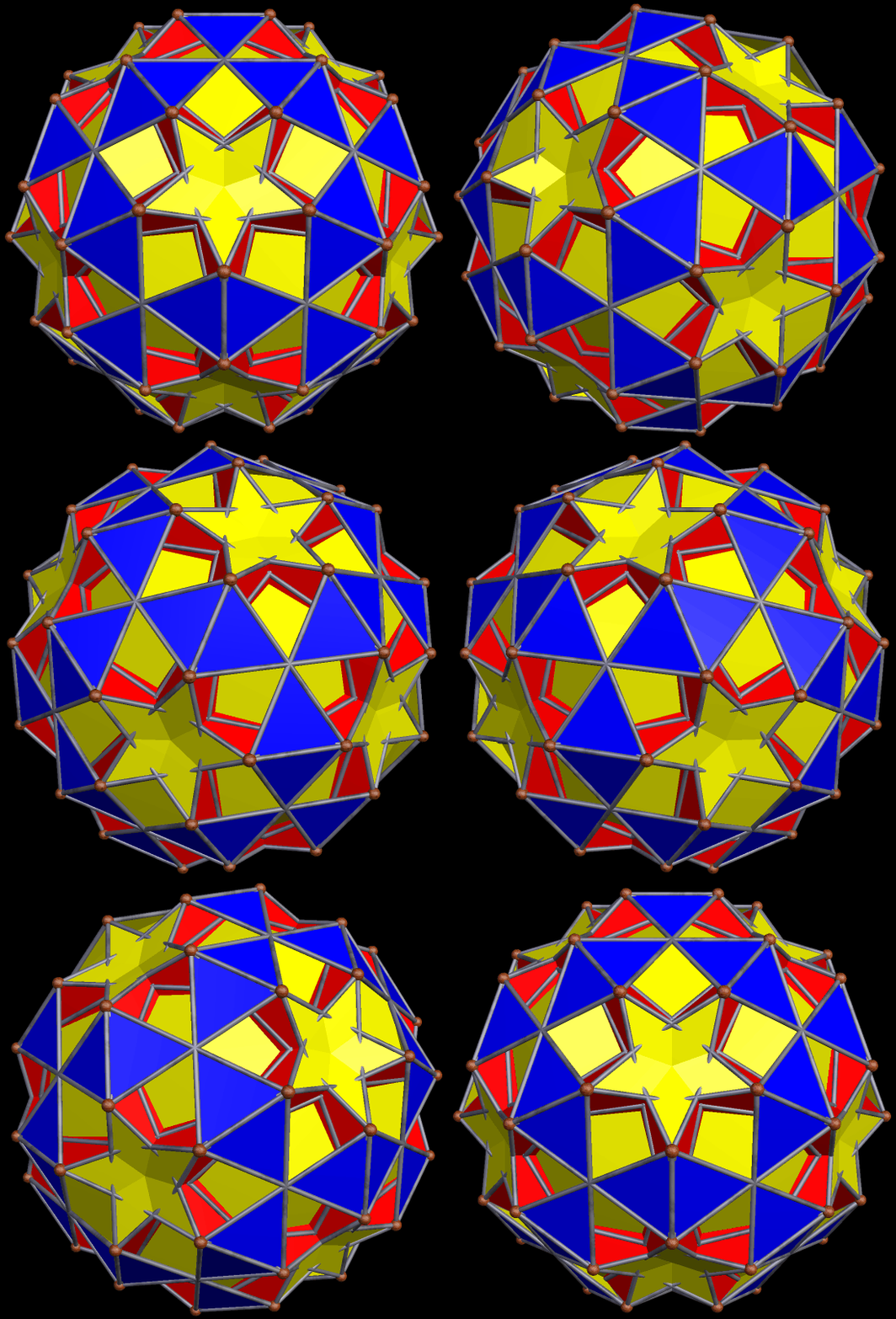
To make a faceted version of the rhombicosidodecahedron, one first (1) starts with a rhombicosidodecahedron, one of the Archimedean solids, then (2) removes the faces and edges of this polyhedron, leaving all the vertices in place, and then (3) connects these vertices in a different way than they were connected in the original polyhedron, forming new edges and faces. Faceting is the reciprocal operation to polyhedral stellation.

This polyhedron was made using Stella 4d, software available here.

Four Different Facetings of the Great Rhombcuboctahedron

faceted GRCO

Faceted Trunc Cubocta 2

Faceted Trunc Cubocta 4

Faceted Trunc Cubocta

All four of these rotating images were created using software called Stella 4d: Polyhedron Navigator. You can buy this program, or try it for free, at this website. Faceting is the inverse function of stellation, and involves connecting the vertices of an already-established polyhedron in new ways, to create different polyhedra from the one with which one started. For each of these, the convex hull is the great rhombcuboctahedron, itself.

One of Many Faceted Rhombicosidodecahedra

Faceted Rhombicosidodeca the dual of the 32nd stellation of the strombic hexaconta

This was created by making the dual of the 32nd stellation of the strombic hexacontahedron, which is itself the dual of the rhombicosidodecahedron. This technique for finding facetings works because faceting is the reciprocal function of polyhedral stellation.

I did this using Stella 4d, which you can try for yourself, for free, at http://www.software3d.com/Stella.php.

There Are Many Faceted Versions of the Dodecahedron. This One Is the Dual of the Third Stellation of the Icosahedron.

Faceted Dodeca

The twelve purple faces of this faceted dodecahedron show up on Stella 4d‘s control interface as {10/4} star decagons, which would make them each have five pairs of two coincident vertices. I’m informally naming this special decagon-that-looks-like-a-pentagram (or “star pentagon,” if you prefer) the “antipentagram,” for reasons which I hope are clear.

Stella 4d, the program I use to make most of my polyhedral images, may be tried for free at http://www.software3d.com/Stella.php.

One Faceting, Each, of the Snub Cube and Snub Dodecahedron

Faceted snub cube

These are facetings of the snub cube (above) and snub dodecahedron (below). I made both using Stella 4d, software you can try for yourself right here.

faceted Snub Dodeca

Two of Many Possible Facetings of the Truncated Icosahedron

Faceted Trunc Icosa

I made these faceted polyhedra, both facetings of the truncated icosahedron, using Stella 4d, software available here.

Faceted truncated icosahedron