Two Deceptively Similar Solids

Give the polyhedron below a quick glance. Can you name it?
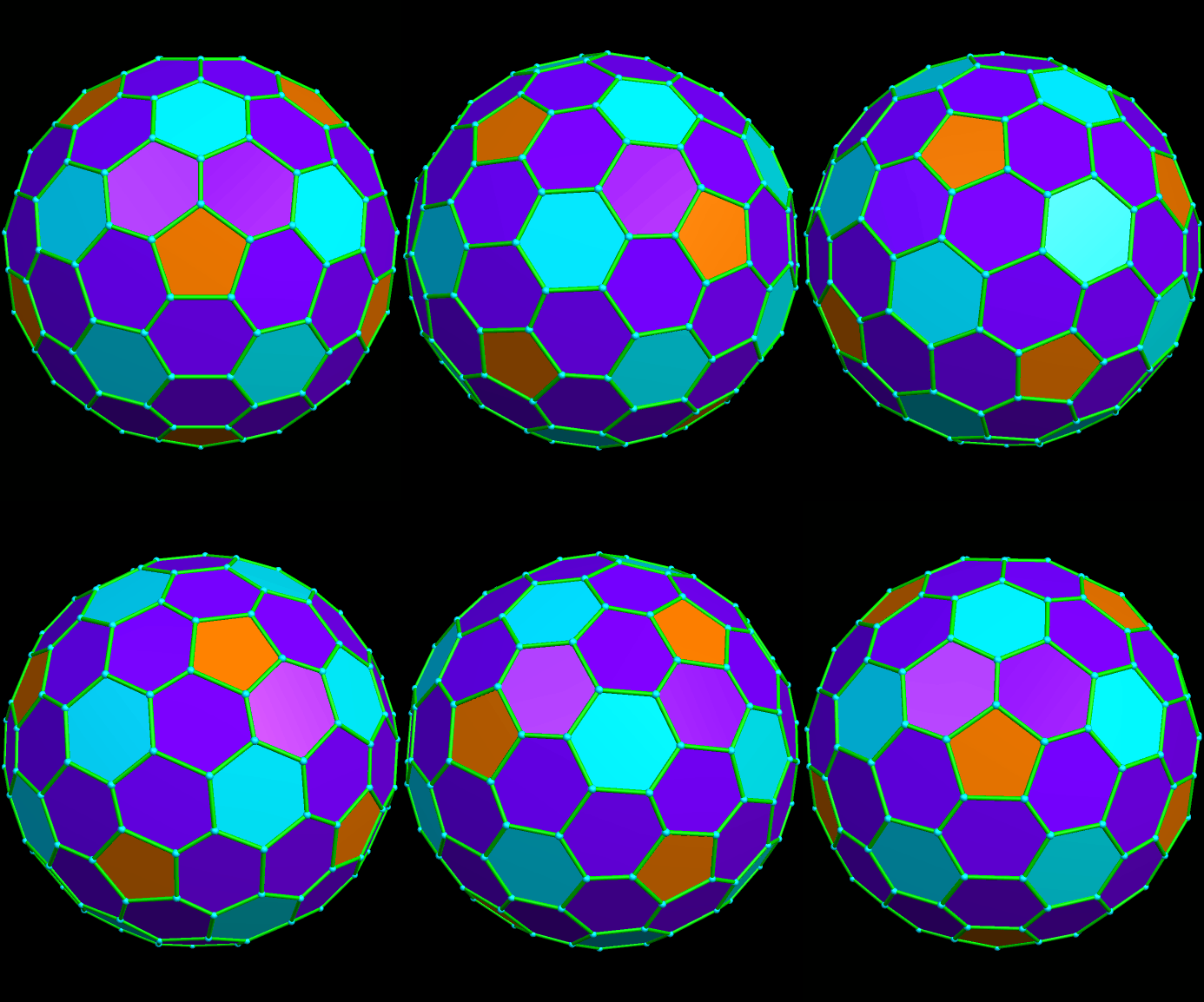
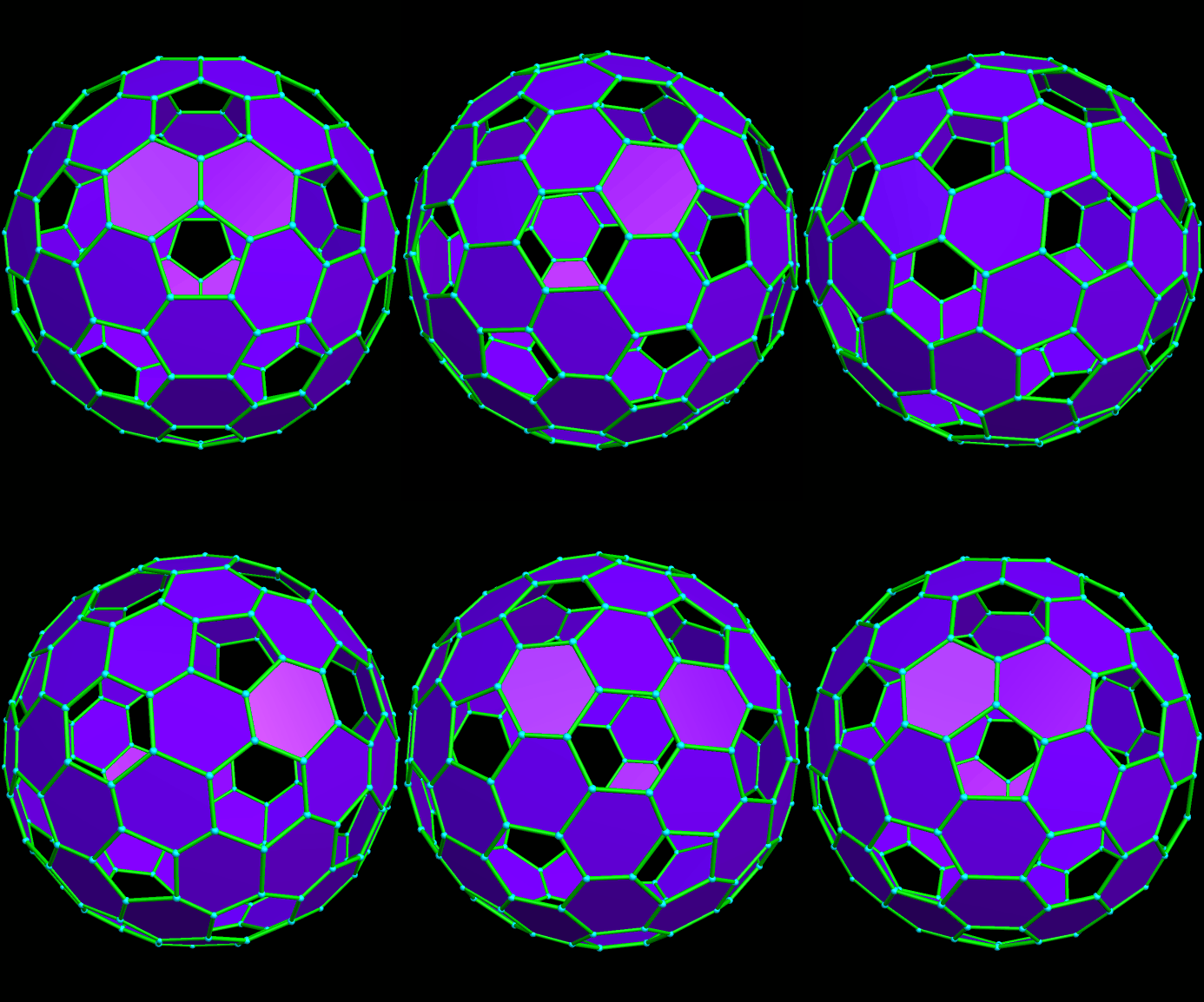
Since there are twelve regular pentagons, and a bunch of hexagons, it looks like a soccer ball. The shape of the most widely-used soccer ball is a (rounded) truncated icosahedron. Therefore, you can be forgiven if you thought this thing was a truncated icosahedron. Take a close look at those hexagons, though. Can you see that they are not regular?

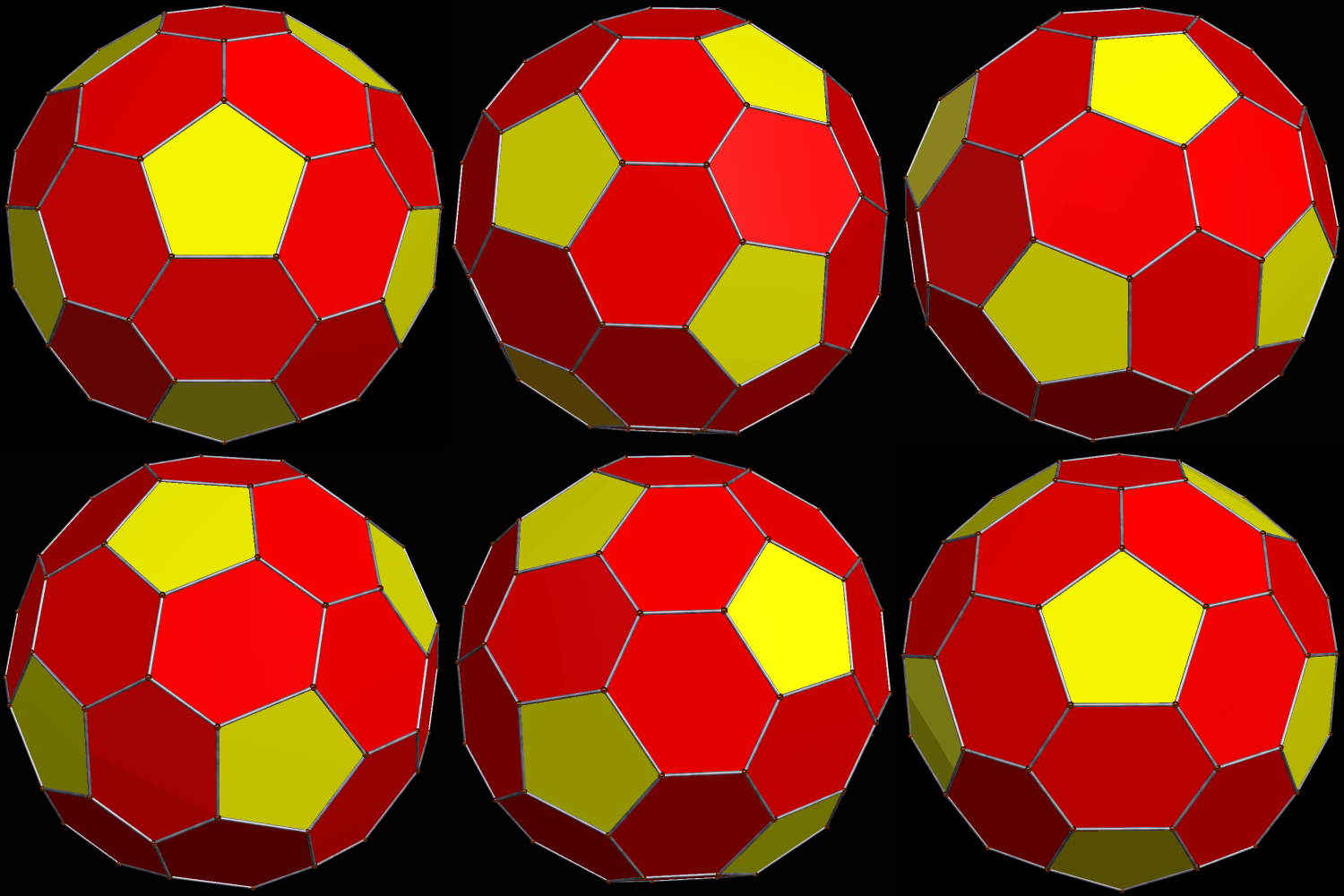
Contrast the solid above to the shape below, which is a real truncated icosahedron.
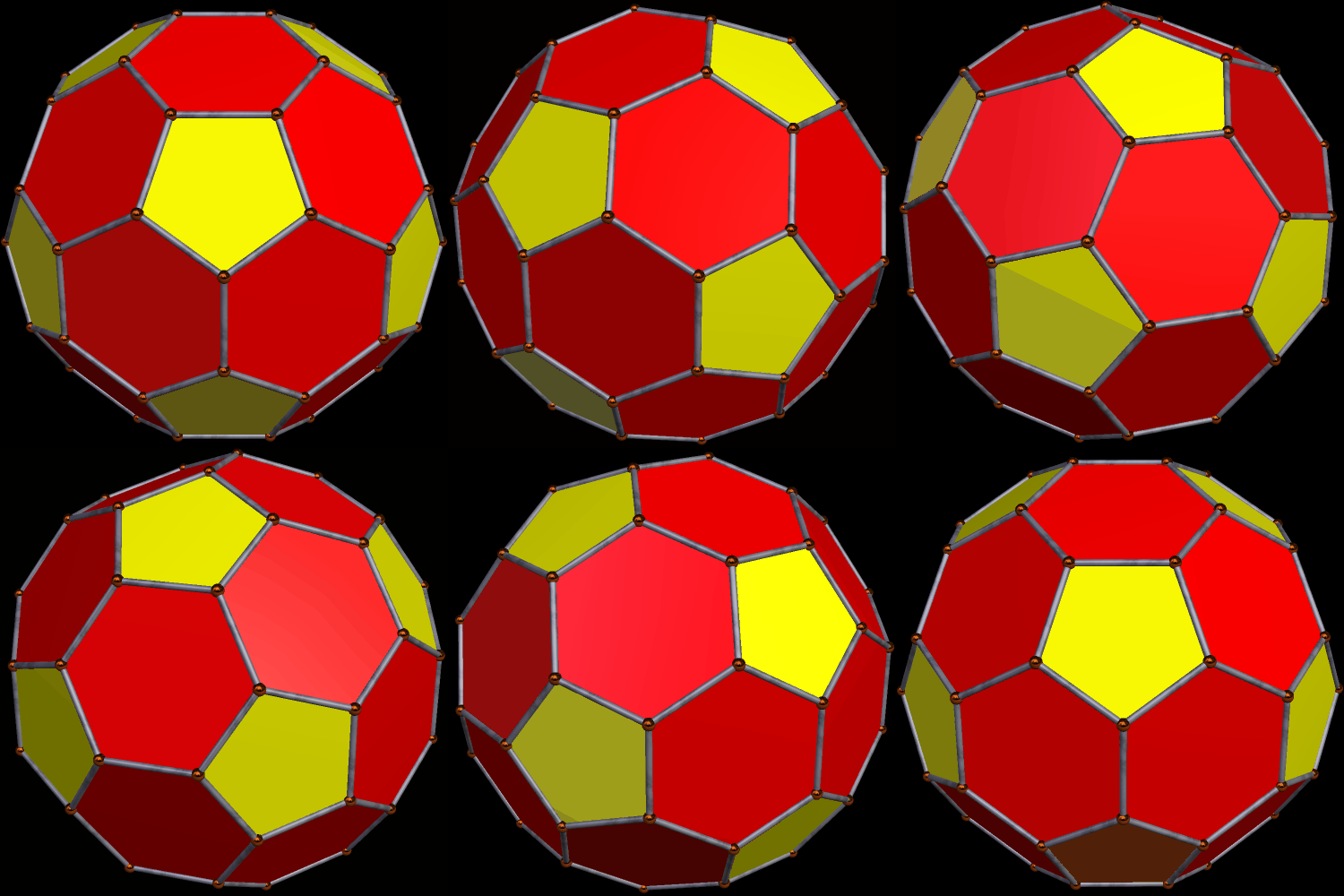
The hexagons in this second image are regular, but that isn’t the only difference between the two. Examine the vertices of solid #2. At each vertex, one pentagon meets two hexagons. Scroll up and take another look at solid #1, and you can easily find vertices there which also have two hexagons meeting a pentagon — but not all of the vertices are like that. Some of the vertices have three hexagons meeting there, without any pentagons at all. This allows more hexagons into the mix, while the number of pentagons stays steady, at twelve, in both polyhedra.

There are also other differences. For example, the “fake” truncated icosahedron has eighty vertices, while the real one has sixty. The first solid is actually the dual of a frequency-2 geodesic sphere. It’s not an Archimedean solid at all. It is, in chemistry, a fullerene; in fact, both shapes are fullerenes. One is the well known C60 molecule, while the other is a less familiar fullerene with the formula C80

Both of these polyhedra can be built using Zometools (available for sale at http://www.zometool.com). The truncated icosahedron requires sixty Zomeballs, and is made of all blue struts. The geodesic-sphere dual takes eighty Zomeballs, and is made of blue and red struts.

Both images here were made with a computer program called Stella 4d, which you can try for free at http://www.software3d.com/Stella.php.

The C-320 Fullerene Polyhedron

The duals of the geodesic domes are polyhedra with hexagonal and pentagonal faces. This particular one has 320 vertices, with those vertices representing carbon atoms in the molecular version of this solid. Here is C320 as a polyhedron.

C320 Dual of Geodesic Icosa

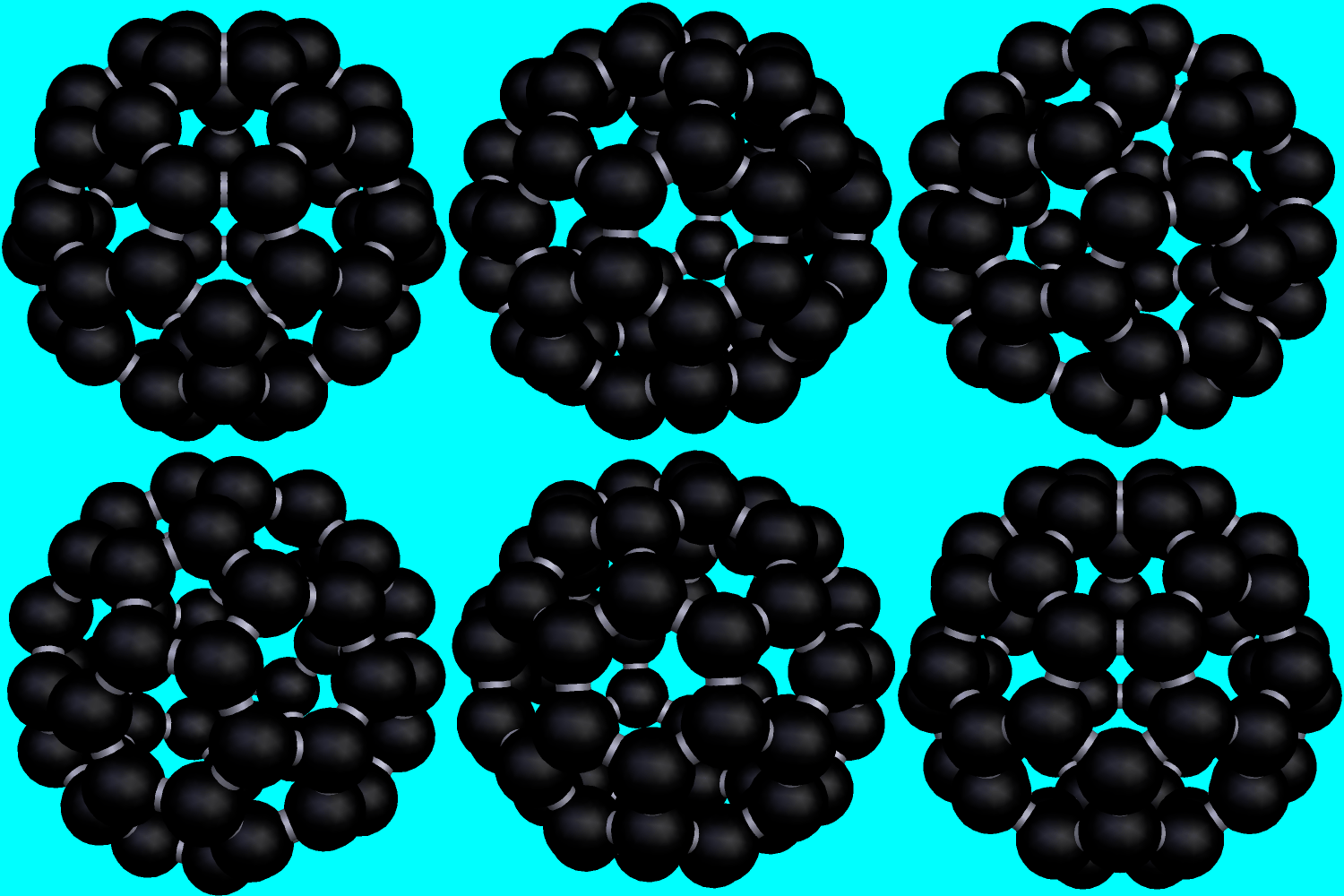
The next image shows this molecule as a ball-and-stick model.

C320 ball and stick.gif

Finally, here it is as a space-filling molecular model.

C320 space filling.gif

All three images were created with Stella 4d: Polyhedron Navigator. This is the page to visit if you want to try Stella for yourself: http://www.software3d.com/Stella.php.

The Construction of a Zome Model of a 240-Atom Fullerene Molecule, In Seven Pictures

20170725_175814

20170725_175907

20170727_085350

20170727_090058

20170727_090557

20170727_090936

20170727_100033

You can buy your own Zome at http://www.zometool.com.

A Fullerene Molecule with 320 Carbon Atoms

C320

I created this image using Stella 4d: Polyhedron Navigator, which is available here.

An Eighty-Atom Fullerene Molecule

c80-fullerene

The fullerene molecule that gets the most attention is C60, so I’m giving C80 a little bit of the spotlight, for balance. I made this using polyhedral modeling software called Stella 4d; you can try it for yourself at this website.

Buckminsterfullerene Molecular Models: Three Different Versions

Buckminsterfullerene, a molecule made of 60 carbon atoms, and having the shape of a truncated icosahedron, is easily modeled with Stella 4d: Polyhedron Navigator (see http://www.software3d.com/Stella.php to try or buy this program). The first image shows the”ball and stick” version used by chemists who want the bonds between atoms to be visible.

Trunc Icosa
The second model is intermediate between the ball-and-stick version, and the space-filling version, which follows it.

Trunc Icosa2

Here’s the “closely packed” space-filling version, taken to an extreme.

Trunc Icosa3

Which version better reflects reality depends on the certainty level you want for molecular orbitals. A sphere representing 99% certainty would be larger than one for 95% certainty.

A 240-Atom Fullerene, and Related Polyhedra

The most well-known fullerene has the shape of a truncated icosahedron, best-known outside the world of geometry as the “futbol” / “football” / “soccer ball” shape — twenty hexagons and twelve pentagons, all regular. The formula for this molecule is C60. However, there are also many other fullerenes, both larger and smaller. One of my favorites is C240, simply because I sometimes make class projects out of building fullerene models with Zome (available at www.zometool.com), and the 240-atom fullerene is the largest one which can be built using Zome. Here’s what it looks like, as molecular models are traditionally colored.

C240 fullerene 2

This polyhedron still has twelve pentagons, like its smaller “cousin,” the truncated icosahedron, but far more hexagons. What’s more, these hexagons do not have exactly the same shape. If this is re-colored in the traditional style of a polyhedron, rather than a molecule, it looks like this. In this image, also, the different shapes of hexagons each have their own color.

C240 fullerene 1

Like other polyhedra, a compound can be made from this polyhedron and its dual. In this case, the dual’s faces are shown, below, as red triangles. The original fullerene-shape is in purple for the pentagonal faces, and orange for the hexagons.

C240 compound with dual

In the base/dual compound above, it can be difficult to tell exactly what this dual is, but that can be clarified by removing the original fullerene. What’s left is called a geodesic sphere — or, quite informally, a ball made of many triangles. The larger a fullerene is, the more hexagonal rings/faces it will have, and the more triangles will be found on the geodesic sphere which is its dual. For the 240-atom fullerene shown repeatedly, above, here is the dual, by itself, with different colors indicating slightly different triangle-shapes. (An exception is the yellow and green triangles, which are congruent, but have different colors for aesthetic reasons.)

C240 dual

I made these four rotating images using Stella 4d:  Polyhedron Navigator. To try this program for yourself, simply visit www.software3d.com/Stella.php. At that site, there is a free trial download available.

A Truncated Icosahedron with Sixty Extra Hexagons

Image

A Truncated Icosahedron with Sixty Extra Hexagons

I created this using Stella 4d, which is available (including a free trial download) at http://www.software3d.com/Stella.php. With adjustments in edge lengths to make the bond lengths correct, this would be the shape of a C180 fullerene molecule.

If the thirty-two faces of the truncated icosahedron are hidden, and only the sixty extra hexagons are visible, this polyhedron looks like this:

Dual of Geodesic Trunc Icosa

In “rainbow color mode,” it has an even more interesting appearance:

Dual of Geodesic Trunc Icosa

The Pseudo-Truncated-Icosahedron

Image

Continue reading