
This uses enlarged spheres centered on the dodecahedron’s vertices, overlapping so that they obscure the edges. Also, the faces are rendered invisible. I created it using Stella 4d, available at http://www.software3d.com/Stella.php.
This uses enlarged spheres centered on the dodecahedron’s vertices, overlapping so that they obscure the edges. Also, the faces are rendered invisible. I created it using Stella 4d, available at http://www.software3d.com/Stella.php.
Buckminsterfullerene, a molecule made of 60 carbon atoms, and having the shape of a truncated icosahedron, is easily modeled with Stella 4d: Polyhedron Navigator (see http://www.software3d.com/Stella.php to try or buy this program). The first image shows the”ball and stick” version used by chemists who want the bonds between atoms to be visible.

The second model is intermediate between the ball-and-stick version, and the space-filling version, which follows it.
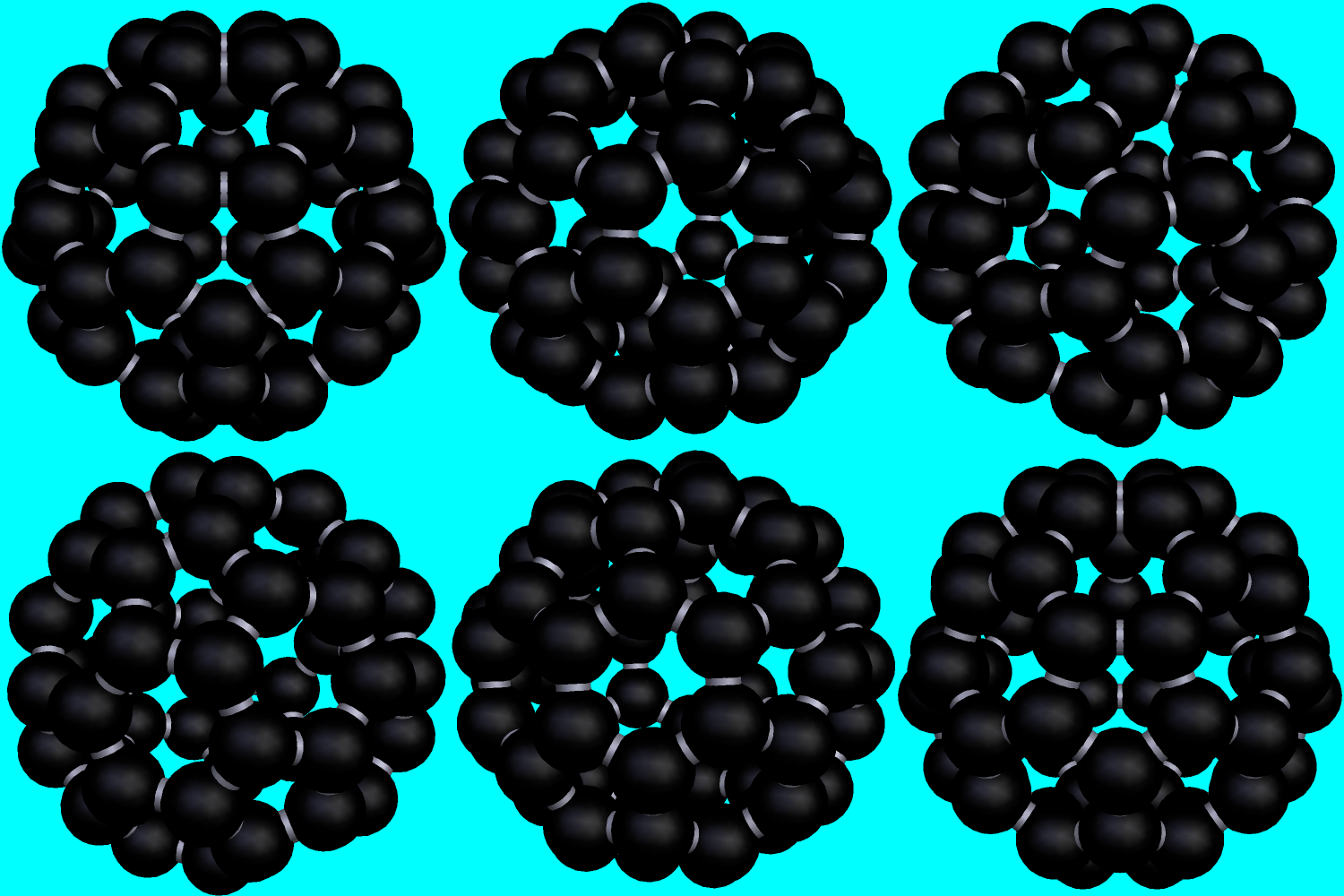
Here’s the “closely packed” space-filling version, taken to an extreme.

Which version better reflects reality depends on the certainty level you want for molecular orbitals. A sphere representing 99% certainty would be larger than one for 95% certainty.
A set of polyhedra which I have not (yet) studied much are the uniform polyhedra. The uniform polyhedra do, however, include some sets of polyhedra which I have studied extensively:
Subtracting these 22 polyhedra (and the infinite sets of prisms and antiprisms), from the uniform polyhedra, leaves 53 uniform star polyhedra, of which 5 are quasiregular and 48 are semiregular. There’s also one other star polyhedron, only counted sometimes, which is different from the others in that it has pairs of edges that coincide. Discovered by John Skilling, it is often simply called Skilling’s figure. There are also 40 “degenerate” uniform polyhedra; these are generally not counted toward the total. I’ve been aware that these 54 polyhedra existed for years, but was preoccupied with the others. Now, it’s time to fix that.
There is a listing of all 75 (or 76) uniform polyhedra at https://en.wikipedia.org/wiki/List_of_uniform_polyhedra, for those who’d like to examine them as a group. My approach will be different: I’m going to study the ones I don’t already know one at a time, starting with one I picked on the basis of aesthetics alone: the small ditrigonal icosidodecahedron. To be a uniform polyhedron, all vertices must be the same (in other words, it is vertex-transitive), and all faces must be regular, with regular star polygons allowed. In this figure, each vertex has three equilateral triangles meet, as well as three star pentagons, with these figures alternating as one moves around the vertex, examining them.

Here are just the twelve star pentagons, with only parallel faces having the same color.

Here are only the twenty equilateral triangles, with only parallel triangles having the same color. As you can see, the triangles interpenetrate.
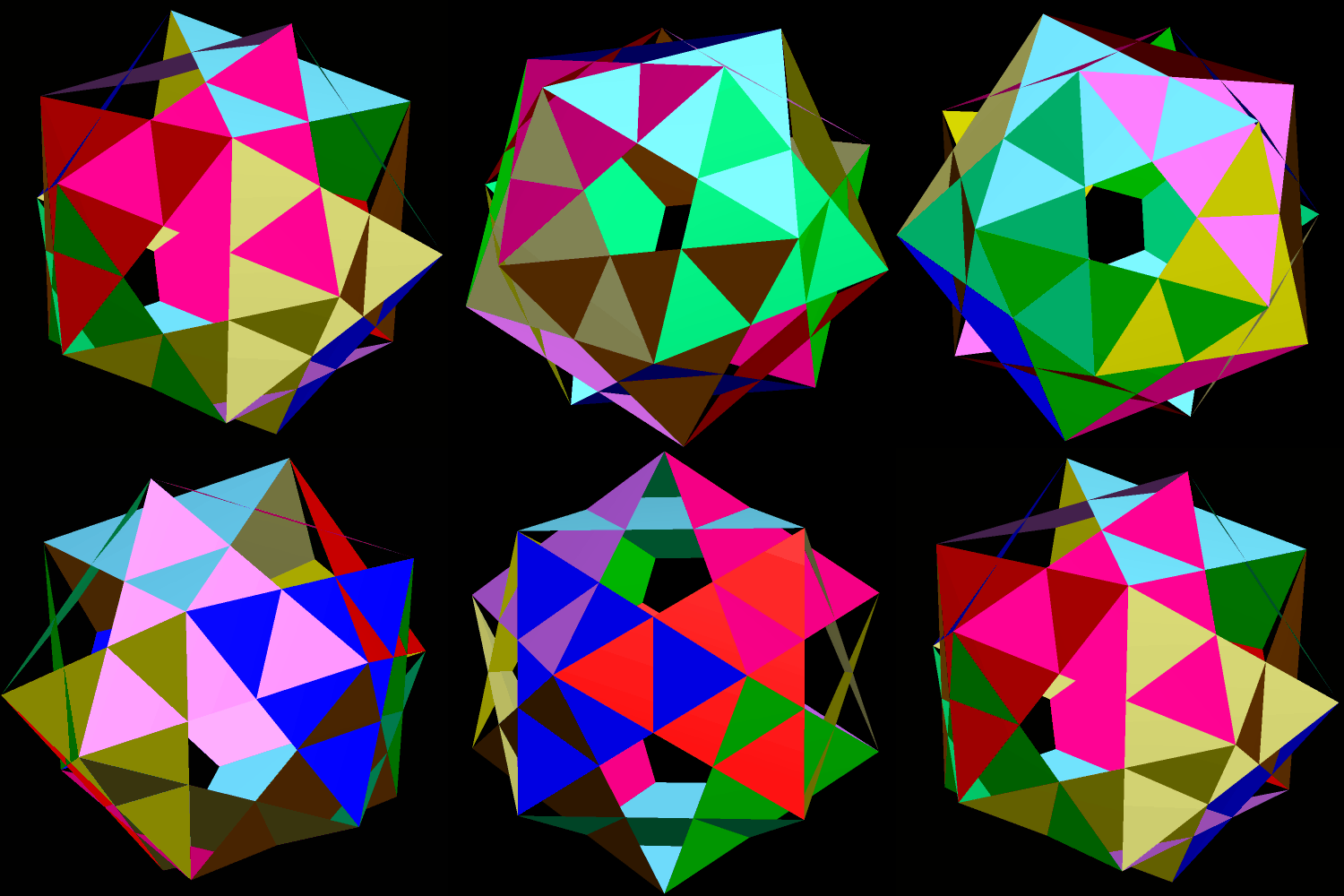
At least for me, the reason I had trouble understanding this figure, for so long, was that I mistook the small triangular “facelets” (the visible parts of the faces) for the triangular faces, themselves. In reality, the edges of the triangles are just as long as the star polygon edges. Because it has exactly two face-types which alternate around a vertex, it is edge-transitive (not all uniform polyhedra are), and so this polyhedron is part of smaller subset of uniform polyhedron called the quasiregular polyhedra.
Stella 4d, a program I use to study polyhedra, and make these images, will be the primary tool I use to investigate these uniform polyhedra with which I am not already familiar. It is available at http://www.software3d.com/Stella.php.
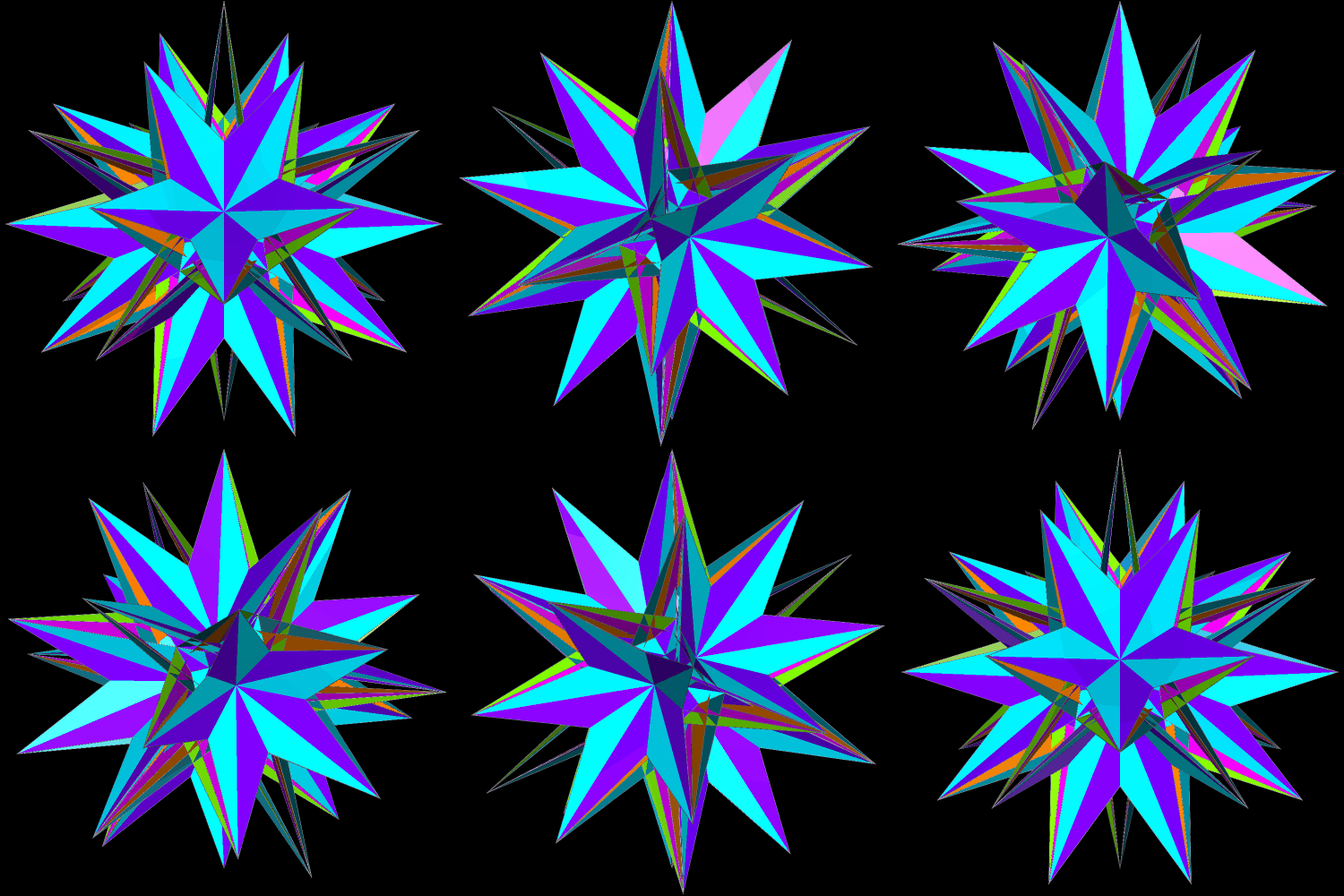


All of these were made with Stella 4d, a program you can find at http://www.software3d.com/Stella.php.

The above hendecagonal prism shows what Jynx is like when he’s in “hyperkitten” mode. (If you have a kitten, you know what that means.) It’s also rotating rapidly in an effort to make those who fear black cats, and/or the number thirteen, feel even more jumpy, in the hope that Jynx and I can, by working together, startle them into rationality.
On the other hand, Jynx does sometimes like to just lounge around, and watch the world go by — so I’ll show him in “tiredcat” mode as well.
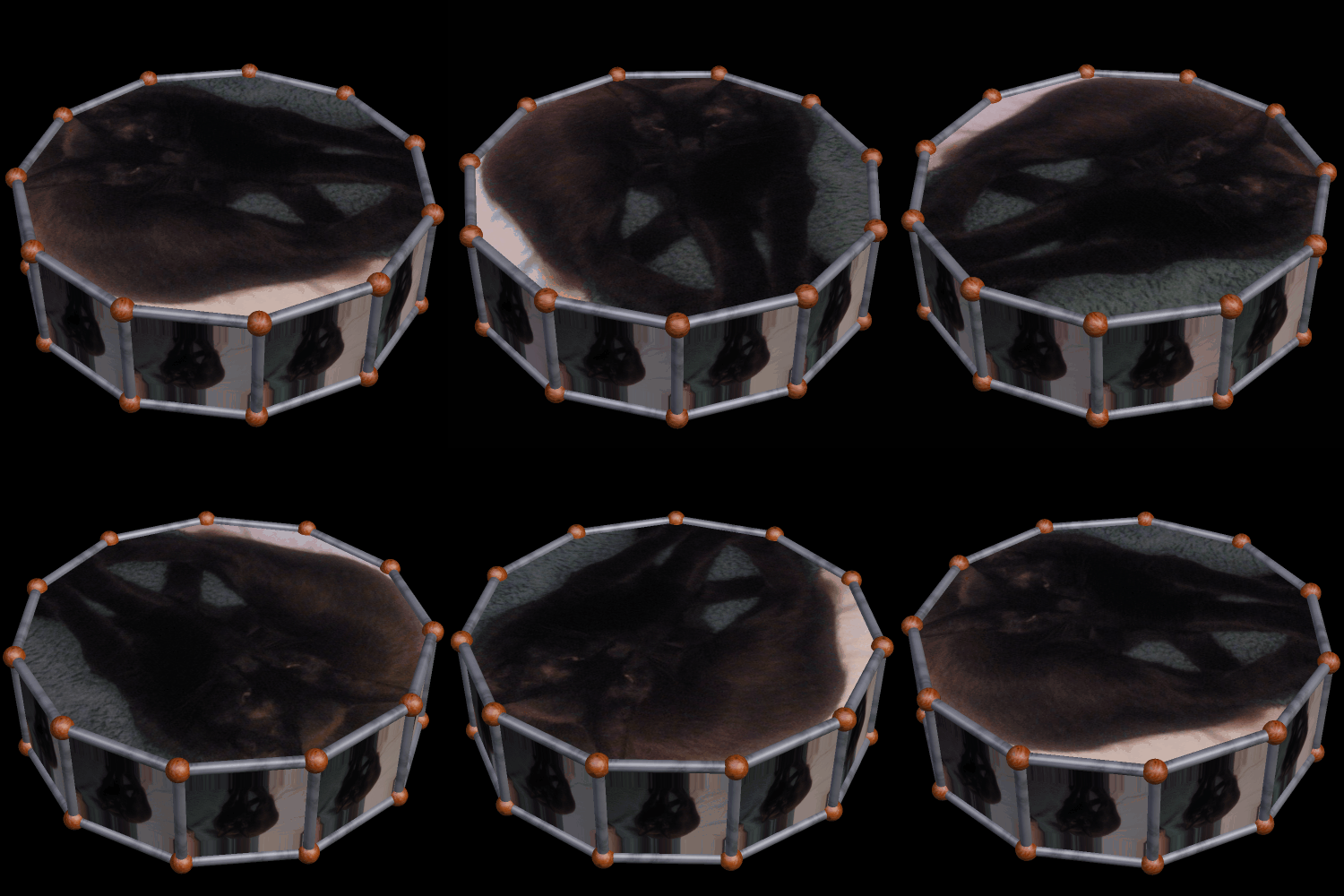
Software credit: I used Stella 4d: Polyhedron Navigator to make these images, a program which is available at this website.
The first of these two polyhedra also includes isosceles triangles, two types of isosceles trapezoids, and twelve regular pentagons.
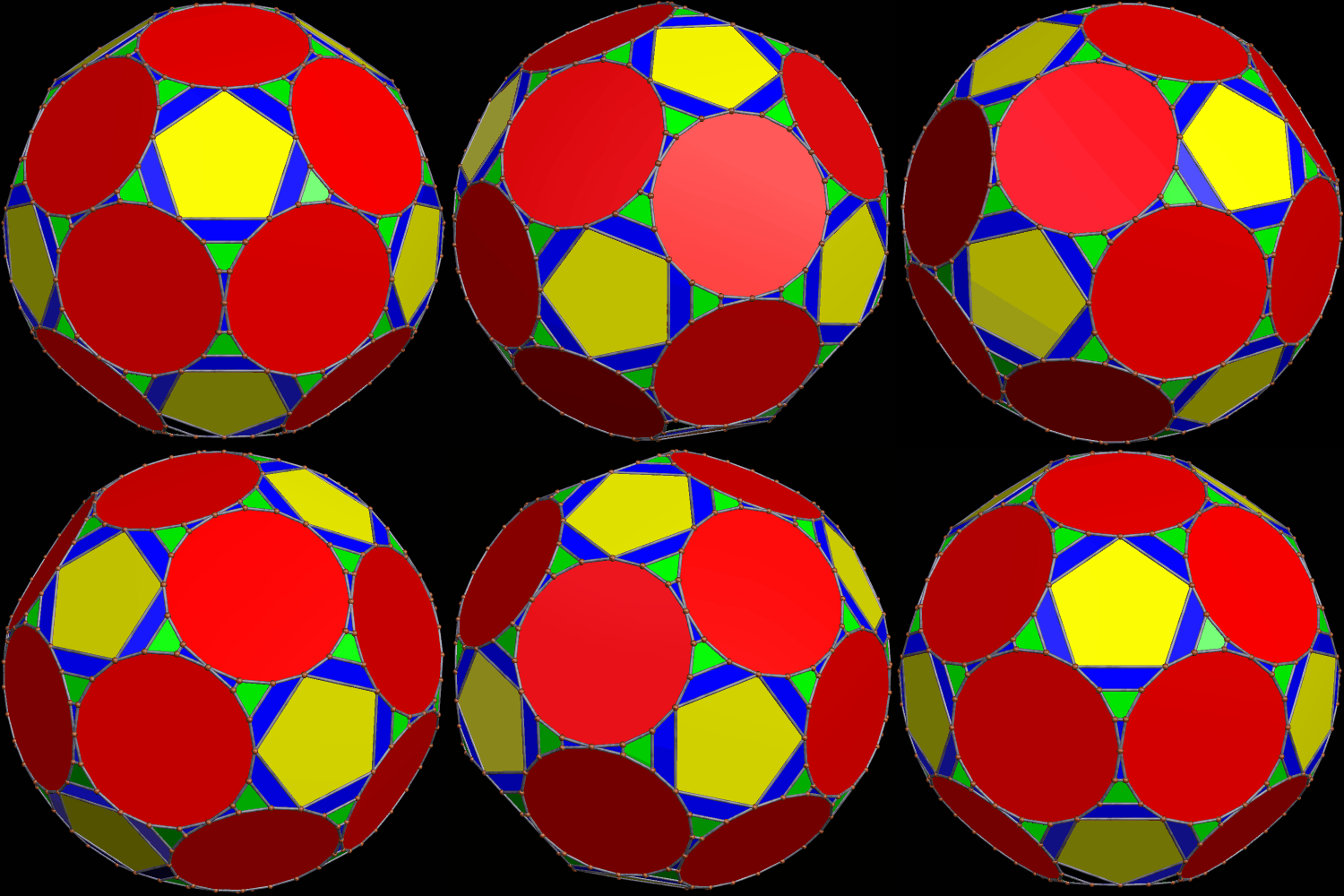
It is also possible to make a similar polyhedron where the twelve pentagons are replaced by regular decagons, but only by allowing the twenty octadecagons to overlap.

These polyhedra were constructed using Stella 4d, which can be found at http://www.software3d.com/Stella.php.

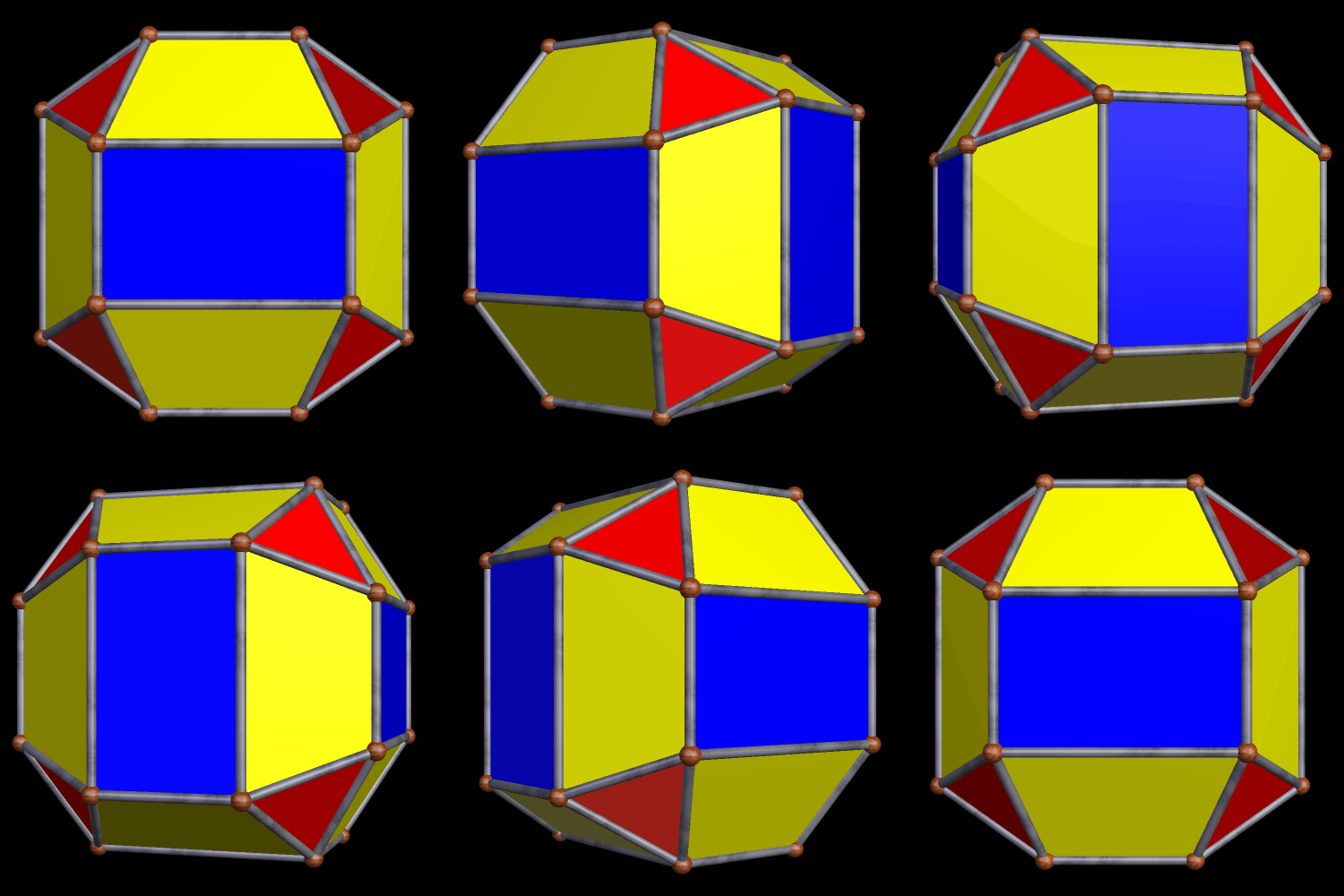
I created this using Stella 4d, available at http://www.software3d.com/Stella.php.
The snub cube and its dual make an attractive compound. Since the snub cube is chiral, its chirality is preserved in this compound.
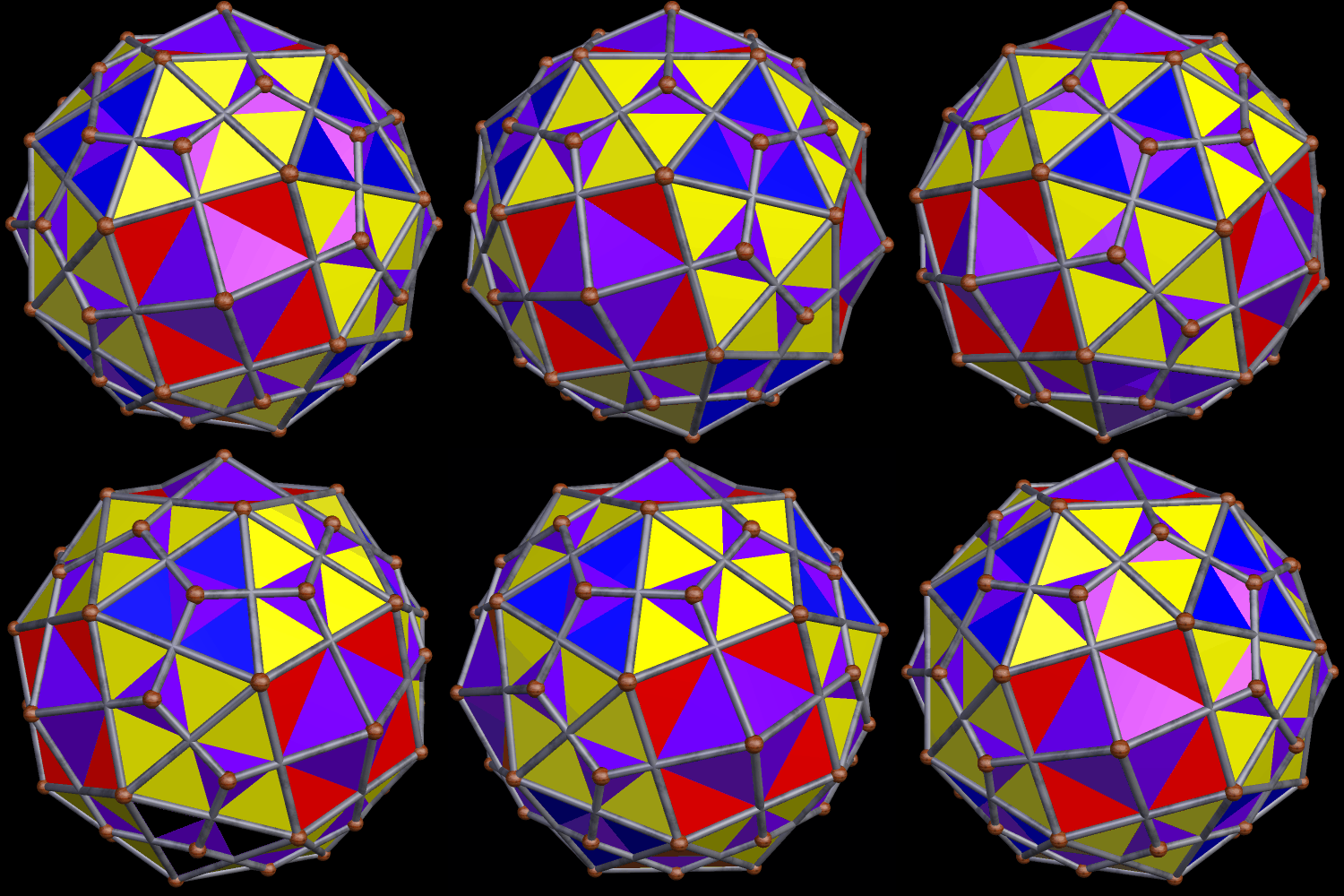
If you examine the convex hull of this compound, you will find it to be chiral as well.

Here is the mirror image of that convex hull:

These two convex hulls, of course, have twin, chiral, duals:
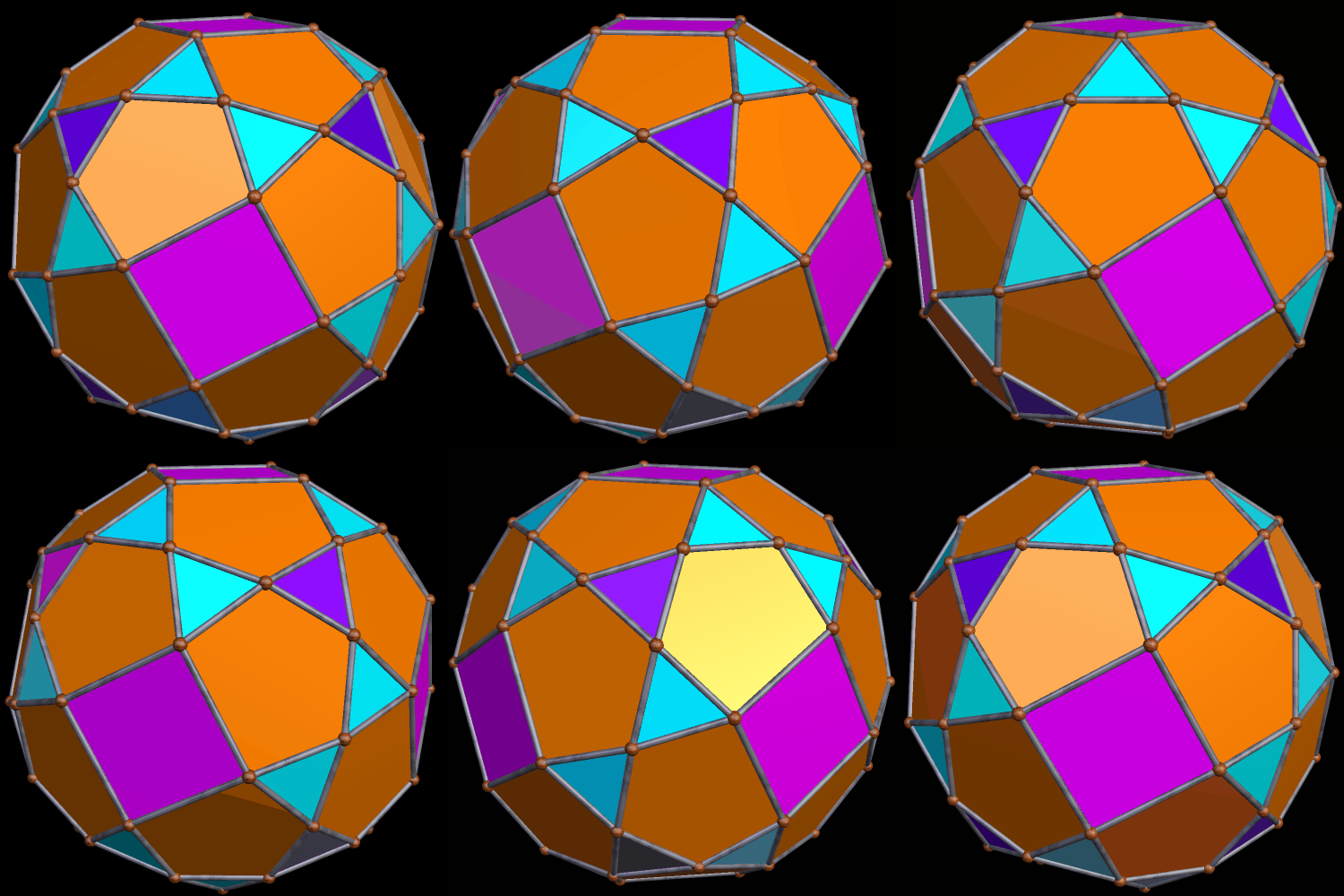

The two chiral convex hulls above (the red, blue, and yellow ones), made an interesting compound, as well.
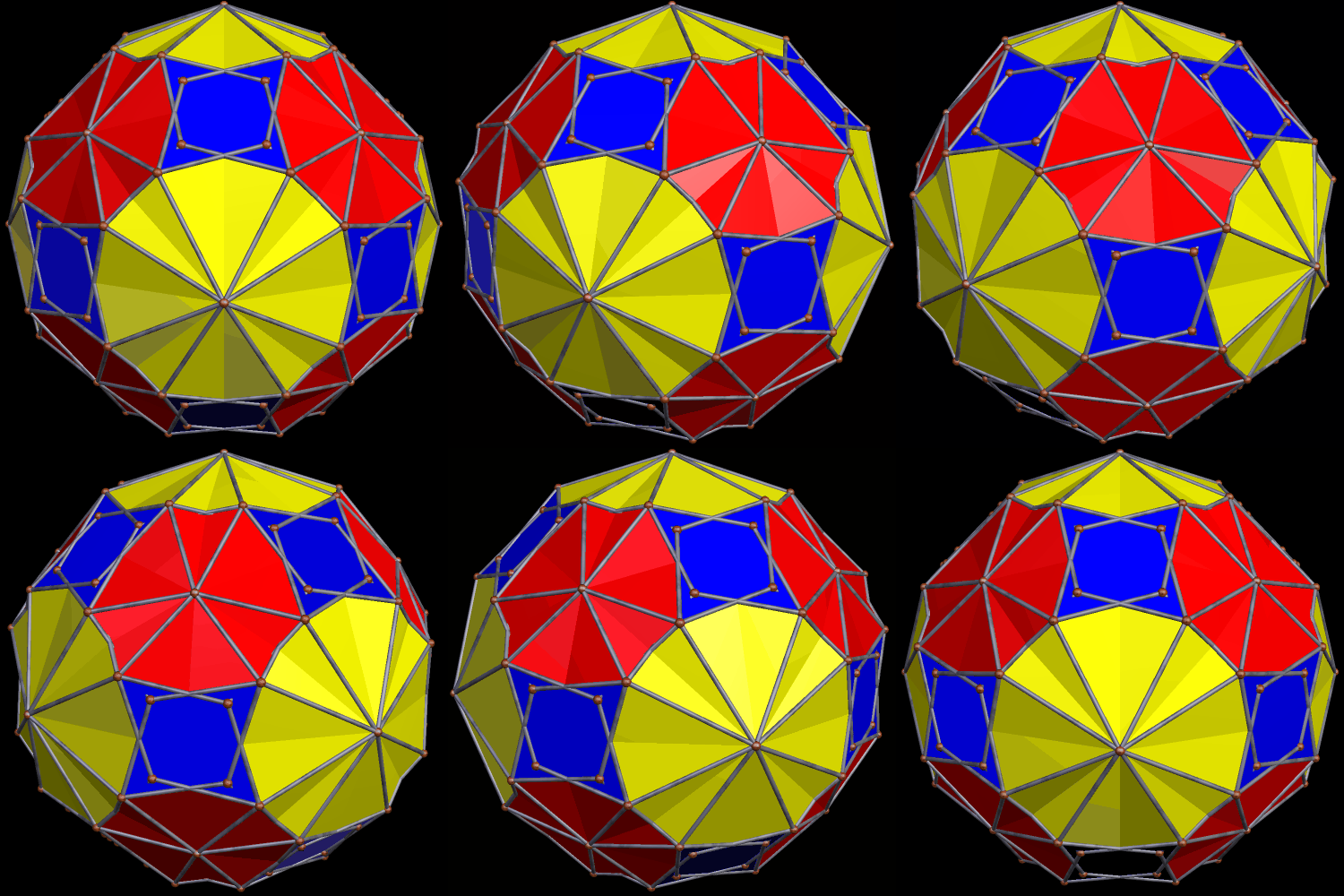
This is also true of their chiral duals:

I next stellated this last figure numerous times (I stopped counting at ~200), to obtain this polyhedron:
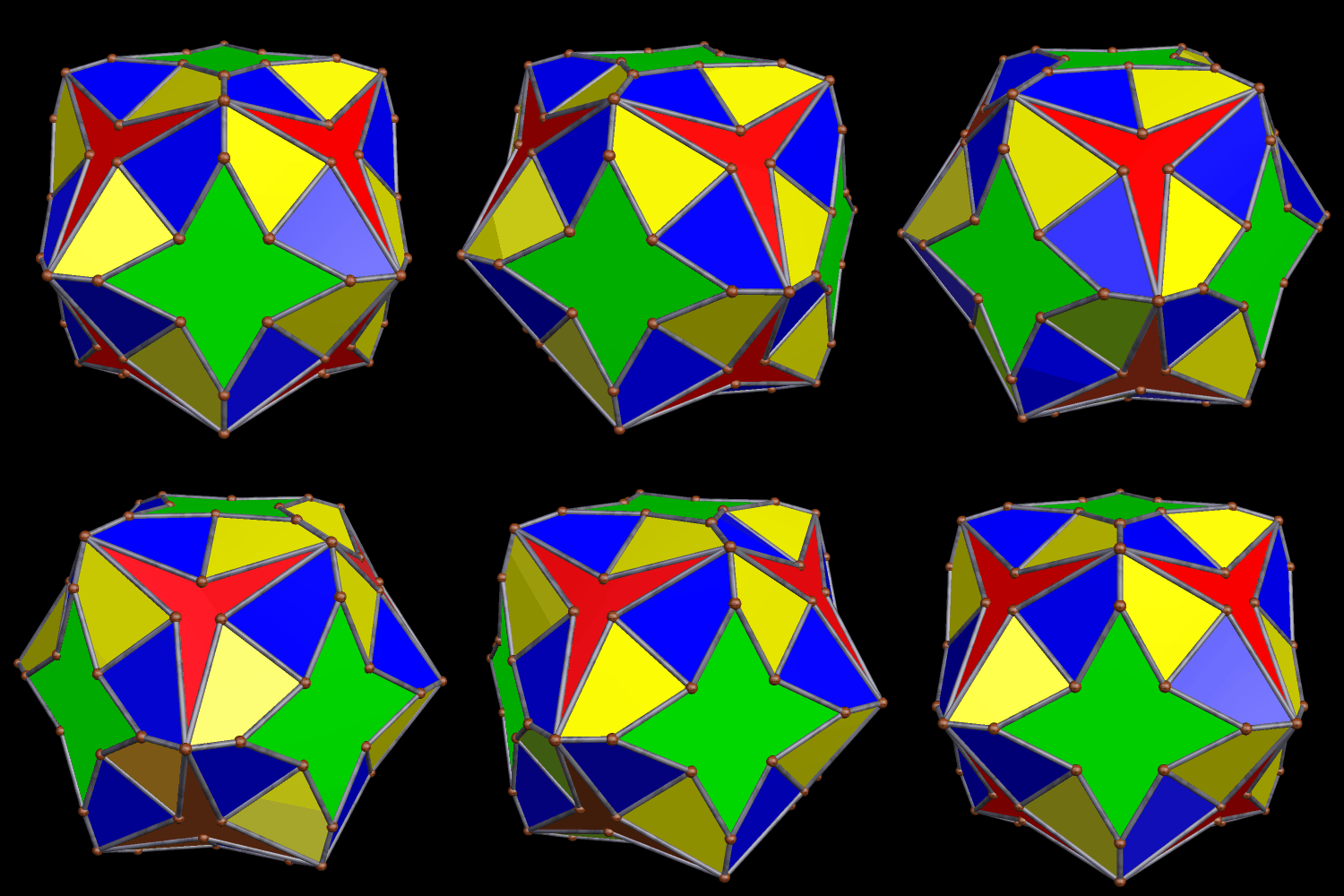
After seeing this, I wanted to know what its dual would look like — and it was a nice polyhedron on which to end this particular polyhedral journey.
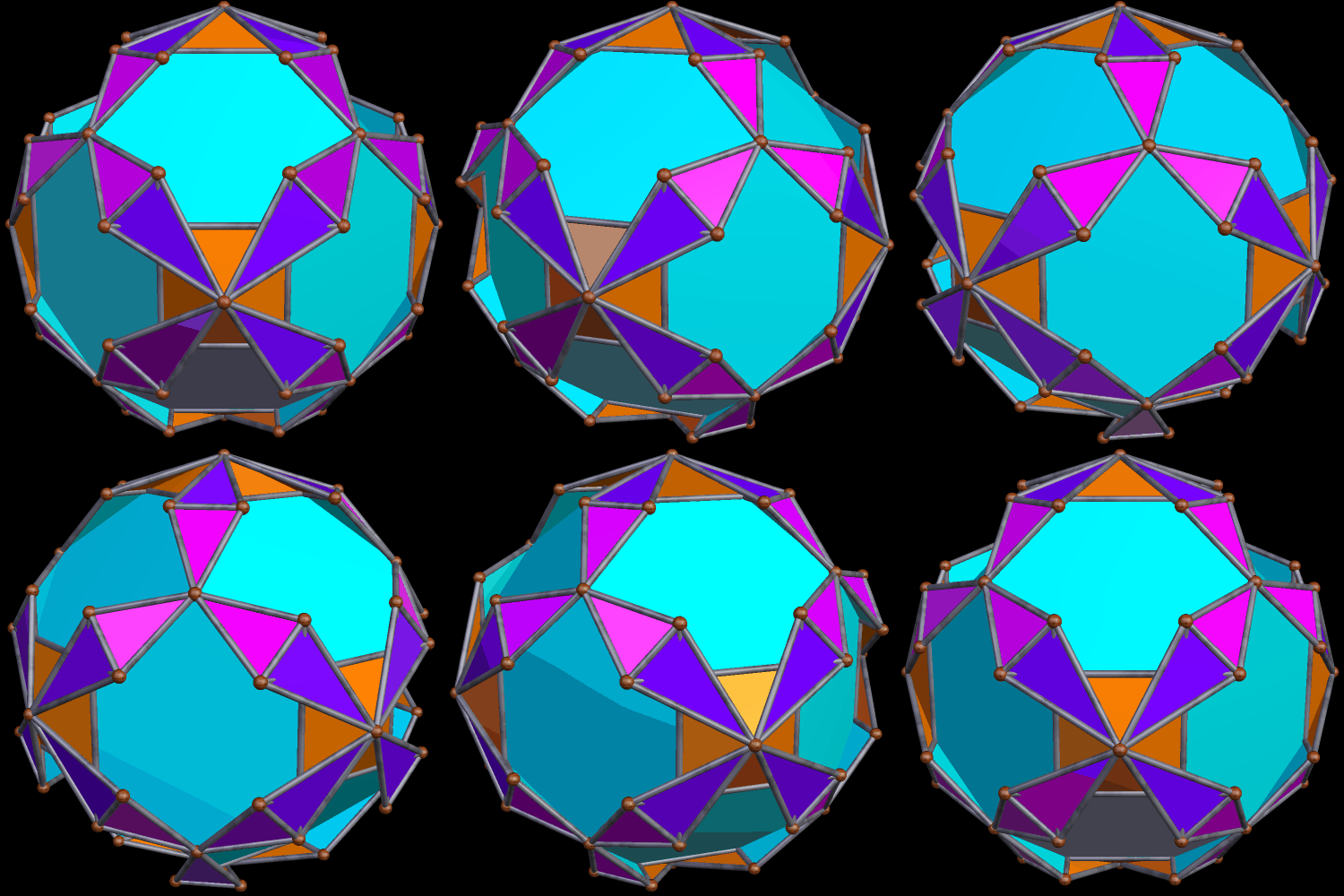
I make these transformations of polyhedra, and create these virtual models, using a program called Stella 4d. It may be purchased, or tried for free, at http://www.software3d.com/Stella.php.
 I created this using Stella 4d, available at http://www.software3d.com/Stella.php.
 RobertLovesPi.net