
In the image above, which I stumbled upon using Stella 4d (available here), the tetrahedra are elongated. If they are regular, instead, the same arrangement looks very different:

In the image above, which I stumbled upon using Stella 4d (available here), the tetrahedra are elongated. If they are regular, instead, the same arrangement looks very different:
The strombic icositetrahedron is the dual of the rhombcuboctahedron, and has many interesting polyhedra in its stellation-series. Here are a few of them, starting with the 10th stellation.

Here’s the strombic icositetrahedron’s 16th stellation:
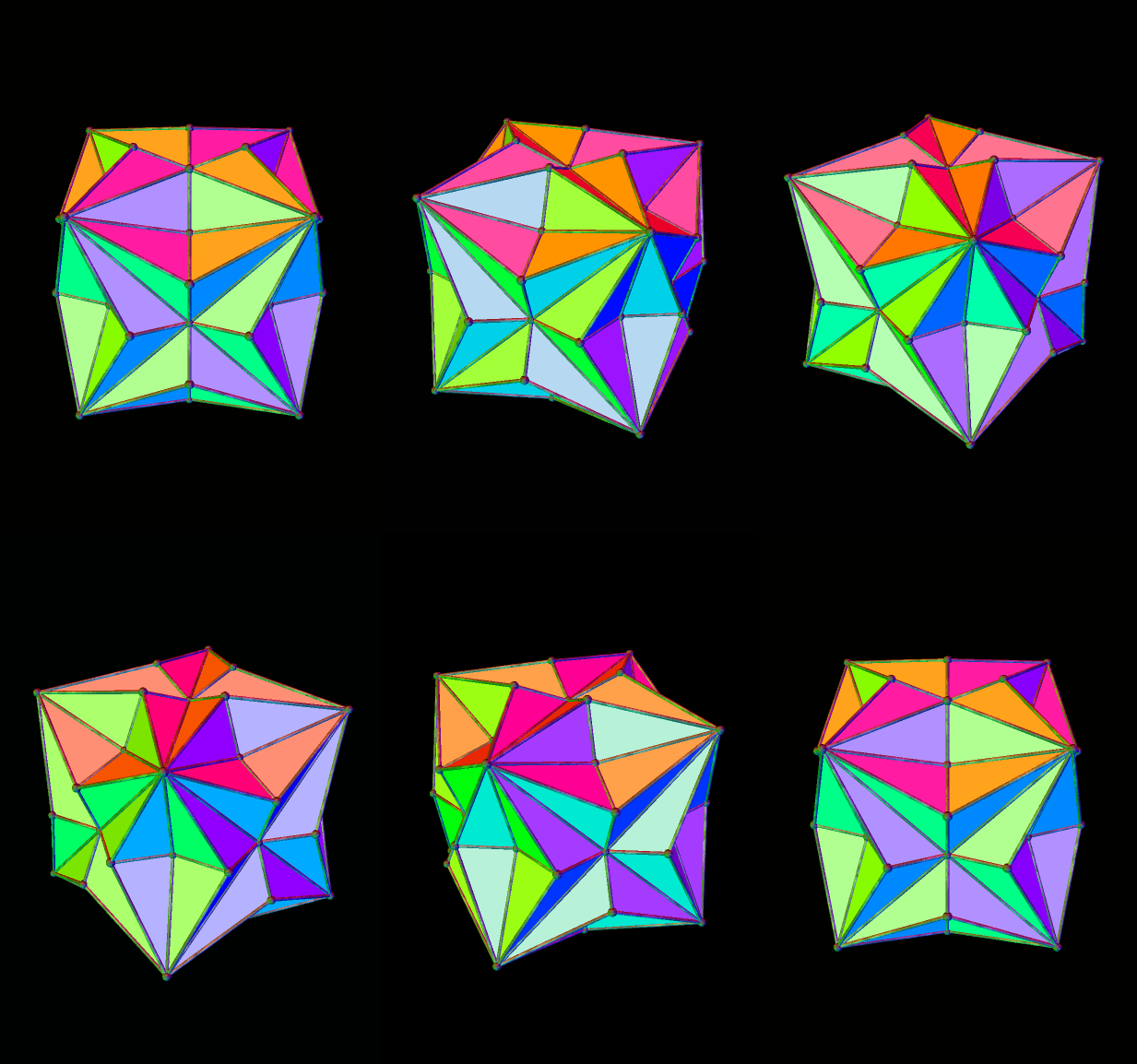
And the 19th:
 And the 21st:

And the 23rd:
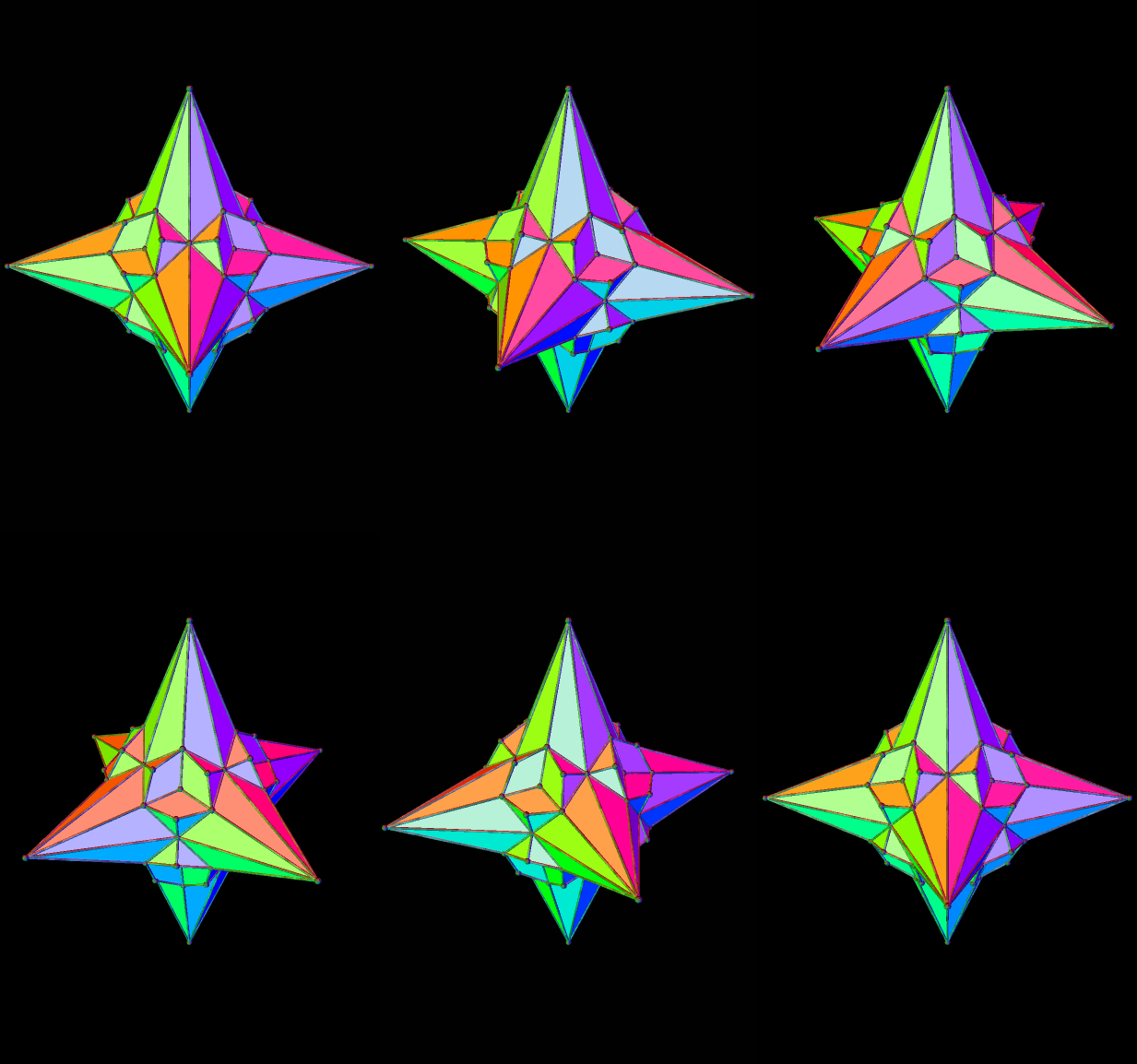
And the 25th:

And the 26th:
 Next, the 28th stellation. It isn’t colored as the other stellations above are colored, simply because it is also a compound of six off-center square-based pyramids.
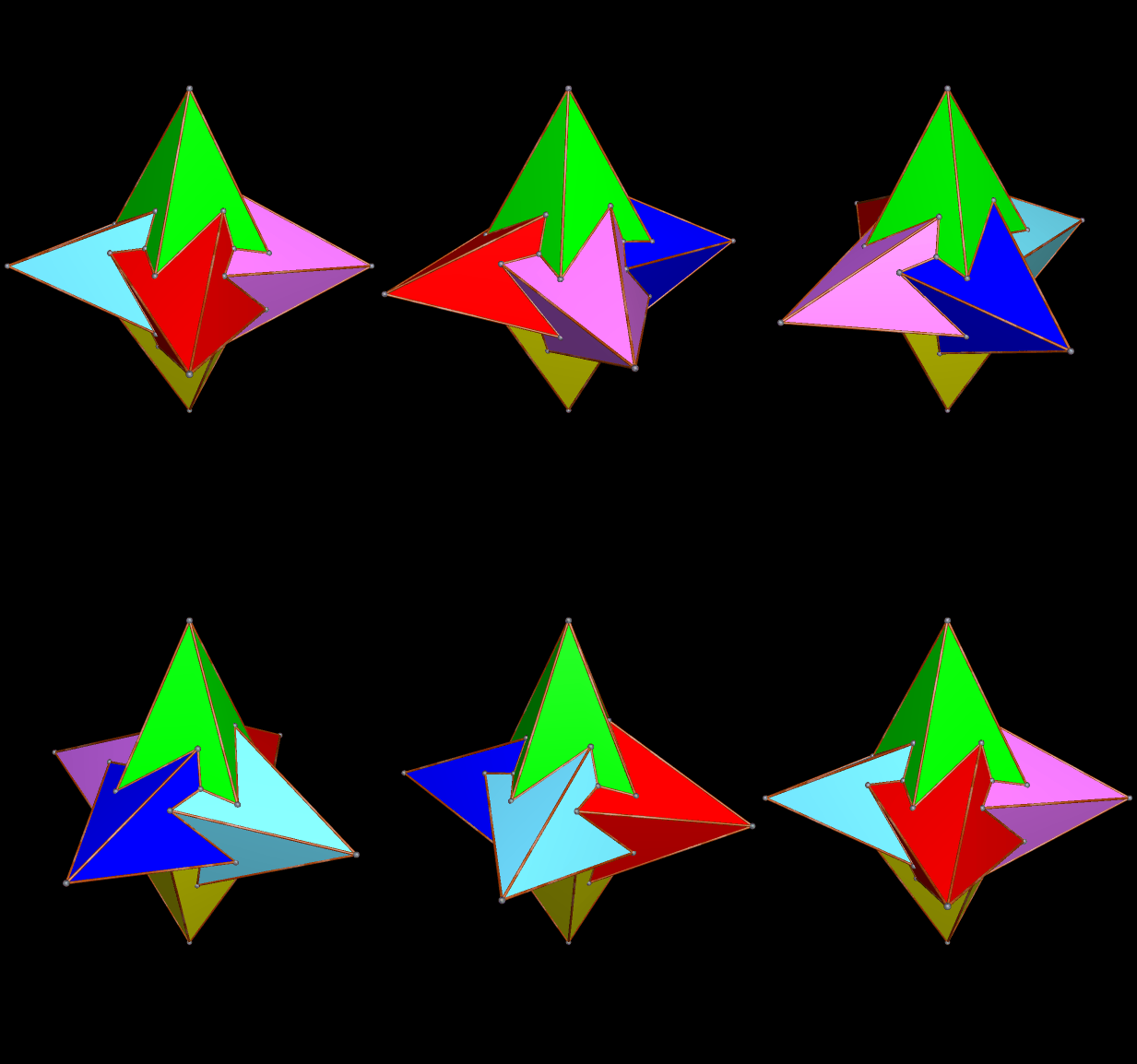
The 34th stellation is even more interesting. It’s a symmetrical four-part compound, but the component polyhedra have irregular faces, and are much less symmetrical than the compound itself.

Here is the 37th stellation in this series:
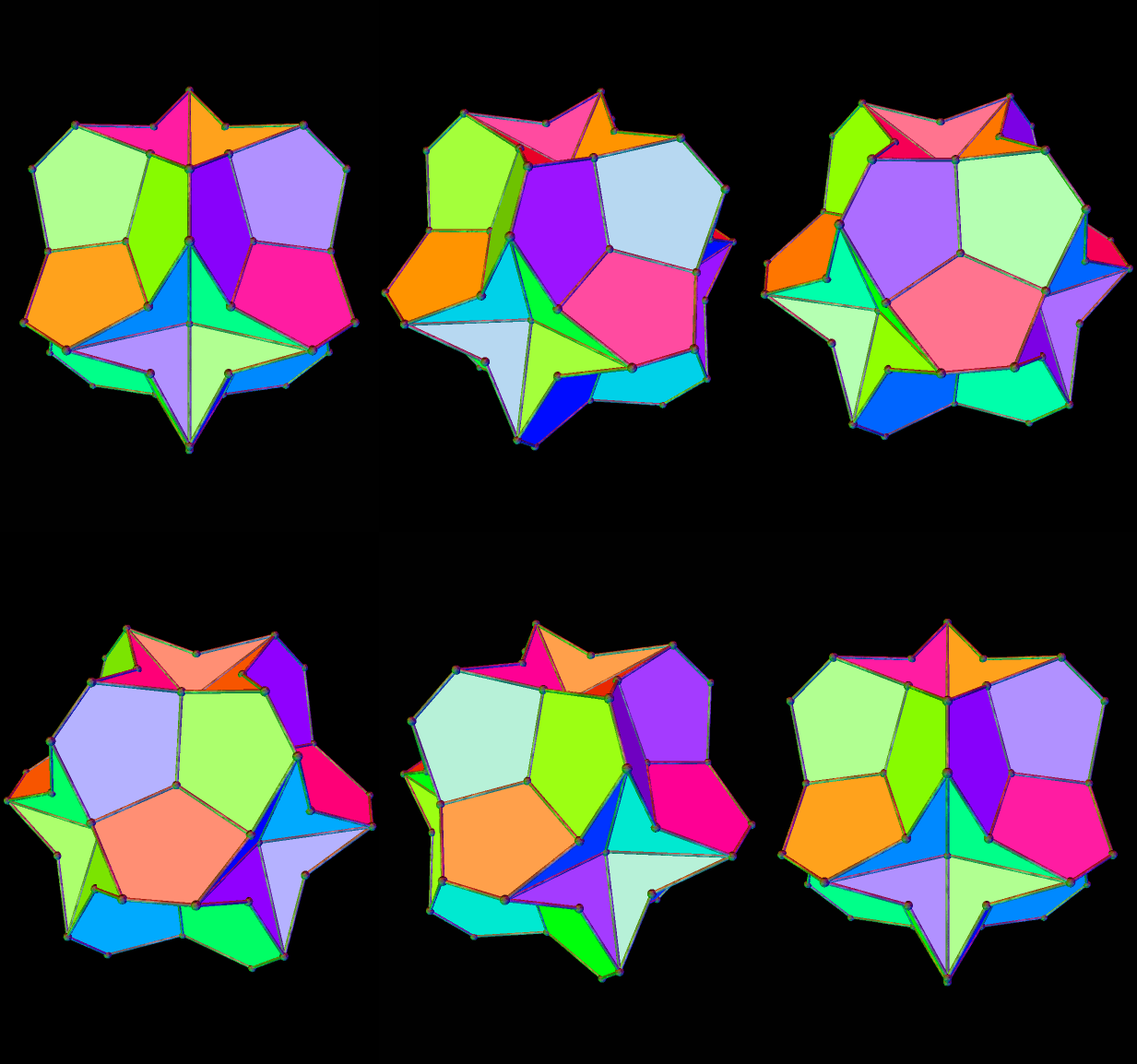
And the 43rd:

And the 44th:
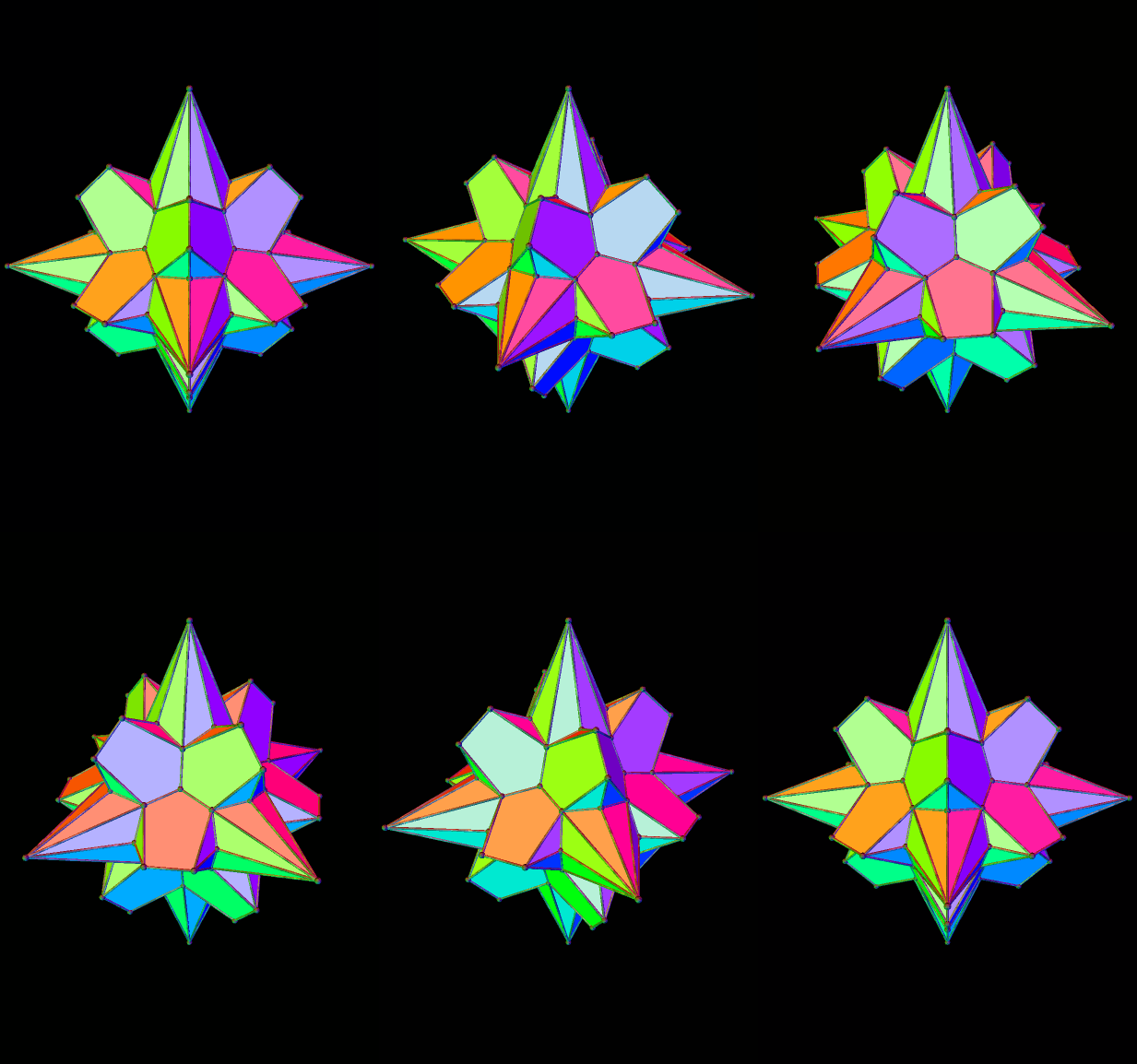 The 59th stellation in this series is an octahedron, with each face excavated by short, triangle-based pyramids. It can also be seen as a compound of three shortened square-based dipyramids, but coloring it as a compound proved difficult, so it is presented here in rainbow-color mode:

Here’s the 61st stellation:

And the 68th:

And the 71st:

And the (quite different from the 71st) 72nd stellation:
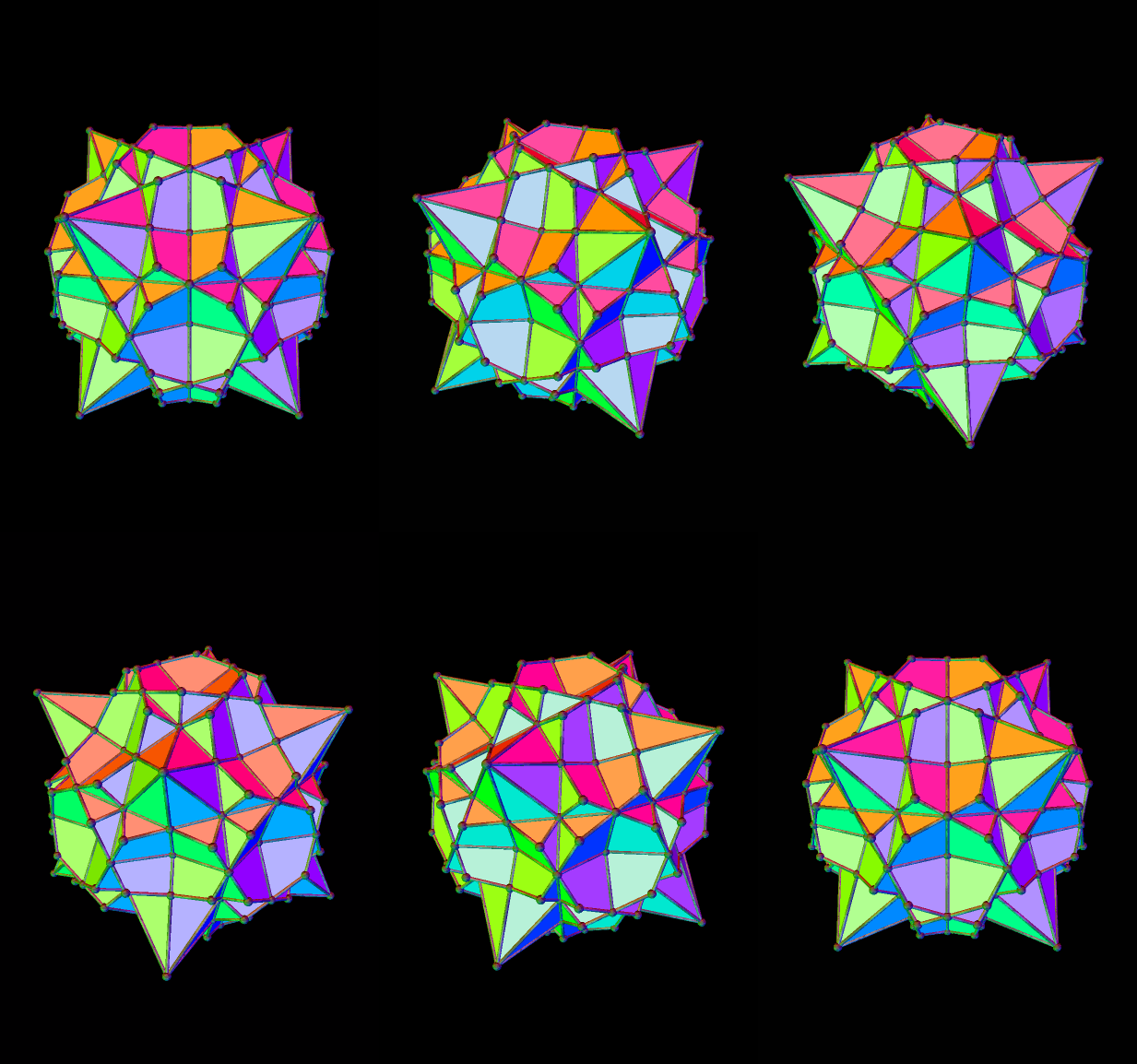
And the 73rd:
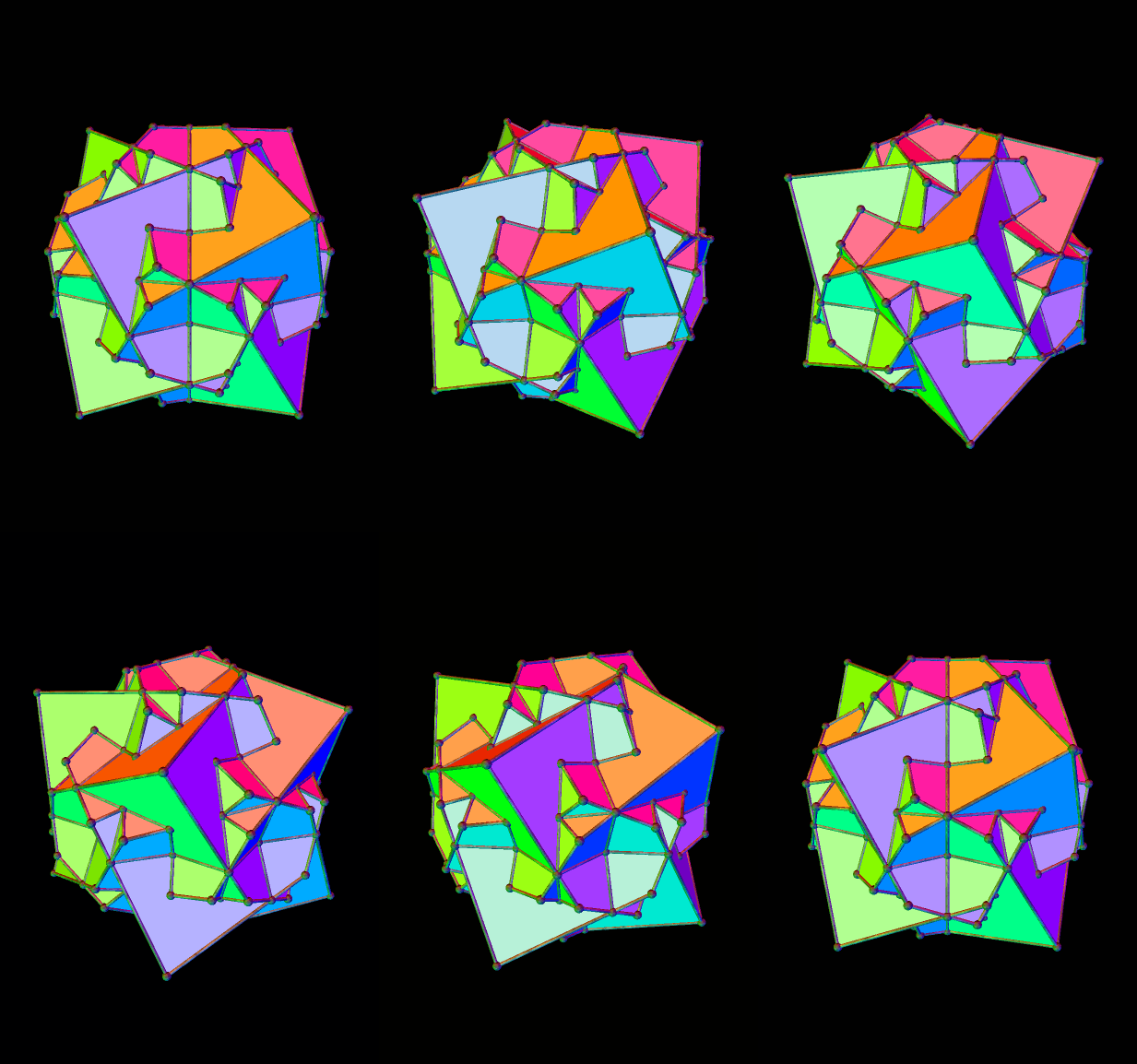
And, finally, the 74th, which is an interesting two-part compound.

And the 79th:
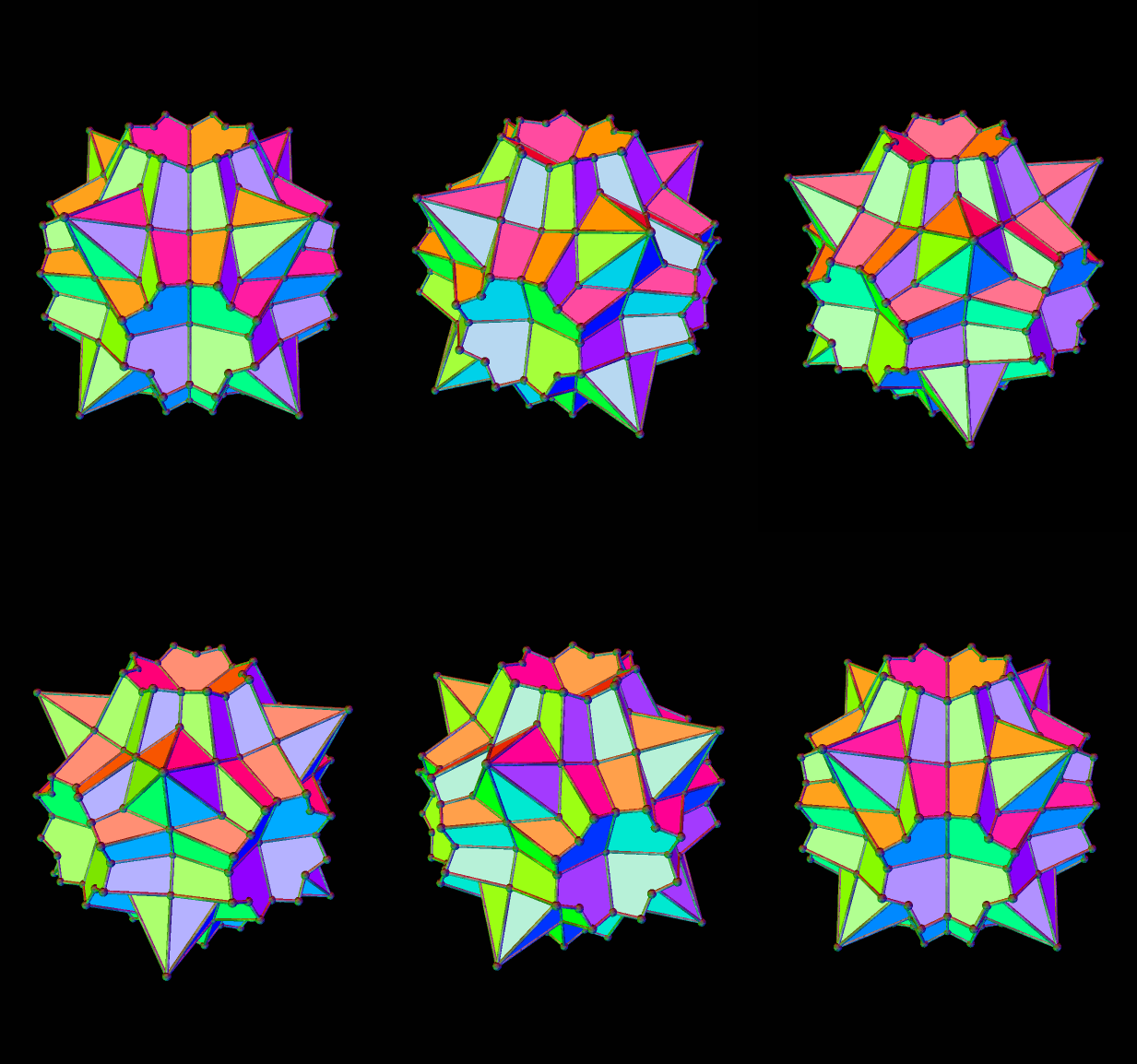
And the 82nd stellation:
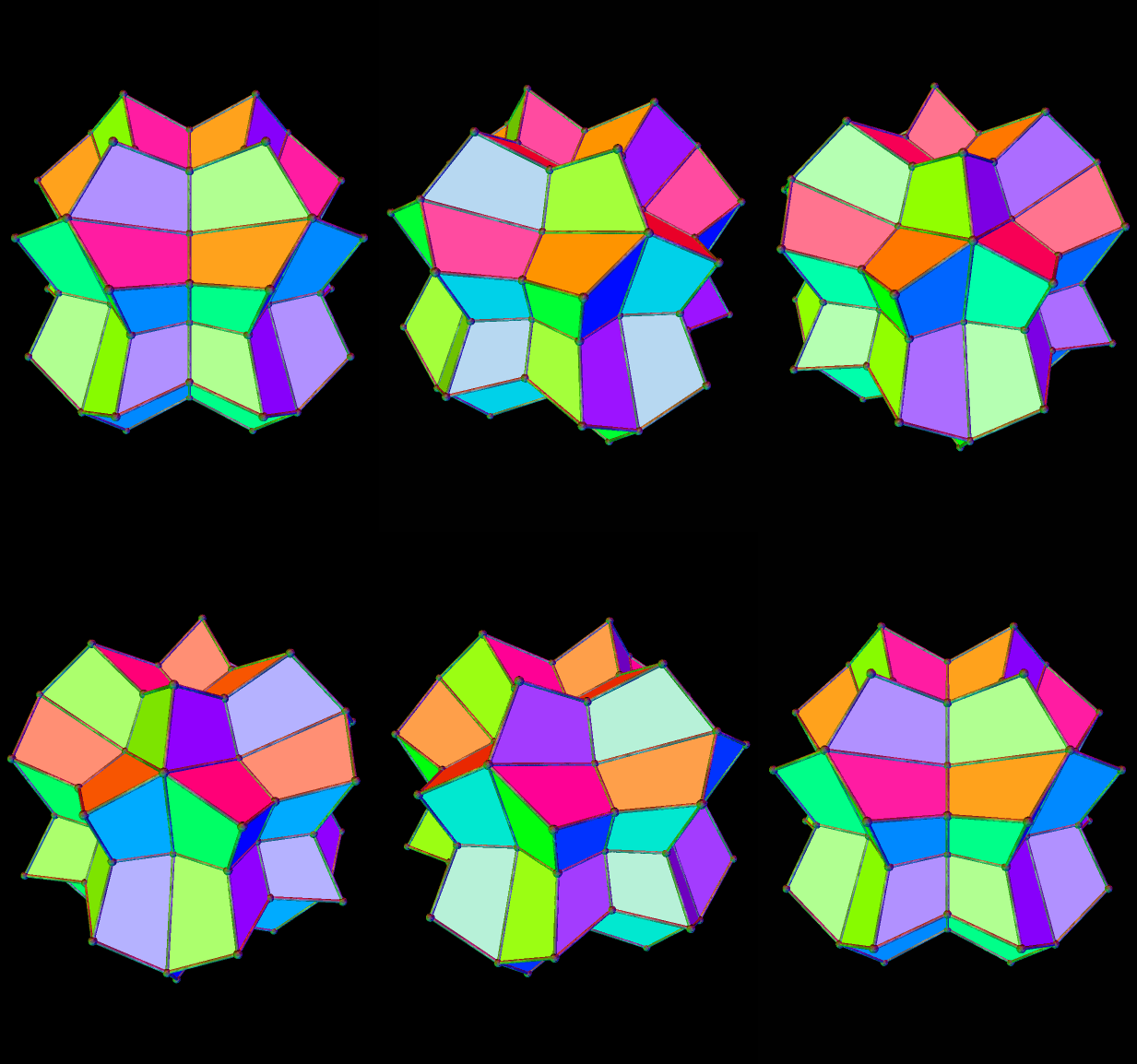
The last one I’m showing here is the 93rd stellation, another four-part compound.

All these images were created using Stella 4d: Polyhedron Navigator, which you may try for yourself at http://www.software3d.com/Stella.php.

I made this using Stella 4d, which you can try right here. In addition to being a compound of trapezohedra, it is also the sixth stellation of the triakis octahedron, the dual of the truncated cube.

I made this using Stella 4d: Polyhedron Navigator. You may try this program for free at http://www.software3d.com/Stella.php.
I just learned these things are officially called orthodiagonal quadrilaterals. I’ve been calling them Qw⊥Ds (pronounced “quids”) for years, have studied their properties, and have even tested students’ knowledge of Qw⊥D esoterica.
 Obviously, on grounds of symmetry alone, it is easy to determine that Qw⊥Ds include all squares. With congruent triangles, it is also possible to prove that all rhombi, kites, and darts are Qw⊥Ds.
As for other parallelograms, such as the rectangle, they are Qw⊥Ds iff they are also rhombi. No non-rhomboidal parallelograms have perpendicular diagonals.
With no parallel sides, altering darts and kites to make their diagonals off, slightly, from being perpendicular would be easy. In the process, though, the figure would lose its “dartness” or “kiteness.”
With exactly one pair of parallel sides — what most Americans call “trapezoids” (that word has multiple, troublesome definitions) — things get more messy. A non-isosceles trapezoid (lower left) can either have perpendicular diagonals (red) or not (yellow). As can be seen at the lower right, the same is true of isosceles trapezoids.

The next one is a compound of eight off-center pyramids. By this point, I had gone so far into the stellation-series (a search I began when preparing the post before this one) that I had lost count.

This one is a compound of three short square-based dipyramids:

This one, according to Stella 4d, is a compound of three parts, but I can’t quite figure out what the parts are!

Here is another “mystery compound,” this one with two parts:

Stella 4d, which I used to make these, may be tried here.
The 16th stellation of the tetrakis cube, the dual of the truncated octahedron, is a compound of three elongated octahedra, or square dipyramids:

The 65th stellation of this same polyhedron is of another compound of dipyramids, but these are triangular dipyramids with obtuse faces, and there are four of them:
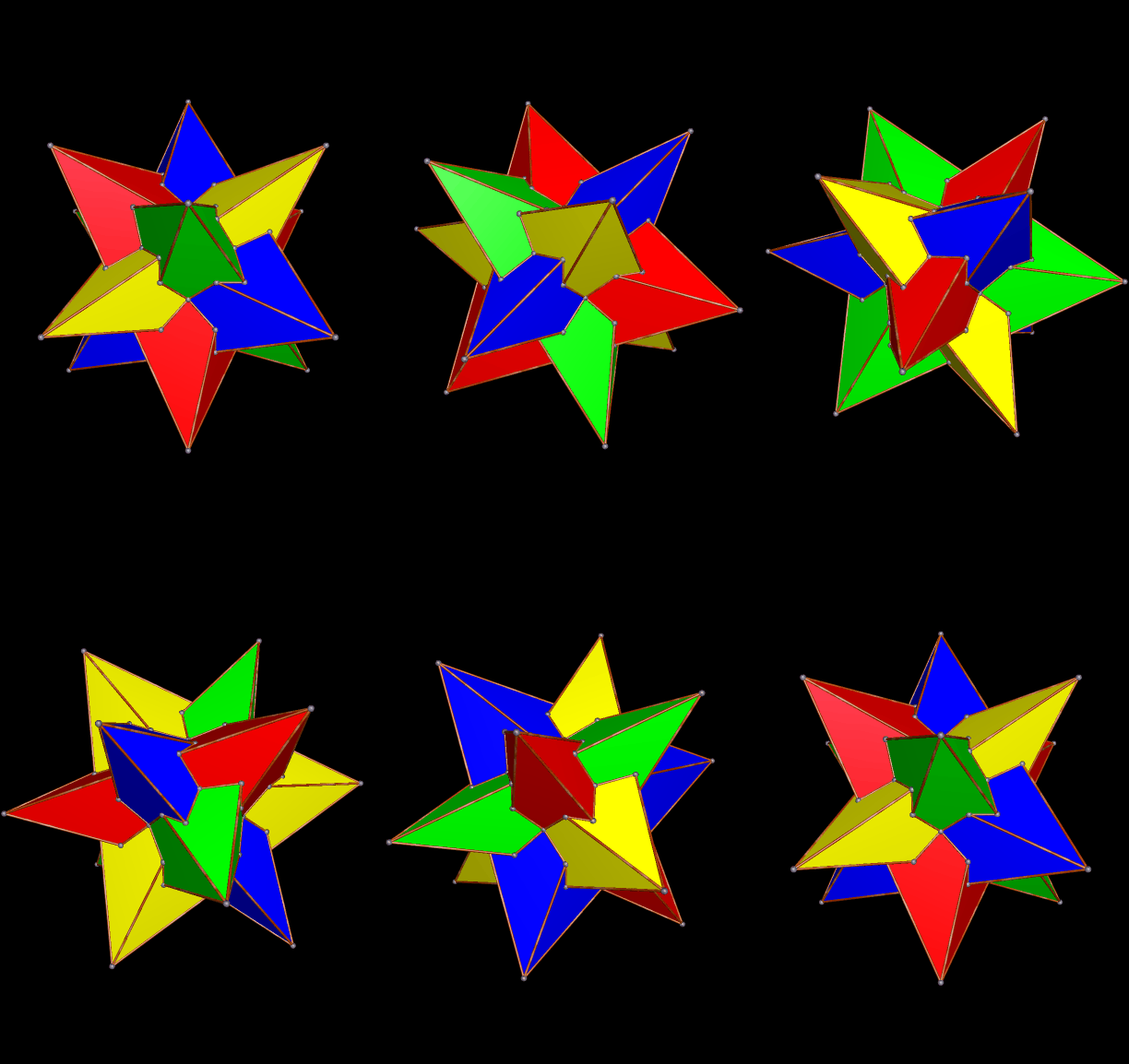
I generated both of these images with Stella 4d: Polyhedron Navigator, available right here.
The images shown on the faces of these dodecahedra appeared in the last post, and were made using Geometer’s Sketchpad and MS-Paint.
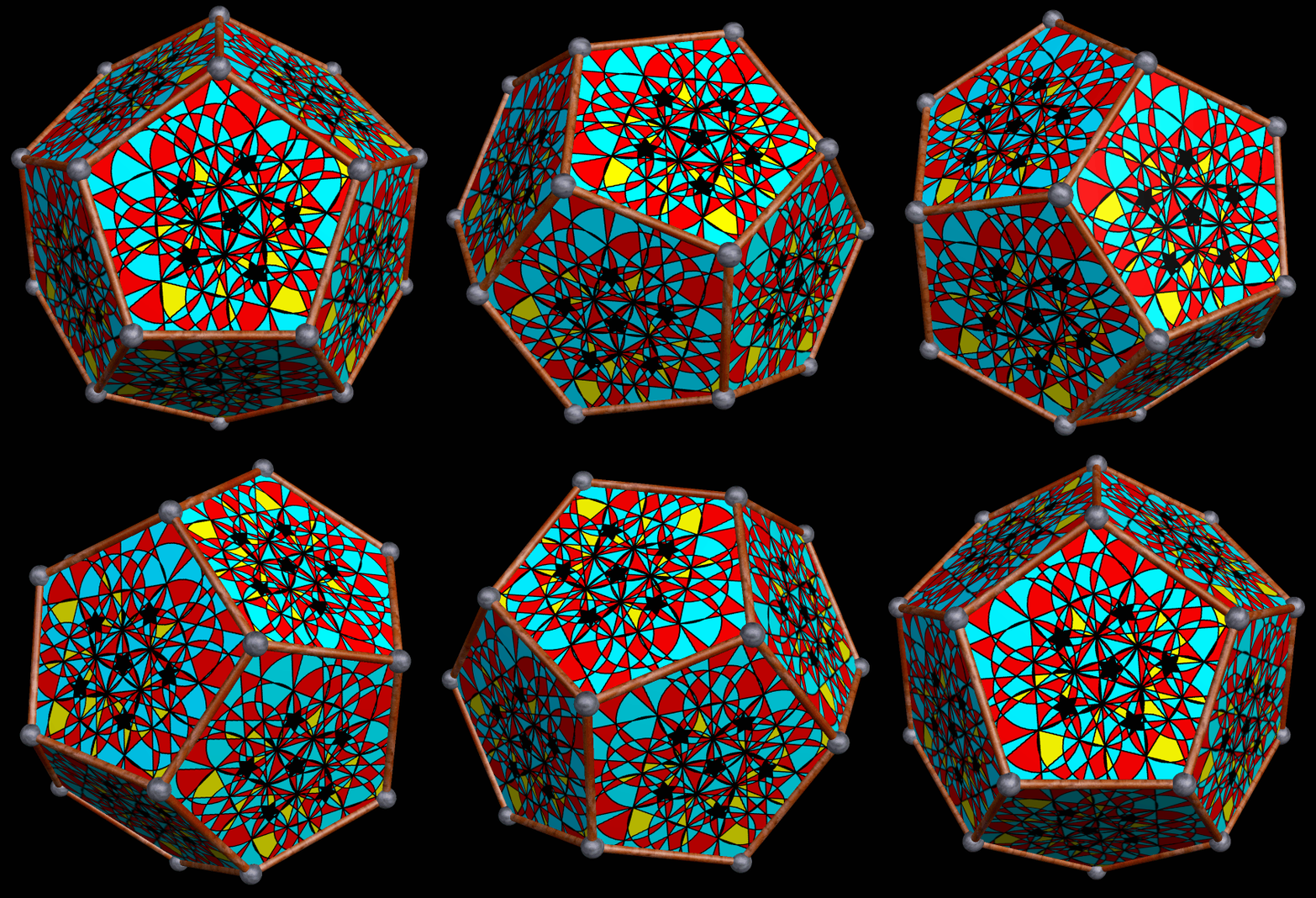 Assembling the polyhedral images and creating these rotating .gif files required another program, Stella 4d, which is available at http://www.software3d.com/Stella.php.


I can’t think of any good reasons for geometricans not to have their own space station, and I know what we’d do there: we’d work on geometry (also known informally as “playing with shapes”).
My suggestion for this space station’s design was created with Stella 4d, and you may find that program (to try or guy) here: http://www.software3d.com/Stella.php.

Check out http://www.software3d.com/stella.php to try the software used to make this image.
 RobertLovesPi.net