A 102-Faced Polyhedron Featuring Regular Pentadecagons

Image

A 102-Faced Polyhedron Featuring Regular Pentadecagons

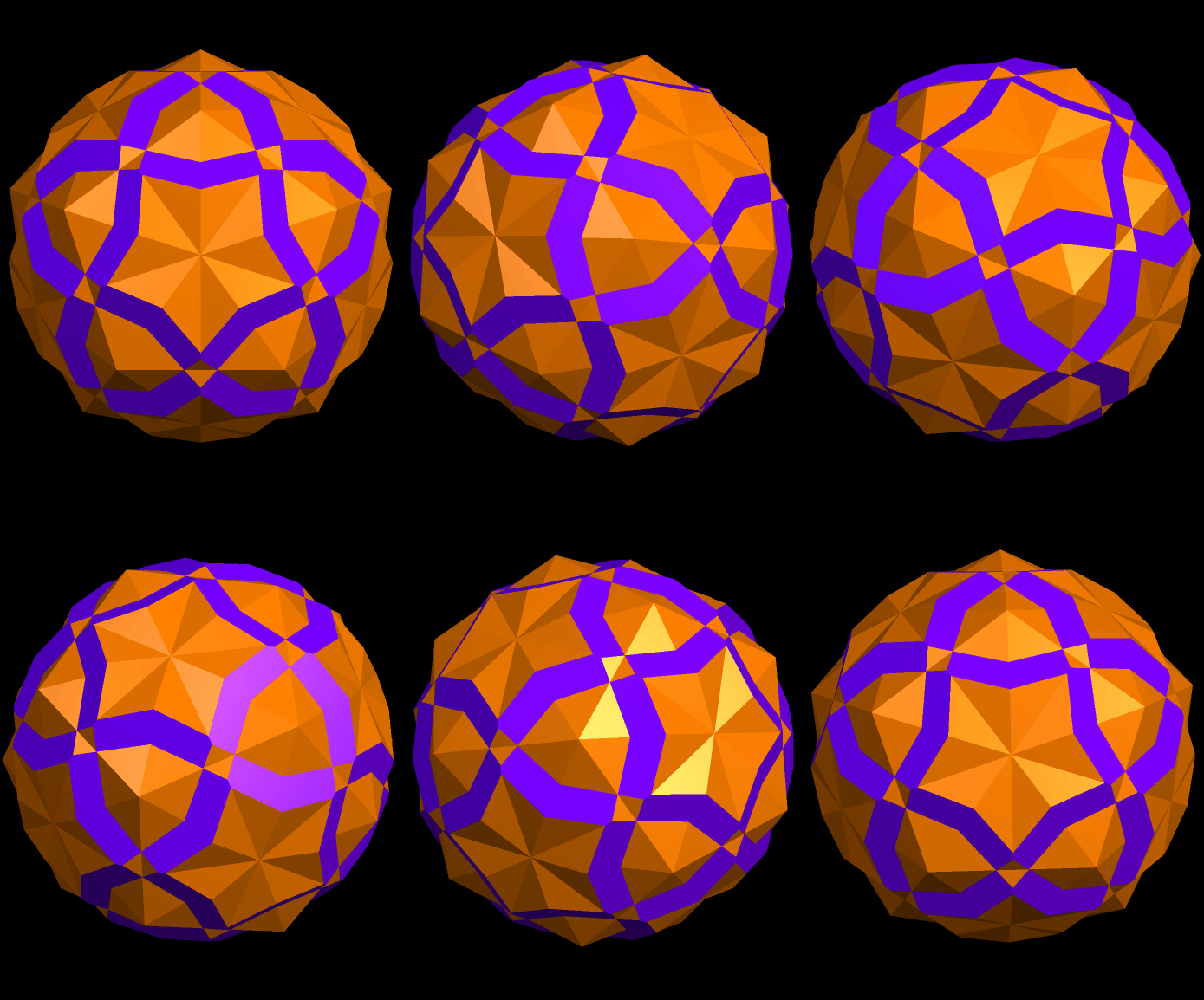
This is a stellation of a slightly-modified version of the second polyhedron shown in the last post here. It includes twelve regular pentadecagons, thirty rectangles, and sixty irregular pentagons, grouped in twenty sets of three pentagons each.

Software credit: please visit http://www.software3d.com/Stella.php if you’d like to try a free trial download of Stella 4d, the program I use to make these virtual models.

Two Symmetrohedra Featuring Regular Pentadecagons

Image

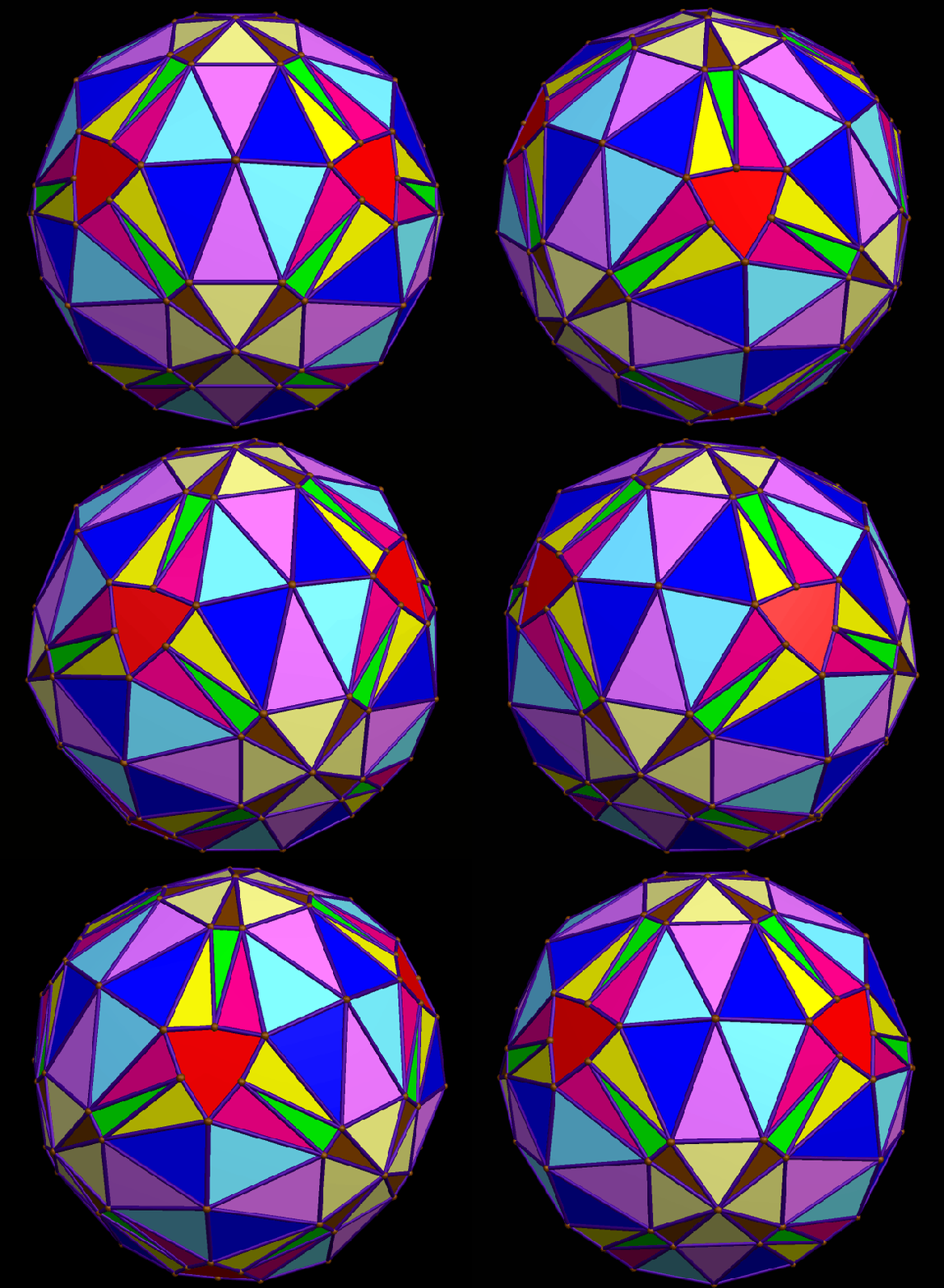
92 faces including 20 reg hexagons and 12 regular pentadecagons

I’ve posted “bowtie” symmetrohedra on this blog, before, which I thought I had discovered before anyone else — only to find, later, that other researchers had found the exact same polyhedra first. Those posts have now been edited to include credit to the original discoverers. With polyhedra, finding something interesting, for the first time ever, is extremely difficult. This time, though, I think I have succeeded — by starting with the idea of using regular pentadecagons as faces.

Software credit: Stella 4d was the tool I used to create this virtual model. You can try a free trial download of this program here: http://www.software3d.com/Stella.php.

*** *** ***

Update:  once again, I have been beaten to the punch! A bit of googling revealed that Craig Kaplan and George Hart found this particular symmetrohedron before I did, and you can see it among the many diagrams in this paper: http://archive.bridgesmathart.org/2001/bridges2001-21.pdf.

You’ll also find, in that same paper, a version of this second pentadecagon-based symmetrohedron:

15_2

There is a minor difference, though, between the Kaplan-Hart version of this second symmetrohedron, and mine, and it involves the thirty blue faces. I adjusted the distance between the pentadecagons and the polyhedron’s center, repeatedly, until I got these blue faces very close to being perfect squares. They’re actually rectangles, but just barely; the difference in length between the longer and shorter edges of these near-squares is less than 1%. I have verified that, with more work, it would be possible to make these blue faces into true squares, while also keeping the pentadecagons and triangles regular. I may actually do this, someday, but not today. Simply constructing the two symmetrohedra shown in this post took at least two hours, and, right now, I’m simply too tired to continue!

Polyhedral Quilt Pattern

Image

Polyhedral Quilt Pattern II

I made this using Stella 4d, which you may try for free at http://www.software3d.com/Stella.php.

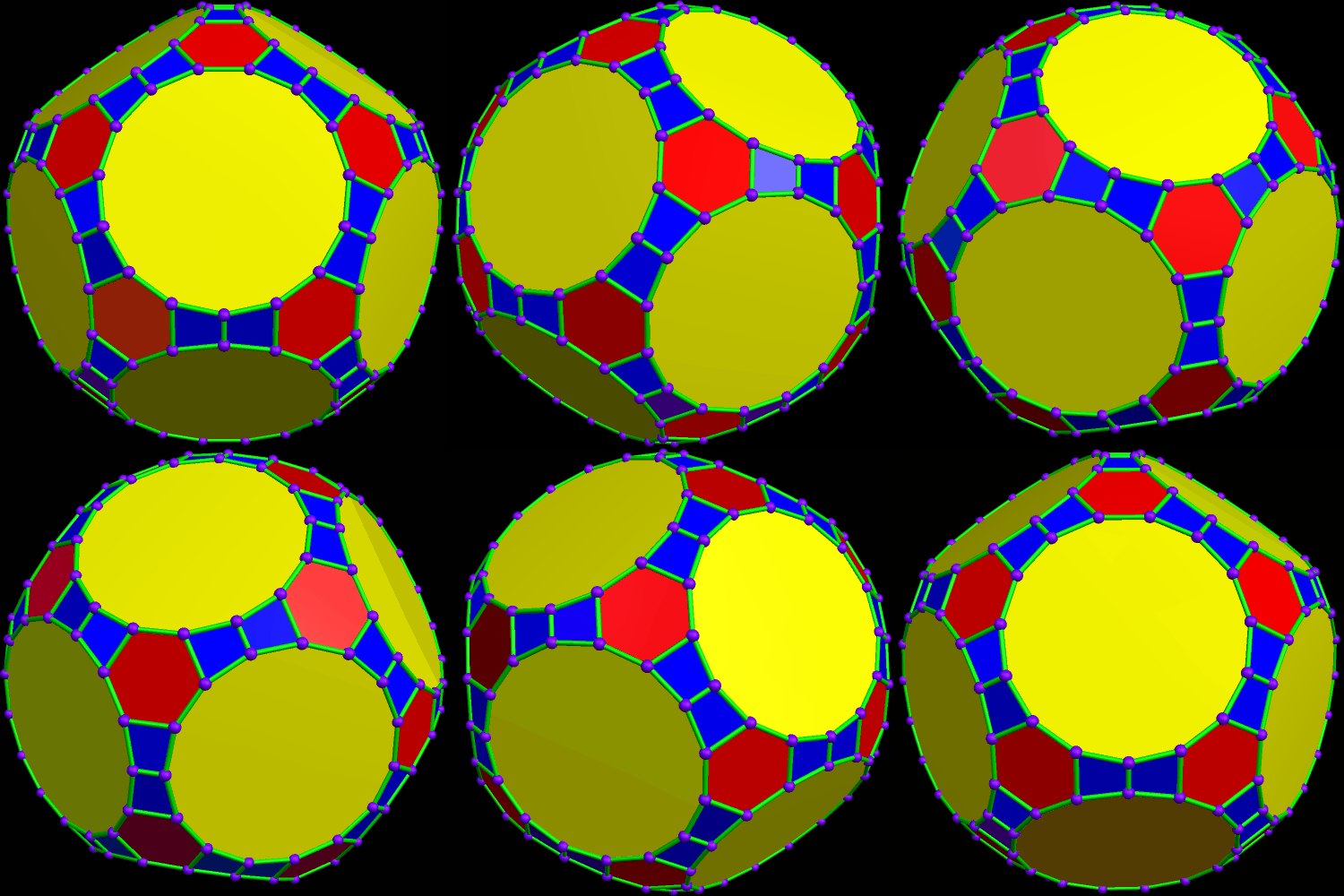
A Rotating Great Rhombicosidodecahedron, with Spinning Mandalas On Its Faces

Image

A Rotating Great Rhombicosidodecahedron, with Spinning Mandalas On Its Faces

This polyhedron is also known as the truncated icosidodecahedron. However, I prefer the name which appears in the title of this post.

I made the image which appears on each face with Geometer’s Sketchpad and MS-Paint, and then used Stella 4d to project this image onto each face of this polyhedron, and create this rotating .gif image.

If you’d like to try Stella 4d for free, just visit this site: http://www.software3d.com/Stella.php. To my knowledge, a free trial download is only available for Stella 4d, but not for the other programs mentioned above.

Only Nine School Days Left This Year

Image

Only Nine School Days Left This Year

Due to an unusual amount of Winter weather this school year, the school year where I teach has been extended to June 6, creating what many are calling “the school year that will not end.” It will end, of course, but the already-long wait for Summer vacation is getting to many of us — students, parents, teachers, and administrators alike.

The countdown is now at nine school days left: four next week, and five the week after that. In honor of this point in the countdown, I created this image based on the number nine, using Geometer’s Sketchpad and MS-Paint.

Stained-Glass Polyhedron

Image

Stained-Glass Polyhedron

Created using Stella 4d, software available at http://www.software3d.com/Stella.php.

Cuboctahedron with Mandalas

Image

Cuboctahedron with Mandalas

The images on the faces of this polyhedron may be seen in still black and white in the previous post. I used Geometer’s Sketchpad and MS-Paint to make the flat image, and then Stella 4d to put it all together. You may try Stella for free at http://www.software3d.com/Stella.php.

A Snowflake Made of Circles

Image

A Snowflake Made of Circles

20-Thex: A Four-Dimensional Polytope

Image

The 20-Thex:  A Four-Dimensional Polytope

In hyperspace, or four-space, there are six regular polychora, analogous to the Platonic Solids in three-space. Beyond the Platonics in the study of polyhedra comes, of course, the Archimedean Solids, which include many truncated forms of Platonic polyhedra.

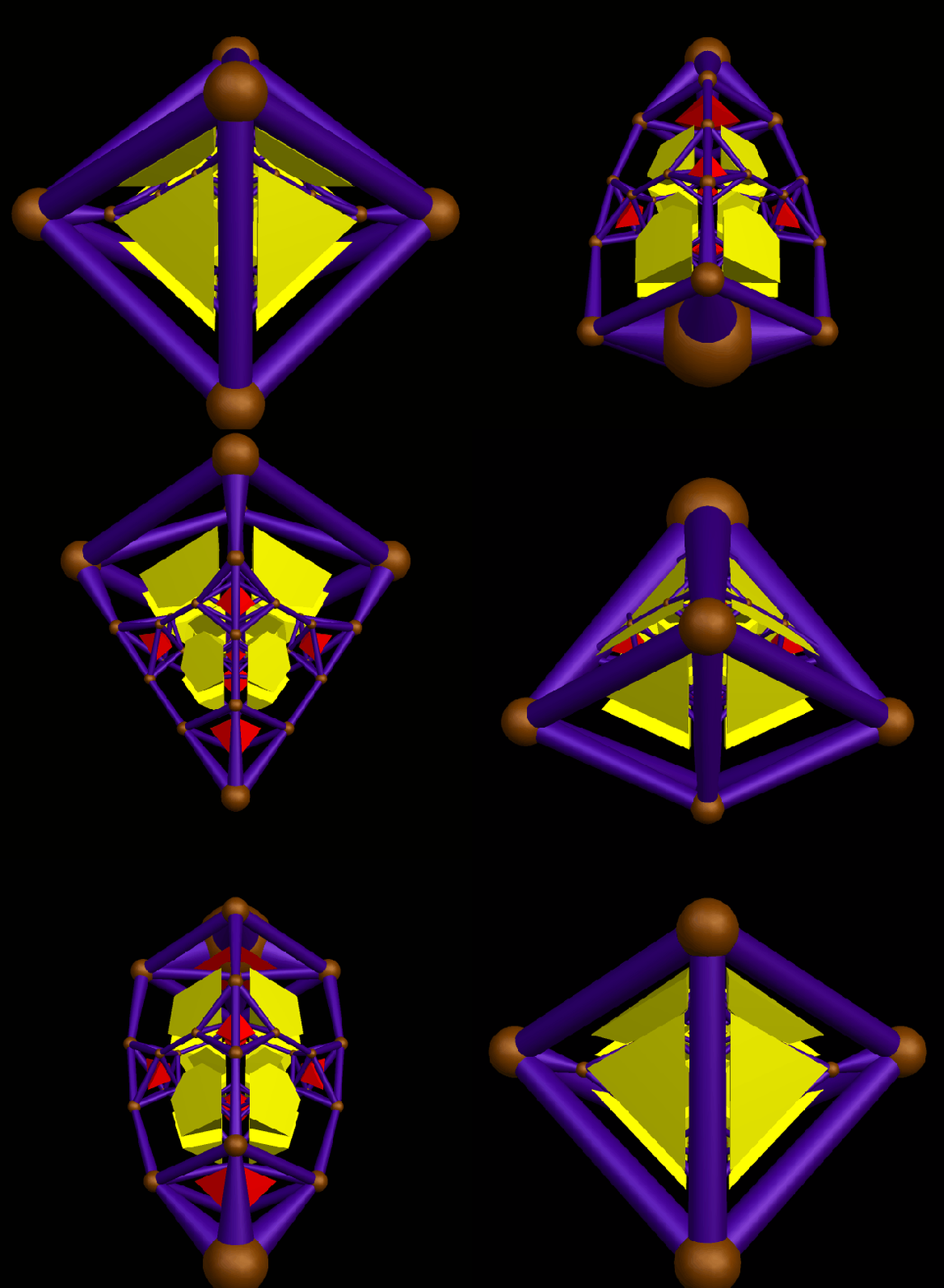
In hyperspace, there are varieties of progressively-less regular polychora, also, and one of these, in a group called the truncates, is called 20-thex, or simply the “thex.” (Those are short names for this polychoron; it’s also called the truncated hexadecachoron, or truncated 16-cell.) What you see above is a (seemingly) three-dimensional projection of a thex, as it rotates in hyperspace.

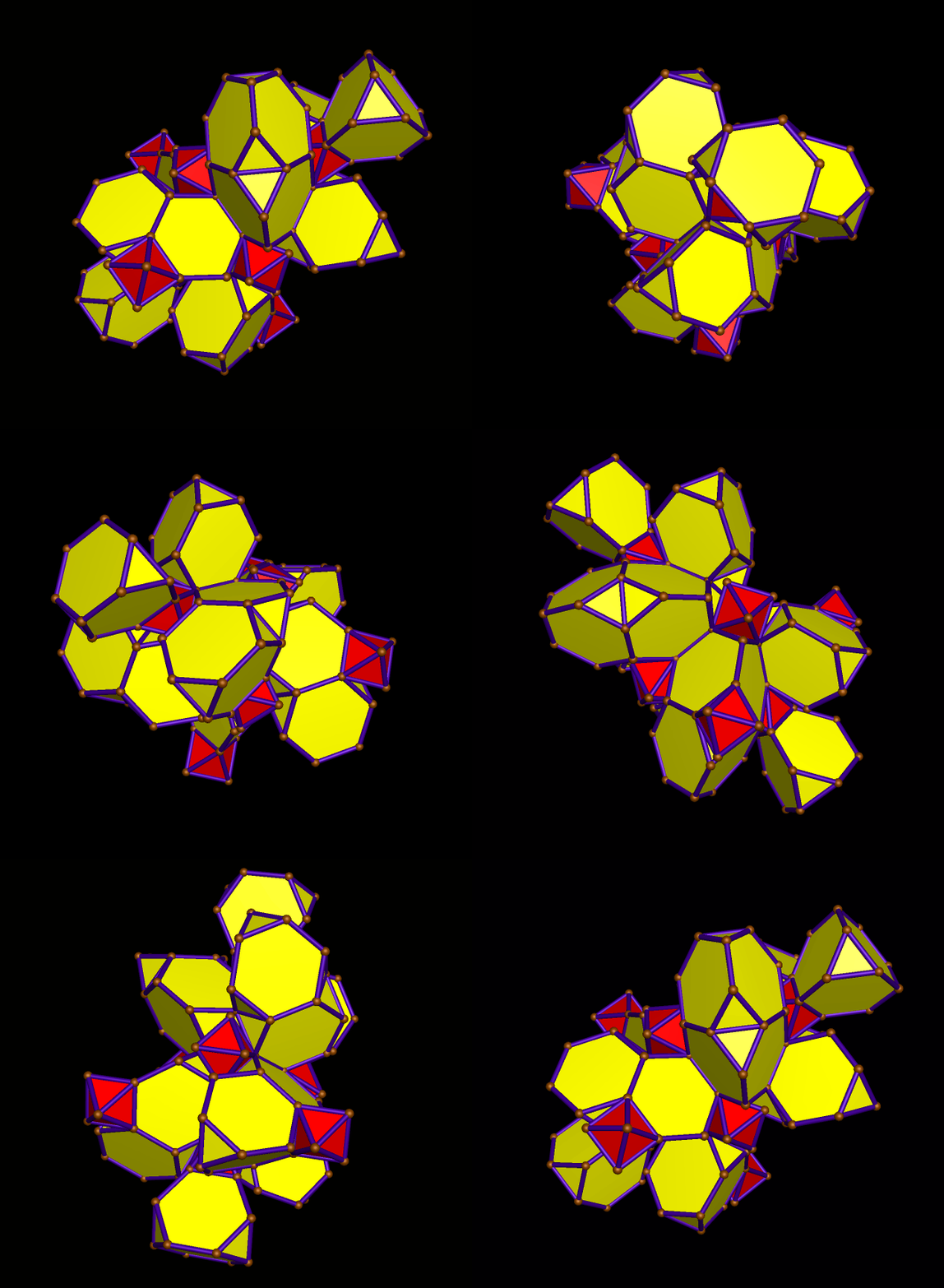
Just as polyhedra have polygons as faces, polychora have polyhedra as unit cells. This is the net for the thex. As you can see, the thex is composed of both truncated tetrahedra and octahedra.

20-Thexnet

Both of these images were created using Stella 4d, which you can try for yourself at http://www.software3d.com/Stella.php.

Twenty Irregular Hexagons, Rotating Around a Common Axis

Image

Twenty Irregular Hexagons, Rotating Around a Common Axis

This image was produced using Stella 4d, which you may try for free, right here: http://www.software3d.com/Stella.php.