
Software credit: see http://www.software3d.com/Stella.php to check out Stella 4d, the program I used to make this. A free trial download is available.
Software credit: see http://www.software3d.com/Stella.php to check out Stella 4d, the program I used to make this. A free trial download is available.

The second image here resulted from stellating the first one many times. It can be enlarged with a click.

The software used to create these rotating images, Stella 4d, may be tried for free at http://www.software3d.com/Stella.php.
These are both in the same stellation-sequence. I made them using Stella 4d, software you can find here: http://www.software3d.com/Stella.php. For the second one, just click on it if you want to make it larger.


As an eight-sided die, this would work better than the Platonic octahedron, for it would roll more smoothly.
Software credit: see http://www.software3d.com/Stella.php.
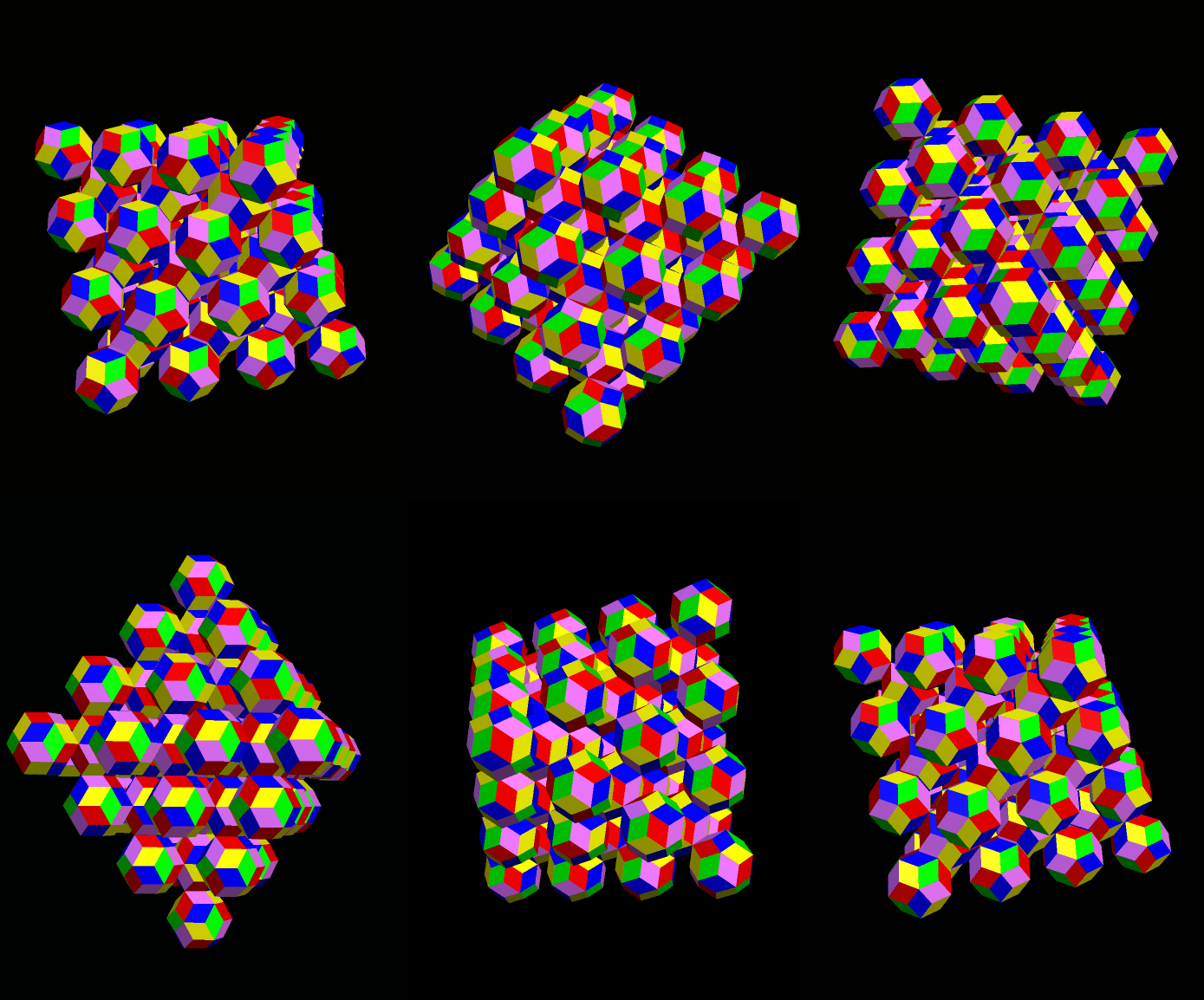
These rhombic triacontahedra (RTCs) are each colored with the symmetrical five-color scheme for that polyhedron. It causes each color to appear six times on each RTC, in positions such that, for a single RTC, a centered x, y, and z axis can penetrate the centers of all six same-color faces.
Since there are five colors, this virtual model may be removed in fifths. The first to go are the green rhombi. (Each of these may be enlarged with a click.)

The next to be removed are the yellow rhombi.
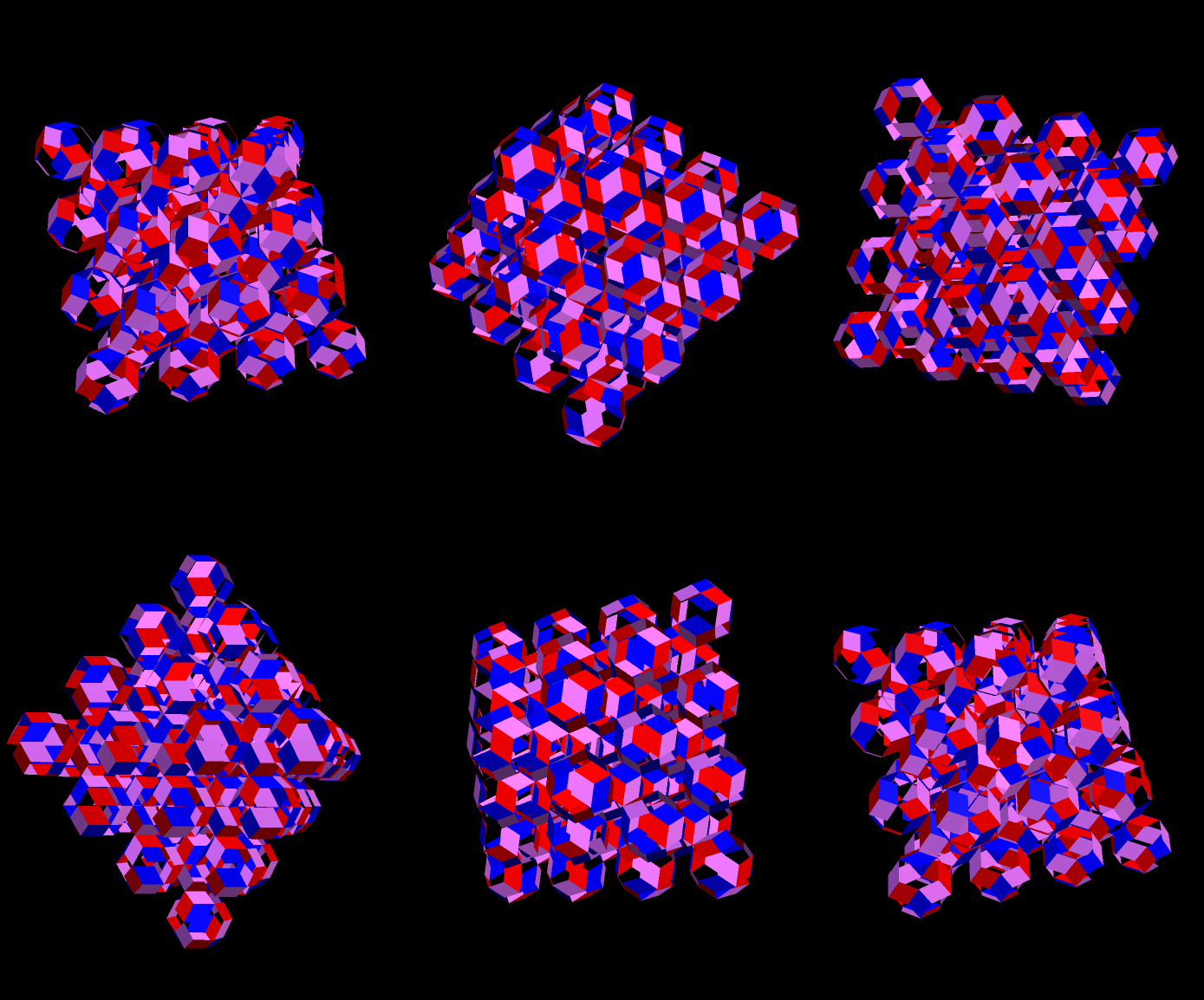
The red ones are next to go.
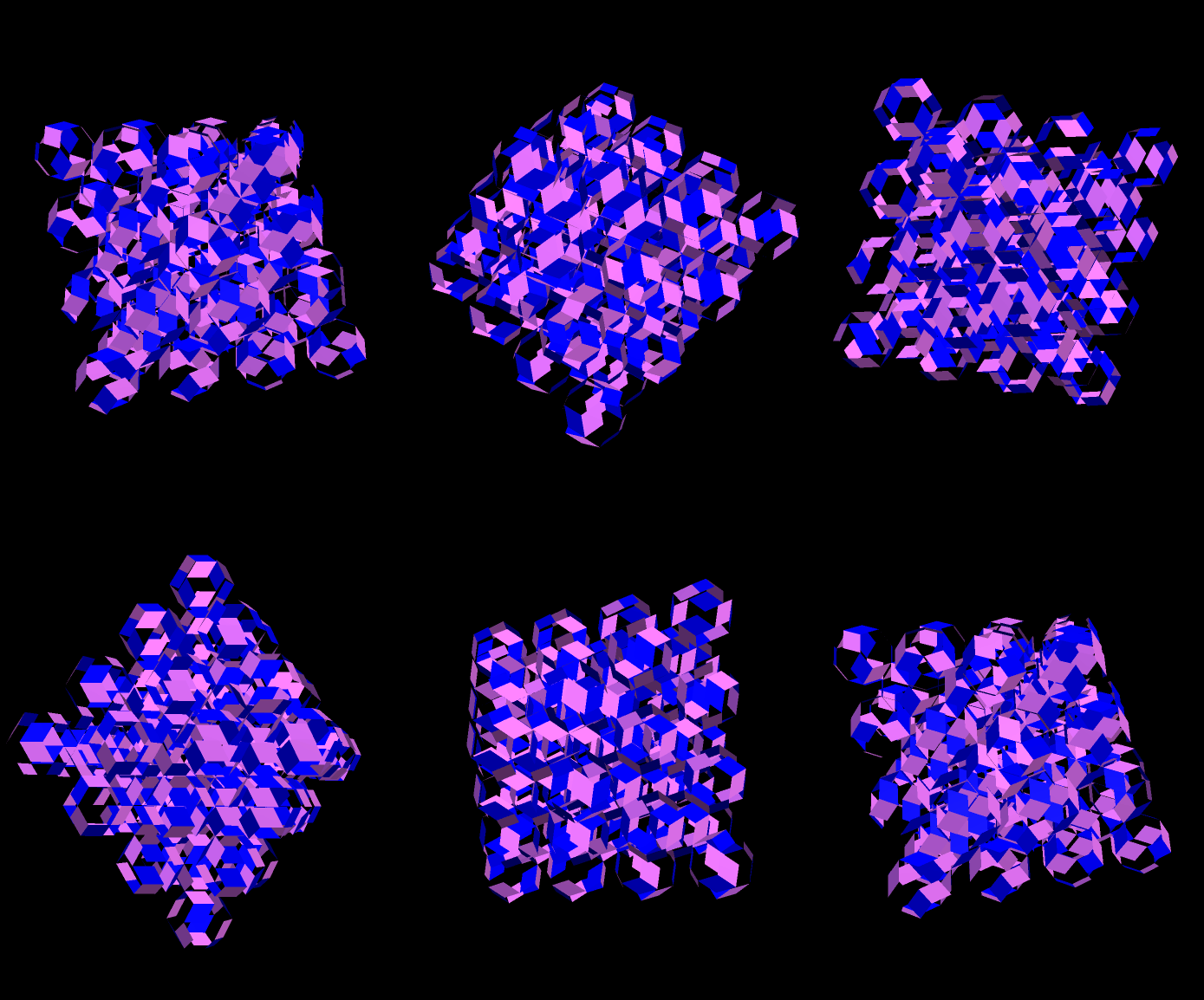
One more fifth vanishes, and only the blue faces are left.

Finally, they are removed as well, but with edges and vertices now shown for the first time, for, otherwise, you’d see nothing here.

Software credit: all images here were created using Stella 4d: Polyhedron Navigator, my favorite polyhedron-manipulation tool. You may try it for yourself as a free trial version, or purchase the fully-functioning version, at http://www.software3d.com/Stella.php.
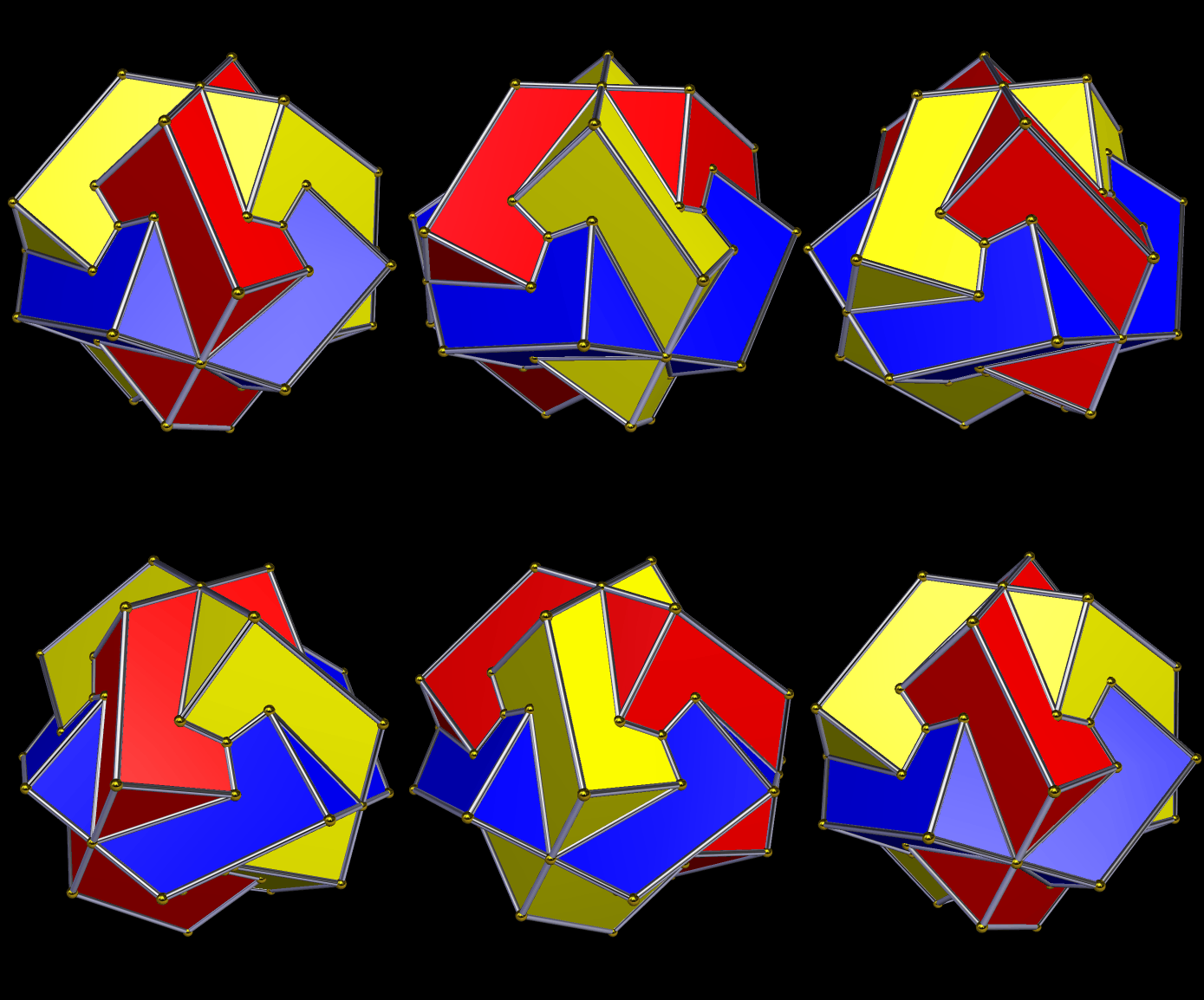
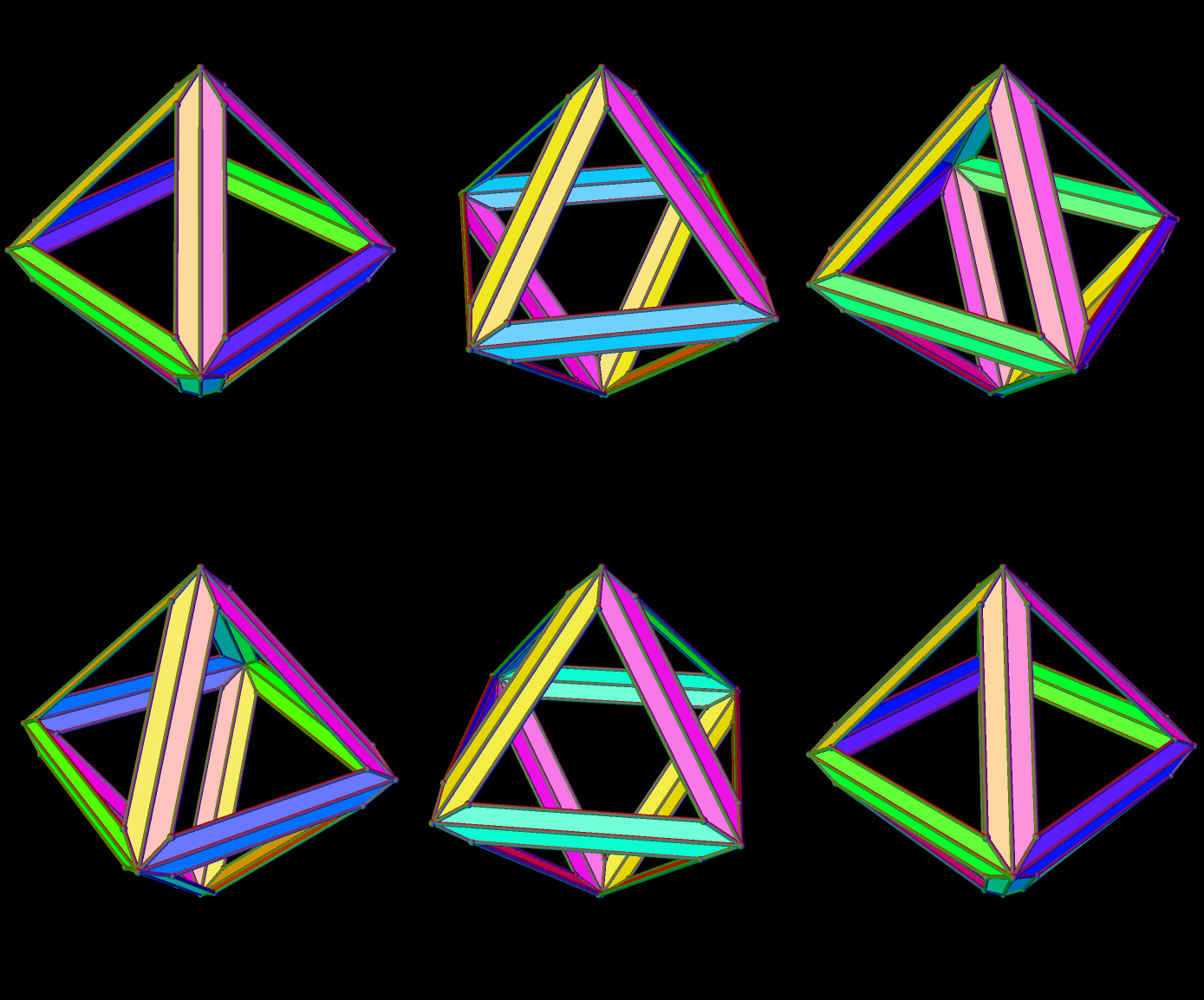
The triakis octahedron, a Catalan solid, is the dual of the truncated cube. When stellated six times, the triakis octahedron yields this polyhedral compound with three parts. The parts themselves appear to be unusual, irregular, dipolar octahedra with eight kites for faces, each in sets of four, with their smallest angles meeting at one vertex. However, given that these vertices are, in each case, hidden under the other parts of the compound, there is uncertainty in this.
(Image created with Stella 4d — software you can try yourself at http://www.software3d.com/Stella.php.)
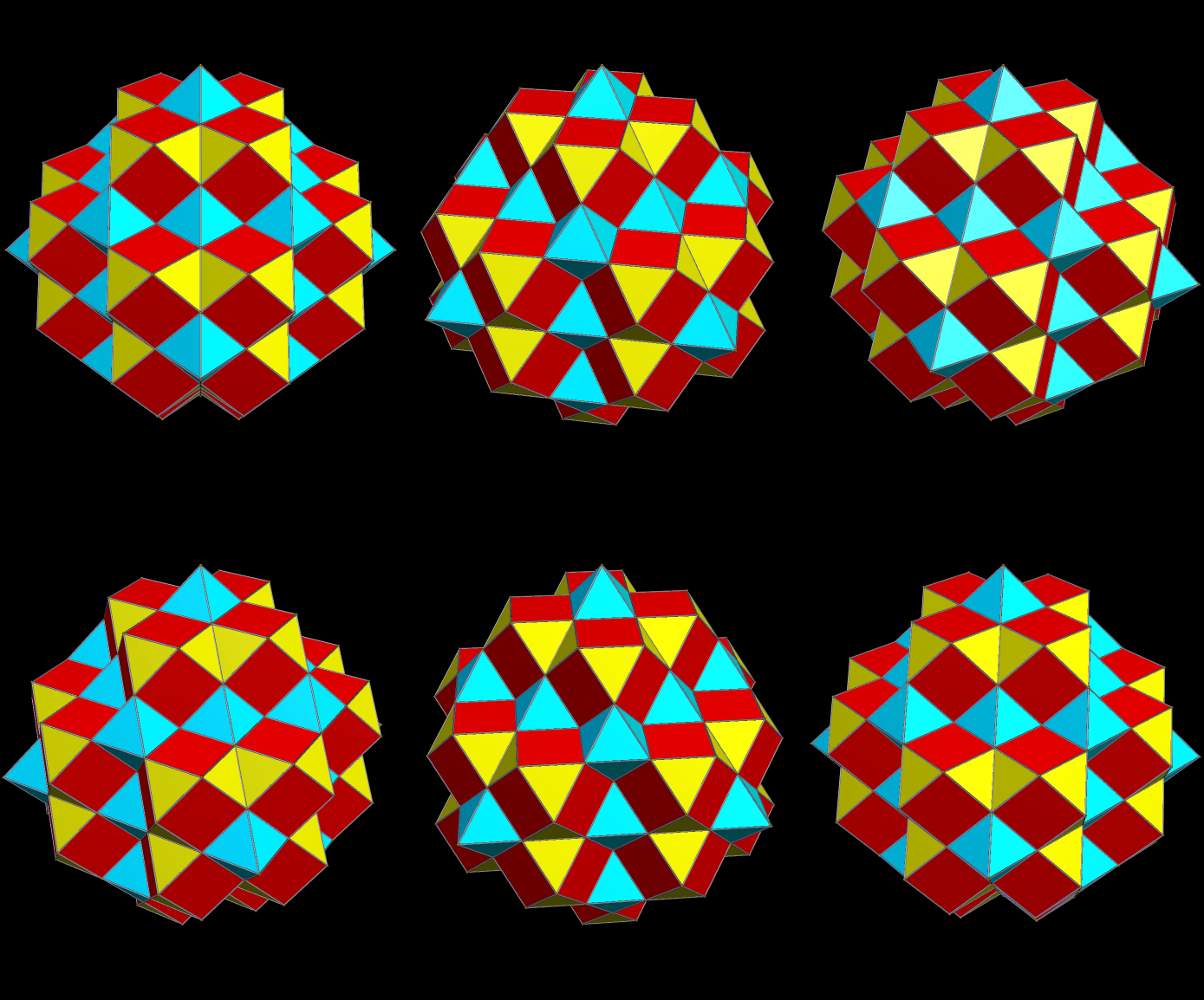
There are only a few polyhedra which can fill space without leaving gaps, without “help” from a second polyhedron. This filling of space is the three-dimensional version of tessellating a plane. Among those that can do this are the cube, the truncated octahedron, and the rhombic dodecahedron.
If multiple polyhedra are allowed in a space-filling pattern, this opens new possibilities. Here is one: the filling of space by cuboctahedra and octahedra. There are others, and they are likely to appear as future blog-posts here.
Software credit: I made this virtual model using Stella 4d, polyhedral-manipulation software you can buy, or try as a free trial download, at http://www.software3d.com/Stella.php.
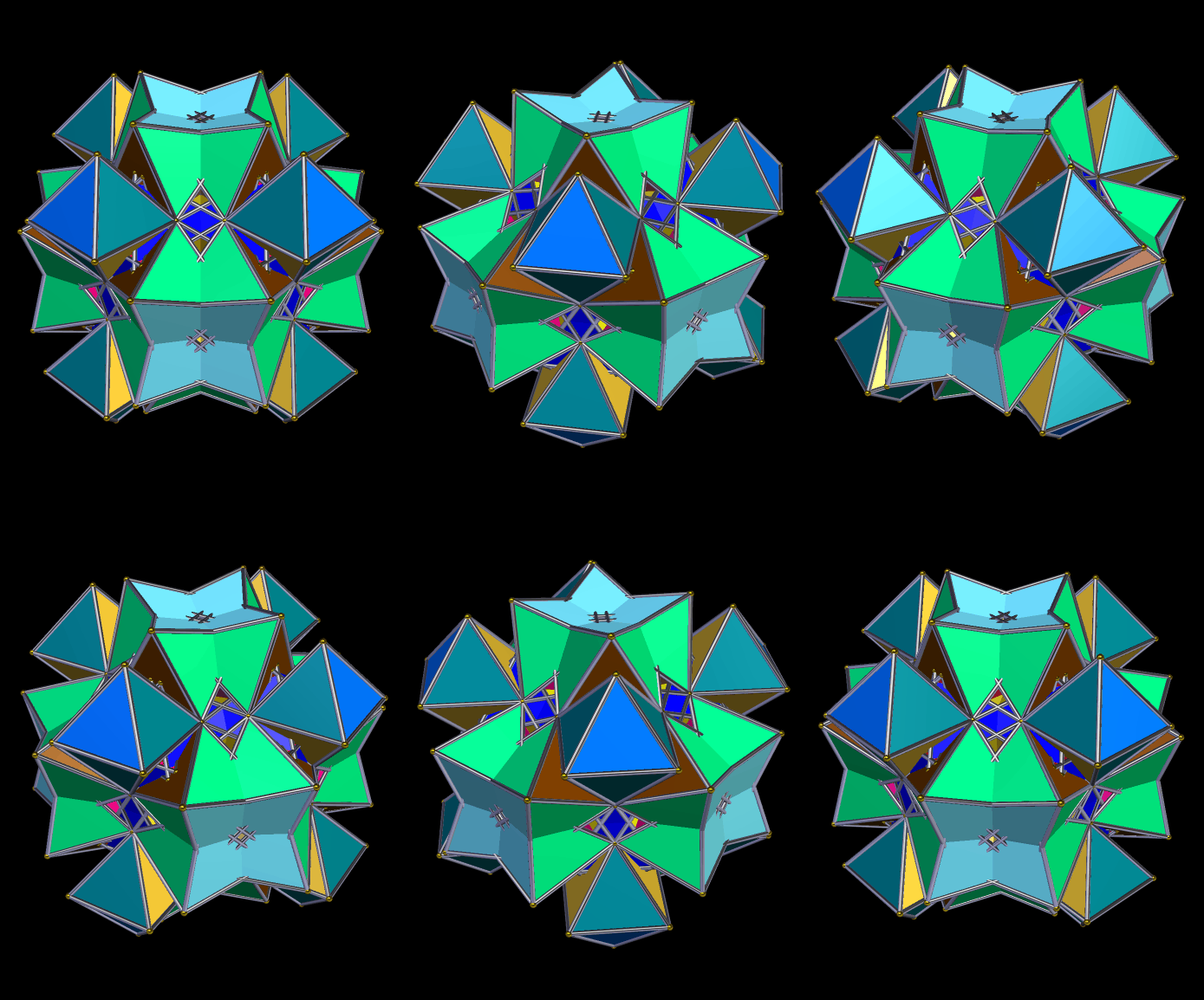
Software credit: see http://www.software3d.com/stella.php for a free trial download of Stella 4d, the software I used to construct this cluster, three deep, of octahedra.

Software credit: you can try the software I used to make this at http://www.software3d.com/stella.php.
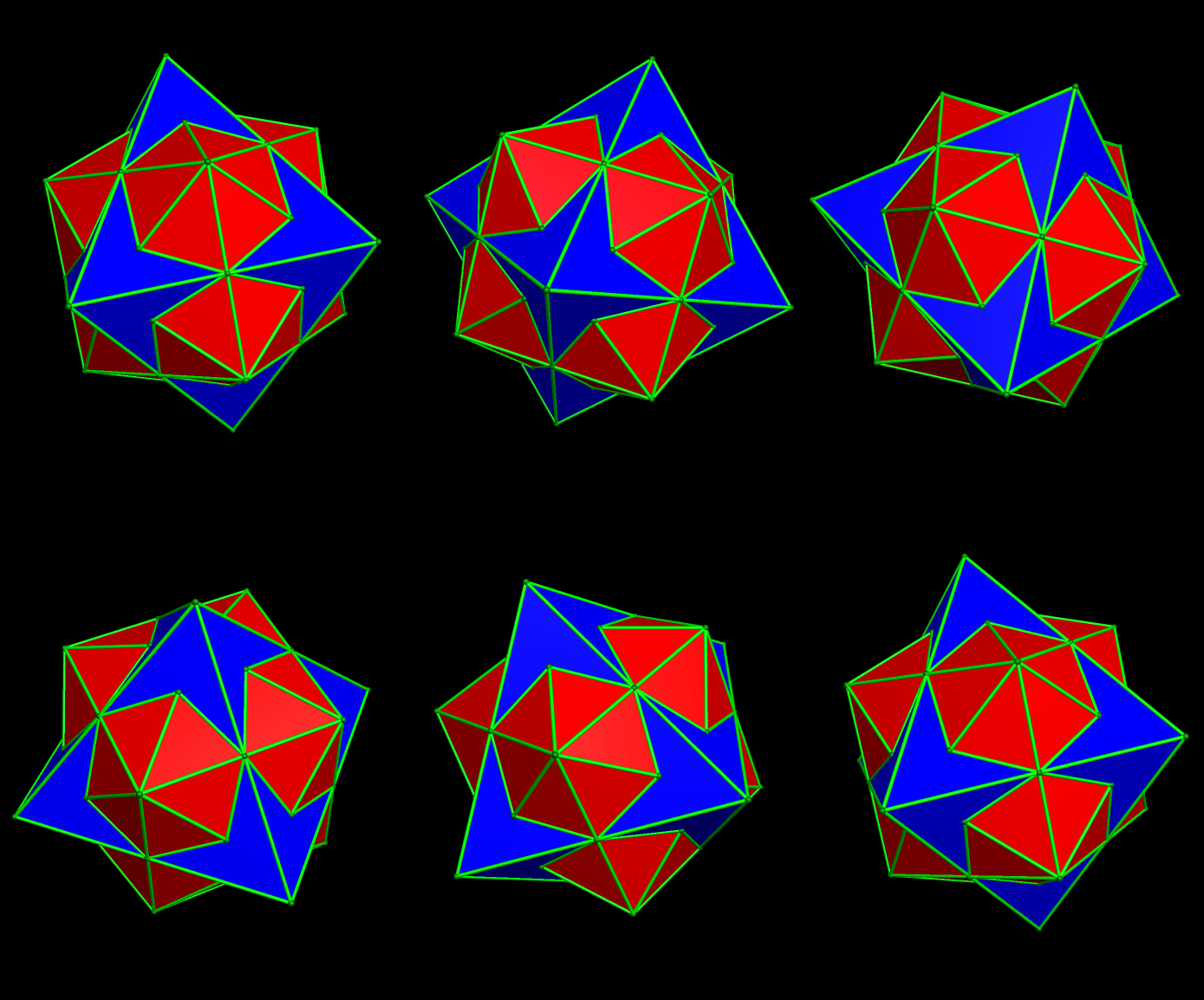
This polyhedral compound was found by repeatedly-stellating the 38-faced polyhedron featured in the last post.
Software credit: http://www.software3d.com/stella.php
 RobertLovesPi.net