The Hextrated Pentagonal Icositetrahedron

Image

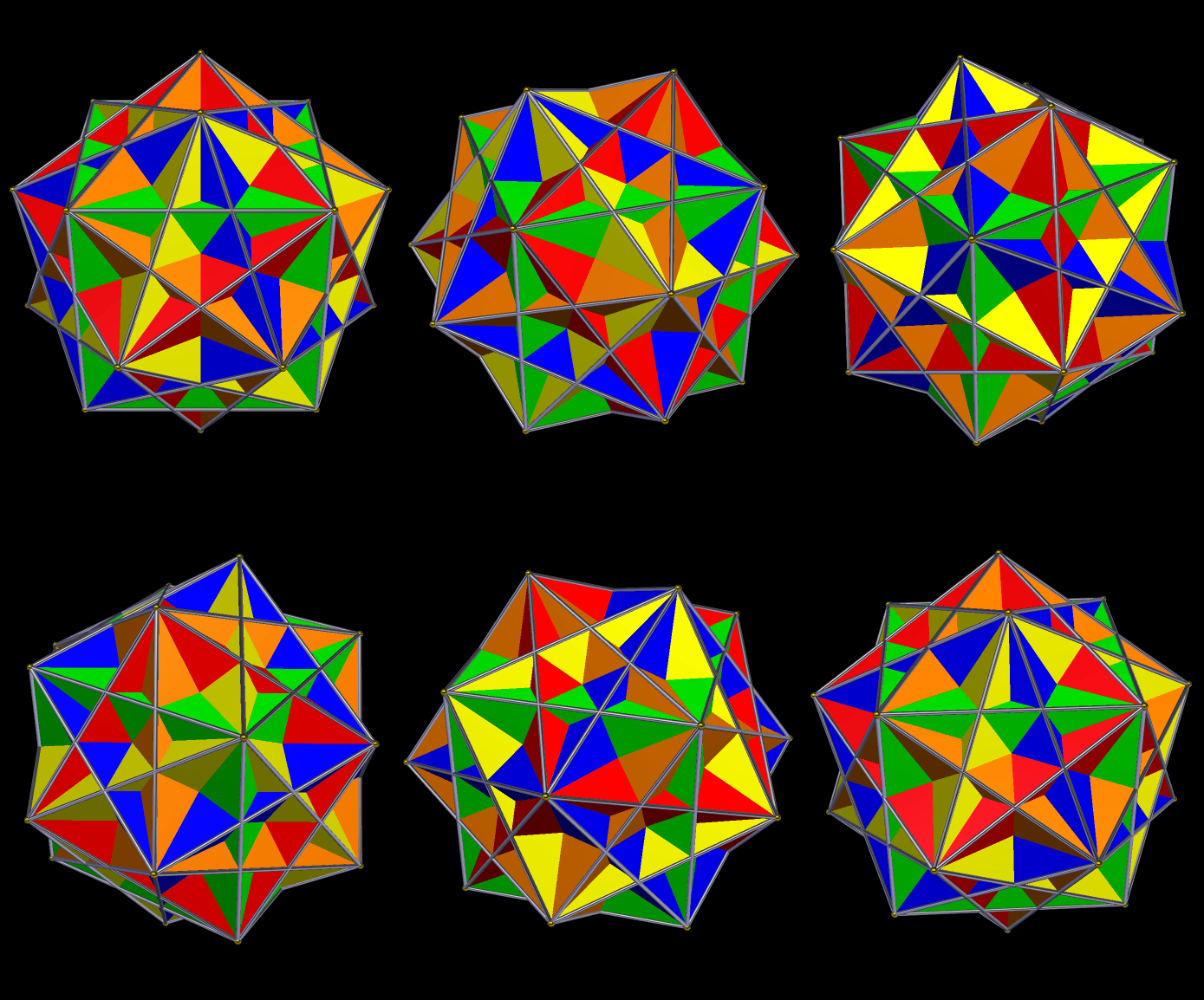
The Hextrated Pentagonal Icositetrahedron

Years ago, I split a dodecahedron into four panels of pentagons, rotated the pentagon-panels and moved them outward from the center, and did so just the right amount to create gaps that could be filled with triangles. Thus was named the tetrated dodecahedron, which you can read more about here: https://en.wikipedia.org/wiki/Tetrated_dodecahedron

The choice of word “tetrated” was somewhat unfortunate, for tetration already exists in mathematics, as a means of expressing very large numbers, and which I shall not explain here. I didn’t learn this until much later, though, and by that time, it was too late to turn “tetrate” into something else. It had come to mean an operation one does on a polyhedron: break it into four multi-face panels, move them out and rotate them just enough, and fill the resulting gaps with triangles.

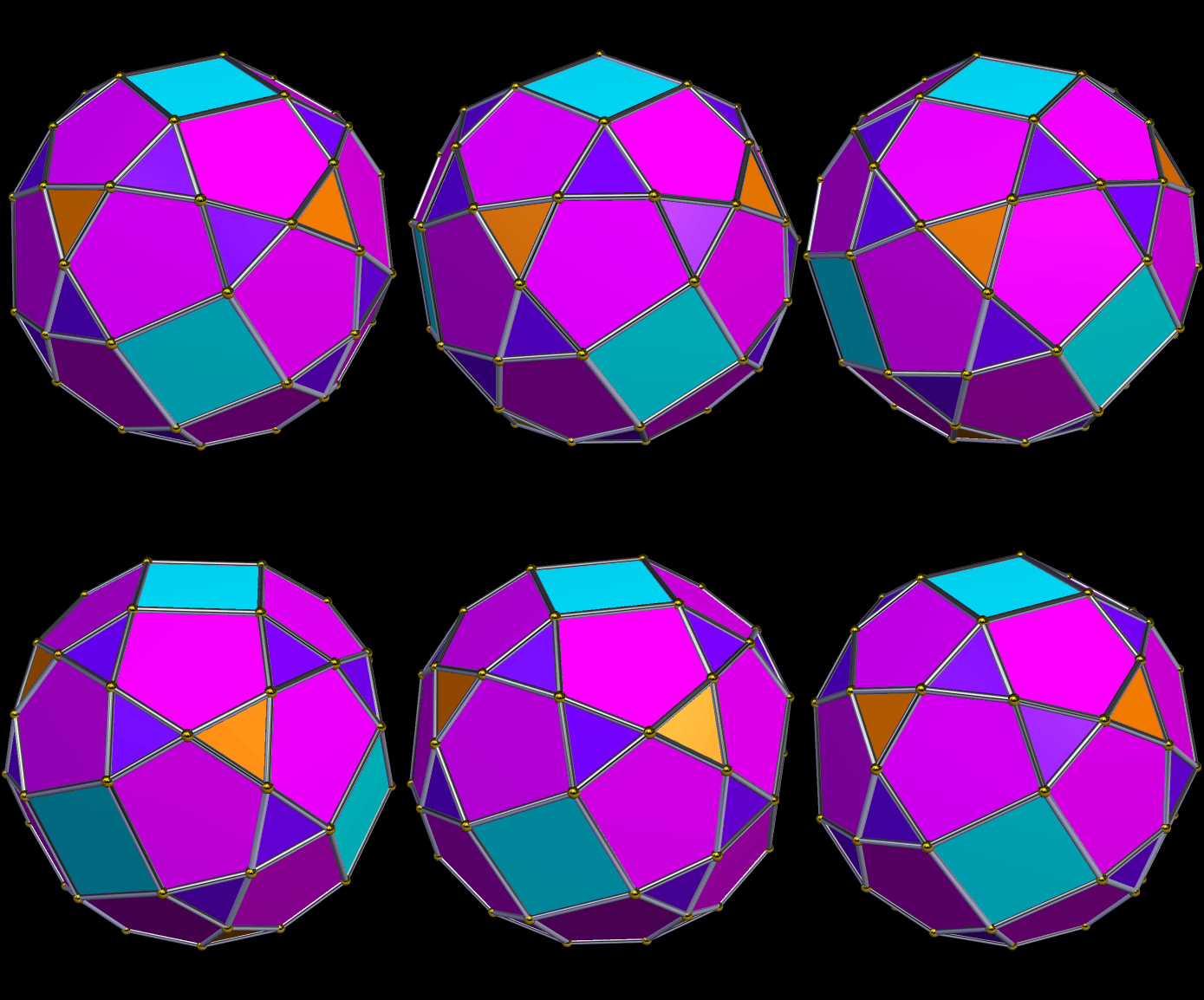
As such, “tetrate” can, in the geometrical sense, be modified for differing numbers of panels of multiple faces from a polyhedron. Consider the pentagonal icositetrahedron, the dual of the snub cube. Here, it has been split into six panels, and then each panel moved out from the center and rotated, with triangles filling the gaps. The triangles differ between color-groups slightly, but are close to equilateral, except for the ones shown in green, which simply are equilateral.

(Image created with Stella 4d — software you can try yourself at http://www.software3d.com/Stella.php.)

The Dual of the Convex Hull of the Compound of the Snub Cube and Its Dual, the Pentagonal Icositetrahedron

Image

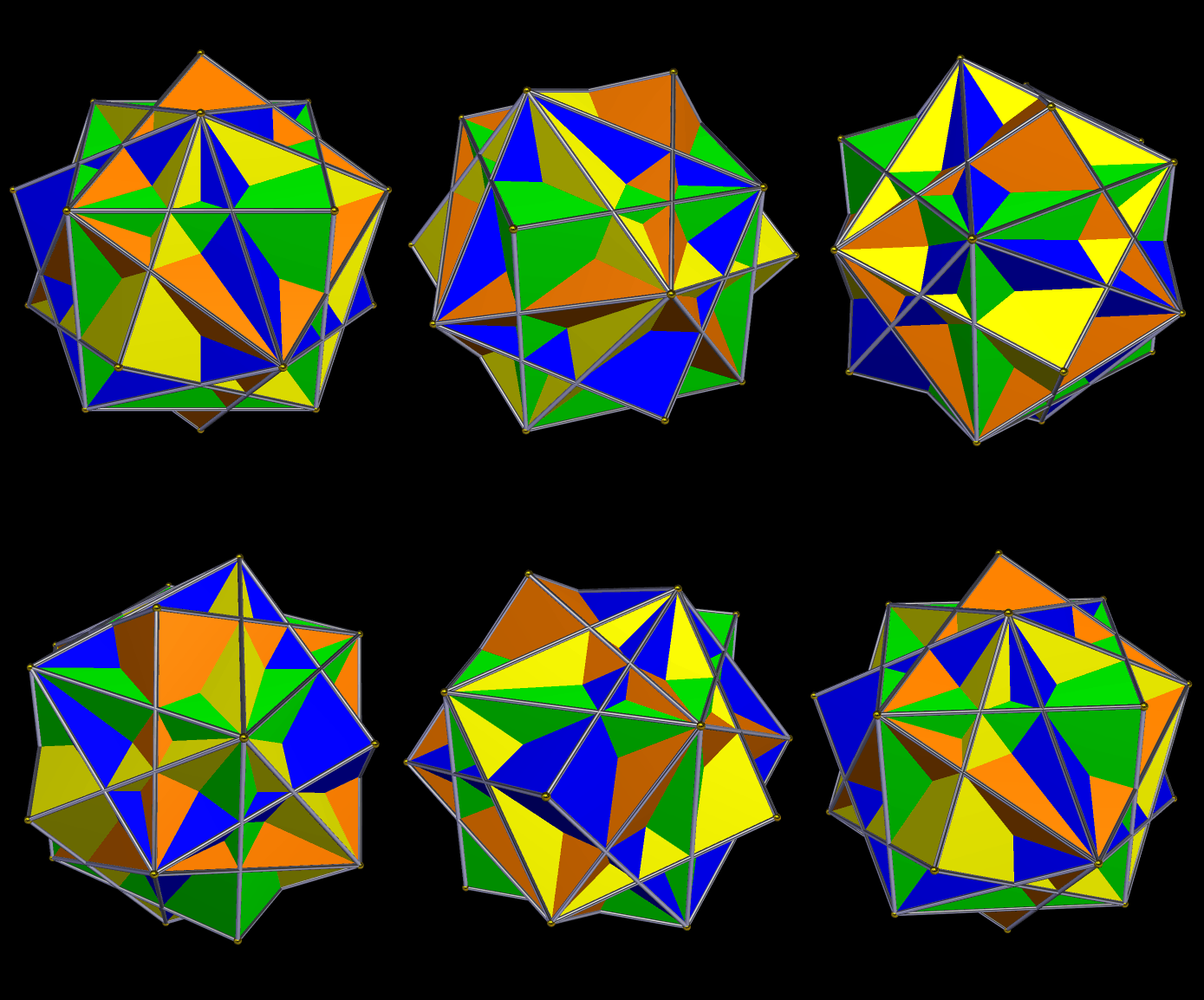
The Dual of the Convex Hull of the Compound of the Snub Cube and Its Dual, the Pentagonal Icositetrahedron

This is the dual of the polyhedron seen in the last post. It appears to be an interesting blend of the snub cube and an icosidodecahedron.

(Image created with Stella 4d — software you can try yourself at http://www.software3d.com/Stella.php.)
The Convex Hull of the Compound of the Snub Cube and Its Dual, the Pentagonal Icositetrahedron

Image

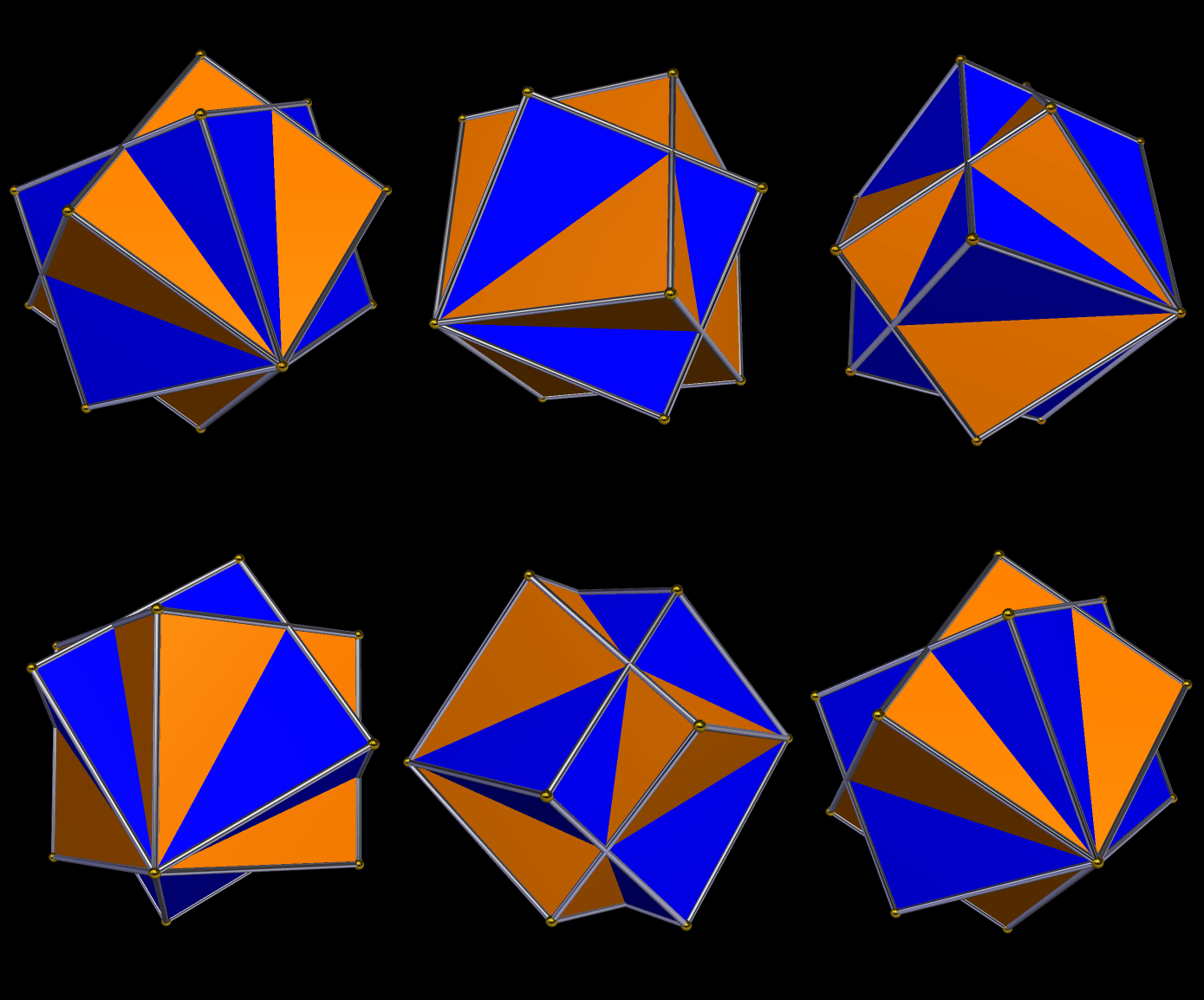
The Convex Hull of the Compound of the Snub Cube and Its Dual, the Pentagonal Icositetrahedron

(Image created with Stella 4d — software you can try yourself at http://www.software3d.com/Stella.php.)
The Sixth Stellation of the Triakis Octahedron

Image

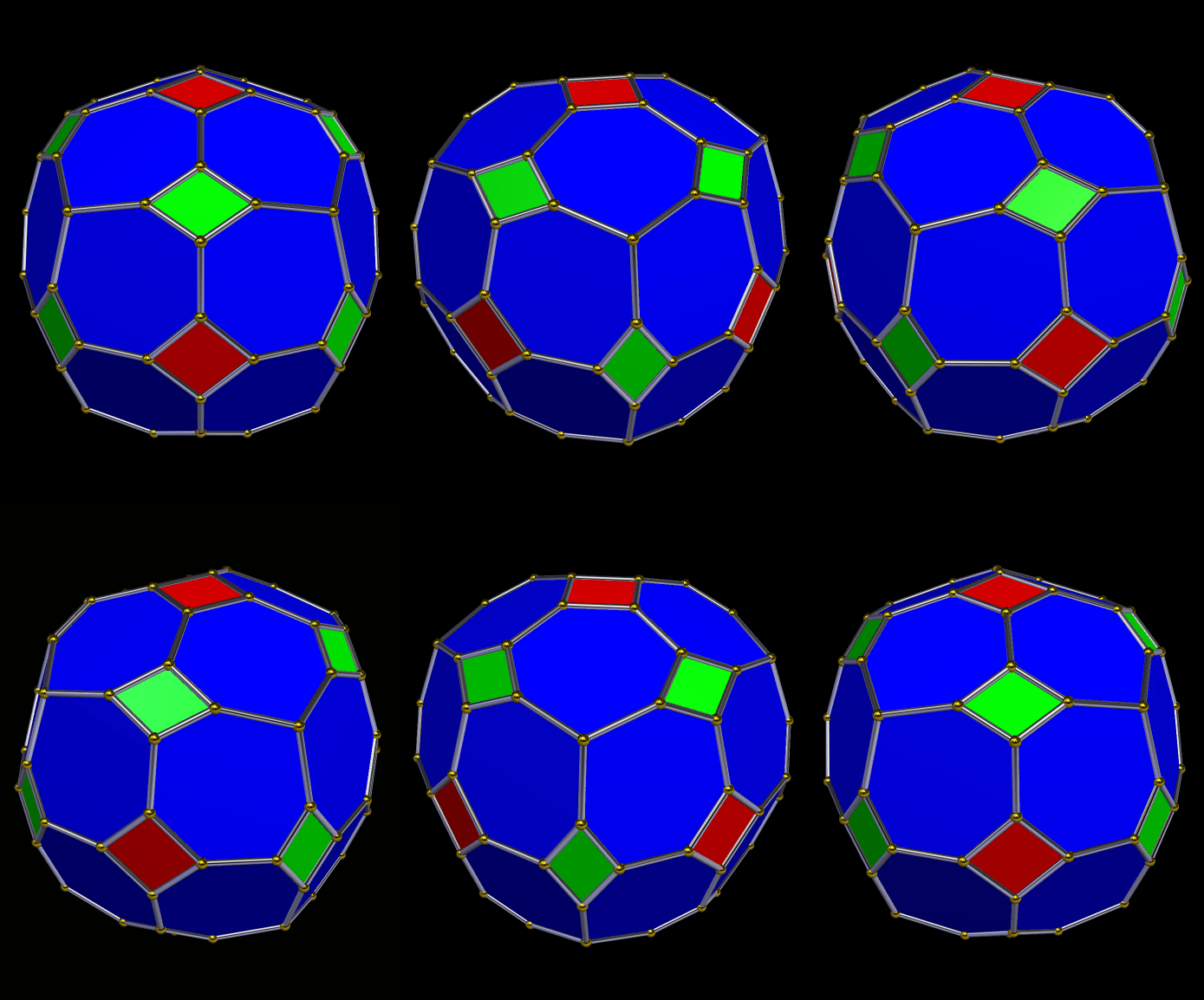
The Sixth Stellation of the Triakis Octahedron

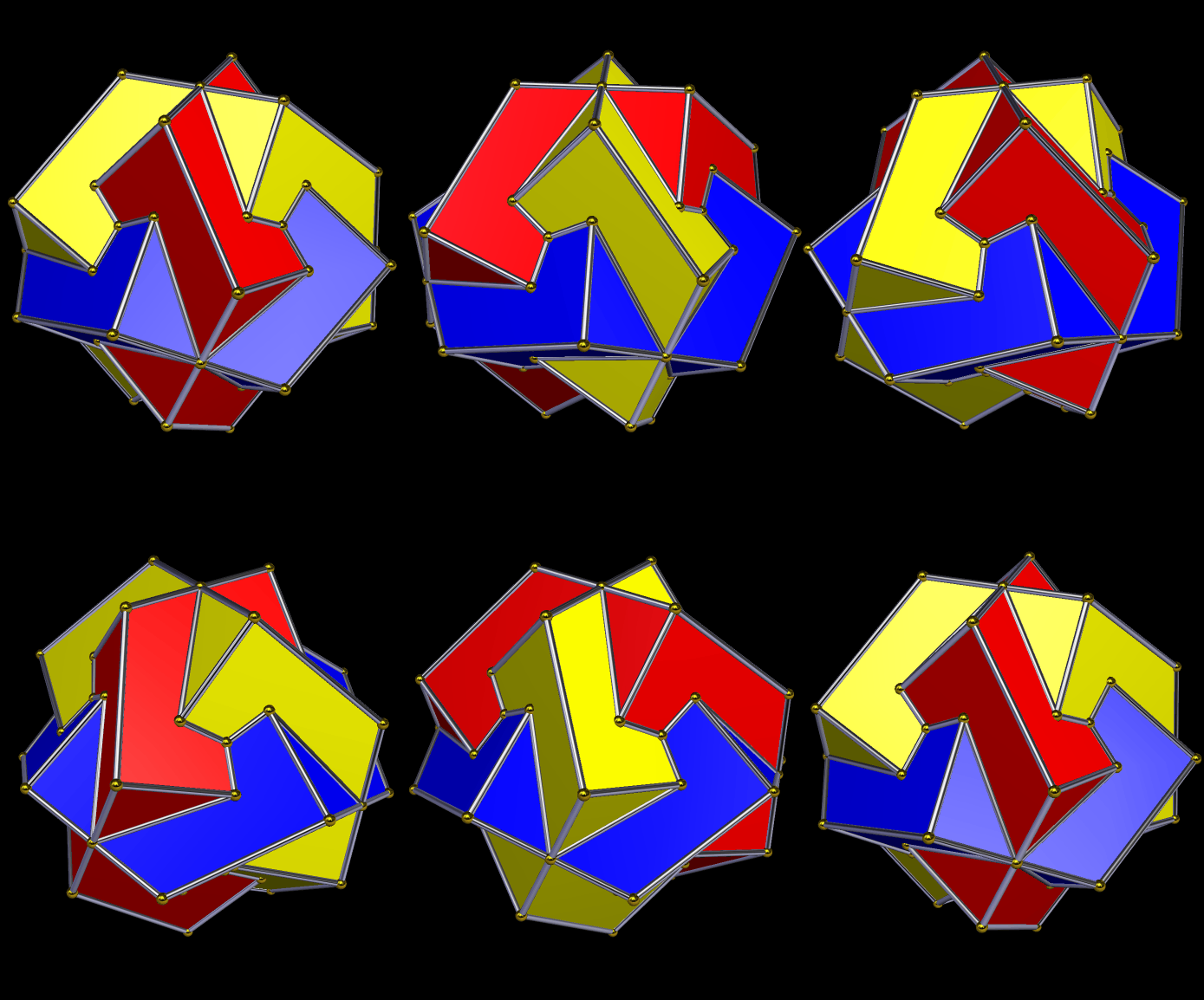
The triakis octahedron, a Catalan solid, is the dual of the truncated cube. When stellated six times, the triakis octahedron yields this polyhedral compound with three parts. The parts themselves appear to be unusual, irregular, dipolar octahedra with eight kites for faces, each in sets of four, with their smallest angles meeting at one vertex. However, given that these vertices are, in each case, hidden under the other parts of the compound, there is uncertainty in this.

(Image created with Stella 4d — software you can try yourself at http://www.software3d.com/Stella.php.)
The Deconstruction of the Compound of Five Cubes

An Examination of the Compound of Five Cubes

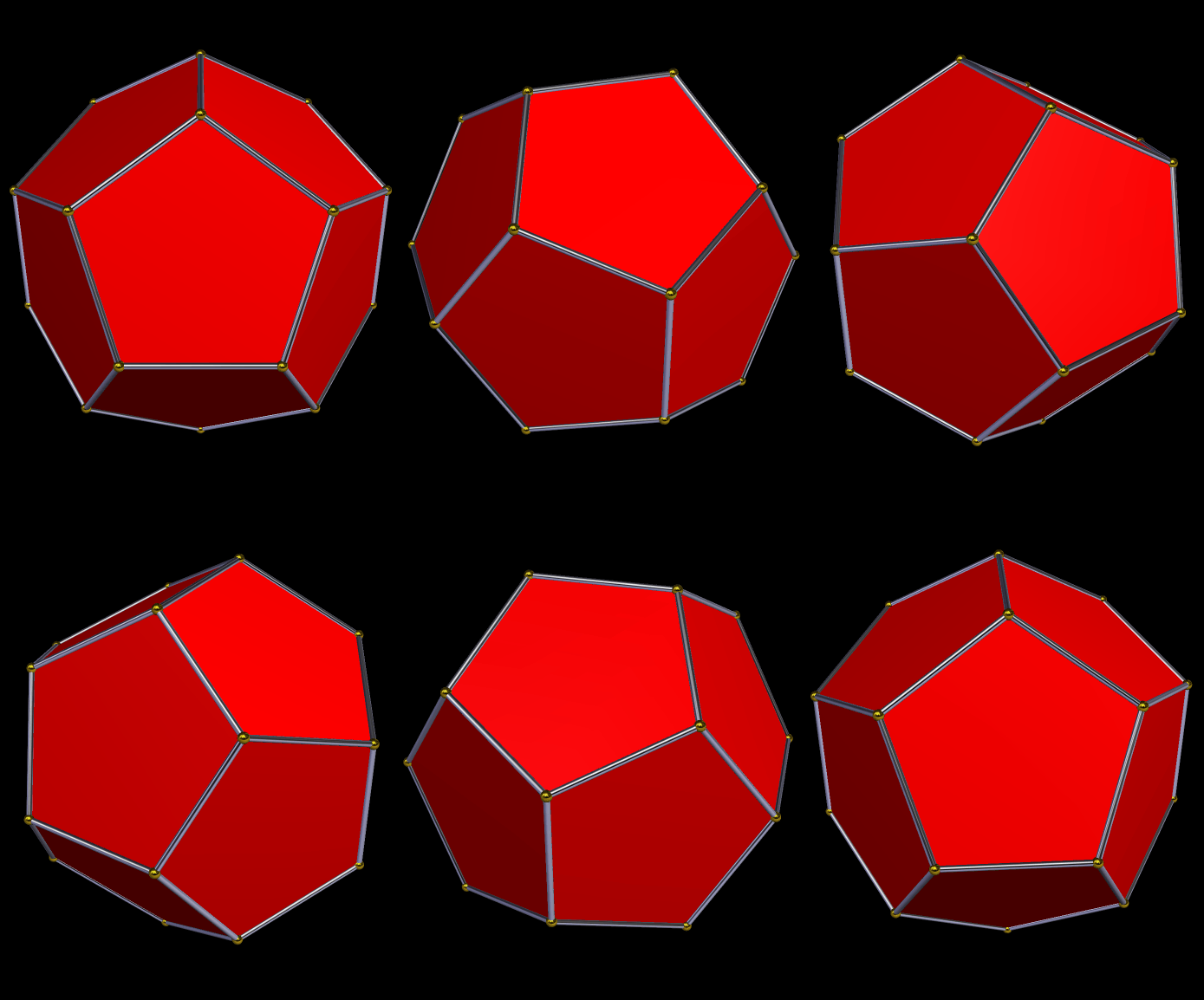
To make the compound of five cubes, begin with a dodecahedron, as seen above. Next, add segments as new edges, and let them be all of the diagonals of all the dodecahedron’s faces. Then, remove the pentagonal faces, as well as the original edges. What’s left is five cubes, in this arrangement.

Cubes 5

Using polyhedral manipulation software called Stella 4d (available at www.software3d.com/Stella.php), these five cubes can be removed one at a time. The first removal has this result:

Cubes 5-1

That left four cubes, so the next removal leaves three:

Cubes 5-2

And then only two:

Cubes 5-3

And, finally, only one remains:

Cubes 5-4

Because their edges were pentagon-diagonals for the original dodecahedron, each of these cubes has an edge length equal to the Golden Ratio, (1 + √5)/2, times the edge length of that dodecahedron.

M33, the Triangulum Galaxy, Adorning the Faces of a Pentagonal Icositetrahedron

Image

M33, the Triangulum Galaxy, Adorning the Faces of a Pentagonal Icositetrahedron

Evidence suggests that M33 is a satellite galaxy of the even better-known Andromeda Galaxy (M31), which happens to be on a collision course with our own Milky Way. In 1.5 billion years or so, Andromeda and the Milky Way will merge to form a giant elliptical galaxy already pre-named Milkomeda. At that point, the Triangulum Galaxy may become a satellite of Milkomeda (probably one of several), or be gravitationally ejected, or simply be absorbed into Milkomeda itself.

Here, it is projected on each face of the Catalan solid which is dual to the snub cube, using software you can try at http://www.software3d.com/Stella.php.

98-Faced Polyhedron Featuring Heptagons

Image

98-Faced Polyhedron Featuring Heptagons

There are, as faces, 24 irregular heptagons, 6 irregular octagons of one type, and 12 of another, 24 rectangles of one type, and 24 of another, and 8 equilateral triangles. This was made using Stella 4d, which you may try or buy at http://www.software3d.com/Stella.php.

42-Faced Polyhedron Featuring Heptagons

Image

42-Faced Polyhedron Featuring Heptagons

The blue faces are irregular heptagons, and are twenty-four in number. There are twelve of the green rhombi, and six of the red squares. This was made using Stella 4d, which you may try or buy at http://www.software3d.com/Stella.php.

A Rotating Rhombic Dodecahedron with Rotating Tessellations on Its Faces

Image

Rotating Rhombic Dodecahedron with Rotating Tessellations On Its Faces

Several recent posts here have been of tessellations I have made using Geometer’s Sketchpad and MS-Paint. To create this rotating polyhedron, I selected one of these tessellations, and projected it onto each face of a rhombic dodecahedron, using another program called Stella 4d. Unlike in the last, similar post, though, I set these tessellation-images to keep their orientation, from the point of view of a stationary observer watching the entire polyhedron rotate, from a distance. Since the polyhedron itself is rotating, this creates a rotation-effect for the tessellation-image on each face.

You can try Stella 4d for yourself, right here, for free: http://www.software3d.com.stella.php.

Rotating Rhombic Triacontahedron with Tessellated Faces

Image

Rotating Rhombic Triacontahedron with Tessellated Faces

The last several posts here have been of tessellations I have made using Geometer’s Sketchpad and MS-Paint. To create this rotating polyhedron, I selected one of these tessellations (the one in the last post), and projected it onto each face of a rhombic triacontahedron, using another program called Stella 4d. You can try Stella 4d for yourself, right here, for free: http://www.software3d.com.stella.php.