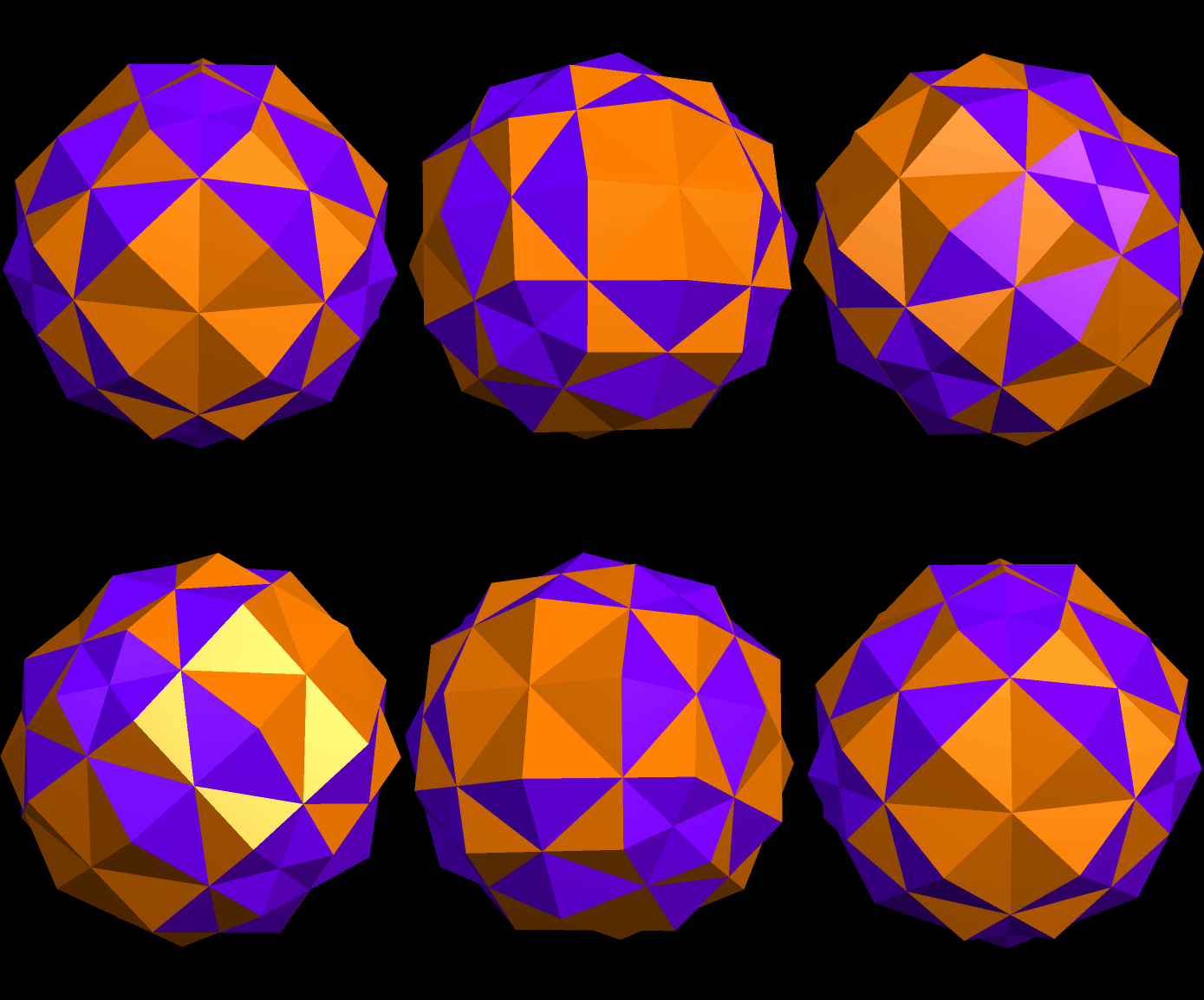
The expanded rhombic dodecahedron is in the last post. It took just a bit to turn it into this — using Stella 4d, software you can find at http://www.software3d.com/stella.php.
The expanded rhombic dodecahedron is in the last post. It took just a bit to turn it into this — using Stella 4d, software you can find at http://www.software3d.com/stella.php.

To make this, a rhombic dodecahedron had each of its faces augmented with prisms, and the I took the convex hull of the resulting figure. This polyhedron has fifty faces, all but eight of which are quadrilaterals.
Software credit: http://www.software3d.com/stella.php.

Software credit: http://www.software3d.com/Stella.php
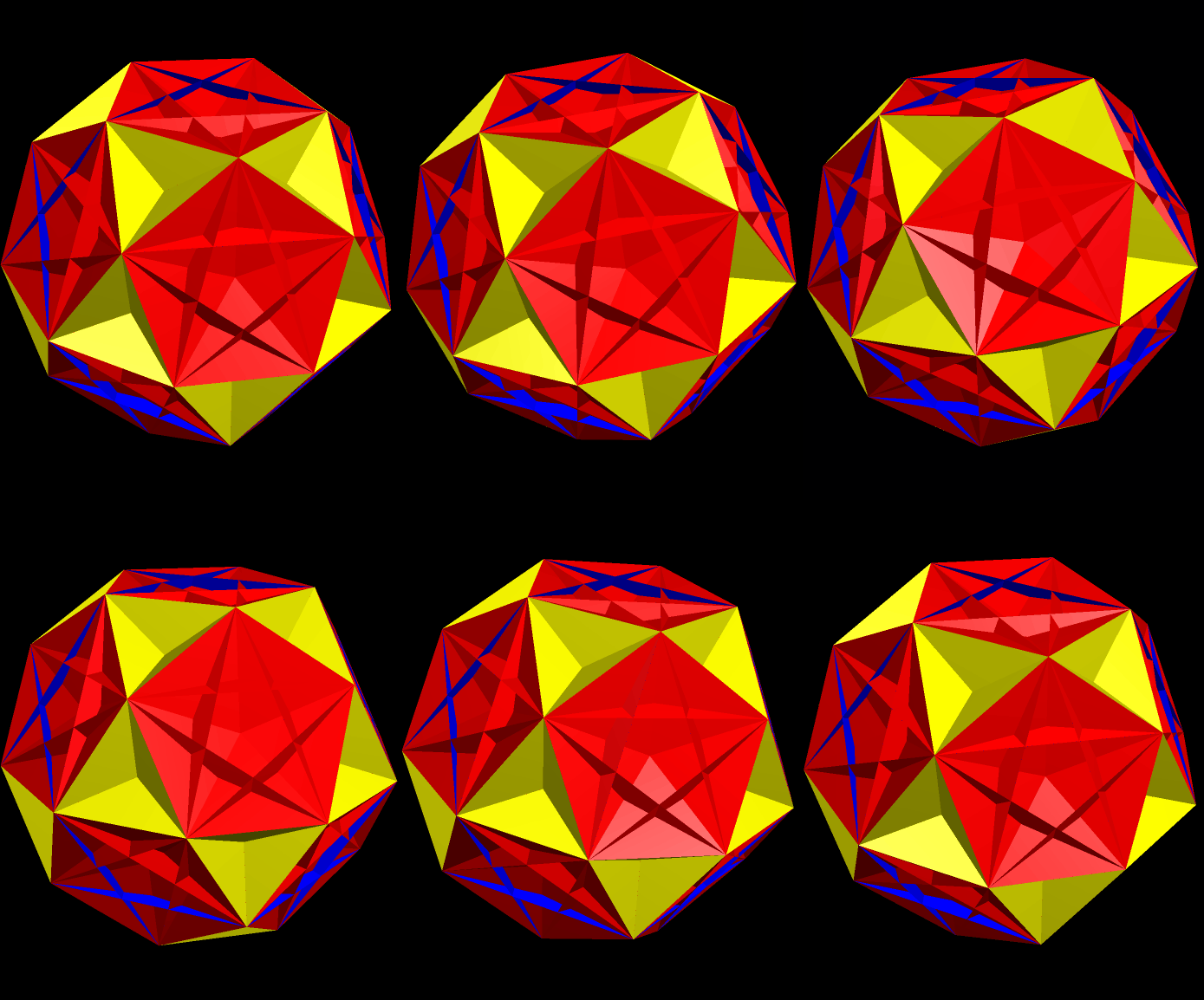
Software credit: http://www.software3d.com/stella.php

Software credit: http://www.software3d.com/stella.php

This was created using Stella 4d, available at http://www.software3d.com/stella.php. It has 422 faces.
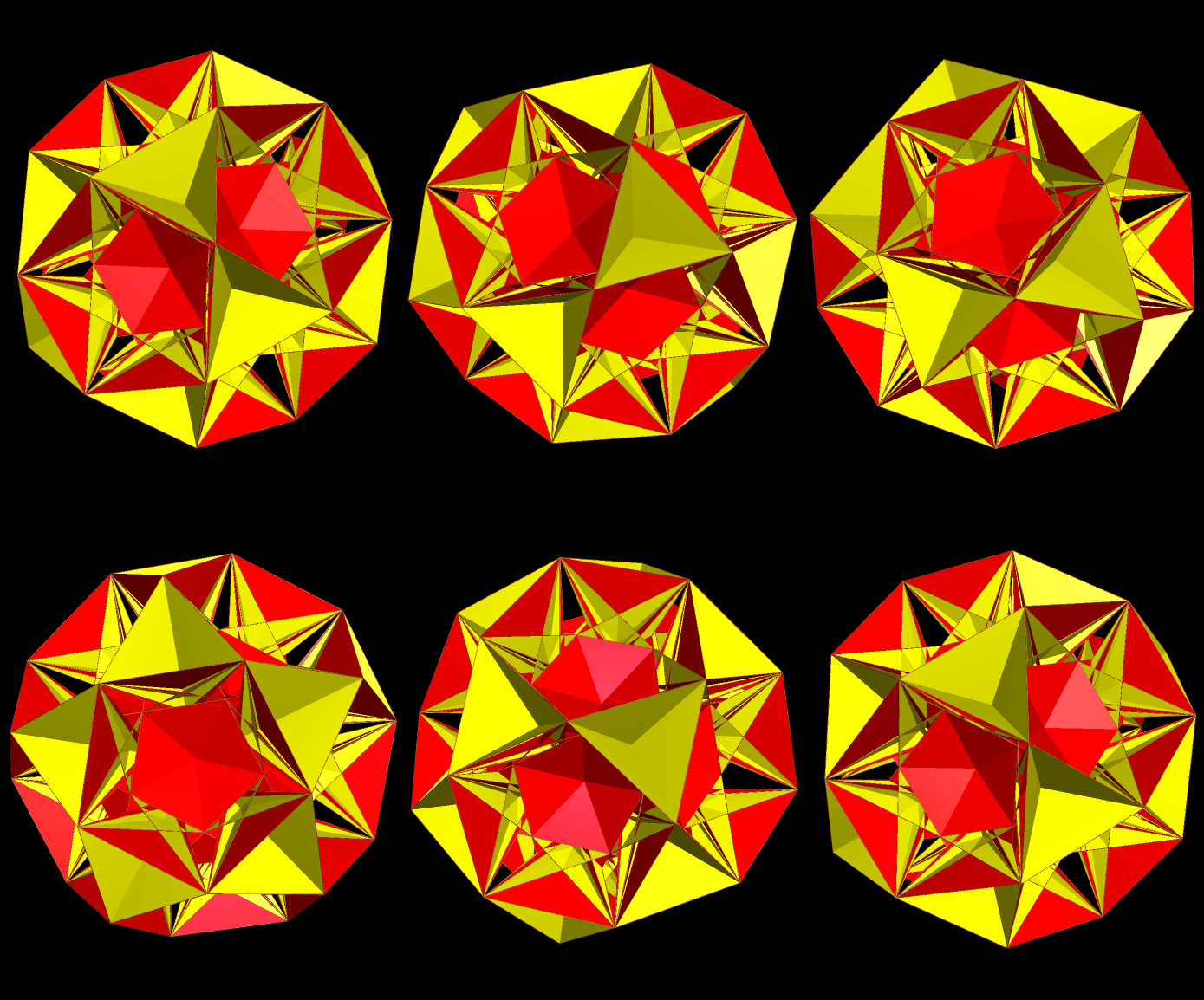
This is the dual of the figure shown in the last post.
Software used: see http://www.software3d.com/Stella.php.

In the last post, I showed that five rhombic triacontahedra can be stuck together to form a pentagonal ring. The next logical step is shown here: using such pentagonal rings to construct an entire dodecahedron made of rhombic triacontahedra.
Software credit: see http://www.software3d.com/stella.php.

Software credit: http://www.software3d.com/Stella.php.

To see what the truncated octahedron looked like before being stellated twice, and read about how it was created, I refer you to the previous post on this blog.
Stellation of polyhedra is easy with Stella 4d, a program you can try and/or buy at http://www.software3d.com/Stella.php.
 RobertLovesPi.net