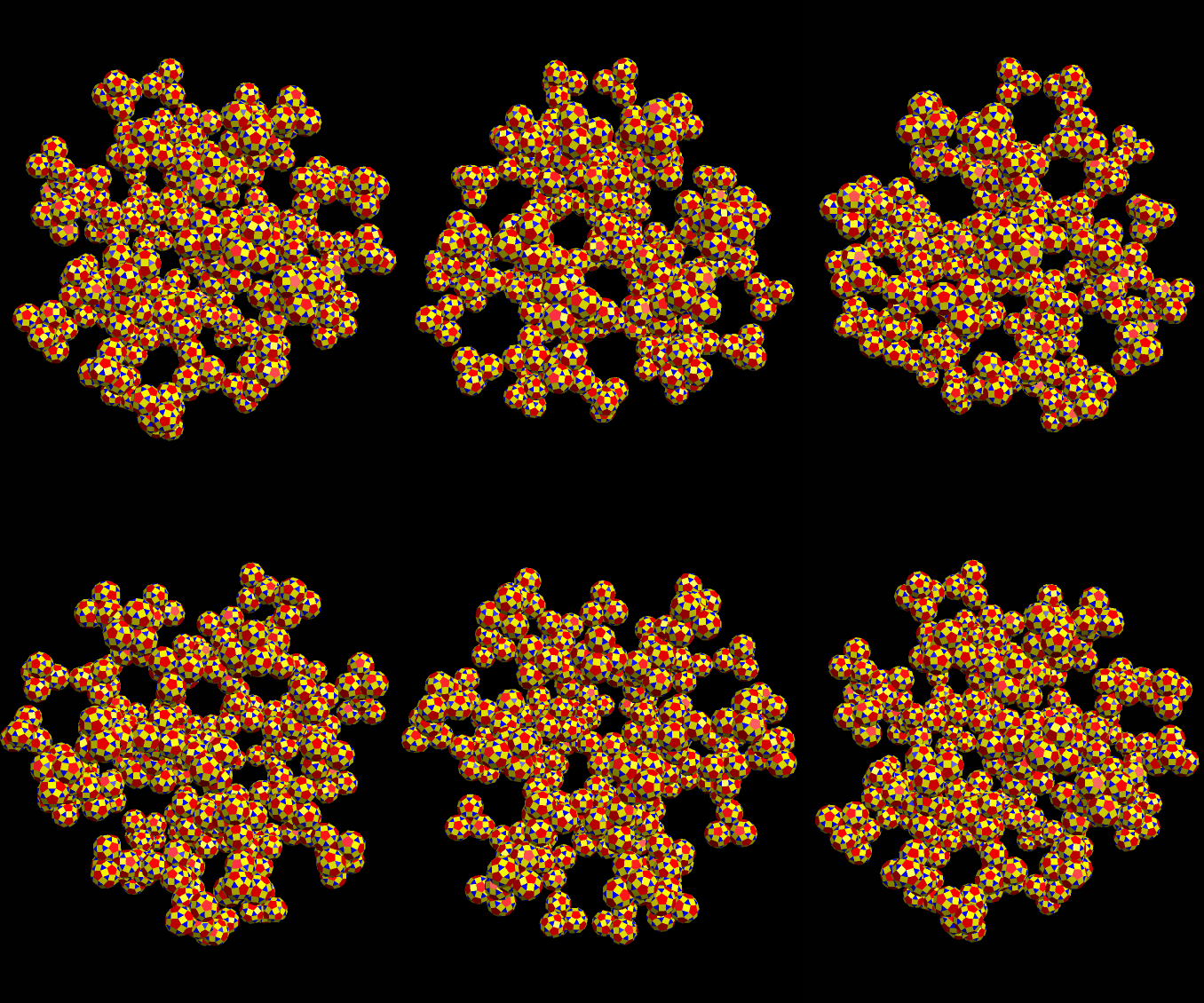
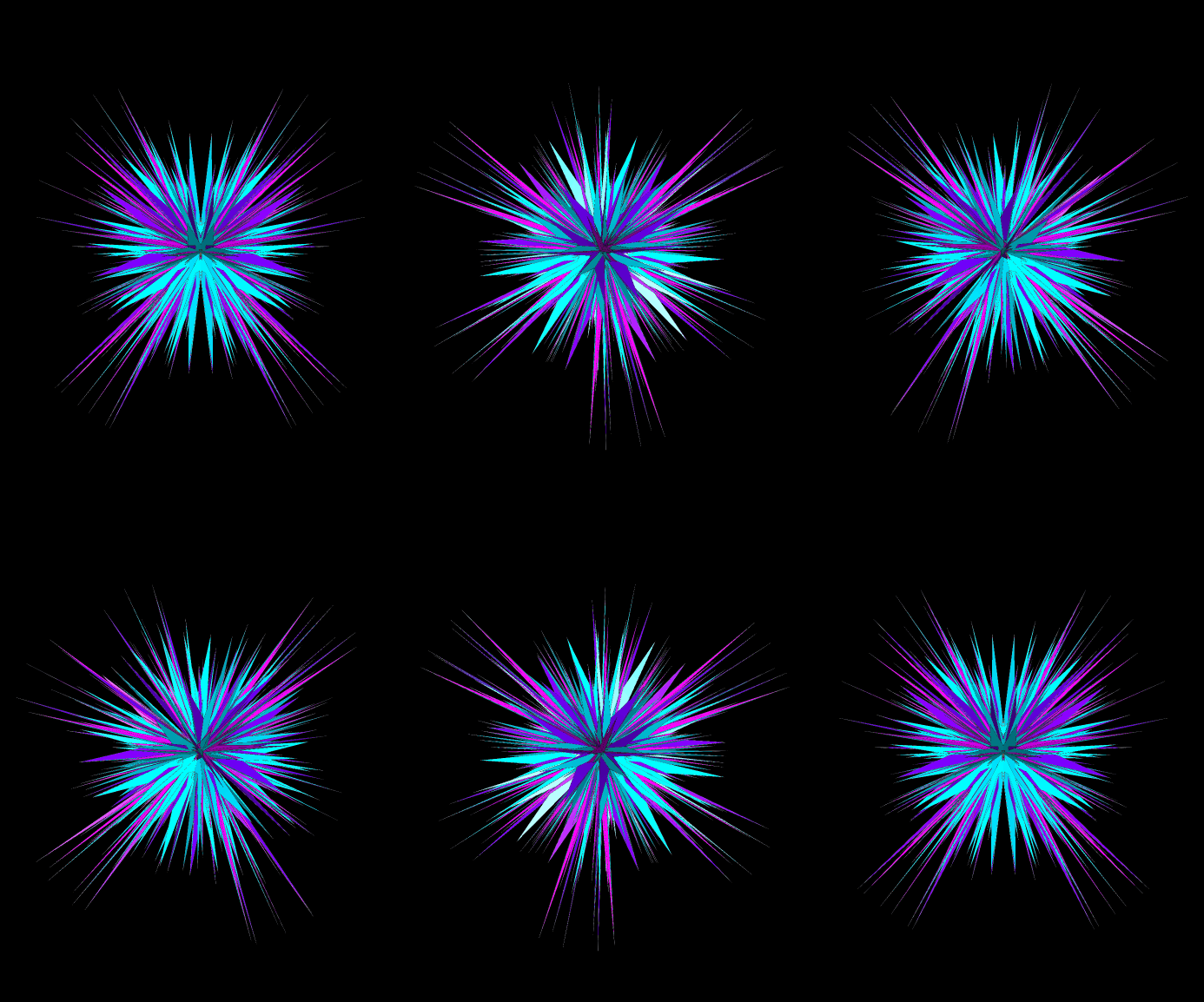
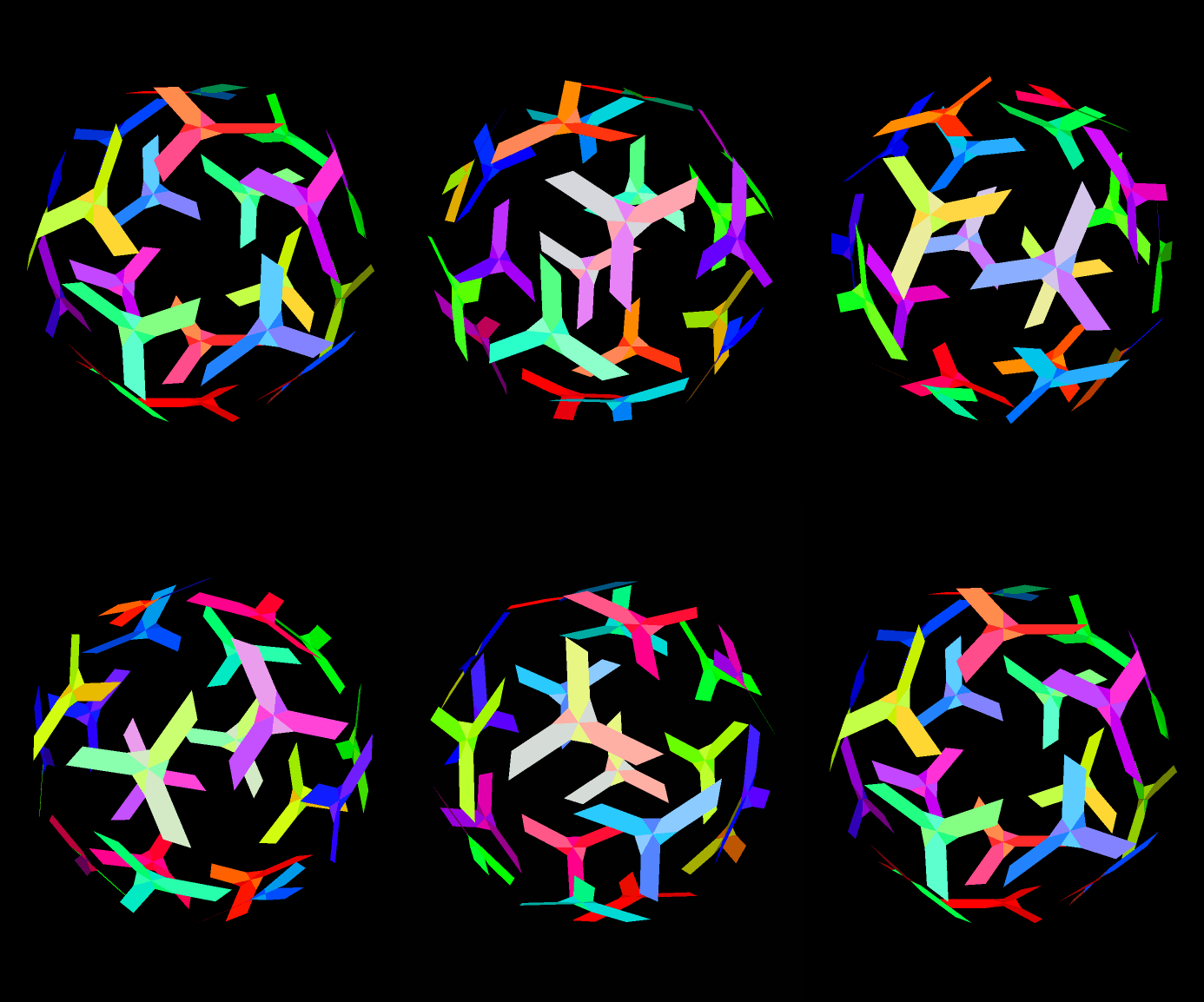
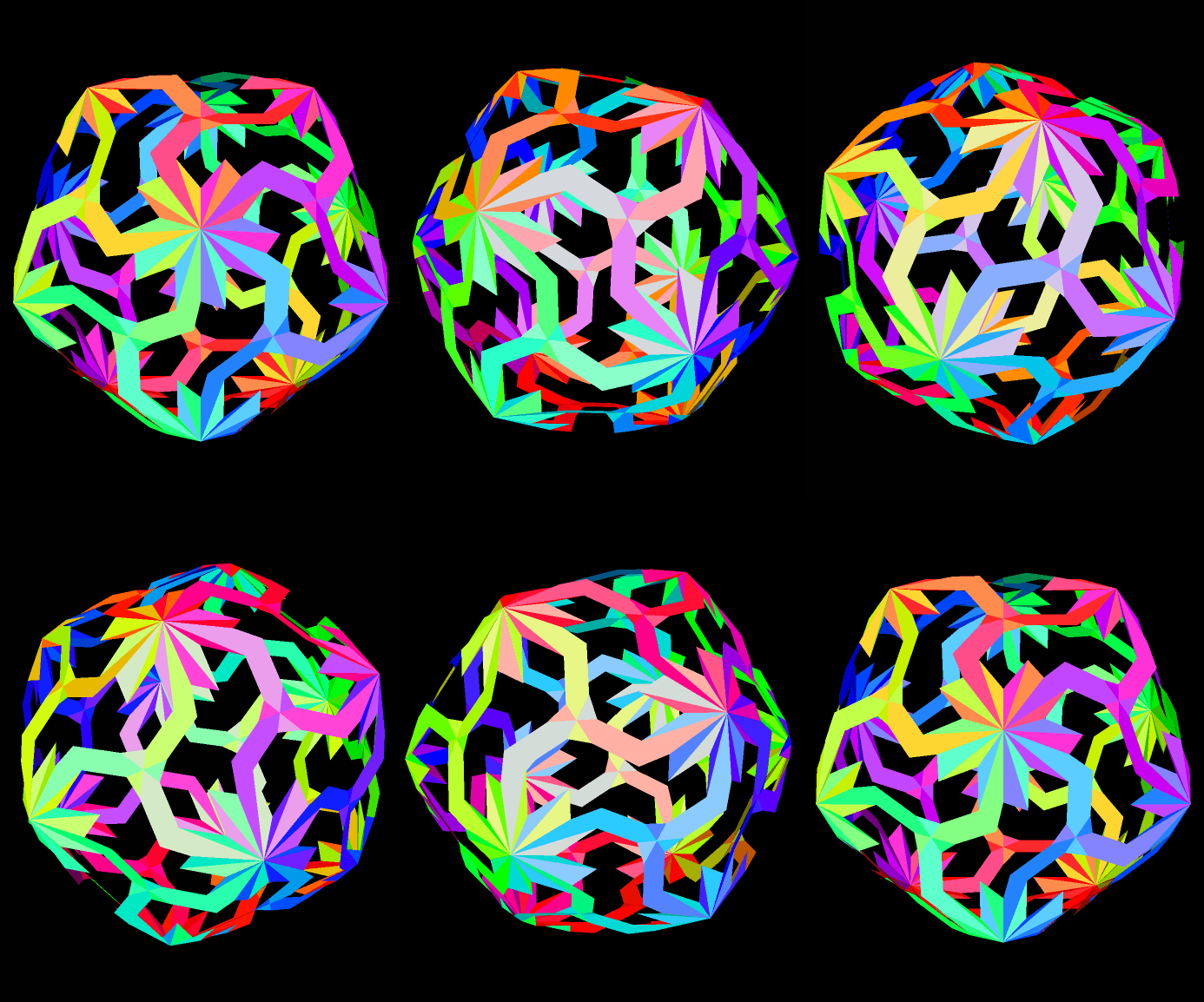
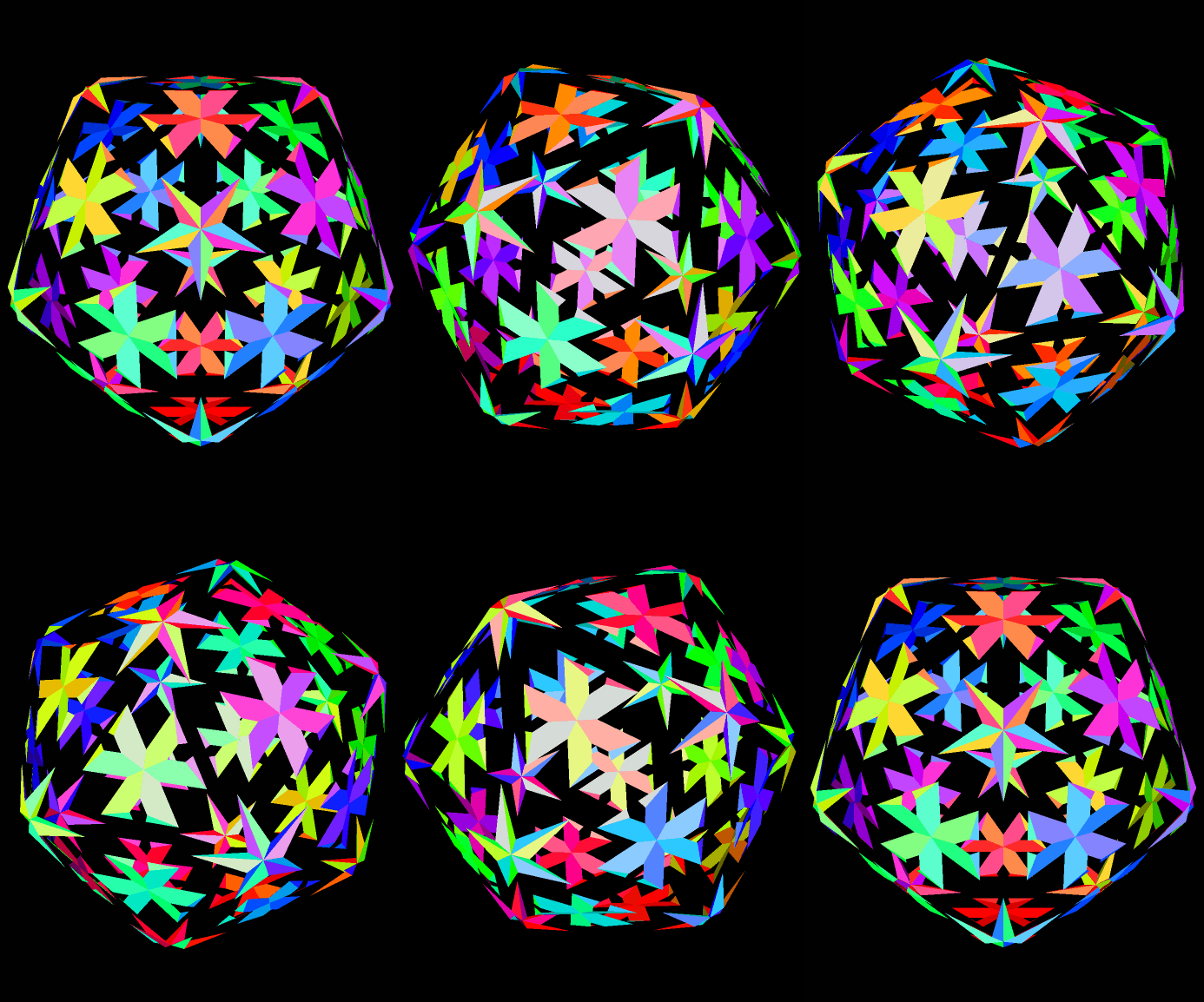
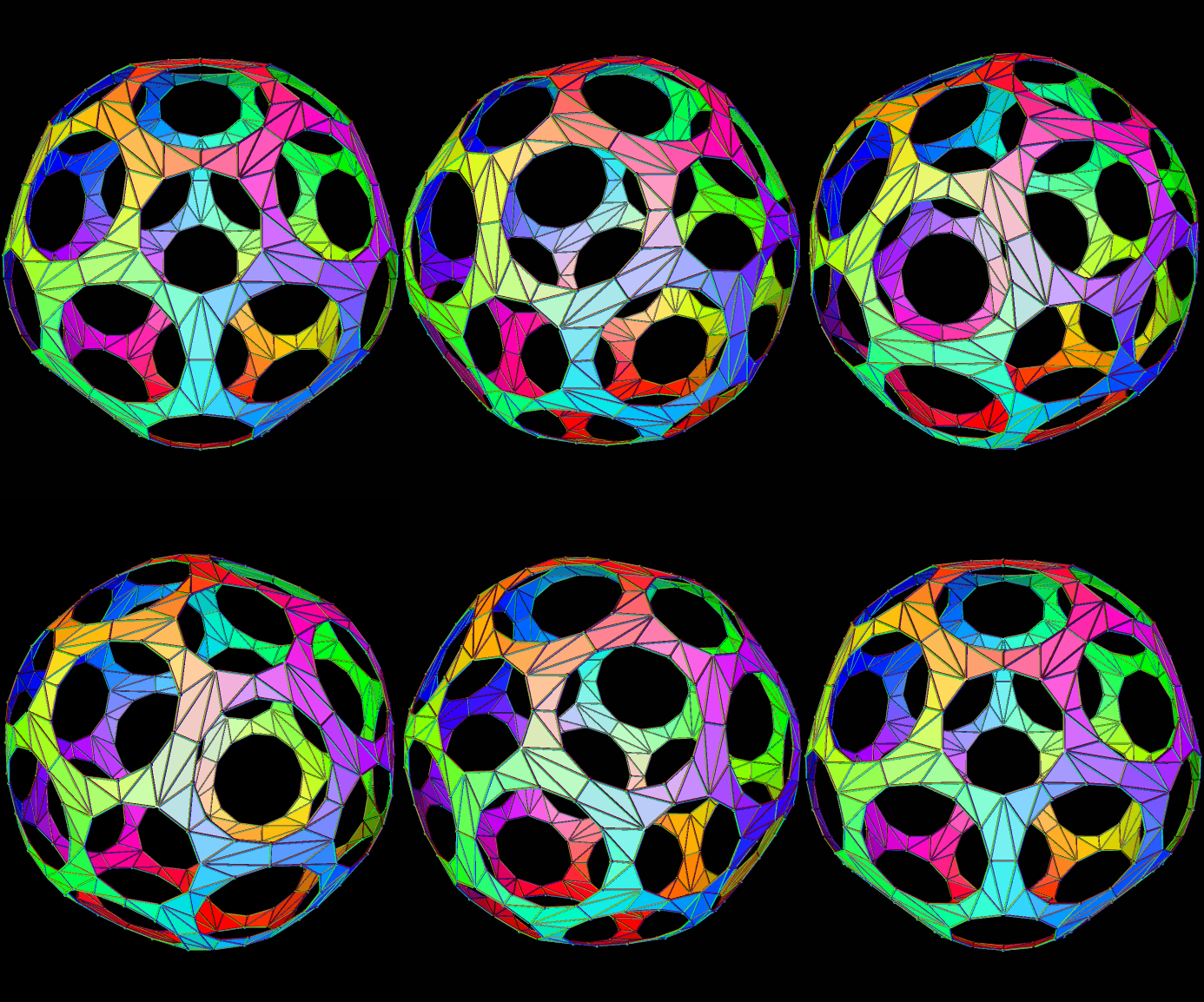
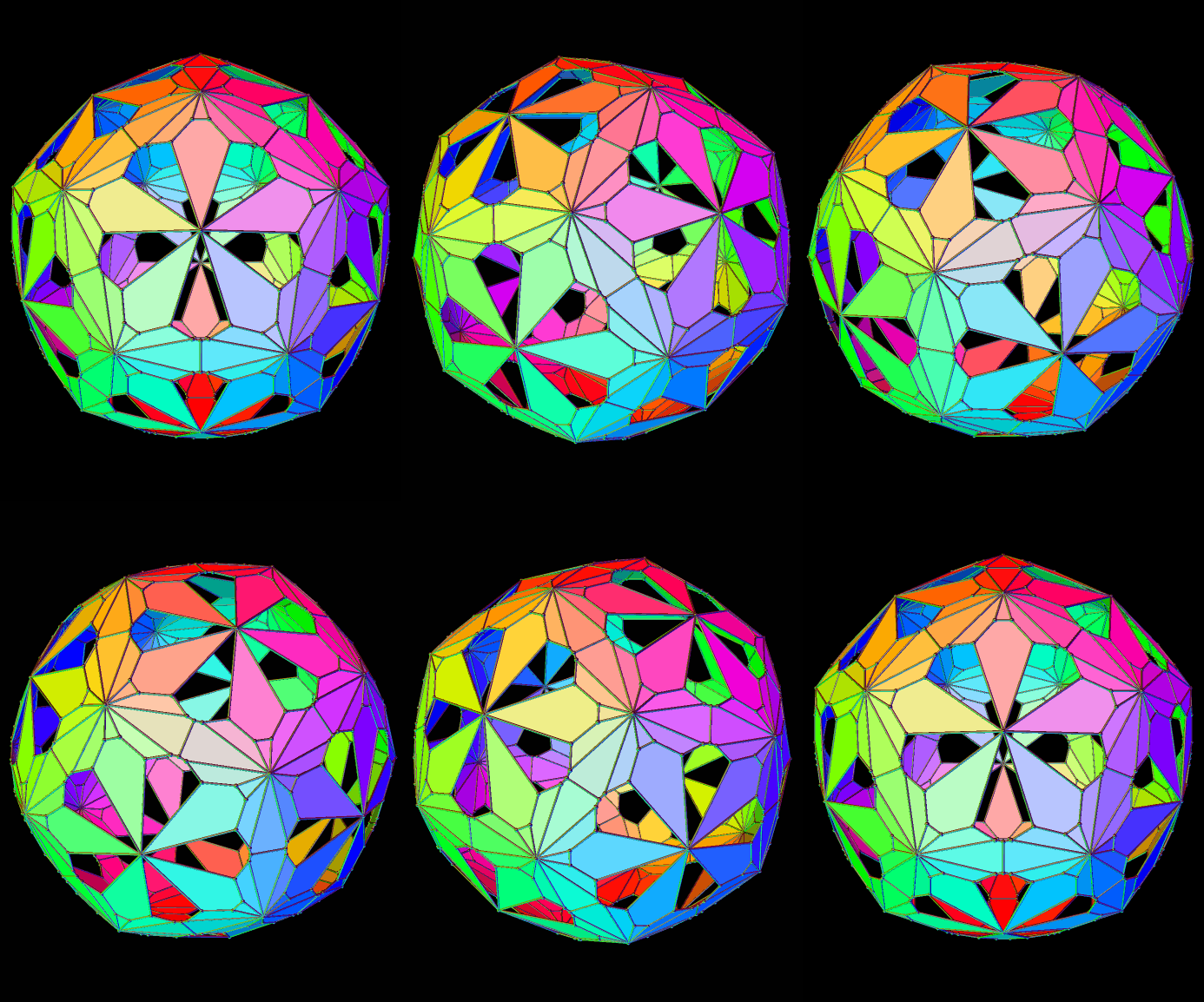
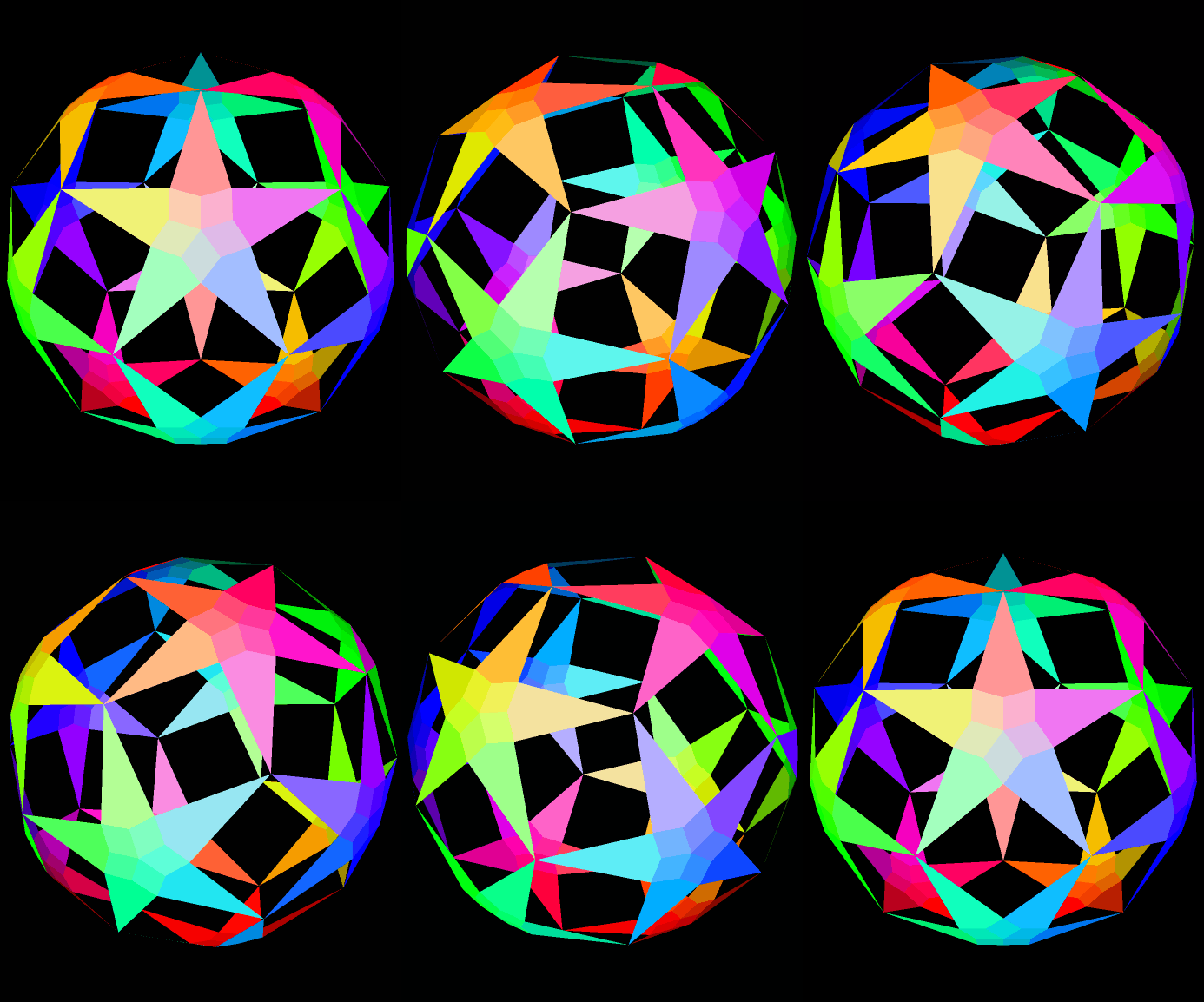
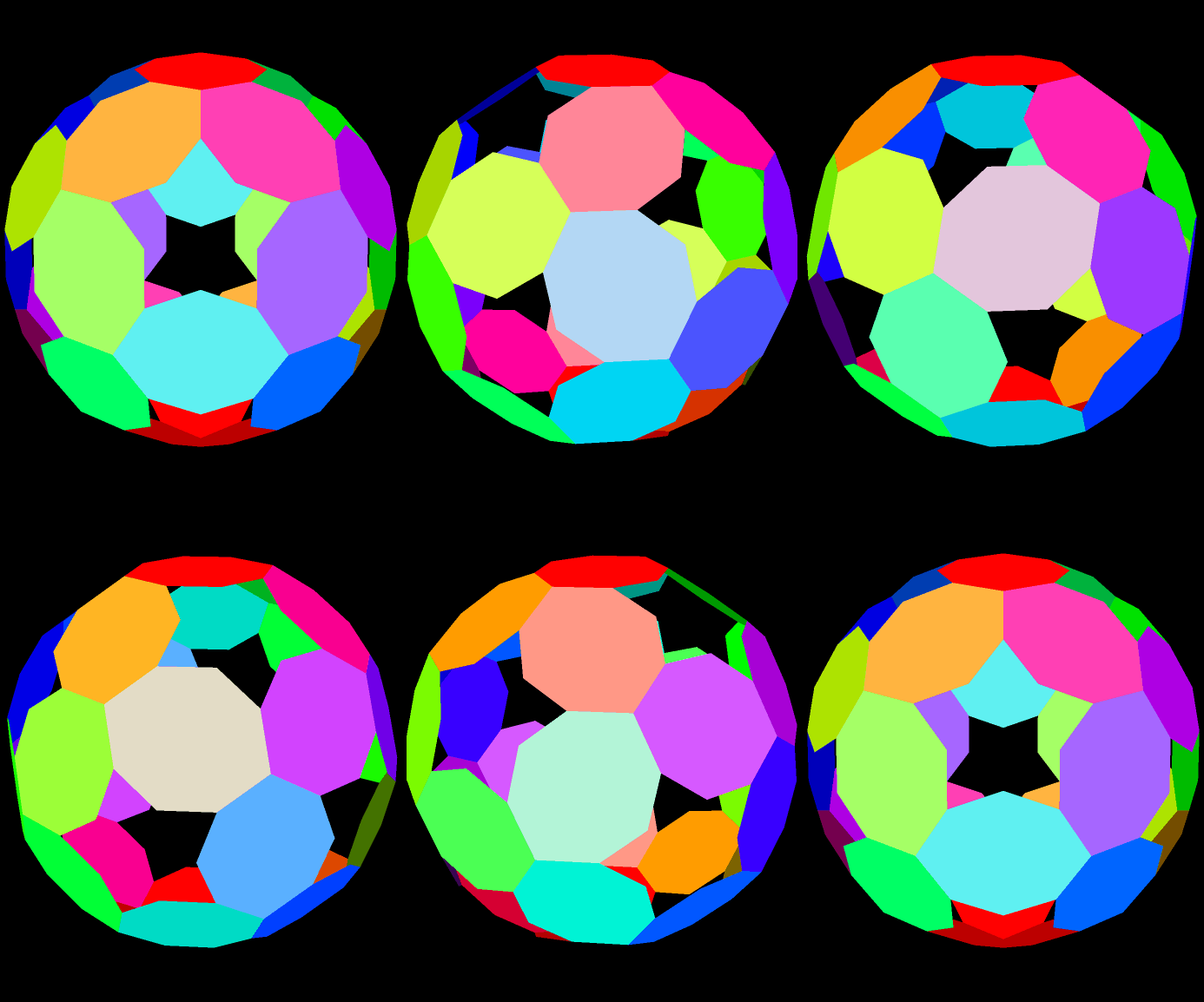
Polyhedral Butterfly

polyhedral butterfly

Created using Stella 4d, available at www.software3d.com/Stella.php.

My Lost Discovery from ~2006: The Triamond Pentagonal Bifrustrum

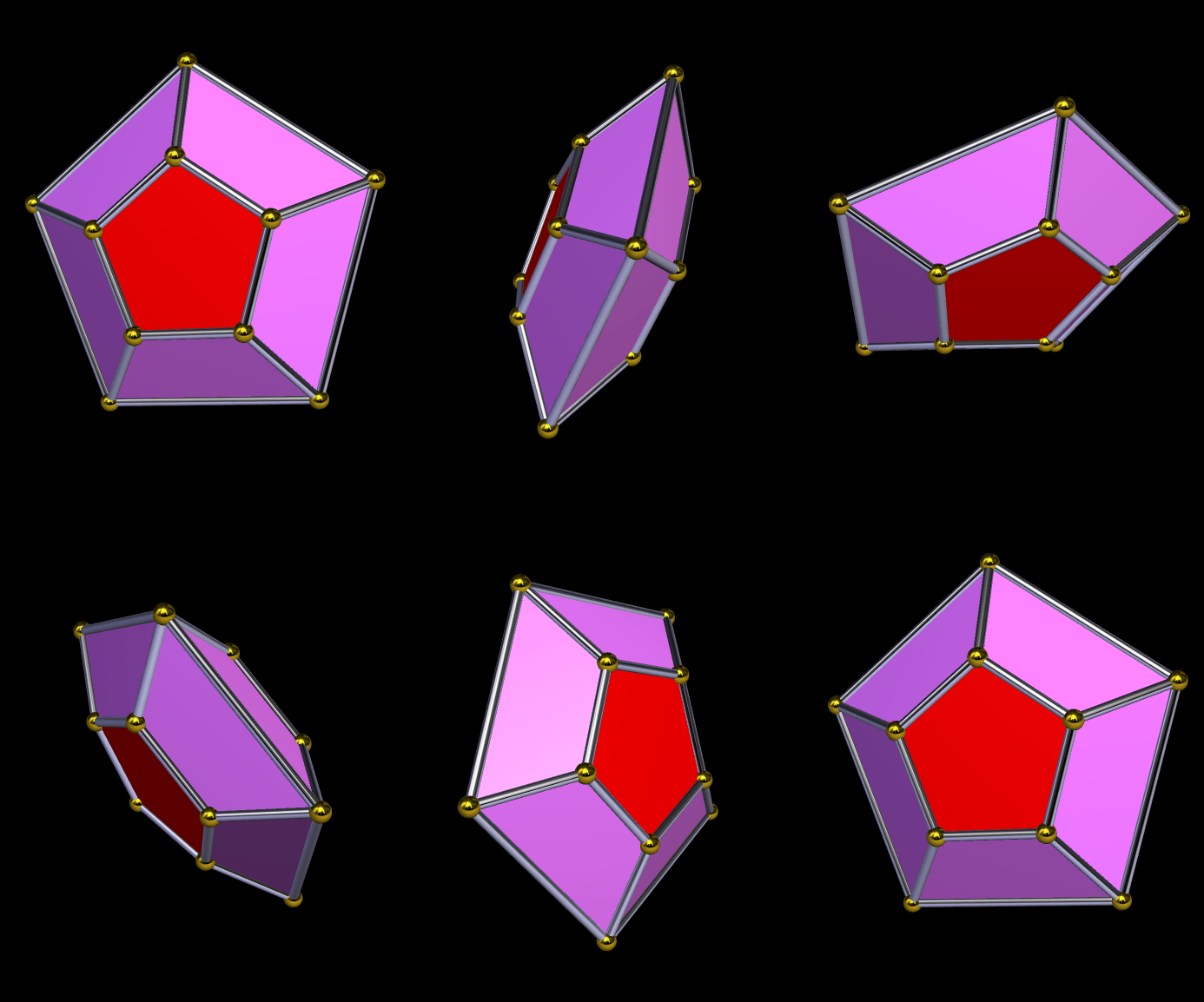
I just had the strange experience of encountering a polyhedral discovery of mine on the Internet from about eight years ago — one that I had completely forgotten, but had shared with others, who posted it online, and were kind enough to give me credit for the discovery. It’s the fifth polyhedron shown on this page: http://www.interocitors.com/polyhedra/Triamonds/ — and is shown with a .stel file, so I was able to use polyhedral-manipulation-and-imaging software, Stella 4d (available at www.software3d.com/Stella.php) to make a rotating image of it:

Triamond Pentagonal Bifrustum

It’s a member of a class of polyhedra which have, as faces, only regular polygons with unit size, as well as “triamonds.” Triamonds are 1:1:1:2 trapezoids composed of three coplanar, equilateral triangles.

Back in 2006 or earlier, my guess is that I simply made a physical model out of card-stock paper and tape, and then took a photograph of it — something I haven’t done in a very long time, now that making moving pictures of virtual models has become so easy. Another possibility is that I used Zome, an excellent ball-and-stick modelling system available at www.zometool.com. Zome, like Stella, I still use — and I will be using Zome often with students, in class, when school starts next month. Fortunately, I have a lot of Zome!

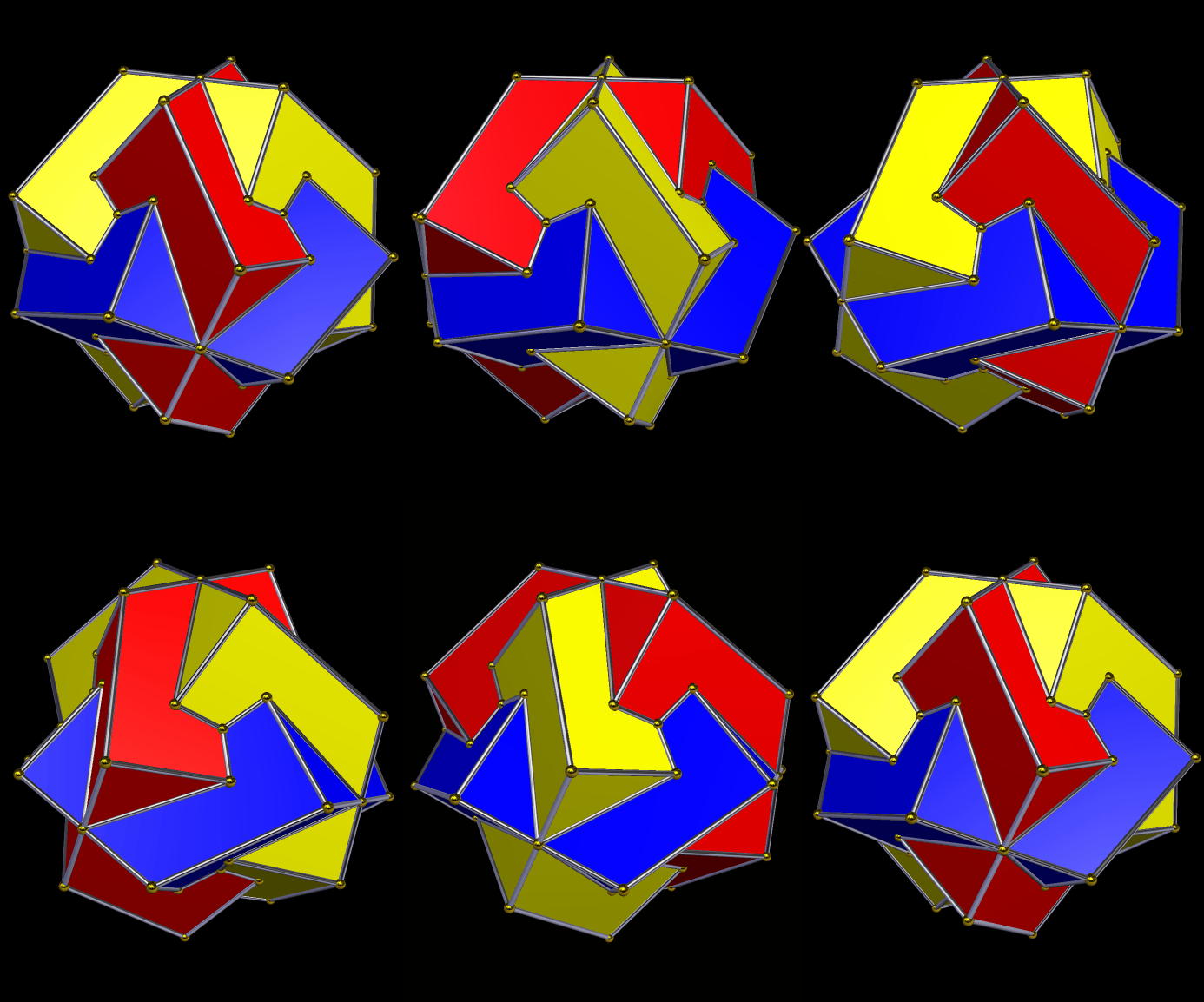
Three-Part Polyhedral Compound

Compound of three polyhedra with eight kite-faces each

Since I stumbled across this by stellating other polyhedra, I’ve never seen what a face of one component of this compound looks like, without having part of that face covered. My best guess is that the faces (of which there are eight in each part of the compound) are kites.

I used Stella 4d, available at http://www.software3d.com/Stella.php, to make this, and a free trial download is available at that site.

A Simulation of Crystalline Growth Using Polyhedral Augmentation

Crystals and crystalline growth have been studied for centuries because of, at least in part, their symmetry. Crystals are cut in such a way as to increase this symmetry even more, because most people find symmetry attractive. However, where does the original symmetry in a crystal come from? Without it, jewelers who cut gemstones would not exist, for the symmetry of crystalline minerals themselves is what gives such professionals the raw materials with which to work.

To understand anything about how crystals grow, one must look at a bit of chemistry. The growth of crystals:

  • Involves very small pieces:  atoms, molecules, ions, and/or polyatomic ions
  • Involves a small set of simple rules for how these small pieces attach to each other

Why small pieces? That’s easy:  we live in a universe where atoms are tiny, compared to anything we can see. Why is the number of rules for combining parts small, though? Well, in some materials, there are, instead, large numbers of ways that atoms, etc., arrange themselves — and when that happens, the result, on the scale we can see, is simply a mess. Keep the number of ways parts can combine extremely limited, though, and it is more likely that the result will possess the symmetry which is the source of the aesthetic appeal of crystals.

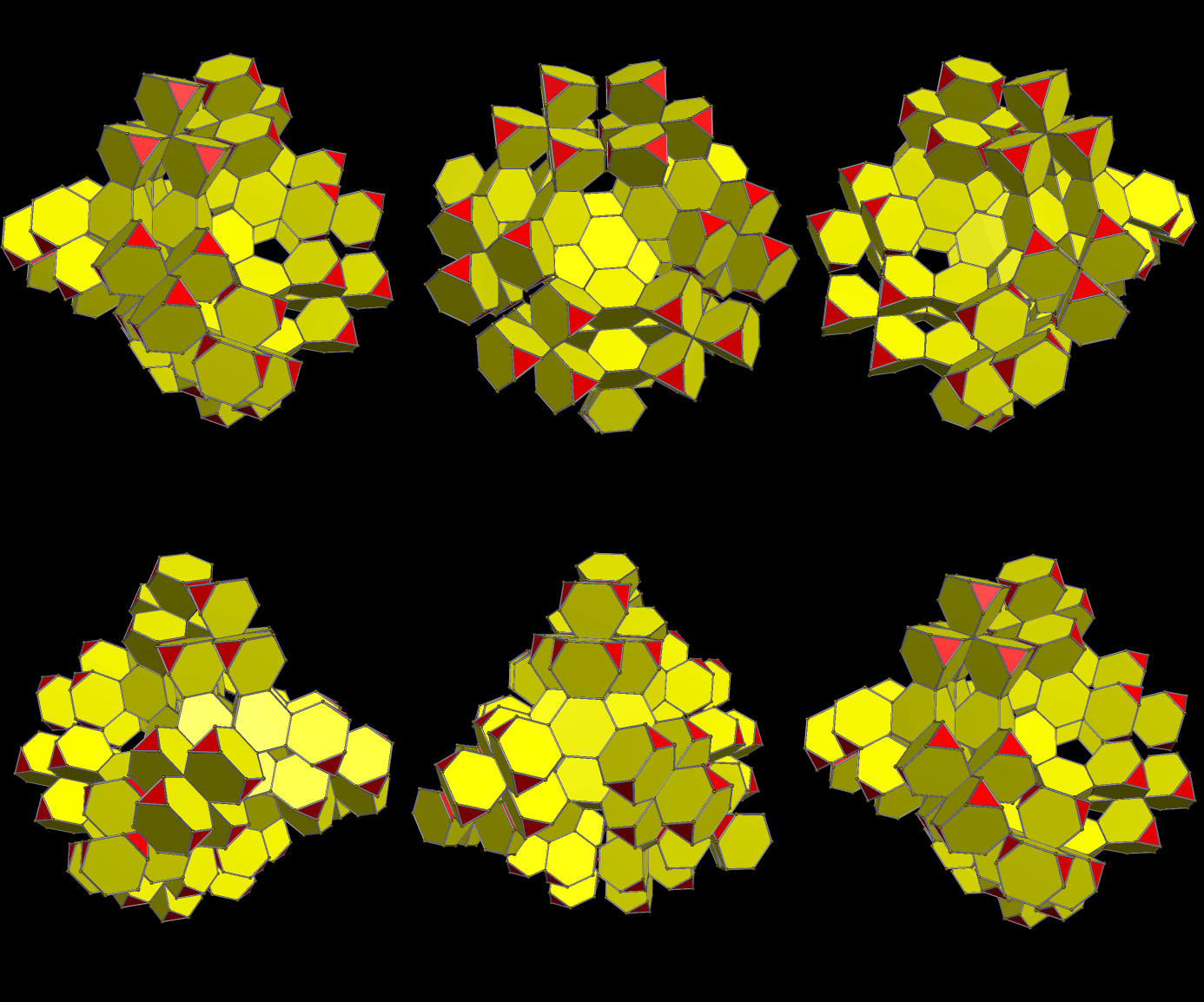
This can be modeled, mathematically, by using polyhedral clusters. For example, I can take a tetrahedron, and them augment each of its four faces with a rhombicosidodecahedron. The result is this tetrahedral cluster:
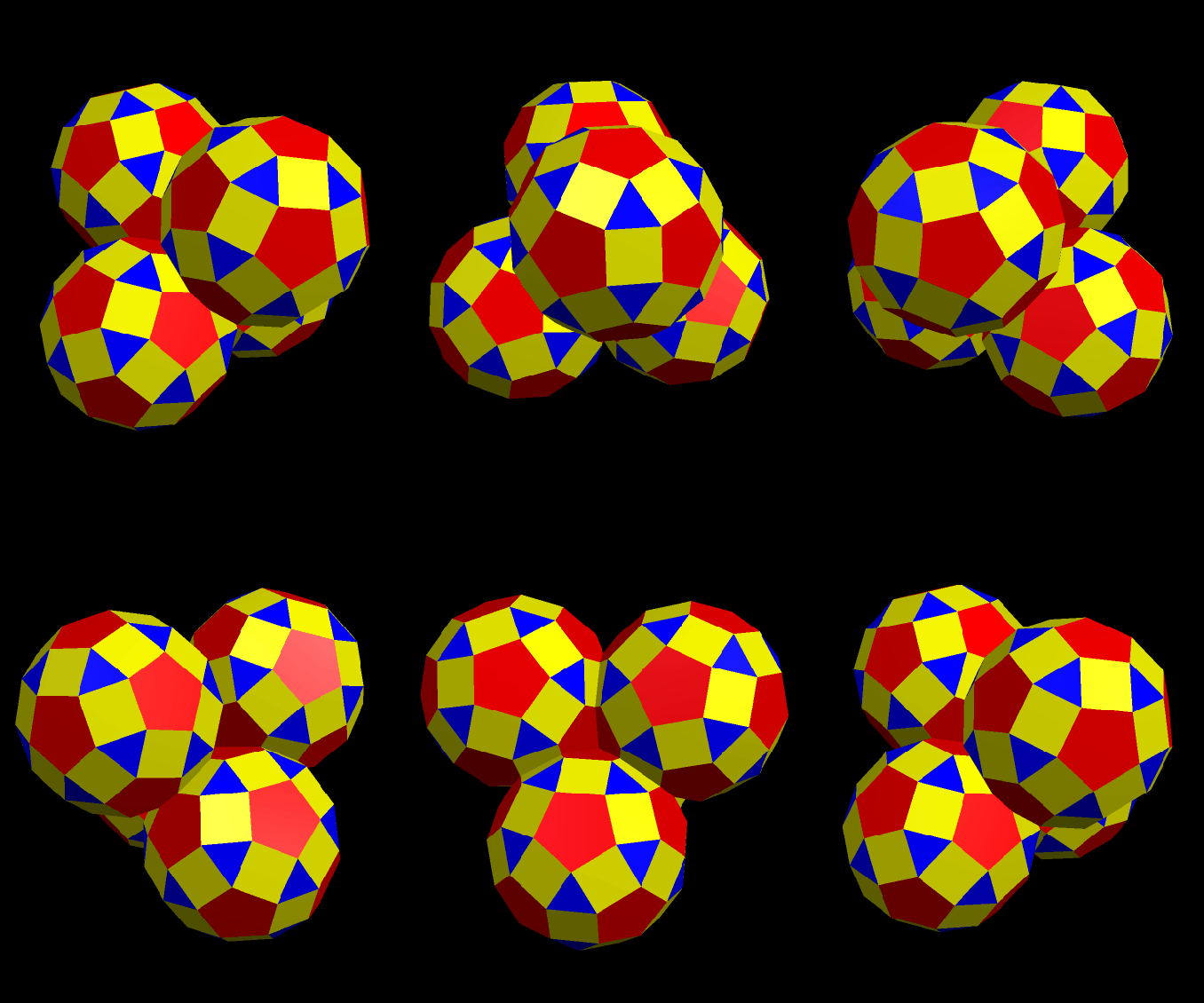
Image

Next, having chosen my building blocks, I need a set of rules for combining them. I choose, for this example, these three:

  1. Only attach one tetrahedral cluster of rhombicosidodechedra to another at triangular faces — and only use those four triangles, one on each rhombicosidodecahedron, which are at the greatest distance from the cluster’s center.
  2. Don’t allow one tetrahedral cluster to overlap another one.
  3. When you add a tetrahedral cluster in one location, also add others which are in identical locations in the overall, growing cluster.

Using these rules, the first augmentation produces this:
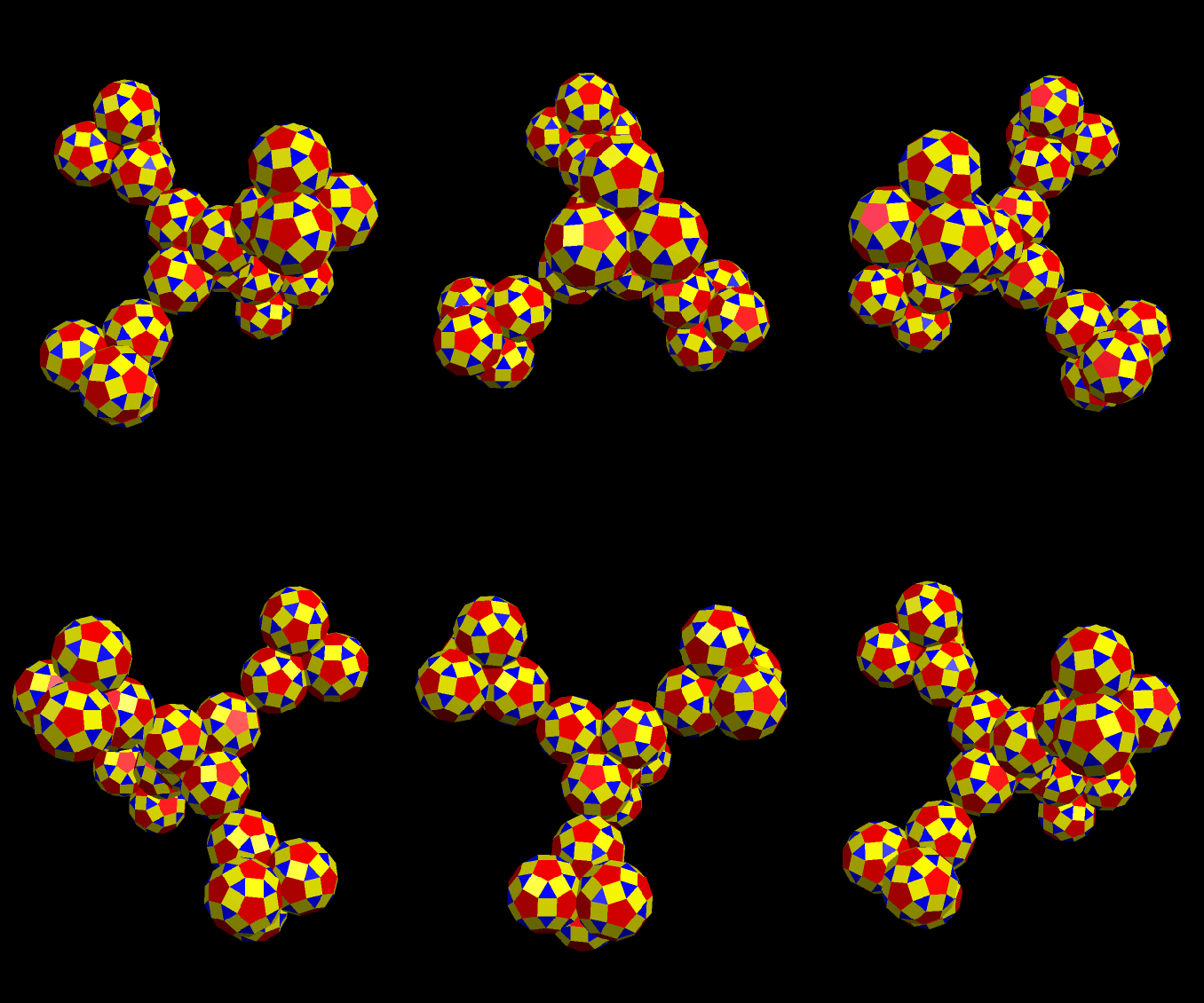
Image

That, in turn, leads to this:

Image

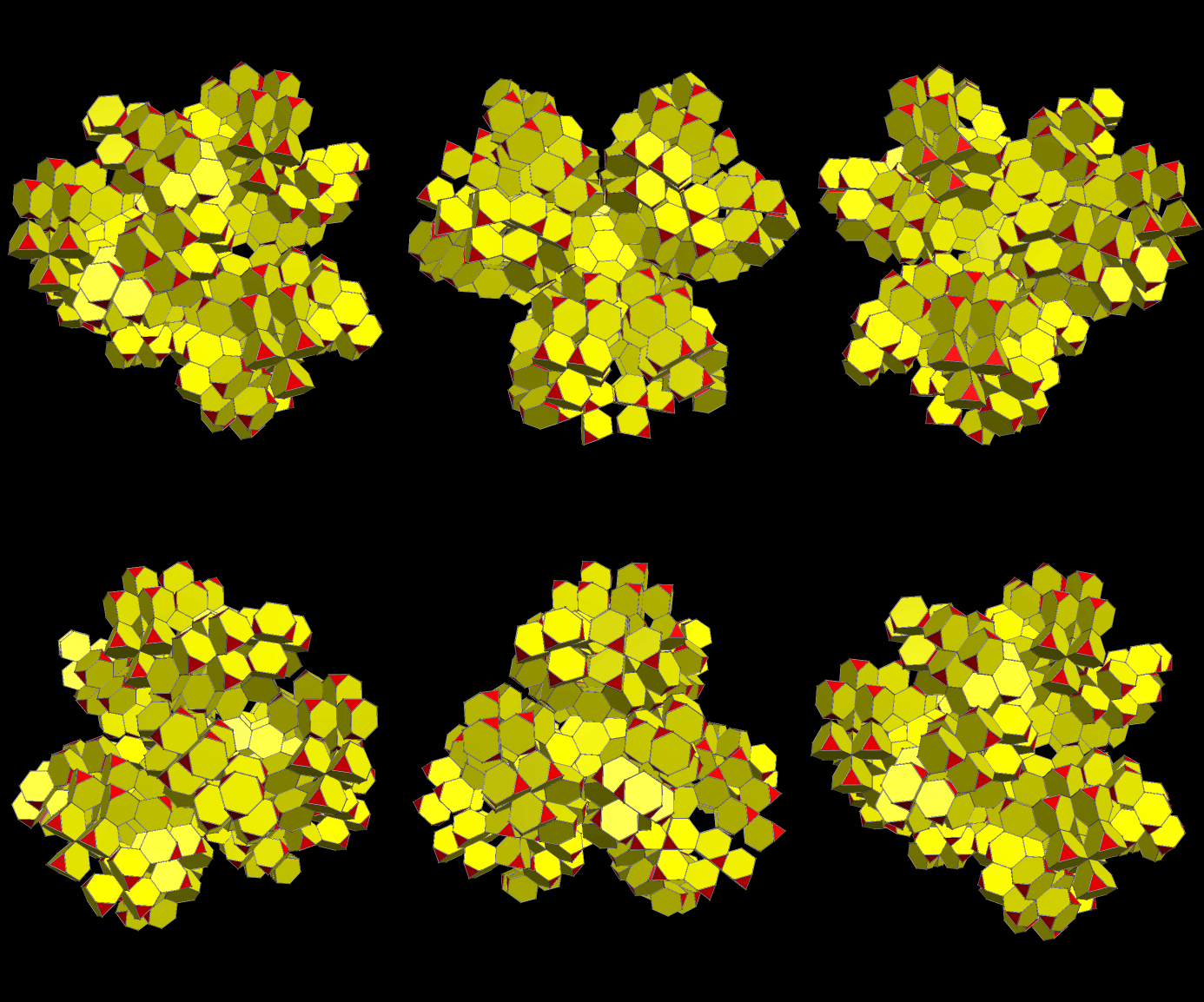
Next, after another round of augmentation:

Image

One more:

Image

In nature, of course, far more steps than this are needed to produce a crystal large enough to be visible. Different crystals, of course, have different shapes and symmetries. How can this simulation-method be altered to model different types of crystalline growth? Simple:  use different polyhedra, and/or change the rules you select as augmentation guidelines, and you’ll get a different result.

[Note:  all of these images were created using Stella 4d: Polyhedron Navigator. This program is available at http://www.software3d.com/Stella.php.]


Sprawling Clusters of Truncated Tetrahedra

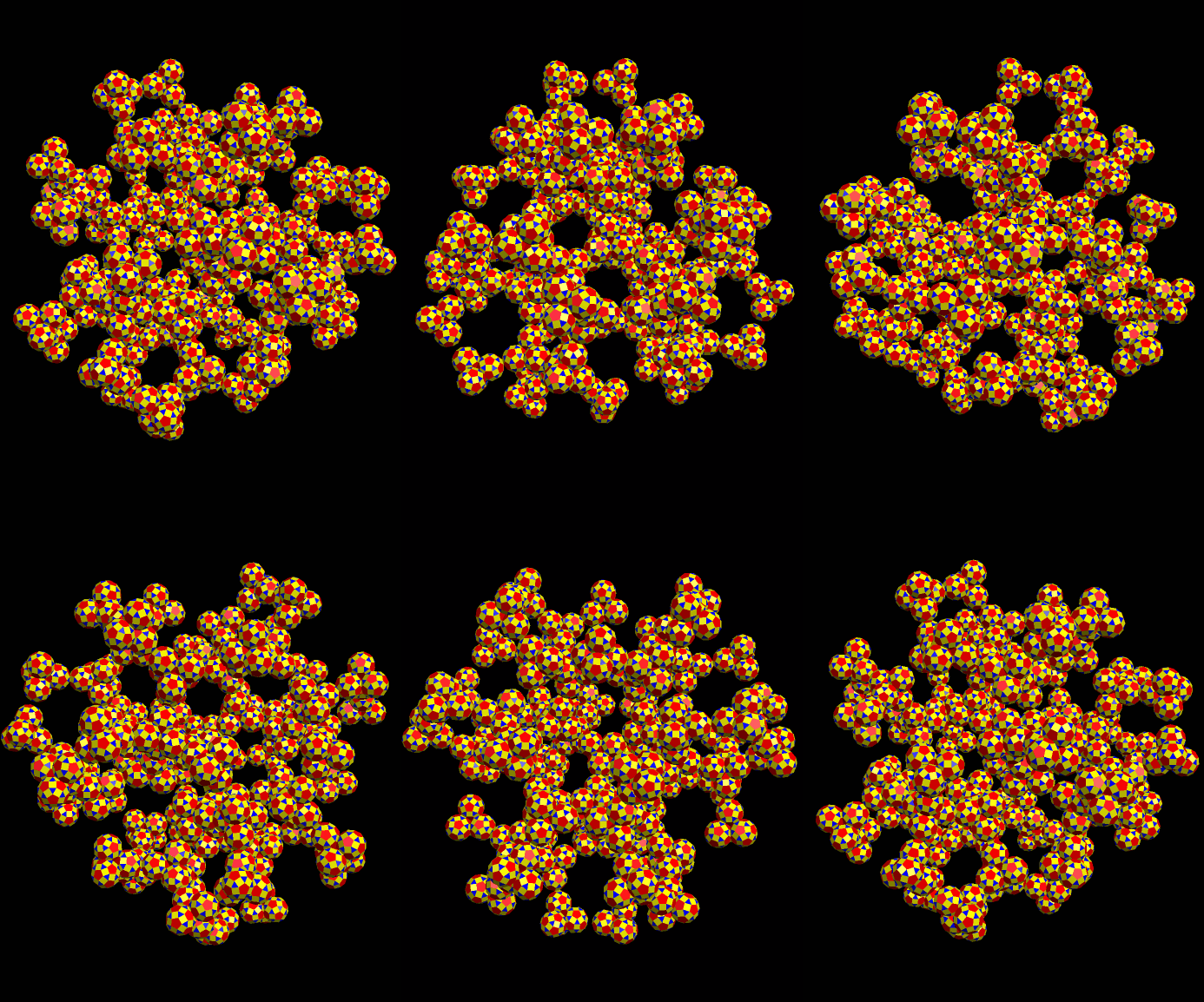
Truncated tetrahedra make interesting building blocks. In the images below, the truncated tetrahedron “atoms” are grouped into four-part “molecules,” each with a triangular face pointed toward the molecular center, which is found in a small tetrahedral hole between the four truncated tetrahedra. These four-part “molecules” are then attached to other,  always with three coplanar triangular faces from one “molecule” meeting three from the other. If you start from a central “molecule,” and let such a cluster grow for a small number of iterations, you get this:

Cluster Truncateed Tetra

What does the cluster above look like if even more truncated tetrahedra are added, but without allowing overlap to occur? Like this:

Image

Like the truncated tetrahedron itself, these sprawling clusters have tetrahedral symmetry. To keep such symmetry while building these clusters, of course, one must be careful about the exact placement of the pieces — and doing this becomes more difficult as the cluster grows ever larger. I was able to take this one more step:

Image

All of these images were created using Stella 4d: Polyhedron Navigator. This program is available at http://www.software3d.com/Stella.php.


Multiple Octahedra, in a Rotating Cluster with Tetrahedral Symmetry

Image

Multiple Octahedra, in a Rotating Cluster with Tetrahedral Symmetry

I created this cluster using Stella 4d: Polyhedron Navigator. This program is available at http://www.software3d.com/Stella.php.

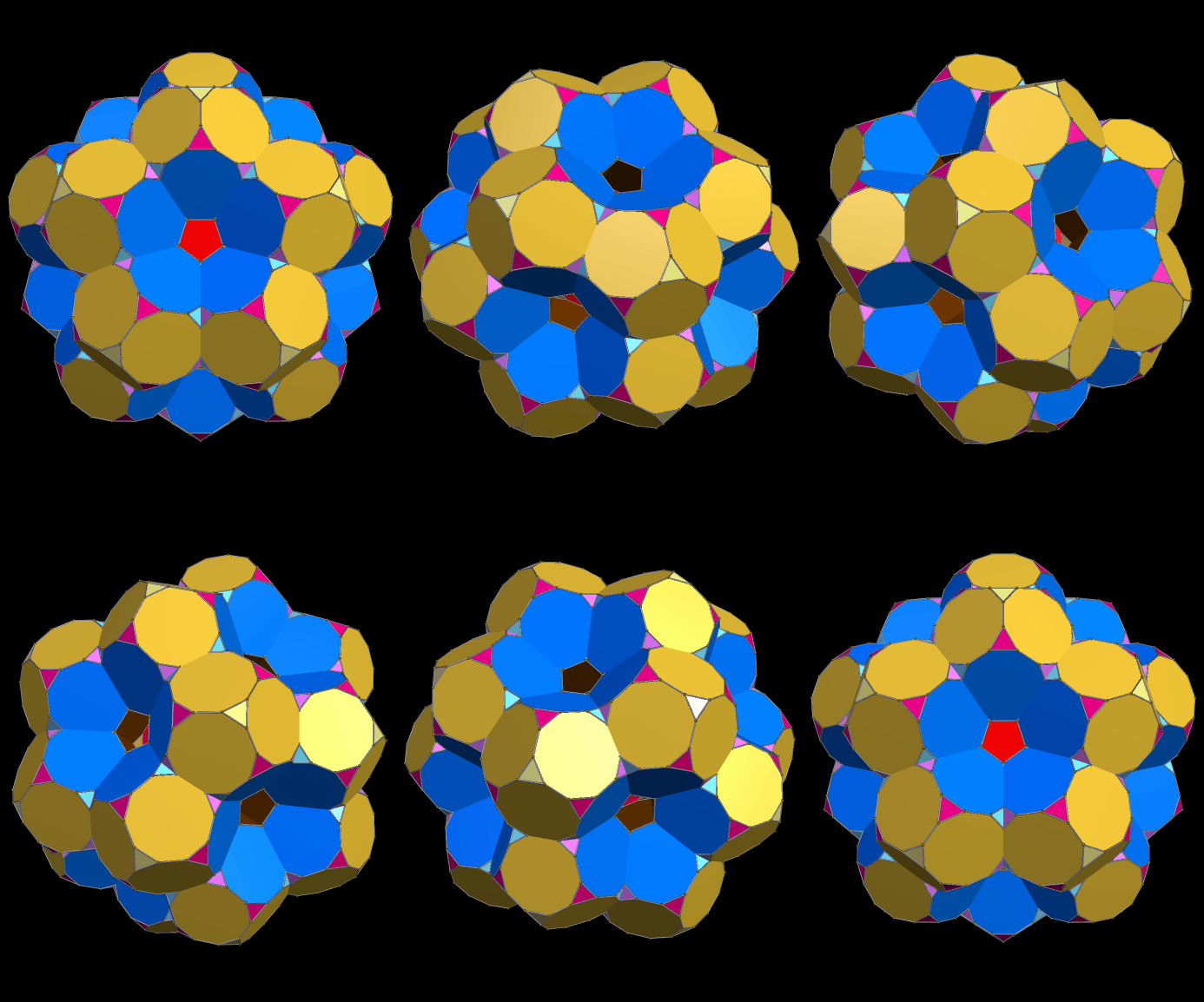
Dodecahedral Cluster of Truncated Dodecahedra

Image

Dodecahedral Cluster of Truncated Dodecahedra

I made this using Stella 4d, which you can find right here: http://www.software3d.com/Stella.php.

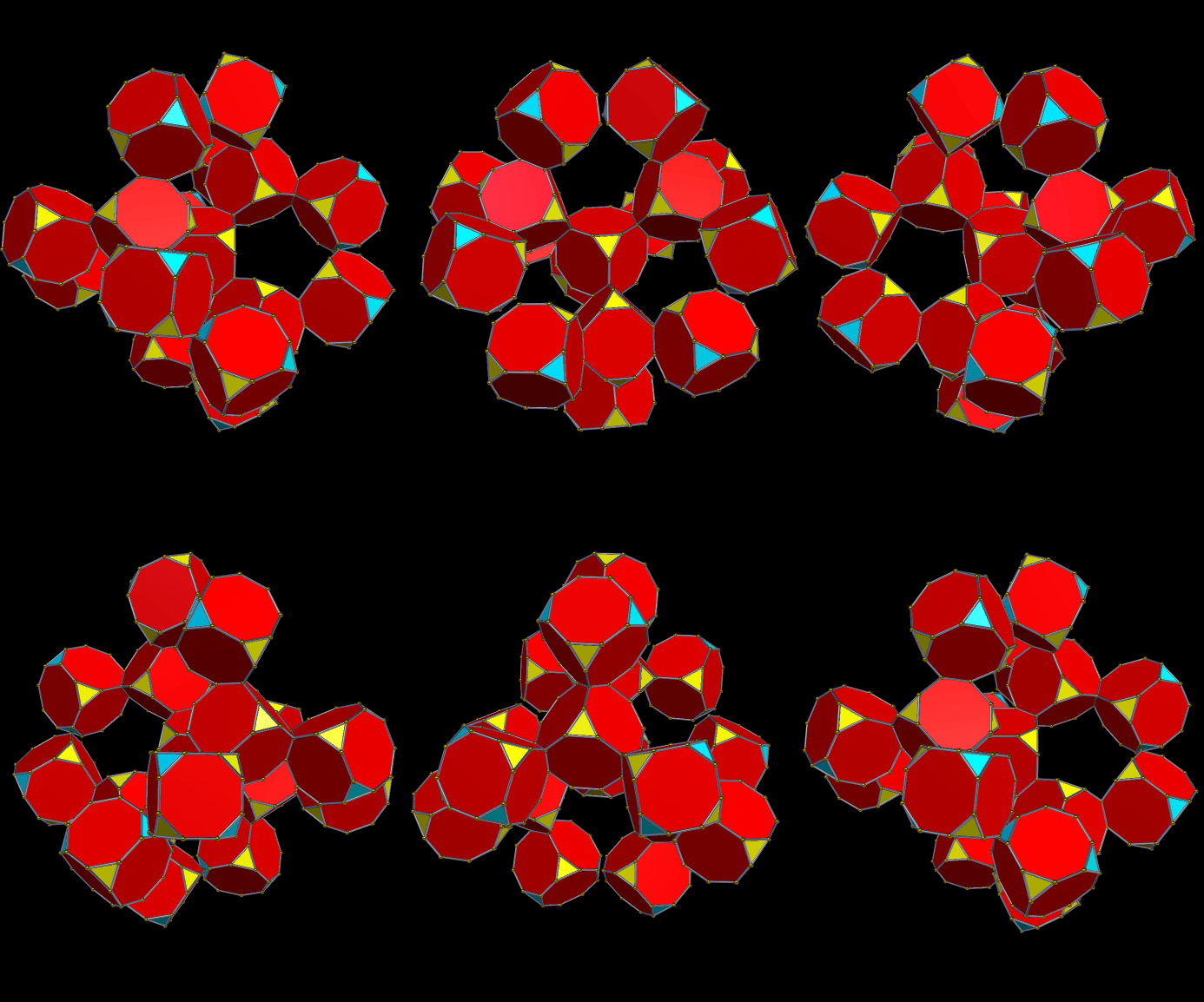
A Cluster of Seventeen Truncated Cubes with Tetrahedral Symmetry

Image

A Cluster of Seventeen Truncated Cubes with Tetrahedral Symmetry

Software credit: see Stella 4d, available (including a free trial download) at http://www.software3d.com/Stella.php.

Polyhedral Porcupine

Image

Polyhedral Porcupine

I made this using Stella 4d, which you can try at http://www.software3d.com/Stella.php.

A Gallery of Rainbow-Colored Artwork Inspired By Polyhedra

Image

Rainbow Artwork Inspired By Polyhedra

The smaller images below may each be enlarged with a single click.

Ytistorsnow and starsFloralConjdgdhfvbcxvcvex hull dualConjdhfvbcxvcvex hull dualConvex hjgfyull dual rvConvehhggdhgx hull tovrhombi and trapezoidsZonohedrified Dodeca

I made these using Stella 4d, which you can find at http://www.software3d.com/Stella.php.