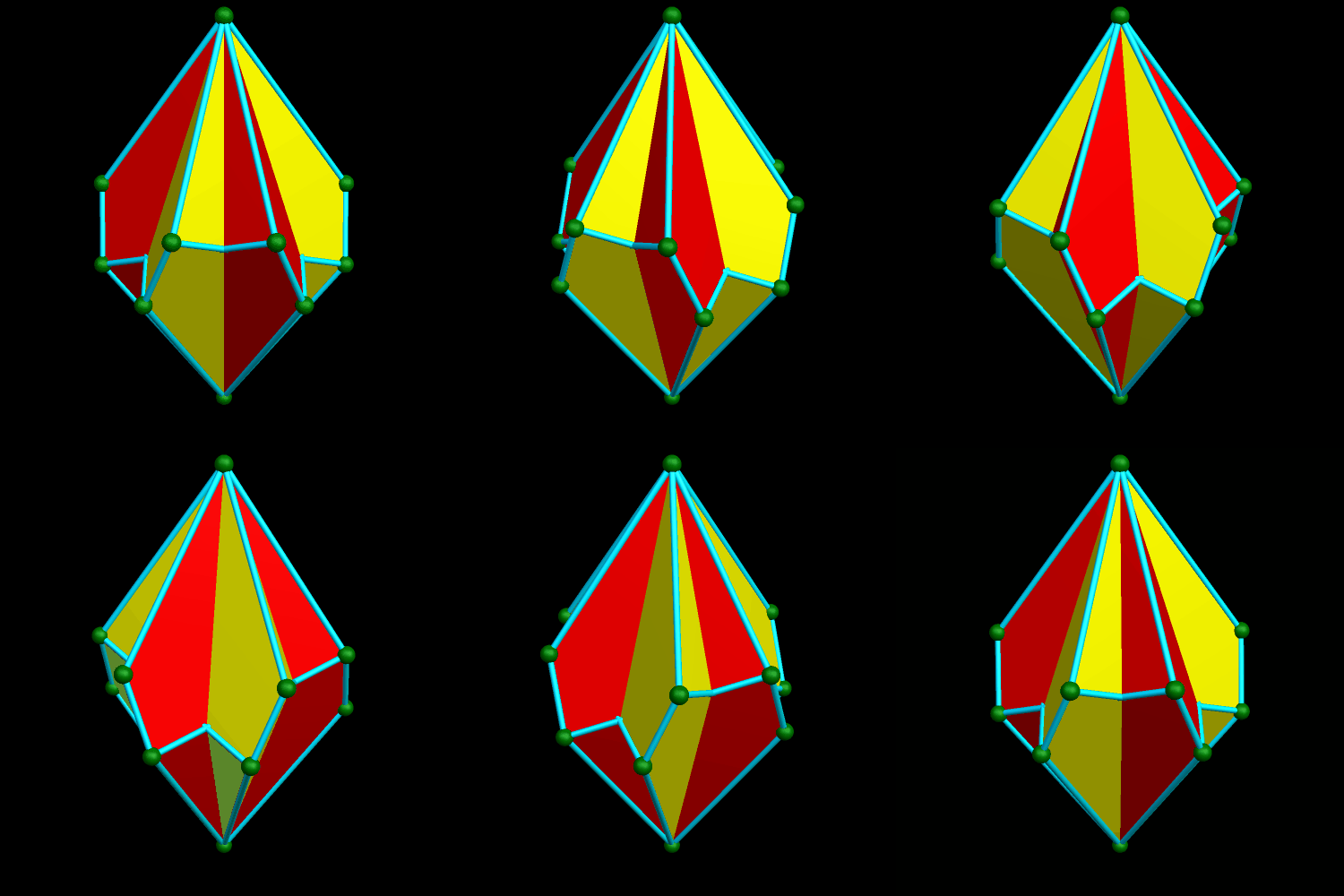
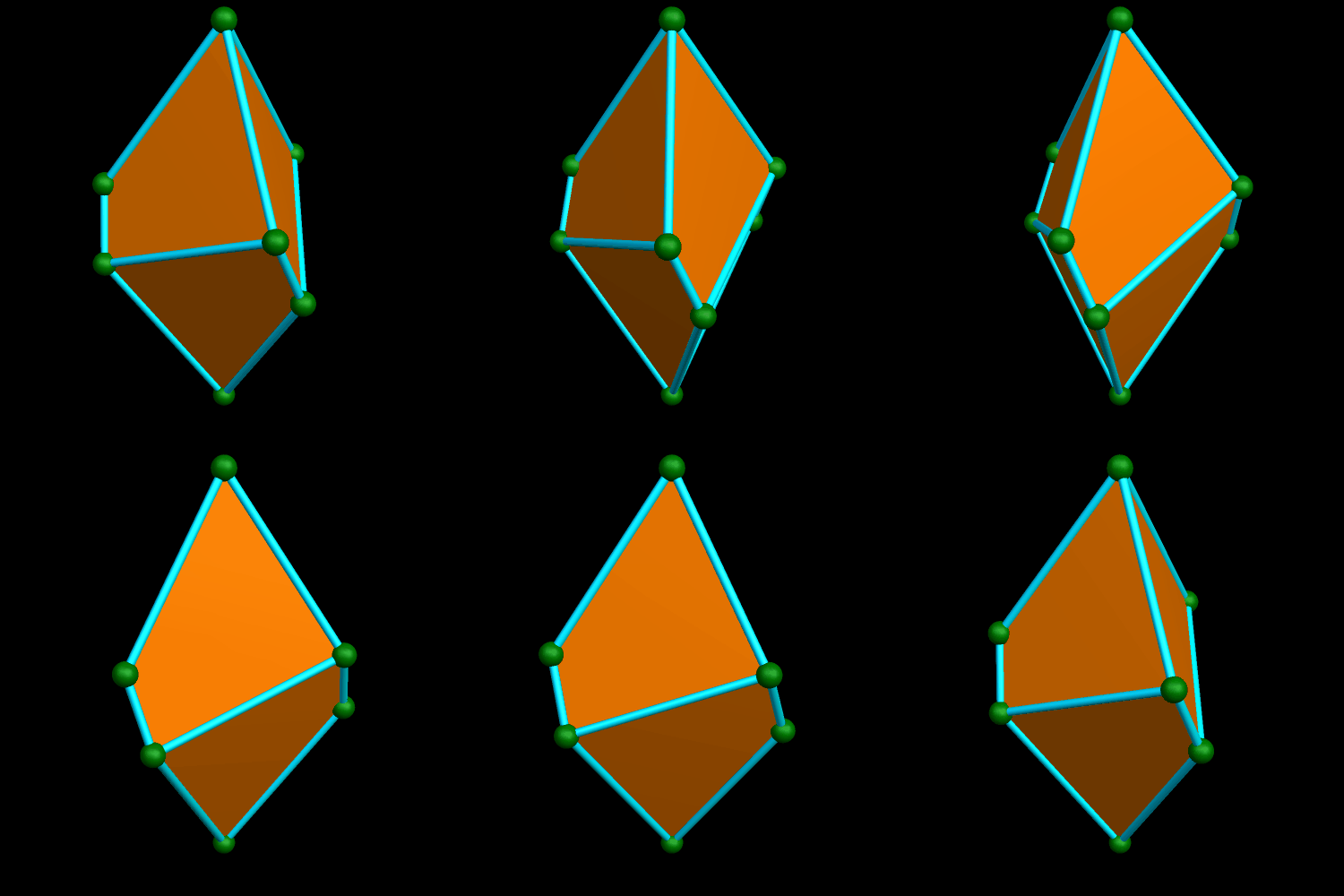
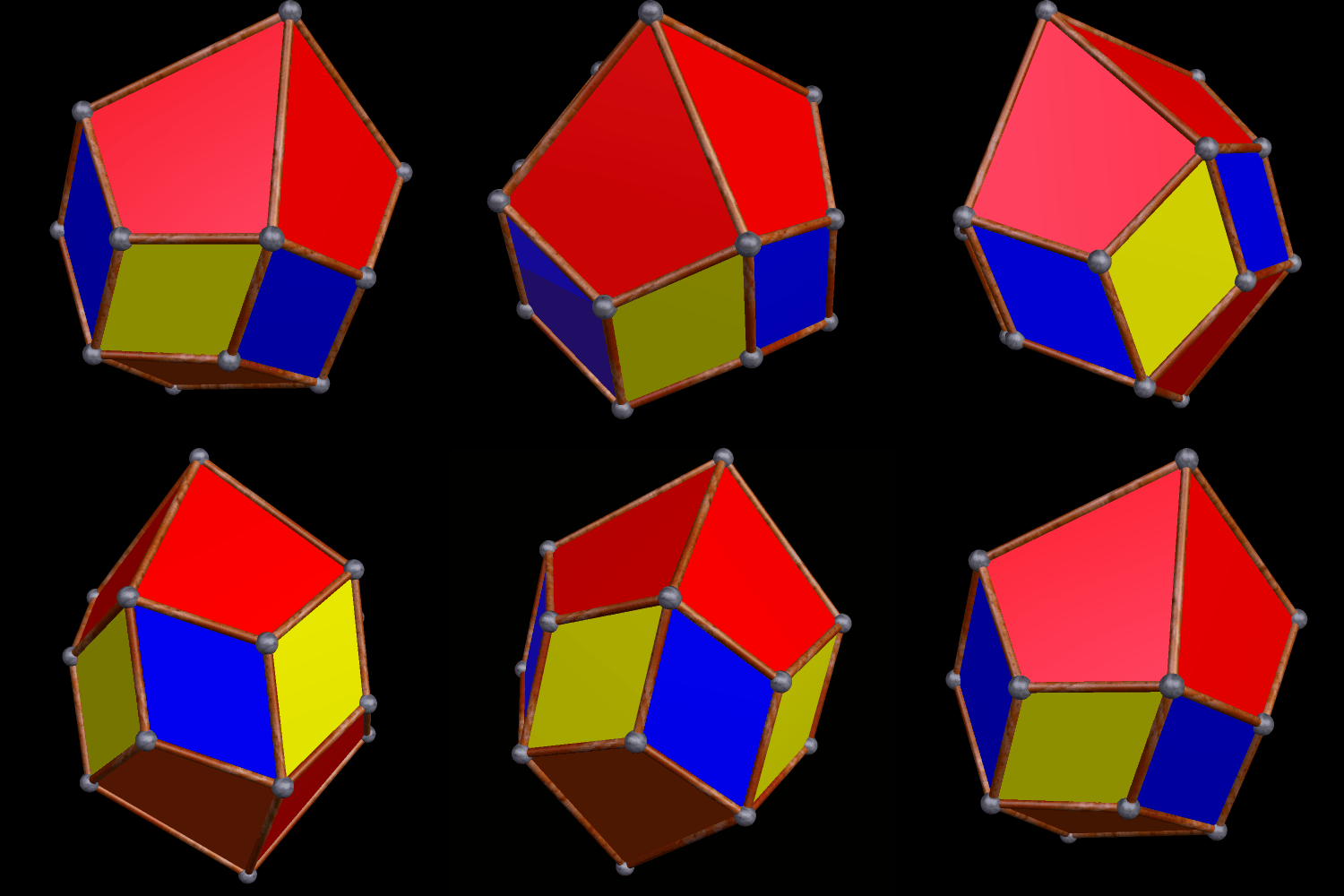
An Icosahedron, Augmented by Snub Dodecahedra, Plus Two Versions of a Related Polyhedral Cluster

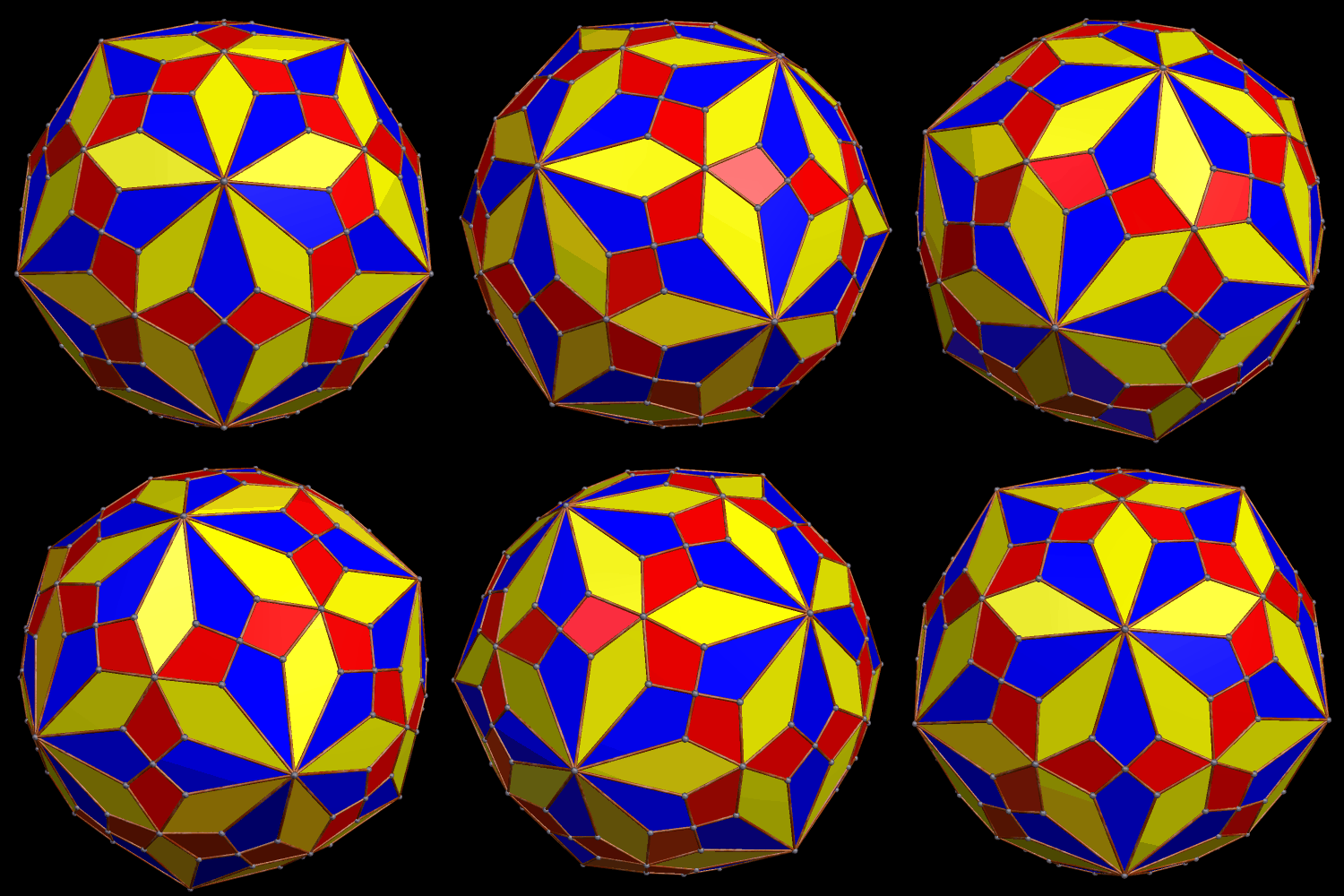
Icosa augmented by snub dodecahedra

Because the snub dodecahedron is chiral, the polyhedral cluster, above, is also chiral, as only one enantiomer of the snub dodecahedron was used when augmenting the single icosahedron, which is hidden at the center of the cluster.

As is the case with all chiral polyhedra, this cluster can be used to make a compound of itself, and its own enantiomer (or “mirror-image”):
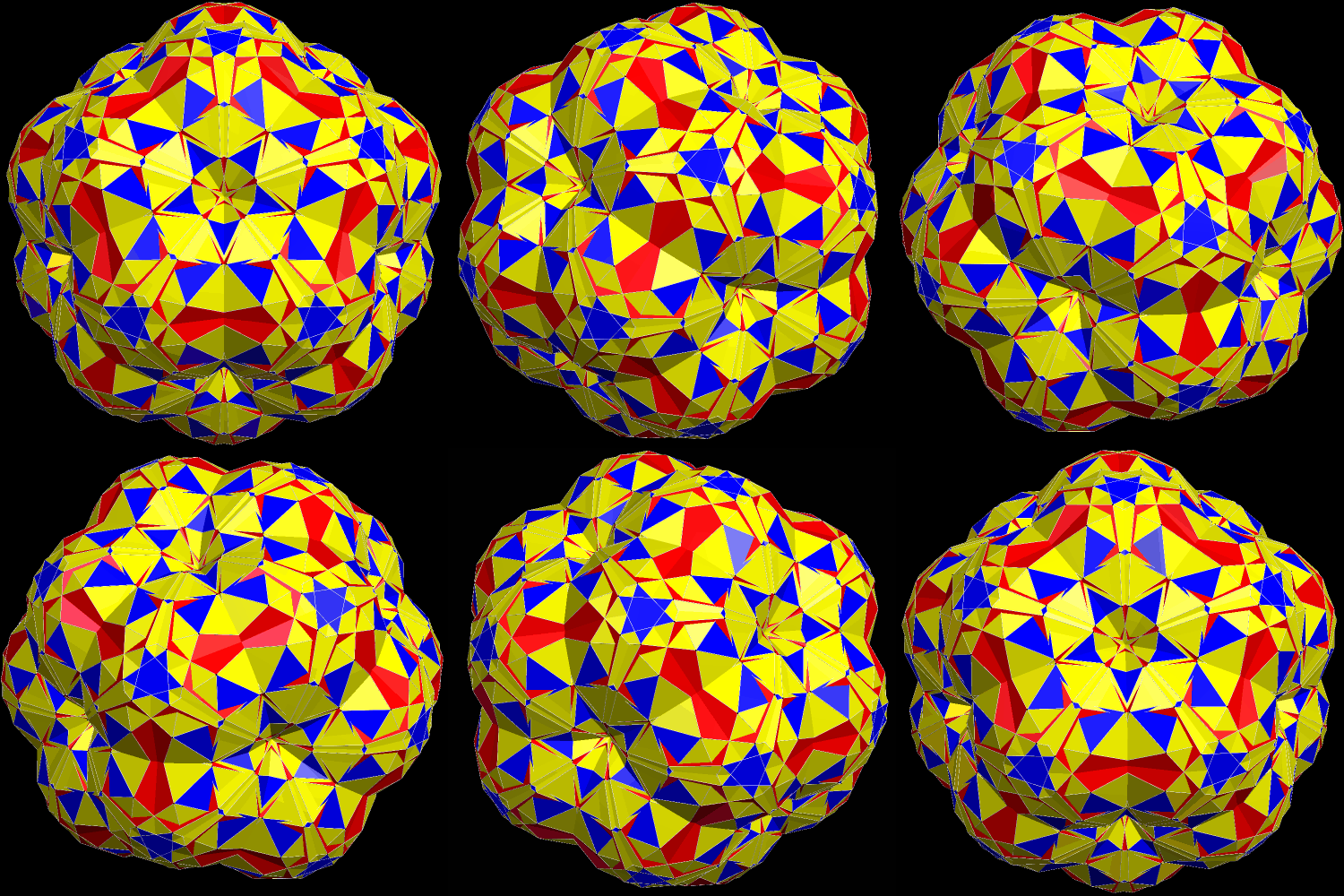
Compound of enantiomorphic pair of snub-dodeca-augemented icosahedra

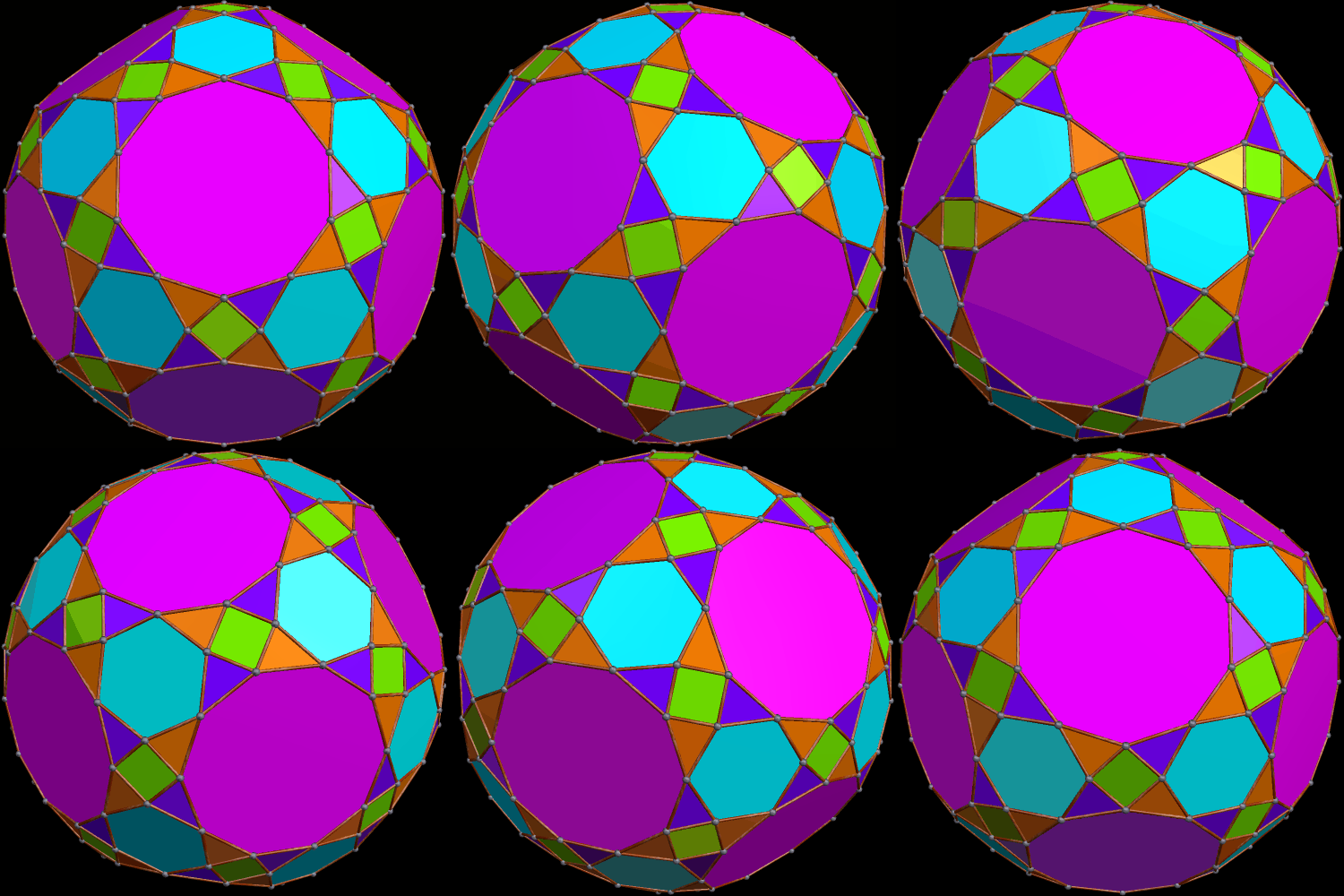
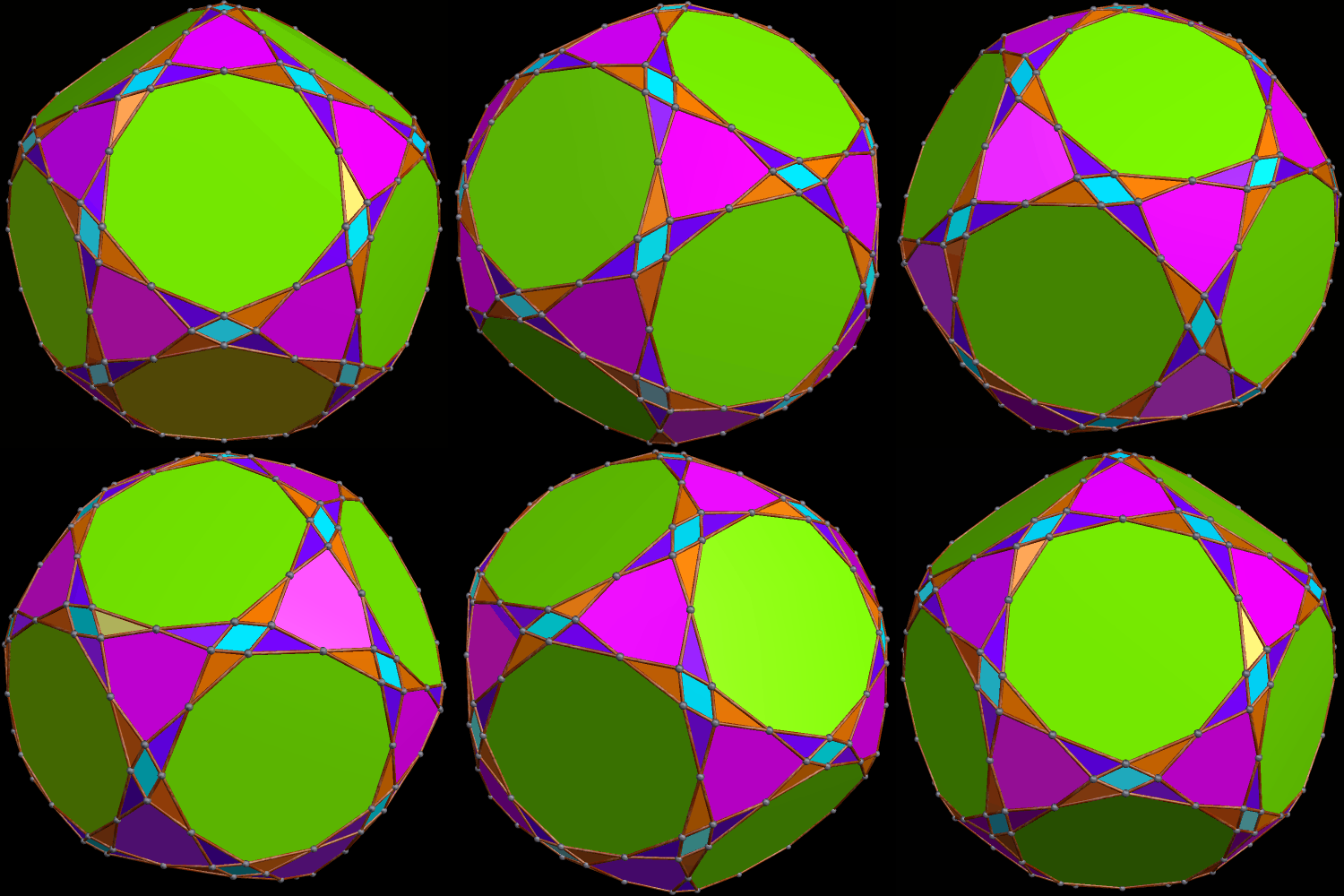
The image above uses the same coloring-scheme as the first image shown in this post. If, however, the two enantiomorphic components are each given a different overall color, this second cluster looks quite different:
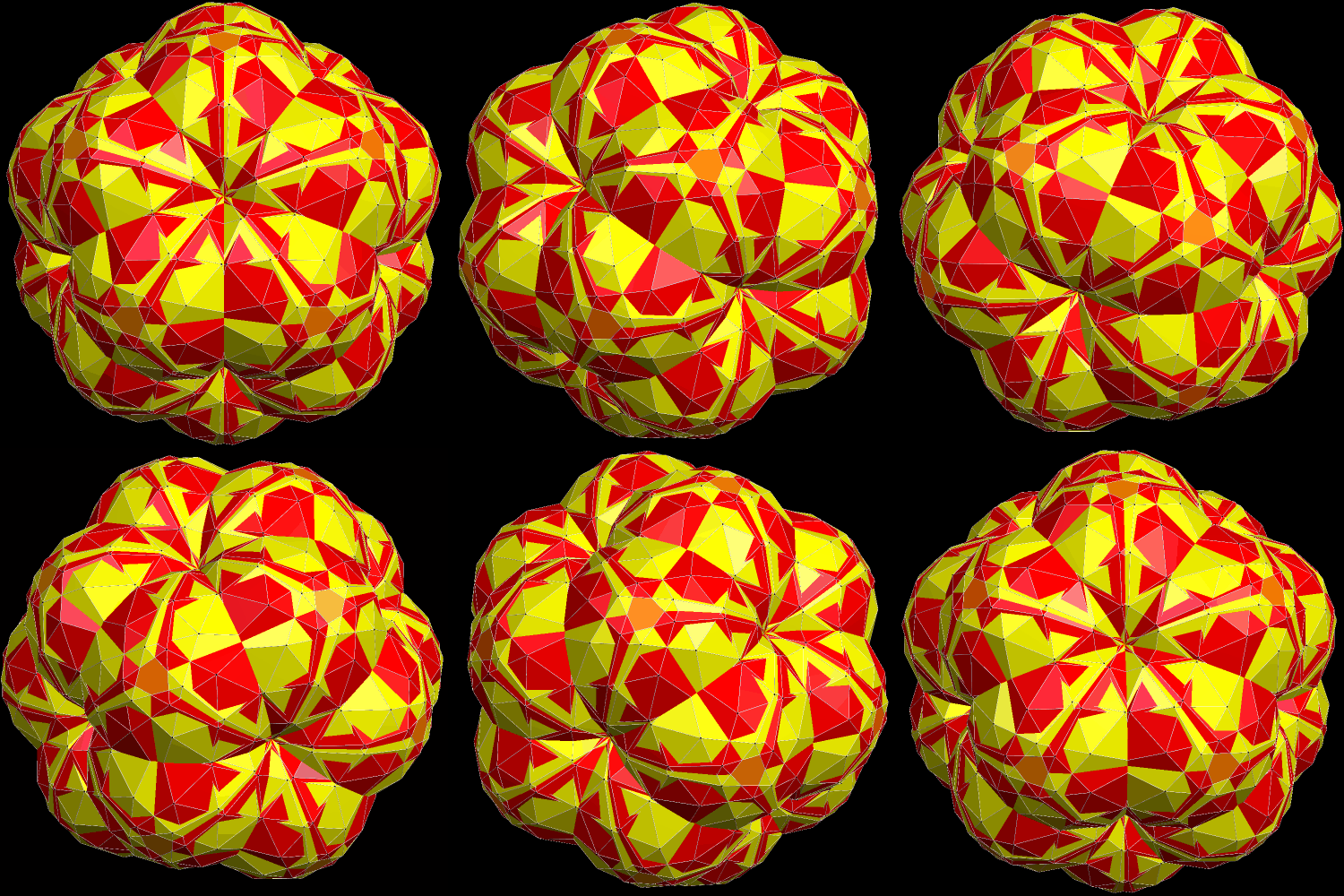
Compound of enantiomorphic pair of snub-dodeca-augemented icosahedra colored by chirality

All three of these virtual models were created using Stella 4d, software available at this website.
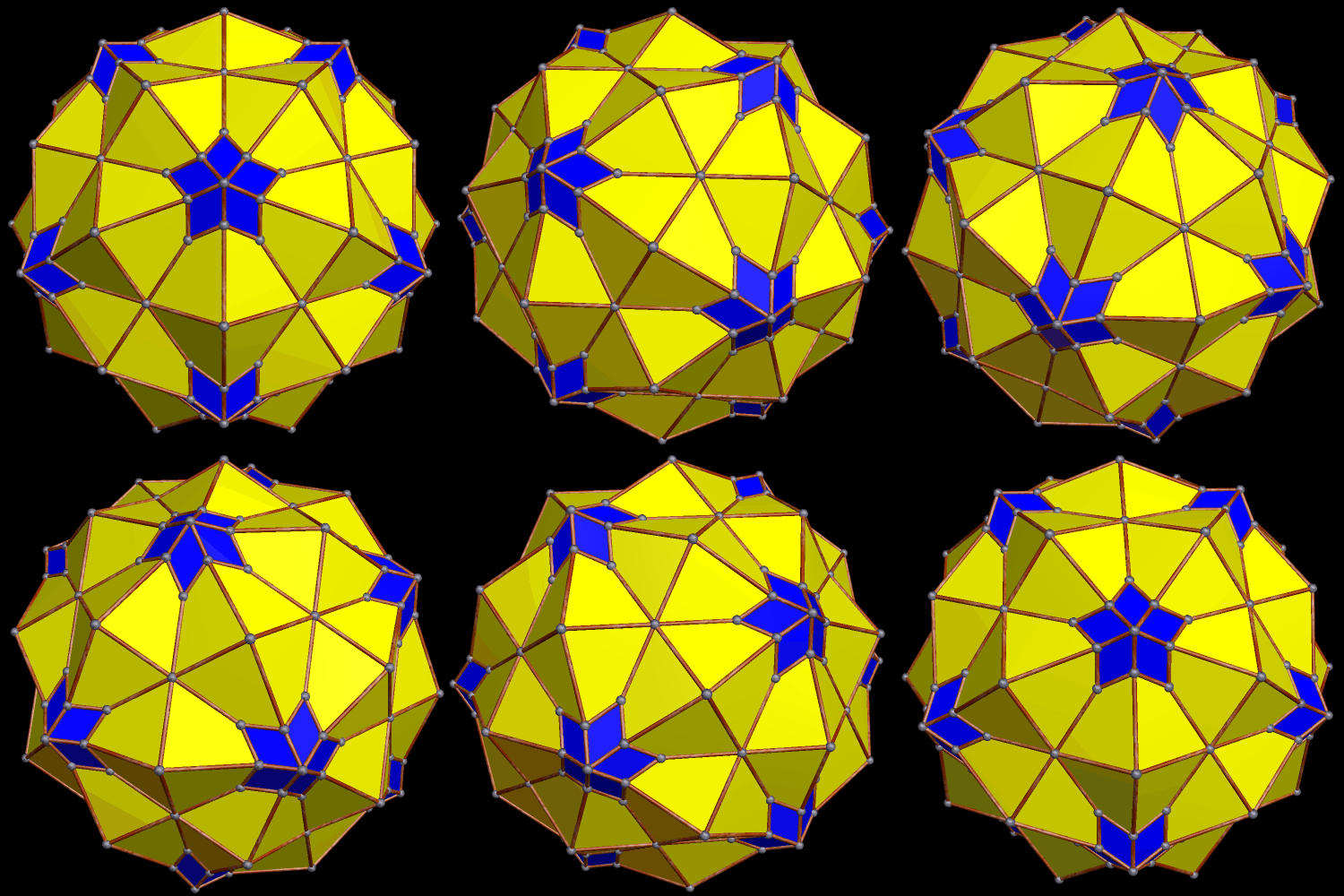
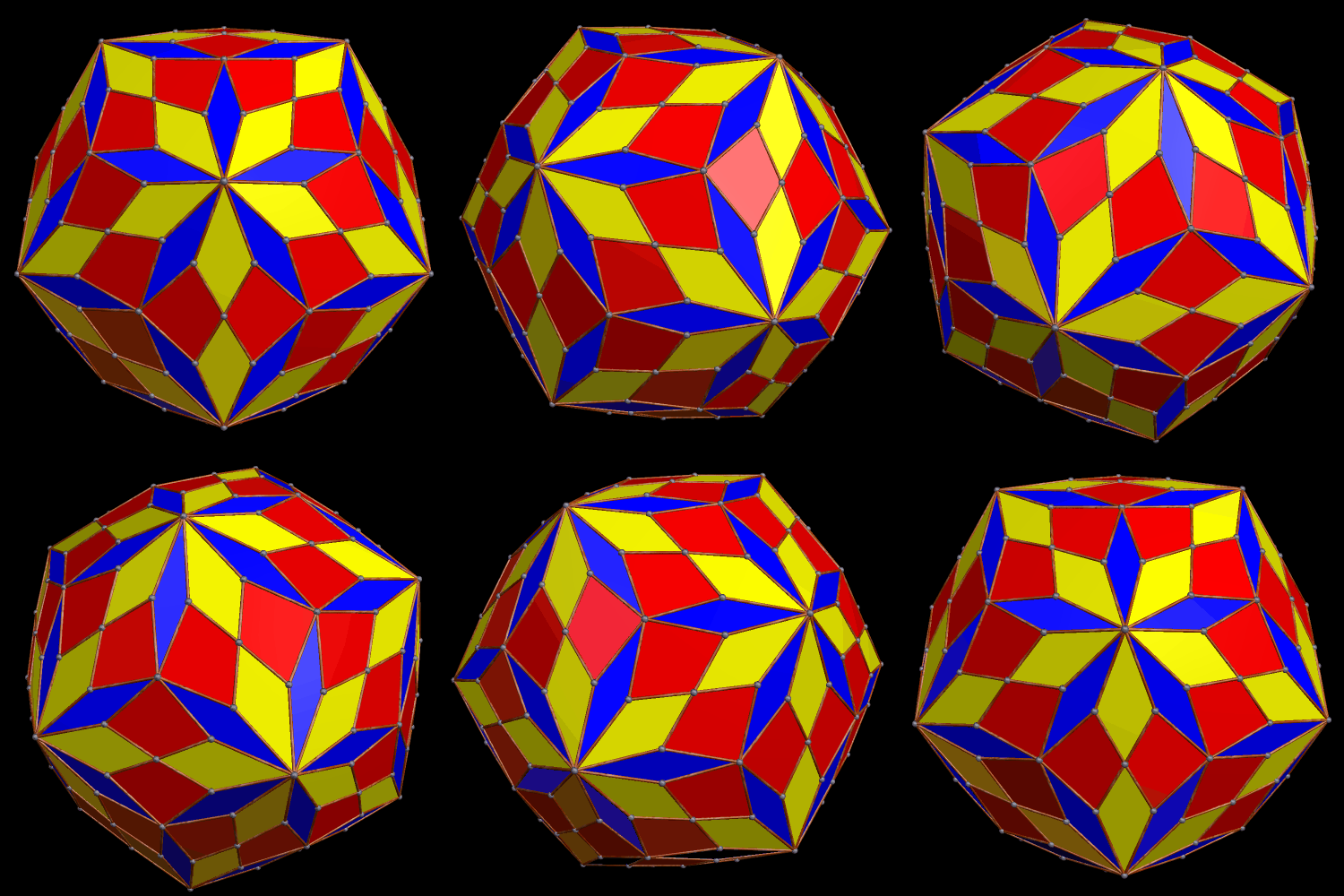
A Compound of an Icosahedron and the First Stellation of the Rhombic Triacontahedron

Compound of an icosahedron and a stellation (find out which one) of the RTC

I made this compound using software called Stella 4d: Polyhedron Navigator. This program may be purchased (or a trial download tried for free) at this website.

Four Different Facetings of the Great Rhombcuboctahedron

faceted GRCO

Faceted Trunc Cubocta 2

Faceted Trunc Cubocta 4

Faceted Trunc Cubocta

All four of these rotating images were created using software called Stella 4d: Polyhedron Navigator. You can buy this program, or try it for free, at this website. Faceting is the inverse function of stellation, and involves connecting the vertices of an already-established polyhedron in new ways, to create different polyhedra from the one with which one started. For each of these, the convex hull is the great rhombcuboctahedron, itself.

A Central Icosidodecahedron, Augmented with Twenty Cuboctahedra, and Twelve More Icosidodecahedra

Augmented Icosidodeca aug with 20 cuboctas and 12 icosidodecas color scheme two

Above and below, you will find two different coloring-schemes for this particular cluster of polyhedra. I made both of these rotating images using Stella 4d, software you can buy, or try for free, right here.

Augmented Icosidodeca aug with 20 cuboctas and 12 icosidodecas

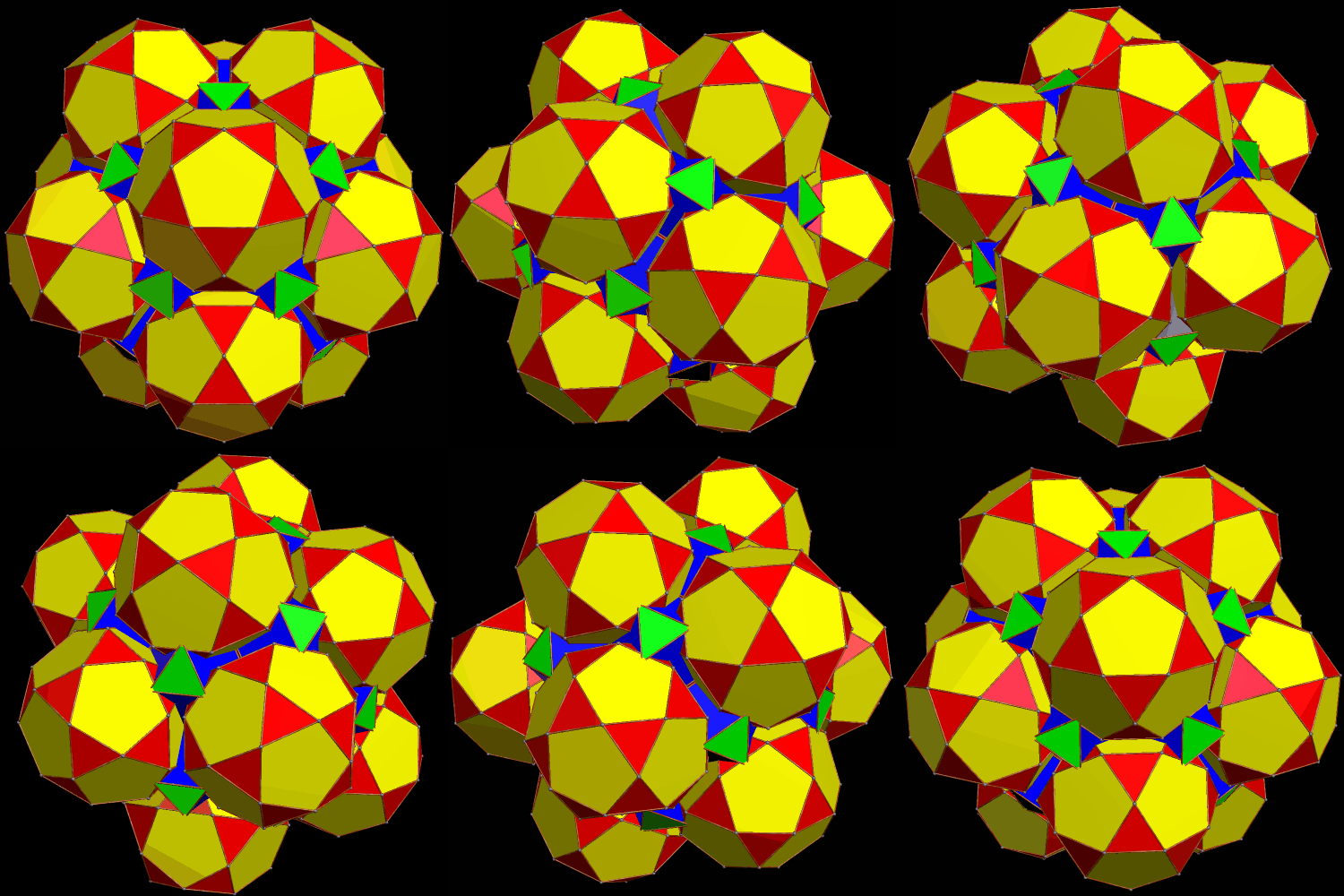
A Central Icosahedron, Augmented with Twenty Rhombicosidodecahedra

Augmented Icosa AUG WITH RIDs

A model this complex would have taken days to build by hand. With software called Stella 4d: Polyhedron Navigator, however, making this “virtual model” was easy. This program is available for purchase at this website — and there is a free trial download available there, as well.

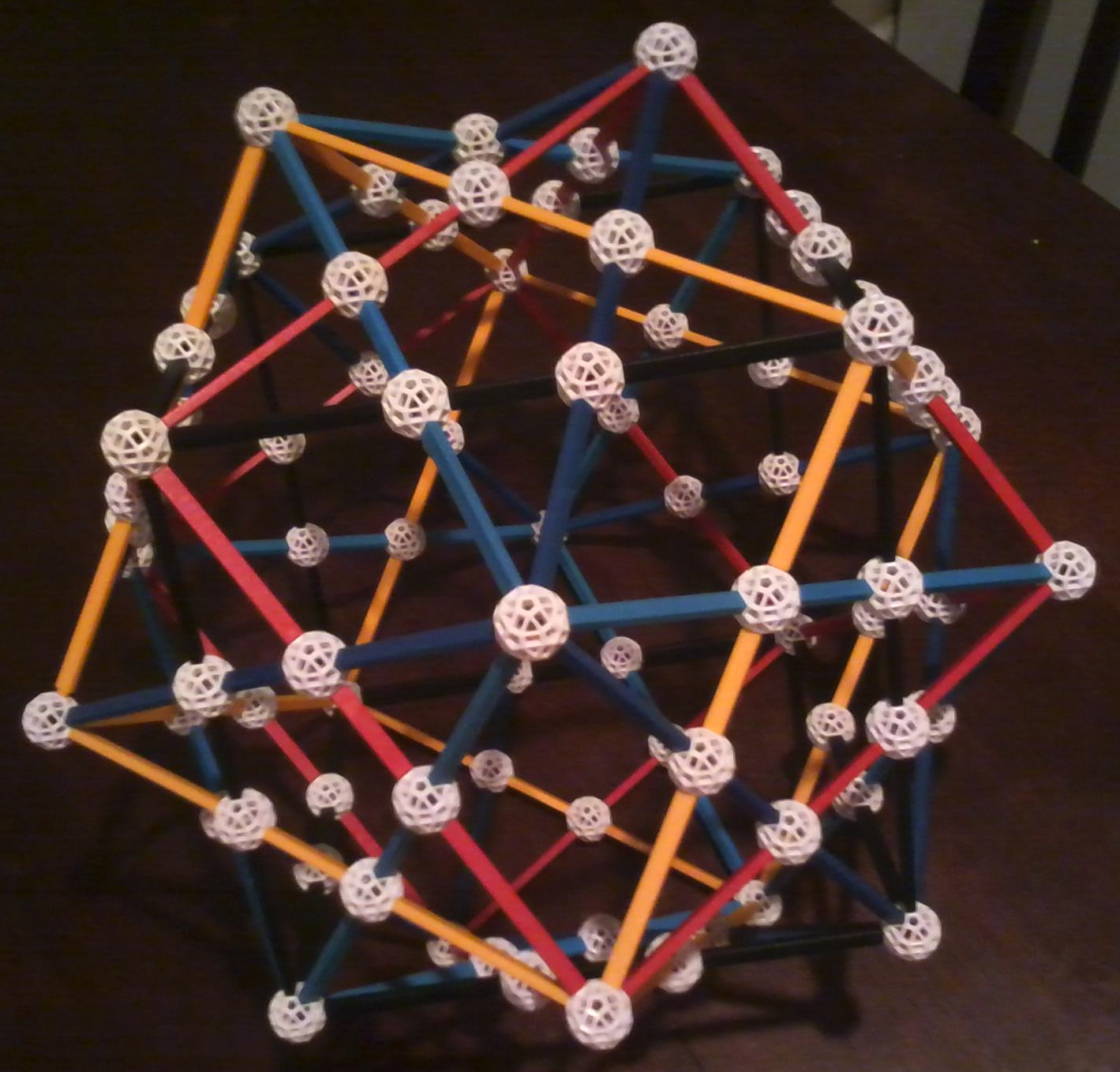
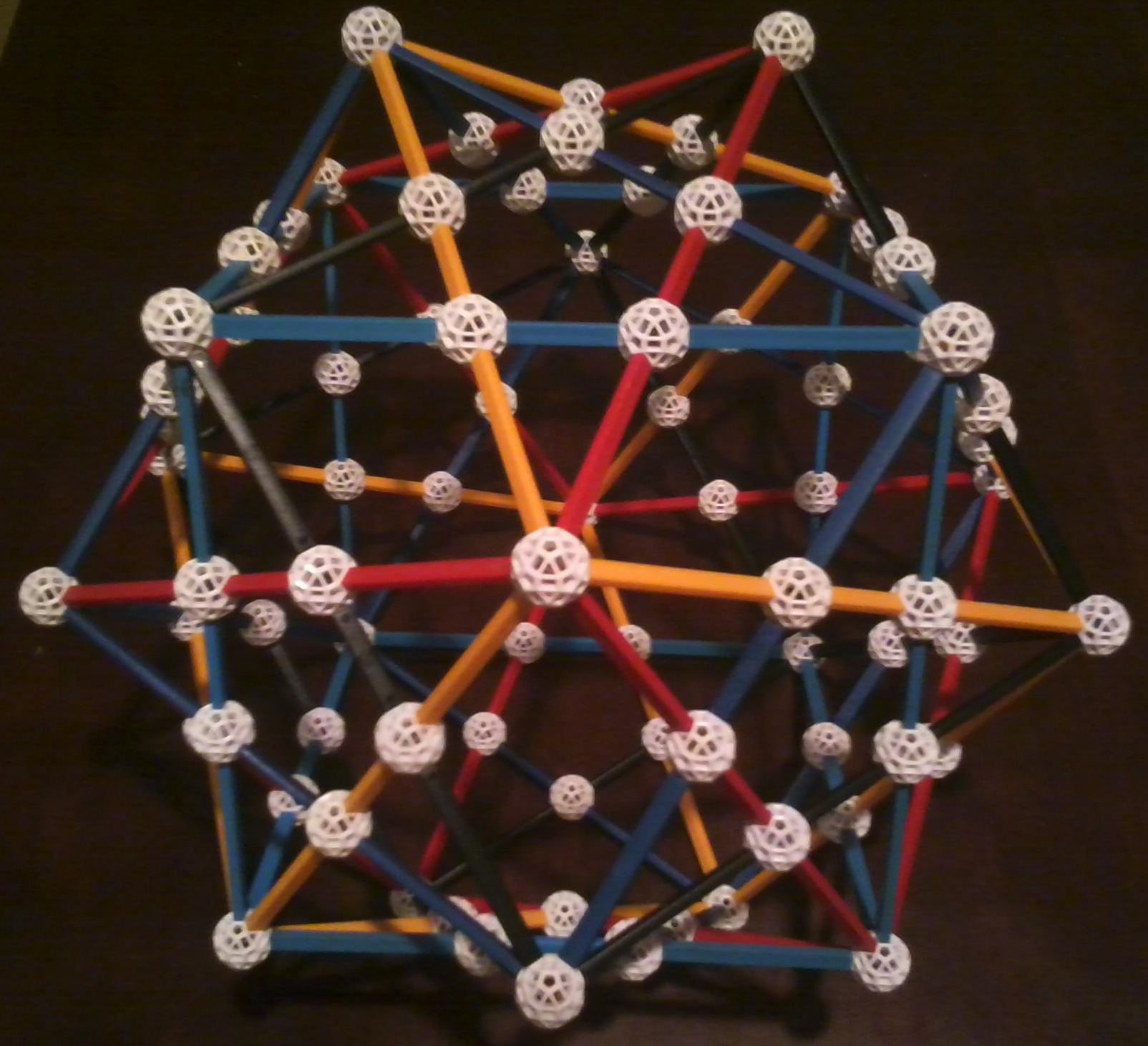
The Compound of Five Cubes, Rendered in Five Colors of Zome

151008_0000

Ordinarily, with Zometools, the compound of five cubes is an all-blue model. However, I wanted to build one in which each cube is a different color, so I made a special request to the Zometool Corporation (their website: http://www.zometool.com) for some off-color parts, to make this possible.

151008_0001

The five colors used in this model are standard blue, a darker shade of blue, red, yellow, and black.

151008_0002

I also received the struts needed to build this model with one cube in white, so I will be making a second version of this soon. I didn’t want the Zomeballs used to match any strut color, though, so I will have to wait for the shipment of purple Zomeballs I ordered, today, to arrive, before I can build that model.

Zome is a fantastic tool to use for mathematical investigations, as well as education, and other applications as well. I recommend this product highly, and without reservation.

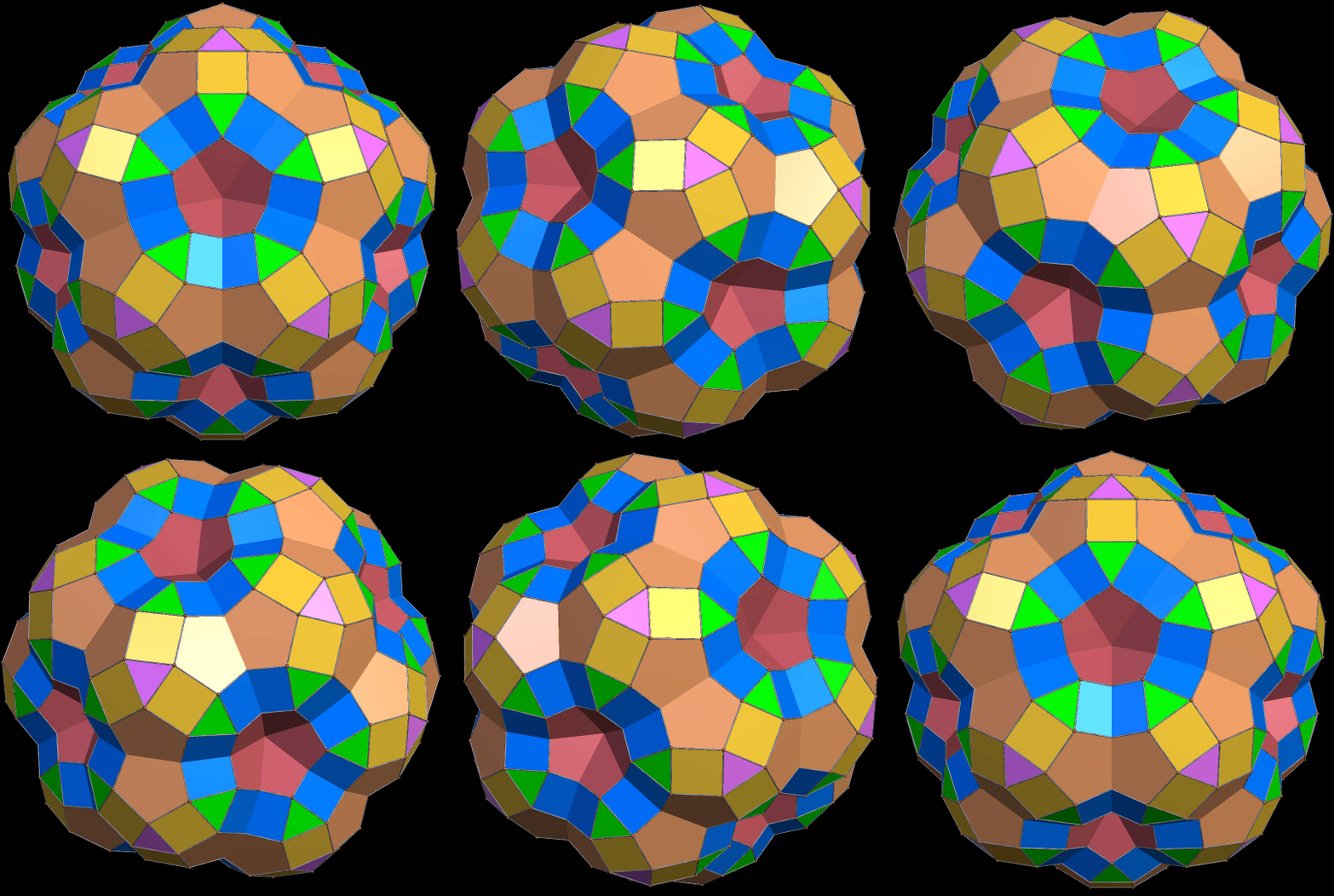
A Polyhedron Featuring 180 Kites as Faces, Plus Related Polyhedra

If one starts with the great rhombicosidodecahedron, then makes a compound of it, and its dual, and then forms the convex hull of that compound, this is the result:

180 kites 60&60&60

This polyhedron has 180 faces, all of them kites. What’s more, there are equal numbers — sixty each — of the three different types of kites in this polyhedron.

It also has an interesting dual:

180 kites 60&60&60 the dual

These virtual polyhedral models were created using Stella 4d: Polyhedron Navigator, which you can buy, or try for free, right here. Stella contains a “try to make faces regular” function, and here is what appears if that operation is applied to the dual shown above:

180 kites dual with TTMFR

The dual of this figure is similar to the original polyhedron at the top of this post, featuring 180 kites, again: sixty each, of three different types:

180 kites with TTMFR

Five Polar Polyhedra

Most polyhedra I post have cuboctahedral, tetrahedral, or icosidodecahedral symmetry, or some pyritohedral or chiral variation of one of these symmetry-types. These, however, are exceptions. I call them “polar polyhedra” because they each have an identifiable “North Pole” and “South Pole,” which are, in three of these five images, at the ends of their axes of rotation.

cub isomorph polar and chiral Compound of enantiomorphic pair

polar and chiral cubic isomorpth

Dual Morph 50.0%

polar polyhedrarhombus-elongated trapezohedron with n = 4

These rotating images were created using Stella 4d, software you may try for yourself, right here.

Sixty and Sixty: A Chiral Polyhedron, as well as the Compound of It, and Its Own Reflection

60 and 60 -- chiral

This polyhedron is chiral, meaning that (unlike many well-known polyhedra) it exists in “left-handed” and “right-handed” forms — reflections of each other. These “reflections” are also called enantiomers. I call this polyhedron “sixty and sixty” because there are sixty faces which are irregular, purple quadrilaterals, as well as sixty faces which are irregular, orange pentagons.

I stumbled upon this polyhedron while playing around with Stella 4d: Polyhedron Navigator, software you can try right here. For those who research polyhedra, I know of no better tool.

To see the other enantiomer, there is a simple way — just hold a mirror in front of your computer screen, with it showing the image above, and look in the mirror!

With any chiral polyhedron, it is possible to make a compound out of the two enantiomers. Here is what the compound looks like, for this “sixty and sixty” polyhedron cannot be seen this way, so here is an image of it, also created using Stella 4d.

60 and 60 chiral --Compound of enantiomorphic pair

One of Many Faceted Rhombicosidodecahedra

Faceted Rhombicosidodeca the dual of the 32nd stellation of the strombic hexaconta

This was created by making the dual of the 32nd stellation of the strombic hexacontahedron, which is itself the dual of the rhombicosidodecahedron. This technique for finding facetings works because faceting is the reciprocal function of polyhedral stellation.

I did this using Stella 4d, which you can try for yourself, for free, at http://www.software3d.com/Stella.php.