James Randi, on the Limited Effectiveness of Belief

Image

James Randi, On the Effectiveness of Belief

One of the high points of my life was the day I got to have several conversations with James Randi. I enjoyed them. Some others who were there, though, not so much.

An example of how one of the question-and-answer sessions went:

Question: What happens to us after we die?
Randi’s answer: What happens to a computer after you turn off the power?

Apparently the questioner was rather upset by this reply, but I didn’t figure that out myself, even though I was present. I learned about it later, from others. Randi’s response simply made sense to me.

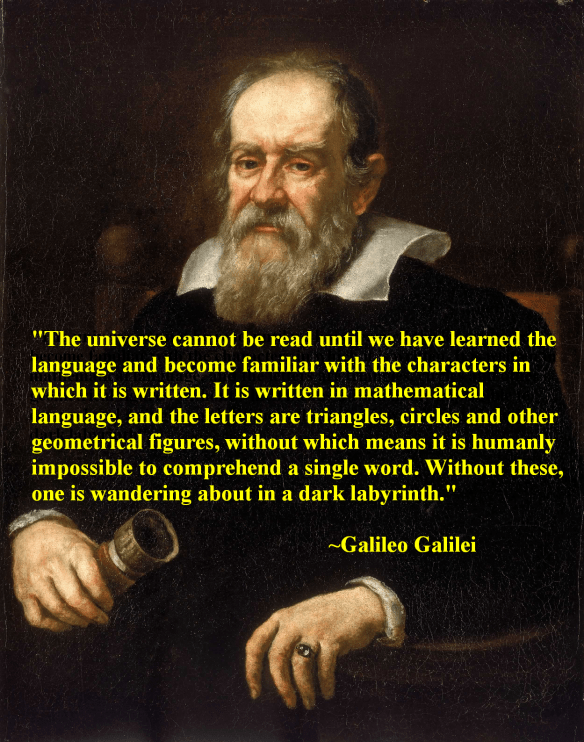
Galileo Galilei, on the Language of the Universe

Image

Galileo Galilei, On the Language of the Universe

Source for quote: https://en.wikipedia.org/wiki/Portal:Mathematics

“Give us reliable evidence and we will change our minds.”

Image

This is a good way to explain the viewpoint known as agnostic atheism. A lot of people don’t realize this, but most atheists are also agnostic, simply because we don’t claim to have absolute certainty that no deities exist. We are atheists because we possess no beliefs in any gods, and we are also agnostics because we are willing to admit that we could, possibly, be wrong.

What’s more, many agnostic atheists find the other type of atheist (gnostic atheists, who are few in number, and who do claim certainty that no deities exist) quite irritating. It simply is not rational to claim that one knows, without doubt, that there are no gods, for one simple reason: lack of supporting evidence. There is no evidence that no gods exist. There is also no evidence for the non-existence of, say, leprechauns.

Something else many people don’t know: theists (that is, religious believers) also come in the same two types. Agnostic theists believe in at least one deity, but don’t claim absolute certainty in that belief. Gnostic theists, by contrast, are believers who do not doubt, nor question, their religious beliefs. They claim to know they are right — and, in that one way, they are just like gnostic atheists. Gnostics, of whatever type, aren’t willing to admit there is the slightest chance that they might be wrong. It’s much easier to have reasonable, productive conversations with agnostics than with gnostics — regardless of whether they are they are theists or atheists. Also, when it comes to debate, there’s simply no point in debating anything with a gnostic. One might as well argue with a rock, for a rock is exactly as likely as a gnostic to have a change of opinion.

(Note: unlike most images on this blog, this picture is not one I created myself. Only the words below the image, in this post, are mine.)

Bell Hooks, on Rage

Image

Bell Hooks, On Rage

Stephen Hawking, on His Own IQ, and IQs in General

Image

I have had my IQ tested, but, like Stephen Hawking, I have no idea what it is. The people conducting the test did not share the results with me.

This does not bother me in the slightest. Why? Because I agree with Hawking on this subject, that’s why!

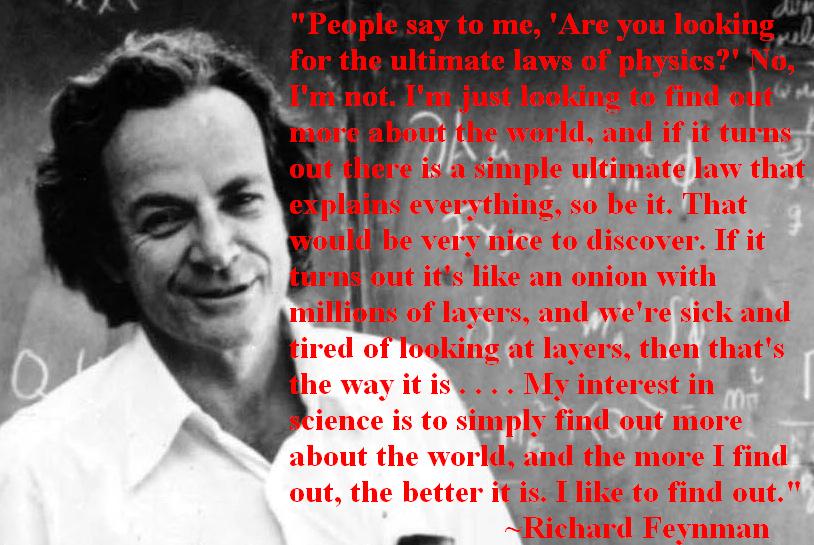
Richard Feynman: “I like to find out.”

Image

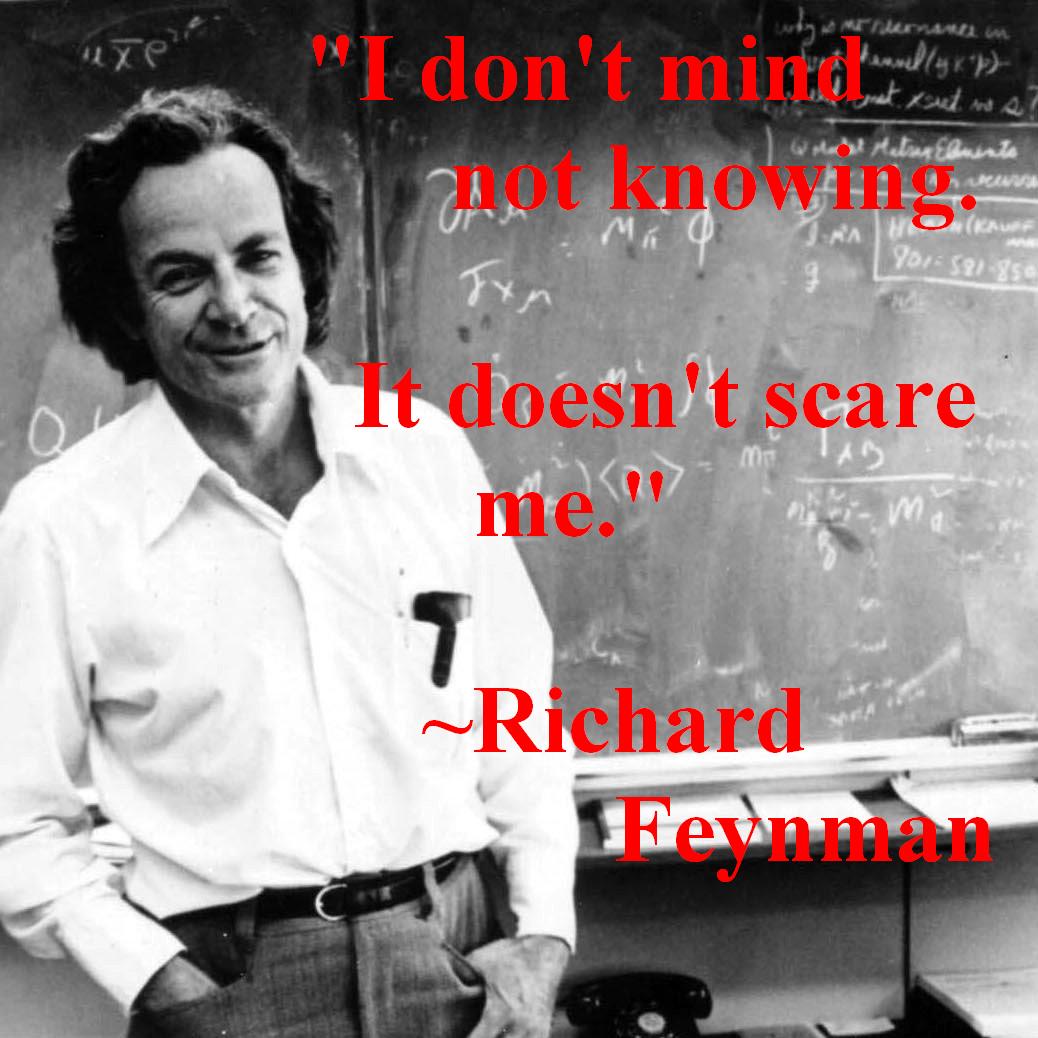
Richard Feynman, on Not Knowing

Image

Richard Feynman, On Not Knowing

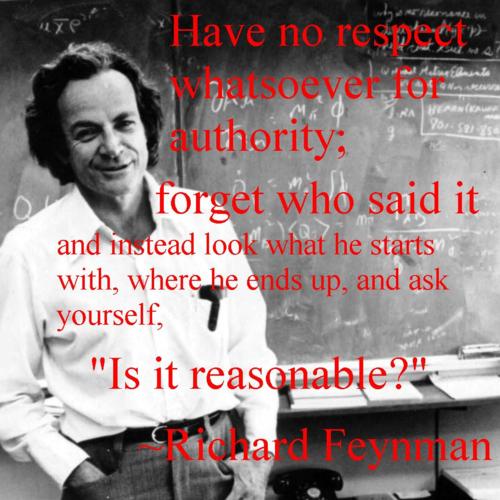
Richard Feynman, on Respect and Authority

Image

Richard Feynman, On Respect and Authority

Mark Twain, on Idiots and Lightning

Image

Mark Twain On Idiots and Lightning

[Later edit, in October 2015: a friend of mine questions the authenticity of this quote, but did find a source for Mark Twain saying this: “The trouble ain’t that there is too many fools, but that the lightning ain’t distributed right.” He may well be correct; my friend is an expert at detecting false quotations. If anyone knows of a source for the quote in the pic above, please leave a note about it in a comment to this post.]

Simone de Beauvoir, on Oppression and War

Image

Simone de Beauvoir On Oppression and War