Ten Different Facetings of the Rhombicosidodecahedron

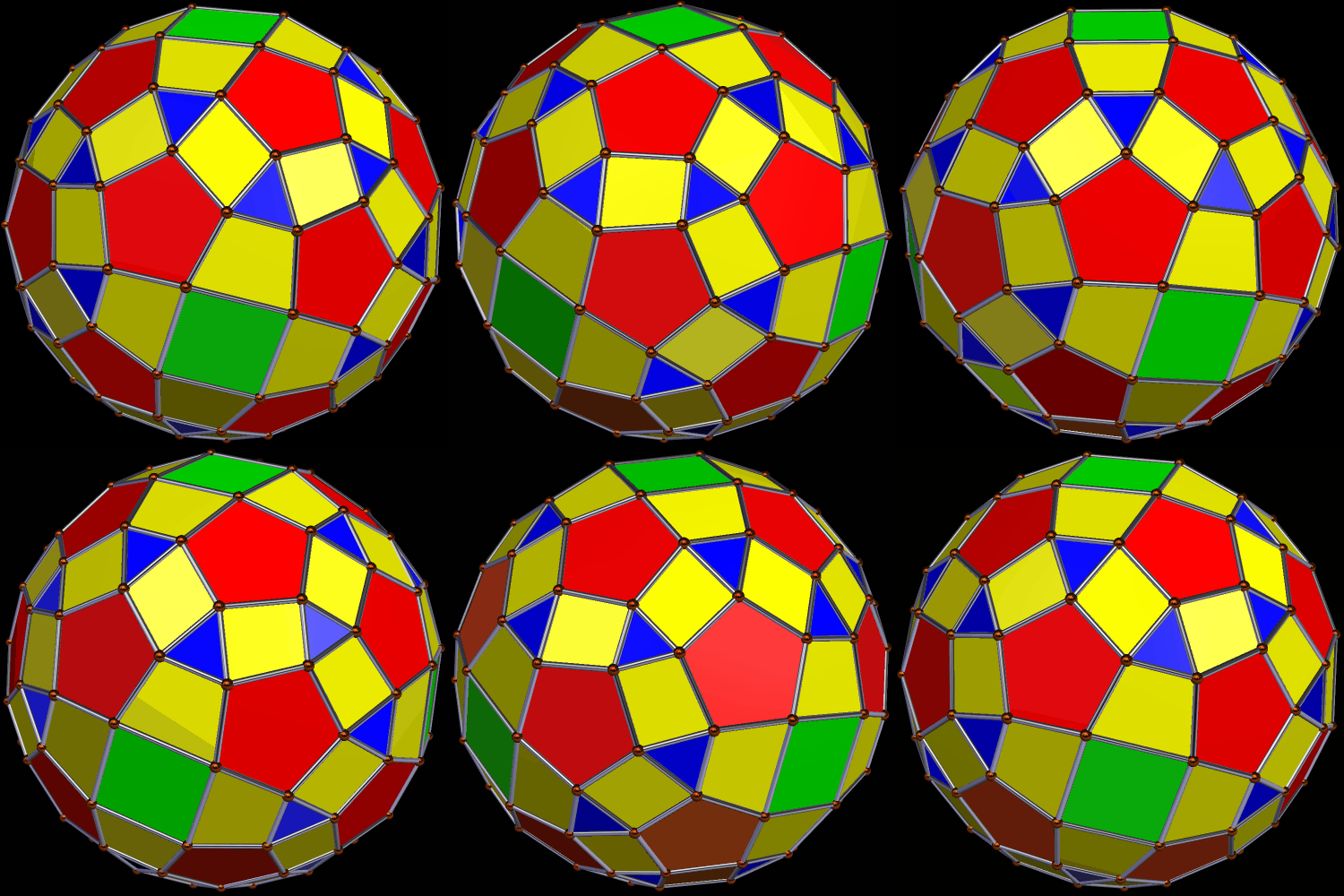
This is the rhombicosidodecahedron. It is considered by many people, including me, to be the most attractive Archimedean solid.

Rhombicosidodeca

To create a faceted polyhedron, the first step is to get rid of all the faces and edges, leaving only the vertices, as shown below.
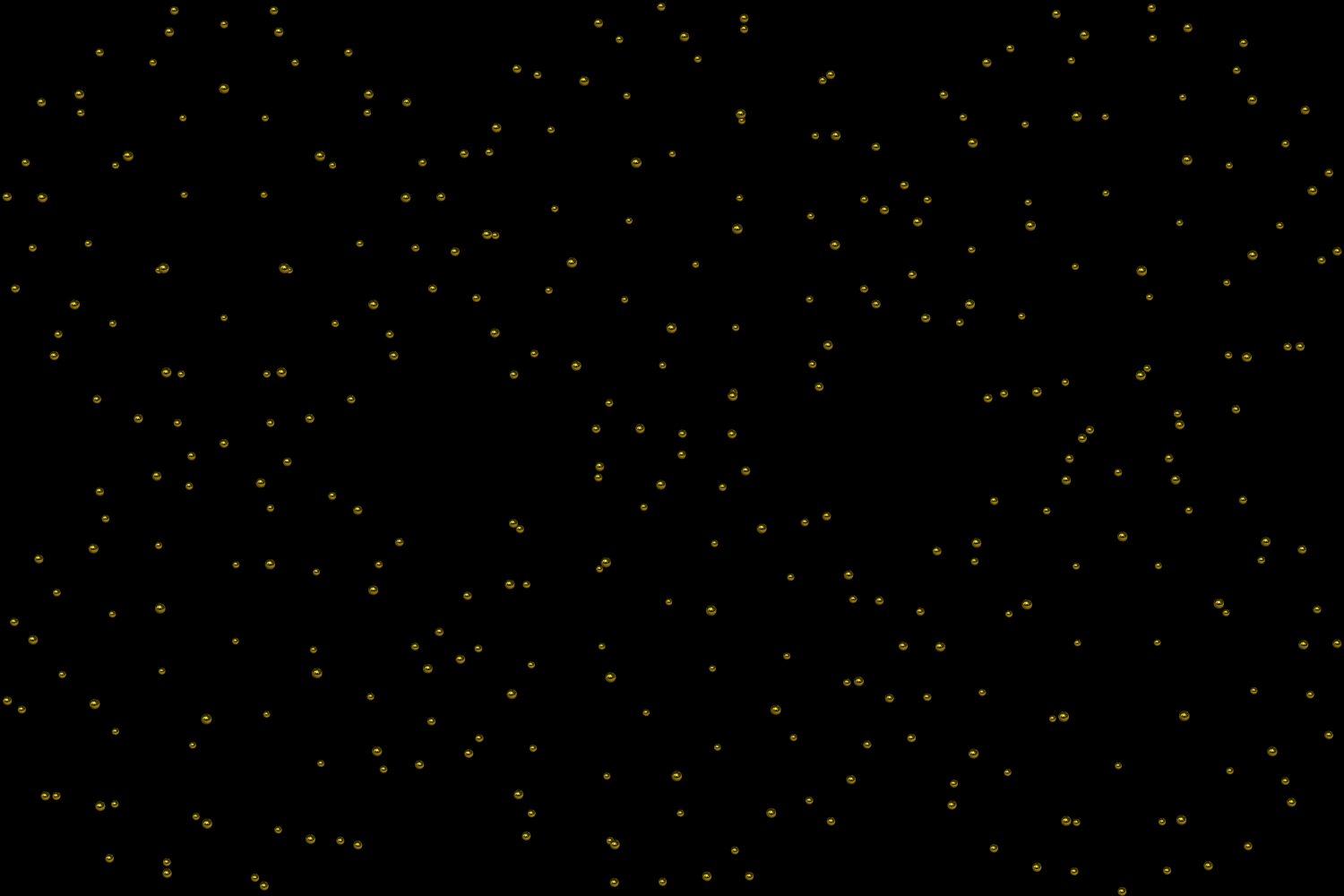
Vertices of a RID

In the case of this polyhedron, there are sixty vertices. To create a faceted version of this polyhedron, these vertices are connected by edges in ways which are different than in the original polyhedron. The new positioning of edges defines new faces, often in the interior of the original polyhedron. Here is one such faceting, with the red hexagonal faces in the interior of the now-removed original polyhedron.

Faceted RID

The rhombicosidodecahedron can be faceted in many different ways. I don’t know how many possible facetings this polyhedron has, but it is a finite number much larger than the ten shown in this post. Here’s another one.

Faceted RID 2

In faceted polyhedra, many faces intersect other faces, as is the case with the red and yellow faces above. The next faceting demonstrates that faceted polyhedra are sometimes incredibly complex.

Faceted Rhombicosidodeca 3

Faceted polyhedra can even contain holes that go all the way through the solid, as seen in the next image.
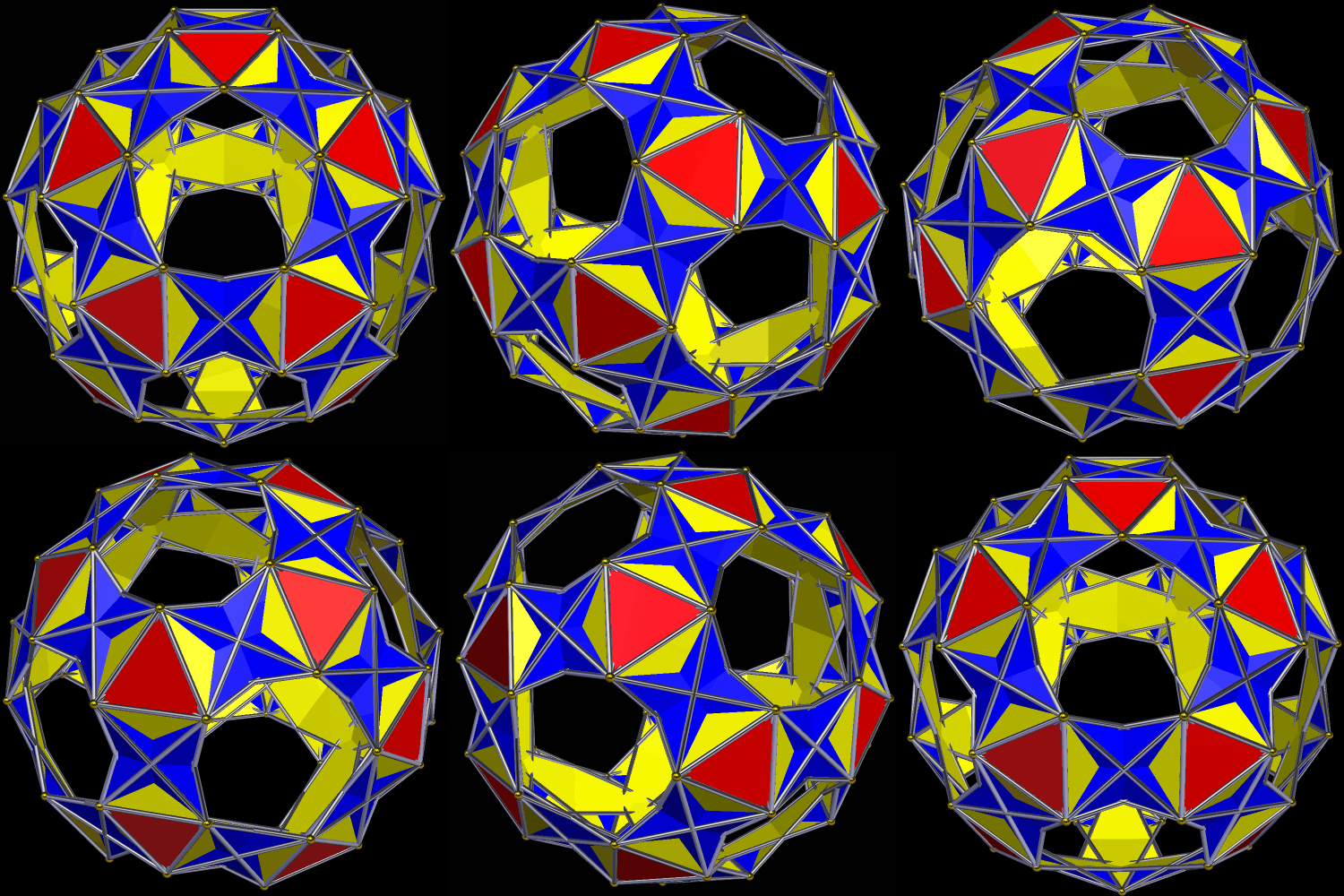
Faceted Rhombicosidodeca 4.gif

Sometimes, a faceting of a non-chiral polyhedron can be chiral, as seen below. Chiral polyhedra are those which exist in “left-handed” and “right-handed” reflections of each other.
Faceted Rhombicosidodeca 7 chiral

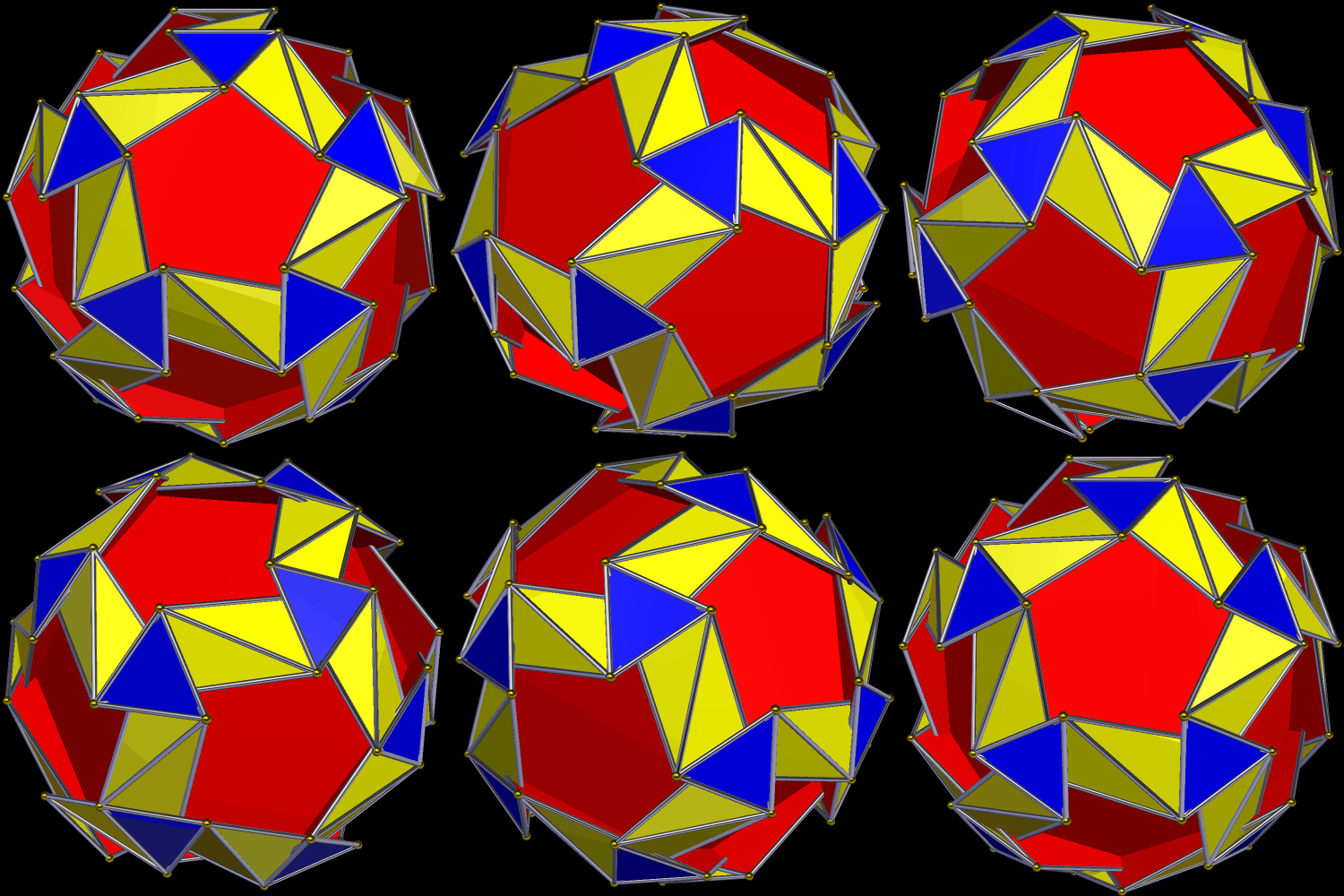
Any chiral polyhedron may be fused with its mirror image to form a compound, and that’s exactly what was done to produce the next image. In addition to being a polyhedral compound, it is also, itself, another faceted version of the rhombicosidodecahedron.
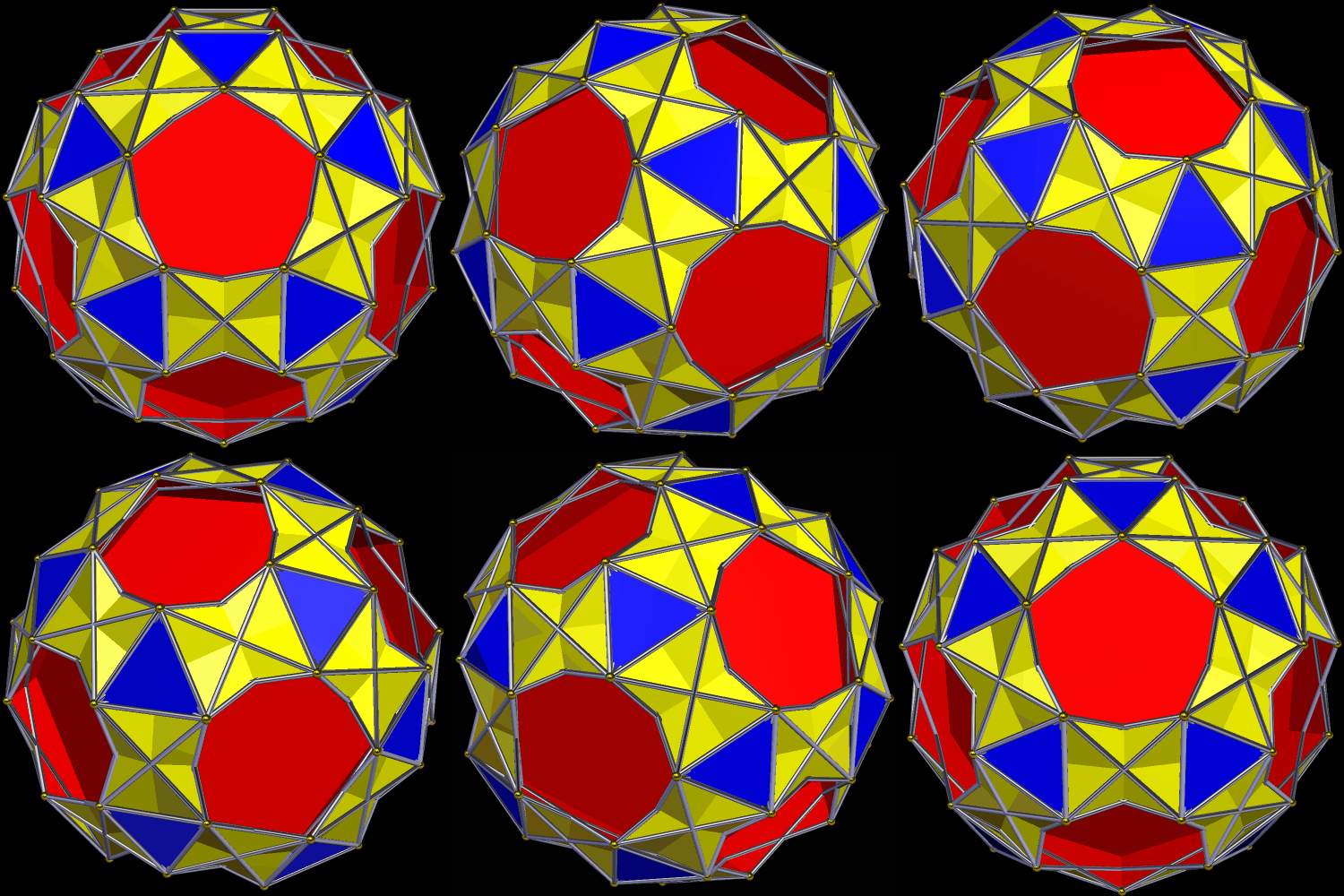
Compound of enantiomorphic pair.gif

All these polyhedral manipulations and gif-creations were performed using a program called Stella 4d: Polyhedron Navigator. If you’d like to try Stella for yourself, please visit http://www.software3d.com/Stella.php, where a free trial download is available.

The rest of the rhombicosidodecahedron-facetings needed to round out this set of ten are shown below, without further comment.
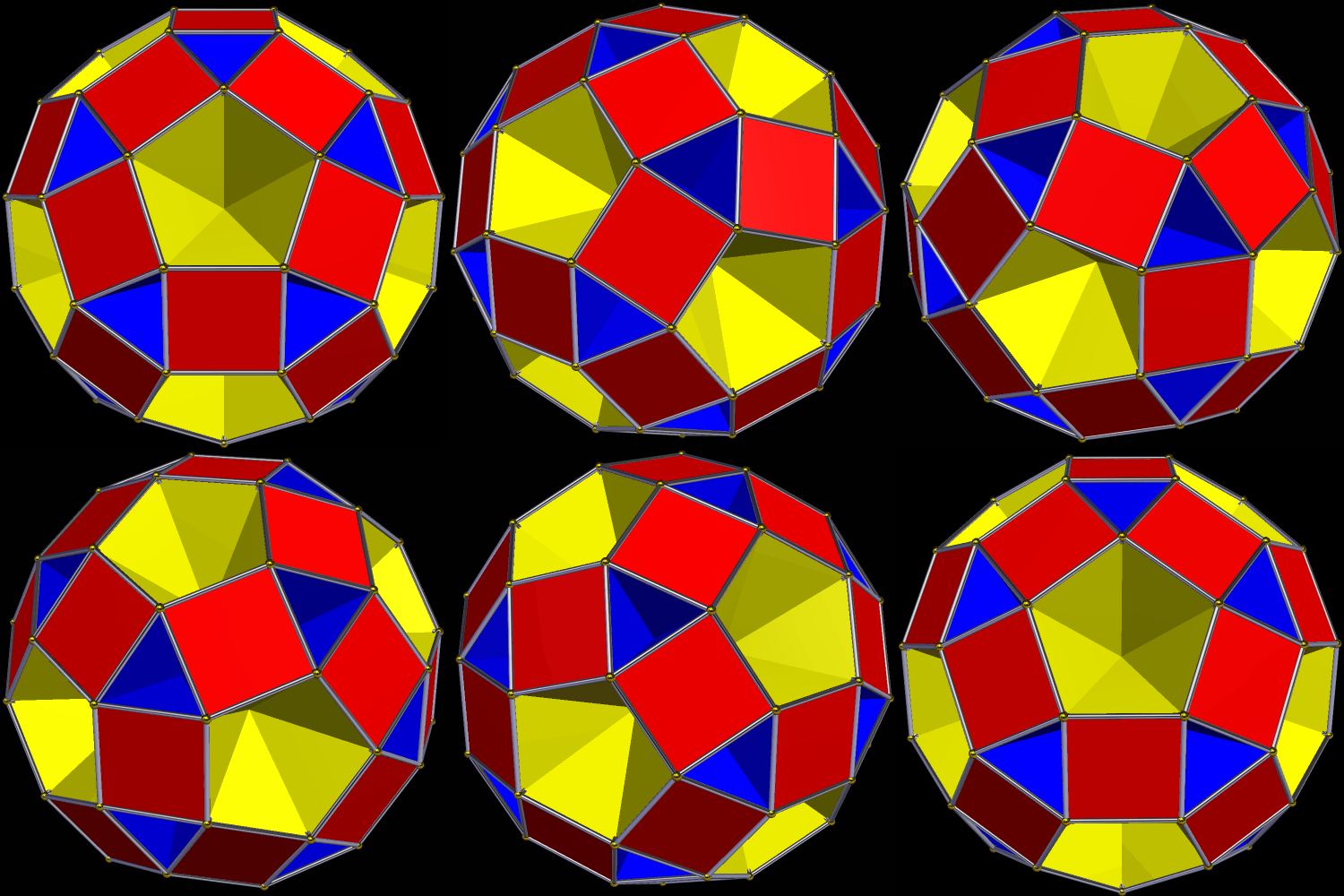
Faceted Rhombicosidodeca 10

Faceted Rhombicosidodeca 9

Faceted Rhombicosidodeca 5

Faceted Rhombicosidodeca 6

A Variant of the Rhombicosidodecahedron Featuring Four Hexagons

Convex hull.gif

This was made using Stella 4d, a program you can try for yourself at http://www.software3d.com/Stella.php.

The Cubic Rhombicosidodecahedroid

cUBIC RHOMBICOSIDODECAHEDROID

I call the polyhedron above the cubic rhombicosidodecahedroid because it combines a cube’s six squares (shown in green) with the overall appearance of a rhombicosidodecahedron. For comparison, the latter two polyhedra are shown below.

I made these rotating images using Stella 4d: Polyhedron Navigator. This program may be tried for free at http://www.software3d.com/Stella.php.

A Flock of Rhombicosidodecahedra

60 RIDRID

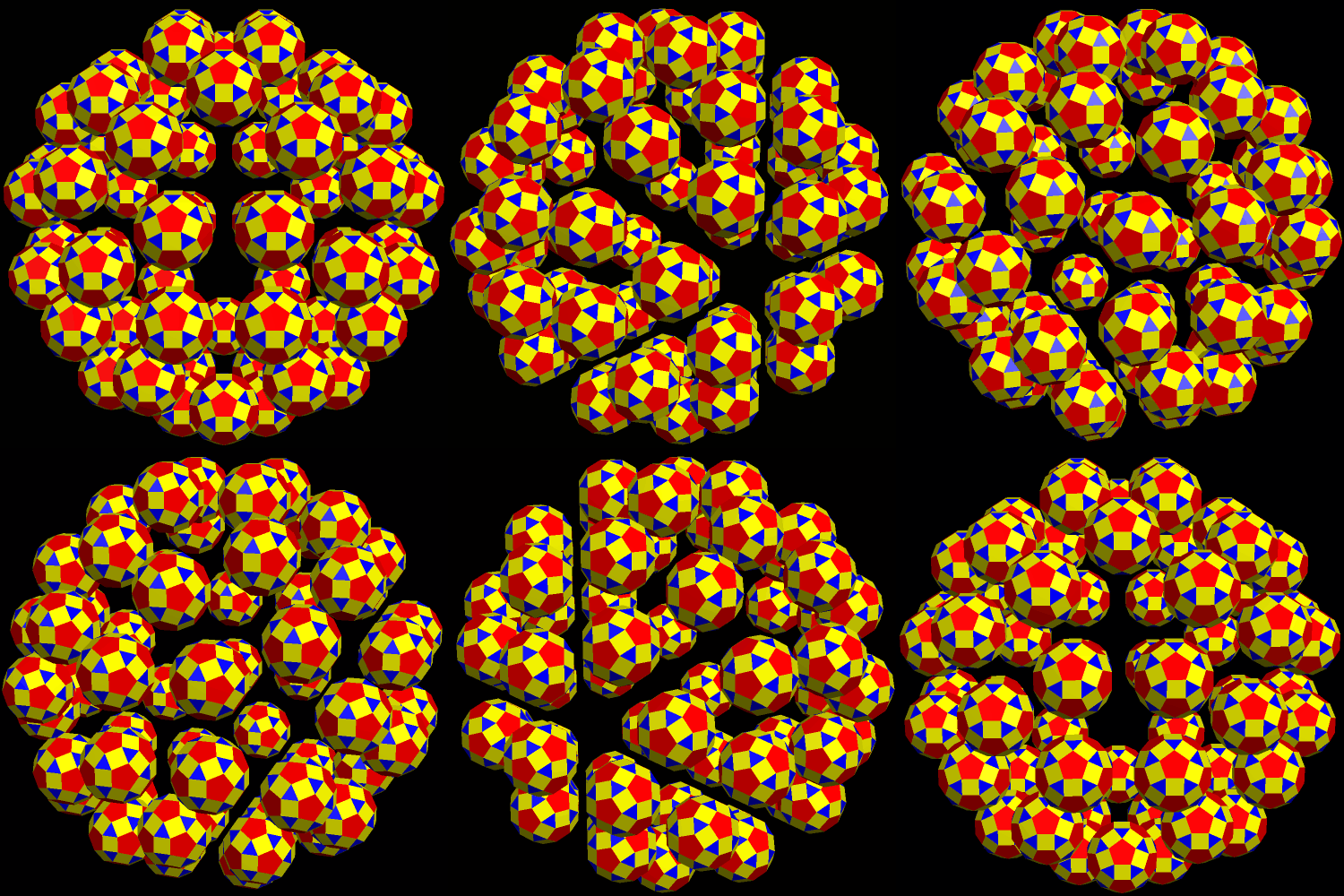
It’s a little-known fact that rhombicosidodecahedra prefer to fly in flocks of sixty, as seen here. I made this using Stella 4d, available at this website.

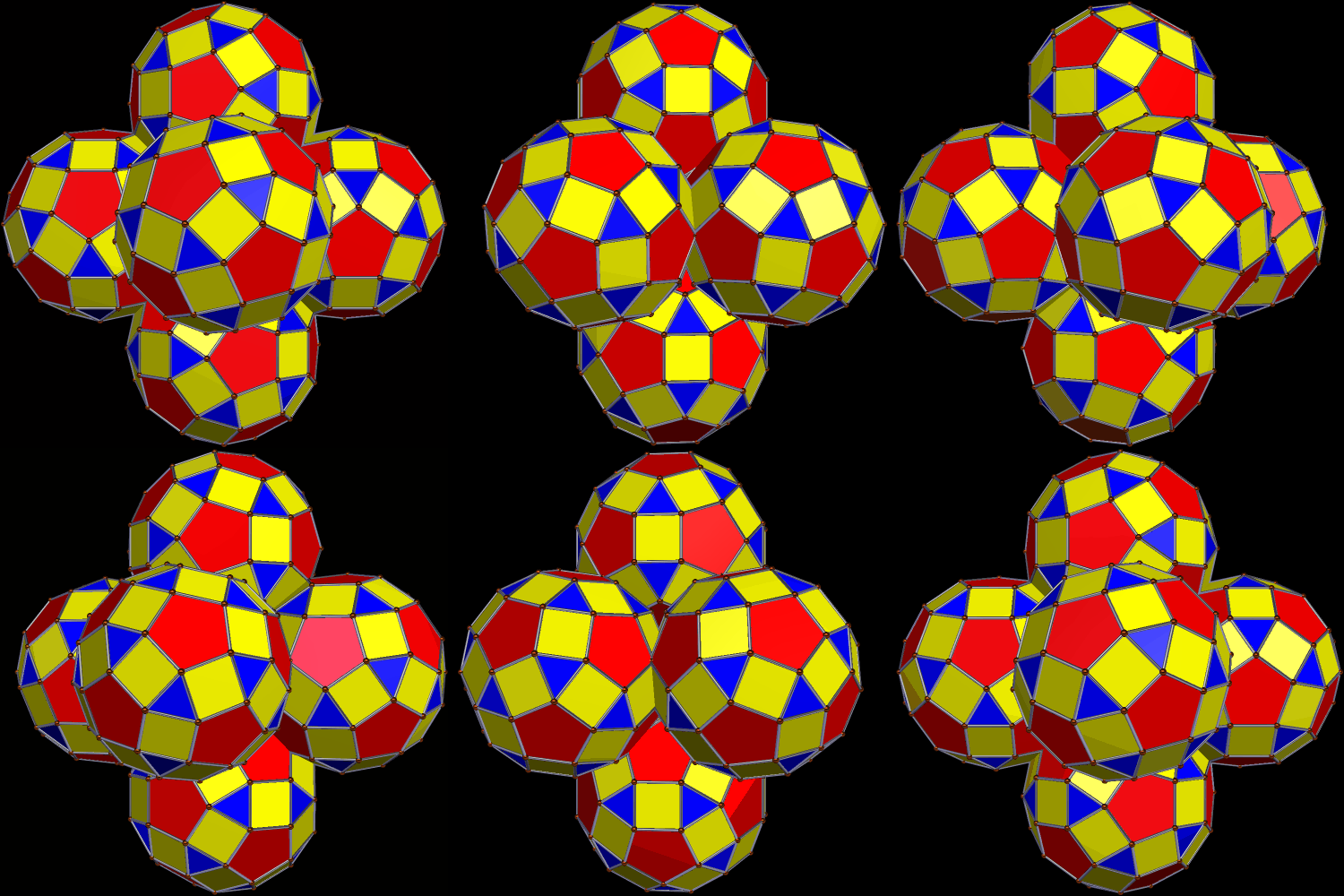
Cluster of Six Rhombicosidodecahedra

Augmented Cubocta

To make this cluster, start with a cuboctahedron, then augment each of its square faces with rhombicosidodecahedra. Although the cuboctahedron has cuboctahedral symmetry, this cluster does not — rather, it has tetrahedral symmetry. I created this using Stella 4d, which is available here.

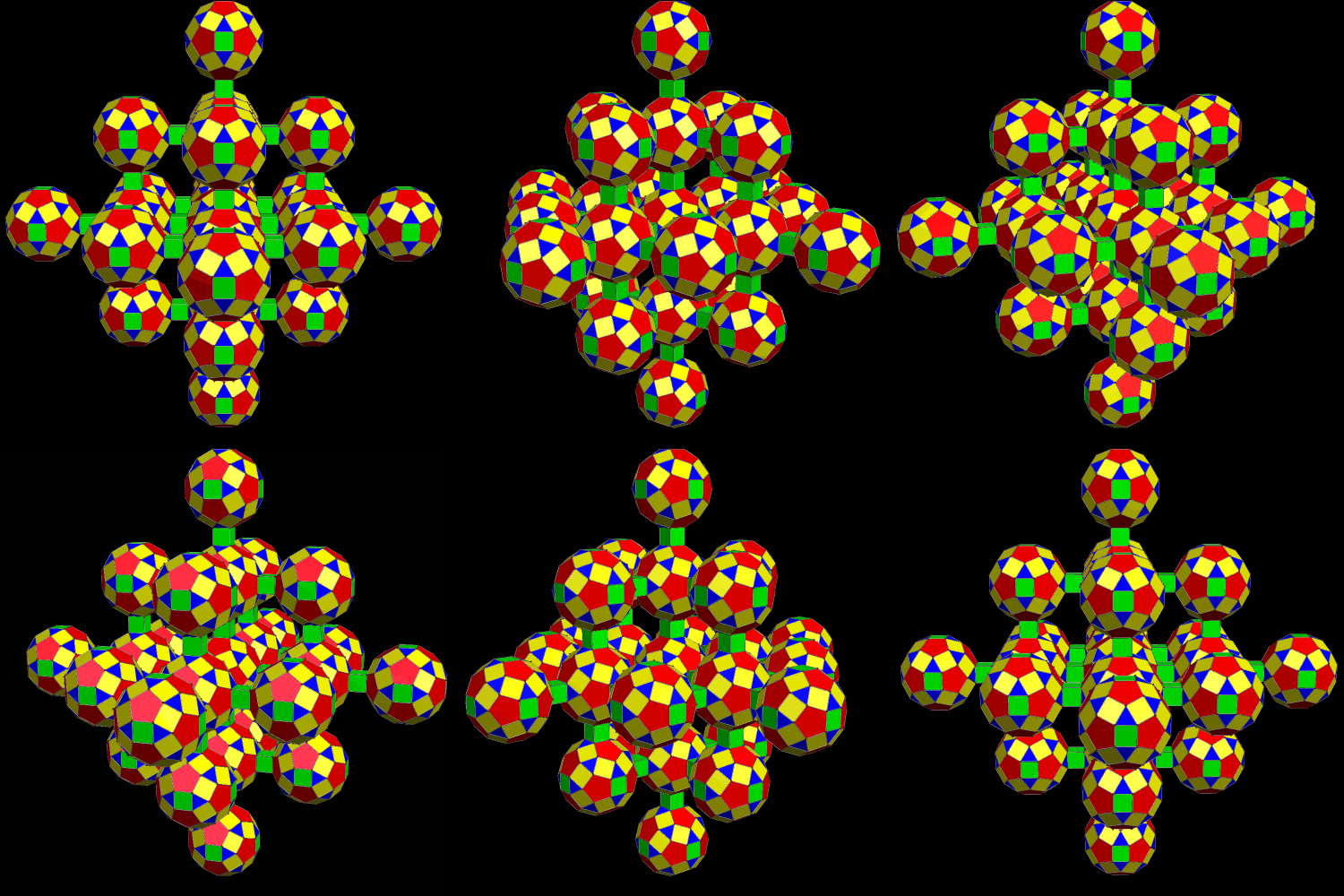
Open Octahedral Lattice of Cubes and Rhombicosidodecahedra

This pattern could be continued, indefinitely, into space.

Augmented Rhombicosidodeca

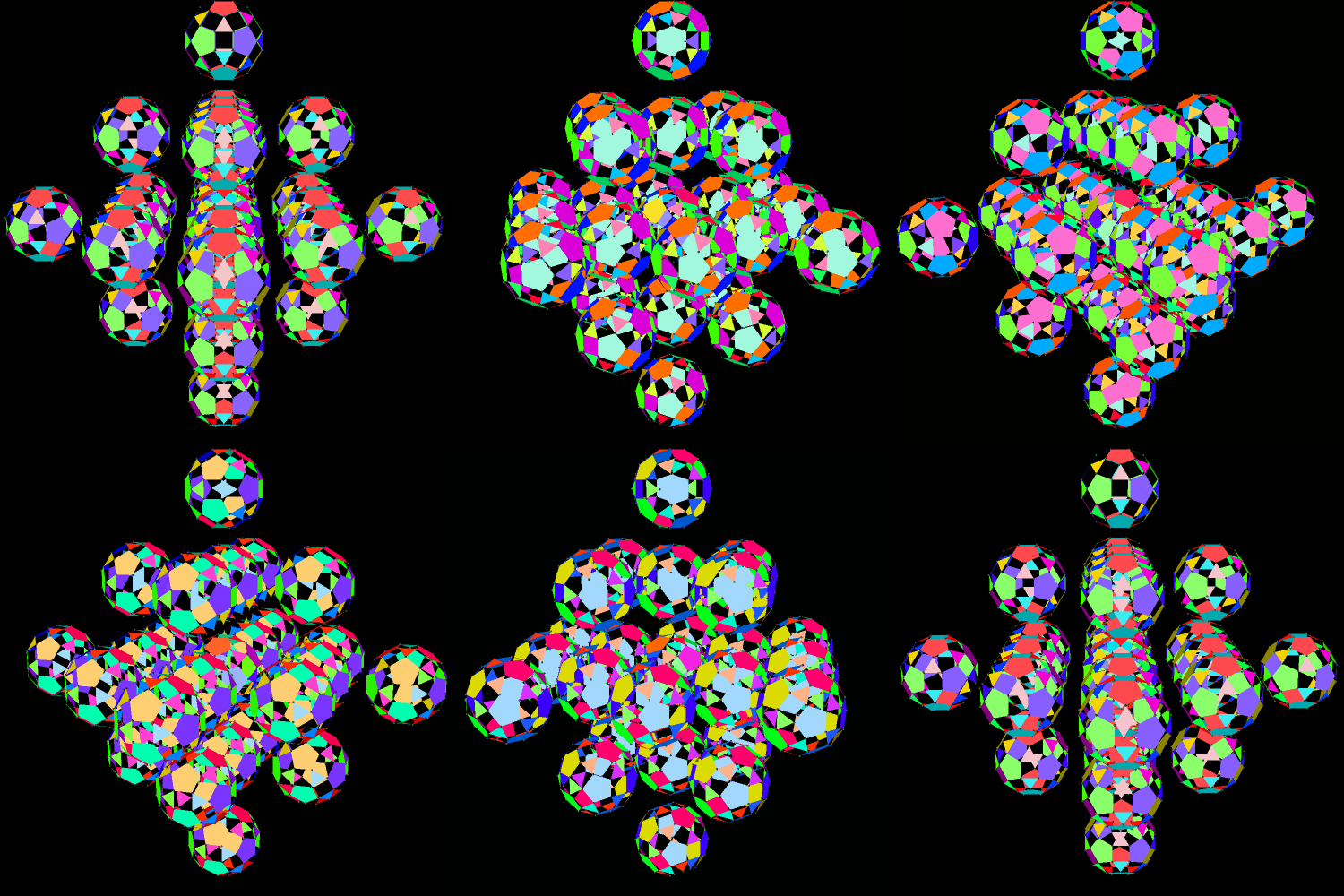
Here is a second view, in rainbow color mode, and with all the squares hidden.

Augmented Rhombicosidodeca rcm

[These images were created with Stella 4d, software you may buy — or try for free — right here.]

A Compound of Ten Elongated Octahedra Which Is Also a Particular Faceting of the Rhombicosidodecahedron, Together with Its Dual

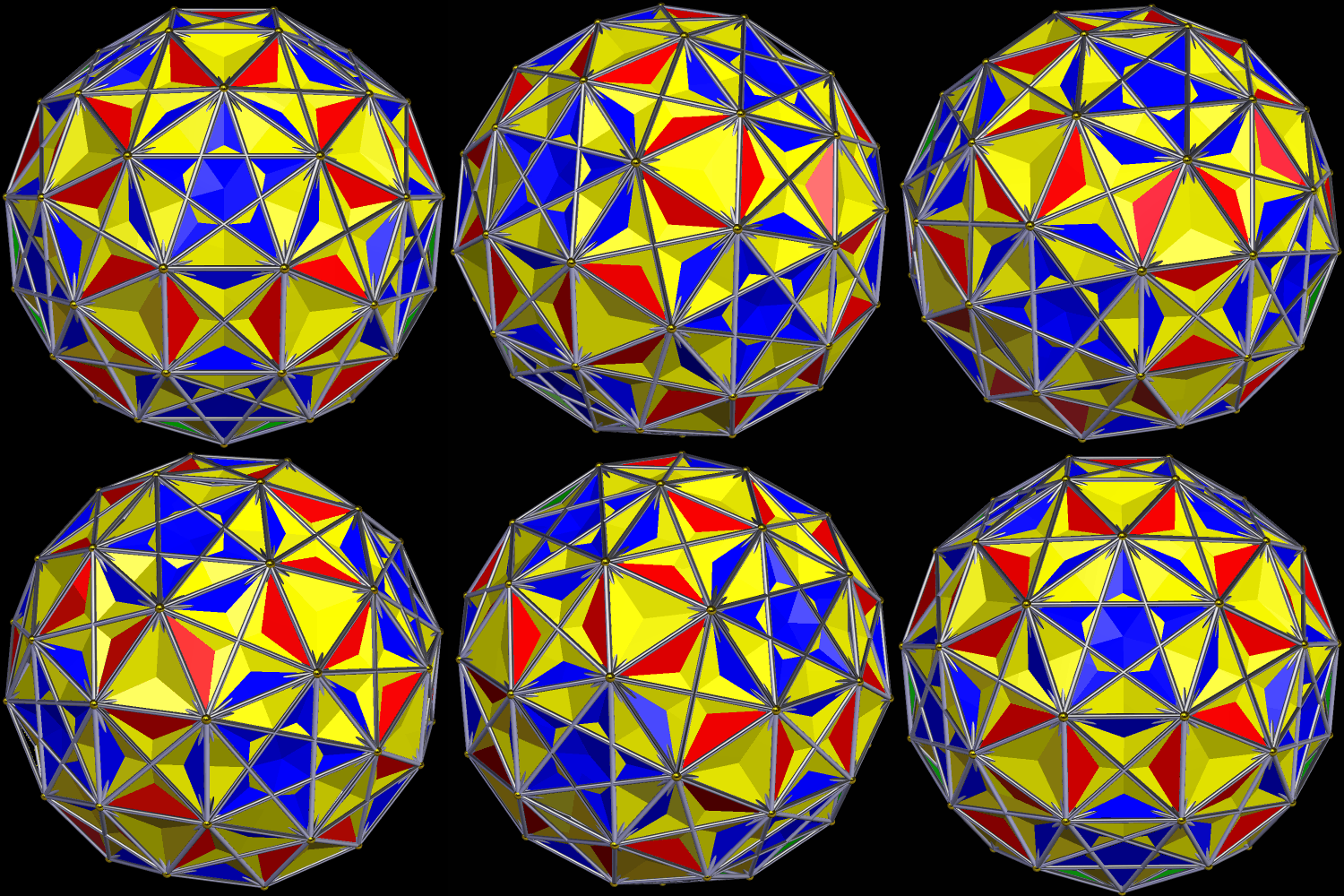
Thinking about the post immediately before this one led me to see if I could connect opposite triangular faces of a rhombicosidodecahedron to form a ten-part compound — and it worked with Stella 4d just as it had when I “previewed” it in my head.

compound of ten elongated octahedra Faceted Rhombicosidodeca

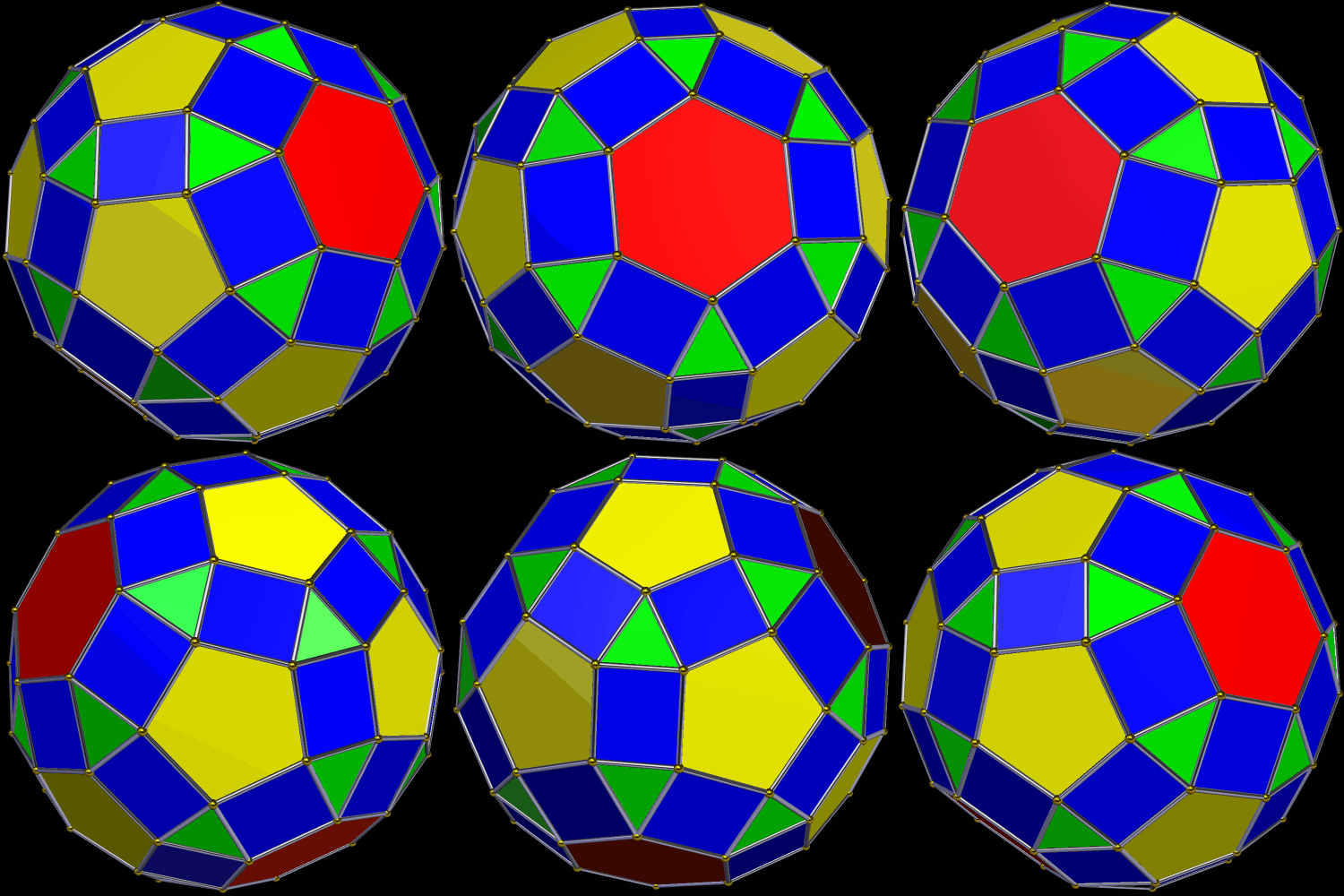
The interesting dual of the above polyhedral compound, also a ten-part compound, I was not able to preview in my head (although that would be a nice ability to have), but creating it was easy with Stella:

compound of ten elongated octahedra Faceted Rhombicosidodeca dual

It is difficult, in the dual, to tell what the ten components are. To help with this, in the next image, all but one component has been removed. This reveals the components of the dual to be rhombus-faced parallelopipeds which are quite flattened, compared to most parallelopipeds I have seen before. This polyhedron is isomorphic to the cube, just as the elongated octahedra in the first compound were each isomorphic to the Platonic octahedron. Given that the cube and octahedron are duals, this is no surprise.

Stellated Strombic Hexeconta

Stella 4d may be tried for free, as a trial download, at this website: http://www.software3d.com/Stella.php.

One of Many Possible Facetings of the Rhombicosidodecahedron

Faceted Rhombicosidodeca

To make a faceted version of the rhombicosidodecahedron, one first (1) starts with a rhombicosidodecahedron, one of the Archimedean solids, then (2) removes the faces and edges of this polyhedron, leaving all the vertices in place, and then (3) connects these vertices in a different way than they were connected in the original polyhedron, forming new edges and faces. Faceting is the reciprocal operation to polyhedral stellation.

This polyhedron was made using Stella 4d, software available here.

A Central Icosahedron, Augmented with Twenty Rhombicosidodecahedra

Augmented Icosa AUG WITH RIDs

A model this complex would have taken days to build by hand. With software called Stella 4d: Polyhedron Navigator, however, making this “virtual model” was easy. This program is available for purchase at this website — and there is a free trial download available there, as well.

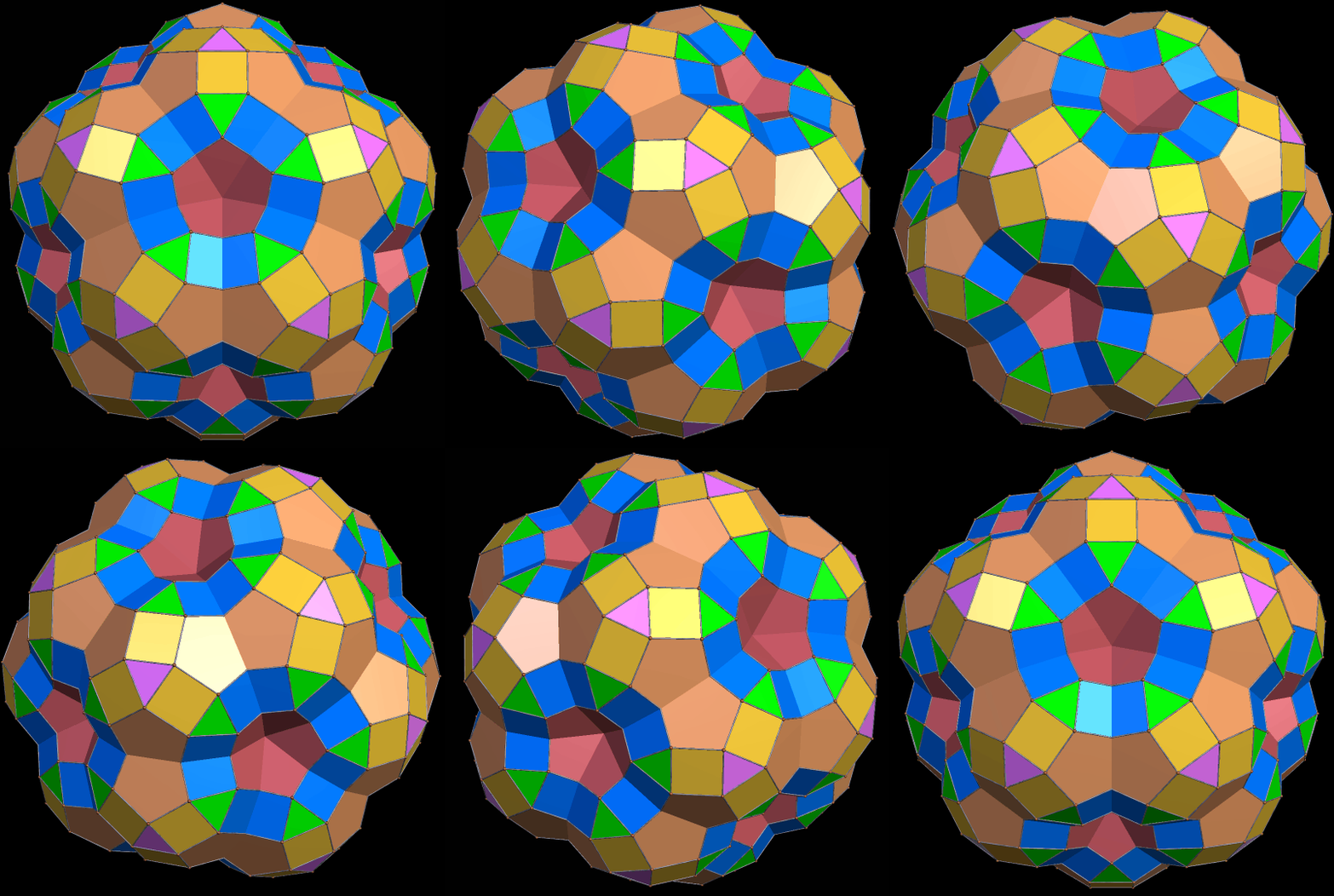
One of Many Faceted Rhombicosidodecahedra

Faceted Rhombicosidodeca the dual of the 32nd stellation of the strombic hexaconta

This was created by making the dual of the 32nd stellation of the strombic hexacontahedron, which is itself the dual of the rhombicosidodecahedron. This technique for finding facetings works because faceting is the reciprocal function of polyhedral stellation.

I did this using Stella 4d, which you can try for yourself, for free, at http://www.software3d.com/Stella.php.