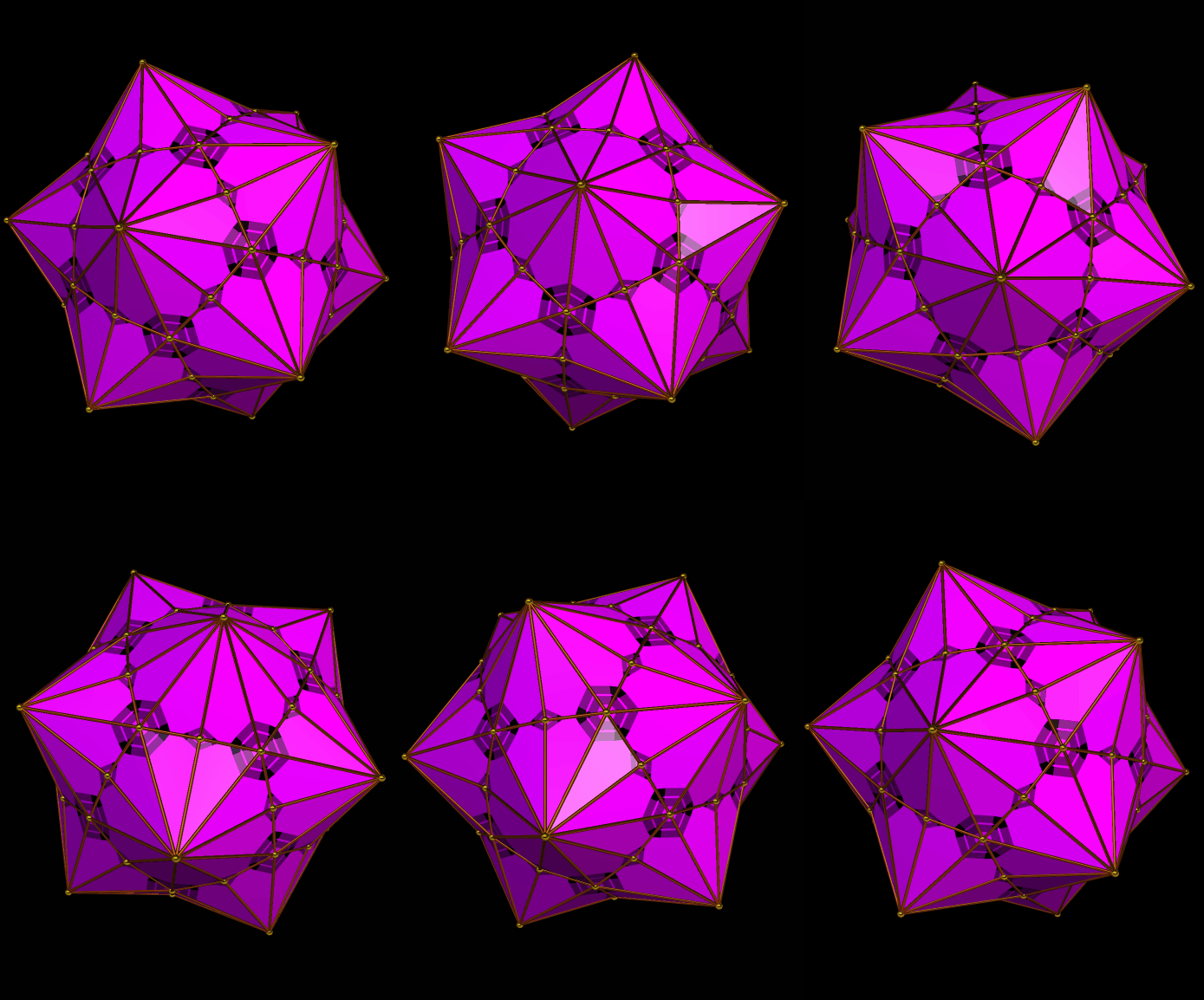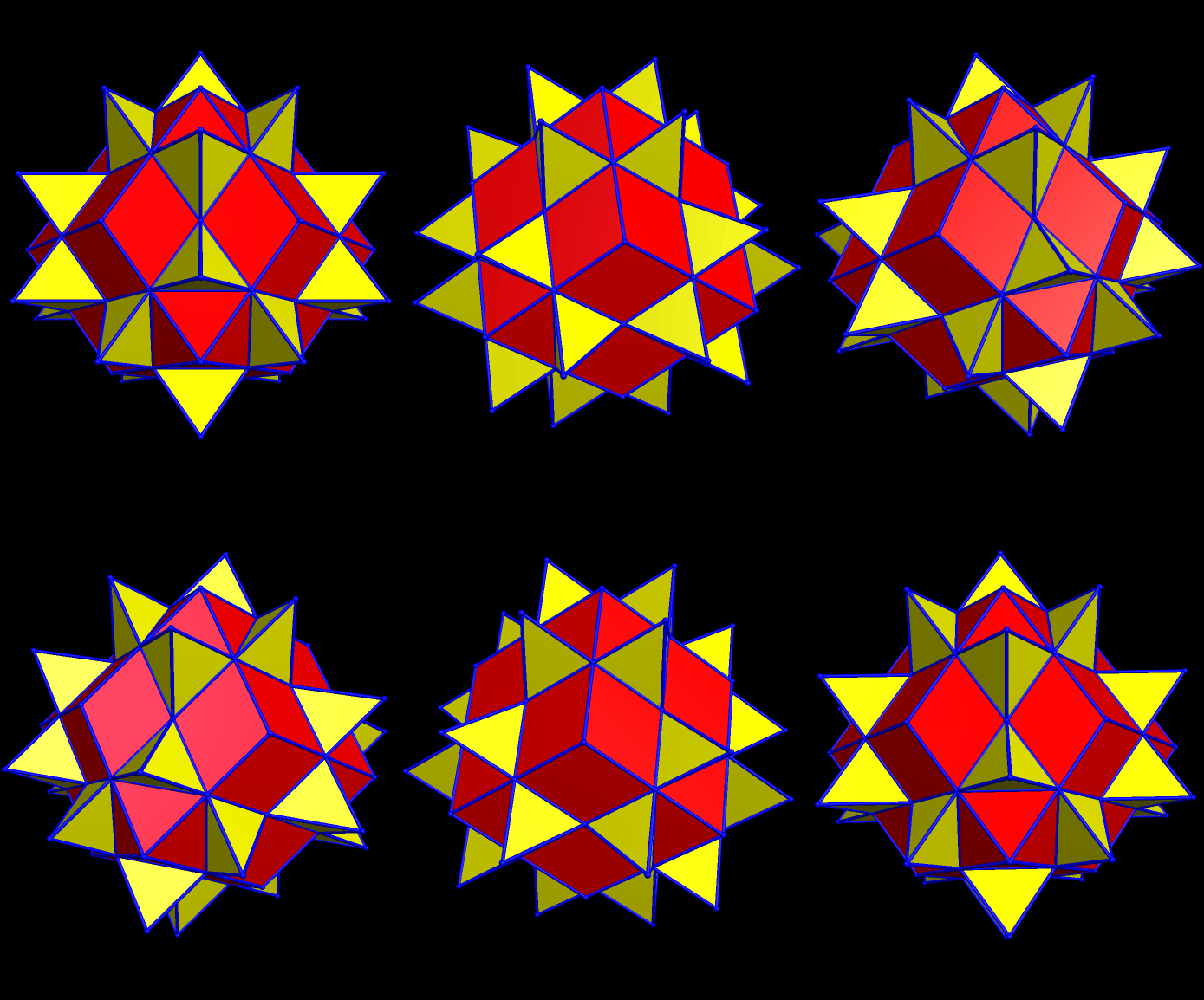
The Sixth Stellation of the Triakis Octahedron

Image

The Sixth Stellation of the Triakis Octahedron

The triakis octahedron, a Catalan solid, is the dual of the truncated cube. When stellated six times, the triakis octahedron yields this polyhedral compound with three parts. The parts themselves appear to be unusual, irregular, dipolar octahedra with eight kites for faces, each in sets of four, with their smallest angles meeting at one vertex. However, given that these vertices are, in each case, hidden under the other parts of the compound, there is uncertainty in this.

(Image created with Stella 4d — software you can try yourself at http://www.software3d.com/Stella.php.)

A Stellated Polyhedron

Image

A Stellated Polyhedron

Software credit: see http://www.software3d.com/stella.php — free trial download available.

What exactly did I stellate to get this polyehdron? Well, it took a long time, was based on polyhedra previously posted tonight, and was complicated. To retrace my steps, and find the exact “recipe” for this polyhedron, would require work I am simply not in the mood to do.

I like it, and am therefore blogging it, for purely aesthetic reasons.

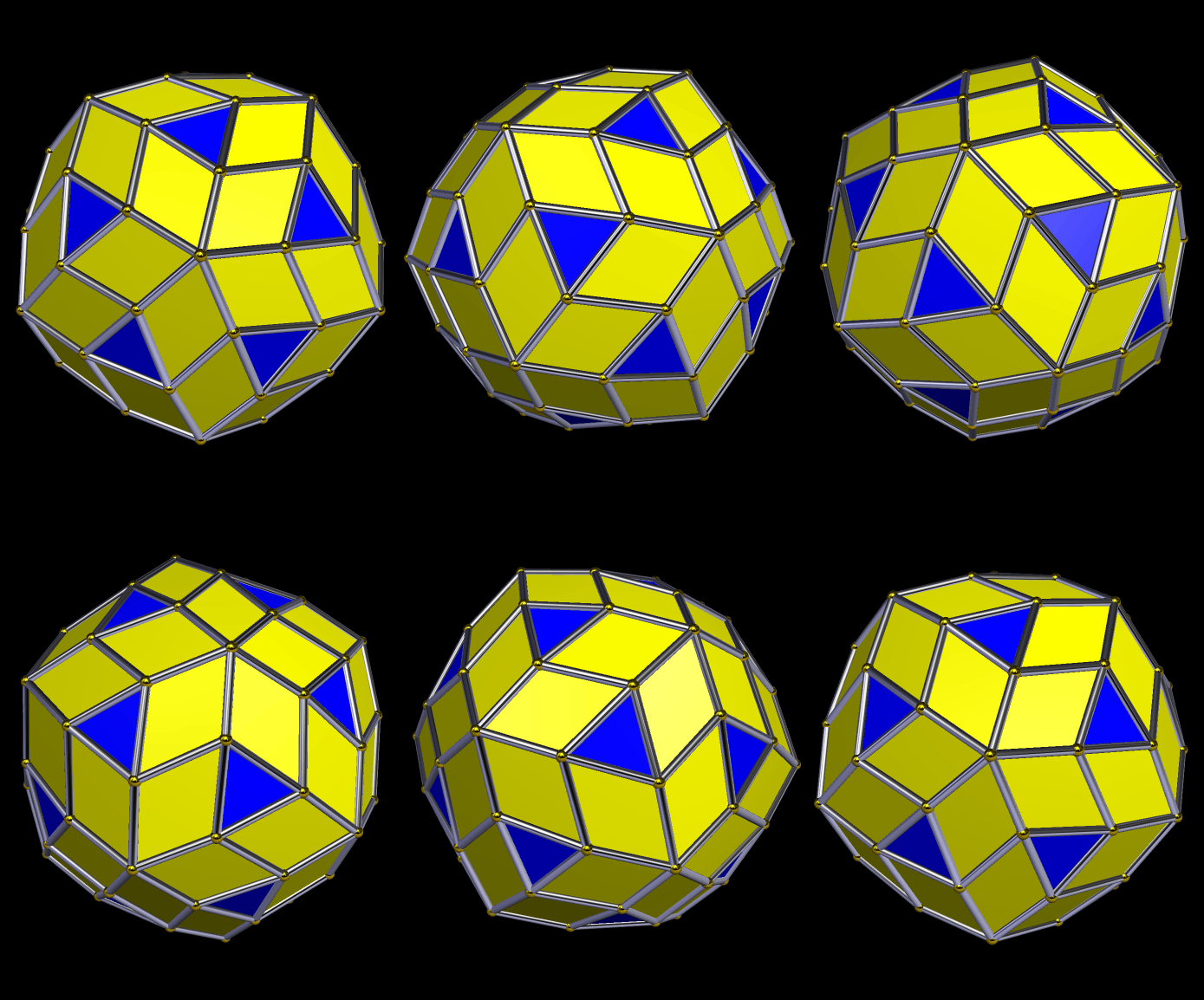
The 43rd Stellation of the Snub Dodecahedron

Image

The 43rd Stellation of the Snub Dodecahedron

It can sometimes be difficult to distinguish between kites and rhombi. In this case, the edges between rhombi which meet five at a vertex are slightly shorter than the other types of edges here, making the yellow faces here, of which there are sixty, kites. The blue equilateral triangles are twenty in number.

Software credit: visit http://www.software3d.com/stella.php for more information on the program used to make this rotating image. A free trial download is available.

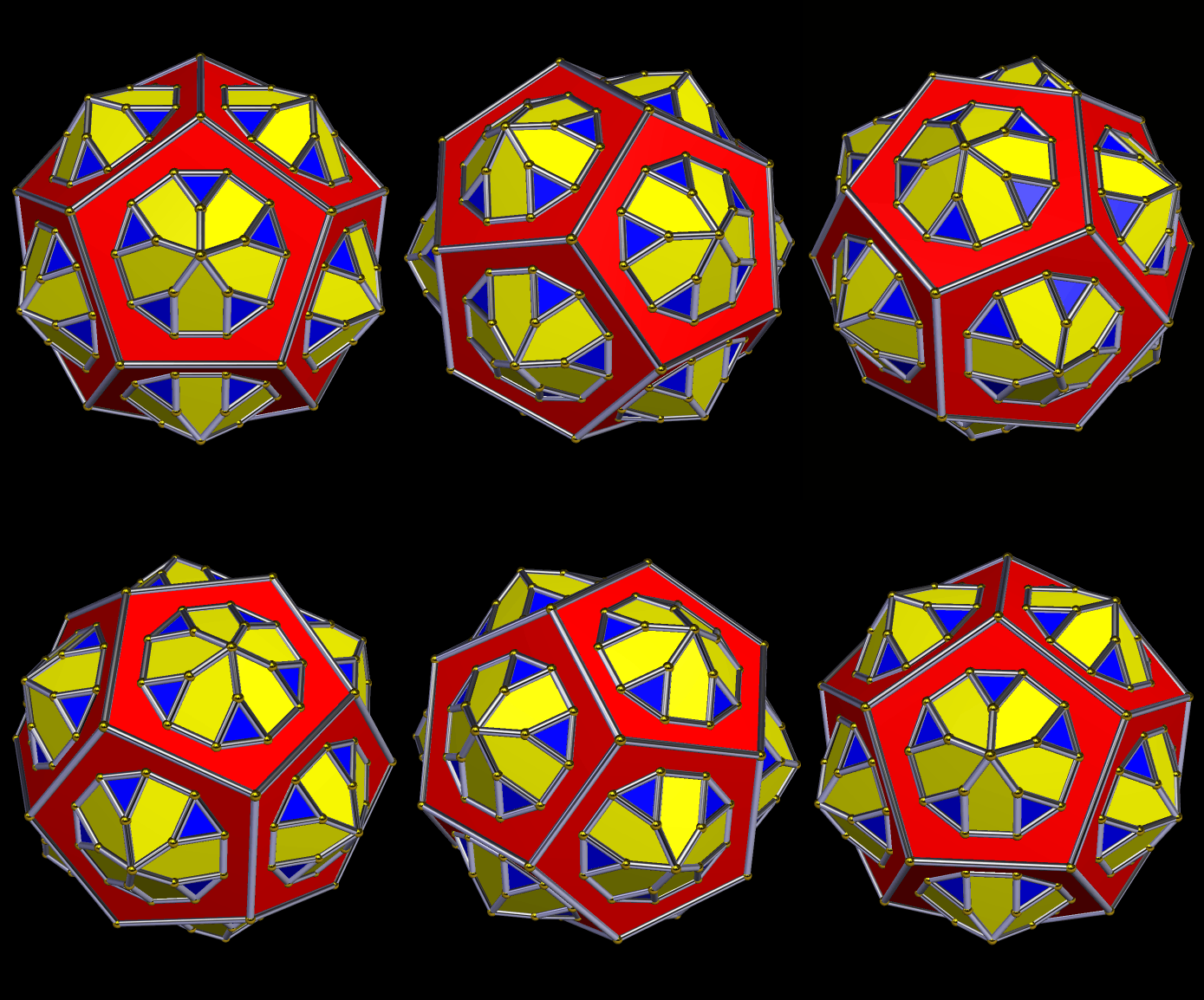
The Thirtieth Stellation of the Great Rhombicosidodecahedron

Image

The Thirtieth Stellation of the Great Rhombicosidodecahedron

Software credit: visit http://www.software3d.com/stella.php for more information on the program used to make this rotating image. A free trial download is available.

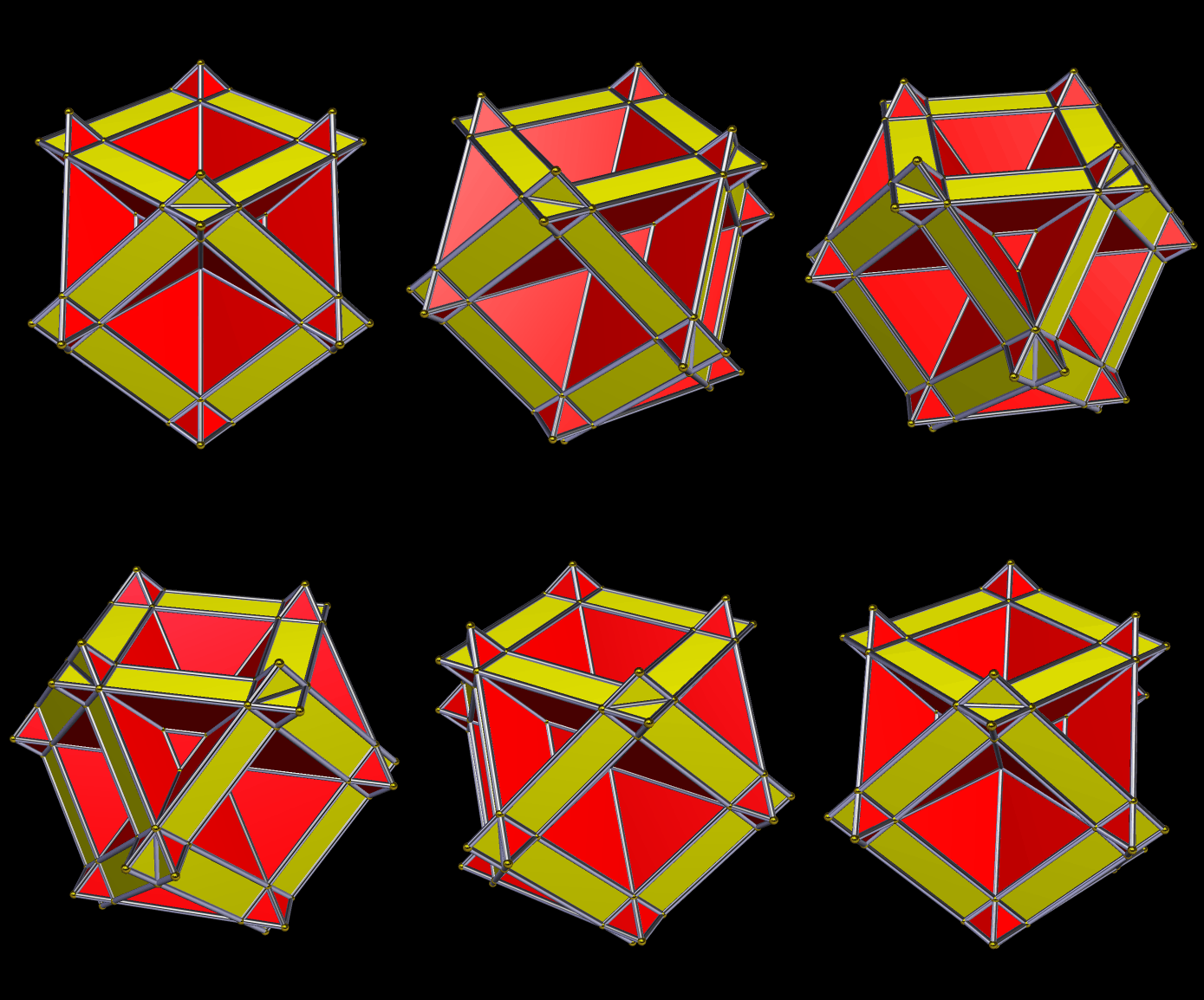
An Interesting Stellated Polyhedron

Image

An Interesting Stellated Polyhedron

This polyhedron resembles a cuboctahedron, more than any other familiar polyhedra — but cuboctahedra were not used, at all, in its construction. To make it, I started with the cube of eight truncated octahedra seen in the previous post, and then stellated that figure many times. (How many? Enough times that I lost count — that’s how many.)

Stella 4d was used for this, and you may try it for free at http://www.software3d.com/stella.php.

The Ninth Stellation of the Rhombic Triacontahedron

Image

The Ninth Stellation of the Rhombic Triacontahedron

Created using Stella 4d, which you may try at http://www.software3d.com/Stella.php.

The Pentagonal Hexacontahedron, and Related Polyhedra

Image

The Pentagonal Hexacontahedron

As the dual of the snub dodecahedron, which is chiral, this member of the Catalan Solids is also chiral — in other words, it exists in left- and right-handed versions, known an entantiomers. They are mirror-images of each other, like left and right gloves or shoes. Here’s the other one, by comparison:

Penta Hexeconta enantiomer

It is always possible to make a compound, for a chiral polyhedron, from its two enantiomers. Here’s the one made from the two mirror-image pentagonal hexacontahedra shown above:
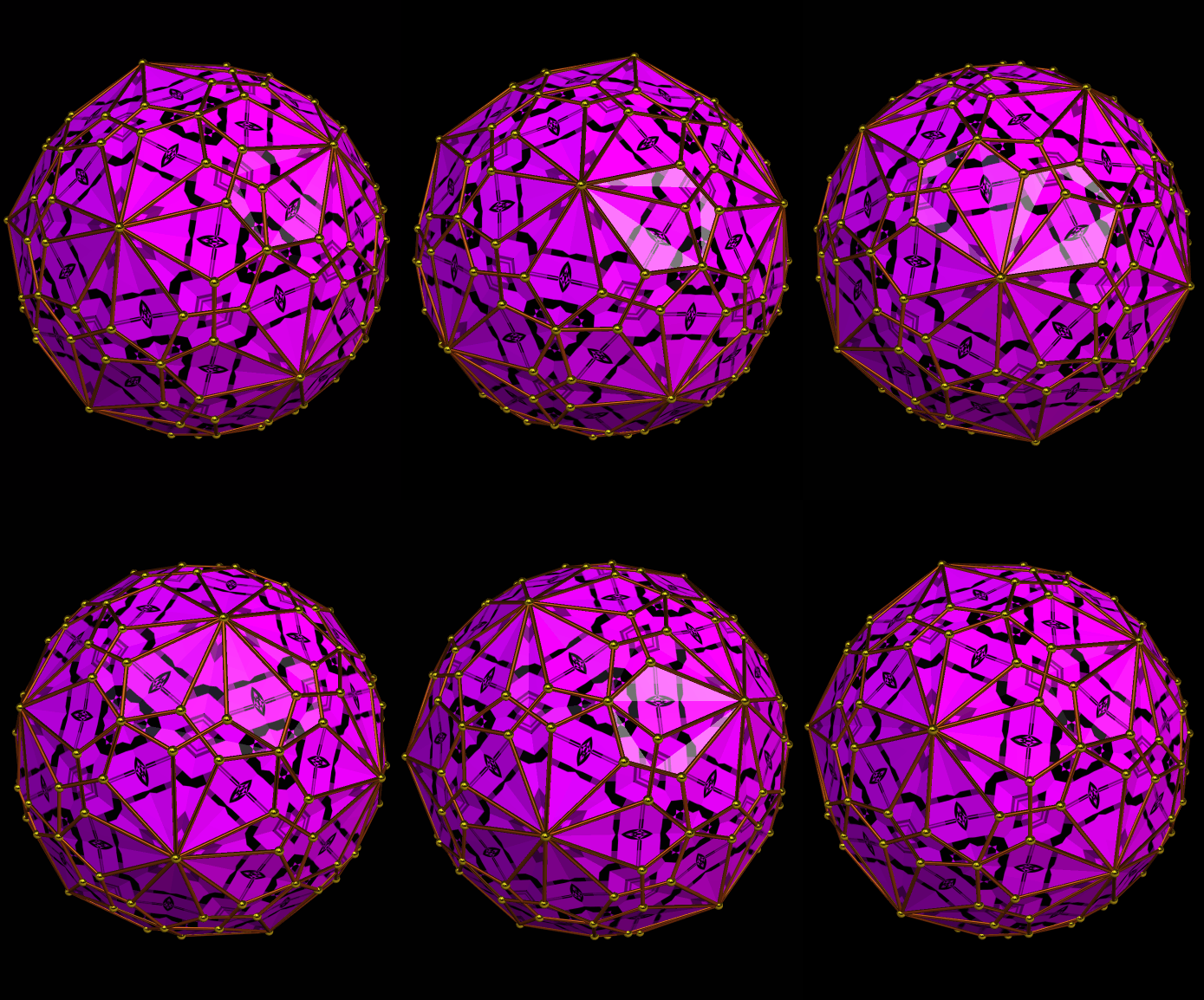
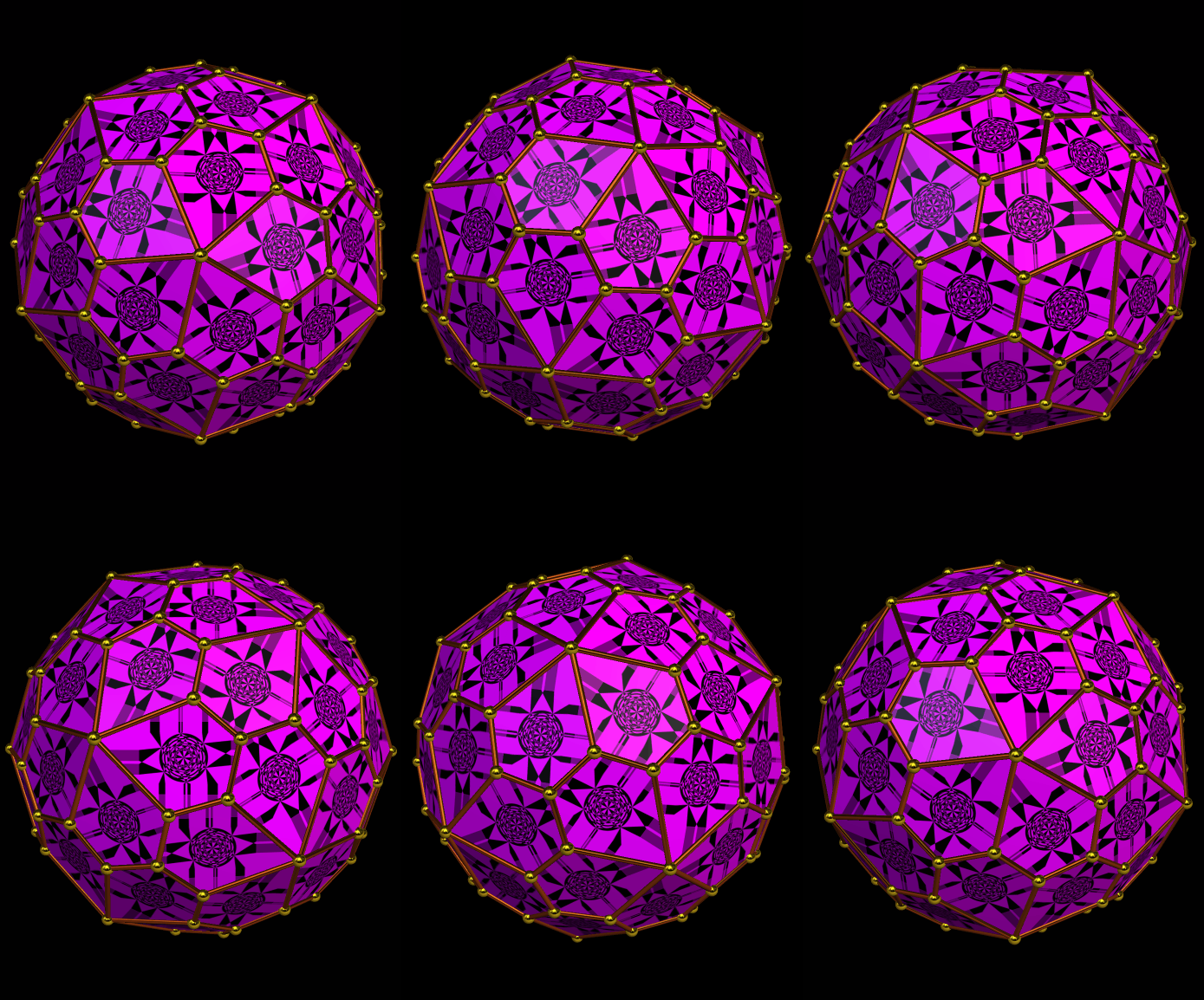
Compound of enantiomorphic pair

Stellating this enantiomorphic-pair-compound twenty-one times produces this interesting result:

stellating

And, returning to the unstellated enantiamorphic-pair-compound, here is its convex hull:

Convex hull

This convex hull strikes me as an interesting polyhedron in its own right, so I tried stellating it several times, just to see what would happen. Here’s one result, after seventeen stellations:

Stellation17

Software credit:  I made these rotating images using Stella 4d:  Polyhedron Navigator. That program may be bought at http://www.software3d.com/Stella.php, and has a free “try it before you buy it” trial download available at that site, as well. I also used Geometer’s Sketchpad and MS-Paint to produce the flat purple-and-black image found on faces near the top of this post (and, by itself, in the previous post on this blog), but I know of nowhere to get free trial downloads of these latter two programs.
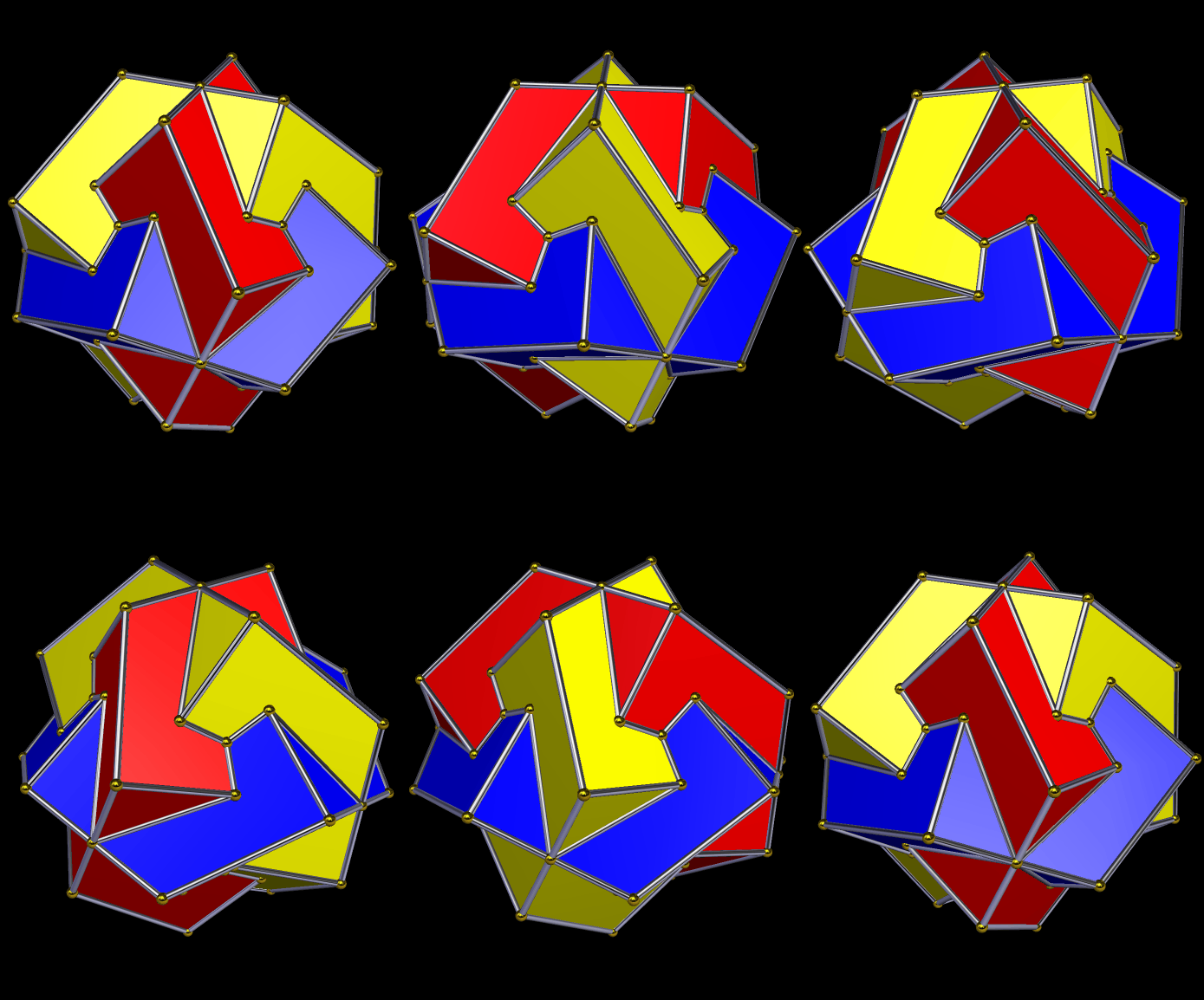
The Compound of the Rhombic Dodecahedron and Its Own Third Stellation

Image

The Compound of the Rhombic Dodecahedron and Its Own Third Stellation

Software credit: see http://www.software3d.com/stella.php

The Second Stellation of a Mandala-Covered Truncated Octahedron

Image

The Second Stellation of a Mandala-Covered Truncated Octahedron

To see what the truncated octahedron looked like before being stellated twice, and read about how it was created, I refer you to the previous post on this blog.

Stellation of polyhedra is easy with Stella 4d, a program you can try and/or buy at http://www.software3d.com/Stella.php.

The Seventeenth Stellation of the Truncated Cube

Image

The Seventeenth Stellation of the Truncated Cube

Cretaed using Stella 4d, available at http://www.software3d.com/stella.php.