A Faceted Truncated Icosahedron With 602 Faces

In the first image of this faceted polyhedron shown, above, the faces are colored by face type. In the second image, the faces are colored by number of sides. The red faces are triangles, the yellow faces are quadrilaterals, and the blue faces are {10/4} polygons.

The third image, below, shows this faceted polyhedron in “rainbow colored mode.” I made these images using Stella 4d, which you can try for free at this website.

Two Deceptively Similar Solids

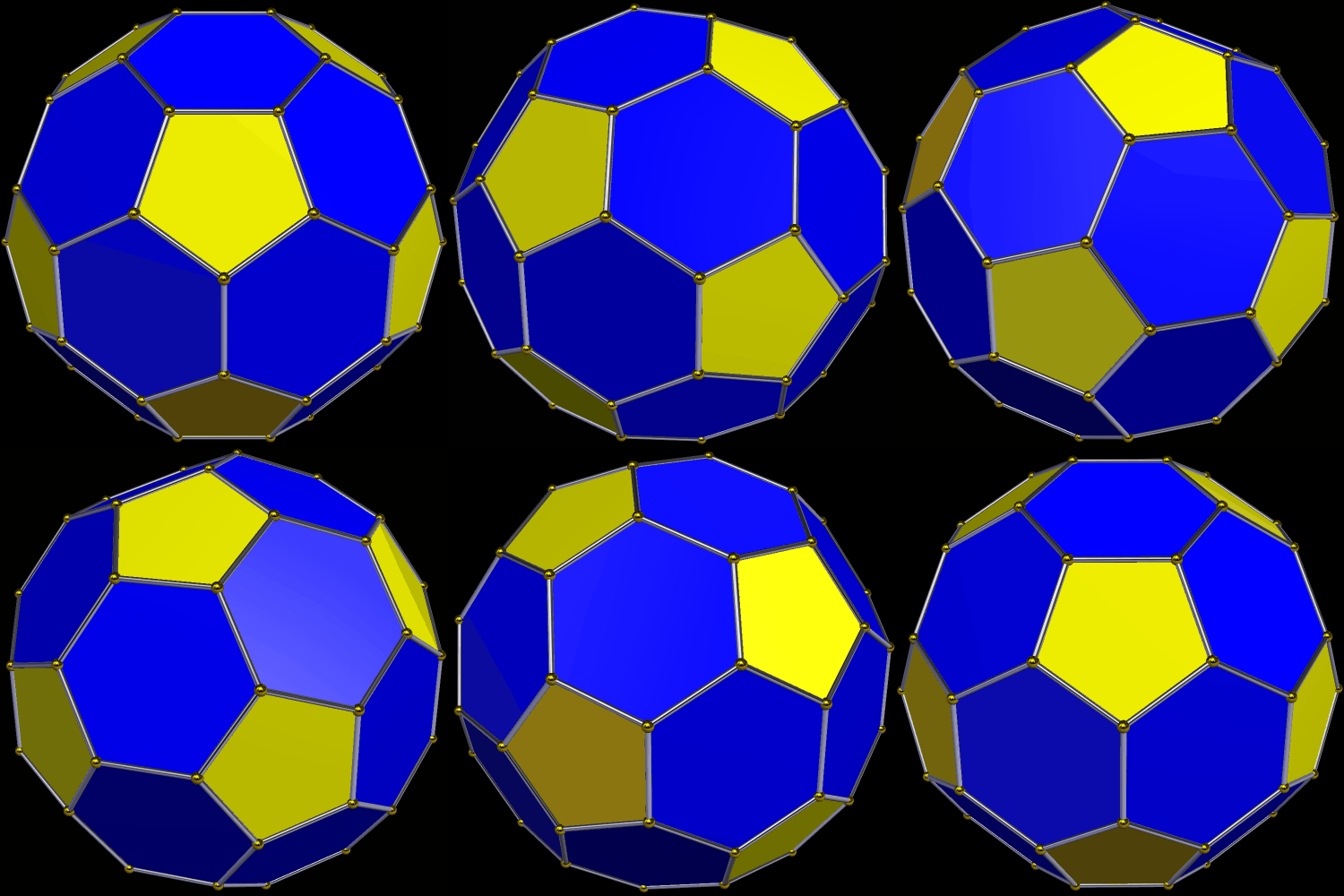
Give the polyhedron below a quick glance. Can you name it?

Since there are twelve regular pentagons, and a bunch of hexagons, it looks like a soccer ball. The shape of the most widely-used soccer ball is a (rounded) truncated icosahedron. Therefore, you can be forgiven if you thought this thing was a truncated icosahedron. Take a close look at those hexagons, though. Can you see that they are not regular?

Contrast the solid above to the shape below, which is a real truncated icosahedron.

The hexagons in this second image are regular, but that isn’t the only difference between the two. Examine the vertices of solid #2. At each vertex, one pentagon meets two hexagons. Scroll up and take another look at solid #1, and you can easily find vertices there which also have two hexagons meeting a pentagon — but not all of the vertices are like that. Some of the vertices have three hexagons meeting there, without any pentagons at all. This allows more hexagons into the mix, while the number of pentagons stays steady, at twelve, in both polyhedra.

There are also other differences. For example, the “fake” truncated icosahedron has eighty vertices, while the real one has sixty. The first solid is actually the dual of a frequency-2 geodesic sphere. It’s not an Archimedean solid at all. It is, in chemistry, a fullerene; in fact, both shapes are fullerenes. One is the well known C60 molecule, while the other is a less familiar fullerene with the formula C80

Both of these polyhedra can be built using Zometools (available for sale at http://www.zometool.com). The truncated icosahedron requires sixty Zomeballs, and is made of all blue struts. The geodesic-sphere dual takes eighty Zomeballs, and is made of blue and red struts.

Both images here were made with a computer program called Stella 4d, which you can try for free at http://www.software3d.com/Stella.php.
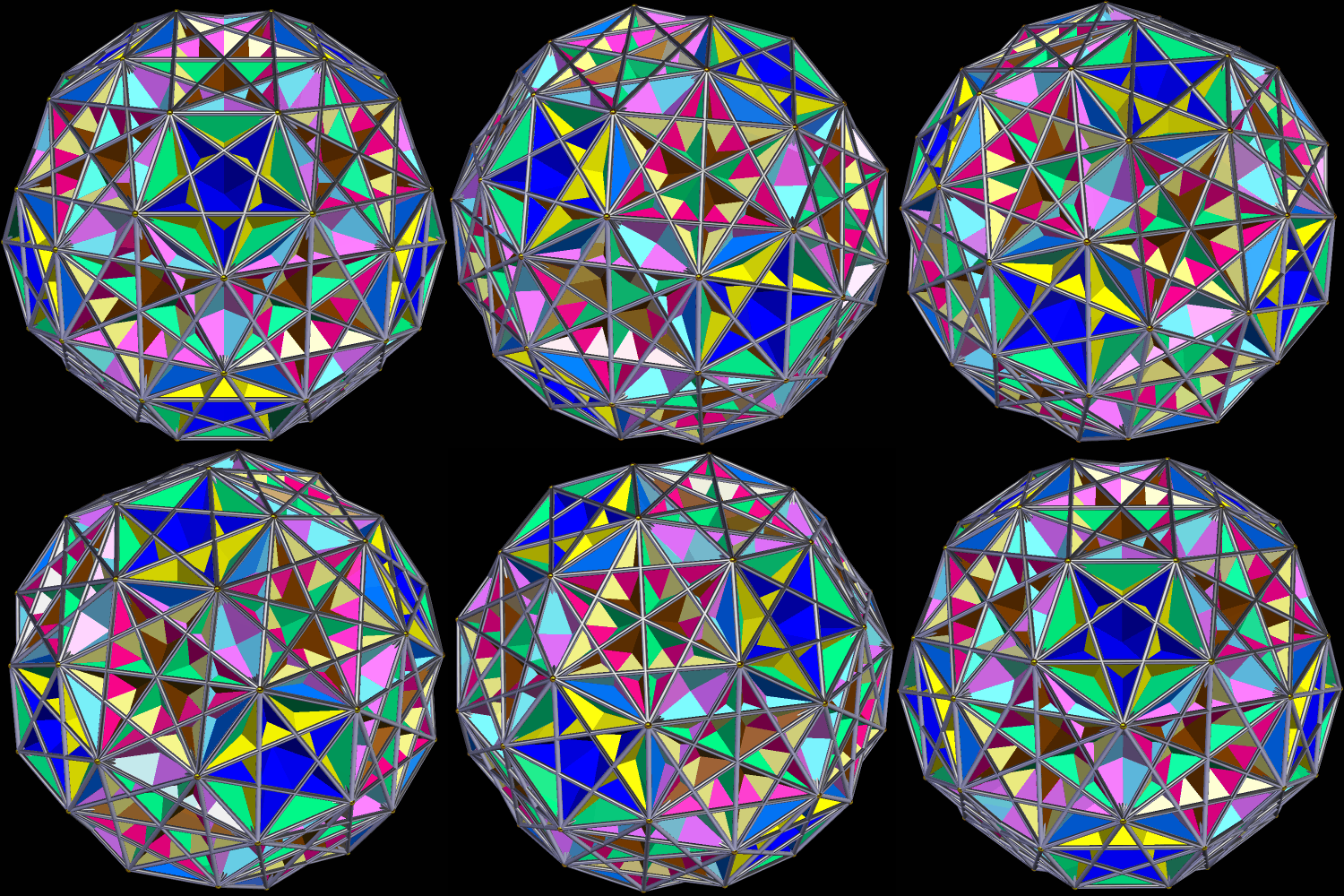
Truncated Icosahedron Variant

I made this using Stella 4d, which you can try for free here.

Augmenting the Truncated Icosahedron

Here’s a truncated icosahedron, one of the thirteen Archimedean solids.

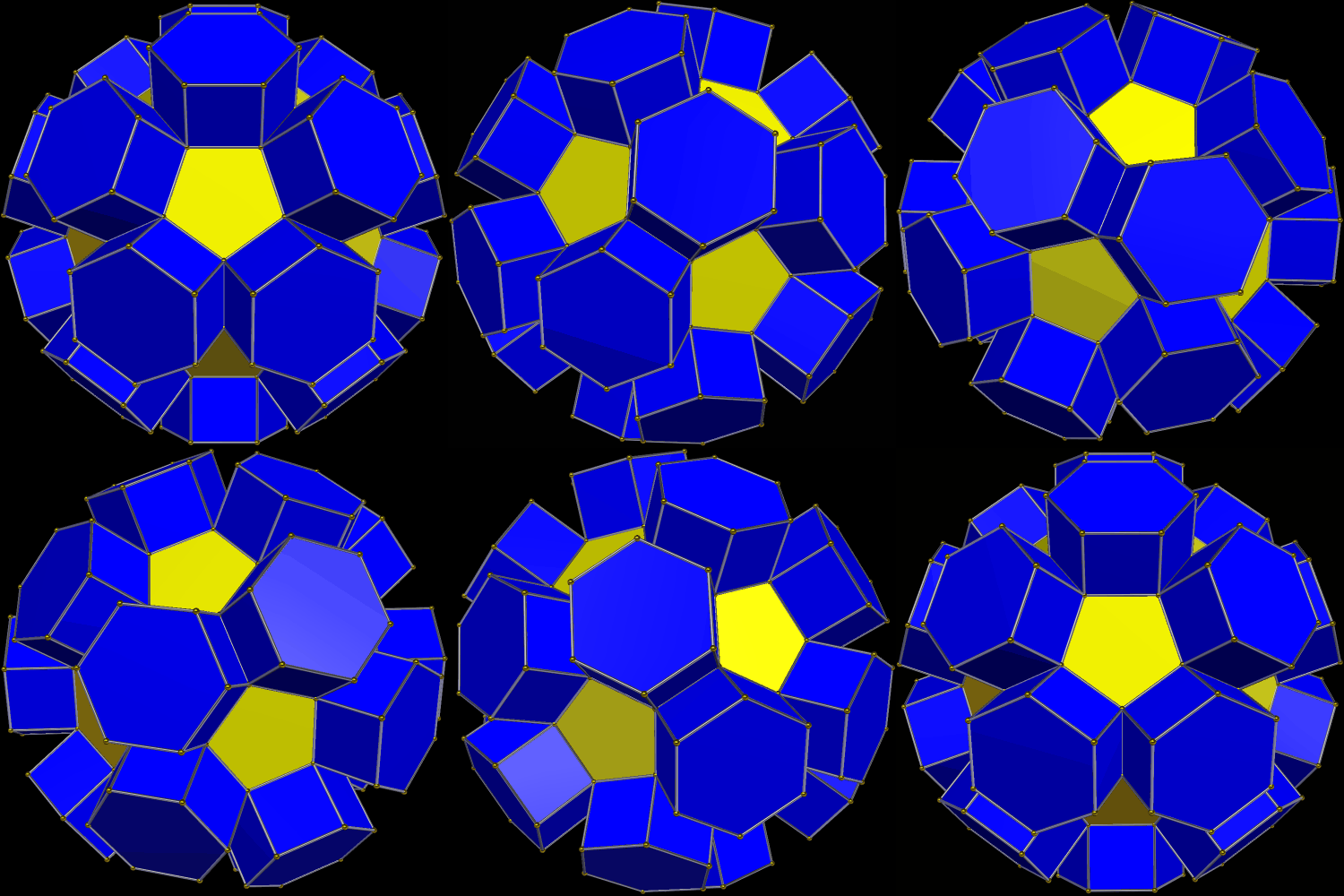
The next image shows this solid with its hexagonal faces augmented by prisms.

This augmented polyhedron has an interesting dual:

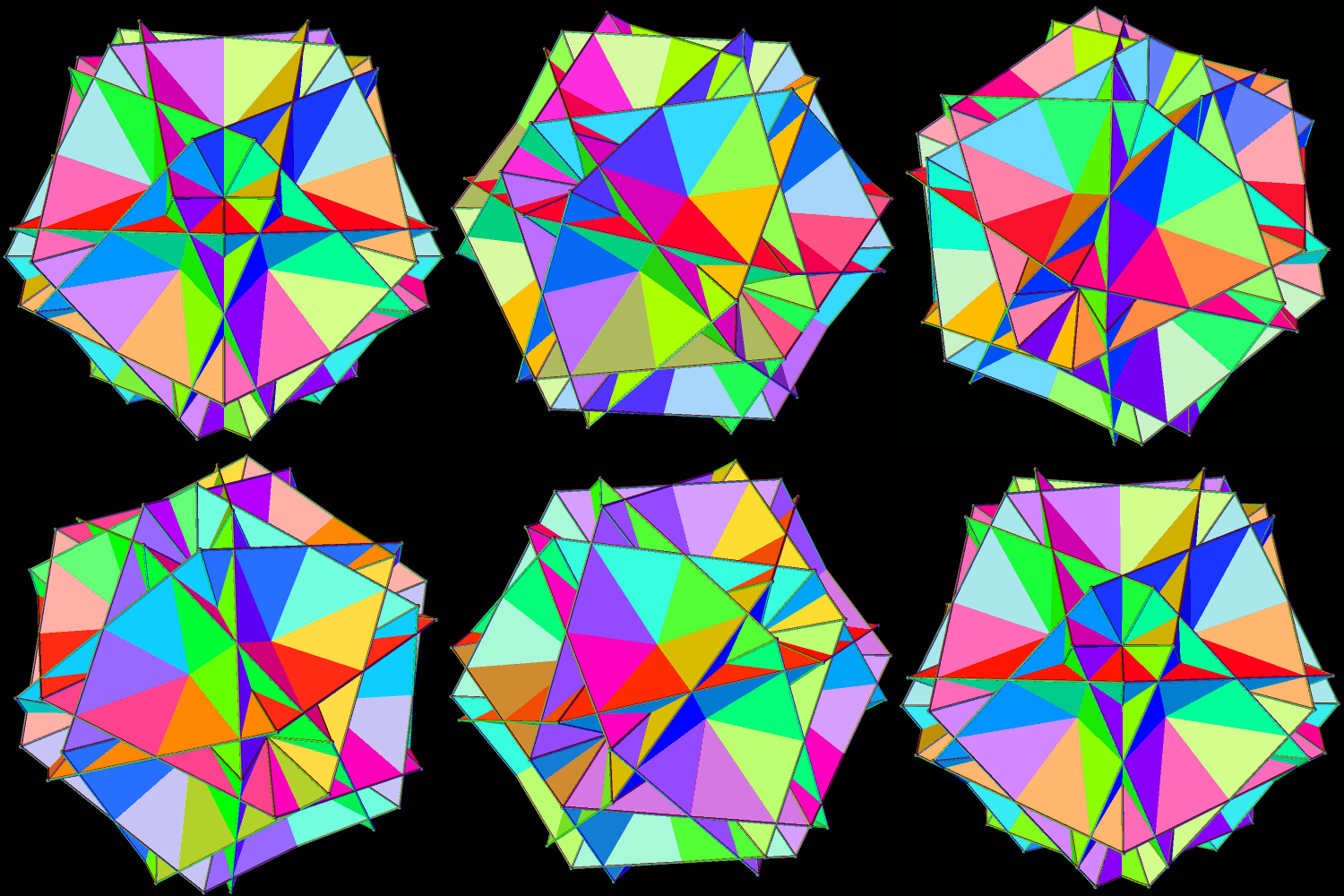
Finally, here’s this dual shown in “rainbow color mode.”

These images were created with Stella 4d, a program you can try for free right here.

Twenty Hexagons, Each Adorned with Images of Hexagon the Cat

Hexagons

I made this using Stella 4d: Polyhedron Navigator, a program you can try for free at this website. It shows Hexagon the Cat riding in circles on the twenty hexagonal faces of a rotating truncated icosahedron. We don’t know of a cat named Pentagon, so I hid the twelve pentagonal faces.

A Truncated Icosahedron Made of Lux Blox

This particular truncated icosahedron has an edge length of one. I may build one with a longer edge length at some point; this would have the effect of shrinking the white edges, and magnifying the orange and blue faces, as fractions of the overall model. The individual Lux square pieces are identical, except for their color.

If you’d like to try Lux Blox for yourself, the site to visit is http://www.luxblox.com.

Expanding the Truncated Icosahedron, Using Augmentation with Prisms

Here’s my starting point: the truncated icosahedron, one of the thirteen Archimedean solids.

Next, each face is augmented by a prism, with squares used for the prisms’ lateral faces.

The convex hull of the polyhedron above yields what can be called an expanded truncated icosahedron, as shown below:

Could these faces be made regular, and the polyhedron still hold together? I checked, using Stella 4d‘s “try to make faces regular” function. Here’s the result:

As you can see, the faces of this polyhedron can be made to be regular, but this forces the model to become non-convex.

To try Stella for yourself, for free, just pay a visit to http://www.software3d.com/Stella.php. The trial version is a free download.
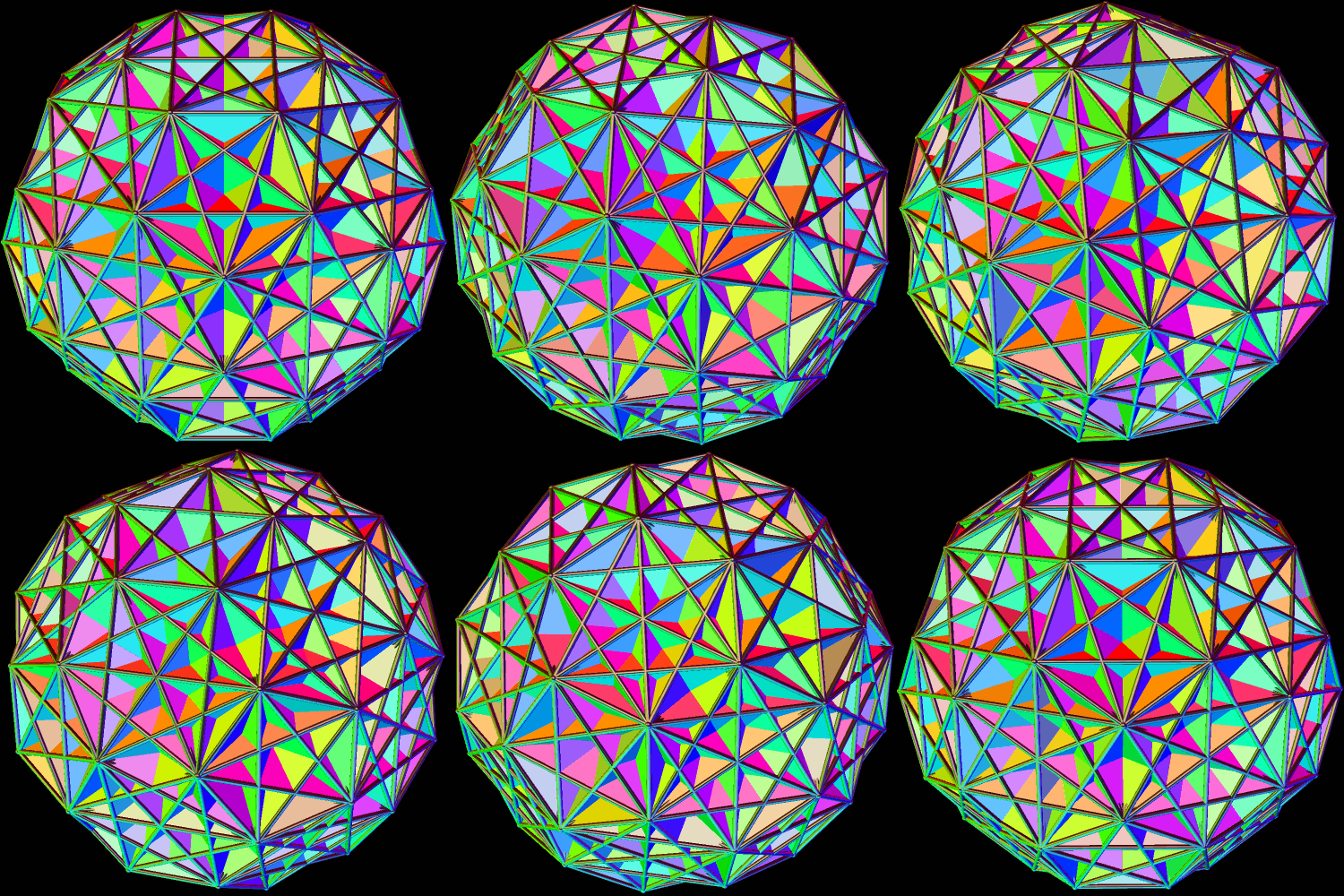
A Toroidal Truncated Icosahedron

Augmented Rhombic Triaconta

The components of this toroid are sixty rhombic triacontahedra, as well as ninety rhombic prisms with lateral edges three times as long as their base edges. I made this using Stella 4d, which you can try for free at http://www.software3d.com/Stella.php.
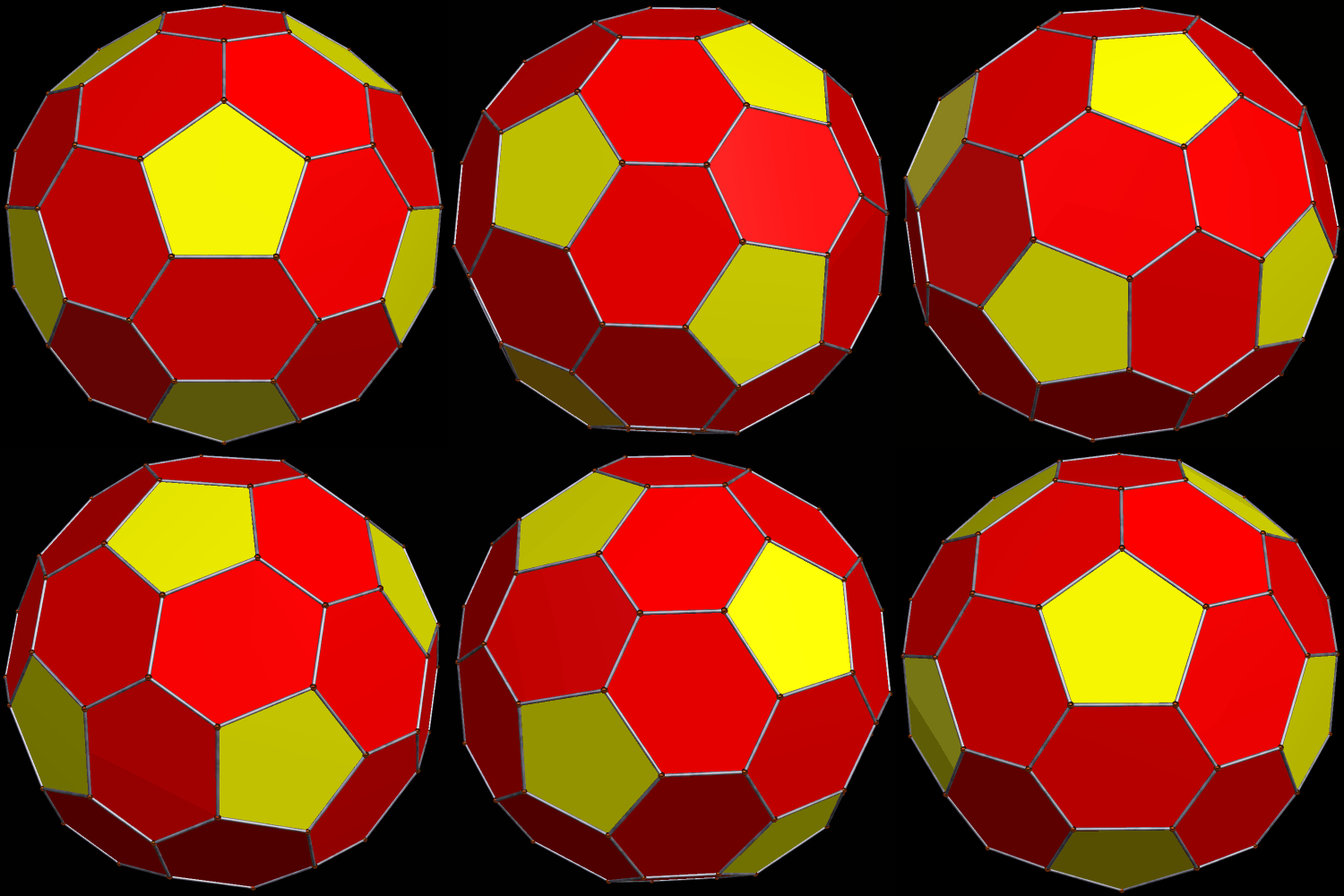
Augmented Rhombic Triaconta rb

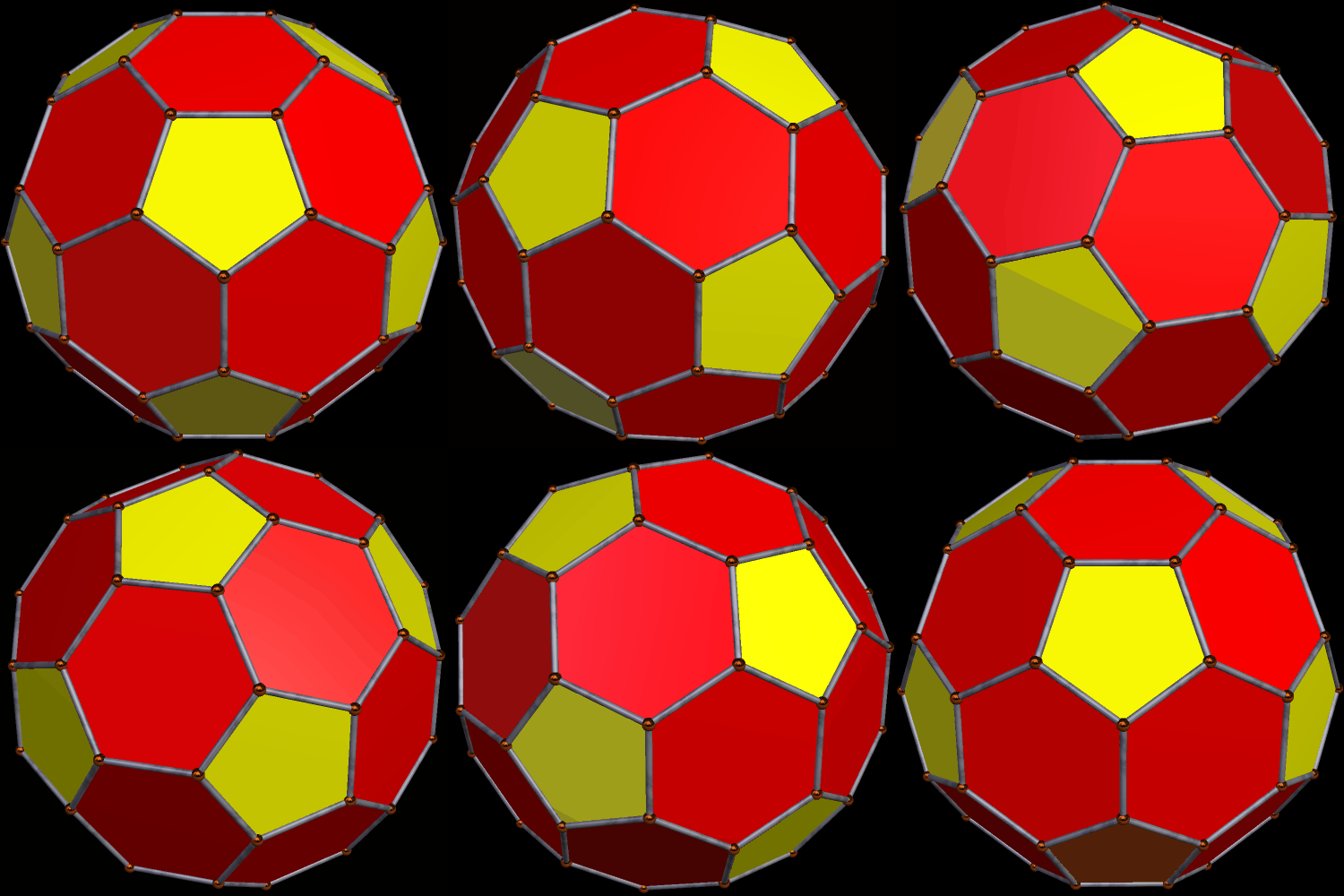
A Hybrid of the Truncated Icosahedron and the Snub Dodecahedron

I made this using Stella 4d: Polyhedron Navigator, a program you can try for free at http://www.software3d.com/Stella.php.
The Compound of the Truncated Isocahedron and the Pentakis Dodecahedron, with Related Polyhedra

The yellow-and-red polyhedron in the compound below is the truncated icosahedron, one of the Archimedean solids. The blue figure is its dual, the pentakis dodecahedron, which is one of the Catalan solids.

Pentakis dodecahedron and truncated icosahedron

The next image shows the convex hull of this base/dual compound. Its faces are kites and rhombi.

Convex hull of trunctaed icosahedron slash pentakis dodecahedron compound

Shown next is the dual of this convex hull, which features regular hexagons, regular pentagons, and isosceles triangles.

dual of Convex hull of trunctaed icosahedron slash pentakis dodecahedron compound

Next, here is the compound of the last two polyhedra shown.

dual and base compound of Convex hull of trunctaed icosahedron slash pentakis dodecahedron compound

Continuing this process, here is the convex hull of the compound shown immediately above.

Convex hull

This latest convex hull has an interesting dual, which is shown below. It blends characteristics of several Archimedean solids, including the rhombicosidodecahedron, the truncated icosahedron, and the great rhombicosidodecahedron.

Dual of Convex hull

This process could be continued indefinitely — making a compound of the last two polyhedra shown, then forming its convex hull, then creating that convex hull’s dual, and so on.

All these polyhedra were made using Stella 4d: Polyhedron Navigator, which you can purchase (or try for free) at http://www.software3d.com/Stella.php