Craters and Slopes Near the South Pole of the Moon Adorn the Faces of a Rhombic Enneacontahedron

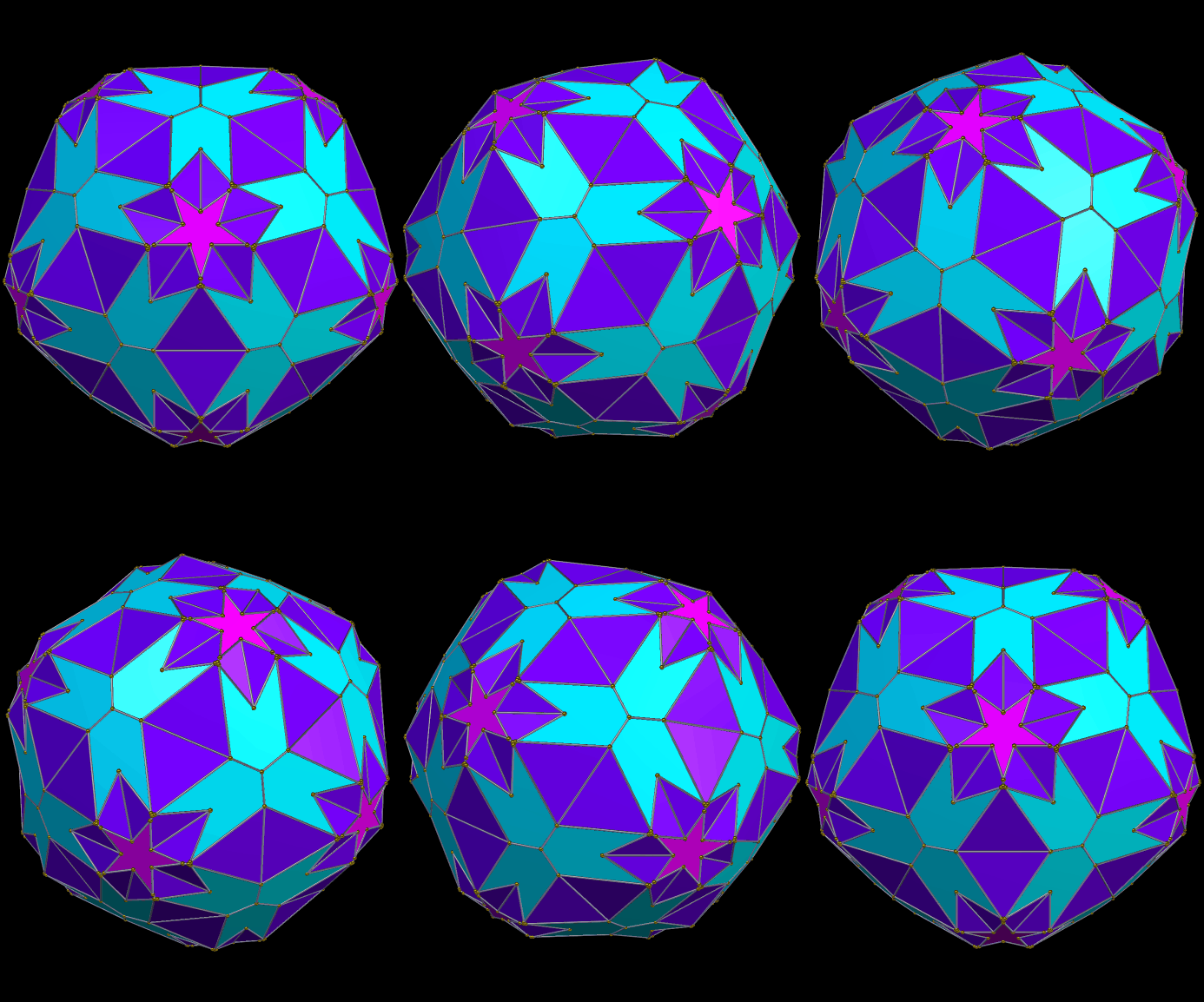
Zonohedrified Dodeca

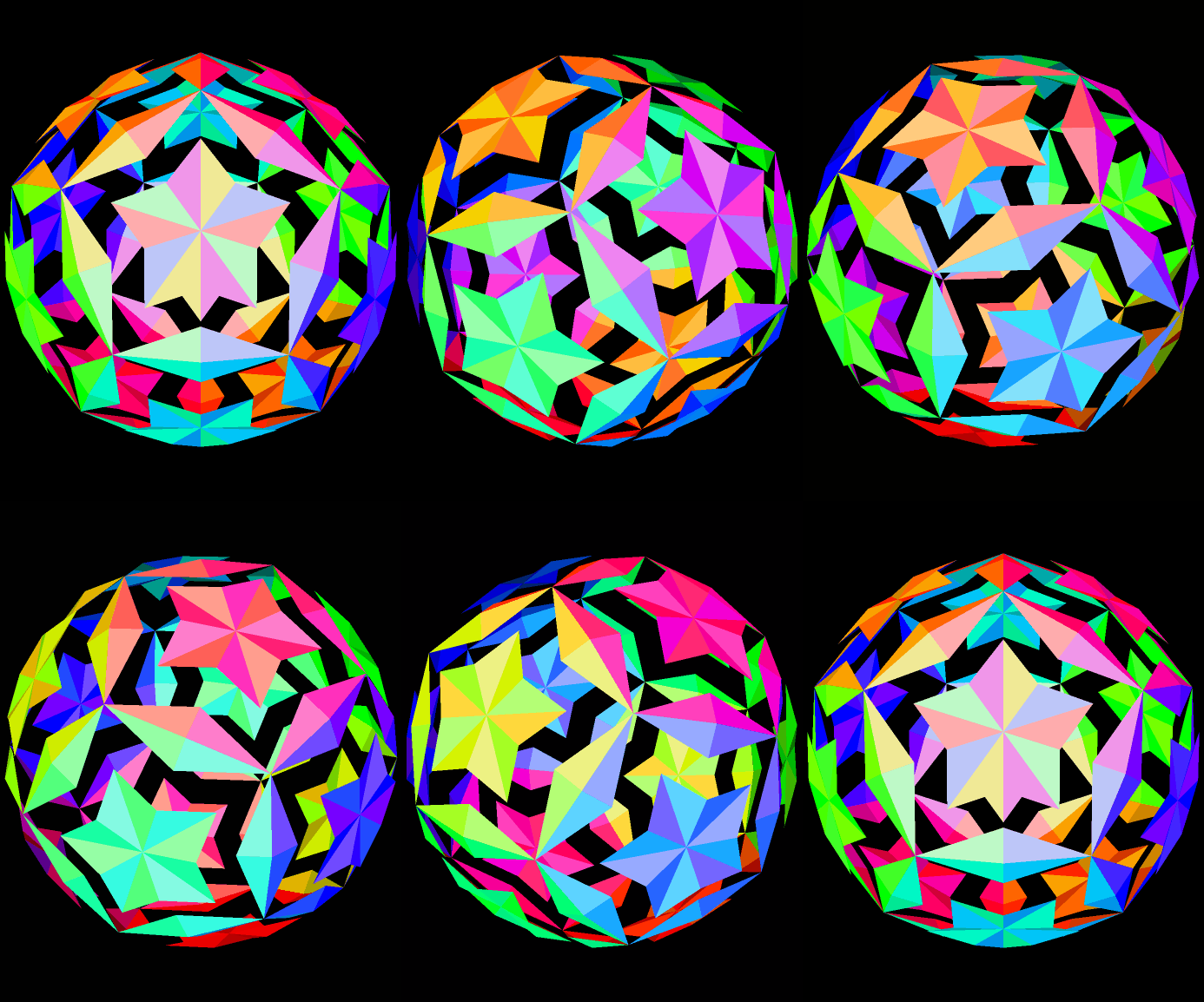
The images on the faces of this polyhedron are based on information sent from NASA’s Lunar Reconnaisance Orbiter, as seen at http://lunar.gsfc.nasa.gov/lola/feature-20110705.html and tweeted by @LRO_NASA, which has been happily tweeting about its fifth anniversary in a polar lunar orbit recently. I have no idea whether this is actually an A.I. onboard the LRO, or simply someone at NASA getting paid to have fun on Twitter.

To get these images from near the Lunar South Pole onto the faces of a rhombic enneacontahedron, and then create this rotating image, I used Stella 4d:  Polyhedron Navigator. There is no better tool available for polyhedral research. To check this program out for yourself, simply visit www.software3d.com/Stella.php.

Music Video: Murder By Death’s “Those Who Stayed” & “I’m Afraid of Who’s Afraid of Virginia Woolf”

Music: the first two tracks from the Murder By Death album Like the Excorcist, But More Breakdancing. Please visit their website, http://www.murderbydeath.com, to buy this band’s music and merchandise. While you’re there, I recommend checking their concert calendar, to see if they may be playing near you soon. Murder By Death concerts, which I’ve seen six times now, are not to be missed!

Visuals: rotating polyhedra, all with icosidodecahedral symmetry, generated using Stella 4d: Polyhedron Navigator, which you can try for yourself at http://www.software3d.com/Stella.php. The polyhedra shown are, in order of appearance:

  1. The icosahedron
  2. The compound of the icosahedron and its dual, the dodecahedron
  3. The dodecahedron, with all faces the same color
  4. The small stellated dodecahedron, or first stellation of the dodecahedron, in a single color
  5. The small stellated dodecahedron, with only parallel faces having the same color (six-color arrangement)
  6. The great dodecahedron, or second stellation of the dodecahedron, six-color arrangement
  7. The great stellated dodecahedron, or third stellation of the dodecahedron, six-color arrangement
  8. Stellating the dodecahedron a fourth time, to return it to its original form, but in the six-color arrangement this time
  9. The icosidodecahedron, with triangular faces invisible, and pentagonal faces shown using the six-color arrangement
  10. The icosidodecahedron, all faces visible now, and colored by face type
  11. The fourth stellation of the icosidodecahedron (its first stellation is the dodecahedron, the second is the icosahedron, and the third is the compound of the first two, all of which have already been seen)
  12. The fifth stellation of the icosidodecahedron
  13. The convex hull of the fifth stellation of the icosidodecahedron, which is a slightly-truncated icosahedron
  14. The truncated icosahedron which is a true Archimedean Solid, since all its faces are regular
  15. The truncated icosahedron’s second stellation (the first is the already-seen icosahedron)

Heptamandala

heptamandala

On Polyhedral Cages, a Form of Geometrical Art, with Seven Examples

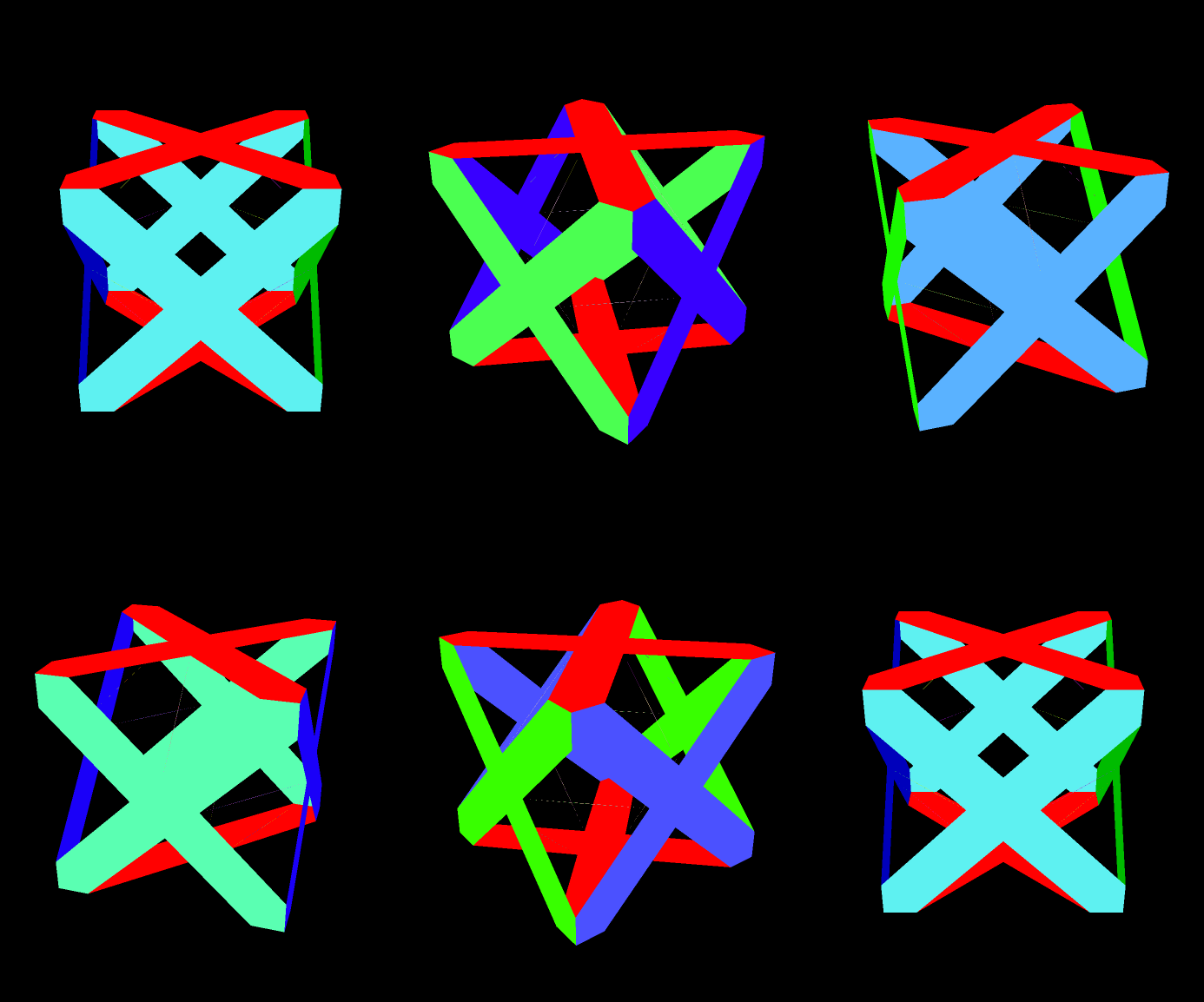
I’ve posted polyhedral cages before — it simply never occurred to me to call such objects by that term. I often tag them as art / geometrical art, rather than mathematics, for they are not true polyhedra, by the generally accepted definition, where edges must involve faces meeting in pairs. Polyhedral cages do not follow this rule, so calling them mathematics causes problems. To do mathematics, after all, is to play games with numbers, and other ideas, according to the rules, with these rules being discovered as we discover new theorems. The rules are respected for one reason alone:  we know they work. If one breaks these rules with, say, a geometric figure, on aesthetic grounds, one is crossing the boundary between mathematics and geometrical art.

The reason for hiding faces of polyhedra is usually aesthetic, not mathematical. I use software called Stella 4d, available at www.software3d.com/Stella.php, to manipulate polyhedra in numerous different ways, trying to discover “new” polyhedra — new, that is, in the sense that these discoveries (not inventions) were never seen before I saw them on my computer screen. When you see a rotating geometrical picture on this blog, such as any of the ones at the bottom of this post, it was created using Stella.

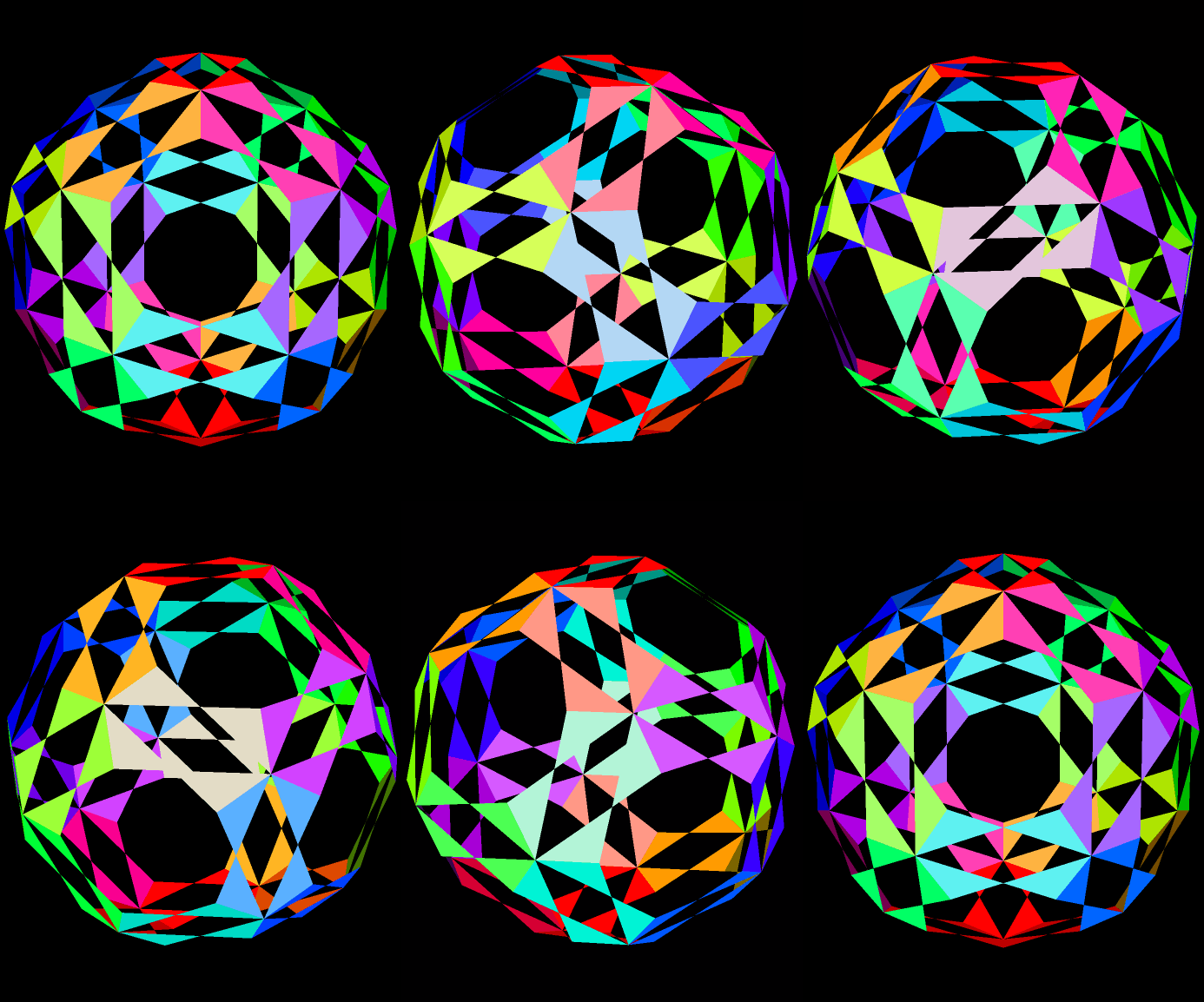
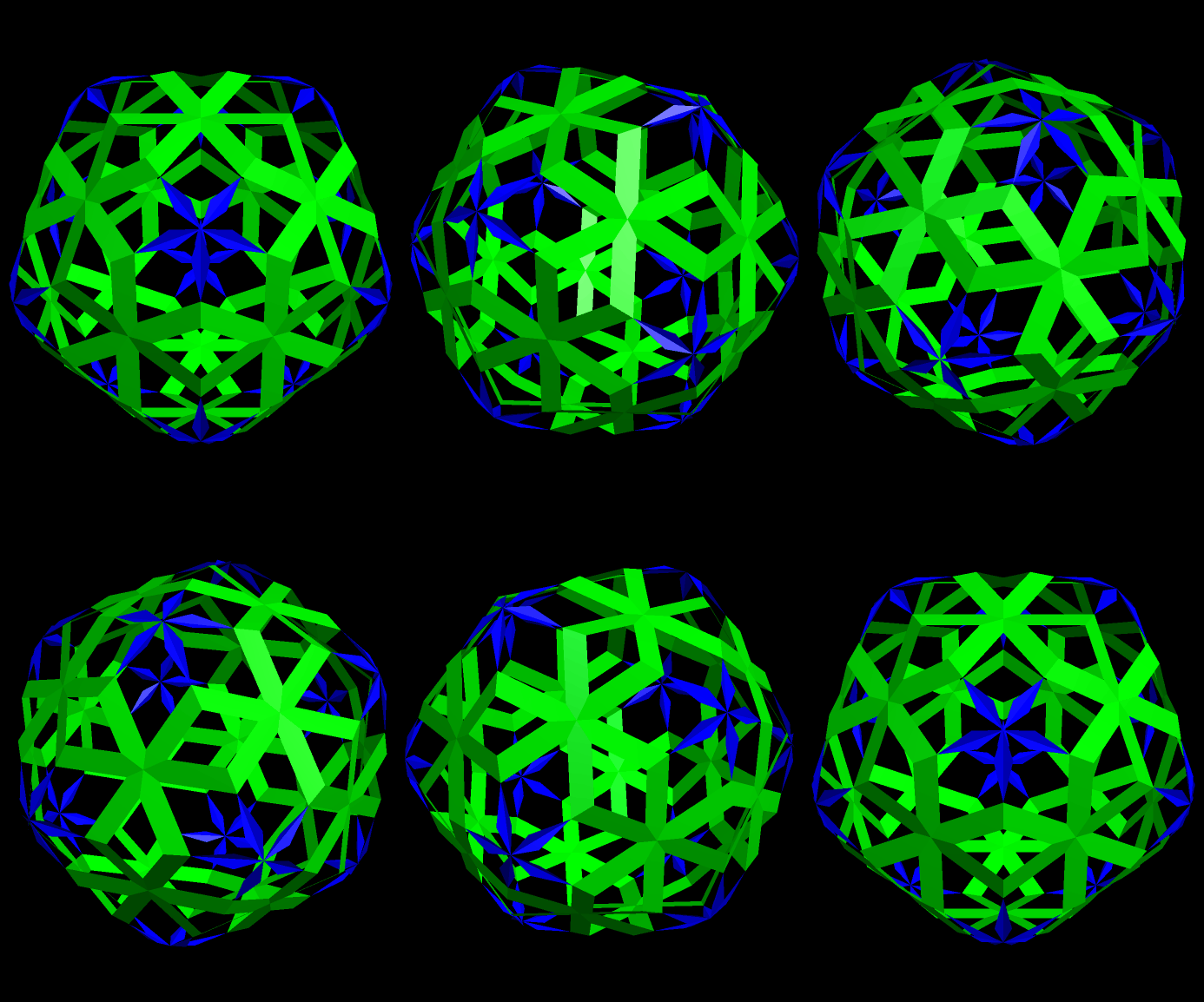
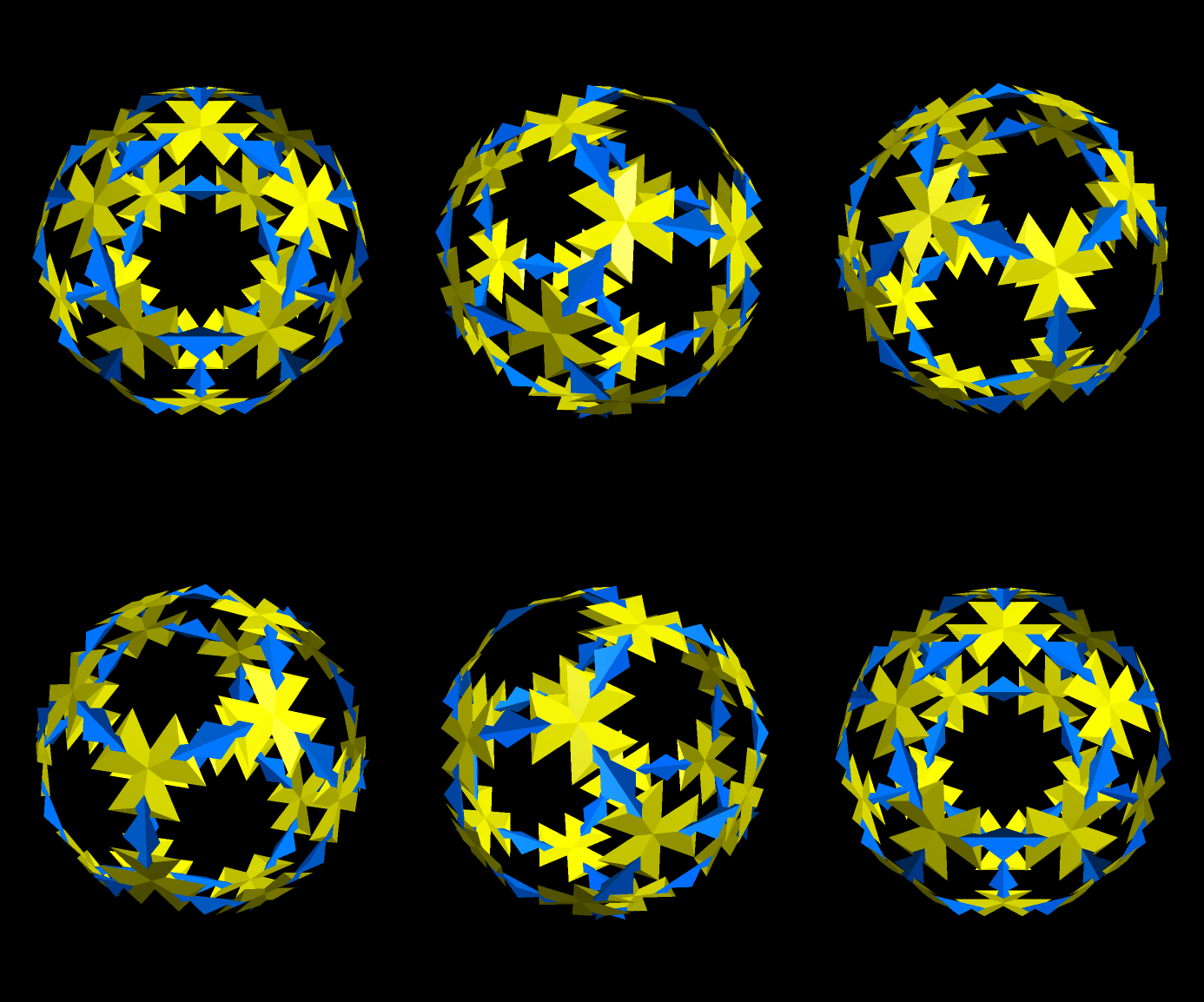
Every now and then, I stumble upon a polyhedron which would look better if selected faces were simply made to disappear — and with Stella, that’s easy. They still exist in the polyhedron, in Stella‘s “mind,” but are rendered invisible in the on-screen image, thus creating the appearance of holes in the polyhedron’s surface. If these holes are regarded as real — “real” in the somewhat confusing sense that there’s nothing where the holes are, holes being absences of what surrounds them — then the former polyhedron is now a polyhedral cage. Here are several examples.  
electric dodecahedron

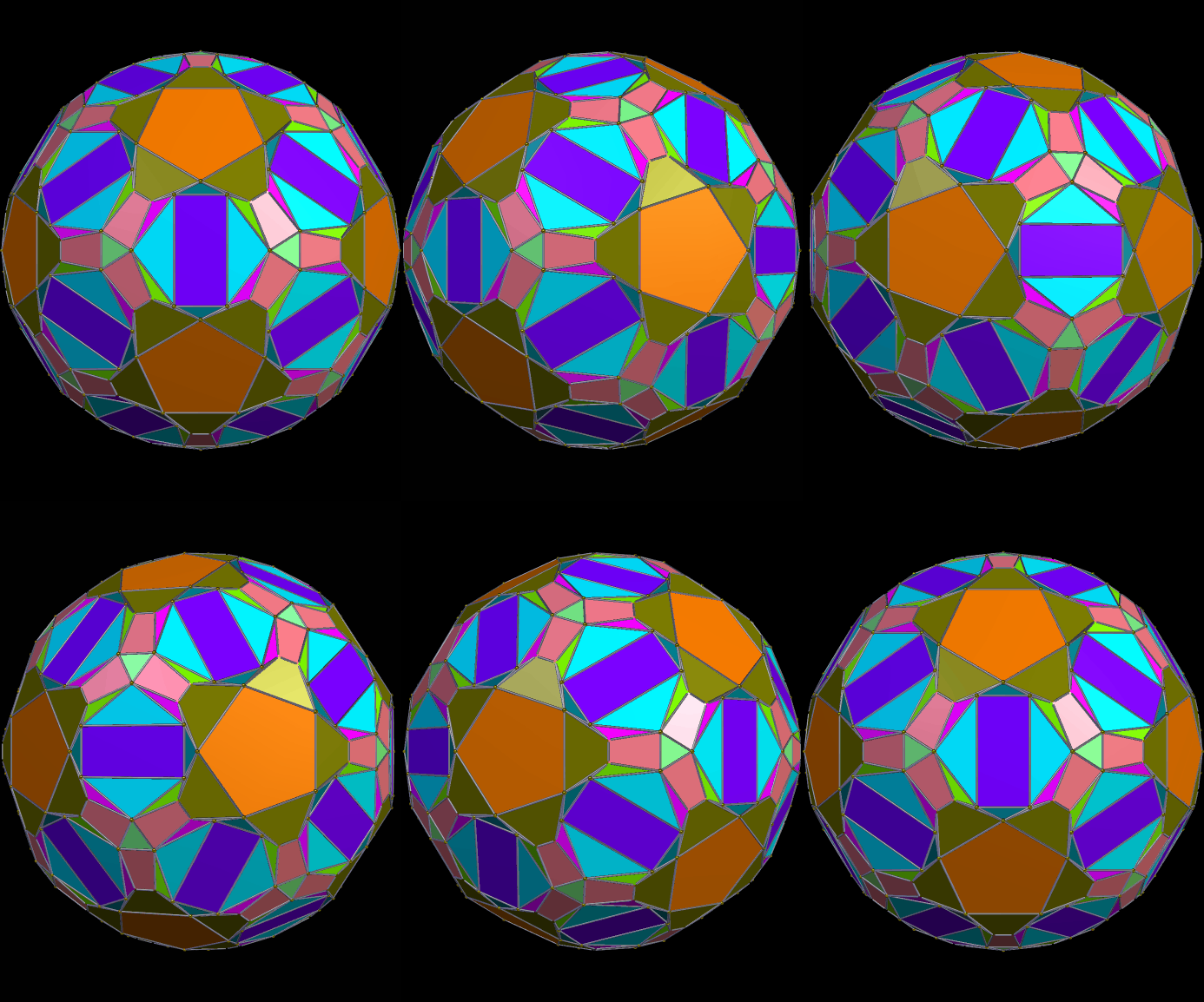
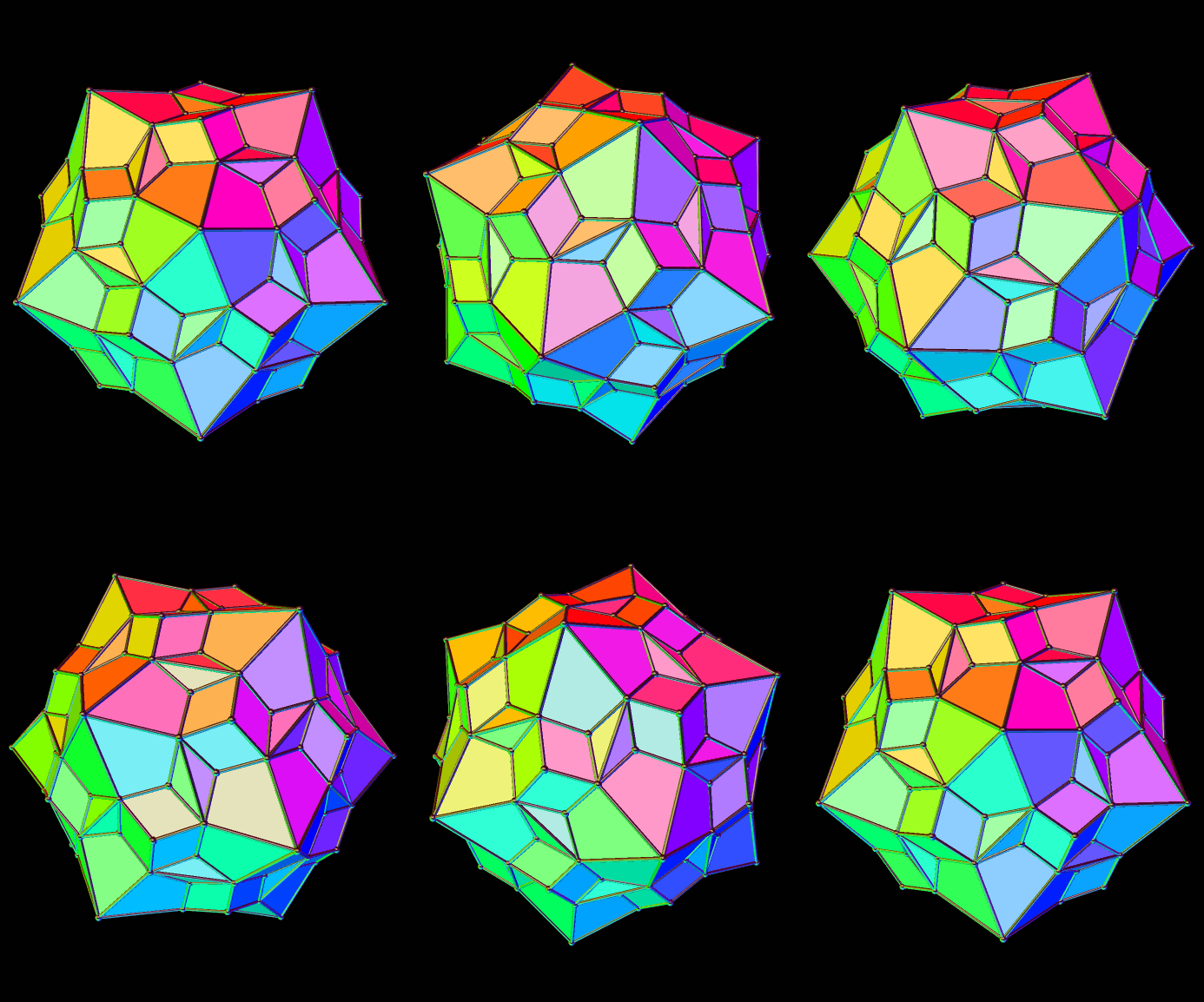
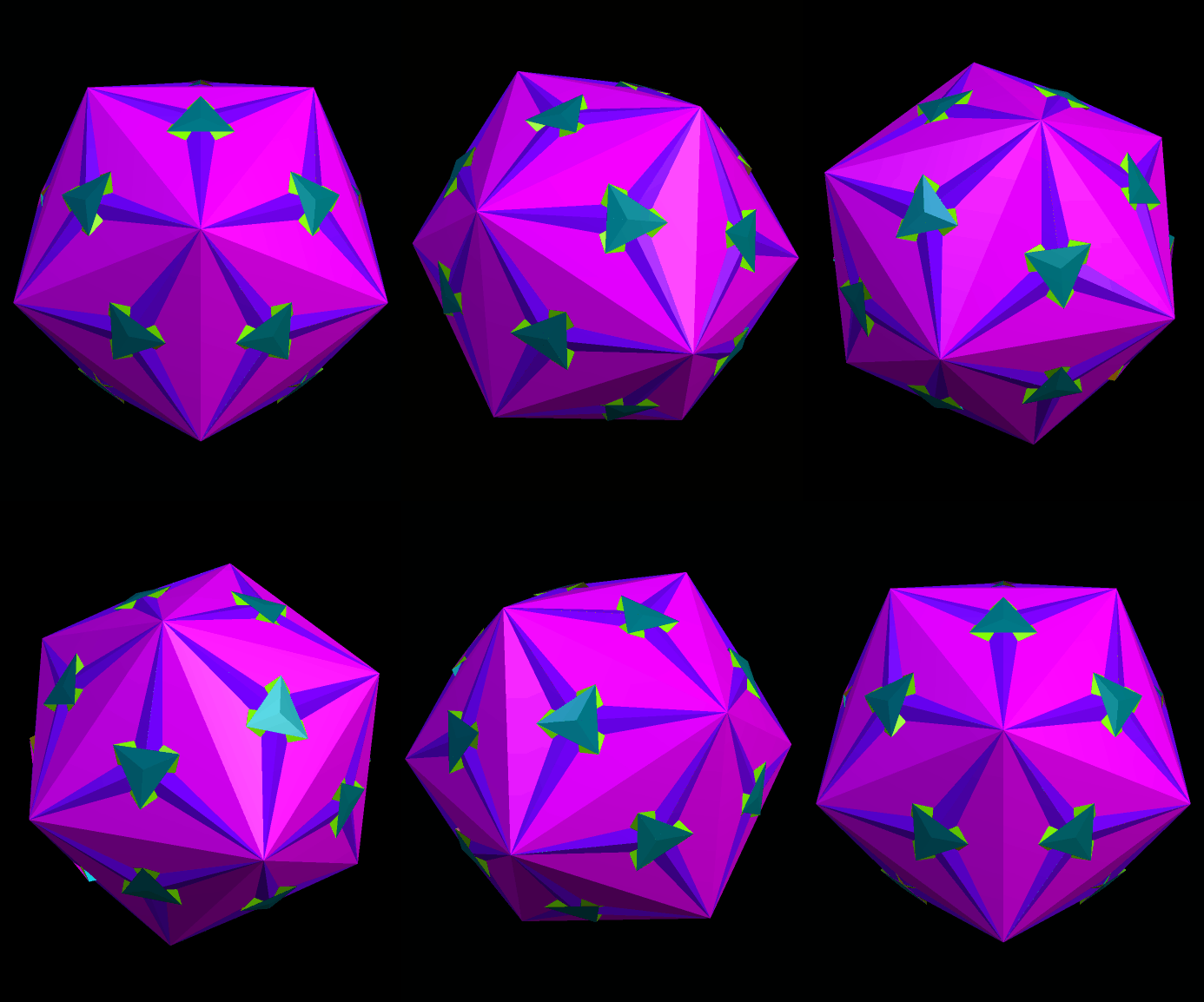
6xDual of Convex hullhollow rtc chiral varietyZonohedrifiedgfd DodecaZonohedrified DodecaFaceted Cogdfngfvex hull

Dodecahedral Cluster of Cuboctahedra and Icosidodecahedra

Augmented IcosidodDSJFGSca

I made this using Stella 4d:  Polyhedron Navigator, software you may try for yourself at http://www.software3d.com/Stella.php.

Seven Polyhedra with Icosidodecahedral Symmery

Stellated Dual of Cghjonvex hullstellated multiply Penta Hexeconta rainbowConvex hull idConvex hull of a strombic hexacontahedron augmented by 60 more strombic hexacontahedrastellated multiply Penta Hexeconta rainbow 2thingUV

I made all of these using Stella 4d:  Polyhedron Navigator.  You may try this software for yourself at www.software3d.com/Stella.php.